Areas of our planet that absorb more carbon from the atmosphere – for example, in the form of the greenhouse gas CO2 – than they store are known as sinks.
The role played by the lands and forests of the Earth in soaking up carbon has been a critical factor in preventing faster rates of climate change.
Since the 1960s, these sinks have taken in around 25% of carbon emissions from the use of fossil fuels.
The Amazon, home to the world’s largest tropical forest, has played a key role in absorbing and storing much of that carbon.
But the growing impacts of climate change and deforestation are taking their toll on this crucial CO2 sponge.
image copyrightGetty Images
Earlier this year, a study showed that the rainforest in Brazil released about 20% more CO2 into the atmosphere than it took in over the period from 2010-2019.
This new paper underlines that change and finds that some regions of the rainforest were “a steadily increasing source” of carbon between 2010 and 2018.
A source of carbon is an area of the Earth that releases more carbon than it stores.
The researchers used aircraft to take around 600 air samples above selected parts of the rainforest over the years of the study.
They found a very clear division between the eastern and western parts of the rainforest.
“In the eastern part of the Amazon, which is around 30% deforested, this region emitted 10 times more carbon then in the west, which is around 11% deforested,” said lead author Luciana Gatti, with Brazil’s National Institute for Space Research (INPE).
“This is a huge impact, you know directly because we are emitting CO2 to the atmosphere, which is accelerating climate change but also because it is promoting changes in the dry season conditions and stress to trees that will produce even more emissions.”
“This is terrible negative feedback that increases the emissions much more than we knew.”
The researchers say that the forest in the south-east of the Amazon have been very badly hit by deforestation and climate change.
In this area, temperatures have increased in the two hottest months of the year by 3.07C – this is around the same increase seen in the Arctic and around three times the global average.
“This is amazing,” said Dr Gatti. “It’s a complete surprise for the equator layer of the globe.”
image copyrightGetty Images
The researchers are worried that the changing climate is also interfering with rainfall, which they argue, has immediate consequences for Brazil.
“This is very bad news for everybody but mainly for Brazil,” said Dr Gatti.
“We have lots of problems with lack of precipitation, such as electricity from hydropower becoming more expensive. There are also heavy losses in agriculture.”
“We need to link this with Amazon deforestation and change the behaviour.”
Other scientists who work in this field say that the latest findings are consistent with changes that a range of studies have already shown.
“Deforestation and degradation increase, while the carbon sink of intact forests is stable or is slightly increasing,” said Dr Jean-Pierre Wigneron from France’s Institut National de Recherche Agronomiques (INRA).
“So, finding a negative carbon budget is not so surprising.”
Nancy Harris, from the World Resources Institute (WRI), who has co-authored previous research into the same area, said: “At the end of the day, debating whether the region already is a source – or is teetering precariously on the edge of becoming a source for carbon dioxide – misses the point.
“The science is now clear that the Amazon is in trouble. High emissions from deforestation have plagued the region for decades, and climate change impacts on forests like drought, fire and heat-induced die-offs will become more and more common over the coming decade.”
BBC- Colombia’s President Iván Duque says some of the Colombian suspects in the assassination of Haitian President Jovenel Moïse had “detailed knowledge” of the plan to kill the leader.
Mr Moïse was shot dead last week in his home and his wife injured.
Haitian police say a group of mercenaries mainly made up of Colombian ex-soldiers killed Mr Moïse.
Mr Duque said most of the Colombians had been duped as they were told they would work as bodyguards in Haiti. But there was a smaller group among them with detailed knowledge of the operation, he told Colombia’s FM radio.
Of the 28 men alleged to have made up the commando that killed Mr Moïse, all but two were Colombians while the other two were US citizens of Haitian descent.
The US defence department has since revealed that some of the Colombians received military training in the US while they were in the Colombian army.
A Drug Enforcement Administration (DEA) source also told Reuters news agency that one of the Haitian-American suspects was a “confidential source” for the DEA.
Haitian officials said that the assailants had disguised themselves as DEA agents.
In a video purportedly shot shortly before the attack outside the president’s residence a man can be heard shouting in English “DEA operation, everybody stay down!”.
The Haitian police has also arrested a Haitian doctor, Christian Emmanuel Sanon, whom they described as a “key suspect” in the assassination.
The 63-year-old Florida resident arrived in Haiti on a private jet in June and police said they found a DEA cap as well as weapons and ammunition in his possession.
A New York Times (NYT) investigation suggests that Mr Sanon and a number of other suspects met to discuss what would happen to Haiti once Mr Moïse was no longer in power.
But a man present at some of the meetings told the NYT that Mr Moïse’s assassination was not discussed.
Police are still searching for the person they call the “mastermind” behind the plot.
Colombia Reports- Colombia’s President Duque will have to clarify his ties to a dodgy businessman who allegedly recruited veterans who ended up accused of assassinating Haiti’s president.
State propaganda chief Hassan Nassar insisted that Duque “had no meeting with or ties to” Antonio Intriago despite evidence indicating the opposite.
According to Colombian and Haitian police, Intriago’s security company CTU recruited the Colombians who ended up being suspected of assassinating President Jovenel Moise.
Describing the Declaration adopted by the LEMM as “a concrete demonstration of your commitment to repair the damage of the crisis,” Ryder said, “[the Global Call] outlines a comprehensive agenda to ensure that the recovery is inclusive, sustainable and resilient, and based upon fundamental principles and rights at work. This approach is essential. Unless we address the inequalities that have deepened during this crisis, there is a real risk that its economic and social consequences will cause long-term scarring.”
The LEMM Declaration, issued at the end of the Ministers’ virtual summit on 15 July 2021, expresses great concern at the pandemic’s negative effects on unemployment, decent work deficits and inequality, and states their strong determination to recover with stronger national economies, inclusive labour markets and social protection systems.
Their Declaration highlights four key pillars for labour and employment policy responses to the pandemic; promoting social security agreements between BRICS nations, formalisation of labour markets, women’s labour force participation, and the role of gig and platform workers.
Ryder welcomed the Ministers’ commitment to deepen social security cooperation and promote agreements between themselves, saying “this could make a real difference for the millions of workers who travel to other countries to find work.”
The Director-General also praised the pledge to improve the situation of women in the labour force and to accelerate progress on shifting informal economy workers to the formal economy, adding that, “if we are to address these issues effectively we need concrete policies and action. Creating an economic recovery will not be enough by itself.”
The World Health Organization (WHO) chief said on Thursday that there was a “premature push” to rule out the COVID-19 lab leak theory without enough evidence.
WHO Director-General Tedros Adhanom Ghebreyesus acknowledged to reporters during a briefing that the theory that COVID-19 originated from a lab is possible, in remarks that strayed from the WHO’s controversial report designating the hypothesis as “extremely unlikely.”
Tedros cited his experience as a lab technician and immunologist, saying that “lab accidents happen” and “it’s common,” so “checking what happened, especially in our labs,” is important to deducing what sparked the pandemic.
“If we get full information, we can exclude that,” he said, referring to the theory.
“In any outbreak, you go and understand the origins,” Tedros added. “We need to know what happened in order to prevent the next one.”
He called for China and other member states to be transparent and cooperate with scientists and officials trying to determine how the pandemic started, including through providing raw data. The first COVID-19 case was documented in Wuhan, China.
“I think we owe it to the millions who suffered and the millions who died really to understand what happened,” Tedros said.
Global deaths surpassed 4 million last week. Nearly 15 percent of those occurred in the U.S., according to Johns Hopkins University data.
“I hope there will be better cooperation and we have the continued engagement with China and also with member states, and there will be better cooperation to getting to the bottom of what happened.”
German Health Minister Jens Spahn backed up Tedros’s remarks, requesting more investigations into the origin of COVID-19.
“We do appreciate the cooperation of the Chinese government so far for the first mission,” Spahn said. “But that’s not yet enough.”
The WHO officials’ comments took a turn from the organization’s March report, conducted along with Chinese scientists, that said it was “a likely to very likely pathway” that the virus began in an animal before spreading to humans.
The lab leak theory, which was initially dismissed, has gained traction in recent months, prompting President Biden to ask the U.S. intelligence community to “redouble their efforts” looking into how the COVID-19 virus emerged.
The Chinese government responded by asserting Biden was playing politics with his request instead of investigating the evidence.
================================================
Asia Pacific sees sharp rise in Covid infections as Delta strain threatens new wave
From South Korea to Australia, authorities are struggling to contain the highly transmissible coronavirus strain that has caused a surge in UK, Europe and
People wait in line to refill their oxygen tanks at a filling station in Jakarta. Indonesia is facing an oxygen crisis amid a surge in Covid-19 cases. Photograph: Wisnu Agung Prasetyo/SOPA Imag/Rex/Shutterstock
Guardian staff and agencies
Countries throughout Asia Pacific – from South Korea to Australia – have been hit by a rise in coronavirus infections as the Delta variant threatens a new wave of the pandemic even in a region renowned for tackling the virus with a high degree of success.
China reported 57 new coronavirus cases in the mainland for 6 July, up from 23 cases a day earlier, the national health authority said on Wednesday. It was the highest daily tally of infections since 30 January.
Air VnV: sold-out flights start from Taiwan to Guam for ‘vacation and vaccination’ trips
Fifteen of the new cases were local infections, the national health commission said in a statement. All 15 cases were located in Yunnan province in the city of Ruili, which borders Myanmar. In response, authorities locked down the city, shutting most businesses and requiring residents to stay at home.
The latest cases were discovered during mass testing of residents. The positive cases include Chinese and Myanmar nationals in the city, where there is an active cross-border trade. Authorities said they would step up border controls.
Ruili previously had a Covid outbreak in March and launched a campaign to vaccinate the entire city in April.
China has relied on a tough lockdown strategy and mass testing to tamp down outbreaks, even as it has stepped up the pace of vaccinations. Central health officials have said they want to vaccinate 80% of the population.
In South Korea, where vaccinations have been slow, authorities reported the highest cases since December 2020. The 1,212 new cases reported on Wednesday came close to the country’s largest daily increase during the pandemic, on Christmas Day, when officials listed 1,240 new cases.
Cases of the highly contagious Delta variant are “spreading fast, especially in the Seoul metropolitan area”, Yonhap reports. It was spreading especially rapidly among unvaccinated people in their 20s and 30s.
New Zealand not willing to risk UK-style ‘live with Covid’ policy, says Jacinda Ardern
The government had planned to raise the cap on private social gatherings from four to six people and allow restaurants to extend indoor dining by two hours starting this month. But officials in Seoul and nearby areas have held off as infections rise. Just 30% of South Korea‘s people have received the first dose of a coronavirus vaccine as of Wednesday.
Prime minister Kim Boo-kyum says officials will consider tougher social distancing rules if transmissions continue to grow over the next two or three days.
In Australia, which has vaccinated less than 10% of its eligible population, cases continued to climb in the state of New South Wales, which is at the centre of a new outbreak. On Wednesday the state extended the lockdown in its capital Sydney for another week to contain the latest outbreak of the highly infectious Delta variant.
The two-week stay-home orders, which were scheduled to end Friday, will now end on 16 July, state premier Gladys Berejiklian told reporters in Sydney. Twenty-seven new locally acquired cases of Covid were reported in NSW, up from 18 a day earlier, taking the total infections in the outbreak to more than 350.
The Delta variant is spreading in Thailand, too – the country reported 54 deaths and 6,519 new cases on Wednesday. Delta cases now account for the majority of new cases in Bangkok.
Finally, in Indonesia, a nightmarish coronavirus wave has brought hospitals to their knees, forcing desperate families to hunt for oxygen tanks to treat the sick and dying at home.
‘Dire need’: Australia urged to offer more aid to Indonesia as Covid crushes health system
Nearly 1,000 Indonesian medical workers have died of Covid-19, including more than a dozen who were already fully inoculated.
On Tuesday, Jakarta said about 10,000 concentrators – devices that generate oxygen – were to be shipped from nearby Singapore. Some had already been flown in on a Hercules cargo plane. The government said it was also in talks with other countries, including China.
Senior minister Luhut Binsar Pandjaitan said the country was bracing for up to “70,000 [cases] per day at worst – but we hope that won’t happen”.
UK: Covid-19- Whitty says case levels may get ‘scary’ and warning on organ damage
BBC- Here are five things you need to know about the coronavirus pandemic this Friday morning. We’ll have another update for you this evening.
1. Infection numbers could still get ‘scary’, says Whitty
The UK is “not out of the woods” and people should act with caution as Covid restrictions in England end on Monday, says the chief medical adviser Prof Chris Whitty. With the UK recording nearly 50,000 new coronavirus cases on Thursday, he says hospital admissions – already doubling every three weeks – could hit “scary numbers” if the trend continues and “we could get into trouble again surprisingly fast”.
Dr. Chris Whitty
2. Younger adults risk Covid organ damage – study
Younger adults admitted to hospital with Covid are almost as likely to suffer from complications as those aged over 50, research suggests. Four in 10 of those between 19 and 49 developed problems with their kidneys, lungs or other organs, according to a study of 73,197 treated in hospital during the first wave of Covid in 2020.
Paul Godfrey says he has still not recovered from lung damage caused by Covid
3. Covid staff shortage could shut meat production
Staff absences could see shortages of meat products, as processors see one in 10 of their workforce being told to self-isolate by the NHS Covid app, the industry warns. The number of people notified by the app in England and Wales recently passed half a million in a single week. And staff shortages are being felt across all sectors, in particular hospitality and leisure, says the president of the CBI, which represents 190,000 businesses.
image copyrightPA Media
4. Small shops face £1.7bn debt mountain, says report
The UK could face a “tsunami” of shop closures this autumn, with owners faced with repaying £1.7bn in debt, Bill Grimsey, the former boss of Wickes and Iceland, says. His latest report into the future of High Streets says small shops survived the pandemic by taking on government-backed loans that would not normally have been granted, based on their finances. The review calls for the government to write off some debt. The Treasury says it’s already providing further support and flexibility in loan repayment.
image copyrightReuters
5. Covid patient’s own blood could treat lung scarring
A therapy made from a Covid patient’s own blood is being trialled to treat lung scarring that can be left after hospital treatment. Doctors at Guy’s and St Thomas’ NHS Foundation Trust in London have begun a small trial using patients’ white blood cells.
Report says changes in eating habits must be accelerated to meet targets on health and climate
The proposed levy could put 1p on a bag of crisps and 7p on a Mars bar, and would hit the poorest consumers hardest. Photograph: i4images premium/Alamy
Ministers are being urged to levy a £3bn sugar and salt tax as part of a “once-in-a-lifetime opportunity” to break Britain’s addiction to junk food, cut meat consumption by nearly a third and help tackle climate change.
The government-commissioned National Food Strategy, drawn up by the restaurateur Henry Dimbleby, says the UK population’s “malfunctioning” appetites and poor diets – fuelled by consumer and manufacturer’s reliance on processed food – place an unsustainable burden on the NHS and contribute to 64,000 deaths each year.
Its most eye-catching recommendation is a levy of £3 a kilo on sugar and £6 a kilo on salt sold wholesale for use in processed food, restaurants and catering, which it says would be a world first. This would raise up to £3.4bn a year, some of which should fund an expansion of free schools meals to an extra 1.1 million children and an overhaul of Britain’s food and cooking culture.
School meals, cooking culture and farm tech: key points of the food strategy
The proposal, which could put 1p on a bag of crisps and 7p on a Mars bar, was criticised as regressive as it would hit the poorest consumers hardest. However, Dimbleby believes the tax would incentivise manufacturers to reduce salt and sugar levels by reformulating products.
The strategy underlines the damage caused by the food and farming sector to nature and the climate. “Our eating habits are destroying the environment, and this in turn threatens our food security,” it states. “The next big shock to our food supply will almost certainly be caused by climate change, in the form of extreme weather events and catastrophic harvest failures.”
Ministers must accelerate changes in people’s eating habits and food culture if the UK is to meet its targets on health, climate and nature, it says. The UK’s consumption of meat and ultra-processed food would have to drop by nearly a third and its fruit and vegetable intake rise by 30% by 2032.
Cutting current levels of meat consumption would reduce the greenhouse gas emissions and other pollution from livestock and free up farmland for forests and peatlands that can absorb carbon dioxide, as required to meet the UK’s net zero emissions target by 2050.
The strategy rules out a meat tax, which proved much more unpopular in a survey than the salt and sugar taxes, calling it “politically impossible”. Instead it suggests “nudging” consumers away from meat, such as by putting veggie sausages alongside meat ones, which is known to push sales up. It also backs plant-based meats as replacements in processed foods.
Brexit also figures in the strategy, which calls on ministers to guarantee high food standards in future trade deals. Lower standards would “mean exporting all the environmental harms we wish to avoid, while undercutting – and potentially bankrupting – our own farmers,” the report says.
Dimbleby said the pandemic had been a “painful reality check”, with obesity a major factor in the UK’s high Covid death rate. The UK is the third fattest among the world’s richest nations, with three in 10 of the adult population obese.
Describing the food system as a “logistical miracle” and a “disaster”, Dimbleby said government interventions were key. “Education and willpower are not enough. We cannot escape this vicious cycle without rebalancing the financial incentives within the food system.”
He added: “Some of our recommendations will be met with protests from those industries whose business models are shaped to fit the current food system. Change is never easy. But we cannot build a sustainable, healthy and fair food system by doing business as usual.”
Other key food strategy recommendations include:
Taking 5-8% of today’s farmland out of production to meet net zero goals and the government’s target of protecting 30% of land for nature by 2030. The report says 20% of farmland produces just 3% of calories.
A series of initiatives to support diet in deprived communities, including trialling a scheme to let GPs prescribe fruit and vegetables to patients who are food insecure or suffering from the effects of poor diet.
Introducing an “eat and learn” initiative for schools, involving food lessons and the reintroduction of food A-levels, to help renew declining culinary skills across every social class. “It’s time to take food education seriously,” the strategy says.
The chef and campaigner Jamie Oliver said: “This is no time for half-hearted measures. If both government and businesses are willing to take bold action and prioritise the public’s health, then we have an incredible opportunity to create a much fairer and more sustainable food system for all families.”
The independent National Food Strategy was commissioned in 2019 by the then environment secretary, Michael Gove, and produced an interim report last year. The government has promised to produce a white paper in response within six months.
Dimbleby was a co-founder and shareholder in the Leon restaurant chain in 2004 along with businessman John Vincent. The chain was sold in April for £100m. He was previously commissioned by Gove to write the School Food Plan in 2013, which led to the partial reintroduction of free school meals in primary schools.
Luke Pollard, the shadow environment, food and rural affairs secretary, said: “This is a massive wake-up call to fix Britain’s broken food system … The government should be working to ensure every family can afford for their children to get a healthy hot meal every day. Britain’s high food and farming standards must be protected in law not watered down in trade deals.”
The environment secretary, George Eustice, thanked Dimbleby for the report and said the government would respond within six months setting out priorities for the food system.
The Ministry of Housing in the Nevis Island Administration (NIA) has completed repairs to 30 defective soakaways and septic systems in the first phase of the Cherry Garden Housing Development, saving impacted homeowners over $270,000.
Deputy Premier Hon. Alexis Jeffers, NIA Minister responsible for Housing, commended Hon. Spencer Brand, Minister of Public Works and his team at the Public Works Department (PWD) for the work done to remedy the longstanding infrastructural issue.
“Let me commend the Minister responsible for Public Works Hon. Spencer Brand…and his team, including Mr. Alister Thompson [Building Division Supervisor in the PWD].
“This particular project, eliminating the difficulties being faced by some 30 homeowners over at Cherry Garden, was indeed undertaken by Public Works, and we’ve had glowing reports from those homeowners,” he said.
He explained that the problems with the soakaways had been affecting homeowners for some time, and although the Nevis Housing and Land Development Corporation was no longer responsible for any repairs at these homes, the NIA took the decision to assist the residents with the costly repairs. Mr. Jeffers was at the time addressing the Nevis Island Assembly on July 13.
“There were septics and soakaways that were not built properly…and persons over there would have had some rather unsettling circumstances to deal with, and that is why as a good government and a caring government we would have undertaken the cost and responsibility of rectifying those septic and soakaway issues over there.
“So Mr. Brand, I want to publicly thank you and thank Alister Thompson and his team, and all those involved in eliminating these particular difficulties to the tune of [$274, 470.85],” he said.
Mr. Jeffers also thanked Premier Hon. Mark Brantley, the area representative for St. John’s, for fulfilling his commitment to the affected residents of Cherry Garden, and ensuring that the project came to fruition.
(CNN) Cocaine disguised as charcoal with a potential street value of up to 35 million euros ($41.4 million) has been seized in a joint operation between Irish and Dutch authorities.
The drugs were found inside two shipping containers from South America that arrived at the port of Rotterdam, in the Netherlands, as part of what Irish investigators believe was an attempt to import up to half a ton of cocaine to Ireland, according to a press release from the Garda Síochána, Ireland’s national police and security service, published Wednesday.
Inside the containers were 2,000 bags of charcoal. Thanks to the use of an X-ray scanner and police sniffer dogs, some of the bags were found to contain cocaine.
Forensic Science Ireland (FSI) later confirmed that cocaine was present, but “it will take a number of days and perhaps longer for FSI to extract the cocaine from the product within which it is concealed,” reads the press release.
If the full shipment of cocaine has been discovered it could have a street value of up to 35 million euros ($41.5 million), police said.
=======================================
US Coast Guard in Massive Coke Seizure off PR
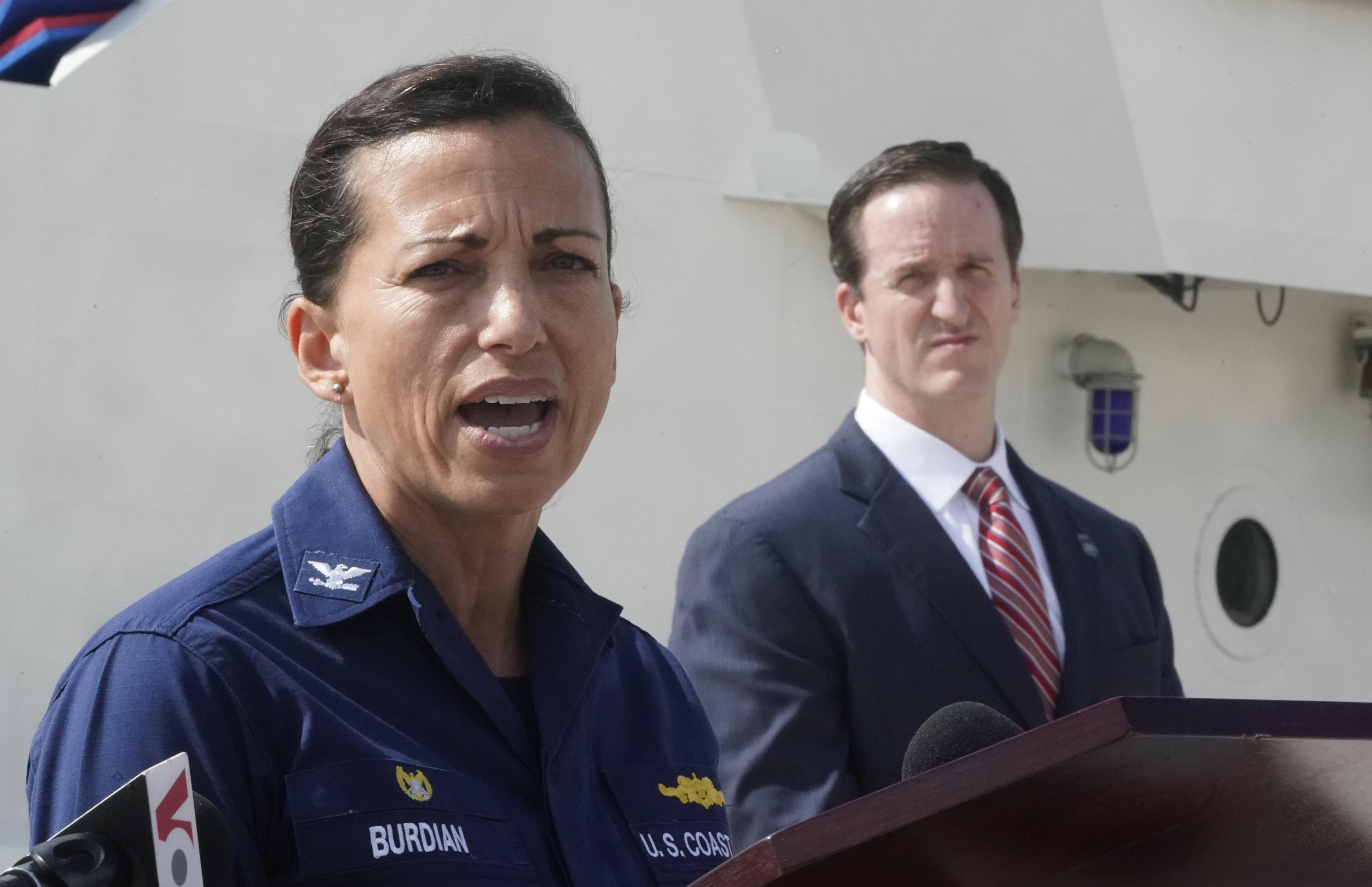
U.S. Coast Guard along with the Customs Border Protection (CBP) unit successfully intercepted a fast-go vessel off the coast of Puerto Rico near Mona island on July 10th, followed by the seizure of massive cocaine consignment worth $15M. They also withheld two smugglers onboard, aided by the coast guard cutter USCG JOSEPH TEZANOS.
The 1,104 pounds of cocaine found in 502 loose packages confiscated from the 24-foot long vessel were offloaded at the U.S. Coast Guard base in San Juan. This happened two days later, on July 12th. The custody of two detained smugglers was also exchanged at the base to the U.S. Attorney’s Office for the District of Puerto Rico.
The interception was successful due to the close coordination between various U.S agencies like the CBP, Coast Guard, and the Caribbean Corridor Strike Force (CCSF). The vessel was first tagged suspicious of drug trafficking by the Air and Marine operations Aircrew of the CBP while on a routine patrol on Saturday. CBP notified other agencies of the U.S. southern command for the counter-narcotics operation.
The U.S. Coast Guard which was under a regular mission in the region in close vicinity was diverted to carry out the pursuit to interdict the vessel vectored by the CBP aircraft. USCG JOSEPH TEZANOS‘s arrival at the scene led to the hot pursuit of the fast-go vessel. The two men were observed throwing the drug packages overboard which were later recovered. Ultimately, the vessel was intercepted in Mona Passage waters.
Lt. Anthony Orr, the commanding officer of Cutter USCG JOSEPH TEZANOS expressed his delight as he said, “As Joseph Tezanos completes her patrol, we return home with the pride that half a metric ton of cocaine will not make it to the streets.”
The United States is formally launching “Operation Allies Refuge” to evacuate Afghans who helped U.S. troops during the 20-year war and are facing threats to their lives from the Taliban, the Biden administration announced Wednesday.
Flights out of Afghanistan for those who are already in the process of obtaining special immigrant visas (SIVs) will start in the last week of July, a senior administration official said in a statement.
No further details on when the evacuations will start will be released, the statement said, citing “operational security.” Officials also did not say where the Afghans would be sent.
“At President Biden’s direction, the United States is launching Operation Allies Refuge to support relocation flights for interested and eligible Afghan nationals and their families who have supported the United States and our partners in Afghanistan and are in the SIV application pipeline,” the official said.
“As the President made clear, the United States remains confident that Afghanistan’s Armed Forces have the tools and capability to defend their country and that the conflict will ultimately have to be resolved at the negotiating table,” the official added.
The Biden administration has faced increasing pressure from lawmakers and advocates to evacuate Afghans who served as interpreters or otherwise helped the U.S. military during the war as the United States nears its final exit from Afghanistan.
The withdrawal is about 95 percent done, U.S. Central Command said this week. One of the last major steps in the withdrawal happened Monday when Gen. Scott Miller, who was the top U.S. commander in Afghanistan, left his command.
Amid the withdrawal, the Taliban have racked up battlefield successes, seizing several key border crossings and sweeping through the north.
Amid fears the Taliban could overrun the country, lawmakers and others have been sounding the alarm about delays in the SIV program, which Congress created to allow Afghans who helped the U.S. government during the war to come to the United States.
An estimated 18,000 applicants are already awaiting visas, with an estimated 53,000 family members seeking to accompany them. The application process can take as long as 800 days.
The Biden administration said last month it would evacuate Afghans who are waiting for their SIV applications to be processed, but offered few other details of its plan.
Last week, President Biden also pledged to start evacuating Afghan allies by the end of the month, but again offered few other details.
“Our message to those women and men is clear: There is a home for you in the United States, if you so choose,” Biden said in an address defending his order to withdraw. “We will stand with you, just as you stood with us.”
On Wednesday, the senior administration official said Tracey Jacobson, a former U.S. ambassador to Tajikistan, Turkmenistan and Kosovo, is leading a State Department coordination unit to run Operation Allies Refuge. The unit also includes representatives from the departments of Defense and Homeland Security.
Deputy homeland security adviser Russ Travers is also coordinating the interagency policy process on Operation Allies Refuge, the official said.
Wednesday’s statement does not elaborate on key details of the plan, such as how many people will be evacuated or where they will go.
Pressed later Wednesday for numbers and locations, White House press secretary Jen Psaki declined to say, citing security reasons.
The Pentagon has identified installations outside the United States where the Afghans could be sent, but no final decisions have been made on where to send them, Pentagon press secretary John Kirby said at a briefing Wednesday afternoon.
The department has also been looking at the potential to house some people at military installations inside the continental United States, Kirby confirmed, saying “we’re trying to provide as many options to the State Department-led effort as we can.”
The department has also started an “action group” to help identify Afghans who worked with the U.S. military but are not yet in the SIV program, Kirby said, though he stressed, as the White House did, that the evacuations would be begin with those who are already in the middle of the application process.
The U.S. military has not been asked to provide transportation for the Afghans to get out of the country, nor has it been asked to help Afghans who live outside of Kabul make the journey to the capital for the flights, Kirby added.
While advocates and lawmakers welcomed Wednesday’s announcement, they also continued to press for further details.
“It’s heartening to hear that something might be happening, but it’s quite disappointing to not hear any actual details about who is going to be evacuated, where they are going to go and what’s going to happen to the folks that are not evacuated,” Sunil Varghese, policy director with the International Refugee Assistance Project, told The Hill, adding that such information is vital to those in Afghanistan who are waiting.
Rep. Michael Waltz (R-Fla.), who previously warned there “blood will be on [Biden’s] hands” if he did not evacuate the interpreters, called Wednesday’s announcement “belated but welcomed news.”
“I hope to see more details on the number of those being evacuated, how they are being prioritized, how the United States is helping them safely travel to evacuation sites given the Taliban’s gains, and an expedited timetable,” added Waltz, a retired Green Beret. “We must also prioritize helping those in Afghan civil society, especially women, who may be outside of the SIV requirements but that the Taliban will continue to target.”
Lawmakers and advocates have been pushing for the Afghans to be sent to Guam, citing the historical precedent of sending South Vietnamese refugees there during the fall of Saigon in 1975. Additionally, advocates say, using a U.S. territory would allow the Afghans to have legal protections they wouldn’t have in a third country, such as being able to apply for asylum if their SIV applications are denied.
Psaki would not say Wednesday whether Guam remains an option for the administration, saying she will not “rule in or rule out any places.”
“The security and safety of the individuals who are relocating is of utmost focus and concern,” she said at a White House press briefing.
The administration has reportedly asked three Central Asian countries near Afghanistan — Kazakhstan, Tajikistan and Uzbekistan — to take in the evacuees while they wait for their visas to be processed.
Homeland security adviser Elizabeth Sherwood-Randall is leading a U.S. delegation to Uzbekistan this week to “discuss opportunities to bolster regional economic development, enhance stability, and strengthen American partnerships,” National Security Council spokesperson Emily Horne said in a statement earlier Wednesday.
Zalmay Khalilzad, the top U.S. envoy for the Afghan peace process, is part of the delegation and will meet with Afghan President Ashraf Ghani and other leaders to “discuss how to promote peace, security and development in Afghanistan, and advance shared regional security interests, including counterterrorism cooperation,” the statement added.
Rebecca Beitsch contributed to this report, which was updated at 3:58 p.m.
JAKARTA, Indonesia (AP) — As many Asian countries battle their worst surge of COVID-19 infections, the slow-flow of vaccine doses from around the world is finally picking up speed, giving hope that low inoculation rates can increase and help blunt…Read More
WASHINGTON (AP) — The child tax credit had always been an empty gesture to millions of parents like Tamika Daniel. That changes Thursday when the first payment of $1,000 hits Daniel’s bank account — and dollars start flowing to the pockets of more…Read More
BERLIN (AP) — At least eight people have died and dozens of people are missing in Germany after heavy flooding turned streams and streets into raging torrents, sweeping away cars and causing some buildings to collapse….Read More
American diplomats are escalating a charm offensive with Central Asian leaders this week as they work to secure a close-by spot to respond to any resurgence of outside militants in Afghanistan after the U.S. military withdraws….Read More
MIAMI (AP) — For the owner of a small private security company with a history of avoiding paying debts and declaring bankruptcy, it looked like a good opportunity: Find people with military experience for a job in Haiti. …Read More
HAVANA (AP) — Cuban President Miguel Díaz-Canel for the first time is offering some self-criticism while saying that government shortcomings in handling shortages and other …Read More
PULGA, Calif. (AP) — A blaze that erupted near the flashpoint of the deadliest wildfire in recent U.S. history was heading away from homes on Thursday but survivors of the 2…Read More
NEW DELHI (AP) — It began in February with a tweet by pop star Rihanna that sparked widespread condemnation of Indian Prime Minister Narendra Modi’s handling of massive farm…Read More
LONDON (AP) — Tiziana Di Costanzo makes pizza dough from scratch, mixing together flour, yeast, a pinch of salt, a dash of olive oil and something a bit more unusual — groun…Read More
KLM announced Wednesday that its route network was closer to operating at full strength as it raises the number of destinations it is serving within South America and the Caribbean, reaching 2019 levels with 17 destinations at the end of the quarter.
Destinations currently served in South America include the likes of Rio de Janeiro and São Paulo, Brazil; Santiago, Chile; Bogota, Colombia and San José and Liberia, Costa Rica, among others. Both destinations in Costa Rica have been recently added to the summer 2021 schedule with flights operating three times a week on Tuesdays, Thursdays and Saturdays.
Destinations in the Caribbean within territory controlled by the Netherlands include Aruba, Bonaire, Curaçao and Sint Maarten. These destinations will see a larger number of weekly departures compared to 2019 in the weeks ahead. Meanwhile, for the 2021 winter schedule, KLM will open flights to two new destinations, Port of Spain, Trinidad and Tobago as well as Bridgetown, Barbados. The flights will operate three times a week with the Airbus A330 on Monday, Thursday and Saturday.