Tag Archives: caribbean

Jamaica’s Entertainment Sector to Partially Reopen July 1st

by Amelia Robinson and Sheri-Kae McLeod


Despite the pandemic, Jamaicans are in for a sweet treat of freedom come July 1st. In a presentation in parliament on June 22, Prime Minister Andrew Holness announced a partial reopening of the island’s entertainment sector as well as an adjustment to the islandwide curfew.

Jamaica has had almost 50,000 cases of COVID-19 and more than 1,000 deaths.

Come July 1st, the curfew will run from 11 PM to 5 AM from Mondays to Saturdays and 6 PM to 5 AM on Sundays. After 15 months of a ban on parties, promoters will finally be allowed to host events, with a maximum of 100 people for small events. The organizers of large events, which include stage shows, crusades, festivals and the likes, will have to go through an additional layer of approval.

Organizers of the large events must first send an application to the Ministry of Culture, Gender, Entertainment and Sport. The Ministry will review the application to see that it meets the requirements.

Once the Ministry is satisfied, it will forward the application to the ODPEM. ODPEM will consult Ministry of Health and Wellness, the municipal corporation & any other relevant authorities, and if they are satisfied, the application for the event to be held at a specified place and time will be approved.

Unlike some cities in the United States, the government said it will not mandate that patrons attending events be vaccinated or provide a negative COVID-19 test. Organizers are however allowed to do so if they want to

Municipal corporations will be reducing the events permit fee by 50 percent. Prime Minister Holness also announced that government-owned venues will be offered to the organizers of large events rent-free.

The list of venues so far includes:

Facilities under the management of the Ministry of Culture, Gender, Entertainment and Sport including the National Stadium complex and the Trelawny Stadium, Fort Rocky and Fort Charles, Seville and the Ranny Williams Entertainment Centre, Facilities under the management of the Port Authority of Jamaica including the Falmouth Pier and the Port Royal Pier.

Prime Minister Holness urged Jamaicans to be responsible with the new measures.

“In trying to preserve the entertainment sector let us not jeopardize the reopening of our schools in September. The stakes are high and this is a risk we are all taking together as a country. Success is up to every one of us. Let us therefore not view the new measure as a free for all. Let us commit to being responsible and diligent as we seek to preserve the livelihoods of so many people,” he said.

To test out the new protocols, the Government will be organizing a concert on July 1 at the Port Royal Cruise Terminal to recognize and celebrate International Reggae Day.

The post Jamaica’s Entertainment Sector to Partially Reopen July 1st appeared first on The St Kitts Nevis Observer.

Miami Building Collapse: Search for Dead, Injured

BBC- A huge rescue operation is under way in Miami-Dade County, Florida, after a 12-storey residential building partially collapsed, killing at least one person.

Rescuers are combing through the rubble, searching for survivors, and were seen pulling a boy out alive.

Images from Surfside, north of Miami Beach, show a pile of debris on one side of the building.

One person died, at least eight people were injured and there are fears that others are trapped, US media report.

The collapse is said to have occurred at around 02:00 (06:00 GMT).

Miami-Dade Fire Rescue said they had sent 80 vehicles to the scene. Police are also assisting with the rescue operation.

The death of a woman was reported by an Associated Press reporter, quoting their own sources. Florida news site Local 10 also reported a death, quoting fire rescue officials.

The BBC is not responsible for the content of external sites.View original tweet on Twitter
1px transparent line

‘Like a storm or something coming in’

Police gave the building’s location as 8777 Collins Avenue, the address of the 12-storey Champlain Towers, which contains more than 100 beachfront apartments and was built in 1981.

Surfside runs along Collins Avenue, north of Miami Beach city limits.

Champlain TowersIMAGE COPYRIGHTGOOGLE STREET VIEW
Champlain Towers as it looked before the collapse

Santo Mejil, 50, was woken when his wife called from a unit on the ninth floor of one of the three buildings that make up Champlain Towers. She is an overnight caretaker for an elderly disabled woman.

She said she heard a big explosion,” Mr Mejil told the Miami Herald. “It felt like an earthquake.” His wife was among those rescued.

Rescuers in SurfsideIMAGE COPYRIGHTREUTERS
Hundreds of rescuers are involved
Rescuers in SurfsideIMAGE COPYRIGHTREUTERS
A crane was used to reach neighbouring balconies

A man who lives in a neighbouring building described what happened for CBS: “The building shook and then I looked out the window and you couldn’t see, I thought it was like a storm or something coming in.

“When the dust cleared, the back two-thirds of the building was gone, it was down to the ground.”

Map

The post Miami Building Collapse: Search for Dead, Injured appeared first on The St Kitts Nevis Observer.

T&T Sends Aid to Flood Ravaged Suriname

The Government of the Republic of Trinidad and Tobago has sent critical relief supplies to Suriname, following torrential rainfall and flooding experienced by that country in the months of April, May and June 2021.

According to an official release issued by the Ministry of Foreign and CARICOM Affairs, relief items were transported yesterday, Tuesday 22nd June 2021, via a Caribbean Airlines aircraft leased by Suriname Airways.

“Relief items included garbage bags, baby food, face masks, long boots, mosquito nets, tarpaulin, cots and chargeable battery-operated lamps,” the Foreign Ministry confirms.

The Ministry says additional relief items such as water, hand sanitizer and water tanks will be provided later in the week and transported by sea.

The weather system which passed through the region over the last couple of days has further exacerbated the situation in Suriname.

The Government of the Republic of Suriname reached out to T&T for assistance, at a time when Suriname is dealing with a major flooding emergency, as well as battling another surge in COVID-19 infections—its third wave in the pandemic.

At the beginning of June, the head of the Meteorological Service Suriname (MDS) warned of even more rain to come in Suriname over the next three months, as the Caribbean settles deeper into the Hurricane Season.

Flooding in April, May and June affected all ten districts of Suriname: Paramaribo, Nickerie, Coronie, Saramacca, Commewijne, Wanica, Para, Marowijne, Sipaliwini, and Brokopondo.

The International Federation of Red Cross and Red Crescent Societies (IFRC) has confirmed that some 10,100 people from 2,020 families—at least 8,473 households—across the country have been affected by the flooding crisis.
Tagged in:

The post T&T Sends Aid to Flood Ravaged Suriname appeared first on The St Kitts Nevis Observer.

UN Vote: Iran Calls US Cuban Blockade a Negative Impact on Global Peace

TEHRAN (FNA)- Deputy Permanent Representative of the Islamic Republic of Iran to the United Nations Zahra Ershadi warned that the US unilateral sanctions against independent states would leave negative impacts on global peace.

Addressing a UN meeting on Wednesday, Ershadi cautioned of the adverse effects that unilateral US sanctions have on international peace as the world body’s General Assembly adopts a resolution against the nearly 60-year-old US economic embargo on Cuba.

She said on Wednesday that the US embargo inflicts hardship and suffering on Cubans, specially women and children, leading to harmful consequences for the country’s financial, banking, commercial, investment, tourism, health, educational and cultural sectors.

“Unilateral and coercive US sanctions have adverse effects on the promotion of regional and international peace. They are also a fundamental obstacle to the establishment of world peace, prosperity and an international justice system, which are vital preconditions for sustainable development,” Ershadi said.

“For many years, the General Assembly has decisively voted in favor of resolutions calling for the lifting of US sanctions against Cuba. It has expressed its solidarity with the Cuban government and people, but the United States has over the past six decades slapped economic, trade, and financial bans that violate international law as well as its obligations under the UN Charter.”

Ershadi said that the Islamic Republic has, over the past four decades, experienced illegal US sanctions, which have even targeted the imports of medicines and medical equipment into the country.

Through sanctions, the US not only violates the UN Charter and UN Security Council Resolution 2231 that endorsed the 2015 Iran nuclear deal, but also punishes other countries which honor their own commitments, she added.

At a time when all nations are mobilizing their efforts to overcome the challenges posed by the COVID-19 pandemic, the US coercive measures have severely hampered the fight against the disease.

“The international community must work to find solutions to counter such destructive and unilateral interventions. The Islamic Republic of Iran believes in cooperation with friendly countries such as Cuba to meet this challenge,” the Iranian diplomat said.

“The US should immediately and fully comply with its international obligations and cease all its coercive unilateral measures,” she added.

In the meeting held in-person on Wednesday at the UN headquarters in New York, the UN General Assembly adopted a resolution calling for an end to the US embargo on Cuba.

The motion was approved for the 29th year in a row with 184 votes in favor, three abstentions and two no votes cast by the US and Israel.

The post UN Vote: Iran Calls US Cuban Blockade a Negative Impact on Global Peace appeared first on The St Kitts Nevis Observer.

World View: US Missing Target, Black Pandemic Drug Use, Britney Spears, More

June 24, 2021

Alternate text

The Associated Press


The Rundown

I'm an image

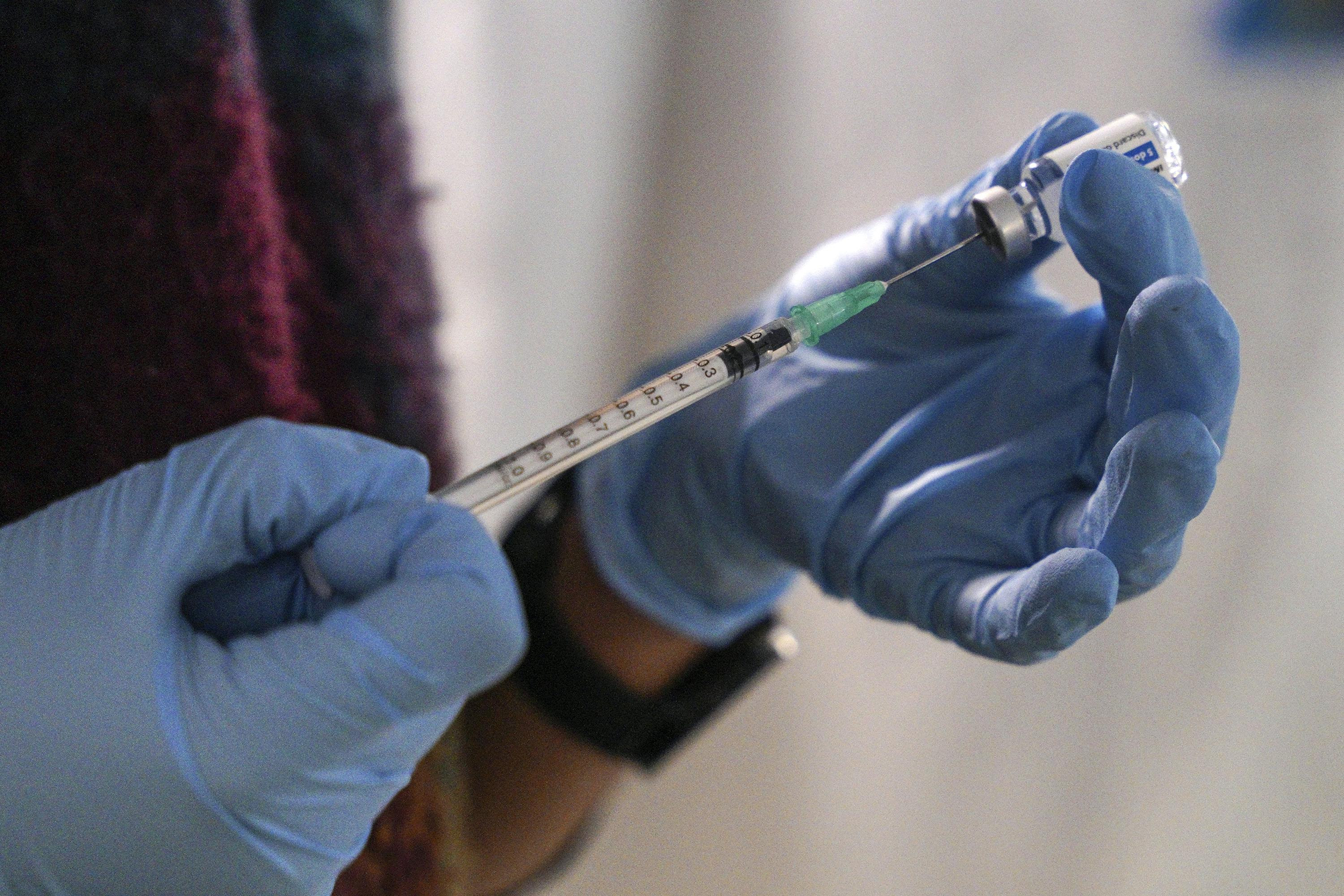
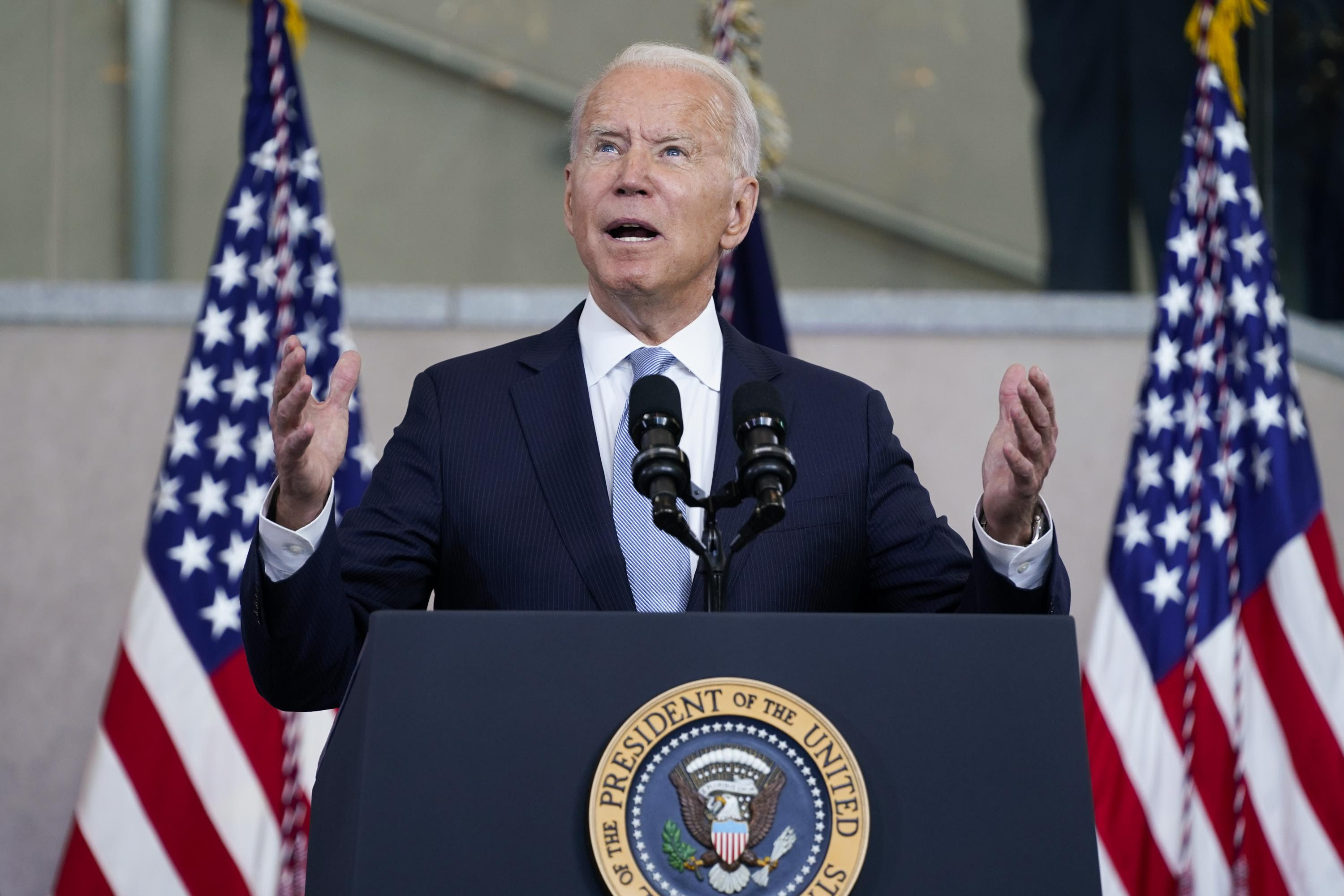
WASHINGTON (AP) — Standing in the State Dining Room on May 4, President Joe Biden laid out a lofty goal to vaccinate 70% of American adults by Independence Day, saying the U.S. would need to overcome “doubters” and laziness to do it….Read More

I'm an image

ST. LOUIS (AP) — She screamed and cried, banged on the dashboard, begging her husband to drive faster, faster, faster toward her brother lying face-down on his bedroom floor. Craig Elazer had struggled all his life with anxiety so b…Read More

I'm an image

John McAfee, the outlandish security software pioneer who tried to live life as a hedonistic outsider while running from a host of legal troubles, was found dead in his jail cell near Barcelona on Wednesday. …Read More

I'm an image

WASHINGTON (AP) — President Joe Biden announced new efforts Wednesday to stem a rising national tide of violent crime, declaring the federal government is “taking on the bad actors doing bad things to our communities.” But questions …Read More

I'm an image

LOS ANGELES (AP) — After 13 years of near silence in the conservatorship that controls her life and money, Britney Spears passionately told a judge Wednesday that she wants to end the “abusive” case that has made her feel demoralized…Read More

OTHER TOP STORIES

VATICAN CITY (AP) — While Pope Francis is usually the star at Vatican gatherings, Spider-Man, or at least an Italian who dresses up like the character, was the attention-g…Read More

What should I know about the delta variant? It’s a version of the coronavirus that has been found in more than 80 countries since it was first detected in India. It got it…Read More

UNITED NATIONS (AP) — Russia previewed a showdown with the United Nations, United States and Western nations Wednesday over the delivery of humanitarian aid to rebel-held …Read More

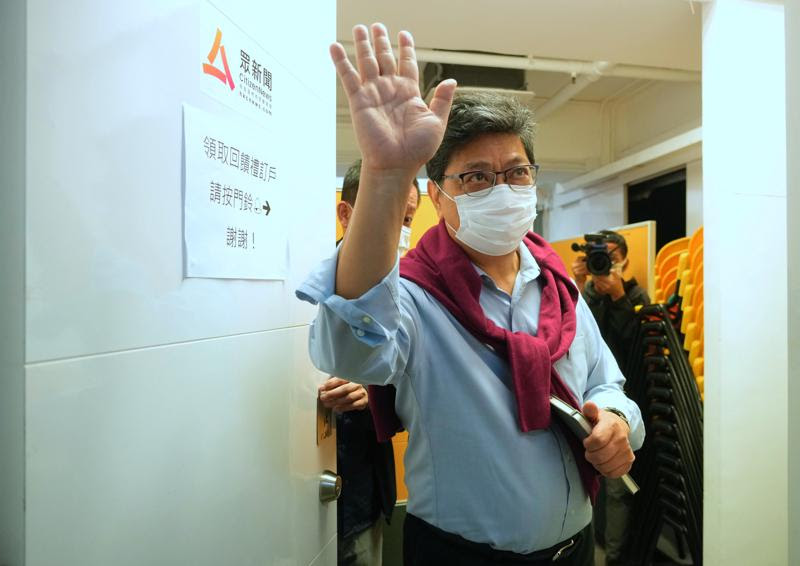
HONG KONG (AP) — Across Hong Kong, people lined up early Thursday to buy the last print edition of the last remaining pro-democracy newspaper. By 8:30 a.m., Apply Daily’s…Read More

The post World View: US Missing Target, Black Pandemic Drug Use, Britney Spears, More appeared first on The St Kitts Nevis Observer.

ILO Welcomes G-20 Human Centered Economic Recovery

GENEVA (ILO News) – The International Labour Organization (ILO) has welcomed the re-commitment by the G20 group of nations to a coherent and human-centred approach to recovery from the COVID-19 crisis that leads to greater social justice and decent work for all.

The G20 Labour and Employment Ministerial Declaration , issued following a full day of talks in Catania, Italy, echoes the Global Call to Action for a Human-Centred Recovery , adopted by delegates at the June session of the International Labour Conference  (ILC). The Call to Action outlines measures to create a human-centred recovery from the pandemic to avoid the long-term scarring of economies and societies.

In a speech to G20 Labour and Employment Ministers  at the meeting, ILO Director-General Guy Ryder welcomed the Ministers’ reaffirmed commitment to shaping a human-centred recovery that is inclusive, sustainable and resilient. He noted their renewed efforts to achieve more, better and equally-paid jobs for women, regulation of remote and digital platform work, and adequate social protection and safe and healthy working conditions for all.

He underlined the importance of strong social protection systems and enhanced coordination between social protection and labour market policies, to protect workers during the crisis and help them back into work.

“The crisis has impacted some sectors and groups much harder. In particular, it has hit women and youth, along with those in the informal economy,” he said. “Those are also the groups facing the most difficult situations today and the biggest risk of being left behind in the months and years ahead.”

Ryder outlined the cataclysmic impact of COVID-19, which has led to the loss of the equivalent of 161 million full-time jobs in the G20 nations. This, he said, represents a world of work crisis four times as severe as the one triggered by the financial crisis of 2008/09.

The recovery of recent months, he said, has been uneven and fragile, with developing countries likely to find the process more difficult.

“Unless deliberate action is taken, COVID-19 will make the world of work more unequal, more unjust, less resilient, less inclusive and ultimately less sustainable. We can do things differently. The crisis has shown us that long-established policy-settings and work arrangements can be modified in ways that were previously unimaginable.”

Governments, employers and workers must address the process of recovery, with the understanding that the future of work is not pre-determined, he said.

Ryder also highlighted the need to improve the quality of women’s employment. This would be vital if the G20 is to achieve the ‘Brisbane Goal’ of reducing the labour force participation gap by 25 per cent by 2025, he said.

At a presentation of a joint ILO-OECD report on Women at Work in the G20, Ryder told the ministers that women are twice as likely as men to be in low-paid jobs, and are more likely to be in informal employment and on temporary contracts. At the same time, women bear the brunt of unpaid work, largely due to care responsibilities.

A transformative agenda for gender equality needs greater investment in the care economy, employment policies that focus on women, universal access to comprehensive and adequate social protection, and equal pay for work of equal value, Ryder stressed. He also urged countries to ratify the ILO’s Violence and Harassment Convention, 2019 (No. 190) , noting that the problem had worsened during the pandemic.

Speaking to the G20 Joint Education and Labour and Employment Ministers Meeting on Transitions from School-to-Work , Ryder underlined the need to link education, employment and social policies.

Latest ILO estimates  show that, globally, youth employment fell 8.7 per cent in 2020, compared with 3.7 per cent for adults. In the G20 countries, youth employment declined by 11 per cent in 2020, almost four times more than for adults, Ryder said, adding that the impact on young women was even greater.

“The potential legacy of all this is frightening. This generation could be damaged for years to come, turning COVID-19 in to a multi-generational crisis,” he said.

Countries need to ensure that young people are able to develop their skills and find decent work when they complete their education and training, the ILO Director-General said. He cited the G20 Youth Roadmap 2025, which guides G20 members in strengthening their efforts to reduce the number of young women and men who are so-called NEETs (Not in Employment, Education, or Training).

Many of the issues highlighted by Ryder during the two ministerial meetings he attended were reflected in the two G20 Ministerial Declarations adopted in Catania. These point to the importance of effective social dialogue and the need to take into account ILO instruments and declarations on Social Protection Floors, Fundamental Principles and Rights at Work and the Future of Work.

The post ILO Welcomes G-20 Human Centered Economic Recovery appeared first on The St Kitts Nevis Observer.

Brazil Sets Single-Day 115K Record for Coronavirus Cases

RIO DE JANEIRO, June 23 (Reuters) – Brazil registered a single-day record of 115,228 new confirmed coronavirus cases in the past 24 hours, the Health Ministry said on Wednesday, as its outbreak shows new signs of accelerating despite long-delayed vaccination efforts finally gaining steam.

Brazil marked the milestone of 500,000 COVID-19 deaths over the weekend with nationwide protests against the government’s handling of the pandemic.

The country has been slow to roll out vaccines with only 12% of Brazilians fully immunized, according to Health Ministry data. Efforts have accelerated recently, with certain states such as Sao Paulo predicting shots for all adults by September.

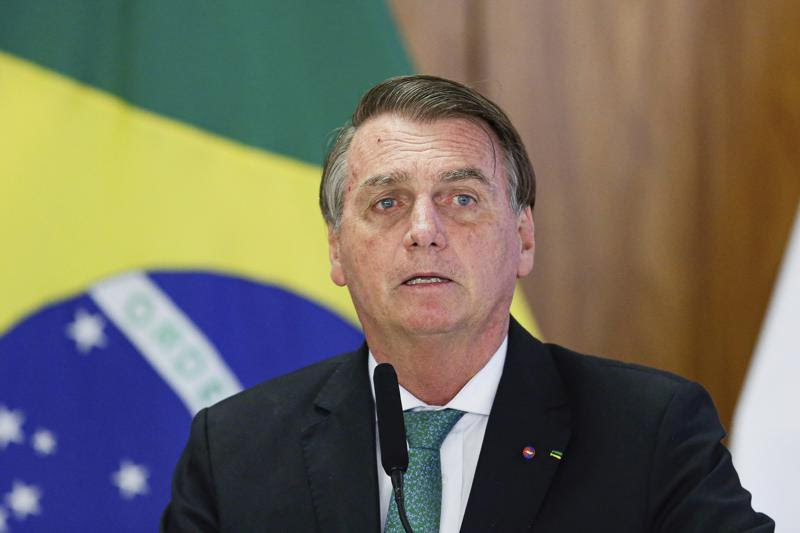
The government of President Jair Bolsonaro is under scrutiny for delays and alleged misconduct in obtaining vaccines, having failed to respond to early offers from Pfizer (PFE.N) last year.

The government instead struck a deal for more a expensive vaccine made by India’s Bharat Biotech.

A Senate committee is probing allegations related to Bharat amid a wider investigation of the government’s response.

A Brazilian Health Ministry official told prosecutors he faced internal pressure from an aide to then-Health Minister Eduardo Pazuello to buy the Bharat shot. read more

In a press briefing on Wednesday, Bolsonaro’s Secretary of the Presidency Onyx Lorenzoni said there had been no influence peddling in the Bharat deal and the vaccines were not overpriced.

The Health Ministry did not respond to request for comment about the allegations.

On Wednesday, the committee also called representatives of Facebook (FB.O), Google (GOOGL.O) and Twitter (TWTR.N) to testify before the committee as it weighs possible crimes related to misinformation online about COVID-19. read more

Reporting by Pedro Fonseca Writing by Jake Spring Editing by Brad Haynes

The post Brazil Sets Single-Day 115K Record for Coronavirus Cases appeared first on The St Kitts Nevis Observer.

Canadian Indigenous Group Discovers Hundreds More Unmarked Graves

TORONTO, June 23 (Reuters) – A Canadian indigenous group announced on Wednesday the “horrific and shocking discovery” of hundreds of unmarked graves at the site of a former residential school, just weeks after the discovery of other children’s remains shook the country.

The Federation of Sovereign Indigenous Nations said in a statement that the number of newly found unmarked graves was “the most significantly substantial to date in Canada.” The statement did not specify numbers.

The group said it would announce at a news conference on Thursday morning “the horrific and shocking discovery of hundreds of unmarked graves at the site of the former Marieval Indian Residential School” in Saskatchewan.

The discovery weeks ago of the remains of 215 indigenous children at the site of another residential school for indigenous children in Kamloops, British Columbia, forced Canadians to confront the legacy of an abusive and assimilationist system.

Between 1831 and 1996, Canada’s residential school system forcibly separated about 150,000 indigenous children from their families. They were malnourished and physically and sexually abused in what the country’s Truth and Reconciliation Commission called “cultural genocide” in 2015.

Survivors who spoke with Reuters recalled perpetual hunger and haunting loneliness, and schools run under the threat and frequent use of force.

Canada’s federal government apologized for the system in 2008. The Roman Catholic Church, which ran most of the schools, has not apologized. Earlier this month, Pope Francis said he was pained, a statement dismissed by survivors.

Reporting by Anna Mehler Paperny; Editing by Peter Cooney

The post Canadian Indigenous Group Discovers Hundreds More Unmarked Graves appeared first on The St Kitts Nevis Observer.

Mexico Prison: Six Killed in Fight Between Rival Gangs

BBC- A fight between rival gangs in a prison in Mexico has left six inmates dead and at least nine injured, officials say.

The fight broke out in a jail in the city of Villahermosa in Tabasco state. Guards said rival groups armed with home-made weapons were fighting for control of the prison.

The prison has been the site of deadly fights in the past. In February, two inmates classed as “high risk” were killed in a confrontation.

Guards said Tuesday’s fight broke out in the prison courtyard when members of rival groups attacked each other with sticks and knives.

Relatives of inmates stand outside the penitentiary during a fight among inmates in Villahermosa, in Tabasco state, Mexico June 22, 2021image copyrightReuters
Relatives came to the prison to get news of their loved ones

Riot police were deployed to the jail and local media report that almost 80 officers entered the prison to re-establish control.

Prison fights are not unusual in Mexico. According to the National Human Rights Commission, there were almost 1,000 fights in state jails in 2020.

There have also been a number of high-profile prison breaks, including those of Mexican drug lord Joaquín “El Chapo” Guzmán, who managed to escape from two maximum-security jails before being extradited to the United States.

The post Mexico Prison: Six Killed in Fight Between Rival Gangs appeared first on The St Kitts Nevis Observer.

Illegal Gold Miners Stalk Amazon, Authorities Look Away

By Hugo Bachega
BBC News

At around midday on 11 May, Dario Kopenawa, an indigenous leader, received a desperate phone call from a remote village in the Brazilian Amazon. Palimiú has a population of about 1,000, and they live in large communal houses on the banks of a river called Uraricoera. You can only reach it by plane, or after a long journey on a boat.

Kopenawa, who is from the Yanomami tribe, is used to hearing pleas for help from communities in the rainforest, but this one was different.

“They attacked us,” a man said, “they almost killed us”. They, Kopenawa was told, were garimpeiros, or illegal gold miners, who had arrived on seven motorboats, some carrying automatic weapons, and started shooting indiscriminately.

Hiding behind trees, the Yanomami fought back, using shotguns and bows. An indigenous man was grazed by a bullet in the head, Kopenawa learned, and four miners were injured. The attackers left after half an hour, but threatened to come back for revenge. Terrified, women fled into the dense jungle with their children to seek refuge. It was chaotic, and two boys, aged one and five, drowned.

Palimiú, located deep in the state of Roraima, sits on Brazil’s largest indigenous reserve, which has an area similar to Portugal and 27,000 people. Mining is illegal there, but prospectors have always found ways to do their work. “Garimpeiros are all over the place,” Kopenawa said. He avoids going to areas where they are because of death threats and, after the call, he alerted the authorities, saying something had to be done.

The next day, a team of federal police travelled to Palimiú on a small plane, and were joined by Junior Hekukari, who heads the local indigenous health council. As he was leaving the area, Hekukari spotted some boats drifting with their engines switched off, and he guessed they were trying to avoid being noticed. As the men in the vessels approached, they shot multiple times at the village.

“The agents screamed ‘Police, police’,” Hekukari told me, “but they didn’t stop. They had no respect”. The officers responded, and there was an intense gun fight. The group left five minutes later and nobody was injured. When Hekukari reported what had happened, Kopenawa was stunned. If even the police were being attacked, he said, none of his people was safe.

Screengrabs of video of attack shared by the Hutakara Association
image captionA video shared by Junior Hekukari shows what appears to be a motorboat passing by Palimiú, when a shootout starts
1px transparent line

The intrusions by garimpeiros in indigenous reserves have intensified under far-right President Jair Bolsonaro, who plans to open some of the areas to mining and agriculture. Instituto Socioambiental (ISA), a non-profit group, estimates there are about 20,000 of them in the Yanomami territory alone, and Hekukari told me “they do what they want because they know nothing will happen to them”.

Alisson Marugal, the federal prosecutor in Roraima, said they had been encouraged by a surge in gold prices and an order by Funai, the government’s indigenous affairs agency, that limited field work because of the pandemic. “Illegal miners did not self-isolate or do social distancing,” he said. “In fact, they intensified their activities.”

The reserves are one of the most effective ways to protect the Amazon, the world’s largest rainforest and a huge carbon store that helps slow down global warming. But President Bolsonaro, a climate change sceptic who is supported by powerful agribusiness leaders, considers them too big for the number of people who live there and an obstacle to development.

The president, whose own father was a garimpeiro, is particularly critical of the extension of the Yanomami territory, established in 1992 in a region where vast mineral riches are located. Kopenawa, who lives in the state capital Boa Vista where he leads the indigenous association called Hutakara, said “Bolsonaro supports the garimpeiros” and had no interest in protecting the Yanomami. “Our territory is being disrespected,” he said. “And our calls for help are not being heard.”

In Congress, the Bolsonaro government is pushing an agenda that opponents warn poses an existential threat to the Amazon and, consequently, to indigenous people. The Chamber of Deputies is due to vote on a bill that would legalise the private occupation of public land. Another proposal could pave the way for the reduction of indigenous areas that already exist.

“Illegal miners have been emboldened… by a discourse that legitimises their work,” Prosecutor Marugal said. “Indigenous communities are under extreme pressure”.

Illegal mining camp near the Uraricoera riverimage copyrightChristian Braga/Greenpeace
image captionISA released pictures, taken in April, of the destruction caused by mining in the Yanomami reserve
Devastation caused by illegal mining in the Amazonimage copyrightChristian Braga/Greenpeace
image captionThe intrusions by illegal miners in protected reserves have increased under President Jair Bolsonaro
Presentational white space

‘It’s obvious there’s no political will’

Kopenawa is the son of the respected shaman and leader David Kopenawa, who led the campaign that resulted in the creation of the Yanomami reserve. Nicknamed the Dalai Lama of the Rainforest, he told me when we met in 2014: “White men who have money, want more. They want to destroy more. That’s their tradition: they’ve got no limit.”

Last year, illegal mining devastated an area equivalent to 500 football fields on Yanomami land, according to ISA, and is likely to result in even more destruction this year. Garimpeiros have also polluted rivers with mercury, which is used to separate gold from mud, and are blamed for bringing alcohol, drugs and, most recently, Covid-19, into the communities.

If it is no secret where they are, why are they not being removed? “It’s obvious there’s no political will,” a former official at Funai, who quit last year because he “couldn’t stand it anymore,” told me. “There are some powerful people involved in illegal mining who may be able to limit or prevent any action.”

Raids by Funai, which has suffered successive budget cuts, are carried out with the federal police, the army and Ibama, the environmental protection agency. They are so irregular, the former official added, that their impact is very limited and the garimpeiros quickly go back.

Joenia Wapichana, the only indigenous member of parliament and a representative of Roraima, pointed to an ideological change at the agency, currently led by a federal police officer with links to agribusiness. “Funai used to be a friend of the indigenous people,” she told me. Now, she said, they oppose demands by local communities and even ask the police to investigate indigenous leaders who are critical of them.

Funai said there was no-one available for an interview, and President Bolsonaro’s office did not respond to requests for comment.

Boat on the Uraricoera river carrying petrolimage copyrightChristian Braga/Greenpeace
image captionA boat carrying petrol and other goods crosses the Uraricoera river inside the Yanomami reserve

As the pandemic raged in the Amazon last year, the Yanomami created a barrier on the Uraricoera, Roraima’s longest river, in an effort to stop the transit of boats around Palimiú. They believe the May attack was in retaliation after they intercepted a vessel and seized petrol and equipment.

Audio messages shared in a WhatsApp group believed to be used by illegal miners suggested the attackers were affiliated to a facção, or criminal organisation. One of Brazil’s largest gangs, the First Command of the Capital, or PCC for its initials in Portuguese, is known to operate in Roraima, a sparsely populated state situated on drug trafficking routes.

Alisson Marugal said the suspicion was that criminals had been hired to protect the mining fields, and that they were believed to be behind the recent violence. “We’re seeing some heavy weapons arriving in the camps,” he told me. He described some areas as “no-man’s land”.

Five days after the police visit, Palimiú was attacked again, Kopenawa said. At night, people arrived on several boats and started shooting. They also fired what appeared to be tear gas, and the Yanomami despaired when they felt their eyes and throats burn. “My people thought they were being bombed,” he said.

Earlier, this week, the Supreme Court ordered the Bolsonaro government to take measures to protect the village and other indigenous communities, and to remove the garimpeiros from the areas.

But Kopenawa said the Yanomami were tired of waiting. “We’re under threat,” he said. “Our patience has ended.”

The post Illegal Gold Miners Stalk Amazon, Authorities Look Away appeared first on The St Kitts Nevis Observer.