The Omicron variant of COVID-19 has been discovered in St Kitts and Nevis and is being spread among the population, Chief Medical Officer (CMO) Dr Hazel Laws confirmed today.
Dr Laws revealed that on December 22, the federation sent off a small package to CARPHA, and they had just received results of genomic sequencing.
“Two of the three samples returned positive for the Omicron variant of concern. When we looked at the data for these two cases, we have objective evidence that the Omicron variant is in circulation in the federation…”
“We have two variants in circulation, the Omicron and Lambda.”
The Lambda variant has been in circulation for the past seven months.
Dr Laws noted that the federation is currently in the fourth wave of COVID-19. This wave started last Friday.
“If you have been monitoring the information provided by the Ministry of Health, you would recognise there is an uptick – a surge – in the number of newly diagnosed cases each day.”
New York (CNN Business) The cruise liner Queen Mary 2, on route to New York from Southhampton, UK, will not make its planned return to the Big Apple after a Covid outbreak onboard.
The Queen Mary 2 dropped off 10 Covid-19 infected passengers in New York earlier this month. Instead of returning to call in New York as originally planned, the Queen Mary 2 will remain in Barbados until January 2 due to the “current international travel situation.
“As a precautionary measure Queen Mary 2 will take on additional manning in essential roles in Barbados prior to the sail back to the UK,” a statement from the parent company said.
The ship left Southhampton on December 13 and is scheduled to return on January 10.
The company said the additional staffing will take a few days due to current air travel delays and cancellations, and therefore will not have time to return to New York. The company did not answer when asked whether the additional staff is needed due to more Covid-19 infections, nor did they answer questions from CNN regarding how many total passengers ended up testing positive for Covid-19.
The CDC has started an investigation into the “Queen Mary 2,” according to agency’s website. It is one of 88 cruise ships that the CDC is currently investigating for having a number of Covid-19 cases that is either at or above the CDC’s threshold for investigation.
Flight arrangements will be made for guests that were set to disembark in New York on January 3rd, according to a statement from Cunard which operates the vessel.
Ghislaine Maxwell faces a high legal bar in her bid to overturn her sex abuse conviction, a study finds J&J’s booster shot slashes Omicron hospitalizations, and Iran sends three ‘research payloads’ into space
Today’s biggest stories
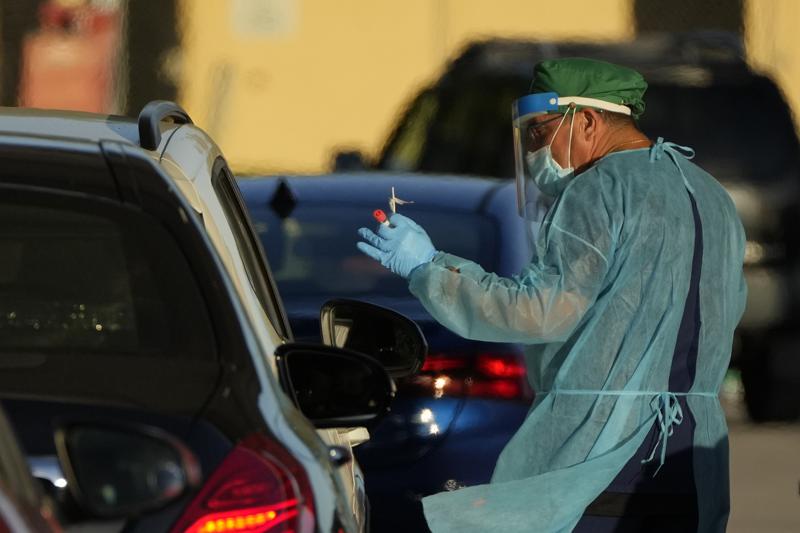
A healthcare worker tests a child for COVID-19 at a drive-through testing site in Houston, Texas, December 29, 2021. REUTERS/Callaghan O’Hare
A booster dose of Johnson & Johnson’s single-dose COVID-19 vaccine was 84% effective at preventing hospitalization in South African healthcare workers who became infected as the Omicron variant spread, researchers said.
Indian authorities started to impose stringent rules to prevent mass gatherings at parties and public venues ahead of new year celebrations as the nation sees a spike in infections.
China’s industrial and tech hub of Xian reported more than 100 new cases of COVID-19, taking its tally of locally transmitted infections to the highest in any Chinese city this year.
Thousands of people left messages on the social media account of the late Chinese COVID-19 whistleblower Li Wenliang on the anniversary of the day he learned of possible pneumonia-causing virus cases in Wuhan and shared the information with fellow doctors.
Jeffrey Epstein associate Ghislaine Maxwell sits as the guilty verdict in her sex abuse trial is read in a courtroom sketch in New York City, December 29, 2021. REUTERS/Jane Rosenberg
U.S. President Joe Biden and Russian President Vladimir Putin will speak today, as Washington crafts a common response to Russia’s military build-up on the Ukraine border with European allies.
Iran has used a satellite launch rocket to send three research devices into space, a defence ministry spokesman said, without clarifying if it reached orbit. Iran, which has one of the biggest missile programmes in the Middle East, has suffered several failed satellite launches in the past few years due to technical issues.
A Myanmar insurgent group said it has buried the remains of more than 30 people who were killed and had their bodies set ablaze, as the U.N. Security Council called for accountability and an immediate end to violence in the country.
World stocks snapped a seven-day winning streak as the spread of Omicron worldwide clouded bumper year-to-date gains, dented oil prices and boosted the dollar.
Shares of China Evergrande Group tumbled after the embattled real estate developer did not pay offshore coupons due earlier this week. The decline wiped out gains from earlier this week, when the market cheered the initial progress made by the firm in resuming construction work.
SenseTime Group shares surged as much as 23% from their IPO price, adding billions of dollars to the artificial intelligence start-up’s market value as it debuted in Hong Kong in the city’s final major float for the year.
Bitcoin close to $70,000, ‘memecoins’ worth billions of dollars, a blockbuster Wall Street listing and a sweeping Chinese crackdown: 2021 was the wildest yet for cryptocurrencies, even by the sector’s volatile standards. We take a look at some of the major trends that dominated cryptocurrencies this year.
New York City Mayor’s Office of Immigrant Affairs (MOIA) Commissioner Raquel Batista on Wednesday announced that the City will provide US$1.5 million in funding to help newly-arrived Haitians immigrants in New York, access immigration legal assistance and social services.
“This investment is part of the City’s continued commitment in responding to Haiti’s compounding crises over the past few months,” Batista said.
“We are excited to work with CBOs [community-based organizations] staffed by Haitian New Yorkers, and located immediately within our City’s Haitian communities, who provide daily support and services to their fellow community members including those who have recently resettled in New York City.”
J. Phillip Thompson, Deputy Mayor for Strategic Policy Initiatives, said that while Haitian migrants continue to face an uncertain future, “it is imperative we continue to work with CBOs who have been leaders in helping this community”.
“I am looking forward to how this partnership will help expand the City’s reach to the Haitian community and connect them to critical resources for their resettlement process,” he said.
“As a proud Haitian immigrant, I understand the importance of prioritizing the needs of Haitian asylum seekers.”
Magalie Desroches Austin, senior advisor and director of the Mayor’s Office of Minority and Women-Owned Business Enterprises, told the Caribbean Media Corporation (CMC): “I am glad to see the administration supporting Haitian resettlement services through Haitian run CBOs and hope that more municipalities follow New York City’s lead.”
Batista said that the funds will be distributed to community-based partners that will provide linguistically- and culturally-responsive case management and immigration legal services to newly-arrived Haitian New Yorkers.
She said case managers will work with newly-arrived Haitians to determine eligibility for benefits and connect them to resources and services.
Batista said legal services will include assistance in accessing Temporary Protected Status (TPS) and other humanitarian forms of relief, removal and deportation defense, and immigration legal services capacity-building among local CBOs and pro bono attorneys.
Efforts will also include an anti-fraud and information messaging campaign across community and ethnic media, Batista said.
In recent months, she said there has been a heavy increase in Haitian arrivals to the US due in part to natural disasters and political upheaval in Haiti.
“Many of these new arrivals have resettled in the state of New York, which has the second-largest population of foreign-born Haitians in the United States,” Batista said.
“This investment will provide the supports needed so that community-based partners can help address the critical and social service needs of newly-arrived Haitians and better understand additional challenges anticipated over the coming months.
Haitian American New York City Member Farah Louis told CMC that after travelling across several miles and months to seek refuge in the US, thousands of Haitian New Yorkers need critical resources and supportive services to recover from the emotional, mental and physical toll of this ordeal.
“The allocation of US$1.5 million towards trusted community-based organizations will be instrumental in bolstering the extraordinary work already underway to empower, equip and engage these families,” said the daughter of Haitian immigrants, who represents the predominantly 45th Council District in Brooklyn.
“We are removing societal barriers to legal assistance and social services by working together to ensure that our newest neighbors have a fighting chance to remain in the US, where they can pursue new opportunities and no longer have to live in fear.
Louis thanked Mayor Bill de Blasio, MOIA Commissioner Raquel Batista, and Pastor A.R. Bernard for their support in expanding access to much-needed assistance.
New York State Assembly Member Bichotte Hermelyn, another daughter of Haitian immigrants, who chairs the Brooklyn Democratic Party, said that by providing aid to displaced Haitians who have settled in New York, the Mayor’s Office of Immigrant Affairs is “demonstrating a commitment not only to racial justice but to human rights”.
“Immigrants built our nation; and, by ensuring they have the resources needed to resettle, we are investing in the future success of our city and state,” said Bichotte Hermelyn, who represents the 42nd Assembly District in Brooklyn. “I look forward to partnering with the organization selected by MOIA and thank the Mayor (Bill de Blasio) for his continued commitment to making our city more just and equitable in our recovery,” she sai
CMC- Air Canada is to halt flights to Bermuda next month because of the latest surge in coronavirus (COVID-19) cases driven by the new Omicron variant.
An Air Canada spokesman said the airline would suspend services between Toronto and Bermuda from January 9.
“Air Canada continues to evaluate and adjust its route network as required in response to the trajectory of the pandemic, government-imposed travel restrictions and quarantines, and regulatory requirements,” the spokesman said.
“Affected customers will be contacted by Air Canada and offered options, including refunds for eligible customers and alternative routings where available.”
The airline gave no date for resuming the service.
The news came after the January flight schedule showed that Canadian low-cost carrier WestJet is to reduce its service between Bermuda and Toronto from two flights a week to one.
Bermuda currently has 234 active cases of COVID-19. In all, the island has recorded 6,014 cases of the virus since March of last year with 106 deaths.
The head of the World Trade Organisation (WTO) sees an opportunity for the Caribbean to be a production centre for vaccines.
WTO director-general Dr Ngozi Okonjo-Iweala said the region already has knowledge bases to do so as she reflected on the vaccine inequity that emerged during the COVID-19 pandemic.
The Nigerian economist was speaking today during a discussion titled The Role Of Trade In Global Public Goods, which was held by the Central Bank at the Frank Collymore Hall.
The event also featured Caribbean Development Bank President Dr Gene Leon and was moderated by Dr Jan Yves Remy, director of the Shridath Ramphal Centre for International Trade Law, Policy and Services, University of the West Indies, Cave Hill.
Okonjo-Iweala, who served on the CARICOM Commission On The Economy, acknowledged that the WTO rules governing vaccine procurement “could be much better”.
“I would like to see us at the WTO agree to a set of rules so that in a futuer pandemic we don’t have to debate issues anymore but automatically some rules, some modalities, for being part of the solution will automatically kick in,” she said.
BUENOS AIRES, Dec 29 (Reuters) – A helicopter that was fighting forest fires in the rugged Patagonia region of southern Argentina crashed on Wednesday, killing two crew members, according to local press reports.
The aircraft, which had been contracted by the government to fight the fires, fell in the area of Quillen, a lake located in the province of Neuquen.
More than 200 fire brigades and a dozen aircraft were fighting fires in the Nahuel Huapi National Park and other parts of Patagonia, an area known for its forests, lakes and mountains, according to local newspaper La Nacion.
Officials could not be immediately reached for comment.
The Federal Council for the Environment (Cofema) and the Ministry of Environment declared a fire emergency in the area.
“We are facing a scenario that may tend to recur over time, that is to say, a period of prolonged droughts and of running dry seasons throughout the year,” the emergency declaration said, adding the situation was “most likely a result of climate change”.
Reporting by Lucila Sigal, writing by Hugh Bronstein; Editing by Bernadette Baum
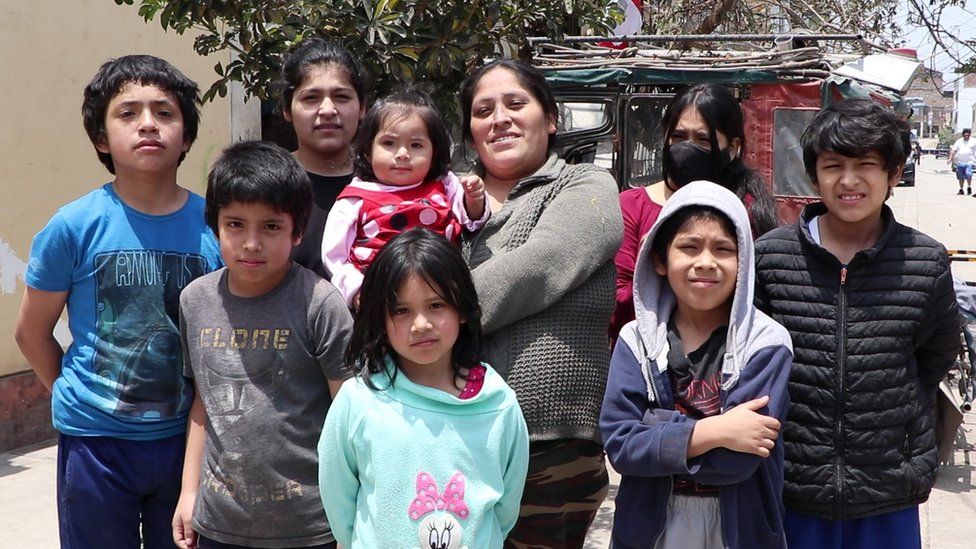
BBC- In a tiny house on the outskirts of Lima, Gabriela Zarate lives with her husband and eight children. Four are her own. The other four, two girls aged seven and 15, and two boys aged nine and 12, are the children of her younger sister, Katherine.
It is hard to squeeze them all in. The boys sleep two to a bunk bed, with the girls sharing a tiny room at the back of the house. “It’s always been a struggle to put food on the table for my family,” Gabriela says, “and with four more children it’s even more difficult”.
In June 2020, when Peru was already struggling to contain Covid-19, Katherine got infected. Hospitals were overcrowded, supplies had run out and relatives watched their loved ones die, unable to help.
When Katherine was turned away by doctors, Gabriela was left with no other option than take her home. Katherine was laid out on a mattress. She struggled to breathe, but her family did not have enough money to give her oxygen. They all watched Katherine get weaker and weaker.
A week later she died.
One of the last things Katherine did was to ask Gabriela to look after her children. Their father suffers from health and addiction problems, and is in and out of their lives. Katherine did not want them to end up in a children’s home, so Gabriela agreed to care for them.
It has not been easy. When the government imposed a strict stay-at-home order during the worst waves of the pandemic, they were left wondering what they would do. “I used to drive a motor taxi and sell sweets out on the streets,” Gabriela says. “But then we were told to stay at home, and I got worried: How were we going to feed them all?”
Gabriela now takes care of eight children: four of her own and the other four of her sister, Katherine
To earn some money, her partner started to deliver food to people during the curfew, which was illegal. That is when he, too, got Covid-19 and could no longer work. “We were very scared he might die,” she says, “but in the end he recovered.”
During the worst times, when neither of them could go out to work, Gabriela hung a white flag outside her house to show she needed support. Neighbours then started to bring her sacks of potatoes and other food.
Peru has been battered by Covid-19, with more than 202,500 deaths in a population of under 33 million. One of the most tragic effects of the pandemic here is the number of children who have been left without a mother, father, or some other caregiver.
There are at least 93,000 of them, according to the medical journal The Lancet. And even though one of their parents might still be alive, they are referred to as “Covid orphans”.
Many face a daily struggle to survive. Financially and emotionally too.
Katherine’s children, like many others, find it hard to talk about their mother. Her 15-year-old daughter watched her die, and Gabriela says she is traumatized. She will not talk about what happened to anyone.
The sons remember her wistfully. “I miss my mother,” Katherine’s nine-year-old son says. “She used to take us out onto the streets to play with us.”
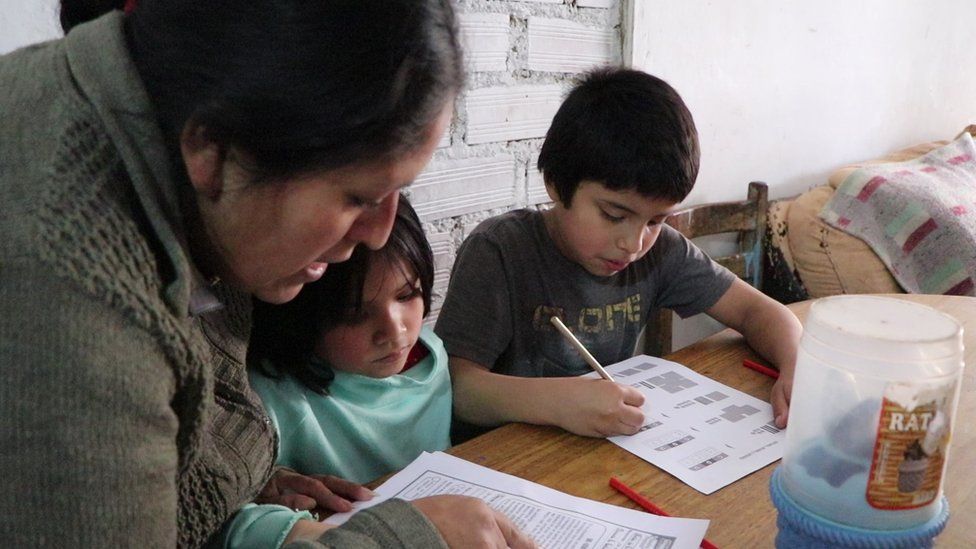
The children are doing online classes for two days a week
Image source, INABIF
Image caption,
Despite missing their mother, the children say they like living with their aunt
Helping children like them is an issue which professionals like Andrea Ramos are trying to tackle. She is a social worker for the local council in two poor areas of Lima. Her desk is piled high with paperwork, and she relies on locals to get in touch with her via WhatsApp to flag up who needs help.
Poverty, she says, is getting worse due to rising unemployment because of the pandemic. This, in turn, is leading to more frustration and violence at home.
“We have a lot of children with mental health issues who are scared to go out because they have been shut inside during the worst waves of the pandemic,” she says.
There are workshops to help families cope with children being at home all day long with on-line classes, and how to resolve fights and keep tempers under control.
Professionals are concerned about the long-term effects of the pandemic on children
For some families, life is slowly getting better. Gabriela now receives a government-approved Covid pension for each of her nephews and nieces. It is only around $50 (£37) a month per child, but it means she can afford to buy extra food for them, and to print out pages for their homework.
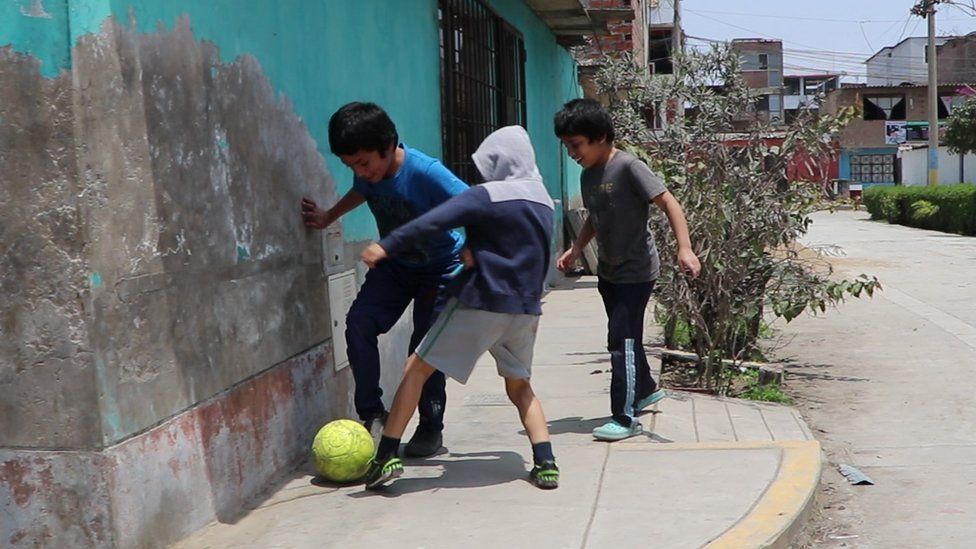
The children are doing online classes for two days a week. It is difficult to find space for everyone. Despite missing their mother, they say they like living with their aunt. It is fun to play football out on the street with their cousins even though they end up arguing sometimes.
Although professionals like Andrea are concerned about the long-term effects the pandemic will have on “Covid orphans”, Gabriela’s nephews and nieces are ambitious for their future. The eldest girl wants to be a lawyer, the two boys policemen and the little girl a doctor.
New COVID-19 cases in US soar to highest levels on record
By KATHLEEN FOODY
A health care worker tests people for COVID-19 at a drive-up testing center at Tropical Park, Wednesday, Dec. 29, 2021, in Miami. (AP Photo/Rebecca Blackwell)
CHICAGO (AP) — More than a year after the vaccine was rolled out, new cases of COVID-19 in the U.S. have soared to their highest level on record at over 265,000 per day on average, a surge driven largely by the highly contagious omicron variant.
New cases per day have more than doubled over the past two weeks, eclipsing the old mark of 250,000, set in mid-January, according to data kept by Johns Hopkins University.
The fast-spreading mutant version of the virus has cast a pall over Christmas and New Year’s, forcing communities to scale back or call off their festivities just weeks after it seemed as if Americans were about to enjoy an almost normal holiday season. Thousands of flights have been canceled amid staffing shortages blamed on the virus.
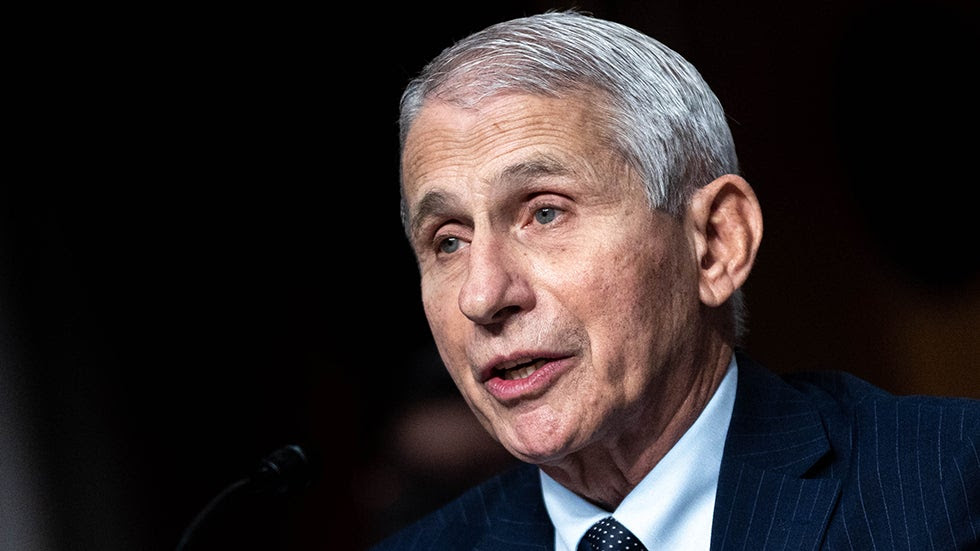
Dr. Anthony Fauci, the top U.S. infectious-disease expert, said Wednesday that there is no need to cancel small home gatherings among vaccinated and boosted family and friends.
But “if your plans are to go to a 40- to 50-person New Year’s Eve party with all the bells and whistles and everybody hugging and kissing and wishing each other a happy new year, I would strongly recommend that this year we not do that,” he said.
The threat of omicron and the desire to spend the holidays with friends and loved ones have spurred many Americans to get tested for COVID-19.
Aravindh Shankar, 24, flew to San Jose, California, on Christmas from West Lafayette, Indiana, to be with family. Though he felt fine, he decided to get tested Wednesday just to play it safe, since he had been on an airplane.
He and his family spent almost an entire day searching for a testing appointment for him before he went to a site in a parking lot next to the San Jose airport.
“It was actually surprisingly hard,” Shankar said about trying to find a test. “Some people have it harder for sure.”
The picture is grim elsewhere around the world, especially in Europe, with World Health Organization chief Tedros Adhanom Ghebreyesus saying he is worried about omicron combining with the delta variant to produce a “tsunami” of cases. That, he said, will put “immense pressure on exhausted health workers and health systems on the brink of collapse.”
The number of Americans now in the hospital with COVID-19 is running at around 60,000, or about half the figure seen in January, the Centers for Disease Control and Prevention reported.
While hospitalizations sometimes lag behind cases, the hospital figures may reflect both the protection conferred by the vaccine and the possibility that omicron is not making people as sick as previous versions.
COVID-19 deaths in the U.S. have climbed over the past two weeks from an average of 1,200 per day to around 1,500.
Public health experts will be closely watching the numbers in the coming week for indications of the vaccines’ effectiveness in preventing serious illness, keeping people out of the hospital and relieving strain on exhausted health care workers, said Bob Bednarczyk, a professor of global health and epidemiology at Emory University.
CDC data already suggests that the unvaccinated are hospitalized at much higher rates than those who have gotten inoculated, even if the effectiveness of the shots decreases over time, he said.
“If we’re able to weather this surge with hopefully minimal disruptions to the overall health care system, that is a place where vaccines are really showing their worth,” Bednarczyk said.
It’s highly unlikely that hospitalization numbers will ever rise to their previous peak, said Amesh Adalja, senior scholar at the Johns Hopkins Center for Health Security at the Bloomberg School Public Health. Vaccines and treatments developed since last year have made it easier to curb the spread of the virus and minimize serious effects among people with breakthrough infections.
“Its going to take some time for people to get attuned to the fact that cases don’t matter the same way they did in the past,” Adalja said. “We have a lot of defense against it.”
But even with fewer people hospitalized compared with past surges, the virus can wreak havoc on hospitals and health care workers, he added.
“In a way, those hospitalizations are worse because they’re all preventable,” he said.
Several European countries, including France, Greece, Britain and Spain, also reported record case counts this week, prompting a ban on music at New Year’s celebrations in Greece and a renewed push to encourage vaccination by French authorities.
WHO reported that new COVID-19 cases worldwide increased 11% last week from the week before, with nearly 4.99 million recorded Dec. 20-26. But the U.N. health agency also noted a decline in cases in South Africa, where omicron was first detected just over a month ago.
___ Associated Press writer Terry Tang in San Jose, California, contributed to this report.
Early data show the omicron variant of the coronavirus appears to be less severe than the delta strain among people who are vaccinated, Anthony Fauci said Wednesday.
Citing international studies and some initial data from U.S. hospitals, Fauci said people who are vaccinated and boosted are also less likely to be hospitalized. And despite a surge in infections over the past month, hospitalizations have not increased nearly as quickly.
“We know now, incontrovertibly, that this is a highly, highly transmissible virus. We know that from the numbers we’re seeing,” Fauci told reporters during a White House briefing.
However, he said, “all indications point to a lesser severity of omicron versus delta.”
The numbers: Omicron is now the dominant strain of coronavirus, but delta is still prominent. Cases were already rising steadily this fall because of the delta variant, but the emergence of omicron in the past month has led to a near vertical spike.
The U.S. on Tuesday broke a record for most single-day COVID-19 infections, with 441,278 cases. That surpassed the previous daily record by close to 150,000.
On Wednesday, the Centers for Disease Control and Prevention reported another 431,567 infections. The seven-day average of cases hit a record 277,241, an increase of more than 60 percent over the past week.
Positive signs? Fauci on Wednesday said there’s been a 126 percent increase in cases over the past two weeks, but only an 11 percent increase in hospitalizations.
While hospitalizations and deaths are a lagging indicator, the “disparity between cases and hospitalizations strongly suggest there will be a lower hospitalization to case ratio,” Fauci said.
Fauci noted that omicron has some ability to evade immunity, particularly against infection. But for people who are vaccinated, they remain protected against severe illness.
==========================================
Florida Adds 39,000 New COVID Cases from Christmas Weekend
An Orange County family gets tested at the Econ Soccer Complex on the first day of the new COVID-19 drive-thru testing site hosted by Orange County Health Services at the park off East Colonial Drive, in Orlando, Fla., Monday, Dec. 27, 2021. At its peak, a line of cars was backed up several miles as thousands of Orange County residents sought testing during the current spike of infections across Central Florida from the omicron variant of the coronavirus. (Joe Burbank/Orlando Sentinel via AP)
MIAMI (AP) — Florida reported 39,000 new COVID-19 cases on Monday from the Christmas weekend, as thousands of people waited in lines for tests following holiday gatherings and flights on crowded airplanes.
Florida reported 17,955 new cases from Sunday and another 21,040 cases from Christmas Day, according to figures from the Centers for Disease Control and Prevention.
Florida has seen a sharp increase in new COVID-19 cases in the past week. Last Friday, it added more than 32,000 cases, a day after reporting 31,000 in one day as well.
Following the Christmas weekend, thousands of Floridians around the state lined up sometimes for hours Monday to get COVID-19 tests. At a testing site on the east side of Orlando, some people waited three hours for their turn.
“I feel terrible. I feel like I wanna be at home in bed, take a cold shower. It’s getting tough out here,” Irma Bernabe told Orlando television station WESH.
At Miami-Dade County libraries, workers handed out 90,000 free take-home COVID tests, according to the Miami Herald. The county also distributed more than 12,000 tests at its libraries on Christmas Eve.
The number of new COVID-19 cases even forced the cancellation of the latest performance of George Balanchine’s “The Nutcracker” by the Miami City Ballet.
The dance company said it had to make “the difficult decision,” and only announced it publicly about an hour before the Sunday afternoon show at the Adrienne Arsht Center in downtown Miami.
“These are challenging times for all and we truly appreciate your support and understanding as we navigate the necessary changes,” said the statement posted on the company’s Instagram page.
The Miami City Ballet has not yet announced whether the final performances slated for Wednesday and Thursday in West Palm Beach will go on as planned.
The debate over requiring COVID-19 vaccines for domestic travel is back in the spotlight this week, despite pushback from the business community and the potential for strong backlash if the Biden administration imposes such a mandate.
The White House said that a potential mandate is not off the table, and the uptick in COVID-19 cases brought on by the highly transmissible omicron variant has raised questions over whether a requirement is another way to keep Americans safe.
President Biden’s chief medical adviser, Anthony Fauci, said on Wednesday that the administration is discussing a mandate, but pointed to the safety of the mask requirement in place for all U.S. transportation networks.
“When you’re dealing with domestic flights, you want to keep people safe on domestic flights. And as I said, right now, we feel that the masking requirement and the degree of filtration on a plane is sufficient to keep people safe,” Fauci told reporters during a White House COVID-19 response team briefing. “If there’s a need to do more beyond this masking, mainly having a vaccine issue, we will seriously consider that as new information arises.”
Airline lobby: Airlines and other business groups oppose a vaccine and testing requirement for domestic air travel. Delta Air Lines on Wednesday reiterated their position that the health protections on airlines enable safe travel, pointing to the hospital grade filtration systems and masking onboard aircraft and inside airports.
The administration is already facing criticism for new guidelines that halved the isolation time for people who are asymptomatic or showing improved symptoms, which came after pressure from the airline industry.
===============================================
HAVANA, Dec 29 (Reuters) – Cuba will give booster shots to its entire population in January, according to a report in state-run media, in a bid to keep the highly contagious Omicron variant of the coronavirus at bay.
Health authorities in the island, heavily dependent on tourism, last week reported a 35% week-on-week jump in coronavirus cases.
As of Tuesday, they had registered at least 44 cases of Omicron, though both infections and deaths from COVID-19 remain at 1% of their pandemic peak on Aug. 22, according to statistics compiled by the online database “Our World in Data”.
Health Minister Jose Angel Portal Miranda said the threat from Omicron had prompted Cuba to fast-track its booster campaign, and that all those eligible would have a booster shot in January, according to the state news outlet CubaDebate.
Cuba has already administered nearly 1.5 million boosters in the capital Havana, and to high risk groups such as health care workers. That campaign will now spread across the island in the coming weeks.
The poor, communist-run nation has vaccinated 92% of its population with at least one shot, and 85% with a full course, of its homegrown vaccines, according to “Our World in Data.”
That puts it second in the world behind only the United Arab Emirates, among countries of at least 1 million people. read more
Cuba has vaulted ahead of its neighbors in Latin America and other emerging economies by developing its own vaccines instead of competing for those produced by wealthier nations.
Officials say Cuba’s protein-based shots – Abdala, Soberana 02 and Soberana Plus – give upwards of 90% protection against symptomatic COVID-19 when offered in three-dose schemes, though those claims have yet to be fully vetted in peer-reviewed journals, or by the World Health Organization.
Cuban scientists had previously called for boosters to be given six months after the first three shots, but have now halved that time, the CubaDebate report said.
Reporting by Dave Sherwood and Marc Frank; Editing by Kevin Liffey
The Caribbean is two years into the coronavirus pandemic and a lot has happened including the introduction of vaccines, new variants and hard-hitting policies to curb the spread of the virus.
Here are some pandemic moments we pretty much will not forget that happened in the Caribbean in 2021:
Confirmed COVID-19 cases crossed 2 million
COVID-19 cases never stopped increasing in the Caribbean. In December 2020, there were 355,415 confirmed cases, 5,789 deaths and 218,228 recoveries.
Now in 2021 up to December 29, the Caribbean has recorded 2,218,288, confirmed cases, 29,137 deaths and 1,806,668 recoveries.
Cuba, The Dominican Republic and Puerto Rico have the highest number of confirmed cases in the Caribbean region.
Vaccines arrive
In March 2021, countries in the Americas began receiving vaccines through COVAX. Jamaica was the first Caribbean nation to receive COVID vaccines through the COVAX facility with PAHO assuring that all Caribbean countries would receive their first shipment by April 2021 under the COVAX facility.
During the year Caribbean islands received donations from India, the USA, the UK and Mexico just to name a few.
Sharing was also done among Caribbean islands in February to help those that were still waiting for their first shipment of vaccines through the COVAX facility.
According to which Caribbean country you are in the following vaccines are in the region: AstraZeneca, Sputnik V, Pfizer BioNTech, Covishield, Janssen (Johnson &Johnson), Moderna and Sinopharm.
Fears, rumours and the sharing of misinformation slowed down vaccination numbers in some islands.
The reasons for vaccine hesitancy were many with the top in the Caribbean related to concerns about the possible side effects of the vaccine, the vaccine being developed too quickly and not knowing enough about the vaccine.
PAHO projects that most countries in the region will have reached or surpassed the WHO target of vaccinating 40 per cent of their eligible populations by the end of 2021.
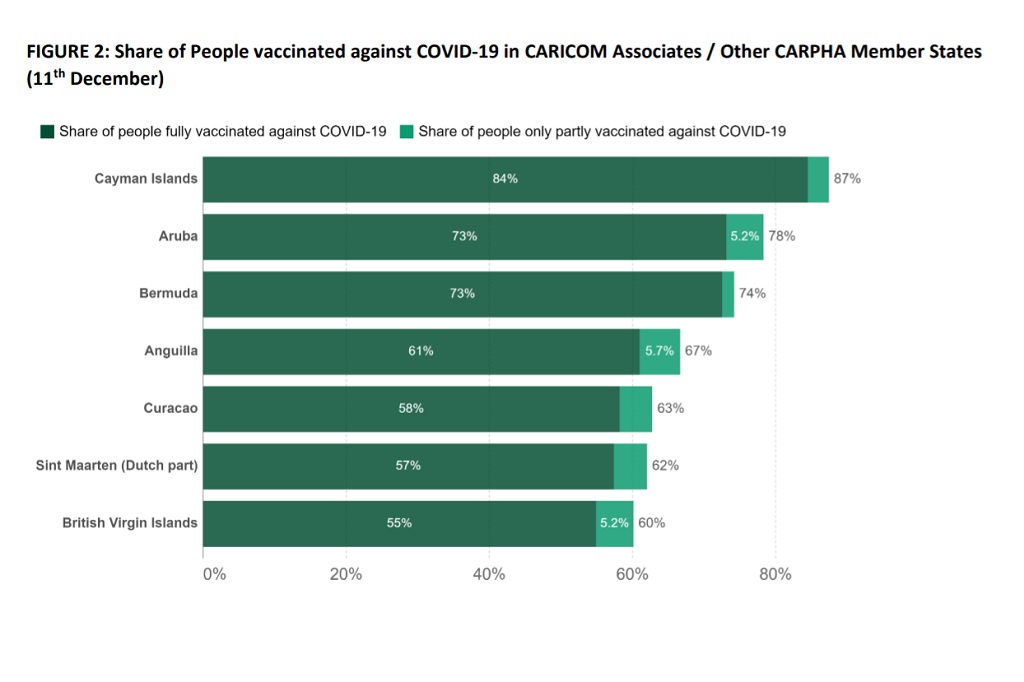
About 57.3 per cent of the population in Latin America and the Caribbean have completed their vaccination schedules.
However, the current estimates are that Haiti, Jamaica, St Vincent and the Grenadines, St Lucia and Grenada may not attain 40 per cent coverage goal.
Anti-vax and anti-mandatory vaccination became popular words this year in the Caribbean as protests raged against the COVID-19 vaccine as a requirement for work or to enjoy safe zones.
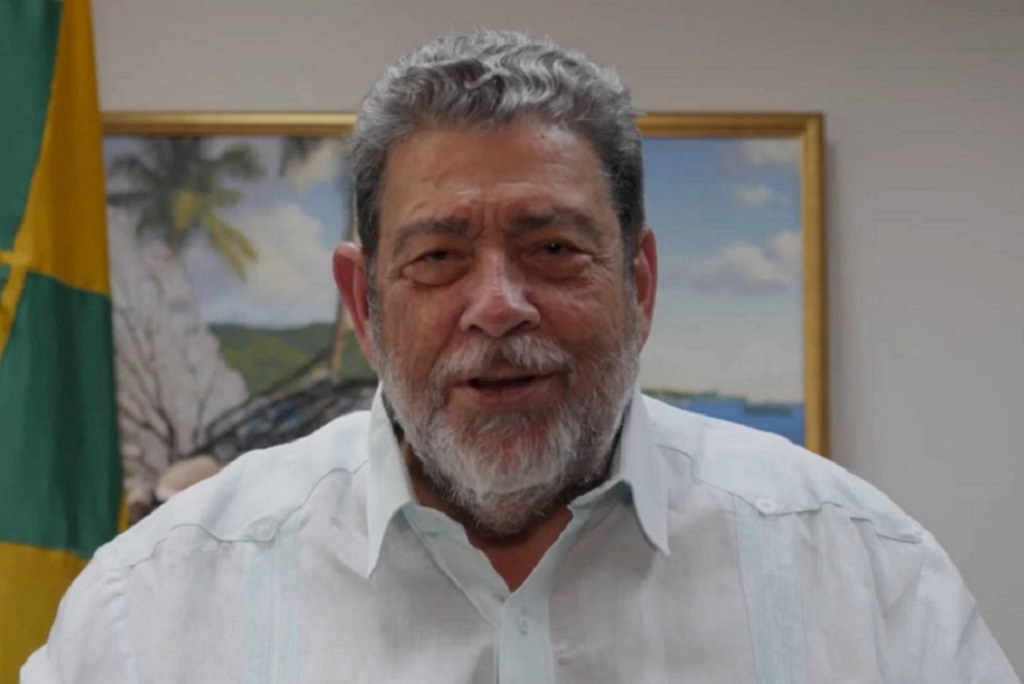
In August while walking past protesters to the House of Assembly in St Vincent and the Grenadines, Prime Minister Dr Ralph Gonsalves was hit in his head with an object and suffered a concussion during an anti-vaccination protest.
The legislation mandating COVID-19 vaccination for certain categories of workers in SVG eventually went into effect.
Carnival was mostly cancelled in many Caribbean islands due to the pandemic but in Grenada despite being told not to play Jab Jab, revellers still walked for the two days of what would have been Carnival Monday and Tuesday.
This year Grenada lost many of its elderly due to the COVID-19 pandemic. Among them was Leonora Massima Noel who was 119 years old and believed to be Grenada’s oldest citizen.
The entire island of Carriacou and Petite Martinique were thrown into mourning over her passing.
Noel had contracted the virus on September 13 and passed away on September 24 at the Princess Royal Hospital.
Prime Minister of Antigua and Barbuda, Gaston Browne.
Antigua and Barbuda had its share of anti-vaccination protests and the situation became very heated when threats were made against Prime Minister Gaston Browne and his family.
Threats were issued against him as the government faced criticism over its move to mandate either COVID-19 vaccination or regular testing for some public sector workers.
Browne responded: “Stop the foolish rhetoric….If you come close to me talking about you are threatening me, you will get hurt….Don’t test me!”
The latter part of the year became chaotic in Guadeloupe and Martinique as these French Caribbean islands experienced fiery protests looting and other acts of violence over the COVID-19 vaccine mandate for healthcare workers.
There was also the issue of a health pass requirement to enjoy restaurants and other venues.
The French government delayed mandatory vaccinations for healthcare workers in the region until December 31, 2021.
Guyana was thrown into a tailspin when Joshua Henry, 13, died hours after taking the second dose of the Pfizer vaccine.
It was later determined Henry, who suffered a brain haemorrhage had a pre-existing condition that caused his death and not the vaccine.
An autopsy performed by pathologist Dr Nehaul Singh and Government Medical Officer Dr Swarasite Persuad-Etwaria found a pre-existing cerebral aneurysm that led to the brain haemorrhage which claimed Henry’s life.
Prime Minister of St Vincent and the Grenadines, Dr Ralph Gonsalves
Jaws were left hanging as St Vincent and the Grenadines which shared 5,000 doses of its AstraZeneca vaccines with Trinidad and Tobago was now told it would have to pay US$70,000 for it.
The vaccines which were acquired through the COVAX facility were at risk of expiring due to low vaccine uptake in SVG.
According to Gonsalves, COVAX said his government should have returned the vaccines instead of giving them away.
The year is now ending off with the emergence of a new variant of the coronavirus called omicron.
The omicron variant is already in the Caribbean region and according to PAHO as of December 22 has been detected in Bermuda, Trinidad and Tobago, Cuba, Cayman Islands, French Guiana, Guadeloupe, Puerto Rico and Saint Martin.
St Vincent and the Grenadines recently reported the omicron variant in a traveller from the US while officials in The Bahamas believe omicron is behind its fourth COVID-19 wave.
The Delta variant however continues to dominate all sub-regions of the Americas.



 *****@