Tag Archives: caribbean

KLM to Serve 6 New Destinations including Barbados, T&T

KLM has announced six new long-haul destinations for this coming winter across the US, Kenya, Mexico, Barbados, Trinidad and Tobago, and Thailand. While they are new for KLM itself, most were formerly served by Martinair and others. Some, like Cancun and Orlando, are big markets.

KLM intends to capture point-to-point (P2P) demand from Amsterdam to these destinations, including from tour operators, together with demand from wider Europe and beyond over its Schiphol hub. Speaking of these new destinations, KLM’s CEO, Pieter Elbers, said:
“For KLM, this represents the next, significant step towards rebuilding its network. As many as 99 destinations in Europe will be served during summer and, with this latest expansion, KLM’s intercontinental network will also be significantly strengthened for winter.”
The B777-300ER, as here, will be used to only one destination: Phuket. It’ll operate via Kuala Lumpur in both directions. Photo: Vincenzo Pace


Six new destinations


The new destinations are as follows. Most will route via an existing or new KLM destination. This will not only save money rather than being a brand-new, stand-alone long-haul leisure route in the current climate, while also reducing risk. It may also suggest that the existing airport it is tagged with may currently be underperforming.

  1. Orlando: starting November 4th; four-weekly with B787-9s
  2. Mombasa: starting November 4th; twice-weekly with B787-9s
  3. Phuket: starting November 1st; four-weekly by B777-300ERs
  4. Cancun: starting November 2nd; three-weekly with B787-9s
  5. Barbados: starting November 1st; three-weekly with A330-200/300s
  6. Port of Spain: starting November 1st; three-weekly with A330-200/300s

KLM is targeting destinations that are recovering quicker and where demand may therefore be higher. It hopes to benefit from demand shifting from worst-hit locations or where entry is very restrictive. It is the same as Thai Airways beginning non-stop routes from Phuket to Europe, and the Lufthansa Group adding multiple new routes.

The post KLM to Serve 6 New Destinations including Barbados, T&T appeared first on The St Kitts Nevis Observer.

Pandemic’s Devastating Effect on Female Well Being-WHO Chief

Continued disruption of women’s health services due to the coronavirus (COVID-19) pandemic could “obliterate” more than 20 years of progress in reducing maternal mortality and increasing access to family planning in Latin America and the Caribbean.

This was the view of  the Director of the Pan American Health Organisation (PAHO), Dr. Carissa Etienne.

“I want to spotlight the devastating health, social and economic impacts that this virus has had on women,” Etienne told reporters.

She said women have been particularly impacted by interruptions of reproductive and maternal health services.

“According to UN estimates, up to 20 million women in the Americas will have their birth control disrupted during the pandemic, either because services are unavailable or because women will no longer have the means to pay for contraception,” the PAHO director said.

She said pregnancy and new born care also have been interrupted in nearly half of countries in the Americas.

At the same time, pregnant women are more vulnerable to respiratory infections such as COVID-19.

If they get sick, they tend to develop more serious symptoms that require intubation, which can put both the mother and baby at risk.

“If this continues, the pandemic is expected to obliterate more than 20 years of progress in expanding women’s access to family planning and tackling maternal deaths in the region,” Etienne said, adding “all maternal deaths are preventable and even getting back to pre-pandemic levels of maternal mortality, which were already high, could take more than a decade”.

She told reporters during her weekly news conference that the maternal mortality rate in Latin America and the Caribbean declined from 96 to 74 maternal deaths per 100,000 live births between 2000 and 2017, an overall reduction of 23.1 per cent.

“We urge countries to do just that – to act. We can start by ensuring that women and girls can access the health services they need – like sexual and reproductive health services, and pregnancy and newborn-related care – during the COVID response,” Etienne said, calling attention to the upcoming International Day of Action on Women’s Health, celebrated on May 28.

“We must remember that the challenges and inequities that we faced prior to COVID haven’t gone away during the pandemic – they’ve only worsened and can’t be overlooked. That’s why we must make protecting the lives of women a collective priority,” she added.

Etienne also drew attention to the World Health Organisation’s (WHO) assertion last week that casualties due to COVID-19 have been seriously underreported.

“COVID’s true global 2020 death toll is closer to three million people – nearly double the figures reported last year. Worryingly, half of these deaths have taken place here, in the Americas, demonstrating the outsized impact this pandemic has had in our region.”

Last week over 1.2 million new COVID-19 cases and 31,000 deaths were reported in the Americas.

“These figures have remained unchanged over the last weeks, illuminating a worrying trend: cases and deaths are plateauing at alarmingly high levels,” Etienne said.

“In fact, last week, four out of five of the countries reporting the highest number of new infections were here in our region, and Latin American countries represented the top five highest mortality rates worldwide.”

Increases in cases have been reported in Central American countries, including Costa Rica, Panama, Belize, and Honduras, where ICU beds are at more than 80 per cent capacity.

In the Caribbean, Trinidad and Tobago has declared a national emergency following a recent COVID-19 outbreak. Cuba continues to report a significant increase, and St. Vincent and the Grenadines are still experiencing spikes after people were moved to shelters because of recent volcanic eruptions. “We are also concerned about increasing trends in hospitalizations in Haiti,” Etienne noted.

In South America, new infections have declined in Chile, Peru, and Paraguay. But Uruguay, Argentina, and Brazil, after experiencing progress for several weeks, are once again seeing a rise in cases. Bolivia is reporting a dramatic increase in cases and deaths, and Guyana is experiencing its highest volume of cases and deaths since the beginning of the pandemic

The post Pandemic’s Devastating Effect on Female Well Being-WHO Chief appeared first on The St Kitts Nevis Observer.

World View: Mass Murder, Racism in US Military, World Heats Up, More

May 27, 2021

Alternate text

The Associated Press

The Rundown

I'm an image

SAN JOSE, Calif. (AP) — An employee who gunned down eight people at a California rail yard and then killed himself as law enforcement rushed in had talked about killing people at work more than a decade ago, his ex-wife said….Read More

I'm an image

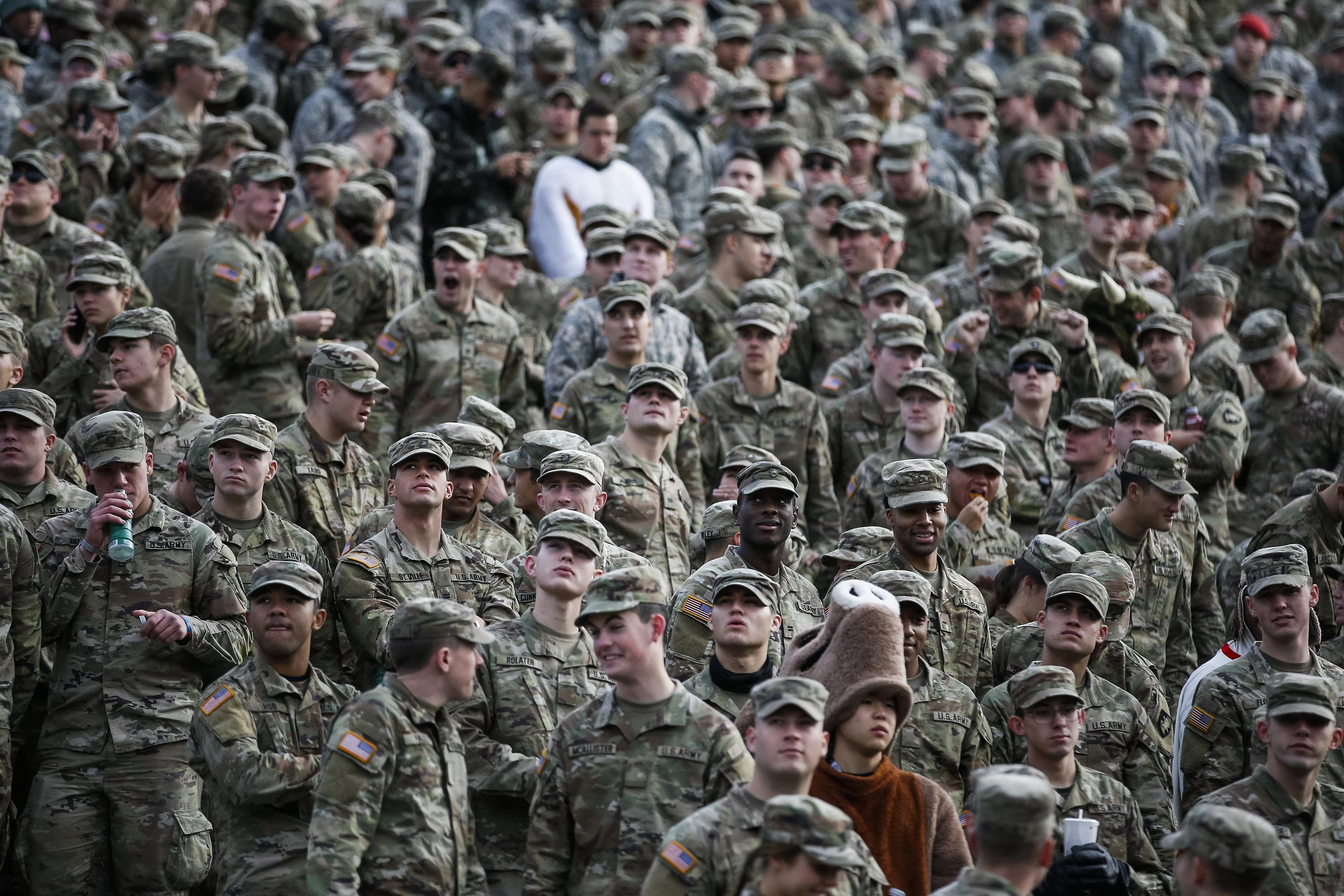
For Stephanie Davis, who grew up with little, the military was a path to the American dream, a realm where everyone would receive equal treatment. She joined the service in 1988 after finishing high school in Thomasville, Geo…Read More

I'm an image

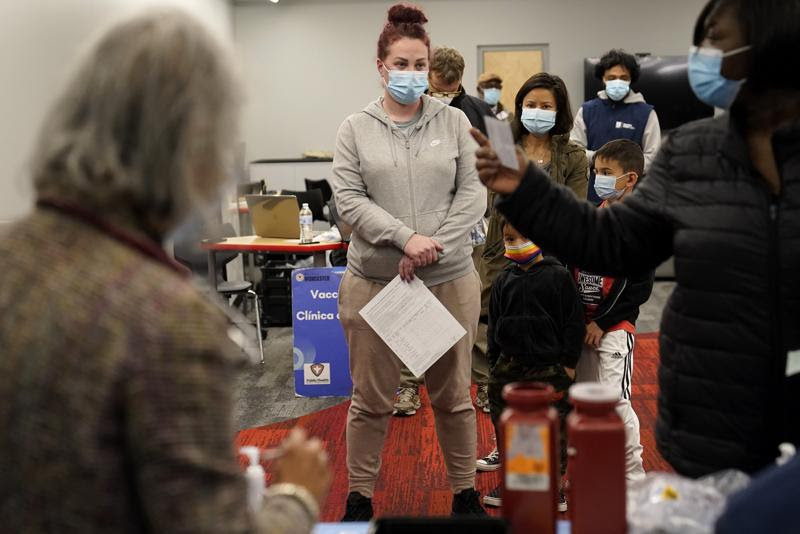
COLUMBUS, Ohio (AP) — A southwestern Ohio woman won the state’s first $1 million Vax-a-Million vaccination incentive prize, while a Dayton-area teen was awarded the first full-ride college scholarship offered by the program, …Read More

I'm an image

There’s a 40% chance that the world will get so hot in the next five years that it will temporarily push past the temperature limit the Paris climate agreement is trying to prevent, meteorologists said. …Read More

I'm an image

KABUL, Afghanistan (AP) — Abdullah Mohammadi lost his two legs and an arm below the elbow in a ferocious battle with the Taliban. As a young Afghan soldier, he had been eager to fight for his country, but now he’s furious at …Read More

OTHER TOP STORIES

CAPE CANAVERAL, Fla. (AP) — General Motors is teaming up with Lockheed Martin to produce the ultimate off-road, self-driving, electric vehicles — for the moon….Read More

NEW YORK (AP) — Eric Carle, the beloved children’s author and illustrator whose classic “The Very Hungry Caterpillar” and other works gave millions of kids some of their earli…Read More

NEW YORK (AP) — Toward the end of HBO Max’s “Friends” reunion special, host James Corden asks the six actors to imagine what their characters’ lives would be like today. Chand…Read More

HONOLULU (AP) — Cruising along the west side of Hawaii’s Big Island, the landscape is dominated by ancient volcanic flows and jagged shorelines. Then you get to Hapuna Beach. …Read More

The post World View: Mass Murder, Racism in US Military, World Heats Up, More appeared first on The St Kitts Nevis Observer.

Accused Fraudster Choksi Captured in Dominica, to be Deported to India

Authorities in Dominica have agreed to work with the Antigua and Barbuda government to fulfil a request by Prime Minister Gaston Browne to have fugitive businessman Mehul Choksi repatriated to India.

Choksi, who was reported missing by his wife on Sunday, was apprehended by lawmen in Dominica in the early hours of Tuesday morning.

According to reports from Roseau, Choksi was captured on a vessel as he cruised into Toucari Beach, on the island’s north coast, at around 3am.

“We asked them not to repatriate him to Antigua,” Browne told Observer yesterday.

The government, Browne continued, also reached out to the Indian High Commissioner’s Office, asking that they advise the Narendra Modi-led administration accordingly.

“I have advised them so they can coordinate efforts to have Choksi repatriated directly to India so that he could be brought to justice,” Browne explained, adding that the fugitive’s family were free to stay in Antigua as Antigua and Barbuda citizens.

Browne said law enforcement officials in Dominica are still investigating the circumstances surrounding Choksi’s illegal entry into the nature isle – and who aided and abetted his travels.

It is alleged that Choksi had shown interest in a boat that was up for sale in Jolly Harbour prior to his escape.

Indian federal police have filed fraud charges against Choksi, his nephew Nirav Modi, and others in connection with their suspected involvement in fraudulent transactions that led to losses of about US$2 billion for India’s Punjab National Bank (PNB).

In 2018, PNB alleged that rogue employees had issued fake bank guarantees over several years to help jeweller groups – controlled by Modi and Choksi – raise funds in foreign credit.

Modi and Choksi left India before the fraud came to light but have denied any wrongdoing and have said in letters and statements that they are innocent. Choksi has been living in Antigua after gaining citizenship by the citizenship by investment programme in 2017.

However, after the allegations surfaced and India requested his extradition, the Antigua and Barbuda government began steps to revoke his citizenship.

Choksi has been fighting that in court and Prime Minister Browne said the government will seek to get revocation in absentia.

Meanwhile Choksi’s wife Priti told Indian media that she is happy that her spouse is safe.

Choksi’s attorney Vijay Aggarwal also spoke to Indian media, saying, “I have spoken to his family. They are happy and relieved that his whereabouts are now known”.

He added that efforts are being made to speak with Choksi, “so that one can know the cleaner picture on how he was taken to Dominica”.

The post Accused Fraudster Choksi Captured in Dominica, to be Deported to India appeared first on The St Kitts Nevis Observer.

Covid: Biden Orders Probe into Virus Origin, Has India Peaked?

Joe Biden holds talks with South Korean President Moon Jae-In

President Biden asked intelligence agencies to report back to him within 90 days on the virus’s origin

BBC- US President Joe Biden has ordered intelligence officials to “redouble” efforts to investigate the origins of Covid-19, including the theory that it came from a laboratory in China.

He said the US intelligence community was split on whether it was the result of a lab accident, or emerged from human contact with an infected animal.

Mr Biden asked the groups to report back to him within 90 days.

China’s embassy in the US warned against “politicising” origin tracing.

“Smear campaigns and blame shifting are making a comeback, and the conspiracy theory of ‘lab leak’ is resurfacing,” the embassy said in a statement posted on its website, which did not directly mention Mr Biden’s remarks.

“To politicize origin tracing, a matter of science, will not only make it hard to find the origin of the virus, but give free rein to the ‘political virus’ and seriously hamper international cooperation on the pandemic,” it said.

Since it was first detected in the Chinese city of Wuhan in late 2019, more than 168 million cases of Covid-19 have been confirmed worldwide and at least 3.5 million deaths reported.

Authorities linked early Covid cases to a seafood market in Wuhan, leading scientists to theorise the virus first passed to humans from animals.

But recent US media reports have suggested growing evidence the virus could instead have emerged from a laboratory in China, perhaps through an accidental leak.

line

Lab leak theory goes mainstream

Analysis box by Anthony Zurcher, North America reporter

In what passes for relative transparency in the US government, the Biden administration has conceded the American intelligence community is split on Covid-19’s origins – it could be the lab or animal-to-human contact – and no-one is near certain about it.

That marks a big shift from the derision heaped on the lab theory by many in the media and politics last year, when Donald Trump, Secretary of State Mike Pompeo, Senator Tom Cotton and others floated the idea.

Mr Trump and Mr Pompeo didn’t help the situation, however, as they were coy about the grounds for their suspicion. And their theories floating alongside more far-fetched ones, such as that the disease was manufactured as a bioweapon in a Chinese lab. That possibility still seem highly unlikely.

The public may never know the full truth about the virus’ origins, particularly if China continues to be uncooperative. Mr Biden is pledging a full investigation, however, and if the US finds conclusive evidence of a lab leak, it will mean more than just a few prominent figures having to eat crow and re-evaluate their trust in authoritative “conclusions”. It could place very real strain on US-China relations for years to come.

line

Why is President Biden doing this now?

In a White House statement released on Wednesday, President Biden said he had asked for a report on the origins of Covid-19 after taking office, “including whether it emerged from human contact with an infected animal or from a laboratory accident”.

On receiving it this month, he asked for “additional follow-up”.

Mr Biden said the majority of the intelligence community had “coalesced” around those two scenarios, but “do not believe there is sufficient information to assess one to be more likely than the other”.

Huanan Seafood Wholesale Market in January, Wuhan
The Huanan Seafood Wholesale Market in Wuhan was linked to early Covid cases

The president has now asked agencies to “redouble their efforts to collect and analyse information that could bring us closer to a definitive conclusion”, and report to him within 90 days.

He concluded by saying the US would “keep working with like-minded partners around the world to press China to participate in a full, transparent, evidence-based international investigation and to provide access to all relevant data and evidence”.

Beijing has previously suggested Covid-19 could have come from a US laboratory instead.

In its statement on Wednesday, the Chinese embassy said it supported a full investigation into “some secretive bases and biological laboratories all over the world”.

Mr Biden’s statement came as CNN reported that the president’s administration this spring shut down a state department investigation into whether the virus could have leaked from a Wuhan lab, deeming the probe an ineffective use of resources.

What do we know about the lab theory?

The laboratory leak allegations were widely dismissed last year as a fringe conspiracy theory, after then-President Donald Trump said Covid-19 had originated from the Wuhan Institute of Virology. Many US media outlets described such claims as debunked or false.

In March this year, the World Health Organization (WHO) issued a report written jointly with Chinese scientists on the origins of Covid-19, saying the chances of it having started in a lab were “extremely unlikely”. The WHO acknowledged further study was needed.

But questions have persisted and recent reports attributed to US intelligence sources say three members of the Wuhan Institute of Virology were admitted to hospital in November 2019, several weeks before China acknowledged the first case of the new disease in the community.

Anthony Fauci, President Biden’s chief medical adviser, has maintained he believes the virus was passed from animals to humans, though he conceded this month he was no longer confident Covid-19 had developed naturally.

Mr Biden’s statement comes the day after Xavier Becerra, US secretary for health and human services, urged the WHO to ensure a “transparent” investigation into the virus’s origins.

“Phase 2 of the Covid origins study must be launched with terms of reference that are transparent, science-based and give international experts the independence to fully assess the source of the virus and the early days of the outbreak,” Mr Becerra said.

On Tuesday, Mr Trump sought to take credit in an emailed statement to the New York Post. “To me it was obvious from the beginning but I was badly criticised, as usual,” he said. “Now they are all saying: ‘He was right.’”

=============================================

Covid-19: Has India’s deadly second wave peaked?

Soutik Biswas
India correspondent

Indian doctor wearing Personal Protective Equipment (PPE) is seen inside a COVID-19 care centre and isolation ward facility near a Hospital in New Delhi, India, 24 May 2021.image copyrightEPA
image captionOn Monday, cases fell below 200,000 for the first time since 14 April

India has recorded 26 million Covid-19 cases – second only to the US. It is the new epicentre of the global pandemic.

The second wave in recent weeks has overwhelmed the healthcare system, leaving hospitals struggling to cope and critical drugs and oxygen in short supply.

But infections now seem to be slowing down. On Monday, cases fell below 200,000 for the first time since 14 April.

So is the second wave coming to an end?

Experts believe that at a national level, the wave is waning.

The seven-day rolling average of new reported cases during the wave peaked at 392,000 and has been on a steady decline ever since for the past two weeks, according to Dr Rijo M John, a health economist.

But there’s a catch.

Even if the second wave appears to be waning for India as a whole, it is by no means true for all states.

It appears to have crested in states such as Maharashtra, Delhi and Chhattisgarh, but is still rising in Tamil Nadu, for example, as in much of the north east; and the situation in Andhra Pradesh and West Bengal is unclear.

Chart

So the wave is not uniform and there are several states that are yet to find their peak in daily new cases, according to Dr John.

To be sure, infections are coming down in most of the major cities.

“But the weak rural surveillance complicates the picture,” said Dr Murad Banaji, a mathematician at Middlesex University London. “It is possible that total transmission nationwide has not peaked yet, but this is not visible in case numbers because the infection is mostly spreading now in rural areas,” he said.

Such heterogeneity at the local level makes it very difficult to guess whether the India-wide trend of a sharp decline in active cases now is sustainable or not, according to Dr Sitabhra Sinha, a scientist at the Institute of Mathematical Sciences in Chennai.

Bhramar Mukherjee, a University of Michigan biostatistician who has been closely tracking the pandemic, agreed.

“The notion that the peak has passed may give false sense of security to everyone when their states are in fact entering the crisis mode,” she said. “We must make it clear that no state is safe yet.”

Does the virus’s reproduction number offer any clues?

The reproduction number of the virus – also called R0 and R- is a way of rating a disease’s ability to spread and estimates the average number of people infected by one already infected person.

The only difference between the two values is that R0 is calculated during the onset of the epidemic when almost the entire population is susceptible.

R, on the other hand, is calculated once the epidemic has progressed and a fraction of the population has already recovered and therefore is immune.

India’s R number fell below 1 on 9 May, according to Dr Sinha.

Chart

“If this is a sustained trend and goes even lower in the subsequent weeks, then yes, we can expect to see a sharper fall in the number of cases,” Dr Sinha said.

But the R for India “stayed close to 1 in the entire run-up to the second wave, so we need to be careful that this is not a fluke”, he said.

“So it is quite possible that things can get worse if some state with a high R but a low number of active cases at the moment climbs up the charts as a result of the epidemic not being properly contained there.”

When is the second wave likely to end?

The rate of decline of cases from the first wave was slow – active cases began declining only from late September last year, a trend which continued till the beginning of the second wave in the middle of February.

The decline appears to have been faster in the second wave, and it is not clear why.

Experts say one reason could be the virus has burnt through a large part of the population.

Chart

But then what about the fact that the second wave appears to have been driven by mutant strains to which previously infected people may not be entirely resistant?

Dr Mukherjee said her models indicated cases would come down to between 150,000 and 200,000 by end of May, and by the end of July may return to where they were in February.

But, she said, a lot would depend on how India’s states exit from local lockdowns.

Positive rates should be at or below 5% for at least 14 days before a state or country can safely reopen, according to the World Health Organization.

Dr John says if India manages to test an average of 1.8 million samples daily, a positive rate of 5% would mean about 90,000 daily new cases.

“That will be a healthy sign that things are under control,” he said.

What about the rising number of deaths?

India is only the third in the world to record more than 300,000 deaths – behind the US and Brazil.

The real number of fatalities might be much higher as many deaths are not officially recorded.

Dr Banaji said daily deaths had not yet obviously peaked because there’s a time lag between cases peaking and deaths peaking.

Chart

But also, as with cases, there are huge variations in death surveillance and recording between states, and between urban and rural areas.

“Even when recorded fatalities start to fall, we’ll need to be wary of reading too much into this until we stop hearing reports of large numbers of rural deaths,” said Dr Banaji.

Dr Mukherjee said many more deaths were likely to happen in the month between mid-May and June – the models estimate 100,000 deaths during the period.

How does India’s second wave compare with other countries?

The second waves in both the UK and US saw sharp rises and falls – and both peaked in early January.

However, a comparison with the decline of the second wave in other countries may be problematic, according to Dr Sinha.

He says most of Europe had the second wave around November-January which is the usual flu season.

A man sits next to his wife, who is suffering from fever as she receives treatment at a clinic set up by a local villager, amidst the spread of the coronavirus disease (COVID-19), in Parsaul village in Greater Noida, in the northern state of Uttar Pradesh, India, May 22, 202image copyrightReuters
image captionA man sits next to his wife, suffering from fever, in a village in India

Even in normal years, a large number of people suffer from respiratory problems during this time – so a “spike wasn’t entirely unexpected”.

And the decline from the second wave has occurred at different rates in different countries.

In Germany, the decline from the peak of the second wave was, in fact, slower than the decline from the peak of the first wave, Dr Sinha said. In France, both declines occurred at about the same rate.

“I don’t think that we can apply any universal rule gleaned from the rate of decline of the second wave to India – which escaped this particular flu season-associated wave,” he added.

What happens next?

India will need more nuanced and strategic plans as it eases the second wave lockdowns.

Experts say opening indoor dining, pubs, coffee shops, gyms and similar “high risk facilities” should be delayed.

Gatherings should be allowed with less than 10 people outdoors or in highly ventilated areas. Big summer weddings in air-conditioned halls are a “virus pit”, said Dr Mukherjee.

An Indian man waits for COVID-19 vaccine during the vaccination drive in Bangalore, India, 24 May 2021image copyrightEPA
image captionExperts say Indians should not let down their guard after the restrictions ease

Most importantly, the flagging vaccination drive needs to pick up speed, and mobile and mass vaccination drives should be introduced.

Also, experts say, India will need to closely track new variants or upticks in infection, using real-time epidemiological and sequencing data.

The country should also look at pool testing (combining samples for testing to save time and supplies) and wastewater testing (collecting wastewater and analysing for the virus).

Dr Banaji said it would be wrong to assume that the virus is running out of fuel.

“Immunity is not all or nothing: people infected earlier by an earlier variant of the virus may be vulnerable to re-infection and even transmit the disease.”

India has so far partially vaccinated only 10% of its people.

“I don’t think we should consider going back to normalcy at least until we are able to vaccinate 80% of our population,” said Dr John.

Until then, maintaining Covid appropriate behaviour – mask, social distancing, sanitisation, avoidance of mass gatherings – would help check infections.

Early declaration of victory over Covid-19 has already had disastrous consequences – we don’t want to repeat that,” said Dr Sinha.

The post Covid: Biden Orders Probe into Virus Origin, Has India Peaked? appeared first on The St Kitts Nevis Observer.

Sales to China Fuels Soaring Beef Prices

Beef prices are surging worldwide, taking meat off the menu in steak-loving Buenos Aires and spoiling summer barbecues in the United States as Chinese imports rise and the cost of feeding cattle soars.

Globally, the surge is contributing to the highest food prices since 2014, according to the United Nations food agency, hitting poorer consumers particularly hard as they struggle to recover from economic shutdowns triggered by the COVID-19 pandemic.

The rise in beef prices has been spurred by increasing demand from China, limited cattle supplies in some countries, a shortage of slaughterhouse workers and rising feed costs. The trend is starting to rattle supplier markets and impact policy.

Argentina, the second-biggest beef supplier to China after Brazil, on May 17 halted exports for a month as it grapples with runaway inflation. It blamed high demand from Asia for drawing down local beef supplies and raising domestic prices.

“The price of meat has climbed really high, it’s crazy,” said Fernanda Alvarenga, a 38-year-old administrative employee in Buenos Aires.

She said she has cut back to eating meat at home just one day a week, instead of every two days. She has also started preparing milanesa, a popular breaded meat dish, with a cheaper cuadrada cut of meat, instead of more expensive peceto cuts.

“It costs something like 4,000 to 5,000 pesos ($42-$53) every month to buy my meat. Before, for the same amount you could get a lot more.”

Beef prices in Argentina, where grilling beef on the barbecue is regarded as a basic human right and where the countryside is dotted with cattle ranches, have soared more than 60% in a year. Per-capita consumption has plunged, hitting a 100-year low in April, a meat industry chamber report showed.

Memes shared in WhatsApp chat groups lament how beef has become unaffordable, including jokes that inflation has pushed people instead to eat polenta – a wry dig at government food aid efforts during the pandemic.

CHINA’S APPETITE

In the first four months of 2021, China imported 178,482 tonnes of beef from Argentina, up from 152,776 tonnes a year earlier, according to China’s General Administration of Customs data.

Most of the imports are older cows that are not consumed domestically, according to Argentina’s meat industry chamber, which opposes the government export ban. Farmers have protested the ban with a halt on local livestock trading.

China increased meat imports after a deadly pig virus, African swine fever, decimated its hog herd starting in 2018. More recently, Beijing suspended some beef imports from Australia, its No. 3 supplier from 2018 to 2020, as relations between the two countries deteriorate. Chinese importers have since depended more on other suppliers.

U.S. beef exports to China hit a monthly record in March of 14,552 tonnes, according to the U.S. Department of Agriculture, well above total shipments in all of 2019. A growing middle class in China is making room for beef in a diet that has long been pork-based.

“Beef used to be mainly consumed outside the home, like at restaurants. But beef is increasingly popular for home cooking,” said Pan Chenjun, senior analyst at Rabobank.

Beef prices in China in late April were 4.4% higher than a year earlier, while pork prices were down 27.9%, according to data from China’s Ministry of Agriculture and Rural Affairs.

Shipping beef to importers like China is more profitable for countries such as Argentina and Brazil due to currency depreciation and weakening local demand, said Upali Galketi Aratchilage, the United Nations’ Food and Agriculture Organization senior economist. The result, though, is that higher exports can reduce domestic supplies, driving up prices, Aratchilage said.

The United States and Brazil are still struggling to replenish domestic inventories of frozen beef, chicken and pork in storage after shipments to China increased last year even as COVID-19 ripped through slaughterhouses, sickening workers and hobbling production.

‘ASTRONOMICAL’ PRICES

In Clovis, California, retired Army veteran Darin Cross said he has been shocked by 2-pound (0.9 kg) packs of ground beef selling for $10 at Walmart, up from $8 previously. The 55-year-old is eating more vegetables as a result.

“For those of us on fixed incomes, that’s a pretty steep increase in a matter of just a couple of weeks,” Cross said. “My fear is that it’s just going to keep going.”

The average unit price for U.S. fresh beef in April rose by 5% from March and was up about 10% from a year earlier, according to NielsenIQ data. Pork and chicken prices are each up about 5.4% from last year.

Outside New Orleans, Tina Howell, 45, said she stopped buying steaks in bulk to fill up a deep freezer at her home because grocers stopped offering sales. She has noticed New York strip steaks selling for about $12 per pound, up from about $7 previously.

“The prices are astronomical,” said Howell, who works in real-estate marketing.

Higher prices are benefiting meatpackers like Tyson Foods Inc (TSN.N), the largest U.S. meat processor by sales. The company said U.S. government stimulus checks are driving exceptional demand by giving consumers more money to buy food.

Although U.S. cattle supplies are ample, beef production is limited by a labor shortage and the processing capacity in slaughterhouses, according to meat producers.

Meatpackers are facing higher livestock feed costs with soy and corn prices around eight-year highs, and some are passing those costs on to consumers. Increased restaurant demand is also supporting prices as COVID-19 restrictions ease.

Nebraska-based Omaha Steaks, which sells premium beef, projects U.S. demand will remain strong through the summer as people are willing to have larger gatherings and pay for high-quality food, CEO Todd Simon said.

Brazilian meatpackers JBS SA (JBSS3.SA) and BRF SA (BRFS3.SA), however, have said they are struggling to pass on higher feed costs to consumers in their home market, though JBS has benefited from its U.S. operations.

Prices for some beef cuts rose by as much as 30% over the past year in Brazil due to tight cattle supplies and strong export demand, said Guilherme Malafaia, an official at the government’s agricultural research agency, Embrapa. Together with Hong Kong, China buys 60% of all beef exported by Brazil.

For Brazilians, though, high prices have pushed domestic consumption down by 14% from pre-pandemic levels, to a 25-year low. Instead, consumers turned to pork, chicken and eggs, which are historically cheaper.

Brazil’s per-capita pork consumption rose by 5% while chicken consumption rose by 6% in 2020 from the year before, said Marcelo Miele, a pork and poultry researcher at Embrapa. Brazilians now eat 251 eggs per person per year, the highest ever, he said.

Butchers are suffering from falling sales as some consumers cut back on beef or shift to less expensive meats.

With U.S. prices for “middle meats” like T-bone steaks and rib eyes increasing sharply, meat cutter Shawn Smith said more people are buying ground beef at his store in Albany, Oregon.

Argentine butcher Pablo Alberto Monzón, 26, said meat sales have dropped by a third at his shop in a working-class neighborhood of Buenos Aires. Fewer customers are coming in, and those who do find that their money does not go far.

“People who before could buy short ribs for the grill now make do with flank steak,” Monzón said.

The post Sales to China Fuels Soaring Beef Prices appeared first on The St Kitts Nevis Observer.

Roma Migrants from Europe Rafting from Mexico to Enter U.S.

Among the hundreds of Central American migrants crossing the Rio Grande river daily on rafts from Mexico to Texas, dozens stood out on a recent day. They were generally taller and some wore skirts, stylish shoes and tracksuits, while many of the other migrants wore T-shirts, pants and jeans.

U.S. border patrol officers who apprehended them near the river tried to speak to them in Spanish. There was a pause as some of the border crossers explained in broken English that they were Romanians, a Reuters photographer said.

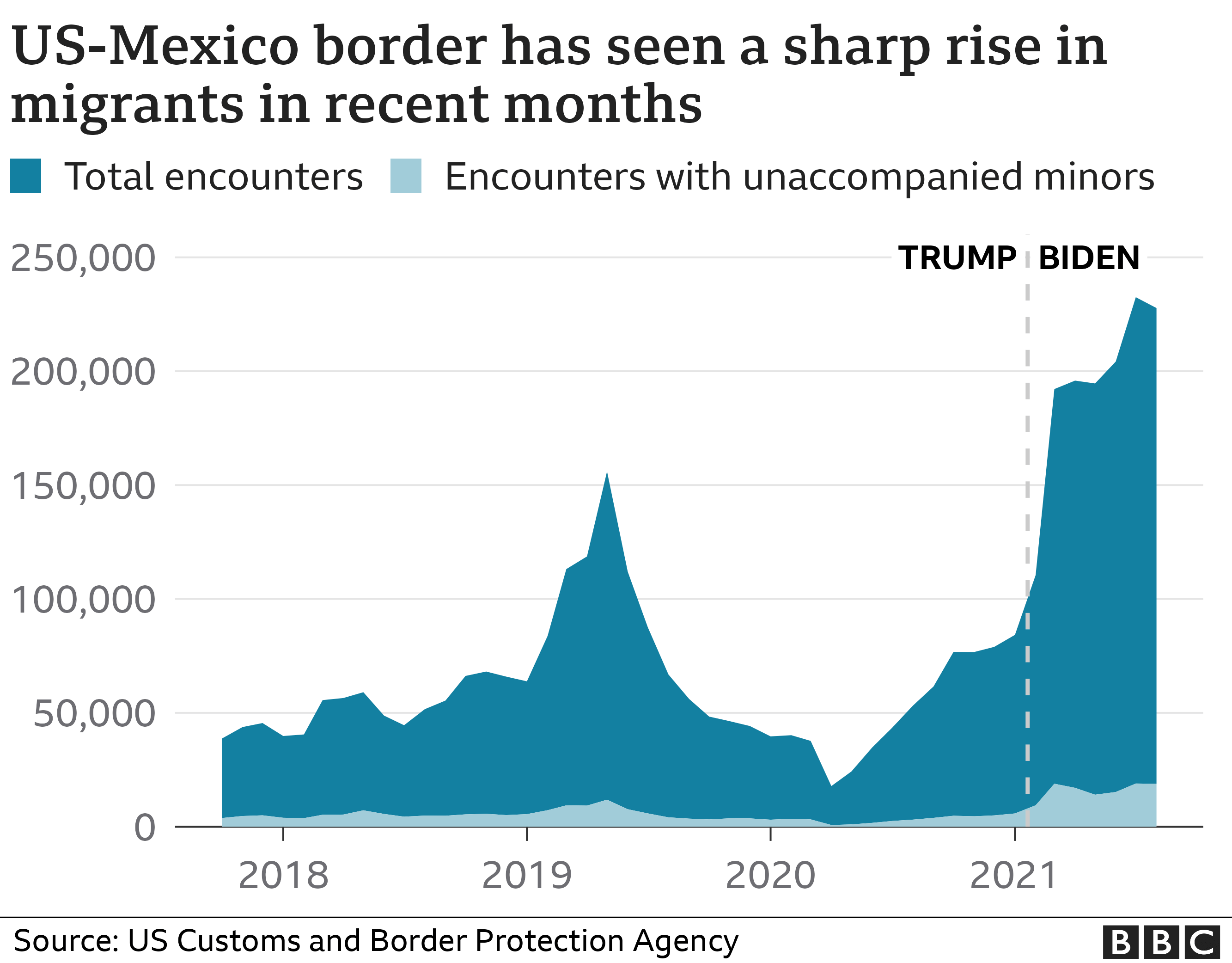
Scores of Romanians who are part of the Roma ethnic minority have crossed the U.S.-Mexico border in south Texas in recent weeks to seek asylum, highlighting the far-flung origins of some of the migrants who have contributed to border arrests in recent months reaching a 20-year high. read more

Reuters witnessed large groups of these migrants crossing the Rio Grande on rafts on multiple occasions in May. The migrants Reuters spoke to said they were fleeing racism in Romania and wanted to seek asylum in the United States.

The Roma are Europe’s largest ethnic minority and have a long history of social exclusion and discrimination.

Over three weeks, a Reuters photographer saw nearly 200 Romanians crossing at different points along the Texas border, many extended family groups of 10-15 people.

Border patrol agents have apprehended 2,217 Romanians so far in fiscal year 2021, more than the 266 caught in fiscal 2020 and the 289 in fiscal 2019, according to data provided by the U.S. Customs and Border Protection agency.

More than 2,000 Romanians crossed the southwest border in fiscal year 2016. Current arrivals are on pace to be the highest since 2007, the earliest year for which citizenship arrival data is available.

Margareta Matache, director of the Roma Program at the FXB Center for Health and Human Rights at Harvard University, said many Roma fled Romania to escape persecution and dire economic circumstances, partly fueled by the COVID-19 pandemic. read more

“Currently, U.S. policies and policy proposals offer hope for more humane and just policies, including for immigrants,” Matache said. “They (Roma) are looking for a better life in a place where they are not exposed to violence, discrimination, and disrespect.”

The Romanian government said it had not been notified by the United States of any detained citizens but said its embassy officials have contacted local authorities after reading media reports.

The European Union Agency for Fundamental Rights found in a 2016 survey of nearly 8,000 Roma people in nine European countries that about 80% of the Roma population was living below the national poverty line.

There is no official population count for Roma people, who reside in many countries and have long faced prejudice in Europe and worldwide. Most live in eastern Europe, particularly in Romania, Bulgaria, Slovakia and Hungary.

According to Romanian media reports, many Romanian migrants fly from Paris to Mexico City as tourists as they do not need visas to enter Mexico. Then smugglers take them by bus to the U.S. border where they cross the Rio Grande by boat or raft.

The post Roma Migrants from Europe Rafting from Mexico to Enter U.S. appeared first on The St Kitts Nevis Observer.

Galápagos Tortoise Found Alive, Thought Extinct

BBC- Genetic tests have confirmed that a giant tortoise found on the Galápagos Islands is from a species which scientists thought had died out more than a century ago.

The single female was discovered during a 2019 expedition to Fernandina Island.

To prove the link, scientists took samples from the female to compare to the remains of a male from the species Chelonoidis phantasticus.

The last previous sighting of the species had been in 1906.

That sighting was made by scientists from the California Academy of Sciences who sailed to the Galápagos Islands to carry out comprehensive survey of their flora and fauna.

They took back the male specimen to the academy’s herpetology department and it was samples from there that allowed geneticists from Yale University to determine 115 years later that the female found in 2019 is indeed a Chelonoidis phantasticus, also known as Fernandina giant tortoise.

Ecuador, of which the Galápagos islands are a part, has celebrated the good news.

“It was believed to have gone extinct more than 100 years ago!” Environment Minister Gustavo Manrique tweeted of the Fernandina giant tortoise. “Hope is alive,” he added.

Washington Tapia (C), member of Galapagos Conservancy, and two park rangers, are pictured with a specimen of the giant Galapagos tortoise Chelonoidis phantasticus, thought to have gone extinct about a century ago, at the Galapagos National Park on Santa Cruz Island, in the Galapagos Archipelago, in the Pacific Ocean 1000 km off the coast of Ecuador, on February 19, 2019.image copyrightAFP
image captionConservationist and park rangers found the female in 2019

The female Fernandina giant tortoise, which is estimated to be more than 100 years old, is currently in a breeding centre on Santa Cruz Island.

Scientists have found prints and faeces on Fernandina Island which they think indicate that there are more individuals of the species left in the wild.

The Director of the Galapagos National Park, Danny Rueda, has said that an expedition will be launched to Fernandina Island to try to locate other members of the same species

The post Galápagos Tortoise Found Alive, Thought Extinct appeared first on The St Kitts Nevis Observer.

Hate Crimes: Biden Pressured to Address Growing US Anti-Semitism

President Biden is under growing pressure to take action amid the rise in violent attacks targeting the U.S. Jewish community.

Biden has condemned the surge in disturbing incidents, but Democratic lawmakers and outside groups are pushing for more, calling for the president to take more steps to stop antisemitism.

One trio of Democrats in a letter to Biden asked that he nominate a United States ambassador-at-large to monitor and combat antisemitism.

“We need a united, bipartisan, national-level commitment to confront and address the threat of antisemitism head-on. Antisemitism is wrong, and it deserves to be unequivocally condemned by all,” Reps. Josh Gottheimer (D-N.J.), Elaine Luria (D-Va.) and Kathy Manning (D-N.C.) wrote to Biden on Tuesday.

Five prominent Jewish advocacy groups — the Anti-Defamation League (ADL), the American Jewish Committee, the Orthodox Union, the Jewish Federations of North America, and Hadassah, The Women’s Zionist Organization of America, Inc. — in a Friday letter to Biden expressed concern about a surge in attacks.

The ADL says antisemitic incidents in the United States have increased 63 percent said since new hostilities broke out 11 days ago between Israel and Hamas. The two sides reached a cease-fire on Friday.

There have been clear incidents of antisemitism related to the conflict in the Gaza Strip, though much of the focus in Washington has also been on antisemitic remarks by Rep. Marjorie Taylor Greene (R-Ga.) that were condemned by leaders in both parties.

Greene compared vaccinated employees wearing a “vaccination logo” to Nazis forcing Jews to wear a yellow star during the Holocaust, which led to the genocide of 6 million.

Past remarks by liberal Democrats comparing Israel to an apartheid state have also come under new scrutiny from lawmakers who say they can contribute to antisemitic violence.

In response to the pressure, Biden and the White House have taken a number of steps to reassure the Jewish community.

The Orthodox Union Advocacy Center met virtually with White House senior staff and personnel office staff on Monday, and the meeting was also attended by staff from the National Security Council and Department of Homeland Security.

Nathan Diament, executive director of the Orthodox Union, said the White House meeting was “very positive.”

“We discussed the issues raised in the letter. The White House staff weren’t so specific as to say, ‘Yes, we’re going to do this.’ But they were very receptive about what we were raising. They said that from the president on down, they’re very concerned about the situation, intend to act comprehensively on it, along the lines of the suggestions we raised. For a bad situation, it was very positive,” he said.

The White House said Biden has been in constant contact with the Jewish community to offer his support.

“The President recognizes that this is a persistent evil that always deserves our attention and efforts, and as he tweeted this week, these attacks must stop, and we must work collectively to give hate no safe harbor,” a White House official told The Hill.

Jewish organizations plan to keep pushing for more from the president. 

The Jewish Council for Public Affairs (JCPA) is calling for a twofold approach to the uptick in violence. It wants the White House to appoint a Jewish liaison to the community and fill the position of ambassador-at-large to monitor and combat antisemitism.

Biden should also “strongly condemn antisemitism when we see a rise in hate toward the Jewish people. It’s important that’s not always advocacy from Jewish groups that leads to condemnation,” said Melanie Gorelick, JCPA senior vice president.

The JCPA has been invited to an off-the-record meeting with the White House.

“The White House has reached out to the Jewish community, and so there is outreach right now, which is very much appreciated,” Gorelick said.

Biden signed the COVID-19 Hate Crimes Act into law last week. That legislation was focused on attacks against Asian Americans that have occurred since the coronavirus pandemic, but it also includes a provision named in part for Heather Heyer, who was killed counterprotesting at the Unite the Right rally in Charlottesville, Va., in 2017 that included self-identified neo-Nazis and Nazi symbols. 

Gorelick said the JCPA has been pressing for the provision for years, while Diament said he wanted to see how the new law could be implemented to combat anti-Jewish hate.

A White House official said the administration is working to bolster the safety and security of synagogues. As part of that effort, the Department of Homeland Security will brief heads of security in the Jewish community.

Doug Emhoff, the first Jewish second spouse in the U.S., spoke at a ADL event earlier this month about the administration’s work fighting anti-Semitism. 

“He recognizes this is a persistent evil that always deserves our attention and efforts,” White House press secretary Jen Psaki told reporters on Tuesday of Biden. 

The post Hate Crimes: Biden Pressured to Address Growing US Anti-Semitism appeared first on The St Kitts Nevis Observer.

US: 8 Killed in San Jose, California Rail Yard Shooting

Eight people were killed Wednesday morning during a shooting at a rail yard in San Jose, Calif., according to police, who say the shooter is also dead.

Deputy Russell Davis of the Santa Clara County Sheriff’s Office announced the number of victims during a press conference, saying the investigation is “ongoing” and cautioning that “the numbers can change.”

He said employees at the Valley Transportation Authority (VTA), the facility where the shooting took place, are among the victims.

The suspected shooter, who died in the incident, was identified as a male employee of the VTA.

Davis said authorities will “go with the assumption” that the suspect died from a self-inflicted gunshot wound. He added that deputies on the scene did not exchange gunfire.

Davis also revealed that authorities received information that there are explosive devices in the building. He said a bomb squad has been activated and is currently on the scene “trying to clear out every room and every crevice of that building.”

San Jose Mayor Sam Liccardo (D) told a local television station that there was a fire at the shooter’s home, but nobody was inside.

“That is certainly the information that I have, is that there was a fire at the shooter’s home, there was nobody found inside the home, thank God,” Liccardo told local affiliate KGO, according to CNN.

“It would appear as if the fire was set as the shooter was on his way to the work site,” Liccardo added.

When asked about an area fire at a press conference, Davis said authorities are still gathering information and trying to determine if the situations are connected.

Davis said earlier Wednesday that investigators were on the scene at the rail yard “trying to figure out exactly what happened.”

The VTA control center is a hub that stores a number of trains along with a maintenance yard, and has an indoor and outdoor area, the deputy said.

Glenn Hendricks, the chairperson of the VTA Board of Directors, noted at an earlier press conference that the shooting occurred on the VTA light rail yard, and not in the facilities operations control center.

Multiple reports of shots fired came in at around 6:34 a.m. local time, according to the deputy.

The San Jose Police Department and Santa Clara County Sheriff’s Office tweeted just after 7 a.m. local time that officers were on the scene of an active shooting. Authorities requested people stay away from the area, near Younger Avenue and San Pedro Street.

About an hour later, Liccardo said on Twitter that the shooter was “no longer a threat,” adding that several people were being treated for injuries.

His comments came around the same time the Santa Clara County Sheriff’s Office tweeted “Shooter is down. 2021

Davis said authorities initiated an active shooter protocol and dispatched a rescue task force to help extricate victims from the building.

He would not reveal, when asked by reporters, what type of weapon was used in the incident.

The deputy also announced that a reunification center has been established in the area for individuals who are looking for family members or trying to get in touch with others.

California Gov. Gavin Newsom (D) tweeted his office is “in close contact with local law enforcement and monitoring this situation closely.”

Hendricks called the shooting a “horrible tragedy.”

“Our thoughts and love goes out to the VTA family, the organization and what they’ve had to go through. I could not be more proud of the VTA organization. As I drove here, I saw VTA buses out on the road,” he added.

Hendricks, when asked by reporters, said he did not know the number of people who are regularly working at the facility around 6:30 a.m., but said “it’s early in the morning when light rail service is starting.”

He also declined to reveal information regarding security on the premises.

Liccardo said Wednesday was “a horrific day” for San Jose and a “tragic day” for the VTA family, during a press conference alongside Hendricks.

“Our heart pains for the families and the co-workers because we know that so many are feeling deeply this loss of their loved ones and their friends. Now is a moment for us to collect ourselves, to understand what happened, to mourn and to help those who have suffered to heal. That will be my attention today and for the foreseeable future,” Liccardo said.

“My attention will then be immediately turned to ensuring we do everything possible to ensure this never happens again in our city,” he added.

His ex-wife, Cecilia Nelms, told the Associated Press news agency that Cassidy would tell her that he wanted to kill his colleagues, but she had never believed he would do it.

President Biden on Wednesday called the shooting a “horrific tragedy,” adding that he has the “solemn duty” of again lowering the flag to half-staff, after doing so following the mass shootings in Atlanta, Colorado, South Carolina and Indiana.

“Enough,” Biden wrote.

He called on Congress to “take immediate action and heed the call of the American people” to “help end this epidemic of gun violence in America.”

“Every life that is taken by a bullet pierces the soul of our nation. We can, and we must, do more,” he added.


The post US: 8 Killed in San Jose, California Rail Yard Shooting appeared first on The St Kitts Nevis Observer.