Tag Archives: caribbean

World View: Biden- 70% Vaccinated by July, India Just Gets Worse, Cicadas Ready to Emerge, More

March 19, 2021

Alternate text


Here are today’s selection of top stories from The Associated Press at this hour.

The Associated Press

The Rundown

I'm an image

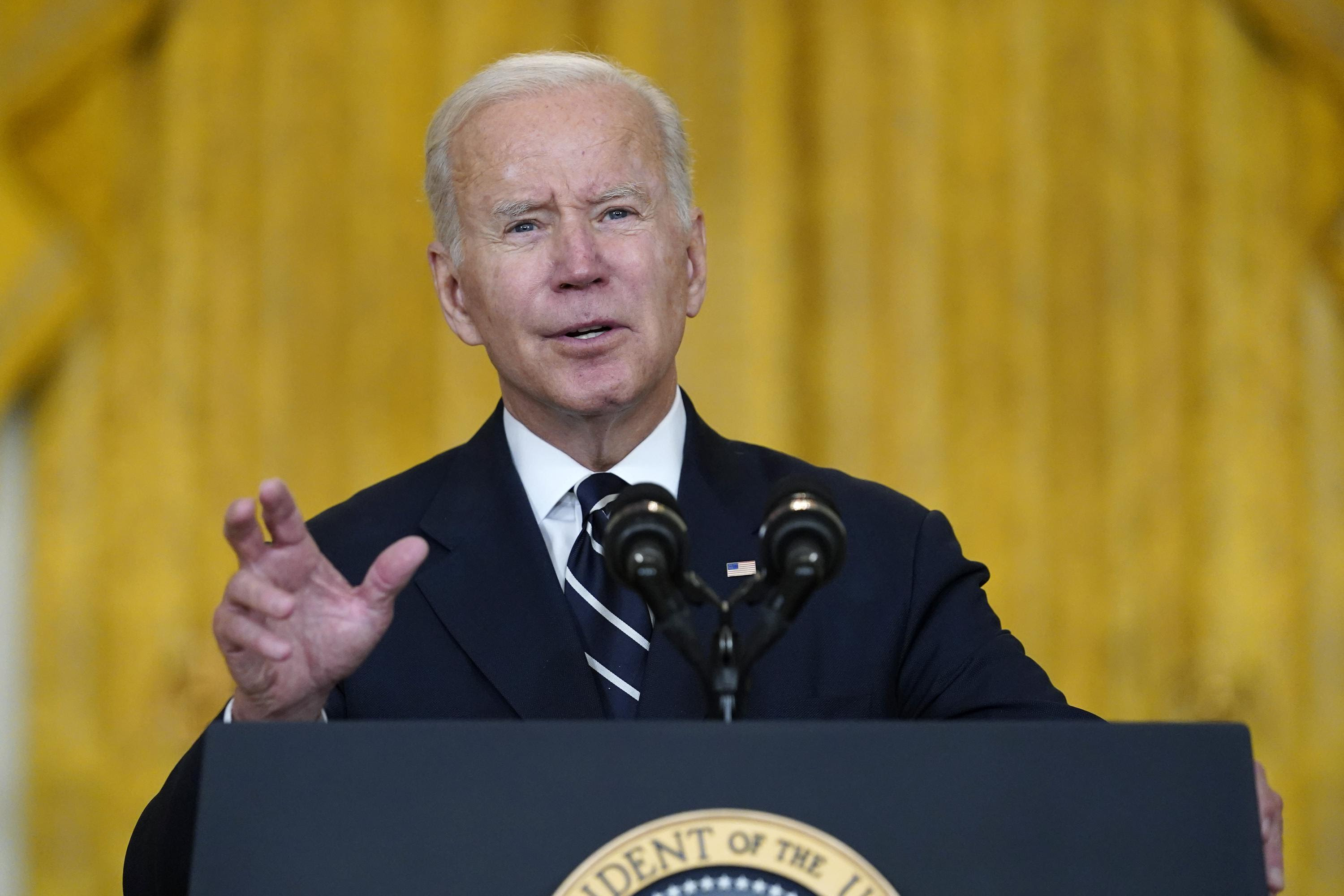
WASHINGTON (AP) — President Joe Biden set a new vaccination goal to deliver at least one shot to 70% of adult Americans by July Fourth as he tackles the vexing problem of winning over the “doubters” and those unmotivated to get inoculated……Read More

I'm an image

Since the day after the deadly Jan. 6 riots on the U.S. Capitol, former President Donald Trump’s social media accounts have been silent — muzzled for inciting violence using the platforms as online megaphones… …Read More

I'm an image

NEW DELHI (AP) — India’s hospitals were packed with coronavirus patients, relatives of the sick scrambled to find supplies of oxygen, and crematoriums were running near full capacity to handle the dead… …Read More

I'm an image

MISSION, Kan. (AP) — After more than a year of fretting over her 13-year son with a rare liver disease, Heather Ousley broke into tears when she learned that he and millions of other youngsters could soon be eligible for the COVID-19 vaccine…Read More

I'm an image

JAKARTA, Indonesia (AP) — Myanmar’s security forces moved in and the street lamps went black. In house after house, people shut off their lights… …Read More

OTHER TOP STORIES

NEW YORK (AP) — The U.S. birth rate fell 4% last year, the largest single-year decrease in nearly 50 years, according to a government report being released Wednesday… …Read More

WASHINGTON (AP) — House Republican leader Kevin McCarthy wants his party to stand firmly with Donald Trump, despite the former president’s false claims about the election…Read More

BABB, Mont. (AP) — On a cloudy spring day, hundreds lined up in their cars on the Canadian side of the border crossing that separates Alberta and Montana… …Read More

COLUMBIA, Md. (AP) — Sifting through a shovel load of dirt in a suburban backyard, Michael Raupp and Paula Shrewsbury find their quarry: a cicada nymph… …Read More

The post World View: Biden- 70% Vaccinated by July, India Just Gets Worse, Cicadas Ready to Emerge, More appeared first on The St Kitts Nevis Observer.

Brazil: Govt. Pandemic Probe Hears of President’s Faith in Malaria Drug

Brazil’s former health minister told a parliamentary inquiry on Tuesday that President Jair Bolsonaro’s right-wing government knew full well that the treatment they were advocating for COVID-19 patients had no scientific basis.

Luiz Henrique Mandetta, who was fired last April by Bolsonaro for not agreeing to push the malaria drug chloroquine as a COVID-19 treatment, testified before a parliamentary inquiry into the handling of the pandemic that has killed more than 408,000 Brazilians.

The Senate investigation is expected to hurt the president politically 17 months ahead of elections by showing the country that his opposition to lockdowns and social distancing measures, his failure to secure vaccines and the touting of unproven treatments deepened the crisis Brazil is now in.

“I warned Bolsonaro systematically of the consequences of not adopting the recommendations of science to fight COVID-19,” Mandetta told the commission.

The minister said he was called to a cabinet meeting with the president, where there was a plan to change the official indications for use of the old anti-malaria drug to say it could be prescribed for COVID-19.

Antonio Barra Torres, president of Brazil’s health regulator Anvisa who was also at the meeting, said that could not be done.

“The government was aware that it was prescribing chloroquine without any scientific evidence,” Mandetta said.

Brazil's President Jair Bolsonaro attends a promotion ceremony for generals of the armed forces, at the Planalto Palace in Brasilia, Brazil April 8, 2021. REUTERS/Adriano Machado
Brazil’s President Jair Bolsonaro attends a promotion ceremony for generals of the armed forces, at the Planalto Palace in Brasilia, Brazil April 8, 2021. REUTERS/Adriano Machado

Brazil has the highest death toll in the world from COVID-19 after the United States, and third in total coronavirus infections after the United States and India

The South American country is so short of vaccine supplies that several big cities have not been able to administer second doses. Some intensive care wards have run out of oxygen and drugs needed to sedate intubated COVID-19 patients.

The United States is working to give Brazil access to $20 million worth of medication used for patients in need of mechanical breathing assistance. The medications will come from the U.S. government’s strategic stockpile and will be delivered in partnership with the Pan American Health Organization, the White House said on Tuesday.

The Senate investigation has called up other former health ministers, including General Eduardo Pazuello, who was picked by Bolsonaro after two ministers were removed for not backing his chloroquine treatment plan.

Bolsonaro’s championing of chloroquine mirrored former U.S. President Donald Trump’s lobbying for use of the related drug hydroxychloroquine as a COVID-19 treatment despite a lack of scientific evidence of any benefit for those patients.

Bolsonaro admired Trump and shares many of his ideological views, including playing down the severity of the pandemic.

Pazuello was due to testify on Wednesday, but said he could no appear because he had been in contact with two army colonels who tested positive for COVID-19. His testimony has been rescheduled for May 19.

The post Brazil: Govt. Pandemic Probe Hears of President’s Faith in Malaria Drug appeared first on The St Kitts Nevis Observer.
Battle of Wits: Antiguans Love for Ancient Board Game

BBC- Under the shade of a wooden hut, a stone’s throw from the flurry and fumes of the Antiguan capital’s main bus station, a battle of wits is afoot.

Two men are bent over a handcrafted mahogany board, deep in concentration in the throes of a game of “Warri”.

As the tension rises, so too does the banter from the engrossed bystanders. One player makes a rash move, and both his opponent and the crowd jeer in response.

The “chess” of Antigua and Barbuda is a mind sport, psyching out one’s opponent is as critical as choosing one’s next move.

The rudimentary apparatus and simple rules bely Warri’s strategic depth. Bringing one’s A-game means focus, acumen and unflappable resolve.

Close-up of a Warri board
image captionWarri has long provided a forum for discussing everything from politics to gossip

The lively scene is mirrored on street corners across the Eastern Caribbean nation where the age-old game, brought here by ancestors from Africa, is as popular today as centuries ago.

“Everyone plays, from young to old; it’s been handed down from generation to generation,” explains local resident Trevor Simon, who has claimed the world champion title multiple times since first entering international contests in the 1990s.

“It’s an easy game to learn and it’s connected to our ancestral past.”

Known as “Oware” in Ghana and “Ayoayo” in Nigeria, the game requires 48 seeds, dubbed “nickars”, found on the Guilandina bush, which locals sometimes also refer to as “guillandria”. Each player controls six hollows on his side of the board and turns are taken moving the counters between the holes with the aim of capturing 25 of the opponent’s.

Warri has long provided a forum for discussing everything from politics to gossip. In colonial times it was banned by Europeans who feared its ability to draw African slaves together socially, driving it underground.

In addition to its cultural significance, there is another reason Mr Simon is one of Warri’s staunchest advocates. Co-founder of the country’s Warri Academy, he has seen the dividends it reaps in children’s mathematical ability.

“When you teach kids to play, you don’t just teach them the game but also our history and how it can help them mathematically,” he tells the BBC. “We write a maths problem out for them and show them how Warri can solve it.

“Historically, Warri was used to teach numeracy in Africa. And army generals had to be conversant in it as it shows good analytical skills; you have to focus not just on your game but also on what your opponent is doing.”

Multiple-time international Warri champion Trevor Simonimage copyright Gemma Handy
Trevor Simon has claimed the world champion title multiple times since the 1990s

His 11-year-old cousin and protégé Skye Simon is testimony to Warri’s educational value.

“I started playing when I was six; I liked that it helped me in math. You have to strategise, use multiplication and be quick to add and subtract,” she says.

“My maths was pretty good before but I feel like it has excelled a bit more. It used to take me almost a minute to solve a problem; now it takes a few seconds.”

The youngster says playing Warri has boosted her confidence too.

“I get nervous before games but I catch myself and continue. The secret is to think it through before you start so you have a clear idea of how you’re going to play,” she adds.

Multiple-time international Warri champion Trevor Simon playing against his young cousin and protégé Skye Simon
image captionSkye Simon, 11, says about the game: “You have to strategise, use multiplication and be quick to add and subtract”

At the bus station, retired police officer Oswald Thomas says Warri helps keep his mind sharp.

“I’d been watching for years but started playing seriously recently. As you improve, you get to compete against the better players,” he says. “It’s a mind-relaxer and it keeps my brain alert.”

Mr Simon learned Warri from his mother when he was nine.

“There was a barber shop in our village where people used to congregate to play. There were two men in particular who were exciting to watch, attracting huge crowds. The energy that exuded from them is what drew me in,” he says.

His prowess in the game saw him accorded the title “Oware Grandmaster” by the Mind Sports Council in 1999.

These days, it is the repartee and animation that accompany a match that he loves the most.

“Wherever we go to play and Africans are involved, there’s always excitement and commentary,” he smiles. “Other countries tend to play quieter, almost studiously.”

The ability to read an opponent’s body language is key, Mr Simon says.

A Warri game being played in Antigua in the 1970simage copyrightAntigua & Barbuda National Museum
image captionWarri, being played here in the 1970s, was brought to Antigua by ancestors from Africa
1px transparent line

“I will always remember playing a man described as the ‘Warri God of Ghana’. We played a friendly match before the tournament and he beat me,” he continues.

“When we sat down for the tournament, I looked him in the eye and told him, this is the real deal. Instantly, his body language was one of defeat. He shrank in his chair taken aback, and I won.”

Such grit just might be in Antiguans’ blood, Mr Simon thinks. It is after all a nation known for its steely-eyed cricketers like Sir Vivian Richards, a trait which spawned success on pitches the world over.

The coronavirus pandemic has temporarily put the brakes on international Warri competitions. For now, Mr Simon is turning his attention to promoting its legacy through his academy and a crusade to get the game added to the local school curriculum.

“I’ve given lectures all over the world about the importance of Warri and I’ve seen its value first-hand,” he adds. “It’s vital to get the young ones involved so, when I pass, they can carry on the tradition.”

The post Battle of Wits: Antiguans Love for Ancient Board Game appeared first on The St Kitts Nevis Observer.

Banned on Social Media, Trump Launches His Own Blog Site

Guardian (UK)- Banned by Facebook and Twitter, Donald Trump has launched his own website which seems to be a testament to him by him and repeats some of the erroneous statements which exiled him from social media.

It’s a retro webpage, billed “From the Desk of Donald J Trump”, and appears at DonaldJTrump.com/desk and features a small photo of the 45th president writing in a book on his desk.

What’s Donald Trump up to these days? I tried to find out via Instagram

A video includes archive material announcing Trump’s ban from Twitter and images of his Mar-a-Lago estate in Florida and of a desktop, overlaid by captions: “In a time of silence and lies, a beacon of freedom arises. A place to speak freely and safely. Straight from the desk of Donald J Trump.”

Below the video are a series of Trump statements resembling blogposts, of which the most recent begins: “Heartwarming to read new polls on big-shot warmonger Liz Cheney of the great State of Wyoming.”

Cheney is under fire from fellow Republicans loyal to Trump’s claims that he actually won the 2020 election, because she publicly calls out the lie and has strongly criticised the 6 January insurrection at the US Capitol by extremist Trump supporters.

Tabs on Trump’s new website allow users to like or share the posts on their own Facebook or Twitter accounts, but there is no option for them to reply.

Visitors are also invited to “sign up for alerts”, so that Trump’s musings can be beamed directly into their inboxes. Perhaps unsurprisingly, options to “shop” and “contribute” figure prominently.

A footnote says the tool is funded jointly by the ex-president’s Save America and Make America Great Again political action committees.

When the page was unveiled on Tuesday, social media erupted with comment – and mockery – suggesting that Trump’s long-awaited return to social media owed much to platforms such as Blogger, launched in 1999.

But Jason Miller, a senior adviser to the former president, sought to provide a clarification – via Twitter.

“President Trump’s website is a great resource to find his latest statements and highlights from his first term in office, but this is not a new social media platform,” he wrote. “We’ll have additional information coming on that front in the very near future.”

Twitter announced it had banned Trump permanently after the US Capitol attack for breaking its “glorification of violence” rules.

Facebook also banned him, with its chief executive, Mark Zuckerberg, saying “the risks of allowing the President to continue to use our service during this period are simply too great”.

But Facebook’s independent oversight board is expected to announce on Wednesday whether it is overturning the suspension.

In the meantime Trump, exiled at his private Mar-a-Lago residence and club in Palm Beach after leaving office in defeat and disgrace, has been sending press releases to journalists.

They are often in a style reminiscent of his tweets, with capital letters, exclamation marks and misspellings. But they no longer drive the day’s agenda or cable news chyrons as his presidential missives once did.

======================================================

Facebook Board Votes to Continue Trump Ban

The Hill- Facebook’s ban on former President Trump’s account will continue following a decision issued by its independent oversight board Wednesday.

“The Board found that, in maintaining an unfounded narrative of electoral fraud and persistent calls to action, Mr. Trump created an environment where a serious risk of violence was possible,” the board wrote in a statement.

While the board did uphold the suspension, it also found that the indefinite suspension was not appropriate.

The panel is requesting that Facebook review the decision to develop a “proportionate response that is consistent with the rules that are applied to other users of its platform.”

“Within six months of this decision, Facebook must reexamine the arbitrary penalty it imposed on January 7 and decide the appropriate penalty,” it said.

Trump has been suspended from the platform since earlier this year on the basis of posts made surrounding the deadly insurrection at the Capitol on Jan. 6.

A spokesperson for Trump did not immediately respond to a request for comment.

The decision will leave Trump with limited ways to reach the public in the same way he did while president.

Trump has been issuing statements to the press via email, and while many of them have been shared on social media widely, his reach and dominance over news cycles has clearly diminished.

The former president launched a feature on his personal website Tuesday that essentially amounts to a blog that would let his dedicated fans disseminate short posts to the social media sites that had banned him.

Unlike Facebook’s delayed decision on whether to reinstate Trump’s accounts, other social media platforms including Twitter permanently banned his account shortly after the posts about the insurrection.

The decision is the most consequential ruling the academics, former politicians, legal experts and journalists that make up the oversight board have weighed in on since Facebook launched the independent body.

Facebook CEO Mark Zuckerberg’s decision to leave the fate of Trump’s Facebook account up to the Oversight Board drew widespread criticism from tech critics on the right and left.

“The real concern is not Facebook’s Trump decision but the way in which this powerful corporation is attempting to dodge accountability by engaging in covert influence schemes to shape public opinion and policy. This compromised Board is only going to make governance and effective regulation even more difficult,” said Jennifer Grygiel, an assistant professor of communications at Syracuse University.

The board has 20 members, and will be doubled in size when fully staffed. Facebook made an initial commitment of $130 million for a trust to cover operation costs of the board, but the board has its own staff independent from the social media giant.

The Real Facebook Oversight Board, a group of tech advocates that formed after the launch of the Oversight Board, slammed Facebook’s referral of the decision to the Oversight Board as a “PR stunt.”

“Obviously Donald Trump has violated Facebook’s terms of service repeatedly, incited hate, spread disinformation, fomented violence and been used as a model for other authoritarian leaders to abuse Facebook. He should be banned forever,” the group said in a statement before the ruling was issued.

“But do not let Facebook’s Oversight Board distract from the need to ensure real accountability for hate speech, election lies, disinformation and other harmful content,” they continued.

Sen. Josh Hawley (R-Mo.), who led efforts to challenge election results ahead of the insurrection at the Capitol, also dismissed the oversight process.

“I don’t think any one company should have this kind of power over speech, over data, over news and information. Facebook has tremendous power. I have no idea, of course, what the decision of their oversight board will be and I think what it is is less important than the sheer amount of power they exercise and, of course, the total lack of transparency,” Hawley said during a Washington Post Live event on Tuesday.

But Adam Kovacevich, executive director of Chamber of Progress, a coalition representing tech giants including Facebook, said the Oversight Board process allowed more voices to weigh in on the decision.

“Facebook and all platforms have a First Amendment right to allow or disallow any speech they want, whether or not they have an advisory board. But the task of balancing political speech versus the political violence of January 6th is challenging enough to draw 9,000 public comments, and the Oversight Board process has brought a lot of voices into the debate,” Kovacevich said Tuesday.

The post Banned on Social Media, Trump Launches His Own Blog Site appeared first on The St Kitts Nevis Observer.

Brazil Nursery School: Kids and Teachers Killed in Frenzied Machete Attack

Five people have died after an 18-year-old man launched a machete attack at a nursery school in southern Brazil, police say.

The victims include three children all reported to be under two years old and two staff members.

The attacker then turned the weapon on himself and is in critical condition in hospital, a police statement said.

It is not clear what was behind the attack in the small town of Saudades, in Santa Catarina state.

Several dozen children were in the building at the time of the incident and staff tried to hide them, officials said. A fourth child is said to have suffered minor injuries.

Military police say they received several calls at 10:35 local time (13:35 GMT) from neighbours who reported that a man armed with a machete had entered the nursery and was attacking staff and children.

Police say the man – who has not been named – first attacked a teacher who was at the entrance to the nursery. He reportedly followed her into one of the rooms, where he also turned on the children.

The nursery is located in the centre of Saudades, a town of about 9,000 people, and according to Globo news it cares for children under the age of 3.

Map of Brazil
image captionThe attack happened in the town of Saudades

“I heard screams [and] cries for help,” one employee who was near the nursery at the time of the attack, Aline Biazebetti, told AFP news agency.

“I went outside and saw my colleagues calling for help: ‘Please, call the police, an armed guy came in and is killing the children.’”

At a news conference later on Tuesday, one police officer described the attackers weapon as “samurai-style” and displayed it to reporters.

Three days of mourning have been declared in Santa Catarina state.

While there have been deadly attacks in schools before in Brazil, they have mainly targeted older pupils:

The post Brazil Nursery School: Kids and Teachers Killed in Frenzied Machete Attack appeared first on The St Kitts Nevis Observer.

Deadly Overpass Collapse: Mexico Vows Vengeance on Those Responsible

Mexico will punish those responsible for an overpass collapse that killed at least 24 people and injured dozens when a train on Mexico City’s newest metro line plunged onto a busy road below, the government said on Tuesday.

Accompanied by officials involved in the construction and maintenance of the elevated metro line that collapsed on Monday night, President Andres Manuel Lopez Obrador said the investigation should be done quickly and that nothing should be hidden from the public.

“There’s no impunity for anyone,” he told a news conference. The city has been governed since the turn of the century by former mayor Lopez Obrador and his allies.

The crash has raised wider questions about safety on one of the world’s busiest metro systems, which carries millions of people daily across the capital’s urban sprawl.

Firefighters using heavy chains to stabilize the site pulled bodies and survivors from the wreckage before lowering one dangling carriage onto a truck in the afternoon. Some 79 people were injured, including three children, authorities said.

Video on social media showed the moment when the overpass suddenly plummeted onto a stream of cars near the Olivos station in the southeast of the city at around 10:30 p.m. (0330 GMT on Tuesday), sending up clouds of dust and sparks.

Monserrat, 26, said she was at the back of the train wagon when she heard a loud noise and the lights went out.

“Everybody screamed and we fell on top of each other,” she told Mexican radio.

Outside hospitals, family members grew frustrated waiting for information on relatives.

Angelica Cruz Camino, 31, said she had not heard from her husband since he was on his way home from work late Monday. She visited several hospitals and was told all victims were identified but she still had not found him by Tuesday afternoon.

“I called and called but he wasn’t answering me. Then it was my son who realized the metro collapsed,” she said outside Tlahuac public hospital. “I cannot find my husband.”

SUPPORTS SHAKING

The overpass that collapsed was part of Linea 12, an addition to the network finished less than a decade ago and long plagued by allegations of corruption and structural weakness.

In 2014, just two years after it opened, several of the line’s stations were closed for structural repairs.

A general view of the damage caused after a railway overpass and train collapsed onto a road in Mexico City, Mexico May 4, 2021. Picture taken with a drone. REUTERS/Carlos Jasso

Four people who live in the area told Reuters they observed the support structures below the elevated tracks visibly shaking when trains crossed. Some recalled warnings about the humid soil being unfit for major construction.

After a powerful 2017 earthquake, government data show there was also damage to the line’s support columns.

“Every time I saw the train, I saw the columns and beams shake,” said Victor Lara, a daily commuter on the line. “They’re not well made.”

Investigations will be carried out by the federal attorney general’s office, its Mexico City counterpart, and an external auditor, Norway’s DNV GL, officials said.

U.S. Vice President Kamala Harris and Canadian Prime Minister Justin Trudeau sent condolences to the families and friends of the victims of the accident and Lopez Obrador declared three days of national mourning.

Lopez Obrador was mayor of the city in the early 2000s, and current mayor Claudia Sheinbaum and Foreign Minister Marcelo Ebrard, who ran the city when Linea 12 was built, are both senior members of his political movement.

Linea 12 was built by a consortium of CARSO Infraestructura y Construccion, S.A.B. de C.V (CCICSA), a company controlled by the family of Mexican tycoon Carlos Slim, Mexico’s Grupo ICA, and the Mexican unit of France’s Alstom SA (ALSO.PA).

ICA shared a chart with Reuters indicating that CCICSA was responsible for construction on the section of the line that collapsed but declined to comment further.

A spokesman for CCICSA did not immediately respond to a request for comment on the chart, but said in an earlier statement to Reuters the company stood in solidarity with victims’ families and those injured. “We are going to wait for the official expert opinion,” CCICSA said.

Alstom said its involvement in the consortium was limited to certain aspects, including power supply and testing of some electromechanical work. The company said it would aid investigating authorities “in any way necessary.”

Sheinbaum said it appeared a girder had given way on the overpass, which she said was inspected last year. At a later news conference, she said the collapse seemed to indicate a “structural failure.”

“It is not possible to say categorically, but it seems this is what happened,” Sheinbaum said.

Ebrard said it was the “most terrible” accident to have hit the local transport system, and that he was ready to cooperate with authorities in the investigation.

Both urged the public to allow investigators to do their work before seeking to apportion responsibility.

===================================================

Families tell of desperate searches after Mexico metro collapse

Sharay Angulo

1/3

Jorge Hernandez speaks on the phone while waiting for news about his 28-year-old nephew Daniel, who had been seriously injured during the accident where an overpass of a metro partially collapsed with train cars on it, outside a hospital in Mexico City, Mexico May 4, 2021. REUTERS/Luis Cortes

Samuel Del Aguila’s son was on his way home from his job at the airport in Mexico City on Monday night when his family saw the first news reports about a deadly metro train accident.

When 29-year-old Immer did not arrive home at the usual time, his family started to worry, and began calling his phone repeatedly.

Hours later, there was finally an answer, but the voice on the other end was not Immer.

“They found his cellphone,” Del Aguila said. The stranger on the line didn’t know Immer, his whereabouts, or if he was injured.

Del Aguila, 70, and other family members searched for Immer at nearby hospitals but did not find him. With heavy hearts, they eventually headed to the prosecutor’s office where the bodies of the train accident victims had been transported and braced for the worst.

“They told us to come here to see if he was with those who did not survive. And unfortunately he was,” said Del Aguila, sobbing gently.

Del Aguila’s family was one of many who endured agonizing searches and long waits for information about their loved ones after a metro overpass collapsed and a train plunged onto a busy street in southeast Mexico City late Monday, killing at least 24 people and injuring some 79 others.

Relatives of victims standing outside the city’s hospitals and the prosecutor’s office described a night of chaos and fear while desperately trying to contact relatives who had been on the train. Some were still missing on Tuesday afternoon.

Jorge Hernandez also learned his 28-year-old nephew Daniel had been seriously injured in the accident when a woman he didn’t know called from his phone.

“A lady found his phone … and it was the lady who contacted my brother last night,” Hernandez said.

Daniel underwent abdominal surgery and then was transported by helicopter to another hospital, all while Hernandez and other relatives pleaded for information on his whereabouts.

“It is not the moment for this bureaucracy,” Hernandez said.

Many of those Reuters spoke to blamed shoddy construction and political corruption for the collapse.

The overpass that collapsed was part of Linea 12, an addition to the metro network finished less than a decade ago, and long plagued by allegations of structural weakness.

“We are used to it, sadly. Politicians are used to investing 35% and stealing 65%. It is sad to see how they steal money,” Hernandez said.

At a news conference on Tuesday with officials involved in the construction and maintenance of the metro line that collapsed, President Andres Manuel Lopez Obrador said Mexico will punish those responsible for the crash and an investigation should be carried out quickly and transparently.

The post Deadly Overpass Collapse: Mexico Vows Vengeance on Those Responsible appeared first on The St Kitts Nevis Observer.

Building a resilient and inclusive global health system together—Taiwan can help


Dr. Shih-chung Chen

Minister of Health and Welfare

Republic of China (Taiwan)

The threat that emerging infectious diseases pose to global health and the economy, trade, and tourism never ceases. Pandemics can spread rapidly around the world due to international aviation and transport. As of March 2021, a novel form of pneumonia that first emerged in Wuhan, China, at the end of 2019 and has since been classified as coronavirus disease 2019 (COVID-19) has caused more than 126 million cases and more than 2.7 million deaths worldwide. The disease has had an enormous medical, economic, and social impact around the world, and significantly threatened global efforts to achieve the United Nations Sustainable Development Goals.

Due to its proximity to China, Taiwan had been expected to be one of the countries most severely affected by the epidemic. But given its experience of fighting the 2003 SARS outbreak, Taiwan did not ignore the alarms, piecing together evolving official and unofficial accounts to form a picture of the emerging disease that implied a scope and severity worse than the global public perception suggested. Authorities used this information to launch enhanced monitoring on December 31, 2019, and have tirelessly implemented public health containment measures since Taiwan’s first case was detected on January 21, 2020. As of April 22, 2021, there had been 1,086 confirmed cases, including 11 deaths, in Taiwan. Life and work have continued much as normal for the majority of the population. Taiwan has contained COVID-19 ever since the beginning of the pandemic, including a record 253 days without any cases of domestic transmission between April and December 2020.

After dealing with SARS, Taiwan established a nationwide infectious disease healthcare network that is led and overseen by infectious disease experts across six regions. More than 100 secondary response hospitals are included in the network and all  twenty-two special municipalities, counties and cities have designated their primary response hospitals. The network also provides the legal authority for transferring patients with highly contagious diseases to designated facilities based on public health and clinical need. This has proven instrumental in protecting health systems and health professionals from being overwhelmed, and allowed most non-COVID-19 health services to continue to operate without disruption during the pandemic. To date, there have been only two hospital-associated COVID-19 outbreaks in Taiwan. Both were well managed resulting a total of 11 cases and zero death of health professionals.

By introducing public health control measures early and effectively, Taiwan has also mitigated the economic impact of COVID-19. To maintain essential international, social, economic, and trade activities, Taiwan implemented flexible adjustments for related quarantine measures for vessels and aircraft so that fisheries, offshore wind farms, and air transport industries could continue operations. In stark contrast with the global economic contraction, Taiwan’s GDP growth for 2020 was approximately 3.11 percent, with even higher growth of 4.94 percent in the fourth quarter. Furthermore, public trust and cooperation with the government’s response have been key to successfully containing COVID-19. In formulating disease control regulations, the government has adhered to the principles of reasonable response, minimum damage, and gradual adoption. It has worked hard to maintain the balance between people’s right to know and personal privacy and freedom, actively responding to people’s wishes by upholding the principle of fairness at the same time as prioritizing the protection of disadvantaged groups, including migrant workers. Throughout this pandemic, Taiwan has demonstrated an emphasis on the right to health and associated protections and strong opposition to human rights abuses. Indeed, at no point has Taiwan restricted people’s right to free expression, assembly, or participation in public life.

Although COVID-19 has hit all countries hard, its impact has been harshest among already vulnerable and high-risk communities, as well as those lacking quality health care services and those unable to handle the adverse consequences of antipandemic containment measures. As a responsible member of the international community, Taiwan will do its utmost to work with the World Health Organization and global health leaders to ensure that all people enjoy living and working conditions that are conducive to good health. We will also monitor health inequities to advocate more effectively for universal access to quality health services.

Thanks to its robust health system, rigorous testing strategies, information transparency, and public-private partnerships, Taiwan’s response to COVID-19 has been one of the world’s success stories. This pandemic has proven yet again that Taiwan cannot remain outside of the global health network. Taiwan plays an indispensable role in the global monitoring and early warning systems that detect the threat of emerging infectious diseases, and the Taiwan Model has proven consistently capable of containing COVID-19. The pandemic has also highlighted Taiwan’s capacity to research, develop, produce, and supply therapies and associated tools quickly (including two COVID-19 vaccines that are presently in Phase 2 trials). Being able to comprehensively participate in and contribute to international COVID-19 supply chain systems, as well as global diagnostics, vaccine, and therapeutics platforms would allow Taiwan to work with the rest of the world. 

We urge WHO and related parties to acknowledge Taiwan’s longstanding contributions to the international community in the areas of public health, disease prevention, and the human right to health, and to include Taiwan in WHO and its meetings, mechanisms, and activities. Taiwan will continue to work with the rest of the world to ensure that all enjoy the fundamental human right to health as stipulated in the WHO Constitution. Echoing the mantra of the United Nations’ 2030 Sustainable Development Goals, no one should be left behind. 


The post Building a resilient and inclusive global health system together—Taiwan can help appeared first on The St Kitts Nevis Observer.

Small states might benefit from the rivalry of large states for 21st century dominance

By Sir Ronald Sanders 

(The writer is Antigua and Barbuda’s Ambassador to the United States and the Organization of American States.   He is also a Senior Fellow at the Institute of Commonwealth Studies at the University of London and Massey College in the University of Toronto.  The views expressed are entirely his own) 

US President Joseph Biden’s address to a Joint Session of the US Congress on April 28 was strikingly different from the speeches of his predecessor, Donald Trump.

The address was free of the bombast and repeated references to the exceptional qualities that Trump ascribed to himself, including the frequent claim that he had either done more than any other President or that he had more knowledge of everything than anyone else.

Biden succeeded in presenting an image of ‘father of the nation’.  He was calm in his presentation, measured in his remarks and open-handed to his political opponents, many of whom were seated in the hall.  Unlike Trump, while he was firm that the US would act to prevent excesses by China and Russia, he did not adopt a tone of belligerence to these two top rivals for global political, economic, and military dominance.

Equally impressive was President Biden’s participation in the “Summit of 40 Leaders on Climate” that he organized on April 22 and 23.  Except for one brief period, when he personally excused himself to all the delegates present, he sat through every session, participating actively far beyond any expectation.  If his deep involvement in the discussions is a measure of the seriousness of his stated desire to tackle Climate Change robustly, then the world might yet be at what he calls “a great inflection point in history”.  He offers hope that greenhouse gas emissions can be dramatically reduced, global warming can be tempered and sea-level rise can decline – all of which would be immensely beneficial to small states.

Of course, as Biden pointed out to the Congress, the US accounts for “less than 15% of carbon emissions”.  He went on to state that even if the US does “everything perfectly, it’s not going to ultimately matter” because “the rest of the world accounts for 85%”.  This latter statement is an oversimplification of the situation.  Fifteen percent of carbon emissions is a high figure for one country, and it needs to be reduced; so US emissions do ultimately matter.  At the Climate Summit of 40 Leaders, the President  committed to reducing US emissions by 50%-52% below its 2005 emissions levels by 2030.  However, no concrete plans to achieve this has yet been revealed.   These plans must be rolled out publicly and soon if the US is to be credible as a global leader on Climate.

And while it is statistically true that the rest of the world accounts for 85% of the carbon emissions, it is misleading for it to be stated in this way.  For instance, as Antigua and Barbuda’s Prime Minister, Gaston Browne, pointed out at the summit, the 44 small island and low-lying states of the world “collectively emit just 1.5 % of the emissions of industrialized nations”.   The main contributors, apart from the US are China (28%), India (7%), Russia (5%) and Japan (3%).  These five countries account for 58 % of global emissions. The remaining 42% comes from 188 countries.

It was, therefore, important that Biden include the other big emitters in his Climate Summit to try to reach a consensus on the way forward.  Whether such a consensus was achieved will be better measured in the coming months, leading to the global Climate meeting, COP26, in Glasgow in November.  But it should be clear that large carbon emissions in the five countries come from industrial production and lifestyles.  It is cheaper for the offending countries to continue this pattern in order to be competitive in the global economic market. So, no one should hold their breath for dramatic change unless these countries are pushed.

Biden’s policies look set to be the push factor. The President has tied reducing carbon emissions to a massive economic programme, providing jobs and massive new infrastructure in the US.   His success in growing the US economy, increasing employment, and retaining the US competitiveness, is now tied to his Climate programme.

He emphasised in his address to Congress that “the most important word when it comes to meeting the climate crisis is ‘jobs’.”   Earlier, at the Summit on Climate, he stressed that: “Within our climate response lies an extraordinary engine of job creation and economic opportunity ready to be fired up.  That’s why I’ve proposed a huge investment in American infrastructure and American innovation to tap the economic opportunity that climate change presents our workers and our communities, especially those who have been, too often, left out and left behind”.

This is the circumstance that, realistically, should give small states, that are the worst victims of the effects of Climate Change, the greatest reason for hope.  President Biden contemplates spending US$2 trillion on his “American Jobs Plan”, creating tens of thousands of jobs, many of them linked to clean energy projects.  It will not be easy. Accounting shows that 29% of US emissions comes from transportation and a further 23% comes from electricity generation.   Americans are accustomed to driving cars for long distances and to air-conditioned homes, offices and vehicles; they will have to be convinced of the benefits of changing from their traditional sources of energy.

But the political fortunes of President Biden’s administration are now tied to achieving this goal.   Therefore, he and his team will work hard at accomplishing their objectives across all sectors of the society.   At the same time, they will not yield their competitiveness to China or Russia, as the President told the US Congress.  Consequently, the world should expect that the US Government will do everything within its power to push its rivals to cut their emissions.

In this regard, this may be one of the few cases in world history, when small countries might truly benefit from the rivalries of large and rich nations.  For this reason, President Biden’s Climate plan, tied to his  “American Jobs Plan”, should be given every support by small states.

Responses and previous commentaries: www.sirronaldsanders.com 

The post Small states might benefit from the rivalry of large states for 21st century dominance appeared first on The St Kitts Nevis Observer.

Cayman Islands Sea Turtles Back From Brink of Extinction

Sea turtles in the Cayman Islands are recovering from the brink of local extinction, new research shows.

Monitoring from 1998-2019 shows loggerhead and green turtle nest numbers increased dramatically, though hawksbill turtle nest numbers remain low.

In the first counts in 1998-99, just 39 sea turtle nests were found in total on the three islands. By 2019, the figure was 675.

Captive breeding of green turtles and inactivity of a traditional turtle fishery due to tightening of restrictions in 2008 contributed to this – but populations remain far below historical levels and still face threats including illegal hunting.

The study was carried out by the Cayman Islands Department of Environment and the University of Exeter.

“Our findings demonstrate a remarkable recovery for sea turtle populations that were once thought to be locally extinct,” said Dr Janice Blumenthal, of the Cayman Islands Department of Environment.

“A combination of factors is thought to have led to this conservation success story.

“It is likely that a captive breeding operation by the Cayman Turtle Farm (now the Cayman Turtle Centre) drove the increase in Grand Cayman’s green turtle population in the early years of monitoring.

“For loggerhead turtles, the most important factor was the restrictions placed on the legal turtle fishery in 2008.”

Dr Jane Hardwick, also of the Cayman Islands Department of Environment, added: “For both species, the recovery was assisted by protection efforts by the Cayman Islands Department of Environment on nesting beaches, including patrols by conservation officers to reduce illegal hunting.

“However, our study finds that illegal take is an ongoing threat, with a minimum of 24 turtles taken from 2015-19, many of which were nesting females.

“Artificial lighting on nesting beaches, which can direct hatchlings away from the sea, increased over the period of our study.

“Additionally, as highly migratory endangered species, sea turtles are influenced by threats and conservation efforts outside of the Cayman Islands, showing a need for international co-operation in sea turtle management.”

Historically, the Cayman Islands had among the world’s largest sea turtle nesting populations, with turtles numbering in the millions. By the early 1800s, the populations had collapsed due to human overexploitation.

The new study shows that, despite reaching critically low levels, nesting populations of green and loggerhead turtles have recovered significantly.

Hawksbill turtle nest numbers have not increased in tandem with loggerhead and green turtles – with a maximum of 13 hawksbill nests recorded in a single monitoring season.

Information on turtle nests is being used by the Cayman Islands authorities to target management efforts.

This includes “turtle-friendly lighting” initiatives, and a greater level of habitat protection for key areas has been proposed under the National Conservation Law of the Cayman Islands.

Professor Brendan Godley, of the University of Exeter, said: “I was fortunate to have been involved in establishing the turtle monitoring programme with the Department of Environment in the Cayman Islands back in 1998 and it is fantastic to see how protection and awareness has resulted in an increase in nesting turtles.

“The wonderful team and leadership of the Department of Environment have been instrumental in driving the monitoring and conservation.”

Department of Environment Director Gina Ebanks-Petrie said: “We are extremely grateful to the many volunteers, interns, property owners, businesses, organisations and members of the public who have assisted with sea turtle conservation efforts over the past two decades.

“Sea turtles are a national symbol of the Cayman Islands and our community has come together to demonstrate our commitment to their protection. This research gives us essential information for strategically targeted management efforts to secure future survival of these populations.”

The paper, published in the journal Frontiers in Marine Science, is entitled: “Cayman Islands sea turtle nesting population increases over 22 years of monitoring.”

The post Cayman Islands Sea Turtles Back From Brink of Extinction appeared first on The St Kitts Nevis Observer.

Is St. Vincent Volcano Now Dormant?

One of the scientists monitoring the La Soufriere volcano said that while there has been little seismic activity at the volcano in recent days, “we are not ready to say that the volcano has gone back to sleep as yet”.

Speaking on the state-owned NBC Radio, Roderick Stewart said there have been no signs of reactivation or pressurisation at the volcano.

“So we think it is looking good,” he said, adding “we will need to get a good look at the crater to work out what’s going on there exactly and we are not ready to say that the volcano has gone back to sleep yet, but it is definitely in a quieter stage than it was during all the explosions”

The volcano erupted explosively on April 9 forcing the evacuation of thousands of people and according to the latest bulletin issued by the Seismic Research Centre (SRC) of the University of the West Indies (UWI), seismic activity at La Soufrière has remained low since the tremor associated with the explosion and ash venting on April 22.

It said in the past 24 hours, only a few long-period, hybrid and volcano-tectonic earthquakes have been recorded and there was no further seismic tremor.

“The volcano continues to be in a state of unrest. Explosions with accompanying ashfall, of similar or larger magnitude to those that have already occurred in this eruption, can take place with little or no warning.

“Caution should be taken in traversing river valleys on the volcano due to the increased risk of lahars (mudflows) during periods of rainfall on the volcano. The volcano is at alert level RED,” the SRC added.

Stewart, who appeared on the radio programme with Prime Minister Dr Ralph Gonsalves, said “fingers crossed” he is hoping that the volcano would remain quiet and ‘we would start getting back to normal.

“There are no tremors we are only getting the occasional small earthquakes,” he said, noting however that “one of the problems I have is that before the eruption we had a station near the summit and now we don’t have that it has been destroyed.

“We can’t directly compare the activities. So one of our tasks as soon as it is safe to do so will be to put the station back online or put a new one in so that we can make a much better comparison between the activities now and the activities before.”

Stewart said while he was supportive that a person who had been evacuated from the Orange Zone could return to the area, he would want it done under a government programme and away from the Red Zone.

“Yes I think we are at the stage where we can re-occupy the Orange Zone …but that has to be qualified by saying people should not be going into the (nearby) Red Zone unless it is for official purposes and sanctioned by the government.

“We have seen videos online, we have seen posts on social media of people exploring in the Red Zone, people going hiking and this is utter foolishness. Deposits up there are …really hot underneath, they may appear cool on the surface but they are hundreds of degrees, maybe only a few feet down and you could sink into those deposits and you will suffer live threatening burns.

Stewart warned of “so many hazards that could happen” adding “it is foolish for people to be in the Red Zone.

“So I think occupying the Orange Zone is good but ensure people are not doing any activities I the Red Zone unless they are sanctioned by the government”.

He said Georgetown, which is in the Red Zone area should not among the villages that residents are allowed to re-enter.

“Georgetown was put in the Red Zone for a reason. There are hazards there and therefore we should not be doing activities in Georgetown,” he added.

The post Is St. Vincent Volcano Now Dormant? appeared first on The St Kitts Nevis Observer.