Tag Archives: caribbean

EU May Reopen to Vaccinated Tourists in June


The EU would reopen to holidaymakers from countries with low Covid infection rates such as the UK, and to anyone who has been fully vaccinated, by the start of June under a European Commission plan.

With the rate of vaccination rising “dramatically” in EU member states, commission officials said it was time to relax rules on non-essential travel while legislating to provide for powers to pull an “emergency brake” if necessary.

EU borders would be reopened at the latest by the start of June, officials said, with agreement due to be sought from member states during meetings on Tuesday and Wednesday.

The existing requirement to undergo Covid testing before or after arrival or to quarantine could still be enforced by member states but EU officials added that “hopefully with the situation improving and the vaccination rate immensely picking up we will also see a gradual phasing out of these additional conditions”.

EU in vaccine passport talks with US but not UK
Tight restrictions on those wishing to travel into the EU have been in force since last year. The commission’s announcement will come as welcome news to people in the UK hoping to take a European summer holiday.

Under the UK government’s plan to relax coronavirus restrictions, international travel for leisure purposes could resume from 17 May. A traffic light system is expected to be unveiled this week under which countries will be added to green, amber and red lists, with different rules regarding issues such as quarantine of returning travellers for each list.

Under the commission’s proposals, member states would allow travel into the EU of those people who had received, at least 14 days before arrival, the final dose of an authorised vaccine.

Even those who have not been fully vaccinated will be allowed into the EU if they are coming from a country with a “good epidemiological situation”.

As it stands, only seven countries worldwide are on a green list allowing for non-essential travel. The commission is proposing to increase the threshold of 14-day cumulative Covid-19 case notification rate from 25 to 100. The UK’s rate is about 23.2 per 100,000 people.

A senior official said the UK could be added to the green list but that it would depend on a reciprocal willingness to open its borders to all EU citizens. “The figures for the UK are good,” the EU official said. “Those vaccinated in the UK will be eligible to travel to the EU but [we are are] mindful of other aspects: reciprocity. It is still a principle under this new recommendation.”

The commission is proposing, however, an emergency brake. When the epidemiological situation of a non-EU country worsens quickly and in particular if a variant of concern or interest is detected, a member state will be able to “urgently and temporarily suspend all inbound travel by non-EU citizens resident in such a country”.

The only exceptions would be healthcare professionals, transport personnel, diplomats, transit passengers, those travelling for imperative family reasons, seafarers, and people in need of international protection or for other humanitarian reasons. They would instead be subject to strict testing and quarantine arrangements even if they had been vaccinated

The post EU May Reopen to Vaccinated Tourists in June appeared first on The St Kitts Nevis Observer.

Group Of Cuban US Residents Demand Reopening Of American Embassy In Havana

MIAMI (CBSMiami) – A group of Cuban residents living in the United States gathered for a demonstration Sunday in Miami. They are demanding that the American embassy in Havana be reopened.

The crowd said the embassy has been closed since September of 2017, which makes it even harder for families to get back together through the Cuban Family Reunification Parole Program.

For years, the program has served as a straightforward, legal way to reunite Cuban families in the US.

Congressional Reps. Mario Diaz-Balart and Maria Elvira Salazar introduced a new program, the Cuban Family Reunification Modernization Act, which would restart visa processing claims.

It would also allow eligible citizens and permanent residents in the US to apply for their relatives on the island to join them here while they wait for their immigration visas to be issued.

The post Group Of Cuban US Residents Demand Reopening Of American Embassy In Havana appeared first on The St Kitts Nevis Observer.

World View: Biden Wants Lower Med Costs, Russia Seeks China Vaccine Help, Olympic Nurse Shortage, More

May 3, 2021

Alternate text


Here’s the news to start the week.

  • President Joe Biden’s call for authorizing Medicare to negotiate lower prescription drug prices has energized Democrats on a politically popular idea they’ve been pushing for nearly 20 years, but they still lack a clear path to enact legislation. 
  • Russia is turning to multiple Chinese firms to manufacture the Sputnik V coronavirus vaccine in an effort to speed up production as demand soars for its shot.
  • And take a look at the narrow footbridge suspended across a river canyon in northern Portugal which has just opened and claims to be the world’s longest. It’s not for the faint-hearted!

Also this morning:

  • Tokyo Olympic Games needs 500 nurses, but they are busy with COVID-19
  • What’s at stake in Spain’s upcoming election 
  • 11-year-old opens weekly newspaper in Wyoming

ANDREW MELDRUM

The Associated Press

Johannesburg, South Africa

The Rundown

I'm an image

WASHINGTON (AP) — President Joe Biden’s call for authorizing Medicare to negotiate lower prescription drug prices has energized Democrats on a politically popular idea they’ve been pushing for nearly 20 years only to encounter frustration. But they…Read More

I'm an image

TAIPEI, Taiwan (AP) — Russia is turning to multiple Chinese firms to manufacture the Sputnik V coronavirus vaccine in an effort to speed up production as demand soars for its shot. Russia has announced three deals totaling 260 million doses with Ch…Read More

I'm an image

NEW DELHI (AP) — Preliminary voting trends released by India’s electoral body on Sunday indicate Prime Minister Narendra Modi’s Hindu nationalist party failed to make gains in four recent state elections, a sign his political strength may be slippi…Read More

I'm an image

AROUCA, Portugal (AP) — It’s probably best if you gird yourself before you look down from the Arouca Bridge. The narrow footbridge suspended across a river canyon in northern Portugal claims to be the world’s longest pedestrian bridge and was offic…Read More

OTHER TOP STORIES

HONOLULU (AP) — A doctor and a team of neonatal medical professionals were in the right place at the right time — helping a Utah woman deliver her baby onboard an hourslong fl…Read More

MADRID (AP) — Residents in Madrid, one of Europe’s worst-hit regions in the pandemic, are voting Tuesday for a new regional assembly in an election that tests the depths of re…Read More

TOKYO (AP) — Some nurses in Japan are incensed at a request from Tokyo Olympic organizers to have 500 of them dispatched to help out with the games. They say they’re already n…Read More

KELLY, Wyo. (AP) — Watch out, Jackson Hole News & Guide, there’s a new kid in town. Well, maybe not in town, but in the town of Kelly. An 11-year-old’s newspaper is catchi…Read More

The post World View: Biden Wants Lower Med Costs, Russia Seeks China Vaccine Help, Olympic Nurse Shortage, More appeared first on The St Kitts Nevis Observer.

Children March for End to Violence in Crime-Ridden Southern Mexico

Henry Romero

Children of the Nahua indigenous community of Alcozacan are seen in their house, before a demonstration by children carrying replicas of toy and wooden weapons, in the town of Alcozacan, Guerrero state , Mexico April 29, 2021. REUTERS /Mahe Elipe TPX IMAGES OF THE DAY

Holding balloons and homemade signs, children paraded the streets of a Mexican village, chanting slogans and calling for peace in a region where drug gangs wield deadly force.

Boys and girls in Alcozacan, a hamlet in a mountainous municipality of southern Guerrero state, enthusiastically took part in a march that included adults on Friday, when Mexico celebrated Children’s Day.

Wearing sandals and superhero T-shirts, they hoisted signs that read “We want peace” and “Stop the violence” while flashing smiles at onlookers.

“In the mountains of Guerrero, children have been condemned to survive in a garden of thorns,” Abel Barrera, head of the Tlachinollan Mountain human rights center, said at a news conference.

In an uncomfortable reminder of the violence, adult organizers of the march had originally planned to give kids tiny wooden replicas of guns that members of the community use as part of a civilian self-protection force, one local told Reuters.

Instead, they distributed toy cars and dolls after the march.

Local protection forces have popped up in parts of the country where exasperated locals have given up on the government to provide security from menacing bands of criminals.

“The guns we use are dignity, rebellion and resistance,” said one youth in a speech at a local cultural center.

Guerrero, one of Mexico’s poorest states, played host to the infamous Ayotzinapa abduction and presumed massacre of 43 students training to be teachers in 2014.

Before and since then, it has been at the crossroads of a wide range of criminal rackets, including kidnappings, extortion and illegal poppy production to make heroin.

The post Children March for End to Violence in Crime-Ridden Southern Mexico appeared first on The St Kitts Nevis Observer.

US: 4 Dead, 21 Injured As Immigrant Boat Sinks Off San Diego

Four people died and some two dozen people were injured after a boat got into trouble off the coast of San Diego in a suspected smuggling operation.

The overcrowded 40-foot (12m) cabin cruiser broke up on a reef near Point Loma on Sunday morning, tipping some 30 people into the water, officials said.

A major rescue operation was launched to help the injured on shore and retrieve seven people from the sea.

Officials said the boat captain was in custody on suspicion of smuggling.

“Every indication from our perspective is that this was a smuggling vessel used to smuggle migrants into the United States illegally,” Jeff Stephenson, Supervisory Border Patrol Agent, said.

“We haven’t confirmed the nationality of the people involved, but our agents are with many of them at the hospital and the man who we believe was the operator… The investigation’s still unfolding.”

The BBC is not responsible for the content of external sites.View original tweet on Twitter
1px transparent line

Rescuers were alerted to the incident near the Cabrillo National Monument, at about 10:30 local time (17:30 GMT).

Rick Romero, of the San Diego Fire Rescue Lifeguard, said first reports indicated three or four people needed help but they quickly realised it was “going to be a bigger situation with more people”.

“Once we arrived on scene, the boat had basically been broken apart,” he said. “Conditions were pretty rough: five to six feet of surf, windy, cold.”

Debris from the boat washes up on to the beachimage copyrightGetty Images
image captionAuthorities believe the boat was being used to smuggle migrants into the US

He said people were in the water being taken out to sea by the rip current, while people on shore needed CPR and treatment for hypothermia and other injuries.

In a statement, the US Coast Guard said 29 people had been accounted for, of which 24 people were alive, four people had died and one was in a critical condition.

Footage from the scene showed large pieces of debris washing up on the beach. Jet skis, three more rescue boats and specialist rescue equipment including cranes were brought in to help with the rescue.

At the same news conference, Mr Stephenson said it was not yet known where the boat had come from but many smuggling boats come from Mexico’s Baja coastline.

“The smugglers, they don’t care about the people they’re exploiting. All they care about is profit to them,” he said. “These people are just commodities. So you can see that in the way they treat them, inadequate safety equipment, really poorly equipped vessels and giving them minimal.”

Mr Stephenson said there had been a 92% increase in the number of apprehensions linked to smuggling by sea in 2020, compared with the previous year.

US Customs and Border Protection (CBP) had announced on Friday that it was beefing up its patrols of the coastline over the weekend to try and deter smugglers.

Border patrol agents detained 21 people – 15 men and six women – found on a small open boat, a panga, off the coast of San Diego early on Thursday. They were Mexican nationals with no legal status to enter the US, the CBP said. Two suspected smugglers who were on board the boat will face federal charges.

line

The post US: 4 Dead, 21 Injured As Immigrant Boat Sinks Off San Diego appeared first on The St Kitts Nevis Observer.

Colombia: Proposed Tax Hike Withdrawn After Mass Protests

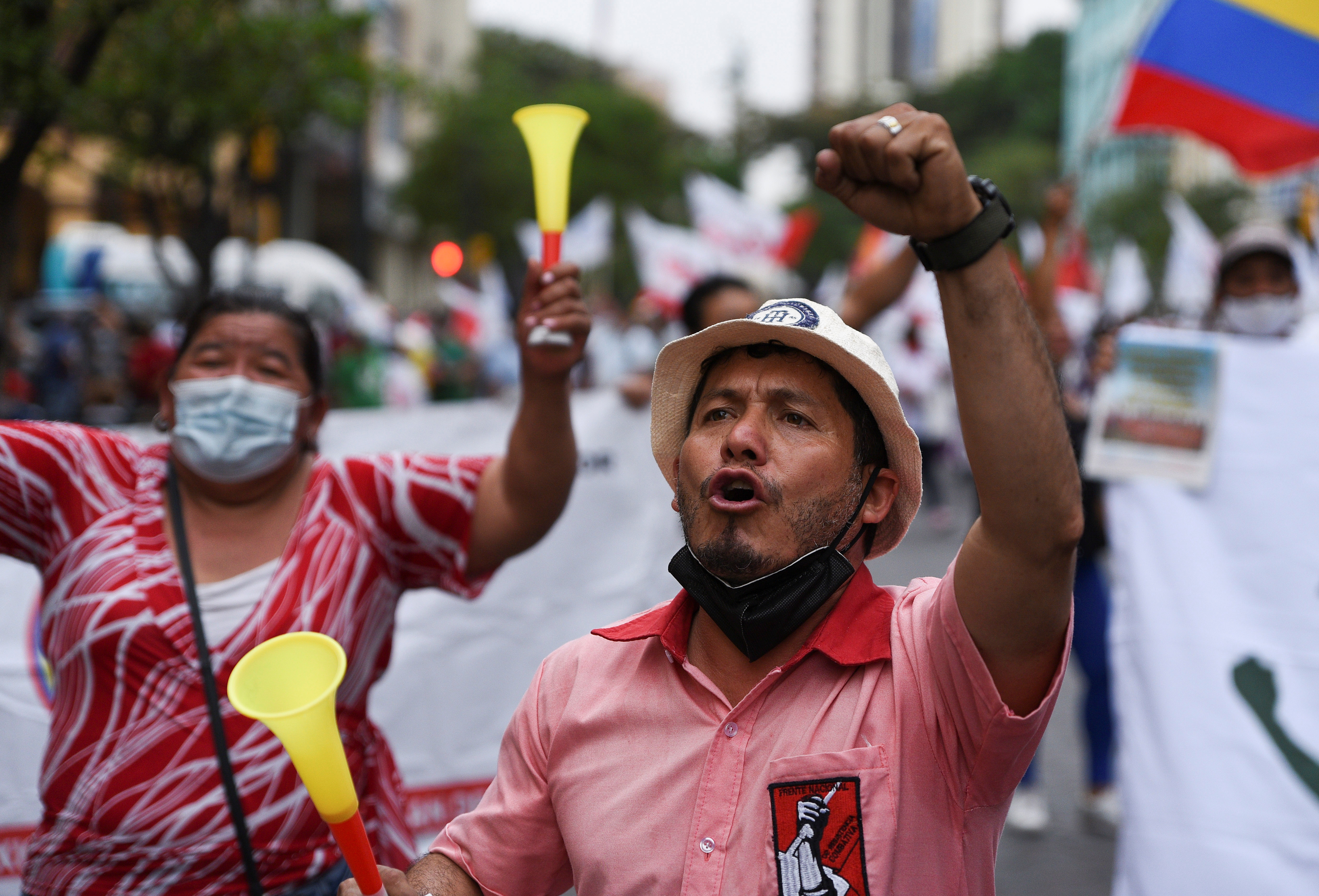
BBC- Colombia’s President Iván Duque has withdrawn a controversial tax reform bill following four days of huge protests across the country.

In a televised statement, he said his government would work to produce new proposals and seek consensus with other parties and organisations.

He had previously insisted tax rises were needed to respond to the economic crisis generated by the pandemic.

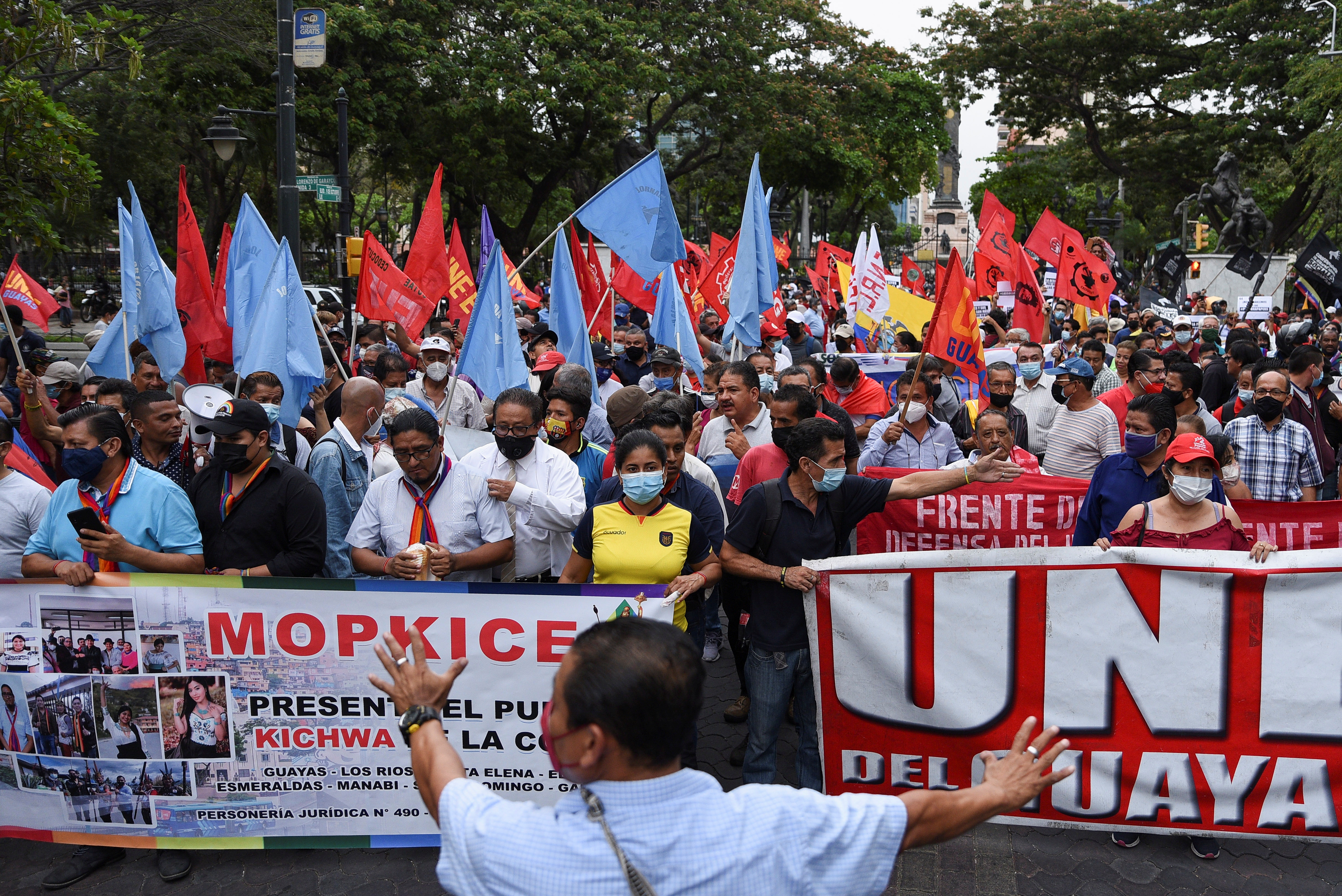
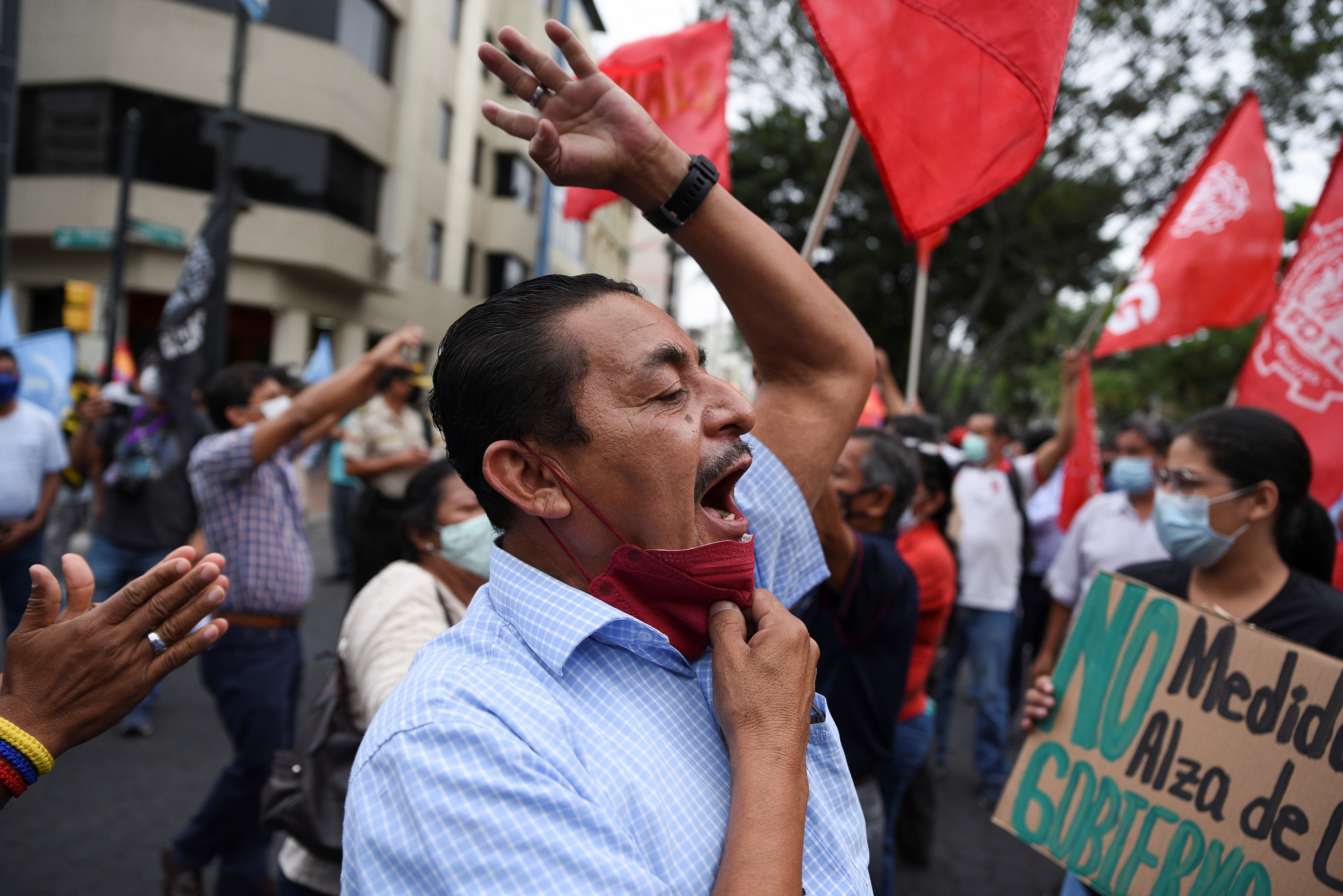
But tens of thousands of people took to the streets in anger at the bill.

Unions, who organised the protests, said it would disproportionately impact the poorest people who were already struggling with the economic impact of Covid-19.

President Duque, in his statement, acknowledged “it is a moment for the protection of the most vulnerable, an invitation to build and not to hate and destroy”.

“It is a moment for all of us to work together without paltriness,” he added. “A path of consensus, of clear perceptions. And it gives us the opportunity to say clearly that there will be no increase in VAT for goods and services.

Colombia’s gross domestic product (GDP) dropped by 6.8% last year, its deepest crash in half a century, and the coronavirus pandemic has further driven up its unemployment rate.

The proposed reforms would have lowered the threshold at which salaries are taxed, affecting anyone with a monthly income of $656 or more.

It would also have eliminated many of the current exemptions enjoyed by individuals, as well as increasing taxes imposed on businesses and the number of goods covered by value added tax (VAT).

The proposals caused outrage among many Colombians who say they are already struggling to feed their families during the pandemic.

Many middle-class Colombians and members of indigenous groups joined the protests.

The post Colombia: Proposed Tax Hike Withdrawn After Mass Protests appeared first on The St Kitts Nevis Observer.

Cuba: Govt. Ends Dissident’s Hunger Strike

Cuba’s government put an end on Sunday to a week-long hunger strike staged by a leading dissident – the head of a group that has protested state censorship of artistic works – and was reported by authorities to be in stable condition.

A note published by the Havana Department of Public Health said Luis Manuel Otero Alcantara was “referred” to a local hospital early on Sunday for “self-imposed food deprivation” and arrived by ambulance “and walking without difficulty.” He had spent seven days without food or fluids.

The San Isidro Movement led by Otero Alcantara, a performance artist, is a dissident group that includes a few dozen artists, writers and activists.

The health department said the hospital had found no sign of malnutrition or other chemical imbalances but said Otero Alcantara had been admitted, was in stable condition and was being attended to by physicians.

Members of the San Isidro movement said state security had forced Otero Alcantara from his home and that he was in custody, presumably at the hospital. They questioned the report and demanded more information.

“How is it possible he has no signs of malnutrition or dehydration after being on a hunger and thirst strike for more than 7 days?” the group asked in a Twitter post.

Otero Alcantara’s home had been surrounded by police for days with no one allowed in or out during his hunger strike.

The U.S. State Department in a Twitter post on Saturday had expressed concern over Otero Alcantara’s health and urged “the Cuban government to take immediate steps to protect his life and health.”

People can survive more than a month without food, but rarely more than 10 days without food or fluids.

Members of the San Isidro Movement in November had staged a hunger strike against censorship and harassment of independent creators and activists by the Communist government. Police ended the hunger strike, prompting a rare protest by around 300 people in front of the Culture Ministry in Havana.

Authorities since then have vilified members of the group as outside agitators working with the United States. Its members repeatedly have been temporarily detained and often told they cannot leave their homes, with communications cut.

Otero Alcantara was arrested a few weeks ago as he protested a Communist Party congress by sitting in a garrote. Authorities seized or destroyed some of his art.

In his hunger strike, Otero Alcantara was demanding a return of his art, compensation, freedom of expression and an end to police harassment. The dissident group has been appealing for support since his hunger strike began, gaining little traction in Cuba but notice some abroad including from human rights organizations and the U.S. government.

The post Cuba: Govt. Ends Dissident’s Hunger Strike appeared first on The St Kitts Nevis Observer.

Argentina Hospitals Full, Mexico Has Vaccine Troubles, World Stats

Hospitals are full’ as Argentina COVID-19 cases hit 3 million

Reuters

1/2

A demonstrator holds an Argentinian flag as they protest against Argentina’s President Alberto Fernandez’s lockdown measures to curb the spread of the coronavirus (COVID-19) disease, outside Casa Rosada presidential palace in Buenos Aires, Argentina, April 17, 2021. REUTERS/Agustin Marcarian/

Argentina coronavirus cases hit 3 million on Sunday since the pandemic began, as medical workers said hospitals were full to capacity despite toughened government measures to bring down the spread of infections.

The country’s health ministry said there were 11,394 new cases over the last 24-hour period, bringing up the grim new milestone, with 156 new deaths taking fatalities to 64,252.

The government of President Alberto Fernandez this week unveiled a new round of tougher restrictions as a second wave of infections has battered the country, filling up intensive care units and setting new daily records for cases and deaths.

But medical staff said it was still not enough.

“People need to be a little more aware and know that the hospitals are full and that health personnel are exhausted,” said Luciana Berti, a 41-year-old surgical assistant.

The South American grains producer, which has gone through three straight years of recession, exacerbated by the pandemic, is balancing the need to stem the spread of the virus while protecting a fragile economic recovery.

Marcela Cid, owner of a business on the outskirts of Buenos Aires, said that Argentines were increasingly “locked into a situation” that while necessary, was of little help to anyone trying to move beyond the pandemic.

Argentine pediatrician Carlos Kambourian said that the key would be speeding up a stalled vaccination campaign. Otherwise, he warned, hospitals would be overwhelmed. Intensive care beds are around 68.1% occupied nationally, government data show.

“Today the health system does not support one more patient,” Kambourian said. “It is already overflowing.”

“We can continue to extend measures every 15 days from here until two years from now if we don’t do what needs to be done, which is to test and vaccinate, test and vaccinate,” he said.

==================================================

Mexico looks for U.S. help as AstraZeneca admits Latin American vaccine delay

Reuters- Dave GrahamAdriana Barrera


1/2

A woman receives a dose of the AstraZeneca coronavirus disease (COVID-19) vaccine, during a mass vaccination program in Monterrey, Mexico April 12, 2021. REUTERS/Daniel Becerril

Mexican President Andres Manuel Lopez Obrador said on Friday the United States would probably send his country 5 million more doses of AstraZeneca’s (AZN.L) COVID-19 vaccine, as the company admitted production in Latin American had suffered multiple setbacks.

Mexico is struggling with behind-schedule local AstraZeneca production and shortfalls in deliveries from foreign suppliers and has asked the United States to help with more vaccines. read more The request is in addition to some 2.7 million AstraZeneca doses Washington sent to Mexico in March.

“It’s probable that they’ll help us with a loan, while the AstraZeneca plant in Mexico gets up and running,” Lopez Obrador said at a regular news conference.

The U.S. State Department did not respond to a request for comment.

Under a deal reached last year, the mAbxience laboratory in Argentina manufactures the active ingredient of the vaccine and ships it for bottling to a factory in Mexico owned by a company called Liomont. The shots are to be delivered across Latin America, excluding Brazil, which has a separate production deal.

Argentina has delivered cargos of the active ingredient to Mexico, but Liomont’s commercial production has slipped from an original target of March. In a statement shared with Reuters on Friday, AstraZeneca said deliveries of the shots would now begin before the end of June.

AstraZeneca said it regretted the setbacks, which it attributed to limited access to critical supplies, lower-than-expected process yields from initial vaccine batches, and longer times to meet internal “site qualifications” for those batches.

“This will delay the launch of our vaccine in countries across Latin America to be supplied from this supply chain,” AstraZeneca said, without giving more details of what had caused the problems.

The Mexican government has said the Liomont factory has undergone major upgrades to produce the AstraZeneca vaccine, and that it has taken longer than expected for the factory to win regulatory approvals. read more

Liomont referred a request for comment to AstraZeneca.

An additional site in the United States will help meet the target of 150 million doses for the region, excluding Brazil, this year, AstraZeneca said, but 80% of the shots will still be bottled at the Mexico plant.

The problems have affected vaccination programs in the region. Argentina’s government this week formally requested a report on production from AstraZeneca. read more

In Mexico, the problems have been compounded by deliveries of far fewer Sputnik V doses from Russia than had been agreed, and lower volumes than expected of Pfizer Inc’s (PFE.N) coronavirus vaccines.

Reuters reported that Pfizer will ship doses made in its U.S. plant to Mexico for the first time.

====================================================

Chilean regulator sees no clouds over Sputnik vaccine despite Brazilian rejection

Aislinn Laing
A medical specialist holds a vial of Sputnik V vaccine against the coronavirus in a department store in Moscow, Russia, January 18, 2021 REUTERS/Shamil Zhumatov/File Photo/File Photo

A medical specialist holds a vial of Sputnik V vaccine against the coronavirus in a department store in Moscow, Russia, January 18, 2021 REUTERS/Shamil Zhumatov/File Photo/File Photo

Reuters- The director of Chile’s health regulator said he sees no evidence of safety issues with Sputnik V, the COVID-19 vaccine developed in Russia, despite its rejection by the Brazilian health regulator this week over a lack of information about its safety.

Heriberto Garcia, the director of Chile’s Public Health Institute (ISP), said Chile was seeking clarity from the vaccine’s developers about the potential presence of an adenovirus that could reproduce, possibly creating a negative reaction in recipients. This was the basis for Brazil’s health regulator, Anvisa, rejecting the vaccine on Monday. read more

But he added that real-world data from Argentina and Mexico, where Sputnik V is already being rolled out, showed instances of significant effects among recipients of the vaccine were no greater than those among Chilean citizens who have received the Pfizer-BioNTech (PFE.N), (22UAy.DE) or Sinovac (SVA.O) equivalents.

He said that even if Sputnik V’s developers supplied information suggesting the presence of “replication-competent adenoviruses” (RCA), the ISP would not necessarily reject it.

“We have to balance the benefit of getting vaccinated versus not getting vaccinated,” he told Reuters in a Zoom interview. “If the virus replicates, you’re going to get at most a common cold. If you don’t get vaccinated, you could get COVID-19.”

Adenoviruses – a category of viruses that can cause a range of illnesses in humans like the common cold – are sometimes repurposed as viral vectors for vaccines. However, global health guidelines warn against “replication-competent adenoviruses” that could multiply inside a patient’s body, possibly creating a negative reaction.

Chile is in the final stages of negotiating a deal to buy 4 million doses of Sputnik V as it races to vaccinate 80% of its target population – 15 million people – by July.

Moscow’s Gamaleya Institute which developed Sputnik V said in a statement to Reuters on Friday that no RCA was detected in any of the batches of the Sputnik V vaccine.

Anvisa’s five-strong board voted unanimously not to approve the Russian vaccine, saying it had identified “inherent risks” and “serious” defects, and cited a lack of information guaranteeing its safety, quality and effectiveness. read more

The Russian Direct Investment Fund (RDIF), which markets the Sputnik V vaccine abroad, has rejected Anvisa’s comments, saying the shot’s safety and efficacy had been assessed by regulators in 61 countries which approved it for use.

The Gamaleya Institute has said Sputnik V is 97.6% effective against COVID-19 in a “real-world” assessment based on data from 3.8 million people.

The European Union’s regulator, the European Medicines Agency (EMA), is evaluating the shot and its manufacturing process, with a decision on its use expected in May or June.

The ISP’s Garcia said discussions with RDIF had begun a month ago and were “100% positive” so far.

He said he was confident RDIF could supply the extra documentation the ISP had asked for before it began considering Sputnik V for approval for emergency rollout.

“I doubt that there is a problem but we as a regulator need that information so we as a health authority can reassure our population,” he said.

He said Brazil’s rejection of Sputnik V over missing documentation was “valid” but that the ISP would avoid a similar issue by insisting on all the necessary documentation about Sputnik V before formally considering it for use in Chile.

“This avoids generating mistrust about vaccines which won’t get us anywhere,” he said.

RDIF has claimed that Anvisa could have been “politically motivated” to reject Sputnik V. Garcia said there could be no similar claim toward Chile. read more

“The pressure that I have, that we all have, is to end this pandemic soon and for that we know that vaccines are a good tool,” he said. “So we are doing everything possible to have as many vaccines as possible and balance the risks with the benefits.”

===================================================

WORLD STATS

Coronavirus Cases:

153,527,802

Deaths:

3,217,267

Recovered

131,578,065

Highlighted in green
= all cases have recovered from the infection
Highlighted in grey
= all cases have had an outcome (there are no active cases)

[back to top ↑]

Latest News

May 3 (GMT)

Updates

  • 8,489 new cases and 336 new deaths in Russia [source]

The post Argentina Hospitals Full, Mexico Has Vaccine Troubles, World Stats appeared first on The St Kitts Nevis Observer.

Caribbean Cruises From Alabama Could Restart Mid Summer

MOBILE, Ala. (AP) — With demand for COVID-19 vaccinations lagging at an immunization clinic set up at the Alabama Cruise Terminal, an official said the site could shut down soon as the cruise industry prepares to restart.

The Centers for Disease Control and Prevention issued guidelines recently that would allow companies that meet certain benchmarks to resume operating around mid-July, and officials are hopeful Carnival Cruise Lines can resume its trips to the western Caribbean from Mobile.

The city’s cruise terminal near downtown is currently being used as a mass vaccination site by the Mobile County Health Department, but Health Officer Dr. Bert Eichold told WALA-TV he expects the operation to wrap up in the next couple of weeks.

“The mega-clinic site seems to be decreasing in demand, so we will be out of that facility when the cruise industry starts back,” he said. “It was a great site. The city was a great partner. Good use of space.”

More than 22% of the residents of Mobile County are fully vaccinated, according to CDC statistics. But the county, with about 413,000 residents, also has one of the higher levels of community disease transmission in Alabama, according to the state.

The area tourism agency said cruises account for 35,000 hotel nights and $150 million annually, and the more than yearlong shutdown of the industry has taken a chunk out of the local economy.

“It’s been a big blow. Tourism’s never, ever seen what they’ve seen in terms of disaster in the economy, from travel, or the lack of travel,” said David Clark, chief executive of Visit Mobile.

Mobile Mayor Sandy Stimpson, who has pushed for a resumption of cruising, said he was happy the CDC had provided the industry with a roadmap for resuming business.

“The city of Mobile stands ready for the return of Carnival. All our full-time, part-time and contracted employees who interact with passengers on cruise days have already been vaccinated for COVID-19. Our team is prepared to welcome back cruisers safely and with enthusiasm,” he said in a statement.

Alabama is last in the nation in the rate of COVID-19 vaccinations. More than 525,000 people have tested positive for the new coronavirus that causes the illness, and more than 10,800 have died.

The post Caribbean Cruises From Alabama Could Restart Mid Summer appeared first on The St Kitts Nevis Observer.

Nevis has received the bulk of severance payments so far – Premier Brantley

By Monique Washington

With over thirty million dollars already paid out in severance payment by the Federal Government, the island of Nevis has received 69 percent of that sum.

This is according to the Premier of Nevis, Hon. Mark Brantley.

Several people lost their jobs due to the COVID-19 pandemic that caused the borders of the twin islands to be closed in March 2020. Since then, 2884 claims have been made to date – 1837 have been processed, 1047 are to be processed. Of the 1837 processed, 1789 persons have received payment, and 48 are awaiting payment. A total of $30,042,565.65 has been paid out. Employees in Nevis have received 69 percent of that sum.

“We know that many of our people who have lost work and have applied for severance payments have up to date not yet received,” the Premier said.

“We are heartened, because we continue to agitate at the federal level, and to encourage a more rapid movement there.”

Brantley said that the task of sorting people’s severance had been deemed overwhelming, as a number of issues have arisen.

“In fairness, they have been overwhelmed. The number of claims has been quite considerable.”

Brantley explained some of the issues that plagued the Nevis claims.

Read more in this week’s Observer Newspaper

The post Nevis has received the bulk of severance payments so far – Premier Brantley appeared first on The St Kitts Nevis Observer.