BBC- Renowned Jamaican sculptor and painter, Basil Watson has been chosen to design the United Kingdom’s National Windrush Monument, which will stand at London Waterloo station. He was selected from a group of four artists, all of whom are of Caribbean heritage.
The monument, which is backed by £1 million of government funding, will pay tribute to the Windrush generation of Caribbean migrants, who arrived in Britain after the Second World War and the generations that followed over the years.
The UK government says the monument delivers on a manifesto commitment that aligns with the nation’s Black History Month celebrations. It is expected to be unveiled on Windrush Day 2022, on June 22.
UK Communities Minister Kemi Badenoch MP, congratulated Watson on being selected, saying the government was very pleased to sponsor the monument.
Get the latest from CNW!
“His design will celebrate and honour the contribution of the Windrush generation, right at the centre of our nation’s capital. The Monument will become a permanent place of reflection and inspiration for all, reminding us of our shared history and heritage,” he said.
Basil Watson has designed public sculptures and monuments across the world including statues of Martin Luther King Jr, Usain Bolt and Merlene Ottey. This will be his first public artwork in the United Kingdom, where he lived for part of his childhood with his family, who are part of the Windrush generation.
He said that he was honored to be chosen to design the monument.
“I feel privileged that I now have this opportunity to express the aspirations, vision and courage of my parents, who took the long sea voyage to England in 1952 as part of that Windrush generation in search of a brighter future. I look forward to bringing my design to life, because I know how much this means to the Windrush community,” Watson said.
Basil, who was awarded the Order of Distinction (Commander Class) in 2016 by the Jamaican government in recognition of his artistic accomplishment, will now begin work to convert his maquette into the 12-foot-high bronze monument.
U.S. officials are working with Haitian authorities to try to secure the release of 12 adults and five children with a U.S.-based missionary group who were abducted over the weekend by a gang notorious for killings, kidnappings and extortion.
Japan has become a surprise and somewhat mysterious coronavirus success story.
President Joe Biden is heading into a crucial two weeks for his ambitious agenda.
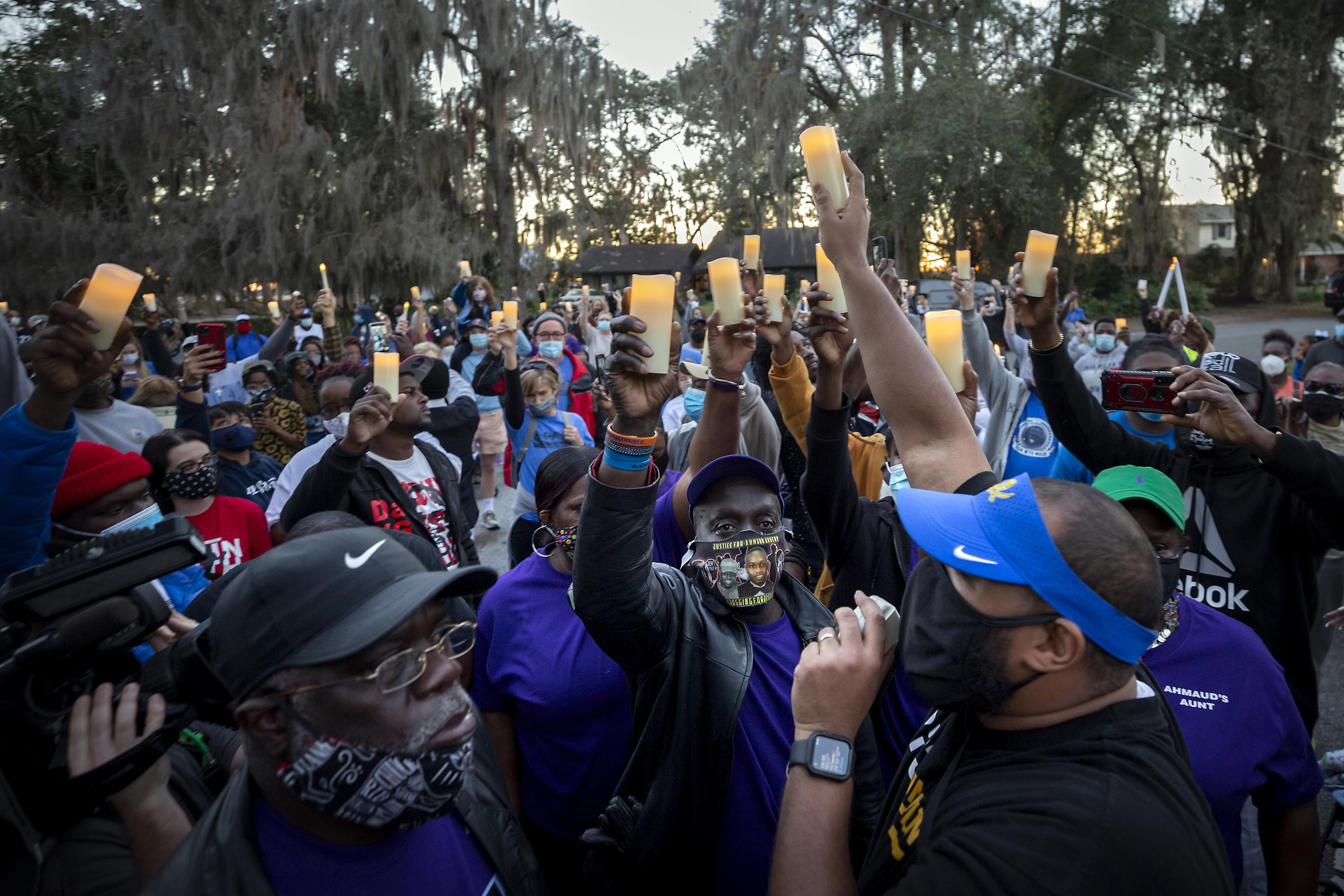
Jury selection set to start in Ahmaud Arbery shooting trial
Taliban’s victory emboldens Pakistan’s radicals
China’s economic growth weakens amid construction slowdown
PORT-AU-PRINCE, Haiti (AP) — U.S. officials are working with Haitian authorities to try to secure the release of 12 adults and five children with a U.S.-based missionary group who were abducted over the weekend by a gang notorious for killings,…Read More
WASHINGTON (AP) — President Joe Biden is entering a crucial two weeks for his ambitious agenda, racing to conclude contentious congressional negotiations ahead of both domestic deadlines and a chance to showcase his administration’s accomplishm…Read More
TOKYO (AP) — Almost overnight, Japan has become a stunning, and somewhat mysterious, coronavirus success story. Daily new COVID-19 cases have plummeted from a mid-August peak of nearly 6,000 in Tokyo, with caseloads in the densely populated ca…Read More
Hundreds of people were ordered to report for jury duty Monday in Georgia for what could be a long, laborious effort to find jurors to hear the trial of three white men charged with fatally shooting Ahmaud Arbery as he was running in their neig…Read More
BEIJING (AP) — China’s economic growth sank in the latest quarter a a slowdown in construction and curbs on energy use weighed on its recovery from the coronavirus pandemic. The world’s second-largest economy grew by 4.9% over a year ago in the…Read More
WOJSLAWICE, Poland (AP) — The Polish witnesses of the German crime in Wojslawice lived for decades with the memories of their Jewish neighbors executed in 1942. They remembere…Read More
PESHAWAR, Pakistan (AP) — In Pakistan’s rugged tribal regions along the border with Afghanistan, a quiet and persistent warning is circulating: The Taliban are returning. Pak…Read More
ABOARD THE SEABIRD (AP) — As dozens of African migrants traversed the Mediterranean Sea on a flimsy white rubber boat, a small aircraft circling 1,000 feet above closely monit…Read More
Investigators believe a 1,200-foot (366-meter) cargo ship dragging anchor in rough seas caught an underwater oil pipeline and pulled it across the seafloor, months before a le…Read More
HOUSTON/CARACAS, Oct 16 (Reuters) – An Iran-flagged supertanker on Saturday was about to set sail from Venezuelan waters carrying 2 million barrels of heavy crude provided by state-run oil firm PDVSA (PDVSA.UL), according to documents seen by Reuters and vessel tracking services.
The shipment is part of a deal agreed by PDVSA and its counterpart National Iranian Oil Company (NIOC) that exchanges Iranian condensate for Venezuela’s Merey crude. The swaps aim to ease an acute shortage of diluents that has cut Venezuela’s oil output and exports, Reuters reported last month.
Dino I, a very large crude carrier (VLCC) owned and operated by NIOC’s National Iranian Tanker Company (NITC), finished loading the Venezuelan oil at PDVSA’s Jose port late Friday, according to the documents, a source and monitoring service TankerTrackers.com.
The bilateral oil trade could be a breach of U.S. sanctions on both countries, the U.S. Treasury Department told Reuters last month, citing government orders that establish the punitive measures.
A Treasury spokesperson on Saturday declined to comment further on the latest development.
The vessel arrived in Venezuela in September with its transponder turned off while carrying 2.1 million barrels of Iranian condensate. The light oil fed PDVSA’s Petrolera Sinovensa, Petropiar and Petrocedeno projects in the country’s Orinoco Belt. read more
A second condensate cargo of similar size is expected to be delivered to Venezuela in the coming weeks as part of the swap routine, which will be in effect for six months in its first phase.
Venezuela’s oil ministry, PDVSA and NIOC did not reply to requests for comment.
PDVSA first launched the exchange last month by sending 1.9 million barrels of Merey heavy crude on the Iran-flagged supertanker Felicity.
The exchange provides the OPEC nation with a stable supply of blending material needed to convert its extra heavy oil into exportable grades. The pact also delivers heavy oil to Iran for blending, refining or marketing to Asian customers.
Iran and Venezuela have strengthened their cooperation in the last year even under the watchful gaze of the United States, which has in recent years reimposed sanctions on Iranian state entities, including NIOC, and in 2019 blacklisted PDVSA.
Reporting by Marianna Parraga in Houston, Deisy Buitrago in Caracas, and Matt Spetalnick in Washington; Editing by Gary McWilliams, Andrea Ricci and Jonathan Oatis
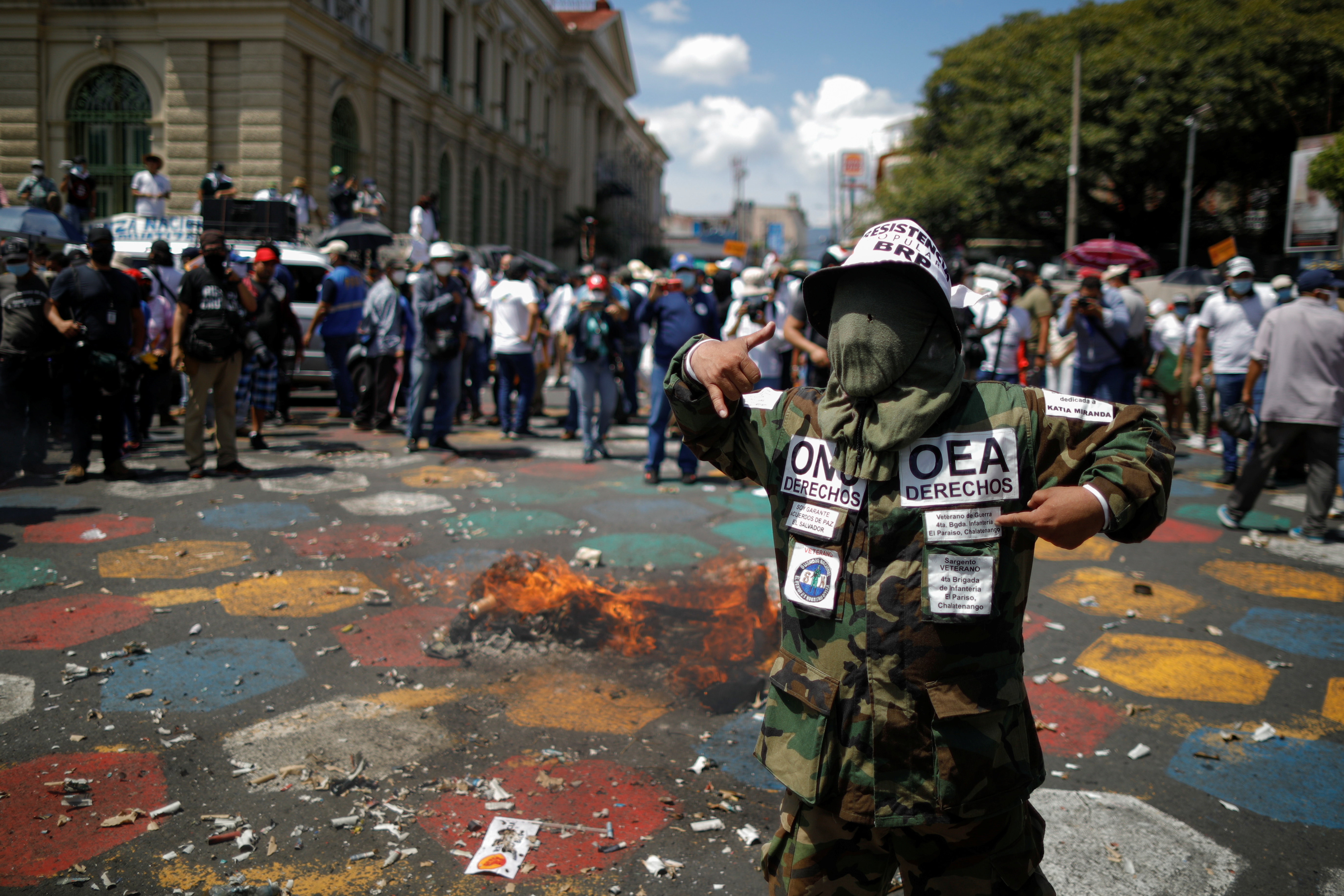
SAN SALVADOR, Oct 17 (Reuters) – Thousands of people in El Salvador took to the streets on Sunday in protest against President Nayib Bukele, who has stoked concern that he is steadily concentrating power and who responded with changing his Twitter profile late in the day to “Emperor of El Salvador”.
Local media estimated at least 4,000 people marched through capital San Salvador. They bore banners and signs decrying Bukele’s ouster of Supreme Court judges, the potential for the president to seek a second consecutive term and the adoption of bitcoin as legal tender.
Bukele’s apparent joke with his Twitter profile follows an update last month when he changed it to say “Dictator” of El Salvador.
Sunday’s protesters chanted slogans including “What does El Salvador want? Get rid of the dictator!” Near the capital’s main square, some set fire to an effigy bearing the likeness of the 40-year-old president.
In May, a Congress dominated for the first time by Bukele’s New Ideas party voted to fire the judges on the constitutional panel of the Supreme Court, among the most senior jurists in the country, as well as the then-attorney general. Replacements seen as friendly to Bukele were swiftly voted in to replace them, which generated harsh criticism from the United States as well as top international rights groups.
Bukele’s administration then came under fire from the United States after the Supreme Court judges ruled that the president could seek a second consecutive term, which Washington saw as unconstitutional.
“We are totally losing rights because today they do not respect the laws. Here, what’s done is the will of Nayib,” said Rosa Granados, a labor union member who participated in the protests.
“If he raises his hand, all the deputies approve it and there is no law and no legal process that is respected,” she added.
Bukele, a seasoned and often provocative user of social media, dismissed the protests as a “failure” on Twitter.
“The march is a failure and they know it….. Nobody believes them here anymore,” he wrote.
Reporting by Nelson Renteria, writing by Cassandra Garrison, Editing by Nick Zieminski and Edwina Gibbs
PORT-AU-PRINCE, Oct 17 (Reuters) – A U.S. Christian aid organization on Sunday said a group of its missionaries had been kidnapped in Haiti, a further sign the Caribbean nation’s gangs are growing increasingly brazen amid political and economic crises.
The group was in Haiti to visit an orphanage when their bus was hijacked on Saturday outside the capital Port-au-Prince, according to accounts by other missionaries, amid a spike in kidnappings following the murder of President Jovenel Moise.
Ohio-based Christian Aid Ministries said it had no information on who was behind the abduction nor where they took the group, which includes 16 Americans and one Canadian.
“We are seeking God’s direction for a resolution, and authorities are seeking ways to help,” it said in a statement.
A spokesperson for Haiti’s police said they did not have any information to provide about the incident.
The U.S. State Department said it was aware of the reports. U.S. embassies typically do not release information about citizens due to privacy regulations.
The Canadian government said it was working with local authorities and groups to gather more information.
A sign marks the entrance of the home office of Christian Aid Ministries in Millersburg, Ohio, U.S., October 17, 2021. REUTERS/Aaron Josefczyk
Kidnapping has been on the rise for months in Haiti as the impoverished country’s economy worsens, though abductions of foreigners are relatively rare.
Victims generally come from the Haitian middle class – teachers, priests, civil servants, small business owners – who cannot afford bodyguards but can scrape together a ransom.
Haitian migrants in September gathered at the U.S. border with Mexico in hopes of finding economic opportunities, only for U.S. authorities to deport some 7,000 of them.
Security experts believe a gang called 400 Mawozo was involved in the abduction of the missionaries.
The group dominates the Croix-des-Bouquets area, east of Port-au-Prince, and is near where the missionaries were reported to have been abducted.
400 Mawozo is suspected being involved in the April kidnapping in the same area of a group of priests and nuns that included French citizens.
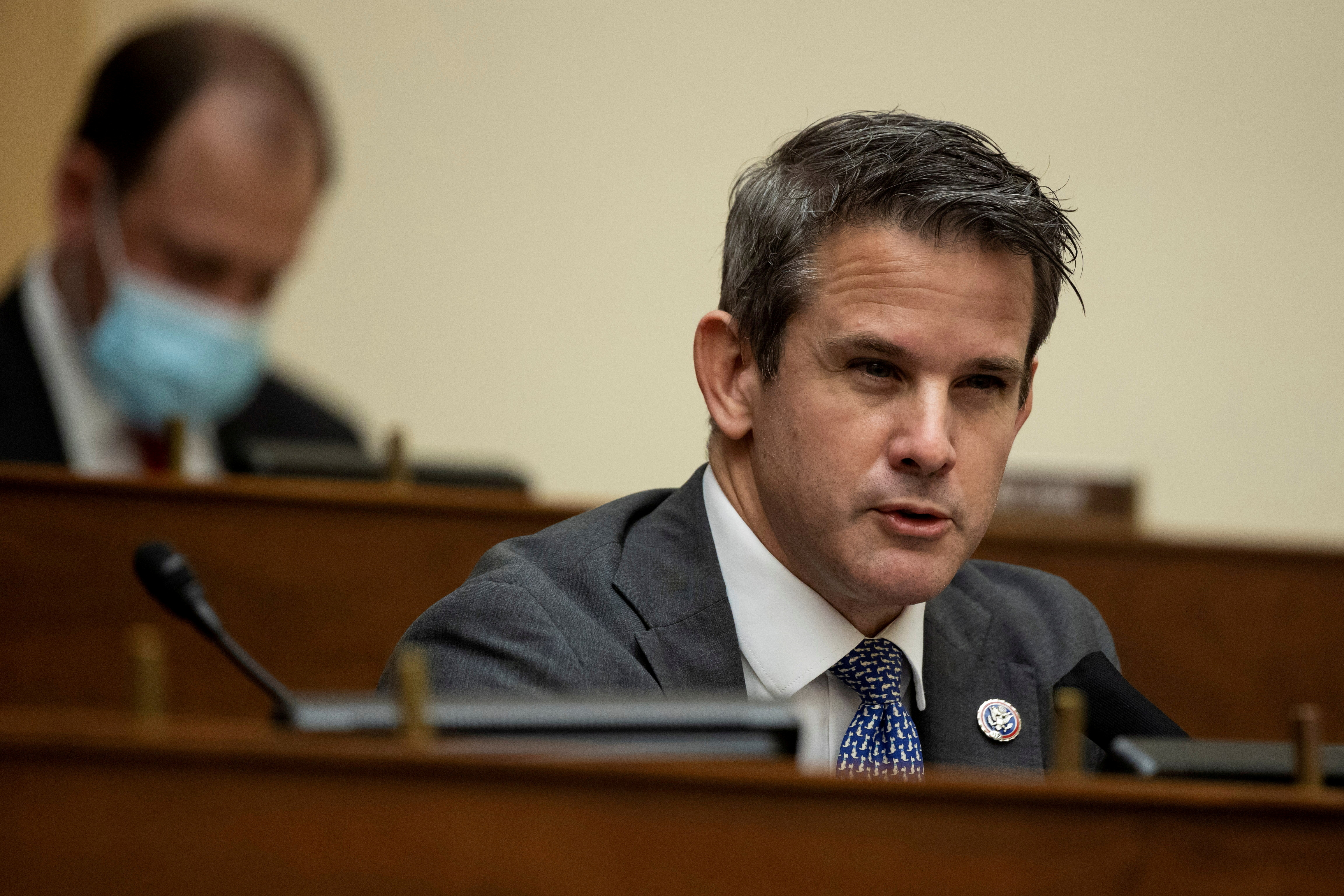
U.S. Congressman Adam Kinzinger, an Illinois Republican, told CNN the United States must find the missionaries and seek to negotiate their release without paying a ransom, or should use the military or police to secure their freedom.
“We need to track down where they are and see if negotiations – without paying ransom – are possible. Or do whatever we need to do, on a military front or a police front,” said Kinzinger who sits on the House Foreign Affairs Committee.
Reporting by Caribbean newsroom; Additonal reporting by Barbara Goldberg and Kanishka Singh; Writing By Cassandra Garrison, Arshad Mohammed and Brian Ellsworth; Editing by Nick Zieminski, Christian Plumb and Daniel Wallis
A herd of 80 hippos – an unwanted legacy following the death of notorious Colombian drug lord Pablo Escobar – are being sterilised.
Escobar, who was shot dead by police in 1993, illegally imported exotic animals, including a male and a female hippo – dubbed the “cocaine hippos”.
Since then, a growing population has been taking over the countryside near his former ranch, Hacienda Nápoles.
The Colombian government has so far sterilised 24 of more than 80 animals.
They have been treated with a chemical that will make them infertile.
Colombian environmentalists say the hippos, believed to be the biggest herd outside Africa, are an invasive species and have pushed away the native fauna.
Many have campaigned for the animals to be culled or sterilised.
Back in 1993, when authorities seized Hacienda Nápoles – Escobar’s luxury estate situated about 250km (155 miles) north-west of the capital Bogotá – most of the animals found there were distributed to zoos across the country.
But not the hippos.
“It was logistically difficult to move them around, so the authorities just left them there, probably thinking the animals would die,” Colombian biologist Nataly Castelblanco told the BBC earlier this year.
However, with no natural predators in South America, the hippos multiplied.
Image source, RAUL ARBOLEDA/Getty Images
According to experts, they started spreading through one of the country’s main waterways – the River Magdalena.
Scientists studying the hippos’ environmental impact say the animals could affect the local ecosystem in a number of ways: from displacing native species already under threat of extinction, like the manatee, to altering the chemical compositions of waterways, which could endanger fisheries – though other studies suggest they might help the environment too.
Escobar, one of the most notorious South American criminals of all time, was the founder of the infamous Medellín drugs cartel in the 1980s, responsible for kidnappings, bombings and indiscriminate assassinations. At one point he was thought to be one of the world’s richest men.
UK Covid Mental crisis – Cases of psychosis have soared in England over the past two years as an increasing number of people experience hallucinations and delusional thinking amid the stresses of the Covid-19 pandemic.
There was a 75% increase in the number of people referred to mental health services for their first suspected episode of psychosis between April 2019 and April 2021, NHS data shows.
The rise continued throughout the summer, with 12,655 referred in July 2021, up 53% from 8,252 in July 2019, according to the charity Rethink Mental Illness.
Pandemic behind South American immigration North
A coronavirus-era financial crisis is driving a new, perilous exodus from South Americato the United States as middle- and lower-middle-class families flee the hardship, unemployment and inflation wrought by the health crisis.
The death of a Brazilian nurse, Lenilda dos Santos, whose body was found hunched in the New Mexico desert by border police, has illustrated how desperation is spreading from countries such as Mexico and Guatemala to once more prosperous Latin American nations.
Sydney eases more COVID-19 curbs
Thousands of children returned to school in Sydney on Monday, putting an end to months of home learning, as Australia’s largest city eased more COVID-19 curbs, thanks to rising rates of vaccinations. Masks are no longer mandatory in offices and larger groups are to be allowed in homes and outdoors after the state of New South Wales, home to Sydney, hit a double-dose inoculation rate of 80% at the weekend among those older than 16.
The latest in a series of planned easing of restrictions marks a shift by Australia’s largest cities to living with the virus, a strategy officials have warned will bring a greater number of COVID-19 cases in coming weeks. read more
New Zealand PM Ardern extends COVID-19 lockdown in Auckland
New Zealand Prime Minster Jacinda Ardern said on Monday that the country’s biggest city Auckland will remain in lockdown for another two weeks as it looks to control the spread of the Delta variant of the coronavirus.
There will be no changes in the social restrictions that have already been in place for over two months in Auckland under alert level 3, Ardern said at a news conference. read more
Melbourne to ease world’s longest COVID-19 lockdowns
Melbourne, which has spent more time under COVID-19 lockdowns than any other city in the world, is set to lift its stay-at-home orders this week, officials said on Sunday.
By Friday, when some curbs will be lifted, the Australian city of 5 million people will have been under six lockdowns totalling 262 days, or nearly nine months, since March 2020. read more
U.S. to lift restrictions Nov 8 for vaccinated foreign travellers
The White House on Friday will lift COVID-19 travel restrictions for fully vaccinated international visitors starting Nov. 8, ending historic restrictions that had barred much of the world from entering the United States for as long as 21 months.
The White House, which held a meeting late Thursday to finalise the Nov. 8 date, faces some remaining questions, including how and what exemptions the Biden administration will grant to the vaccine requirements. Children under 18, for example, are largely expected to be exempt from the requirements, an official said. read more
Valneva reports positive results for its vaccine candidate
Vaccine company Valneva reported on Monday positive Phase 3 results for its inactivated, adjuvanted COVID-19 vaccine candidate VLA2001, for which it is hoping to get a licence.
Valneva added it was preparing for trials in children aged between 5-12 years and for a Valneva sponsored booster trial to evaluate VLA2001’s booster performance for people in need of a COVID vaccine booster shot. read more
BBC- Two best friends who grow coral and the country of Costa Rica are among the winners of the first ever Earthshot Prizes.
The annual awards were created by the Duke of Cambridge to reward people trying to save the planet.
There were five winners announced in London, each receiving £1m.
Prince William was joined by stars including Emma Watson, Dame Emma Thompson and David Oyelowo for the ceremony at Alexandra Palace.
Ed Sheeran, Coldplay and KSI were among the acts that performed – and in keeping with the eco message, the music was powered by 60 cyclists pedalling on bikes.
No celebrities flew to London for the ceremony, no plastic was used to build the stage and guests were asked to “consider the environment” when choosing an outfit – with Watson wearing a dress made from 10 different dresses from Oxfam.
Harry Potter actress Emma Watson has previously used her platform to call for climate change action
The Earthshot prize’s name is a reference to the “Moonshot” ambition of 1960s America, which saw then-President John F Kennedy pledge to get a man on the Moon within a decade.
Each year for the next decade, the prize is awarding £1m each to five projects that are working to find solutions to the planet’s environmental problems.
The inaugural winners were selected from five different categories, and were chosen from a shortlist of 15 by judges including broadcaster Sir David Attenborough, actress Cate Blanchett and singer Shakira.
The Republic of Costa Rica won the Protect and Restore Nature award
Emma Watson (left) announces the AEM Electrolyser as the winner of the Fix Our Climate award
The winners
Protect and Restore Nature:
The Republic of Costa Rica: Costa Rica was a country that once cleared most of its forests, but it has now doubled the number of trees and is seen as a role model for others to follow. The winning project is a scheme paying local citizens to restore natural ecosystems that has led to a revival of the rainforest
Clean our Air:
Takachar, India: A portable machine created to turn agricultural waste into fertiliser so that farmers do not burn their fields and cause air pollution
Revive our Oceans:
Coral Vita, Bahamas: A project run by two best friends who are growing coral in the Bahamas, designed to restore the world’s dying coral reefs. Using special tanks, they have developed a way to grow coral up to 50 times faster than they normally take in nature
Build a Waste-Free World:
The City of Milan Food Waste Hubs, Italy: Another challenge is waste – and the city of Milan in Italy wins a prize for collecting unused food and giving it to people who need it most. The initiative has dramatically cut waste while tackling hunger
Fix our Climate:
AEM Electrolyser, Thailand/Germany/Italy: A clever design in Thailand using renewable energy to make hydrogen by splitting water into hydrogen and oxygen. Hydrogen is a clean gas but it is usually produced by burning fossil fuels
“Time is running out,” he said. “A decade doesn’t seem long enough, but humankind has an outstanding record of being able to solve the unsolvable.”
Earlier this week, the duke suggested that rather than the world’s top minds setting their sights on space tourism, they should instead focus on saving Earth.
Media caption, Watch: Prince William says the world’s greatest minds are needed to “repair this planet, not find the next”
With stars from the worlds of football and music arriving on a green carpet, the message was that environmental challenges deserve the same kind of attention as the Oscars.
And the winning teams were obviously thrilled to get such high-profile recognition.
The test now is whether their projects will be scaled up in a way that makes a difference worldwide.
Whether it’s restoring corals and forests or reducing waste and carbon emissions, the plan is for big name companies to support these mostly small-scale schemes and help them to become global.
It may well be years before we see how well that works out in practice, and inevitably some projects may prove more effective than others.
In any event, in the countdown to the vital Cop26 climate summit in Glasgow next month, the winners offer something that’s been in short supply recently: a sense of optimism.
Among the celebrities at Sunday night’s ceremony was Love Actually actress Dame Emma, who criticised throwaway culture as she made her way to the event.
“If we had shown my parents how people live (today), how they will wander down the streets with a coffee cup, immediately throw it away, eat, throw away, everything throw away, they would’ve gone, ‘what’s going on?’” said Dame Emma.
Image source, PA Media
Image caption, Nigerian Afro-pop singer Yemi Alade performed on stage during the ceremony
In India, a 70-year-old woman has given birth to a baby boy with the help of invitro fertilization (IVF) in India.
The footage, filmed on October 13, shows the old woman, who is sitting next to her husband, holding the newborn baby and speaking with the medical staff. A man takes a picture of her to capture the emotional moment.
The Indian couple has been married for 45 years. Jivunben Rabari, 70, and her husband Maldhari, 75, tried to have a baby for many years before using assisted reproductive technology.
The elderly woman didn’t have her ID to prove her age, however, she told reporters that she was 70 years old. Local media outlets have also confirmed this age.
Dr Naresh Bhanushali said: “When they first came to us, we told them that they couldn’t have a child at such an old age, but they insisted. They said that many of their family members did it as well. This is one of the rarest cases I have ever seen!”.
The couple lives in the remote village of Kemora in the Indian State of Gujurat.
BASSETERRE, ST. KITTS, October 15, 2021 (MMS-SKN) — The sixth segment of play in the 26th edition of Constituency Number Seven Dr the Hon Timothy Harris Domino League on Thursday evening October 14 saw defending champion team Tabernacle Domino Club suffer an upset defeat at home at the hands of Molineux Domino Club.
The game had started at the Tabernacle Community Centre, but a village-wide power blackout at 9:07 p.m. interrupted the games that were taking place at the venue. However, since the adjacent Tabernacle Police Station had a generator, the teams moved under the canopy of the Forensic Department of the Royal St. Christopher and Nevis Police Force.
Edison Parris of former champion team Lodge Domino Club seen in action as his team whitewashed Phillips Domino Club 13-2 at the Edgar Gilbert Sporting Complex pavilion in Molineux.
While losing a game is always taken in a sportsmanship manner, the loss at home could not have come at a worse time for the champion team as watching the game was sponsor of the league and fellow villager, Dr the Hon Timothy Harris, Prime Minister of the Federation of St. Kitts and Nevis.
Tabernacle, which was under the command of acting Captain Lionel ‘Nabal’ Nisbett, started on a high note by winning the opening game and were at one time leading 9-3. After they moved to the new venue Molineux’s Captain Ericson ‘Wixie’ Wescott upped his game and by the time Prime Minister Harris was watching the game at the new venue Molineux were trailing 8-10.
A keenly fought see-saw battle ensured and at one time Tabernacle was leading 11-9 needing only two games to carry the day, but a determined Molineux pushed the games to tie at 12-12. After coming that far, Molineux could not entertain any loss and by taking control they took the final game to beat Tabernacle 13-12.
The second game at the same two venues between Christ Church Domino Club and Saddlers Domino Club, which was also watched by sponsor of the league Prime Minister Dr the Hon Timothy Harris, had the two teams exchanging lead. Saddlers led in early stages, Christ Church took over and was on the path to victory but Saddlers came back stronger to tie the game at 12-12. Saddlers, a team from Constituency Number Six, took the deciding game for a 13-12 win over Christ Church.
With sponsor of the league Prime Minister Dr the Hon Timothy Harris watching, Captain of Molineux Domino Club Ericson ‘Wixie’ Wescott is seen in action as they upset defending champion team Tabernacle Domino Club 13-12.In another game played at the Tabernacle Police Station and watched by Prime Minister Harris, Leshaun Hazel of Saddlers Domino Club is in action in their game against Christ Church Domino Club whom they beat 13-12.
In other games, former champion team Lodge Domino Club went for a kill when at the Edgar Gilbert Sporting Complex pavilion in Molineux they overrun Phillips Domino Club 13-2. At the same venue another former champion team Parsons Domino Club beat Mansion Domino Club 13-10.
Three games took place in Lodge Project where another former champion team Unity Domino Club beat Guinness Domino Club 13-8, and Sylvers Domino Club beat Ottley’s Domino Club 13-9 in games played at the old Lodge Community Centre. At the neighbouring Cuban Bar, Unstoppable Domino Club won their second straight game by beating Small Corner Bar Domino Club 13-10.
At the end of the sixth segment of play in the 26th edition of Constituency Number Seven Dr the Hon Timothy Harris Domino League, former champion team Unity still leads on the points standing table with 29 points. It is followed by Sylvers 24 points; Lodge 20 Points, Christ Church 20 points, and Saddlers 20 points.
Others, in order, are defending champion team Tabernacle 18 points, Parsons 18 points, Phillips 18 points, Molineux 15 points, Mansion 14 points, Small Corner Bar 11 points, Guinness 11 points, Unstoppable 11 points, and Ottley’s 10 points.
Seventh segment of play in this only round of play in the 26th edition of Constituency Number Seven Dr the Hon Timothy Harris Domino League will be on Tuesday October 19 and all games will be played at the new Lodge-Ottley’s Community Centre in Ottley’s, which has the capacity to accommodate all the seven games under the strict Covid-19 protocols.
“All teams are asked to be mindful and please remember of the venue changing to the new Lodge-Ottley’s Community Centre on the Island Main Road in Ottley’s,” announced PRO of Constituency Number Seven Domino League, Allington Berridge. “The Covid-19 protocols including wearing of masks and hand sanitising will be observed and checking of body temperature will still be done every night on entry. Let us all keep the tournament under good grace, friendship and good sportsmanship and remember we are all one.”
Defending champion team Tabernacle will face Mansion, while Parsons will be coming up against Phillips. Other games will be Saddlers vs. Small Corner Bar; Molineux vs. Unstoppable; Lodge vs. Guinness; Sylvers vs. Christ Church; and Unity vs. Ottley’s


 *****@
 *****@
 *****@
 *****@
 *****@
 *****@
 *****@
 *****@
 *****@
 *****@
 *****@
 *****@