MEXICO CITY, Oct 13 (Reuters) – The United States needs to invest more heavily in Central America if it hopes to slow record levels of northbound migration, Mexico’s Foreign Minister Marcelo Ebrard said on Wednesday.
Record numbers of migrants have passed through Mexico this year toward the United States, driven by economic downturns stemming from the COVID-19 pandemic and drawn by the hope of more welcoming immigration policies under U.S. President Joe Biden.
Biden has vowed to focus on the underlying causes of migration in Central America by working to reduce poverty, violence and corruption.
“There needs to be a bigger investment from the United States in Central America than has been given, without a doubt,” Ebrard told a Mexican radio program when asked about the prospect of Mexico acting as a barrier for migrants.
“Without this investment, if the United States does not support Central America, it’s very hard to think that the migration flows that are happening will diminish,” Ebrard added.
Biden noted in a recent letter to Mexican President Andres Manuel Lopez Obrador that the United States provided more than $600 million in foreign assistance over the past year to the Northern Triangle countries of Guatemala, El Salvador and Honduras.
The letter added that Biden has requested another $861 million from U.S. Congress for the 2022 fiscal year to also allocate to Central America.
Reporting by Daina Beth Solomon; Editing by Karishma Singh
BBC- A Brazilian healthcare provider is accused of giving unproven drugs to Covid-19 patients and conducting experiments on elderly people without their relatives’ consent. The allegations have been linked to deaths that, families say, could have been prevented.
Katia Castilho’s grief keeps her awake at night. In March, Norberto, her father, was admitted to a public hospital in São Paulo with Covid-19. Brazil, which has been hit hard by the pandemic, was then at the height of its second wave, with daily deaths numbering 4,000.
Days later, Ms Castilho’s mother, too, began to show symptoms of the disease. Irene, unlike Norberto, had access to a private healthcare provider, Prevent Senior, one of the country’s largest, with more than half a million customers.
The Castilho family contacted the company, and were sent a so-called “Covid Kit”, which included hydroxychloroquine, azithromycin and ivermectin, despite there being no scientific evidence that those drugs are beneficial in the treatment of the virus.
Irene got worse and worse, and Ms Castilho and her two sisters decided to take their mother to a Prevent Senior-owned hospital. But, to their surprise, Ms Castilho says, Irene was sent back home without being examined.
Her condition worsened further overnight. By morning, Irene was struggling to breathe even with an oxygen cylinder. The family went back to the hospital, and she was finally admitted.
On that same day, Norberto died.
He was buried in a hurry, without rites, while the hearse waited a few moments for one of the Castilho sisters to say her goodbyes before driving her back and picking up more bodies.
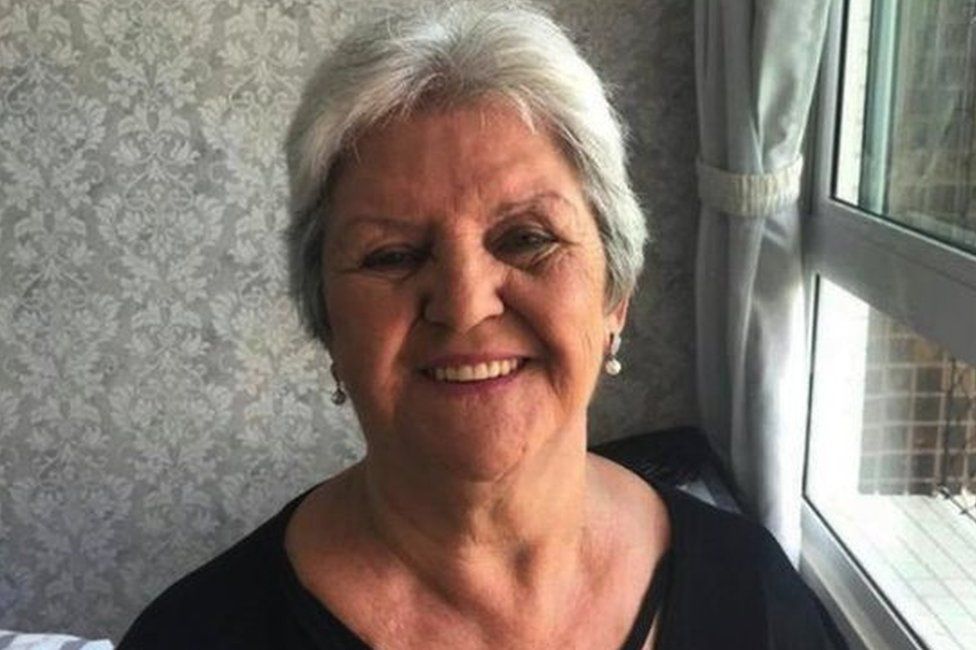
Image source, Katia Castilho
Image caption, Irene was initially given a so-called Covid Kit with unproven treatments by her healthcare provider
Meanwhile at the hospital, Irene was kept in a small ward, where staff rarely came to check on her, Ms Castilho says. The sisters took turns to make sure the oxygen mask stayed on.
One day, Ms Castilho noticed that nurses were giving Irene a thick solution. She says she was told it was flutamide, a type of hormone used in prostate cancer. Flutamide can potentially lead to liver failure in certain patients, and Irene was a liver cancer survivor. The sisters say they had expressly told the hospital not to give her this drug.
“I was so upset by everything going on with my father, that I didn’t look for a doctor to discuss this,” Ms Castilho says. “Then I noticed that my mum was getting worse.”
Irene had been in hospital for nearly 10 days when she was taken to intensive care. Her organs began to fail, she developed deep-vein thrombosis, and after three weeks, was infected with a bacteria common in hospitals. She did not survive.
The sisters had 20 minutes to be with their mum for the last time. Irene was cremated and her ashes were scattered over Norberto’s grave.
‘My mum trusted them’
As the intensity of the events eased, Ms Castilho says, “the penny began to drop” about her mother’s treatment. “I started to reflect on things. I couldn’t sleep. It felt like I was rewinding a tape, realising what went wrong.”
The negligence, Ms Castilho believes, started the day Irene was sent the “Covid Kit”, as many scientists were already expressing profound misgivings about the drugs, and continued as doctors prescribed unproven medicine instead of opting for more costly intensive care treatment.
“My mum really trusted [Prevent Senior]. She was anxious and would ask me to call them to find out when her ‘Covid Kit’ would arrive,” she said. “She could never have imagined that she was a guinea pig in their hands, and that she would soon die.”
Now, more deaths are being blamed on the company’s medical practices.
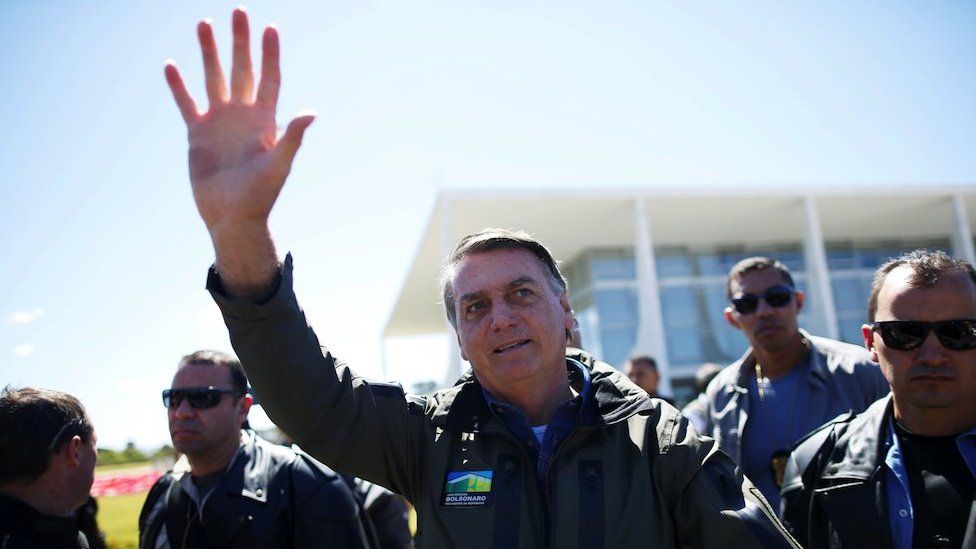
Image source, Reuters
Image caption, President Bolsonaro has frequently advocated unproven treatments and cures against Covid
A Senate inquiry into the government’s handling of the pandemic heard allegations that the company was trying to endorse unproven treatments associated with President Jair Bolsonaro, who has repeatedly dismissed Covid-19.
A former patient, 65-year-old Tadeu Frederico de Andrade, testified that he, too, was given the “Covid Kit” and treated with flutamide. His family says doctors wanted to move him to palliative care without their consent. “I’m a survivor of this macabre plot,” he said.
Bruna Morato, a lawyer representing 12 whistleblowers, told the inquiry doctors were threatened and fired if they disagreed with the unproven drugs. The firm is also accused of failing to mention Covid-19 deaths in patients’ records to hide the scale of the problem.
Prevent Senior said in statements to the BBC that Irene and Tadeu “received every clinical and medical support” and that the company never adopted treatments contrary to medical ethics or aimed at reducing costs.
It said allegations levelled against it at the Senate inquiry were “unfounded” and “a true public lynching”. The company has also said it never fired employees because of their technical convictions.
Pedro Batista, the company’s CEO, admitted to senators that Covid-19 was removed from patients’ records after two weeks, because they were no longer infectious. But he denied testing unproven drugs on patients without their knowledge.
The company is under investigation by federal prosecutors, the police, and a separate inquiry by São Paulo state lawmakers.
The case, which has caused outrage in the country, is mired in political controversy, with the federal government being blamed for lax rules on Covid-19 treatment.
The inquiry also heard the Bolsonaro administration had ignored repeated offers by drug firm Pfizer to sell it 70 million doses of its vaccine. Next Tuesday, the investigation’s final report will be made public, and it could accuse the president of serious misconduct in his response to the pandemic, which has resulted in more than 600,000 deaths.
Ms Castilho says her family feels “devastated”.
“The day my dad died, he was supposed to be given the first dose of vaccine,” she says. “I lost my mum and my dad to a virus for which a vaccine already existed.
“Denying science kills, but when you think of all the money and interests involved… I can’t remain silent.”
* Vinicius Lemos in São Paulo contributed to this report
BBC- Chile’s opposition has launched a bid to impeach President Sebastián Piñera over possible irregularities in the sale of a mining company, after details emerged in the Pandora Papers leak.
Mr Piñera used “his office for personal business”, congressman Tomas Hirsch said as he presented the accusation in the lower house of Congress.
The president is accused of selling the firm to a friend in a deal contingent on a favourable regulatory decision.
He has denied any wrongdoing.
The revelations come from the Pandora Papers, a leak of 11.9 million documents. The files say President Piñera sold the Dominga mine, a copper and iron project in an environmentally sensitive area, to a childhood friend in 2010, nine months after he had taken office.
The leaks suggest the last payment in the deal was conditional on not establishing an area of environmental protection where the mining company operated, a demand of environmental groups.
The decision would be taken by the Chilean government which eventually decided against the introduction of the protection.
After the revelations, the Chilean presidency said President Piñera, a billionaire businessman, had no role in, or information about, the sale of the mining project, and that he had not been involved in the management of any company for more than 12 years.
The president himself has rejected any irregularities, saying the details of the deal were examined in a judicial investigation in 2017 that cleared him of wrongdoing.
But last week, Chile’s public prosecutor’s office said it would investigate the allegations against the president.
Opposition congressman Jaime Naranjo, one of the authors of the impeachment proceeding, said President Piñera had “openly infringed the Constitution… seriously compromising the honour of the nation”.
The president has not commented yet on the impeachment bid.
The opposition-controlled Chamber of Deputies will now hold a vote on whether to approve or reject the impeachment process. The move comes ahead of presidential and legislative elections in November. President Piñera is not a candidate.
The Pandora Papers is a leak of almost 12 million documents and files exposing the secret wealth and dealings of world leaders, politicians and billionaires. The data was obtained by the International Consortium of Investigative Journalists in Washington DC which has led one of the the biggest ever global investigations.
More than 600 journalists from 117 countries have looked at the hidden fortunes of some of the most powerful people on the planet.
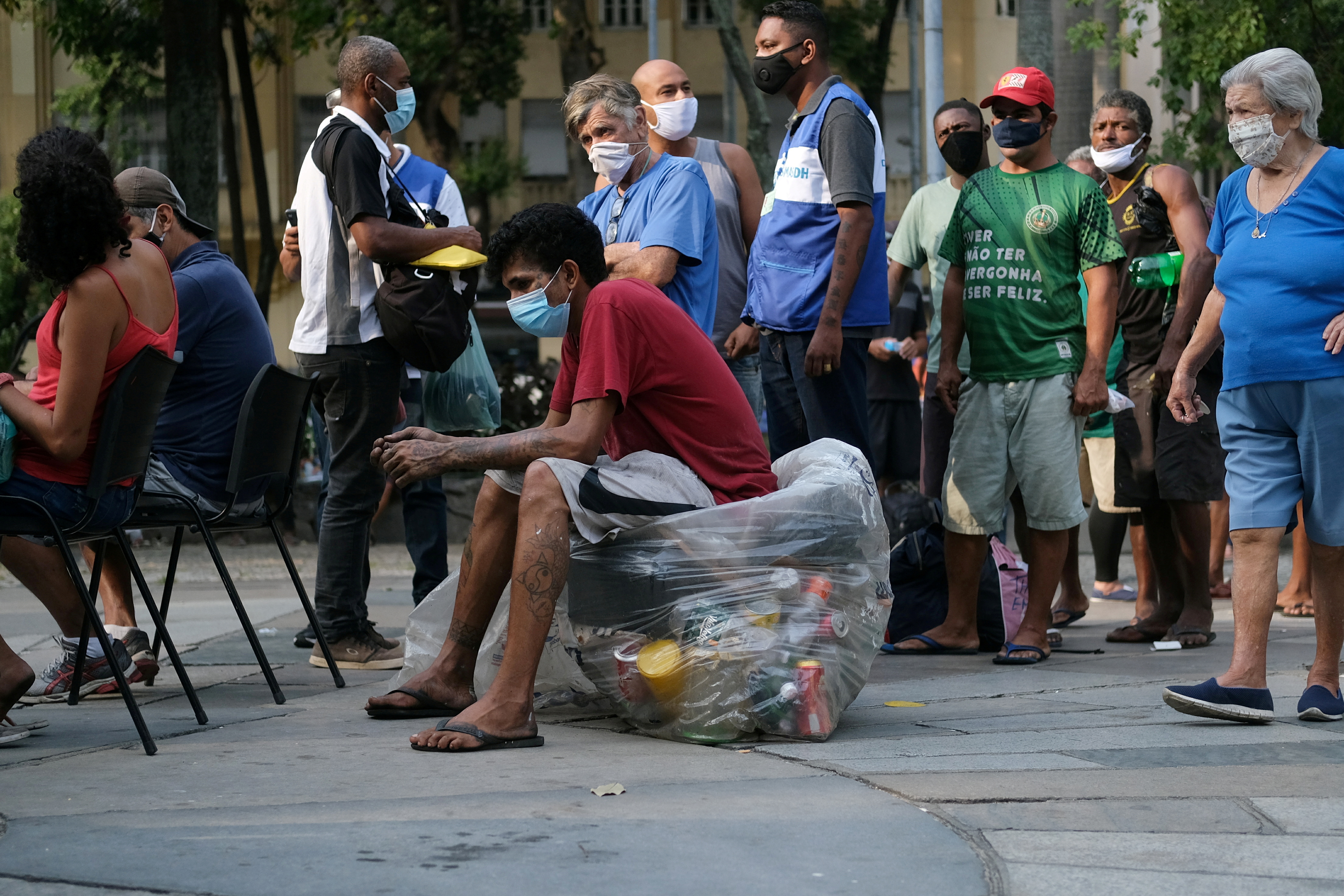
People wait to receive an AstraZeneca coronavirus disease (COVID-19) vaccine during a vaccination campaign for homeless people, in Rio de Janeiro’s downtown, Brazil, May 27, 2021. REUTERS/Ricardo Moraes
BRASILIA, Oct 13 (Reuters) – The Pan American Health Organization (PAHO) said on Wednesday that COVID-19 cases are dropping overall in North America but remain high in the American Midwest, Alaska, and Canada’s Northwest Territories, where infection rates are 10 times the national average.
Infections are also dropping across South America, though cases are up in the greater Caracas area of Venezuela, and in parts of Chile’s southernmost regions.
In the Caribbean, Barbados is reporting the highest number of COVID cases and deaths since the pandemic started, with a five-fold increase in COVID infections over the last month, PAHO said.
The regional branch of the World Health Organization called for concerted action in the Americas to help every country reach the WHO’s vaccination coverage target of 40% of their population by the end of this year.
So far, only nine countries in the region have vaccinated 50% of their people, while six – Jamaica, St. Lucia, St. Vincent & the Grenadines, Haiti, Guatemala and Nicaragua – have yet to reach 20% vaccination coverage, according to PAHO.
Without concerted action to increase the vaccination rate and public health measures, it is possible that COVID-19 could become endemic in the region, PAHO Director Carissa Etienne warned in a weekly briefing.
Third dose booster vaccination is recommended, especially for people who have received the Sinovac Biotech and Sinopharm vaccines developed in China that studies have shown to provide less protection for young adults, PAHO assistant director Jarbas Barbosa said.
Booster vaccination should begin with those over the age of 80, followed by those over 60 years with prior medical conditions, and then young adults, he said. Using other vaccines is possible when the original doses are not available, he said.
Reporting by Anthony Boadle; Editing by Jan Harvey
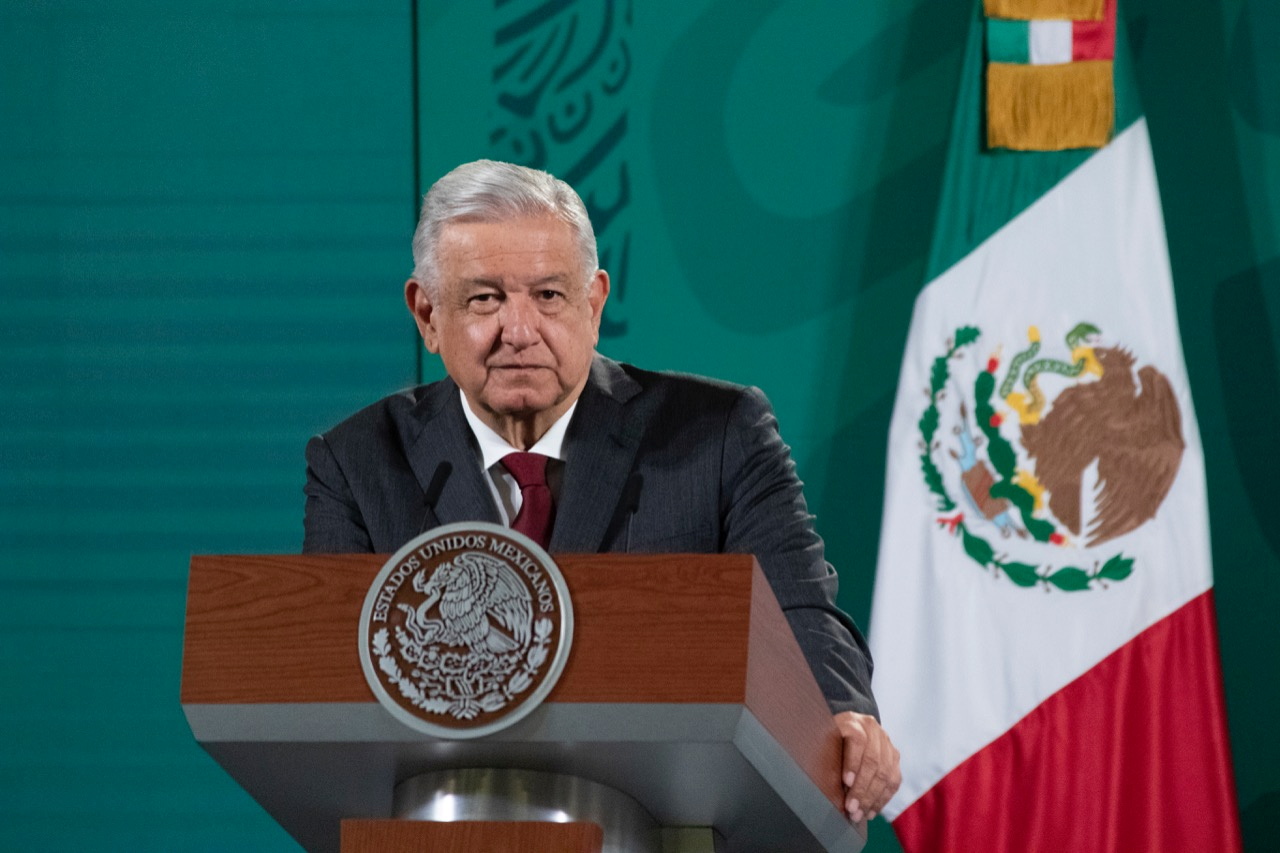
Mexican President Andres Manuel Lopez Obrador attends a news conference at the National Palace in Mexico City, Mexico October 7, 2021. Mexico’s Presidency/Handout via REUTERS
MEXICO CITY, Oct 13 (Reuters) – Mexico’s President Andres Manuel Lopez Obrador on Wednesday said the World Health Organization (WHO) should certify COVID-19 vaccines in public use, amid fears some vaccinated Mexicans will not be able to enter the United States.
“The WHO must act correctly, without political or ideological tendencies, sticking to the science,” Lopez Obrador said at a regular news conference.
Lopez Obrador’s comments come after the United States said it would only allow people inoculated by WHO-approved vaccines to enter its borders.
Millions of people in Mexico have been vaccinated with Russian and Chinese shots that do not fulfill that criteria. The U.S. on Tuesday said it was reopening its land borders to fully vaccinated travelers.
Russia’s Sputnik V as well as China’s CanSino vaccines are yet to receive approval by the WHO.
Reporting by Ana Isabel Martinez and Raul Cortes; Writing by Drazen Jorgic; Editing by Frank Jack Daniel
What you need to know about the coronavirus right now
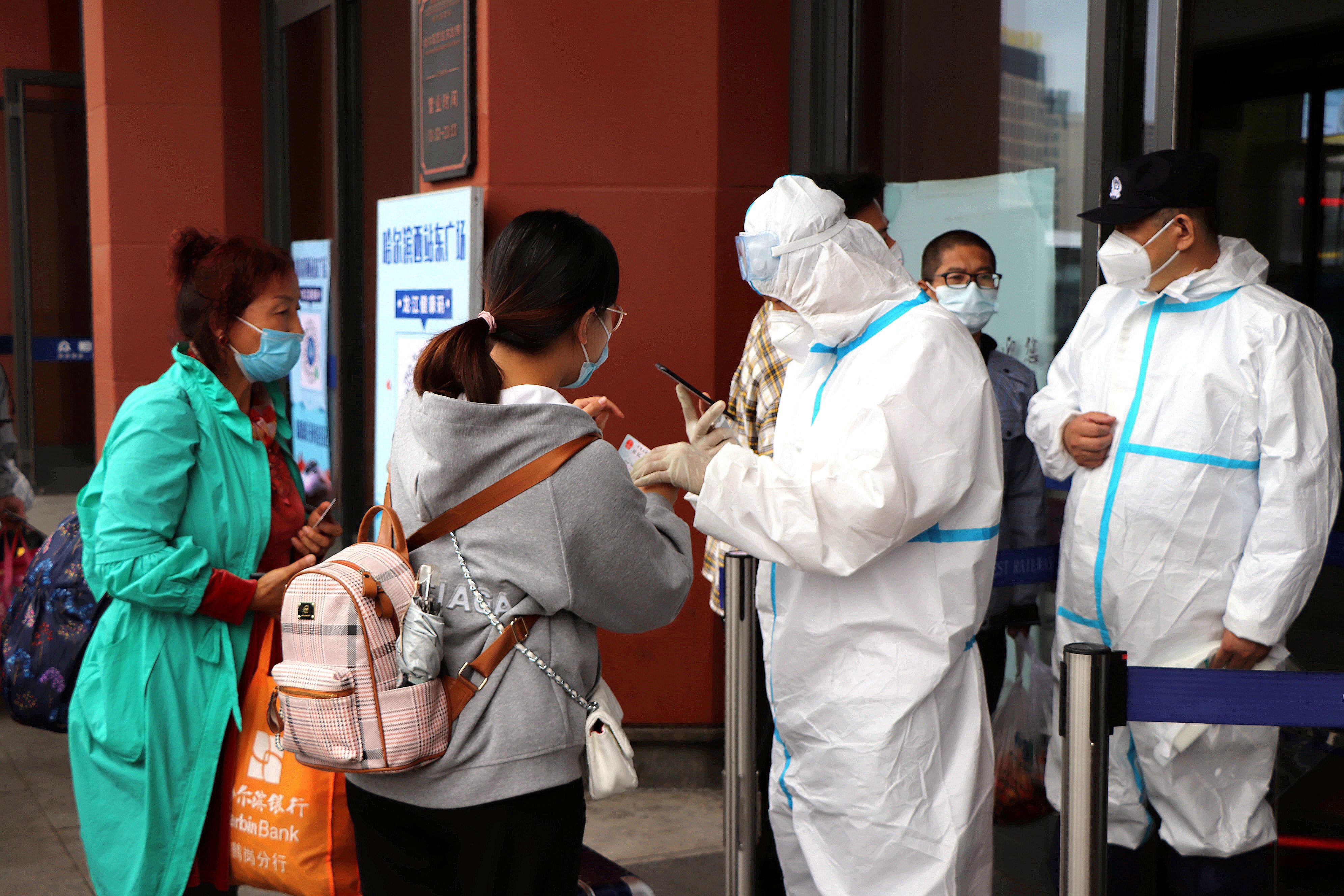
Staff members in protective suits check proof of negative test results for travellers at an entrance to the Harbin West Railway Station following new local cases of the coronavirus disease (COVID-19) in Harbin, Heilongjiang province, China September 22, 2021. cnsphoto via REUTERS ATTENTION EDITORS – THIS IMAGE WAS PROVIDED BY A THIRD PARTY. CHINA OUT.
Oct 14 (Reuters) – Here’s what you need to know about the coronavirus right now:
Melbourne set for COVID lockdown exit despite record cases
Melbourne will exit months of COVID-19 lockdown next week, helped by a faster-than-expected vaccine uptake, Victoria state Premier Daniel Andrews said on Thursday, ahead of schedule even though daily infections hit a record the same day.
On the worst day of a Delta variant outbreak that began in early August, Victoria logged 2,297 new cases, up from 1,571 the day before and the highest for any Australian state or territory since the pandemic began. Eleven people died, bringing the total toll in the latest outbreak to 125. read more
Indonesia’s Bali reopens to international tourists, but with no flights
Indonesia’s holiday island of Bali reopened to foreign tourists after 18 months of pandemic hiatus on Thursday, but the island is lacking one crucial ingredient: international flights. Though the island’s Ngurah Rai International Airport has carried out simulations preparing for tourists to return, it is not expecting much to happen soon.
Details about the reopening, such as visa requirements and which countries they apply to, have so far been patchy. Indonesia late on Wednesday had confirmed the 19 eligible countries, which include China, India, Japan, South Korea and New Zealand, and several countries from Western Europe and the Arabian Gulf. read more
J&J shot gets better boost from Moderna or Pfizer in NIH study
People who got Johnson & Johnson Inc’s COVID-19 vaccine as a first shot had a stronger immune response when boosted with vaccines from Pfizer Inc/BioNTech SE or Moderna Inc, a study run by the National Institutes of Health showed on Wednesday. The preliminary study hasn’t been peer-reviewed and is the latest challenge to J&J’s efforts to use its vaccine as a booster in the United States. read more
More than 450 adults who received initial shots from Pfizer, Moderna, or Johnson & Johnson were part of the study that showed “mixing and matching” booster shots of different types is safe in adults. Moderna’s and Pfizer’s vaccines are based on messenger RNA, while J&J’s uses viral vector technology. Separately, officials on Wednesday said J&J’s regulatory submission for its planned booster raised red flags, including small sample sizes and data based on tests not yet validated. read more
English school return spurred COVID in children
COVID-19 infections in children in England rose in September after schools returned from summer holidays, helping to keep cases high even as there was a fall among adults, a large prevalence study showed on Thursday.
The study found that the epidemic was growing among those under 17, with an estimated reproduction “R” number of 1.18. An R number above 1 implies exponential growth, while a number below 1 implies the epidemic is shrinking. The epidemic was estimated to be shrinking in 18- to 54-year-olds, while it was broadly steady among those over 55. read more
India resumes vaccine exports as domestic stocks build up – officials
India has resumed a small number of COVID-19 vaccine exports and will increase exports significantly in the next few months as domestic stocks build up and most of its large population is inoculated, officials said on Wednesday.
So far about 4 million shots have been exported, the source said, a small amount in proportion to the expansive vaccine diplomacy Prime Minister Narendra Modi’s government launched this year before a second wave of infections forced a halt. read more
Compiled by Karishma Singh; Editing by Ramakrishnan M.
Basseterre, St. Kitts, October 13, 2021 (RSCNPF): The Police are investigating a fatal traffic accident that occurred along Wellington Road on October 12, 2021.
The accident involved motor pick-up G344 which is owned by the Government of St. Kitts and Nevis, but is attached to the Public Works Department. It was being driven, at the time, by Davin Charles of Main Street, Christ Church. The accident also involved a motorcycle that was being ridden by Juaan Fyfield of Liver Pool Row.
Investigations so far have revealed that just after 10:00 a.m. on Tuesday, both vehicles were travelling from the airport direction towards the city of Basseterre. In the vicinity of the Public Works Gas Station, Charles indicated to take a right turn and, in the process, Fyfield collided on the rear, left side of the pickup and fell. Fyfield was transported to the JNF General Hospital via the Emergency Medical Service where he was later pronounced dead.
An autopsy will be performed on the body of 35-year-old Juaan Fyfield to determine the exact cause of death.
BASSETERRE, ST. KITTS, October 13, 2021 (MMS-SKN) — Unstoppable Domino Club, which had not won a single game in their first four outings in the 26th edition of Constituency Number Seven Dr the Hon Timothy Harris Domino League, won their first game on Tuesday evening October 12 in the fifth segment of play – and did it in grand style.
Having fallen to lesser mortals in their earlier four outings, domino enthusiasts looked forward to Unstoppable Domino Club players to being stopped in their tracks by defending team champion Tabernacle Domino Club players in their meeting at the old Lodge Community Centre in Lodge Project.
The art of demolishing a champion team: Loinston Fahie of Unstoppable Domino Club stopping Tabernacle Domino Club with a sound 13-6 beating at the old Lodge Community Centre in Lodge Project.
That was however not to be, as Unstoppable captained by Samuel ‘Nokie’ Wilson turned the tables on the defending champion team Tabernacle whom they soundly beat 13-6, a feat that earned them a bonus point. The win earned them six points instead of the standard five points.
Former champion team Unity Domino Club signalled its intention to reclaim the coveted title when they narrowly beat Christ Church Domino Club 13-12 in a game held at the Edgar Gilbert Sporting Complex pavilion in Molineux. While the feat earned Unity five points, the gallant showing by the losing team Christ Church earned them one point.
Two former champion teams had it rough on Tuesday evening. Guinness Domino Club, a team that had lost three games out of four turned the tables on Parsons Domino Club whom they also narrowly beat 13-12, in a game played at the Tabernacle Community Centre. Ottley’s Domino Club beat another former champion team, Lodge Domino Club 13-12, at the old Lodge Community Centre in Lodge Project.
In other games, Sylvers Domino Club beat Small Corner Bar Domino Club 14-7 when the two met at the old Lodge Community Centre in Lodge Project, while Mansion Domino Club beat Saddlers Domino Club 13-10 in a game held at the Tabernacle Community Centre.
In the meantime, the game between Phillips Domino Club and Molineux Domino Club that was supposed to have been held at the Edgar Gilbert Sporting Complex pavilion in Molineux did not take place after Molineux threw in the towel saying they could not raise enough players. This gave Phillips an effortless five points.
At the end of the fifth segment of play in the 26th edition of Constituency Number Seven Dr the Hon Timothy Harris Domino League, former champion team Unity has a clear lead with 23 points. It is followed by Christ Church 19 points, Sylvers 18 points, Phillips 18 points, and defending champion team Tabernacle 17 points.
Others, in order, are Saddlers 15 points, former champion team Lodge 14 points, Mansion 13 points, former champion team Parsons 13 points, Guinness 11 points, Small Corner Bar 10 points, Molineux 10 points, Ottley’s 10 points, and Unstoppable 6 points.
Sober enough to beat a former champion team: Leslie Thompson of Guinness Domino Club making a move as his team beat Parsons Domino Club 13-12 at the Tabernacle Community Centre.
Constituency Number Seven Dr the Hon Timothy Harris Domino League is sponsored by Prime Minister of the Federation of St. Kitts and Nevis, and Area Parliamentary Representative for St. Christopher Seven, Dr the Hon Timothy Harris.
Sixth segment of play in this only round of play in the 26th edition of Constituency Number Seven Dr the Hon Timothy Harris Domino League will be on Thursday October 14 at the same four venues with all games starting at 7:00 p.m.
Tabernacle Community Centre will host the games between defending champions team Tabernacle and Molineux, and Christ Church and Saddlers. The Edgar Gilbert Sporting Complex pavilion in Molineux will host games between Parsons and Mansion, and Phillips and Lodge.
The old Lodge Community Centre in Lodge Project will be the venue for the Unity vs. Guinness, and Sylvers vs. Ottley’s games, while the final game between Small Corner Bar and Unstoppable will be held at Cuban Bar in Lodge Project.
CNW- A 25-year-old mechanical engineering graduate Khalia Hall stunned the judges and walked away with the 2021 Miss Jamaica World crown.
Hall — who wore the sash Miss General Food Supermarket, beat 14 other finalists at the pageant’s grand coronation at the Courtleigh Auditorium in New Kingston. Dominique Shorter and Melessa Vassell were first runner-up and second runner-up, respectively.
The new queen, who was also the Fast Track Top Model competition winner, was crowned by Miss World 1976 Cindy Breakspeare. Hall will replace Miss World 2019 Toni-Ann Singh, the fourth Jamaican to win the Miss World title. Singh is also the longest-reigning Miss World owing to the coronavirus pandemic and the postponement of the 2020 competition.
Khalia Hall hails from the parish of St Ann, but attend the Campion College High School in Kingston. She was born to a Jamaican mother and a British fath
Hall graduated with a master’s in mechanical engineering from the University of Manchester in the United Kingdom. She has also worked as an engineer in Italy and Singapore.
She describes herself as a health and nutrition enthusiast and mechanical engineer-turned-foodie. She launched her plant-based Shibumi Jamaican food delivery service in Jamaica in 2020 upon discovering that 74 percent of Jamaicans do not eat the recommended daily portions of fruits and vegetables. Shibumi, which is Japanese for “simple, effortless beauty”. Hall is also a food blogger at Mix Up and Blenda, where she promotes her philosophy of living: finding a balance, choosing simplicity, and eating “real food.”
Hall will now go on to represent Jamaica in the Miss World grand coronation at the Coliseo de Puerto Rico Jose Miguel Agrelot in San Juan on December 16. There, she will compete against beauties from 122 other countries for the coveted Miss World 2021 title. She said she has already achieved one of her major goals, given that entering the pageant was something “in the back of my mind from I was a little girl”.
The announcement marks a change in the 2016 Task Force guidance that recommended aspirin therapy in certain men and women to lower cardiovascular risk. But more recent evidence suggests it also could cause harm, including bleeding in the stomach, intestines, and brain – a risk that increases with age and can be life-threatening.
The task force said people ages 40 to 59 who are at higher risk for cardiovascular disease should decide with their clinician whether to start taking aspirin. Once they turn 60, they should not start taking it because the risk of bleeding cancels the benefits of preventing heart disease.
The new recommendation only applies to people who are not already taking a daily aspirin. Doctors have long recommended daily low-dose aspirin for many patients who have had a heart attack or stroke. The task force guidance does not change that advice.
“Daily aspirin use may help prevent heart attacks and strokes in some people, but it can also cause potentially serious harms, such as internal bleeding,” said task force member Dr. John Wong, a primary-care expert at Tufts Medical Center. “It’s important that people who are 40 to 59 years old and don’t have a history of heart disease have a conversation with their clinician to decide together if starting to take aspirin is right for them.”
The task force previously said a daily aspirin also might protect against colorectal cancer for some adults in their 50s and 60s, but the updated guidance says more evidence of such a benefit is needed.
The guidance was posted online to allow for public comment until Nov. 8. The group will evaluate that input and then make a final recommendation.
The new recommendations not only stemmed from emerging research suggesting aspirin’s potential harm, but also from advances in cardiovascular treatment, said Dr. Guy L. Mintz, Northwell Health’s director of cardiovascular health and lipidology at Sandra Atlas Bass Heart Hospital.
There are now better medications for cholesterol, hypertension and diabetes that lower cardiovascular risk, heart failure and improve kidney function, he said. There are also more tools to identify and treat insulin resistance and sleep apnea, as well as smoking cessation, which also affect heart health.
“With all these advances, the need for aspirin in all patients has been negated,” Mintz said. “There is benefit for aspirin use in some patients, and that is why patients on aspirin should not stop their aspirin and consult their doctor.”
However, some doctors are confused by the new guidance. What should they tell their patients who have been taking aspirin for a decade and are turning 60, asked Dr. Elizabeth Klodas, a cardiologist and founder of Step One Foods, a meal and snack program.
“I understand where they’re coming from but they’re inadvertently creating confusion for practicing physicians,” she said. “They really need to address the transition of someone who has been on aspirin because they meet criteria and then they get older. What are we supposed to do?”
Aspirin is best known as a pain reliever but is also a blood thinner that can reduce the chance of blood clots. It also has risks, even at low doses – mainly bleeding in the digestive tract or ulcers, both of which can be life-threatening.
Contributing: Associated Press. Follow Adrianna Rodriguez on Twitter: @AdriannaUSAT.
Loop– Despite the challenges presented by the pandemic in the last year and a half, the Caribbean tourism industry has outperformed the rest of the world.
Preliminary data from member countries of the Caribbean Tourism Organization (CTO) reveal that the region outperformed the rest of the world in the first half of 2021.
The CTO said during this period, international tourist arrivals to the Caribbean reached 6.6 million, representing a 12.0 per cent decline when compared to the same period last year.
By the end of May, arrivals were at 5.2 million, down 30.8 per cent for the corresponding period in 2020, considerably better than the global average of a 65.1 per cent decline.
Of the main regions analysed, The Americas, which included the Caribbean, registered a 46.9 per cent drop, otherwise, no other region performed better than a 63 per cent fall in arrivals.
The CTO said while the tourist arrivals continued to lag pre-pandemic numbers, the first half-year performance was boosted by a second-quarter spurt when overnight tourist visits to the Caribbean jumped between 10 and 37 times greater than those in the corresponding months in 2020.
In absolute terms, there was a steady improvement, as arrival numbers increased from one million in April to 1.2 million in May to 1.5 million in June, according to data compiled by the CTO’s research department.
Among the reasons for the strong second quarter was a rise in outbound travel from the region’s primary market, the United States, from which tourist visits reached 4.3 million in the first half of the year, a 21.7 per cent increase. Other contributing factors included the easing of some travel restrictions and an increase in airlift.
“These are encouraging signs that the hard work our member countries have put into adapting to the changing environment of the pandemic is beginning to pay dividends,” said Neil Walters, the CTO’s acting secretary-general.
“Even as we embrace a recovery mindset and the opportunities the pandemic has given us, we must continue to be mindful of the challenges we currently face and the potential challenges a dynamic situation like the pandemic can present. The Caribbean tourism sector is known to be one of the most resilient in the world.”
The Government is being pushed to consider adopting a citizenship-by-investment programme with the funds gained through the process used for various development projects.
Julian Dixon, CEO and broker at Jamaica Sotheby’s International Realty, made the call on Friday during the launch of the luxury real estate dealer’s operation in Jamaica. “Of Course, I would expect that like many other countries in the world, including some of our own brothers and sisters in the Caribbean, that there would be a developed criterion which would determine eligibility.
This would include but not be limited to individuals of sound character and one’s ability to meet a minimum foreign investment value,” Dixon told the audience in attendance at the AC Marriot Hotel in St Andrew. She said funds gained from the project should be used to invest in the country’s infrastructure, real estate, job creation and business development.
Dixon pointed out to Sunday Finance that St Kitts and Nevis, which pioneered the citizenship-by-investment programme in 1984, has invested upwards of US$300 million from the programme in modernising its infrastructure and said Jamaica could do the same.
At least five countries in the Caribbean — St Kitts and Nevis, Antigua and Barbuda, Dominica, Grenada and St Lucia — have citizenship-by-investment programmes. Under the programme sometimes referred to as “economic citizenship”, people wishing to acquire citizenship of a country with which they have no previous ties, can obtain citizenship after meeting certain criteria and making a significant investment in that country’s economy.
Investments in the five Caribbean countries listed above start at US$100,000 and run into millions in some cases. Some programmes such as the one in St Kitts and Nevis require a donation in a State fund. Most seek to acquire citizenship because of ease of travel. It is not clear if Jamaica holds such advantage as other islands.
Citizenship-by-investment programmes have helped to attract high net worth individuals to the islands. Dixon is after the same cohort locally and internationally with Jamaica Sotheby’s International Realty — a company she owns and operates with Alexander Melville. Both bring 27 years of combined experience in real estate.
With Sotheby’s, they are targeting the upper end of the market with luxury real estate. The brand was founded in 1976 in the United States and now operates in 78 countries, with Jamaica being the latest addition.
“Sotheby’s International Realty is the number one network for luxury properties in the world. The shared professional knowledge of its members enables us to create new opportunities for local sellers of real estate as well as those from around the globe who are looking to buy exclusive properties in our beautiful island located in the heart of the Caribbean Sea,” Dixon said in prepared remarks.
“Jamaica offers a diverse luxury lifestyle which appeals to a wide variety of buyers,” said Philip White, president and CEO, Sotheby’s International Realty.
“In recent years, closed transactions have seen steady growth and new construction is booming on the island.
The Jamaican market has historically appreciated year-after-year with interest from domestic and international interest in North America, Europe, Canada, and most recently the Middle East, motivated by the island’s many opportunities and its tourism sector. I want to welcome Julian and her team to the network and look forward to working together to support the island.”