Tag Archives: caribbean

US to Coordinate with NATO on Troop Withdrawal from Afghanistan

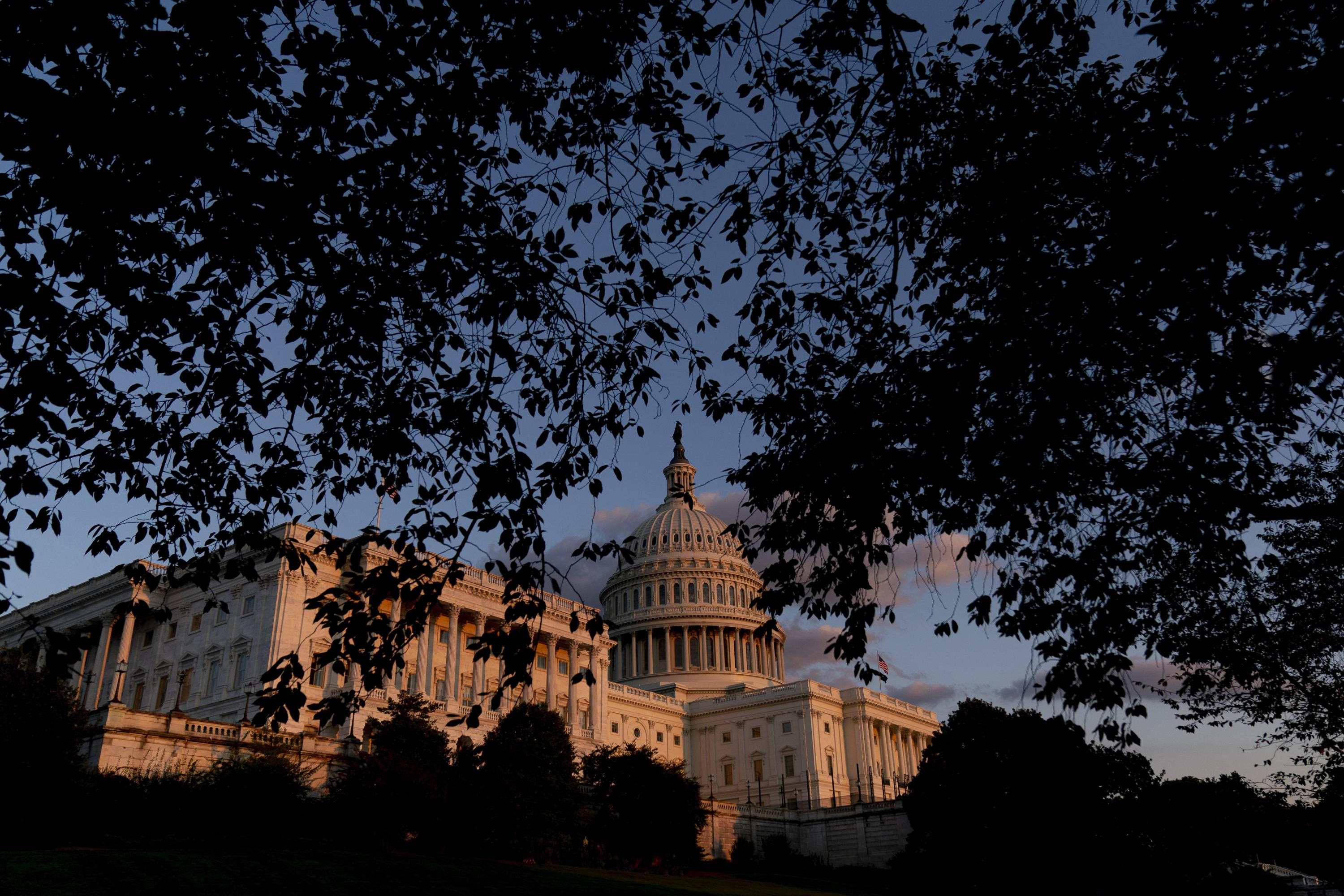
US Secretary of State Antony Blinken and Defense Secretary Lloyd Austin are meeting with NATO officials in Brussels to discuss a withdrawal of the military alliance from Afghanistan, after two decades of war.

President Biden is expected to announce later on Wednesday the symbolic date of Sept. 11 as a new deadline to pull US troops out of Afghanistan.

Blinken said despite the withdrawal, neither the US nor NATO are abandoning Afghanistan, where approximately 7,000 NATO forces and an additional 2,500 US troops remain. “Together, we went into Afghanistan to deal with those who attacked the date approached, it became clear that the withdrawal was improbable.

us …, ” Blinken said. “And together, we have achieved the goals that we set out to achieve. And now it is time to bring our forces home.”

The Trump administration had previously set a deadline for withdrawal for US troops from Afghanistan for May 1.

With the forthcoming withdrawal, many are anxious about what this could mean for Afghanistan’s future in terms of security. Who is going to govern Afghanistan if there is no peace agreement? Will the country descend into civil war? These are just some of the questions on the minds of many Afghans these days.

The post US to Coordinate with NATO on Troop Withdrawal from Afghanistan appeared first on The St Kitts Nevis Observer.

Floyd Trial: Chauvin Won’t Testify in his Defense

Former Minneapolis police officer Derek Chauvin invoked the Fifth Amendment on Thursday, confirming that he will not testify in his murder trial over the killing of George Floyd.

“I will invoke my Fifth Amendment privilege today,” Chauvin said during a conversation with defense attorney Eric Nelson, ending the speculation over whether the former officer would take the stand in his own defense.

In questioning with Judge Peter Cahill, Chauvin confirmed that it was his decision not to testify, and that his decision was a voluntary one.

The development came on the 14th day of the trial, and what is expected to be the final day of the defense’s case.

Chauvin faces second- and third-degree murder and second-degree manslaughter charges in the death of Floyd. The former officer is charged with killing Floyd by kneeling on his neck for more than nine minutes, which was captured on video footage in May 2020 and triggered nationwide demonstrations for racial justice.

Cahill on Wednesday denied the defense’s request to acquit Chauvin of the criminal charges of Floyd’s murder, rejecting the defense’s claims that prosecutors failed to prove that Chauvin’s actions last year killed Floyd.

The defense began its case on Tuesday, and has since called seven witnesses to the stand, including a use-of-force expert, a Minneapolis Park Police officer who responded to the scene of Floyd’s arrest, a former medical examiner and a friend of Floyd who was with him when police approached his car.

The prosecution rested its case on Tuesday morning after calling 38 witnesses to the stand over the course of 11 days. Testimony came from police officers, bystanders, paramedics and use-of-force experts, in addition to Philonise Floyd, George Floyd’s younger brother, who emotionally recalled the close relationship between his brother and their mother.

“I miss both of them,” he said, adding of the two, “Every mother loves all of her kids, but it was so unique how they were with each other.”

The cause of Floyd’s death has been a key point of contention throughout the trial.

In June, the Hennepin County medical examiner ruled Floyd’s death a homicide, writing that he experienced cardiopulmonary arrest while being restrained by law enforcement.

The defense, however, has argued that Floyd died from a combination of drugs in his system and his underlying heart disease.

The post Floyd Trial: Chauvin Won’t Testify in his Defense appeared first on The St Kitts Nevis Observer.

World Bank Ups $20M for St. Vincent’s Volcano Eruption Aid, Grenada Offers $1M

The World Bank has disbursed US$20 million to support the Government of Saint Vincent and the Grenadines’ response to the crisis posed by the La Soufrière volcano eruption.

The explosive eruptions began on April 9 and has required the evacuation of 20,000 people from the high-risk zones around the volcano, both to other parts of Saint Vincent and surrounding countries.

Explosions are continuing, and the falling ash is causing air quality concerns and interruptions in electricity and water supply.

“Our hearts are with the people of Saint Vincent and the Grenadines during this crisis,” said Tahseen Sayed, World Bank Country Director for the Caribbean.

“We are committed to supporting the response efforts at this critical time when the country faces this new disaster while already managing the social and economic effects of the pandemic.”

The funds are disbursed from a contingent credit line from the World Bank, known as the Catastrophe Deferred Drawdown Option (Cat-DDO), approved in June 2020.

The Cat-DDO instrument is designed to provide immediate liquidity to support a country’s efforts to recover from disasters triggered by natural hazards or a public health emergency. In recent years, the Government of Saint Vincent and the Grenadines has been making efforts to strengthen its preparedness and capacity to respond to disasters.

=================================

Grenada Offers St. Vincent $1m in Assistance

The Government of Grenada will provide $1 million in support for the Government and people of St Vincent and the Grenadines, to help deal with the impact of the explosive eruptions at the La Soufriere volcano.

Prime Minister Dr Keith Mitchell confirmed that his Cabinet colleagues unanimously supported the proposal to help the neighbouring country, despite the fiscal challenges Grenada now faces.

Grenada initially pledged to accept hundreds of Vincentian evacuees if they opted for relocation and immediately began making arrangements to do so, in collaboration with St George’s University.


However, at an emergency meeting of the Organisation of Eastern Caribbean States (OECS) Authority, this week, Vincentian Prime Minister Dr Ralph Gonsalves advised his colleagues of a general reluctance among Vincentians to relocate to other countries and in some cases, to even evacuate the high-risk areas.

It is against this backdrop that countries have now started looking at alternative means of providing support for the Government and people of St Vincent.

Mitchell said: “This is a time of serious crisis and our hearts go out to our brothers and sisters in St Vincent and the Grenadines. We have not lost sight of the fact that we are in the middle of a global pandemic that has affected all economies but when a crisis of this nature occurs and your brothers and sisters are in trouble, we simply have to extend a helping hand.

It is the right thing to do. In situations like this, I recall September 2004 when Hurricane Ivan devastated our country and these very neighbours, were among the first to help us. Being our brother’s keeper is just part of our tradition as Caribbean people.”

The La Soufriere volcano has experienced several explosive eruptions since last Friday, and with ongoing uncertainty over how long the situation could continue, Vincentians must be prepared for the long haul.

Mitchell said this is even more reason to help because the situation is still unfolding and its true extent may not be known for some time. Also, the fact that community spread of COVID-19 has been confirmed in St Vincent, further compounds the situation.

The Prime Minister said Government’s cash donation will be in addition to all other emergency humanitarian relief that is being coordinated by the National Disaster Management Agency (NaDMA).

The first shipment of supplies left Grenada on Sunday afternoon, arriving in the neighbouring country just hours later.

The shipment contained primarily water as this has become an urgent need given the contamination of St Vincent’s water supply, but it also included non-perishable food, hygiene products, baby products and adult care items.

The relief effort continues, and a few other shipments have left Grenada for St Vincent, with excellent support coming from individuals, businesses and organisations.

NaDMA, as the coordinating agency, continues to solicit donations of items on the needs list provided by the National Emergency Management Organisation in St Vincent.

These items include drinking water, water tanks, collapsible water bladders, buckets, portable toilets, sleeping mats, field tents, respirator masks with filters, hygiene kits, disinfectants and sanitisers.

Meanwhile, preparations continue to be made to host evacuees in the event that persons decide to take advantage of the opportunity. Evacuees are however reminded that all arrangements are to be made at the Government level and the existing COVID-19 protocols will be strictly enforced.

The post World Bank Ups $20M for St. Vincent’s Volcano Eruption Aid, Grenada Offers $1M appeared first on The St Kitts Nevis Observer.

Haiti: Test Case Win May Force UN Peacekeepers to Pay for Kids They Fathered

By Anastasia Moloney

BOGOTA, April 14 (Thomson Reuters Foundation) – A historic court order for a former United Nations peacekeeper to pay child support for a daughter he fathered while stationed in Haiti raises hopes for dozens of other mothers seeking similar claims worldwide, the woman’s lawyers said.

A judge in Jacmel, a port in southern Haiti, ordered a Uruguayan peacekeeper to pay 350,000 Haitian gourdes ($4,320) a month in child support to a woman he impregnated, according to a ruling seen by the Thomson Reuters Foundation.

“This is an important ruling that speaks to the Haitian judicial system’s capacity and willingness to hold U.N. peacekeepers to account for their actions,” said Sandra Wisner, a senior attorney who worked on the case.

The ruling is part of a three-year legal battle by 10 Haitian women who each filed individual claims to force men from the U.N. Stabilization Mission in Haiti (MINUSTAH), which ended in 2017, to contribute to the upbringing of their children.

The human rights group Bureau des Avocats Internationaux in Haiti and the U.S.-based Institute for Justice & Democracy in Haiti (IJDH), who have given legal support to the women since 2017, said it was a “crucial step towards justice”.

“This is the only favorable judgment we have received to date … the case may encourage similar claims around the world,” said Wisner of IJDH, adding that the ruling was handed down in December but was not made public until recently.

“It is now up to the U.N. to uphold its obligation to facilitate this ruling and establish a clear mechanism for enforcement in Uruguay.”

Hundreds of women in countries where U.N. troops are deployed, from Mali and the Central African Republic to the Democratic Republic of Congo, are seeking child support in paternity claims from U.N. peacekeepers, according to the IJDH. ‘PRIORITY COLLECTIVE EFFORT’

Farhan Haq, deputy spokesman for the U.N. Secretary-General, described the ruling in Haiti, where children born to U.N. peacekeepers are nicknamed Petit – French for small – MINUSTAH, as “very important”.

“The U.N. has cooperated to facilitate the administration of justice in this case, providing critical documentation and information to the mother herself as well as to the relevant national authorities of Haiti,” Haq said in emailed comments.

Paternity issues are not the only problems facing MINUSTAH, which set out to restore stability after a 2004 coup and helped rebuild Haiti after a devastating earthquake in 2010.

There have been multiple reports of sexual contacts – and several rape claims – involving peacekeepers, with girls as young as 11 being impregnated and abandoned with their babies, found a 2019 study in the journal International Peacekeeping.

Sexual relationships between peacekeepers and residents of countries hosting a U.N. mission are strongly discouraged under the U.N.’s “zero-tolerance policy” for sexual exploitation and abuse.

According to data on the U.N.’s website about the conduct of its field missions, it has received 324 paternity claims worldwide since 2010 from women who have become pregnant as a result of sexual exploitation and abuse by peacekeepers.

The U.N. can investigate crimes and send peacekeepers home but it has no power to prosecute individuals.

“Combating sexual exploitation and abuse perpetrated by personnel serving under the United Nations flag is a priority collective effort for the United Nations,” Haq said.

The U.N. appointed a Victims’ Rights Advocate in 2017 to lead its global efforts to support victims of sexual exploitation and abuse by its personnel, and works to facilitate paternity and child support claims, Haq said.

In Haiti, an advocate works to ensure “victims can report with confidence, access assistance and receive timely information on the status of their complaints” and that they receive documentation required to support their cases, he said. DNA TEST RESULTS

Lawyers at IJDH say dozens of mothers on the Caribbean island, the poorest country in the Americas, are struggling to bring up children fathered by U.N. peacekeepers from Uruguay, Argentina, Nigeria, and Sri Lanka who have returned home.

The world body says its peacekeeping arm does not take responsibility for financial assistance to children fathered by peacekeepers.

In practice, this often means mothers must raise children alone in some of the world’s poorest, most troubled nations.

Haiti is in turmoil, with surging gang violence and anti-government protests exacerbating a humanitarian crisis in a country where two-thirds of people make less than $2 per day.

Haq said the U.N. has received 32 paternity claims from Haitian women since 2007, all of whom have been given help, such as school fees and facilitation of legal assistance, including the mother in the court case.

“We have provided several Haitian mothers with DNA test results received from the State of nationality of the fathers or alleged fathers of their children,” he said.

“The aim is to support the resolution of the mothers’ claims,” he said, adding that the U.N. also established contact between victims and state authorities, and liaised with member states to follow up on pending claims.

“We continue to call on those who fathered these children in Haiti to assume their individual parental responsibility towards them. Thus far, only a very few have acknowledged their paternity or provided support to these children,” Haq said.

The post Haiti: Test Case Win May Force UN Peacekeepers to Pay for Kids They Fathered appeared first on The St Kitts Nevis Observer.

Haiti: US Calls for Free and Fair Elections After Prime Minister Resigns

WASHINGTON – The U.S. is reiterating its call Wednesday for free and fair legislative and presidential elections in Haiti, hours after Prime Minister Joseph Jouthe resigned and President Jovenel Moise named Foreign Minister Claude Joseph as his replacement.

“The U.S. looks forward to continued cooperation with Interim Prime Minister Claude Joseph, the Government of Haiti and all Haitian stakeholders and international partners working to hold free and fair legislative and presidential elections in 2021,” tweeted Julie Chung, acting assistant secretary for the U.S. State Department’s Bureau of Western Hemisphere Affairs.

Jouthe announced his resignation in the pre-dawn hours of Wednesday without explaining why he decided to step down. He had been at odds with other members of Moise’s Cabinet, who openly opposed and acted against Jouthe’s orders on issues pertaining to security and justice.

“I gave my letter of resignation to the President of the Republic, SEM @moisejovenel. It has been an honor to serve my country as prime minister. I thank the members of my government, (and) our technical and financial partners for their collaboration. God Bless Haiti!” Jouthe said on Twitter.

In a tweet, Moise said, “The resignation of the government, which I have accepted, will allow me to address the insecurity that is calling out to be handled and pursue discussions that will help us find the consensus that is necessary for political and institutional stability in our country.”

Responding to VOA’s request for comment on the Cabinet reshuffle, a State Department spokesperson expressed the Biden administration’s commitment toward working with Haiti to promote democratic governance and the rule of law.

“We encourage Haitian politicians, civil society and the business community to find common ground to work toward free and fair overdue legislative, as well as presidential, elections,” the spokesperson told VOA.

The Moise government plans to hold a constitutional referendum in June, followed by legislative and presidential elections in September and November.

Spike in kidnappings

The Cabinet change follows a spike in kidnappings during recent days that saw Protestant pastors and church officials kidnapped at gunpoint during a live broadcast on Easter Sunday, the abduction for ransom of Catholic priests and nuns, and the killing of a prominent businessman in broad daylight during a failed kidnapping attempt.

The Organization of American States expressed its concern late Tuesday about the deteriorating security situation.

“The Secretary General of the OAS (Luis Almagro) is closely following the situation in Haiti and deplores the deterioration of the security situation, particularly the resurgence of kidnappings and killings, including five religious leaders over the weekend,” the OAS said in a tweet.

“The right to life is a reflection of respect for human life, which is a fundamental human right. the OAS Secretary-General calls on Haitian officials to take the necessary measures to protect the life and dignity of its citizens.”

Laurent Weil, research analyst and specialist on Latin America and the Caribbean at The Economist magazine, said the Cabinet change was not enough to improve security.

“A change of prime minister or Cabinet reshuffle is unlikely to be sufficient by itself to improve the security situation ahead of the referendum,” Weil told VOA. But he thinks the resignation could signal Moise’s willingness to engage in a more inclusive dialogue.

“The move may reflect President Jovenel Moise’s recognition of the deteriorating situation and indicate that he is willing to engage in talks with some of his opponents to lower the heat on the political scene,” Weil said. “But the prospects for negotiations are slim, as very few political leaders are willing to cooperate.”

The United Nations Integrated Office in Haiti, BINUH, criticized the electoral process Tuesday, saying it was neither inclusive nor transparent enough.

“The national appropriation of the constitution project requires the engagement of a larger segment of political actors, civil society, women and religious groups from across the nation,” BINUH tweeted.

Weil said there are steps Moise can take to show he is committed to free and fair elections.

“At this stage, if the government is really committed to free and fair votes this year, its priority will be to improve citizens’ confidence by ensuring that a significant portion of the population takes ownership of the referendum and electoral process,” he told VOA.

The new prime minister

Joseph is Haiti’s 164th minister of foreign affairs and religious affairs. Before being named foreign minister in March 2020, he held posts as Haitian ambassador to Argentina, and chargé d’affaires at the Haitian Embassy in Spain. Prior to working in politics, Joseph was a professor at the University of Connecticut and at Long Island University.

Under normal circumstances, Joseph’s nomination would require Parliament‘s approval. But the legislative body is not functioning because of a failure to organize elections to renew the terms of lawmakers.

Joseph has not responded to VOA’s request for comment on his new Cabinet position, but he did retweet Moise’s announcement of his appointment, as well as a congratulatory tweet from the Ministry of Foreign Affairs of Taiwan.

“We welcome @moisejovenel’s naming of @claudejoseph03 as interim PM of Haiti & look forward to continuing close bilateral cooperation in areas of mutual interest benefiting the people of both countries and the region. Taiwan is Haiti’s true friend & partner in prosperity.”

The post Haiti: US Calls for Free and Fair Elections After Prime Minister Resigns appeared first on The St Kitts Nevis Observer.

House Committee Holds Hearings on Puerto Rico’s Potential Statehood

When it comes to cultural pride, Puerto Ricans are strongly united, but much less so when it comes to the future of the island, currently a territory of the U.S.

On Capitol Hill, there are two approaches competing for support.g

The Puerto Rico Statehood Admission Act authorizes a formal offer of statehood to be settled by Puerto Ricans in a simple yes/no vote.

Activist George Laws Garcia, with the Puerto Rico Statehood Council, wants Puerto Rico to become the 51st state.

“I think that it would be the thing that would empower us the most to reach Puerto Rico’s maximum economic potential so that we can really contribute to the United States and retain our culture and identity,” he told CBS2’s Tony Aiello.

A competing bill is sponsored by New York Democrats Nydia Velazquez and Alexandria Ocasio-Cortez.

Under the Puerto Rico Self-Determination Act, people on the island would elect delegates to a convention with multiple options, including independence from the U.S.

“It certainly wants to consider other options to independence but still move self-determination along,” said Dr. Carlos Vargas-Ramos, with the Center for PR Studies.

A non-binding referendum last year attracted just 55% of Puerto Rican voters; statehood narrowly won, 53% to 47%.

Bronx Congressman Ritchie Torres backs statehood, but says of the two competing bills in Congress, “The honest answer is that neither has momentum. We’re caught in a deadlock.”

“Puerto Ricans within the Democratic party are divided on the question of status,” he added.

Democrats do feel some pressure to act while they still control both houses of congress.

So far, only the statehood referendum bill is winning Republican support, including from Long Island Congressman Andrew Garbarino.

The post House Committee Holds Hearings on Puerto Rico’s Potential Statehood appeared first on The St Kitts Nevis Observer.

World View: US Afghan Exit, Russian Sanctions, Another Cop Charged in Minnesota, More

April 15, 2021

Alternate text

The Biden administration’s surprise announcement of an unconditional troop withdrawal from Afghanistan later this year appears to strip the Taliban and the Afghan government of considerable leverage and could ramp up pressure on them to reach a peace deal.

The White House is considering sanctions against Russia in response to election interference and a massive hacking campaign that breached vital federal agencies.

Johnson & Johnson’s COVID-19 vaccine will remain in limbo for a while longer after U.S. government health advisers said they need more evidence to decide if a handful of unusual blood clots were linked to the shot – and if so, how big the risk really is.

Also:

  • Minnesota ex-cop charged in shooting of Black motorist
  • Bangkok’s nightlife drives COVID-19 surge
  • Oscar moment coming up for the disabled 

ANDREW MELDRUM

The Associated Press

Johannesburg, South Africa

The Rundown

I'm an image

ISLAMABAD (AP) — The Biden administration’s surprise announcement of an unconditional troop withdrawal from Afghanistan by Sept. 11 appears to strip the Taliban and the Afghan government of……Read More

I'm an image

BROOKLYN CENTER, Minn. (AP) — A white former police officer faced her first court appearance Thursday in the traffic-stop shooting of a Black motorist that has engulfed a small Minneapolis sub…Read More

I'm an image

WASHINGTON (AP) — The Biden administration is preparing to announce sanctions in response to a massive Russian hacking campaign that breached vital federal agencies, as well as for election……Read More

I'm an image

U.S. health officials are weighing next steps as they investigate a handful of unusual blood clots in people who received Johnson & Johnson’s COVID-19 vaccine — a one-dose shot that many count…Read More

I'm an image

BANGKOK (AP) — When Thailand’s transport minister was recently diagnosed with COVID-19, it was Prime Minister Prayuth Chan-ocha who got a headache. Prayuth was not particularly lauded for… …Read More

OTHER TOP STORIES

LOS ANGELES (AP) — Right down to its production design, the Oscars have not always felt like the most welcoming place for the disabled. “I’ve always seen that stage with its …Read More

Colton Underwood, the former football tight end who found fame on “The Bachelor” has revealed that he is gay. “I’ve ran from myself for a long time. I’ve hated myself for a lo…Read More

Cheri Williams looks back with regret at the start of her career as a child welfare caseworker in 1998. Systemic racism is a major reason why. “I removed probably about 100 ki…Read More

The barnyard setting of “Gunda” could hardly be more familiar, but in Russian director Victor Kossakovsky’s documentary, a pigsty is rendered an almost alien landscape. Koss…Read More

The post World View: US Afghan Exit, Russian Sanctions, Another Cop Charged in Minnesota, More appeared first on The St Kitts Nevis Observer.

Mexico’s President Anxious to Stop Child Migrants

MEXICO CITY (AP) — Mexico President Andrés Manuel López Obrador said Wednesday he plans to visit his country’s southern border to discuss with governors and mayors there how to stop the smuggling of child migrants — an issue of growing concern for the United States.

The United States government has asked Mexico and the countries of Central America’s Northern Triangle — Guatemala, Honduras and El Salvador — to help lower the number of child migrants arriving at its own border with Mexico.

The Biden administration said this week it had reached agreements with those countries to use troops to crack down on migrant smuggling. The move was criticized by human rights defenders and migrant advocates, who said it would make it more difficult for people seeking international protection.

But López Obrador said at his daily news conference on Wednesday that the desire to protect those rights is motivating Mexico’s efforts to stop child migrants.

“To protect children we are going to reinforce the surveillance, the protection, the care on our southern border because it’s to defend human rights,” he said.

He showed photographs of a tractor-trailer rig stopped in the southern city of Tuxtla Gutierrez on Tuesday that was carrying 149 migrants, including 28 minors, from Honduras and Guatemala.

The president also said that the director of Mexico’s child and families protection agency would move from Mexico City to the southern city of Tapachula until the situation improves.

The number of children arriving at the U.S. southern border has become a growing problem for the Biden administration. It continues quickly returning most migrants to Mexico, but has said it will not do so with unaccompanied minors.

The government has struggled to house and care for the children in acceptable settings before reuniting them with relatives.

Central American families, encouraged by smugglers, are increasingly bringing young children with them, hoping that it will improve their chances of being allowed to stay in the U.S. while their cases proceed. Some of the parents returned to Mexico have decided to send their children back across the border to the U.S. unaccompanied.

In late March, Biden said that Vice President Kamala Harris would take charge of U.S. efforts in Mexico and the Northern Triangle to address the root causes of migration. She said Wednesday she soon planned to visit Mexico and Guatemala.

Harris said she is working from the position that most people don’t want to leave their homes. Problems of economic resiliency, climate, water, food sustainability and corruption won’t be fixed overnight, but the U.S. is studying what it can do about economic development in those countries, she said.

The Northern Triangle has been the main source of migrants arriving at the U.S. southern border in recent years. Deeply rooted corruption, stagnant economies and high crime have been among the main forces driving people out. Then last year the COVID-19 pandemic hit, deepening economic desperation, and in November two major hurricanes raked the region increasing the misery.

The post Mexico’s President Anxious to Stop Child Migrants appeared first on The St Kitts Nevis Observer.

Cuba: Will Raul Castro Retire for a Youth Oriented Party?

HAVANA (AP) — This week’s Communist Party congress could be the last with a Castro at the helm of Cuba’s all-powerful political institution.

Six years after the death of Fidel Castro, his brother and fellow leader of the island’s 1959 revolution, Raul Castro, is being watched to see if he fulfills his commitment to give up the reins of the only political organization permitted in the country of 11 million people.

Raul Castro in 2016 said that he would give up the post of party secretary-general at the party’s eighth congress, which is scheduled to begin Friday. Standing down would complete the move to turn control over to a younger generation of revolutionaries led by Miguel Díaz-Canel, who took over the presidency from Castro in 2018.

Many Cubans are anxious over the change after having their daily affairs guided for more than six decades by a Castro, and Raul Castro’s expected exit from the political scene couldn’t come at a more difficult time.

The coronavirus pandemic, painful financial reforms and restrictions re-imposed by the Trump administration have again brought food lines and shortages reminiscent of the “special period” that followed the collapse of the Soviet Union in the 1990s. But unlike past crisis that brought Cubans together, concern is on the rise, fueled by the spread of the Internet and growing inequality that has laid bare the socialist system’s failings.

“We’ve lost an entire decade,” said Alina Lopez, a Havana historian who runs a blog that is a forum for leftist criticism of the government. “They don’t how to bring real change because any change must start with a lot of self-critique.”

At the previous Communist Party congress, in 2016, Castro announced that owing to the “inexorable laws of life,” he would step down as first secretary-general of the Communist Party in 2021 and yield power to Diaz-Canel. Also expected to resign at the gathering is Castro’s deputy, 90-year-old José Ramón Machado.

That would potentially leave the 17-member Politburo for the first time without any veterans of the guerrilla insurgency, or what many Cubans affectionately refer to as the “historic generation.”

William LeoGrande, an American University expert on Cuba, said such an outcome could greatly enhance Diaz-Canel’s ability to push through overdue reforms as part of a broader economic opening approved a decade ago.

In January, Diaz-Canel finally pulled the trigger on a plan approved two congresses ago to unify the island’s dual currency system, giving rise to fears of inflation. After the economy contracted 11% last year, he also threw the doors open to private enterprise that had been stamped out by state planning, permitting Cubans to legally operate almost any self-run businesses from their homes.

But authorities have yet to tackle what LeoGrande considers the elephant in the room — an overhaul of the bloated state-run companies and government agencies on which the vast majority of Cubans depend for their meager salaries and subsistence.

“They keep saying they will require the state enterprises to become profitable but that’s precisely where there’s resistance because the private sector isn’t growing fast enough,” said LeoGrande, who frequently conducts research in Cuba but hasn’t traveled there since prior to the pandemic. “Laying off a lot of people could lead to social and political problems.”

To be sure, any change in Cuba is likely to be slow. The word “continuity” scrawled in red is repeated multiple times on a giant billboard touting the party gathering erected in the same Revolutionary Plaza where Fidel Castro at his height in the 1960s and 1970s used to mesmerize Cubans with his anti-imperialist harangues.

But at least some on the island are agitating for more radical change. Hundreds of artists, some of them wrapped in the Cuban flag, have in recent months carried out anti-government protests.

Top leaders have tried to vilify the demonstrators, accusing them of being paid by exiles in Miami. But the movement has gained momentum thanks to the arrival of mobile internet service two years ago that has made it easier for dissidents to organize.

LeoGrande said the discontent running through Cuban society is about the basics of daily life, not political freedom and certainly not the rights of performance artists to wear the Cuban flag.

He says a bigger threat comes from the gaping inequality visible for the first time with the advent of special stores selling merchandise in dollars to the lucky few receiving hard currency from relatives abroad or who work in what, prior to the pandemic, had been a booming foreign tourism industry.

“Back in 1990s, there was a sense that we’re all in this together. There was no ostentation consumption,” said LeoGrande. “Today, the inequality is not only worse but it’s also more manifest.”

As always in Cuba’s history, the wildcard is the “Northern Empire,” as communist stalwarts refer to the U.S. This year’s congress, like the two before it, coincides with the anniversary of the 1961 invasion by CIA-funded Cuban exiles at the Bay of Pigs.

President Joe Biden campaigned on the promise to partially revive the Obama administration’s opening that saw the U.S. raise the American flag at its long-shuttered embassy in Havana, ease the decades-old trade embargo and boost air connections between the two countries. Most of those policies were reversed by Trump administration, which at the last minute even declared Cuba a state sponsor of terrorism despite having helped broker a peace deal between Colombia’s government and leftist rebels.

“Beyond tying to alleviate Cuba’s severe humanitarian conditions by removing remittance and travel restrictions, the Biden administration is likely to be very cautious in re-engaging Cuba,” said Michael Shifter, president of the Inter-American Dialogue in Washington. “The potential political costs of doing so are just much higher than the benefits.”

Associated Press writer Andrea Rodriguez reported this story in Havana and AP writer Joshua Goodman reported from Miami

The post Cuba: Will Raul Castro Retire for a Youth Oriented Party? appeared first on The St Kitts Nevis Observer.

Report: Mexico’s Inadequate Virus Response Cost Huge No. of Lives

MEXICO CITY (AP) — Mexico’s unwillingness to spend money, do more testing, change course or react to new scientific evidence contributed to the country being one of the worst hit by the coronavirus pandemic, according to a report released this week by the University of California, San Francisco.

Mexico would have had a significantly lower death toll if it had reacted as well as the average government, according to the University’s Institute for Global Health Sciences, which also released a report sharply critical of the U.S. response to COVID-19.

Mexico’s Health Department says there have been almost 210,000 deaths in the country of 126 million, but because so little testing is done, it acknowledges the real toll is around 330,000. The United States and Brazil have higher tolls, but much larger populations.

The failure by officials to recommend face masks, institute travel restrictions, provide enough testing and protective equipment and institute social distancing measures were among the mistakes cited by the report, which was commissioned by the World Health Organization’s Independent Panel to the Institute for Global Health.

“Key decisions about how to confront the health crisis were based on unwarranted assumptions, without sufficient evaluation and judgement of the risks,” according to the report, which cited excessive concentration of authority and “a government communication campaign that prioritized keeping up appearances, and partisan politics, before health.”

For example, Assistant Health Secretary Hugo López Gatell, who has acted as the government’s point-man in the pandemic, repeatedly said that wearing face masks did not protect people from catching COVID-19, even after evidence mounted that they did.

“It is no coincidence that countries with the worst performance in responding to the COVID-19 pandemic have populist leaders,” according to the report. “They have in common traits such as minimizing the severity of the condition, discouraging the use of face masks, prioritizing the economy over saving lives, and refusing to come together with political opponents to mount a coherent response.”

Neither López-Gatell nor the government has commented on the report.

Former health secretary José Narro said that “while it contains some inaccuracies, the truth is, (it is) very good.”

Throughout the pandemic, López-Gatell ridiculed mass testing as a waste of money and effort. The government also emphasized the promise that there were hospital beds available, when in fact the system was saturated in many places.

Austerity-minded President Andrés Manuel López Obrador has spoken with pride of not acquiring debt during the pandemic and not launching economic stimulus programs. But the report says that penny-pinching may have played a role in decisions not to expand testing, trace cases and quickly acquire PPE.

“From the outset, health authorities deemed efforts to stop or contain the virus futile and a waste of scarce resources, arguing instead for a mitigation approach and the preparation of the health system to care for the small minority that would require medical attention,” the report said.

But concentrating so much power in the hands of López-Gatell, an appointee of López Obrador, led the government to double-down on early mistakes.

The human cost of the missteps has been overwhelming.

“Every day I cry for my son, for the circumstances” in which he died, said Martha Méndez Guevara, whose son, television sports journalist José “Pepe” Roldán Méndez, 43, died of COVID-19 in June.

Mendez Guevara brought photos of her son and an urn with his ashes to Mexico City’s Basilica de Guadalupe Wednesday to have them blessed at an improvised shrine for pandemic victims.

She says she can’t judge whether authorities’ response to the pandemic was sufficient, in part because she never got to see her son after he was admitted to a government hospital in May. “We don’t know if they did enough for him, because we we were not allowed to visit him,” she said.

To be fair, the report notes that López Obrador’s administration had to contend with an already over-stretched health care system, and people’s “delays in seeking medical care out of fear that once admitted to a hospital, people would contract the disease or die.”

That meant many patients arrived at hospitals in advanced stages of the disease.

“The high prevalence of chronic diseases, in combination with suboptimal timeliness and quality of medical attention, have likely contributed to relatively high COVID-19 mortality among the non-elderly population in Mexico,” the report said, referring to Mexico’s very high levels of obesity and diabetes.

That also led to more deaths among younger patients; 50.6% of all COVID-19 death in Mexico occurred among people under 65 years old, compared to 18.7% in the United States.

The government said it would not institute mandatory face mask rules, strict lock-downs or travel bans, saying such moves would violate individual liberties. But the report noted the government failed to follow even its own rules, something it claimed that by February made Mexico City the second worst-hit metropolis in the world after Lima, Peru.

“Authorities’ miscalculations or tampering with the established epidemiological alert-system—which by December 4, signaled the highest level of risk—led them to postpone the reintroduction of strict restrictions in the city until December 18,” the report said, referring to a four-level scale based on case loads, hospitalizations and other measures that would have triggered business closures.

“By then, on the verge of the winter holidays, transmission had already spiraled,” it said.

The post Report: Mexico’s Inadequate Virus Response Cost Huge No. of Lives appeared first on The St Kitts Nevis Observer.