Tag Archives: caribbean

Canada: China, Russia Singled Out for Espionage Activity

Foreign spying and interference in Canada last year hit levels not seen since the Cold War, in part because of vulnerabilities caused by the Covid-19 pandemic, the main Canadian spy agency said on Monday,

The Canadian Security Intelligence Service (CSIS) singled out Russia and China as particular causes for concern and said key national security threats such as violent extremism, foreign interference, espionage and malicious cyber activity grew in 2020 and “in many ways became much more serious for Canadians.”
In its annual report for last year, CSIS linked the jump in foreign spying to the increasing number of people working from home because of the Covid-19 pandemic.
“Foreign threat actors — including hostile intelligence services and those working on their behalf — have sought to exploit the social and economic conditions created by the pandemic” to gather valuable information, it said.
The report was the latest from Canada’s intelligence community to focus on Russia and China.
The head of CSIS said in February that China posed a serious strategic threat, while the signals intelligence agency last November identified state-sponsored programs in China, Russia, Iran and North Korea as cyber crime threats for the first time.
“In 2020, CSIS observed espionage and foreign interference activity at levels not seen since the Cold War,” CSIS said.
“China, Russia, and other foreign states continued to covertly gather political, economic, and military information in Canada through targeted threat activities in support of their own state development goals.”

The post Canada: China, Russia Singled Out for Espionage Activity appeared first on The St Kitts Nevis Observer.
Mexico Hands Over 30 Marines to Cops in People Disapperarance Cases

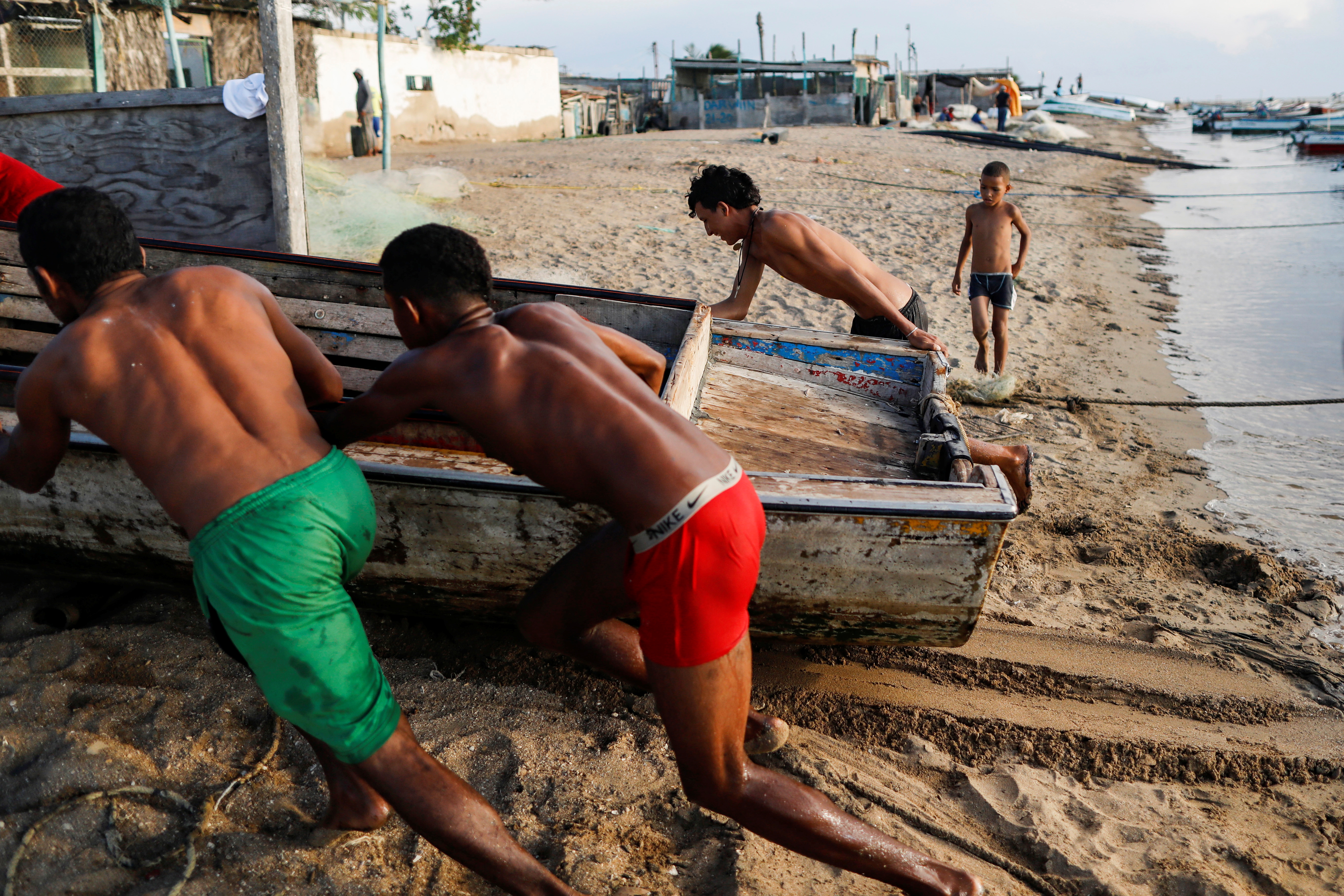
MEXICO CITY (AP) — Mexico’s navy said Monday it turned 30 marines over to civilian prosecutors to face justice in the cases of people who disappeared during anti-crime operations in the northern border city of Nuevo Laredo in 2014.

The navy said there were outstanding warrants for the 30 charging them with “acting in violation of their duty.”

The military personnel were handed over to the federal Attorney General’s Office late last week, the navy said.

Under Mexican law, military tribunals can hear only cases that involve violations of military code; . Offenses against civilians must be tried in civilian courts.

The city across from Laredo, Texas, has long been dominated by the Northeast cartel, an offshoot of the old Zetas gang.

For much of the 2000s, the fight against the cartel was largely entrusted to the marines, who frequently came under fire from heavily armed cartel gunmen. Marines were also accused of rounding up supposed suspects, some of whom were not heard from again. Through 2018, dozens of people disappeared in Nuevo Laredo.

The marines have largely been removed from land anti-cartel operations, and the army and the newly created National Guard has taken over some of the those duties.

The post Mexico Hands Over 30 Marines to Cops in People Disapperarance Cases appeared first on The St Kitts Nevis Observer.
Russian Gaining Foothold in Latin America Through Sputnik Vaccine

RIO DE JANEIRO (AP) — Russia has been trying to get its coronavirus vaccine Sputnik V into Brazilian arms for months, and been repeatedly frustrated by legal, regulatory and possibly even diplomatic obstacles.

That began to change as the South American nation played catch-up in the global race to snap up shots. Receiving little help from the U.S., which was struggling to get a handle on its own outbreak, Sputnik V seemed as good as any; Brazil’s federal government and a group of nine northeastern states signed two deals with Russia’s sovereign wealth fund, RDIF, for a total 47 million doses. The shot is moving toward regulatory approval.

The vaccine has now been purchased by at least nine Latin American nations, with Brazil its greatest uphill battle.

That growing adoption reflects Russia gaining a greater foothold in the region the U.S. has traditionally viewed as within its sphere of influence — and where the American government had boasted of steering Brazil away from Russian vaccines. It’s similar to China’s success in achieving wide use of its own vaccines in Latin America.

That has caused consternation in U.S. diplomatic circles, although it remains to be seen if Russia’s vaccine outreach will yield deeper partnerships.

Tom Shannon, a former undersecretary of state whose long diplomatic career included several stints in the region, told The Associated Press the U.S. has largely missed an opportunity to engage with Latin American governments during the pandemic, with the exception of a recently announced plan by President Joe Biden’s administration to provide Mexico surplus shots

“For the Kremlin, COVID was a godsend,” Shannon said of Russia’s vaccine outreach. “This was a chance for them to restart their diplomacy in the hemisphere with a whole new face of public health intervention and they are taking full advantage of it.”

“When you have 300,000 dead, you take the help where you can get it from,” he said of Brazil.

Russia’s presence in Latin America has been limited since the 1990s, and in recent years primarily entailed an alliance with Venezuela for provision of arms and energy projects, as well as Nicaragua for arms and building emergency response capabilities. But Latin America’s arms purchases plunged as its commodities boom ended and Venezuela economy melted down.

Russian ties were also strong with the government of Argentina’s Cristina Fernandez Kirchner from 2007 to 2015 and appear to be reviving. As current vice president, Kirchner spearheaded negotiations to buy Sputnik V even when local scientists initially were skeptical of the early experimental data reported by the Gamaleya Institute that developed the vaccine.

Argentina’s embrace of the vaccine helped convince Mexico — which had struggled to get vaccines from U.S. companies — to sign an agreement for 24 million doses, though they have been slow to arrive.

Bolivia’s previously tight relations with Russia had reversed under President Luis Arce’s right-wing predecessor, but Arce, who took office in November, agreed to buy millions of doses. After speaking with Putin by phone, he also announced reactivation of a Russian-led project to build a nuclear research and technology center.

U.S. vaccine outreach, meantime, has been almost entirely indirect, with a pledge of $4 billion to the World Health Organization’s COVAX program to provide shots to low- and middle-income countries. Recently, such shipments have been delayed.

The U.S. has snatched up more doses than it will eventually need, and Biden has repeatedly said his focus is vaccinating all Americans before sharing vaccines abroad. The U.S. has had almost three times as many COVID-19 deaths per capita as Russia and, even with one of the world’s fastest immunization rollouts, Americans have complained about the pace.

By contrast, Russia’s own vaccination program has lagged because of widespread skepticism of the vaccine — a February poll showed only 30% of Russians were willing to get the shot — and drug makers being slow to ramp up production.

Only recently did Biden’s administration agree to provide 2.7 million surplus AstraZeneca doses to Mexico. Brazil has been trying to negotiate the same for itself, according to its foreign ministry.

“Although I truly think that the U.S. and European countries are the preferred partners in the region, if there is a vacuum, there isn’t the slightest doubt that China and Russia will seek a way to take advantage,” Mauricio Claver-Carone, the head of the Inter-American Development Bank, told the AP.

The U.S. Department of Health and Human Services’ 2020 annual report said in a section titled “Combatting malign influences in the Americas” that it had convinced Brazil to not to buy the Russian shot. Kremlin spokesman Dmitry Peskov said March 16 other countries faced similar coercion, without naming them.

“The pressure has been unprecedented, tough and devoid of any diplomatic niceties,” Peskov said. “We are categorically against politicizing the situation with vaccines.”

Fabiano Mielniczuk, a professor who specializes in Russian international politics at Brazil’s Federal University of Rio Grande do Sul, said suspicion of Russia represents an outdated Cold War mentality, and sees its moves to introduce the shot “much more as market-oriented action than as geopolitical action.”

Despite the assertion in the “malign influences” section, it’s unclear what action the U.S. took. The U.S. embassy denied exerting any pressure regarding vaccines approved by Brazil’s health regulator, which has not yet signed off on Sputnik V. Brazil’s government denied even being consulted.

Frustrated by the speed and bureaucracy of health regulator Anvisa, the Russians conducted phase 3 trials of its vaccine elsewhere, according to Bahia state’s Gov. Rui Costa, who had worked closely with the fund. At the time, Brazil still required local phase 3 trials for regulatory approval.

In a last-ditch effort, RDIF’s director Kirill Dmitriev reached out to former President Luiz Inácio Lula da Silva, according to Alexandre Padilha, a lawmaker and former health minister who joined their subsequent meeting. That led to the nine states’ eventual deal for 37 million doses. RDIF declined to comment for this story.

“The northeastern governments already have various investment partnerships with the Chinese,” Padilha said. “I think without a doubt this can open doors for northeast governors to establish other partnerships and technology investments with the Russians.”

Putin meantime heaped flattery on Bolsonaro at a multinational summit in November, saying the Brazilian had “expressed the best qualities of masculinity and determination” by putting citizens’ interests before his own health. Bolsonaro posted video of the praise to social media.

Courting the rival former and current presidents simultaneously reflects Putin’s pragmatism, said Mielniczuk, the political science professor.

Brazil’s federal government agreed to buy 10 million doses.

Even after Anvisa dropped its demand for local phase 3 trials, the Brazilian lab that would produce Sputnik V locally — Uniao Quimica — struggled to clear hurdles.

RDIF’s Dmitriev told Brazilian magazine Veja in mid-March that he felt his vaccine was still facing political bias. But Anvisa said delays were technical, caused by lacking documentation, and on March 23 it held a five-hour meeting with Uniao Quimica and Gamaleya to iron out problems. A week later, Anvisa certified Uniao Quimica’s manufacturing practices.

On April 6, Bolsonaro spoke with Putin by video call and said afterward that his government was working to resolve “some obstacles″ to importing the shot. The leaders also discussed broader trade, defense industry cooperation and technology.

After the call was first reported, the former director of Brazil’s trade and investment promotion agency, Márcio Coimbra, said on Twitter, “Now distant from Washington, we may be closer than ever to Moscow.”

Some documentation is still missing, but Sputnik V is inching closer to approval in Brazil — and another soft-power score for Russia. It serves as a wake-up call, said Eric Farnsworth, who has developed and implemented U.S. policy in the region.

“We’re not the only ones that Latin America can interact with and they’re showing it right now,” said Farnsworth, vice president of the Council of the Americas, a New York-based organization promoting business in the region. “There is much ground to be recaptured, and the only way to do that would be to overwhelm the region with generosity in combatting the pandemic.”

___

Associated Press writer David Biller reported this story in Rio de Janeiro and AP writer Christopher Sherman reported from Mexico City. AP writers Josh Goodman and Gisela Salomon in Miami and Daria Litvinova in Moscow contributed to this report.

The post Russian Gaining Foothold in Latin America Through Sputnik Vaccine appeared first on The St Kitts Nevis Observer.

Travel Publication Cites Nevis as a ‘Fun, Safe’ Destination

Travel + Leisure magazine, one of the leading industry publications devoted to travel, has featured Nevis as a fun and safe destination to visit. The twin-island nation was singled out by the magazine for its robust health and safety protocols, and a model for other destinations currently welcoming visitors to explore and indulge in its varied activities.

Editor Erinne Magee who visited the Caribbean island to get a first-hand experience of the destination and its management of the COVID pandemic noted the comfort felt during her vacation.

The Nevis Tourism Authority worked with the magazine to ensure all the travel requirements were adhered to and Ms. Magee singled out the NTA for making the story possible.

To visit St. Kitts and Nevis requires a negative PCR test taken within 72 hours of departure. Visitors are then required to upload a copy of the results along with a picture of their passport to the St. Kitts and Nevis travel portal, after which they will be sent the approval forms for boarding. These will be checked at the airport prior to being issued a boarding pass. On arrival to St. Kitts and Nevis, a health screening and temperature check will take place.

According to the NTA CEO, Jadine Yarde, the various accommodation and attraction travel partners have worked together to ensure that the strict protocols are implemented and consistently maintained to provide all visitors peace of mind.

The article highlighted the seamless procedure which the Editor enjoyed making it a smooth and safe transfer to the Four Seasons hotel.

“Here, hotel staff was waiting to greet me and the other guests with their trademarked Nevisian hospitality. From there, we were led to a check-in area, receiving another temperature check and two bracelets. One bracelet changed each day after a morning temperature check, while the other designated our status of vacationing in place,” Magee stated.

In the feature, she had high praises for the staff at Four Seasons Resort Nevis who made her feel like family and gave her an opportunity to learn more about the Nevisian culture. One of the biggest takeaways for the Editor is that in Nevis, hospitality is not a job, but a way of life.

“The customer service here shines — not because it’s required, but because warmth and openness are simply second nature. The slogan in Nevis is: ‘You’re only a stranger once’ but I think it’s more accurate to say: You’re not a stranger at all,” Magee noted.

Travel + Leisure is a travel magazine based in New York City, New York. Published 12 times a year, it has over 6.1 million readers. For decades, the publication has been a trusted voice inspiring and empowering the most curious and passionate travellers to travel more and travel better.

For travel and tourism information on Nevis please visit the Nevis Tourism Authority website at www.nevisisland.com; and follow us on Instagram (@nevisnaturally), Facebook (@nevisnaturally), YouTube (nevisnaturally) and Twitter (@Nevisnaturally).

The post Travel Publication Cites Nevis as a ‘Fun, Safe’ Destination appeared first on The St Kitts Nevis Observer.
Corona Passports Might Do More Harm than Good, J&J Vaccine & blood Clots, More

Issuing immunity certification could foster ‘an erroneous sense of no risk’ in people’s behaviour, according to analysts

Sarah Boseley

Covid-status certificates – to allow those who have been vaccinated, recovered from the virus or have tested negative to attend an event or holiday abroad – could do harm as well as good, UK government science advisers have warned.

While they could encourage some people to get vaccinated, the scientists say others may deliberately go out to get infected, in order to test positive for antibodies and get a certificate enabling them to mix more freely.

They say certificates, like vaccine passports, may also encourage people to behave as though they are no longer at risk, discarding masks and ignoring social distancing.

The paper, which has not yet been peer reviewed, was written by a group of eight psychologists and behavioural scientists, all but one of whom take part in the government advisory body on the pandemic known as Scientific Pandemic Insights Group on Behaviours (SPI-B).

Their paper reviews the studies so far carried out of people’s attitudes and likely behaviours if immunity certificates are adopted.

“Allowing people to return to work, meet socially, and fulfil care obligations brings many social, emotional and economic benefits,” write John Drury, social psychology professor at the University of Sussex, and his colleagues.

“Indeed, it might be considered unethical to restrict the movements of those who pose minimal risk to others. Depending on how it is applied, health certification could also encourage vaccination uptake. It also has the potential for harm.

What are Covid-status certificates and how might they work?

“One concern from a behavioural perspective is that certification may foster an erroneous sense of no risk – both in those with and those without certificates –resulting in behaviours that increase risk of infection or transmission.

Advertisement

“In addition, immunity certification based on a test-positive result for antibodies could have a paradoxical effect on health protective behaviours whereby people deliberately seek infection in order to acquire a certificate.”

Health status certificates are not a new idea, they point out. In the 15th century, printed health passes were used to allow trade and travel during the plague in Europe. They certified only that the bearer had come from a plague-free city.

In the current pandemic, Israel has already introduced a “green pass” app to allow those who are vaccinated to go to concerts and the theatre, while the EU has announced a scheme to allow those who have had Covid-19 or been vaccinated to travel between member states.

The potential benefits of certificates, such as enabling people to go to events and travel more freely and safely, need to be considered in the context of their potential for harm, say the authors, “but the nature and scale of these remains uncertain. Also uncertain is how any harms might most effectively be mitigated.”

==============================================

Regeneron says antibody therapy prevents COVID-19 infections

Good news on the coronavirus therapeutics front: Regeneron says its antibody cocktail prevents symptomatic COVID-19.

While much of the attention has been focused on vaccines, experts say therapeutic treatments are just as important to ending the pandemic, which has killed more than 562,000 Americans. To that end, Regeneron Pharmaceuticals said it is planning to ask the Food and Drug Administration (FDA) to allow its antibody cocktail to be used as a preventive treatment for COVID-19.

New results from a clinical trial conducted with the National Institute of Allergy and Infectious Diseases found the drug reduced the risk of symptomatic infection by 81 percent in people who were not infected at the start of the trial, Regeneron said.

Details: The trial enrolled 1,505 people who were not infected with the virus but lived in the same household as someone who recently tested positive. The patients were randomized to receive either one dose of the antibody therapy or a placebo administered as injections.

The drug provided 72 percent protection against symptomatic infections in the first week and 93 percent protection in subsequent weeks, Regeneron said.

Helpful results: The trial tested the antibody treatment for use as a “passive vaccine,” which involves directly injecting antibodies into the body. Traditional vaccines rely on a person’s immune system to activate and develop its own antibodies.

That means the treatment may provide immediate benefits, in contrast to active vaccines, which take weeks to provide protection. In addition, using injections rather than an infusion could make administering it more convenient than the currently authorized use for antibody drugs.

=================================================

WHO warns global COVID-19 pandemic ‘growing exponentially’

Top World Health Organization (WHO) officials on Monday warned against “complacency” in fighting COVID-19 amid a troubling spike in cases worldwide.

There were 4.4 million new cases recorded in the last week, said Maria Van Kerkhove, the WHO’s technical lead for COVID-19, the seventh week in a row of increasing cases. That’s compared to about 500,000 cases per week a year ago. Deaths have been rising for four weeks.

“It is growing exponentially,” Van Kerkhove said of cases on a global basis.

Vaccines aren’t the only response: While vaccinations are rolling out and offer hope for gaining control of the pandemic, many countries, especially lower-income ones, have vaccinated only a small fraction of their population, amid a scramble for limited doses on a global scale.

WHO Director-General Tedros Adhanom Ghebreyesus called on countries and individuals to maintain other precautions like masking, distancing and testing.

Global situation affects the US too: If the virus is circulating anywhere in high numbers, it provides opportunities for new variants of the virus to develop.

====================================================

Fauci says some ‘breakthrough’ infections after vaccinations ‘inevitable’

It seems like common sense, but the nation’s top infectious disease expert wants to make sure people understand that a vaccine with 95 percent efficacy is not 100 percent effective.

Anthony Fauci on Monday said it is inevitable that some people who have been fully vaccinated against COVID-19 will still get a “breakthrough” infection, because no vaccine is 100 percent effective.

What this means: A breakthrough infection is when a person contracts an illness despite being vaccinated against it. Fauci noted that there will be hundreds, and maybe thousands of instances of completely vaccinated people getting infected with COVID-19.

The key is to compare the small number of infections to the tens, and eventually hundreds, of millions of people who’ve been vaccinated, Fauci said. And even if a vaccine fails to protect against infection, it often protects against serious disease.

“We see this with all vaccines, in clinical trials, in the real world,” Fauci said during a virtual White House briefing. “No vaccine is 100 percent efficacious, or effective, which means that you will always see breakthrough infections, regardless of the efficacy of your vaccine.”

====================================================

Pause in use of Johnson & Johnson Vaccine Urged After Blood Clots Reported

(CNN) The US Centers for Disease Control and Prevention and the US Food and Drug Administration are recommending that the United States pause the use of Johnson & Johnson’s Covid-19 vaccine over six reported US cases of a “rare and severe” type of blood clot.

The six reported cases were among more than 6.8 million doses of the Johnson & Johnson vaccine administered in the United States. All six cases occurred among women ages of 18 and 48, and symptoms occurred 6 to 13 days after vaccination, according to a joint statement on Tuesday from Dr. Anne Schuchat, principal deputy director of the CDC and Dr. Peter Marks, director of the FDA’s Center for Biologics Evaluation and Research.

“CDC will convene a meeting of the Advisory Committee on Immunization Practices (ACIP) on Wednesday to further review these cases and assess their potential significance,” the statement said. “FDA will review that analysis as it also investigates these cases.
Until that process is complete, we are recommending a pause in the use of this vaccine out of an abundance of caution. This is important, in part, to ensure that the health care provider community is aware of the potential for these adverse events and can plan for proper recognition and management due to the unique treatment required with this type of blood clot.”

The post Corona Passports Might Do More Harm than Good, J&J Vaccine & blood Clots, More appeared first on The St Kitts Nevis Observer.
St. Vincenr: La Soufriere Still Spewing Ash & Lava, No Water, Electricity

Thick ash continues to spew from the La Soufrière volcano on the Caribbean island of St Vincent this week as it enters its fifth day of erupting.

The region’s National Emergency Management Organization (NEMO) confirmed in a tweet that an “explosive eruption” was recorded from the volcano on Friday last week (April 9), and it has continued to show extensive activity in the days since.

More than 10,000 residents are under evacuation orders as of Tuesday and mass power blackouts have impacted the majority of the island.

Footage released on Monday by the Cooperative Institute for Research in the Atmosphere (CIRA), of Colorado State University, showed satellite video of the large eruption taken the day prior, showing large clouds of ash billowing from the volcano’s crater.

Thick ashfall has blanketed the island and scientists have warned that pyroclastic flows have now started to occur. While these do not include lava flow, they are a mixture of thick ash, rock and gas produced from an eruption that destroys anything in its path.

The University of the West Indies Seismic Research Centre, which monitors for quakes, volcanoes and tsunamis in the eastern Caribbean, said in its latest update that ashfall and explosions were predicted to “continue to occur over the next few days.”

Erouscilla Joseph, director of the research center, told the Associated Press (AP) this week that the existence of pyroclastic flows means all nearby residents must evacuate. “Anything that was there, man, animal, anything… they are gone,” she said.

Scientists said a “huge explosion” was recorded at 4:15 a.m. local time on Monday, as residents in the neighbouring island of Barbados were also hit by traveling ash.

The seismic research centre said in one of its latest updates that “extensive damage to vegetation was seen in the area extending from Larikai Bay to Turner Bay on the west coast.” Tremors were coinciding with periods of “venting or explosive activity.”

NEMO, which is posting updates and images of the volcano to Facebook and Twitter, said on Sunday roads on St. Vincent, which is home to around 110,000 residents, were treacherous and many homes on the island were left without water and electricity.

It warned: “Ash particles can be breathed into lungs. They can cause runny nose, sore throat, hacking cough, wheezing or shortness of breath.” It remains unclear if there have been any injuries or deaths relating to the eruption. None have been reported.

Authorities in the region have warned residents to stay away from the volcano and said no-one would be allowed nearby without police permission.

The agency NEMO warned on Facebook: “Anyone caught in the Red Zone without the permission of the police will be immediately arrested and prosecuted to the full extent of the law. This will apply whether you are a usual resident of the area or not.” It said water was being distributed to shelters and communities until local service is restored.

La Soufriere Volcano

St. Vincent Left Without Clean Water and Electricity


Plumes of ash billow from the La Soufrière volcano on the island of St. Vincent and the Grenadines which started erupting on 9th April.
12 April 2021

Last week’s eruption of La Soufrière volcano in Saint Vincent and the Grenadines, has left the entire population of the main island without clean water and electricity, the UN Spokesperson said on Monday.

Citing reports from the UN Office for the Coordination of Humanitarian Affairs (OCHA), Stéphane Dujarric added that about 20,000 evacuees on the Caribbean island are currently in need of shelter.

“The eruption has affected most livelihoods in the northern part of the island, including banana farming, with ash and lava flows hampering the movement of people and goods”, he told journalists at the daily news briefing.

Although the volcano had been dormant since 1979, it started spewing smoke and actively rumbling in December.

La Soufrière erupted last Friday, blanketing Saint Vincent in a layer of ash and forcing some 16,000 residents to evacuate their homes to cruise ships and safer parts of the island.

Limited humanitarian access

Emphasizing that access to the island is limited, Mr. Dujarric said that along with the Caribbean Disaster Emergency Management Agency, the UN has mobilized pre-positioned water and sanitation hygiene supplies, currently stored in nearby Barbados.

Over the weekend, the Secretary-General spoke to Prime Minister Ralph Gonsalves and the Government officially asked for UN assistance.

The aid includes relief items, food and cash distribution and technical advice while neighbouring countries are contributing emergency supplies and assets to support evacuation, according to the UN spokesperson.

Continuing threat

Meanwhile, OCHA reported that as of yesterday, intervals between tremors have lasted between 1.5 to 3 hours, which, based on visual observations and satellite imagery, are associated with periods of explosive activity or enhanced venting of the volcano.

“Explosions and accompanying ashfall of similar or larger magnitude are likely to continue to occur over the next few days”, according to the UN humanitarian office.

At the request of the Prime Minister, the UN has also mobilized experts through the UN Environmental Programme (UNEP) to develop and implement a debris management plan, including to clean up ash and promote environmental health and safety.

Situation overview

  • Airports in Saint Vincent and the Grenadines are closed.
  • Maritime assets are limited.
  • Approximately 30 villages have been evacuated.
  • Between 16,000 and 20,000 people have been affected.
  • Some 3,500 people are in 85 shelters.
  • The Pan American Health Organization (PAHO) and the World Food Programme (WFP) have deployed to support health and humanitarian efforts.

Rodney Gill
Plumes of ash billow from the La Soufriere volcano on the island of St. Vincent and the Grenadines which started erupting on 9th April.

The post St. Vincenr: La Soufriere Still Spewing Ash & Lava, No Water, Electricity appeared first on The St Kitts Nevis Observer.
Another Explosive Eruption Rocks St. Vincent, Barbados Covered in Volcanic Ash

The post Another Explosive Eruption Rocks St. Vincent, Barbados Covered in Volcanic Ash appeared first on The St Kitts Nevis Observer.
Skerritt, Shallow re-elected unopposed to lead CWI

Former Tourism Minister of St. Kitts and Nevis Ricky Skerritt and his running mate Dr Kishore Shallow have been re-elected unopposed to the posts of President and Vice President respectively, of Cricket West Indies (CWI).

They will serve a second two-year term. The re-election process was conducted as one of the key items on the agenda of the 22nd Annual General Meeting of CWI, on Sunday April 11, 2021.

Skerritt said: “I am humbled and deeply honoured to be re-elected to serve as CWI president for a second term.  I take the responsibility to lead the board of this prestigious organization, most seriously. We have much unfinished work to do, and we renew our pledge to work untiringly to help achieve sustainable improvement, both on and off the field, for West Indies cricket.”

Dr shallow said: “I am again grateful for the continued support of the member representatives for Ricky and myself. This re-election is a victory for west indies cricket as we continue on the path of growing the game across the region, and achieving good outcomes on all fronts and at all levels.”

In addition to the election for President and Vice President, the following persons were duly elected as Member Directors of CWI:

Conde Riley – Barbados Cricket Association

Calvin Hope – Barbados Cricket Association

Bissoondyal Singh -– Guyana Cricket Board

Hilbert Foster – Guyana Cricket Board

Wilford Heaven – Jamaica Cricket Association

Dr Donovan Bennett – Jamaica Cricket Association

Enoch Lewis – Leeward Islands Cricket Board

Leon Rodney – Leeward Islands Cricket Board

Azim Bassarath – Trinidad and Tobago Cricket Board

Arjoon Ramlal – Trinidad and Tobago Cricket Board

Julian Charles – Windward Islands Cricket Board

Dwain Gill – Windward Islands Cricket Board

Due to the COVID-19 pandemic, the meeting took place virtually via video conference. All of the Territorial Board Member Associations were fully represented.

The post Skerritt, Shallow re-elected unopposed to lead CWI appeared first on The St Kitts Nevis Observer.
Cuba’s COVID-19 Vax Sought by CARICOM Countries, Venezuela to Make It

By Elizabeth Morgan

Share on Facebook
Tweet on Twitter


cuba vaccine
(AP Photo/John Locher, File)

Cuba is the only country in Latin America and the Caribbean developing COVID-19 vaccines. There has been an interest in these vaccines within the Member States of the Caribbean Community (CARICOM).

Now, Venezuela’s President Nicolas Maduro says the country has signed a deal to produce two million doses per month of a Cuban coronavirus vaccine, adding that his government also managed to secure funds to fully pay for COVID jabs via COVAX, a global sharing  mechanism.

“We’ve signed an agreement to produce in our laboratories… two million vaccines a month of the Abdala vaccine… for August, September, approximately,” Maduro said on Sunday in a television address, referring to one the four vaccines that are being developed by Cuba.

The South American country will also take part in Phase 3 trials for the Abdala vaccine produced by its socialist ally.

Cuba has developed four jabs that are in various stages of clinical trials. The island nation has already started vaccinating its healthcare workers with two of its vaccines still in the third phase of clinical trials.

In Jamaica, there have been calls for the government to explore the possibilities with Cuba and it was reported recently that Suriname wants to take a Cuban vaccine. There is long-standing cooperation between CARICOM and Cuba and there’s a CARICOM/Cuba trade agreement.

This is a truly commendable achievement for Cuba, a small state, which, among the many, has four (4) vaccines listed by the World Health Organization (WHO) in various stages of development. It has vaccines among the 23 at the advanced phase 3 in the development process. The Cuban vaccine, Soberana 02, is one of two vaccines being developed by the Finlay Vaccines Institute. The others are being developed by the country’s Center for Genetic Engineering and Biotechnology.

Like other Caribbean countries also, Cuba managed COVID-19 infections in the country quite well in 2020 until it began to reopen its borders in November and cases began to increase. In August 2020, Cuba indicated its intention to develop a homegrown COVID-19 vaccine. The country currently has recorded 71,584 cases with 414 deaths. The approved local vaccine will first be used to inoculate the Cuban population of at least 6 million people.

Since the 1959 Revolution and the 1962 U.S. trade embargo, Cuba was forced to be self-reliant and self-sufficient. More so with the reduction of Russian support within the last 30 years. Cuba, however, does receive some support from Canada and the EU.

In this situation, it is recorded that Cuba prioritized the development of its main natural resource, its people, investing in education and its healthcare sector. The Cuban government emphasized research and development in the treatment of diseases affecting its people and on prevention and rehabilitation. Cuba has developed expertise in biotechnology and immunology with 8 of 13 vaccines administered to children developed and produced locally.

CARICOM countries have benefitted, over the years, from scholarships to students study in Cuba. Cuban doctors and nurses have regularly worked in the region including recently to assist with COVID, and many CARICOM nationals have utilized healthcare, particularly eye care, services in Cuba.

It was reported that by March 4, the WHO recognized national regulatory body, the Cuban Center for the State Control of Medicines, Equipment and Medical Devices (CECMED), gave approval for the Soberana phase 3 clinical trials to commence. The trial involves 44,000 people mainly based in Havana, the center of COVID infections, and 150,000 health care workers. In addition, 100,000 doses were sent to Iran as part of the trial. This vaccine can be stored at normal freezer temperatures and requires 2 doses.

The Pan-American Health Organization (PAHO), the hemispheric arm of WHO, has been monitoring this process and seems optimistic that Cuba will be the first country in Latin America and the Caribbean to produce a national vaccine.

At the end of the clinical trials, the CECMED will then be in a position to determine whether this vaccine can be approved for general use in Cuba. They are hoping that this should occur by June with full-scale vaccinations commencing in August. For the vaccine to be used outside of Cuba, it would be preferable it is approved by the WHO for emergency use.

It now appears a second of the Cuban vaccines, Abdala, has just arrived at phase 3 clinical trials, and there’s also a nasal spray vaccine, Mambisa, in the queue.

At the World Trade Organization (WTO), where discussions have been ongoing on a proposal, originally from India and South Africa, for a waiver from patents and other intellectual property rights under the Agreement on Trade-Related Intellectual Property Rights (TRIPS), it is not surprising that Cuba, as a vaccine developer, is not a co-sponsor.

It seems this could jeopardize its position as an innovator, producer and exporter. This waiver proposal is not as straightforward and beneficial for all developing countries as it may seem on the surface. As with many things, the devils are in the details


The post Cuba’s COVID-19 Vax Sought by CARICOM Countries, Venezuela to Make It appeared first on The St Kitts Nevis Observer.
Volcano: Caribbean Airlines Cancels Flights in E. Caribbean

Caribbean Airlines has cancelled its flights between Guyana and Barbados as well as Saturday services to and from St. Vincent, following explosive eruptions at the La Soufriere volcano that caused ash falls, which scientists said “pose a significant threat to flight safety”.

The Trinidad-based airline said that due to the volcanic activity, it would not be operating flight BW 200 scheduled for Barbados-St Vincent-Grenada and flight BW 201 from Grenada to Barbados on Saturday.

That announcement came after the first volcanic eruption at 8:41 a.m., which sent ash plumes as high as 29,000 feet.

A team from the University of the West Indies Seismic Research Centre (UWI-SRC), which is monitoring the volcano in St Vincent, cautioned that “regional aviation interests can also expect to be impacted by volcanic ash. The volcanic ash poses a significant threat to flight safety”.

Caribbean Airlines issued a release later in the evening, after the second eruption which occurred around 2:45 p.m., informing that flights BW 215 and 217 from Ogle, Guyana to Barbados, which were scheduled to operate on Friday, had also been called off.

“All passengers have been contacted and will be accommodated on next available services,” it said in both statements.

Since then, the UWI-SRC team said a third explosive eruption occurred around 6:35 p.m.

“As explosive eruptions continue at La Soufriere, volcano ash fall will be a pervasive hazard throughout St Vincent and is expected to reach neighbouring islands such as Barbados. Volcanic ash is not necessarily deadly but can lead to respiratory problems and may also impact vehicles and plane engines,” the scientists said.

It is estimated that phases of explosive eruption are likely to continue for days and possibly weeks.

CMC

The post Volcano: Caribbean Airlines Cancels Flights in E. Caribbean appeared first on The St Kitts Nevis Observer.