Tag Archives: caribbean

New Vaccines Needed In a Year for COVID Variants

The planet could have a year or less before first-generation Covid-19 vaccines are ineffective and modified formulations are needed, according to a survey of epidemiologists, virologists and infectious disease specialists.

Scientists have long stressed that a global vaccination effort is needed to satisfactorily neutralise the threat of Covid-19. This is due to the threat of variations of the virus – some more transmissible, deadly and less susceptible to vaccines – that are emerging and percolating.

The grim forecast of a year or less comes from two-thirds of respondents, according to the People’s Vaccine Alliance, a coalition of organisations including Amnesty International, Oxfam, and UNAIDS, who carried out the survey of 77 scientists from 28 countries. Nearly one-third of the respondents indicated that the time-frame was likely nine months or less.

Persistent low vaccine coverage in many countries would make it more likely for vaccine-resistant mutations to appear, said 88% of the respondents, who work across illustrious institutions such as Johns Hopkins, Yale, Imperial College, London School of Hygiene & Tropical Medicine and the University of Edinburgh.

“New mutations arise every day. Sometimes they find a niche that makes them more fit than their predecessors. These lucky variants could transmit more efficiently and potentially evade immune responses to previous strains,” said Gregg Gonsalves, associate professor of epidemiology at Yale University, in a statement.

“Unless we vaccinate the world, we leave the playing field open to more and more mutations, which could churn out variants that could evade our current vaccines and require booster shots to deal with them.”

The current crop of vaccines that have received emergency authorisations in different parts of the world is a mix of old and fresh technologies.

Of particular interest is the mRNA approach, employed by the companies Pfizer/BioNTech and Moderna, which can be tweaked at speed (within weeks or months) to accommodate new variants – however, manufacturing hiccups are always a potential problem.

But crucially, they are unlikely within reach of poorer countries, given that this set of vaccines are far more expensive and have comparatively onerous temperature storage requirements.

Meanwhile, resource-rich countries like the UK and US have administered at least one vaccine dose to more than a quarter of their populations and have secured hundreds of millions of supplies. In contrast, nations such as South Africa and Thailand haven’t even managed to get shots in the arms of 1% of their populations. Some countries are yet to administer their first dose.

Covax – the global vaccine initiative coalition aimed at countering so-called vaccine nationalism – hopes to be able to supply at least 27% of the population of lower-income countries with vaccines in 2021.

“The urgency we see in rich nations to vaccinate their populations, aiming for all adults by the summer, is simply not reflected globally. Instead, we have Covax aiming for perhaps 27% by the end of the year if we possibly can manage it – that is simply not good enough,” said Max Lawson, head of inequality policy at Oxfam and the chair of the People’s Vaccine Alliance, which is calling Covid-19 vaccine developers to openly share their technology and intellectual property to boost production.

“Where is the ambitious global goal? A goal that the science tells us is needed?’ I think that’s the key point – we just don’t see the ambition that would go along with it, widespread recognition that limited vaccination is quite dangerous.”


The post New Vaccines Needed In a Year for COVID Variants appeared first on The St Kitts Nevis Observer.

Geo. Floyd: Main Points in Day 1 of Chauvin Trial

The murder trial of Derek Chauvin, the former Minneapolis police officer who faces three criminal counts for the death of George Floyd, began Monday in downtown Minneapolis with the replaying of the harrowing last moments of Floyd’s life.

Graphic cellphone footage showing Chauvin kneeling on Floyd’s neck for roughly nine minutes was carried live on cable television on the first day of the highest-profile criminal case in recent memory.

Floyd could be heard pleading with Chauvin multiple times, saying that he couldn’t breath. Chauvin’s knee remained even after Floyd became unresponsive. Floyd was ultimately pronounced dead at an area hospital at the age of 46.

The death and the video became the catalyst for a summer dominated by unrest and nationwide Black Lives Matter protests demanding the end to police brutality and systemic racism. It opened a trial that is expected to last up to a month. Chauvin faces three criminal counts: second-degree murder, third-degree murder and second-degree manslaughter.

Here are the five key takeaways from the trial’s first day.

Harrowing video is first day’s most compelling moment

The prosecution’s opening argument was given by Jerry Blackwell, a Minneapolis-based lawyer who was brought onto the case by Minnesota Attorney General Keith Ellison (D) and is working the case pro bono.

“You will learn that on May 25, 2020, Mr. Derek Chauvin betrayed this badge when he used excessive and unreasonable force upon the body of Mr. George Floyd,” Blackwell told the jury. “That he put his knee upon his neck and his back, grinding and crushing him until the very breath … until the very life was squeezed out of him.”

“I will tell you that you can believe your eyes,” Blackwell continued. “That it’s a homicide.”

During his hourlong opening, Blackwell played the graphic cellphone video footage.

ADVERTISEMENT

The video of Chauvin kneeling on Floyd’s neck lasted nine minutes and 29 seconds; Blackwell called the length of time the “three most important numbers in the case.”

Cause of death emerges as pivotal point

How Floyd died will be central to how the case plays out. Blackwell highlighted the cause of death stated by the Hennepin County Medical Examiner’s Office in its autopsy report of Floyd: “cardiopulmonary arrest [the stopping of both the heart and lungs] complicating law enforcement subdual, restraint, and neck compression.”

“You will learn that he did not die from a drug overdose. He did not die from an opioid overdose,” Blackwell told the jury.

It is known that Floyd struggled with opioid addiction; trace amounts of fentanyl and methamphetamine were found in Floyd but were not listed as a cause of death.

The defense pushed back against this, with Chauvin defense attorney Eric Nelson telling the jury in his opening argument that Floyd died from “a cardiac arrhythmia that occurred as a result of hypertension, coronary disease ingestion of methamphetamine and fentanyl, and the adrenaline throwing, flowing through his body, all of which acted to further compromise an already compromised heart.”

Nelson added that despite the stated cause of death, Hennepin County Medical Examiner Andrew Baker noted no “telltale signs of asphyxiation” when sharing his findings with law enforcement following his autopsy.

911 dispatcher is first day’s big witness

Jena Lee Scurry, the 911 dispatcher, was the first witness of the trial called by the prosecution.

Scurry, who has worked as a dispatcher for seven years, told the court that she initially thought her feed for the fatal incident was frozen because Chauvin had knelt on Floyd’s neck for a long time.

“Something was not right. It was an extended period of time,” Scurry told the court. “It was a gut instinct.”

Scurry acknowledged that she was not a police officer and was not trained in the Minneapolis Police Department’s use of force standards. Nonetheless, what Scurry saw led her to call a supervising sergeant to report the incident, though by this time, Floyd was already being transported to an area hospital.

“I don’t know. You can call me a snitch if you want to, but we have the cameras up for [squad] 320’s call. … I don’t know if they had to use force or not, but they got something out of the back of the squad, and all of them sat on this man,” Scurry said in the call replayed in for the court. “So I don’t know if they needed you or not, but they haven’t said anything to me yet.”

Also testifying Monday was 23-year-old Alisha Oyler — who worked at the gas station across the street from the scene and captured moments of the situation on her phone — and 33-year-old Donald Williams, who was present at the scene as well.

Defense focuses on ‘common sense’

Defense lawyer Eric Nelson centered his defense on the claim that common sense is on Chauvin’s side.

“When you review the actual evidence, and when you hear the law and apply reason and common sense, there will only be one just verdict, and that is to find Mr. Chauvin not guilty,” Nelson told the jury during his opening.

Nelson countered the prosecution’s opening, saying that the trial is “clearly more than about nine minutes and 29 seconds.”

Chauvin, Nelson further argued, followed the Minnesota Police Department’s use of force policy.

“You will learn that Derek Chauvin did exactly what he had been trained to do for the course of his 19-year career,” Nelson said.

Chauvin and the three other officers on the scene were fired from the force the day after Floyd’s death.

Burden of proof

All of the charges against Chauvin require the prosecution to prove the former police officer’s culpability beyond a reasonable doubt.

The number of charges helps the prosecutors, as it raises the chances of getting a conviction.

Chauvin’s third-degree murder charge is somewhat unique, as Minnesota is one of a few states in the country to have such a charge.

The standard of proof for third-degree murder is less than it is for second-degree murder, but it still carries a hefty maximum sentence of 25 years.

For Chauvin to be convicted by the jury of murder in the third degree, the prosecution would need to prove that Chauvin acted without the intent to kill Floyd but in a “eminently dangerous” way “evincing a depraved mind, without regard for human life.”

Securing a second-degree murder conviction is a more strenuous task.

Second-degree murder in Minnesota can be classified as either intentional or unintentional; Chauvin’s second-degree charge is the latter.

Prosecutors would need to prove without a reasonable doubt that Chauvin killed Floyd unintentionally while kneeling on his neck. As part of this, they would need to show that Chauvin had intent to commit aggravated assault and battery against Floyd.

For the manslaughter charge to stick, the prosecution will need to prove that Chauvin “consciously” acted in a manner that had the chance of causing “death or great bodily harm” to Floyd.

The post Geo. Floyd: Main Points in Day 1 of Chauvin Trial appeared first on The St Kitts Nevis Observer.

Biden Wants Restrictions to Remain, Top Doc Has ‘Feeling of Doom’ as Cases Rise

President Biden on Monday urged state and local officials to reconsider lifting their coronavirus restrictions and to reinstate mask mandates that have lapsed as the U.S. faces an increase in cases.

Dr. Rochelle Walensky, director of the Centers for Disease Control and Prevention, testifies during a Senate Health, Education, Labor and Pensions Committee hearing on March 18, in Washington, DC. Susan Walsh/Pool/Getty Images
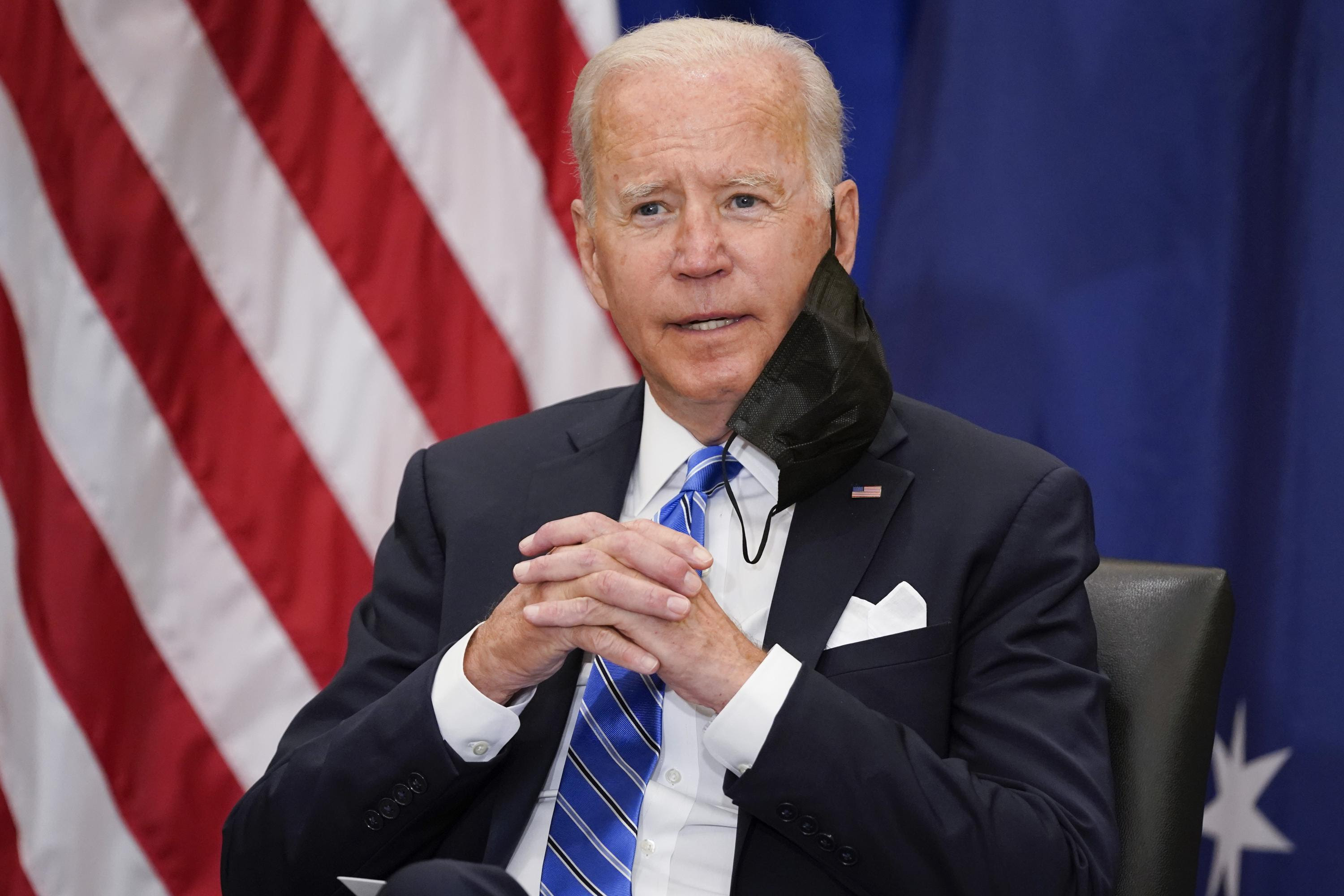
President of the United States of America Joe Biden

His request comes as Dr. Rochelle Walensky, director of the Centers for Disease Control and Prevention, said in a virtual White House briefing on Monday she had a feeling of “impending doom,” saying that “right now, I’m scared.”

Biden said, “I’m reiterating my call for every governor, mayor and local leader to maintain and reinstate the mask mandate,” Biden said at an event intended to highlight the rapid increase in vaccine eligibility. “Please, this is not politics. Reinstate the mandate if you let it down.

Asked later if some states should pause reopening efforts, Biden said “yes.”

Upon taking office, he issued a call for Americans to mask up for the first 100 days of his administration, arguing that doing so would help curb COVID-19 cases while the country ramped up vaccinations.

States have aggressively started lifting mask mandates and easing restrictions on businesses and events in recent weeks as vaccine availability steadily increases, prompting concern from some in the federal government.

Dr. Walensky, said, “Now is one of those times when I have to share the truth, and I have to hope and trust you will listen. I’m going to pause here. I’m going to lose the script, and I’m going to reflect on the recurring feeling I have of impending doom,” Walensky said, appearing to tear up.

“We have so much to look forward to, so much promise and potential of where we are and so much reason for hope. But right now, I’m scared,” Walensky said.

“I know what it’s like as a physician to stand in that patient room — gowned, gloved, masked, shielded — and to be the last person to touch someone else’s loved one, because they are not able to be there,” she continued.

Walensky said that the United States has come “such a long way” with three authorized vaccines and pleaded with the nation to keep following mitigation measures and “just please hold on a little while longer.”

She went on to further explain why she worries about “impending doom,” referencing how the country has seen a steady increase of coronavirus infections.

“What we’ve seen over the last week or so is a steady rise of cases,” Walensky said. “I know that travel is up, and I just worry that we will see the surges that we saw over the summer and over the winter again.”

According to Walensky, the seven day average of new cases is around 60,000 cases per day, a 10 percent increase over the past week. The numbers are still a far cry from the peak in January, but the rise comes after a sustained period of stagnation.

“When we see that uptick in cases, what we have seen before is that things really have a tendency to surge, and surge big,” Walensky said.

Walensky said hospitalizations have also increased over the past week, as the most recent seven day average is about 4,800 admissions per day, up from 4,600 admissions per day in the prior seven days.

She said that the country has come “such a long way” with three authorized vaccines and pleaded with the nation to keep following mitigation measures and “just please hold on a little while longer.”

The U.S. trends are mirroring what’s happening in Europe, where nations are once again locking down amid a rapid increase in cases that is straining health care systems.

======================================================


The post Biden Wants Restrictions to Remain, Top Doc Has ‘Feeling of Doom’ as Cases Rise appeared first on The St Kitts Nevis Observer.

Ill guest not body removed from guest house

Police in St Kitts and Nevis are denying reports of a body being found in a guest house in Basseterre following reports of such being posted on Social Media.

Police however indicated that a lady who was staying at a guest house in Basseterre took ill and the Emergency Medical Service was called. When they arrived she was unresponsive.
Reports indicate the female checked in at the establishment Friday, was seen Saturday and not heard from again. the room was checked by staff and the unresponsive female was discovered.
She was eventually removed by EMS and taken to JNF Hospital.

The post Ill guest not body removed from guest house appeared first on The St Kitts Nevis Observer.

Hamilton Reserve Bank sponsors annual kite flying competition and workshop

By Monique Washington

Hamilton Reserve Bank (formerly the Nevis International Bank and Trust) will be spreading cheer this Easter, as the exclusive sponsors for a kite-flying competition on Good Friday (April 2)  and kite-making workshop, organized by the Nevis Island Administration (NIA).

This annual competition features hundreds of Nevisians coming out and participating or spectating. The event was hosted by the St John’s Community Improvement Club for a number of years, but The Observer confirmed from President of the club, Alstead Pemberton, that they will not be hosting this year.

Premier Mark Brantley announced this past week that the competition is a collaborative effort between the Ministries of Tourism and Education.

Good Friday kite flying is a tradition in Nevis. The categories for the competition include the biggest kite, the best paper kite and the best flying kite. The competition will be held on the Flats and begins at noon.

According to a release from the Bank, it pledges to lend its support to the local community as part of the Bank’s longstanding Diversity and Community Enrichment program.

In addition to the Kite Flying competition, the Bank has also sponsored a kite-making workshop for children attending primary school.

The kite-making workshop will see 50 students from across all public and private primary schools on the island.  The workshop will run for three days from March 29th to March 31st at Elizabeth Pemberton Primary school. Five local kite-makers will teach the students the skill of making kites from start to finish. Sessions will run from 9:00am to 3:00pm for the three days.

Brantley highlighted the importance of teaching youths the traditional way of making kites.

“In my day we used to make them ourselves, and you had to be able to make the loop, and some other way they call a mountain loop… and some had a toggle loop. These are all things that we did as youngsters. Now you can go on Google…I’m sure YouTube, and find out how to do it, but we’re going to be teaching the kids how to make them how we did, and we’re going to have a competition at the Flats on Good Friday,” he said.

Brantley commended Hon. Troy Liburd for being  “very passionate” about the traditional kite-flying competition, and being able to secure funding from the Hamilton Reserve Bank.


The post Hamilton Reserve Bank sponsors annual kite flying competition and workshop appeared first on The St Kitts Nevis Observer.

Guyana: As COVID Cases Exceed 10k, New Vaccine Shipment to Arrive

On the same day the total number of COVID-19 cases passed the 10,000-mark, President of Guyana, Irfaan Ali announced that 224,000 doses of two vaccines from Russia and the global vaccine initiative, COVAX, will arrive this week.

The Ministry of Health reported on Friday there were 109 new positive COVID-19 tests in the previous 24 hours, taking the total confirmed cases to 10,007. Guyana currently more than 950 active cases.

A total of 10 COVID deaths – nine of them occurring within a three-day period – were recorded for the week, taking the overall death toll to 225.

Meantime, President Ali said the country would receive 24,000 doses of the Oxford-AstraZeneca vaccine through the World Health Organization’s COVAX Facility on Monday, and 200,000 doses of the Sputnik V vaccine from Russia on Tuesday.

The COVAX-supplied vaccine will be free, but the jabs from Russia will cost Government GUY$800 million (US$3.8 million)

The Government is also working to secure another 200,000 doses of the Sputnik V.

President Ali said the goal is to have the Guyanese population fully inoculated.

“This is the utmost priority for me. Personally, I am taking this on as a task in ensuring that our population is vaccinated and that as quickly as possible, we can return our country to some level of normalcy and get out of this pandemic,” he said.

To date, Guyana has received 3,000 doses of the AstraZeneca vaccine from Barbados and 80,000 from India. The Government of China also donated 20,000 doses of the Sinopharm vaccine.

Guyana is also looking to secure another 149,000 doses of vaccines through a purchase agreement under a CARICOM-African Union pact.

CMC

The post Guyana: As COVID Cases Exceed 10k, New Vaccine Shipment to Arrive appeared first on The St Kitts Nevis Observer.

Soccer: SKN Remain Unbeaten with Win Over Bahamas

In a lopsided Group F contest at the Thomas A Robinson Stadium in Nassau, St Kitts whipped hosts the Bahamas 4-0 with the 27-year-old Freeman netting on either side of half-time.

Keithroy Freeman’s brace handed St. Kitts and Nevis its second straight win while former Charleston Battery forward, Quinton Griffith, also netted twice to keep Antigua and Barbuda unbeaten in the opening round of 2022 FIFA World Cup qualifiers on Saturday.

He opened the scoring in the 25th minute to give St Kitts a 1-0 half-time lead and added to his tally in the 65th, in between a 53rd-minute penalty from Kimaree Rogers and an 82nd-minute strike from United Kingdom-based Omari Sterling-James, who entered the game as a 77th-minute substitute.

The victory was the second on the trot for St Kitts who edged Puerto Rico 1-0 in their opening game in the Dominican Republic four days ago.

Griffith, meanwhile, who spent several seasons with Battery in the United Soccer League, grabbed some of the spotlight as Antigua scored three first-half goals to brush aside US Virgin Islands in St Thomas.

Veteran 36-year-old striker Peter Byers gave the visitors the lead in the 26th minute before the 29-year-old Griffith struck in the 34th and 42nd minutes to dominate the Group A match.

Antigua was held to a 2-2 draw in their opener against Montserrat in Willemstad.

The other four fixtures on Saturday saw teams suffer heavy defeats.

At the neutral IMG Academy venue in Florida, Israel-based forward Nigel Hasselbaink smashed a hat-trick to inspire Suriname to a 6-0 crushing of Aruba in Group B.

The 30-year-old scored his first in the 37th minute to put the Dutch side up 3-0 before adding a brace in the second half.

In Group D at the Lockhart Stadium in Fort Lauderdale, Dorny Romero and Nowend Lorenzo both scored in either half to register doubles, and fire the Dominican Republic to a 6-0 thrashing of hapless Anguilla.

And in Group E at the Estadio Panamericano in San Cristobal – another neutral venue – Turks and Caicos Islands suffered a chastening 7-0 defeat at the hands of a rampant Nicaragua, who were inspired by two goals each from Juan Barrera and Ariagner Smith.

At the Ergilio Hato in Willemstad, British Virgin Islands conceded twice in the first half of their Group C contest to go down 3-0 to Central American side Guatemala.

CMC

The post Soccer: SKN Remain Unbeaten with Win Over Bahamas appeared first on The St Kitts Nevis Observer.

Mexico Replaces Brazil as No. 2 with COVID Deaths

image copyrightReuters
Experts had warned that the true number of Covid-related deaths in Mexico was higher than the official figures

BBC- Mexico has published revised figures indicating that the number of deaths caused by coronavirus is 60% higher than previously reported. More than 321,000 people are now believed to have died from Covid-19 in the country.

The revised toll places Mexico with the second-highest number of Covid-related deaths in the world, after the US.

President Andrés Manuel López Obrador has faced widespread criticism over his handling of the crisis.

The opposition has accused him of downplaying the severity of the pandemic and blamed him for delays in the vaccination program.

The revised report issued by Mexico’s health ministry (in Spanish) showed that by the end of the sixth week of 2021 there had been 294,287 deaths “associated with Covid-19” – up from the 182,301 confirmed figure given previously.

Since mid-February, more than 26,772 Covid-19-related deaths have been reported across Mexico which would take the total to more than 321,000.

That places Mexico above Brazil, which has registered 310,000 deaths, and below the US which has recorded 549,000 fatalities – despite having a population of 126 million which is far smaller than either country.

Health personnel vaccinates older adults, in Morelia, Michoacan, Mexico, 26 March 2021image copyrightEPA
The government has been criticised for the slow rollout of vaccines

Experts have long warned that Mexico’s true death toll is probably much higher due to a lack of testing. It is also believed that a shortage of intensive care beds in many states has led to a large number of people dying at home.

The new figures came after a review of “excess deaths” and a review of death certificates.

Last week, Hugo López-Gatell, who is heading Mexico’s response to the pandemic, warned that the country risked a new wave of infections as millions prepared for the Easter holidays.

Mr López Obrador, who has himself recovered from Covid-19, has been repeatedly accused by his opponents of not taking the crisis seriously enough and is often seen in public without wearing a face mask.

Meanwhile, Mexico’s vaccination program has seen about 6.1 million doses administered so far.

The US recently announced it would release four million doses of the AstraZeneca vaccine to Mexico and Canada.

Both countries have approved the AstraZeneca inoculation, but the US has not. However, the US has a stockpile of the jab.

The White House said that 2.5m of the US’s 7m jabs would go to Mexico and 1.5m to Canada.

Leaders from both countries had asked the White House for assistance. Mexican officials even pressed the Biden team on the issue during a conversation about border security earlier this month.

Global statistics show 2.7m deaths, up 5,637 in the past 24 hours, in total there have been 123.2m confirmed cases, up 389,665 in the past 24 hours, updated 26 March

The post Mexico Replaces Brazil as No. 2 with COVID Deaths appeared first on The St Kitts Nevis Observer.

Peoples Labour Party’s National Executive elected unopposed

BASSETERRE, ST. KITTS, March 27, 2021 (PLP PR Media Inc.) — The youngest and fastest growing political party on the region, the Peoples Labour Party (PLP), held the private session of its National Convention 2021 on Friday March 26 where the entire executive, led by National Political Leader and Prime Minister Dr the Hon Timothy Harris, was elected unopposed.

 Held under the theme ‘Together: Empowering and Uniting People; Rebuilding our Economy’, the private session which was held at the Royal St. Kitts Hotel Conference Room saw most of the office holders returned unopposed. Aspirants for positions left vacant by holders – one who left the country and the other who is going for further studies – were nominated and elected unopposed in the exercise that was overseen by Mr Franklin Maitland of the audit firm Maitland Maitland & Associates (MMA).

 Retaining positions on the new Peoples Labour Party National Executive were National Political Leader, Dr the Hon Timothy Harris; Deputy National Political Leader, the Hon Akilah Byron-Nisbett; National Chairman, Mr Warren Thompson; and National Secretary, Ms Myrtilla Williams.

 New on the executive is National Treasurer Mr Rawle Mars, nominated and elected unopposed to replace Mr Victor Earle who is now one of the three PLP National Trustees, joining Mr Heston Hamm and Mr Donald Caines who have been National Trustees all along.

 Also returned are National Women Representatives, Mrs Sonia Henry and Ms Petrona Thomas; and National Party Organiser, Mr Alexis Nisbett. New Deputy National Chairperson is Ms Claudette Thompson, who is not new on the Executive having served as the Deputy National Treasurer on the previous Executive.

 New on the PLP National Executive are Deputy National Secretary, Ms Desiree Huggins; Deputy National Treasurer, Mrs Patrice Ofre; National Youth Representatives, Mr Jeremiah Locker and Ms Katherina Davis.

 A new position created on the new Executive is that of Communication Officer that went to Mr Craig Tuckett, who is not new to the Executive having served as the Deputy National Chairman on the last Executive.  While Mr Anthony Ross QC has previously been associated with the Peoples Labour Party in a legal capacity, he along with Ms Violet Williams took the two National Legal Representative positions.

 “This is now our complete team,” announced National Political Leader Dr the Hon Timothy Harris when he introduced the new Executive. “We are here to serve you, to serve the party, the serve the Unity family, and most importantly to serve St. Kitts and Nevis to the best of our ability.” 

 Dr Harris added: “For completeness I should advise that by the party rules, the Deputy National Speaker Senator Dr Bernicia Nisbett is also automatically, as a result of her parliamentary position, a member of the executive having been appointed as the PLP Senator in the parliament.”

 The Peoples Labour Party which was established in 2013 is steadily growing. It won the first seat in the National Assembly in 2015, and the second seat following the 2020 General Elections.

 The Honourable National Political Leader while thanking those who have worked hard to bring the party to where it is now, advised that there was room in the PLP for everybody to come, telling the members that “your approach must be welcoming, and every time if somebody new comes welcome them to the party so that we could be bigger and stronger.”

 Dr Harris added: “As we convene this convention we have party groups in every constituency – that is a plus. We now have to build it stronger and better because we do not know what the future holds. We can’t take our eyes off the future, we can’t take our eyes off the consolidation of the future; we can’t take our eyes away from building the party stronger and better than it was.”

 Due to Covid-19 regulations being observed, the business/private session of the National Convention which would normally hold over 300 persons had the attendance reduced by about 60%. Each constituency branch as a result had 12 delegates as opposed to 35 delegates for previous conventions.

 “We have to behave in a manner that shows that we are serious and we are supportive of the government’s programme to defeat Covid-19,” said Dr Harris. “That is why I must express the regret, my own personal regret and that of the executive that the large amount of crowd we normally have at our convention we would not encourage in the face of Covid-19.”

 Prime Minister Harris informed the delegates that Covid rules state that for indoor events a function must have no more than 100 persons.

 “We have to walk the talk,” he said. “As a party in Government we have said that to fight Covid-19 we must avoid mass gatherings and we as a party in government are committed to that and that is why we have reduced significantly by more than 60 per cent the attendance at our convention which would normally have around 300.”

Peoples Labour Party (PLP) National Political Leader and Prime Minister, Dr the Hon Timothy Harris, addressing the private session of the PLP National Convention 2021.


The post Peoples Labour Party’s National Executive elected unopposed appeared first on The St Kitts Nevis Observer.

Bermuda: Corona Cases Surge Past 1,000 Mark

The government has imposed tougher restrictions, including the closure of schools, churches and gyms — for two weeks after dozens of more new COVID-19 cases pushed Bermuda’s total beyond the 1000 mark.

According to Premier David Burt “We are in a dangerous place.”

He made the comment late Saturday following reports of 81 new confirmed cases, among 1,339 test results. This follows reports  33 cases a day earlier, bringing the total over the past 12 months to 1,028 – of these, 294 are active cases with one patient in the hospital.

To date, 12 people have died from the virus.

Around 20 per cent of Bermuda’s 64,000 population have so far received both jabs from supplies of Pfizer vaccine sent free to the island, a British Overseas Territory, by the government in London.

Health Minister Kim Wilson said Bermuda was experiencing a third wave which was likely to be bigger than the second wave as it involves the UK variant, which is more transmissible.

“This is a significant outbreak,” she said on Saturday night. “We have never experienced community spread. We have a very, very serious problem.”

Between 80 and 90 per cent of the new cases are due to the UK variant and the mean age of those affected is 33.

Wilson said: “It is now more critical than ever to take responsibility for our own behaviour and act in an abundance of caution.

“All of this is preventable and some people are selfishly ignoring the rules.”

Wilson said the contact tracing workload had intensified significantly with the latest surge in cases.

“Because of the high level of transmission in respect to this particular virus, they are coming to be overwhelmed,” she said.

According to the Premier, Bermuda will recover from the setback, but a renewed effort to mitigate the risks caused by the surge in cases was needed.

The series of new restrictions came into effect as of 6 a.m (local time) on Sunday.

“The stricter measures that will be adopted are designed not only to protect but preserve the basic progress we all made over this last year,” Burt said.

“This UK strain is a variant that has caused many other countries to suffer or slow down in the fight against the coronavirus.

“Our island is at a serious juncture. Our public health system is being significantly challenged. The teams are struggling to keep up with contact tracing, struggling to keep up with the work that is necessary in order to control this outbreak.”

Burt said churches will be closed for indoor services, indoor restaurant dining will be prohibited, apart from in hotels, indoor gyms and indoor cinemas will be closed, as will venues such as museums and bowling alleys.

In addition, retail and grocery stores will be limited to 20 per cent capacity, schools and camps will be closed and remote working will be mandatory where possible. But licensed daycares will be allowed to remain open.

The post Bermuda: Corona Cases Surge Past 1,000 Mark appeared first on The St Kitts Nevis Observer.