Tag Archives: caribbean

MOH AIMS TO VACCINATE 10k PERSONS BY APRIL, HERD IMMUNITY BY JUNE/JULY, 2021

Basseterre, St. Kitts, March 25, 2021 (SKNIS): The Ministry of Health is aiming to vaccinate 10,000 persons on or before April 16, 2021, says Chief Medical Officer (CMO), Dr. Hazel Laws, during the National Emergency Operations Centre (NEOC) Press Briefing on March 24.

The Federation has in its possession 20,000 doses of the Oxford-AstraZeneca COVID-19 Vaccine. As the vaccine is given in two doses, 10,000 persons are the target. As of March 24, 8,123 persons have received the vaccine so far. This means 24.6 percent of the target population has been vaccinated.

Dr. Laws stated that the COVAX Facility has allotted 21,600 doses to the Federation. This means an additional 10,800 persons can be vaccinated.

“Based on information coming out of the facility, we hope to receive 7,200 doses in March of this year, 7,200 doses in April, and 7,200 doses in May,” she said. “So, between now and May we can cover an additional 10,800 persons.”

The Chief Medical Officer said that the Federation is aiming to provide coverage for 70 percent of its adult population. She added that to achieve this goal, 25,000 more doses are needed.

“The Ministry of Health, our Cabinet, and the leadership of the Federation, we are doing all we can to access these additional 25,000 doses,” she said. “Access to the COVID-19 vaccine is crucial to curbing the spread of the COVID-19 infections.”

The Federation is also aiming to reach the herd immunity threshold by June or July of 2021, said Dr. Laws.

“The quicker we get there, the better it is for our health system and for the socio-economic context of our Federation,” she said. “It’s an all of society approach and we are appealing to everyone in the Federation. We want to thank those who have already come on board and said yes and consented to take their first dose. We are now reaching out to the others in terms of empowering yourself with the information and we are asking you to make an informed decision, come on board and help us attain this goal of reaching our herd immunity threshold.”

Dr. Laws noted that once herd immunity is achieved when the Federation accepts inbound passengers by air or sea, the risk of clusters developing will be reduced.

“The risk of our going into community transmission will be considerably reduced because the herd immunity provides indirect protection to the vulnerable and to those who cannot be vaccinated,” she said. “That’s why we are imploring our people to come on board.”

The post MOH AIMS TO VACCINATE 10k PERSONS BY APRIL, HERD IMMUNITY BY JUNE/JULY, 2021 appeared first on The St Kitts Nevis Observer.
Tackling Plastic Pollution Results are in.

Basseterre: St. Kitts, March 25, 2021: Results are in from the first ever essay and jingle competition hosted by the Department of Consumers Affairs held on March 18 -19 at Nagico’s Conference room.

The 25 participants represented primary schools including; Maurice Hillier Memorial Junior School, Beach Allen, Dr. William Connor, Dieppe Bay, Sandy Point and the Saddlers. Each representative presented on the topic “Tackling Plastic Pollution”. 

Director at the Department of Consumer Affairs, Mr. Paul Queeley stated that the topic chosen was the theme under which World Consumer Rights Day was celebrated on Monday March 15 2021.

“Plastic pollution is a major problem across the globe…students generate a lot of plastic waste in schools, so we [Consumer Affairs Department] saw it fitting to involve them in this activity to sensitize them on how to reduce plastic pollution,” said Mr. Queeley.

The sole representative from the Dieppe Bay Primary School, Khalaylah Maccabbee, was awarded the first place. Second and third place went to J’Ovheal Whattley and Camira Williams respectively, both representing the Maurice Hillier.

Vitoria, Elliott representing the Doctor William Connor Primary School, Ciara Hobson, representing the Beach Allen Primary School and Chadeisha Francis representing the Maurice Hillier were awarded a Special Award for presenting essays that were good which did not reach the length requirement.

Special Recognition Awards were given to those participants who displayed unique abilities throughout the delivery of their speech. Recipients of this award were Mia Romney representing the Dr William Connor Primary School, Kim-David Collins and Jequan Stevens both representing the Maurice Hillier Memorial Junior School.

Dr. William Connor primary school won the jingle competition, with Maurice Hillier Memorial Junior School being awarded second place.

Head Judge Noah Mills, congratulated the participants and commended the teachers, parents and students for their hard work.  The Department of Consumer Affairs was also lauded for “conceptualizing and implementing the essay and jingle competition”.

The post Tackling Plastic Pollution Results are in. appeared first on The St Kitts Nevis Observer.

Companies (Amendment) Bill, 2021

BASSETERRE, St. Kitts, March 25, 2021 (Press Unit in the Office of the Prime Minister) – After its successful readings in the National Assembly on Thursday, March 25, the Companies (Amendment) Bill, 2021 was unanimously passed, bringing St. Kitts and Nevis even more in line with best practices within the international financial services sector.

The Bill was moved through the House by Prime Minister and Minister of Finance, Dr. the Honourable Timothy Harris.

In his presentation, Prime Minister Harris said it was necessary for his Government to re-examine the nature of the Companies legislation and seek ways in which it could reasonably and sustainably adjust to the imperatives and complexities of doing business within the global sphere.

He said, “This Bill therefore seeks to introduce a new feature in our Companies Act which it is anticipated would provide attractive business and investment opportunities within our jurisdiction while at the same time satisfying the international standards on taxation. Mr. Speaker, the Bill therefore seeks to remove the tax exemption elements from the Companies Act. In short, the term ‘exempt company’ would no longer be valid after June 20, 2021.”

Anew product, referred to as an international company was introduced as part of the Bill in order to keep the Federation competitive. An international company is defined as a body corporate which is incorporated in Saint Christopher, but whose mind and management are outside of the Federation.

The prime minister said, “This kind of company Mr. Speaker, would have no permanent establishment here. If approved by this Honorable House, this proposed new product would be more in line with the requirements of the OECD [Organization for Economic Co-operation and Development] and the EU [European Union], since the tax exemption features would have been completely excised from the legislation,” the prime minister said.

Prime Minister Harris further noted that the legislation outlines the different options that are now available to those persons who formerly had exempt companies in St. Kitts but would now be required to deal with them before the June 20 deadline.

“In that regard Mr. Speaker, Clause 10 of the Bill makes provision for exempt companies to be converted to an ordinary company. Mr. Speaker it would be proposed at Committee stage to also clearly include the option of conversion to an international company. In other words, there will now be two options introduced to take care of the removal of the exempt companies provision in the Act – a term or terminology which the international marketplace at the level of the regulatory arm has found to be offensive,” the prime minister said.

Prime Minister Harris stated that allowing exempt companies to convert to international companies is aimed at providing a reasonable measure to make the process less onerous and costly for those involved.

The post Companies (Amendment) Bill, 2021 appeared first on The St Kitts Nevis Observer.
More than Half the US Pop. Worried About Homelessness, Hunger

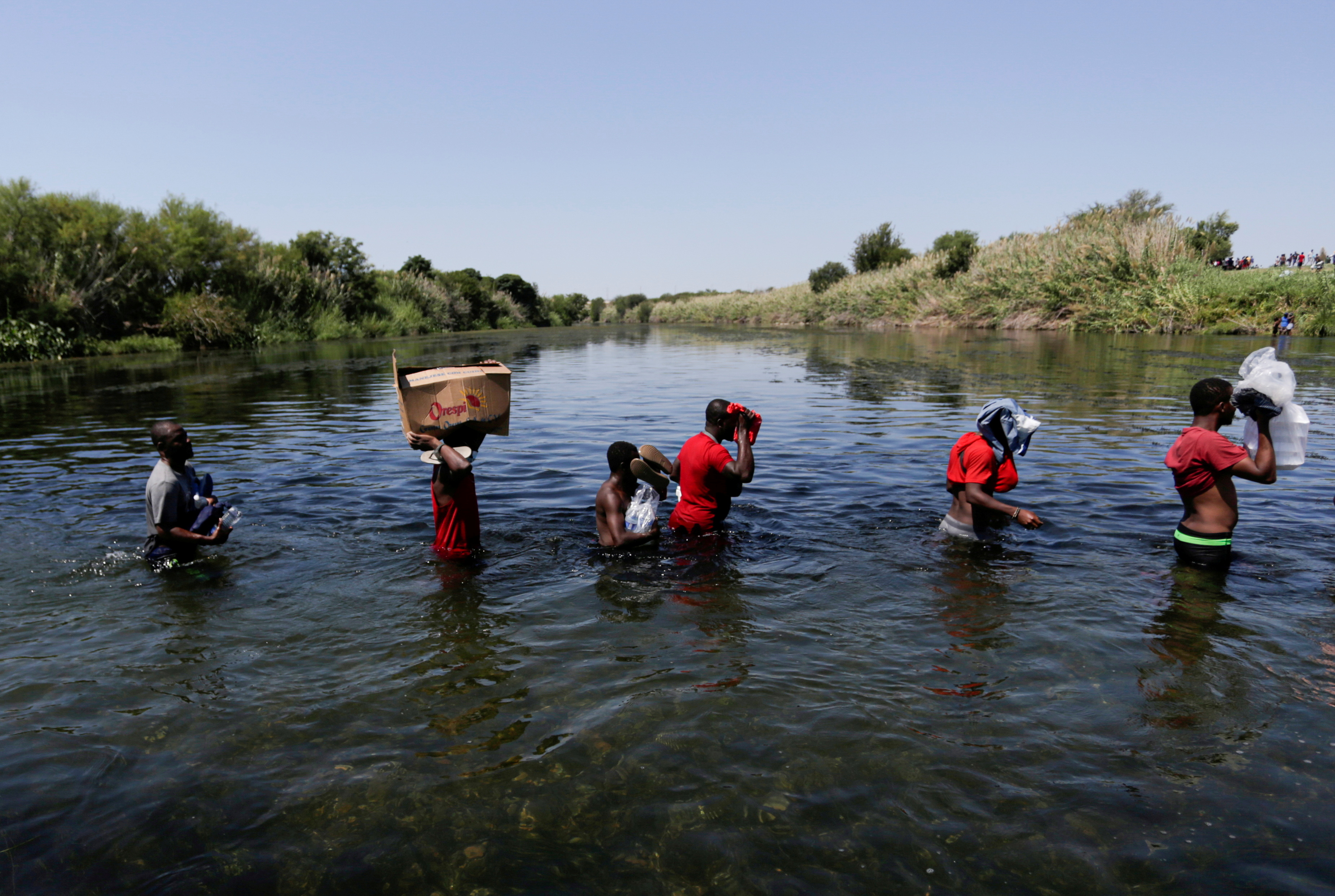
A new Gallup poll shows that more than half of Americans are worried about hunger and homelessness, the highest percentage on the issue in the last 20 years.

The poll showed that 55 percent of Americans are concerned about homelessness and hunger, up 8 percent from 2020.

Homelessness and hunger have become major concerns since the coronavirus pandemic hit, causing many to lose jobs and struggle to keep up with bills.

When federal coronavirus protections against evictions and foreclosures expire, more than 11 million Americans could face homelessness from being unable to pay rent.

The concern about homelessness and hunger seems to be along partisan lines, with 62 percent of Democrats being concerned about the issue while only 45 percent of Republicans say they worry “a great deal” about it.

Along with homelessness and hunger, concerns about the economy rose 16 percentage points over the past year.

Those who worry a great deal about the economy hit 49 percent, up from 33 percent in 2020.

Similarly, concerns about the economy were also across partisan lines with 58 percent of Republicans and only 40 percent of Democrats greatly concerned about the issue.

Many are hopeful that the economy will begin to fully recover as more people are getting vaccinated from the coronavirus and states are loosen their restrictions on businesses.

Gallup surveyed 1,010 U.S. adults from March 1 to 15. The margin of error is plus or minus 4 percentage points.

The post More than Half the US Pop. Worried About Homelessness, Hunger appeared first on The St Kitts Nevis Observer.

Mia Mottley Wants Excess Vaccines Sent to Developing Nations

Barbados Prime Minister Mia Mottley, in her capacity as chair of the Joint World Bank-International Monetary Fund (IMF) Development Committee, has highlighted reaching a clearing arrangement for excess orders of COVID-19 vaccines as one of the steps that can be taken to ensure developing countries receive their share of the vaccines.

While delivering the keynote address online on Monday, at the opening of the 53rd Session of the Conference of African Ministers of Finance, Planning and Economic Development, Mia Mottley said the vaccine arrangement was needed as countries battled to obtain vaccines for their citizens.

“Some long-term solutions have been suggested that are worth serious consideration. One step we can also take is to reach a clearing arrangement for excess orders of vaccines. We should require written “clearing” agreements from those who have ordered more than they need.

“Once those vaccinated exceed the herd immunity threshold, they would agree to retain some more modest surplus and ask the producers to produce and deliver the excess at cost to developing countries. Even then, we are at the back of the queue. Those excess vaccines should be above the amounts agreed to under COVAX, which only deals with 20 percent of our populations. There must be early intervention,” she insisted.

Mottley said vaccinating only a part of the world’s population would not work, as this provides fertile ground for vaccine-resistant variances.

“Some large countries have purchased five times or more vaccines than they need using complex, opaque option arrangements that make it hard for vaccine producers to plan and to sell further production. So much for debt transparency. Small buyers do not even get a look-in.”

The prime minister stated that to scale up the resource transfer needed to address COVID and climate change, rich countries were being called on to pledge half of their new and unused Special Drawing Rights (SDRs) to recapitalize development banks like the African Development Bank, the Inter-American Development Bank, and the World Bank.

“They must use this capital to leverage more long-term lending to those heavily impacted by COVID and the climate crisis to support green, resilient and inclusive development…

“But it’s not just the level of lending that matters, it is also the speed of lending. Our needs are immediate. The development banks have been well-meaning, yes they have been. But they have been slow…They must commit to the timing of their disbursements,” she indicated.

CMC


The post Mia Mottley Wants Excess Vaccines Sent to Developing Nations appeared first on The St Kitts Nevis Observer.
SKN: New Gaming Bill to Establish Governing Commission

The Government of St. Kitts and Nevis has moved to strengthen the Federation’s gaming industry and protect the nation’s international reputation as a responsible member of the global community, with the passing of the Gaming (Control) Bill, 2021 on Thursday.

The legislation provides for the effective and comprehensive regulation of the Gaming Industry and for other incidental matters. It calls for the establishment of a Gaming Commission which will replace the existing Gaming Board.

“Beyond compliance with our international obligations, the Bill seeks to regularize the gaming sector to capture and enhance operating principles for persons involved in the sector and to streamline existing provisions. The Bill, for example, seeks to provide greater certainty as it relates to the scope of the clientele,” said Prime Minister and Minister of Finance, Dr Timothy Harris in moving the second reading of the Bill in the National Assembly.

“In that regard, the Bill aims to clarify those residents who can legally participate in gaming activities,” he added, noting that the revamping of the legislation must be balanced against the promotion of responsible gaming.

According to the Prime Minister, the moving of Gaming (Control) Bill, 2021 formed part of his Team Unity administration’s mandate of promoting good governance.

“The present legislative framework for the gaming sector, Mr Speaker, provides for the establishment and operation of a Gaming Board and a Racing Commission. However, for several years both bodies have met with limited success in fulfilling their mandate of providing adequate regulation, licencing and supervision of the gaming sector.

“As a result Mr Speaker, the sector needs reform to enable St. Kitts and Nevis to ensure compliance with international standards set by the FATF [Financial Action Task Force] and to safeguard the Federation from any possible financial crime which may emanate from the gaming sector,” he said.

The Gaming (Control) Bill, 2021 had its first reading on March 18, 2021.

The post SKN: New Gaming Bill to Establish Governing Commission appeared first on The St Kitts Nevis Observer.

EPIC VOYAGES: THREE TREES, EACH OF WHICH BROUGHT ITS UNIQUE HISTORY TO NEVIS

TRAVEL: by Eric Mackenzie Lamb

A few years before moving permanently to Nevis, I worked as a pilot in Kenya. Using a classic DC-3 aircraft, our crews would fly tourists from Nairobi to Masai Mara and other nature reserves, where they would stay in safari lodges and go on guided tours to see east Africa’s amazing wildlife.


Our landing areas in the game parks were open fields known as savannas, which meant that, before touching down, we had to overfly them to ensure that there were no elephants, giraffes, zebras, or other animals which would present a danger to both them and ourselves.


For me, gazing down through the cockpit window, one of the most memorable sights was the Baobab tree. With massive trunks and branches spreading to the sky, they were truly majestic, unlike anything else I’d ever seen. In my mind, they would always remind me of the beauty of Africa.


So imagine my amazement when, a few years later,  I was driving along a secondary road in Nevis and saw this:


Image by the author.


Could it be? I asked myself.


And so the story begins.


The Baobab tree (Adansonia digitata) is a prehistoric species which predates mankind and the splitting of the continents over 200 million years ago. They grow in 32 African countries and can live up to 5000 years, reach up to almost a hundred feet in height, and up to 164 feet in circumference. During the rainy season, it absorbs and stores water in its enormous trunk, which also enables it to produce a nutrient-rich fruit. Baobab trees can provide shelter, food, and water for both animals and humans, which is why many African savanna communities have made their homes near these trees. In addition, its bark can be turned into rope and clothing. Even its leaves are edible and its seeds can be used to make cosmetic oils. No wonder it’s known as the Tree of Life.


Although never scientifically proven, its origins are believed to be the island of Madagascar (which I also visited, and where I saw hundreds of Baobab trees). In fact, miniature hand carved replicas of the same trees are some of the most popular souvenirs sold to tourists.


Image by the author.


But how did they get to the Caribbean?


According to historical records, Baobab seeds were most likely brought to the West Indies by African slaves who considered them sacred and probably planted them to connect themselves spiritually with their ancestral homeland. The first trees mentioned in historical archives were in Barbados around the beginning of the 18th century, which seems logical as the island later became England’s main distribution point for slaves to all of its other Caribbean islands. Today, one of the major landmarks of that sad era is the oldest Baobab tree in the West Indies, located at Queen’s Park in Bridgetown, Barbados.


And there’s really no need to introduce the breadfruit tree. Just about everyone in Nevis has seen it, especially in the island’s higher altitude areas like Gingerland.


Image by the author.


Not always known is the fact that the tree was first discovered by Europeans when Captain James Cook arrived in French Polynesia. After he’d brought back samples of some of the plants and their fruit to England, it didn’t take long for the government to decide that breadfruit would be a much cheaper way to feed slaves in its colonies. The mission to transport this new amenity was assigned  to Captain William Bligh of Mutiny on the Bounty fame. Needless to say, it never succeeded. At least, not the first time. Eventually, on Bligh’s second attempt, the breadfruit finally arrived in St Vincent. As in Barbados, St Vincent became the distribution point for the breadfruit tree to all other English possessions in the West Indies.


Finally, there’s the Norfolk Pine.


Image by the author.


Norfolk Island, a remote uninhabited Pacific island off the Australian coast, was first settled by English sailors to preempt French occupation. It was hoped that the  discovery of the Norfolk Pine, with its unusually straight trunk and resistance to strong winds, could be used as masts for sailing ships. (It turned out to be unsuitable and the effort was abandoned). However, the Island was soon destined to serve another purpose. It became one of the world’s harshest penal colonies after the British government decided to bring in convicts. According to historic archives, conditions were so brutal that many prisoners chose to commit suicide rather than be sent to a place which was commonly referred to as the Island of No Return. Perhaps ironically, Norfolk Island, after its prison system was closed, was later settled by descendants of the original Bounty mutineers after  the British government decided to relocate them from another of its most isolated possessions in the Pacific Ocean, Pitcairn Island.


Sometimes, just like roots, there are hidden stories just below the surface. This is one of them.


The post EPIC VOYAGES: THREE TREES, EACH OF WHICH BROUGHT ITS UNIQUE HISTORY TO NEVIS appeared first on The St Kitts Nevis Observer.

With 300,000 Dead, Brazil Finally Forms a Pandemic Committee

(CNN) More than year into the global pandemic, Brazil’s government has decided to form a new Covid-19 crisis committee that will now include state officials.

Brazilian President Jair Bolsonaro made the announcement on Wednesday, a day after he promised the nation that 2021 would be “the year of vaccination” for Brazilians.

Brazil is currently gripped by a devastating new surge in cases, with a record-breaking 3,251 new deaths from Covid-19 on Tuesday — the most deaths the country has ever seen in a single day. Hospitals’ intensive care units across the country are overstretched, and some states have warned they’re running out of medicines necessary to intubate severe cases.

Bolsonaro, who was fiercely criticized for downplaying the gravity of the panemic, has hinted at a potential shift in attitude. On Tuesday, hours after his newly appointed health minister Marcelo Queiroga was sworn in, Bolsonaro emphasized in a public address that “mass vaccination” would be a priority — after previously dismissing the urgency of inoculation and even attacking some vaccines.

Following a year of often acrimonious relations and blame between federal and local governments, the new committee will include members of the legislative branch, the Supreme Court, ministers, and six state governors. The federal government did not respond to questions about whether the new committee would replace a similar group composed only of federal-level officials.

 Still, not everyone gets a say. State governors who’ve been political opponents of Bolsonaro, like Sao Paulo governor Joao Doria, have been left out of the committee. On Thursday, Brazil’s national association of mayors also wrote a letter to President Jair Bolsonaro asking to be included.

The new committee will meet every week to decide the next steps in dealing with the Covid-19 pandemic, the President said on Wednesday.

States are running low on supplies

Bolsonaro, an outspoken opponent of restrictions on economic activity, has repeatedly clashed with state authorities on how to manage Covid-19 outbreaks.

This week, the country’s Supreme Court struck down the President’s request to block three state governors from imposing restrictive lockdown measures in their states.

Supreme Court Justice, Marco Aurélio Mello underlined the autonomy governors and mayors have to manage the health crises in their jurisdictions, saying Tuesday that a “totalitarian vision” is not appropriate in a democracy like Brazil and that the president is responsible for “the larger leadership, the coordination of efforts aimed at the well-being of Brazilians.”

Meanwhile, public and private health systems in states across the country are straining to accommodate rising Covid-19 case numbers.

On Thursday, the Brazilian Association of Private Hospitals in Brazil warned that stocks of anesthetics used in Covid-19 treatment would only last for “three to four days” in private hospitals. Earlier in the week, a statement posted on the Brazilian Attorney General’s website said that six states in Brazil were running critically low on medical oxygen.

General Ridauto Fernandes, logistics director of the Ministry of Health, has said that negotiations are underway to increase the production of oxygen supplies and to install oxygen concentrators — equipment that draws and concetrates oxygen from the air — in different parts of the country.

Brazilian variant becomes growing problem

Many recent cases have been attributed to the P.1 variant of the coronavirus, first identified in Brazil’s own Amazonas state. A March 4 study from Brazil’s Oswaldo Cruz Foundation — also known as the Fiocruz institute — estimated that coronavirus variants make up more than half of all cases in six out of eight states it studied.

According to the Pan American Health Organization (PAHO), the same variant has now been identified in 15 countries and territories in South America, North America and the Caribbean.

In a press conference Tuesday, PAHO Director Carissa Etienne highlighted the dangerous potential spread of the virus from Brazil. “Unfortunately, the dire situation in Brazil is also effecting neighboring countries. Cases have risen in Venezuela, particularly in the states of Bolivar and Amazonas which border Brazil,” she said.

Venezuelan President Nicolas Maduro on Sunday called Brazil a “global threat,” citing the P.1 variant.

In Uruguay, where cases are also spiking, health officials said this week that they also had detected the P.1 variant.

Marcia Reverdosa in Sao Paulo, Natalie Gallon and Karol Suarez in Mexico City, Caitlin Hu in New York City, Claudia Rebaza in London, Dario Klein in Montevideo and Abel Alvarado in Atlanta contributed to this report.

The post With 300,000 Dead, Brazil Finally Forms a Pandemic Committee appeared first on The St Kitts Nevis Observer.

Mexico: First Spanish Defeat Celebrated

MEXICO CITY (AP) — Mexico marked the anniversary of the first serious defeat suffered by Spanish conquistadores on Mexican soil Thursday, amid the 500th anniversary commemorations of the 1519-1521 Conquest.

The March 25, 1517 battle of Champotón actually pre-dated the arrival of conquistador Hernán Cortés two years later.

The 1517 expedition led by Francisco Hernandez de Córdoba sailed around the Yucatán peninsula and landed at Champotón, on Mexico’s Gulf coast, looking for fresh water. They were met by Chontal Maya Indigenous warriors who attacked the Europeans, inflicting wounds that eventually killed about 50 Spaniards, including Hernández de Córdoba.

Known by the Spaniards as “the Bad Battle,” Mexico now wants to call it “The Good Battle,” similar to the approach the government has taken in renaming famous Conquest sites originally named by Spaniards.

For example, the tree that marked a famous defeat of Cortés in 1520 was known as the Tree of the Sad Night, but Mexico City officials now call it the Tree of the Victorious Night.

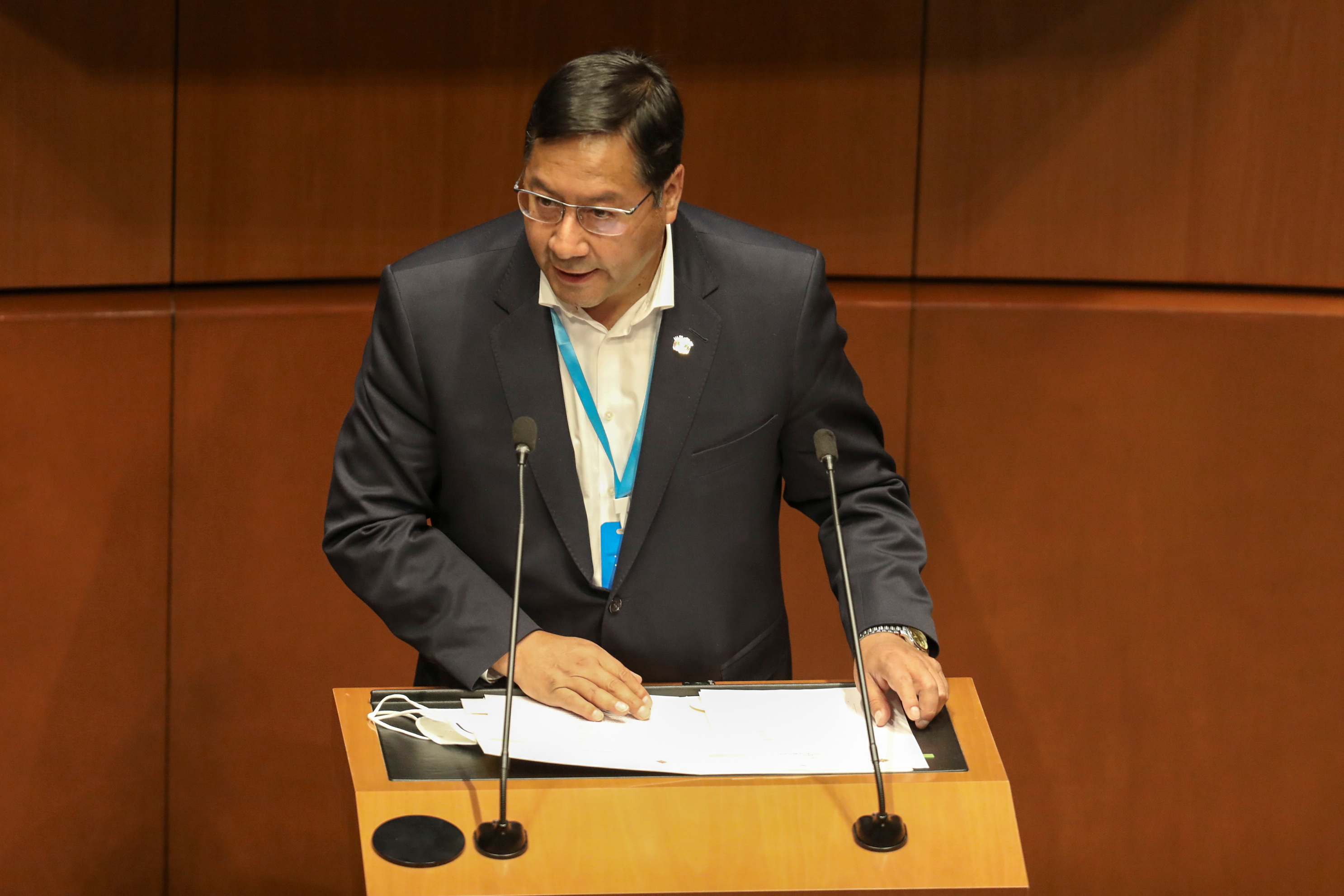
President Andrés Manuel López Obrador presided over a ceremony and a re-enactment marking the 504th anniversary of the battle, accompanied by Bolivian President Luís Arce.

“Honor to all our Indigenous brothers who gave their lives for the sovereignty of our territory,” Arce said.

López Obrador said “this ceremony is an homage to the anonymous heroes of the Indigenous resistance who resisted as long as they could the three centuries of oppression under the colonial regime.”

The post Mexico: First Spanish Defeat Celebrated appeared first on The St Kitts Nevis Observer.

China’s Experts 4 Possible Corona Routes to Pandemic, World Stats

Chinese officials said experts voted on four possible ways that the coronavirus got to Wuhan.

They are: a bat carrying the virus infected a human, a bat infected an intermediate mammal that spread it to a human, shipments of cold or frozen food, and a laboratory that researches viruses in Wuhan. The experts concluded one of the two animal routes or the cold chain was most likely how it was transmitted.

A lab leak was viewed as extremely unlikely, Feng Zijian, a Chinese team member and the deputy director of China’s Center for Disease Control and Prevention, said.

AP reports: Chinese officials briefed diplomats Friday on the ongoing research into the origin of COVID-19, ahead of the expected release of a long-awaited report from the World Health Organization.

The briefing appeared to be an attempt by China to get out its view on the report, which has become enmeshed in a diplomatic spat. The U.S. and others have raised questions about Chinese influence and the independence of the findings, and China has accused critics of politicizing a scientific study.

“Our purpose is to show our openness and transparency,” said Yang Tao, a Foreign Ministry official. “China fought the epidemic in a transparent manner and has nothing to hide.”

The report, which has been delayed repeatedly, is based on a visit earlier this year by a WHO team of international experts to Wuhan.

The experts worked with Chinese counterparts, and both sides have to agree on the final report. It’s unclear when it will come out.

======================================================

Germany could see up to 100,000 new cases a day, warns expert

It expects 4.2 million more doses soon, said Health Ministry scientific committee member Said Afif, keeping it on track to reach its target of herd immunity before the summer.
These include 2 million more Sinopharm doses, 1 million of Russia’s Sputnik V shot and another 1.2 million AstraZeneca doses made in South Korea and bought through the Covax vaccine-sharing scheme, Afif said.

The health ministry has approved use of the Sputnik and South Korean-made AstraZeneca vaccines.

“Morocco is adopting a strategy of anticipation to ensure the vaccination campaign continues steadily regardless of the delays announced by AstraZeneca manufacturer in India,” Afif said.

The post China’s Experts 4 Possible Corona Routes to Pandemic, World Stats appeared first on The St Kitts Nevis Observer.