Tag Archives: caribbean

Ministry of Agriculture produces multipurpose super organic compost to boost crops

The compost is free from chemicals or additives. It consists of local resources such as grass clippings, leaves, green items, organic urea, and local cow manure.

BASSETERRE, St. Kitts — The Ministry of Agriculture has embarked on an initiative to produce a local multipurpose organic compost to assist farmers, backyard gardeners, and landscapers to boost crop and flower production by keeping them green and healthy.

Augustine Nwosu, Project Manager of the Vegetable Fruit Upland Crop Quality and Safety Improvement Project, at Needsmust in St. Kitts, said that creating the compost was important and timely as the ministry aims to assist persons involved with agricultural-related activities.
Continue reading Ministry of Agriculture produces multipurpose super organic compost to boost crops

Masters terminate Terminal Boyz’s winning streak in SKDNA tournament

BASSETERRE, St. Kitts — Terminal Boyz Domino Club’s winning streak in the St. Kitts National Domino Association (SKNDA) tournament, taking place at the New Town Community Centre, came to a screeching halt on February 7 when Masters Domino Club handed them a 26-20 thrashing.

For Masters, James ‘Bubba’ Hanley and Jerome ‘Spy’ Clarke won three games, and lost two; William ‘Ramong’ Agard and Ashton ‘Petrol’ Davis won three games, and lost three; William ‘Ramong’ Agard and Jeevan ‘Puncha’ Dore won two games, and lost none; and Selmoth ‘Selly’ Rawlins and Allister Clarke won three games, and lost one.

For Terminal Boyz, the father and son pair of Selwyn ‘Bungo’ Anjo and Vincent ‘Five Cents’ Bowry won four games, and lost three; while Brian Brookes and Marvin Warner won three games, and lost three.

Terminal Boyz players, who had commanded an early 6-4 lead as the representative of the tournament’s platinum sponsor the Development Bank of St. Kitts and Nevis, Marketing and Product Development Officer Ms. Chantelle Rochester watched the action-packed game, have themselves to blame for falling behind and lose to Masters.

Leaving the New Town Community Centre seemingly bruised after suffering their first loss during the seventh segment of play in the first round of the tournament, Terminal Boyz still had some pride left as they hold the lead in the overall points standing, albeit by a single-point margin.

Ms. Chantelle Rochester, and an unidentified player, watch as Lenneil Warner of Til Ah Marnin makes a move in their game against Spartans Fig Tree.

Ms. Rochester had the opportunity to watch another action packed game in which Til Ah Marnin Domino Club, and Spartans Fig Tree Domino Club, were tied 6-6. After Ms. Rochester left, Til Ah Marnin fell behind, but pulled all the stops and made a dramatic comeback to finally beat Spartans Fig Tree, 26-24 and carry home the maximum points.

In other games, Los Fuertes del Domino beat Latecomers Domino Club 26-16; while Newcomers I Domino Club crushed their cousins, Newcomers II Domino Club, 26-6, a feat that earned them a bonus point. Poor Man Pocket Domino Club won by default, and a bonus point, over Lodge Domino Club, which did not show up. The Eagle Claws Domino Club and King Balang Domino Club game was postponed with the understanding it will be played before February 11.

“We at the Development Bank of St. Kitts and Nevis are satisfied that the St. Kitts National Domino Association has undertaken a noble task in according this country’s domino players an opportunity to participate in the World Council of Domino Federation (WCDF) championships after an 18-year hiatus,” said Marketing and Product Development Officer at the Development Bank of St. Kitts and Nevis, Ms. Chantelle Rochester.

The Development Bank of St. Kitts and Nevis official was welcomed at the New Town Community Centre by the St. Kitts National Domino Association officials, Vice President Keithly Blanchette; Secretary Ms. Brenda Hazel; Treasurer/Organiser Cremoy Agard; and Members at Large Ms. Moschina Kramer and Roy Bedminster.

“The country has a pool of talented players, most of who have been kept busy by the country’s longest running domino tournament, Constituency Number Seven Domino League, which is sponsored by the Honourable Prime Minister Dr. Timothy Harris, which celebrated its 25th anniversary last year,” noted Ms. Rochester. “When time comes for the World Council of Domino Federation (WCDF) championships, we believe St. Kitts will have a strong team to compete with the best in the world.”

Points standing after seven segments of play: Terminal Boyz 31 points; Masters 30 points; Poor Man Pocket 27 points; Newcomers I 27 points; Latecomers 21 points; Til Ah Marnin 21 points; Los Fuertes del Domino 21 points; Lodge 15 points; Newcomers II 5 points; Spartans Fig Tree 5 points; Eagle Claws 5 points; and King Balang 5 points.

The competition, sponsored by the Development Bank of St. Kitts and Nevis – Platinum Sponsor, First Federal Credit Union, Best For Less Trading Ltd, The Craft House, and NAGICO Insurances, will continue on February 11 at the New Town Community Centre starting at 6:00 p.m. with the teams meeting in the eighth segment of play in the first round.

Order of play: Eagle Claws will face Latecomers; Spartan Fig Tree will come up against Poor Man Pocket; King Balang vs. Terminal Boyz; Lodge will battle it out with Newcomers I; Masters vs. Newcomers II; while Los Fuertes del Domino will square it off with Til Ah Marnin.

The post Masters terminate Terminal Boyz’s winning streak in SKDNA tournament appeared first on The St Kitts Nevis Observer.

Deadly Driver Extradited to Miami – Hit and Running for 20 Years

A Jamaican man who fled Miami more than 20 years ago after being convicted of killing three women in a car accident, has been extradited to the United States to finally serve his time.

Miami-Dade State Attorney Katherine Fernandez Rundle said convicted fugitive Christopher Harvey, who first fled to Cuba before being nabbed in the country of his birth, “will now see the justice he so long sought to avoid”.

“The families of these three women killed by Christopher Harvey were revictimized when he fled the country in 2000. Mr. Harvey admitted his guilt in Criminal Court but ran away from his personal responsibility for these crimes, just as he ran away on the night of this dreadful incident 22 years ago,” she said.

Harvey was originally arrested on January 31, 1999, and charged with three counts of vehicular homicide and one count of leaving the scene of an accident resulting in death, the result of an automobile crash that occurred when he ran a red light, travelling at 75 miles per hour, at the intersection of Northwest 199th Street and Northwest 37th Avenue in Miami-Dade County in the early hours of January 30.

The collision killed a 24-year-old mother of two, Daylin Bueno; 37-year-old Becky Ballestas Marquez, also a mother of two children; and 24-year-old Maria Arandaans, a college student in town to visit her grandmother. The women were returning home from a gathering when the accident occurred. After the accident, Harvey fled the scene.

On March 27, 2000, he entered a plea of no contest to all charges, and the court found him guilty and sentenced him to 12 and a half years in prison.

At his lawyer’s request, the court gave Harvey until June 1, 2000, to get his affairs in order, at which point he was to turn himself in to begin serving his sentence. Instead, Harvey fled the country.

In 2007, a tip was received that Harvey was possibly in custody in Cuba. However, a lack of formal relations between Cuba and the US made extradition nearly impossible. In 2019, information was acquired that Harvey was in Jamaica. After a request to Jamaica for his extradition was submitted, he was taken into custody by the Jamaican authorities and has now been returned to Miami.

“Thanks to the resolute efforts and commitment of my prosecutors and staff in the Extradition Section of my Legal Unit and the commitment of the U.S. Marshals Service Fugitive Task Force, the Department of Justice’s Office of International Affairs, the Jamaica Constabulary Force, Jamaica Fugitive Apprehension Team, and Homeland Security Investigations, Christopher Harvey will now see the justice he so long sought to avoid. Today is certainly a day these victimized families have long waited to see,” Rundle said.

Director of the U.S. Department of Justice’s Office of International Affairs (OIA), Vaughn Ary, thanked Jamaica for its critical assistance on the case.

“OIA is dedicated to the mission of ensuring that fugitives who flee overseas are apprehended and are returned to face justice. Working with our foreign law enforcement counterparts, the Miami State Attorney’s Office, and U.S. law enforcement agencies, OIA was able to help facilitate the return of Christopher Harvey after 20 years – showing again that, regardless of the passage of time, OIA will not rest in its efforts to advance public safety both for our citizens and for citizens in countries around the world,” he said.

CMC

The post Deadly Driver Extradited to Miami – Hit and Running for 20 Years appeared first on The St Kitts Nevis Observer.

US Congratulates Grenada on 47th Independence Anniversary

The new Joe Biden administration in the United States on Sunday congratulated Grenada on its 47th anniversary of political independence from Great Britain, saying it “appreciates” the Caribbean island’s “regional leadership and partnership as we work toward greater security, prosperity and democracy.”

U.S Secretary of State Anthony J. Blinken said in a statement that, this past year, the U.S government contributed more than US$6 million to construct emergency operations centres in Grenada and Carriacou “to boost their preparedness and disaster response capabilities.

“We have stood together to fight COVID-19 as the United States donated masks, gloves, hazmat suits and other personal protection equipment to help keep the Grenadian people safe,” he said.

“We also partnered with the Royal Grenada Police Force Coast Guard to upgrade its nearshore interceptor vessels as part of our work together to improve security for citizens of Grenada and the region,” Blinken added.

“The United States values the strong relationship between our two countries and wishes the citizens of Grenada a happy Independence Day.,” he continued.

The Caribbean Community (CARICOM) also congratulated Grenada on its 47th anniversary of independence, praising its “great example of resilience.”

CARICOM Secretary-General Ambassador Irwin LaRocque, in a congratulatory message to Prime Minister Dr. Keith Mitchell, said Grenada has “made great strides, and its citizens have made their mark globally in academia, diplomacy and sport, to name a few”.

La Roque said the theme for this year’s celebration, “Rebuilding Together a safer, More Resilient Nation in these Challenging Times,” resonates throughout the community during this current period.

“The people of Grenada have been a great example of resilience throughout the period of nationhood, demonstrating time and again a resolve to surmount whatever challenges stood in the way of developing the country,” the CARICOM Secretary-General said.

He also lauded Grenada for being a strong and dedicated advocate of regional integration.

“The community has benefitted significantly from your enlightened contribution in the field of Science and Technology (including Information and Communications), the country’s portfolio in the Quasi-Cabinet of the Heads of Government,” La Roque said.

“The new reality brought about by the COVID-19 pandemic has emphasized the need for the use of ICT (Information Communications Technology) in its efforts at recovery,” he added while reaffirming the community’s commitment to support Grenada’s efforts at achieving sustainable development.

Grenada became an independent nation on February 7, 1974.

CMC

The post US Congratulates Grenada on 47th Independence Anniversary appeared first on The St Kitts Nevis Observer.

Biden Refuses to Meet El Salvador Leader

MIAMI (AP) — The Biden administration turned down a meeting request with El Salvador’s president on an unannounced trip to Washington last week, as criticism of the Central American leader mounts among Democrats, three people with knowledge of the decision said Monday.

The trip by Nayib Bukele, which has not been previously reported, came after a senior White House official warned in an interview with a Salvadoran news outlet highly critical of Bukele that the Biden administration expected to have “differences” with him.

Bukele was quick to embrace former President Donald Trump’s hardline immigration policies restricting asylum requests, which won him a great deal of U.S. support for his tough governing style in El Salvador, where he is popular. But like other world leaders befriended by Trump, he faces an uphill climb pivoting to the Biden administration, which is seeking to undo those policies and has signaled its relationship with El Salvador is under review.

The president’s surprise trip amid a pandemic posed a dilemma for U.S. policymakers. They were given little advance notice and are mostly avoiding in-person meetings due to the coronavirus and because many senior positions remain vacant, said the three people, all of whom are in Washington and insisted on speaking anonymously in return for discussing internal decision-making.

In rejecting Bukele’s request, the Biden officials wanted to ensure Bukele didn’t try to tout any meeting as a show of support before legislative elections later this month where he’s seeking to expand his power base, the people said. However, they did make an exception for Ecuadorian President Lenín Moreno, who met in Washington with senior Biden officials 11 days before the Andean nation’s presidential election.

Bukele insisted that the trip was private and that he didn’t request any meeting with Biden officials.

What “president in the world will go to a trip with his wife and baby girl to sit down in Washington and ask for random meetings to be held immediately? That doesn’t even make sense,” he said in a text message.

The three people didn’t say how the request for a meeting was made. But they said the decision not to meet with Bukele was deliberate.

While the Biden administration hopes to eventually engage Bukele in its $4 billion plan to attack the root causes of migration from Central America, it has serious concerns about his respect for the rule of law and democracy, the people added.

“Clearly conditions have changed for Bukele,” said José Miguel Vivanco, the Americas director at Human Rights Watch in Washington. “His popularity in El Salvador doesn’t insulate him from legitimate scrutiny in Washington over his record on human rights and respect for the rule of law.”

The State Department’s Western Hemisphere section said the Biden administration values what it considers a strong relationship between El Salvador and the United States and will work closely with its partners to address challenges in the region. A spokesperson declined further comment.

During the visit to Washington, Bukele did meet with Luis Almagro, the secretary general of the Organization of American States, said Foreign Minister Alexandra Hill, who did not accompany the president on the trip.

The OAS, which last year announced it would send an observer mission to El Salvador for the Feb. 28 congressional election, didn’t respond to a request for comment nor put out any statement about the visit. Almagro is known to regularly tweet about his meetings with visiting dignitaries and on the same day he met with Bukele promoted his participation in a Zoom call with diplomats from Colombia.

Bukele took office in 2019 as an i ndependent vowing to rescue El Salvador from the deep divisions left by uncontrolled gang violence and systemic corruption in both right- and left-wing governments that followed the end of a bloody civil war in 1992.

Polls say an overwhelming majority of Salvadorans approve of his tough approach, which is credited with reducing high levels of violence, and his allies are expected to win a majority in this month’s congressional vote.

But increasingly Democrats, but also some Republicans, have criticized Bukele for strong arm tactics like sending troops to surround Congress last year to pressure lawmakers to vote on funding for the fight against the gangs.

Over the weekend, two House Democrats, Rep. Norma Torres and Rep. Albio Sires, the chairman of the House Foreign Affairs subcommittee on Latin America, sent a letter to Bukele urging him “not to stoke divisions in the interest of political gain.”

The letter was prompted by the Jan. 31 killing of two individuals returning from a rally by Bukele’s opponents from the leftist FMLN party. Police have arrested three bodyguards who work for the Health Ministry as suspects.

Both Bukele and his opponents seized on the confusing incident, which is under investigation, to mutually accuse each other of inciting political violence.

“It looks like the moribund parties have put into practice their final plan,” Bukele wrote in the immediate aftermath of the killings, countering criticism on social media from opponents that his rhetoric was to blame for the deaths. “They’re so desperate not to lose their privileges and corruption.”

The Biden administration last week terminated Trump-era bilateral agreements with El Salvador, Honduras and Guatemala that required people seeking asylum at the U.S.-Mexico border to go instead to one of the Central America nations and pursue their claims there.

Legislation passed last year and supported by Democrats curbs U.S. foreign aid to El Salvador to fund the purchase of U.S. military equipment. The State Department is also required to come up within six months a public list of corrupt individuals in Central America subject to sanctions, a move that could include some of the region’s most-powerful politicians.

Juan González, the National Security Council’s senior director for the Western Hemisphere, said last month that the Biden administration expected to have “differences” with El Salvador’s president and that any leader unwilling to tackle corruption won’t be considered a U.S. ally.

González’s comments carried added weight because they were his first as head of White House policy toward Latin America and because they were made in an interview with El Faro, a frequent target of Bukele.

___

Joshua Goodman on Twitter: @APJoshGoodman

The post Biden Refuses to Meet El Salvador Leader appeared first on The St Kitts Nevis Observer.

Haiti: Moise Chaos & A Parallel Government Formed

PORT-AU-PRINCE (Reuters) – The Haitian opposition on Monday escalated a constitutional crisis by naming a magistrate as an interim leader for the troubled Caribbean country amid a dispute over when the term of President Jovenel Moise ends.

Political tension was exacerbated on Sunday when Moise alleged there had been an attempt to overthrow the government and 23 people were arrested, including a Supreme Court judge and a senior police official.

The opposition dismissed the suggestion of a coup attempt, and said Moise should have stepped down on Feb. 7 when it says his five-year term ended.

The president has vowed to stay in power until February 2022, pointing out that an interim administration had governed for a year after he was elected in a disputed poll that was canceled by the electoral council.

Moise took power in 2017 after fresh elections.

Magistrate Joseph Mecene Jean Louis, 72, said in a video message that he had been chosen by the opposition to replace Moise, who the opposition accuses of being authoritarian and presiding over a crippling economic crisis.

“I declare to accept the choice of the opposition and the civil society to be able to serve my country as the provisional president,” Jean Louis said.

Moise, who has ruled by decree since January last year, has stated he would hand over power to the winner of the September presidential election but would not step down until his term expires in 2022.

The United States, which is the biggest donor to Haiti, appears to have backed Moise’s timeline, saying the new president should take office in February next year.

On Monday, Moise held a cabinet meeting and said on Twitter the government is “taking all measures to ensure the safety of the population”.

Haiti’s executive branch, consisting of the president, prime minister and ministers, published a decree announcing three Supreme Court judges who were approached by the opposition to replace Moise as president are to be retired.

Haiti’s military on Monday said it was concerned about political events but appeared to back Moise, saying it would defend the rule of law and “legitimate authorities democratically elected by the population”.

Earlier in the day, two journalists covering a small protest were shot in the capital and one of them is in a serious condition, according to news outlets and videos uploaded on social media.

Andre Michel, an opposition figure, told Reuters that the opposition would keep up its protests against the government this week.

“The mobilization must continue to force Jovenel Moise to leave office,” Michel said. “We hope that the international community will support our approach.”

Critics accuse Moïse of amassing more power in recent months, noting that he already has been ruling by presidential decree ever since he dissolved the majority of Parliament in January 2020 after failing to hold legislative elections in 2019 amid political gridlock.

Moïse also has approved a decree that created an intelligence agency that answers only to the president and another that limits the powers of a court that audits government contracts and had accused Moïse and other officials of embezzlement and fraud, allegations they have denied.

Another recent decree classifies robbery, arson and blocking public roads — a common ploy during protests —as terrorism, leading to heavy penalties. Some of the decrees drew rare criticism from the international community as well.

Opponents also are rejecting an upcoming constitutional referendum scheduled for April 25, the first one to be held in more than 30 years. It calls for the creation of compulsory military service for those age 18, would create the position of a vice president to replace that of prime minister and establish a unicameral legislature to be elected every five years to replace the current Senate and Chamber of Deputies.

In addition, the draft only states that a president cannot serve for more than two terms; it says nothing about whether they can be served consecutively as is currently prohibited. Experts note that the current Constitution bars changes to it via a referendum.

(This story corrects spelling of Moise’s name in paragraphs 1&2)

Reporting by Andre Paultre; Editing by Drazen Jorgic and Robert Birsel

The post Haiti: Moise Chaos & A Parallel Government Formed appeared first on The St Kitts Nevis Observer.

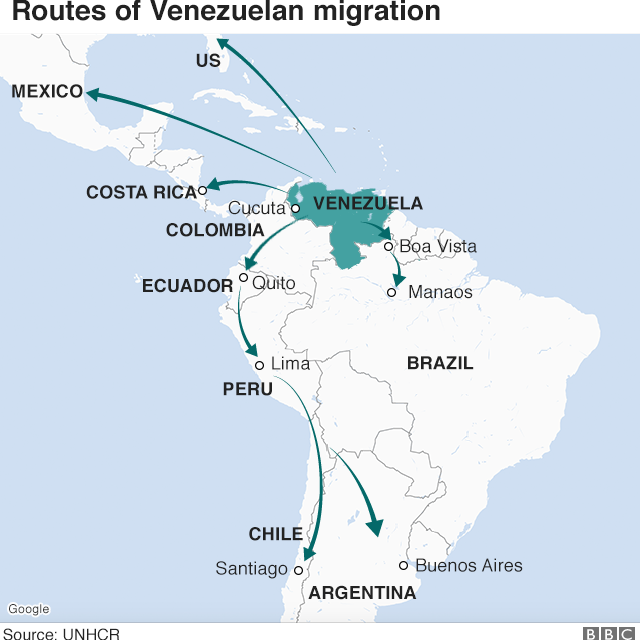
Colombia Gives Protected Status to Venezuelan Immigrants

President Iván Duque

Colombia is to give protected status to almost one million undocumented Venezuelan migrants resident in the country, President Iván Duque said.

The protection will last 10 years and will allow them to “normalise” into life in Colombia, Mr Duque added.

The United Nations says more than five million people have fled Venezuela since 2015, with Colombia taking in the greatest share.

UN High Commissioner for Refugees Filippo Grandi praised the decision.

At a joint news conference on Monday, he described it as a “historic gesture” and “emblematic for the region, even for the whole world”.

Some 1.7m Venezuelans are thought to have arrived in Colombia but more than half are without legal status.

The changes mean they will be now able to apply for temporary protected status – making it easier for them to work, seek permanent residency and get access to health services.

“We hope that other countries follow our example,” Mr. Duque said at the news conference.

The announcement came days after he appealed for better international support with the situation, after reversing a policy which said undocumented Venezuelans would be excluded from Colombia’s upcoming vaccination drive.

Colombia, a nation of 50 million people, has recorded over two million virus cases and almost 56,000 deaths so far.

Presentational white space
Map showing emigration routes
Presentational white space

The UN has warned that the Covid-19 pandemic has compounded the situation for Venezuelan refugees and migrants living throughout the region, including border closures leaving them vulnerable to dangerous exploitation from traffickers.

Millions have fled Venezuela in recent years because of spiralling economic and political instability that has led to shortages of essentials like food, medicine and fuel.

2px presentational grey line

The post Colombia Gives Protected Status to Venezuelan Immigrants appeared first on The St Kitts Nevis Observer.

Circular Economy Coalition Launched for Latin America, Caribbean

A new initiative to support Latin America and the Caribbean in the transition to a circular economy as part of the COVID-19 recovery has been launched.

The Regional Coalition on Circular Economy was announced during a virtual side event at the XXII Meeting of the Forum of Ministers of Environment of the region, hosted by Barbados and the United Nations Environmental Programme (UNEP).

The Coalition will support access to financing by governments and the private sector, with special emphasis on small and medium enterprises (SMEs), in order to promote resource mobilization for innovation and the implementation of specific projects in the region.

Coordinated by UNEP, the Coalition will be led by a steering committee composed of four high-level government representatives on a rotating basis, starting with Colombia, Costa Rica, the Dominican Republic and Perú for the 2021-2022 period.

“As extracting, wasting and ‘doing business as usual’ can no longer be supported by the planet, it is key to build a common regional vision on circular economy. The Coalition we are launching today will help precisely to do that and to implement concrete and measurable practices,” said Carlos Correa, Minister of Environment and Sustainable Development of Colombia and Chair of the Coalition.

Correa participated in the side event along with Mariano Castro, Vice Minister of Environmental Management of the Ministry of the Environment of Peru, Rolando Castro, Vice Minister of Energy and Environmental Quality of the Ministry of Environment and Energy of Costa Rica, and Walter Verri, Undersecretary of the Ministry of Industry, Energy and Mining and Uruguay.

Circular economy

A circular economy is a resilient, diverse and inclusive economic model that creates opportunities for a sustainable growth that moves away from a ‘take, make, waste’ mentality. It fosters long-term economic productivity and green jobs, while tackling global challenges like climate change, pollution and biodiversity loss.

The initiative will count on eight permanent strategic partners: the Climate Technology Centre & Network (CTCN), the Ellen MacArthur Foundation, the Inter-American Development Bank (IDB), the Konrad Adenauer Foundation (KAS), the Platform for Accelerating the Circular Economy Coalition (PACE), the United Nations Industrial Development Organization (UNIDO), the World Economic Forum (WEF) and UNEP.

Driven by eco-design, a circular economy eliminates waste and pollution, keeps products and materials in use, and regenerates natural systems. Adopting these principles can reduce the use of raw materials by up to 99%, contributing to protect biodiversity, according to UNEP’s International Resource Panel.

While the current climate discussions focus on switching to renewable energy and energy efficiency matters, which will tackle 55% of the total GHG emissions, circular economy can help address the remaining overlooked 45%, which are generated by the way we make and use products and the way we produce food, according to the Ellen MacArthur Foundation.

The Coalition aims to implement a circular economy approach through collaboration between governments, businesses, and society as a whole.

“The creation of this coalition reaffirms the region’s commitment to the implementation of the 2030 Agenda, with special emphasis on SDG12, Sustainable Consumption and Production, through the promotion of innovation, sustainable infrastructure, and an inclusive and circular economy,” said Leo Heileman, UNEP Regional Director in Latin America and the Caribbean.

“Acknowledging that unsustainable consumption and production patterns are the root cause of the three planetary crises we face today—climate change, pollution and biodiversity loss—, we have a unique opportunity to rethink our linear economy and reshape our unsustainable consumption and production patterns,” he added.

The post Circular Economy Coalition Launched for Latin America, Caribbean appeared first on The St Kitts Nevis Observer.

New Virus Variants Question Need for New Vaccines

LONDON (Reuters) – It is not yet clear whether the world needs a new set of vaccines to fight different variants of the novel coronavirus but scientists are working on new ones so there is no reason for alarm, the head of the Oxford Vaccine Group said on Tuesday.

South Africa has paused a planned rollout of AstraZeneca’s vaccines after data showed it gave minimal protection against mild infection among young people from the dominant variant there, stoking fears of a much longer battle with the pathogen.

AstraZeneca and Oxford University aim to produce a next generation of vaccines that will protect against variants as soon as the autumn before the Northern Hemisphere winter, AstraZeneca’s research chief said this month.

“There are definitely new questions about variants that we’re going to be addressing. And one of those is: do we need new vaccines?,” Andrew Pollard, Chief Investigator on the Oxford vaccine trial, told BBC radio.

“I think the jury is out on that at the moment, but all developers are preparing new vaccines so if we do need them, we’ll have them available to be able to protect people.”

Vaccines are seen as the swiftest path out of the COVID-19 crisis which has killed 2.33 million people and turned normal life upside down for billions.

Researchers from the University of Witwatersrand and the University of Oxford said in a prior-to-peer analysis that the AstraZeneca vaccine provided minimal protection against mild or moderate infection from the South African variant among young people.

TARGET POPULATION

Protection against moderate-severe disease, hospitalisation or death could not be assessed in the study of around 2,000 volunteers who had a median age of 31 as the target population was at such low risk, the researchers said.

“I think there’s clearly a risk of confidence in the way that people may perceive you. But as I say I don’t think that there is any reason for alarm today,” Pollard said.

“The really important question is about the severe disease and we didn’t study that in South Africa, because that wasn’t the point of that study, we were specifically asking questions about young adults.”

The so-called South African variant, known by scientists as 20I/501Y.V2 or B.1.351, is the dominant one in South Africa and is circulating in 41 countries around the world including the United States.

Other major variants include the so-called UK variant, or 20I/501Y.V1, and the Brazilian variant known as P.1.

An analysis of infections by the South African variant showed there was only a 22% lower risk of developing mild-to-moderate COVID-19 if vaccinated with the AstraZeneca shot versus those given a placebo.

If vaccines do not work as effectively as hoped against new and emerging variants, the world could be facing a much longer – and more expensive – battle against the virus than previously thought.

“As long as we have enough immunity to prevent severe disease, hospitalisations and death then we’re going to be fine in the future in the pandemic,” Pollard said.

Pollard said the South African government was right to look at how it deployed the AstraZeneca vaccine because the original plan was to use it in young adults – particularly healthcare workers – who were not expected to get severe disease.

“It needs a relook at how best to deploy the vaccine,” Pollard said.

Reporting by Guy Faulconbridge and Kate Holton, editing by Ed Osmond

The post New Virus Variants Question Need for New Vaccines appeared first on The St Kitts Nevis Observer.

UK Arrivals: 3 Virus Test Needed, Hotel Quarantine

All travellers entering the UK will be required to take two coronavirus tests while quarantining in an attempt to prevent variants entering the country, plus having a negative test result upon entry.

Arrivals will be required to get a test on days two and eight of their 10-day quarantine period, whether they are isolating at home or in a hotel.

The Department of Health said the move would enable authorities to track new cases more effectively.

Health Secretary Matt Hancock will set out more details in the Commons later.

It is in addition to the current rules which say travellers arriving in the UK, whether by boat, train or plane, must show proof of a negative Covid-19 test to be allowed entry.

This test must be taken in the 72 hours before travelling, and anyone arriving without one faces a fine of up to £500, with Border Force officials carrying out spot checks.

Travellers must provide contact details and their UK address. They can then travel – by public transport if necessary – to the place where they plan to self-isolate.

The new testing policy comes amid concern about new variants entering the country that are more resistant to existing vaccines.

Early trials of the Oxford-AstraZeneca vaccine suggest it offers “minimal protection” against mild disease from the South Africa variant. More than 100 cases of the variant have been found in the UK.

Prof Andrew Pollard, director of the Oxford Vaccine Group, told BBC Radio 4’s Today programme the results were “expected” because the virus is “introducing mutations… to allow it to still transmit in populations where there’s some immunity.”

“As long as we have enough immunity to prevent severe disease, hospitalisations and death, then we’re going to be fine in the future in the pandemic,” he said.

From 15 February, UK residents and Irish nationals arriving from certain countries will have to quarantine in hotels.

Passengers will have to stay in their rooms for 10 nights, with security guards accompanying if they go outside.

The rules will apply to UK nationals and residents arriving from 33 “red list” Covid-19 hotspots – mostly in South America and Africa – where it’s feared Covid variants may have already spread. Passengers will be expected to pay for the cost of the accommodation.

Non-UK travellers who have been in these countries in the 10 days before travelling are banned from entry.

All travellers – including British nationals – must self-isolate for 10 days when they get to the UK.

The “test to release scheme” – where travellers from non-red list countries can leave home isolation after a negative test on day five – will remain under the new testing rules.

Passengers will be expected to use the gold-standard and more expensive PCR tests.

‘Guesses about the unknown’

It comes as England’s deputy chief medical officer warned it was soon to say to what extent people could begin to start planning summer holidays.

Speaking at Monday’s coronavirus briefing, Prof Jonathan Van-Tam said: “The more elaborate your plans are for summer holidays, in terms of crossing borders, in terms of household mixing, given where we are now, I think we just have to say the more you are stepping into making guesses about the unknown at this point,” he said.

“I can’t give people a proper answer at this point because we don’t yet have the data. It is just too early to say.”

Lockdown rules mean people must only travel abroad for essential reasons. These are the same as the “reasonable excuses” for domestic travel, including:

  • Work that cannot be done from home
  • Medical appointments
  • Educational reasons

People leaving England will soon have to make a declaration on why they need to travel, which will be checked by carriers prior to departure.

The post UK Arrivals: 3 Virus Test Needed, Hotel Quarantine appeared first on The St Kitts Nevis Observer.