Tag Archives: caribbean

Nevis: Island Hopping Memories of Classic Aircraft

I was absolutely delighted to read about the restoration of the Britten Norman Islander in the CP and look forward to seeing it when I am able to travel back to the Island.

Since first coming to the Caribbean as a VSO in 1967 I have made many, many flights on this noisy but rugged and supremely safe and dependable airplane, which for many years was the workhorse of the Caribbean.

It is still a regular visitor to Nevis as they mainly fly charters around the islands.

I took this picture at the Nevis Airport some years ago, which shows St Kitts in the background and no fewer than four iconic Islanders on the Tarmac simultaneously.

In the foreground is one recently arrived from swanky St Barts.

On the left, one from our very own Nevis Express, behind the fuel truck is one from Antigua — Carib Aviation. I have no idea what company owned the one which is landing.


The post Nevis: Island Hopping Memories of Classic Aircraft appeared first on The St Kitts Nevis Observer.

Crackdown on Democracy: Russia’s Navalny Sentenced to Prison

A Moscow court has sentenced Alexei Navalny to two years and eight months in a prison colony in a landmark decision for Vladimir Putin’s crackdown on the country’s leading opposition figure.

The move triggered marches in Moscow and the arrest of more than 1,000 protesters.

Navalny, who has accused the Russian president and his allies of stealing billions, was jailed for violating parole from a 2014 sentence for embezzlement in a case he has said was politically motivated.

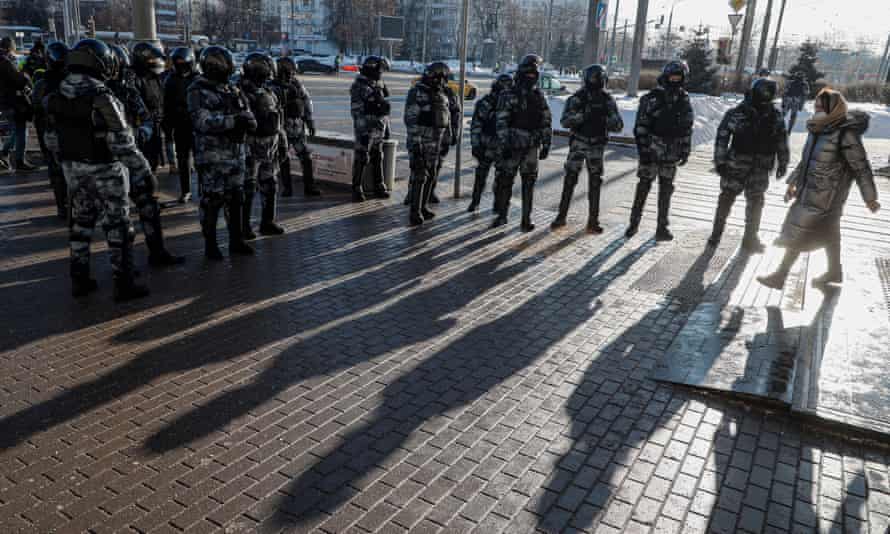
After the verdict, several hundred Navalny supporters marched in central Moscow. Videos by local media or shared on social media showed police in body armour hitting protesters with staves. More than 1,000 people were arrested across the country in the course of the day, according to the independent monitoring group OVD-info.

Ahead of the verdict, Navalny looked across the court room to his wife Yulia, and traced a heart on the glass around the dock.

After a judge read the verdict, subtracting the 10 months he had spent under house arrest from his original three-and-a-half-year sentence, Yulia took off her mask, smiled, waved, and then shrugged.

“Don’t be sad! Everything’s going to be alright!” Navalny yelled to her. She declined to comment as she walked out of the courtroom, looking straight ahead.

Outside the courthouse, she stood next to Navalny’s two lawyers, Olga Mikhailova and Vladimir Kobzev. They said they planned to appeal to the European court of human rights. “You saw what happened in there,” Mikhailova said. “It was a horror, like always.”

Russian police standing guard near the Moscow city court on Tuesday.
Russian police standing guard near the Moscow city court on Tuesday. Photograph: Maxim Shipenkov/EPA

The Kremlin’s decision to send Navalny to prison came despite the threat of further street protests and international condemnation from the US government and other foreign leaders. Diplomats from more than half a dozen western countries attended the court.

In a fiery speech from a Moscow city courtroom decorated with portraits of Cicero and Montesquieu ahead of the sentencing, Navalny had accused Putin of ordering his assassination with the poison novichok and said that the Russian leader’s “only method is killing people”.

The US secretary of state, Anthony Blinken, said Washington was “deeply concerned” and reiterated calls for Navalny’s unconditional and immediate release, saying it would coordinate with allies to hold Russia accountable.

Boris Johnson described the ruling as “pure cowardice,” which failed to meet “the most basic standards of justice”.

“Alexey Navalny must be released immediately,” he wrote.

The German foreign minister, Heiko Maas, described it as a “bitter blow” to the rule of law in Russia.

The sentencing has shown the exhaustion of Russia’s leaders with Navalny, who even from jail released a detailed investigation into a £1bn Black Sea palace allegedly built for Putin’s use.

He was arrested upon returning to Russia last month after surviving a suspected FSB assassination attempt in August 2020 with a novichok poison similar to that used in Salisbury in 2018.

Russian prison officials had said while Navalny recovered in Germany that they would seek to jail him for violating parole in the 2014 case in an apparent attempt to keep the Kremlin critic in exile, but he flew back all the same.

The post Crackdown on Democracy: Russia’s Navalny Sentenced to Prison appeared first on The St Kitts Nevis Observer.

COVID Antibodies Last 6 Months, AstraZeneca Vaccine Single Dose Study, World Update

Bloomberg) — The vast majority of people who contract Covid-19 still have antibodies at least six months after infection, a new study involving more than 20,000 people showed.

Some 88% of participants who tested positive for a previous infection retained antibodies for six months, according to the report by UK Biobank, a major biomedical database. The number was 99% at three months.

The results follow other, smaller studies that indicate a level of immunity following a natural infection for at least 6 months. Health officials have said it’s still unclear how long protection through vaccines could last, and the rise of mutated virus strains could mean the shots may need to be updated periodically to maintain their efficacy.

The study ran from the end of May through early December, based on monthly blood samples and data on potential symptoms from Biobank participants, their adult children and grandchildren.

The most common symptom associated with having antibodies to Covid was a loss of sense of taste and smell, which was reported by 43% of participants. About a quarter were completely asymptomatic.

AstraZeneca Vaccine Offers Single Dose Protection

The primary analysis of the Phase III clinical trials from the UK, Brazil and South Africa, published as a preprint in The Lancet confirmed COVID-19 Vaccine AstraZeneca is safe and effective at preventing COVID-19, with no severe cases and no hospitalisations, more than 22 days after the first dose.

Results demonstrated vaccine efficacy of 76% (CI: 59% to 86%) after a first dose, with protection maintained to the second dose. With an inter-dose interval of 12 weeks or more, vaccine efficacy increased to 82% (CI: 63%, 92%).

The analysis also showed the potential for the vaccine to reduce asymptomatic transmission of the virus, based on weekly swabs obtained from volunteers in the UK trial. The data showed that PCR positive readings were reduced by 67% (CI: 49%, 78%) after a single dose, and 50% (CI: 38% to 59%) after the two dose regimen, supporting a substantial impact on transmission of the virus.

The primary analysis for efficacy was based on 17,177 participants accruing 332 symptomatic cases from the Phase III UK (COV002), Brazil (COV003) and South Africa (COV005) trials led by Oxford University and AstraZeneca, a further 201 cases than previously reported.

Sir Mene Pangalos, Executive Vice President BioPharmaceuticals R&D, said: “This primary analysis reconfirms that our vaccine prevents severe disease and keeps people out of hospital. In addition, extending the dosing interval not only boosts the vaccine’s efficacy, but also enables more people to be vaccinated upfront. Together with the new findings on reduced transmission, we believe this vaccine will have a real impact on the pandemic.”

Professor Andrew Pollard, Chief Investigator of the Oxford Vaccine Trial, and co-author of the paper, said: “These new data provide an important verification of the interim data that has helped regulators such as the MHRA in the UK and elsewhere around the world to grant the vaccine emergency use authorisation. It also helps to support the policy recommendation made by the Joint Committee on Vaccination and Immunisation for a 12-week prime-boost interval, as they look for the optimal approach to roll out, and reassures us that people are protected 22 days after a single dose of the vaccine.”

COVID-19 Vaccine AstraZeneca, formerly AZD1222
COVID-19 Vaccine AstraZeneca was co-invented by the University of Oxford and its spin-out company, Vaccitech. It uses a replication-deficient chimpanzee viral vector based on a weakened version of a common cold virus (adenovirus) that causes infections in chimpanzees and contains the genetic material of the SARS-CoV-2 virus spike protein. After vaccination, the surface spike protein is produced, priming the immune system to attack the SARS-CoV-2 virus if it later infects the body.

In addition to the programme led by Oxford University, AstraZeneca is conducting a large trial in the US and globally. In total, Oxford University and AstraZeneca expect to enrol up to 60,000 participants globally.

The AstraZeneca COVID-19 vaccine has already been granted a conditional marketing authorisation or emergency use in close to 50 countries, spanning four continents including in the EU, a number of Latin American countries, India, Morocco and the UK.

AstraZeneca
AstraZeneca (LSE/STO/Nasdaq: AZN) is a global, science-led biopharmaceutical company that focuses on the discovery, development and commercialisation of prescription medicines, primarily for the treatment of diseases in three therapy areas – Oncology, Cardiovascular, Renal & Metabolism, and Respiratory & Immunology. Based in Cambridge, UK, AstraZeneca operates in over 100 countries and its innovative medicines are used by millions of patients worldwide. Please visit astrazeneca.com and follow the Company on Twitter @AstraZeneca.


WHO team visits Wuhan virus lab at center of virus origins speculation; Russia’s Sputnik V vaccine appears safe, effective; US boosts vaccine allotments, financing for virus costs

World Health Organization investigators have visited a research center in the central Chinese city of Wuhan that has been the subject of speculation about the origins of the coronavirus.

The Wuhan Institute of Virology has extensive virus samples, leading to unproven allegations that it may have caused the original outbreak by leaking the virus into the surrounding community, Emily Wang Fujiyama reports from Wuhan.

China has strongly denied that possibility and has promoted also unproven theories that the virus may have originated elsewhere. The WHO team that includes experts from 10 nations has already visited hospitals, research institutes and a traditional wet food market tied to the original outbreak. 

Russia Vaccine: Russian scientists say the Sputnik V vaccine appears safe and effective against COVID-19. That’s according to early results of an advanced study published in The Lancet. The news is a boost for the shot that is increasingly being purchased by countries around the world who are desperate to stop the devastation caused by the pandemic. Researchers say their study involved about 20,000 people and showed the vaccine was about 91% effective.

Scientists not linked to the research acknowledged that the quick rollout of the Russian vaccine was criticized for appearing to cut corners. But they said it was now clear that Sputnik V is another effective shot to use in fighting the pandemic, Maria Cheng and Dara Litvinova report. 

  • Mexico approved Sputnik V following the publication of early results, making it the third vaccine to receive emergency approval in Mexico. The regulating agency approved the Pfizer vaccine in December and AstraZeneca’s in January. 

U.S. Vaccines: The Biden administration announced it is moving to expand access to vaccines, freeing up more doses for states and beginning to distribute them to retail pharmacies next week. The push comes amid new urgency to speed vaccinations to prevent the spread of potentially more serious variants of the virus that has killed more than 445,000 Americans, Ricardo Alonso-Zaldivar and Zeke Miller report. Starting next week, 1 million doses will be distributed to 6,500 pharmacies across the country, the White House said. 

U.S. Schools: Pressure is building on school systems around the U.S. to reopen classrooms to students who have been learning online for nearly a year. The debate is pitting politicians against teachers who have yet to be vaccinated. In Chicago, there’s so much rancor that teachers are on the brink of striking. In California, a frustrated Gov. Gavin Newsom implored schools to find a way to reopen. In Cincinnati, some students have returned to their classrooms after a judge threw out a teachers union lawsuit over safety concerns, Holly Ramer and Michael Kunzelman report.

Malawi Surge: The southern African country faces a virus resurgence that is overwhelming: a presidential residence and a national stadium have been turned into field hospitals to save lives. President Lazarus Chakwera, just six months in office, lost two Cabinet ministers to COVID-19 in January amid a surge that led him to declare a state of national disaster. Chakwera declared three days of national mourning over the deaths of the ministers and his government ordered a raft of new measures to stem the spread of the virus in a country with a poor health system, Gregory Gondwe reports.

Captain Tom: The World War II veteran who walked into the hearts of a nation in lockdown as he shuffled up and down his garden to raise money for British health care workers has died after testing positive for COVID-19. Capt. Tom Moore was 100.  Captain Tom, as he became known as he cheered the country in a dark time, set out to raise 1,000 pounds for Britain’s National Health Service by walking 100 laps of his backyard. But his quest went viral and donations poured in from as far away as the United States and Japan, raising 33 million pounds ($40 million). Danica Kirka has his moving story.

The post COVID Antibodies Last 6 Months, AstraZeneca Vaccine Single Dose Study, World Update appeared first on The St Kitts Nevis Observer.

Pfizer Predicts $15b from Its COVID-19 Vaccine

New York (CNN Business)Pfizer expects to earn approximately $15 billion in revenue from its Covid-19 vaccine this year, the company said Tuesday.

Its fourth-quarter earnings report was the first since Pfizer’s Covid-19 vaccine received emergency-use authorization from the US Food and Drug Administration in December — the first vaccine to receive such approval. Since then, the vaccine, developed in partnership with German firm BioNTech, has begun to roll out across the country, as well as elsewhere around the world.

The vaccine contributed $154 million in sales during the fourth quarter. Pfizer’s projection for revenue from the vaccine in 2021 primarily includes doses expected to be delivered under existing contracts and may be updated as new contracts are executed, the company said, indicating that revenues could be even greater. The company added that patients will likely need to receive regular boosts of the vaccine to “maintain immune response and to counter emergent variant strains,” which would mean ongoing revenue from the product beyond this year.

Pfizer (PFE) said it has shipped 65 million doses so far, including 29 million to the United States. The company expects to have delivered 200 million doses to the United States by the end of May, hitting the mark two months ahead of its contractual obligation.

The company said it can potentially make a total of 2 billion doses worldwide by the end of 2021, based on expansion at its current facilities and “contingent upon adding more suppliers and contract manufacturers,” though it’s unsure if it will actually sell all those doses. French pharmaceutical company Sanofi recently signed on to fill and pack more than 100 million vials of Pfizer’s vaccine this year in an effort to meet huge demand for the shots, as much of the world continues to be pummeled by the pandemic.

The company raised its overall earnings guidance for 2021 to between $3.10 and $3.20 per share, thanks in part to the expected revenue contributions of the vaccine.

The projection was a bright spot in an otherwise mixed earnings report. Pfizer posted quarterly revenue of nearly $11.7 billion, up 12% from the same period in the prior year and slightly ahead of Wall Street analysts’ projections. Earnings per share hit $0.42, but fell short of Wall Street’s expectations. The company’s stock fell nearly 3% in early trading Tuesday.

Pfizer is coming out of a major corporate restructuring, which involved spinning off several parts of its business to focus on developing and distributing more innovative medicines. Although it’s playing a major role in fighting coronavirus, Pfizer’s broader business was challenged by the pandemic — fewer people leaving home to see their doctors meant fewer new prescriptions for some of Pfizer’s key products during much of 2020. The company said it expects a “continued recovery” in broader healthcare activity in 2021 as more people become vaccinated.

Pfizer posted full-year revenue of $41.9 billion, up 2% from the prior year.

“2020 has been a transformational year, not only for Pfizer but also in the life of every patient in every community that we serve,” Pfizer CEO Albert Bourla said in a statement.

“We saw the culmination of Pfizer’s decade-long conversion into a pure-play, science and innovation-focused company … Our record-breaking success at developing a vaccine against Covid-19, along with our partner BioNTech, is just one example of what we believe this new Pfizer is capable of achieving.”

Bourla expressed optimism about the company’s pipeline of products beyond the Covid-19 vaccine, which include cancer drugs and a pneumonia vaccine, on a call with analysts Tuesday morning. The company reaffirmed its projected revenue compound annual growth rate of at least 6% through 2025, excluding any potential contributions from the vaccine.

The CEO also said that Pfizer hopes to work with lawmakers to help patients more easily afford costly medicines — high drug prices are one of Americans’ chief health care complaints.

“We believe the industry has generated a great deal of goodwill with Congress and public opinion with our Covid-19 treatment and vaccinations, and we hope we can build on this goodwill by working together on a solution, including making a contribution as an industry through legislation or executive action that results in lower out of pocket costs to patients,” Bourla said.

“The status quo simply won’t cut it and we look forward to working with the Biden administration and members of Congress from both sides of the aisle to help ensure our breakthroughs are accessible to all.”

The post Pfizer Predicts $15b from Its COVID-19 Vaccine appeared first on The St Kitts Nevis Observer.

Trump Senate Trial: Both Sides Reveal Game Plans

Congressional Democrats and lawyers for former President Trump released competing briefs Tuesday outlining their legal strategies for next week’s Senate impeachment trial over Trump’s role in inciting a violent mob to storm the Capitol on Jan. 6.

The 80-page brief from House Democrats lays blame for the deadly siege directly at Trump’s feet, saying he intentionally “whipped [the crowd] into a frenzy.” The former president’s new legal team, which was formed on Sunday night, filed a 14-page response arguing the trial is unconstitutional and that Trump’s rhetoric did not inspire the riot.

Here are five takeaways from the rival briefs:


Briefs underscore different political worlds

Reading the legal briefs filed by the two parties is like stepping into two completely different universes.

Democrats are still enraged by the deadly riot of Jan. 6 and drew a direct line from Trump’s months-long campaign to delegitimize the presidential election results to his speech in Washington urging supporters to “fight” for him and the violent mob that then laid siege to the Capitol.

Every House Democrat and 10 Republicans voted last month to impeach Trump for inciting the violence, and there is no question in the minds of Democrats that the Constitution grants the Senate the right to convict Trump and bar him from ever running for office again, even now that he is a private citizen.

In fact, Democrats say it is imperative that Trump is punished to ensure that U.S. democracy is not threatened in this fashion ever again.

“President Trump’s conduct must be declared unacceptable in the clearest and most unequivocal terms. This is not a partisan matter. His actions directly threatened the very foundation on which all other political debates and disagreements unfold,” the Democratic brief states. “They also threatened the constitutional system that protects the fundamental freedoms we cherish.”

On the Republican side, the shock and anger have abated some in the weeks since the insurrection. Forty-five of 50 Senate Republicans have already voted to dismiss the trial on the grounds that it is unconstitutional.

In their legal brief, Trump’s attorneys argued that the trial proceedings are null and void because a former president cannot be impeached.

They argued there was no correlation between Trump’s rhetoric and the mob that later stormed the Capitol. The president’s speech about the election being stolen from him, though unpopular in Washington, is nonetheless protected by the First Amendment, and any effort to punish him would violate his civil liberties, Trump’s lawyers argued.

Many Republicans believe Trump is responsible for the deadly riot, though many more view the impeachment proceedings as a political endeavor designed to take Trump out once and for all.

Trial to focus on First Amendment, incitement allegations

The House impeached Trump last month on a single charge of “inciting insurrection,” based largely on his Jan. 6 speech just outside the White House encouraging supporters to march on the Capitol and prevent Congress from certifying the election victory of his opponent, President Biden.

The legal brief from Democrats promises to deconstruct that single charge, dissecting it into a series of even more targeted allegations, any one of which they maintain should disqualify the president from holding office in the future.

That list includes charges that Trump abused his powers for personal political benefit, imperiled the lives of lawmakers and his own vice president, and threatened national security by encouraging a breach of the Capitol, where rioters stole items from lawmaker offices, including a laptop from Speaker Nancy Pelosi (D-Calif.).

“If provoking an insurrectionary riot against a Joint Session of Congress after losing an election is not an impeachable offense, it is hard to imagine what would be,” the Democrats wrote in their brief, which described the former president as “singularly responsible” for the deadly attack.

Trump’s allies have a decidedly different view, arguing he had every right both to highlight election irregularities and to encourage his supporters to protest a process he deemed inherently corrupt — as long as it was done peacefully.

His lawyers’ defense brief focuses squarely on those First Amendment freedoms, maintaining that Trump bears no responsibility for the actions of supporters who turned violent in the heat of protest. Those rioters, his attorneys suggest, had simply misinterpreted Trump’s message.

“If the First Amendment protected only speech the government deemed popular in current American culture, it would be no protection at all,” Trump’s attorneys wrote.

His lawyers are also leaning on a procedural defense, namely that the Democrats have violated their impeachment powers by packing several charges into a single article. That, Trump’s lawyers contend, makes it “impossible to know if two-thirds of the [senators] agreed on the entire article, or just on parts, as the basis for [a] vote to convict.”


Constitutionality debate rages

Does the Constitution permit Congress to impeach a government official once they’re out of office?

That question is central to the briefs filed by both parties, and the matter will likely chew up a significant chunk of time at the trial after it starts on Feb. 9.

Democrats spent 23 pages in their brief detailing the constitutional case for impeaching a former president and barring him from ever seeking office again.

Trump was impeached by the House while he was still in office, so the process was already underway.

Democrats cited Article 1 of the Constitution, which gives the House the “sole power of impeachment” and the Senate “the sole power to try all impeachments” with no stipulation as to whether the individual is still in office.

Democrats went way back in history to make their case, arguing that former officials in England were subject to impeachment and disqualifications after leaving office, that there was nothing at the Constitutional Convention to suggest that those who have left office are shielded from impeachment, and that the Framers intended for Congress’s impeachment powers to be sweeping and broad, particularly when it comes to the president. They cited examples dating back to 1876, when former Sen. William Blount was impeached after leaving office for plotting to give the British control over parts of Florida and Louisiana.

There are no loopholes that would allow a public official to quickly resign or be fired to avoid facing consequences for crimes committed in office, the Democrats say.

“If the Senate does not try President Trump (and convict him) it risks declaring to all future Presidents that there will be no consequences, no accountability, indeed no Congressional response at all if they violate their Oath to ‘preserve, protect and defend the Constitution’ in their final weeks — and instead provoke lethal violence in a lawless effort to retain power,” the Democrats wrote. “That precedent would horrify the Framers, who wrote the Presidential Oath of Office into the Constitution and attached no January Exception to it.”

Trump’s team pointed to Article 2, Section 4 of the Constitution, which states that the president “shall be removed from office on impeachment for, and conviction of, treason, bribery, or other high crimes and misdemeanors.”

They say that because Trump cannot be removed from office, the rest of the debate is null and void.

Trump attorneys open door to election fraud debate

Trump’s legal team has signaled that it does not want to make his unsupported claims about election fraud the centerpiece of the impeachment trial. However, the former president’s attorneys may have made him vulnerable on that front by addressing it in their defense brief.

The brief touched only lightly on the matter, arguing that Democrats are wrong to say that the former president spun up the mob with lies about the election being stolen because reasonable people can disagree about whether state-based changes to election laws during the coronavirus pandemic were designed to suppress the GOP vote.

“Insufficient evidence exists upon which a reasonable jurist could conclude that the 45th President’s statements were accurate or not, and he therefore denies they were false,” Trump’s attorneys wrote.

Democrats are eager to litigate what they’ve dubbed as “the big lie” that they say laid the groundwork for angry conspiracy theorists to sack the Capitol.

“Contrary to Trump’s lawyers’ public statement that they will not ‘put forward a theory of election fraud,’ Trump’s lawyers continue to defend Trump’s Big Lie that the election was stolen,” said a senior aide to the Democratic impeachment team.

Democrats hope to tap emotional aspects of Jan. 6 attack

Unlike the first impeachment of Trump, which was based on a private phone call with a relatively obscure foreign leader, Congress has a personal stake this time around. The rioters who breached the Capitol building did so while both chambers were in session, forcing terrified lawmakers to duck for cover while Capitol Police raced to whisk them to safe rooms.

Some in the mob chanted violent threats against anyone deemed disloyal to Trump, including Pelosi and former Vice President Mike Pence. Some offices were ransacked, their personal items stolen as trophies, while staffers cowered under desks behind doors they could only pray would stay locked.

One Capitol Police officer was killed and was memorialized this week by lying in honor in the Capitol. Two other law enforcement officers committed suicide just days after the attack.

That combination of fear and personal tragedy will itself be a form of witness in the Senate trial, as Democrats intend to revisit those chaotic moments in an effort to maximize the emotional impact on viewers watching the televised trial across the country.

The idea is a simple one: Strike while the anger is hot and emotions are high — a primary reason that Pelosi delivered the article to the Senate instead of holding it longer, as some in her caucus had advocated.

But the strategy is likely to bear no fruit. Senate Republicans are almost certain to clear Trump of any wrongdoing related to the Capitol attack. Democrats, however, are fighting to ensure that those votes to acquit are as uncomfortable as they can cause them to be.
The post Trump Senate Trial: Both Sides Reveal Game Plans appeared first on The St Kitts Nevis Observer.

Republic Financial records US $58.4m first quarter profits

PORT-OF-SPAIN, Trinidad — Republic Financial Holdings Limited Chairman Vincent Pereira, announced on February 1 that RFHL had a US $58.4 million profit attributable to equity holders of the parent for the quarter ending December 31, 2020.

“Compared to the First Quarter of 2020, these results reflect the negative impact of the Covid-19 pandemic since we experienced a reduction in both our net interest margins, fees and commissions,” said Pereira. “This was off-set by the positive impact of our acquisition of the British Virgin Islands (BVI) operations in June 2020. The net result is an increase of US $2.6 million or 4.6 percent over the corresponding period last year.”

Total assets stood at US $15.6 billion at December 31, 2020, an increase of US $380.8 million or 2.5 percent over the total assets at December 2019. This increase was mainly due to the BVI acquisition in June 2020.

“The uncertainty over the duration of the COVID-19 pandemic and the timing of any economic recovery will continue to place downward pressure on our performance,” said Pereira. “However, we remain confident of the future as our strong capital base and our robust governance structure will provide the platform to meet the challenge.

“Our focus remains on building the Group’s resiliency through various initiatives aimed at improving efficiency, supporting our customers through these trying times, expanding our suite of electronic products and making it easier for clients to access these products remotely,” said Pereira.

“Going forward, we will continue to work with our customers, provide a safe working environment for our employees and assist the communities we serve via our Power To Make a Difference Programme.”

The post Republic Financial records US $58.4m first quarter profits appeared first on The St Kitts Nevis Observer.

New interactive website launched to attract investment to Nevis

CHARLESTOWN, Nevis — The Nevis Investment Promotion Agency (NIPA) has launched a new interactive and innovative website, www.investnevis.org to better enhance Nevis’ ability to attract local and foreign investment.

Hon. Mark Brantley Premier of Nevis and Minister of Finance and Foreign Investment delivering remarks at the Nevis Investment Promotion Agency’s new website launch on February 2 in the Cabinet Room at Pinney’s Estate.

Delivering remarks at the launch ceremony in the Cabinet Room, Pinney’s Estate on February 2, Nevis Premier Hon. Mark Brantley, Minister of Finance and Foreign Investment in the Nevis Island Administration, said the new website was conceived to move Nevis well ahead of the competition for investment.

“The concept, which I readily accepted as minister responsible for trying to get investment to the island, was to create a platform that those internationally who wanted to invest could have essentially a one-stop shop,” said Hon. Brantley. “This site will provide us and investors with a portal into Nevis. Essentially, it is designed to put the best face of Nevis forward and to take us into this digitized world in a serious way.”

In attendance at the launch were Deputy Premier Hon. Alexis Jeffers; Hon. Eric Evelyn; Mrs. Hélène Anne Lewis, NIA Legal Advisor; and Mrs. Joan Browne, Assistant Permanent Secretary in the Ministry of Finance.

Ms. Kimone Moving, Director of the Nevis Investment Promotion Agency.

Ms. Kimone Moving, NIPA Director, explained the website seeks to improve and expand services to lure more investors to Nevis.

“The revamped website is investor friendly,” said Ms. Moving. “It sports a new logo to rebrand the image of the agency in keeping with its mandate of being the investors’ point-of-contact to facilitate matters related to investment opportunities in Nevis.

“The website seeks to improve and expand services to attract more local and foreign investors to the island of Nevis,” she said.

Project Manager for the NIA Digital Platform, Jacob Katsman, explained that the website launch is the initial phase of the project. He said more information, such as service providers and an investment calculator will be added.

Katsman pointed out that the rebranded website is mobile friendly. It was designed with the latest technology, using local talent.

Katsman said the first thing investors will see when they log on are the investment opportunities available on the island.

“We want to attract investors,” said Katsman. “We need to show them what we have available in Nevis.

“One of the functions we are developing will be to further develop the ability to package information in a way that an investor can make a decision,” he said. “The design of the site is minimalistic, to provide key information to the investor as to why they want to come to Nevis.”

Key sectors for development highlighted on the website are: Real Estate, Agriculture, Tourism Services, Financial Services, Light Manufacturing, Communication and Information Technology, and Entertainment.

Katsman introduced NIPA’s Concierge Service, in which the investor will have a NIPA agent designated to follow the process of that investor from start to finish.

Permanent Secretary in the Ministry of Finance Colin Dore noted that the website will assist investors to have a more seamless process.

“We hope that will cut the turn-around time considerably,” said Dore. “We can have a project underway in the shortest possible time.

He encouraged local businesses and service providers to sign up to be included on the NIPA website so investors can know what they have to offer.

The post New interactive website launched to attract investment to Nevis appeared first on The St Kitts Nevis Observer.

National Security Strategy provides plan for ‘all-government approach’

BASSETERRE, St. Kitts — The Ministry of National Security has publicly shared its National Security Strategy (NSS) which provides a comprehensive plan for an “all-government approach” to further ensure a safe and secure environment for citizens, residents and visitors.

The NSS’s objective is to clearly determine any threats that impact, or could impact, the Federation of St. Kitts and Nevis, inform the citizenry, and provide for and take actions necessary to ensure the safety, security and stability of the nation and its interests.

The document is the result of a detailed and extensive study undertaken by the Government of St. Kitts and Nevis; consultations with all relevant stakeholders to include a very wide cross-section of the public.

The Government presents the strategy for dealing with the Federation’s threat realities and outlines a Threat Assessment, Approach, Tier Rating System, Responsibilities and their Allocations, Tangential or Cross-cutting Issues and Closing Statements.

Through this strategy, all government Agencies, Ministries and Departments are expected to review their structure and operations to ensure that the security of the nation receives priority attention as required.

In 2015, at the start of the first term of Office of the Team Unity Government, the administration was determined to address the escalating crime trends that had been plaguing the country. In response, several steps were taken to address the situation.

According to Permanent Secretary in the Ministry of National Security, Osmond Petty, M.B.E., this led to the development, government approval and subsequent implementation of a Strategic Six Point Plan which was initiated by the Royal St. Christopher and Nevis Police Force.

“The positives of the Six-Point Plan Strategy had been noted, but it was not representative of a comprehensive Policy to address the security challenges confronting the nation,” said Petty. “There was, therefore, a need to provide a more holistic approach to confronting these challenges, as is the accepted practice regionally and internationally.”

As a result, a Proposed National Security Architecture Framework (NSSFC) was prepared by National Security Advisor, Major General (ret.) Stewart Saunders. It recommended, among other things, the development and approval of a National Security Strategy.

To complete the groundwork for this task, a National Security Strategy Formulation Committee, chaired by Dwyer Astaphan, former government minister and lawyer, was established.

The committee comprised a wide cross-section of representatives from various sectors of society. Several additional key individuals were also co-opted by the committee to assist.

In their deliberations, the NSSFC engaged Civil Service principals, Security Forces heads and agencies impacting national security plus other organizations, bodies or individuals that were deemed relevant to the matter at hand.

These interactions took the form of meetings, focus-group discussions, as well as Town Hall meetings. The NSSFC was mindful that security challenges to the nation exist in a dynamic environment and there are processes constantly in motion, based upon current Government Policies, to address pressing issues. In this regard, there would have been programmes already implemented, or being implemented, that were geared to improve the current status of our National Security Architecture.

After the information was gathered by the committee, Major General (ret.) Saunders, in collaboration with Petty, took the recommendations from the NSSFC. It also used other Ministry documents and data to fashion the National Security Strategy, which was presented to Cabinet.

The document received approval from Cabinet late last year. The strategy will strengthen Government efforts to continue to reduce criminal activity in the Federation and will complement the results of initiatives already in place, which have driven crime on a downward trend during the last five years.

According to the vision statement in the NSS, St. Kitts and Nevis is a nation that puts God and Country Above Self, where all exist in a peaceful, safe, secure and stable environment; a place where citizens, residents and visitors can live, study, work, and do business; a Federation that values its people, system of governance and consistently seeks improvements for all, by providing opportunities that cater for individual and collective well-being through economic growth, prosperity, good health and the respect for law and order; a small island state in which all sectors of the nation – government agencies and private sector, at individual and organizational levels – work together to ensure all threats to its security are minimized or totally removed.

The post National Security Strategy provides plan for ‘all-government approach’ appeared first on The St Kitts Nevis Observer.

Federation reports one additional case of coronavirus disease

BASSETERRE, St. Kitts — The Federation has confirmed one additional case of coronavirus disease. The international traveller landed in the Federation on January 17, 2021 from the United States.

The patient has been in quarantine at one of the COVID-19 certified hotels since arrival. The patient was duly notified and is now in isolation.

This additional case brings the total number of COVID-19 confirmed cases to 39 with 27 cases for St. Kitts and 12 cases for Nevis. Thirty-six cases have fully recovered with zero deaths. There are now three active cases.

These patients are stable and are being monitored. We continue to adhere to the ‘St. Kitts & Nevis Health and Travel Protocols,’ which can be found at https://www.knatravelform.kn.

All front-line workers continue to adhere to the COVID-19 protocols along the corridor of containment between the ports of entry and hotel/accommodation sites.

The Ministry of Health assures the public that the following measures are being taken to restrict the spread of coronavirus:
• In-depth contact tracing to effectively assess the front-line workers with whom the recently diagnosed cases might have interacted; and
• Quarantine, monitoring and testing of contacts as indicated.

The Ministry of Health and Federal Government assures all citizens and residents that every effort is being made to prevent the spread of this virus locally.

With reports of the SARS -CoV-2 variant in the region and with increase in cases locally more and more persons are adhering to the COVID-19 prevention and control measures. These include:
• Wearing a face mask when in public places;
• Maintaining good hand hygiene:
• Maintaining physical distance of at least 6-feet from others when in public places: and
• Avoiding crowd s and events.

These control measures work, and we are encouraging you to continue. Let us work together to maintain and protect the health and well-being of the people of the Federation

The post Federation reports one additional case of coronavirus disease appeared first on The St Kitts Nevis Observer.

US: GOP Leader Calls New Congresswoman a ‘Cancer’ for the Party

(CNN) Senate Republican leader Mitch McConnell issued a tacit rebuke of controversial Rep. Marjorie Taylor Greene, slamming the Georgia Republican’s “loony lies and conspiracy theories” as a “cancer” for the party.

“Loony lies and conspiracy theories are cancer for the Republican Party and our country,” McConnell said in a statement. “Somebody who’s suggested that perhaps no airplane hit the Pentagon on 9/11, that horrifying school shootings were pre-staged, and that the Clintons crashed JFK Jr.’s airplane is not living in reality. This has nothing to do with the challenges facing American families or the robust debates on substance that can strengthen our party.”

While McConnell did not name Greene directly, his statement stands as a scathing rebuke of the freshman Republican House member. The Hill first reported on the statement.

Greene quickly shot back on Twitter, asserting that “the real cancer for the Republican Party is weak Republicans who only know how to lose gracefully. This is why we are losing our country.”

Greene has faced backlash since a CNN KFile report last week found that she had repeatedly indicated support for executing prominent Democratic politicians in 2018 and 2019 before being elected to Congress. Amid an uproar over her past comments, video of Greene confronting Parkland shooting survivor David Hogg before she was elected went viral Wednesday.

The post US: GOP Leader Calls New Congresswoman a ‘Cancer’ for the Party appeared first on The St Kitts Nevis Observer.