Scientists are warning that climate change is already compounding the extreme heat battering the Pacific Northwest and will do so even more as the planet continues to warm.
Oregon and Washington saw record-setting triple-digit temperatures this week, bringing many aspects of daily life to a grinding halt.
In Portland, a mass transit company canceled service because of melting cables, while highway pavement in the Seattle area buckled in the extreme heat.
Weather experts said that while there are many factors at play in this most recent heat wave, climate change is adding a few extra degrees to an already bad situation.
“This is a highly unusual weather event that we’re dealing with … that’s what we’re having in this case, in which all the factors that tend to make it hot in the Pacific Northwest are all working together,” said Nick Bond, an atmospheric science professor at the University of Washington.
But he added that climate change, which he said had raised temperatures by 2 to 3 degrees Fahrenheit in the region, “certainly has a role here in that our summer temperatures have risen, and they’re going to continue to rise.”
“It’s that much more severe of an event because of that baseline warming,” he told The Hill.
National Weather Service meteorologist Robin Fox told The Hill she’d refrain from attributing any singular weather event to climate change and instead described the Pacific Northwest heat wave as being caused by a “large area of high pressure” that’s bringing “historic heat” to the region.
Some experts said that as the Earth heats up, climate change could have a more dramatic impact on summer heat, posing risks to humans in different ways.
“All the indicators are very clearly that we are entering continually hotter, dryer, riskier summers,” Sarah Myhre, a climate scientist and executive director of the Rowan Institute, told The Hill.
“From a climate change context, the idea that heat extremes are going to become more extreme and more intense” has been known to scientists for decades, she added.
Jane Baldwin, a postdoctoral research scientist at Columbia University’s Lamont-Doherty Earth Observatory, added that climate change will affect not only temperatures across the board but also the nature of atypically hot periods.
“We have very clear evidence that as greenhouse gases in the atmosphere increase, the overall temperature warms, but also because of that, heat waves increase in intensity and duration,” Baldwin said.
“Until the event has passed, it’s hard to do the attribution of the event in terms of how much of this event can be attributed to climate change, but I do think it is a harbinger of what is projected to come with global warming,” she added.
The Biden administration has highlighted climate change as among the major crises the U.S. is facing and has said it wants to cut emissions at least in half by 2030 compared to 2005 levels.
Congress will soon determine which of President Biden’s climate measures to include in their infrastructure packages, and federal agencies are expected to take regulatory actions to cut emissions.
Kristie Ebi, a professor of environmental and occupational health sciences at the University of Washington, said the heat wave in the Northwest was unusual but also in line with the trajectory of climate change.
“What we’re seeing today is more extreme, but it certainly is part of what’s expected with the changing climate,” she said.
Seattle has seen record-shattering triple-digit temperatures in recent days, and inland areas such as Spokane, Wash., could see several more days of extreme heat, according to the National Weather Service.
The heat wave comes less than a year after September 2020 registered as the hottest September on record globally. Six of the warmest years on record occurred in the 2010s.
Experts also raised concerns about the human impacts, particularly to those in disadvantaged communities or who are otherwise vulnerable.
“Think about all the vulnerable people: pregnant women, babies, the elderly … anyone who is at risk in society is also going to have compounding impacts from a heat event like this,” Myhre said. “Just like COVID, this is an example of how inequity is exacerbated when disaster happens.”
“This is just the beginning of the heat waves we will see,” Myhre added, warning of “really catastrophic heat-induced events in places that have no infrastructure to protect people.”
“One of the reasons why we are able to navigate the heat waves this year is we currently don’t have any smoke and we’re able to ventilate our houses,” she noted. However, she said, “if we get to a point where we have smoke,” the effects of the heat will be even more acutely felt.
These extreme temperatures are also likely to lead to a wave of health problems for which local health infrastructure may be unprepared, Ebi said.
“Our core body temperature actually only operates within a … narrow range,” she said. “When [the body’s] mechanisms are insufficient, because of chronic disease, for example, and our core body temperature starts to rise, it starts to affect our organ systems.”
As a result, she said, when experts speak of the health risks of temperature spikes, “it’s not just the heat stress, the heat stroke we’re worried about, it’s people who have underlying chronic medical conditions, children and babies, those over the age of 65, people who take drugs that limit the ability of the body to sweat.”
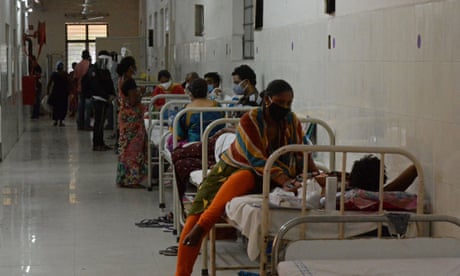
A rash of cases of a rare “black fungus” infection affecting thousands of critically ill Covid patients in India caused alarm last month. Now scientists are warning that other dangerous or even deadly fungal infections have spawned in critically ill coronavirus patients globally, including in the UK.
Fungi are ubiquitous – in soil, water, air, faeces and human skin. Usually, people’s elaborate, adaptive immune systems are enough of a repellent but when that shield is weakened by disease, congenital conditions or age, they are far more vulnerable to microscopic assailants.
When Covid-19 emerged, doctors found that the best tools in their arsenal to fight the virus were steroids, which happen to be immunosuppressants. Wary of secondary bacterial infections in intensive care units, doctors often gave coronavirus patients broad-spectrum antibiotics as a precaution.
But the combination of lungs battered by Covid, impaired immune systems, and both good and bad bacteria wiped out by antibiotics left critically ill patients exposed to moulds and spores.
“It’s an unfortunate perfect storm for these organisms, and we’re seeing it,” said Dr Tom Chiller, the chief of the Mycotic Diseases Branch at the US-based Centers for Disease Control and Prevention (CDC).
Even before the pandemic, rates of the rare and lethal “black fungus” mucormycosis infection in India were estimated to be about 70 times higher than in the rest of the world. With Covid, a fresh epidemic germinated, driven in part by liberal steroid use in hospitals and a high proportion of susceptible patients with uncontrolled diabetes.
Scientists now say concerning reports of other fungal infections, caused by pathogens including Aspergillus and Candida auris, have emerged in hospitalised Covid patients. In particular, the common fungal infection aspergillosis, often seen in combination with the flu, has been observed in critically ill Covid patients globally, from the US to the UK, France, Pakistan and India.
A doctor checks on a recovered Covid patient earlier this month prior to surgery to remove mucormycosis or black fungus at a hospital in Ghaziabad, India. Photograph: Anadolu Agency/Getty Images
A recent meta-review of 19 observational hospitalised Covid patient studies from various countries showed the overall incidence of Covid-associated pulmonary aspergillosis was 13.5% from 1,421 patients, with a range of 2.5% to 35%. Despite the widespread use of antifungals, nearly half of those infected died.
“Essentially, the more damage there is in the lung from a virus, the more likely you are to get a fungal infection,” said Dr Darius Armstrong-James, a clinical senior lecturer in respiratory fungal diseases at Imperial College London. “And the problem with fungal infections is that they’re much more lethal than bacterial infections. They’re difficult to treat, difficult to diagnose and cause a lot more mortality.”
Armstrong-James, who also leads the fungal diseases unit at the Royal Brompton hospital, estimated that roughly 10% to 15% of critically ill Covid patients have caught aspergillosis in hospitals in the UK, based on his own work as a clinician.
Diagnosing aspergillosis is difficult in Covid cases because it involves sampling fluid from the lungs, which is routine in Europe and North America but not elsewhere, said David Denning, a professor of infectious diseases and global health at the University of Manchester.
‘Black fungus’ disease linked to Covid spreads across India
“Some people won’t want to take that fluid, because there’s a risk of the [virus that causes] Covid … getting into the air in the intensive care unit and infecting the people doing the procedure. There’s a reluctance to make a diagnosis.”
“Mucormycosis is very visible … the patients look terrible, they’ve got these black areas on their face, they’re losing their eye … it needs a big-time surgery, it looks dreadful,” he said. “A patient with aspergillosis is just sick on a ventilator, and they’ve already got a bad lung disease with Covid. And if they then die, then it’s all attributed to Covid.”
Given these hurdles, undercounting of aspergillosis cases was “extremely likely”, he added. He said the trend of these infections in hospitalised Covid patients was grave enough to justify administering antifungal treatments prophylactically, as doctors do with antibiotics. Research to assess the feasibility of that approach is ongoing.
According to Chiller, roughly half of those infected with mucormycosis tend to die – and aspergillosis can be just as deadly, especially in intensive care patients with Covid. “The important thing is to think fungus,” he said. “If you don’t think it, you’re not going to diagnose it, you’re not going to treat it, you’re not going to save lives.”
================================================
White House to send ‘surge teams’ to delta variant hot spots
The White House is readying COVID-19 “surge teams” to send to communities with low vaccination rates to help combat the rapidly spreading delta variant of the coronavirus, officials announced Thursday.
The teams will work with local public health authorities to conduct contact tracing, and will distribute supplies as needed or requested by states, such as therapeutics and additional tests.
The teams will also help augment staffing at local vaccination sites.
White House coronavirus coordinator Jeff Zients said the administration will also increase advertisements about the benefits of vaccinations in hot spot communities.
The federal government has relied on teams from agencies including the Department of Health and Human Services and the Federal Emergency Management Authority to help bolster vaccine distribution since Biden took office, with a focus on underserved communities.
Centers for Disease Control and Prevention (CDC) Director Rochelle Walensky warned that the highly contagious delta variant is the most serious risk to unvaccinated communities. She said an estimated 25 percent of all infections nationwide are attributed to the delta variant which was originally found in India.
“Looking across the country we have made incredible progress towards ending the pandemic,” Walensky said. “However, looking state by state and county by county, it is clear that communities where people remain unvaccinated are communities that remain vulnerable.”
Walensky said there are about 1,000 counties in the country that have vaccination coverage of less than 30 percent, primarily in the south, east and Midwest.
“In some of these areas we are already seeing increasing rates of disease. As the delta variant continues to spread across the country, we expect to see increased transmissions in these communities, unless we can vaccinate more people,” Walensky said.
Despite the rise of the delta variant, health officials reiterated that the vaccines authorized for use in the U.S. work and offer protection from severe illness and death.
Officials have urged unvaccinated people to wear masks, especially indoors, but said they have no intention of changing the CDC’s recommendation that vaccinated people do not need masks.
Walensky said initial data from the past six months has shown 99.5 percent of deaths from COVID-19 in a select group of states occurred in unvaccinated people.
“Any suffering or death from COVID-19 is tragic. With vaccines available across the country, the suffering and loss we are now seeing is nearly entirely avoidable,” Walensky said.
Thousands in St. Kitts turned out on Thursday to conduct business all around Basseterre after five days of lockdown. Long lines could be witnessed at major businesses that were allowed to operate.
Banks, supermarkets, the Inland Revenue and other financial services were packed with individuals trying to get business done before the 24-hour lockdown returns Saturday.
The longest lines observed by this publication were seen at both branches of National Bank and at Ram’s Supermarket on Bay Road.
The Observer spoke to one female who was in the line at Ram’s, who said that on Saturday she tried to do her shopping but ran out of time, and had to shop at a local shop in her community. She said she would wait however long it took to ensure she gets all her shopping done at Ram’s on Thursday.
Chair of the COVID-19 Task Force, Abdias Samuel, thanked all the food distributors and retailers throughout the federation for their patience and cooperation. He also acknowledged the police for facilitating the retailers – allowing their staff to restock their shelves and allowing them to go to their distributors for food items to restock.
Samuel also appealed to the public to only travel if necessary.
“I want to appeal to the general public: if you do not have to leave your homes, please stay at home.”
He urged all to consider one person from your household to shop on your behalf.
Samuel also implored the businesses to adhere to the protocols for the two off-days.
“I am asking retailers and distributors to do their best to ensure these protocols are followed. Please ensure you limit the number of persons as per the capacity of 30 square feet per person within your establishment, and also ensure you have persons monitoring the highly touched areas and frequent sanitizing is done.”
He pleaded with public transport service providers to do the same.
“I want to reach out to the public transport service providers. Please ensure your customers sanitize their hands before entering your vehicle, and also, they wear their masks where they are going.”
Divisional Commander for District A, Superintendent Cromwell Henry, urged persons to avoid situations that put them at risk of infection.
“We continue to solicit the cooperation of all, as we strive to flatten the curve. We have been getting good cooperation and we continue to urge such cooperation
Former South African President Jacob Zuma was sentenced to 15 months in jail yesterday by the country’s top court after failing to appear at a corruption inquiry.
Zuma, 79, is accused of financial scandals during his 2009-18 tenure known as “state capture”—where the corruption runs so deep it influences the decision-making process.
Zuma, an associate to Nelson Mandela and leader of South Africa for nearly a third of its post-apartheid history, alleges the probe is politically motivated. In place of appearing at court, the former president instead publicly released a letter addressed to the chief justice (read here), accusing the panel of bias.
Zuma has had a rocky legal history. He pleaded not guilty last month to corruption charges over a 1999 arms deal with a French manufacturer in which he allegedly took bribes while he was deputy president. He would be the first former South African leader to be imprisoned after his term.
MIAMI (AP) – Tropical Storm Elsa has formed over the tropical Atlantic on Thursday morning and is expected to cause heavy rains that may lead to isolated flash flooding and mudslides in the Caribbean.
Elsa is the earliest fifth named storm on record, beating out last year´s Eduardo which formed on July 6, according to Colorado State University hurricane researcher Phil Klotzbach.
Elsa had maximum sustained winds of 40 mph (64 kmh) with higher gusts and was 865 miles (1,390 kilometers) east-southeast of the Windward Islands, according to the National Hurricane Center. Tropical-storm-force winds extend outward up to 105 miles (168 kilometers) from the center. It was moving west at 25 mph (40 kmh). An even faster motion to the west-northwest is expected over the next 24 to 36 hours.
The storm is expected to pass near or over portions of the Windward Islands or the southern Leeward Islands on Friday, move into the eastern Caribbean Sea late Friday and Friday night, and move near the southern coast of Hispaniola on Saturday.
Elsa is forecast to produce rainfall totals of 3 to 6 inches (7 to 15 centimeters) with maximum totals of 8 inches (20 centimeters) inches on Friday across the Windward and southern Leeward Islands, including Barbados. This rain may produce isolated flash flooding and mudslides.
Tropical storm warnings have been issued for Barbados, Martinique, St. Lucia, St. Vincent and the Grenadines. A tropical storm watch is in effect for Guadeloupe.
New York prosecutors are expected to announce the first criminal indictment Thursday in a two-year investigation into Donald Trump’s business practices, accusing his namesake company and its longtime finance chief of tax crimes related to fringe…Read More
PHILADELPHIA (AP) — Pennsylvania’s highest court threw out Bill Cosby’s sexual assault conviction and released him from prison Wednesday in a stunning reversal of fortune for the comedian once known as “America’s Dad,” ruling that the prosecutor…Read More
SALEM, Ore. (AP) — Hundreds of deaths in in Canada, Oregon and Washington may have been caused by the historic heat wave that baked the Pacific Northwest and shattered all-time temperature records in usually temperate cities. …Read More
BEIJING (AP) — China will not allow itself to be bullied and anyone who tries will face “broken heads and bloodshed in front of the iron Great Wall of the 1.4 billion Chinese people,” President Xi Jinping said at a mass gathering Thursday to mar…Read More
SURFSIDE, Fla. (AP) — As the search for survivors of a Florida condo collapse enters its second week, rescue crews and relatives of those still missing are scheduled to meet with President Joe Biden Thursday, in a visit many are hoping will prov…Read More
TEL AVIV, Israel (AP) — Israel, a world leader in coronavirus vaccinations, reported its highest daily infection rate in three months as it scrambles to contain the spread of…Read More
PARIS (AP) — The musical notes waft through the apartment window, from the fast-moving fingers of the accordion player serenading restaurant diners below. For years, the wan…Read More
LONDON (AP) — Will one dose of a two-dose COVID-19 vaccine protect me? Yes, but not nearly as much as if you had both doses. Experts recommend getting fully vaccinated, espec…Read More
DIVJAKA, Albania (AP) — The pandemic has brought one good thing to western Albania’s Divjaka-Karavasta Lagoon — badly needed peace and quiet for endangered mating pelicans, a…Read More
JAMAICA’S Parliament on Tuesday approved a United Nations resolution condemning the prolonged United States economic embargo against Cuba.
Minister of state for culture, gender, entertainment and sports, Alando Terrelonge, reminded the House of Representatives that the Government, as has been the case with all previous Jamaican Administrations since 1992, supports Cuba in its efforts to survive the economic blockade.
Although the resolution was passed a week after 184 of the 193-member United Nations’ General Assembly voted in favour, with only the United States and Israel voting against, members of the local Parliament gave full support to the resolution which overwhelmingly condemned the American economic embargo on Cuba for the 29th year.
This response from the US means President Joseph Biden chose to maintain former President Donald Trump Administration’s vote against the resolution last year, and a refusal to return to the Obama Administration’s 2016 decision to abstain. Three countries — Colombia, Ukraine, and Brazil — abstained this time.
Describing Cuba as a “friend to humanity”, Terrelonge recalled that, for decades, the US embargo against Cuba has caused much financial and humanitarian harm to the people of Cuba, and has resulted in a great injustice “that must be described as a global travesty to the people of Cuba”.
He added: “For decades the United Nations has voted and continuously voted more than 20 times that this unlawful and illegal blockade be dismantled. Notwithstanding, the United States of America and Israel were the sole two nations during the most recent vote of June 23, 2021, that voted for the continuance of the blockade.
He added that at some point, “the international community must mature beyond seeing differences in political ideology as valid reasons to label sovereign neighbours, as with the case of the US and Cuba, as terrorists or sponsors of terrorism”.
Opposition spokesman on Foreign Affairs and Foreign Trade, Lisa Hanna, criticised the United States for “intensifying” the embargo over the years
“The embargo has not allowed the full potential of our relationship with Cuba to flourish,” she said.
She added that ending the embargo was not only a US/Cuba issue, but was also crucial to the national interests of other Caribbean countries, many of whom have benefited from Cuba’s generosity. She suggested that the Biden Administration rethink its position on the issue.
PORT-AU-PRINCE, Haiti (AP) – A shooting rampage down a main street running through a neighborhood in Haiti’s capital killed at least 15 people, including a journalist and a political activist, national Police Chief Leon Charles said Wednesday.
He said the attack late Tuesday was still under investigation and gave no details on whether it was staged by a single person or multiple shooters. Bodies were found scattered on sidewalks along a main road in Delmas 32, which is a bustling community within Port-au-Prince.
Charles said the shootings occurred just hours after a spokesman for a group of disgruntled police officers known as Fantom 509 was slain in that same area. He blamed allies of Fantom 509 for the mass killing but did not provide any evidence.
“The institution cannot tolerate these acts of reprisal in any form,” said Charles, who heads Haiti’s National Police.
Members of Fantom 509 could not be immediately reached for comment.
The dead included Diego Charles, who worked for Radio Vision 2000, and activist Antoinette Duclaire.
The killings shocked many in Haiti and come as gang violence escalates elsewhere in the capital in recent months.
The U.S. Embassy condemned the slayings in a statement, saying it was “deeply concerned by the loss of life and general insecurity.”
“The United States urges the government of Haiti to protect its citizens by countering the proliferation of gangs and by holding the perpetrators of violence and their accomplices accountable,” the embassy said.
PORT-AU-PRINCE, June 30 (Reuters) – The United States on Wednesday condemned what it described as a systematic violation of human rights, fundamental freedoms and attacks on the press in Haiti, urging the government to counter a proliferation of gangs and violence.
Violence has spiked in the impoverished Caribbean nation as rival gangs battle with one another and the police for control of the streets, displacing thousands and worsening a humanitarian crisis.
On Tuesday night, at least 15 people were killed in apparent retaliation for the murder of police union member Guerby Geffrard, said Leon Charles, director general of the national police force, at a news conference. Among those killed were two journalists.
“The United States is deeply concerned by the loss of life and general insecurity as a result of gang-related violence,” the U.S. embassy in Haiti said on Twitter.
“Violence, corruption and impunity have impeded Haiti’s development goals and the Haitian people’s aspirations for a better life for too long.”
Armed groups have become increasingly powerful in Haiti in recent years because of political unrest, growing poverty and a sense of impunity, rights organizations like the nonprofit Center for Human Rights Analysis and Research have said.
Elections slated for September could be a factor for the recent uptick in violence against police, which is not equipped to deal with gang members who have acquired ever more sophisticated weapons.
Reporting by Andre Paultre in Port-au-Prince and Anthony Esposito in Mexico City; Writing by Stefanie Eschenbacher; Editing by Rosalba O’Brien
BRASILIA, June 30 (Reuters) – Cases of COVID-19 may be declining in North America but in most of Latin America and the Caribbean the end to the coronavirus pandemic “remains a distant future”, the Pan American Health Organization (PAHO) said on Wednesday.
While infections in the United States, Canada and Mexico are falling, in Latin America and the Caribbean cases are rising and vaccination is lagging badly. Only one in ten people have been fully vaccinated, which PAHO director Carissa Etienne called “an unacceptable situation.”
“While we are seeing some reprieve from the virus in countries in the Northern Hemisphere, for most countries in our region, the end remains a distant future,” she said.
The regional health agency discouraged summer holiday travel in the Americas now that movement restrictions are being lifted as more people are vaccinated in the Northern Hemisphere and travel destinations, such as the Caribbean, reopen for tourists.
Even people who have been vaccinated can become sick and spread COVID, Etienne said in a weekly briefing.
“Given the significant gaps in vaccine coverage and the still imminent risk of infection, now may not be the ideal time for travel – especially in places with active outbreaks or where hospital capacity may be limited,” she said.
Noting that the hurricane season in the Caribbean is arriving at a time when outbreaks are worsening, Etienne urged countries to outfit hospitals and expand shelters to reduce the potential for transmission. Social distancing and proper ventilation become difficult during storms, she said.
The highly transmissible Delta variant has already been detected in a dozen countries in the Americas, but so far community transmission has been limited, said PAHO viral disease advisor Jairo Mendez.
However, it has been found in Argentina, Brazil, Canada, Chile, Peru, the United States and Mexico, where it has spread in Mexico City, according to PAHO.
Given the presence of such variants, countries in the region should step up vigilance and consider the need to limit travel or even close borders, PAHO health emergencies director Ciro Ugarte said.
According to a Reuters tally, there have been at least 37,441,000 reported infections and 1,272,000 confirmed deaths caused by COVID-19 in Latin America and the Caribbean so far, one third more than in Asia and Africa combined.
Reporting by Anthony Boadle Editing by Sonya Hepinstall





 *****@
 *****@

 *****@
 *****@
 *****@
 *****@

 *****@
 *****@
