Tag Archives: caribbean

Haiti to Finally Get Vaccines, Jamaica Faces Shortage

Haiti is the only Caribbean Community (CARICOM) country expected to benefit directly from a U.S. donation of 14 million doses of the COVID-19 vaccine to Latin America and the Caribbean. Meanwhile, Jamaica reports it is running low on vaccines.

Up to now, Haiti still hasn’t received a single dose of vaccine.

On Monday, the White House announced the final allocations for the doses President Joe Biden promised to donate last month. Some 60 million shots will go to the global COVAX vaccine sharing alliance and 20 million being directed to specific partners.

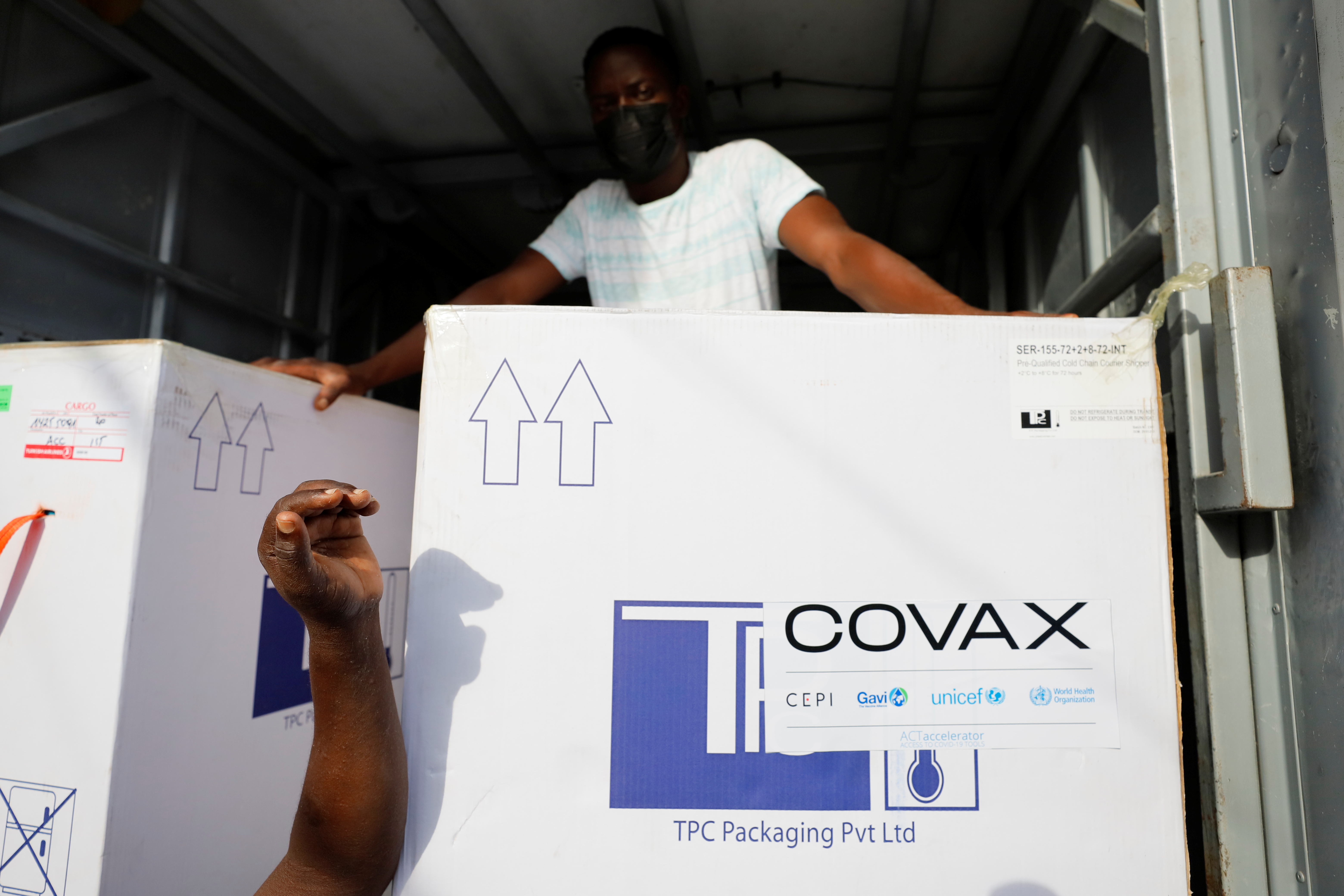
COVAX is the vaccines pillar of the Access to COVID-19 Tools (ACT) Accelerator, which a ground-breaking global collaboration to accelerate the development, production, and equitable access to COVID-19 tests, treatments, and vaccines.

COVAX is co-led by Gavi, the Coalition for Epidemic Preparedness Innovations (CEPI) and the World Health Organization (WHO). Its aim is to accelerate the development and manufacture of COVID-19 vaccines, and to guarantee fair and equitable access for every country in the world.

Washington revealed plans for 55 million more shots. It said through COVAX, the latest batch of doses will include about 14 million for Latin America and the Caribbean, approximately 16 million for Asia and about 10 million for Africa.

About 14 million doses will be shared directly with Colombia, Argentina, Haiti, Dominican Republic, Costa Rica, Panama, Afghanistan, Bangladesh, Pakistan, Philippines, Vietnam, Indonesia, South Africa, Nigeria, Kenya, Ghana, Cabo Verde, Egypt, Jordan, Iraq, Yemen, Tunisia, Oman, Bank and Gaza, Ukraine, Kosovo, Georgia, Moldova and Bosnia.

Jamaica Facing Shortage

But, Jamaica is now facing a COVID-19 vaccine shortage, three weeks after receiving over 55,000 doses of the Oxford-AstraZeneca vaccine.

In May, Health Minister Dr Christopher Tufton had said that those doses would have been reserved for persons due for their second vaccine shot this month. But during a press conference last week, Tufton revealed that those vaccines are close to running out and the ministry will now have to prioritize Jamaicans over the age of 50.

Dr Tufton said the country is now at a stage in its vaccination program, where many persons will be turned away when they go to get their shot.

“We are now at a stage in the administration of vaccines when supplies are tightening up. I want to advise the public that it will mean that we have to prioritize in terms of who gets access at this time and certainly over the next two weeks. So what it means is that for the next two weeks, we’re going to have to tell some persons “no” when they come to get their first shot, and perhaps a second dose if you’re below the age of 50,” he said during a digital press conference on Thursday.

Dr Tufton said that the shortage of vaccines is not a problem that is unique to Jamaica. He says the limited availability of vaccines is affecting poor countries around the world.

“It’s a difficult management because in a sense, we can’t demand and there is no automatic availability. We have a need; we want the vaccines. But, we have to negotiate access based on what is available and the willingness of the manufacturers to make it available,” said Tufton.

As for Jamaicans under the age of 50 years old currently due for their second shot, Dr Tufton has assured that they still have time. He says Jamaicans have up to 12 weeks to get their second vaccine shot of the Oxford-AstraZeneca after getting the first.

Dr Tufton said that Jamaica is expected to get additional vaccines from the United States at the end of June. Shipments of the Johnson and Johnson vaccine are also expected to arrive in August.

To date, more than 220,000 Jamaicans have received at least one dose of the AstraZeneca coronavirus (COVID-19) vaccine. Of this number, 51,908 persons are fully vaccinated while 168,758 have received their first dose of the vaccine.

The post Haiti to Finally Get Vaccines, Jamaica Faces Shortage appeared first on The St Kitts Nevis Observer.

USVI: Environmentally Troubled Oil Refinery Closes

June 21 (UPI) — The controversial, problem-plagued Limetree Bay oil refinery in the U.S. Virgin Islands has been closed indefinitely due to financial problems, its owners said Monday.

Shuttered since May 12 under a 60-day suspension issued by the Environmental Protection Agency, Limetree Bay Energy said it has suspended plans to restart the 210,000 barrel-per-day facility on the island of St. Croix because of “severe financial constraints.”

“This was an extremely difficult decision for us, and we are truly saddened to announce suspension of our restart plans for the refinery,” Limetree Bay CEO Jeff Rinker said in an issued statement.

“Our personnel have demonstrated tremendous commitment and dedication in restarting the refinery, and we continue to be proud of their hard work. Unfortunately, this is our only option, given the extreme financial constraints facing the company,” he said

Rinker said the company will lay off all of its 271 employees effective Sept. 19.

Formerly operated by Hovensa LLC, the St. Croix facility is an integrated petroleum refinery consisting of refinery process units and supporting operations including sulfur recovery plants, steam and electric power generation and a marine terminal.

It has long been a key employer in the Virgin Islands — in its heyday in the 1970s, the facility produced 650,000 barrels of crude oil per day, making it the largest refinery in the Americas.

But it has also long been the subject of environmental complaints. It was closed for eight years before the Trump administration issued a permit for it to be restarted by its new owners in December 2020.

Shortly after the February restart, however, low-income residents living nearby reported becoming sickened by air pollutant and oil releases from the facility.

The EPA under the Biden administration last month ordered the 60-day pause of its operations to determine whether the plant presented “an imminent risk to public health.

The refinery had experienced “multiple major mishaps resulting in significant air pollutant and oil releases,” EPA Administrator Michael Regan said in a statement. “These repeated incidents at the refinery have been and remain totally unacceptable.”

The agency has since been working to provide relief and assistance to the surrounding St. Croix community.

The post USVI: Environmentally Troubled Oil Refinery Closes appeared first on The St Kitts Nevis Observer.

SKN Among Growing Number of Nations Open Only to Vaccinated Tourists

It’s one thing to require unvaccinated travelers to quarantine or undergo extra Covid tests. It’s another to bar them altogether.

A small but growing list of travel destinations is either closing its doors to unvaccinated travelers or reopening only to vaccinated ones. Either way, the unvaccinated are seeing their travel options start to dwindle as tourism-dependent nations prioritize safety and simplified entrance requirements over open-door policies for all.

Unvaccinated people no longer welcome

When Anguilla reopened last November, travelers to the small Caribbean island needed to test negative for Covid-19 before and after arriving. A rash of new cases then occurred in April, and Anguilla reclosed its borders to tourists for a month.

Unvaccinated travelers will not be allowed to go to Anguilla starting next week.
Starting next week, unvaccinated travelers will not be allowed to enter Anguilla.
Michael Runkel | Collection Mix: Subjects | Getty Images

Now, the British overseas territory is switching tactics. Starting July 1, visitors must be vaccinated at least three weeks before arriving. This applies to “all visitors … who are eligible to be vaccinated,” according to the Anguilla Tourist Board’s website, which says children are exempt from the requirement.

Vaccinated travelers will no longer need to quarantine, take a Covid test upon arrival or pay entrance fees. Earlier this year, vaccinated travelers were charged $300 to enter, while unvaccinated visitors were charged $600.

Cases rise, tolerance falls

Anguilla isn’t the only Caribbean island closing the doors to unvaccinated travelers. The dual island nation of St. Kitts and Nevis instituted a similar policy last month.

As of May 29, St. Kitts accepts only travelers who have been vaccinated with U.S. or European vaccines. The new rule was part of several initiatives announced by Prime Minister Timothy Harris in response to a cluster of 16 Covid cases detected on the islands last month, according to St. Kitts Tourism Authority.

A cluster of 16 new Covid cases in May resulted in St. Kitts and Nevis closing its borders to unvaccinated travelers.
Walter Bibikow | DigitalVision | Getty Images

“The previously announced travel requirements for non-vaccinated travelers are null and void,” according to a statement announcing the policy change.

The islands are under a 6 p.m. daily curfew, and tourist sites are closed until June 26. A timeframe for reopening to unvaccinated tourists has not yet been indicated.

Unvaccinated children traveling with vaccinated parents can also enter, though they must “vacation in place” for 14 days, rather than the nine days required for vaccinated tourists.

Anguilla and St. Kitts and Nevis are deemed Level 1 low Covid destinations by the U.S. Centers for Disease Control and Prevention. Both were highlighted by CNBC in March as being among only a handful of tourist destinations that opened while maintaining low Covid infection rates.

A ‘compelling reason’ to travel

Other locations require unvaccinated visitors to show they are traveling for reasons beyond simply needing a vacation.

When French Polynesia, which includes the islands of Tahiti and Bora Bora, reopened on May 1, it singled out Americans as the only nationality that could enter for the purpose of tourism. The policy applied to unvaccinated Americans, too, though the unimmunized were subject to quarantines.

That has since changed. From June 16, vaccinated tourists can enter if they spent the preceding 15 days in the United Kingdom, most French territories or France’s “green zone” countries, according to French Polynesia’s destination marketing organization. “Green zone” countries currently include most of Europe, plus countries such as Australia, Canada and the United States.

France’s “green” list of countries

Most of Europe, plus Australia, Canada, Israel, Japan, Lebanon, New Zealand, Singapore, South Korea and the United States

Source: French Ministry for Europe and Foreign Affairs, updated June 17

Everyone else — including all unvaccinated travelers — must demonstrate a “compelling reason” related to health, family or work to travel to French Polynesia.

“Tourism is not a compelling reason for travel,” according to Tahiti’s tourism website.

France’s policy is slightly more relaxed. It allows unvaccinated travelers from “green” countries to enter via a negative Covid test. Yet travelers from “orange” countries — which is every country not on the green or red list, i.e. the majority of the world — must be vaccinated to enter or show “pressing grounds” for travel, according to the website for the French Ministry for Europe and Foreign Affairs.

The French collectivities of St. Barts and St. Martin in the Caribbean reopened this month with a similar policy. Nils DuFau, president of St. Barts’ tourism board, separately issued an announcement that St. Barts was open to vaccinated Americans starting June 9.

St. Bart's reopened its borders to vaccinated American travelers on June 9.
St. Barts reopened its borders to vaccinated American travelers on June 9.
Walter Bibikow | DigitalVision | Getty Images

Spain went a step further. From June 7, Spain is welcoming travelers from Europe and those from a list of 10 countries with low Covid rates; all other tourists must show vaccination certificates to enter.

Note: The country lists from France and Spain are similar. However, the U.K. is currently on Spain’s list, while the U.S. and Canada are not.

Balancing act

Tourist-dependent countries, like those in the Caribbean, must balance the economic impact of welcoming tourists with the safety of its citizens, said Tim Hentschel, co-founder and CEO of hotel reservations company HotelPlanner.

“I can only imagine how challenging those conversations must be between a country’s infectious disease expert advising a more stringent policy versus a head of tourism arguing to let everyone in immediately so the economy doesn’t tank,” he said.

Hentschel said that while 13 Caribbean nations are sovereign, French territories such as Martinique and Guadeloupe and Dutch territories such as Curacao, Aruba and Sint Maarten, may end up following state policies.

Hentschel called Asia “a very different story,” mainly due to lower vaccination rates.

A largely-deserted Phuket is scheduled to waive quarantine requirements for vaccinated travelers starting July 1.
Vaccinated travelers from some countries will not be required to quarantine in Phuket, Thailand starting July 1.
Jordan Siemens | Stone | Getty Images

“As soon as there appears to be progress, a new outbreak and lockdown occur, like in Singapore,” he said. “Asia’s journey back to a semblance of pre-pandemic normal travel will be much longer — perhaps another year or more, unfortunately.”

Asian destinations have stopped short of requiring vaccinations to travel, but the continent is still largely closed to leisure visitors. The much-discussed “Phuket Sandbox” model — whereby the popular island of Phuket is scheduled to reopen on July 1, before the rest of Thailand — waives quarantine requirements for vaccinated travelers from low-to-medium-risk countries.

Unvaccinated travelers can still enter, though they are subject to 14-day isolation periods, the Tourism Authority of Thailand confirmed to CNBC.

While requiring tourists to be vaccinated makes “perfect sense” in some places, it won’t work everywhere, said Hentschel.

“Interestingly, Mexico never closed its border to American tourists throughout the entire pandemic,” he said. “So, that’s one example where a more open policy made sense for Mexico given its proximity to the U.S., the billions in cross-border shipping and commerce conducted daily and their reliance on U.S. tourism dollars.”

Unvaccinated travelers will not be allowed to go to Anguilla starting next week.

The post SKN Among Growing Number of Nations Open Only to Vaccinated Tourists appeared first on The St Kitts Nevis Observer.

CARICOM Nations Among Others to Benefit from US Vaccine Offer

June 21 (Reuters) – The White House laid out a plan on Monday to share 55 million U.S. COVID-19 vaccine doses globally, with roughly 75% of the doses allocated to Latin America and the Caribbean, Asia and Africa through the COVAX international vaccine-sharing program.

The plan fulfills President Joe Biden’s commitment to share 80 million U.S.-made vaccines with countries around the world. The president sketched out his priorities for the first 25 million doses from that pledge earlier this month. read more

The United States has come under pressure to share more of its vaccine supply with countries that are still struggling with the deadly virus and its variants. With more and more Americans getting the shots, the White House increasingly has turned its attention to getting vaccine out internationally. (Graphic on global vaccinations)

Of the 55 million remaining doses, some 41 million will be shared through COVAX, the White House said, with approximately 14 million going to Latin America and the Caribbean, some 16 million to Asia, and roughly 10 million to Africa.

The other 25%, or roughly 14 million doses, will be shared with “regional priorities,” including Colombia, Argentina, Iraq, Ukraine, the West Bank and Gaza.

White House spokeswoman Jen Psaki said the United States had faced logistical issues getting vaccine to other nations.

“We have plenty of doses to share with the world, but this is a Herculean logistical challenge,” she told reporters, noting safety and regulatory information had to be shared, proper storage temperatures for the vaccines had to be ensured, and language barriers at times had to be overcome.

“We have announced today where these doses are going. We will continue to announce as they land on the ground and as they are being shipped, and we’re looking forward to doing that as quickly as possible,” she said.

The 55 million doses will be taken from the U.S. supply of Pfizer Inc (PFE.N), Moderna Inc (MRNA.O), and Johnson & Johnson (JNJ.N) shots, though if AstraZeneca’s (AZN.L) vaccine gets a green light from the Food and Drug Administration, it would likely be added to the mix as well.

The White House said it wanted the doses to be prioritized for health care workers and those who are most at risk.

International partners are eager to get U.S. help. Biden has announced the United States will buy 500 million doses of Pfizer’s vaccine and donate them to the world’s poorest countries. read more

The White House’s breakdown of its allocation of the 55 million vaccine doses is below.

THROUGH COVAX:

* Latin America and the Caribbean (approximately 14 million shots): Brazil, Argentina, Colombia, Peru, Ecuador, Paraguay, Bolivia, Uruguay, Guatemala, El Salvador, Honduras, Haiti, and other Caribbean Community (CARICOM) countries, Dominican Republic, Panama, and Costa Rica

* Asia (approximately 16 million shots): India, Nepal, Bangladesh, Pakistan, Sri Lanka, Afghanistan, Maldives, Bhutan, Philippines, Vietnam, Indonesia, Thailand, Malaysia, Laos, Papua New Guinea, Taiwan, Cambodia, and the Pacific Islands.

* Africa (approximately 10 million shots): Recipient countries will be selected in coordination with the African Union.

THROUGH DIRECT SHARING: Colombia, Argentina, Haiti, other CARICOM countries, Dominican Republic, Costa Rica, Panama, Afghanistan, Bangladesh, Pakistan, Philippines, Vietnam, Indonesia, South Africa, Nigeria, Kenya, Ghana, Cabo Verde, Egypt, Jordan, Iraq, Yemen, Tunisia, Oman, West Bank and Gaza, Ukraine, Kosovo, Georgia, Moldova, and Bosnia.

Reporting by Jeff Mason Editing by Chizu Nomiyama Editing by Chizu Nomiyama

The post CARICOM Nations Among Others to Benefit from US Vaccine Offer appeared first on The St Kitts Nevis Observer.

Nicaragua Political Arrests Lead Argentina, Mexico to Recall Envoys

BBC- Argentina and Mexico have recalled their ambassadors to Nicaragua following the latest in a series of high-profile political arrests.

A joint statement said the envoys would return to their capitals for talks about the Nicaraguan government’s “worrying” actions recently.

It came after another potential presidential candidate was detained.

Journalist Miguel Mora was held under Nicaragua’s controversial “treason” law.

He is the fifth presidential hopeful to be arrested in the past three weeks.

The wave of detentions comes five months before elections in which President Daniel Ortega is expected to run for a fourth consecutive term.

Recent actions taken by Nicaragua’s government “have put the integrity and freedom of various opposition figures (including presidential candidates), activists and Nicaraguan businessmen at risk,” Argentina and Mexico’s joint statement said.

Both countries would continue to “promote the full respect” of human rights and civil and political freedoms, it added.

The recent wave of arrests has led to condemnation both within Nicaragua and abroad. Regional body the Organization of American States has demanded that all the presidential hopefuls and political prisoners be released.

What’s happening in Nicaragua?

Police said that they had arrested Mr Mora, a former director of opposition TV channel 100% Noticias, for “inciting foreign interference in internal affairs and requesting military intervention”.

Since 2 June, five presidential hopefuls have been arrested. They are:

  • Miguel Mora, 57, opposition journalist
  • Félix Maradiaga, 44, academic and political activist
  • Juan Sebastián Chamorro, 52, economist
  • Cristiana Chamorro, 67, daughter of ex-President Violeta Chamorro
  • Arturo Cruz, 67, former ambassador

As well as the potential presidential candidates, police have also detained a dozen senior opposition figures. They include former comrades-in-arms of Mr Ortega from his days as a Sandinista rebel, who later turned into critics of the president.

Mr Ortega has been a dominant figure in Nicaraguan politics for decades and played a key role in the armed struggle against dictator Anastasio Somoza, whose family had ruled the country since 1936.

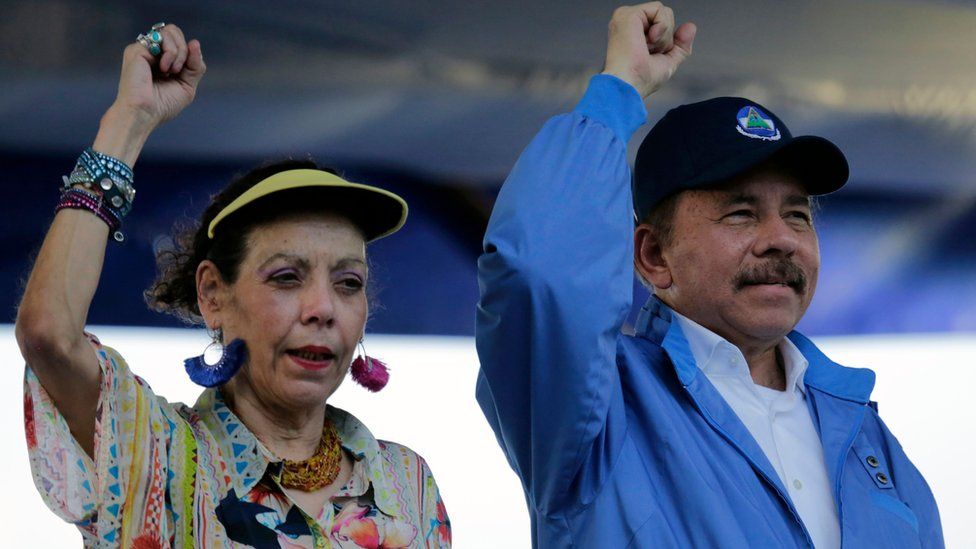
Nicaraguan President Daniel Ortega and his wife, Vice-President Rosario Murillo, raise their fists during the commemoration of the 51st anniversary of the Pancasan guerrilla campaign in Managua, on August 29, 2018image copyrightAFP
Daniel Ortega and his vice-president and wife, Rosario Murillo, are expected to stand for another term

He formed part of the Sandinista National Liberation Front (FSLN), which seized power after ousting Somoza in 1979. He served one term as president in the 1980s but was defeated in the 1990 election by Violeta Chamorro, whose daughter Cristiana is one of the presidential hopefuls now under arrest.

After rebranding himself as a Christian socialist, he won elections in 2006, 2011 and 2016 and is expected to stand again in the upcoming election in November.

Opposition to Mr Ortega has, however, been growing in recent years.

In 2018, mass anti-government protests swept through the country but were met with a violent police response. Hundreds were killed and thousands were injured in the clashes between the protesters on the one hand, and security forces and pro-government militia on the other.

After many of those who had led the demonstrations were arrested, the protests eventually fizzled out later that year. Mr Ortega rejected calls made at the time for elections to be brought forward and continued to serve his term.

What is the ‘treason law’?

Cristiana Chamorro is accused of money laundering, which she denies. The others who have been detained are accused of plotting against Nicaragua’s sovereignty and independence and of organising terrorist acts with financial help from foreign powers.

They have been held under a controversial treason law passed in December by Nicaragua’s National Assembly, which is dominated by government allies.

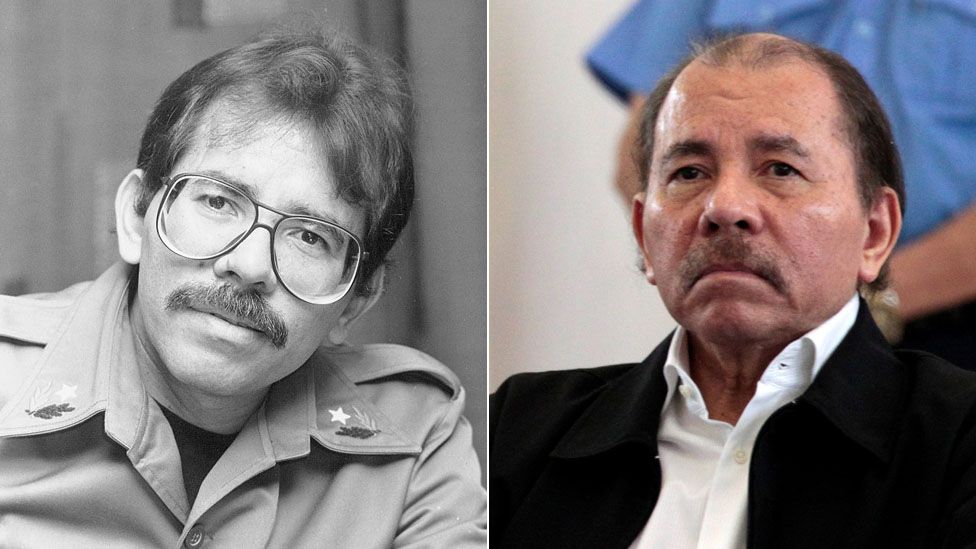
Nicaraguan leader Daniel Ortega in the 1980s and in 2018image copyrightGetty Images and Reuters
Daniel Ortega in the 1980s and in 2018

Under the law, the government has the power to ban candidates from running for office if they are deemed to be traitors to Nicaragua. Anyone designated a traitor can be sent to prison for up to 15 years.

The government says the law aims to protect “the independence, the sovereignty and self-determination” of Nicaragua. It says the country is under threat from imperialist powers in the US and “coup-mongers” within Nicaragua who are determined to overthrow President Ortega.

But critics say that with November’s scheduled presidential poll approaching, Mr Ortega is using the law to target anyone who may stand against him.

Criticism has had little effect on President Ortega and his wife, Vice-President Rosario Murillo. Ms Murillo said on Tuesday that “the law is tough, but it’s the law” and called those arrested “usurpers”.

The post Nicaragua Political Arrests Lead Argentina, Mexico to Recall Envoys appeared first on The St Kitts Nevis Observer.

Migrant Children Report Overcrowding, Spoiled Food, Depression in U.S. Shelters

WASHINGTON, June 21 (Reuters) – Migrant children sent to emergency shelters within the United States described crowded living conditions, spoiled food, lack of clean clothes and struggles with depression, according to 17 testimonials filed in a court case on Monday.

The children, aged nine to 17 and largely from Guatemala, Honduras and El Salvador, in some cases spoke of waiting for months inside emergency shelters overseen by the U.S. government while struggling with the conditions, including trouble sleeping under bright lights and infrequent phone calls to family members.

The testimonials offer a detailed look into the conditions within a network of emergency shelters hastily erected by the administration of U.S. President Joe Biden to deal with a sharp rise in the number of unaccompanied migrant children arriving at the U.S.-Mexico border.

In recent months, the children have been moved more quickly out of crowded Border Patrol stations and into the emergency shelters as part of efforts to connect them with family members or other sponsors in the United States.

The children’s testimonials, recorded between March and early June, suggest the Biden administration, which has promised a more humane approach to immigration, in some cases struggled to provide optimal care for the children.

About 14,500 unaccompanied children are currently in the care of the U.S. Department of Health and Human Services (HHS), down from 22,000 in late April. HHS was not immediately available for comment.

In one testimonial, a 13-year-old girl from Honduras said she had been placed on a suicide watch list while at an emergency shelter at Fort Bliss in El Paso, Texas.

The girl, who had spent nearly two months at the facility as of June 4, said she was separated from her father when crossing a river into the United States.

“The food here is horrible,” she wrote. “Yesterday we were given hamburgers but I couldn’t eat it because there was a foul odor coming from the bread … I really only eat popsicles and juice because that is the only food that I can trust.”

A 14 year old Guatemalan girl who was detained at an emergency facility in Houston in April said it was very hot and that she was often thirsty. She said the girls had to drink expired milk when they ran out of water. She saw eight girls faint because of the heat and the lack of water, she said, and staff took them to a nearby hospital.

A 17-year-old girl from Guatemala detained at Fort Bliss described sleeping in a large white tent with about three hundred girls, on cots stacked on top of each other.

She said it was hard to sleep due to the rattling noise the tent’s metal beams made at night, according to a declaration dated April 28. She said it was cold and that dirt came into the tent.

The girl said she had not been able to get information on her case and that she had struggled to get an appointment with a counselor to talk about her depression.

“A lot of the girls here cry a lot,” she said. “A lot of them end up having to talk to someone because they have thoughts of cutting themselves.”

A 17-year-old teen from Honduras said they slept in a large area in the Dallas convention center, in which they had been told there were 2,600 kids.

“I feel asphyxiated having so many people around me,” the teen said in a declaration dated March 29.

“There is no one here I can talk to about my case. There’s also no one here I can talk to when I’m feeling sad. There’s no one here; I just talk to God. It helps me and I cry. It would help if I could have a Bible.”

Reporting by Ted Hesson in Washington and Kristina Cooke in San Francisco; Editing by Ross Colvin and Michael Perry

The post Migrant Children Report Overcrowding, Spoiled Food, Depression in U.S. Shelters appeared first on The St Kitts Nevis Observer.

Venezuela Exodus Reaches Record Levels

Country at a ‘tipping point’ that could affect wider region, experts warn, as ‘donor fatigue’ causes aid shortfall

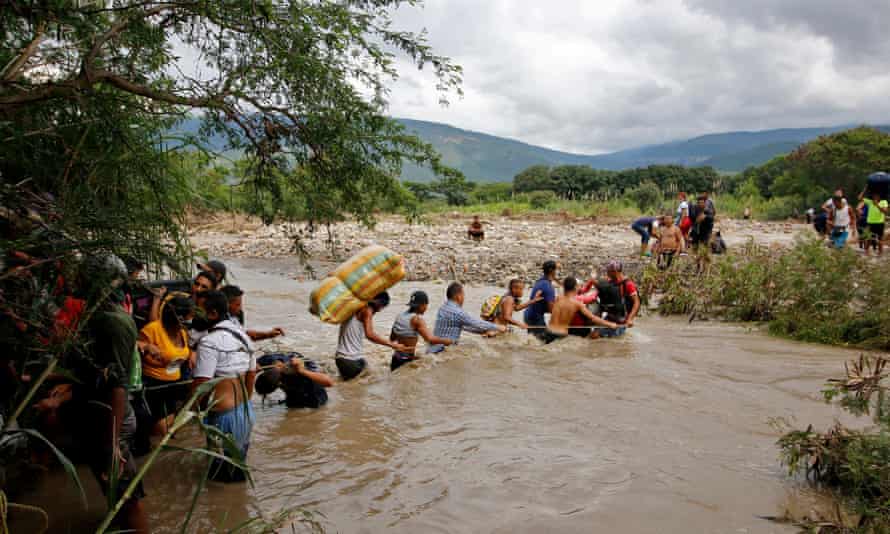
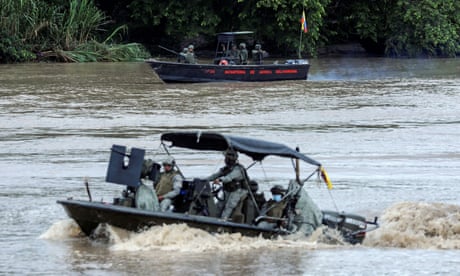
Line of migrants use a rope to cross waist-deep border river
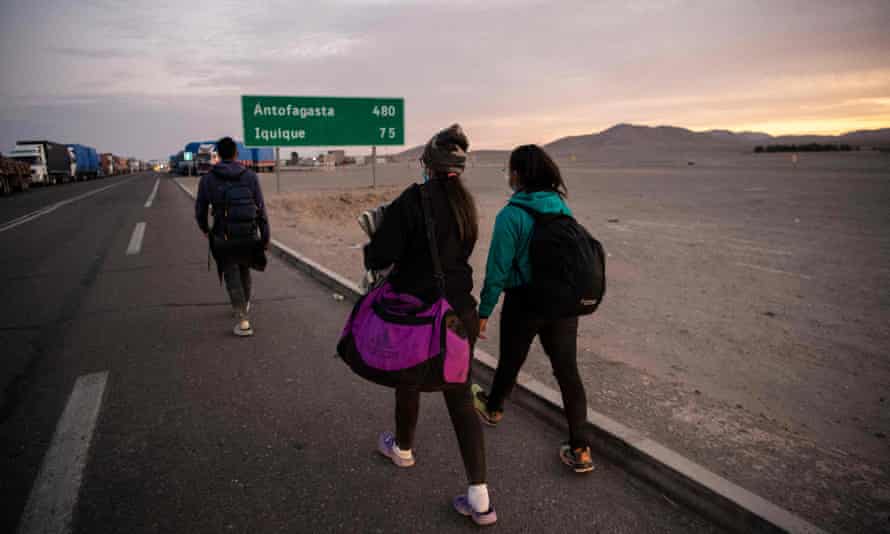
Migrants cross the Táchira River, on the Venezuelan-Colombian border, last year, when the official crossing was closed due to Covid. Photograph: Schneyder Mendoza/AFP/Getty


Guardian- The continuing exodus of millions of Venezuelans is reaching “a tipping point” as the response to the crisis remains critically underfunded.

More than 5.6 million have left the country since 2015, when it had a population of 30 million, escaping political, economic and social hardships. It has become the largest external displacement crisis in the region’s history, and the most underfunded.

“Never in our history in Latin America have we faced such movement of people out of a country that was one of the richest in the region and a country that is not at war,” said Eduardo Stein, special representative of the UNHCR, the UN refugee agency, and the International Organization for Migration (IOM). “Whatever fails in one of the largest and richest countries in the subcontinent is going to affect the rest of the region. Latin America will never be the same.”

He claimed “donor fatigue” threatened funding, saying: “This pandemic has hit very hard those developed countries who have been traditional donors.”

Stein hoped that a conference hosted by Canada last week would bring renewed attention “because we do not think that Latin American countries by themselves will be capable of dealing with this”.

Governments and agencies at the videoconference in Canada pledged $1.5bn (£1.1bn) in funding to respond to the crisis, including $954m in grants and $600m in loans. At least 30 countries were reported to have committed money.

Dany Bahar, senior fellow at the Brookings Institution, in Washington DC, told the Guardian there remained “a big gap” in help for Venezuelan refugees, compared with other modern crises, such as Syria.

He said the total funding per capita for Syrian refugees was more than 10 times that for Venezuelans – at $3,150 compared with $265, based on figures for 2020. Venezuela is second only in the world to Syria in terms of external displacement.

“Most of the host countries in the Venezuelan refugee crisis are in the region, and are developing countries,” Bahar said, “whereas Europe had much skin in the game in the case of the Syrians. Maybe that triggered much more generous funding.”

Last year’s UN response plan received less than half the $1.41bn requested.

The Red Cross has said it needs to raise $264m to support Venezuelans and 17 host countries over the next three years.

Venezuelan migrants Reinaldo, left, 26, Anyier, 40, and her daughter Danyierly, 14, cross the highlands on the border between Bolivia and Chile on foot.
Venezuelan migrants Reinaldo, left, 26, Anyier, 40, and her daughter Danyierly, 14, cross the Bolivian-Chilean border on foot. Photograph: Martin Bernetti/AFP/Getty

Border closures due to the pandemic stalled migration. But by the end of 2020, 3.9 million Venezuelans were designated as being displaced abroad without formal refugee status – but still judged in need of international protection – up from 3.6 million in 2019, according to the latest UN figures.

‘In the middle of a war zone’: thousands flee as Venezuela troops and Colombia rebels clash

Stein said 1,800 to 2,000 people had been leaving Venezuela daily in the past three months, many taking dangerous paths out, including using people traffickers.

Roger Alonso Morgui, at the International Federation of Red Cross and Red Crescent societies (IFRC), said the crisis was “not news any more”, adding: “When the big population movement happened a few years ago, there was still some attention. That now has become more silent in a way.”

Morgui said the work of aid workers was complicated by the fact that the Venezuelan refugees and migrants move through several countries before reaching a final destination.

“You need to keep on providing resources all over the path, all over the way,” he said. “When you are underfunded,” he added, you “keep on going to the emergency part of the [response] and even [the funding] is not enough to cover [it]”, which makes it “really complicated to find a longer-term solution”.

The majority of refugees are being hosted in Latin America and the Caribbean. Colombia hosts more Venezuelans than any other country, accounting for 1.73 million people..

Colombia has announced that a 10-year legal status would be granted to its undocumented Venezuelans, in a move hailed by Filippo Grandi, of the UN refugee agency, as “the most important humanitarian gesture”.

Dominika Arseniuk, director in Colombia for the Norwegian Refugee Council, said “we stand at a tipping point” amid the cash shortfall.

“International solidarity and financial support is woefully insufficient and falls desperately short of what is needed to respond to the mass exodus from Venezuela,” she said.

The post Venezuela Exodus Reaches Record Levels appeared first on The St Kitts Nevis Observer.

‘Two Americas’ May Emerge as Vax Rate & Death Rate Drop; Colombia -100k Dead, Venezuela Turns to Banks

Biden’s 70% vaccination target by Fourth of July likely to fall short as efforts to entice people to get shots have lost their initial impact

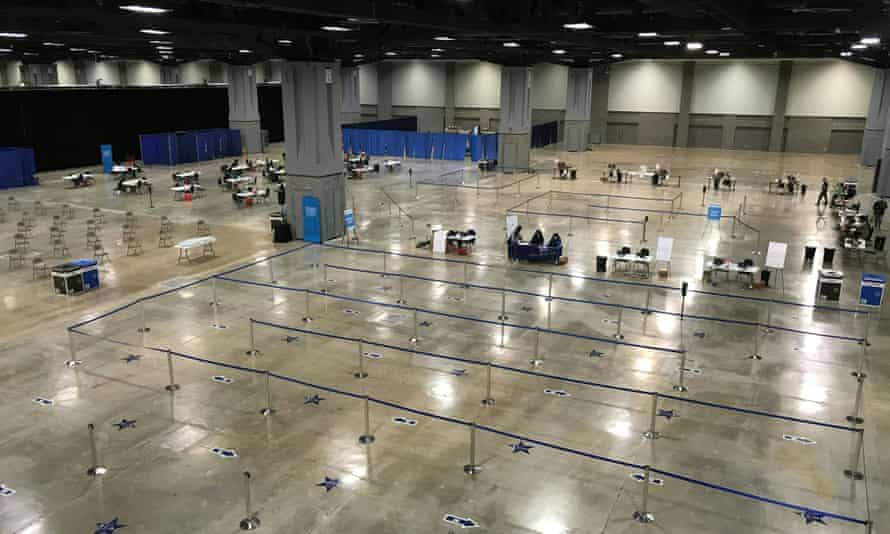
A deserted walk-in Covid-19 vaccinations site in downtown Washington DC on 1 June. The US is now experiencing its first slowdown in the rate of daily shots.
A deserted walk-in Covid-19 vaccinations site in downtown Washington DC on 1 June. The US is now experiencing its first slowdown in the rate of daily shots. Photograph: Anita Beattie/AFP/Getty Images

With Covid vaccination penetration in the US likely to fall short of Joe Biden’s 70% by Fourth of July target, pandemic analysts are warning that vaccine incentives are losing traction and that “two Americas” may emerge as the aggressive Delta variant becomes the dominant US strain.

Yet, US deaths from Covid-19 have dipped below 300 a day for the first time since March last year during the first wave of the pandemic.

Data from federal sources also showed the drive to put shots in arms at home approaching an encouraging milestone: 150 million Americans fully vaccinated.

Joe Biden was however expected to fall short of his commitment to shipping 80m Covid-19 vaccine doses abroad by the end of June, because of regulatory and other hurdles.

Jen Psaki, the White House press secretary, told reporters getting the shots shipped was proving to be “a Herculean logistical challenge” – which the administration has been unable to meet.

The US death toll from Covid-19 stands at more than 601,000. The worldwide count is close to 3.9m. The real figures in both cases are believed to be markedly higher.

About 45% of the US population has been fully vaccinated, according to the federal Centers for Disease Control and Prevention. More than 53% of Americans have received at least one dose, the CDC also said on Monday.

The coronavirus was the third-leading cause of death in the US in 2020, behind heart disease and cancer, according to the CDC. Now CDC data suggests more Americans are dying every day from accidents, chronic lower respiratory diseases, strokes or Alzheimer’s disease than from Covid-19.

Efforts to boost vaccination rates have come through a variety of incentives, from free hamburgers to free beer, college scholarships and even million-dollar lottery prizes. But of the efforts to entice people to get their shots some have lost their initial impact, or failed to land effectively at all.

“It’s just not working,” Irwin Redlener at the Pandemic Resource and Response Initiative at Columbia University, told Politico. “People aren’t buying it. The incentives don’t seem to be working – whether it’s a doughnut, a car or a million dollars.”

In Ohio, a program offering five adults the chance to win $1m boosted vaccination rates 40% for over a week. A month later, the rate had dropped to below what it had been before the incentive was introduced, Politico found.

Oregon followed Ohio’s cash-prize lead but saw a less dramatic uptick. Preliminary data from a similar lottery in North Carolina, launched last week, suggests the incentive is also not boosting vaccination rates there.

Public officials are sounding alarms that the window between improving vaccination penetration and the threat from the more severe Delta variant, which accounts for about 10% of US cases, is beginning to close. The Delta variant appears to be much more contagious than the original strain of Covid-19 and has wreaked havoc in countries like India and the United Kingdom.

“I certainly don’t see things getting any better if we don’t increase our vaccination rate,” Scott Allen of the county health unit in Webster, Missouri, told Politico. The state has seen daily infections and hospitalizations to nearly double over the last two weeks.

Overall, new US Covid cases have plateaued to a daily average of around 15,000 for after falling off as the nation’s vaccination program ramped up. But the number of first-dose vaccinations has dropped to 360,000 from 2m in mid-April. A quarter of those are newly eligible 12- to 15-year-olds.

Separately, pandemic researchers are warning that a picture of “two Americas” is emerging – the vaccinated and unvaccinated – that in many ways might reflect red state and blue state political divides.

Only 52% of Republicans said they were partially or fully vaccinated, and 29% said they have no intention of getting a vaccine, according to a CBS News/YouGov poll. 77% of Democrats said they were already vaccinated, with just 5% responding that were resisting the vaccine.

“I call it two Covid nations,” Peter Hotez, a vaccine researcher at Baylor College of Medicine in Houston, told BuzzFeed News.

Bette Korber, a computational biologist at the Los Alamos National Laboratory in New Mexico, said she expected variant Delta to become the most common variant in the US within weeks. “It’s really moving quickly,” Korber told Buzzfeed.

On Friday, Joe Biden issued a plea to Americans who have not yet received a vaccine to do so as soon as possible.

“Even while we’re making incredible progress, it remains a serious and deadly threat,” Biden said in remarks from the White House, saying that the Delta variant leaves unvaccinated people “even more vulnerable than they were a month ago”.

“We’re heading into, God willing, the summer of joy, the summer of freedom,” Biden said. “On July 4, we are going to celebrate our independence from the virus as we celebrate our independence of our nation. We want everyone to be able to do that.”

============================================

Colombia’s COVID-19 deaths pass 100,000 in unrelenting third wave

BOGOTA, June 21 (Reuters) – Reported deaths from COVID-19 in Colombia passed 100,000 on Monday, the country’s health ministry said, amid warnings of potential scarcity of treatment drugs and oxygen in hospitals during a long and brutal third peak of infections and deaths.

The country of 50 million people has reported more than 3.9 million cases of coronavirus infections, as well as 100,582 deaths.

Colombia has seen record numbers of coronavirus infections and deaths in recent weeks, with some medical officials warning certain medical supplies are running low.

Intensive care units (ICUs) in major cities are operating at near full capacity, according to information published by local health authorities in capital Bogota, as well as in Medellin and Cali, Colombia’s second-largest and third-largest cities respectively.

“We’re starting to see scarcity of certain resources everywhere,” Cesar Enciso, medical coordinator for intensive care at the University Children’s Hospital of San Jose in Bogota, told Reuters, citing a lack of sedatives and oxygen supplies.

“If the situation continues with this number of cases every day, resources are going to run out,” he added.

The government has blamed weeks of anti-government protests for extending the third peak, which began after Easter. The country hit a record of 30,000 daily reported cases earlier this month, while Monday saw a new high of 648 daily deaths.

“Crowds are the main breeding ground for this disease to spread exponentially,” President Ivan Duque said in a ceremony to mark Colombia’s COVID-19 deaths.

Despite the peak, the South American country has lifted many of the restrictions it imposed in March last year to control coronavirus, in a bid to bolster the economy and amid widespread frustration with social distancing measures.

Colombia has administered over 14.9 million vaccine doses, of which more than 4.7 million are second doses. The country hopes to vaccinate some 35 million people – 70% of its population – this year.

Reporting by Camilo Cohecha Additional reporting by Oliver Griffin; Editing by Aurora Ellis
===============================================

Venezuela Asks Banks to Foot Cost of Vaccines

CARACAS, June 21 (Reuters) – With its access to the global financial system restricted by U.S. sanctions, Venezuela managed to make some payments for the country’s coronavirus vaccines by asking a handful of private local banks to pay on the government’s behalf, two sources familiar with the matter said.

The banks have used foreign currency obtained through transactions with international credit and debit cards within Venezuela to pay COVAX, an initiative that provides vaccines to poor countries, said the people, who spoke on the conditions of anonymity and that the participating banks not be named.

It was not clear how or if the banks were compensated, nor what portion of the payments to COVAX have been made by the banks. So far, Venezuela has paid about $109 million to COVAX, about $10 million shy of what it owes, Venezuelan officials said earlier this month.

The tactic is the latest sign of how President Nicolas Maduro often finds ways around the obstacles created by the U.S. sanctions, aimed at ousting him over accusations of vote-rigging and rights violations.

That does not mean it has been easy. Government officials have said for months that the sanctions were impeding its ability to make the international bank transfers necessary to pay for the COVAX doses.

Venezuelan officials have said they expect to receive some 5 million vaccine doses through COVAX. But so far the country has received none, although most regional neighbors from Nicaragua to Colombia having already received hundreds of thousands of doses under the program.

Venezuela, with a population of some 30 million, has received vaccines only from allies Russia and China and its rollout of those 3.5 million doses has been slow and plagued by confusion.

Years of economic crisis and a collapse in oil production – by far the OPEC nation’s biggest export – has left the country perilously short of foreign currency reserves. But in April, officials said they had made the payments for the COVAX vaccines, without explaining how the transactions took place.

Some of the payments were made by local banks at the central bank’s request, the people said. Transactions with international cards have ballooned in inflation-stricken Venezuela since the government loosened exchange controls in 2019, leaving the banks that process the payments with a store of foreign currency.

Neither Venezuela’s central bank nor the information ministry, which handles media inquiries on the government’s behalf, responded to requests for comment.

The strategy has not been seamless. While the U.S. sanctions apply only to government institutions, including the central bank, some companies are wary of dealing with even non-sanctioned private Venezuelan institutions for fear of punishment by Washington – a trend known as “overcompliance.”

Venezuelan Foreign Minister Jorge Arreaza earlier this month posted on Twitter a letter from COVAX indicating that four of the 16 transactions made in Venezuela’s name, totaling some $4.6 million, had been “blocked.”

“Since there are various transfers from different banks, the operations are reviewed more closely,” one of the people familiar with the operations said.

Washington on Thursday issued an exemption to its sanctions on Venezuela, as well as on Syria and Iran, clarifying that financial transactions related to COVID-19 treatment and testing were permitted. U.S. officials have long argued that the sanctions do not prohibit humanitarian relief efforts.

The post ‘Two Americas’ May Emerge as Vax Rate & Death Rate Drop; Colombia -100k Dead, Venezuela Turns to Banks appeared first on The St Kitts Nevis Observer.

ILO: International Treaty Against Violence, Harassment Needs More Ratification

The International Labour Organization is to launch a global campaign to promote ratification of the Violence and Harassment Convention.


GENEVA (ILO News) – The first international treaty on violence and harassment in the world of work comes into force on June 25th 2021 – two years after it was adopted by the ILO’s International Labour Conference (ILC).

To date, six countries have ratified the Violence and Harassment Convention, 2019 (No. 190)  – Argentina, Ecuador, Fiji, Namibia, Somalia and Uruguay. Ratifying countries are legally bound by the provisions of the Convention a year after ratification.

Together with Recommendation No. 206 , Convention No. 190 recognizes the right of everyone to a world of work free from violence and harassment and provides a common framework for action.

© Andrey Popov

It provides the first international definition of violence and harassment in the world of work, including gender-based violence and harassment.

Violence and harassment at work takes a range of forms and leads to physical, psychological, sexual and economic harm. Since the adoption of the Convention, the COVID-19 pandemic  has further highlighted the issue, with many forms of work-related violence and harassment being reported across countries since the outbreak began, particularly against women and vulnerable groups.

To mark its entering into force the ILO will launch a global campaign to promote its ratification and implementation. The campaign aims to explain in simple terms what the Convention is, the issues it covers and how it seeks to address violence and harassment in the world of work.

“A better future of work is free of violence and harassment. […] I urge countries to ratify the Convention and help build, together with employers and workers and their organizations, a dignified, safe and healthy working life for all.”

Guy Ryder, ILO Director-General

“A better future of work is free of violence and harassment,” said Guy Ryder, the ILO Director-General in his message to launch the global campaign.

“Convention 190 calls on all ILO Member States to eradicate violence and harassment in all its forms from the world of work. I urge countries to ratify the Convention and help build, together with employers and workers and their organizations, a dignified, safe and healthy working life for all.”

The global campaign will be launched during the ILO Action Week on Convention No. 190 , which takes place 21-25 June 2021.

The Action Week calls for renewed commitment from countries to ratify and implement the Convention.

The Action Week begins on 21 June with a virtual high-level dialogue . The speakers will include the ILO Director-General, Ministers of Labour from Argentina and Madagascar, and representatives of the International Organisation of Employers (IOE), the International Trade Union Confederation (ITUC), the European Commission and the Inter-Parliamentary Union (IPU).

Following the Action Week, the ILO will launch a guide aimed at helping constituents and other stakeholders promote and implement the Convention and Recommendation. The guide covers core principles and measures that countries can take to prevent, address and eliminate violence and harassment in the world of work, including examples of national laws, regulations and policies.

The post ILO: International Treaty Against Violence, Harassment Needs More Ratification appeared first on The St Kitts Nevis Observer.

Second death from COVID announced

Less than a week after St. Kitts and Nevis recorded its first COVID-19 death, a second person has now been confirmed a victim of the deadly virus.

This was disclosed by Chief Medical Officer Dr Hazel Laws who said there are now two COVID-19 related deaths.

“The first was last Thursday, June 17 the second occurred within the last 24 hours.”

Dr Laws also indicated that over the past month, the Federation had recorded 305 COVID cases and during the same period there have been 30 recoveries.

She said at present there are 273 active cases who are being monitored by case managers and physicians and 21 admissions to the COVID ward 10 who have been discharged. Nine remain hospitalised


The post Second death from COVID announced appeared first on The St Kitts Nevis Observer.