Tag Archives: caribbean

WHO urges governments to promote healthy food in public facilities

GENEVA — Public settings, such as schools, childcare centres, nursing homes, hospitals and correctional facilities and all other canteens of public institutions, can play a key role in ensuring people are provided with healthy food and helping prevent the 8 million annual deaths currently caused by unhealthy diets.

A new WHO Action framework for developing and implementing public food procurement and service policies for a healthy diet aims to increase the availability of healthy food through setting nutrition criteria for food served and sold in public settings. The action framework also aims to reduce preventable diseases and deaths from high consumption of sodium and salt, sugars and fats, particularly trans fats, and inadequate consumption of whole grains, legumes, vegetables and fruit.

“Public places that serve the entire community, including our most vulnerable populations, must be places where healthy diets are promoted not discouraged,” said Dr. Tedros Adhanom Ghebreyesus, WHO Director-General. “Now is the time for governments to lead by example through ensuring that the food served or sold in public settings contributes to healthy diets and saves lives. No public funds should be spent on food contributing to unhealthy diets.”

Consuming a healthy diet from pre-birth to the last days of life is vital to prevent all forms of malnutrition as well as diabetes, cancers and other noncommunicable diseases (NCDs). The new action framework serves as a tool for governments to develop, implement, monitor and evaluate public food procurement and service policies that align with the core principles of healthy diets as outlined in existing WHO recommendations:
• limit sodium consumption and ensure that salt is iodized;
• limit the intake of free sugars;
• shift fat consumption from saturated fats to unsaturated fats;
• eliminate industrially-produced trans fats;
• increase consumption of whole grains, vegetables, fruit, nuts and pulses; and
• ensure the availability of free, safe drinking water.

Healthy public food procurement and service policies set nutrition criteria for food served and sold in public settings. These policies increase the availability of foods that promote healthy diets and/or limit or prohibit the availability of foods that contribute to unhealthy diets. Policies can cover the entire process of purchase, provision, distribution, preparation, service, and sale of food to ensure each step meets healthy criteria.

A number of countries worldwide have already taken steps to promote healthy diets in public facilities. In Brazil, the National School Feeding Programme requires 30 percent of the budget to be used to purchase food from family farms, and requires menus to be based on fresh or minimally processed foods based on the region’s sustainability, seasonality and agricultural diversification. To improve the health of children, the Republic of Korea established Green Food Zones that regulate the food available within a 200 metre radius of schools. In these zones businesses may not sell food that that falls above a set threshold for calories per serving, total sugars and saturated fats.

“Governments worldwide have a responsibility to lead by example by serving and selling food that improves the health of their people,” said Dr. Tom Frieden, President and CEO of Resolve to Save Lives, an Initiative of Vital Strategies. “This action framework is an opportunity to make healthy food choices the default choices at a large scale.”

In September, the UN Food Systems Summit 2021 will launch bold new actions to transform the way the world produces and consumes food, delivering progress on all 17 SDGs.

WHO is the UN anchor agency for Action Track 2 aiming to shift to sustainable consumption patterns and facilitate a transition of diets towards more nutritious foods that require fewer resources to produce and transport.

The world’s governments have already made multiple commitments to end all forms of malnutrition, including obesity and diet-related NCDs such as hypertension, cardiovascular diseases, diabetes and cancer. This Action Framework helps reach targets that fall under the Sustainable Development Goals of ending malnutrition (SDG 2), promoting health and well-being (SDG 3) and promoting sustainable public procurement practices (SDG 12) by 2030.

The post WHO urges governments to promote healthy food in public facilities appeared first on The St Kitts Nevis Observer.
Two-dead, Police investigating fatal shooting incident at Thibou Avenue

BASSETERRE, St. Kitts — The Police are investigating a fatal shooting incident that occurred at Lower Thibou Avenue on January 11.

Sometime after 6 p.m. on Monday, the Police received a report of a shooting incident in which two persons were wounded. Several units responded.

Upon arrival, the motionless body of 20-year-old Lamont Heyliger of McKnight was met laying on the ground with what appeared to be multiple gunshot wounds about the body. A second individual, 19-year-old Jahquan Merritt of Fort Thomas Road, sustained a gunshot wound to the head and was transported to the JNF General Hospital via the Emergency Medical Service ambulance.

Preliminary investigations have revealed that Heyliger, Merritt and other persons were in a shed when an individual shot both men. The District Medical Officer arrived at the scene and pronounced Heyliger dead. Merritt succumbed to his injuries that night.

Personnel from the Forensic Services Unit processed the scene and collected items of evidential value. Investigations into the matter are ongoing.

Persons with information regarding this matter are urged to contact the Violent Crime Unit by dialing 467-1887, 467-1888, 662-3468, their nearest Police Station or the Crime Hotline at 707 where information can be given anonymously.

The post Two-dead, Police investigating fatal shooting incident at Thibou Avenue appeared first on The St Kitts Nevis Observer.
Some Tourists Ignore Pandemic Rules

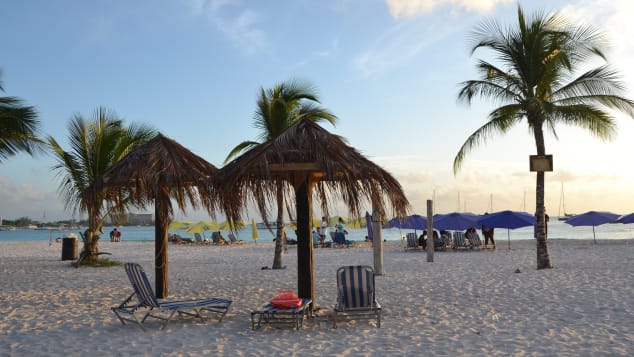
(CNN) — As pandemic quarantines go, this might be the best: sprawling on a hotel balcony overlooking azure Caribbean waters as you bake gently in the sun.
But it isn’t enough for some.
The past month has seen a slew of high-profile cases of tourists getting in trouble for breaking the rules while on a sun-and-sand vacation.
In December, Skylar Mack, an American student, was jailed for two months when she flew to the Cayman Islands and, instead of quarantining for two weeks at her hotel as the law obliged her to do, popped out two days later to attend a jet ski competition in which her boyfriend was competing.
In January, former British beauty queen and model Zara Holland and her boyfriend Elliott Love quarantined at her four-star hotel in Barbados for the required five days, before taking a second PCR test, as is required for travelers from high risk countries. So far, so good — except that when Love’s second test came back positive, rather than face further quarantine, the couple made a dash to the airport to try and catch a flight home.
Then there was the British couple, again in Barbados, who tried to spice up self-isolation by inviting a local resident over for sex (she was caught climbing over the hotel fence), and the Jamaican tourist who popped out of his hotel quarantine for a soft drink — and has ended up doing jail time.
Staying put in the sun seems like the easiest thing anyone’s been asked to do so far in the pandemic — so why are people breaking the rules?

‘Switching off’

“Whenever people are presented with an extremely frightening scenario, previous research has shown that they switch off,” says clinical psychologist Bhavna Jani-Negandhi, who believes that health warnings should be at an “optimal level for people to take notice.”
In the case of, say, the harmful effects of smoking, warnings can be tailored up or down, to increase the chance of people taking note. But with regulations that need to be kept at a certain level to protect the local population, it’s not possible to beat about the bush.
In the pandemic, says Jani-Negandhi, “facts cannot be tailored. It seems that some people are behaving in a manner that would suggest they are switching off to the facts — believing that it will not happen to them and that only the most vulnerable are at risk.”
What’s more, according to one travel industry expert, the lack of coherency on travel restrictions across the globe doesn’t help.
“There’s no consistency, and travelers are being badly misled by the fact that there are no global rules,” says Paul Charles, Virgin Atlantic’s former director of communications who now runs his own PR consultancy, The PC Agency, and has become something of a thorn in the UK government’s side over its regular flip-flopping of travel regulations.
Charles has a vested interest in getting the travel industry back up and running, of course; but he believes a global approach, led by the G20 countries, would be the ideal way forward.
He says that a “global consistent testing program, so that everybody could be tested on departure with high-quality results within 30 minutes” would transform the way we are currently traveling (or not).
However, in the meantime, he says, any restrictions have to be enforced for travelers to behave them.
“I think the rules have to be fully supported by law — in a pandemic, you have to have strict enforcement so you achieve the outcome of lower infection rates and lower deaths,” he says.
“That’s perhaps been one of the issues — governments haven’t backed up tougher rules with tougher enforcement. Economies around the world are being ruined because people are breaking the law, meaning tougher measures are being put in place for longer.”
Strict enforcement is exactly what the Cayman Islands are going for. As far back as January 2020, “We began planning and preparing for what we expected to be the eventual arrival of the virus on our shores,” says Roy Tatum, Head of the Office of the Premier, Alden McLaughlin.
Early measures included bans on travel from affected countries, and additional screening of arrivals. But despite precautions, the first case of Covid-19 was confirmed in March. In response, the islands closed their borders and implemented a 14-day quarantine in government-controlled facilities for anyone entering the country, as well as implementing lockdowns and curfews, closing schools, and restricting access to care homes, hospitals, prisons and breaches.
The result? As of January 10, just 359 cases and two deaths during the entire pandemic.
“We have sacrificed much since the initial lockdown at the end of March, which has helped eliminate the virus within our local community,” says Tatum. “Today, people are able to live somewhat normal lives and many businesses have been able to open.
“The only way the virus is able to reinfect our community is if it arrives on our shores from the outside.”
Currently, entry to the Cayman Islands is limited to residents and a handful of other people with links to the islands and its residents.
But since “hundreds” of residents were prosecuted and fined for breaking the initial lockdown, there have been just seven potential quarantine breaches investigated, two of which have gone to court.
Skylar Mack was visiting her boyfriend, Vanjae Ramgeet, a Cayman Islands resident, when she fell foul of the law in November.
Allowed in as the partner of a resident, she should have quarantined for two weeks.
Instead, after just two days, she removed the tracking device that was making sure she stayed in one place, and joined her boyfriend at his jet ski event.
When police caught up with her, she was found to be not wearing a mask, and not social distancing.
Her initial sentence of four months in jail was halved on appeal in December. Ramgeet received an equal sentence.
But despite protestations from her family, who appealed to US President Donald Trump for help, and received a supportive tweet from his son, Eric, the authorities of the Cayman Islands — a self-governing British Overseas Territory — have not backed down.
“Should Covid-19 become widespread in our small community it would be potentially devastating,” says Tatum.
“We are talking about a disease that has the ability to kill people and destroy an economy. That the reason why anyone who deliberately flouts the important public health laws and regulations of our Islands that are in place to protect the wider population, should be subject to strict penalties.
“There also needs to be a deterrent to ensure people understand the seriousness of the virus and the importance of the public health law and regulations.
“It only takes one careless, uncaring person to move about our community to create serious health issues, including potential death by restarting community transmission.
“We have a small population and a close community that still treasures and respects our elders, who, as we all know, are very high risk.
“In addition, if the Cayman Islands had to go back into a lockdown situation, the effect on our local economy, and the impact on our children, elderly and indeed the broader population, would be considerable.”

‘You must be held accountable’

Barbados is allowing tourism, but travelers must quarantine on arrival.

Barbados is allowing tourism, but travelers must quarantine on arrival.
Shutterstock
So far this year, it’s Barbados that has hit the headlines for tourists behaving badly, as they flock to the Caribbean. Many of thse traditional alternative winter sun destinations are out of bounds due to closed borders, which perhaps explains the slew of offenders descending on the region.
When Elliott Love, ensconced in the plush beachside Sugar Bay hotel, tested positive, he and girlfriend Zara Holland cut off their quarantine wristbands and checked out.
They caught a taxi to the airport and attempted to board a plane for the nine-hour flight back to the UK, knowing that the new UK variant is thought to be up to 70% more transmissible.
They were arrested as they went through security on December 29. Holland was given a $12,000 (US$5,900) fine, instead of a nine-month prison sentence, and was bailed for an undisclosed amount. Love — who was tried several days later, when he was no longer testing positive for the virus — was fined $8,000 ($4,000).
Neither Holland or the couple’s lawyer responded to a request for comment.
But they’re not the only tourists behaving badly in Barbados. On January 1, Swiss national Ismail Elbagli was fined $6,000 (US$3,000) when he left the hotel where he was quarantining, having tested positive.
Elbagli argued that his wife had received a call confirming a negative test that morning, and assumed it covered both of them. His fine was reduced from $8,000 in light of the circumstances.
And on December 31, Jamaican tourists Dean George Scott was jailed for six months when he walked out of the hotel where he was quarantining to buy a can of Fanta.
In reaction to social media outcry that white tourists were being fined, while the only Black rule-breaker was jailed, Chief Magistrate Ian Weekes told the court that prison terms were a last resort, if paying a fine was not an option.
Sure enough, days later, Brits Andrew Luker and Julia Knightley were fined $6,000 (US $2,955) each for inviting a resident to their hotel room for sex, during their quarantine period.
Neither the Barbados tourist board nor the government were available to comment on the restrictions.
However, Acting Chief Medical Officer Dr Kenneth George has laid the blame for the island’s increasing case numbers partially at the door of rule-breaking tourists.
And in a video posted to Facebook shortly before Holland’s trial, Prime Minister Mia Mottley said: “We are very clear that on those persons who are visiting us, and to the extent that anyone is breaching our protocols, the government of Barbados through the Covid Monitoring Unit will take the necessary action for any visitors.
“We believe that by far the majority of them are compliant, but the handful who have chosen to ignore our mores, ignore our customs, ignore our laws and guidelines… you must be held accountable.”

Why one traveler broke the rules

One traveler broke the UK lockdown to travel to Venice in June.

One traveler broke the UK lockdown to travel to Venice in June.
Andrea Pattaro/AFP/Getty Images
So what’s going on in the heads of people when they break the law when traveling?
For one rule-breaker, it was merely the idea of seeing how far they could go.
The UK resident, who requested to remain anonymous for fear of losing his job, told CNN he traveled from London to Venice for a vacation in June while the UK was still in lockdown and all but essential travel was banned.
“It was at the end, when lockdown was about to be lifted, and the news was saying how people are booking holidays and everything was getting booked up. I thought, I want to travel, but not with the crowds — when it’s still quiet,” he says.
“I’d seen images of famous landmarks being empty, so it was a once-in-a-lifetime chance.”
At the time, Italy was allowing travelers from the UK, so he was breaking no rules on arrival, even though he was on departure. “I didn’t see it as breaking the rules too much — I was thinking for myself, basically,” he says.
“Italy was more safe at that point than the UK, so by going, Italy was more at risk — but they were the ones with the open borders.”
He flew via Dublin, which was locked down at the time, but allowing transit passengers.
“But I had a couple of hours between flights and out of curiosity wanted to test what happened,” he says.
So instead of staying in the airport, as he was obliged to do, he went outside — and nobody stopped him.
“I was looking for a bus to the city center to see if there was time to get a Guinness. But there was no shuttle, and with nothing running I didn’t want to spend too much money on Ubers.”
The UK traveler doesn’t see his infractions in the same light as those travelers to the Caribbean who he calls “bad” and “irresponsible.”
But he says that one thing that made him feel comfortable with traveling when he shouldn’t, was seeing footage of travelers arriving in the UK at the start of lockdown. The UK never closed its borders (and has only recently stopped arrivals from countries exposed to the new South African variant); but when Passenger Locator Forms and then quarantine were introduced, travelers were filmed arriving, clearly unaware of the restrictions.
“That’s why I felt pretty safe [breaking the rules],” he says.
He also says that on return to the UK’s Stansted airport, he was not asked for his Passenger Locator Form, or told to quarantine for 14 days, as he was obliged to do at that point. He did do so, though says that a couple of days afterward, quarantine restrictions were lifted so he ventured out.
Psychologist Bhavna Jani-Negandhi says his behavior is understandable.
“When people see others break the rules, then they could wonder why different rules apply and they might try getting away with it,” she says.
But for some, arriving in countries where the travel restrictions are enforced by the law may come as a sharp surprise.
Paid Content

The post Some Tourists Ignore Pandemic Rules appeared first on The St Kitts Nevis Observer.
Cuban-American New Florida Dem. Party Leader

FORT LAUDERDALE, Fla. (AP) — Florida Democratic Party leaders elected former Miami Mayor Manny Diaz on Saturday as the state’s new party chair, hoping the Cuban American can turn the party’s fortune after losing two straight presidential races, six straight gubernatorial defeats and losses of both U.S. Senate seats.

Diaz, 66, defeated Hillsborough County party chair Ione Townsend and Cynthia Moore Chestnut, a former state representative and Gainesville mayor, getting 54% of the vote of party leaders in a meeting held on Zoom. He replaces Terrie Rizzo, who had been chair for three years and chose not to seek re-election. He is the father of University of Miami football coach Manny Diaz II.

Diaz is taking over a state party that lost ground in November’s election, causing some national political commentators to suggest Florida may no longer be a swing state but solidly Republican. While President-elect Joe Biden improved Hillary Clinton’s 2016 performance in most states, President Donald Trump carried the state by 3.4 percentage points, up from 1.2 percentage points four years ago.

The party particularly needs to better its performance among Cuban Americans. AP VoteCast, a survey of the Florida electorate, found Trump won 58% of Cuban American voters statewide. Clinton carried Miami-Dade County, the state’s most populated and with a large Cuban community, by 30 percentage points. Biden only won the county by 7 points, which accounts for most of Trump’s increased victory margin in the state.

Republicans attacked Biden hard in Miami-Dade’s influential Spanish-language media, accusing him of being a “socialista” or even a “communista.” That message, which was ineffectively challenged, resonated among Cuban and Venezuelan voters, whose families fled those homelands to escape communist and socialist governments. Florida Democrats must win South Florida by large margins to offset the Republicans’ strong support in north Florida.

Diaz told Saturday’s meeting that Florida Democrats are “at a crossroads.” A lawyer, he served as Miami mayor from 2001 to 2009.

“While Democrats all over the nation made gains, we continue to lose ground, we continue to lose elections and, more importantly, when we lose, all Floridians suffer,” he said. “Especially our poor and working people, our Black and Hispanic, Asian and LGBTQ communities and our environment suffers. We cannot afford to fail them.”

Agriculture Commissioner Nikki Fried, the only Democratic statewide elected official, told the meeting that Florida Democrats need to learn from the example set by their party in neighboring Georgia, where the once-solidly Republican state went to Biden in November as did both Senate seats in last week’s runoff election.

“It taught us some tremendous lessons.”

The post Cuban-American New Florida Dem. Party Leader appeared first on The St Kitts Nevis Observer.
Barbados: Mass COVID Outbreak Linked to Super Spreader

The largest COVID-19 outbreak in Barbados,  nearly 200 cases in one day, linked to a super spreader Boxing Day 2020 event, has been described as a seismic shock to the health system.

Senior Medical Officer of Health, Dr. Anton Best, providing a statistical update during a press conference on the weekend, said the outbreak from the December 26 Bus Crawl attended by a large number of prison officers and law enforcement officers, as well as civilians, had put pressure on the system.

“We had systems in place that were working for many, many months, but with this massive outbreak of nearly 200 cases in one day in one 24-hour period that we detected, it really put a significant strain on our systems, and in some cases, some of our systems that were working before broke down,” he explained.

However, Dr. Best noted, the Ministry of Health was in the process of rebuilding and improving systems, and implementing new systems, if necessary, and working continuously to resolve issues.

“Sometimes the tests are positive, but they haven’t been validated. And then there are other reasons for tests being pending – simply not having been conducted,” he explained.

The latest statistics show that as of Sunday afternoon, the total number of cases recorded in Barbados since the virus reached the island’s shores had risen to 878, more than double the 395 on record at the start of the year.

“In terms of the clusters that we’re looking at, at the prison, we have 56 staff or 17 percent of the staff population being COVID positive and 137 inmates or 18 percent of the inmates being positive,” Dr. Best disclosed.

Additionally, he said of the prison situation: “We have 37 cases associated with this cluster in the community. So, when we add the 137 inmates and 56 [staff], that’s the entire population of persons related to the prison, but then they are linked to 37 cases in the community.

“Related to this outbreak or cluster is the bus crawl, which has 14 cases. And then we have on the West Coast, we have 67 cases in that particular cluster. And I also have to note that there are small clusters that we have not yet fully defined, but there are many small clusters out there, contributing to the large outbreak that we experienced just over a week ago.”

The Senior Medical Officer of Health noted that overall the numbers were trending down, but warned: “we’re not out of the woods yet”.

Stating that vigorous contact tracing efforts were continuing, he added: “And we’ve made significant headway, but please appreciate that this is a very intense and laborious process, and it’s going to take us time to fully outline the clusters and the index cases and to have a solid idea as to how this outbreak started in Barbados that we did not anticipate beyond our wildest dreams.”

CMC

The post Barbados: Mass COVID Outbreak Linked to Super Spreader appeared first on The St Kitts Nevis Observer.

Canadian Airline Given COVID Test Waiver for Jamaicans

Canadian air-carrier, WestJet Airlines and its sister airline Swoop have reached an agreement with the Canadian government to allow passengers from Jamaica without a COVID PCR test result to travel to Toronto.

The development comes after hundreds of Jamaican-Canadians and other Canadian nationals were stranded on the island due to the country’s new COVID-19 protocols.

On January 7, Canada announced that all people flying into the country would be required to provide a negative COVID-19 test no more than 3 days before their flight.

According to the permanent secretary in the Ministry of Health & Wellness, Dunstan Bryan, an estimated 2,000 Canadians are scheduled to return to Canada over the next seven days, but many persons have experienced difficulty finding testing locations in Jamaica.

Only two private labs on the island have approved by the ministry of health to offer PCR testing for COVID-19.

Health Minister Dr. Chris Tufton said Jamaica could not meet the high demand for testing on such short notice. “Most countries do not have the trained personnel, the equipment in terms of PCR machines or the test kits or reagents which oftentimes is globally in short supply. This means an unlikely adequate response to this type of request,” Tufton told the Jamaica Gleaner.

To ease the demand, WestJet airlines later announced that it would allow passengers from Jamaica to travel to Toronto from January 10 to 18 without a negative test.

However, the travelers will have to do a PCR test upon arrival at the airport in Toronto. They will also have to do a mandatory 14-day home quarantine.

The post Canadian Airline Given COVID Test Waiver for Jamaicans appeared first on The St Kitts Nevis Observer.

China Blasts US Terrorist Designation for Cuba

The U.S. is placing Cuba back on its list of state sponsors of terrorism for supporting acts of international crime, Reuters and others reported Tuesday.

China criticized the move Tuesday, urging the U.S. to improve relations with Cuba. “We firmly oppose the U.S. imposing political suppression and launching economic sanctions on Cuba in the name of fighting terrorism,” Foreign Ministry spokesman Zhao Lijian said. “We believe that the U.S. should develop normal state-to-state relations with Cuba on the basis of equality and mutual respect.”

The incoming administration of Joe Biden wants to revive a Barack-Obama-era detente with Cuba. That might include reducing restrictions on travel, investment and remittances for the island nation that are perceived to disproportionately hurt Americans and ordinary Cubans, according to Bloomberg News.

The Obama administration’s decision to remove Cuba from the U.S. terror list in 2015 was a critical step toward restoring diplomatic relations that year.

U.S. State Secretary Mike Pompeo said the U.S. government is determined to deny the Castro regime the resources it uses to “oppress its people and counter its interference in Venezuela and the rest of the Western Hemisphere,” NPR quoted Pompeo as saying.

Cuba’s terror label includes a ban on U.S. economic support and a restriction on U.S. weapons exports.

Cuba’s Foreign Minister Bruno Rodríguez denounced the U.S. designation as “hypocritical and cynical.” The political opportunism is “recognized by anyone with an honest regard for the scourge of terrorism and its victims.”

Pompeo said Cuba harbored, fed and provided medical care for “murderers, bomb makers and hijackers while many Cubans went hungry, homeless and without basic medicine.”

The designation was the result of months of evaluation but some Trump administration experts questioned if the move had any legal basis, a source who requested anonymity told Reuters.

Meanwhile, Senator Patrick Leahy criticized the decision saying the “blatantly politicized designation makes a mockery of what had been a credible, objective measure of a foreign government’s active support for terrorism,” according to NPR.

The post China Blasts US Terrorist Designation for Cuba appeared first on The St Kitts Nevis Observer.

Trump Visits His Wall as Congress Acts to Remove Him

President Trump is heading to Texas Tuesday in a last-ditch effort to show off one of his signature issues — the border wall — as Democratic lawmakers appear ready to move forward with impeaching him for a second time.

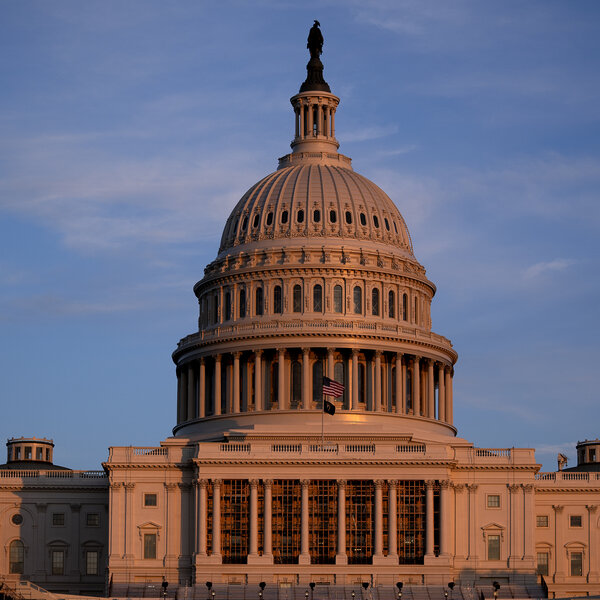
He’s only got a week left in office, but angry lawmakers are calling on him to resign after a violent mob of his supporters stormed the Capitol last Wednesday as a joint session of Congress met inside to certify the results of the election.

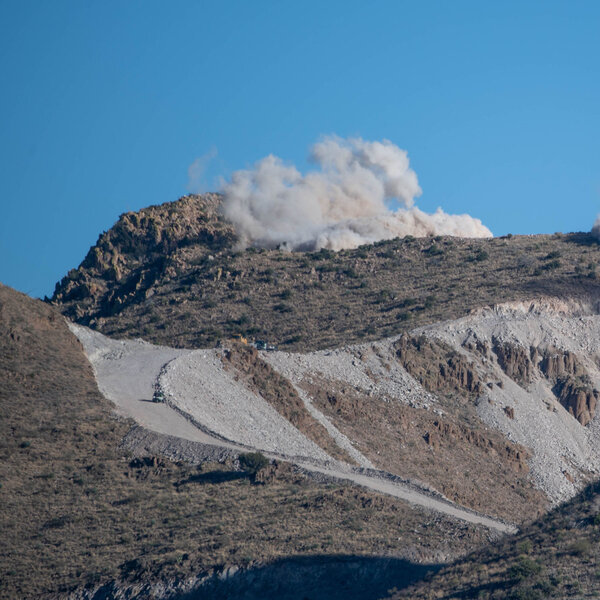
During the visit to Alamo — a small town in the Rio Grande Valley — Trump plans to note that 400 miles of border wall went up during his time in office, a White House spokesman said.

This will be the first public appearance for Trump – beyond video statements – since Wednesday morning when he urged his supporters to head to the Capitol as Congress formalized President-elect Joe Biden’s victory.

Political analysts say it’s an obvious attempt to try to rehabilitate his image when his legacy is at stake.

“Every president tries to burnish his legacy by highlighting perceived successes in the final days,” said Alex Conant, a Republican strategist who worked on Republican Sen. Marco Rubio’s 2016 presidential campaign. “Trump’s problem amongst many is that that this trip will be completely overshadowed by the fallout from last week.”

Trump campaigned on a promise to crack down on immigration. The clearest example of that was his promise to build a “big, beautiful wall” along the U.S.-Mexico border — a core issue for his base.

Most mainstream Republicans would prefer if Trump just faded away quietly, said Sean Walsh, a Republican strategist who worked in the Reagan and George H.W. Bush White Houses.

But Walsh said this trip makes clear that Trump does not plan to do that. And Walsh is concerned that Trump could actually make things worse by picking such a hot button issue.

“I could see if he did not temper his remarks, whipping some activists up,” Walsh said. “So I think we have to keep our eyes and ears very closely peeled on President Trump.”

The latest Quinnipiac University survey taken after the attack finds Trump’s job approval has plunged 11 points since December, falling to 33% – the lowest it’s been since Aug. 2017.

Conant said the political backlash from the Capitol riot is likely too great for Trump to overcome. He said the president’s refusal to concede the election and willingness to stoke conspiracy theories all but ensured that he will be remembered for the bitter end to his time in office instead of his policy accomplishments, such as tax cuts and naming three Supreme Court Judges.

“I think until Donald Trump properly concedes the election and recognizes Joe Biden as the president-elect, he’s not going to be able to talk about anything else,” Conant said. “And his legacy is losing potency by the hour.”

The post Trump Visits His Wall as Congress Acts to Remove Him appeared first on The St Kitts Nevis Observer.

FBI Reports Armed Protests Planned at All State Capitals

NEW YORK (CBSNewYork) — The FBI is is warning about armed protests at all 50 state capitols, and they could start as early as this week.

The New York and New Jersey state police are working with the FBI to harden security at both state’s capitols ahead of President-elect Joe Biden’s inauguration. In New York City, the NYPD said it will have a robust presence at all locations affiliated with President Donald Trump through Jan. 20.

The FBI is trying to prevent a repeat of last week’s riot at the U.S. Capitol.

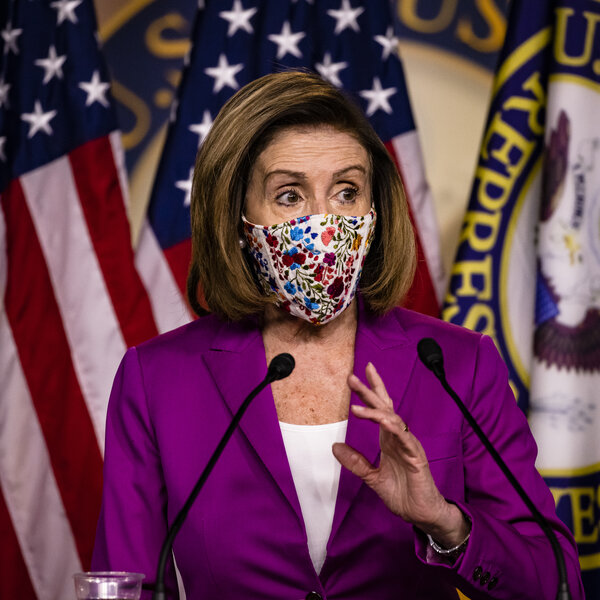
In a bulletin sent to law enforcement, the agency warns extremists are calling for the “storming” of federal, state and local courthouses in all 50 states if Trump is removed from office early, along with unspecified threats against Biden, Vice President-elect Kamala Harris and House Speaker Nancy Pelosi, CBS2’s Ali Bauman reported.

“I’m certainly concerned about Albany, whether they may have a problem there, so right now nothing that would affect New York City,” Mayor Bill de Blasio said.

The Wisconsin state capitol is already being boarded up.

MORENYPD, FDNY Investigating Whether Any Of Their Members Participated In Storming U.S. Capitol Building

“I saw officers get hit with fire extinguishers,” former Capitol Police Chief Steven Sund said.

Sund, who has since resigned, told CBS News that during the attack he asked the Pentagon repeatedly to send National Guard troops.

“I needed boots on the ground, immediate assistance right then and there, helping to form police lines to help secure the foundation of the United States Capitol Building. They were more concerned with the optics,” Sund said.

The Pentagon said it did not deny Sund’s request.

MORECapitol Chaos: Anti-Semitic Apparel Worn During Riot Traced To Website Based In New York City

Bauman also learned more about the timeline. At around 1 p.m. on Jan. 6, protesters started pushing their way onto the grounds. One hour later, the Capitol was breached. A video shows lawmakers just inside as a man punches through the door.

Vice President Mike Pence was pulled from the Senate chamber, which was locked down by 2:17 p.m.

The FBI has received 40,000 digital tips in its search for all those involved, including one unidentified man waving a Confederate flag.

MORE‘Every Day That Donald Trump Remains In Office Presents A Clear And Present Danger’: New York Officials Call For Impeachment Of President Trump

New photos from the FBI show the suspect wanted for placing pipe bombs in D.C. found at both the Republican National Committee and Democratic National Committee headquarters.

More than 100 people have already been arrested, such as Adam Johnson of Florida, who is believed to be the man smiling with the House speaker’s lectern, and retired Air Force Lt. Col. Larry Brock of Texas, who is accused of bringing plastic zip ties, which can be used as handcuffs.

Two Capitol Police officers have been suspended for their behavior, like taking a selfie with rioters.

Here in New York City, Police Commissioner Dermot Shea revealed one active member of the NYPD is being investigated for their possible participation.

“Anyone committing crimes, certainly would have a very short shelf life with the NYPD,” Shea said.

The U.S. Army is also investigating one of its psychological operations officers who is believed to have led a group from North Carolina to the U.S. Capitol last week, and sources told CBS News that the FBI has opened at least 25 new domestic terrorism cases, stemming from last week’s siege.

CBS2’s Ali Bauman contributed to this report

The post FBI Reports Armed Protests Planned at All State Capitals appeared first on The St Kitts Nevis Observer.

Hon. Powell presents Dorset Park Committee building materials

BASSETERRE, St. Kitts — The Dorset Park Committee has received another donation to assist efforts to maintain and enhance Dorset Park, which functions as a sport and recreation facility.

On January 8, the Hon. Jonel Powell, Minister responsible for Youth and Sports et al, and Parliamentary Representative for Constituency #2, where Dorset Park is located, presented $6,000 worth of building materials and gardening equipment to the committee during a presentation ceremony.

The donation included several palettes of blocks, buckets, cans of paint, a wheelbarrow, pickaxe, shovels, and rakes. Powell congratulated the volunteers for their dedication to the upkeep of the facility over the decades.

“They are real examples of what we all should be doing in various communities,” said Powell. “These persons here really exude our country’s motto ‘Country Above Self.’ Thank you for the work that you continue to do. You have my support, as representative, to continue to ensure that Dorset Park is a place where anyone of any age, from this community or outside, can come and feel safe and enjoy themselves.”

Minister Jonel Powell with members of the community and donated materials and supplies.

The Dorset Park Committee plans to refresh the paint in some areas, ring the flowers with blocks, and resurface the basketball court, among other upgrades.

Chairperson of the Dorset Park Committee, E. James “Barman” Hanley, expressed gratitude for the donation. He noted that the facility was opened in 1980. The community spirit has ensured that the park remains clean and up-to-date with offerings for everyone.

“We are a closely-knit community. We will not see people vandalizing the place and leave it like that,” he said, adding that the donation will be put to good use.

Last week, Governor-General His Excellency Sir S. W. Tapley Seaton personally donated a Husqvarna 21” Electric Start Lawnmower to the Dorset Park Committee.

The post Hon. Powell presents Dorset Park Committee building materials appeared first on The St Kitts Nevis Observer.