Tag Archives: caribbean

Mexico Elections: Women Score Historic Wins

Women were poised to win a record number of state governors’ offices in Mexican mid-term elections, capturing territory long dominated by men and giving them a bigger political platform to reach the presidency one day.

Preliminary tallies by electoral authorities on Monday showed female candidates securing six of the 15 regional bastions on offer, just two shy of the total number of women ever elected to lead regional governments in Mexico’s history.

Five of the six went to President Andres Manuel Lopez Obrador’s National Regeneration Movement (MORENA), which dominated the state votes, even as the leftist party’s hold on the lower house of Congress weakened.

If results are confirmed, it means the northern border states of Baja California and Chihuahua, Guerrero and Colima on the Pacific coast, as well as Tlaxcala in the center and Campeche in the south, will be governed by women.

“This is a cultural shift,” said MORENA lawmaker Gabriela Cuevas, the first Mexican to head the Inter-Parliamentary Union, a global body of national parliaments. “And definitely a step forward for women in our country and in political life.”

Only eight women had previously won regional elections, including the current mayor of Mexico City, MORENA’s Claudia Sheinbaum, who is regarded as one of the favorites to succeed Lopez Obrador as president.

Since Griselda Alvarez was chosen to run Colima in 1979 – a few weeks after Margaret Thatcher made history as Britain’s first woman Prime Minister – Mexico’s handful of female governors very rarely overlapped with other women in the job.

Now seven out of the 32 regional governments, including Mexico City, will be run by women simultaneously.

That is likely to create space for a different kind of politics where women’s concerns gain in prominence, said Francisco Abundis, head of Mexican polling firm Parametria.

That was especially true as three of the new governors are under 40 and may have long careers ahead of them, he noted.

VOTER STRENGTH

The latest national census showed there are roughly 3 million more women than men among Mexico’s population of 126 million, and political leaders are increasingly at pains to ensure equal representation in government.

Lopez Obrador made history in 2018 by appointing a cabinet split evenly between men and women, though he has come under fire from women’s groups for failing to take seriously enough issues like domestic violence and abortion rights.

Many women were angry about Lopez Obrador’s support for MORENA’s original candidate for Guerrero, Felix Salgado, whose campaign was dogged by rape accusations.

Salgado denied the allegations but was eventually forced out of the race by electoral authorities for campaign finance irregularities. He was replaced by his daughter Evelyn, who won Guerrero on Sunday night, the results showed.

Some Mexicans argue that male domination is still too deeply entrenched in the country for a female president to be realistic as soon as 2024, when the next election is due.

“Because of the macho mentality,” argued Gypsy Lara, a 29-year-old business owner in Mexico City who said she would be happy to back Sheinbaum for president.

Sheinbaum, whose popularity took a hit last month over a metro accident that killed 26 people, had a tough night on Sunday with MORENA suffering shock losses in city elections.

Despite the setbacks, the 58-year-old is still one of the strongest candidates for the presidency, said Abundis.

“I think (female candidates) will be one of the cards to play in 2024,” he said. “With everything we’re seeing in terms of gender-based movements in the country and the world, in Mexico it’s more of a contrast with the whole macho tradition.”

The post Mexico Elections: Women Score Historic Wins appeared first on The St Kitts Nevis Observer.


El Salvador President’s Bitcoin Plan Casts Shadow Over IMF Efforts

Reuters

A push by El Salvador’s President Nayib Bukele to make his country the first in the world to formally adopt bitcoin as legal tender has sparked concerns about the outlook for its program with the International Monetary Fund (IMF).

Bukele said on Saturday he will send a bitcoin bill to Congress in days to come, touting its potential to help Salvadorans living abroad send remittances home.

El Salvador’s top trade official said the U.S. dollar would continue to be legal tender, underscoring that bitcoin transactions would be by choice and tied to the dollar exchange rate.

This could further complicatethe Central American country’s quest to seek a more than $1 billion-program with the IMF. In May, Bukele’s party strained relations with Washington when it ousted five Supreme Court judges and the top prosecutor.

Trade and Investment Minister Miguel Kattan said bitcoin was already in limited use in El Salvador, even to buy pupusas, the national street snack.

“The ability to do operations with bitcoin should not spark concern,” Kattan told a news conference.

Still, analysts saw problems with the move to bitcoin.

“Recent tweets from President Bukele to fully embrace bitcoin as legal tender will likely further complicate and delay IMF technical discussions,” said Siobhan Morden, head of Latin America fixed income strategy at Amherst Pierpoint Securities.

“This may just reflect a long-term initiative or maybe even just a flashy PR tactic; however it shows lack of coordination with impulsive announcements that contradict a cohesive economic plan,” she said, adding Salvadorian bonds faced a Bukele risk premium of as much as 75 basis points over comparable Costa Rica bonds.

JPMorgan EMBI global diversified index showed the premium investors demanded to hold El Salvador hard-currency bonds over U.S. Treasuries widening by 28 basis points to 610 bps (.JPMEGDELSR). The 21-day average is a move under 1.3 bps daily.

El Salvador’s dollarized economy relies heavily on money sent back from expatriate workers. World Bank data showed remittances to the country made up nearly $6 billion or around a fifth of GDP in 2019, one of the highest ratios in the world.

The IMF’s head of mission for El Salvador, Alina Carare, said late on Monday that the fund is “following the news and will have more information as we continue our consultations with the authorities.”

Carlos de Sousa, a portfolio managers at Vontobel Asset Management, said the bitcoin push looked ill-considered with Bukele potentially shooting himself in the foot by making the raising of tax revenue more difficult.

“Cryptocurrencies are overall a very easy way to avoid taxation and a very easy way to simply avoid the authorities because it’s a completely decentralised system, you can do money laundering, you can do tax avoidance and so on,” he said, adding it remained to be seen what the IMF thought of Bukele’s foray.

“Typically, he gets a lot of positive reactions on Twitter and the reactions to this were kind of like ‘Mr. President, okay, where we can read about this? What does it mean?’ – so people don’t really understand.”

Bukele changed his Twitter profile picture over the weekend to give himself red laser eyes used by supporters of cryptocurrencies on social media.

“Satellite infrastructure to be built, helping rural El Salvadorans connect to the internet, and thereby Bitcoin network, in places where land-based connectivity is poor. @Blockstream plans to contribute their expertise and tech to make the nation a model for the world,” Bukele said on Twitter on Monday, in a retweet of a Documenting Bitcoin @DocumentingBTC post.

Justin Sun, founder and chief executive officer of TRON, a blockchain-based company focused on building a decentralized internet, said his firm would become the “first crypto organization” to establish an office in El Salvador.

The post El Salvador President’s Bitcoin Plan Casts Shadow Over IMF Efforts appeared first on The St Kitts Nevis Observer.
Colombia Unrest: President Duque Pledges Police Reform

BBC- Colombian President Iván Duque has vowed to modernise the country’s police and increase oversight of officers.

It comes after weeks of street protests and widespread allegations of human rights abuses.

More than 60 people have died in clashes with security forces, with at least three officers facing murder charges.

The violence has sparked international outcry and calls for an independent investigation into the deaths.

Last week negotiations stalled between President Duque’s government and an umbrella group of protesters called the National Strike Committee, but talks are expected to resume on Sunday.

In a statement, the president said he would ask Congress to approve measures to modernise the police, with the creation of a new human rights directorate and more officer training. A new complaints system would also be set up, along with disciplinary standards for officers.

The law will be proposed on the first day of the next legislative session in July, said Mr Duque.

He added that the government was also working on a law to establish a criteria for the legitimate use of force by police.

The president’s announcement comes as a delegation from the Inter-American Commission on Human Rights (IACHR) arrives in Colombia to assess the recent unrest.

Demonstrations began on 28 April against a now-withdrawn set of tax reforms. But the protests have escalated into a broad anti-government movement, with hundreds of thousands of people taking to the streets, and demands being made for reform of health and education, among other issues.

The protests have been held in defiance of a court order, which ruled that they should be postponed due to high incidences of coronavirus in Colombia. As a result, there has been a heavy police presence during demonstrations, and security forces have had deadly clashes with protesters – with most of the violence focused in the city of Cali

Authorities say at least 61 people, mostly civilians, have died during the demonstrations. But NGO Human Rights Watch has cited “credible reports” of 67.

Protesters have called on President Duque to denounce the use of excessive force by police. But the president has previously called on his political opponents to condemn the dozens of roadblocks erected by protesters around the country, which he blames for hampering the economy and causing the deaths of two babies trapped in ambulances.

Last week Michelle Bachelet, the UN’s human rights chief expressed concern at violence in Cali, and said that “all those who are reportedly involved” should be held accountable.

The post Colombia Unrest: President Duque Pledges Police Reform appeared first on The St Kitts Nevis Observer.

Study: Amazon Tribes Lived Sustainably 5,000 Years

By Victoria Gill
Science correspondent, BBC News

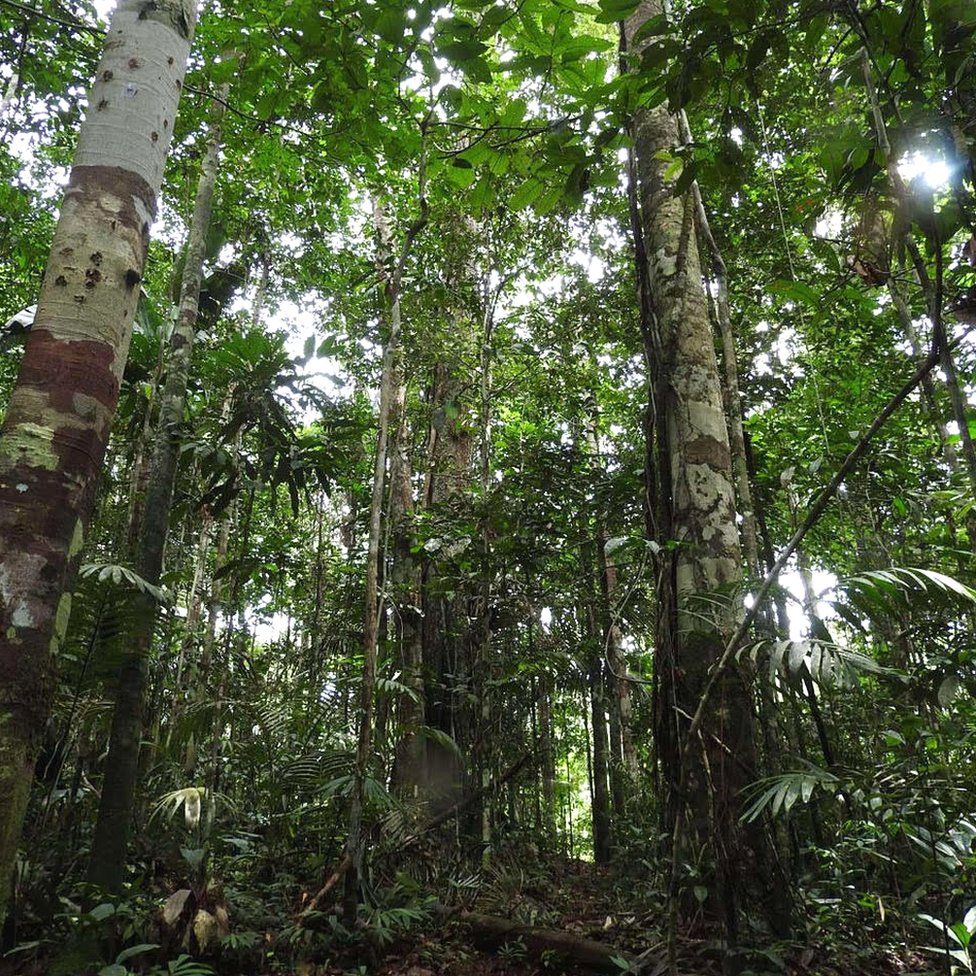
 A study that dug into the history of the Amazon Rainforest has found that indigenous people lived there for millennia “causing no detectable species losses or disturbances”.

Scientists working in Peru searched layers of soil for microscopic fossil evidence of human impact.

They found that forests were not “cleared, farmed, or otherwise significantly altered in prehistory”.

The research is published in the journal PNAS.

Dolores Pipernoimage copyrightSmithsonian
Dolores Piperno is based at the Smithsonian’s Natural History Museum in Washington DC and the Tropical Research Institute in Panama

Dr Dolores Piperno, from the Smithsonian Tropical Research Institute in Balboa, Panama, who led the study, said the evidence could help shape modern conservation – revealing how people can live in the Amazon while preserving its incredibly rich biodiversity.

Dr Piperno’s discoveries also inform an ongoing debate about how much the Amazon’s vast, diverse landscape was shaped by indigenous people.

Some research has suggested the landscape was actively, intensively shaped by indigenous peoples before the arrival of Europeans in South America. Recent studies have even suggested that the tree species that now dominates the forest was planted by prehistoric human inhabitants.

Dr Piperno told BBC News, the new findings provide evidence that the indigenous population’s use of the rainforest “was sustainable, causing no detectable species losses or disturbances, over millennia”.

To find that evidence, she and her colleagues carried out a kind of botanical archaeology – excavating and dating layers of soil to build a picture of the rainforest’s history. They examined the soil at three sites in a remote part of northeastern Peru.

Phytolithsimage copyrightDolores Piperno/Smithsonian
phytoliths are microscopic plant fossils

All three were located at least one kilometre away from river courses and floodplains, known as “interfluvial zones”. These forests make up more than 90% of the Amazon’s land area, so studying them is key to understanding the indigenous influence on the landscape as a whole.

They searched each sediment layer for microscopic plant fossils called phytoliths – tiny records of what grew in the forest over thousands of years. “We found very little sign of human modification over 5,000 years,” said Dr Piperno.

“So I think we have a good deal of evidence now, that those off-river forests were less occupied and less modified.”

Amazon Rainforestimage copyrightCorine Vriesendorp
The researchers sampled soil from the rainforest

The scientists say their findings also point to the value of indigenous knowledge in helping us to preserve the biodiversity in the Amazon, for example, by guiding the selection of the best species for replanting and restoration.

“Indigenous peoples have tremendous knowledge of their forest and their environment,” said Dr Piperno, “and that needs to be included in our conservation plans”.

The post Study: Amazon Tribes Lived Sustainably 5,000 Years appeared first on The St Kitts Nevis Observer.
Peru: Leftist Castillo Moves Ahead in Election

BBC- Left-wing candidate Pedro Castillo has edged into the lead in a dramatic twist in Peru’s presidential election.

With 94% of votes counted, Mr Castillo overtook his right-wing rival, Keiko Fujimori, who is running for the presidency for the third time.

He has a lead of 0.1 percentage point, with just over 25,000 votes currently separating the two candidates.

They have both called for calm while the count is under way. This is Peru’s most polarised poll in recent history.

Ms Fujimori had been leading since the official count began, but as results from rural areas – where support for Mr Castillo is strong – started to come in, the gap between them narrowed.

On Monday she raised concerns of “irregularities” and “signs of fraud”, but provided no details.

The new president will be taking on a country in crisis as Peru struggles with a recession and the highest coronavirus death rate per capita in the world.

Peruvians have had years of political turbulence, with four presidents in the past three years. Seven of the country’s last 10 leaders have either been convicted of or investigated for corruption.

line

Peru at a glance

  • The country has a population of about 32 million
  • Inequality remains high, especially between those who live in urban and rural areas
  • The pandemic has hit it hard, and nearly a third of its people are now in poverty
  • It has been through a series of political crises in recent years and, last November, it was led by three presidents within the space of a week

Sources: World Bank, CIA Factbook

line

Household name v political newcomer

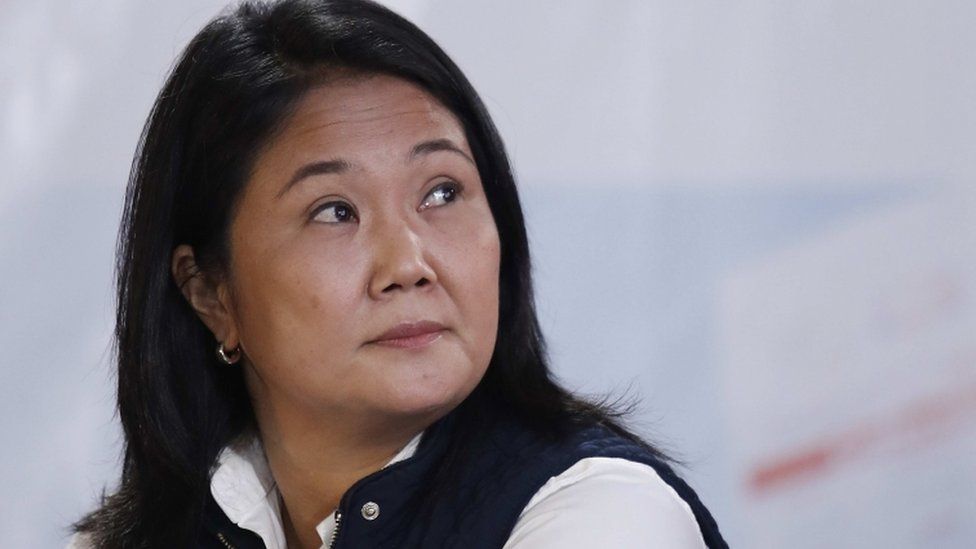
Keiko Fujimori, 46, is the leader of the right-win Popular Force party and a household name in Peru. As well as a former member of Congress, she was the runner-up in the 2011 and 2016 presidential election run-offs.

Peruvian presidential candidate Keiko Fujimori attends a press conference in Lima, Peru, 7 June 2021image copyrightEPA
image captionKeiko Fujimori presented little evidence to support her allegation of voting irregularities

She is also the daughter of jailed ex-president Alberto Fujimori, who is serving a 25-year sentence for corruption and human rights abuses. She has said that if she is elected, she will pardon her father.

Earlier, there were scenes of celebrations outside her party’s headquarters in the capital, Lima. However electoral officials said the early results reflected votes from urban areas, where she is most popular.

“What we have to look for is the unity of all Peruvians. That is why I ask both groups for calm, patience, peace, to those who voted and didn’t vote for us,” Ms Fujimori said.

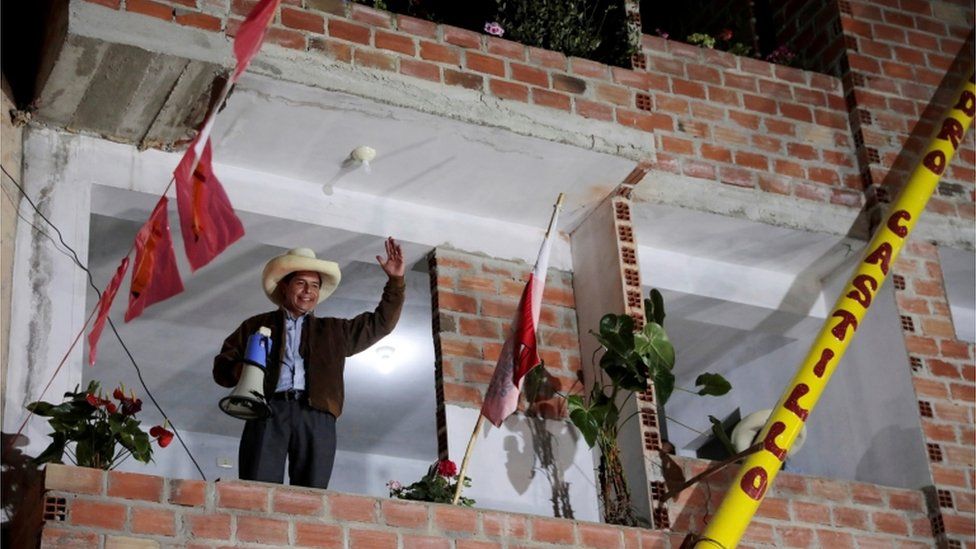
Pedro Castillo, 51, is a relatively new face on the political stage, and was the unexpected winner in the first round vote in April.

Pedro Castillo waves to supporters in the town of Tacabamba, as he waits for votes to be countedimage copyrightReuters
image captionPedro Castillo waves to supporters in the town of Tacabamba, as he waits for votes to be counted

An elementary school teacher, he is easily recognisable by his cowboy hat and oversized pencil that he campaigns with – the symbol of his Free Peru party.

He is the son of small-scale farmers and has gained the trust and support of many in the farming community and the trade union movement.

The post Peru: Leftist Castillo Moves Ahead in Election appeared first on The St Kitts Nevis Observer.
VP Harris Tells Cent. American Migrants Not to Come

BBC- US Vice President Kamala Harris has urged would-be migrants in Guatemala not to try to enter the United States illegally.

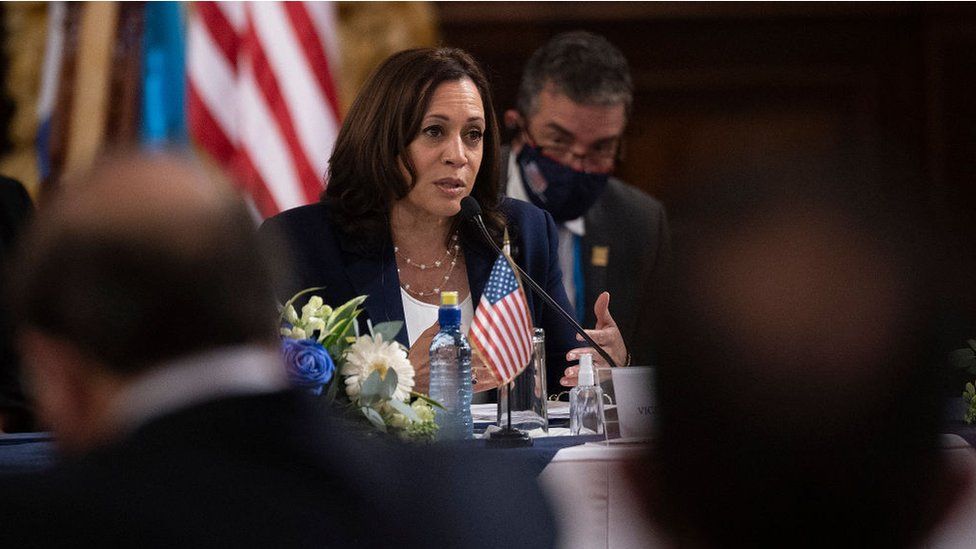
Speaking on her first overseas trip since taking office, she said the journey north was dangerous and would mainly benefit people smugglers.

Ms Harris warned people they would be turned back at the border.

She has been tasked by President Joe Biden with controlling a surge in migration at the southern border.

Ms Harris has described her task as finding solutions to tackle the root causes of the border crisis, including corruption and the lack of economic opportunities. Her staff say this first visit is primarily an information-gathering trip.

In a news conference alongside Guatemalan President Alejandro Giammattei, she warned against illegal migration to the US, saying: “Do not come. Do not come. The United States will continue to enforce our laws and secure our borders.”

She added: “If you come to our border, you will be turned back.”

Ms Harris said she wanted the US and Guatemala to “work together” to find solutions to “long-standing problems”.

She said people must be given a “sense of hope that help is on the way”.

“It must be coupled with relationships of trust. It must be coupled with tangible outcomes, in terms of what we do as leaders to convince people that there is a reason to be hopeful about their future and the future of their children,” Ms Harris added.

President Giammattei defended his government’s own record of fighting corruption and said the fight against drug trafficking should be an key part of tackling the issue.

He announced a new processing centre for migrants who had been sent back from the US and Mexico and said that the focus for both countries should be on creating prosperity.

Ms Harris said the US would send 500,000 coronavirus vaccines to Guatemala and provide $26m (£18.3m) to fight the pandemic there. The region has been hard hit by the virus, further worsening living conditions.

She also met civil society leaders and entrepreneurs in the country before travelling on to Mexico where she will hold talks with President Andrés Manuel López Obrador on Tuesday.

President Biden has been criticised by Republicans who accuse him of ignoring the crisis on the southern border.

But in a recent speech to Congress, he said: “When I was vice president, I focused on providing the help needed to address these root causes of migration. It helped keep people in their own countries instead of being forced to leave. Our plan worked.”

Presentational grey line

A trip underlining the scale of the task ahead

by Will Grant, BBC

For the Guatemalan government, there will have been some satisfaction in being the hosts of the vice-president’s first international visit. It is a sign of improved ties with Washington after the Trump administration. However, in reality, the Biden administration has few other feasible partners in the region, embroiled as they are in diplomatic tension or open conflict with the presidents of Honduras, El Salvador and Nicaragua.

The joint news conference revealed a number of things.

Certainly the rhetoric from the Biden administration is more compassionate than over the past four years. The vice-president mentioned “hunger, hurricanes and pandemic” as “acute” drivers of migration, and talked of empowering the indigenous community in Guatemala.

Certainly the promise of 500,000 doses of the coronavirus vaccine from the US will have been welcomed as the region lags well behind much of the world on the road towards a fully-vaccinated society.

But many Guatemalans will have met other measures with some scepticism.

The proposed anti-trafficking and anti-smuggling measures will struggle to unpick the sophisticated criminal networks, which run the migrant and drug routes north. Despite much talk of creating jobs and incentives inside Guatemala, many know that Washington’s plan also involves bolstering the police and security forces to better prevent migrants from leaving in the first place. And the promise of hundreds of millions in development aid will also ring alarm bells over exactly how those funds will be administered.

Indeed, the discussion of a corruption task force appeared to touch a raw nerve with President Giammattei, who became defensive as he denied “meddling” in the work of anti-graft prosecutors in the country.

If nothing else, this trip has underlined the scale of the task ahead.

Presentational grey line

What are the key items on Ms Harris’s agenda?

The border

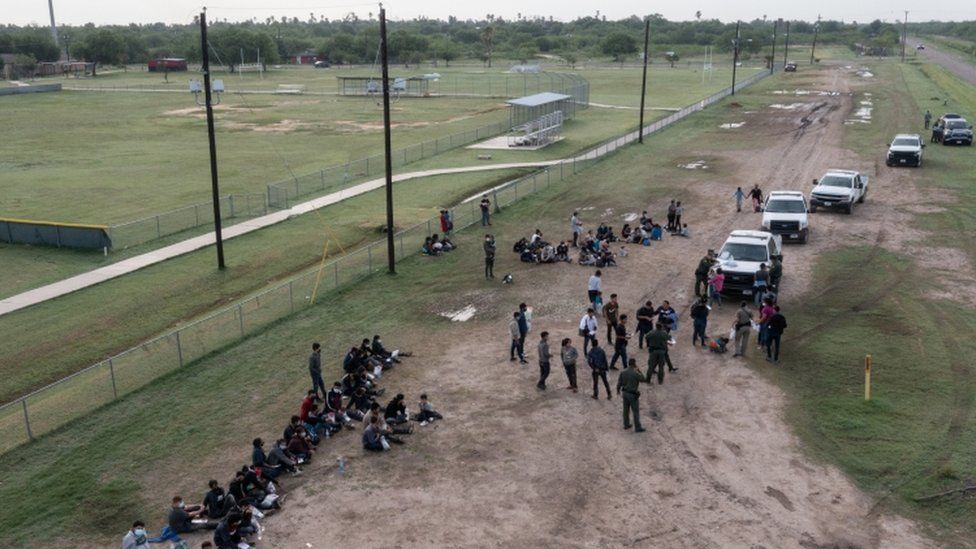
More than 178,000 migrants arrived at the border this April, the highest one-month total in more than two decades, according to US border officials.

Asylum seeking unaccompanied minors from Central America are seen on the left in this aerial image after crossing the Rio Grande river into the United States from Mexico in La Joya, Texas, U.S., May 14, 2021image copyrightReuters
Thousands of asylum seekers from Central America head for the US-Mexico border

Of those migrants, more than 40% originated from the Central American region known as the Northern Triangle: Guatemala, Honduras and El Salvador.

This will be the main focus of Ms Harris’ trip.

Corruption

A central issue contributing to the border crisis is the corruption of government officials in the region, who have been accused of aiding in drug and human trafficking.

Ms Harris will to discuss the situations in Guatemala and Mexico. But the vice-president has yet to speak to the leaders of Honduras and El Salvador.

“We have the capacity to give people hope,” Ms Harris said last month. “Part of giving people hope is having a very specific commitment to rooting out corruption in the region.”

Ms Harris holds talks with the Guatemalan president on Monday
Vice Pres. Harris holds talks with the Guatemalan president on Monday

Economic growth

Many migrants leaving the Northern Triangle say they are fleeing violence, discrimination and poverty.

The steady “brain drain” of locals has exacerbated problems caused by decades of political instability.

These countries have also stressed that they are feeling the most adverse effects of global warming – most notably hurricanes – despite hardly contributing to climate change.

Ms Harris said in her press conference in Guatemala that “we are doing the work of requiring certain progress be made” in order to attract US investment to the region.

She also pledged US investments towards agriculture, entrepreneurship and affordable housing, as well as for “a young women’s empowerment initiative to increase education and opportunities for girls and women.”

The post VP Harris Tells Cent. American Migrants Not to Come appeared first on The St Kitts Nevis Observer.

Four hospitalized as COVID cases continue to rise

Four in St. Kitts and Nevis have been hospitalized with COVID-19 as the Federation’s cases continue to rise with 94 confirmed cases, 53 of which are fully recovered.

CMO Dr Hazel Laws said one case is moderate to severe COVID-19, another moderate COVID-19 and the other two are mild to moderate cases of COVID-19.

Minister of Health Akilah Byron-Nisbett also announced that since the community outbreak on May 19 there have been a total of 49 cases.

“Including eight additional cases on Saturday including three on Sunday making it 11 cases in the last 48 hours. The finding of these positive cases and isolation is a testament to the success of our contact tracing program.”

She said the positivity rate currently stands at 1.19 percent well below the five percent threshold.

Byron-Nisbett said the curfew of restricted movement has been extended from Tuesday from 8:00 pm to 5:00 am for the next two weeks.

The Health Minister noted that five of the six schools implicated in the outbreak have been cleared.


The post Four hospitalized as COVID cases continue to rise appeared first on The St Kitts Nevis Observer.
INTERVAL INTERNATIONAL CELEBRATES 45 YEARS OF CUSTOMER SERVICE EXCELLENCE AND INNOVATION

Miami, Florida, June 7, 2021 – Interval International, a prominent worldwide provider of  vacation services, is celebrating 45 years of providing excellence in service and innovation  to its members and developer clients.

“Many things have changed since Interval was founded in 1976, but what hasn’t is  our dedication to sending members on vacations of a lifetime where they create lasting  memories of special moments with family and friends,” said Jeanette Marbert, President and  CEO of Interval International. “We are committed to exceeding the expectations of our  clients and customers. It’s been our approach since the beginning and continues to be our  formula for success.”

Throughout the company’s history, developers and members have benefitted from  Interval’s innovative products and services, leading the Miami-based company to become a  global exchange network with nearly 3,200 resorts in more than 80 nations. Here are a few  of the company’s latest initiatives and updates:

  • More Options for Members: Interval’s popular Getaways product, which provides  members with great value for spacious accommodations around the world, offers  members even more flexibility with stays of seven nights or less.
  • A Global Network of Quality Resorts: The company continues to grow its exchange  network around the world with recent resort affiliations in the Bahamas, Brazil, Costa  Rica, Mexico, and the U.S. Leading vacation ownership brands have selected Interval as  their exchange partner of choice due to the company’s customer-centric approach.
  • Mobile First Technology: The Interval International To Go app for Apple iOS and Android  devices continues to increase in popularity – it’s currently rated 4.8 (out of 5) in the Apple  App Store. On the app, members can easily search all their vacation options, whether it’s  an exchange, Getaway, weeks or points. Since the app’s inception, there have been  nearly 390,000 downloads.
  • New Digital Publications: Three exciting digital publications have debuted over the last  year. Interval Explorer provides members with content on vacation options, destinations and their Interval benefits; Vacation Industry Review online features industry news and  trending topics; and HOA Insights shares tips with HOA managers and board members.
  • Engaging Members: Some of Interval’s happiest members from around the world have  shared their testimonials. Click here to view. In addition, “45 Destinations for 45 Years” celebrates Interval’s 45 most popular exchange destinations as chosen by members.  Destinations include Orlando, Las Vegas, Maui and Oahu, Hawaii, Cancun and Puerto  Vallarta, Mexico, St. Maarten, Phoenix, Arizona and Breckenridge, Colorado.

In honor of the anniversary, Interval is surprising users of its members-only forum  Community (which has more than 330,000 participants worldwide) with giveaways tied to a  45-year theme. According to one member who joined nearly 45 years ago and has  completed more than 30 exchanges with Interval, “It’s the gift that keeps on giving, even  after 45 years.”

“Putting our customers first is part of our DNA,” said Marbert. “I’m proud to lead a  team of passionate associates who work every day, even in the most challenging of times,  to take care of our members and clients and stay focused on ways to enhance our products  and services to meet the needs of these customers.”

For more information about Interval’s member programs, visit IntervalWorld.com. For  more information for resort affiliates and industry partners, visit ResortDeveloper.com.

About Interval International 

Interval International operates membership programs for vacationers and provides value added services to its developer clients worldwide. Based in Miami, Florida, the company has  been a pioneer and innovator in serving the vacation ownership market since 1976. Today,  Interval’s exchange network comprises nearly 3,200 resorts in over 80 nations. Through  offices in 13 countries, Interval offers high-quality products and benefits to resort clients and  more than 1.7 million families who are enrolled in various membership programs.

The post INTERVAL INTERNATIONAL CELEBRATES 45 YEARS OF CUSTOMER SERVICE EXCELLENCE AND INNOVATION appeared first on The St Kitts Nevis Observer.
US Warns Against All Travel to Haiti with Level 4 Alert

travel advisory haiti

The United States Department of State has issued a warning against all travel to Haiti with a Level 4 – “Do not travel to Haiti due to kidnapping, crime, civil unrest, and Covid-19″- alert.

In addition, the Centers for Disease Control and Prevention (CDC) issued a Level 4 Travel Health Notice for the country, indicating a very high level of COVID-19.

In its summary, the State Department noted that among other things, kidnapping is widespread and victims regularly include U.S. citizens.

“Kidnappers may use sophisticated planning or take advantage of unplanned opportunities, and even convoys have been attacked. Kidnapping cases often involve ransom negotiations and U.S. citizen victims have been physically harmed during kidnappings. Victim’s families have paid thousands of dollars to rescue their family members.”

The State Department also warned that violent crime, such as armed robbery and carjacking, is common.

“Travelers are sometimes followed and violently attacked and robbed shortly after leaving the Port-au-Prince international airport. Robbers and carjackers also attack private vehicles stuck in heavy traffic congestion and often target lone drivers, particularly women.

Protests, demonstrations, tire burning, and roadblocks are frequent, unpredictable, and can turn violent.”

The warning also noted that the U.S. government is extremely limited in its ability to provide emergency services to citizens in Haiti – and assistance on-site is available only from local authorities – such as the Haitian National Police and ambulance services.

It went on to say that the Haitian police “generally lack the resources to respond effectively to serious criminal incidents .”

According to the Ministry of Public Health, 319 new cases in 48 hours + (previous 153 cases) and 5 deaths (3 in the West, 1 in the North and 1 in Nippes) would have been confirmed on June 2 and 3, 2021 for a total of 15,754 confirmed cases and 330 since the start of the pandemic.

As of June 2, this brings the number of new cases to 2.331 and 65 deaths (+5) since the start of the 3rd wave (early May) (latest data made available by the Ministry) .

For reference in April 2021 267 new cases and 9 deaths had been recorded.

The post US Warns Against All Travel to Haiti with Level 4 Alert appeared first on The St Kitts Nevis Observer.

A&B Investigating Alleged Choksi Abduction

Antiguan Prime Minister Gaston Browne told local media that the country’s police force has begun an investigation into fugitive diamantaire Mehul Choksi’s abduction.

Choksi, who had moved citizenship to Antigua and Barbuda after a multi-crore Punjab National Bank scam came to light, was arrested in Dominica after he jumped islands in the Carribean.

In an extradition hearing, Choksi’s lawyers had alleged that he was abducted and taken to Dominica by “policemen looking Antiguan and Indian”.

Browne said that if the claims are true, then it is a serious matter. He said police are taking the complaint seriously, the report said.

“Choksi has filed a complaint with the Royal Police Force of Antigua and Barbuda to the extent that he was abducted. He made a formal claim through his attorneys that he was abducted from Antigua and taken to Dominica so it is a report that police is taking seriously and they are currently investigating the abduction,” Browne said.

“Choksi’s lawyers have written to the police commissioner providing the names of the people he believes abducted him,” said Browne.

Antigua and Barbuda prefers that fugitive diamantaire Mehul Choksi be directly repatriated to India from Dominica.

The cabinet minutes published by the local media showed that “Choksi matter” was one of the agenda items discussed during the meeting on Wednesday. It was held that the business was now the “problem” of Dominica and if he were to come back to Antigua and Barbuda, the “problem reverts” to it.

The meeting chaired by Prime Minister Gaston Browne and attended by all his ministers decided that law enforcement officials would continue to gather intelligence on the circumstances of Choksi’s “departure” from Antigua, said media outlet Antigua Breaking News. “The preference of the Cabinet of Antigua and Barbuda is for Choksi to be repatriated to India from Dominica,” the cabinet minutes said.

Later, speaking to media, Information Minister Melford Nicholas also said the government prefers that pending cases before Antiguan courts related to the revocation of Choksi’s citizenship and his extradition to India be heard much sooner in the light of developments in Dominica and expedited, AntiguaNewsroom reported.

-Inputs from agencies

The post A&B Investigating Alleged Choksi Abduction appeared first on The St Kitts Nevis Observer.