Tag Archives: caribbean

Guillermo Lasso: Ecuador’s New President Faces Uphill Challenge

 Rafael Abuchaibe

BBC Monitoring

Ecuador;s President-elect Guillermo Lasso (R), accompanied by his wife Maria De Lourdes Alcivar (L), arrives for his inauguration ceremony at the headquarters of the National Assembly in Quito, Ecuador, 24 May 2021.image copyrightEPA
image captionGuillermo Lasso was successful in his third run for the presidency

Guillermo Lasso has been sworn in as Ecuador’s president.

The 65-year-old conservative former banker defeated left-wing rival Andrés Arauz in a closely fought run-off election on 11 April.

He has taken up office amid one of the worst economic crises ever to confront the Andean nation, which is still grappling with the Covid-19 pandemic.

Mr Lasso has pledged to attract more investment to the oil sector and to kickstart the stagnated economy.

Slow progress on vaccines

Ecuador’s Covid ordeal attracted international attention in 2020, when there were reports of bodies being left in the streets of the most populous city, Guayaquil.

With a population of 17.3 million, the nation has had more than 415,000 accumulated coronavirus cases, and deaths have surpassed 20,000.

Covid-19 vaccination has been moving with painful slowness – only some 2.3% of the population have been fully vaccinated – so accelerating this will take a major effort.

To try to keep his promise of vaccinating nine million Ecuadoreans during his first 100 days, Mr Lasso announced he would hold urgent bilateral talks with Russia, China, the United States, the European Union and Chile to try to acquire the necessary jabs.

Mr Lasso said he had already talked to Chilean President Sebastian Piñera about obtaining loans to purchase vaccines with the support of the Inter-American Development Bank.

He has also announced an alliance with Ecuador’s National Electoral Council to use the information held on its voting roll and sites to speed up the vaccination process.

Rocky road to economic recovery

During his election campaign, Mr Lasso said that a successful national vaccination plan would be the key to reactivating Ecuador’s stalled economy.

The coronavirus pandemic has had a devastating impact: the country has been driven into recession, with poverty and unemployment increasing.

But Mr Lasso will need to convince a politically divided country that his free-market and pro-business policies offer the best hope to lift Ecuador out of one of the darkest periods of its recent history.

The new president will have to start by seeking support in the National Assembly, where he has struggled to forge alliances and where left-wing groups pose a powerful counterweight.

Tackling long-running corruption is also seen as a major challenge.

A deeply rooted culture of soliciting bribes and syphoning off funds has drained Ecuador’s main revenue earner, the state-owned oil company Petroecuador, which between 2012 and 2016 was estimated to have lost some $2.4bn (£1.7bn) to corruption.

The nation’s health system has not escaped the corroding effects of graft, with reports of funds intended to tackle the Covid pandemic being mishandled by officials at every level of government.

The country is currently on its sixth health minister in four years after several resigned amidst coronavirus-related scandals.

Northern neighbour is key

One of Mr Lasso’s first acts after being elected president was to visit Ecuador’s northern neighbour, Colombia, with whom it shares a border of almost 600km (375 miles).

Colombia's President Ivan Duque and Ecuador's President-elect Guillermo Lasso embrace, in Bogota, Colombia April 20, 2021image copyright Reuters
Mr Lasso’s first foreign visit after being elected president was to Colombia


In recent years, Ecuadorean authorities have become increasingly concerned about the encroachment of violent drug-trafficking gangs from Colombia into its northern provinces. They have reported increased drug seizures in 2021 but fear the Mexican and Colombian gangs behind the trafficking are gaining in strength.

Tens of thousands of Venezuelan migrants fleeing the economic and political crisis in their homeland have also entered Ecuador from Colombia, increasing the pressure on health and social services.
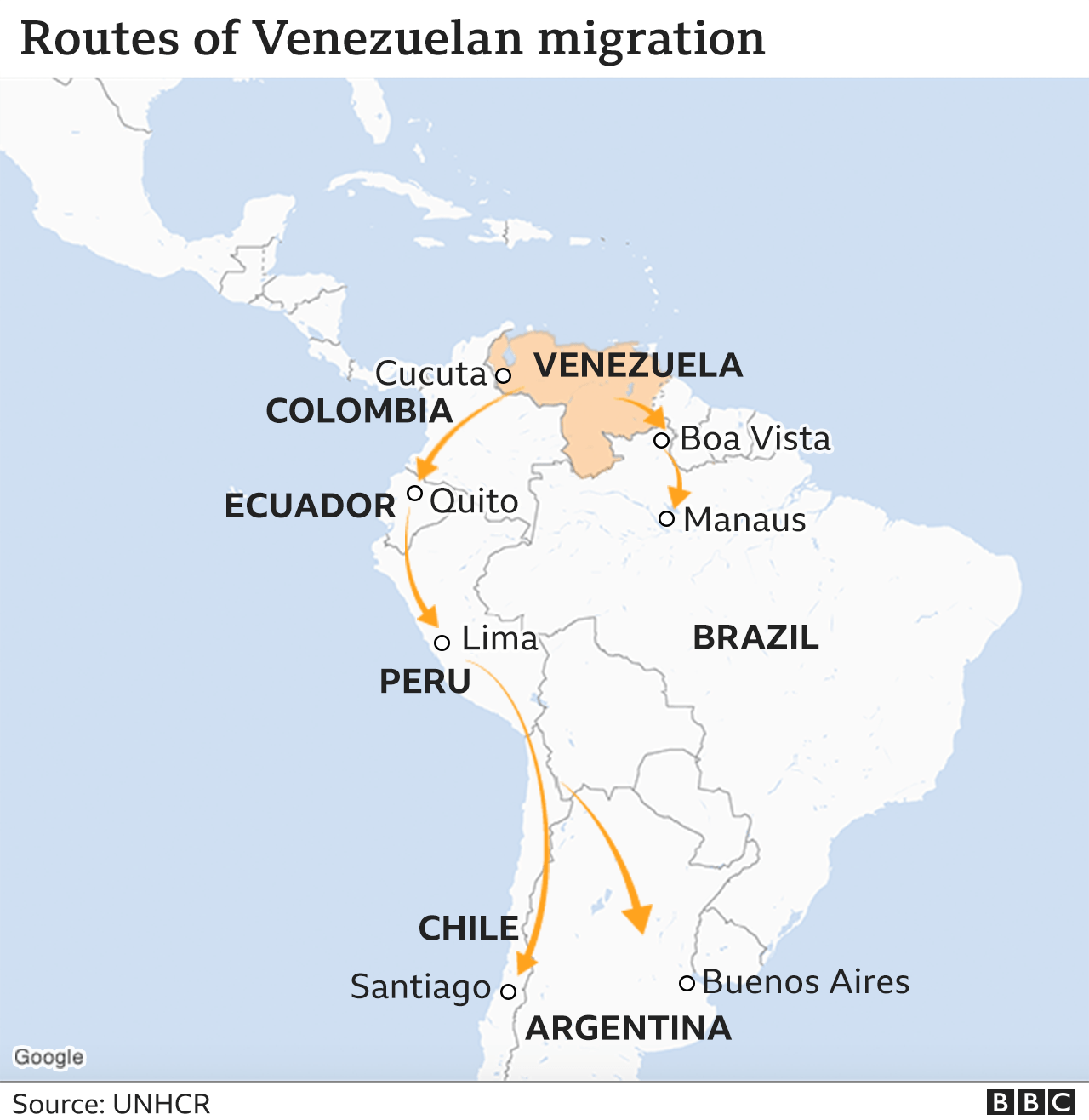
Map showing the routes of Venezuelan migration

In his April talks with Colombian President Iván Duque, Mr Lasso said co-operation on trade, security and migrants would be his priority.

Mr Duque has urged Mr Lasso to follow Colombia’s example and offer Venezuelan migrants temporary protected status. But with unemployment high and pressure on the health service increasing, such a move could prove unpopular with struggling Ecuadoreans.

The post Guillermo Lasso: Ecuador’s New President Faces Uphill Challenge appeared first on The St Kitts Nevis Observer.


Haiti Emergency Over New COVID Wave

President Jovenel Moïse declared a state of emergency over the weekend as Haiti experiences what officials say may be a new, deadlier wave of the coronavirus being blamed for the deaths of at least three public figures so far.

“The government declares a state of health emergency for eight days,” President Jovenel Moïse tweeted Saturday. “Today, more than ever, respecting the restrictions is imposed on everyone.”

Prominent figures Pastor Emmanuel Sannon, Chesnel Pierre and Frantz Gérard Verret died of COVID-19 symptoms over the weekend, according to local reports. Ex-senator Jean Robert Bossé also tested positive.

Pierre was a former general director of the National Old Age Insurance Office (ONA) and Verret was the president of the provisional electoral council between 2007 and 2009.

Haiti has been seeing about 70 new coronavirus infection cases per day, on average, Moïse said last week. The English and Brazilian variants were detected in Haiti, officials said.

Haiti also accepted 130,000 doses of the AstraZeneca vaccine last week, but there’s no word yet of when the vaccine will arrive. Source

Advertisements

The post Haiti Emergency Over New COVID Wave appeared first on The St Kitts Nevis Observer.

At Least 15 Killed in Congo Volcano Eruption

Torrents of lava poured into villages after dark in eastern Congo yesterday with little warning, leaving at least 15 people dead amid the chaos and destroying more than 500 homes, officials and survivors said.

The eruption of Mount Nyiragongo on Saturday night sent about 5,000 people fleeing from the city of Goma across the nearby border into Rwanda, while another 25,000 others sought refuge to the northwest in Sake, the United Nationa’s Children’s Fund (UNICEF) said today.

More than 170 children are still feared missing and UNICEF officials said they were organising transit centres to help unaccompanied children in the wake of the disaster.

Goma ultimately was largely spared the mass destruction it suffered the last time the volcano erupted in 2002. Hundreds died then and more than 100,000 people were left homeless. But in outlying villages closer to the volcano, Sunday was marked by grief and uncertainty.

Aline Bichikwebo and her baby managed to escape when the lava flow reached her village, but said both her mother and father were among those who perished. Community members gave a provisional toll of 10 dead in Bugamba alone, though provincial authorities said it was too soon to know how many lives were lost.

Bichikwebo says she tried to rescue her father but wasn’t strong enough to move him to safety before the family’s home was ignited by lava.

“I am asking for help, because everything we had is gone,” she said, clutching her baby. “We don’t even have a pot. We are now orphans and we have nothing.”

The air remained thick with smoke because of how many homes had caught fire when the lava came.

“People are still panicking and are hungry,” resident Alumba Sutoye said. “They don’t even know where they are going to spend the night.”

Others died while evacuating

Elsewhere, authorities said at least five other people had died in a truck crash while they were trying to evacuate Goma, but the scale of the loss had yet to be determined in some of the hardest-hit communities.

Residents said there was little warning before the dark sky turned a fiery red, sending people running for their lives in all directions. One woman went into labour and gave birth while fleeing the eruption to Rwanda, the national broadcaster there said.

Smoke rose from smouldering heaps of lava in the Buhene area near the city Sunday.

“We have seen the loss of almost an entire neighbourhood,” Innocent Bahala Shamavu said. “All the houses in Buhene neighbourhood were burned and that’s why we are asking all the provincial authorities and authorities at the national level, as well as all the partners, all the people of good faith in the world, to come to the aid of this population.”

Elsewhere, witnesses said lava had engulfed one highway connecting Goma with the city of Beni.

However, the airport appeared to be spared the same fate as 2002, when lava flowed onto the runways.

Goma is a regional hub for many humanitarian agencies in the region, as well as the UN peacekeeping mission. While Goma is home to many UN peacekeepers and aid workers, much of surrounding eastern Congo is under threat from myriad armed groups vying for control of the region’s mineral resources.

The post At Least 15 Killed in Congo Volcano Eruption appeared first on The St Kitts Nevis Observer.

Broward County Mayor Calls on Caribbean-Americans to Get Vaccinated

Sheri-Kae McLeod

With the CDC announcing that vaccinated Americans can ditch masks and social distancing, and state Governor Ron DeSantis rescinding COVID-19 restrictions, many South Florida residents seem to think that the country is at the end of the pandemic. But Broward County Mayor Steve Geller says this is absolutely not the case.

Some 60 percent of Broward County’s adult population have been vaccinated, compared to 48 percent of the adult population statewide. At least 70 percent of the population needs to be vaccinated to achieve herd immunity.

Mayor Geller says he recognizes that County residents have been gleeful about the relaxation of the protocols, but said that this is premature.

“When you have roughly 60 percent of the adult population vaccinated, you would expect the [COVID-19] numbers to continue to improve. However, I have sensed a giddiness that the COVID crisis is now completely over. It is not completely over. It has been substantially improving and if we continue to use common sense precautions, it is our hope that we can beat this,” he said during a community update press conference on May 19.

Mayor Geller noted that of Broward County’s total population, only 47 percent of residents have been vaccinated. He said that in the last few weeks, with updates on restrictions, vaccination rates have slowed in the county.

He also called out Broward County’s large Caribbean-American community, who he says have been generally hesitant to take the shot.

“We have seen in Broward County, some of our southern zip codes and some areas of West Broward show an alarming discrepancy in the percentage of people vaccinated. We’ve seen hesitancy particularly gaming the Caribbean-American communities. Again, it does not matter your age, ethnicity, or national origin. I am urging everybody to protect themselves and their community. Get vaccinated. COVID is not over,” he said.

Mayor Geller says that as more variants of the virus emerge and become present in the United States, it has become even more necessary for residents to take the shot. He also urged businesses and residents to continue to follow safety protocols, despite the new CDC guidelines.

The post Broward County Mayor Calls on Caribbean-Americans to Get Vaccinated appeared first on The St Kitts Nevis Observer.

Report: Montserrat Deaths Not Linked to AZ Vaccine

Health officials in Montserrat said there is no link between two recent deaths and the AstraZeneca vaccine.

The Ministry of Health and Social Sciences issued a report on Friday following the conclusion of post-mortem investigations which were conducted by pathologist Dr Stephen King.

According to Ministry officials, Dr King ruled out any possibility that the COVID-19 vaccine contributed to the deaths of two individuals who died suddenly.

The Ministry of Health said in a release that none of the deaths recorded in the country since the vaccination programme began in February were a result of complications related to the COVID vaccine.

Residents are now being urged to be more discerning in the news they share.

The Ministry said in its statement that disseminating fake news creates public panic and undue emotional stress.

Officials continue to assure the public that investigations will continue into any death deemed suspicious, as is routinely done.

“The public will be duly informed should any local safety concerns of the AstraZeneca vaccine be found. To date, no severe reactions to the vaccine have been noted locally,” the Ministry said.

Meanwhile, residents who have not yet been vaccinated are being urged to register by contacting a health centre of their choosing or by using the online registration portal www.gov.ms/vaccination.

The post Report: Montserrat Deaths Not Linked to AZ Vaccine appeared first on The St Kitts Nevis Observer.

Italy:14 Killed in Mountain Cable Car Crash

Italy’s transport minister has vowed to establish the cause of a cable car disaster that killed 14 people, after the lead cable apparently snapped, causing the cabin to crash to the ground.

The lone survivor of Sunday’s horrific incident in northern Italy, a five-year-old Israeli boy living in Italy, remains in hospital in Turin with multiple broken bones.

The Israeli foreign ministry identified him as Eitan Biran. His parents, younger brother and two great-grandparents were among the dead, the ministry said, correcting an earlier statement that had included Eitan among the victims.

Italian media identified all the other victims as residents of Italy.

The disaster, in one of the most picturesque spots in northern Italy – the Mottarone mountaintop overlooking Lake Maggiore and other lakes near Switzerland – raised questions anew about the quality and safety of Italy’s transport infrastructure.


Rescuers work by the wreckage of a cable car after it collapsed near the summit of the Stresa-Mottarone line in the Piedmont region, northern Italy, Sunday, May 23, 2022.


Transport minister Enrico Giovannini visited the site on Monday and announced a commission of inquiry to investigate the “technical and organisational causes” of the accident, while prosecutors will focus on any criminal blame.

Mr Giovannini told reporters in Stresa, the lakefront town at the foot of the Mottarone peak, that the aim of the investigative commission would be to “ensure this never happens again”.

The transport ministry said a preliminary check of the cable line’s safety and maintenance record showed that the whole lift structure underwent a renovation in August 2016, and that a maintenance check was performed in 2017.


Daily Digest Newsletter

Get today’s news headlines, opinion, sport and more direct to your inbox at 7.30am every morning, and every evening, with our free daily newsletter.

Late last year, inspections were performed on the cables themselves, including magnetic inspections on the primary cables of the lift: the cable that pulls the cabin up the mountain, the support cable that holds the car and the rescue cables.

In December another visual check was performed, the ministry said.

The mayor of Stresa, Marcella Severino, quoted witnesses as saying they heard a “loud hiss”, apparently when the lead cable snapped.

She said the cabin reeled back down the line until it apparently hit a pylon and then plummeted to the ground. It rolled over two or three times before crashing into trees, she said.

It was not immediately clear why a brake had not engaged.


Rescuers work by the wreckage of a cable car after it collapsed near the summit of the Stresa-Mottarone line in the Piedmont region, northern Italy, Sunday, May 23, 2022.


Some of the bodies were thrown from the car and were found amid the trees, she said.

The funicular line is popular with tourists and locals alike to scale Mottarone, which reaches a height of 4,900ft and overlooks several picturesque lakes and the surrounding Alps of Italy’s Piedmont region.

The mountain hosts a small amusement park, Alpyland, that has a children’s rollercoaster, and the area also has mountain bike paths and hiking trails.

It only reopened a few weeks ago after Italy’s wintertime coronavirus lockdowns lifted, and officials hypothesised that families were taking advantage of a sunny Sunday to visit the peak and take in the view.

The Israeli foreign ministry identified the five Israelis killed as Eitan’s parents, Amit Biran and Tal Peleg-Biran, an Israeli-born couple studying and working in Pavia. Mr Biran’s Facebook page identifies him as a medical student at the University of Pavia.

Their two-year-old son, Tom Biran, was killed at the scene, as were Ms Peleg-Biran’s grandparents, Barbara and Yitzhak Cohen. The ministry said they had arrived in Italy on May 19 to visit their granddaughter and great-grandchildren.

Amit Biran’s sister, Aya, was not involved in the crash and was at the bedside of Eitan at Turin’s Regina Margherita hospital, the foreign ministry said, adding that other family members were flying to Italy from Israel to join her.

The Israeli embassy is working to help repatriate the bodies to Israel.

Among the other victims were an Italian researcher, Serena Consentino, and her Iranian-born companion, Mohammadreza Shahaisavandi, according to a statement from Italy’s National Council of Research, where Ms Consentino had a research grant.

Also killed at the scene were Vittorio Zorloni and his wife Elisabetta Persanini.

Their six-year-old son Mattia died at Regina Margherita after multiple efforts to restart his heart, hospital officials said.

A young couple, Silvia Malnati and Alessandro Merlo, were killed while Ms Malnati’s brother stayed down in town and frantically tried to call her, Italy’s La Stampa newspaper reported, quoting the brother.

Another couple, Roberta Pistolato and Angelo Vito Gasparro, were celebrating Mr Gasparro’s 45th birthday.

La Stampa said Ms Pistolato texted her sister in Puglia just before the tragedy, saying: “We’re going up in the funicular. It’s paradise here.”

The post Italy:14 Killed in Mountain Cable Car Crash appeared first on The St Kitts Nevis Observer.

World View:Belarus Air Piracy, Deadly Cable Car Crash, India Covid Deaths, More

May 24, 2021

Alternate text
  • Western officials have condemned Belarus for diverting an airliner and arresting a prominent opposition leader.
  • Investigations are underway in Italy into a cable car crash that killed 14 and left a lone child survivor, a 5-year-old Israeli boy, hospitalized.
  • AP visits Central Falls in Rhode Island to tell the stories of residents of the small city that has been hammered by the coronavirus pandemic.
  • In India, the COVID-19 death toll has surpassed 300,000.
  • In golf, Phil Mickelson has recorded a win for the ages, clinching the PGA Championship at 50 to become the oldest major champion in history.

Also this morning:

  • Displaced Gazans face familiar plight after war.
  • Japan opens mass vaccination centers two months before Olympics.
  • George Floyd’s family holds rally in his memory.

MIKE CORDER

The Associated Press

The Hague, Netherlands


The Rundown

I'm an image

KYIV, Ukraine (AP) — A founder of a messaging app channel that has been a key information conduit for opponents of Belarus’ authoritarian president was arrested Sunday after an airliner in which he was traveling on was diverted to Belarus because of…Read More

I'm an image

ROME (AP) — Italy’s transport minister was heading Monday to the scene of a cable car disaster that killed 14 people when the lead cable apparently snapped and the cabin careened back down the mountain until it pulled off the line and crashed to the…Read More

I'm an image

NEW DELHI (AP) — India crossed another grim milestone Monday of more than 300,000 people lost to the coronavirus as a devastating surge of new infections that exploded with fury has shown signs of easing. …Read More

I'm an image

CENTRAL FALLS, R.I. (AP) — The beleaguered people of Central Falls moved quickly through the high school gym’s injection stations and then to rest on dozens of metal folding chairs, borrowed from the Knights of Columbus. …Read More

I'm an image

KIAWAH ISLAND, S.C. (AP) — Standing on the 18th tee with a two-shot lead in a championship he refused to imagine himself winning, Phil Mickelson took one last violent swing with a driver — the club that betrayed him 15 years earlier in the U.S. …Read More

OTHER TOP STORIES

MINNEAPOLIS (AP) — Members of George Floyd’s family, and others who lost loved ones to police encounters, joined activists and citizens in Minneapolis on Sunday for a march…Read More

TOKYO (AP) — Japan mobilized military doctors and nurses to give shots to elderly people in Tokyo and Osaka on Monday as the government desperately tries to accelerate its v…Read More

HUFFMAN, Texas (AP) — Don’t tell Laura Fields that providing $1.7 million to her flood-prone neighborhood would be wasteful spending. Her home in a Houston-area subdivision …Read More

BEIT HANOUN, Gaza Strip (AP) — It took Ramez al-Masri three years to rebuild his home after it was destroyed in a 2014 Israeli offensive. When war returned to the area last …Read More

The post World View:Belarus Air Piracy, Deadly Cable Car Crash, India Covid Deaths, More appeared first on The St Kitts Nevis Observer.

Above Average 2021 Hurricane Season Predicted

The Gulf Coast and the eastern United States are likely due for another above-average Atlantic hurricane season, according to a forecast from the National Oceanic and Atmospheric Agency released yesterday.

The upcoming year is expected to see anywhere from 13 to 20 named storms—those with wind speeds above 39 mph—with six to 10 expected to develop into hurricanes. Of those, between three and five are likely to develop into Category 3 hurricanes or stronger. Warmer than average sea temperatures fuel the activity; hurricanes generally require the ocean water temperature to be above 80 degrees to a depth of 150 feet.

The season is not expected to match last year’s historic barrage of hurricanes. It was the most active year on record, with 30 named storms and seven Category 3 or stronger systems causing more than $50B in damage. Eleven storms made landfall in the US, breaking the 1916 record of nine. 

The season officially starts June 1.

The post Above Average 2021 Hurricane Season Predicted appeared first on The St Kitts Nevis Observer.

U.S. To Expand Haitian Eligibility for Deportation Relief

Andrea ShalalTed Hesson

Migrants from Haiti walk near the Zaragoza-Ysleta international border bridge after being deported from the United States, in Ciudad Juarez, Mexico February 3, 2021. REUTERS/Jose Luis Gonzalez

The United States will expand Haitian eligibility for a humanitarian program that grants deportation relief and work permits to immigrants who cannot safely return to their home countries, the Department of Homeland Security said on Saturday.

A new designation of Temporary Protected Status (TPS) will cover an estimated 150,000 Haitians already living in the United States, Democratic Senator Bob Menendez said in a statement praising the decision.

“After careful consideration, we determined that we must do what we can to support Haitian nationals in the United States until conditions in Haiti improve so they may safely return home,” DHS Secretary Alejandro Mayorkas said in a statement, citing security concerns, increased human rights abuses, “crippling poverty and lack of basic resources.”

Democrats, a few Republicans and pro-immigrant advocates had pressed President Joe Biden administration’s to make more Haitians who are in the country illegally eligible for deportation relief. Republican former President Donald Trump had sought to end most TPS enrollment, including that of Haitians, but was stymied by federal courts.

The program allows people already in the United States to stay and work legally if their home countries have been affected by natural disasters, armed conflicts or other events that prevent their safe return. The designations last six to 18 months and can be renewed.

Haitians were granted the protected status following a devastating 2010 earthquake in the Caribbean island nation. The program currently covers about 54,000 Haitians residing in the United States since January 2011, a DHS spokeswoman said.

The new move would extend the program for 18 months for those already in it and expand eligibility to Haitians in the United States as of May 21. That would make roughly 100,000 more people eligible, the spokeswoman said.

Mayorkas stressed that Haitians who arrive in the United States after May 21 will not be eligible and could be deported.

Menendez applauded the move, saying in a statement that it “will avoid destabilizing the island’s fragile recovery efforts.”

The Biden administration opened the TPS program to an estimated 320,000 Venezuelans living in the United States in March and for several thousand Syrians in January.

Roughly half of the Haitian and Venezuelan immigrants in the United States live in Florida, according to the Washington-based Migration Policy Institute.

In the coming months, the Biden administration will also face decisions over whether to renew or expand TPS eligibility for immigrants from El Salvador, Honduras and five other countries covered by the program.

The post U.S. To Expand Haitian Eligibility for Deportation Relief appeared first on The St Kitts Nevis Observer.

Colombia Protests Gain Life of Their Own

Bogotá (CNN) What started as a tax reform proposal to help ease the strain of the pandemic on the economy and balance government finances ended with people taking to the streets to express their discontent.

Large-scale protests in Colombia are now in their third week, and prosecutors have announced homicide charges after a national police officer was seen on video shooting and killing a 17-year-old in the city of Cali during the first day of demonstrations.

Last week, Colombia’s Attorney General’s Office released a statement charging the police officer, Luis Ángel Piedrahita Hernández, with aggravated homicide in connection to the killing of Marcelo Agredo Inchima. Officer Piedrahita Hernández maintains his innocence and the case will go before a criminal court.

The charges were announced on the same day that the head of Colombia’s National Police, General Jorge Luis Vargas, just four months into the new role, defended the credibility of the force — which has been fiercely criticized for its heavy-handed response to the protests — while admitting that police would be the first to recognize their faults.

“Any act that a police officer commits against the law is forcefully rejected,” General Vargas said, speaking to Spanish newspaper El País last week. “Whoever has individual responsibility, we hope that the full weight of the law falls on him. And we will be the first to ask for forgiveness when it is determined,” he added.

The institution the general oversees has found itself in the middle of a credibility crisis, as reports of human rights violations increase and international humanitarian groups including the United Nations voice concerns. On Saturday, the Inter-American Commission on Human Rights (IACHR) formally requested access to the country to investigate these abuse allegations.

At least 42 people have died in the protests according to Colombia’s Ombudsman Office. Rights groups say the death toll could be higher. According to a compilation by human rights organization Temblores, at least 2,387 cases of police violence have been reported.

The shooting of Marcelo Agredo Inchima

Marcelo Agredo Inchima was among the first casualties that resulted in the protests, on a day when social media videos of brutal repression by police would ignite fury across an already angered nation.

Seventeen-year-old Agredo and his brother joined an anti-tax bill rally on April 28, the first day of protests in Cali — a city in southwest Colombia that would soon become the heart of the movement. Little did they know it would be the last day he would be seen alive

Reckoning with lethal violence in Colombia’s prolonged wave of protests

Dramatic social media footage shot from a balcony in the Mariano Ramos neighborhood shows Agredo kicking a police officer on a motorcycle. Shots can be heard as people scatter in panic. Agredo attempts to run away on foot, but the police officer grabs his gun and shoots, downing the young man.

A second social media video from another angle shows Agredo running and then falling to the ground. A third shows his body on the pavement in a pool of blood, as people frantically try to move him. “They killed him!” a woman screams, terror resonating in her voice.

“No, he’s already dead,” she sobs near Agredo’s still body.

The following day, the young man’s father spoke on camera with Temblores and confirmed the death of his son.

“My kid died there as a result of a shot that a police officer gave him. My son attacked a policeman with a kick,” Armando Agredo Bustamante said, arguing the kick wasn’t a reason to take his son’s life when his son was unarmed and “defenseless.”

For many Colombians, what started as protests over the now-withdrawn tax reform that would have hit many families already struggling economically, have transformed into a cry to end excessive police force directed at protesters— something they say has plagued the nation for decades.

“The way that they decided to take these things is to bring the police and the military forces against their own people. That’s why we are all here,” Juan Pablo Randazzo, 21, told CNN during a peaceful protest in the capital of Bogotá, the brightly colored yellow, blue and red Colombian flag wrapped around his neck like a cape.

“We are not prepared to hear the next day that one of our friends, that one of our family, that one of our brothers is getting killed,” the university student added with emotion in his voice.

In an exclusive interview with CNN’s Chief International Anchor Christiane Amanpour last week, Colombian president Iván Duque announced 65 investigations have been opened into police abuse adding that there were “strict protocols” on the use of force in the country.

Duque said his government had “always trusted and defended the fundamental right in our institution for specific protests.”

Nevertheless, government officials also maintain that leftist militants and illegal armed groups are behind some of the violence.

Last week, Colombia’s Defense Ministry announced security forces had detained a leader of a local cell of the largest leftist guerrilla group in the country, the National Liberation Army (ELN). The Ministry accused him of attempting to blend into the protests in Cali with plans to detonate a hand grenade and blame security forces, but offered no proof.

A cascade of discontent

The withdrawal of the tax reform proposal, which the government said was necessary to ease the pandemic’s blows, was too late to allay protesters’ fury over months of economic pressure, reinforced by police brutality, all of which has deepened the sense of inequality that many Colombians feel.

Protesters have burned public buses, police precincts, looted stores and blocked roads throughout the nation, further hampering the economy and flow of goods.

“The Colombian Constitution does not establish the right to block, for violence, or vandalism,” Interior Minister Daniel Palacios said on Twitter. “The blockades generate poverty, don’t build a country and end the economy,” he added.

Negotiations between the Colombian government, indigenous groups and the National Strike Committee are ongoing but have so far been unsuccessful. Even President Duque’s announcement last week to cut tuition for lower-income students in the second semester of 2021 has failed to stem the protests.

Meanwhile, Colombians are sinking deeper into poverty, a problem exacerbated by the pandemic and nationwide lockdowns. According to the country’s National Statistics Department (DANE), the poverty rate increased from 36 percent in 2019 to 42.5 percent in 2020.

In Colombia’s protests, pandemic pressures collide with an existential reckoning for police

A study from DANE also reports the number of Colombian families eating less than three meals per day has tripled since the start of the pandemic.

Sociology and history professor Jose Alejandro Cifuentes tells CNN the economic situation Colombia faces is grim and entangled with its history of civil war and inequality.

“We are in a very serious situation in the face of access to higher education, employment, and we are facing a situation of high informal employment that is the only space left for these youths,” Cifuentes said in regard to the many young Colombians taking to the streets to voice their frustrations and concerns.

Not only has the pandemic hit the future generations though. It has also affected people like Marlon Rincon Peralta, 46, a father of five who we met as he waved down the few visitors who drove past his mostly empty tables.

Rincon Peralta was forced to go from business owner to waiting tables at a restaurant in the once bustling colonial tourist town of Zipaquirá, north of the capital.

“Never, never have I seen this situation,” Rincon Peralta told CNN as he got emotional sharing how the pandemic only helped make the rich richer and the poor poorer due to the inequality the country has faced and continues to live.

Financially, he is at his worst.

“I tell my wife, my kids, if we continue like this, no, no… what are we going to do?” he said with tears in his eyes.

“The pandemic has a cure,” he said but the economy and inequality doesn’t. “If we don’t do something, we will never have a cure.”

The post Colombia Protests Gain Life of Their Own appeared first on The St Kitts Nevis Observer.