Tag Archives: caribbean

World View: Gaza Ceasefire, Olympic Mess, Spain-Morocco Migrant Surge, More

May 21, 2021

Alternate text

AP Morning Wire

The Associated Press


The Rundown

I'm an image

GAZA CITY, Gaza Strip (AP) — Palestinians rallied by the thousands early Friday after a cease-fire took effect in the latest Gaza war, with many viewing it as costly but clear victory for the Islamic militant group Hamas over a far more powerful…Read More

I'm an image

The diplomatic flurry was over and Israel’s Benjamin Netanyahu was on the phone telling President Joe Biden that it appeared the furious fighting between Israel and Hamas was about to end. But Biden remained wary even after the afternoon phone c…Read More

I'm an image

TOKYO (AP) — As she struggled to breathe, Shizue Akita had to wait more than six hours while paramedics searched for a hospital in Osaka that would treat her worsening COVID-19. When she finally got to one that wasn’t overwhelmed with other pati…Read More

I'm an image

WASHINGTON (AP) — In the early days of the pandemic, New Jersey Rep. Tom Malinowski scolded those looking to capitalize on the once-in-a-century health crisis. “This is not the time for anybody to be profiting off of selling ventilators, vaccin…Read More

I'm an image

NEW YORK (AP) — For Harry, returning to London to attend Prince Philip’s funeral last month meant once more facing a place where he felt trapped and hunted by cameras. It would be a test of his ability to cope with the anxiety that was bubbling …Read More

OTHER TOP STORIES

BOSTON (AP) — A highly contagious disease originating far from America’s shores triggers deadly outbreaks that spread rapidly, infecting the masses. Shots are available, but a…Read More

FNIDEQ, Morocco (AP) — They are desperate teenagers and jobless men. They come from Morocco’s coastal towns, its mountainous east or even farther away — from sub-Saharan Afric…Read More

WASHINGTON (AP) — Negotiations between the White House and Senate Republicans over President Joe Biden’s $2.3 trillion infrastructure plan are hitting a crucial stage ahead …Read More

WASHINGTON (AP) — The Trump administration Justice Department secretly obtained the 2017 phone records of a CNN correspondent, the network said Thursday in revealing the exist…Read More

The post World View: Gaza Ceasefire, Olympic Mess, Spain-Morocco Migrant Surge, More appeared first on The St Kitts Nevis Observer.

Grenada PM Looks to Construction Sector for Recovery

ST GEORGE’S, Grenada, (CMC) — Grenada’s Prime Minister Dr. Keith Mitchell says the construction sector will play a significant role in Grenada’s economic recovery in the era of the novel coronavirus pandemic.

Mitchell said 2021 could be a watershed year for the Ministry of Infrastructure Development.

“Infrastructure development will lead to economic recovery and job creation. Therefore the Ministry of Infrastructure Development, in collaboration with the Ministry of Finance, must play a significant role. The tourism industry and the services sector have been hard hit by the pandemic.

“It, therefore, means that the public sector investment programme will play a more critical role in job creation through the implementation of the many government projects we have planned and already secured funding for,” Mitchell said as he urged the management team and senior staff to further improve the ministry’s implementation rate.

Mitchell noted that the ministry has already experienced improvement in the implementation rate but that there is room for further improvement.

“Looking ahead, we have to challenge ourselves and measure our performance by the level of implementation. If we can achieve 75 per cent this year, that would be ideal. One of the problems was lack of engineers but we have invested heavily in the technical aspect to address that problem, therefore our rate of implementation should improve significantly this year.”

Prime Minister Mitchell reaffirmed his Administration’s commitment to moving ahead with major infrastructure projects, including a new residence for the governor general, a new police headquarters, fire station and a legal complex.

The post Grenada PM Looks to Construction Sector for Recovery appeared first on The St Kitts Nevis Observer.

Air Canada to Resume Flights to L. America, Caribbean

Air Canada has announced that it will resume flights to Mexico, Cuba, and other Caribbean destinations that were previously suspended due to the agreement with the Canadian government to ground most sun flights during the Covid-19 pandemic.

The airline updated its schedule online for June and July, which has several new routes added to popular sun destinations from Toronto and Montreal.

Air Canada To Resume Flights To Cancun and Other Caribbean Destinations

Where will flights be resuming?

Cuba

Air Canada will resume its weekly flight to Varadero and Cayo Coco starting July 3 from Toronto and Montreal

Cuba has made it easier for Canadian tourists to visit by removing the pre-flight PCR testing requirement for Canadian visitors and making it easy for Canadians to get the pre-flight PCR test they need to return home.

beach in cuba

Cancun, Mexico

On June 26th, Air Canada will resume flights to Cancun, Mexico four times a week from Toronto and Montreal.

Cancun has been one of the most popular destinations for travelers during the Covid-19 pandemic, setting a record high in March with 1.5 million visitors.

It is currently open for tourism with no entry requirements but could see new restrictions amid a surge in Covid-19 cases.

Dominican Republic

Flights to Punta Canada, Dominican Republic will resume four times a week from Toronto and Montreal starting on June 26th.

beach in dominican republic

The Dominican Republic has been another one of the top destinations for Americans this past winter, making it easy for tourists to visit with no quarantine and free insurance.

Covid-19 entry requirements for the Dominican Republic

Jamaica

Flights will resume to Montego Bay, Jamaica five times a week on July 1st from Toronto only.

While Jamaica is open for tourism, it’s not as easy to visit compared to Mexico and the Dominican Republic. Since opening, they have added new testing rules and mandatory insurance for travelers visiting the country.

Jamaica island, Montego Bay

Here’s everything you need to know about visiting Jamaica during Covid-19

Bermuda

Weekly flights to Bermuda will resume on July 3rd from Toronto only.

Bermuda is open for tourism but has some of the strictest travel requirements in the Caribbean, including five tests and a quarantine.

Here’s everything you need to know about traveling to Bermuda during Covid-19

The drone aerial view of Bermuda island and the Gibbons lighthouse

Flight Resumptions Are Based on Prediction of travel Restrictions Easing

Air Canada told PAX news that the schedule is based on a prediction that travel restrictions will ease by then.

“As we’ve done since the onset of the pandemic, we will continue to dynamically adjust capacity as the situation evolves,” said Lucie Guillemette, executive vice-president and CCO at Air Canada.

“Looking ahead, we are optimistic about the continued vaccine rollout in Canada and around the world, the guidance supporting vaccinated travel from health agencies, including the CDC and the European Medicines Agency, and the increased adoption and acceptance of vaccine passports.Once the critical mass of Canadians is vaccinated and the number of COVID cases begin to flatten which the government’s modeling predicts could be this summer, we anticipate restrictions and lockdown measures will begin to be lifted.”

Air Canada also updated its booking policy last month with an extension of its policy that allows customers to make a one-time change without a fee for new and existing bookings made through May 31st, 2021 for travel until May 31st, 2022.

If a flight is canceled or rescheduled by more than three hours, customers have the choice of receiving a refund, an Air Canada Travel Voucher, or the equivalent value in Aeroplan Points with a 65% bonus.


The post Air Canada to Resume Flights to L. America, Caribbean appeared first on The St Kitts Nevis Observer.

Soaring International Prices Fuels Cuban Food Crisis

Marc Frank

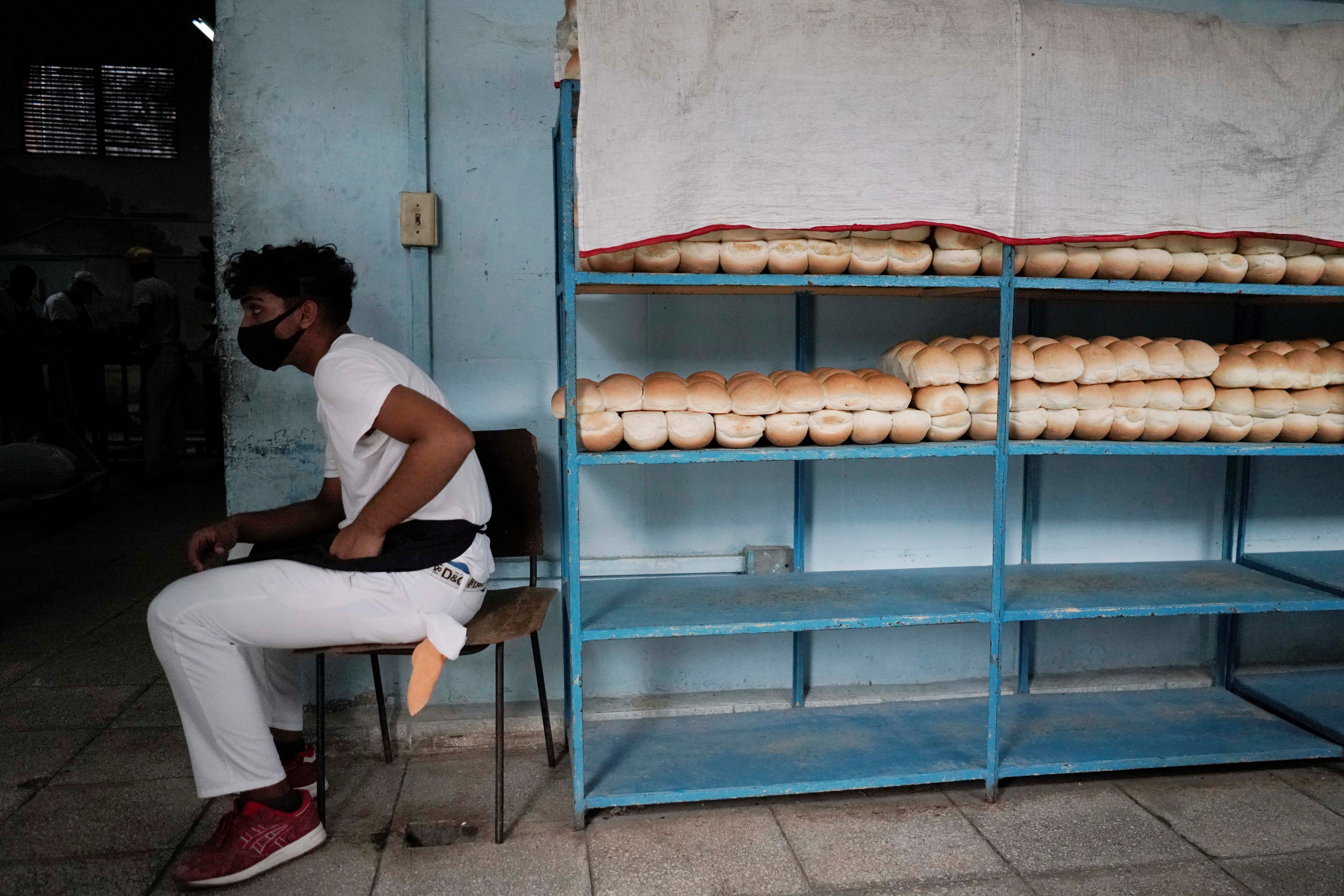
Soaring international food and shipping prices and low domestic production are further squeezing import-dependent Cuba’s ability to feed its people.

Cuba traditionally imports by sea around 70% of the food it consumes, but tough U.S. sanctions and the pandemic, which has gutted tourism, have cut deeply into foreign exchange earnings.

For more than a year Cubans have endured long waiting lines and steep price rises in their search for everything from milk, butter, chicken and beans to rice, pasta and cooking oil. They have scavenged for scant produce at the market and collected dwindling World War II-style food rations.

This month the Communist-run government announced flour availability would be cut by 30% through July.

Diorgys Hernandez, general director of the food processing ministry, said when he announced the wheat shortage that “the financial costs involved in wheat shipments to the country” were partly to blame.

That was bad news for consumers who had been buying more bread to make up for having less rice, pasta and root vegetables at the dinner table.

“People eat a lot of bread and there is concern there is going to be a shortage of bread because that is what people eat the most,” Havana pensioner and cancer survivor Clara Diaz Delgado said as she waited in a food line.

Cuba does not grow wheat due to its subtropical climate. The price of the commodity was $280 per tonne in April, compared with $220 a year earlier.

The government has also said the sugar harvest was short of the planned 1.2 million tonnes by more than 30%, coming in at less than a million tonnes for the first time in more than a century.

Cuba will have trouble making up for a shortage of domestically produced sugar as international prices are around 70% higher than a year ago.

COST OF SHIPPING

Adding to the pain, the cost of international container shipping is up as much as 50% over the last year and bulk freight more.

The U.N. Food and Agriculture Organization reported its international food price index was up 30.8% through April compared with the same month last year, and the highest since May 2014.

The Cuban state has a monopoly on foreign trade and purchases around 15% of the food it imports from the United States for cash under a 2000 exception to the trade embargo.

John Kavulich, president of the U.S.-Cuba Trade and Economic Council, which follows the trade, said sales fell 36.6% last year to $163.4 million, compared with 2019. They recovered in the first quarter, reaching $69.6 million, though that represented less food due to higher prices.

Chicken, Cuba’s most important U.S. import, is badly affected. A U.S. businessman who sells chicken to Cuba said he shipped drumsticks at 24 cents a pound in January and 48 cents in April. He did not wish to be named.

“Resuming global demand, increased prices for product inputs and labor shortages suggest that commodity prices will not decrease soon,” Kavulich said.

The economy declined 11% last year and according to local economists contracted further during the first trimester of 2021 as a surge in the new coronavirus kept tourism shuttered and much of the country partially locked-down.

The government reported that foreign exchange earnings were just 55% of planned levels last year, while imports fell between 30% and 40%.

Incoming container traffic was down 20% through April, compared with last year, according to a source with access to the data, who requested anonymity.

The government has not published statistics for the notoriously inefficient and rustic agricultural sector since 2019 but scattered provincial and other reports on specific crops and livestock indicate substantial declines for rice, beans, pork, dairy and other Cuban fare.

This was confirmed by a local expert who requested anonymity and said output was down by double digits due to a lack of fuel and imported fertilizer and pesticides.

The post Soaring International Prices Fuels Cuban Food Crisis appeared first on The St Kitts Nevis Observer.

US: Medical Care Legislation for Officials Hit with ‘Havana Syndrome’

(CNN) A bipartisan group of lawmakers has unveiled legislation to boost medical care for those afflicted with “Havana syndrome,” charging that the Trump administration failed to do enough to care for CIA officers and State Department diplomats struck by the inexplicable illness.

Maine GOP Sen. Susan Collins and the leaders of the Senate Intelligence Committee introduced a bill on Thursday that would authorize the CIA and the State Department to provide injured employees with more financial support for brain injuries

House Intelligence Chairman Adam Schiff, a California Democrat, is introducing a companion measure in the lower chamber.

While an initial wave of incidents beginning in 2016 affected US personnel abroad in Cuba, China and Russia, there have been new possible cases reported on US soil — including two potential incidents CNN first reported that occurred late last year near the White House.

The Senate Intelligence Committee said last month that the number of incidents where US officials have suffered mysterious symptoms consistent with “Havana syndrome” appeared to be increasing.

Federal investigators have struggled for years to understand who or what was causing the strange array of symptoms and sensory experiences that some diplomats and intelligence officers were reporting while stationed overseas — including vertigo, headaches, nausea and sometimes a “piercing directional noise.”

Some victims of these episodes have suffered lingering and serious health problems, including traumatic brain injury, and have been forced to retire from service.

Several victims and former officials have publicly accused the CIA and the State Department under Trump of failing to take their injuries seriously. One official with direct knowledge of incidents said that victims who reported were treated as if they were “crazy.”

Until recently, victims were denied medical care at Walter Reed National Military Medical Center and the National Institutes of Health, forcing them to muddle through a series of physicians in the private sector to try to find a diagnosis — and relief — for their ongoing symptoms.

“Some of the victims did not receive the financial and medical support they should have expected from their government when they first reported their injuries. This is an outrageous failure on the part of our government to care for those who serve,” Collins, a Senate Intelligence panel member, said on the Senate floor introducing the legislation.

The new Senate legislation is sponsored by Collins, Senate Intelligence Chairman Mark Warner of Virginia, the panel’s top Republican, Sen. Marco Rubio of Florida, and New Hampshire Democratic Sen. Jeanne Shaheen. The House’s bill has a half-dozen Democratic co-sponsors, including House Foreign Affairs Chairman Gregory Meeks of New York, as well as Rep. Devin Nunes of California, the Intelligence Committee’s top Republican.

Lawmakers on the Intelligence and Armed Services committees have grown increasingly frustrated with the government’s handling of these cases.

Committee members and some victims say there has been a marked difference in the handling of the cases — and the investigation into their cause — since CIA Director William Burns was confirmed earlier this year. Burns committed publicly to getting to the bottom of the mystery during his confirmation hearing and is receiving daily briefings on the matter. The CIA’s chief medical officer, who faced criticism that he was too skeptical of victims’ accounts, also announced his retirement in recent weeks.

But the cause of these episodes remains a point of debate and investigation. And victims and some lawmakers are still seeking accountability for the agency’s alleged failures under then-CIA Director Gina Haspel to care for victims.

“The bill demonstrates that the US government may finally take seriously the long-term health care needs of the victims,” said Marc Polymeropoulos, a longtime CIA officer who was struck by the hallmark symptoms of Havana syndrome in Moscow in 2017 and was forced to retire. “And, given the moral injury that we have all faced of initially not being believed by our own agencies, we are grateful that a bipartisan group of senators has been so resolutely supportive.”

Even now, officials responsible for tracking and investigating these cases are on the lookout for psychosomatic episodes, current and former officials say. Because the array of symptoms that victims report is so inconsistent — and because intelligence and military officials are still struggling to understand what technology is at work here — diagnosing the cases remains an inexact science.

The bill would require the CIA and the State Department to create regulations “detailing fair and equitable criteria for payment” to victims. It would also require the departments to report to Congress how they are using their new funding authorities — including telling Congress the number of employees and dependents who received payments, according to a copy of the bill reviewed by CNN.

Intriguingly, the statement from Collins and Warner announcing the legislation refers to the episodes as “probably microwave attacks,” offering a degree of certainty about the technology underpinning these episodes that the intelligence community has been reluctant to assign. Although some officials in the Defense Department are convinced that microwave energy is responsible, a number of scientists and academics have publicly criticized that explanation as unsupported by the evidence.

The post US: Medical Care Legislation for Officials Hit with ‘Havana Syndrome’ appeared first on The St Kitts Nevis Observer.

Panama to Close Border with Colombia Over COVID-19 Risk

Reuters- Panama will temporarily close its border with Colombia beginning Thursday to prevent the spread of COVID-19 and tighten security, its government said, after Colombia reopened the land and maritime crossings on the border.

Panama’s government said Colombia’s decision to reopen the borders “puts at risk the significant progress” that Panama made to control the COVID-19 pandemic and border security.

“The national government has determined to temporarily suspend the entry into the national territory by land, sea and river routes of any person coming from the border with the Republic of Colombia, as of May 20, 2021,” the foreign ministry said in a statement on Wednesday.

Colombia on Wednesday reopened its land, river and sea borders with Brazil, Ecuador, Peru and Panama, which had been closed since March 17, 2020, its government said.

Panama has recorded 372,221 cases of coronavirus and 6,305 deaths, according to government data.

The post Panama to Close Border with Colombia Over COVID-19 Risk appeared first on The St Kitts Nevis Observer.

Copa America Ditches Colombia Venues Over Continued Militant Protests

The 2021 Copa America will no longer feature games in co-host Colombia after the South American Football Confederation (CONMEBOL) decided on Thursday to move games away from the country after a wave of civil unrest there.

The 2021 tournament, delayed a year by the pandemic, was due to be jointly hosted for the first time its 105-year history, with matches split between Colombia and Argentina. read more

“CONMEBOL guarantees the realisation of the 2021 Copa America and in the coming days will inform on the relocation of those games that were to be held in Colombia,” the organisation said in a statement.

CONMEBOL rejected an appeal from Colombia to move the tournament to the end of the year.

Argentina earlier this week offered to host the whole tournament amid weeks of anti-government protests in Colombia which have killed at least 15 people.

PROTESTS

Demonstrators take part in a protest demanding government action to tackle poverty, police violence and inequalities in healthcare and education systems, in Bogota, Colombia, May 19, 2021. REUTERS/Luisa Gonzalez/File Photo

Tear gas fired outside some Colombian stadiums during recent matches led to discomfort for players and condemnation from coaches and officials. CONMEBOL already transferred some games out of Colombia to Paraguay and Ecuador.

The protests that began in late April, originally against a now canceled tax plan, have led to food and gasoline shortages and stymied exports, the government said. Protest demands have expanded to include calls for a basic income, an end to police violence and more opportunities for young people. read more

Blockades are still affecting roads in 17 of Colombia’s 32 provinces and unions have called for more big protests on May 26 and 28.

The tournament features all 10 South American nations and was due to kick off in Buenos Aires on June 13 and culminate with the final in the Colombian city of Barranquilla on July 11.

It originally featured 12 teams, but invited guests Qatar and Australia pulled out after the dates were changed.

The co-hosting model was based around a northern group in Colombia featuring Colombia, Ecuador, Brazil, Peru and Venezuela and a southern group playing in Argentina featuring the host nation, Bolivia, Chile, Paraguay and Uruguay.

The five teams based in Colombia now face an anxious wait to see where they will now be based.

Although CONMEBOL have given no indication of where they might move the games, Chile – the South American country with the highest vaccination rates – could be one possibility.

CONMEBOL, which is based in Paraguay, moved several intercontinental games there from Colombia earlier this month and could ask authorities there for assistance.

BLOW TO COLOMBIA

The decision to strip Colombia of its games is a crushing blow to a nation that suffered a similar reverse in the 1980s when it was forced to give up the right to host the 1986 World Cup finals, which were moved to Mexico.

And in 2001, the last time Colombia hosted the Copa America, CONMEBOL were so worried about security there they cancelled the tournament only to change their minds a few days later.

However, Argentina and invited guests Canada withdrew, citing concerns over security.

South America has been hit hard by the pandemic, with more than 444,000 people dying in Brazil, and new surges causing consternation in Argentina and Uruguay, amongst other places.

The death toll in Colombia this week surpassed 83,000, while 72,699 have perished in Argentina, with a new record of daily deaths recorded earlier this week.

Argentine President Alberto Fernandez on Thursday announced a strict lockdown beginning on Saturday and lasting until at least May 31.

The move includes a ban on all sporting, religious and social events, in addition to closing schools and non-essential commerce.

The post Copa America Ditches Colombia Venues Over Continued Militant Protests appeared first on The St Kitts Nevis Observer.

Latin America to Get Vaccine Windfall, Boliva & Fake News, Dogs Detect COVID, World Stats

Carl O’Donnell/Jeff Mason

Latin America is poised to receive millions of U.S.-made COVID-19 shots in the coming weeks as the United States emerges as a top exporter of vaccines against the novel coronavirus, according to two people familiar with the matter.

The United States is considering prioritizing countries within its own hemisphere for the 80 million domestically-made vaccine doses it has pledged to send abroad, one person familiar with the matter said.

Meanwhile, Pfizer Inc (PFE.N) has begun exporting millions of its U.S.-made shots largely to countries in Central and South America, a second person familiar with the matter said.

Many Latin American countries have a dire need for COVID-19 vaccines as they combat outbreaks. Brazil has been one of the world’s hardest hit countries by the pandemic, reporting a total of more than 15 million cases and 400,000 deaths as of this week.

Pfizer, which developed its vaccine with German partner BioNTech SE , is producing around 10 million shots in the United States each week for export as its domestic output pulls ahead of U.S. demand for vaccines, the second person said.

The drugmaker is making shipments from its Michigan facility to U.S. neighbors Canada and Mexico, as well as nearly 10 other Latin American countries, the person said.

Recent recipients of Pfizer’s U.S.-made vaccine doses include Brazil, Costa Rica, Ecuador, Peru, and Uruguay, the person added.

The White House is still deliberating how to direct the shots it promised to send abroad and President Joe Biden has not yet made a decision. But giving preference to countries that share a hemisphere with the United States is one argument under consideration because it would be in the American people’s interest to do so, the first person said.

The criteria for sharing the vaccine would be epidemiological and include geographic flexibility so that adjustments could be made as the pandemic shifts, another person familiar with the matter said.

VACCINE DIPLOMACY

The United States is competing with China and Russia to deepen its ties around the world and further its geopolitical clout through so-called “vaccine diplomacy.”

Republican Senator and former presidential candidate Mitt Romney on Thursday urged the United States to speed up global vaccination sharing to better compete with global rivals. read more

Gayle Smith, the U.S. global coordinator on COVID-19, said on Wednesday that the United States will donate a significant number of COVID-19 vaccines through the COVAX program for distributing doses to poorer countries being co-led by the World Health Organization. read more

Pfizer is directing its U.S.-made shots to Latin America because of the region’s proximity to its manufacturing plants and because of the U.S. drugmakers’ goal of getting more shots to low and middle income countries, the second person said.

The United States is becoming a top supplier of COVID-19 shots to the world as the success of its own vaccination campaign has led to reduced demand at home.

More than 60% of U.S. adults have received at least one COVID-19 shot, according to federal data. Meanwhile, countries such as India and Brazil are struggling to obtain the doses they need to help bring severe outbreaks under control.

Brazil has only distributed enough shots so far to have vaccinated around 13% of its population, even as it records almost 65,000 new cases per day on average, according to Reuters data.

Biden said on Monday the White House will give out 20 million shots previously earmarked for U.S. residents by the end of June. They will include vaccines made by Pfizer, Moderna Inc (MRNA.O) and Johnson & Johnson (JNJ.N). read more

The White House is also planning to give other countries around 60 million U.S.-made doses of AstraZeneca’s (AZN.L) vaccine, which is not yet authorized for use in the United States.

Pfizer began exporting doses from its Kalamazoo, Michigan plant last month, with the first batch of shipments abroad going to Mexico. A deal with the White House last year had barred it from exporting doses until after March 31, Reuters reported. read more

Pfizer is continuing to hold talks with India, where the virus is raging out of control, as its shot is not yet authorized by India. The timeline for any potential agreement is not clear, the second person said.

=============================================

Vaccines are satanic’: Bolivia battles fake news in inoculation drive

Reuters
A Bolivian healthcare worker receives a dose of Russia's Sputnik V (Gam-COVID-Vac) vaccine against the coronavirus disease (COVID-19) at the Hospital del Norte in El Alto, outskirts of La Paz, Bolivia, January 30, 2021. REUTERS/David Mercado/File Photo

A Bolivian healthcare worker receives a dose of Russia’s Sputnik V (Gam-COVID-Vac) vaccine against the coronavirus disease (COVID-19) at the Hospital del Norte in El Alto, outskirts of La Paz, Bolivia, January 30, 2021. REUTERS/David Mercado/File Photo

Bolivia’s immunization drive against COVID-19 is being hit by anti-vaccine misinformation that is stoking scepticism and leaving inoculation centers half empty, a challenge for the government facing a wave of new infections.

Health workers and officials have raised concerns about low turnout at some vaccination sites, saying jabs are going to waste. They blame fake news campaigns that have included leaflets saying vaccines contain “satanic” material.

“We read some pamphlets in El Alto from anti-vaccine groups about the presence of a substance in the vaccines from Lucifer and because of that the vaccines were satanic,” said Maria Rene Castro, deputy minister of epidemiology.

“Global disinformation has come to our country and it has had an impact on people who are avoiding getting vaccinated.”

Bolivia, like much of South America, is being hammered by a deadly new wave of coronavirus infections, with recent daily cases at 98% of the country’s peak set in February. So far a total of 340,000 people have been infected and 14,000 have died. (Graphic on cases and deaths)

The region has also struggled with a scarcity of vaccines, though Bolivia has started to see more doses flow in after deals for Russia’s Sputnik V, China’s Sinopharm (1099.HK) and with India’s Serum Institute for AstraZeneca (AZN.L) shots. read more

However, many vaccines centers in major cities have continued to face low turnout, with empty sites and queues.

“I don’t want to get vaccinated, I don’t want to die and I don’t want to get sick,” said El Alto resident Rogelio Mayta.

Health worker Patricia Almanza said that organization around the vaccine campaign had been poor, which had not helped encourage people to come to get their shots.

“It’s criminal that during this time of the pandemic we have to discard vaccines,” she said.

“There are places where the vaccines are being discarded, or health workers are going out to look for people to vaccinate so that something so precious is not being thrown away.”

Bolivia has given at least one shot to just 7% of its population, far behind the 32% in the European Union and 48% in the United States. (Graphic on vaccinations)

Wealthier Latin Americans have traveled overseas, especially to the United States, to get vaccinated, which has created a stark divide between the rich and poor. Vaccine scepticism risks widening that even further. read more

“For me the COVID-19 vaccine is not credible,” said Ismael Blanco on the dusty narrow streets of the highland city. “I don’t trust the vaccine.”

===============================================

Dogs can better detect Covid in humans than lateral flow tests, finds study

French trial shows dogs were able to detect presence of coronavirus with 97% accuracy

A Covid-19 sniffer dog at Fiumicino airport in Rome, Italy.
A Covid-19 sniffer dog at Fiumicino airport in Rome, Italy. Photograph: Telenews/EPA


Guardian- Dogs are better at detecting Covid-19 in humans than many fast lateral flow tests (LFTs), according to a French study which could see canines more widely deployed for mass virus screening in crowded places including airports.

The trial, conducted in March and April by France’s national veterinary school and the clinical research unit of Paris’s Necker-Cochin hospital, showed dogs were able to detect the presence of the virus with 97% accuracy.

The dogs were also 91% correct in identifying negative samples, the study showed. A recent review of 64 studies found LFTs correctly identify on average 72% of people infected with the virus who have symptoms, and 58% who do not.

“These results are scientific confirmation of dogs’ capacity to detect the olfactory signature of Covid-19,” the Paris hospital board said, adding that the study – which is due to be published in a scientific review – was the first of its kind.

“These are excellent results, comparable with those of a PCR test,” Prof Jean-Marc Tréluyer told Agence-France Presse. Tréluyer said dogs would not replace polymerase chain reaction (PCR) tests, which are significantly more reliable than LFT tests.

But, he said, “they could help identify those people who should undergo a full viral test and – because the dogs’ response is so quick – facilitate mass testing” in places such as airports, train stations and concert venues.

In the French study, researchers collected samples – cotton pads pressed for two minutes under participants’ armpits – from 335 people aged between six and 76 who presented themselves for a PCR test at testing centres in Paris.

The pads were then sealed in jars and given to at least two of the nine dogs used in the trial – none of whom came into contact with the volunteers – to be sniffed. The dogs’ handlers did not know in advance which samples were positive.

The dogs detected 97% of the 109 people whose PCR test subsequently proved positive, and 91% of those whose PCR test was negative.

Researchers in countries including Australia, Germany and Britain have experimented with dogs to detect Covid, while Finland and the United Arab Emirates last year launched trials with sniffer dogs at Helsinki and Dubai international airports.

============================================

WORLD STATS

Coronavirus Cases:

165,877,177

Deaths:

3,445,455

Recovered:

146,583,420
Highlighted in green
= all cases have recovered from the infection
Highlighted in grey
= all cases have had an outcome (there are no active cases)

[back to top ↑]

Latest News

May 21 (GMT)

Updates

  • 2,628 new cases and 230 new deaths in Mexico [source]


The post Latin America to Get Vaccine Windfall, Boliva & Fake News, Dogs Detect COVID, World Stats appeared first on The St Kitts Nevis Observer.

El Salvador: Mass Grave of Women Found at Former Cop’s Home

Reuters- El Salvador officials said on Thursday they were excavating graves discovered at the house of a former police officer that contained as many as 40 bodies, most of them believed to be women.

Exhuming all the bodies could take another month, authorities said. The remains of at least 24 people have been recovered so far at the house in the municipality of Chalchuapa, about 48 miles (78 km) northwest of the capital, San Salvador.

At least 10 people are facing charges, according to the office of the attorney general, including a former police officer, Hugo Ernesto Osorio Chavez, whose home is on the same site as the graves.

Neither Osorio nor his lawyer could immediately be reached for comment.

Dozens of people who believed their missing relatives could be among the bodies gathered outside the house on Thursday, as forensic workers dressed in white suits removed skeletons from the ground.

“There’s the hope of recognizing a family member, even among the corpses,” said Marleny Barrientos, 50, who carried a photograph of her son, who disappeared in 2015. “That is why I’m here.”

The discovery of the mass grave has brought the issue of femicides into focus in the Central American country of 6.7 million, which recorded 70 killings of women last year. There were 111 in 2019, police data showed.

So far, authorities have prosecuted nine cases of aggravated femicide and another five cases of aggravated homicides in connection with the case.

“The central axis of the investigation is sexual violence,” prosecutor Graciela Sagastume told the press earlier this week.

Violence against women in Latin America worsened during the coronavirus pandemic, according to aid groups.

Separately, in Mexico, a 72-year-old man was arrested this week as a suspected serial killer of women, local media reported. The remains of several people were found at his home in the State of Mexico during an investigation into the death of a 36-year-old woman.


The post El Salvador: Mass Grave of Women Found at Former Cop’s Home appeared first on The St Kitts Nevis Observer.

Vaccine refusal is as dangerous a pandemic as COVID-19

By Sir Ronald Sanders

(The writer is Antigua and Barbuda’s Ambassador to the United States and the Organization of American States.   He is also a Senior Fellow at the Institute of Commonwealth Studies at the University of London and Massey College in the University of Toronto.  The views expressed are entirely his own)  


Vaccine refusal is fast becoming as dangerous to human health and to economies as the COVID-19 pandemic.

In 2019, even before the novel coronavirus was confirmed and began its spread around the world, the World Health Organization (WHO) revealed that vaccine refusals had led to a resurgence of diseases such as measles in countries that were close to eliminating them.  The WHO identified vaccine refusal as one of the 10 leading threats to global health.  At that time, complacency, inconvenience in access, and a lack of confidence were said to be the driving factors for people’s refusal to inoculate against disease.

Since the advent of the COVID-19 pandemic, the problem has become worse and so widespread that a comprehensive approach by all governments and non-governmental organizations, globally, is now necessary to overcome it.

Promoted on social media platforms by far-right organisations and church groups in the U.S., the anti-vaccine propaganda has spread like wildfire, convincing persons at all levels of societies that they would either die from an inoculation or some harmful material would be injected into their bodies.

Religious groups in the Caribbean, influenced by fundamentalist U.S. churches, also encourage their followers not to vaccinate.  Research done by the New York Times reported, on April 5, that “among evangelicals in the U.S., Pentecostal and charismatic Christians may be particularly wary of the vaccine, in part because their tradition historically emphasizes divine health and miraculous healing in ways that can rival traditional medicine”.  Charismatic churches also attract followers in the Caribbean.

The most popular social media platforms used by anti-vaxxers are Facebook, Twitter and Instagram which have all committed to banning anti-vaccine content.  But, accounts on these platforms turn up as quickly as they are taken-down.  In turn, the propaganda, which includes fabricated videos purporting to show actual events, are communicated tens of thousands of times around the world on WhatsApp.

Governments and social media platforms, such as those named in this commentary, as well as organizations such as the WHO and the Pan-American Health Organization (PAHO), must gather specialists together to find ways to counter the anti-vaccination propaganda campaigns and to strengthen educational progammes showing the benefit of vaccines.  PAHO has started using Facebook to educate about the benefits of vaccines, but more effective communications techniques should be used, including dropping huge images of syringes and needles, that may be reinforcing reticence to inoculate.

Groups of persons in many parts of the world, who decline taking the COVID-19 vaccine, now pose a risk to themselves and the people with whom they come into contact, especially their families.  They also pose a risk to the opening-up of the economies of their countries.

Data, gathered worldwide, shows that the claims of the anti-vaxxers, concerning detrimental effects of the vaccine, are wrong.  Figures confirm that the COVID-19 vaccine prevents severe infection and deaths at astounding rates.

Studies show that, in Israel for instance, vaccines prevented hospitalization among adults 65 and older by 94%.  They also prevented symptomatic infection among health-care workers by 97% and blocked severe disease by 97.4% in Qatar.  Dr. Monica Gandhi, an Infectious-Diseases Specialist, and Professor of Medicine at The University of California at San Francisco, reports that serious infections among vaccinated individuals are extremely rare.  She points out that “of over 115 million vaccinated Americans,  only 0.0009% contracted severe COVID-19 after vaccination despite the virus continuing to circulate in their communities. As she concluded: “Vaccines truly defang the virus”.  In the U.S. and Britain where (at the time of writing on 20 May) 48.09% and 55.49% of the populations have been vaccinated, data shows that vaccines also block transmission.

People, who have been inoculated against the coronavirus, are rightly concerned that, despite their responsible action in taking the vaccine, irresponsible persons are asserting their right to refuse it.  The question that has to be asked is:  whose rights are greater?  Are the rights to safeguard lives and livelihood less than the right to put lives and livelihoods at risk by refusing to be vaccinated?   This is not a moral dilemma; it is a common sense question, deserving a common sense answer.

However, no answer is being attempted as individual governments and their health authorities shy away from the question for political reasons.   No ruling political party wants to risk losing electoral support to its rivals on the back of an accusation of depriving people of their rights.  Yet, when that right is upheld, it threatens others and entire societies.  Just as measles has returned in countries where groups of people decline to be inoculated against it, COVID-19 will not be subdued or eliminated in countries where groups of people refuse to be vaccinated.

This conflict must be tackled and resolved by global agreement and action. No one country can act alone. Maybe the answer lies in an intense education programme globally constructed, financed, and implemented.

The mantra that “we’re all in this together” assumes a profound global relevance for maintaining life and sustaining livelihoods.  Doing nothing is not a solution. The 74th World Health Assembly being held from May 24 to June 1, is the ideal place to start.

Responses and previous commentaries: www.sirronaldsanders.com

The post Vaccine refusal is as dangerous a pandemic as COVID-19 appeared first on The St Kitts Nevis Observer.