Tag Archives: caribbean

Brazil Nursery School: Kids and Teachers Killed in Frenzied Machete Attack

Five people have died after an 18-year-old man launched a machete attack at a nursery school in southern Brazil, police say.

The victims include three children all reported to be under two years old and two staff members.

The attacker then turned the weapon on himself and is in critical condition in hospital, a police statement said.

It is not clear what was behind the attack in the small town of Saudades, in Santa Catarina state.

Several dozen children were in the building at the time of the incident and staff tried to hide them, officials said. A fourth child is said to have suffered minor injuries.

Military police say they received several calls at 10:35 local time (13:35 GMT) from neighbours who reported that a man armed with a machete had entered the nursery and was attacking staff and children.

Police say the man – who has not been named – first attacked a teacher who was at the entrance to the nursery. He reportedly followed her into one of the rooms, where he also turned on the children.

The nursery is located in the centre of Saudades, a town of about 9,000 people, and according to Globo news it cares for children under the age of 3.

Map of Brazil
image captionThe attack happened in the town of Saudades

“I heard screams [and] cries for help,” one employee who was near the nursery at the time of the attack, Aline Biazebetti, told AFP news agency.

“I went outside and saw my colleagues calling for help: ‘Please, call the police, an armed guy came in and is killing the children.’”

At a news conference later on Tuesday, one police officer described the attackers weapon as “samurai-style” and displayed it to reporters.

Three days of mourning have been declared in Santa Catarina state.

While there have been deadly attacks in schools before in Brazil, they have mainly targeted older pupils:

The post Brazil Nursery School: Kids and Teachers Killed in Frenzied Machete Attack appeared first on The St Kitts Nevis Observer.

Deadly Overpass Collapse: Mexico Vows Vengeance on Those Responsible

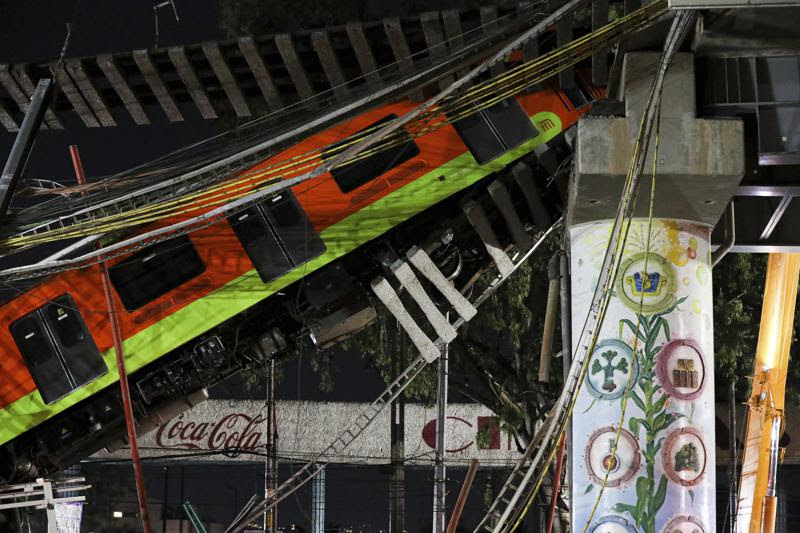
Mexico will punish those responsible for an overpass collapse that killed at least 24 people and injured dozens when a train on Mexico City’s newest metro line plunged onto a busy road below, the government said on Tuesday.

Accompanied by officials involved in the construction and maintenance of the elevated metro line that collapsed on Monday night, President Andres Manuel Lopez Obrador said the investigation should be done quickly and that nothing should be hidden from the public.

“There’s no impunity for anyone,” he told a news conference. The city has been governed since the turn of the century by former mayor Lopez Obrador and his allies.

The crash has raised wider questions about safety on one of the world’s busiest metro systems, which carries millions of people daily across the capital’s urban sprawl.

Firefighters using heavy chains to stabilize the site pulled bodies and survivors from the wreckage before lowering one dangling carriage onto a truck in the afternoon. Some 79 people were injured, including three children, authorities said.

Video on social media showed the moment when the overpass suddenly plummeted onto a stream of cars near the Olivos station in the southeast of the city at around 10:30 p.m. (0330 GMT on Tuesday), sending up clouds of dust and sparks.

Monserrat, 26, said she was at the back of the train wagon when she heard a loud noise and the lights went out.

“Everybody screamed and we fell on top of each other,” she told Mexican radio.

Outside hospitals, family members grew frustrated waiting for information on relatives.

Angelica Cruz Camino, 31, said she had not heard from her husband since he was on his way home from work late Monday. She visited several hospitals and was told all victims were identified but she still had not found him by Tuesday afternoon.

“I called and called but he wasn’t answering me. Then it was my son who realized the metro collapsed,” she said outside Tlahuac public hospital. “I cannot find my husband.”

SUPPORTS SHAKING

The overpass that collapsed was part of Linea 12, an addition to the network finished less than a decade ago and long plagued by allegations of corruption and structural weakness.

In 2014, just two years after it opened, several of the line’s stations were closed for structural repairs.

A general view of the damage caused after a railway overpass and train collapsed onto a road in Mexico City, Mexico May 4, 2021. Picture taken with a drone. REUTERS/Carlos Jasso

Four people who live in the area told Reuters they observed the support structures below the elevated tracks visibly shaking when trains crossed. Some recalled warnings about the humid soil being unfit for major construction.

After a powerful 2017 earthquake, government data show there was also damage to the line’s support columns.

“Every time I saw the train, I saw the columns and beams shake,” said Victor Lara, a daily commuter on the line. “They’re not well made.”

Investigations will be carried out by the federal attorney general’s office, its Mexico City counterpart, and an external auditor, Norway’s DNV GL, officials said.

U.S. Vice President Kamala Harris and Canadian Prime Minister Justin Trudeau sent condolences to the families and friends of the victims of the accident and Lopez Obrador declared three days of national mourning.

Lopez Obrador was mayor of the city in the early 2000s, and current mayor Claudia Sheinbaum and Foreign Minister Marcelo Ebrard, who ran the city when Linea 12 was built, are both senior members of his political movement.

Linea 12 was built by a consortium of CARSO Infraestructura y Construccion, S.A.B. de C.V (CCICSA), a company controlled by the family of Mexican tycoon Carlos Slim, Mexico’s Grupo ICA, and the Mexican unit of France’s Alstom SA (ALSO.PA).

ICA shared a chart with Reuters indicating that CCICSA was responsible for construction on the section of the line that collapsed but declined to comment further.

A spokesman for CCICSA did not immediately respond to a request for comment on the chart, but said in an earlier statement to Reuters the company stood in solidarity with victims’ families and those injured. “We are going to wait for the official expert opinion,” CCICSA said.

Alstom said its involvement in the consortium was limited to certain aspects, including power supply and testing of some electromechanical work. The company said it would aid investigating authorities “in any way necessary.”

Sheinbaum said it appeared a girder had given way on the overpass, which she said was inspected last year. At a later news conference, she said the collapse seemed to indicate a “structural failure.”

“It is not possible to say categorically, but it seems this is what happened,” Sheinbaum said.

Ebrard said it was the “most terrible” accident to have hit the local transport system, and that he was ready to cooperate with authorities in the investigation.

Both urged the public to allow investigators to do their work before seeking to apportion responsibility.

===================================================

Families tell of desperate searches after Mexico metro collapse

Sharay Angulo

1/3

Jorge Hernandez speaks on the phone while waiting for news about his 28-year-old nephew Daniel, who had been seriously injured during the accident where an overpass of a metro partially collapsed with train cars on it, outside a hospital in Mexico City, Mexico May 4, 2021. REUTERS/Luis Cortes

Samuel Del Aguila’s son was on his way home from his job at the airport in Mexico City on Monday night when his family saw the first news reports about a deadly metro train accident.

When 29-year-old Immer did not arrive home at the usual time, his family started to worry, and began calling his phone repeatedly.

Hours later, there was finally an answer, but the voice on the other end was not Immer.

“They found his cellphone,” Del Aguila said. The stranger on the line didn’t know Immer, his whereabouts, or if he was injured.

Del Aguila, 70, and other family members searched for Immer at nearby hospitals but did not find him. With heavy hearts, they eventually headed to the prosecutor’s office where the bodies of the train accident victims had been transported and braced for the worst.

“They told us to come here to see if he was with those who did not survive. And unfortunately he was,” said Del Aguila, sobbing gently.

Del Aguila’s family was one of many who endured agonizing searches and long waits for information about their loved ones after a metro overpass collapsed and a train plunged onto a busy street in southeast Mexico City late Monday, killing at least 24 people and injuring some 79 others.

Relatives of victims standing outside the city’s hospitals and the prosecutor’s office described a night of chaos and fear while desperately trying to contact relatives who had been on the train. Some were still missing on Tuesday afternoon.

Jorge Hernandez also learned his 28-year-old nephew Daniel had been seriously injured in the accident when a woman he didn’t know called from his phone.

“A lady found his phone … and it was the lady who contacted my brother last night,” Hernandez said.

Daniel underwent abdominal surgery and then was transported by helicopter to another hospital, all while Hernandez and other relatives pleaded for information on his whereabouts.

“It is not the moment for this bureaucracy,” Hernandez said.

Many of those Reuters spoke to blamed shoddy construction and political corruption for the collapse.

The overpass that collapsed was part of Linea 12, an addition to the metro network finished less than a decade ago, and long plagued by allegations of structural weakness.

“We are used to it, sadly. Politicians are used to investing 35% and stealing 65%. It is sad to see how they steal money,” Hernandez said.

At a news conference on Tuesday with officials involved in the construction and maintenance of the metro line that collapsed, President Andres Manuel Lopez Obrador said Mexico will punish those responsible for the crash and an investigation should be carried out quickly and transparently.

The post Deadly Overpass Collapse: Mexico Vows Vengeance on Those Responsible appeared first on The St Kitts Nevis Observer.

Building a resilient and inclusive global health system together—Taiwan can help


Dr. Shih-chung Chen

Minister of Health and Welfare

Republic of China (Taiwan)

The threat that emerging infectious diseases pose to global health and the economy, trade, and tourism never ceases. Pandemics can spread rapidly around the world due to international aviation and transport. As of March 2021, a novel form of pneumonia that first emerged in Wuhan, China, at the end of 2019 and has since been classified as coronavirus disease 2019 (COVID-19) has caused more than 126 million cases and more than 2.7 million deaths worldwide. The disease has had an enormous medical, economic, and social impact around the world, and significantly threatened global efforts to achieve the United Nations Sustainable Development Goals.

Due to its proximity to China, Taiwan had been expected to be one of the countries most severely affected by the epidemic. But given its experience of fighting the 2003 SARS outbreak, Taiwan did not ignore the alarms, piecing together evolving official and unofficial accounts to form a picture of the emerging disease that implied a scope and severity worse than the global public perception suggested. Authorities used this information to launch enhanced monitoring on December 31, 2019, and have tirelessly implemented public health containment measures since Taiwan’s first case was detected on January 21, 2020. As of April 22, 2021, there had been 1,086 confirmed cases, including 11 deaths, in Taiwan. Life and work have continued much as normal for the majority of the population. Taiwan has contained COVID-19 ever since the beginning of the pandemic, including a record 253 days without any cases of domestic transmission between April and December 2020.

After dealing with SARS, Taiwan established a nationwide infectious disease healthcare network that is led and overseen by infectious disease experts across six regions. More than 100 secondary response hospitals are included in the network and all  twenty-two special municipalities, counties and cities have designated their primary response hospitals. The network also provides the legal authority for transferring patients with highly contagious diseases to designated facilities based on public health and clinical need. This has proven instrumental in protecting health systems and health professionals from being overwhelmed, and allowed most non-COVID-19 health services to continue to operate without disruption during the pandemic. To date, there have been only two hospital-associated COVID-19 outbreaks in Taiwan. Both were well managed resulting a total of 11 cases and zero death of health professionals.

By introducing public health control measures early and effectively, Taiwan has also mitigated the economic impact of COVID-19. To maintain essential international, social, economic, and trade activities, Taiwan implemented flexible adjustments for related quarantine measures for vessels and aircraft so that fisheries, offshore wind farms, and air transport industries could continue operations. In stark contrast with the global economic contraction, Taiwan’s GDP growth for 2020 was approximately 3.11 percent, with even higher growth of 4.94 percent in the fourth quarter. Furthermore, public trust and cooperation with the government’s response have been key to successfully containing COVID-19. In formulating disease control regulations, the government has adhered to the principles of reasonable response, minimum damage, and gradual adoption. It has worked hard to maintain the balance between people’s right to know and personal privacy and freedom, actively responding to people’s wishes by upholding the principle of fairness at the same time as prioritizing the protection of disadvantaged groups, including migrant workers. Throughout this pandemic, Taiwan has demonstrated an emphasis on the right to health and associated protections and strong opposition to human rights abuses. Indeed, at no point has Taiwan restricted people’s right to free expression, assembly, or participation in public life.

Although COVID-19 has hit all countries hard, its impact has been harshest among already vulnerable and high-risk communities, as well as those lacking quality health care services and those unable to handle the adverse consequences of antipandemic containment measures. As a responsible member of the international community, Taiwan will do its utmost to work with the World Health Organization and global health leaders to ensure that all people enjoy living and working conditions that are conducive to good health. We will also monitor health inequities to advocate more effectively for universal access to quality health services.

Thanks to its robust health system, rigorous testing strategies, information transparency, and public-private partnerships, Taiwan’s response to COVID-19 has been one of the world’s success stories. This pandemic has proven yet again that Taiwan cannot remain outside of the global health network. Taiwan plays an indispensable role in the global monitoring and early warning systems that detect the threat of emerging infectious diseases, and the Taiwan Model has proven consistently capable of containing COVID-19. The pandemic has also highlighted Taiwan’s capacity to research, develop, produce, and supply therapies and associated tools quickly (including two COVID-19 vaccines that are presently in Phase 2 trials). Being able to comprehensively participate in and contribute to international COVID-19 supply chain systems, as well as global diagnostics, vaccine, and therapeutics platforms would allow Taiwan to work with the rest of the world. 

We urge WHO and related parties to acknowledge Taiwan’s longstanding contributions to the international community in the areas of public health, disease prevention, and the human right to health, and to include Taiwan in WHO and its meetings, mechanisms, and activities. Taiwan will continue to work with the rest of the world to ensure that all enjoy the fundamental human right to health as stipulated in the WHO Constitution. Echoing the mantra of the United Nations’ 2030 Sustainable Development Goals, no one should be left behind. 


The post Building a resilient and inclusive global health system together—Taiwan can help appeared first on The St Kitts Nevis Observer.

Small states might benefit from the rivalry of large states for 21st century dominance

By Sir Ronald Sanders 

(The writer is Antigua and Barbuda’s Ambassador to the United States and the Organization of American States.   He is also a Senior Fellow at the Institute of Commonwealth Studies at the University of London and Massey College in the University of Toronto.  The views expressed are entirely his own) 

US President Joseph Biden’s address to a Joint Session of the US Congress on April 28 was strikingly different from the speeches of his predecessor, Donald Trump.

The address was free of the bombast and repeated references to the exceptional qualities that Trump ascribed to himself, including the frequent claim that he had either done more than any other President or that he had more knowledge of everything than anyone else.

Biden succeeded in presenting an image of ‘father of the nation’.  He was calm in his presentation, measured in his remarks and open-handed to his political opponents, many of whom were seated in the hall.  Unlike Trump, while he was firm that the US would act to prevent excesses by China and Russia, he did not adopt a tone of belligerence to these two top rivals for global political, economic, and military dominance.

Equally impressive was President Biden’s participation in the “Summit of 40 Leaders on Climate” that he organized on April 22 and 23.  Except for one brief period, when he personally excused himself to all the delegates present, he sat through every session, participating actively far beyond any expectation.  If his deep involvement in the discussions is a measure of the seriousness of his stated desire to tackle Climate Change robustly, then the world might yet be at what he calls “a great inflection point in history”.  He offers hope that greenhouse gas emissions can be dramatically reduced, global warming can be tempered and sea-level rise can decline – all of which would be immensely beneficial to small states.

Of course, as Biden pointed out to the Congress, the US accounts for “less than 15% of carbon emissions”.  He went on to state that even if the US does “everything perfectly, it’s not going to ultimately matter” because “the rest of the world accounts for 85%”.  This latter statement is an oversimplification of the situation.  Fifteen percent of carbon emissions is a high figure for one country, and it needs to be reduced; so US emissions do ultimately matter.  At the Climate Summit of 40 Leaders, the President  committed to reducing US emissions by 50%-52% below its 2005 emissions levels by 2030.  However, no concrete plans to achieve this has yet been revealed.   These plans must be rolled out publicly and soon if the US is to be credible as a global leader on Climate.

And while it is statistically true that the rest of the world accounts for 85% of the carbon emissions, it is misleading for it to be stated in this way.  For instance, as Antigua and Barbuda’s Prime Minister, Gaston Browne, pointed out at the summit, the 44 small island and low-lying states of the world “collectively emit just 1.5 % of the emissions of industrialized nations”.   The main contributors, apart from the US are China (28%), India (7%), Russia (5%) and Japan (3%).  These five countries account for 58 % of global emissions. The remaining 42% comes from 188 countries.

It was, therefore, important that Biden include the other big emitters in his Climate Summit to try to reach a consensus on the way forward.  Whether such a consensus was achieved will be better measured in the coming months, leading to the global Climate meeting, COP26, in Glasgow in November.  But it should be clear that large carbon emissions in the five countries come from industrial production and lifestyles.  It is cheaper for the offending countries to continue this pattern in order to be competitive in the global economic market. So, no one should hold their breath for dramatic change unless these countries are pushed.

Biden’s policies look set to be the push factor. The President has tied reducing carbon emissions to a massive economic programme, providing jobs and massive new infrastructure in the US.   His success in growing the US economy, increasing employment, and retaining the US competitiveness, is now tied to his Climate programme.

He emphasised in his address to Congress that “the most important word when it comes to meeting the climate crisis is ‘jobs’.”   Earlier, at the Summit on Climate, he stressed that: “Within our climate response lies an extraordinary engine of job creation and economic opportunity ready to be fired up.  That’s why I’ve proposed a huge investment in American infrastructure and American innovation to tap the economic opportunity that climate change presents our workers and our communities, especially those who have been, too often, left out and left behind”.

This is the circumstance that, realistically, should give small states, that are the worst victims of the effects of Climate Change, the greatest reason for hope.  President Biden contemplates spending US$2 trillion on his “American Jobs Plan”, creating tens of thousands of jobs, many of them linked to clean energy projects.  It will not be easy. Accounting shows that 29% of US emissions comes from transportation and a further 23% comes from electricity generation.   Americans are accustomed to driving cars for long distances and to air-conditioned homes, offices and vehicles; they will have to be convinced of the benefits of changing from their traditional sources of energy.

But the political fortunes of President Biden’s administration are now tied to achieving this goal.   Therefore, he and his team will work hard at accomplishing their objectives across all sectors of the society.   At the same time, they will not yield their competitiveness to China or Russia, as the President told the US Congress.  Consequently, the world should expect that the US Government will do everything within its power to push its rivals to cut their emissions.

In this regard, this may be one of the few cases in world history, when small countries might truly benefit from the rivalries of large and rich nations.  For this reason, President Biden’s Climate plan, tied to his  “American Jobs Plan”, should be given every support by small states.

Responses and previous commentaries: www.sirronaldsanders.com 

The post Small states might benefit from the rivalry of large states for 21st century dominance appeared first on The St Kitts Nevis Observer.

Cayman Islands Sea Turtles Back From Brink of Extinction

Sea turtles in the Cayman Islands are recovering from the brink of local extinction, new research shows.

Monitoring from 1998-2019 shows loggerhead and green turtle nest numbers increased dramatically, though hawksbill turtle nest numbers remain low.

In the first counts in 1998-99, just 39 sea turtle nests were found in total on the three islands. By 2019, the figure was 675.

Captive breeding of green turtles and inactivity of a traditional turtle fishery due to tightening of restrictions in 2008 contributed to this – but populations remain far below historical levels and still face threats including illegal hunting.

The study was carried out by the Cayman Islands Department of Environment and the University of Exeter.

“Our findings demonstrate a remarkable recovery for sea turtle populations that were once thought to be locally extinct,” said Dr Janice Blumenthal, of the Cayman Islands Department of Environment.

“A combination of factors is thought to have led to this conservation success story.

“It is likely that a captive breeding operation by the Cayman Turtle Farm (now the Cayman Turtle Centre) drove the increase in Grand Cayman’s green turtle population in the early years of monitoring.

“For loggerhead turtles, the most important factor was the restrictions placed on the legal turtle fishery in 2008.”

Dr Jane Hardwick, also of the Cayman Islands Department of Environment, added: “For both species, the recovery was assisted by protection efforts by the Cayman Islands Department of Environment on nesting beaches, including patrols by conservation officers to reduce illegal hunting.

“However, our study finds that illegal take is an ongoing threat, with a minimum of 24 turtles taken from 2015-19, many of which were nesting females.

“Artificial lighting on nesting beaches, which can direct hatchlings away from the sea, increased over the period of our study.

“Additionally, as highly migratory endangered species, sea turtles are influenced by threats and conservation efforts outside of the Cayman Islands, showing a need for international co-operation in sea turtle management.”

Historically, the Cayman Islands had among the world’s largest sea turtle nesting populations, with turtles numbering in the millions. By the early 1800s, the populations had collapsed due to human overexploitation.

The new study shows that, despite reaching critically low levels, nesting populations of green and loggerhead turtles have recovered significantly.

Hawksbill turtle nest numbers have not increased in tandem with loggerhead and green turtles – with a maximum of 13 hawksbill nests recorded in a single monitoring season.

Information on turtle nests is being used by the Cayman Islands authorities to target management efforts.

This includes “turtle-friendly lighting” initiatives, and a greater level of habitat protection for key areas has been proposed under the National Conservation Law of the Cayman Islands.

Professor Brendan Godley, of the University of Exeter, said: “I was fortunate to have been involved in establishing the turtle monitoring programme with the Department of Environment in the Cayman Islands back in 1998 and it is fantastic to see how protection and awareness has resulted in an increase in nesting turtles.

“The wonderful team and leadership of the Department of Environment have been instrumental in driving the monitoring and conservation.”

Department of Environment Director Gina Ebanks-Petrie said: “We are extremely grateful to the many volunteers, interns, property owners, businesses, organisations and members of the public who have assisted with sea turtle conservation efforts over the past two decades.

“Sea turtles are a national symbol of the Cayman Islands and our community has come together to demonstrate our commitment to their protection. This research gives us essential information for strategically targeted management efforts to secure future survival of these populations.”

The paper, published in the journal Frontiers in Marine Science, is entitled: “Cayman Islands sea turtle nesting population increases over 22 years of monitoring.”

The post Cayman Islands Sea Turtles Back From Brink of Extinction appeared first on The St Kitts Nevis Observer.

Is St. Vincent Volcano Now Dormant?

One of the scientists monitoring the La Soufriere volcano said that while there has been little seismic activity at the volcano in recent days, “we are not ready to say that the volcano has gone back to sleep as yet”.

Speaking on the state-owned NBC Radio, Roderick Stewart said there have been no signs of reactivation or pressurisation at the volcano.

“So we think it is looking good,” he said, adding “we will need to get a good look at the crater to work out what’s going on there exactly and we are not ready to say that the volcano has gone back to sleep yet, but it is definitely in a quieter stage than it was during all the explosions”

The volcano erupted explosively on April 9 forcing the evacuation of thousands of people and according to the latest bulletin issued by the Seismic Research Centre (SRC) of the University of the West Indies (UWI), seismic activity at La Soufrière has remained low since the tremor associated with the explosion and ash venting on April 22.

It said in the past 24 hours, only a few long-period, hybrid and volcano-tectonic earthquakes have been recorded and there was no further seismic tremor.

“The volcano continues to be in a state of unrest. Explosions with accompanying ashfall, of similar or larger magnitude to those that have already occurred in this eruption, can take place with little or no warning.

“Caution should be taken in traversing river valleys on the volcano due to the increased risk of lahars (mudflows) during periods of rainfall on the volcano. The volcano is at alert level RED,” the SRC added.

Stewart, who appeared on the radio programme with Prime Minister Dr Ralph Gonsalves, said “fingers crossed” he is hoping that the volcano would remain quiet and ‘we would start getting back to normal.

“There are no tremors we are only getting the occasional small earthquakes,” he said, noting however that “one of the problems I have is that before the eruption we had a station near the summit and now we don’t have that it has been destroyed.

“We can’t directly compare the activities. So one of our tasks as soon as it is safe to do so will be to put the station back online or put a new one in so that we can make a much better comparison between the activities now and the activities before.”

Stewart said while he was supportive that a person who had been evacuated from the Orange Zone could return to the area, he would want it done under a government programme and away from the Red Zone.

“Yes I think we are at the stage where we can re-occupy the Orange Zone …but that has to be qualified by saying people should not be going into the (nearby) Red Zone unless it is for official purposes and sanctioned by the government.

“We have seen videos online, we have seen posts on social media of people exploring in the Red Zone, people going hiking and this is utter foolishness. Deposits up there are …really hot underneath, they may appear cool on the surface but they are hundreds of degrees, maybe only a few feet down and you could sink into those deposits and you will suffer live threatening burns.

Stewart warned of “so many hazards that could happen” adding “it is foolish for people to be in the Red Zone.

“So I think occupying the Orange Zone is good but ensure people are not doing any activities I the Red Zone unless they are sanctioned by the government”.

He said Georgetown, which is in the Red Zone area should not among the villages that residents are allowed to re-enter.

“Georgetown was put in the Red Zone for a reason. There are hazards there and therefore we should not be doing activities in Georgetown,” he added.

The post Is St. Vincent Volcano Now Dormant? appeared first on The St Kitts Nevis Observer.

India Cricket: IPL Postponed, World Cup Venue Changed Over Pandemic Fears

This year’s T20 World Cup is set to be moved from India to the UAE with the BCCI acknowledging that none of the participating teams would be “comfortable” coming to India.

This comes after the indefinite postponement of the Indian Premier League Schedule over the coronavirus pandemic ravaging the nation.

While a final decision will be taken in a month’s time, it is understood that even the Indian cricket board is jittery about holding the 16-team tournament in October-November after the ongoing IPL had to be suspended because of multiple COVID-19 cases inside the bio-bubble.

PTI has learnt BCCI officials have had very recent discussions with some of the top decision-makers in the central government and a shift to the UAE has been more or less agreed upon. The dates of the marquee competition, which was planned across nine venues, have not yet been finalised.

“The suspension of IPL within four weeks is an indicator that it’s not really safe to host a global event of that magnitude at a time when the country is fighting its worst health crisis in last 70 years,” a senior BCCI source privy to development said on conditions of anonymity.

The dire situation in India, where a daily addition of over 3 lakh new cases has continued for the past many days, has shaken most of the member boards and the ICC is unlikely to take a risk with safety of international cricket teams.

“You can be rest assured that most of the top nations wouldn’t like to tour India within next six months unless the situation comes to normalcy. The players and their families would be very wary to travel if they are in the middle of another surge. So expect BCCI to agree with shift of tournament to UAE,” another source also chipped in.

He said IPL’s suspension after a string of positive cases has made the officialdom very jittery of taking any more risks.

“The IPL in India was a platform to prove to the world as well as participating nations that it is safe to host a tournament even when the second wave is hitting its peak.

“It was going well but the bio bubble has now become porous. What’s the guarantee it won’t happen again in October-November. Nations like Australia, England and New Zealand are almost certain to have travel advisories in place,” he argued.

One of the biggest reasons for conducting the tournament in the UAE is that it can be kept to three grounds — Sharjah, Dubai and Abu Dhabi — and there is no air travel.

“Look, six venues for IPL was always a dangerous proposition when they successfully managed with three during the last edition,” the source said.

“In UAE, all of them were in one bubble from start to finish while here each team was travelling to three bubbles. Most of the positive cases emerged after bubble travel.

“Therefore even if you reduce the number of venues from 9 to 5 in October, still there will be air travel unlike UAE. Also for players, they would not be mentally in a space to play in India unless the situation drastically improves,” he added.

There is an ICC meeting in June where a final decision will be taken but retaining the tournament in India after cancellation of IPL seems far-fetched at this poi

The post India Cricket: IPL Postponed, World Cup Venue Changed Over Pandemic Fears appeared first on The St Kitts Nevis Observer.

Mexico Apologises to Mayan People for Historic Abuses

image copyrightGetty Images
image captionNative Americans in traditional costume in Mexico (file image)


BBC- Mexico’s president has apologised to the indigenous Mayan people for abuses committed against them over the five centuries since the Spanish conquest.

Andrés Manuel López Obrador spoke at an event also attended by Guatemalan leader Alejandro Giammattei in the south-east state of Quintana Roo.

He focused on the 1847-1901 Caste War revolt in which around 250,000 people are believed to have lost their lives.

Mexico is due to hold legislative and municipal elections shortly.

“We offer the most sincere apologies to the Mayan people for the terrible abuses committed by individuals and national and foreign authorities in the conquest, during three centuries of colonial domination and two centuries of an independent Mexico,” Mr Lopez Obrador said.

Guatemala’s Alejandro Giammattei said the Mayan people still faced suffering and neglect.

“We have managed as a region to overcome aspects such as slavery, internal wars, and open confrontations between peoples,” he said.

“However, by revisiting our history, we can analyse the present and realise that we are still facing the loss of human lives but now at the hands of organised crime, because of malnutrition, and the tireless search for the dream and opportunities that so many people pursue.”

Presentational grey line

Historic but unsurprising

Will Grant, BBC Mexico and Central America correspondent

It isn’t entirely surprising that Andrés Manuel López Obrador is the president to make this official apology to the Mayan people: he first made his name as a vocal activist for indigenous rights in his home state of Tabasco.

But that makes it no less historic.

It will come as something of an important milestone to Mayan leaders who have long pushed for greater recognition of the wholesale slaughter of their people and near eradication of their culture and customs by the Spanish and Mexican governments.

However, the timing will also be met with some scepticism. There is just a month before vital legislative and municipal elections, and President López Obrador continues to push forward with his pet project of the Tren Maya – a tourist train which will run through a region called the Riviera Maya – despite overwhelming local opposition.

The post Mexico Apologises to Mayan People for Historic Abuses appeared first on The St Kitts Nevis Observer.

World View: Mexico City Tragedy, India Virus, Iran Deal?, Trump’s Big Lie, More

March 19, 2021

Alternate text

Here are today’s selection of top stories from The Associated Press at this hour to begin the U.S. day.


The Associated Press

Advancing the Power of Facts

The Rundown

I'm an image

MEXICO CITY (AP) — An elevated section of the Mexico City metro collapsed and sent a subway car plunging toward a busy boulevard late Monday, killing at least 23 people and injuring about 70, city officials said. Rescuers searched a car left dangling…Read More

I'm an image

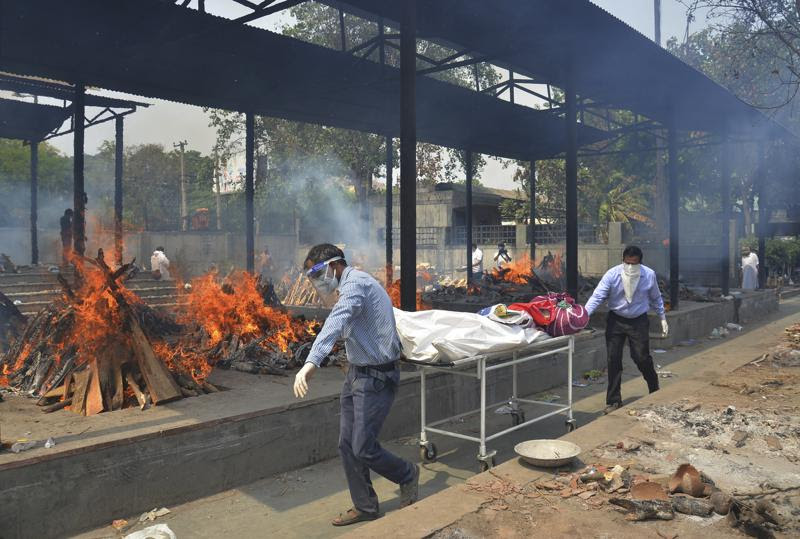
NEW DELHI (AP) — COVID-19 infections and deaths are mounting with alarming speed in India with no end in sight to the crisis and a top expert warning that the coming weeks in the country of nearly 1.4 billion people will be “horrible.”…Read More

I'm an image

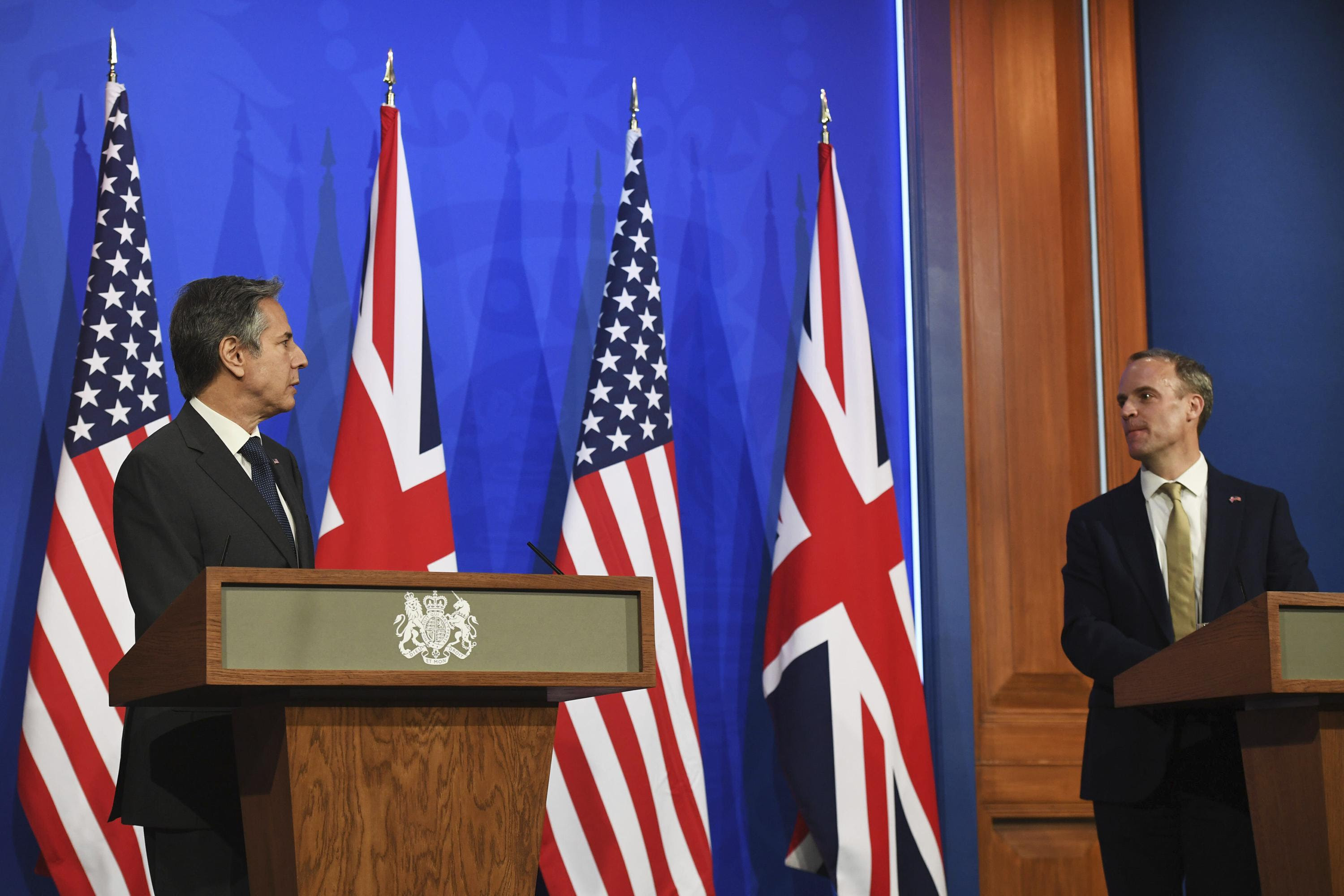
WASHINGTON (AP) — A flurry of diplomatic contacts and reports of major progress suggest that indirect talks between the U.S. and Iran may be nearing an agreement. That’s despite efforts by U.S. officials to play down chances of an imminent deal that …Read More

I'm an image

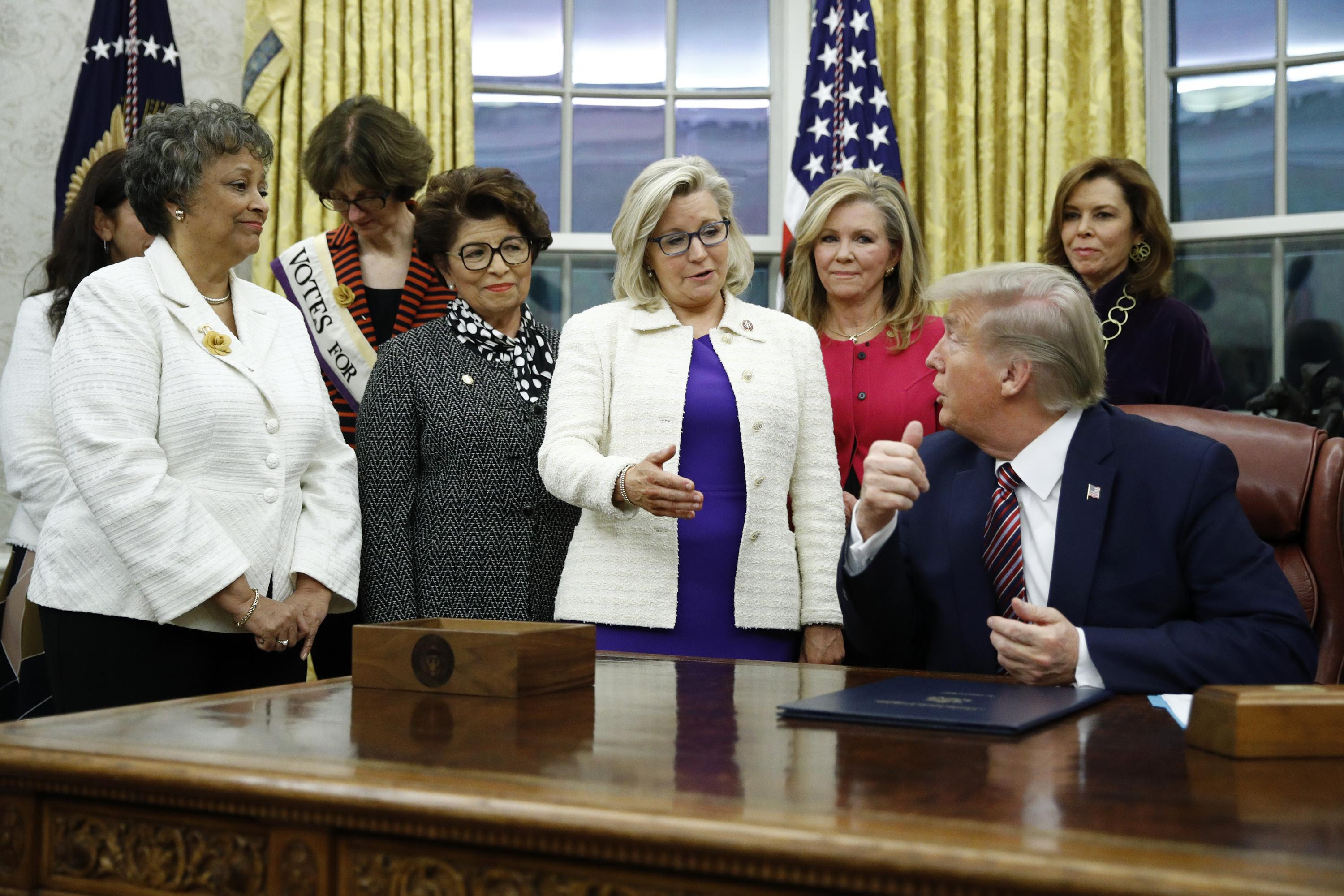
WASHINGTON (AP) — Donald Trump and his supporters are intensifying efforts to shame — and potentially remove — members of their party who are seen as disloyal to the former president and his false claims that last year’s election was stolen from him….Read More

I'm an image

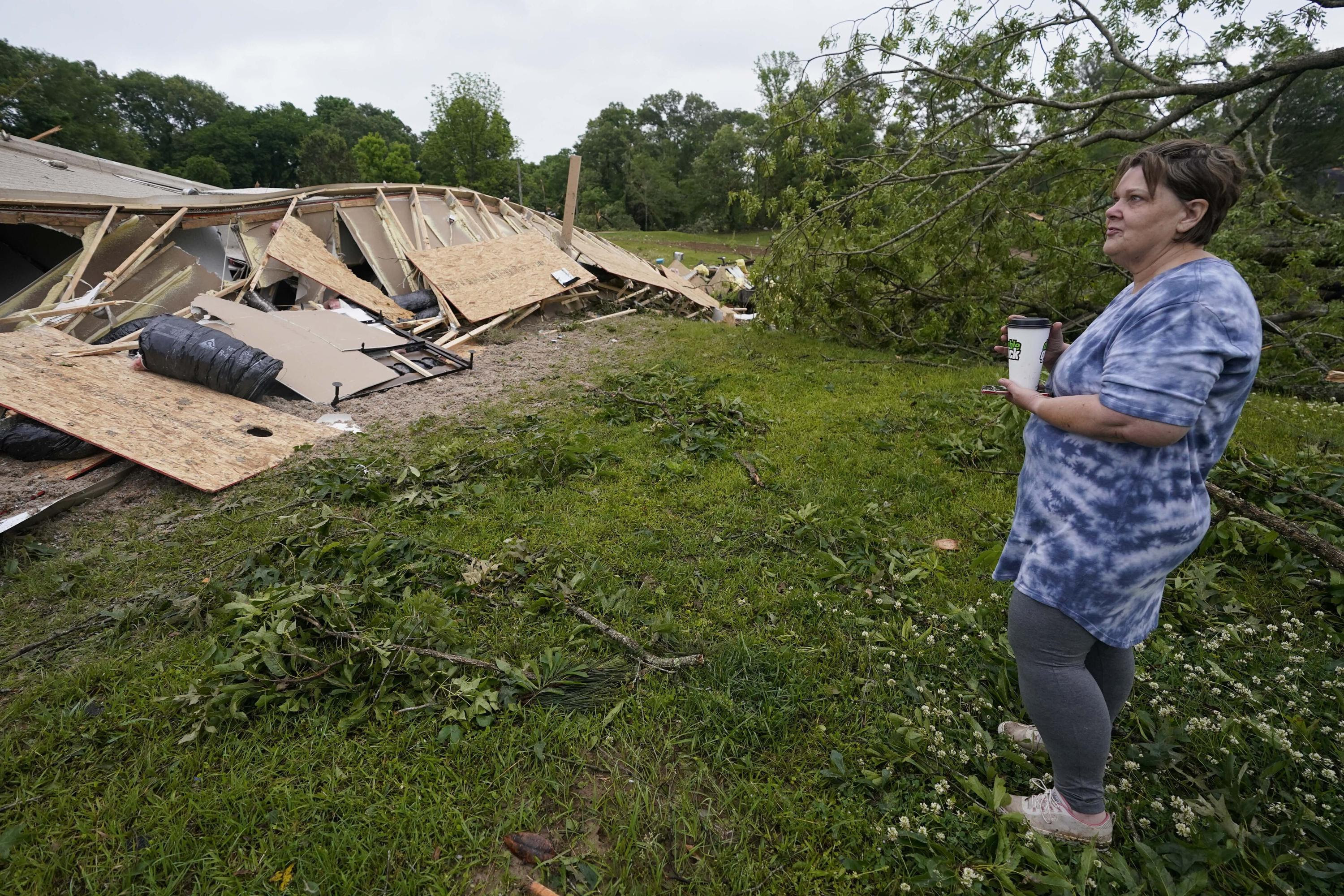
YAZOO CITY, Miss. (AP) — Much of the South is again at risk of severe weather Tuesday, forecasters say, after tornadoes struck parts of the region Sunday night and Monday, causing heavy damage in some parts of Mississippi. Large parts of Louisiana, M…Read More

OTHER TOP STORIES

Already battered by long shifts and high infection rates, essential workers struggling through the pandemic face another hazard of hard times: employers who steal their wag…Read More

WASHINGTON (AP) — President Joe Biden formally raised the nation’s cap on refugee admissions to 62,500 this year, weeks after facing bipartisan blowback for his delay in re…Read More

SEATTLE (AP) — Bill and Melinda Gates announced Monday that they are divorcing. The Microsoft co-founder and his wife, who launched the world’s largest charitable foundatio…Read More

NEW YORK (AP) — Mister Rogers’ neighborhood is expanding. In rare welcome news of sprawl, PBS Kids is releasing a new puppet-led series called “Donkey Hodie,” inspired from…Read More

The post World View: Mexico City Tragedy, India Virus, Iran Deal?, Trump’s Big Lie, More appeared first on The St Kitts Nevis Observer.

Slavery: Napoleon’s Legacy No Celebration In French Colonies


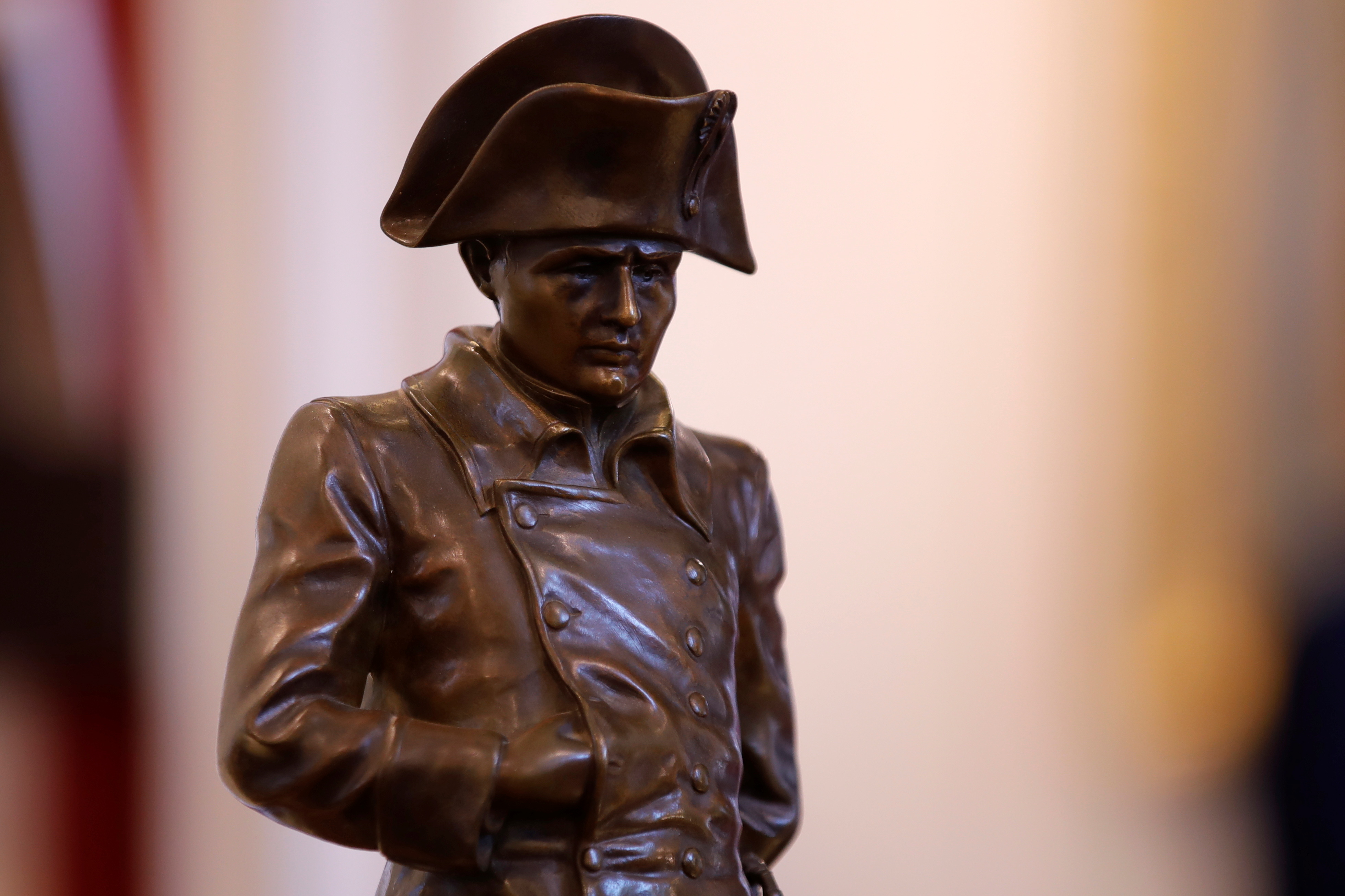
The micro-mosaic “Napoleon Coming out of his Tomb, 1869” by De Rossi from Horace Vernet (1788-1863) is displayed in the Musee de l’Armee (Army Museum) at the Hotel des Invalides in Paris, France, April 27, 2021. REUTERS/Sarah Meyssonnier

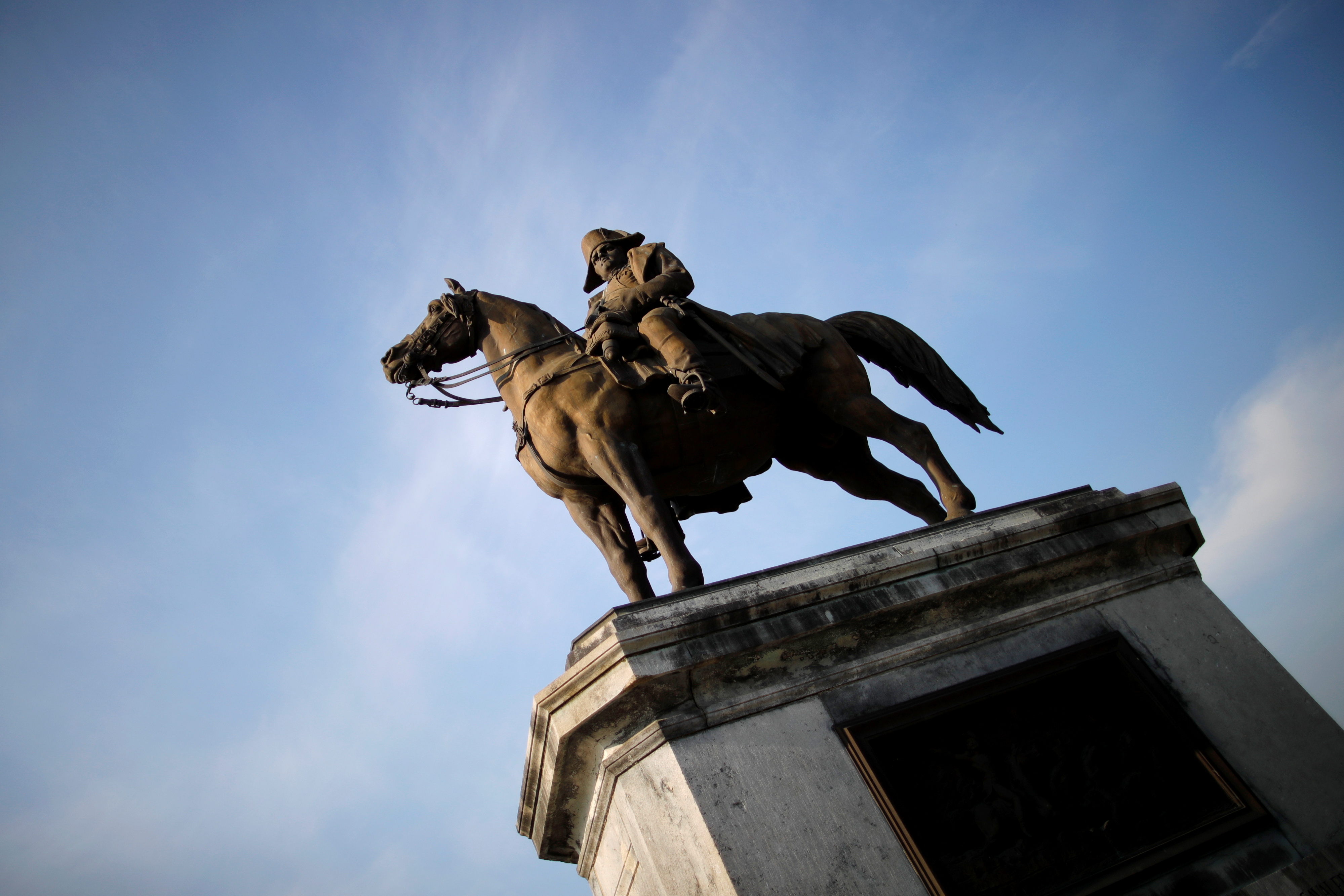
When France commemorates the bicentenary of Napoleon Bonaparte’s death on May 5, Aurelie Ramassamy will remember a tyrant who reversed the abolition of slavery rather than an emperor often lionized as a hero for his battlefield triumphs.

Like most Creoles on the Indian Ocean island of Reunion, one of France’s overseas departments, Ramassamy is a descendant of slaves. Family folklore says her mother’s ancestors were shipped to the island to labour on its coffee and sugar plantations.

Her conviction that France turns a blind eye to the harsher aspects of Napoleon’s rule comes at a time the Black Lives Matter movement is emboldening those who denounce the honouring of a leader who placed economic prosperity above universal rights.

“In no circumstances should he be celebrated,” Ramassamy said after laying flowers at the foot of a shrine to the Black Madonna. Local legend says the Black Madonna hid a fugitive Black from slave-hunters, saving his life.

In 1802, Napoleon restored slavery by decree in the French Caribbean and Reunion, even if the 1794 abolition had never been applied on the island more than 9,000 km southeast of Paris.

Revolts were violently put down while white landowners, and the empire, got richer.

Black historians say Napoleon’s links to slavery remain unaddressed in France, which still grapples with its colonial past and charges of deep-rooted racism by ethnic minorities.

It was no longer possible to reduce his legacy to an account of military adventure and French grandeur, said Dominique Taffin of the Slavery Memorial Foundation.

“It’s not re-writing history, it’s enriching history,” she said.

MYTH OF NAPOLEON

Napoleon is widely revered as a military genius and a master administrator who created France’s penal code, the administrative system of prefets and Lycee high schools.

He ruled initially as First Consul after a coup in 1799 and then as emperor, dominating European affairs for more than a decade.

He was neither pro-slavery, nor racist, but a pragmatist who responded to the social and economic circumstances of the era, said Pierre Branda, a historian at the Napoleon Foundation.

Branda said Napoleon’s views on slavery evolved in his final years when he lived in exile on St. Helena, a rocky island in the South Atlantic Ocean where he died.

“We cannot reduce the history of Napoleon to slavery,” Branda said. “He made a bad decision that he later regretted.”

The 200th anniversary of Napoleon’s death falls at a sensitive time.

The global Black Lives Matter movement has resonated on French streets. The outpouring of anger against police brutality and racism in past months has spurred demonstrations in France and its overseas territories.

In Martinique, protesters in July tore down a statue of Napoleon’s empress, Josephine, who was born to a wealthy colonial family on the island.

President Emmanuel Macron will make a speech before laying a wreath at Napoleon’s tomb in the crypt of Les Invalides.

Talk shows have debated for weeks what tone Macron will strike.

The bicentenary provided an occasion to start reshaping the myth that Napoleon was a national hero, said historian Frederic Regent, a descendant of slaves on the Caribbean archipelago of Guadeloupe.

“I hope the president’s speech is aligned as closely as possible to historical reality,” he said.

The post Slavery: Napoleon’s Legacy No Celebration In French Colonies appeared first on The St Kitts Nevis Observer.