Tag Archives: caribbean

UWI Gets Record $25m Grant from US Tech Firm

US Reality software developer EON Reality is giving a $25m grant to the University of the West Indies (UWI). The university said this is the largest international grant that it has ever received.

The grant will see EON Reality, which is based in the US tech hub Silicon Valley; enter the Caribbean market as a post-COVID education development leader, according to The UWI.

EON Reality has a global development network — with more than 20 locations worldwide — and over 40 million users on its AR/VR library for education and industry.

Dr Luz Longsworth, Principal of The UWI Open Campus and Pro Vice-Chancellor of Global Affairs, spearheads the project.

Longsworth is in charge of efforts to transform the ten-year-old Open Campus into The UWI’s Global Campus. This initiative is a key part of the university’s new finance vision that seeks to “convert its global reputation into sustainable revenue.”

The Vice-Chancellor, Professor Sir Hilary Beckles noted that “this is a major and very timely step for the university as it rolls out its ‘finance revolution’ according to our strategic plan. We are determined to succeed but success comes with an orderly and systematic approach and effective leadership. Dr Longsworth is to be commended for her sophisticated negotiation skills and commitment to our strategic vision.”

The vice-chancellor further noted “that the university is moving swiftly along its plotted finance trajectory and that there are other such major funding initiatives in the global pipeline. Our development work, and institutional credibility, are now globally known and our allies are keen to offer support.”

The post UWI Gets Record $25m Grant from US Tech Firm appeared first on The St Kitts Nevis Observer.

US: Biden Rules Out Vaccine Passports

White House press secretary Jen Psaki on Tuesday ruled out the Biden administration playing any role in a “vaccine passport” system as Republican governors in particular balk at the concept.

“The government is not now, nor will we be supporting a system that requires Americans to carry a credential. There will be no federal vaccinations database and no federal mandate requiring everyone to obtain a single vaccination credential,” Psaki told reporters at a briefing.

The White House has been clear that it would defer to private companies if they wanted to implement some type of vaccine passport system in which individuals would have to provide proof that they received one of the coronavirus shots.

“Our interest is very simple from the federal government, which is American’s privacy and rights should be protected so that these systems are not used against people unfairly,” Psaki said.

The federal government will provide guidance about privacy related to the coronavirus vaccines, Psaki said, though she did not provide a timeline.

.@PressSec Jen Psaki on possibility of the federal government supporting vaccine passports: “The government is not now, nor will we be supporting a system that requires Americans to carry a credential.”

Full video here: https://t.co/TLFF718hVo pic.twitter.com/jJP0Ph95jH

— CSPAN (@cspan) April 6, 2021

Talk of vaccine passports has sparked pushback among conservatives who have raised concerns about potential government overreach that would discriminate against Americans who opt not to get vaccinated and infringe on their privacy rights.

Texas Gov. Greg Abbott (R) on Monday issued an executive order prohibiting vaccine passports, saying a system to track those who have been inoculated against COVID-19 infringes on citizens’ rights.

“Government should not require any Texan to show proof of vaccination and reveal private health information just to go about their daily lives,” Abbott said in a statement.

Abbott’s order came after Florida Gov. Ron DeSantis (R) vowed to take executive action to prevent companies from requiring vaccine passports before providing services to customers.

The World Health Organization on Tuesday cautioned that the use of vaccine passports may not be an effective way to reopen global travel, citing the lack of vaccinations in certain pockets of the world.

The post US: Biden Rules Out Vaccine Passports appeared first on The St Kitts Nevis Observer.

US Treasury Chief Calls for International Corporate Income Tax

In her first major address as US treasury secretary, Janet Yellen said the Biden administration will work with the Group of 20 countries to set up a minimum global corporate income tax, citing a “30-year race to the bottom” in which countries have slashed corporate tax rates to attract multinational businesses.

The move is seen as an effort to offset any disadvantages that might arise from Biden’s plan to increase US corporate tax rates such as US companies relocating overseas in search of better taxation deals.

“It is important to work with other countries to end the pressures of tax competition and corporate tax base erosion,” Yellen said in a virtual speech to the Chicago Council on Global Affairs.

Yellen’s speech comes as the Biden administration’s infrastructure proposal, known as the American Jobs Plan, calls for a raise in the corporate income tax rate from 21% to 28% to fund the ambitious $2 trillion package. The plan would establish that the tax will be calculated on a per-country basis to deter companies from sheltering profits in international tax havens.

The post US Treasury Chief Calls for International Corporate Income Tax appeared first on The St Kitts Nevis Observer.

Mexico: President Angry Over Critcism of Vax Effort, as Deaths Increase

MEXICO CITY (AP) — Mexico’s president lashed out Tuesday at criticism of the country’s coronavirus vaccination effort, dismissing a pair of scandals as the work of conservative opponents or grumpy “elderly people who go grumbling because they don’t like to be vaccinated.”

Despite some successes — for example, all shots are free — there have been problems with the country’s uneven vaccine roll-out, which employs vaccination sites of varying quality and vaccines from half a dozen different manufacturers.

Mexico’s first round of vaccinations targeted health care workers, and the current second round is for those over 60.

An 84-year-old man suffered a heart attack and at least three others fainted after waiting in line for hours outside one vaccination station in the northern state of Coahuila, and a man was stuck with an empty needle at another center on the outskirts of Mexico City.

Some wealthier neighborhoods offer well-tested vaccines at shady vaccine centers with short lines, while elderly people in other, poorer or more outlying areas have been forced to stand in line in the baking sun for hours or receive less well-documented vaccines.

That has posed a problem for a president whose slogan is “the poor come first.”

Mexico has obtained more vaccines than many Latin American nations, with about 15 million doses arriving so far and about 9.3 million administered, behind only Brazil and Chile. To date, 205,000 COVID deaths have been reported.

But the rollout has also been characterized by marked inequalities. Mexico is now using at least six vaccines made by different manufacturers, some of which have released full data on their effectiveness, but others of which haven’t.

The government is using two Chinese vaccines, made by Sinovac and Sinopharm, without releasing its own data on their effectiveness.

For example, residents of two of the country’s wealthiest neighborhoods, Las Lomas de Chapultepec and Polanco, got the well-tested and effective Pfizer vaccine. Other, poorer neighborhoods got a mix of AstraZeneca or Chinese vaccines.

Last week at a vaccination center in the upper-middle-class Roma neighborhood, lines were relatively short and volunteers quickly and politely ushered elderly people through the process, sometimes in less than an hour.

At the city’s Vasconcelos Library serving poor neighborhoods, long lines snaked through a sunbaked parking lot and spilled into the street outside. Users reported waiting longer than two hours for shots. Both centers used the AstraZeneca vaccine, which has faced questions in Europe over possible links to blood clots.

Clearly, not all experiences in poor neighborhoods were bad, nor were those in wealthier neighborhoods all good. But it seemed reports of any of the incidents drew the president’s ire.

Over the weekend, a nurse-trainee at one vaccination station on the outskirts of Mexico City was filmed jabbing an elderly man’s arm with an empty syringe and then quickly withdrawing it, without injecting him with anything.

The nurse’s university and local authorities quickly described it as a simple mistake. They said the volunteer realized what had happened and rectified it by injecting him with the dose he was supposed to receive.

But President Andrés Manuel López Obrador — who sees almost any criticism as an attack by foes he describes as “the conservatives” — suggested the situation had been planned to smear him.

“There are only two explanations: either that was in effect an error, or that it was a set-up intended to damage us, and I don’t rule that out, because of the coverage it received,” López Obrador said Tuesday.

Long waits to get vaccinated came to a head in the northern city of Torreon, in Coahuila state, last week after the president of the state Human Rights Commission, Hugo Morales, confirmed that one 84-year-old man suffered a heart attack after waiting in the sun for three hours to get a shot.

Morales said the commission documented three elderly people who fainted after waiting for hours in the sun at a vaccination center in the same city on March 29.

“Elderly people were waiting in line for periods of as long as six hours,” Morales said. He said the man who suffered the heart attack was in critical but stable condition.

Despite suggesting to federal authorities — who run the vaccine program — that they provide shelter against the sun or water for those in line, Morales said that as of this week, nothing appears to have been done to address the situation.

“They have done absolutely nothing,” he said. “There are no awnings, no hydration stations.”

In large part, the vaccination campaign reflects previous trends in López Obrador’s administration, like his irritation in the face of criticism.

The president entrusted most of the vaccination logistics to the armed forces, something he has done with most of his major projects since he took office in late 2018.

The president has also sidelined the private sector, which accounts for much of Mexico’s health care, in favor of having the government handle the entire vaccination effort so far, even when private hospitals or drug store chains might be better equipped and located to handle some of the vaccinations.

López Obrador is a declared fan of big government solutions in most parts of the economy, a trend that has put him in conflict with private companies in the energy and construction sectors.

The post Mexico: President Angry Over Critcism of Vax Effort, as Deaths Increase appeared first on The St Kitts Nevis Observer.

Oil Trader Could Face 20 Years in Prison for Ecuador Bribery Scheme

MIAMI (AP) — A former representative for commodities giant Gunvor pleaded guilty Tuesday to helping channel more than $22 million in bribes to high-level officials in Ecuador in exchange for lucrative contracts with the state-run oil company.

As part of his plea deal in Brooklyn federal court, Raymond Kohut agreed to forfeit $2.2 million in proceeds from the bribery scheme, which he said ran from at least 2012 to August 2020.

Kohut faces up to 20 years in prison. The 68-year-old Canadian citizen primarily resides in Panama and the Bahamas. He entered his guilty plea from Long Island, New York.

Switzerland-based Gunvor said it was cooperating with the U.S. Justice Department and described Kohut as a “former agent.”

“Gunvor has further taken steps to ban outright the use of agents for business development purposes,” a spokesman, Seth Pietras, said in a statement.

It’s unclear if U.S. prosecutors are also looking into any criminal responsibility for Gunvor, which they identified in court only as a “European trading company.”

But Kohut’s plea follows a number of investigations by Brooklyn prosecutors targeting corruption in Latin America’s commodities markets.

Last December, the U.S. unit of Switzerland-based Vitol Inc., one of the world’s biggest energy traders, agreed to pay more than $160 million to resolve an investigation into bribes paid in Mexico, Brazil and Ecuador over 15 years. A smaller asphalt trader, Sargeant Marine, last year paid $16.6 million in fines after acknowledging that it paid millions in bribes to officials in Brazil, Ecuador and Venezuela for almost a decade.

Swiss authorities in 2019 ordered Gunvor to pay nearly 94 million Swiss francs (dollars) in compensation and fines for failing to stop its representatives from bribing public officials to gain access to oil markets in Congo and Ivory Coast.

In a statement read in court, Kohut said at the time of the bribery scheme he was working in the Bahamas.

He said as part of his job, he approved large payments to two unnamed consultants, one of whom was a citizen of Spain, Ecuador and the U.S. and resided in Miami, with the understanding that some of their fees would be used to bribe Petroecuador officials in exchange for contracts to purchase oil products.

He said some of the payments were wired from Singapore and passed through banks in New York. He also held meetings in Miami with a Petroecuador official.

“I knew what I was doing was wrong and illegal,” Kohut told Judge Eric Vitaliano.

—

The post Oil Trader Could Face 20 Years in Prison for Ecuador Bribery Scheme appeared first on The St Kitts Nevis Observer.

Associated Press World View: US New Vax Deadline, Ethnic Cleansing by Ethiopia, Chauvin-Floyd Trial, More

April 7, 2021

Alternate text

President Joe Biden has brought forward his deadline to make all U.S. adults eligible for coronavirus vaccinations.

In Sudan, Tigrayan refugees accuse Ethiopia’s government and its allies of ethnic cleansing.

And in Australia, a TV commercial art director killing time in coronavirus quarantine has become the “paper cowboy.”

Also this morning:

  • At George Floyd trial, Minneapolis officers reject Chauvin’s actions.
  • Even as U.S. schools reopen, many students learn remotely.
  • Iranian state TV acknowledges ship attacked in Red Sea.

MIKE CORDER

The Associated Press

The Hague, Netherlands

The Rundown

I'm an image

WASHINGTON (AP) — President Joe Biden said he’s bumping up his deadline by two weeks for states to make all adults in the U.S. eligible for coronavirus vaccines. But even as he expressed optimism……Read More

I'm an image

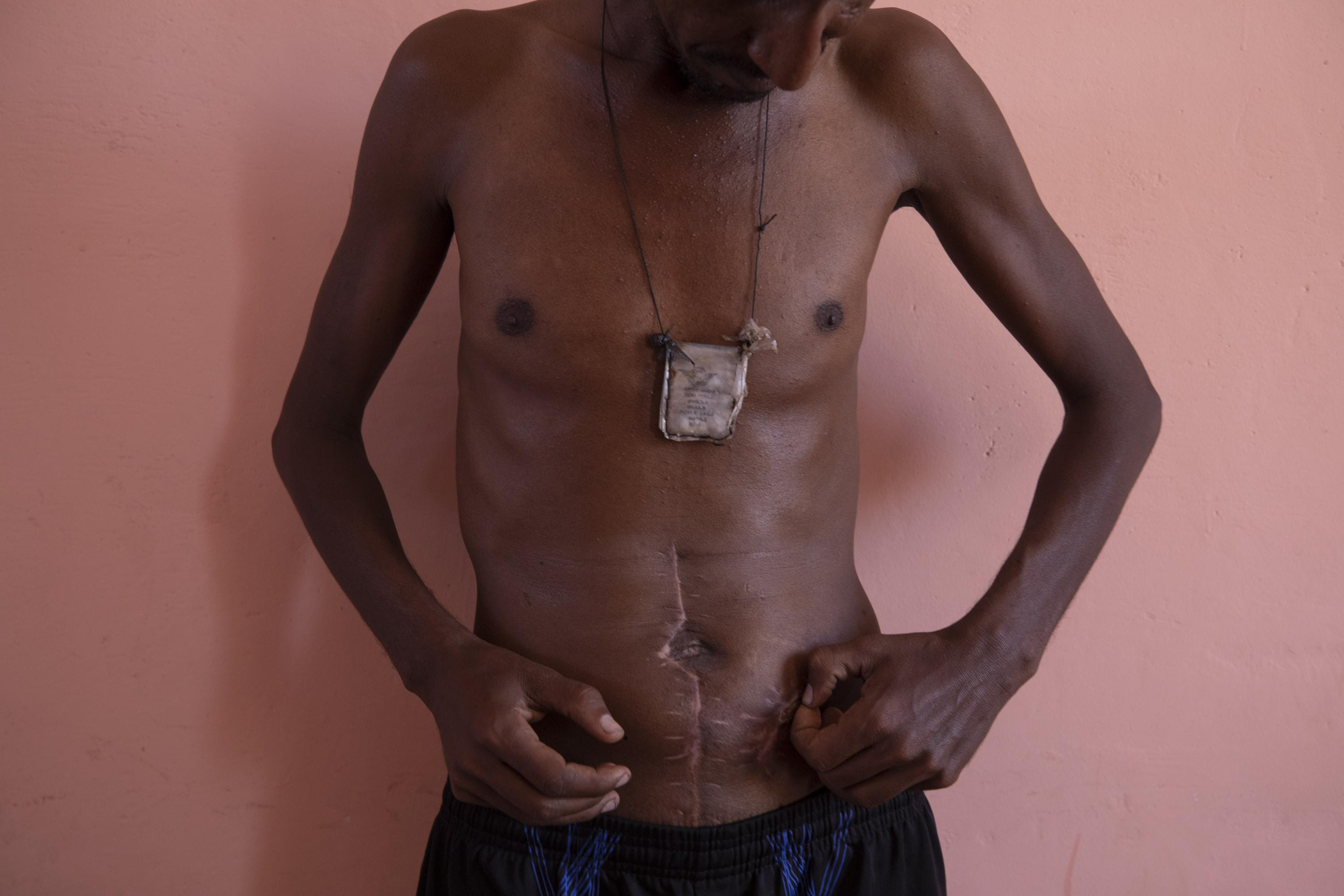
HAMDAYET, Sudan (AP) — The atrocities have been seared into the skin and the minds of Tigrayans, who take shelter by the thousands within sight of the homeland they fled in northern… …Read More

I'm an image

Large numbers of students are not returning to the classroom even as more schools reopen for full-time, in-person learning, according to a survey released Wednesday by the Biden… …Read More

I'm an image

DUBAI, United Arab Emirates (AP) — An Iranian cargo ship believed to be a base for the paramilitary Revolutionary Guard and anchored for years in the Red Sea off Yemen has been attacked, Iranian… …Read More

I'm an image

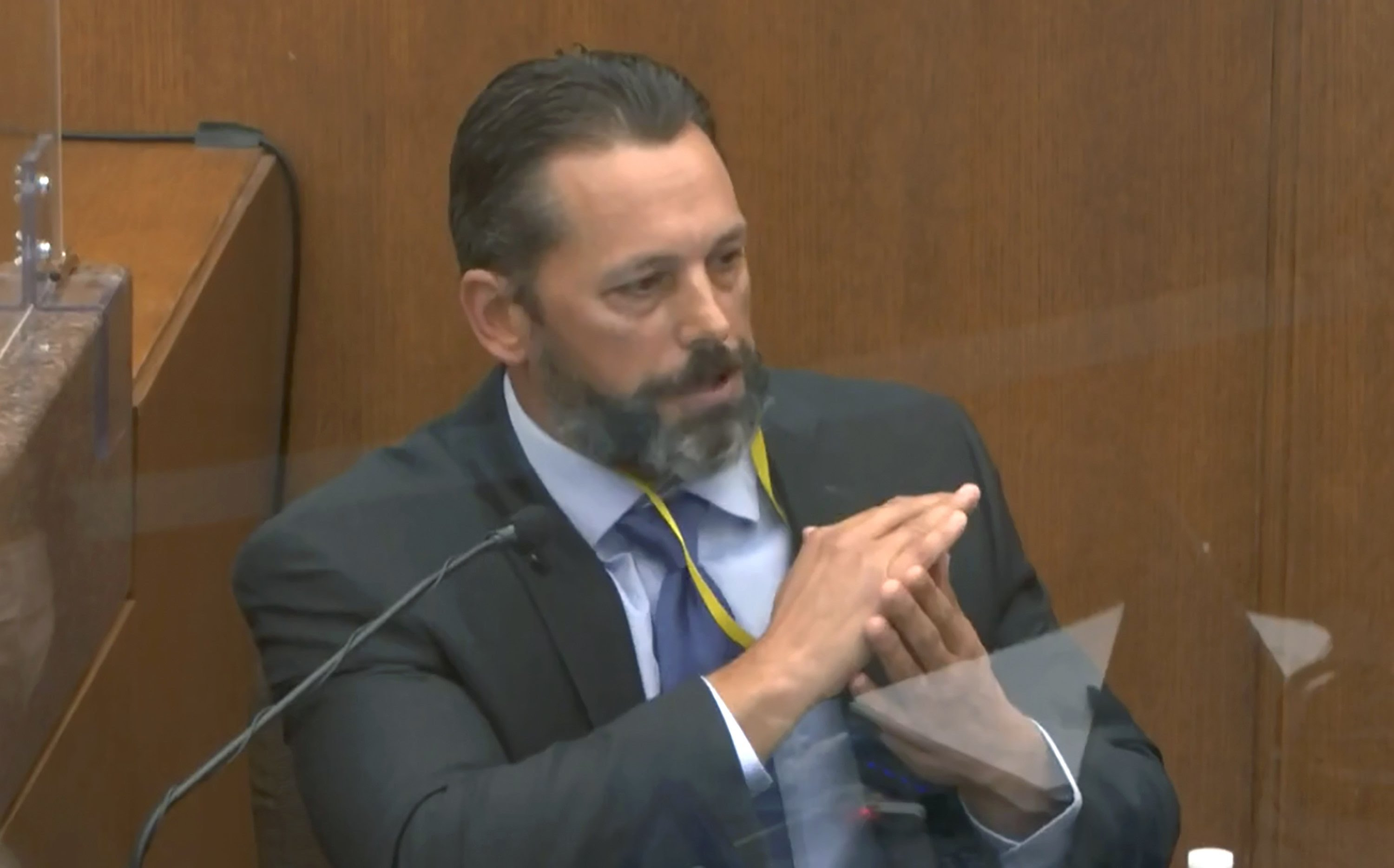
MINNEAPOLIS (AP) — The parade of Minneapolis police officers rejecting a former officer’s actions in restraining George Floyd continued at his murder trial, including a use-of-force instructor who…..Read More

OTHER TOP STORIES

PORTLAND, Maine (AP) — After enduring 40-knot winds and freezing sea spray, jostled health care providers arrived wet and cold on two Maine islands in the North Atlantic lat…Read More

LEMBATA, Indonesia (AP) — The death toll from mudslides in eastern Indonesia has risen to 119 with scores still missing, officials said Wednesday, as rain continued to pound…Read More

CLEMSON, S.C. (AP) — On the sloping side of a cemetery on the campus of Clemson University, dozens of small white flags with pink ribbons have replaced the beer cans that on…Read More

WELLINGTON, New Zealand (AP) — By Day 3 of being confined to his Australian hotel room for quarantine, David Marriott was getting bored. He’d watched a few seasons of “The S…Read More

The post Associated Press World View: US New Vax Deadline, Ethnic Cleansing by Ethiopia, Chauvin-Floyd Trial, More appeared first on The St Kitts Nevis Observer.

Brazil’s Corona Death Toll Passes 4,000 a Day, Argentine Record, Astra Zenica Clots, World Stats

Covid crisis ‘out of control’, says expert as president Jair Bolsonaro continues to resist lockdown

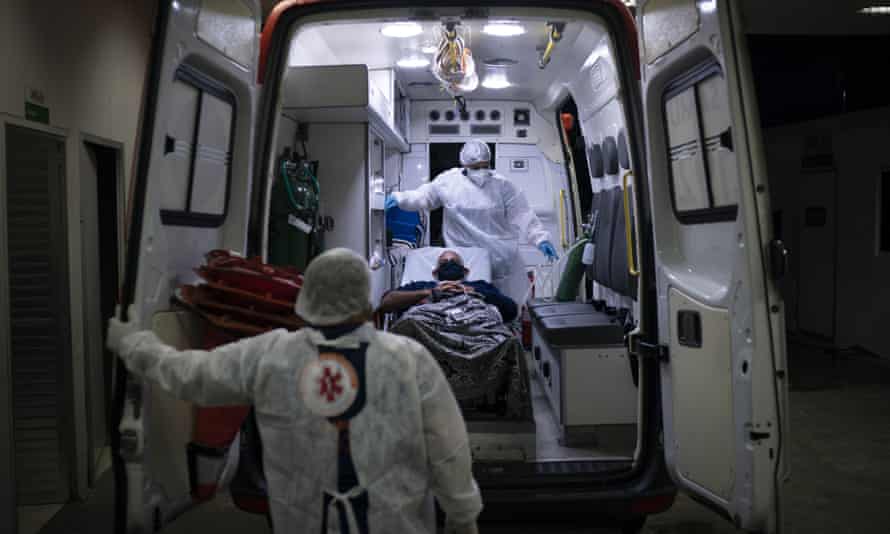
A Covid-19 patient is put in an ambulance
A patient being taken by ambulance to a dedicated coronavirus hospital in Rio de Janeiro state on Tuesday. Brazil’s death toll has climbed to almost 337,000. Photograph: Felipe Dana/AP
in Rio de Janeiro and agencies

Brazil’s coronavirus catastrophe has deepened further after more than 4,000 daily deaths were reported for the first time since the outbreak began in February last year.

At least 4,195 people were reported to have lost their lives on Tuesday, taking Brazil’s total death toll – the world’s second highest after the US – to nearly 337,000.

Brazil also reported 86,979 new infections. Experts fear a record 100,000 Brazilians could lose their lives this month alone if nothing is done.

“It’s a nuclear reactor that has set off a chain reaction and is out of control. It’s a biological Fukushima,” said Miguel Nicolelis, a Brazilian doctor and professor at Duke University in the US, who is closely tracking the virus.

Despite the growing crisis, Brazil’s far-right president, Jair Bolsonaro, continues to resist the idea of a lockdown and downplay the epidemic. “In which country aren’t people dying?” he said last week.

Brazil, which has 212 million citizens compared with the US’s 328 million, is expected to overtake the US weekly average for daily deaths in the coming days.

Many governors, mayors and judges are reopening parts of the economy despite lingering chaos in overcrowded hospitals and a collapsed healthcare system in several parts of the country. Local authorities nationwide claim that numbers of cases and hospitalisations are trending downward after a week of a partial shutdown.

Miguel Lago, the executive director of Brazil’s Institute for Health Policy Studies, which advises public health officials, said reopening was a mistake that he feared would bring even higher death numbers, though he thought it unlikely to be reversed.

“The fact is the anti-lockdown narrative of President Jair Bolsonaro has won,” Lago said. “Mayors and governors are politically prohibited from beefing up social distancing policies because they know supporters of the president, including business leaders, will sabotage it.”

Bolsonaro, who has long dismissed the risks of the coronavirus, remains fully against lockdowns as damaging to the economy.

Covid-19 patients are using more than 90% of beds in intensive care units in most Brazilian states, though figures have stabilised over the past week. Still, hundreds of people are dying as they wait for care and basic supplies such as oxygen and sedatives are running out in several states.

Less than 3% of Brazil’s 210 million people have received both doses of coronavirus vaccines, according to Our World in Data, an online research site.

Over the weekend, supreme court justices started a tug of war about the reopening of religious buildings, which were closed by many local authorities despite a federal government decision to label them as essential services.

Some churches welcomed their faithful on Easter Sunday, but others were stopped by mayors and governors. Their reopening will be settled at the supreme court on Wednesday, but some local councils, such as Belo Horizonte, voted on Tuesday to keep religious buildings open.

Also on Tuesday, a Rio de Janeiro judge allowed schools to reopen as the mayor, Eduardo Paes, wanted. Hours later, the mayors of Campinas and Sorocaba, two of the most populous cities in São Paulo state, agreed to reopen business with a drive-through purchase system after a 10-day halt.

Professional football executives in São Paulo said they expected to play games this week after a 15-day interruption, promising local prosecutors they would follow stricter health protocols.

The Associated Press and Reuters contributed to this report

=====================================================

Argentina reports record Covid-19 infection cases

Oxford/AstraZeneca jab could have causal link to rare blood clots, say UK experts

Evidence ‘consistent with causality’ but vaccination programme must continue, says drug safety specialist

A nurse prepares a dose of the Oxford/AstraZeneca vaccine
Use of the Oxford/AstraZeneca vaccine should continue but with measures to mitigate risk to women under 55, experts said. Photograph: Ulises Ruiz/AFP/Getty Images
Sarah Bosley
 Guardian  (UK)

Boris Johnson has sought to reassure people about the safety of the Oxford/AstraZeneca Covid vaccine as a trial in children was paused while regulators investigate rare reports of blood clots, largely in younger women.

The prime minister urged the public to take the jab when it is offered, while scientists stressed the side-effects were extremely rare and the benefits of protection against coronavirus were great.

Some UK drug safety experts believe there could be a causal link between the AstraZeneca jab and rare blood clotting events including cerebral venous sinus thrombosis (CVST).

But they said vaccination programmes must continue, with risk mitigation for women under 55. Doctors have already been alerted to CVST symptoms, which include headache, blurred vision and fainting.

Oxford University is running a trial in more than 200 children and young people aged six to 17 to see whether they could benefit from the AstraZeneca jabs. The trial was paused on Tuesday as a precautionary measure in response to investigations by the Medicines and Healthcare products Regulatory Authority (MHRA) in the UK and the European Medicines Agency (EMA), a university spokesperson said. The regulators are considering whether any action should be taken, with statements expected within days.

The Oxford spokesperson added: “While there are no safety concerns in the paediatric clinical trial, we await additional information from the MHRA on its review of rare cases of thrombosis/thrombocytopenia that have been reported in adults, before giving any further vaccinations in the trial.”

On a visit to the AstraZeneca manufacturing plant in Macclesfield, Cheshire, on Tuesday, Johnson said that getting the vaccine was “the key thing”. The jab has been given to more than 18 million UK adults with just 30 rare blood clotting cases reported, and seven deaths.

“The best thing people should do is look at what the MHRA say, our independent regulator – that’s why we have them, that’s why they are independent,” said Johnson, who has received a first dose of the vaccine himself. “Their advice to people is to keep going out there, get your jab, get your second jab.”

Prof Saad Shakir, the director of the drug safety research unit (DSRU) at Southampton University, said on Tuesday that the evidence accumulated in Europe and the UK of links between the vaccine and the rare blood clots “is consistent with causality”.

While the dangers of coronavirus were so great that vaccination must not stop, he said, measures should be put in place to reduce any extra risk to women under the age of 55, who seemed to be most affected. The DRSU has shared its analysis with the regulators.

Earlier on Tuesday, the EMA denied it had already established a causal connection between the vaccine and the clots, after a senior official from the agency said there was a link. Marco Cavaleri, the EMA’s head of vaccines, had earlier told Italy’s Il Messaggero newspaper that in his opinion “we can say it now, it is clear there is a link with the vaccine … but we still do not know what causes this reaction”.

Across Europe, some countries have already decided to give the AstraZeneca jab only to older people – over-60 in Germany and over-55 in France – while in others, the use of the vaccine is still suspended.

The DSRU at Southampton University looked at cases of thrombosis (blood clotting inside the arteries) linked to thrombocytopenia (a reduction in blood platelets that usually causes bleeding but in rare cases results in clotting) and concluded that they were linked to the AstraZeneca vaccine.

The events are very rare, however. In the UK, as of 24 March, 30 events had occurred resulting in seven deaths from 18.1m doses of vaccine, they said. In Germany, there was one event of cerebral venous thrombosis for every 46,512 women vaccinated and one female death associated with this condition for every 149,860 vaccine doses given to women of any age.

Even for younger people, the risk of death from Covid is higher. In the UK, according to the scientists, it has been calculated that 47,000 vaccines prevent one death from Covid among all people under 50.

Shakir says that all the cases now in the public domain occurred within four to 16 days of vaccination. “So, there is what we call a close temporal relationship, and they don’t seem to be events of Covid, which you get in the first two weeks after vaccination,” he said.

“The second thing is that there is a clear clinical description and similarities between the cases. The thromboses, lowering of the blood platelets, and various haematological changes. All of them are consistent with an event, which occurs very, very rarely, and certainly only with a drug called heparin.”

Heparin is a blood-thinning drug. Very occasionally, it causes a syndrome called HIT – heparin-induced trombocytopenia. A group of German scientists led by the clotting specialist Andreas Greinacher of the University of Greifswald has already pointed out that the blood clotting events reported after the AstraZeneca jab look very similar to HIT.

Shakir said the AstraZeneca vaccine was safe and effective. “It has protected millions of people from Covid-19 and will continue to do so around the world,” he said.

Many vaccines in widespread use have side-effects, he said. A flu vaccine can in rare cases cause Guillain-Barré syndrome, for instance, in which the body’s own immune system attacks the nerves and can cause paralysis. The answer is not to stop using the vaccine, but to mitigate the risk by assessing which people are most likely to get the side-effect, looking at any previous illnesses, medication use and their family history, for instance.

Regulators are now looking at this and also at any symptoms which might enable people experiencing the rare blood clots to be identified early and treated before their condition becomes too severe.

The MHRA said it was still considering the evidence. “People should continue to get their vaccine when invited to do so,” said Dr June Raine, its chief executive. “Our thorough and detailed review is ongoing into reports of very rare and specific types of blood clots with low platelets following the Covid-19 Vaccine AstraZeneca. No decision has yet been made on any regulatory action.”

=======================================================


The post Brazil’s Corona Death Toll Passes 4,000 a Day, Argentine Record, Astra Zenica Clots, World Stats appeared first on The St Kitts Nevis Observer.

China Tries to Counter Xinjiang Backlash With … a Movie Musical?

A Chinese government propaganda sign with slogans reading “Forever following the Party” and “China’s ethnicities, one family” in Aksu, Xinjiang, last month.
Credit…Ng Han Guan/Associated Press

The movie is part of Beijing’s wide-ranging new propaganda campaign to push back on sanctions and criticism of its oppression of the Uyghurs.
In one scene, Uyghur women are seen dancing in a rousing Bollywood style face-off with a group of Uyghur men. In another, a Kazakh man serenades a group of friends with a traditional two-stringed lute while sitting in a yurt.

Welcome to “The Wings of Songs,” a state-backed musical that is the latest addition to China’s propaganda campaign to defend its policies in Xinjiang. The campaign has intensified in recent weeks as Western politicians and rights groups have accused Beijing of subjecting Uyghurs and other Muslim minorities in Xinjiang to forced labor and genocide.

The film, which debuted in Chinese cinemas last week, offers a glimpse of the alternate vision of Xinjiang that China’s ruling Communist Party is pushing to audiences at home and abroad. Far from being oppressed, the musical seems to say, the Uyghurs and other minorities are singing and dancing happily in colorful dress, a flashy take on a tired Chinese stereotype about the region’s minorities that Uyghur rights activists quickly denounced.

“The notion that Uyghurs can sing and dance so therefore there is no genocide — that’s just not going to work,” said Nury Turkel, a Uyghur-American lawyer and senior fellow at the Hudson Institute in Washington. “Genocide can take place in any beautiful place.”

In the wake of Western sanctions, the Chinese government has responded with a fresh wave of Xinjiang propaganda across a wide spectrum. The approach ranges from portraying a sanitized, feel-good version of life in Xinjiang — as in the example of the musical — to deploying Chinese officials on social media sites to attack Beijing’s critics. To reinforce its message, the party is emphasizing that its efforts have rooted out the perceived threat of violent terrorism.

In the government’s telling, Xinjiang is now a peaceful place where Han Chinese, the nation’s dominant ethnic group, live in harmony alongside the region’s Muslim ethnic minorities, just like the “seeds of a pomegranate.” It’s a place where the government has successfully emancipated women from the shackles of extremist thinking. And the region’s ethnic minorities are portrayed as grateful for the government’s efforts.

Outside the Id Kah Mosque in Kashgar, Xinjiang, in 2019.
Credit…Gilles Sabrié for The New York Times

The musical takes the narrative to a new cringe-inducing level. It tells the story of three young men, a Uyghur, a Kazakh and a Han Chinese, who come together to pursue their musical dreams.

The movie depicts Xinjiang, a predominantly Muslim region in China’s far west, as scrubbed free of Islamic influence. Young Uyghur men are clean-shaven and seen chugging beers, free of the beards and abstinence from alcohol that the authorities see as signs of religious extremism. Uyghur women are seen without traditional head scarves.

The Uyghurs and other Central Asian ethnic minorities, seen through this lens, are also portrayed as fully assimilated into the mainstream. They are fluent in Chinese, with few, if any, hints of their native languages. They get along well with the Han Chinese ethnic majority, with no sense of the long-simmering resentment among Uyghurs and other minorities over systematic discrimination.

The narrative presents a picture starkly different from the reality on the ground, in which the authorities maintain tight control using a dense network of surveillance cameras and police posts, and have detained many Uyghurs and other Muslims in mass internment camps and prisons. As of Monday, the film had brought in a dismal $109,000 at the box office, according to Maoyan, a company that tracks ticket sales.

A watchtower at a high-security facility near what is believed to be a re-education camp on the outskirts of Hotan, Xinjiang, in 2019.
Credit…Greg Baker/Agence France-Presse — Getty Images 

Chinese officials initially denied the existence of the region’s internment camps. Then they described the facilities as “boarding schools” in which attendance was completely voluntary.

Now, the government is increasingly adopting a more combative approach, seeking to justify its policies as necessary to combat terrorism and separatism in the region.

Chinese officials and state media outlets have pushed the government’s narrative about its policies in Xinjiang in part by spreading alternative narratives — including disinformation — on American social networks like Twitter and Facebook. This approach reached an all-time high last year, according to a report published last week by researchers at the International Cyber Policy Center of the Australian Strategic Policy Institute, or ASPI.

The social media campaign is centered on Chinese diplomats on Twitter, state-owned media accounts, pro-Communist Party influencers and bots, the institute’s researchers found. The accounts send messages often aimed at spreading disinformation about Uyghurs who have spoken out, and to smear researchers, journalists, and organizations working on Xinjiang issues.

Anne-Marie Brady, a professor of Chinese politics at the University of Canterbury in New Zealand who was not involved in the ASPI report, called China’s Xinjiang offensive the biggest international propaganda campaign on a single topic that she had seen in her 25 years of researching the Chinese propaganda system.

“It’s shrill and dogmatic, it’s increasingly aggressive,” she said in emailed comments. “And it will keep on going, whether it is effective or not.”

In a statement, Twitter said it had suspended a number of the accounts cited by the ASPI researchers. Facebook said in a statement that it had recently removed a malicious hacker group that had been targeting the Uyghur diaspora. Both companies began labeling the accounts of state-affiliated media outlets last year.

The party has also asserted that it needed to take firm action after a spate of deadly attacks rocked the region some years ago. Critics say that the extent of the violence remains unclear, but also that such unrest did not justify the sweeping, indiscriminate scope of the detentions.

Last week, the government played up a claim that it had uncovered a plot by Uyghur intellectuals to sow ethnic hatred. CGTN, an international arm of China’s state broadcaster, released a documentary on Friday that accused the scholars of writing textbooks that were full of “blood, violence, terrorism and separatism.”

A Uyghur child doing his Chinese homework at a bus stop in Hotan, Xinjiang, in 2019.
Credit…Giulia Marchi for The New York Times

The books had been approved for use in elementary and middle schools in Xinjiang for more than a decade. Then in 2016, shortly before the crackdown started, they were suddenly deemed subversive.

The documentary accuses the intellectuals of having distorted historical facts, citing, for example, the inclusion of a historical photo of Ehmetjan Qasim, a leader of a short-lived independent state in Xinjiang in the late 1940s.

“It’s just absurd,” said Kamalturk Yalqun, whose father, Yalqun Rozi, a prominent Uyghur scholar, was sentenced to 15 years in prison in 2018 for attempted subversion for his involvement with the textbooks. He said that a photo of Mr. Rozi shown in the film was the first time he had seen his father in five years.

“China is just trying to come up with any way they can think of to dehumanize Uyghurs and make these textbooks look like dangerous materials,” he said by phone from Boston. “My father was not an extremist but just a scholar trying to do his job well.”

Amy Chang Chien contributed reporting.

The post China Tries to Counter Xinjiang Backlash With … a Movie Musical? appeared first on The St Kitts Nevis Observer.

SKN Native Shot and Killed in St. Croix

A native from St. Kitts and Nevis who resided in St. Croix lost his life Saturday evening after he was shot April 1.

Deron Dixon who resided in Little Princess St. Croix told police that as he left his residence to head to work at approximately 5:00 a.m. on April 1, heard gunfire and realized he had been injured.

He said he saw a white vehicle leaving the area, but did not know who shot him. According to the Virgin Island’s Consortium he sustained multiple gunshot wounds about his body and was transported to the Juan F. Hospital for treatment.

He died Saturday at around 11:00 p.m. he was 35-years-old

The post SKN Native Shot and Killed in St. Croix appeared first on The St Kitts Nevis Observer.

Biden: All American Adults Can Get Vaccinated from April 19

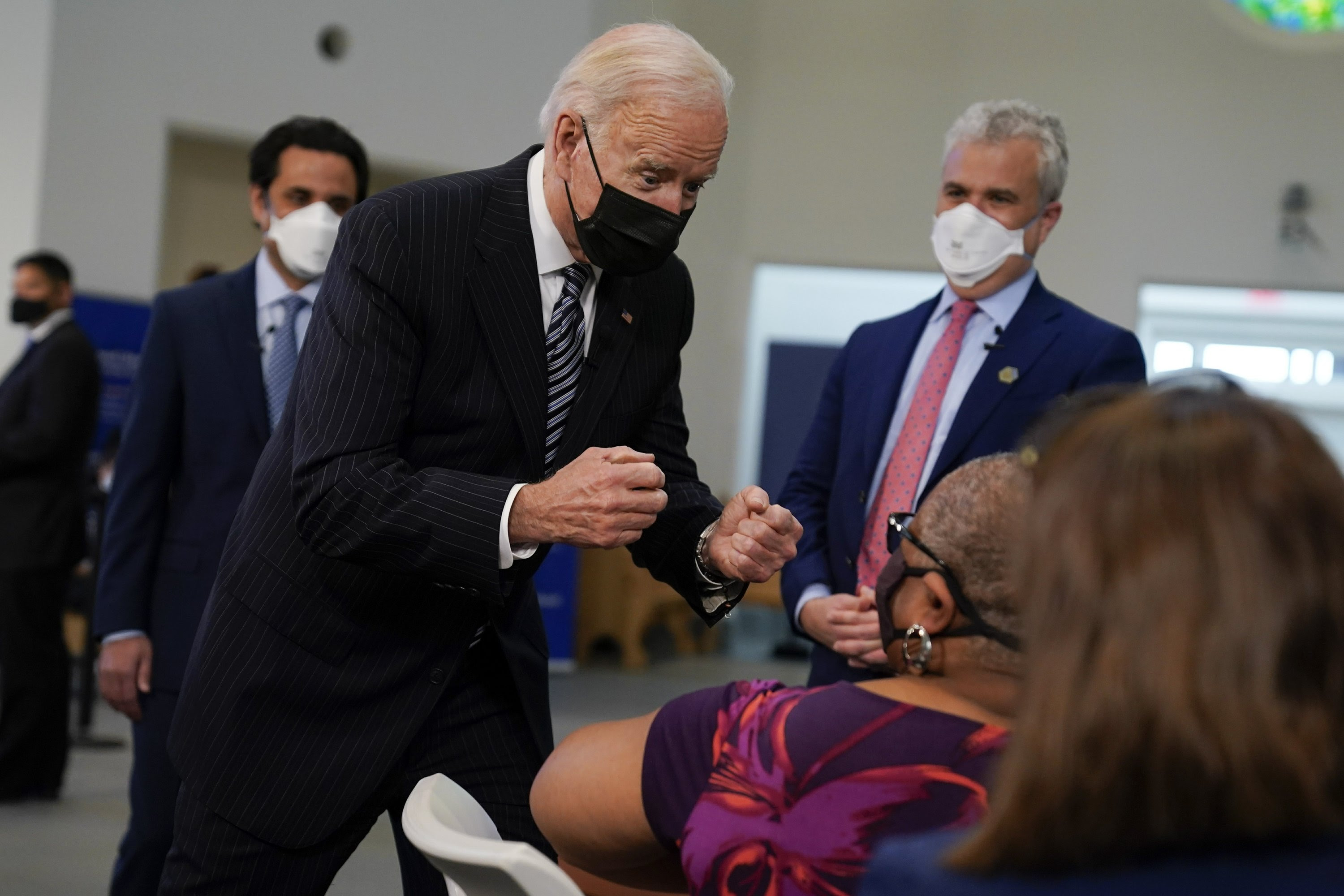
President Biden plans to announce Tuesday that he is moving up his target for all American adults to become eligible to receive a coronavirus vaccine by almost two weeks to April 19, according to a White House official.

Biden is also expected to announce that the United States has administered 150 million COVID-19 vaccine doses, the official confirmed, putting the president on track to meet or exceed his goal of administering 200 million doses in his first 100 days in office.

CNN first reported Biden’s planned announcements on Tuesday. The president is scheduled to visit a vaccination site at Virginia Theological Seminary in Alexandria, Va., Tuesday afternoon before returning to the White House to give remarks on the state of vaccinations.

Biden said during his first prime-time address last month that he would urge states to make all adults eligible to receive a coronavirus vaccine by May 1. Biden previously said 90 percent of adults would be eligible by April 19.

The new target comes as the U.S. is steadily ramping up the amount of daily vaccinations. The Biden administration announced over the weekend that the U.S. hit 4 million doses in a 24-hour period for the first time.

Roughly a dozen states have already made anyone aged 16 and older eligible to sign up and receive a coronavirus vaccine, and more states are likely to do so in the coming days as vaccine supplies steadily become more available. Biden’s announcement is likely to put pressure on states that have moved more slowly to open up vaccine appointments to a wider swath of adults.

Biden has repeatedly set achievable goals in his effort to address the pandemic, like his initial target of administering 100 million doses of coronavirus vaccine in his first 100 days in office, which some health experts regarded as not aggressive enough. Biden doubled that goal to 200 million shots late last month as his administration worked to ramp up production of vaccines.

While Biden expects all adults to be eligible to receive vaccines in 13 days, it will take longer for states and cities to actually administer them to the public. The Biden administration is also grappling with how to address vaccine hesitancy and convince those wary of inoculations to receive them so that the U.S. population can reach herd immunity.

The Biden administration is spending $10 billion to expand access to vaccines and increase uptake in underserved communities. Last week, Vice President Harris announced a new grassroots network tasked with boosting confidence in vaccines in their communities.

Biden has said he expects Americans to return to some degree of normal life by July 4.

Despite the positive vaccine news, the U.S. is still in the grip of the pandemic, with cases and hospitalizations rising again after weeks of decline. Centers for Disease Control and Prevention Director Rochelle Walensky made an emotional appeal to the public last week to not let their guard down or ignore public health guidance as the U.S. grapples with a new surge of the virus and dangerous variants.

The post Biden: All American Adults Can Get Vaccinated from April 19 appeared first on The St Kitts Nevis Observer.