Tag Archives: caribbean

Global Economic Survey Has High Hopes for Caribbean

A new survey indicates that many economic chiefs in the Caribbean believe global economic growth will improve in 2021.

Sixty-nine percent of Caribbean business leaders are optimistic about the growth of the global economy this year,  while 67 percent of them cite cyber threats as the number one concern. Oddly, the pandemic is in third place with 61 percent concerned.

These were among the findings of PwC’s 24th Global CEO Survey which polled 5,050 CEOs in 100 countries and territories in January and February 2021. CEOs from The Bahamas, Barbados, Bermuda, Jamaica and Trinidad and Tobago were included in the survey.

Overall 76 percent of business leaders globally are predicting that economic growth will improve in 2021, which is up from 22 percent in 2020 and 42 percent in 2019. This represents the highest level of optimism since the survey started asking this question in 2012.

According to Leighton McKnight, PwC Jamaica territory leader, “despite the challenges brought on by the global pandemic, CEOs are reporting record-high optimism about the global economy. Caribbean CEOs are a bit less optimistic than the global trend, but still very positive in their outlook considering how much has changed in the last 12 months.”

“Caribbean CEOs are also poised to scale up their businesses with 63 percent planning to pursue organic growth, 75 percent planning to improve operational efficiencies and 59 percent planning to launch a new product or service.”

Along with cyber threats and health crises, Caribbean business leaders also cited the spread of misinformation and tax policy uncertainty as serious concerns.

Rising digitization is increasing the risks posed by cyber threats. A significant increase in cybersecurity incidents in 2020 including ransomware attacks, has resulted in cyber threats leaping up the list, the report said.

Misinformation which has had an impact on elections, reputation, and public health – further contributing to a decline in trust across society was a concern for 28 percent of CEOs, up from 16 per cent in 2020.

In 2020, tax policy uncertainty ranked outside the top ten concerns for CEOs, with only 19 percent of CEOs concerned. This year, it leaped to seventh place (31 percent globally), with CEOs undoubtedly watching government debts accumulate and realizing that business taxes will likely need to rise, the report said.

Other findings of the survey are that 36 percent of CEOs said they are “very confident” about their organization’s prospects for revenue growth over the next 12 months, up from 27 percent of CEOs in 2020.

Also, 55 percent of Caribbean CEOs plan to use automation and technology to make their workforce more competitive, compared to 36 percent globally. This is more than double the share of CEOs who said the same in 2016.

Another finding is that 35 percent of business leaders are looking to the United States as the number one market for growth over the next 12 months, while 28 percent are looking to China as their leading market. In 2020, the US was only one percentage point ahead of China.

PwC is a network of firms in 155 countries with over 284,000 people delivering assurance, advisory and tax services.

The post Global Economic Survey Has High Hopes for Caribbean appeared first on The St Kitts Nevis Observer.

West Indies Sweep Sri Lanka Series 3-0

West Indies One-day captain Kieron Pollard, (captain), 5th from right, and his teammates – Evin Lewis, Shai Hope, Jason Mohammad Darren Bravo, Nicholas Pooran, Jason Holder, Fabian Allen, Anderson Phillip, Alzarri Joseph, Akeal Hossein, celebrate winning the three-match CG Insurance ODI series against Sri Lanka 3-0 at the Sri Viv Richards Ground in Antigua on Sunday. CWI Media/Philip Spooner

NORTH SOUND, Antigua – Stylish left-hander Darren Bravo stroked his first One-Day International hundred in five years to propel West Indies to a comfortable five-wicket win over Sri Lanka and a clean sweep of the three-match series on Sunday.

The 32-year-old top-scored with 102 off 132 deliveries while irrepressible opener Shai Hope struck 64 off 72 balls and captain Kieron Pollard an unbeaten 52 off 42 deliveries, as West Indies, reeled in a target of 275 at the Vivian Richards Cricket Stadium with nine deliveries to spare.

Bravo had previously gone 13 innings without a half-century, during which time he averaged a paltry 18, but his fourth ODI century saw him turn the page on that depressing run of form as he hit five fours and four sixes.

“I think today was an important day for me,” said Bravo after he was adjudged Man-of-the-Match.

“I tried my best today. It wasn’t the most fluent but at the end of the day, we got the job done which is the most important thing,”

For the home side, the result marked their third whitewash in their last five series following similar achievements against Ireland and Afghanistan and was also payback for the 3-0 drubbing they received on Sri Lankan soil last year.

The clean sweep also follows on the heels of a chastening 3-0 result in Bangladesh last month when an inexperienced side was soundly thrashed.

“This gives us the confidence we can do certain things. We’re going to build on this … we’re looking to continue to work hard and continue to improve as we go forward,” said an obviously contented Pollard.

Number eight Wanindu Hasaranga had earlier lashed a cavalier unbeaten 80 off 60 balls and Ashen Bandara, a supportive 55 not out, to help pull Sri Lanka’s innings around to 274 for six off their 50 overs.

Sent in, the visitors had slumped to 151 for six in the 32nd over after being undermined by left-arm spinner Akeal Hosein’s three-wicket haul, before the pair put on an invaluable 123 in an unbroken seventh-wicket partnership to ensure West Indies were given a serious target to chase.

Their stand was vitally important after Sri Lanka were guilty of wasting an opening stand of 68 between in-form Danushka Gunathilaka (36) and captain Dimuth Karunaratne (31).

The left-handed Gunathilaka had stroked half-dozen fours in a 38-ball knock when he top-edged a pull at fast bowler Alzarri Joseph onto his helmet and was taken at a point in the 14th over.

Karunaratne followed with two runs added in the next over after striking one four and a six, missing a swipe at part-time off-spinner Jason Mohammed and losing his leg stump.

Pathum Nissanka then produced a breezy 24 off 25 balls in a 31-run stand for the third wicket with veteran Dinesh Chandimal (16) to get Sri Lanka up to 101 without further loss.

However, once Hosein hit Nissanka in front to earn an lbw decision in the 21st over, Sri Lanka lost four wickets for 50 runs to lose their way.

Hasaranga came to his side’s rescue, clubbing seven fours and three sixes – including three fours and a six off the final over from pacer Jason Holder – while Bandara punched three fours and a six as Sri Lanka gathered 89 runs from the last 10 overs.

For the first time in the series, West Indies went without a solid start as left-hander Evin Lewis played down the wrong line to a full-length delivery from pacer Suranga Lakmal (2-56) and was bowled for 13 in the fifth over and Jason Mohammed missed a drive at a Wanindu Hasaranga googly and was bowled for eight in the 10th.

However, Bravo then anchored the innings, posting 109 for the third wicket with Hope before adding a further 80 for the fifth wicket with Pollard.

He started slowly with only three runs from his first 13 balls and never really quickened his pace, reaching his half-century off 81 balls in the 30th over. His second fifty required only 49 balls and he brought up three figures with a boundary to fine leg off leg-spinner Hasaranga in the 45th, before perishing seven balls later, driving a Lakmal full toss to cover.

Hope, already with a hundred and a fifty in the series, counted three fours and two sixes before holing out to long-on in the 32nd over off seamer Thisara Perera.

When Nicholas Pooran missed a sweep and was lbw to part-time off-spinner Danushka Gunathilaka in the 35th-over, West Indies needed a partnership and Pollard arrived to blast four fours and a six to ensure there were no late stumbles.

SCORES

SRI LANKA 274 for six off 50 overs (Wanindu Hasaranga 80 not out, Ashen Bandara 55 not out, Danushka Gunathilaka 36, Dimuth Karunaratne 31; Akeal Hosein 3-33)

WEST INDIES 276 for five off 48.3 overs (Darren Bravo 102, Shai Hope 64, Kieron Pollard 53 not out; Suranga Lakmal 2-56)

(CMC)

The post West Indies Sweep Sri Lanka Series 3-0 appeared first on The St Kitts Nevis Observer.

Caymans on Money Laundering Hit List

The Financial Action Task Force has released an updated list of jurisdictions under increased monitoring, which includes the Cayman Islands, Burkina Faso, Morocco and Senegal.

The organisation said jurisdictions on this list were actively working with it to address ‘strategic deficiencies’ in their anti-money laundering and terrorist financing regimes swiftly within agreed timeframes and subject to extra checks.

The Guernsey Financial Services Commission has now amended its handbook on countering financial crime and terrorist financing to reflect FATF’s updated list.

The amendments include the removal of the Cayman Islands from the list of equivalent jurisdictions and its addition to the list of countries and territories which may present a higher risk of money laundering and terrorist financing.

An instruction has also been issued to all specified business setting out steps to be taken before the end of September in respect of business relationships they have which are connected to the Cayman Islands. Similar action is also being taken in the other Crown Dependencies, said the GFSC.

These steps include reviewing relationship risk assessments for all existing business relationships where the Cayman Islands is a relevant risk factor and apply full customer due diligence measures if previous concessions have been used. Mitigation measures should also be taken where the level of risk has changed.

The GFSC also said it recognised there may be ‘exceptional circumstances’ where the amended requirements cannot be completed – but that specified businesses should ‘terminate’ the business relationship where customer due digilence cannot ultimately be completed and consider whether a disclosure should be made to the financial intelligence service, which is part of the Bailiwick’s economic crime division.

‘The commission will review the action taken by specified businesses to comply with this instruction during on-site inspections and by other supervisory means as necessary,’ added the GFSC.

The post Caymans on Money Laundering Hit List appeared first on The St Kitts Nevis Observer.

Associated Press World View: EU’s Vaccine Issues, Pope on Same Sex Marriage, New Dead Sea Scrolls,More

March 16, 2021

Alternate text

The European Union’s slow coronavirus vaccine rollout faces another setback as ever more countries suspend use of AstraZeneca’s vaccine after reports of blood clots in some recipients. However, much of Asia shrugged off the concerns, saying there is no evidence to link the two. After the Vatican says clergy cannot bless same-sex unions, LGBTQ Catholics in the U.S. express their hurt. And an AP exclusive reveals how an ex-Marine once held in an Iranian jail is fighting espionage allegations.

Also this morning:

  • China approves a fourth COVID-19 vaccine
  • New bars offer drinks without the booze
  • ‘Mank’ leads Oscar nominations

VANESSA GERA

The Associated Press

Warsaw, Poland

The Rundown

I'm an image

BERLIN (AP) — The German government said Tuesday it will postpone a virtual summit on the country’s vaccination efforts until after the European Medicines Agency has met over reports of dangerous……Read More

I'm an image

BANGKOK (AP) — Thailand’s prime minister received a shot of the COVID-19 vaccine manufactured by AstraZeneca on Tuesday, as much of Asia shrugged off concerns about reports of blood clots in some……Read More

I'm an image

LGBTQ Catholics and their allies in the U.S. welcomed Pope Francis’ endorsement of same-sex civil unions, the first time he’s done so as pontiff, while some prominent members including a bishop… …Read More

WASHINGTON (AP) — After Amir Hekmati was released from Iranian custody in a 2016 deal trumpeted as a diplomatic breakthrough, he was declared eligible for $20 million in compensation from a… …Read More

I'm an image

BOSTON (AP) — U.S. guidelines that say students should be kept 6 feet apart in schools are receiving new scrutiny from federal health experts, state governments and education officials working to……Read More

OTHER TOP STORIES

TAIPEI, Taiwan (AP) — China has approved a new COVID-19 vaccine for emergency use, one that was developed by the head of its Center for Disease Control, adding to its arsenal…Read More

JERUSALEM (AP) — Israeli archaeologists on Tuesday announced the discovery of dozens of new Dead Sea Scroll fragments bearing a biblical text found in a desert cave and belie…Read More

NEW YORK (AP) — David Fincher’s “Mank” has led nominations to the 93rd Academy Awards with 10 nods, and for the first time, two women — Chloé Zhao and Emerald Fennell — were …Read More

There’s something missing from a new wave of bars opening around the world: Alcohol. Aimed at the growing number of people exploring sobriety, the bars pour adult drinks like…Read More

The post Associated Press World View: EU’s Vaccine Issues, Pope on Same Sex Marriage, New Dead Sea Scrolls,More appeared first on The St Kitts Nevis Observer.

Mozambique: Islamist Militants Beheading Kids-Report

Nearly a million people face hunger because of the conflict, Save the Children says 

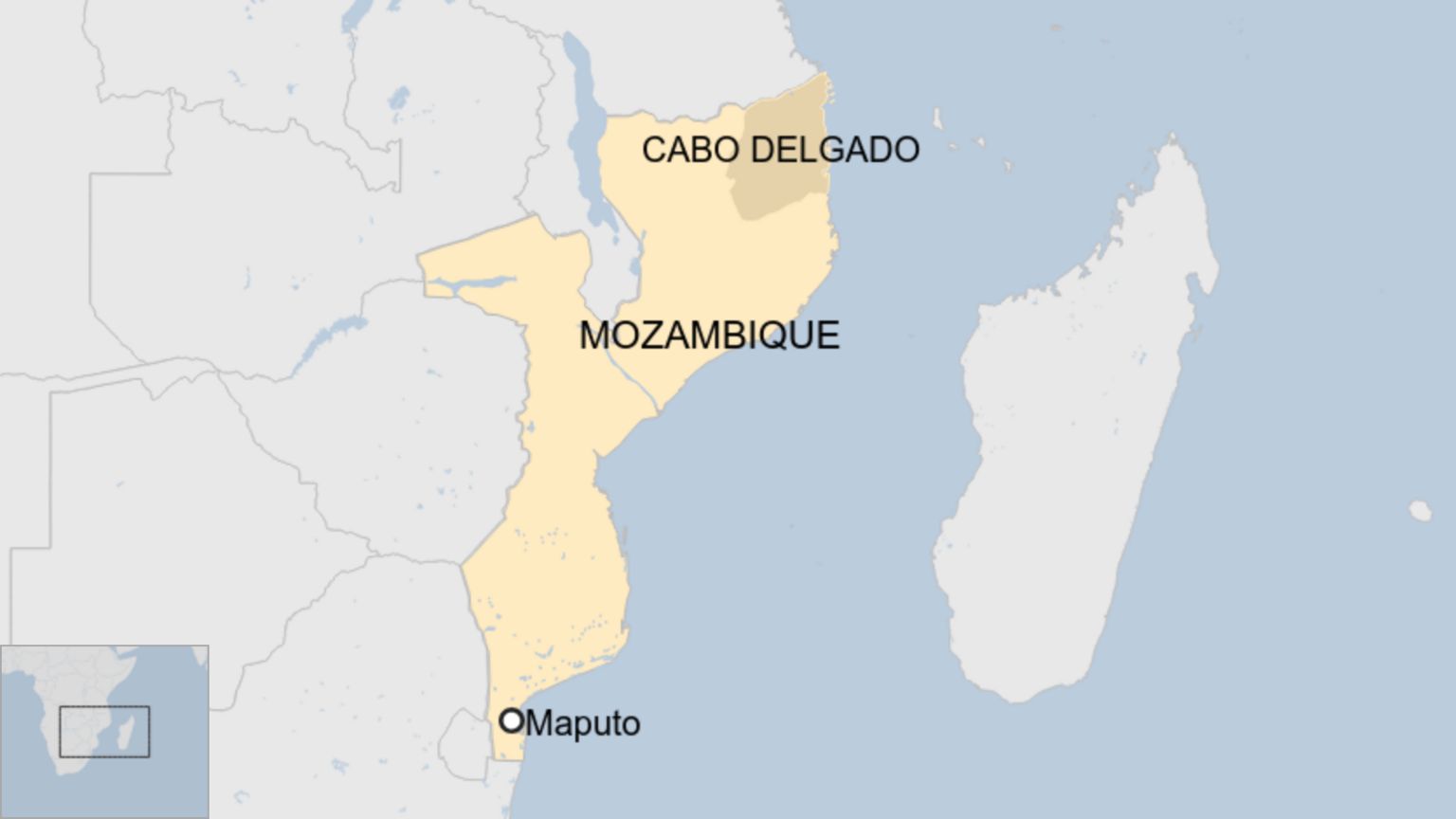
BBC- The aid agency Save the Children says Islamist militants are beheading children as young as 11 in Mozambique’s northern province of Cabo Delgado.

One mother told the agency she had had to watch as her 12-year-old son was killed in this way close to where she was hiding with her other children.

More than 2,500 people have been killed and 700,000 have fled their homes since an Islamist insurgency began in 2017.

The militants are linked to the Islamic State (IS) group.

In its report, Save the Children said it had spoken to displaced families who reported gruesome scenes in the gas-rich province.

One mother, whose name was withheld to protect her identity, said her eldest child had been beheaded near where she and her other children were hiding.

“That night our village was attacked and houses were burned,” she said.

“When it all started, I was at home with my four children. We tried to escape to the woods but they took my eldest son and beheaded him. We couldn’t do anything because we would be killed too.”

Map of Mozambique

Another woman said her son had been killed by militants while she and her other three children had been forced to flee.

“After my 11-year-old son was killed, we understood that it was no longer safe to stay in my village,” she said.

“We fled to my father’s house in another village, but a few days later the attacks started there too.”

Chance Briggs, Save the Children’s country director in Mozambique, said the reports of attacks on children “sicken us to our core”.

“Our staff have been brought to tears when hearing the stories of suffering told by mothers in displacement camps,” he said.

The United Nations special rapporteur on extra-judicial executions described the militants’ actions as “cruel beyond words”.

Who are the militants?

The insurgents are known locally as Al-Shabab, although they have no known links to the Somali jihadi group of the same name.

They have publicly sworn allegiance to IS. IS says it has carried out a number of attacks in Mozambique, and appears to be promoting its involvement there as part of a “franchise” operation.

The US state department has designated the insurgents a terrorist organisation.

The group has rarely given any indication about its motive, leadership or demands.

In a video last year, one militant leader said: “We occupy [the towns] to show that the government of the day is unfair. It humiliates the poor and gives the profit to the bosses.”

The man spoke about Islam and his desire for an “Islamic government, not a government of unbelievers”, but he also cited alleged abuses by Mozambique’s military, and repeatedly complained that the government was “unfair”.

Chance Briggs told the BBC World Service it was difficult to determine exactly what was behind the violence.

“Mozambique is the eighth poorest country in the world. Cabo Delgado is the poorest province in Mozambique and yet there’s tremendous mineral resources there and there’s a sense by some that the resources are not being shared equally so that seems to be a driver of the conflict,” he said.

“But frankly speaking there’s no manifesto and so it’s hard to understand the exact motivations but what we see is that the insurgents are trying to drive people out. They co-opt young people in to joining them as conscripts and if they refuse they are killed and sometimes beheaded. They chase people away. It’s really hard to see what is the end game.”

What else has been happening in Cabo Delgado?

It is not the first time that there have been reports of beheadings in the region.

Last November, state media reported that more than 50 people had been beheaded at a football ground in Cabo Delgado.

In April last year, dozens more were beheaded or shot dead in an attack on a village.

Human rights groups say security forces have also carried human rights abuses, including arbitrary arrests, torture and killings, during operations against the jihadists.

Mozambique’s government has appealed for international help to quell the insurgency.

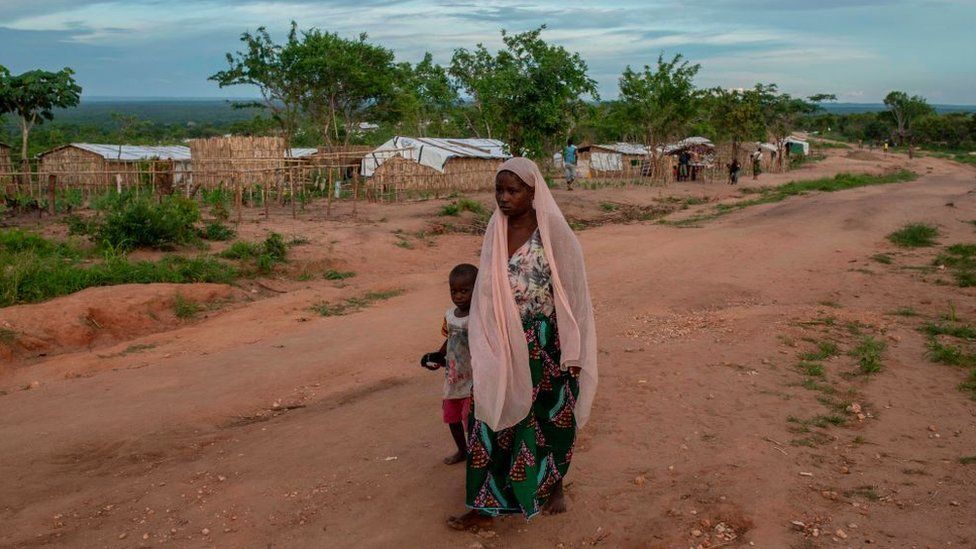
A woman and her child walk in the community of Ntocota, Metuge District in Pemba, Cabo Delgado Province on February 22, 2021
Thousands in Cabo Delgado have been forced to flee their homes

On Monday, US embassy officials in the capital Maputo said American military personnel would spend two months training soldiers in Mozambique, as well as providing “medical and communications equipment”.

“Civil protection, human rights, and community involvement are central to US co-operation and are critical to effectively combating Islamic State in Mozambique,” an embassy statement said.

The post Mozambique: Islamist Militants Beheading Kids-Report appeared first on The St Kitts Nevis Observer.

Brazil President: A Gun for Anyone Who Wants One

SAO PAULO (AP) — Katia Sastre was walking her 7-year-old to class in Suzano, a violent city near Sao Paulo, when she saw a young man draw a pistol on other parents standing by the school’s front door.

Within seconds, she pulled the .38 special she carried in her purse.

The off-duty police officer’s three shots killed the mugger on that morning in May 2018 and kicked off her transformation into a beacon for champions of looser gun control. Security camera footage produced medals, social media star power and a congressional run in the same conservative wave that lifted pro-gun lawmaker Jair Bolsonaro from the fringes to the presidency.

Now a lawmaker herself, she is backing Bolsonaro’s push to deliver a gun to every Brazilian who wants one, and dismisses public security experts’ concerns about the president’s four recently issued gun decrees. They will take effect next month — unless Congress or courts intervene.

“Brazilians want assurances for self-defense because they feel insecure about criminality,” Sastre told The Associated Press, blaming a 2003 disarmament law for heightened violence and more than 65,000 violent deaths in Brazil in 2017. “The guns used in those killings weren’t in the hands of citizens; they came illegally from traffickers and criminals.”
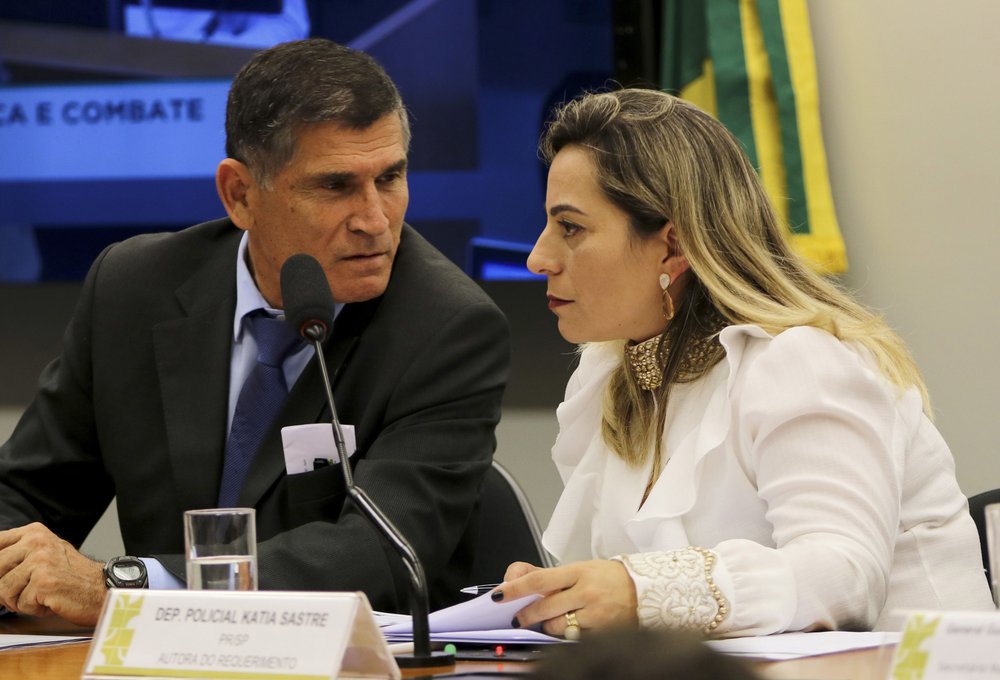
Congresswoman Katia Sastre, an ally of President Jair Bolsonaro, talks with then Secretary of Government Minister Alberto dos Santos Cruz, at Congress in Brasilia. (Wilson Dias/Agencia Brasil via AP File)

A man checks his aim on the makeshift targets — frying pans — at a shooting range in Americana, Sao Paulo state. (AP Photo/Andre Penner)

Sastre is in the minority of Brazilians, almost three-quarters of whom want stricter gun laws, according to the most recent poll. Yet the unpopular proposal is among Bolsonaro’s top priorities for deploying his recently replenished political capital, even in Brazil’s worst throes of the pandemic, with about 1,800 people dying per day.

Anti-gun activists, a former defense minister and high-ranking former police officers, including an ex-national public security secretary, warn the decrees will only add to the body count.

The two decrees causing most controversy would boost the number of guns average Brazilians can own — to six, from four currently — and enable them to carry two simultaneously. Policemen, core supporters of the president, could have eight firearms if the decrees stand.

Ilona Szabó, director at the security-focused Igarape Institute in Rio de Janeiro, has pushed back against Bolsonaro’s attempts to get more guns to Brazilians. Nominated to a national security council, she faced a deluge of threats from Bolsonaro devotees and had to flee the country. From abroad, she’s urging lawmakers and the country’s Supreme Court to strike down the measures.

Court justices are expected to rule within weeks on the first of at least 10 challenges to the decrees.

“There is no technical justification for those decrees; it is evident that they make policing harder and could end up favoring criminal organizations,” Szabó said.

The number of deaths from gunshots rose by 6% a year from 1980 to 2003, when the disarmament law passed. After that, the rate fell to 0.9% through 2018, when it was fully implemented, according to government research institute IPEA’s Violence Atlas. That shows fewer guns translates into fewer deaths, Szabó said.

And although homicides increased in the years leading up to 2017, they plunged in 2018 – before any measures to loosen gun control.

Bolsonaro’s pro-gun position was a trademark of his seven terms as a lawmaker. In July 2018, he shocked adversaries by teaching a toddler how to make the finger-gun sign that came to represent his presidential campaign.
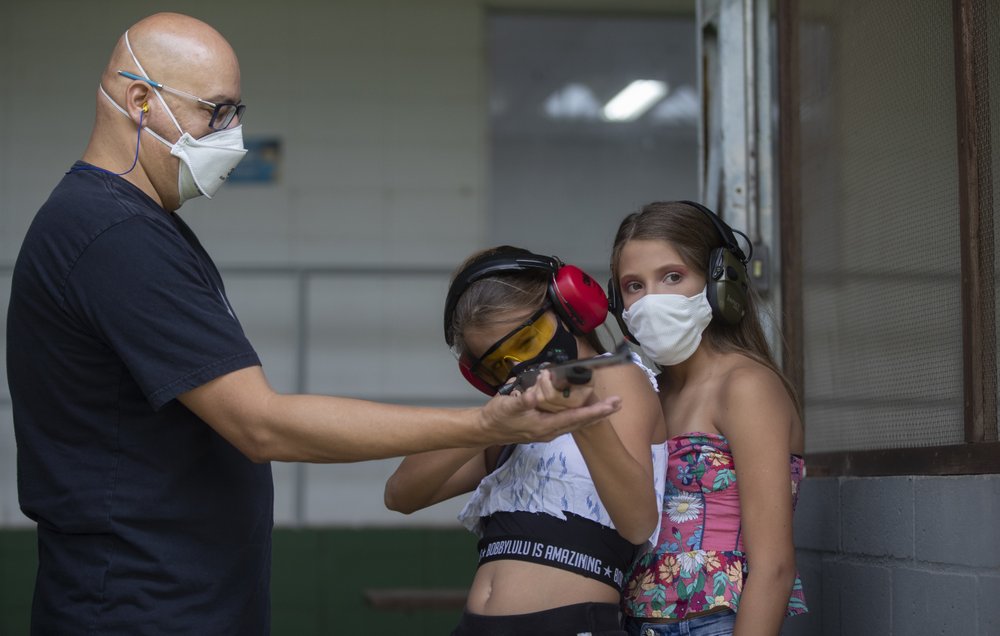
Instructor Robson de Oliveira trains his 10-year-old twin daughters Lorena, center, and Lara, how to properly shoot a firearm at a shooting range in Americana, in Sao Paulo state. (AP Photo/Andre Penner)

In this Jan. 1, 2019 file photo, Brazil’s President Jair Bolsonaro points with his fingers to mimic guns as he rides in an open car with his wife, first lady Michelle Bolsonaro, after his swearing-in ceremony in Brasilia. (AP Photo/Andre Penner)

When he took office in Jan. 2019, a person could own two guns, but had to submit to an onerous process checking criminal record, employment, psychological and physical fitness, and also write a statement explaining one’s need for a weapon.

Decrees from May 2019 allowed rural landowners carry guns across their properties, increased annual ammunition allowances and let registered shooters and hunters transport weapons from their homes to ranges.

Last month, Igarape and the Sou da Paz Institute, which researches violence, said there were almost 1.2 million legal guns in Brazilians’ hands, up 65% from the month before Bolsonaro’s term began.

Bolsonaro, a former Army captain who expresses nostalgia for Brazil’s three decades of military rule, has said he wants to arm citizens to prevent a dictatorship from taking hold. He has suggested armed citizens could counter local government restrictions on activity during the pandemic.

“An armed populace will end this game of everybody needs to stay home,” the president said on Christmas Eve.
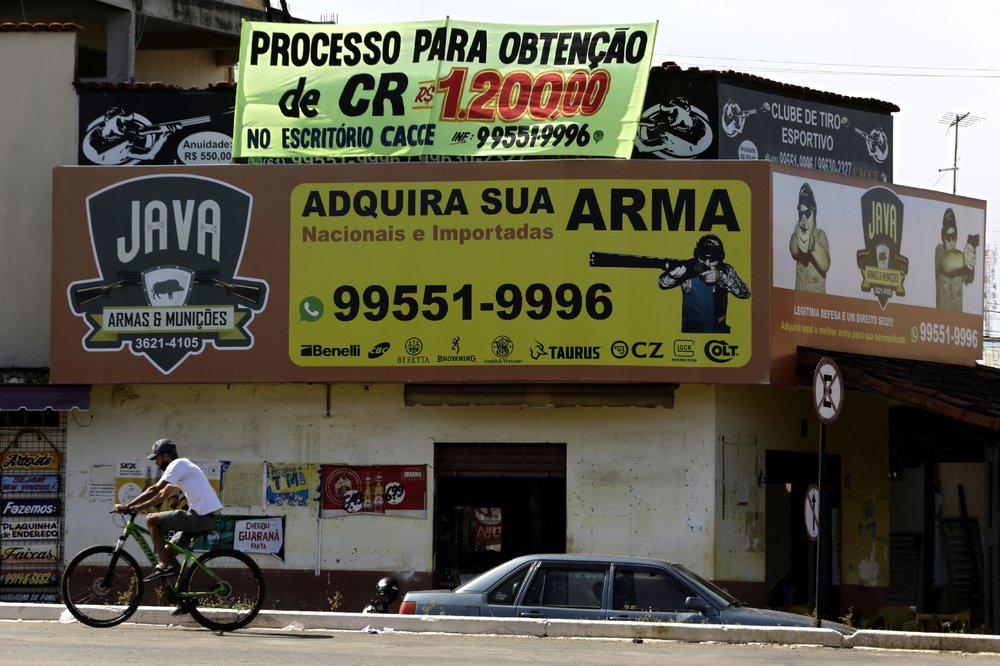
Advertisments promote the sales of armed weapons with one banner reading in Portuguese: “Get your weapon,” in Luziania, Brazil. (AP Photo/Eraldo Peres)

The decrees also empower local councils of psychologists to grant shooting range members permission to own guns, rather than experts chosen by Brazil’s Federal Police. And they wrest from the Army control over sales of several caliber bullets, which makes them harder to track, and boost annual ammunition allowances by as much as fivefold.

These are welcome prospects to people like Eduardo Barzana, president of a shooting club in Americana, a city in Sao Paulo state’s countryside. Before a practice session, while uncasing semi-automatic assault rifles and preparing his protective glasses, he explained why he cheers Bolsonaro’s moves to loosen controls.

“Guns are like cellphones; it’s the person behind them who matters,” said Barzana. “What the government is doing is benefiting our sport and giving average citizens the right to defend themselves.”

Eduardo Barzana practices at a shooting range in Americana, Brazil. (AP Photo/Andre Penner)

Former public security secretary José Vicente da Silva acknowledges the decrees would help responsible owners, but says they also will facilitate guns falling into the wrong hands. One month after Sastre was sworn in as a lawmaker, students at the school she once attended were targeted in a shooting; the assailants used guns purchased online.

“No one needs six or eight guns for protection, and there’s no evident reason to give so many guns to shooters and hunters,” said da Silva, who retired from Sao Paulo state police after three decades of service. “The decrees make it almost impossible for police to track bullets or weapons. If this goes ahead, we will have weapon stockpiles, many of which bought by organized crime.”

Gisely Nunes learns to handle a submachine gun from an instructor at the Valparaiso Shooting Club on the outskirts of capital Brasilia. (AP Photo/Eraldo Peres)

Some analysts have expressed fear that the riot at the U.S. Capitol in January may inspire an armed uprising of Bolsonaro supporters should he fail to win a second term in next year’s election.

Bolsonaro’s lawmaker son, Eduardo, a fellow die-hard gun rights supporter and former federal police officer, visited the White House on the eve of the riot. He later denied any tie to the invasion.

On March 8, Eduardo Bolsonaro told newspaper O Estado de S.Paulo during a visit to Jerusalem that if rioters in the U.S. had been organized, they would have been able to take the Capitol and make their demands heard, and had “a minimum of bellicose power” to avoid casualties on their side. In 2018, he said it would take just two soldiers to shut down the Supreme Court.

Statements like those prompt Igarape’s Szabó and other analysts warn risks for Brazil’s democracy are higher than in the U.S..

“This rhetoric of politicization of the issue, with the president saying he will arm citizens against lockdowns or electoral fraud is the Trump model,” Szabo said. “We saw what happened at the Capitol invasion, with deaths. It could have been worse.”

In the U.S, gun sales hit a historic high in January after the riot, and continued the record-setting surge that began as the pandemic took hold. Gun sales often spike during election years amid worries a new administration could change gun laws. U.S President Joe Biden has supported gun control measures like a ban on “assault weapons.”

In Brazil, both the speaker of the house and the Senate’s president won their positions last month with Bolsonaro’s backing. Congressional analysts say it is unlikely either will cross the president on an issue his base holds so dear. The opposition isn’t strong enough to whip the votes needed to strike down the decrees.
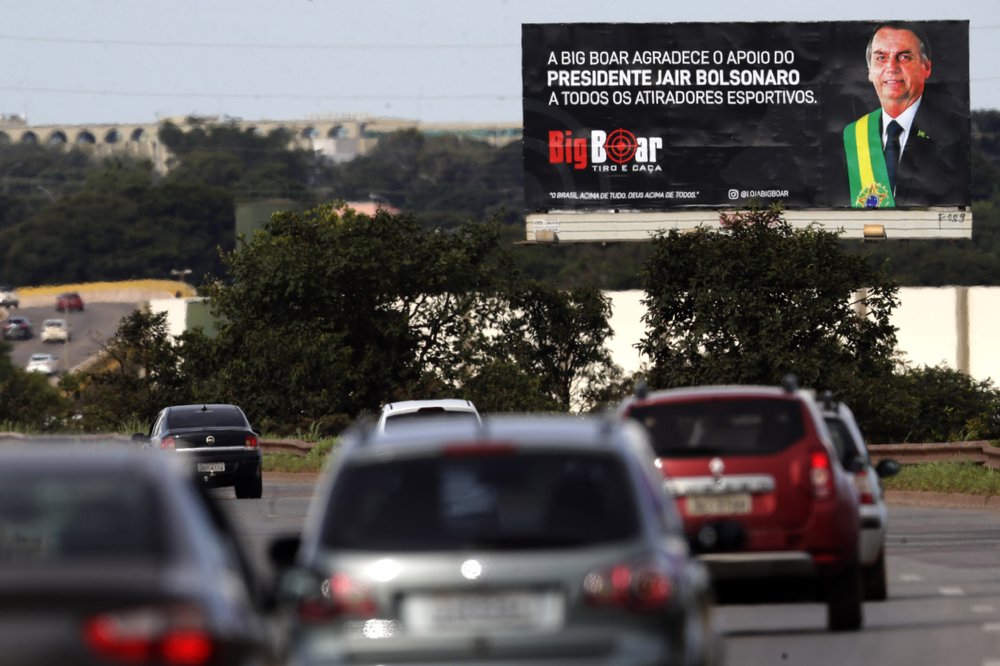
A billboard towering over traffic promotes the Big Boar gun shop, with a message that reads in Portuguese: “Big Boar thanks President Jair Bolsonaro for his support of all shooters,” in capital Brasilia. (AP Photo/Eraldo Peres)

Caravans of Bolsonaro supporters drove the streets of major cities on Sunday. Pictures that went viral on social media showed some holding guns near their car windows.

“We are operating beyond public security here; this is the terrain of politics, which is really serious,” said Raul Jungmann, a former minister of defense and public security. “Arming populations is always done at the service of coups, massacres, genocides and dictatorships.”

The post Brazil President: A Gun for Anyone Who Wants One appeared first on The St Kitts Nevis Observer.

New Variant Sweeping US, Public Warned of Letting Up Too Soon, Astra Zenica Shot, More

Travelers are shown in Salt Lake City International Airport Tuesday, March 9, 2021, in Salt Lake City. U.S. airlines are adding jobs as industry employment extends a rebound from a low in October, when tens of thousands of airline workers were briefly laid off after federal payroll aid expired. (AP Photo/Rick Bowmer)

(CNN) Experts are worried some Americans are letting up too early — at a critical time when looming dangers are threatening to wipe out the progress the US has made in its battle against Covid-19.

At least a dozen state leaders have eased Covid-19 restrictions this month, often citing improving Covid-19 trends and growing vaccination numbers. At the same time, air travel is hitting pandemic-era records and the first spring break crowds have begun descending on Florida and other sunny regions while cases of a dangerous variant are on the rise.

The Transportation Security Administration said it screened more than 1.3 million people at airports Sunday — meaning about 5.2 million travelers flew since Thursday. That’s the highest number of people that have traveled by air during any other four-day period of the pandemic.

White House races to blunt potential Covid-19 surge

In Florida, spring breakers have begun packing shores with some Miami Beach officials reporting swelling crowds and precautions going out the window.

It’s a combination of all those factors, officials fear, that could lay the groundwork for another spike.

“We have seen footage of people enjoying spring break festivities, maskless,” Centers for Disease Control and Prevention Director Dr. Rochelle Walensky said Monday. “This is all in the context of still 50,000 cases per day.”

So is another surge inevitable?

“We could go in either direction,” emergency physician Dr. Leana Wen told CNN on Monday. “What happens now is really up to us and whether we keep up masking and avoiding indoor gatherings as we should be until the point that we’re vaccinated.”

You asked, we answered: Your top questions about Covid-19 and vaccines

In this March 9, 2021 file photo, travelers walk through the Salt Lake City International Airport

A dangerous variant will be dominant soon

The safety measures will be especially crucial now that multiple variants of the virus are circulating — including the highly contagious B.1.1.7 variant that was first identified in the UK. 

It’s projected to become the dominant variant in the US by the end of this month or early April, Walensky said Monday.

Cases of the B.1.1.7 variant have so far been found in 48 states, Puerto Rico and Washington, DC, according to CDC data.

“The way the variants spread is by letting our guard down,” Dr. Richard Besser, the former acting CDC Director told CNN on Monday. “By not wearing masks, by not social distancing. If we can hang in there for a few more months, there will be enough vaccine for every adult in America to be vaccinated.”

“Then we can truly let go of some of the restrictions that are in place. But if we do this too quickly, we could see an increase in cases, we could see a backslide that is occurring in many European countries and that does not have to be the outcome here in America,” he added.”

Research published last week suggested that the variant was associated with an estimated 64% higher risk of dying from Covid-19.

This was Texas’ first weekend without Covid-19 limits. Here’s how it went for business owners

And another peer-reviewed study has linked the variant to a higher risk of death, according to a paper accepted by the journal Nature. This time, the risk of death from the variant was estimated around 55% higher than earlier strains after adjusting for a number of factors like age, sex, and where and when tests were conducted.

A subsequent analysis in the study that accounted for missing and potentially miscategorized test results found the overall increased risk of death may be somewhat higher — around 61% more than earlier strains.

The study was not able to factor in vaccination nor could it show why the variant might be more deadly than earlier strains.

Daily vaccination numbers hit record levels

But there is good news: Vaccinations are ramping up and experts are hopeful Americans will be able to see a semblance of normality by the summertime.

Data updated by the CDC on Monday shows the country hit a seven-day average of about 2.4 million Covid-19 vaccine doses administered per day, a new record.

That comes as more states expanded their eligibility requirements for vaccinations.

A high BMI may qualify you for a vaccine, but may not mean you’re unhealthy. Here’s how to check

In Mississippi, Gov. Tate Reeves announced Monday the state would be opening up appointments to all residents who are 16 and older starting Tuesday.

Pfizer’s Covid-19 vaccine is the only one available for use by people who are 16 or older, while the Moderna and Johnson & Johnson vaccines are restricted to people 18 or older.

“Starting tomorrow, ALL new appointments will be open to ALL Mississippians. Get your shot friends – and let’s get back to normal!” he wrote on Twitter.

In West Virginia, Gov. Jim Justice expanded the list of pre-existing medical conditions that make residents eligible to receive a vaccine.

“We’re on a glide slope to being able to get our lives back to normal, and that’s what we want more than anything,” Justice said.

So far, more than 71 million Americans have received at least one dose of a Covid-19 vaccine, according to CDC data. More than 38 million have been fully vaccinated — roughly 11.5% of the US population.

Most Americans are getting their second dose on time

Also, most people who have received a first dose of a Covid-19 vaccine are getting their second dose on time, according to early data from the CDC.

But the CDC researchers warned that the initial groups prioritized to receive the vaccine — healthcare workers and long-term care facility residents — have had easy access to a second dose through their workplace or residence.

Millions more Americans can now get Covid-19 vaccines, including teachers in all 50 states

“As priority groups broaden, adherence to the recommended dosing interval might decrease,” they wrote in the report that published Monday.

For the Pfizer and Moderna vaccines, it is recommended second doses be administered 21 and 28 days later, respectively, but the researchers noted in their report that up to 42 days between doses is permissible, if needed.

The report includes data on more than 37 million people who received at least their first shot between December 14 and February 14.

Among those who had received both doses, the researchers found that 95.6% received their second dose within the recommended time interval.

They noted that severe weather events led to distribution challenges and canceled appointments during the time of the study and more research will be needed to examine the completion of second doses over a longer period of time.

“Continued monitoring of series completion status across jurisdictions and by demographic characteristics is important to ensure equity in vaccine administration and vaccination coverage, especially as vaccination efforts expand to additional population groups,” they wrote.

CNN’s Michael Nedelman, LaCrisha McAllister, Gregory Lemos, Deidre McPhillips, Pete Muntean and Jacqueline Howard contributed to this report.

=================================================

AstraZeneca vaccine: Safety experts to review

AstraZeneca vaccines (file pic)image copyrightReuters
image captionSeveral European countries have paused their roll-out of the jab

Vaccine safety experts from the World Health Organization (WHO) are meeting on Tuesday to review the Oxford-AstraZeneca jab, after several European countries halted their rollouts.

A number of cases of blood clots were reported in Europe after the vaccine was administered.

But the numbers are below the level you would expect in the general population.

The UK medicines regulator and the WHO say there is no evidence of a link between the vaccine and clots.

The European Medicines Agency (EMA) – the European Union’s medicines regulator – is also meeting on Tuesday.

It is expected to issue its decision on the continued use of the Oxford-AstraZeneca vaccination on Thursday.

About 17 million people in the EU and the UK have received a dose of the vaccine, with fewer than 40 cases of blood clots reported as of last week, AstraZeneca said.

Concerns that there could be a link prompted leading EU states to suspend use of the vaccine, including Germany, France, Italy and Spain.

Other countries, including Austria, have halted the use of certain batches of the drug as a precautionary measure.

However, Belgium, Poland, the Czech Republic and Ukraine said they would continue to administer the AstraZeneca vaccine.

And in Thailand, Prime Minister Prayuth Chan-ocha became the first person in the country to receive the AstraZeneca inoculation.

The post New Variant Sweeping US, Public Warned of Letting Up Too Soon, Astra Zenica Shot, More appeared first on The St Kitts Nevis Observer.

Mexico: Former Island Prison’s Transformation to Tourist Attraction

MEXICO CITY (AP) — Mexican officials said ferries and cruise ships may soon be visiting the former Isla Marias prison, after the last island penal colony in the Americas was closed and turned into an environmental education center in 2019.

The education camp hasn’t gone very well — only 40 youths have been trained on the island — and the administration of President Andrés Manuel López Obrador is now trying a different tack, because the island hasn’t been offsetting the costs associated with keeping it open.

Officials said Saturday they are planning to build a dock for larger ships on the Isla Madre main island, the only one of the four Marias islands that is inhabited. Visitors will be able to tour the remote island jail, but not stay overnight. Tourism Secretary Miguel Torruco described future tours.

“The experience begins with the cruise ship or ferry arriving from Mazatalán or San Blas, to Isla Madre, and on the voyage the passengers can admire the beauty of the ocean,” Torruco said. It would be quite a long ride; the four islands are located 70 miles (110 kilometers) off the Pacific coast of Nayarit state.

“Visitors will have their first contact with the former island prison which for 100 years sheltered numerous criminals,” Torruco said. Officials compared it to the now-closed U.S. prison at Alcatraz, and said tourist visits could start within three months.

The penal colony, founded in 1905, passed through some periods of infamous brutality, and as recently as 2013, the Islas Marias held 8,000 inmates.

The hemisphere was once dotted with remote island jails like the one depicted in the movie “Papillon,” but they all gradually closed. When Panama closed its Isla Coiba penal colony in 2004, Isla Marias became the last one remaining in the Americas.

But far from the bloody reputation of places like Devil’s Island — the French Guiana penal colony shuttered in 1946 — toward the end, the Islas Marias harbored many lower-risk or well-behaved inmates and the colony was viewed as a step toward release or rehabilitation.

While the prison kept mass tourism at bay, the islands suffered severe environmental degradation from over a century of use as a penal colony.

Island penal colonies were used around the world starting in the 1700s as remote, escape-proof places to “rehabilitate” inmates through hard labor. Often known as “prisons without bars,” with the ocean serving as the most effective barrier to escape, the penal colonies were also known for being at least in part self-supporting and a way to settle remote islands.

But in the end, the Islas Marias wound up costing Mexico far more per prisoner than did mainland jails.

Chile closed its Santa Maria prison island in the late 1980s, Costa Rica’s Isla San Lucas penal colony closed in 1991 and Brazil’s Isla Grande in 1994. Peru dramatically ended its El Fronton island prison in 1986: Gunboats blew up most of the buildings to put down a riot, killing more than 100 inmates.

The post Mexico: Former Island Prison’s Transformation to Tourist Attraction appeared first on The St Kitts Nevis Observer.

Brazil: As Pandemic Rages, Country Gets 4th Health Minister

SAO PAULO (AP) — Brazilian President Jair Bolsonaro on Monday picked his fourth health minister since the COVID-19 pandemic hit, amid the worst throes of the disease in the country yet and after a series of errors decried by public health experts.

Marcelo Queiroga, the president of the Brazilian Society of Cardiology, will replace Eduardo Pazuello, an active-duty army general with expertise in logistics, who landed the position last May despite having no prior health experience.

Earlier Monday, Pazuello acknowledged in a press conference that Bolsonaro aimed to replace him. The first candidate for the job, cardiologist Ludhmila Hajjar, rejected it.

Pazuello’s departure means ushering in Brazil’s fourth health minister during the pandemic, although he has presided over the ministry for the longest period of the three to date. The revolving door signals the challenges for the government of Latin America’s largest nation to implement effective measures to control the virus’ spread — or even agreeing which measures are necessary.

Pazuello’s two predecessors left the position amid disagreements with Bolsonaro, who criticized broad social distancing and supported the use of an unproven anti-malarial drug to treat the disease. He continues to hold those positions, despite health experts’ admonishments and studies showing the drug has no effect on COVID-19.

Pazuello proved more compliant. Immediately after taking the job his ministry backed use and distribution of the malaria pill. On several occasions, he said that his boss tells him what to do, and he obeys.

“The conversation (with Queiroga) was excellent. I already knew him from a few years back. He has everything it takes to do nice work, continuing what Pazuello has done up until today,” Bolsonaro told supporters at the entrance of the presidential residence in Brasilia, adding there will be a transition period of up to two weeks with the outgoing and the incoming minister.

“Pazuello’s work was well done in the management part. Now we are in a phase that is more aggressive in the fight against the virus,” Brazil’s president said.

Brazil has recorded almost 280,000 deaths from the virus, almost all of which were on his watch. The toll has been worsening lately, with the nation currently averaging more than 1,800 deaths each day. Health care systems of major cities are at the brink of collapse, and lawmakers allied with Bolsonaro have proposed suitable replacements for Pazuello, while threatening to step up pressure for an investigation into his handling of the crisis.

The country’s top court is also investigating Pazuello for alleged neglect that contributed to the collapse of the health care system in Amazonas state earlier this year. That probe will now be sent to a low court judge.

Weeks later, in a particularly embarrassing episode, his ministry accidentally dispatched a shipment of vaccines intended for Amazonas state to neighboring Amapa state, and vice versa, after confusing the abbreviations for each state.

Finally, Pazuello has faced intense criticism for Brazil’s slow vaccine rollout. According to Our World in Data, an online research site that compares official government statistics, only 5.4% of Brazilians have been vaccinated. Almost all were shots from Chinese biopharmaceutical firm Sinovac, which Bolsonaro repeatedly cast doubt upon.

Pazuello’s health ministry also delayed its decision to purchase the vaccine from Sao Paulo state’s government until it was left with no other option to start immunization in January.

The only vaccine deal Pazuello had signed at the time, for 100 million doses of the AstraZeneca jab, has brought few shots to the arms of Brazilians so far. His ministry has since scrambled to cobble together agreements with other suppliers, recently concluding deals to acquire the Pfizer and Sputnik V shots.

Pazuello said in the press conference that he would not resign, and insisted there will be continuity with whomever assumes his position.

Cardiologist Hajjar had already revealed that Bolsonaro interviewed her to replace Pazuello. She told television channel Globo News that science has already ruled against treatments Bolsonaro and his legions of supporters continue to champion, like drugs to fight malaria and parasites, and that the country needs to adopt more restrictive measures on activity. She said she declined the position.

“He needs to choose someone he trusts, who is aligned with him, his ideas, his vision, and with the government’s desire. And I’m certainly not that person,” she said.

Hajjar forecast between 500,000 and 600,000 total deaths, not to mention long-term consequences, unless Brazil changes course.

Queiroga has already called Bolsonaro “a great Brazilian.” His social media channels have not made any criticism of the president’s handling of the pandemic and pushed for a quick vaccine rollout

AP journalist David Biller contributed to this report from Rio de Janeiro.

The post Brazil: As Pandemic Rages, Country Gets 4th Health Minister appeared first on The St Kitts Nevis Observer.

East Bus Drivers plead for fairness

Bus drivers of the East Bus Terminal on Monday were out protesting unfair chances to make a decent living while others are allowed to break the law.

A little under two dozen drivers parked their busses outside the East Bus Terminal on Wellington Road and marched towards Government Headquarters and performed a peaceful protest outside the main government building.

The drivers claimed while they are following the rules and using the terminal the way it was meant to be used others are allowed to break the law and take advantage and pick up passengers outside the terminal and make returns significantly greater than what they are making.

The Observer spoke with the secretary of the East Bus Association Vinshaw Mangra who said some bus drivers have fallen on hard times as a result of the unfairness

Mangra said the protest was necessary to put pressure on the authorities to enforce change.

He said they do not feel the negotiations and complaints with the government officials have not been working and a protest was the resulting action.

More on this will be published in this weekend’s Observer.

The post East Bus Drivers plead for fairness appeared first on The St Kitts Nevis Observer.