Tag Archives: oceania

‘We are living in hell’: Eliana is desperate to leave Lebanon – but it’s not so simple

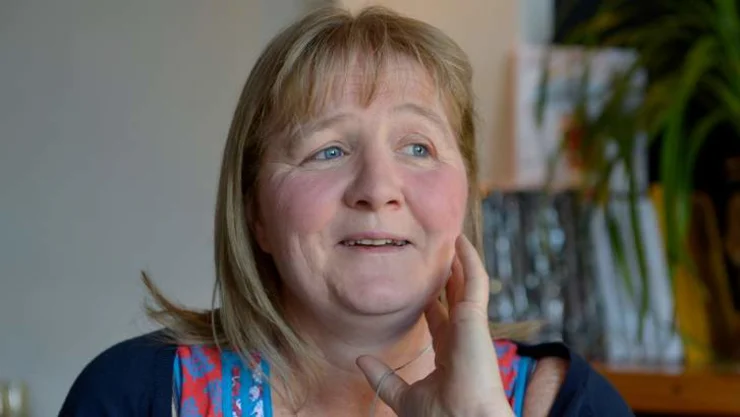
An Australian woman living in Lebanon with her husband and two young children has laid bare the horror of watching war inch closer to her family.

Eliana Ibrahim, an Australian citizen born in Sydney, has been living in Batroun in northern Lebanon, about 50km from Beirut, since she was a young girl.

She'd never contemplated fleeing Lebanon before, even as the financial crisis emptied bank accounts and destroyed livelihoods.

READ MORE: Second flight of Australians from Lebanon lands in Cyprus

Eliana Ibrahim

"Now it's different, it's a serious war. We are living in hell," Ibrahim told 9news.com.au.

"Every night when we go to sleep we ask God to keep us alive for the next day, how worse could that be, especially (as) I'm a mother of two kids (aged three and five)."

Ibrahim said she will be forced to leave her husband, who works for the Lebanese government, behind if she gets on a flight out of Lebanon.

The mother-of-two said she has "no support system" if she flees and is worried about the financial cost of going back to Australia with no job and two mouths to feed.

"Thousands like me are facing other struggles here in Lebanon and the main struggle is financial issues," she said.

"Most of us can't afford financially to leave due to the crisis we have been going through since 2019."

"My main reason to leave is for my kids' safety," she added.

READ MORE: Severe storms and soaring temperatures headed for one Aussie state

Eliana Ibrahim

Ibrahim said she has been in contact with the Department of Foreign Affairs (DFAT) about securing flights for herself, her two children and her parents, who also want to leave.

And she is "100 per cent not the only one" in this heartbreaking situation, Ibrahim added.

Mercy flights carrying Australians from war-torn Beirut have already touched down in Cyprus.

READ MORE: Child, adult killed and two others injured in buggy rollover

Australian nationals evacuated from Lebanon arrive at Larnaca International Airport on October 5, 2024 in Larnaca, Cyprus.

Up to 500 Australian citizens have been safety flown from Lebanon to Cyprus so far.

Australians and their families will stay in temporary accommodation in Larnaca and return to Australia on connecting flights operated by Qantas and Qatar Airways starting from Sunday.

Over 3000 Australians in Lebanon are registered with the Department of Foreign Affairs and Trade (DFAT) as wanting to depart.

Tracing one displaced family’s year of moves across the devastated Gaza Strip

Ne'man Abu Jarad sat on a tarp on the ground. Around him, canvas sheets hung from cords, forming walls for his tent. Over the past year, Ne'man; his wife, Majida; and their six daughters have trekked the Gaza Strip, trying to survive as Israeli forces wreaked destruction around them.

It's a far cry from their northern Gaza home — a place of comforting routine, of affection and safety. A place where loved ones gathered on the roof amid the scent of roses and jasmine flowers.

"Your house is your homeland. Everything good in our life was the home," Ne'man said. "We are missing all that."

READ MORE: Eight-year-old girl dead and babysitter missing after Queensland fire

The family lost that stability when Israel launched its campaign in Gaza in retaliation for Hamas' October 7 attack.

They did exactly as the Israelis ordered in the weeks and months that followed. They obeyed evacuation calls, moving where the military told them to. Seven times, they fled. Each time, their lives became more unrecognisable to them.

The Associated Press traced the family's journey. Nearly the entire population of Gaza has displaced in the war – 1.9 million of its 2.4 million Palestinians. Like the Abu Jarads, most have been uprooted multiple times.

For this family, the journey has taken them from a comfortable middle-class life to ruin.

READ MORE: Israel expands its bombardment in Lebanon as tens of thousands flee

Before war: A cozy life

Living at the northernmost end of Gaza, most pre-war days were simple. Ne'man worked as a taxi driver. Majida got their daughters off to school, then spent much of her day doing housework — her face lights up talking about her kitchen, the center of family life.

Ne'man had planted the garden with a grapevine and covered the roof with potted flowers. Watering them was a soothing ritual. Family and neighbors sat on the front stoop or the roof to chat.

"People would say we have perfume because of how beautiful the flowers are," he said.

October 7: The attack

On October 7, the family heard Hamas rockets and news of the attack. They knew Israel's response would be swift — their house, about 2 kilometres from the border fence, would be on the front line.

By 9am, the family packed what they could and fled, with Israel issuing one of its first evacuation orders.

"It makes no sense to be stubborn and stay," Majida said.

October 7-13: Staying nearby

The family tried to stay close — they went to Majida's parents, in neighboring Beit Lahiya.

"I felt like I was at home," Majida said. "But we were living in fear and terror."

Already, Beit Lahiya was heavily bombarded. Over their six days there, at least nine Israeli strikes hit, killing dozens, according to conflict monitor Airwars.

As explosions closed in, shrapnel pierced the house's water tanks. Windows shattered; the family huddled inside.

It was time to move again.

October 13-15: Hospital refuge

When they arrived at al-Quds hospital, the family saw for the first time the scale of displacement.

The building and its grounds were packed with thousands of people. They found a small space on the floor, barely enough to spread their blanket.

It was a black night and there were strikes, Majida remembers: "The martyrs and wounded were strewn on the floor."

The next day, a strike hit a house a few hundred meters away, killing a doctor and some two dozen relatives.

The Israeli military ordered all civilians to leave northern Gaza, setting in motion a wave of hundreds of thousands heading south across Wadi Gaza, the stream and wetlands dividing the north from the rest of the strip.

The family joined the exodus. The eldest daughter, Balsam, and her baby joined her husband elsewhere. Majida, Ne'man, his sister and the kids headed south.

October 15 – December 26: A cramped school

The family walked 10 kilometres to a UN-run school in the Nuseirat refugee camp.

Every classroom and corridor was packed. Majida, the daughters and Ne'man's sister found a tiny space in a classroom already housing 100-plus women and children. Ne'man moved in with the men in tents outside.

They stayed more than 10 weeks. Majida and the girls slept curled on the floor, unable even to extend their legs. As winter set in, there weren't enough blankets. Only a few toilets served thousands. People went weeks without bathing. Skin diseases ran rampant.

The daughters went daily to line up at the few bakeries still working, sometimes returning with only one flatbread. Once, Ne'man and his daughters walked 5 kilometres to the town of Deir al-Balah, looking for drinkable water. They got a half-gallon.

As strikes continued, the family decided to go as far as possible, trekking 20 kilometres to Rafah, at Gaza's southernmost end.

December 26 – May 14: Tent life

The Abu Jarads weren't the only ones: As Israeli evacuation orders ate away at more of Gaza, nearly half the population crammed into Rafah.

Here, the family had their first taste of living in a tent.

They set up amid the massive sprawl of tens of thousands of tents on Rafah's outskirts, near UN aid warehouses known as "the barracks".

"In the winter, it was hell," Majida said. "We slept on the ground, nothing under us, and no covers."

They had no money to buy food; market prices soared. They survived off UN handouts of flour and other basics.

Like many others, they'd believed Rafah was Gaza's last safe place.

But in early May, Israel ordered all of Rafah evacuated. Troops pushed into the city. Bombardment intensified.

Ne'man and Majida tried to stay as long as possible. But an airstrike hit nearby, he said, killing four of Ne'man's cousins and a young girl.

May 16 – August 16: "Humanitarian zone"

Palestinians who'd packed into Rafah — more than 1 million — streamed out again, scattering across southern and central Gaza. New tent cities filled beaches, fields, schoolyards, cemeteries, dumpsites, any open space.

The Abu Jarads moved by foot and donkey cart until they reached a former amusement park known as Asdaa City. Its Ferris wheel stood above a landscape of tents.

Here, in Muwasi, a barren area of dunes and fields along the coast, Israel had declared a "humanitarian zone" – though there was little aid, food or water.

Amenities once taken for granted were distant memories. Now the kitchen was a pile of sticks for kindling and two rocks for setting a pot over the fire. No shower, only the occasional bucket of water. Soap was too expensive. Everything was filthy and sandy. Insects crept in.

August 16: Fleeing to the sea

Even the "humanitarian zone" was unsafe. A raid less than a kilometre away forced Majida and Ne'man to uproot their family once more. They headed toward the Mediterranean coast, not knowing where they'd stay.

Fortunately, they said, they found acquaintances.

"God bless them, they opened their tent for us and let us live with them for 10 days," Ne'man said.

Late August: Moving again, no end in sight

When they returned to Muwasi, the Abu Jarads found their tent had been robbed – their food and clothes, all gone.

Since then, the weeks blur together. Food's even harder to find; supplies entering Gaza dropped to their lowest levels.

Israeli drones buzz overhead. The mental strain wears on everyone.

They all dream of home. Ne'man said he learned that his brother's house next door was destroyed in a strike, and his own home was damaged.

He wonders about his flowers. He hopes they survived — even if the house is gone.

Heavy police presence as pro-Palestine protesters take to Sydney and Melbourne streets

Thousands of pro-Palestine protesters have flooded the streets of Sydney and Melbourne to call for a ceasefire in the Middle East while marking the first anniversary of the war in Gaza.

The Sydney rally kicked off in Hyde Park this afternoon after police went to court to stop the demonstrations, with a compromise eventually reached that saw a change in route and tomorrow's march abandoned for a vigil.

A heavy police presence surrounds the marching protesters who are waving signs in support of a free Palestine.

READ MORE: Confronting scenes as one girl dead and another missing after unit fire

Pro-Palestine demonstrators at Hyde Park in Sydney.The rally comes the day before the one-year anniversary of the October 7 attacks by Hamas on Israel.

About 2000 people have gathered in the city for the demonstration, which began around midday.

The protesters were warned earlier today to stay in line or risk arrest.

Police Minister Yasmin Catley said the rallies would be closely watched by police with zero tolerence for racism or illegal demonstrations, including displaying the Hezbollah flag.

"We do not want the war in the Middle East played out in our streets in Sydney. That anger has no place here," Catley said.

"That is not the city we want to see. Please be mindful of what you say, your actions, because they really do matter."

NSW Police Commissioner Karen Webb said arrests will be made if the protests are not peaceful.

"We will respond if there is a need to. Our response has been proportionate," she said.

"Police will work with organisers and work with marshals to ensure it is a peaceful rally."

READ MORE: Federal Police seek seven men for display of Hezbollah flags

Protesters march down Swanston Street in Melbourne.Police monitored the crowds in Melbourne as marchers moved through the CBD.

The police presence was beefed up around Sydney and Melbourne earlier ahead of the expected rallies.

More than 260 officers were expected to line the streets of Melbourne to monitor the planned protests outside the State Library of Victoria.

The marchers have moved through Melbourne's CBD with organisers leading chants calling for peace.

Protesters urged to stay away

Nationals leader David Littleproud called on protesters to "go back into their corner" ahead of today's rallies.

"I think enough's enough, we've got the point, this has gone on for 12 months," he told Today.

"We understand you have a right to protest here in this country, we celebrate that, but at this juncture I think it's time for everyone to go back into their corner and respect this is a very conflict that very few of us are going to be able to solve."

READ MORE: Second flight of Australians from Lebanon lands in Cyprus

Police are on alert after issuing a rare statement warning protesters that anything other than peaceful rallies will not be tolerated.

Activists have been warned it's an offence to promote, encourage or praise terrorism.

"In Australia, there are offences that prohibit behaviour that incites or advocates violence or hatred based on race and religion, including the display of prohibited symbols in public under these circumstances," the joint AFP, state and territory police statement read.

"It is also a serious offence to counsel, promote, encourage, urge, instruct or praise terrorism."

READ MORE: Child, adult killed and two others injured in buggy rollover

Plans for rallies this weekend and on October 7, the anniversary of Hamas' deadly surprise attack on Israel last year that saw 1200 Israeli people killed and more than 200 kidnapped, have sparked controversy this week.

An Adelaide protest will also go ahead after police said organisers had satisfied all legal requirements.

Soaring temperatures and severe storms on the radar for Queensland

Australians suffering from asthma and hay fever in one state have been warned a temperature spike and incoming storms could be a dangerous weather cocktail.

Soaring temperatures and severe storms are on the radar for Queensland and high pollen levels are forecast to follow suit.

Above average temperatures are expected to hit most parts of the state, the Bureau of Meteorology's senior meteorologist Miriam Bradbury told Today.

READ MORE: Police presence beefed up ahead of pro-Palestine rallies

Weather warning for Queensland

"Over the next few days we're going to see heat pretty much across all of Queensland," Bradbury said.

"Above average temperatures, generally in the high 20s, at least, if not low to mid-30s, pushing up to the higher 30s across those inland areas."

Bradbury said with the warmer weather there is also a high chance of thunderstorms after the long weekend.

She said Tuesday will bring the worst of the storms for Queenslanders.

READ MORE: Second flight of Australians from Lebanon lands in Cyprus

Temperatures in Queensland

"From Tuesday, storms will increase, becoming much more widespread and with a greater risk of becoming severe storms as well, so becoming much more dangerous," she said.

Maximum temperatures in the state are set to be eight degrees higher than average across south-east Queensland.

Early next week, Brisbane is forecast to reach 33 degrees on Sunday, Ipswich 36 and the Sunshine Coast 31.

The warm, windy conditions are forecast to trigger an earlier grass pollen season in Queensland, posing a threat to those with hay fever or asthma.

Weather warning for Queensland

READ MORE: Child, adult killed and two others injured in buggy rollover

Victoria is also gearing up for a challenging pollen season, with expectations this year will be similar to 2023 high pollen levels.

Dr Edwin Lampugnani, chief operating and scientific officer of AirHealth, said: "At this stage we are expecting a bigger than average grass pollen season, one which is similar to last year.

"Forecasted rainfall could trigger a surge in grass growth that could increase the amount of grass pollen in the air."

Free food and three-day weeks: What Aussie workplaces will look like in 50 years

The tumultuous COVID-era and a fresh wave of return-to-office orders have reshaped the landscape of Australian workplace culture.

It seems remote work is here to stay even as some companies continue to push back against it.

But what will the average Australian office look like in decades to come?

READ MORE: How Australia's new 'right to disconnect' rules apply to you

Workplace stock image

Scientific futurist Dr Catherine Ball has her finger on the pulse of rapidly evolving technology.

She told 9news.com.au workplaces in Australia will likely never ditch the in-office culture.

"Workplaces are going to go a few ways, as we move to the three-day working week (enabled with technology), but ultimately the place of the office in work culture will remain relevant," Ball explained.

Employees will need extra benefits to entice them to apply for semi-permanent in-office jobs though, Ball said.

READ MORE: What are remote access scams, the 'sophisticated' and 'professional' ploys costing Australians millions?

Dr Catherine Ball

There will still be a huge rise in companies offering fully remote work, so businesses will be required to adapt.

"Mixed-use spaces, fast internet, and even free food will become standard – not just something you find at a Google office," she said.

"Some parts of work will still require team-work, and deep immersive headsets and the 'internet of bodies' devices will be used to simulate a physical gathering."

Technology isn't always linear and Ball predicts some resistance to overly tech-enabled offices during the next few decades.

She said there could be a shift where "analogue" knowledge and human interaction is valued more highly than digital collaboration.

Concentrated CBD areas are also set to transform as workplaces change.

READ MORE: How close is our planet to suffering the most catastrophic effects of climate change?

Tiny apartment digitally-rendered

Ball predicts Australian cities will look to the Japan-style model of old office buildings being used to bridge the housing wealth gap.

She said it's likely the government will look into "micro apartments", which are widely used in densely-populated city areas across Japan.

"Our CBDs will become more mixed use as former offices get converted into micro-apartments, like Japan, [for] the younger population to actually have a shot at owning their own property" Ball said.

World-first cancer treatment now accessible for hundreds more Aussies

A world-first cancer treatment, discovered in Melbourne, has been added to the Pharmaceutical Benefits Scheme (PBS).

It means thousands of Australians with blood cancer will now have access to the pills, which have been slashed by thousands of dollars.

Patrick Foley has been fighting an incurable blood cancer for more than 30 years.

READ MORE: The bittersweet story behind Di Morrissey's latest book

Cancer treatment pill added to the PBS slashes prices by thousands

But doctors initially gave the Melbourne man only six months to live.

After battling the disease for decades, it's finally at bay for the 68-year-old thanks to a world-first treatment discovered by researchers in Melbourne.

Foley was one of the first to access it as part of a clinical trial.

"It's like playing a card game, where you think you've got a losing hand and you're handed a couple of cards and then all of a sudden, you've got a winning hand," Foley told 9News.

Cancer treatment pill added to the PBS slashes prices by thousands

Two drugs, Imbruvica and Venetoclax – used individually to treat chronic lymphocytic leukemia and small lymphocytic lymphoma – are now being used together.

They work to block proteins and help kill the cancer cells with two tablets taken daily for 15 months.

There's no need for chemotherapy, meaning less side effects and once in remission, patients go drug-free.

Cancer treatment pill added to the PBS slashes prices by thousands

"I think it's a huge breakthrough for our patients," Dr Con Tam, Head of Lymphoma Services, Alfred Hospital.

"That means the cancer is out of mind and patients can get back to their normal lives."

Now the treatment is added to the PBS, the price of the pill has been slashed from $12,600 a month to just $7.70 for concession card holders and $31.60 for general patients.

Cancer treatment pill added to the PBS slashes prices by thousands

Health Minister Mark Butler called the treatment "remarkable" and hopes it will benefit hundreds of Australians.

"Taking this tablet treatment is just a world away from having to undergo chemo treatment or radiation therapy," Butler told 9News.

"This is a remarkable new treatment that will change the lives of as many as 900 patients with lymphoma every year."

‘Nothing to say in a good way’: Aussie’s relief to escape escalating conflict

The first of two charter flights of Australians out of Beirut, Lebanon has touched down in the safety of Cyprus on Saturday afternoon (night AEST).

About 229 Australian nationals were on board the first mercy flight and have been processed at Larnaca Airport.

There were a mix of ages on board from the elderly to babes in arms and also, a mixture of emotions.

READ MORE: Federal Police seek seven men for display of Hezbollah flags

First flight of Aussies arrive in Cyprus from LebanonThe first charter flight for Australians leaving Lebanon has just touched down in Cyprus en-route to Australia.

Those coming off the flight said they are relieved to be safe and on their way back to Australia.

But, many are also feeling guilt, having left family and friends behind in a place that is now so very dangerous.

"It's good that we get out," Lodi Khalan told 9News.

"It's better for the kids as well."

First flight of Aussies arrive in Cyprus from LebanonFirst flight of Aussies arrive in Cyprus from Lebanon

When asked what it's like in Lebanon currently, Khalan said: "Terrible, there is nothing to say in a good way".

The passengers will spend the next few nights in Cyprus and then, once again, government organised Qantas planes will fly them back to Australia.

It's an emotional journey for them, not knowing what sort of Lebanon they'll be able to return to.

Man charged after car collides with group of people outside pub

A man has been charged after a car allegedly collided with a group of people outside of a South Australian pub in the early hours of this morning.

CCTV footage captured the moment the driver allegedly accelerated, pinning a group of people against a wall at the Royal Family Hotel on North Terrace in Port Elliot.

A young man, believed to be a worker at the pub, is fighting for his life and four others are recovering from minor injuries.

READ MORE: October long weekend 2024 trading hours: What will and won't be open

Port Elliott

Police said the suspected driver left the scene of the crash, which happened at about 1.30am before he returned a short time later.

A 37-year-old man was arrested by police and taken to Christies Beach Police Station, where he's been charged with causing harm by dangerous driving and leaving the scene of a crash.

A 22-year-old man from Hindmarsh Island was left with serious life-threatening injuries and was flown to Adelaide where he remains in hospital.

Four people were treated for minor injuries, including a 21-year-old man from Goolwa Beach, a 37-year-old woman from Port Elliott, a 20-year-old woman from Inman Valley and a 30-year-old man from Blackwood.

A young man is fighting for life and four others have been left with minor injuries after a car allegedly collided into a group of people outside of a South Australian pub early this morning. Police said the suspected driver left the scene of the crash, which happened at about 1.30am on North Terrace in Port Elliot, before he returned a short time later.

North Terrace in Port Elliot, a beachside town near Victor Harbor south of Adelaide, remained closed for most of the day while police examined the scene.

The driver was refused bail, and will face Christies Beach Magistrates Court on October 8.

FOLLOW US ON WHATSAPP HERE: Stay across all the latest in breaking news, celebrity and sport via our WhatsApp channel. No comments, no algorithm and nobody can see your private details.

Federal Police seek seven men for display of Hezbollah flags

The Australian Federal Police have released images of seven men who are wanted after prohibited symbols, including the Hezbollah flag, were flown at a protest in Melbourne last month. 

The flag of Hezbollah and the face of its slain leader were paraded through the streets of Melbourne last weekend. 

"Some may have been named publicly however it's believed they are false names," the AFP said in a statement.

READ MORE: Man arrested for allegedly threatening people with machete

Australia classified Hezbollah's military arm as a threat 21 years ago. 

As of December 2021, the group in its entirety has been considered a terrorist organisation. 

Its flag was absent from today's protests in Victoria and last night's march from the Victoria Barracks to Spencer Street. 

There are concerns the images will reappear at tomorrow's rally on the eve of the anniversary of Hamas' deadly October 7 attack. 

"October 7 isn't a day for celebration, it isn't even a day for commemoration," Victoria's Shadow Treasurer Brad Roswell said.

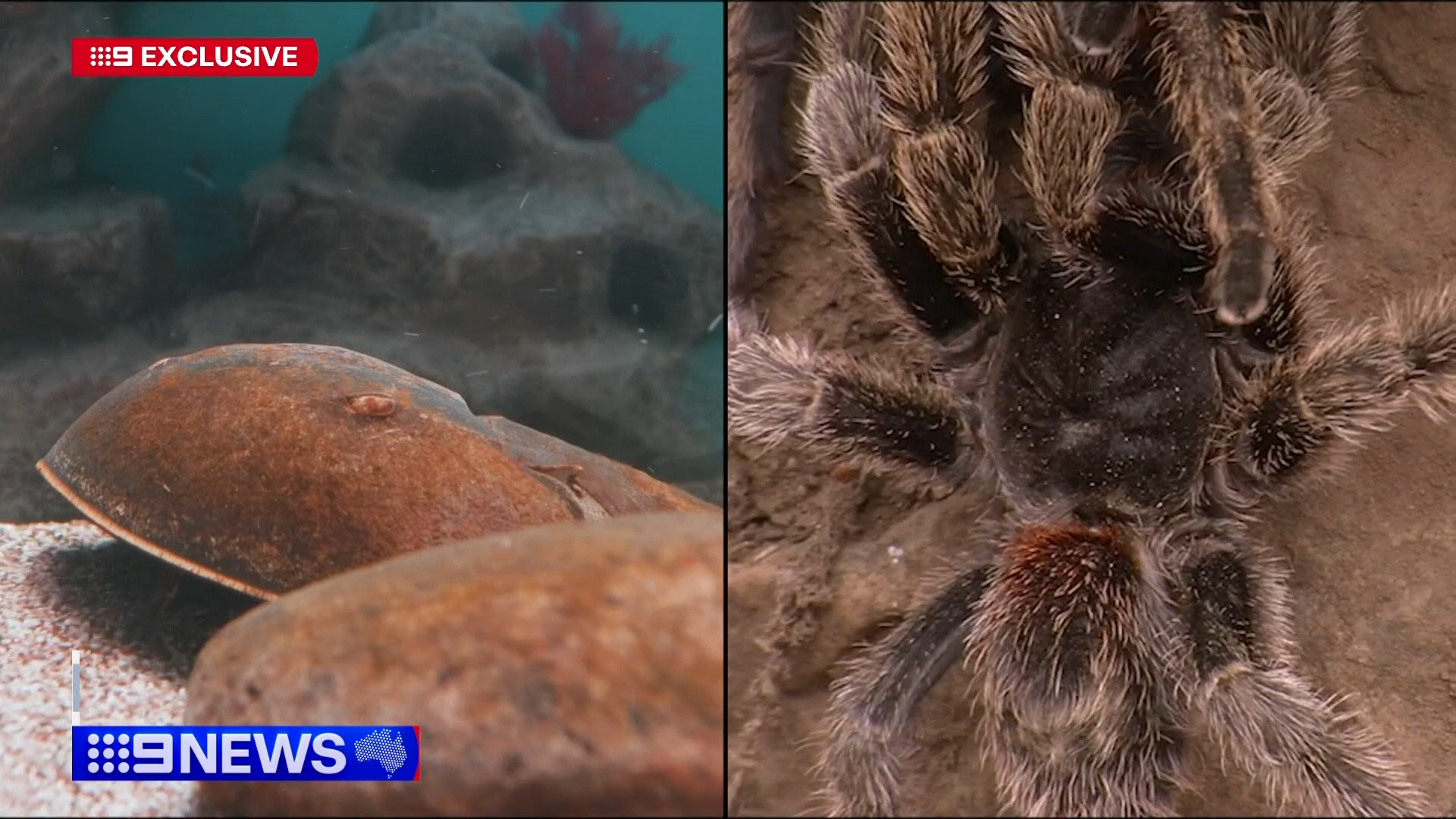
READ MORE: Fishers busted with 'highly-prized' haul inside a marine park

The Australian Federal Police, along with all state and territory police, said in a joint statement yesterday there would be "no tolerance" for lawbreaking or violence.

"In Australia, there are offences that prohibit behaviour that incites or advocates violence or hatred based on race and religion, including the display of prohibited symbols in public under these circumstances," the statement read.

"It is also a serious offence to counsel, promote, encourage, urge, instruct or praise terrorism."

Plans for rallies this weekend and on October 7, the anniversary of Hamas' deadly surprise attack on Israel last year that saw 1200 Israeli people killed and more than 200 kidnapped, have sparked controversy this week.

NSW Police announced yesterday that an October 6 protest would go ahead following an alternate route after securing an agreement with protest organisers that no Hezbollah symbols or flags would be displayed.

The plan for a protest on October 7 has been withdrawn, but a vigil will take place instead.

A Sunday protest is also expected to go ahead in Melbourne, followed by a vigil and procession on Monday.

An Adelaide protest will also go ahead after police said organisers had satisfied all legal requirements.

However, it's expected officers will be out in force at all events.

FOLLOW US ON WHATSAPP HERE: Stay across all the latest in breaking news, celebrity and sport via our WhatsApp channel. No comments, no algorithm and nobody can see your private details.