Tag Archives: oceania

As a young hitchhiker, he survived a ride with a serial killer. Now he’s telling his story

Warning: This story contains details that some readers may find distressing.

Steve Fishman was still in his teens when he came face-to-face with a serial killer.

At 19, he was hitchhiking from a friend's place in Boston to Norwich, Connecticut, where he was an intern at a newspaper.

Fishman was not far from his destination and sticking out his thumb when a man pulled over in a green Buick sedan, said his name was "Red," and told him to hop in.

READ MORE: Mount Everest's highest camp is littered with frozen garbage, and cleanup is likely to take years

The man appeared friendly and had a balding head with wispy patches of red hair, likely the reason for his nickname.

But as Fishman would learn later, the man harboured a dark secret: His name was Robert Frederick Carr III, and he was a serial killer who preyed on young hitchhikers.

Three years earlier, Carr had raped and strangled two 11-year-old boys and a 16-year-old girl who'd hitched a ride with him in the Miami area.

When he gave Fishman a ride, he was on parole after serving time for a rape in Connecticut.

Fishman's ride lasted only about 15 minutes — Carr dropped him off unharmed — but his memories of that fall 1975 encounter have haunted him for decades.

About six months later, Carr was arrested for the attempted rape of a hitchhiker in the Miami area and then startled detectives when he confessed to kidnapping and raping more than a dozen people and killing four of them.

Edna Buchanan, the Pulitzer Prize-winning Miami police reporter who wrote a book about Carr, once said: "He was about the most evil person I ever met."

Fishman was stunned when he saw Carr's picture on a breaking news alert. He recognized him instantly as the talkative man who'd given him a ride.

READ MORE: Rafah is a dusty, rubble-strewn ghost town two months after Israel invaded to root out Hamas

In retrospect, Fishman said, he missed several major red flags that day.

First, the sedan's door latch on the passenger side was jammed and Fishman had to roll down the window and open it from the outside.

And Carr had casually mentioned he had just got out of prison.

"I'm an intern at a local newspaper. And I'm thinking, 'Wow, that could be a good story about a guy getting out of prison, trying to reintegrate into the community," Fishman told CNN.

"I really didn't stop to think or ask him what the crime was. I didn't have any idea."

Nearly five decades later, Fishman and Carr's daughter, Donna, are unraveling lingering questions about the pedophile and killer in a new season of the "Smoke Screen" podcast titled, "My Friend, the Serial Killer."

In the podcast, they explore Carr's brutal crimes and and deceptions by digging through confession tapes, a box of his personal items from prison and hours of interviews with detectives.

Although her father died in a Florida prison in 2007, Donna continues to struggle with her family's dark past.

And Fishman still wonders how he made it out of Carr's sedan alive.

A job on the road offers an opportunity to prey on hitchhikers

In the 1970s, hitchhiking was considered a safe way to get from point A to B.

"It was a pretty regular mode of transportation back then," said Fishman, who as an intern constantly relied on random strangers to drive him where he wanted to go.

"Depending on where you lived, we hitchhiked a lot. It was so safe, there were mums who picked me up hitchhiking, with their kids in the backseat with groceries," he said.

Carr may have played on this belief to carry out his crimes, which mostly targeted hitchhikers.

A TV repairman and car salesman, Carr lived in Norwich with his wife and two kids: Donna and her younger brother. But he traveled nationwide for work and used that opportunity to prey on underage children.

Nearly all his crimes, which occurred in the 1970s, involved children under age 18.

In 1972, Carr picked up two 11-year-old hitchhiking friends, raped and strangled them, then buried them in Louisiana and Mississippi.

He also picked up a 16-year-old girl and drove her from Miami to Mississippi before he strangled her.

He strangled his fourth victim, Rhonda Holloway, 21, not long after his encounter with Fishman and buried her in Connecticut.

Carr would later take investigators on a cross-country trip to show them where he'd buried his victims.

"What he did to those children was truly unprintable," David Simmons, a detective involved in his arrest, said in a 2007 interview.

"In my 33-year career in law enforcement, Carr ranks as the most dangerous child sexual predator-murderer I ever investigated."

A daughter changes her last name to escape her father's shadow

Five decades later, Donna is still living in the shadows of her father's horrific legacy.

She is married, with another last name, and asked CNN to withhold her full name for safety reasons.

In an exclusive interview with CNN, Donna tearfully described an adolescence filled with bullying and jokes about having a serial killer dad.

She barely looked people in the eye as a child, she said.

Those who knew who she was pointed and talked about her father in hushed tones.

Donna said she first learned about her father's murderous rampage when she was 12. But she didn't believe he was the monster he was portrayed to be until he led police on a road trip to unearth his buried victims in Louisiana, Mississippi and Connecticut.

"When he agreed to take the detectives on the search for the bodies, the denial could no longer be. Just every range of emotions you could possibly think of for a 12-year-old girl to go through," said Donna, 60, who now lives in West Virginia.

"And that's when I started to withdraw."

Today Donna has a 27-year-old daughter and worries that a public connection to her father could lead to a new wave of harassment for them.

She dropped her father's last name years ago in favour of her married name, and has told her daughter about his history.

"Sometimes in life, his name can come up on things like background checks for employment, and so on," Donna said.

"I raised my daughter to be very mature and to understand things. I didn't want to lie to her."

Donna said she wishes people would show more compassion for relatives of convicted killers. They grieve too, but dare not verbalize their loss, she said.

"No one sees what's happening in the lives of those people just by hearing about a news story," she said.

"They're humans and they have feelings and they get hurt, and they suffer trauma. And they are very much victims, too, but in a different sense."

A hitchhiker asks a killer why he spared his life

After her father's crimes became public, Donna spent much of her adolescence holed up inside their Norwich home with her mother.

But one day Fishman, still an intern at the newspaper, knocked on their door after her father's arrest.

He pleaded with Donna's mother to let Carr know that the guy whose life he'd spared months earlier would like to visit him in jail for an interview.

Fishman finally got a chance to interview Carr in prison in the mid-1970s after numerous attempts.

In hours of recorded jailhouse interviews, Carr never pretended to be a saint, Fishman said.

He talked about how he stole cars and offered sex to men for money when he was younger.

He confessed to killing his victims and sounded not the least bit remorseful, Fishman said.

"One of the questions that I had for him was, 'Why not me?' And that feels like a really bizarre question to ask. But I did. And he basically shrugged and said, 'I thought you were too big,'" Fishman said.

Fishman's paper published his interview with Carr.

But as Fishman grew up, got married and became a dad, he started rethinking the tone of his coverage.

"An interview with a serial killer was a big story. It was a big journalism scoop that really kind of sent me on the path to be a journalist. And yet, it was a story that I didn't really like to think about because I did it when I was 19 and 20, and I was really afraid of what my focus had been," Fishman said.

Fishman said he believes his friendly conversation with Carr during the ride may have clouded his perspective and humanized the killer a little too much.

"I was really afraid that I had gotten the story wrong, that I somehow didn't understand or appreciate the horror of the story," he said.

"Back then, I looked at it as a societal problem of how do we treat criminals? How do we rehabilitate rapists? And the utter depravation of it kind of slipped by me."

That is partly why Fishman is excavating the story in his podcast.

He hopes that by understanding Carr better, he can correct the record from a more mature and nuanced viewpoint.

"I'm a father now a few times over. I think about crime and victims differently," Fishman said. "And that's kind of why I went to look for Donna."

An answer to a decades-long question: 'He was just born evil'

After deciding to make the podcast, Fishman sent Donna a Facebook message introducing himself.

"She immediately responded with, 'I've been wondering what happened to you," Fishman said.

Turns out, Donna had spent her lifetime trying to understand her father.

She'd wondered: Did he kill people because he was mentally ill and had no access to psychiatric treatment — as Fishman had once written? Or was he just an inherently evil person?

She'd tried reaching out to Fishman over the years and even had called the Norwich paper.

But the decision to be a part of the podcast was not easy.

"I was hesitant, because I really have not spoken much about it. Very few people know that part of my life," she said.

"It took me a little while to make that decision, and then I decided if I was going to do it with anyone, it was going to be Steve."

Donna said she believes her father had manipulated Fishman, like he did with everyone in his life. So she and Fishman agreed to meet at her West Virginia farm to understand the complexities of the story from a new point of view.

They looked through boxes stuffed with Carr's items from prison, including letters Donna had sent him at age 15.

"Dear Dad, I love you. I'm sorry I haven't written in so long," one said.

Her father responded with letters urging her to find Jesus. He claimed he had found Jesus, too.

But he also sent her sexually suggestive letters, leading her to cut off communication with him.

Donna told CNN that she knew her dad was a monster, but she was holding on to the childhood dream of having a nuclear family.

In between her flashes of terror and anger, there were happy memories of family camping trips and the Christmas when her father unwrapped a large stereo he'd bought for the family.

Donna said the inappropriate letters from her father finally gave her the strength to severe ties with him. But they were so unnerving that she said she constantly called the prison to make sure he had not been released on parole.

One day in the summer of 2007 she found out he was no longer listed as being in prison and had a brief moment of panic, thinking he'd been set free.

But a call to the prison confirmed that her father had died of prostate cancer. He was 63.

Only after his death did her sense of peace slowly start creeping back.

Donna said that despite her initial reluctance, working on the podcast has been a therapeutic experience that has given her a better sense of who her father was.

"As many diagnoses as my father had as far as his mental state — and there were a lot — I believe he was just born evil," she said. She's in counselling and hopes to keep making steps toward healing.

"I kept everything boxed in for so many years. I would just push everything down," she said. "It was nice to finally talk about it freely."

This isn’t the local tip – it’s tons of rubbish left at Mt Everest

The highest camp on the world’s tallest mountain is littered with rubbish that is going to take years to clean up, according to a Sherpa who led a team that worked to clear garbage and dig up dead bodies frozen for years near Mount Everest’s peak.

The Nepal government-funded team of soldiers and Sherpas removed 11 tons of garbage, four dead bodies and a skeleton from Everest during this year's climbing season.

Ang Babu Sherpa, who led the team of Sherpas, said there could be as much as 40 to 50 tons of garbage still at South Col, the last camp before climbers make their attempt on the summit.

READ MORE: Police issue amber alert for three missing children from Gold Coast

“The garbage left there was mostly old tents, some food packaging and gas cartridges, oxygen bottles, tent packs, and ropes used for climbing and tying up tents,” he said, adding that the garbage is in layers and frozen at the 8000-metre altitude where the South Col camp is located.

Since the peak was first conquered in 1953, thousands of climbers have scaled it and many have left behind more than just their footprints.

In recent years, a government requirement that climbers bring back their garbage or lose their deposits, along with increased awareness among climbers about the environment, have significantly reduced the amount of garbage left behind. However, that was not the case in earlier decades.

READ MORE: French leftists win most seats in elections, pollsters say. Lack of majority threatens turmoil

“Most of the garbage is from older expeditions,” Ang Babu said.

The Sherpas on the team collected garbage and bodies from the higher-attitude areas, while the soldiers worked at lower levels and the base camp area for weeks during the popular spring climbing season, when weather conditions are more favorable.

Ang Babu said the weather was a big challenge for their work in the South Col area, where oxygen levels are about one-third the normal amount, winds can quickly turn to blizzard conditions and temperatures plunge.

READ MORE: Broome crocodile park video goes viral

“We had to wait for good weather when the sun would melt the ice cover. But waiting a long time in that attitude and conditions is just not possible,” he said. “It's difficult to stay for long with the oxygen level very low.”

Digging out the garbage is also a big task, since it is frozen inside ice and breaking the blocks is not easy.

It took two days to dig out one body near the South Col which was frozen in a standing position deep in the ice, he said. Part way through, the team had to retreat to lower camps because of the deteriorating weather, and then resume after it improved.

READ MORE: Deaths of three children in house fire being treated as alleged domestic violence attack

Another body was much higher up at 8400 metres and it took 18 hours to drag it to Camp 2, where a helicopter picked it up.

The bodies were flown to Tribhuvan University Teaching Hospital in Kathmandu for identification.

Of the 11 tons of garbage removed, three tons of decomposable items were taken to villages near Everest's base and the remaining eight were carried by porters and yaks and then taken by trucks to Kathmandu. There it was sorted for recycling at a facility operated by Agni Ventures, an agency that manages recyclable waste.

“The oldest waste we received was from 1957, and that was rechargeable batteries for torch lights,” said Sushil Khadga of the agency.

Why do climbers leave garbage behind?

"At that high altitude, life is very difficult and oxygen is very low. So climbers and their helpers are more focused on saving themselves," Khadga said.

City of 2 million transformed into dusty, rubble-strewn ghost town

Two months ago, before Israeli troops invaded Rafah, the city sheltered most of Gaza's more than 2 million people. Today it is a dust-covered ghost town.

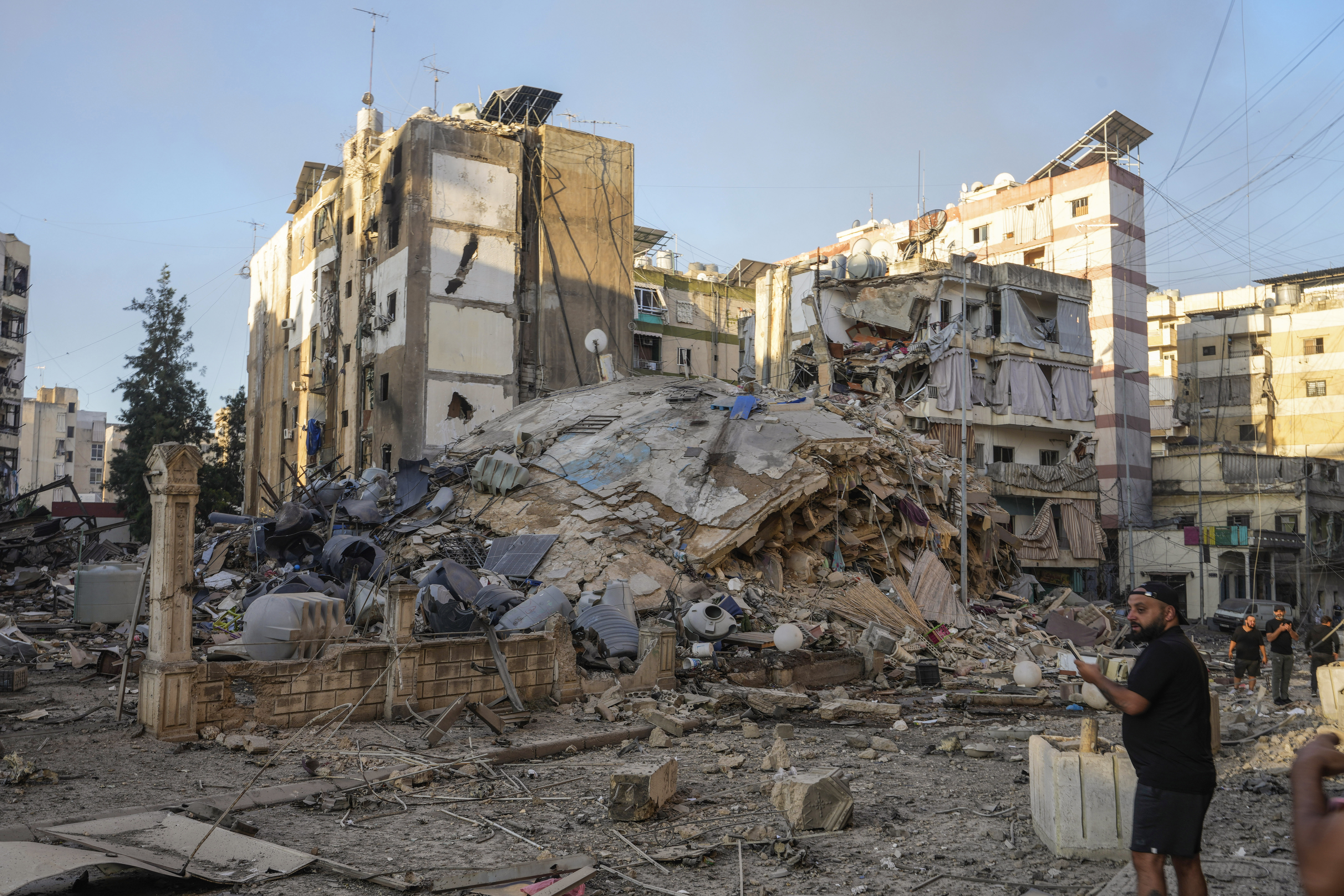
Abandoned, bullet-ridden apartment buildings have blasted out walls and shattered windows. Bedrooms and kitchens are visible from roads dotted with rubble piles that tower over the Israeli military vehicles passing by. Very few civilians remain.

Israel says it has nearly defeated Hamas forces in Rafah — an area identified earlier this year as the militant group's last stronghold in Gaza.

READ MORE: Israeli protesters block highways, call for ceasefire to return hostages nine months into war in Gaza 

The Israeli military invited reporters into Rafah on Wednesday, the first time international media visited Gaza's southernmost city since it was invaded May 6.

Israel has barred international journalists from entering Gaza independently since the Hamas attack on October 7 that sparked the war.

Before invading Rafah, Israel said Hamas' four remaining battalions had retreated there, an area of about 65 square kilometres that borders Egypt.

Israel says hundreds of militants have been killed in its Rafah offensive. Scores of women and children have also died from Israeli airstrikes and ground operations.

The military says it has been necessary to operate with such intensity because Hamas turned civilian areas into treacherous traps. Eight soldiers were killed last month by a single blast.

"Some of these tunnels are booby-trapped," the military's chief spokesman, Rear Admiral Daniel Hagari, said during Wednesday's tour as he stood over a shaft that led underground.

READ MORE: Deaths of three children in house fire being treated as alleged domestic violence attack 

"Hamas built everything in a civilian neighbourhood among houses, among mosques, among the population, in order to create its terror ecosystem."

An estimated 1.4 million Palestinians crammed into Rafah after fleeing fighting elsewhere in Gaza. The UN estimates that around 50,000 remain in Rafah, which had a pre-war population of about 275,000.

Most have moved to a nearby Israel-declared "humanitarian area" where conditions are grave. Many are clustering in squalid tent camps along the beach with scant access to clean water, food, bathrooms and medical care.

READ MORE: Biden says the debate was a bad night. Here's how doctors would evaluate if it was something more

Efforts to bring aid into southern Gaza have stalled. Israel's incursion into Rafah closed down one of two major crossings into the south of Gaza. The UN says little aid can enter from the other main crossing — Kerem Shalom — because the route is too dangerous and convoys are vulnerable to attacks by armed groups searching for smuggled-in cigarettes.

On Wednesday, a line of trucks on the Gaza side of Kerem Shalom was visible, but the trucks were hardly moving — a sign of how Israel's pledge to keep the route safe in order to facilitate the delivery of aid inside Gaza has fallen flat.

UN officials say some commercial trucks have braved the route into Rafah, but not without hired armed guards riding atop their convoys.

Israel says it is close to dismantling the group as an organised military force in Rafah. In a reflection of that confidence, soldiers brought journalists in open-air military vehicles down the road that leads into the heart of the city.

Along the way, debris lying by the side of the road made clear the perils of aid delivery: carcasses of trucks lying baking in the hot sun; dashboards covered in fencing meant to protect drivers; aid pallets lying empty.

The longer the aid delivery is frozen, humanitarian groups say, the closer Gaza comes to running out of fuel, which is needed for hospitals, water desalination plants and vehicles.

"The hospitals are once again short on fuel, risking disruption of critical services," said Dr Hanan Balkhy, the World Health Organisation's regional director for the Eastern Mediterranean.

"Injured people are dying because the ambulance services are facing delays due to fuel shortages."

As the humanitarian situation worsens, Israel is pushing ahead with its offensive. Combat in Rafah is ongoing.

After journalists heard nearby gunshots on Wednesday, the soldiers told the group they would not be visiting the beach, as had been planned.

The group departed the city soon after, with clouds of dust kicked up by vehicles temporarily obscuring the mass of destruction behind them.

Two clubs tie for having the best feed in NSW

Two restaurants have tied for the title of having the best feed in NSW.

ClubsNSW has announced two winners for the best large club dish in this year's Perfect Plate Awards.

Cabra-Vale Diggers won with its live lobster with salted egg yolk dish alongside Mounties with its sweet and sour pork with lychee and green apple.

READ MORE: Armed man on the run after targeting women walking alone in Sydney

Best Large Club dish: Cabra-Vale Diggers' Horizon Asian  Dining.Best Large Club dish: Mounties' Jumbo Seafood

ClubsNSW chief Rebecca Riant said the fact that a lobster dish and a traditional meal both took the top place showed there was "something for everyone" at their local pub.

"These days you can walk into a club for a special occasion and enjoy a fresh, creative meal prepared by a hatted chef, or you can order a classic, comforting dish that evokes childhood memories," she said.

"And chances are you can enjoy some live entertainment while you're at it too."

READ MORE: Two charged for allegedly spraypainting swastikas at uni in Sydney

Best Dessert dish: The Ary Toukley's ZIVA Eats & Pizza

In the medium club category, The Ary Toukley took home first place with its Queensland king prawn ravioli with saffron beurre blanc.

The same club also won the best dessert with its Belgium chocolate fondant with creme anglaise, vanilla ice cream and vanilla fairy floss. 

In the small club category, Currarong Bowling and Recreation Club wowed with its lamb backstrap and beets with goats cheese jus.

The winners were decided by a two-month public voting process that saw about 84,000 votes for 176 dishes across 151 clubs in the state.

‘Morally repugnant’ rioter who punched cop outside Wakeley church released from jail

A man so offended he drove to participate in violent riots after a bishop's stabbing has been convicted but released from jail after punching a police officer during the volatile event.

Talal Khalil El Khoury was arrested on April 24, nine days after an angry mob surrounded Christ the Good Shepherd Church in the western Sydney suburb of Wakeley.

The 52-year-old was not a member of the church but drove there after seeing reports either through the news or social media.

READ MORE: Armed man on the run after targeting women walking alone in Sydney

The attack happened at Christ The Good Shepherd Church in Wakeley.

After joining the incensed throng, the Bass Hill man yelled at police, stepped forward and punched an officer's protective riot gear.

While that officer was distracted by another rioter, El Khoury then punched him a second time in the torso before being pepper sprayed.

No injuries were caused by his conduct which was captured on police body-worn cameras.

He pleaded guilty to one count of riot and one count of assaulting a police officer in May and appeared at Fairfield Local Court today.

Appearing by video-link from Long Bay prison, El Khoury watched as he was convicted by Magistrate Stuart Devine and sentenced to serve time in the community.

The nature of El Khoury's violence was opportunistic and inexcusable but towards the lower end of seriousness, the magistrate said.

"It is … behaviour that is morally repugnant and entirely inconsistent with civilised society."

READ MORE: Two charged for allegedly spraypainting swastikas at uni in Sydney

Wakeley

The magistrate imposed a nine-month intensive corrections order for the riot charge and a concurrent six-month ICO for assaulting the police officer.

He also ordered the 52-year-old complete 200 hours of community service.

El Khoury was supported by his wife and others in the courtroom.

A letter from his wife as well as the priest at St John the Beloved church in Mt Druitt painted a very different picture to the man seen at the riots, Devine said.

Earlier today, barrister Ian Lloyd KC said El Khoury had migrated to Australia decades ago, and owned his own demolition and excavation business.

His past criminal history consisted only of traffic and driving offences.

"Other than this blemish he has held an unblemished life and has been a good migrant to this country," Lloyd has said.

El Khoury had accepted responsibility for his actions and had been taught a valuable lesson after being incarcerated for two-and-a-half months before his sentence, Lloyd argued.

READ MORE: Uni student allegedly stabbed by 14-year-old released from hospital

A heavy police presence at the scene of a stabbing at a church in Wakeley

"I think we can be assured he will never come before the courts for this type of behaviour ever again," he said.

Prosecutor Sergeant Ed Sharma said the court should look at the matter holistically.

He pointed out that although El Khoury was one of many gathered outside the Wakeley church, he was there to riot and cause violence.

Over 30 people have been charged over the riot, during which people outside the church demanded the teen who allegedly stabbed Assyrian bishop Mar Mari Emmanuel and priest Isaac Royel be let out of the church and handed to the mob.

Dozens of police were injured and their cars vandalised during the violent gathering.

A 16-year-old boy has been charged with a terrorism offence over the stabbing, which police alleged was religiously motivated.

Australia’s longest-serving Indigenous prisoner freed

Convicted murderer Derrick Bromley has taken his first steps of freedom in South Australia.

Bromley was behind bars for 40 years over the 1984 murder of Stephen Docoza whose body was found in the River Torrens.

It is a crime that Bromley maintains he never committed.

READ MORE: Can't we have both? Couple win lottery but lose age pension

Australia's longest serving Indigenous prisoner has taken his first steps of freedom in South Australia. Convicted murderer Derrick Bromley has been behind bars for 40 years over the 1984 murder of Stephen Docoza after his body was found in the River Torrens.

"He's the longest serving Indigenous prisoner in Australia and that's a disgrace," advocate Frank Pangallo said.

Bromley has made multiple attempts to have his conviction overturned but all of them have failed.

In December, the High Court ruled against re-opening his case, which is something Docoza's family is grateful for.

Pictured is Stephen Docoza. Convicted murderer Derrick Bromley spent 40 years behind bars over the 1984 murder of Stephen Docoza after his body was found in the River Torrens.

They remember him as a "gentle soul" who grew up to be a kind and hardworking man.

In a statement, Docoza's family said they are "disturbed by Bromley's failure to admit guilt or show any remorse".

But family members said they find some solace in the confession of John Carpany, Bromley's accomplice, who had shown remorse for his involvement in the crime.

Derrick Bromley's first taste of freedom today was a coffee at McDonald's.

"If people think he's guilty, he has more than adequately paid the price of that," advocate Graham Archer said.

Bromley still has to return to a pre-release centre every day by 9pm.

He is also subject to strict parole conditions which include not speaking to the media and staying away from licensed venues.

Bromley's first taste of freedom today was a coffee at McDonald's.

"His desire is to come out and do good," family member Robyn Milera said.

"In fact it's sort of a pact we have."

FOLLOW US ON WHATSAPP HERE: Stay across all the latest in breaking news, celebrity and sport via our WhatsApp channel. No comments, no algorithm and nobody can see your private details.

Tradie performs citizen’s arrest after crash at Queensland intersection

A man has been charged after a dramatic crash at a Brisbane intersection that was captured on dashcam.

A blue Mazda can be seen driving through a red light and into a busy intersection.

The vehicle collides with another car, which sends it spinning.

READ MORE: Can't we have both? Couple win lottery but lose age pension

A man has been charged after a dramatic crash at a Brisbane intersection that was captured on dashcam.

A tradie can be seen sprinting over in the moments after the crash and helping perform a citizen's arrest until police arrive.

The 26-year-old Carseldine man will front court next month.

FOLLOW US ON WHATSAPP HERE: Stay across all the latest in breaking news, celebrity and sport via our WhatsApp channel. No comments, no algorithm and nobody can see your private details.

Queensland wedding singer granted bail on sexual assault, stalking charges

A Queensland wedding singer has been granted bail after spending four months behind bars on charges of sexually assaulting eight women he met on dating apps and social media.

Daniel James Stoneman, 34, from Shailer Park in Logan, today applied for bail on 52 charges, including 24 counts of distributing intimate images, three counts of rape and one count each of attempting to commit rape, choking, recordings in breach of privacy and unlawful stalking.

His lawyer argued to the court that his client had been suicidal and had threats to his personal safety while in prison.

READ MORE: Can't we have both? Couple win lottery but lose age pension

The court was told Stoneman was willing to abide by any conditions on his bail including a ban on dating apps, on social media, and of working in bars or as a singer, to reduce the risk of him reoffending.

Justice Thomas Bradley granted bail with strict conditions including that Stoneman abide by a night-time curfew, complete a relationship education course and live with his parents.

Aussie state records lowest July temperature on record

A weather station in Tasmania recorded its lowest-ever July temperature as high pressure builds over the state.

A weather station at Liawenee registered a minimum temperature of -12.9 degrees shortly after 6am AEST on Wednesday, according to Weatherzone.

"A very cold and dry air mass, combined with clear skies and calm winds beneath a strengthening high pressure system, caused temperatures to plummet across Tasmania on Tuesday night," meteorologist Ben Domensino said.

READ MORE: Stolen gorilla statue spotted in Melbourne backyard

A weather station in Tasmania recorded its lowest-ever July temperature as high pressure builds over the state. A weather station at Liawenee registered a minimum temperature of -12.9C shortly after 6am AEST on Wednesday, according to to Weatherzone.

"This was Tasmania's lowest July temperature on record, beating the previous record of -12.5 degrees from Butlers Gorge on July 1, 1983.

"Launceston's low of -3.1° degrees on Wednesday was also its coldest July morning in seven years.

Meanwhile residents in outer Melbourne woke up their coldest morning of the year so far, with a forecast minimum of zero degrees.

While the mercury in the centre of the city struggled to just over 1 degree, in western and southwestern suburbs it was freezing.

READ MORE: Serial child killer nurse convicted of another attempted murder

Elsewhere in Victoria, temperatures in Horsham, Bendigo, Ballarat, Geelong and the Mornington Peninsula dropped to between –1 degrees and -3 degrees.

Residents in Tasmania, South Australia and southern Western Australia also felt the chill early today, with the mercury stuck at single digits and widespread frost, according to the Bureau of Meteorology.

Melbourne could be in for a week-long run of mornings at or below 5 degrees.

READ MORE: Everything you need to know about the UK's first election in years

If this were to happen it would be the first time since June 2013, the coldest week in 11 years.

The cold mornings are being caused by a combination of a cold air mass, clear skies, light winds and a strengthening high pressure system over southern Australia.

This high pressure system will continue to cause bitterly cold temperatures across southeastern Australia over the next few mornings, forecasters say.

FOLLOW US ON WHATSAPP HERE: Stay across all the latest in breaking news, celebrity and sport via our WhatsApp channel. No comments, no algorithm and nobody can see your private details.