Tag Archives: oceania

Inside the courtroom when Trump was found guilty of 34 felonies

Before the historic and unprecedented guilty verdict was delivered against Donald Trump, the former president appeared to be the most relaxed he'd been since his hush money trial began in April.

Trump was smiling and laughing with his attorney, Todd Blanche, as they waited for Judge Juan Merchan to announce the jury was heading home for the day.

With Trump and prosecutors assembled, Merchan returned to the bench at 4.13pm local time to let the parties know that he planned to send the jury home for the day in about 15 minutes.

ANALYSIS: Will Donald Trump go to jail?

Before the historic and unprecedented guilty verdict was delivered against Donald Trump, the former president appeared to be the most relaxed he'd been since his hush money trial began in April.

The judge left the courtroom, and Trump, his lawyers and the prosecutors remained behind to wait for the end of the day.

But everything changed when the judge re-entered the courtroom at 4.36pm with a stunning note: the jury had reached a verdict.

The jury needed 30 minutes to fill out the forms, leaving Trump and the attorneys sitting in the courtroom until the judge and jury returned.

They mostly sat still while waiting, occasionally making small talk amongst themselves.

When the judge returned to the bench, he warned the parties and the audience against "reactions" or "outbursts of any kind" before the jury entered.

WHAT'S NEXT: Can Trump still run for president?
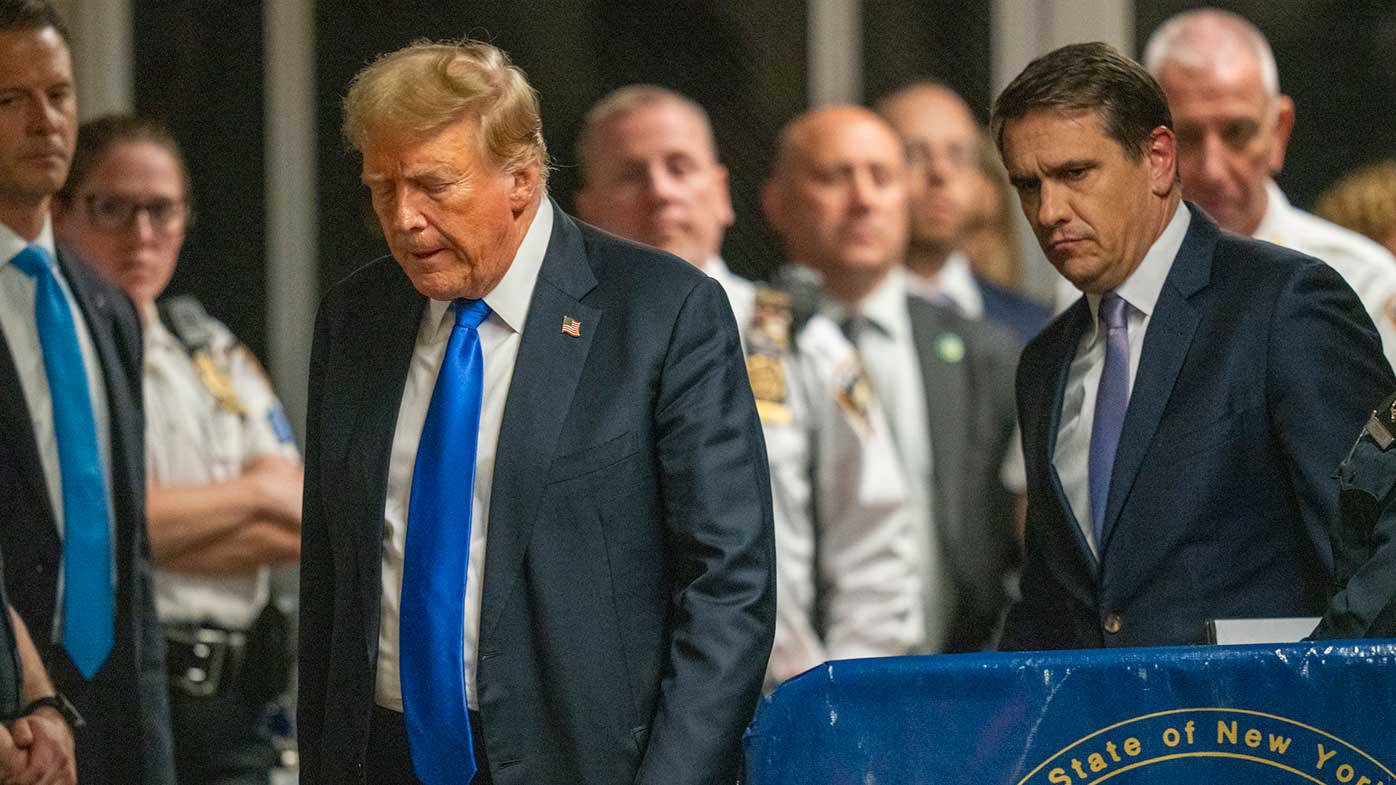
Donald Trump outside court.

The six alternates entered and sat in the first row of the gallery, behind prosecutors.

The 12 jurors took their seats in the jury box.

A clerk prompted the jury foreman with each of the 34 counts.

He answered "guilty" 34 times.

The attorneys were silent and serious as the verdict was read.

Only the sound of feverish typing could be heard from the galley filled with press and several members of the public as the foreman delivered Trump's fate.

Reporters could not initially see Trump's facial reaction when the first guilty verdict was read – the courthouse had the video screen off while the foreman read most of the verdict, as the court turned off video whenever jurors were moving.

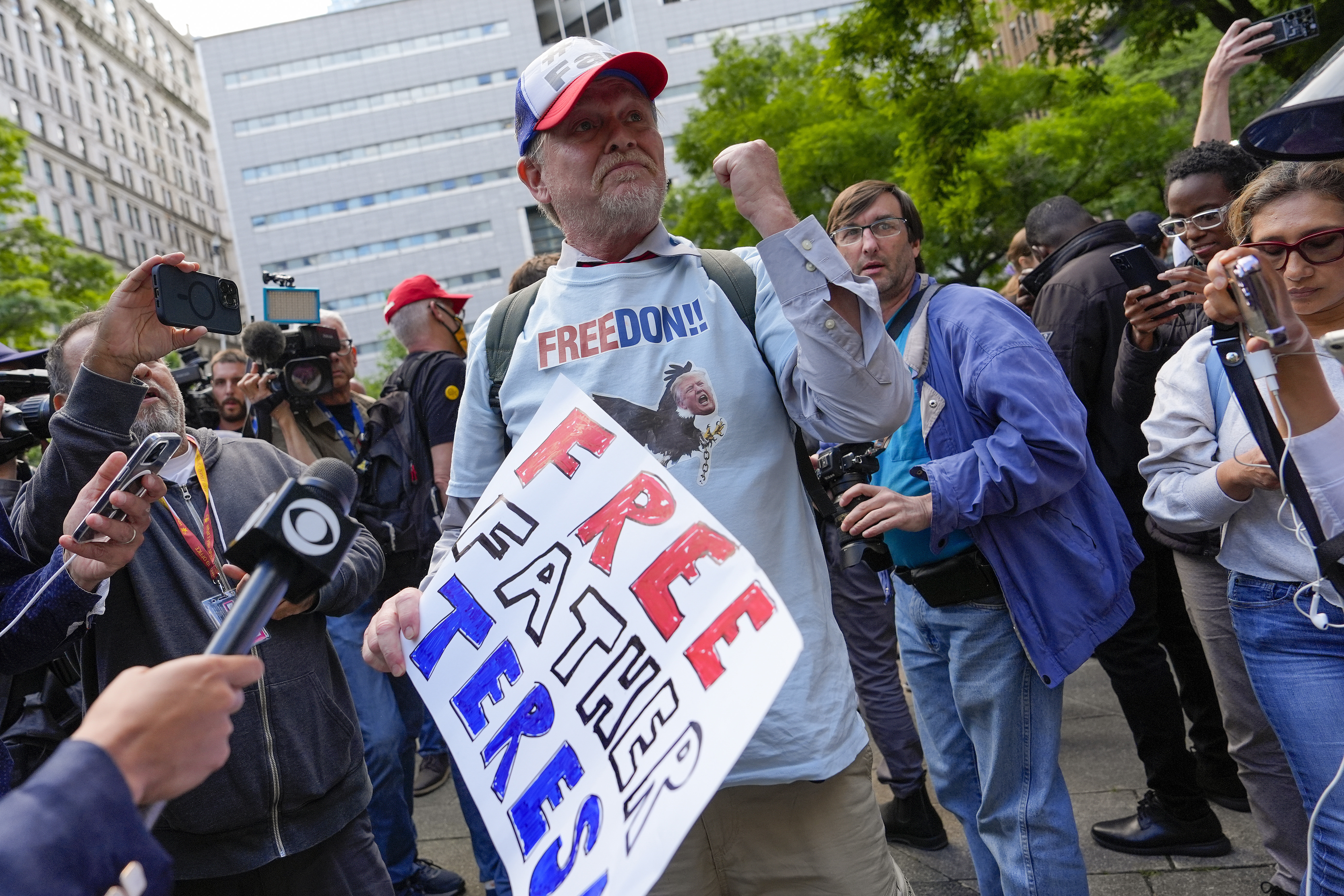
IN PICTURES: Crowds erupt outside court after Trump verdict
Only toward the end of the verdict reading did the video of the defendant's table get turned back on, letting the reporters behind Trump in the courtroom and those in the overflow room see the former president.

Trump sat stone-faced, with a frown, not visibly reacting to the jury as they finished reading the verdict.

The jurors were polled one-by-one to confirm this was their verdict, and Trump turned and craned his neck to the right to look at the jurors.

Jurors kept serious faces as they were polled one by one to confirm this was in fact their verdict.

They each answered "yes" or "yes it is".

They walked past the defence to exit the courtroom.

None of the 12 panellists appeared to look in Trump's direction on their way out.

Trump's face was red and he was frowning as he walked out of the courtroom.

Trump and his son Eric exchanged an emotional handshake as Trump departed, as Eric patted his father on the back and followed behind him with the rest of Trump's entourage or advisors and lawyers.

Steve Witkoff was the only apparent supporting guest aside from Trump's son in attendance when the verdict was read.
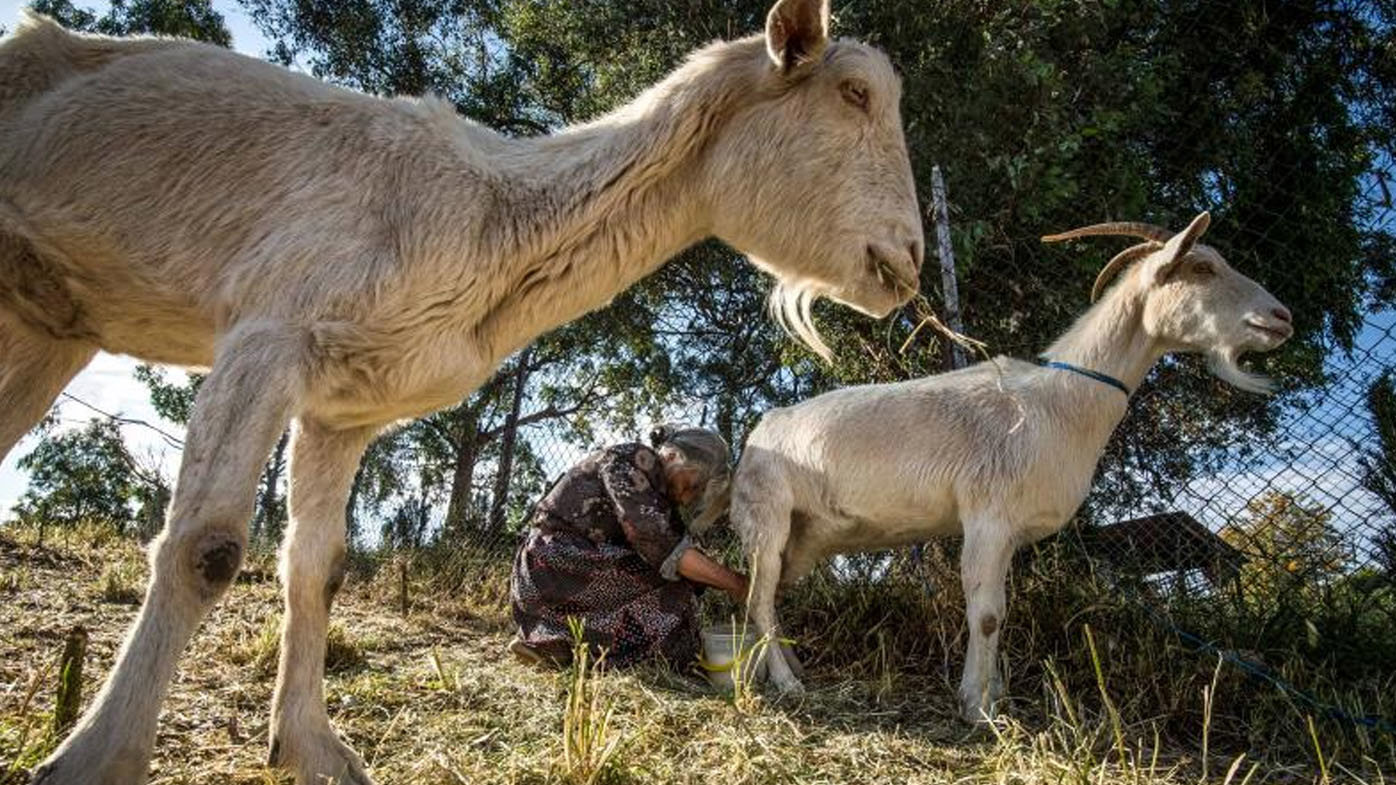
Record year for Australian goat producers fed by booming exports

While goat is far from a favourite for Australian meat eaters, producers in this country are cashing in on surging demand from overseas.

New research released by Meat & Livestock Australia (MLA) show last year was a record for the nation's goat producers.

Output of the meat and the number goats processed more than doubled over three years to hit the highest production volume recorded at 36,903 tonnes.

READ MORE: Donald Trump guilty in hush money trial

Australia remains the world's largest exporter, with 95 per cent of goat meat produced heading overseas.

Goat meat is regarded as a healthier alternative to other red meats, such as lamb and beef. It has a high amount of protein, but less saturated and more iron than many other meats.

The United States remains the largest market for Australian goatmeat, with volumes more than double those of the second biggest, mainland China.

While goat meat is a niche protein, it has a low awareness among the general American public, the MLA says. Demand is skewed to the large populations of several ethnic backgrounds, including Caribbean and Asian populations, and is concentrated in cities, such as New York and Los Angeles.

READ MORE: Australian beef cheaper on Japanese shelves than our own, farmer finds

Mainland China surged as the second largest market, followed by South Korea, which continued its rapid growth for the fourth consecutive year.

MLA analyst Emiliano Diaz said these markets continue to have a growing appetite for Australian goat meat, but the Australian market also offers opportunities for expansion driven by specific consumers.

"In early 2024 MLA launched the Goat Trail campaign, a consumer-focused campaign that aims to drive awareness of goat meat on local menus and show consumers where to find and experience it in Sydney," he said.

"This initiative is capitalising on the opportunity for broader appeal and increased product availability and showcases the versatility and novelty of this underrated protein."

Baby clothing sold at Target recalled over ‘severe injury’ fears

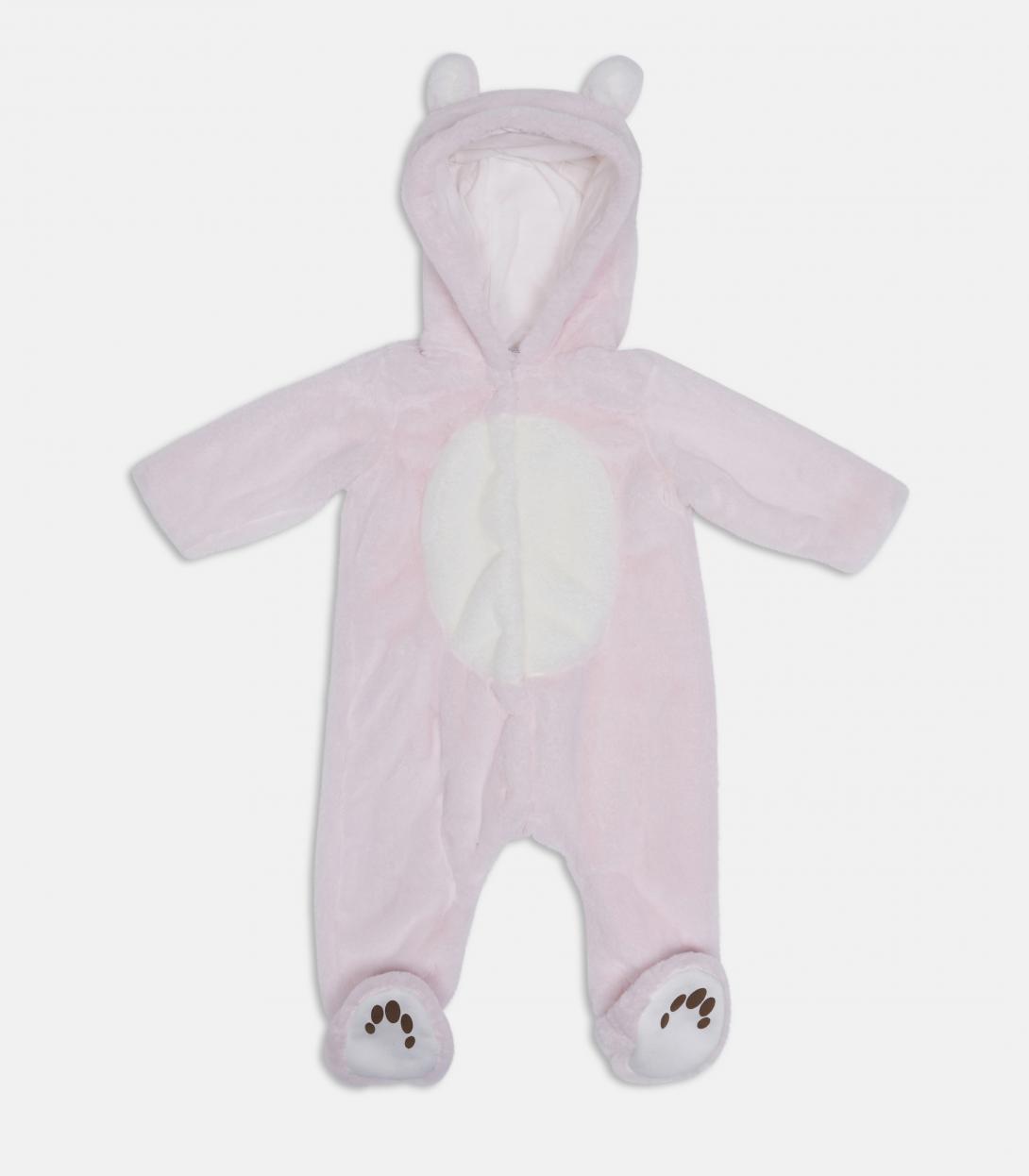
A line of baby clothes sold at Target has been recalled over safety fears.

Design International has recalled its pink Peter Rabbit unisex faux fur bunnysuit in various sizes.

The recall affects the sizes newborn, three months, six months, 12 months, 18 months, and 24 months.

READ MORE: Donald Trump guilty in hush money trial

Product Safety Australia said in the recall notice that the garments had long, loose threads inside that could entangle arms and legs.

"Entanglement may cause a loss of circulation leading to severe injury," the notice read.

People are urged to stop using the garments and to return them to Target for a full refund.

Consumers can contact Designworks International on (03) 8823 8221 from 9am to 5pm, Monday to Friday or by email at FOLLOW US ON WHATSAPP HERE: Stay across all the latest in breaking news, celebrity and sport via our WhatsApp channel. No comments, no algorithm and nobody can see your private details.

Millions to be hit with second-highest loan increase tomorrow

Millions of Australians with higher education loans will be hit with the second-highest indexation increase tomorrow.

Those with HECS-HELP debt, and other higher education training loans, will have a 4.7 per cent indexation applied on June 1 but a credit will be applied back to loans once legislation passes later this year.

It means someone with the average Australian student debt of $26,494 will owe an extra $1245 or more on June 1.

ANALYSIS: Will Donald Trump go to jail?

university students

As for the roughly 1 per cent of student debtors who still have $100,000 or more to pay back, they'll see their debt increase by at least $4700.

After an indexation of 7.1 per cent was applied last year, $3 million was allocated in the federal budget to cut student debt.

It means legislation will change the way loans are indexed in the future so Australians are not hit with huge increases.

Those hit with high indexation tomorrow, and in 2023, will receive a credit when it comes into effect later this year.

WHAT'S NEXT: Can Trump still run for president?

Australians with the national average of $26,494 will receive a credit of $1190. 

Someone with debt of more than $100,000 would get $4485 put back on the loan.

The indexation percentage moves in line with the cost of living, which is measured by the consumer price index (CPI).

Just under three million Australians have student loans.

As of the 2022-23 financial year, Australians owed a combined $78.2 billion in HELP debt.

A Finder survey from last month found that more than 60 per cent of students were concerned about paying off their debt and 12 per cent did not think they ever would pay it off.