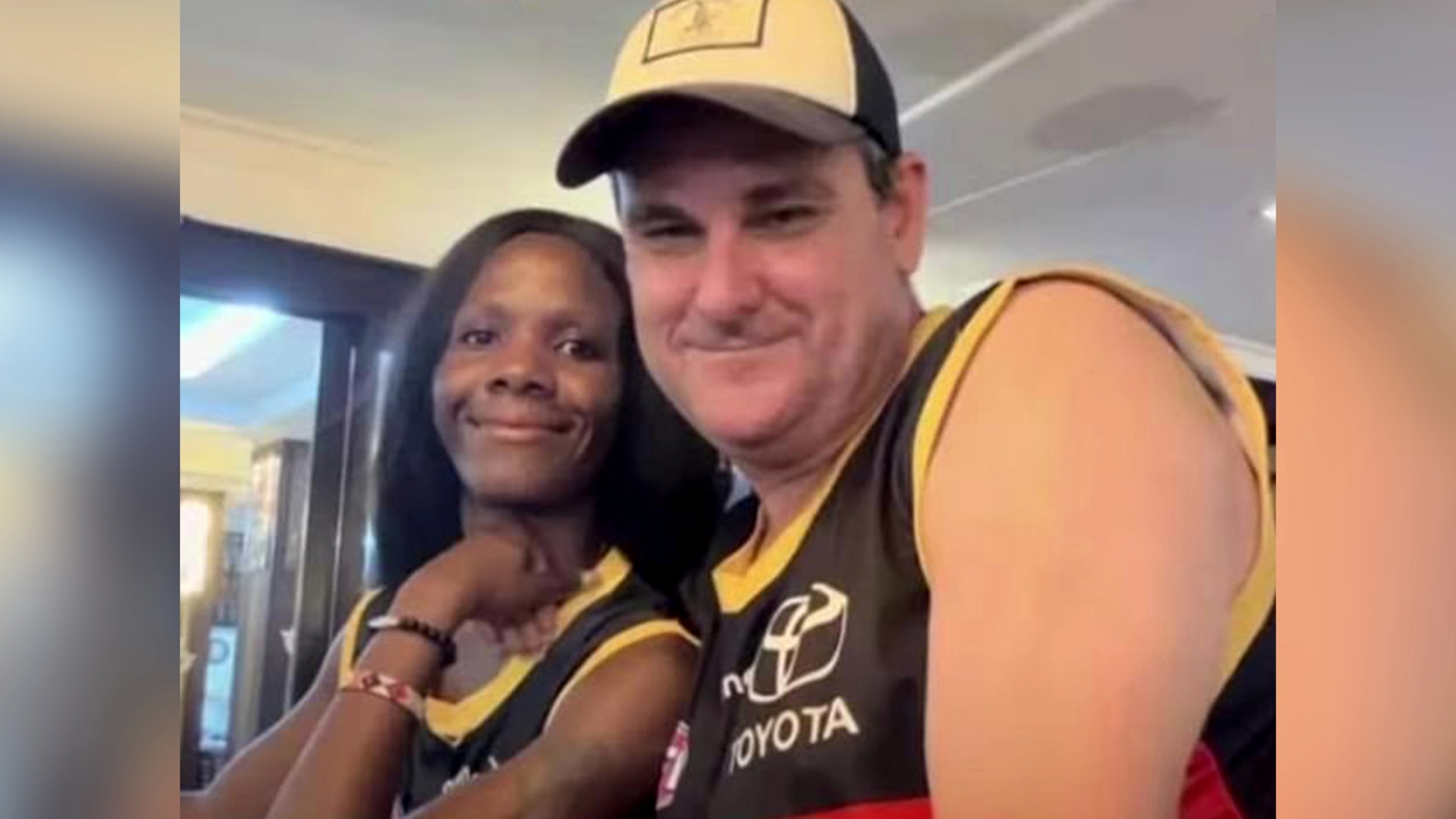
Bryce Paterson was one of four involved in the armed robbery at Taupiri.
Tag Archives: oceania
Public sector cuts: Union warns hundreds of jobs at risk at Kāinga Ora, Ministry of Housing and Urban Development, NZQA and Stats NZ
Workers have been told not to make a decision ‘on a whim’.
Lachie Jones inquest: Eldest brother calls accusation he helped dispose of body ‘disgusting’
His mother and younger brother also gave evidence earlier in the inquest.
‘Ungrounded’: Hanson defends attack on Greens senator
A tweet by Pauline Hanson telling a Muslim Greens senator to go back to Pakistan was not nice or polite but also not racist because it responded to perceived criticism of the Queen on the day she died, a court has been told.
The One Nation leader is being sued for racial discrimination in the Federal Court by Greens deputy leader Mehreen Faruqi.
As the case returned for a final day of trial on Thursday, Hanson's barrister Kieran Smark SC said the colour of the Greens senator's skin was the last thing on his client's mind when she sent the tweet in September 2022.
READ MORE: Brisbane single mum's $200 bill shock in cost-of-living crisis
"Your honour would not have a proper basis to conclude that 'go back to Pakistan' had anything to do with colour or in fact religion," he told Justice Angus Stewart.
"What it's all about is the death of the Queen and speaking out on those political causes at the time."
The Greens deputy had tweeted hours after the Queen's death that she could not mourn the passing of the leader of a "racist empire built on stolen lives, land and wealth of colonised peoples".
READ MORE: Millions of Aussies exposed in 'deeply concerning' data breach
Hanson responded, saying she was appalled and disgusted with the Greens senator's comments, telling her to "pack (her) bags and piss off back to Pakistan".
Smark rejected the claim that what "got Senator Hanson going" was the fact that Faruqi had dark skin or was a Muslim.
"We say it's just far, far into the realm of not just speculation, it's simply ungrounded," he said.
Hanson's comments were a "rhetorical device" used to attack and criticise Faruqi in a way that was not meant to be nice or polite, he told the court.
READ MORE: Scientists one step closer to nanotechnology insulin pill breakthrough
"There's the engine of anger … and disgust of Hanson which actuated the sending of this message," he said.
"Colour would seem to be the last thing on her mind."
Given the One Nation leader's history of being outspoken against Muslims and Islam, one would expect that this would be referred to in the tweet if it was racially motivated, Smark said.
"If she's got something to say about Islam then she'll say it," he told the court.
"Its absence from the tweet is notable."
Stewart said he struggled to see how Faruqi's tweet was an attack on the Queen herself as opposed to the institutions of the monarchy and colonialism.
READ MORE: Millions of Aussies exposed in 'deeply concerning' data breach
Smark argued that while lawyers could distinguish between the two, this did not mean the ordinary person would do the same.
The judge also questioned the One Nation leader's claim she had responded to highlight the Greens senator's hypocrisy in "taking advantage" of the benefits of living in Australia while criticising the Queen.
He noted that Hanson had also been very outspoken when criticising the government's policies.
"Why is it hypocritical of someone else to be critical of aspects of Australia or its history unless it's because they're from somewhere else and they're not actually welcome here?" he asked.
The attack was legitimately raised and regarded political matters, Smark said.
The hypocrisy related to breaking the well-known convention that one did not criticise someone within hours of their death, he told the court.
Smark also made submissions about why certain sections of the Racial Discrimination Act relied on by Faruqi should be struck out as they contradicted the constitutionally implied freedom of political communication.
The trial continues.
FOLLOW US ON WHATSAPP HERE: Stay across all the latest in breaking news, celebrity and sport via our WhatsApp channel. No comments, no algorithm and nobody can see your private details.
Moment brown bear charges truck in Japan
A brown bear has been filmed charging at a small truck in Japan and cracking the windscreen.
A man was driving his truck down a forest road in the northern prefecture of Hokkaido on Sunday when the frightening incident happened, Japan's national broadcaster NHK reports.
Dashcam footage shows the bear running onto the road, attacking the truck and swiping at the windscreen with its paw.
READ MORE: Data breach seemingly exposes data of visitors to Clubs NSW venues
A small cub was also seen in the woods nearby.
Local police told NHK the truck driver and his passenger were not injured, but the truck's windscreen was cracked.
The number of brown bears has roughly doubled in Hokkaido over the past three decades.
Prefectural officials have estimated there were about 12,000 brown bears inhabiting Hokkaido at the end of 2022.
Locals are being advised to be careful when going into the mountains and avoid travelling alone.
Nation severs diplomatic ties with Israel over Gaza ‘genocide’
Colombia says it will break diplomatic relations with Israel on Thursday over its actions in Gaza.
Colombian President Gustavo Petro made the announcement at a rally in Bogotá's Bolívar Square on Wednesday, describing the Israeli government's handling of the war in Gaza as "genocidal".
Israel launched its assault in the Palestinian territory following terror group Hamas' attacks on October 7, which left more than 1,200 people dead and saw more than 250 taken hostage – many of whom remain in captivity today.
READ MORE: A rare look at the Iranian missiles and drones that hit Israel
Now nearing its eight month, Israel's war in the isolated enclave has killed more than 34,000 people, according to the Palestinian health ministry.
Israel's foreign minister, Israel Katz, condemned Colombia's announcement and accused Petro of rewarding Hamas, which controls Gaza, saying he was siding with the "most despicable monsters known to humanity".
Katz also called Petro a "hate-filled, antisemitic president," but said relations between both countries would remain warm despite the president's actions.
READ MORE: Duelling protesters clash at US uni after police clear pro-Palestinian rally
South Africa has previously accused Israel of violating international laws on genocide, telling the United Nations' top court that Israel's leadership was "intent on destroying the Palestinians in Gaza" – a case which Israel dismissed as "absurd blood libel".
The International Court of Justice later ordered Israel to "take all measures" to prevent genocide but stopped short of ordering its government to halt the war.
Regional neighbour Bolivia also cut diplomatic ties with Israel last year, citing "crimes against humanity committed against the Palestinian people" in the wake of Israel's war with Hamas.
East coast heading for weekend downpour
More wet weather is looming for residents on Australia's east coast, with hundreds of millimetres of rain forecast to fall over parts of the state on the weekend.
Millions of people were given a rude weather shock earlier this week when warm and sunny conditions gave way to persistent rain and a drop in temperatures.
The sudden change was driven by a coastal trough that has been lingering off the NSW coast for days.
READ MORE: Data breach seemingly exposes data of visitors to Clubs NSW venues
It brought a deluge for some areas of the Central Coast. Nord's Wharf Oval in the Hunter Valley recorded 93mm in the 24 hours leading up to 9am yesterday.
To the west, Cooranbong in Lake Macquarie recorded its wettest day in 13 years when 52.4mm fell during the same period.
The rain will continue today before it intensifies tomorrow and across the weekend when an upper-level low-pressure system approaches NSW's north.
Computer modelling is forecasting the largest daily totals across central and north-eastern NSW and southern Queensland on Saturday.
READ MORE: Single mum's $200 bill shock in cost-of-living crisis
Between Saturday and next Tuesday, rainfalls of 60mm to 120mm are set to fall on the central and northern NSW coasts, including Sydney. But some parts will record 200mm, forecasters say.
The deluge will then focus on eastern NSW and south-eastern Queensland on Sunday and Monday, with the heaviest falls along the central and northern NSW coastline on Sunday.
Forecasters are warning of potential flood risks for some parts as heavily sodden ground becomes soaked by further downpours.
The Bureau of Meteorology has issued a hazardous surf warning for the Sydney, Macquarie, Hunter and Illawarra coasts from tomorrow and into the weekend.
Single mum’s $200 bill shock in cost-of-living crisis
In the lead up to the Federal Budget across the month of May, 9News and Joel Gibson are helping bust the budgets of Aussie families.
The cost-of-living crisis has yet to ease up on Australian families and their wallets during 2024.
Rising costs including gas and electricity, childcare, rent, mortgage repayments and groceries are draining Aussies of their hard-earned cash, leaving little to none for savings.
It is particularly tough for single parents raising children on a sole income.
READ MORE: The federal budget is almost upon us. This is what you can expect from it
Brisbane woman Destani Davies told 9news.com.au she had seen a $200 weekly rise in her weekly bills.
Davies, 37, is a single mother with five children and works as an author and public speaker.
She says most of her money is spent on rent, which is $1220 per fortnight.
"I do feel my expenses have increased due to the cost of living. I would say by $150-$200 a week," Davies said.
Davies said she'd feel her bills would be more manageable if she was able to save $200 per week.
Here's a snapshot of Davies' weekly bills:
- Electricity: $903 for the quarter, around $69 per week
- Groceries: $250-$300 a week
- Netflix: $22.99 a month, around $5.70 per week
- Rent $610 a week
- Mobile and internet: $315 a month, around $78.75 per week
- Public transport: $80 per week for three people
- Petrol: $100 per week
- Gym: $40 per week
- Linkt toll: $20 per week
- Personal loan: $250 per week
All up, Davies' weekly bills amount to $1553 per week.
Ahead of the federal budget in May, Davies says she would like to see Family Tax Benefits increased for families, plus childcare subsidies increased.
"(And) if there was an opportunity for family members outside of the primary carer to look after children – as in childcare or before and after school care – that a payment potentially be made available to support them in doing that," Davies said.
Overall, as a single-income household, Davis admits her financial position "could be better", however acknowledges she is in a "fortunate position" compared to so many other Australian families.
We had personal finance expert Joel Gibson take a look at Davies' weekly bills and he provided some helpful tips for slashing some of her costs.
Gibson told 9news.com.au Davies could be looking at over $2000 of potential savings from shopping around and "switching" providers.
Electricity and fuel: Save over $1000/year
"Electricity usage is quite high (not surprisingly with five kids) especially in the summer (presumably due to air con?)," Gibson explained.
"A good tip for air con is to set the thermostat on about 22 or 23, not 18 or 19 degrees, and also use a fan.
"Fans are very cheap to run and they make the air con feel four degrees cooler.
"The difference could be hundreds of dollars over the summer."
As for Davies' electricity provider, Gibson did some digging and found hundreds of dollars' worth of savings over one simple switch.
"The box on the front of your bill is now compulsory on every bill and it tells you that just by switching to your provider's cheapest plan, you could save $375.31 per year," he said.
"I checked the government website energymadeeasy.gov.au and there are some even cheaper plans if you switch providers.
"For example, this plan from Ampol Energy, which is over $1000 less per year and includes a 10c/litre fuel discount."
Telco: Save over $700/year
"The Optus family mobile plan is a good option for a big family with 320GB of data on 4 SIMs for $165/month," Gibson said of Davies' telco plan.
"But there are some cheaper options such as the Aldi family plan (eg 150GB of data across up to six SIMs for $125/month). This would mean paying out your device but it could save $480/year.
"Otherwise, Optus has annual pre-paid plans that cost $320 (currently on sale for $220), which equals about $27/month and has 260GB of data for the year.
"These are great value and four of these would cost you at least $700 less per year."
He added: "The Optus NBN deal is not the cheapest at $90/month. It's cheaper than Telstra (around $100) but there are plans at the same 50Mbps speed starting from around $60/month for six months and then rising to $80 after that – such as Dodo, Exetel or Tangerine.
"Most are BYO modem but could save you around $240 in the first year."
Groceries: Save hundreds of dollars – potentially
"Feeding a big family for $250-$300/week is a big achievement! But there might be a few things to try if not already doing so," Gibson said.
- Weekly fruit and veg box delivery services can help you save (eg Farmers Pick rescues produce rejected by the supermarkets and delivers 15kg of fruit and veg for under $70/week)
- Shopping at Costco or Aldi also helps, even if it's not for your whole shop
- Bunnings, Amazon, Reject Shop and Chemist Warehouse also have cheaper cleaning products and toiletries if you can make the occasional trip and stock up
Streaming: Save up to $180/year
"Netflix has a cheaper 'Basic' tier with ads now which could save up to $180/year if you can bear to watch ads," Gibson suggested.
Transport: Save hundreds – potentially
"Use the 10c/litre fuel saving with the Ampol Energy plan above if there's an Ampol nearby," Gibson explained.
"Use the apps such as EzySt and PetrolSpy to find your cheapest bowser before filling up and you could save up to 50c/L.
"Here's an example today in North Brisbane of the big differences between petrol stations sometimes."
Joel Gibson is the author of EASY MONEY, and a money-saving expert on TikTok, TODAY, 2GB, and ABC Radio.
The information provided on this website is general in nature only and does not constitute personal financial advice. The information has been prepared without taking into account your personal objectives, financial situation or needs. Before acting on any information on this website you should consider the appropriateness of the information having regard to your objectives, financial situation and needs.
Rare look at Iranian missiles and drones that hit Israel
"You have to ask the Israelis," Iran's Islamic Revolutionary Guard Brigadier General Ali Belali says with a smirk when asked how many ballistic missiles the Islamic Republic fired towards Israel in its April 14 strike.
But he's more than happy to show the missiles and drones Iran used in its first ever attack against Israel launched directly from Iranian soil.
"It was a punitive measure," Belali says, as he uses a laser pointer to indicate the missiles deployed, towering above him in the exhibit.
READ MORE: NYPD officers storm university to clear out pro-Palestinian protestors
Two weeks after the Middle East came to the brink of an all-out war, with Iran firing hundreds of projectiles toward Israel in retaliation for a suspected Israeli airstrike on an Iranian embassy compound in Damascus, Tehran is keen to show the world that it is capable of fighting a wider conflict should it be faced with one.
On April 19, Israel responded with a suspected attack inside Iran's borders.
Both the Iranian and Israeli actions resulted in minimal damage and appeared by both sides to be aimed at restoring deterrence.
That situation de-escalated, but the threat of war continues to loom large over the region as Israel's offensive in Gaza grinds on.
READ MORE: Close relative of dictator denied top-secret US security clearance
CNN was given rare access to an Islamic Revolutionary Guards exhibit that showcases Tehran's air and space capabilities, including the types of weapons that were used against Israel last month.
American media had never been allowed inside until now.
At the permanent exhibit of the Revolutionary Guard Aerospace Forces in western Tehran, dozens of long- and medium-range ballistic missiles stand tall along with cruise missiles and drones.
The exhibit is meant to show the development and progress of Iran's drone and missile program.
"Today, our drones and missiles have become an important factor of strength and the execution of power in the world," Belali, himself a former missile commander during the eight-year Iran-Iraq war that ended in 1988, tells CNN.
He says Iran's massive drone and missile barrage against Israel was a major success.
Iran's attack on Israel included drones, ballistic missiles and cruise missiles.
The night sky over Israeli cities lit up as the country's air defences worked to intercept the projectiles.
READ MORE: PM urges Australians in Israel to monitor situation after Iranian missile attacks
Meanwhile, the air forces of Israel, the US, the UK, France and Jordan were busy in the skies, also trying to take down as many Iranian drones and missiles as possible.
"NATO, The United States and Arab countries of the region wanted to create barriers for our drones, missiles and cruise missiles, but they failed," Belali says.
"The world was not able to stop us."
The Israeli military said that "99 per cent" of projectiles fired by Iran were intercepted by Israel and its partners, with only "a small number" of ballistic missiles reaching the country.
The Iranians claim they managed to hit two locations inside Israel, including the Nevatim airbase in the Negev desert.
READ MORE: Netanyahu vows to invade Rafah 'with or without a deal'
Israel Defense Forces (IDF) spokesperson Daniel Hagari said that ballistic missiles that reached Israel fell on the airbase and caused only light structural damage.
"Accurate, (to) less than five meters," Brigadier General Ali Belali claims, standing in front of two of the ballistic missiles he says were involved in the strikes against Israel, the Ghadr and the Emad.
The missiles have a range of more than 1600km and can carry warheads between 450 and 500 kilograms, he says.
Another missile, called Kheybar, which he says was also used, carries a warhead of about 320 kilograms, the general adds.
READ MORE: US, UK hit Iran with new sanctions after Israel attack
Region's largest ballistic missile force
Iran's ballistic missiles have long been a cause for concern for the US and its allies in the Middle East, who have called for curbs on the missile program to be part of any deal that Washington strikes with Tehran.
The US says Iran has the largest ballistic missile force in the Middle East and considers its missile arsenal as one of its "primary tools of coercion and force projection."
Iran has in the past insisted that its missile program is solely for defensive purposes.
In recent years, and until its attack on Israel, Iran had carried out at least five major cross-border ballistic missile strikes in the region, John Krzyzaniak, a research associate at the Wisconsin Project on Nuclear Arms Control in Washington, DC, told CNN earlier.
Those include two attacks on ISIS in Syria, and three in Iraq claiming to have targeted US forces, Kurdish militants and Israeli intelligence.
Also on display at the Tehran exhibit is what Iran says is an American RQ-170 Sentinel drone, made by Lockheed Martin, that it claims to have downed in 2011.
READ MORE: King Charles visits London cancer centre in return to public duties
US officials told CNN that year that the drone was part of a CIA reconnaissance mission that involved both the intelligence community and military personnel stationed in Afghanistan.
Three years later, Iran said it had managed to copy the drone.
Belali says Iran's missile development is key to the Islamic Republic's defence strategy.
"In our defence capabilities we don't rely on anyone. We have had good progress in this field and we will progress more. There are achievements that have not yet been talked about."
Drones are equally as important for Iran's Islamic Revolutionary Guards.
The exhibit shows various stages of their drone development, starting from small wooden UAVs used in the Iran-Iraq war, all the way to models the Iranians claim have stealth capabilities.
One the most prominent is the Shahed 136, a cheap "fire and forget" drone, meaning a flight path is programmed, the UAV is launched, and it then independently flies towards the target area.
While the Iranians acknowledge using dozens of Shahed 136 drones to target Israel, both the US and Ukraine also accuse Tehran of giving hundreds to Russia, with Moscow using them to hit Ukrainian cities and energy infrastructure.
The Iranians have consistently denied those claims.
The Shaheds fly low and slow and usually attack in swarms, the general says, standing in front of an unmarked truck that serves as a secretive launching platform.
"Everything is pre-programmed. The flight route is chosen according (to) the enemy's capabilities and blind spots of radars and all the elements that can help us reach the target."
Duelling protesters clash at American university
Duelling groups of protesters clashed on Wednesday at the University of California, Los Angeles, grappling in fistfights and shoving, kicking and using sticks to beat one another.
Hours earlier, police burst into a building at Columbia University that pro-Palestinian protesters took over and broke up a demonstration that had paralysed the school while inspiring others.
After a couple of hours of scuffles between pro-Palestinian and pro-Israeli demonstrators at UCLA, police wearing helmets and face shields formed lines and slowly separated the groups.
READ MORE: NYPD officers storm university to clear out pro-Palestinian protestors
That quelled the violence, and the scene was calm as day broke.
Tent encampments of protesters calling on universities to stop doing business with Israel or companies that support the war in Gaza have spread across the country in a student movement unlike any other in the 21st century, reaching from New York to Texas and California.
The ensuing crackdown by police on some college campuses has stirred echoes of the much larger student protest movement during the Vietnam War era.
There have been confrontations with law enforcement and more than 1,000 arrests.
In rarer instances, university officials and protest leaders struck agreements to restrict the disruption to campus life and upcoming commencement ceremonies.
The clashes at UCLA took place around a tent encampment built by pro-Palestinian protesters, who erected a line of parade barricades, plywood and wooden pallets at the edge of the camp — while counter-protesters tried to pull them down.
READ MORE: Judge fines Trump, threatens him with jail time
Video showed fireworks exploding over and in the encampment.
People threw chairs and other objects and at one point a group piled on a person who lay on the ground, kicking and beating them with sticks until others pulled them out of the scrum.
It was not clear how many people might be injured.
Los Angeles Mayor Karen Bass called the violence “absolutely abhorrent and inexcusable" in a post on social media platform X and said officers from the Los Angeles Police Department were on the scene.
READ MORE: Bees attack father and daughter at park stinging them dozens of times
https://twitter.com/MayorOfLA/status/1785591832321151196?ref_src=twsrc%5Etfw
Officers from the California Highway Patrol also appeared to be there. The university said it had requested help.
Security was tightened on Tuesday at the campus after officials said there were “physical altercations” between factions of protesters.
READ MORE: Tram collides with bus in Los Angeles, injuring more than 50
Late that same day, New York City officers entered Columbia's campus after the university requested help, according to a statement released by a spokesperson.
A tent encampment on the school's grounds was cleared, along with Hamilton Hall where a stream of officers used a ladder to climb through a second-floor window.
Protesters seized the hall at the Ivy League school about 20 hours earlier.
“After the University learned overnight that Hamilton Hall had been occupied, vandalised, and blockaded, we were left with no choice,” the school said.
“The decision to reach out to the NYPD was in response to the actions of the protesters, not the cause they are championing.
"We have made it clear that the life of campus cannot be endlessly interrupted by protesters who violate the rules and the law.”
READ MORE: US drug control agency will move to reclassify marijuana in a historic shift
A few dozen people were arrested at the building after protesters shrugged off an earlier ultimatum to abandon the encampment on Monday or be suspended and unfolded as other universities stepped up efforts to end demonstrations that were inspired by Columbia.
Fabien Lugo, a first-year accounting student who said he was not involved in the protests, said he opposed the university’s decision to call in police.
“This is too intense,” he said. “It feels like more of an escalation than a de-escalation.”
Just blocks away from Columbia, at The City College of New York, demonstrators were in a standoff with police outside the public college’s main gate.
Video posted on social media by news reporters on the scene late on Tuesday showed officers putting some people to the ground and shoving others as they cleared people from the street and sidewalks.
After police arrived, officers lowered a Palestinian flag atop the City College flagpole, balled it up and tossed it to the ground before raising an American flag.
Brown University, another member of the Ivy League, reached an agreement on Tuesday with protesters on its Rhode Island campus.
Demonstrators said they would close their encampment in exchange for administrators taking a vote to consider divestment from Israel in October.
The compromise appeared to mark the first time a US college has agreed to vote on divestment in the wake of the protests.
Meanwhile, at Northern Arizona University in Flagstaff, police in riot gear closed in on an encampment late on Tuesday and arrested about 20 people for trespassing, at least one of whom was thrown to the ground.
University officials had warned earlier in the day that students would face criminal charges if they did not disperse.
First-year student Brayden Lang watched from the sidelines.
“I still know very little about this conflict,” he said.
“But the deaths of thousands is something I cannot stand for.”
Police also cleared an encampment at Tulane University early on Wednesday.
The nationwide campus protests began at Columbia in response to Israel’s offensive in Gaza after Hamas launched a deadly attack on southern Israel on October 7.
Militants killed about 1200 people, most of them civilians, and took roughly 250 hostages.
Vowing to stamp out Hamas, Israel has killed more than 34,000 Palestinians in the Gaza Strip, according to the Health Ministry there.
As cease-fire negotiations appeared to gain steam, it wasn’t clear whether those talks would lead to an easing of protests.
Israel and its supporters have branded the university protests as antisemitic, while Israel’s critics say it uses those allegations to silence opposition.
Although some protesters have been caught on camera making antisemitic remarks or violent threats, organisers of the protests, some of whom are Jewish, say it is a peaceful movement aimed at defending Palestinian rights and protesting the war.
Columbia's police action happened on the 56th anniversary of a similar move to quash an occupation of Hamilton Hall by students protesting racism and the Vietnam War.
The police department earlier on Tuesday said officers wouldn't enter the grounds without the college administration’s request or an imminent emergency.
Now, law enforcement will be there through May 17, the end of the university's commencement events.
In a letter to senior police officials, Columbia President Minouche Shafik said the administration made the request that officers remove protesters from the occupied building and a nearby tent encampment “with the utmost regret.”
New York City Mayor Eric Adams said on MSNBC’s Morning Joe that police had to move into Hamilton Hall “for the safety of those children”.
He again blamed outside agitators for the building takeover — an idea Shafik has also raised, though neither provided specific evidence to back up the contention, which was disputed by protest organisers and participants.
The police department’s deputy commissioner for public information, Tarik Sheppard, said 40 to 50 people were arrested at Hamilton Hall and that there were no injuries.
Adams later said that about 300 people were arrested in police crackdowns at Columbia University and City College.