Tag Archives: oceania

Single mum’s $200 bill shock in cost-of-living crisis

In the lead up to the Federal Budget across the month of May, 9News and Joel Gibson are helping bust the budgets of Aussie families.

The cost-of-living crisis has yet to ease up on Australian families and their wallets during 2024.

Rising costs including gas and electricity, childcare, rent, mortgage repayments and groceries are draining Aussies of their hard-earned cash, leaving little to none for savings.

It is particularly tough for single parents raising children on a sole income.

READ MORE: The federal budget is almost upon us. This is what you can expect from it
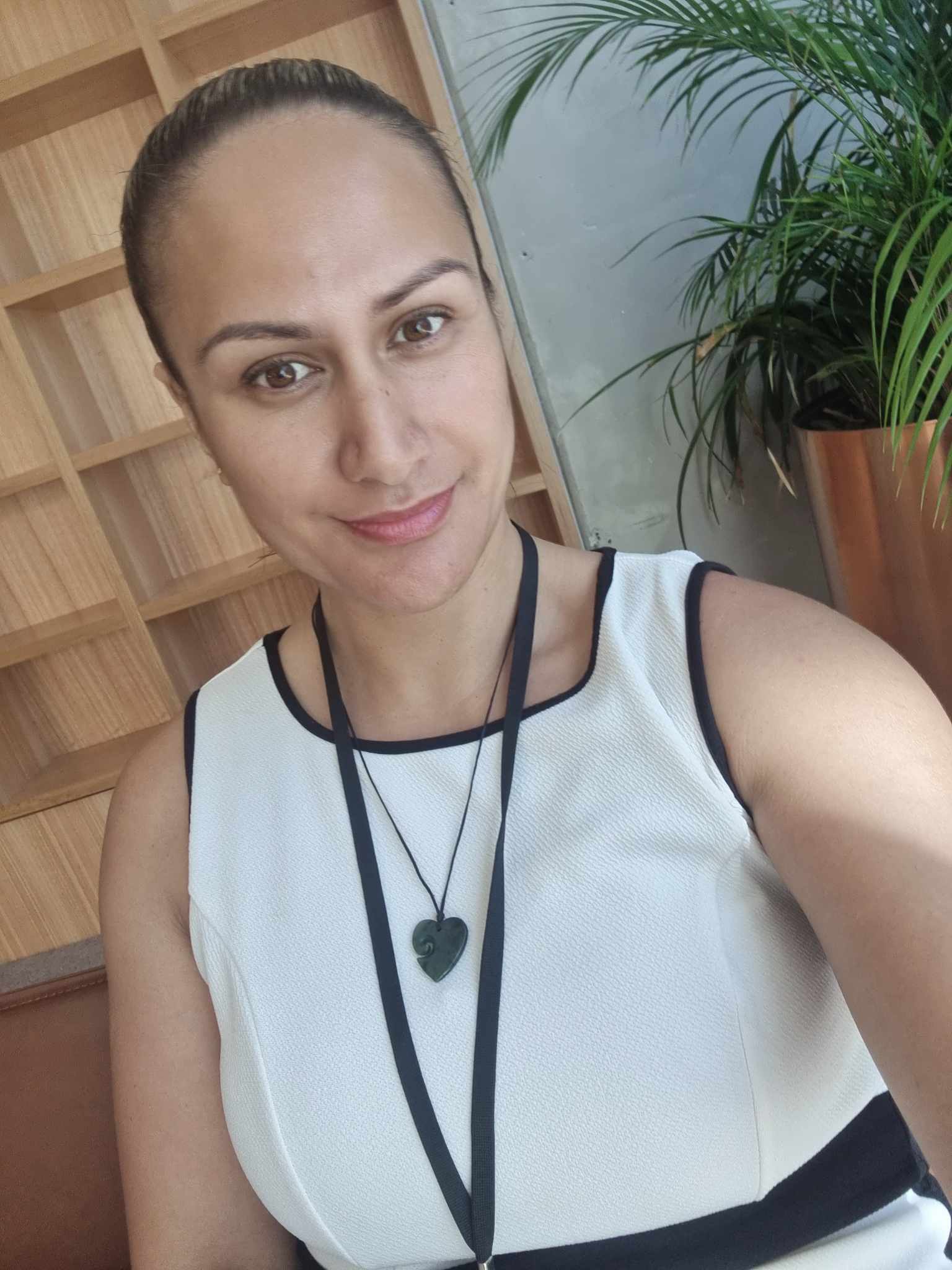
Destani Davies

Brisbane woman Destani Davies told 9news.com.au she had seen a $200 weekly rise in her weekly bills.

Davies, 37, is a single mother with five children and works as an author and public speaker.

She says most of her money is spent on rent, which is $1220 per fortnight.

"I do feel my expenses have increased due to the cost of living. I would say by $150-$200 a week," Davies said.

Davies said she'd feel her bills would be more manageable if she was able to save $200 per week.

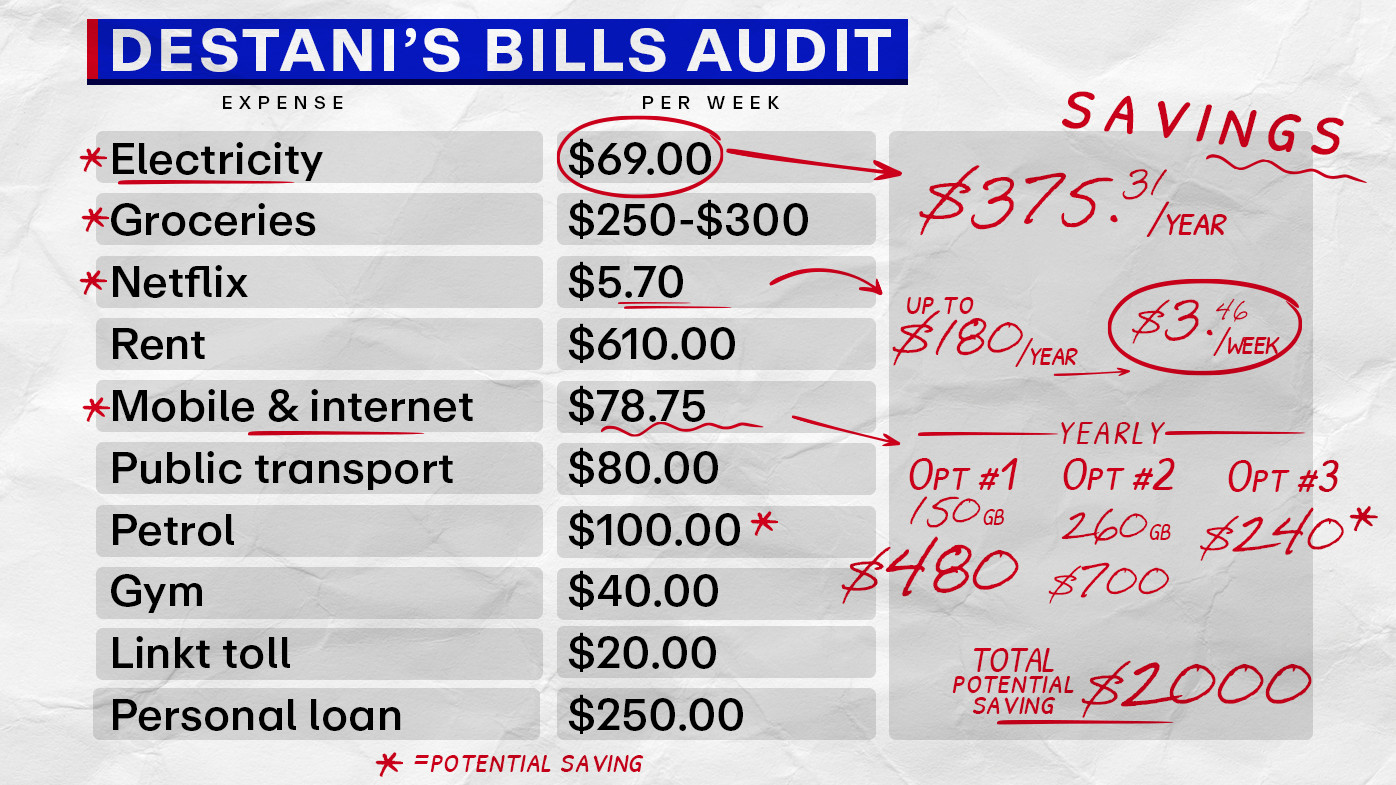
Here's a snapshot of Davies' weekly bills:

  • Electricity: $903 for the quarter, around $69 per week
  • Groceries: $250-$300 a week
  • Netflix: $22.99 a month, around $5.70 per week
  • Rent $610 a week
  • Mobile and internet: $315 a month, around $78.75 per week
  • Public transport: $80 per week for three people
  • Petrol: $100 per week
  • Gym: $40 per week
  • Linkt toll: $20 per week
  • Personal loan: $250 per week

All up, Davies' weekly bills amount to $1553 per week.
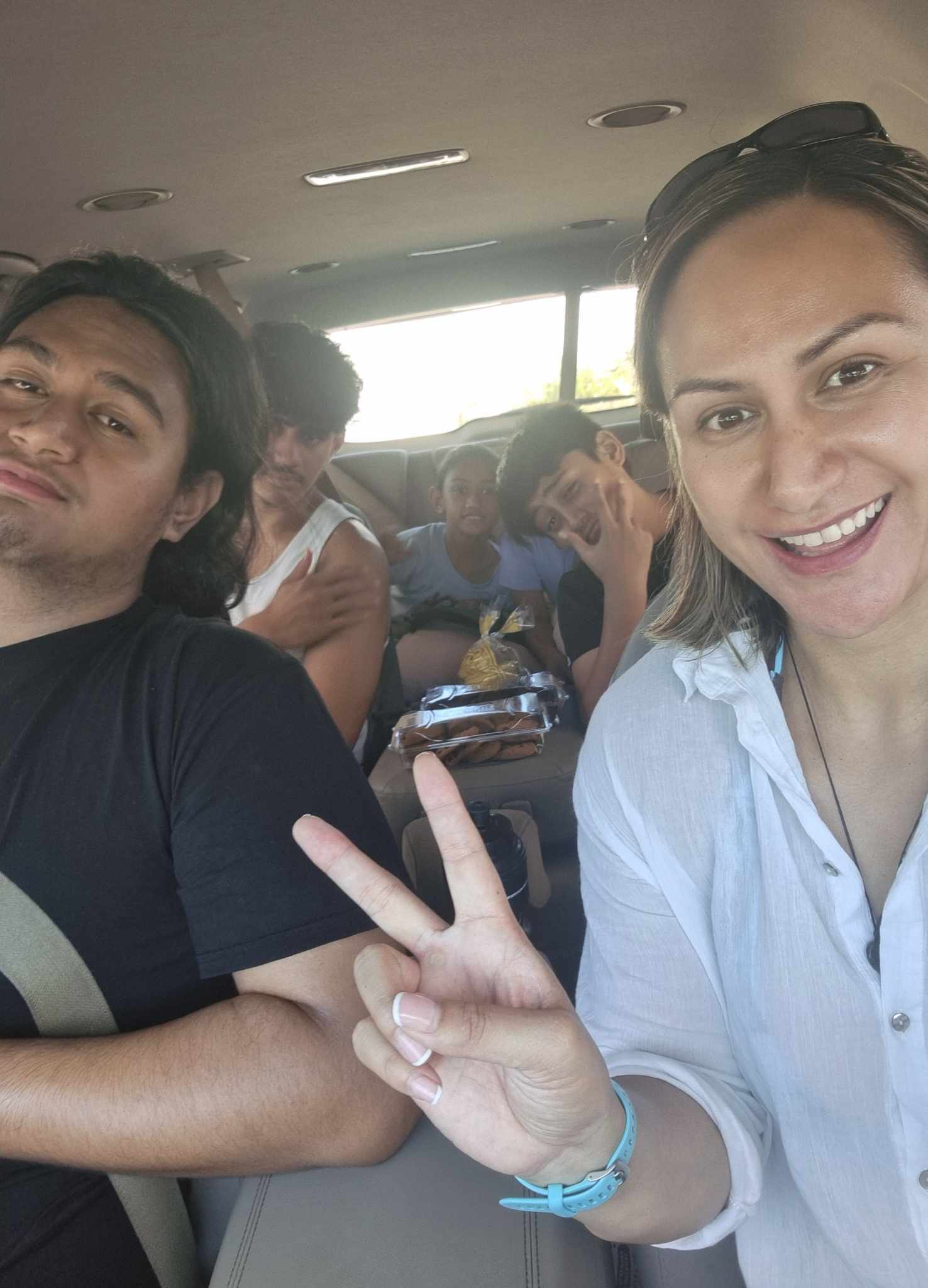
Destani Davies

Ahead of the federal budget in May, Davies says she would like to see Family Tax Benefits increased for families, plus childcare subsidies increased.

"(And) if there was an opportunity for family members outside of the primary carer to look after children – as in childcare or before and after school care – that a payment potentially be made available to support them in doing that," Davies said.

Overall, as a single-income household, Davis admits her financial position "could be better", however acknowledges she is in a "fortunate position" compared to so many other Australian families.
We had personal finance expert Joel Gibson take a look at Davies' weekly bills and he provided some helpful tips for slashing some of her costs.

Gibson told 9news.com.au Davies could be looking at over $2000 of potential savings from shopping around and "switching" providers.
Electricity and fuel: Save over $1000/year

"Electricity usage is quite high (not surprisingly with five kids) especially in the summer (presumably due to air con?)," Gibson explained.

"A good tip for air con is to set the thermostat on about 22 or 23, not 18 or 19 degrees, and also use a fan.

"Fans are very cheap to run and they make the air con feel four degrees cooler.

"The difference could be hundreds of dollars over the summer."

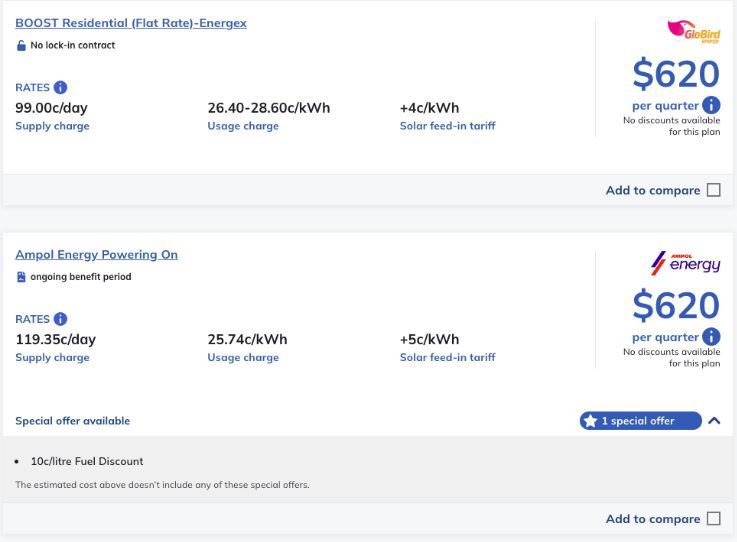
As for Davies' electricity provider, Gibson did some digging and found hundreds of dollars' worth of savings over one simple switch.

"The box on the front of your bill is now compulsory on every bill and it tells you that just by switching to your provider's cheapest plan, you could save $375.31 per year," he said.

"I checked the government website energymadeeasy.gov.au and there are some even cheaper plans if you switch providers.

"For example, this plan from Ampol Energy, which is over $1000 less per year and includes a 10c/litre fuel discount."
Joel Gibson Budget savings

Telco: Save over $700/year

"The Optus family mobile plan is a good option for a big family with 320GB of data on 4 SIMs for $165/month," Gibson said of Davies' telco plan.

"But there are some cheaper options such as the Aldi family plan (eg 150GB of data across up to six SIMs for $125/month). This would mean paying out your device but it could save $480/year.

"Otherwise, Optus has annual pre-paid plans that cost $320 (currently on sale for $220), which equals about $27/month and has 260GB of data for the year.

"These are great value and four of these would cost you at least $700 less per year."

He added: "The Optus NBN deal is not the cheapest at $90/month. It's cheaper than Telstra (around $100) but there are plans at the same 50Mbps speed starting from around $60/month for six months and then rising to $80 after that – such as Dodo, Exetel or Tangerine.

"Most are BYO modem but could save you around $240 in the first year."

Groceries: Save hundreds of dollars – potentially

"Feeding a big family for $250-$300/week is a big achievement! But there might be a few things to try if not already doing so," Gibson said.

  • Weekly fruit and veg box delivery services can help you save (eg Farmers Pick rescues produce rejected by the supermarkets and delivers 15kg of fruit and veg for under $70/week)
  • Shopping at Costco or Aldi also helps, even if it's not for your whole shop
  • Bunnings, Amazon, Reject Shop and Chemist Warehouse also have cheaper cleaning products and toiletries if you can make the occasional trip and stock up

Streaming: Save up to $180/year

"Netflix has a cheaper 'Basic' tier with ads now which could save up to $180/year if you can bear to watch ads," Gibson suggested.

Transport: Save hundreds – potentially

"Use the 10c/litre fuel saving with the Ampol Energy plan above if there's an Ampol nearby," Gibson explained.

"Use the apps such as EzySt and PetrolSpy to find your cheapest bowser before filling up and you could save up to 50c/L.

"Here's an example today in North Brisbane of the big differences between petrol stations sometimes."
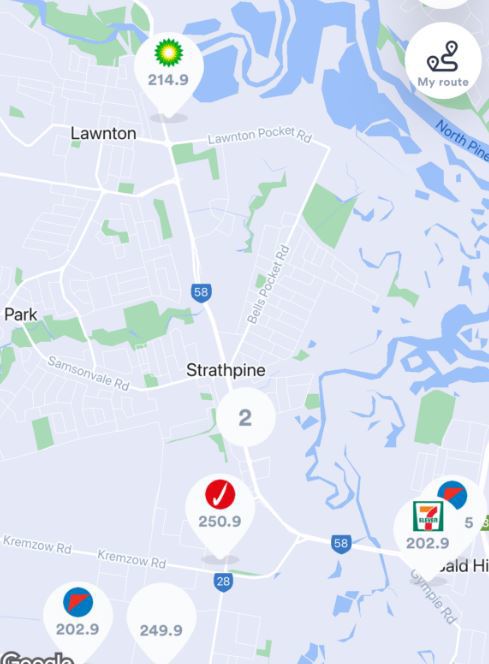
Joel Gibson Budget savings

Joel Gibson is the author of EASY MONEY, and a money-saving expert on TikTok, TODAY, 2GB, and ABC Radio.

The information provided on this website is general in nature only and does not constitute personal financial advice. The information has been prepared without taking into account your personal objectives, financial situation or needs. Before acting on any information on this website you should consider the appropriateness of the information having regard to your objectives, financial situation and needs.


Rare look at Iranian missiles and drones that hit Israel

"You have to ask the Israelis," Iran's Islamic Revolutionary Guard Brigadier General Ali Belali says with a smirk when asked how many ballistic missiles the Islamic Republic fired towards Israel in its April 14 strike.

But he's more than happy to show the missiles and drones Iran used in its first ever attack against Israel launched directly from Iranian soil.

"It was a punitive measure," Belali says, as he uses a laser pointer to indicate the missiles deployed, towering above him in the exhibit.

READ MORE: NYPD officers storm university to clear out pro-Palestinian protestors

Two weeks after the Middle East came to the brink of an all-out war, with Iran firing hundreds of projectiles toward Israel in retaliation for a suspected Israeli airstrike on an Iranian embassy compound in Damascus, Tehran is keen to show the world that it is capable of fighting a wider conflict should it be faced with one.

On April 19, Israel responded with a suspected attack inside Iran's borders.

Both the Iranian and Israeli actions resulted in minimal damage and appeared by both sides to be aimed at restoring deterrence.

That situation de-escalated, but the threat of war continues to loom large over the region as Israel's offensive in Gaza grinds on.

READ MORE: Close relative of dictator denied top-secret US security clearance

CNN was given rare access to an Islamic Revolutionary Guards exhibit that showcases Tehran's air and space capabilities, including the types of weapons that were used against Israel last month.

American media had never been allowed inside until now.

At the permanent exhibit of the Revolutionary Guard Aerospace Forces in western Tehran, dozens of long- and medium-range ballistic missiles stand tall along with cruise missiles and drones.

The exhibit is meant to show the development and progress of Iran's drone and missile program.

"Today, our drones and missiles have become an important factor of strength and the execution of power in the world," Belali, himself a former missile commander during the eight-year Iran-Iraq war that ended in 1988, tells CNN.

He says Iran's massive drone and missile barrage against Israel was a major success.

Iran's attack on Israel included drones, ballistic missiles and cruise missiles.

The night sky over Israeli cities lit up as the country's air defences worked to intercept the projectiles.

READ MORE: PM urges Australians in Israel to monitor situation after Iranian missile attacks

Meanwhile, the air forces of Israel, the US, the UK, France and Jordan were busy in the skies, also trying to take down as many Iranian drones and missiles as possible.

"NATO, The United States and Arab countries of the region wanted to create barriers for our drones, missiles and cruise missiles, but they failed," Belali says.

"The world was not able to stop us."

The Israeli military said that "99 per cent" of projectiles fired by Iran were intercepted by Israel and its partners, with only "a small number" of ballistic missiles reaching the country.

The Iranians claim they managed to hit two locations inside Israel, including the Nevatim airbase in the Negev desert.

READ MORE: Netanyahu vows to invade Rafah 'with or without a deal'

Israel Defense Forces (IDF) spokesperson Daniel Hagari said that ballistic missiles that reached Israel fell on the airbase and caused only light structural damage.

"Accurate, (to) less than five meters," Brigadier General Ali Belali claims, standing in front of two of the ballistic missiles he says were involved in the strikes against Israel, the Ghadr and the Emad.

The missiles have a range of more than 1600km and can carry warheads between 450 and 500 kilograms, he says.

Another missile, called Kheybar, which he says was also used, carries a warhead of about 320 kilograms, the general adds.

READ MORE: US, UK hit Iran with new sanctions after Israel attack

Region's largest ballistic missile force

Iran's ballistic missiles have long been a cause for concern for the US and its allies in the Middle East, who have called for curbs on the missile program to be part of any deal that Washington strikes with Tehran.

The US says Iran has the largest ballistic missile force in the Middle East and considers its missile arsenal as one of its "primary tools of coercion and force projection."

Iran has in the past insisted that its missile program is solely for defensive purposes.

In recent years, and until its attack on Israel, Iran had carried out at least five major cross-border ballistic missile strikes in the region, John Krzyzaniak, a research associate at the Wisconsin Project on Nuclear Arms Control in Washington, DC, told CNN earlier.

Those include two attacks on ISIS in Syria, and three in Iraq claiming to have targeted US forces, Kurdish militants and Israeli intelligence.

Also on display at the Tehran exhibit is what Iran says is an American RQ-170 Sentinel drone, made by Lockheed Martin, that it claims to have downed in 2011.

READ MORE: King Charles visits London cancer centre in return to public duties

US officials told CNN that year that the drone was part of a CIA reconnaissance mission that involved both the intelligence community and military personnel stationed in Afghanistan.

Three years later, Iran said it had managed to copy the drone.

Belali says Iran's missile development is key to the Islamic Republic's defence strategy.

"In our defence capabilities we don't rely on anyone. We have had good progress in this field and we will progress more. There are achievements that have not yet been talked about."

Drones are equally as important for Iran's Islamic Revolutionary Guards.

The exhibit shows various stages of their drone development, starting from small wooden UAVs used in the Iran-Iraq war, all the way to models the Iranians claim have stealth capabilities.

One the most prominent is the Shahed 136, a cheap "fire and forget" drone, meaning a flight path is programmed, the UAV is launched, and it then independently flies towards the target area.

While the Iranians acknowledge using dozens of Shahed 136 drones to target Israel, both the US and Ukraine also accuse Tehran of giving hundreds to Russia, with Moscow using them to hit Ukrainian cities and energy infrastructure.

The Iranians have consistently denied those claims.

The Shaheds fly low and slow and usually attack in swarms, the general says, standing in front of an unmarked truck that serves as a secretive launching platform.

"Everything is pre-programmed. The flight route is chosen according (to) the enemy's capabilities and blind spots of radars and all the elements that can help us reach the target."

Duelling protesters clash at American university

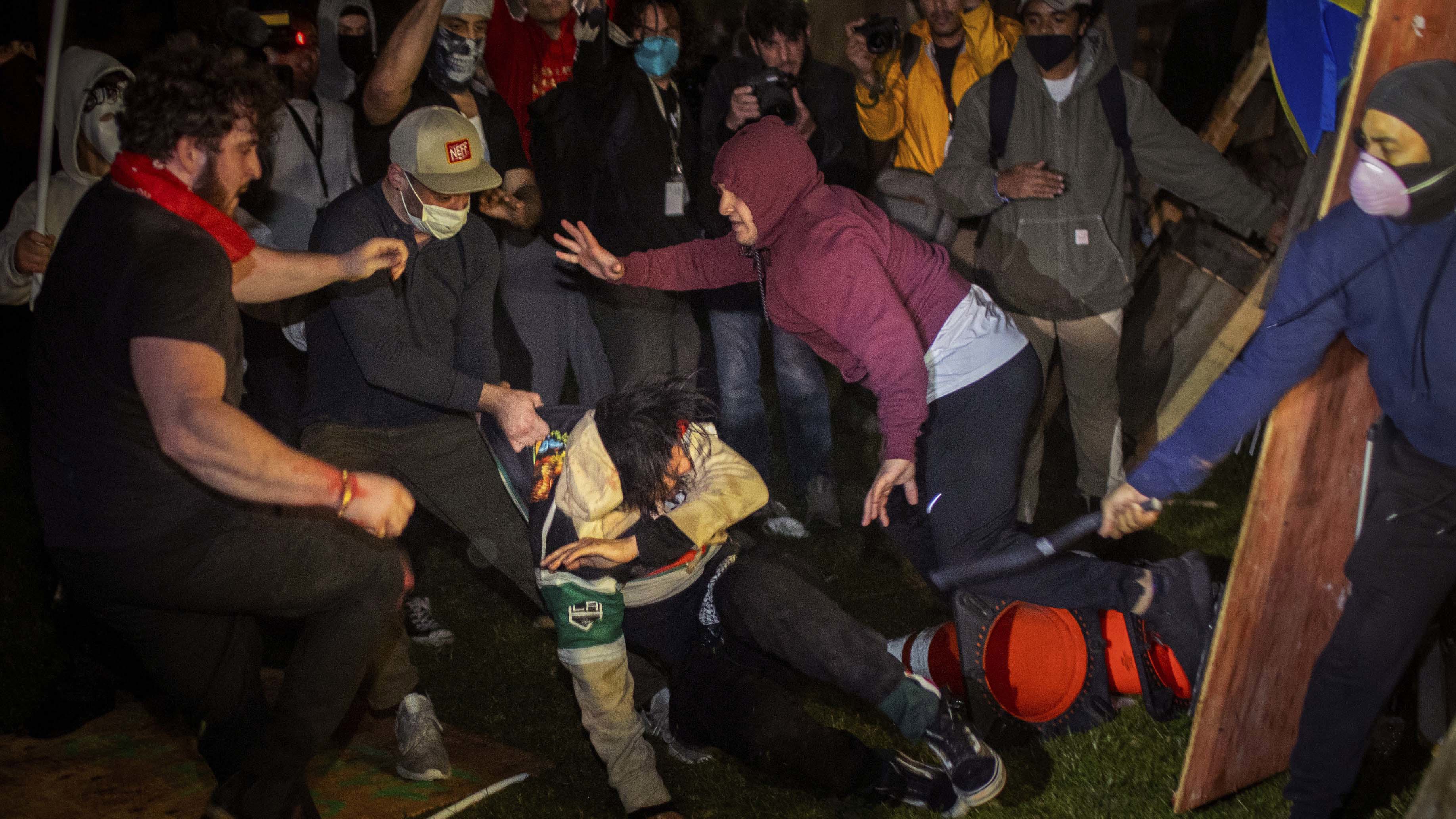
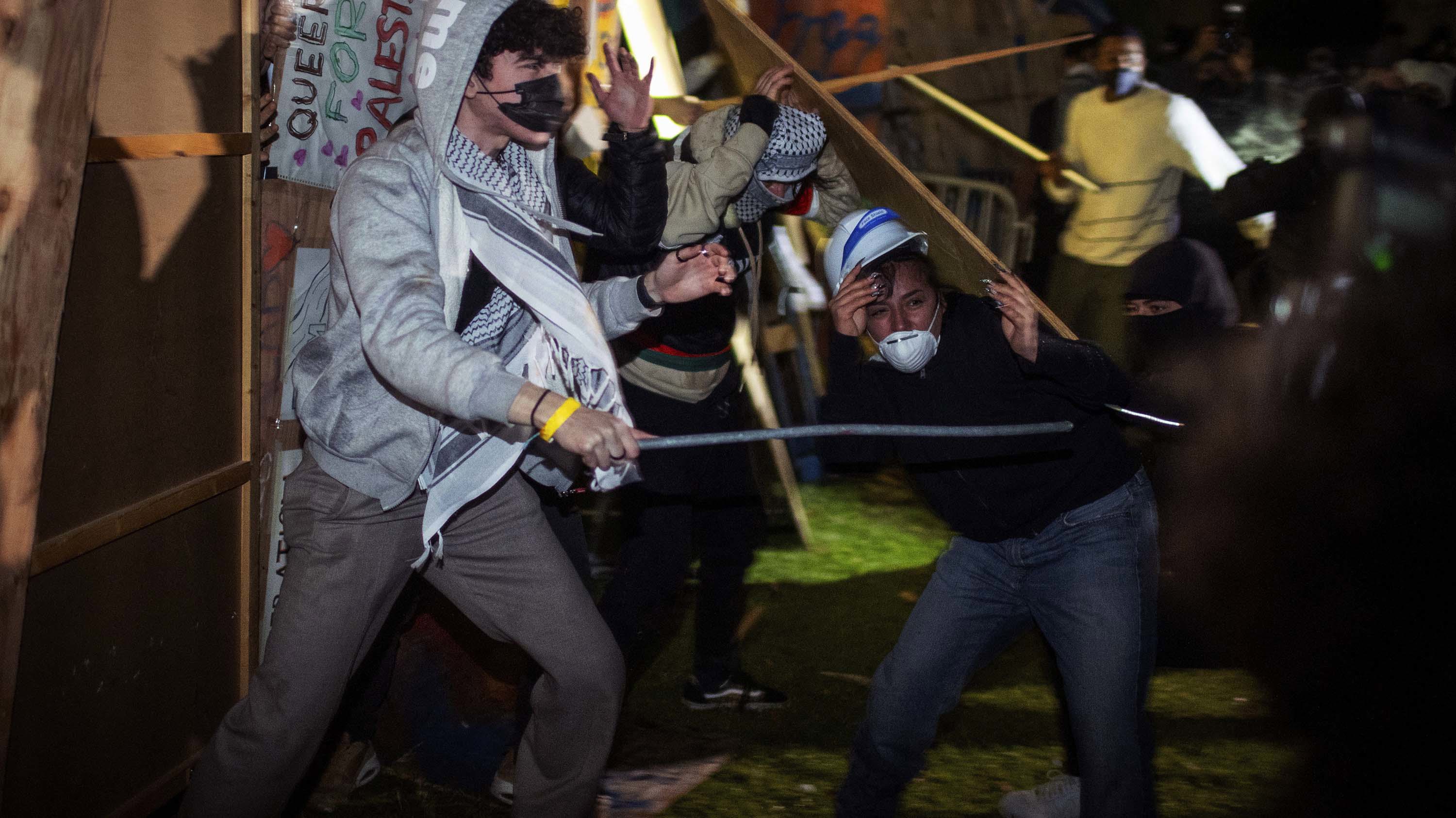
Duelling groups of protesters clashed on Wednesday at the University of California, Los Angeles, grappling in fistfights and shoving, kicking and using sticks to beat one another.

Hours earlier, police burst into a building at Columbia University that pro-Palestinian protesters took over and broke up a demonstration that had paralysed the school while inspiring others.

After a couple of hours of scuffles between pro-Palestinian and pro-Israeli demonstrators at UCLA, police wearing helmets and face shields formed lines and slowly separated the groups.

READ MORE: NYPD officers storm university to clear out pro-Palestinian protestors

That quelled the violence, and the scene was calm as day broke.

Tent encampments of protesters calling on universities to stop doing business with Israel or companies that support the war in Gaza have spread across the country in a student movement unlike any other in the 21st century, reaching from New York to Texas and California.

The ensuing crackdown by police on some college campuses has stirred echoes of the much larger student protest movement during the Vietnam War era.

There have been confrontations with law enforcement and more than 1,000 arrests.

In rarer instances, university officials and protest leaders struck agreements to restrict the disruption to campus life and upcoming commencement ceremonies.

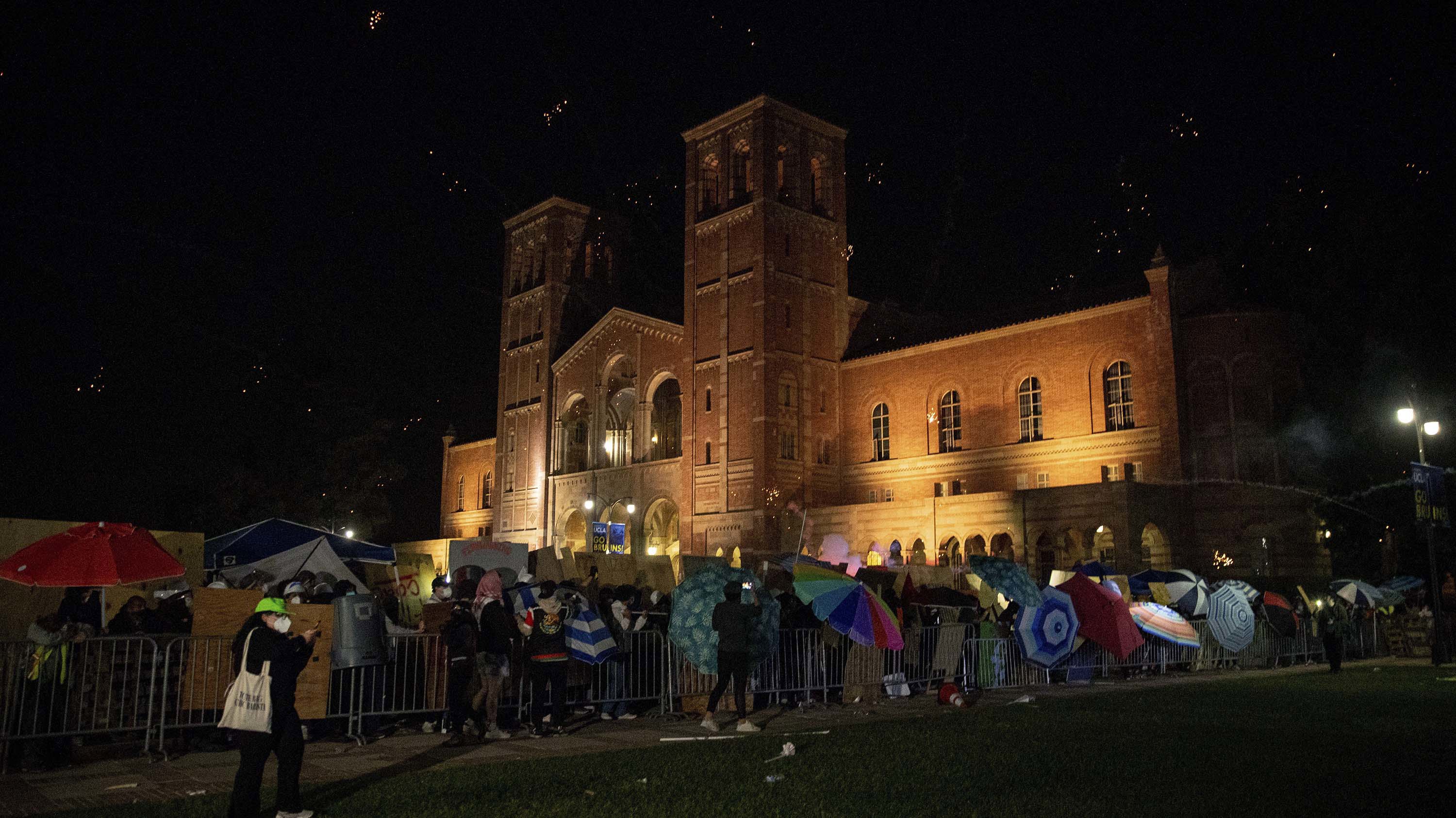
The clashes at UCLA took place around a tent encampment built by pro-Palestinian protesters, who erected a line of parade barricades, plywood and wooden pallets at the edge of the camp — while counter-protesters tried to pull them down.

READ MORE: Judge fines Trump, threatens him with jail time

Video showed fireworks exploding over and in the encampment.

People threw chairs and other objects and at one point a group piled on a person who lay on the ground, kicking and beating them with sticks until others pulled them out of the scrum.

It was not clear how many people might be injured.

Los Angeles Mayor Karen Bass called the violence “absolutely abhorrent and inexcusable" in a post on social media platform X and said officers from the Los Angeles Police Department were on the scene.

READ MORE: Bees attack father and daughter at park stinging them dozens of times

https://twitter.com/MayorOfLA/status/1785591832321151196?ref_src=twsrc%5Etfw

Officers from the California Highway Patrol also appeared to be there. The university said it had requested help.

Security was tightened on Tuesday at the campus after officials said there were “physical altercations” between factions of protesters.

READ MORE: Tram collides with bus in Los Angeles, injuring more than 50

Late that same day, New York City officers entered Columbia's campus after the university requested help, according to a statement released by a spokesperson.

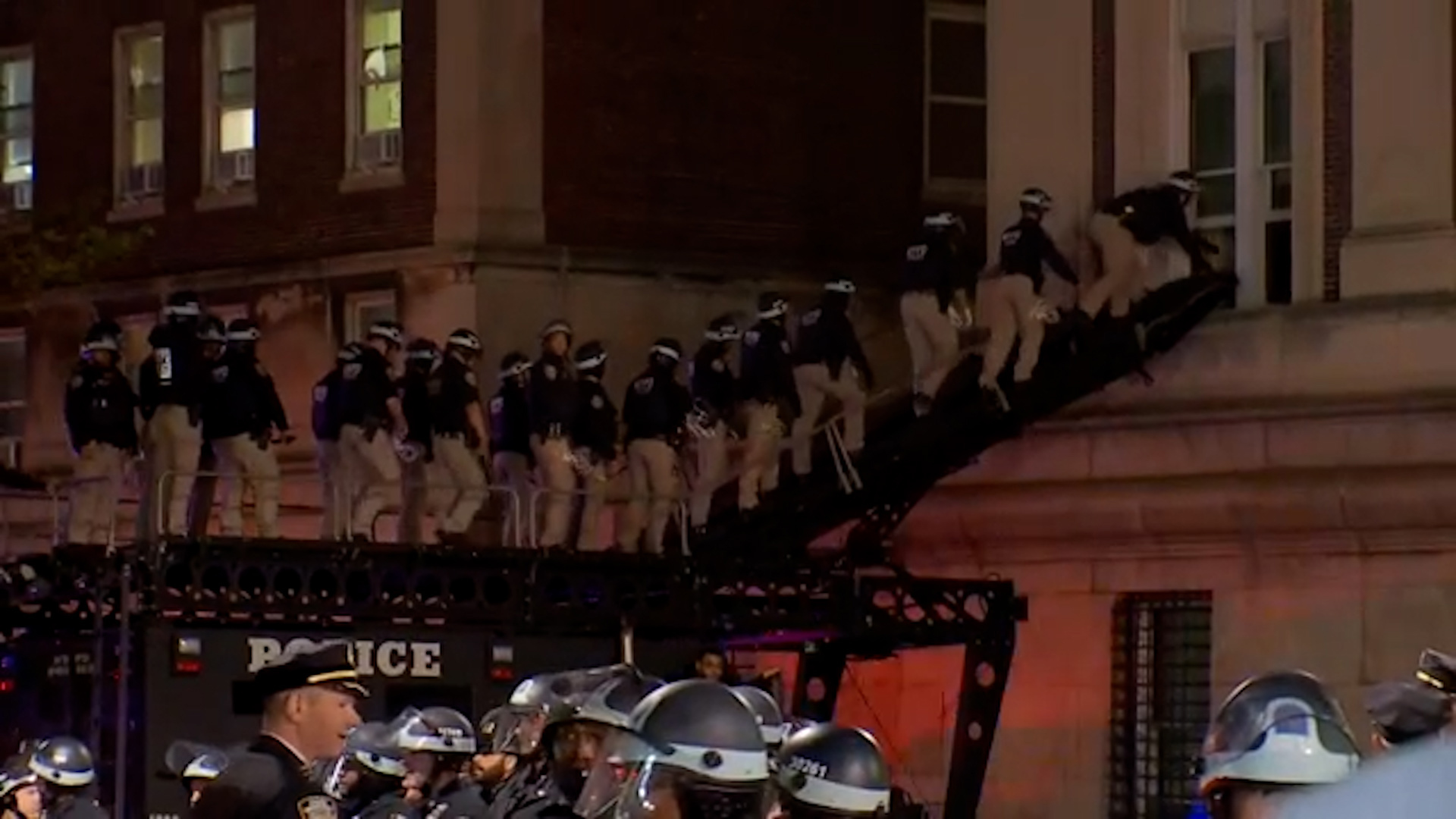
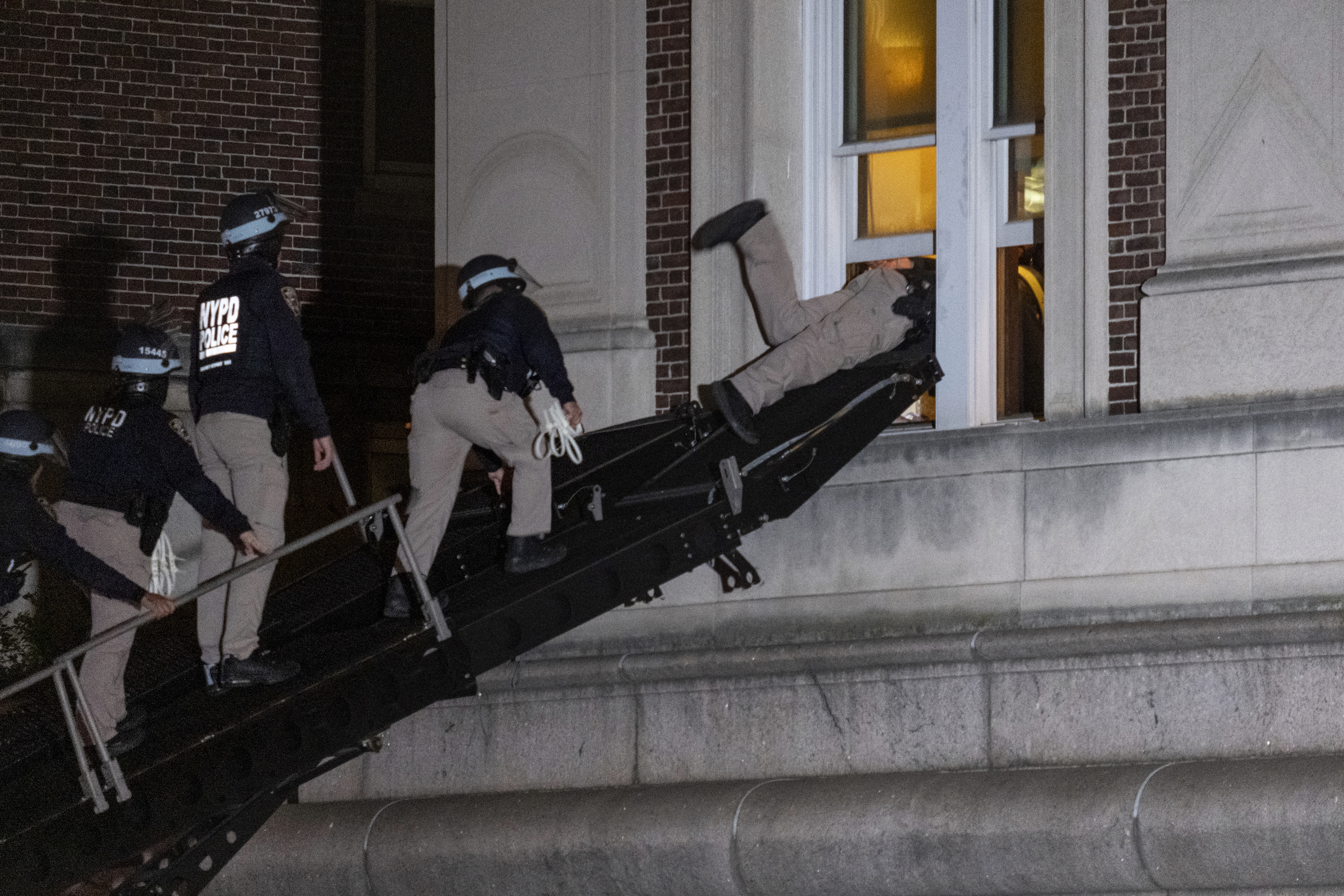
A tent encampment on the school's grounds was cleared, along with Hamilton Hall where a stream of officers used a ladder to climb through a second-floor window.

Protesters seized the hall at the Ivy League school about 20 hours earlier.

“After the University learned overnight that Hamilton Hall had been occupied, vandalised, and blockaded, we were left with no choice,” the school said.

“The decision to reach out to the NYPD was in response to the actions of the protesters, not the cause they are championing.

"We have made it clear that the life of campus cannot be endlessly interrupted by protesters who violate the rules and the law.”

READ MORE: US drug control agency will move to reclassify marijuana in a historic shift

A few dozen people were arrested at the building after protesters shrugged off an earlier ultimatum to abandon the encampment on Monday or be suspended and unfolded as other universities stepped up efforts to end demonstrations that were inspired by Columbia.

Fabien Lugo, a first-year accounting student who said he was not involved in the protests, said he opposed the university’s decision to call in police.

“This is too intense,” he said. “It feels like more of an escalation than a de-escalation.”

Just blocks away from Columbia, at The City College of New York, demonstrators were in a standoff with police outside the public college’s main gate.

Video posted on social media by news reporters on the scene late on Tuesday showed officers putting some people to the ground and shoving others as they cleared people from the street and sidewalks.

After police arrived, officers lowered a Palestinian flag atop the City College flagpole, balled it up and tossed it to the ground before raising an American flag.

Brown University, another member of the Ivy League, reached an agreement on Tuesday with protesters on its Rhode Island campus.

Demonstrators said they would close their encampment in exchange for administrators taking a vote to consider divestment from Israel in October.

The compromise appeared to mark the first time a US college has agreed to vote on divestment in the wake of the protests.

Meanwhile, at Northern Arizona University in Flagstaff, police in riot gear closed in on an encampment late on Tuesday and arrested about 20 people for trespassing, at least one of whom was thrown to the ground.

University officials had warned earlier in the day that students would face criminal charges if they did not disperse.

First-year student Brayden Lang watched from the sidelines.

“I still know very little about this conflict,” he said.

“But the deaths of thousands is something I cannot stand for.”

Columbia

Police also cleared an encampment at Tulane University early on Wednesday.

The nationwide campus protests began at Columbia in response to Israel’s offensive in Gaza after Hamas launched a deadly attack on southern Israel on October 7.

Militants killed about 1200 people, most of them civilians, and took roughly 250 hostages.

Vowing to stamp out Hamas, Israel has killed more than 34,000 Palestinians in the Gaza Strip, according to the Health Ministry there.

As cease-fire negotiations appeared to gain steam, it wasn’t clear whether those talks would lead to an easing of protests.

Columbia

Israel and its supporters have branded the university protests as antisemitic, while Israel’s critics say it uses those allegations to silence opposition.

Although some protesters have been caught on camera making antisemitic remarks or violent threats, organisers of the protests, some of whom are Jewish, say it is a peaceful movement aimed at defending Palestinian rights and protesting the war.

Columbia's police action happened on the 56th anniversary of a similar move to quash an occupation of Hamilton Hall by students protesting racism and the Vietnam War.

The police department earlier on Tuesday said officers wouldn't enter the grounds without the college administration’s request or an imminent emergency.

Now, law enforcement will be there through May 17, the end of the university's commencement events.

In a letter to senior police officials, Columbia President Minouche Shafik said the administration made the request that officers remove protesters from the occupied building and a nearby tent encampment “with the utmost regret.”

New York City Mayor Eric Adams said on MSNBC’s Morning Joe that police had to move into Hamilton Hall “for the safety of those children”.

He again blamed outside agitators for the building takeover — an idea Shafik has also raised, though neither provided specific evidence to back up the contention, which was disputed by protest organisers and participants.

The police department’s deputy commissioner for public information, Tarik Sheppard, said 40 to 50 people were arrested at Hamilton Hall and that there were no injuries.

Adams later said that about 300 people were arrested in police crackdowns at Columbia University and City College.

‘I told you not to drive’: Queensland woman caught drink-driving twice in one day

A 50-year-old Queensland woman who was caught by police while driving drunk twice in one day was sentenced in Southport Magistrate's court today.

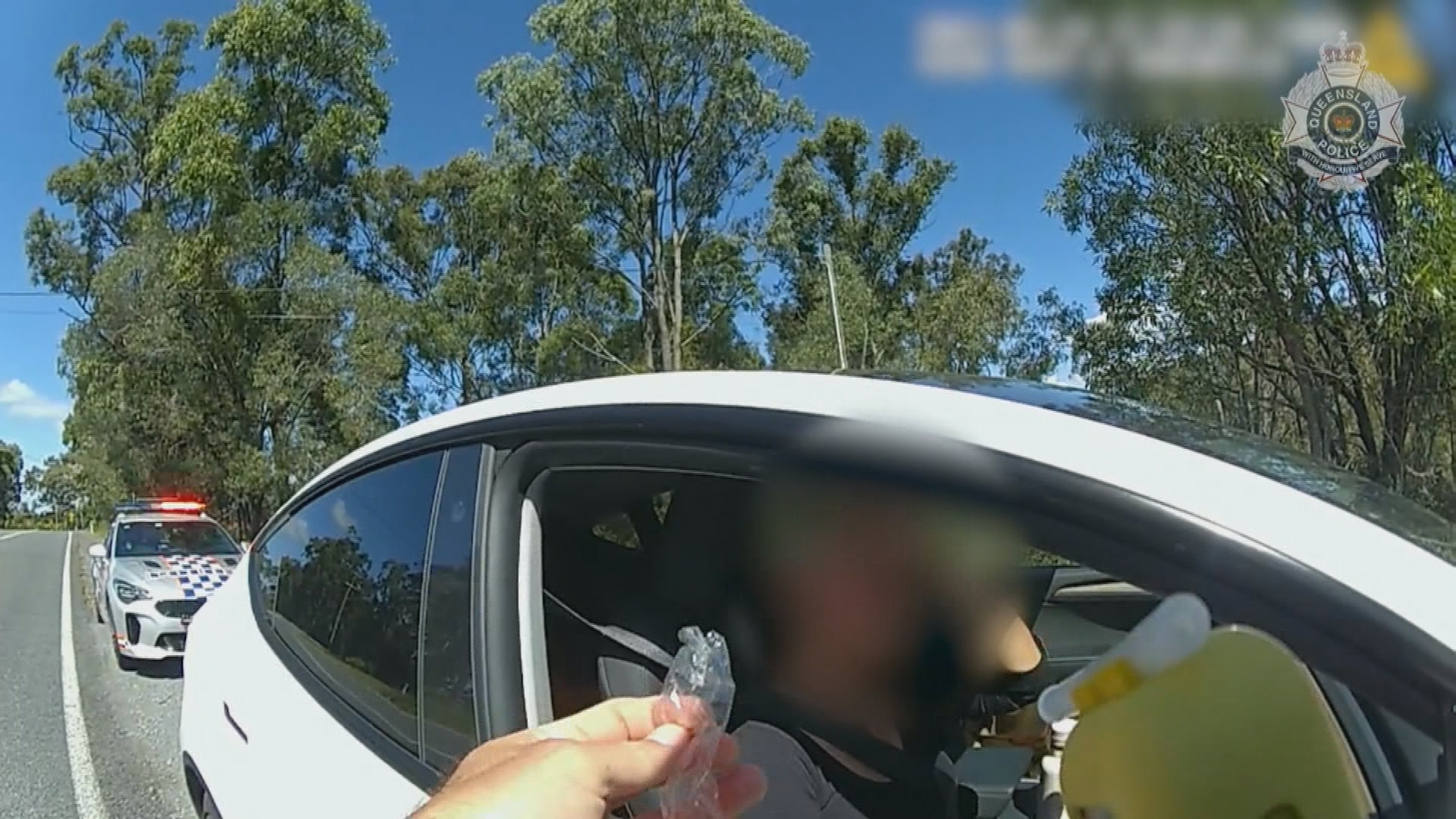
Tina Regecova was pulled over by officers for a licence check at Mount Nathan in the Gold Coast hinterland on April 12.

Regecova was tested at a nearby police station, where her blood alcohol was found to be four times the legal limit, with a reading of 0.199.

READ MORE: Iconic venue shuttered despite record sales

Drink Driving

Regecova's lawyer today said that the woman had been taking insomnia medication and was fasting.

She had not realised she was impaired before she jumped behind the wheel, the court heard.

Police immediately suspended her licence, and she was charged with driving under the influence.

Regecova arranged for a ride-share to transport her home.

Less than three hours later, she was pulled over again by the same officer.

"I told you not to drive," the officer said in a video recorded by body-cam.

Still intoxicated from before, Regecova was again breath tested, giving a reading of 0.183.

She was then charged with another count of driving under the influence, and an additional charge of driving while disqualified.

In court today she pleaded guilty to the three driving offences.

Her license was disqualified for a total of three years, and she was fined $750 dollars.

Regecova apologised while speaking to reporters outside court.

"I am really sorry about it happening, I am," she said.

Lehrmann given extra time to consider defamation appeal

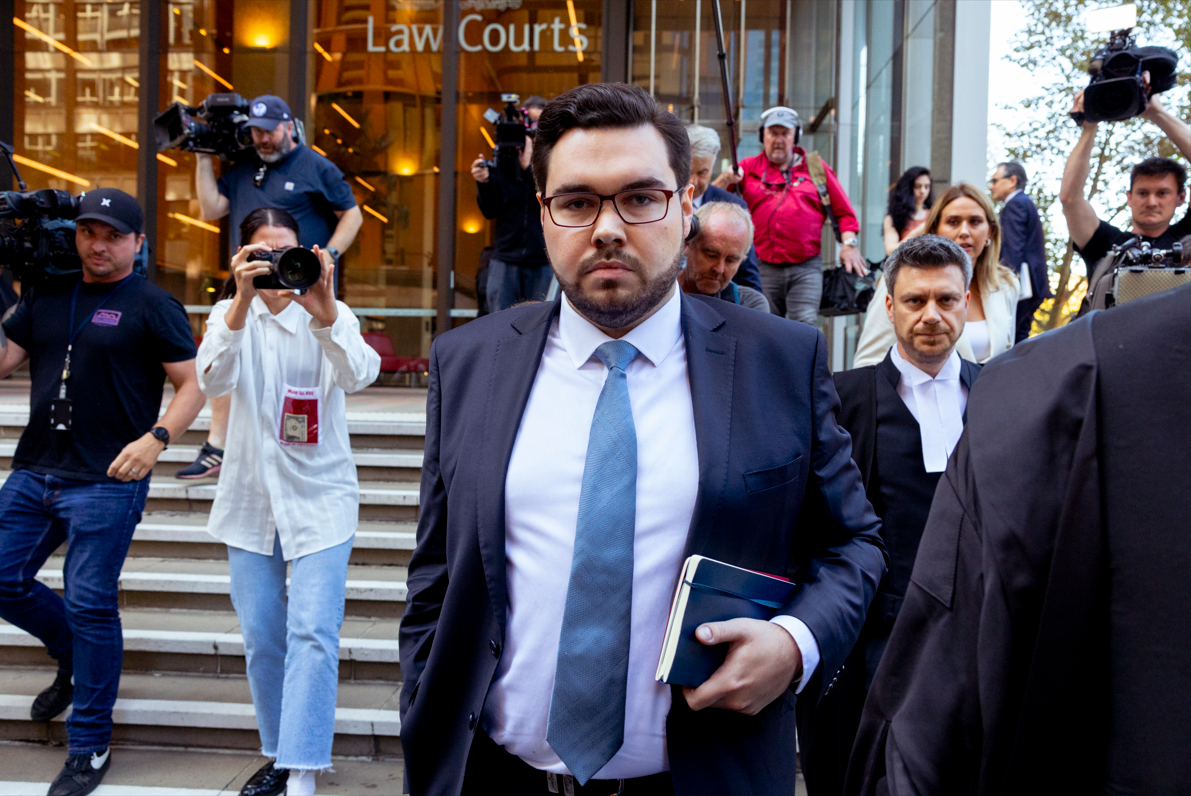
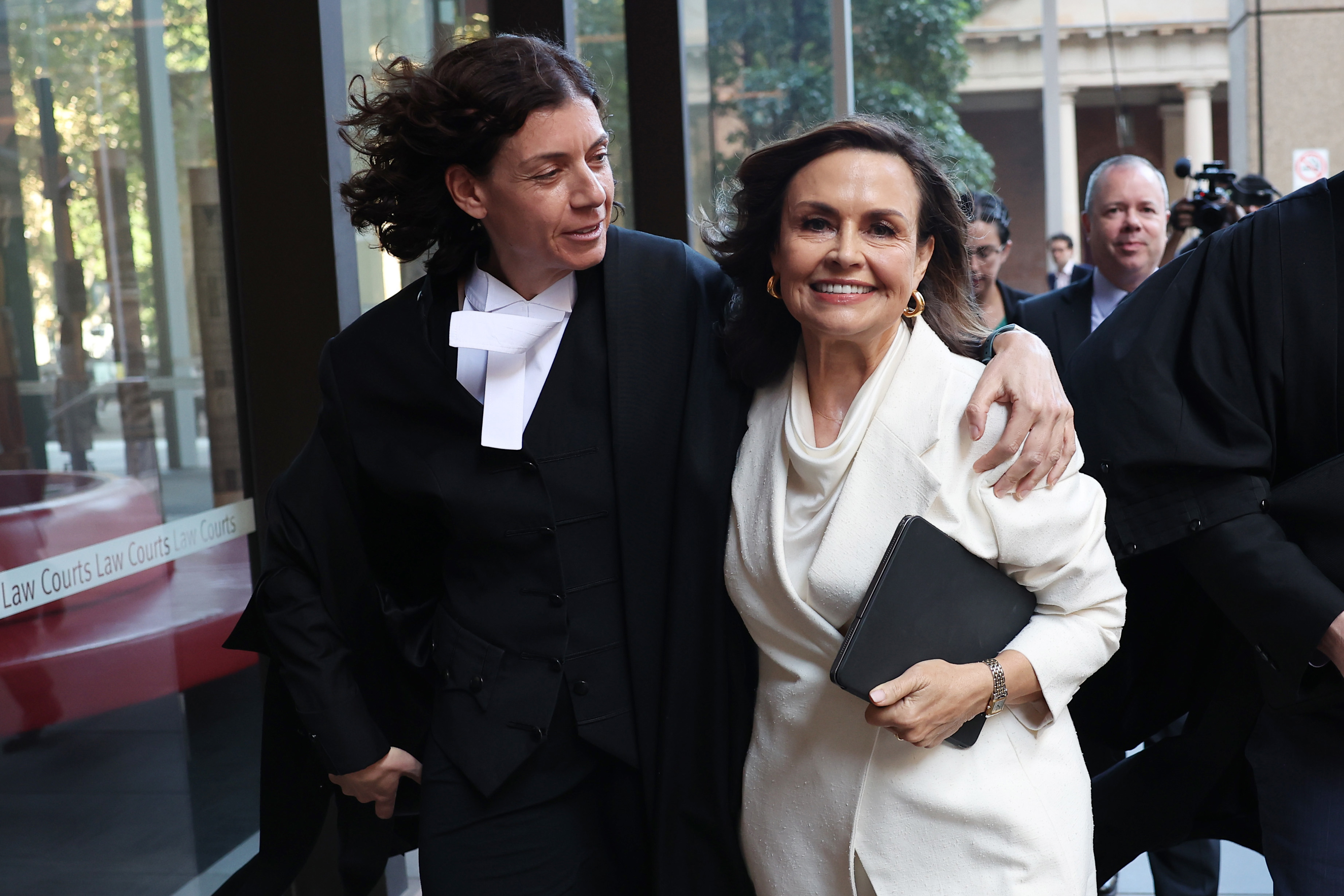
Bruce Lehrmann will likely have to pay at least some of Network Ten and Lisa Wilkinson's legal costs, as the former Liberal staffer weighs whether to appeal his unsuccessful defamation suit against them.

Lehrmann's barrister David Helvadjian has requested further time in which an appeal notice must be delivered, on the basis fresh legal counsel were reviewing the likelihood of such an appeal succeeding.

Justice Michael Lee on Wednesday granted the motion, which was uncontested by the opposing parties, giving Lehrmann until May 31.

READ MORE: Hospital staff posed as fake patients during minister's visit, investigation finds

Bruce Lehrmann will likely have to pay at least some of Network Ten and Lisa Wilkinson's legal costs.

During the Federal Court hearing, Justice Lee reiterated his view the proceedings initiated by Lehrmann, over allegations aired by Ten that he raped Brittany Higgins in Parliament House, were unfounded.

The 28-year-old lost the case after Justice Lee found, on the balance of probabilities, Lehrmann did in fact rape Higgins and later lied about it repeatedly, including throughout the defamation proceedings.

"I've made findings about the conduct of the applicant and the conduct litigation being disgraceful, that's a given," Lee said.

READ MORE: What's actually included in the government's DV announcement

In reserving his ruling on costs to a later date, he flagged to Ten's counsel Matthew Collins KC an order would be made in favour of his client.

Ten and Wilkinson separately retained some of the nation's most highly soughtafter legal representation, which could skyrocket Lehrmann's liability for repaying their costs into the millions of dollars.

In accordance with an earlier court ruling, Ten will be liable for the cost of Wilkinson retaining her own legal representation, which it can also seek to claim from Lehrmann as a legal expense.

However, Lee took issue with a range of conduct by Ten and its lawyers including statements made by Justin Quill in the immediate aftermath of the ruling.

He described comments by Quill including that the network had been "vindicated" in airing the claims as discourteous and somewhat misleading.

Quill told media gathered outside the hearing the way defamation trials pick apart journalists' work is "divorced from reality".

"I made it perfectly plain that what occurred in this case was that the respondents fell well short of a standard of reasonableness in the credulous way they went about reporting these allegations," Lee said.

Among the issues Lee raised were repeated assertions Higgins had been left to cope without support by her former boss Linda Reynolds and chief-of-staff Fiona Brown and equating their termination of Lehrmann's job with "protecting a paedophile".

"Ms Wilkinson in some respects went even further repeating an allegation that Ms Brown and Senator Reynolds were active participants in a systemic cover-up of alleged criminal conduct," Lee said.

Also seeking to have his legal costs paid was ex-Seven producer Taylor Auerbach, who appeared as a witness at the defamation hearing with claims he saw Lehrmann buying cocaine and ordering sex workers.

Auerbach submitted his legal costs for complying with the court's subpoena to produce and give evidence were close to $60,000.

Lee described the terms of the claim as "not on".

"People that get a subpoena shouldn't assume that they're entitled to legal costs," he said.

In submissions on costs made public last week, Ten's lawyers described Lehrmann pursuing the claim as "deliberately wicked and calculated".

"Mr Lehrmann engaged in an abuse of the court's processes, ran a case based on positive falsities, and put Network Ten to the cost of defending a baseless proceeding," Collins wrote.

Helvadjian said his client acted reasonably in bringing the lawsuit to vindicate his reputation, despite the result.

"(The) allegation was of serious criminal conduct, the allegation had not been established in any criminal proceedings, the respondents bore the onus of proof, and (Lehrmann) disputed the truth of the allegation," he wrote.

Lee said his decision on costs would be "relatively prompt".

Support is available from the National Sexual Assault, Domestic Family Violence Counselling Service at 1800RESPECT (1800 737 732).

FOLLOW US ON WHATSAPP HERE: Stay across all the latest in breaking news, celebrity and sport via our WhatsApp channel. No comments, no algorithm and nobody can see your private details.

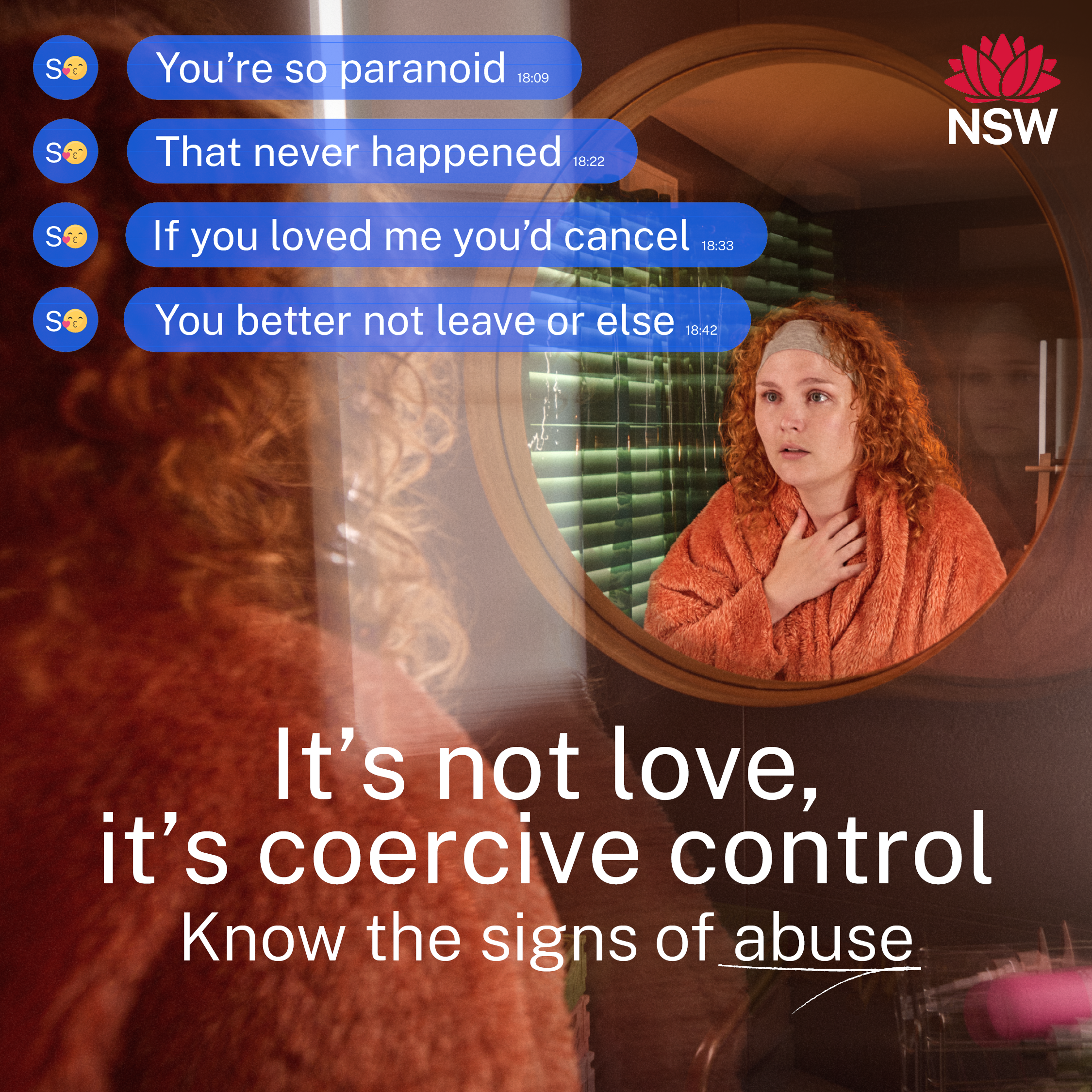
‘It’s not love’: Campaign to educate public on signs of coercive control

An advertising campaign aimed at raising awareness of coercive control has been launched by the NSW government ahead of new laws making the act a punishable offence coming into effect.

Coercive control had been used by the perpetrator on the victim before their death in 97 per cent of domestic violence homicides between 2000 and 2018, the state's Domestic Violence Death Review Team found.

Deputy Premier Prue Car said it was crucial for people to be able to recognise the "insidious" act.

READ MORE: PM announces $925 million to help people leave violent relationships

"Coercive control is an insidious and damaging form of domestic violence – it can leave victim survivors feeling isolated, vulnerable, and alone," she said.

"This campaign is vital in ensuring the broader public know what coercive control looks like, and perpetrators know what they are doing is wrong.

"The past few weeks have brought into sharp focus the need for urgent action on women's safety."

READ MORE: What's actually included in the government's DV announcement

The campaign includes the tagline "It's not love, it's coercive control".

Coercive control is a "pattern of behaviour which may include financial abuse, threats against pets or loved ones, tracking someone's movements, or isolating them from friends and family to control them", according to the government definition.

Some of its signs mentioned in the campaign include perpetrators demanding to know where their partner is at all times, cutting partners off from friends and family members, and creating financial dependency between the victim and perpetrator.

READ MORE: Pauline Hanson grilled in bitter hate speech trial

"Coercive control is behaviour designed to exercise domination and control over another, and can be hard to spot because it can be deeply contextual," Prevention of Domestic Violence and Sexual Assault Minister Jodie Harrison said.

"This campaign is vital because it helps build community awareness of coercive control and what it looks like in intimate partner relationships, with the ultimate goal of saving lives.

"These ads depict abusive behaviours that are, regrettably, all too familiar to some people in our community.

"It shines a light on this insidious abuse before it escalates and results in homicide."

From July 1, perpetrators who are found guilty of the act in NSW will face up to seven years in prison.

The campaign launch coincides with today's national cabinet announcement from the federal government of a $925 million fund to help people flee abusive relationships, as well as a number of other measures to combat toxic attitudes towards women online.

Support is available from the National Sexual Assault, Domestic Family Violence Counselling Service at 1800RESPECT (1800 737 732).

If you are in immediate danger call triple zero (000).

PM unveils $925 million fund for domestic violence survivors

The federal government will commit $925 million over five years to establish the Leaving Violence Program, a fund that will help people flee abusive relationships.

Those escaping violence will be eligible to receive $5000 in financial support, along with access to safety assessments and referrals to support pathways.

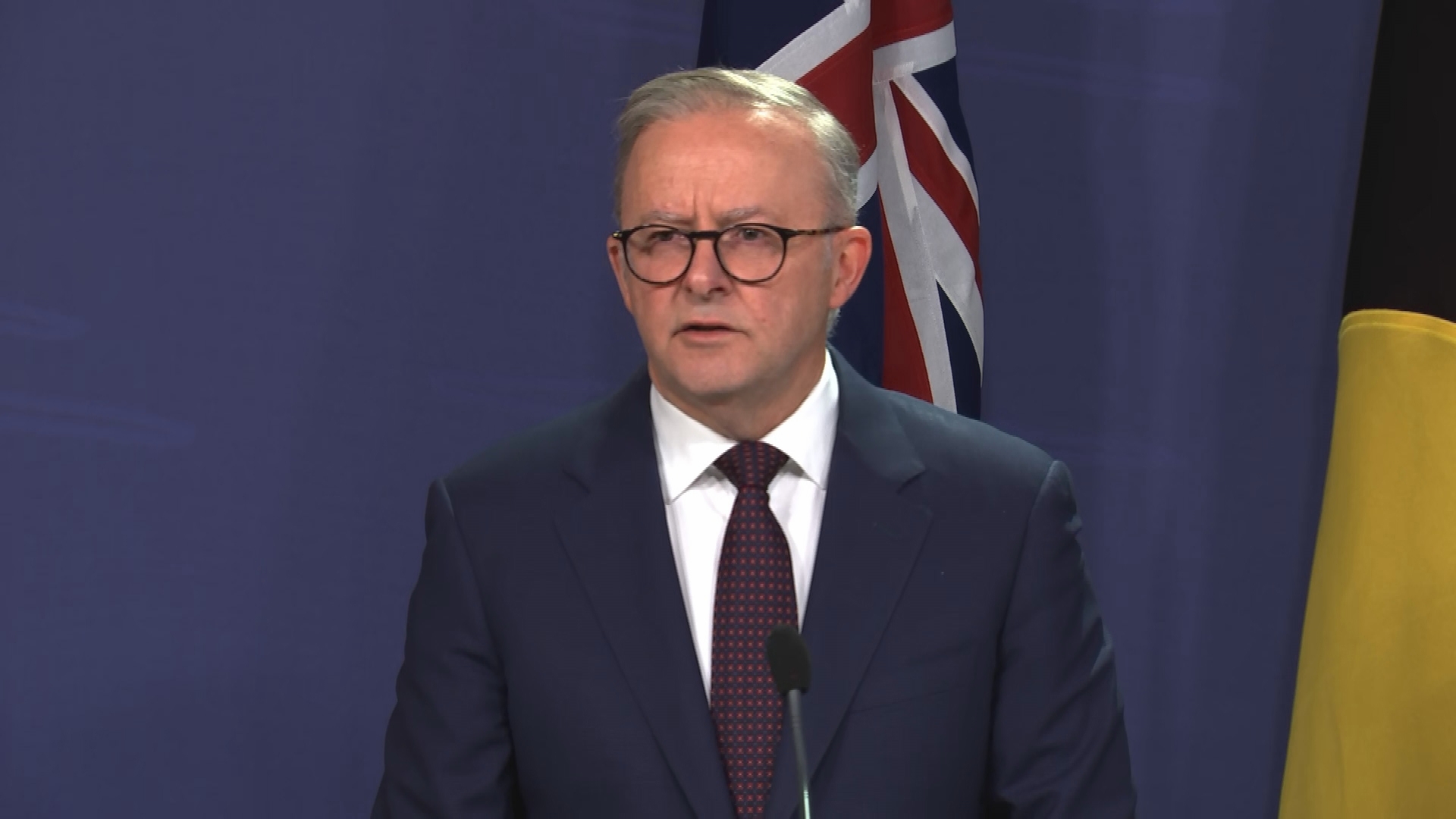
Prime Minister Anthony Albanese announced the program following a meeting of national cabinet this morning, along with a suite of other anti-violence against women measures.

READ MORE: What's actually included in the government's DV announcement

The national cabinet also backed the introduction of legislation to ban the creation and distribution of deepfake pornography.

The Stop It At The Start campaign will also enter a new phase from mid-June until May 2025.

This will include "counter-influencing campaigns" in online spaces flush with violent and misogynistic content, Albanese said.

Communications Minister Michelle Rowland said governments around the world were grappling with how to keep online spaces safe.

"I think the other important point to note is that as a society, we do need to do more and this is a role not only for government, not only for regulators and civil society, but also for the platforms themselves," she said.

READ MORE: Two men charged over drugs after woman found dead inside Sydney unit

"And part of this is putting the emphasis on the platforms to enforce their existing terms of service and where they are not doing that, to examine what are the measures governments can take."

The government will also undertake classification reforms with states and territories, which Albanese said would examine options to reduce exposure to violent pornography.

Rowland said the classification scheme was well-designed, but hadn't kept up with the digital era.

"I am pleased that this is one of the items that was discussed at national cabinet because we do need that agreement in order to move this forward," she said.

The reporting date of the review of the Online Safety Act has been brought forward by a year, to this August, "to ensure we're keeping up with emerging online threats and harms", Albanese said.

READ MORE: Two men charged over drugs after woman found dead inside Sydney unit

Violence against women

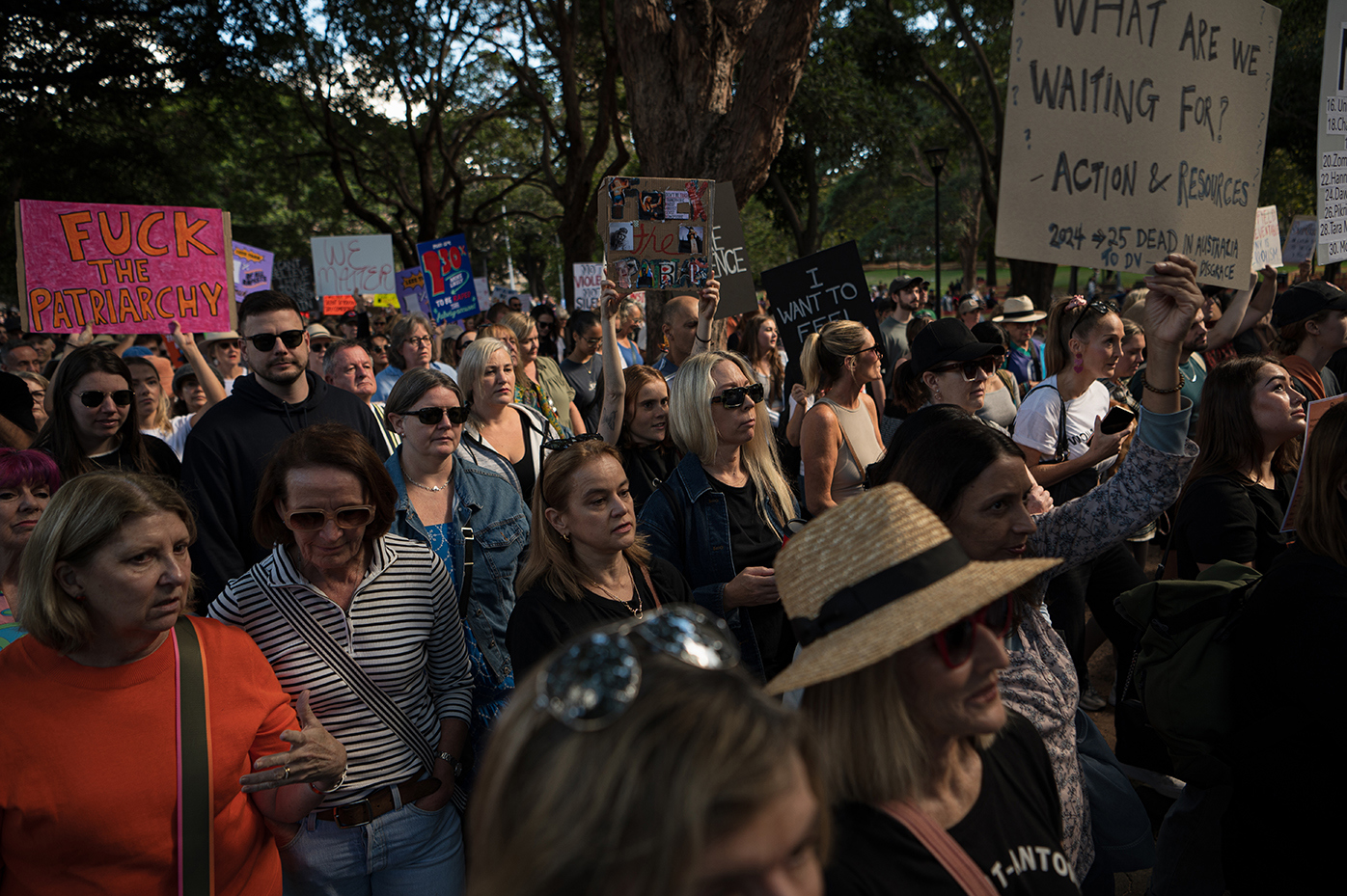
Albanese said that violence against women was a "national crisis".

"It's an issue for all of us to work together in the national interest to deal with what is a scourge of violence against women that is having a real impact out there, with one every four days a woman losing their life at the hand of a domestic or former domestic partner," he said.

Longer-term priorities include strengthening accountability and consequences for perpetrators, including early intervention with high-risk perpetrators and serial offenders, and better support for victim-survivors.

Prevention work through "targeted, evidence-based approaches" will also be a focus, according to a statement.

The government will also maintain a focus on missing and murdered First Nations women and children, and the impact of domestic and family violence in First Nations communities.

READ MORE: Qantas investigating after app users report mass privacy breach

State and territory governments will examine how to achieve greater uniformity and effectiveness across the justice system for violent offenders, with a further national cabinet meeting set for the next quarter.

"What I heard from the premiers and chief ministers, is the commitment to best practice, to examine what works, and they will work in a coordinated way to look at how they can deal with issues like our laws," Albanese said.

"That will require, obviously, some individual legislation across the jurisdictions, so that will, if you like, take place by states and territories with the Commonwealth essentially playing a role in bringing people together, bringing together jurisdictions."

Asked whether a national offenders register had been considered, Albanese said shared data had been discussed, and that everybody was keen on "progressing" the idea.

"We are conscious of the fact that our society is more mobile than it has ever been, people live in different states, they travel around," he said.

National Domestic Violence Service: 1800 RESPECT (1800 737 732).

If you are in immediate danger call triple zero (000).

AFL club accused of ‘oppressive’ tactics to elect preferred board members

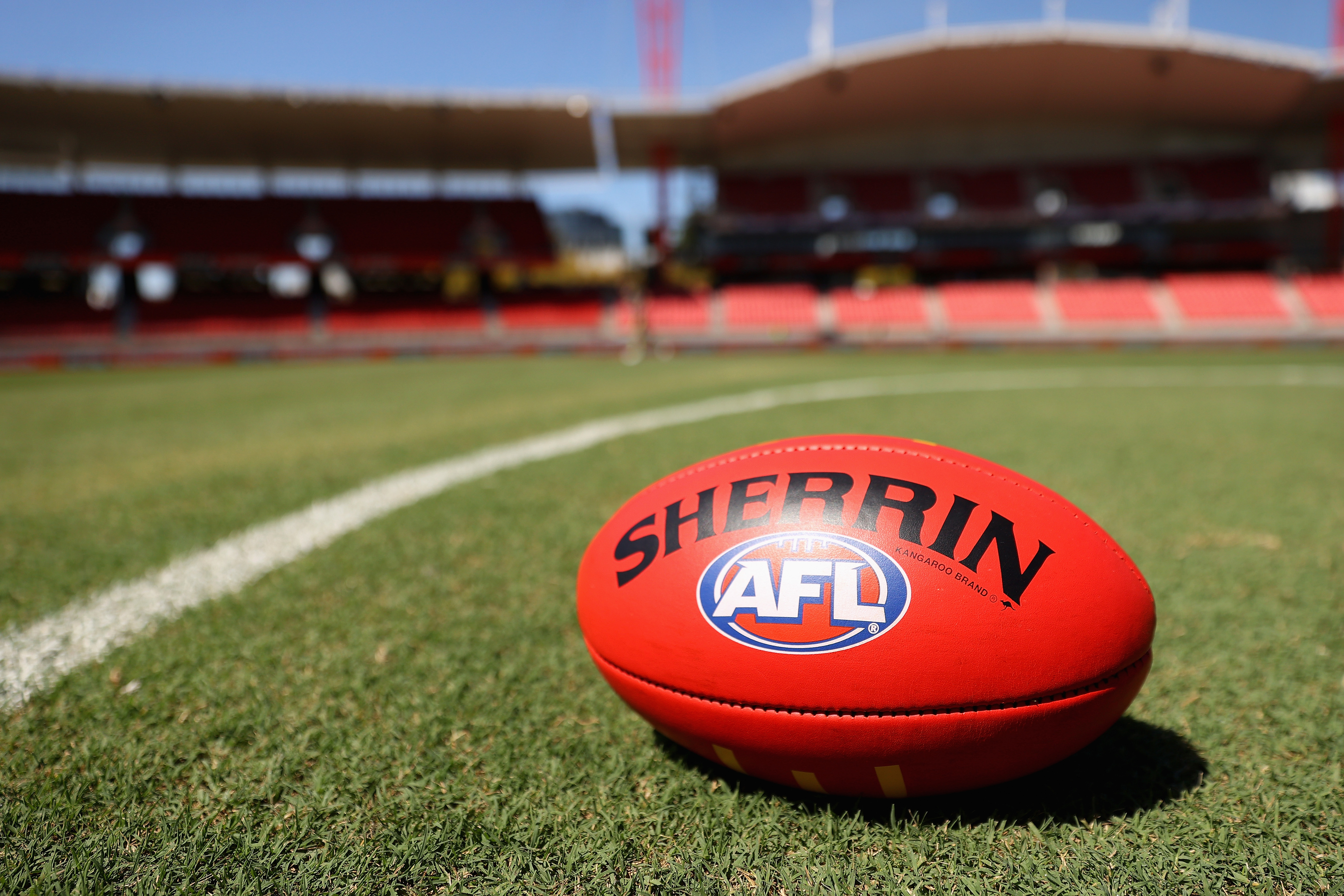
Melbourne Football Club has been accused of using oppressive tactics to elect preferred candidates to its board and "squeeze" independent candidates from canvassing votes.

The AFL club faced the first day of a Federal Court trial in Melbourne today, after legal action was brought by businessman Peter Lawrence.

The former board candidate has accused the Demons of engaging in oppressive conduct towards candidates who are not already aligned with its board.

READ MORE: Ten slammed over 'misleading' conduct in Lehrmann defamation suit

The AFL will trial their new ball chip technology this weekend.

Lawrence, who unsuccessfully ran as one of eight candidates during a board election in December, wants the club's electoral rules to be changed.

This includes an overhaul of a current ban, which prevents candidates from making disparaging comments publicly against the club and the board.

"The prohibition on electioneering is oppressive," Lawrence's barrister James Peters KC told the court.

"There's a pattern of squeezing candidates, who are non-board preferred, from canvassing votes and pushing issues they regard as important."

He said board candidates were also not given access to a register of members, until Lawrence took the issue to the Supreme Court where a judge ruled in his favour.

"Not only are they restricting what you could say but they were restricting the approach to members during the election," the barrister said.

Peters said, prior to 2020, there were no board elections held at the club.

Once elected, board members serve for a three-year term.

READ MORE: NSW Premier Chris Minns' dad dies in hospital 'surrounded by love and family'

The Demons' barrister Michael Borsky KC said the current board has helped the club go from "strength to strength" in the four years since Lawrence had tried to get elected.

"The club is well run, and successful on and off the field," he told the court.

He said the club's directors had changed some of its election rules in recent years.

"The directors were seeking in good faith to balance various legitimate interests and competing interests of the club and its members," Borsky said.

"Those interests included creating a level playing field, so not favouring wealthy candidates who might be able to afford what would otherwise be expensive campaigns.

"And avoiding an inflammatory public campaign which could damage the standing of the club."

He said Melbourne's membership had been consulted on changes to the rules and "no one supported unlimited electioneering".

"The vast majority of members consulted do not want a contested election in the media," Borsky said.

The trial before Justice David O'Callaghan continues.

Teen terror plot accused says he’s ‘mate’ of bishop’s stabber

An alleged terrorism conspirator who claimed to be mates with another teenager accused of stabbing a bishop during a live-streamed sermon will spend at least one more night in custody before learning whether he is granted bail.

The 15-year-old, who cannot be named, was already in custody when he was charged on Friday with conspiring to engage in an act in preparation for, or planning, a terrorist act.

He had earlier been arrested after allegedly throwing a wooden plank towards a worker at a bottle shop, Parramatta Children's Court was told on Wednesday.

READ MORE: PM announces $925 million to help people leave violent relationships

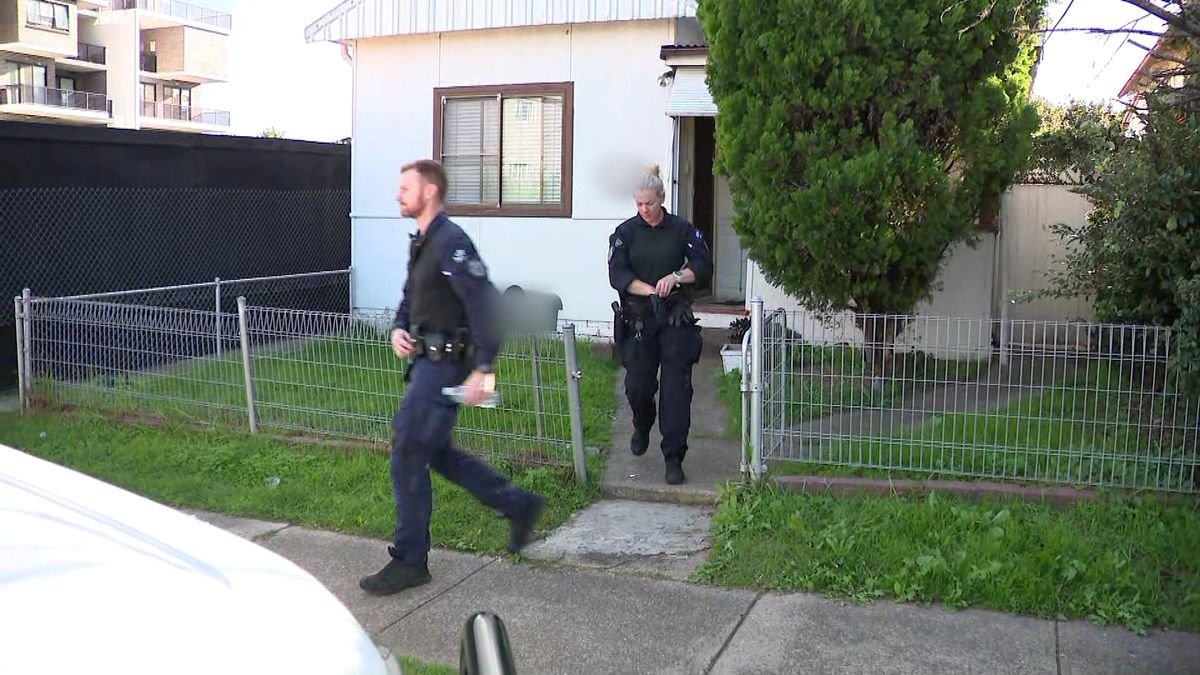
The NSW Joint Counter-Terrorism Team said earlier that it was conducting raids throughout Sydney today as part of the ongoing investigation into the Wakeley alleged terror attack.

The boy's lawyer Ahmed Dib tendered a bundle of documents including an affidavit from the boy's mother, school report cards, and a psychological report.

The material showed the boy had a history of behavioural issues, lacked confidence and had low self-esteem, Dib said as he argued exceptional circumstances should secure the teen's release.

But prosecutor Rebekah Rodger said that was to be expected.

"A young person with behavioural issues facing a terrorism accusation is not exceptional, it is rather the norm," she said.

The boy had been involved in an encrypted chat group titled "Plans" where he talked about targeting Jewish people, Rodger said.

READ MORE: Top End teen feeling 'pretty good' after catching million-dollar barra

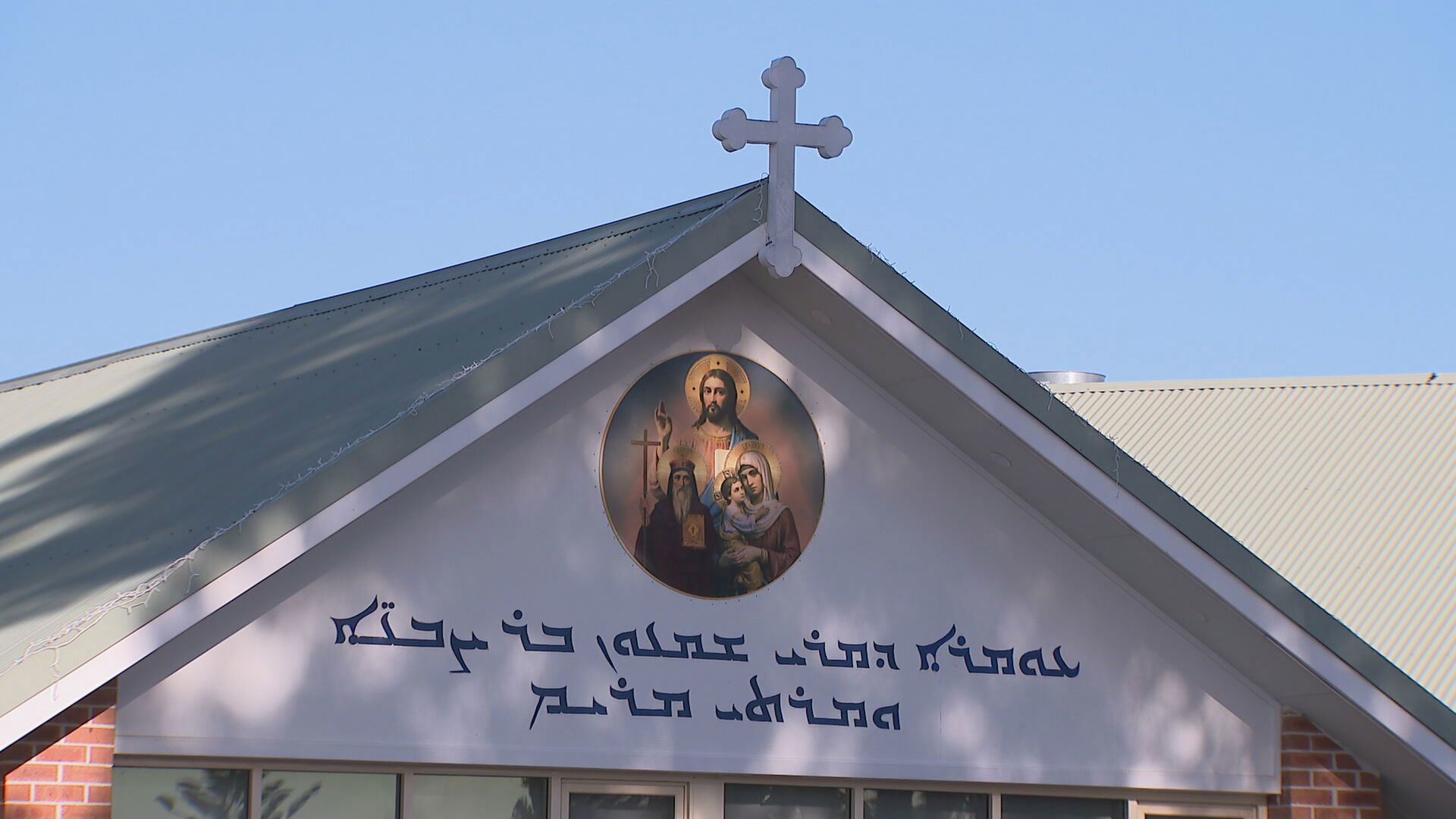
Members of Christ the Good Shepherd Church in Sydney's south-west have returned to worship for the first time since Monday's terrorist attack.

The boys were not just talking and knew people who had acted on threats, she said.

"I know the bloke who done it, he's my mate," the boy wrote in relation to the April 15 stabbing attack on Bishop Mar Mari Emmanuel at Wakeley in western Sydney, Rodger told the court.

Dib told the court the boy put on a macho performance in messages about performing an attack and was not the monster prosecutors sought to paint him as.

The boy had been in possession of a kitchen knife when he threw a wooden plank at a bottle shop employee, but did not pull out the knife, before the group left, he said.

"He could have acted as a monster, he did not," Dib said.

"He does not pull that knife out at any point, on footage captured by CCTV.

"Instead he throws a plank that is alleged to have narrowly missed this person and then left the scene," Dib said.

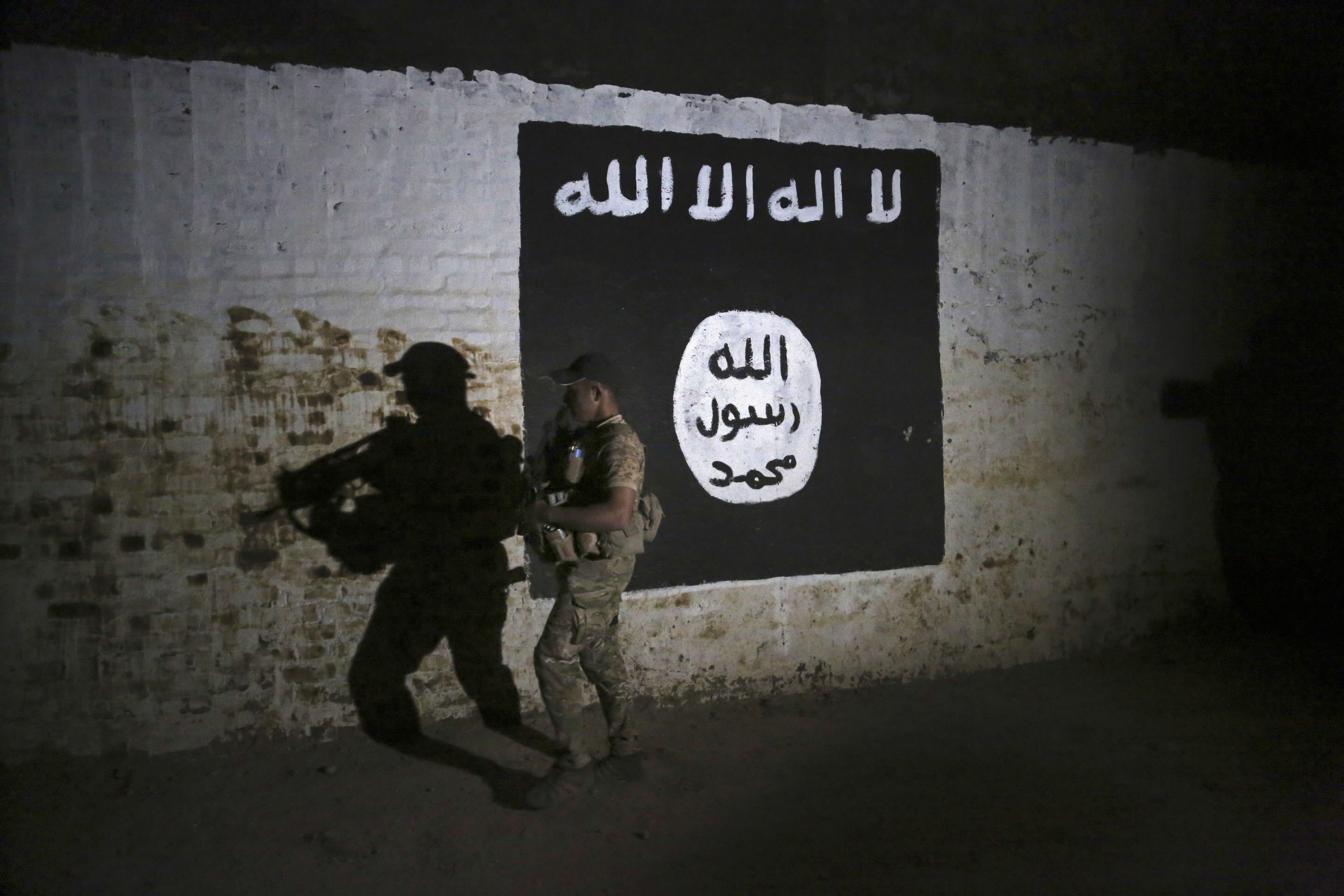
Two hand-drawn ISIS flags were found in the boy's bedroom when police raided the family's home in April.

A knife and a tomahawk were found in the garage, which Dib said were for chopping branches.

READ MORE: Pauline Hanson grilled in bitter hate speech trial

"There's no direct point, it's one of those curved knives for that purpose," he said.

Magistrate James Viney was unimpressed by an unclear statement of alleged facts, signed only by the Joint Counter-Terrorism Team as a collective.

The lack of an author who could clarify things to the court was not satisfactory, particularly when dealing with a 15-year-old in custody, he said.

"If a set of facts is going to be presented in such a serious matter, there should be someone as the author," he said.

An affidavit explaining how electronic monitoring for the boy would work if he is released came late on Wednesday.

Rodger sought an adjournment to respond to the new evidence.

A senior AFP officer may also give evidence to resolve an issue relating to the location of the boy's passport when the matter returns to court on Thursday morning.

The 15-year-old leaned on his fist for much of the hearing as he watched on from custody via videolink, as his parents sat in court.