OPINION: Food rescues like KiwiHarvest offer a lifeline to communities.
Tag Archives: oceania
Public sector cuts: More than 1300 jobs to go – the full list of where axe is falling
A number of job reductions have been due to stop-work notices.
Browns Bay stabbing: Offender was victim’s estranged husband, sushi shop owner out of intensive care, in ‘good spirits’
Her estranged husband was the offender. A friend says the victim is in good spirits.
Kaimanawa horse muster 2024 in need of more rehoming applications
The wild herd is managed at 300 horses, but applications for rehoming have been low.
Medical disciplinary tribunal suspends nurse who had sexual relationship with patient
They met when she was assigned to care for him in a mental health clinic.
More than 1.8 billion Muslims commemorate Eid
Eid is a celebration commemorating the end of the holy month, also referred to as Ramadan, which is a time of fasting, prayer and reflection for Muslims worldwide.
City of nine million people forced to ration drinking water
Colombia's capital, Bogotá, will begin rationing water this week as several of its reservoirs face unprecedented lows amid a drought made worse by the El Niño climate pattern.
Speaking to the media on Monday, Bogotá Mayor Carlos Fernando Galán said reservoirs had reached "historically low" levels and been worsened by El Niño, which causes high temperatures and impedes precipitation.
Starting Thursday morning, restrictions or rationing measures will be put in place for Bogotá residents and dozens of towns and municipalities surrounding the capital, according to a handout on the city's official website.
READ MORE: Shoppers pushed to the brink are taking it out on workers


The measures will affect around nine million people.
The country and region have experienced long periods without rain since June 2023 due to El Niño, the city wrote on its official website.
Colombian President Gustavo Petro issued a natural disaster decree in January, allowing the government to access more resources to combat El Niño's devastating effects, including wildfires and water stress.
The plan will see nine different zones take turns rationing water services. Each zone's water restrictions will begin at 8 a.m. local time and last 24 hours before shifting to the next zone in line.
Hospitals and schools will have contingency plans, Galán said on X, ensuring they won't lack water.
READ MORE: Family win fight to get four-year-old to Singapore for cancer treatment


"The critical levels of the reservoirs from which we draw drinking water for Bogotá lead us to take measures aimed at saving water and reducing consumption from 17 cubic meters per second to 15," Galán's post read.
"This must be the beginning of a behavioural change that is sustainable over time and guarantees that water is enough for everyone," he continued.
Colombia joins Mexico, whose own capital, Mexico City, has also been experiencing a severe water crisis due to years of abnormally low rainfall, longer dry periods and high temperatures.
Millennials becoming Australia’s ‘most active’ property investors
Younger Australians are becoming the country's most active property investors, with many happy to take the financial plunge alone, new research has found.
Figures by the Commonwealth Bank showed millennials, people born between 1981 and 1996, accounted for 46 per cent of its new property investors last year.
They were followed by followed by Gen X, those born from 1965 to 1980, who made up 37 per cent of all new investment property purchases throughout the calendar year.
READ MORE: Want to buy a home? You'll need $63k more than this time last year
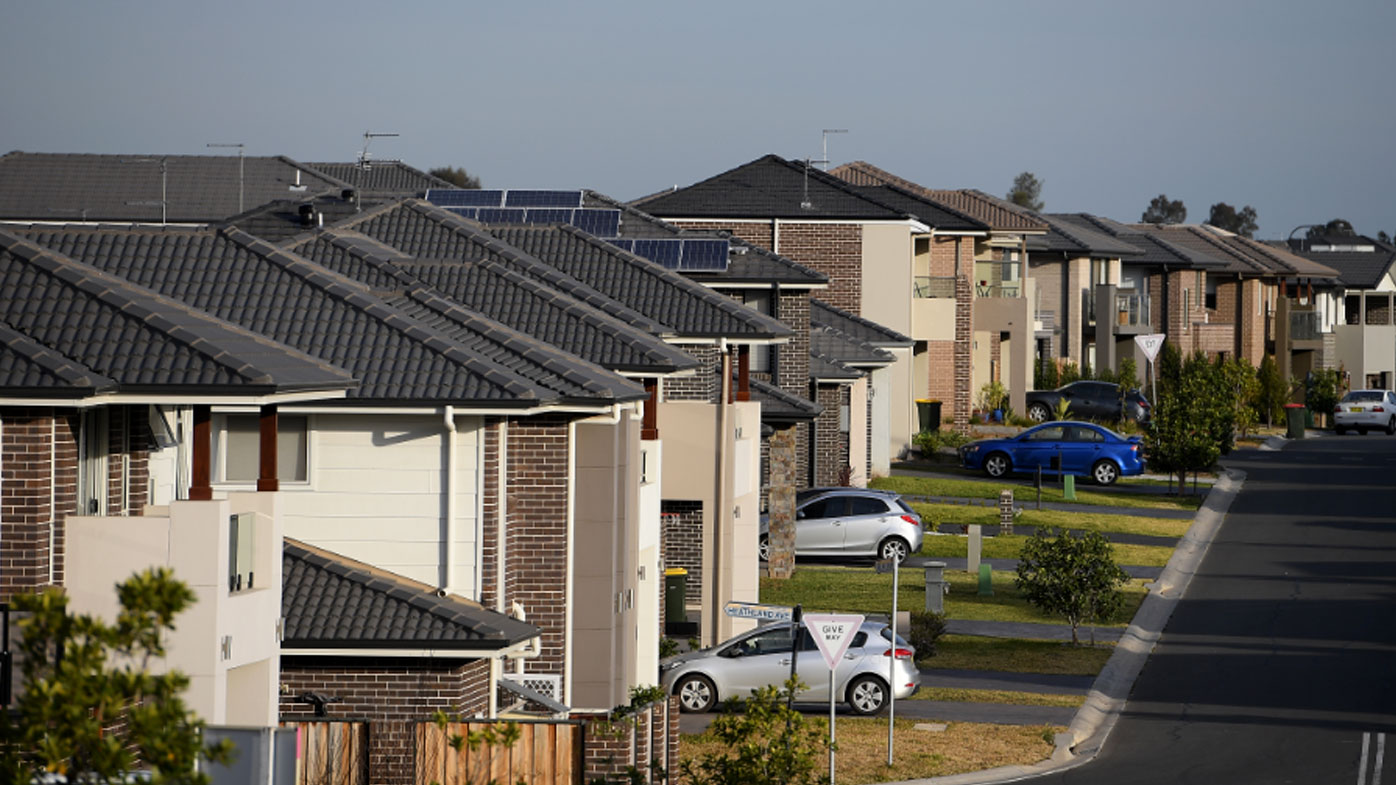
The average age of property investors in Australia was 43 years, and the average loan size was just above $500,000.
The research suggests younger Aussies are dropping avocado on toast in favour of home ownership despite record property prices and severe cost-of-living pressures.
And many of them are choosing to purchase property on their own, Commonwealth Bank's executive general manager home buying, Michael Baumann, said.
"From our data, we can see that almost one-third of all millennial property investors actually purchased their investment property on their own," he said.
During the past year, Australian Bureau of Statistics data found lending to property investors grew by 18.5 per cent.
Lending to first home buyers increased 13.2 per cent, while owner-occupiers recorded a 3.4 per cent rise.
Nationally, the top postcodes for new property investment purchases last year were 2000 (Sydney CBD, including Haymarket); 3029 (West Melbourne, including Hoppers Crossing); 2765 (North West Sydney, including Marsden Park), 3064 (North Melbourne, including Craigieburn), and 2155 (North West Sydney, including Kellyville).
The Aussie suburb where house prices exploded by $250k in 12 months
In the past year, house prices in Australia have risen 8.8 per cent.
Netanyahu vows to carry out Rafah invasion
Israeli Prime Minister Benjamin Netanyahu has escalated his pledge to invade the southern Gaza city of Rafah, saying a date has been set for the ground offensive into the city filled with around 1.4 million Palestinians, most of whom are displaced from other parts of the Gaza Strip.
The United States, Israel's closest ally, has said a ground operation into Rafah would be a mistake and has demanded to see a credible plan to protect civilians.
Israel's offensive has pushed Gaza into a humanitarian crisis, displacing over 80 per cent of the population and leaving more than one million people on the brink of starvation.
READ MORE: Trump says Jewish Americans who vote for Biden don't love Israel and 'should be spoken to'


International efforts to broker a ceasefire between Israel and the militant group Hamas are taking place in Cairo this week.
Egyptian officials said on Tuesday that mediators have presented a new ceasefire proposal to Hamas and Israel that would include a six-week pause in fighting and a swap of 40 Hamas-held hostages for at least 700 Palestinians imprisoned by Israel.
Israel says more than 130 hostages remain in Gaza, with about a quarter of those believed dead.

The Palestinian death toll from the war has passed 33,200, with nearly 76,000 wounded, Gaza's Health Ministry said.
The ministry doesn't differentiate between civilians and combatants in its tally, but says women and children make up two-thirds of the dead.
The war began October 7 when Hamas-led militants stormed into southern Israel, killing some 1200 people, mostly civilians, and taking around 250 people hostage.