Tag Archives: oceania

Two weeks ago she was thriving. Now, a middle-class mum in Gaza struggles to survive

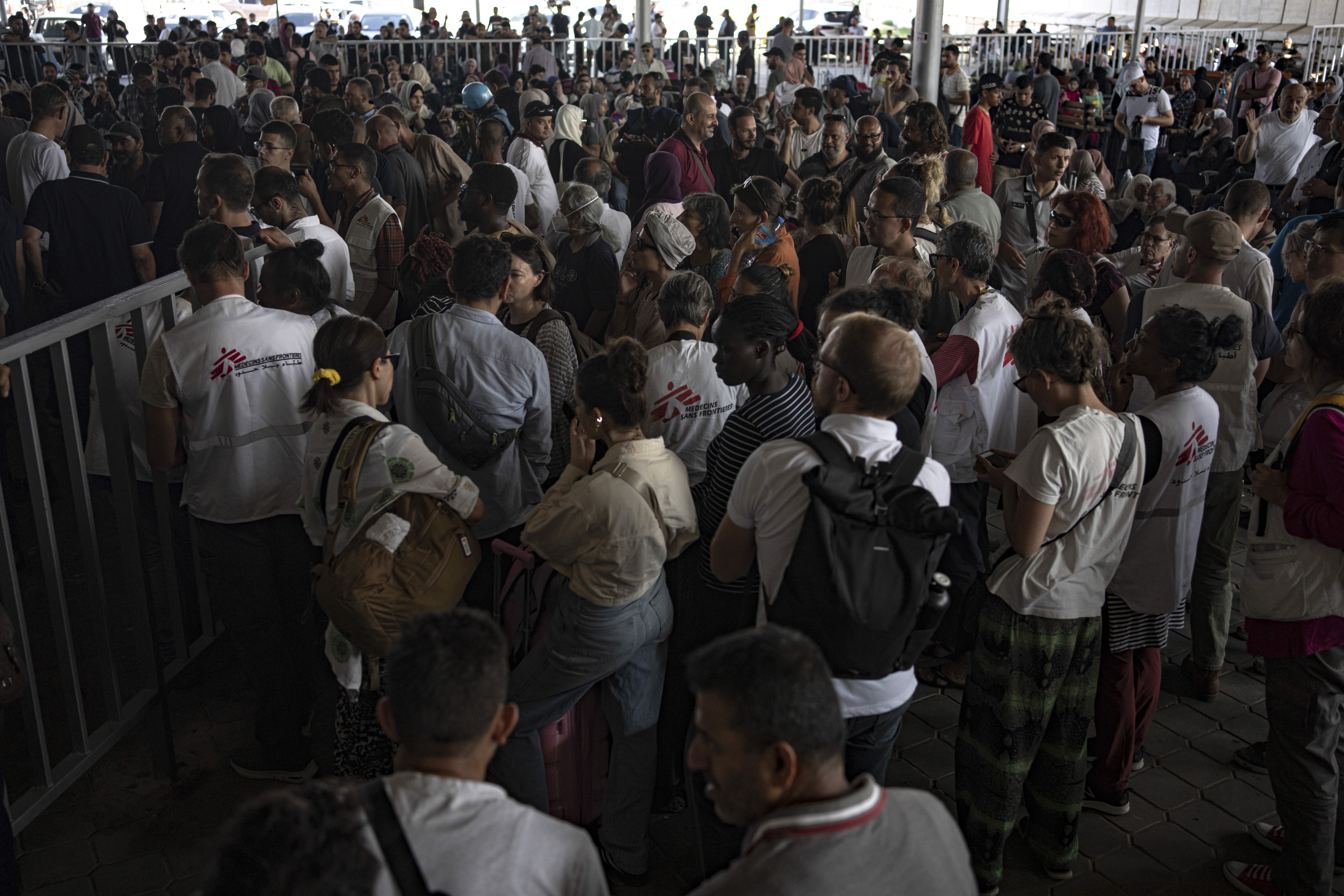
Yousra Abu Sharekh's days begin in the southern Gaza Strip often after sleepless nights amid blaring ambulance sirens and the clamour of neighbours in the brief pause between relentless Israeli airstrikes.

By daybreak, the 33-year-old mother is on the hunt for bread, lining up for hours at bakeries to buy one bag to feed her two children.

Without electricity, disconnected from her relatives and terrified by the sounds of warplanes overhead, she rushes in the afternoon to see her sick mother at a crowded UN shelter 20 minutes away.

LIVE UPDATES: Israeli war chief vows to dismantle Hamas in just months

Palestinians evacuate a building damaged in the Israeli bombardment of the Gaza Strip in Rafah.

There, she finally can charge her phone and check on her 66-year-old father who stubbornly stayed behind in their northern Gaza City home, refusing to heed Israeli evacuation orders.

Only two weeks ago, Abu Sharekh had a thriving life, working enthusiastically at a coveted new job and caring for her family.

"I feel either we were dreaming then or we are in a nightmare now," she said.

"Everyone was making plans, enjoying their lives the best they could. Suddenly we are wandering the streets without fuel to drive our cars, electricity, water or food. Homes are lost, people are being killed."

It's a view shared by many among Gaza's tiny but budding middle class for whom hard-won progress despite Israel's 16-year blockade and the slow erosion of Gaza's state institutions was reversed in a matter of days.

After Israel declared war following Hamas' violent rampage across the border fence, their dreams of good jobs, attending foreign universities and buying homes were dashed.

Now when thinking about the future, many draw blank, unable to imagine an existence beyond the daily fear of being killed in an airstrike.

They include graphic designers seeking shelter in tents outside overcrowded UN facilities, architects living among dozens of other relatives and UN workers grappling with the destruction of their houses.

Before the war, an aspirational middle class had emerged from the rubble of earlier conflicts in Gaza.

Despite the enduring blockade and severe limits on travel, they were able to invest in their children's education, local businesses, even private beach-side bungalows and fancy eateries.

Against the rising current of unemployment and precarious economic conditions, a small portion of society in Gaza managed to prosper.

READ MORE: Off-duty pilot faces 83 counts of attempted murder

People help evacuate a Palestinian woman following Israeli airstrikes that targeted her neighbourhood in Gaza City.

Abu Sharekh graduated this summer with an engineering degree from Portland State University, in Oregon, as a Fulbright scholar.

She returned home ecstatic to have landed a job with al-Ahli Hospital in Gaza City and to be reunited with her family.

Within the span of a week starting October 7, those hopes vanished as if crushed under the rubble of the flattened homes in her Gaza City neighbourhood.

Survival grew precarious.

Her workplace became the scene of a horrific explosion.

Sharing a home with 70 other displaced relatives in a home in Khan Younis, Abu Sharekh said the day starts with anxiety about how to get bread to feed the many children there.

Abu Sharekh's two sons, ages five and 10, survive on canned beans.

Water is rationed, just 300 millilitres per person every day.

At night, their quarters are plunged into darkness.

Still, Abu Sharekh says it's better than the overcrowded and dirty UN shelter at the Khan Younis Training Center, where her mother stays.

The shelter, housing nearly 11 times its designated capacity with nearly 20,000 people, is the most overcrowded among the 91 UNRWA installations where nearly half a million Gaza residents have sought refuge.

Tents have cropped up outside, triggering painful memories of the mass displacement of the 1948 war with Israel, which Palestinians call the Nakba, or catastrophe.

"It's undignified," Abu Sharekh says.

Men and women stand in line to use the same toilet facility.

The wait is so long that fights break out. Garbage is piled outside.

There is no steady supply of food or water.

READ MORE: Police lock down streets in Brisbane's north

People help evacuate a Palestinian woman following Israeli airstrikes that targeted her neighbourhood in Gaza City, Monday, Oct. 23, 2023. (AP Photo/Abed Khaled)

Her mother, a cancer survivor, suffers from gastrointestinal issues and needs a toilet for two to three hours a day. That has been impossible in the shelter.

"It was heartbreaking, I was inside the shelter's administration building, she was outside, and I was begging the man at the door just to let her in to use the toilet," she said.

"I couldn't do anything for her to get in, I was so helpless, can you imagine?"

But her 63-year-old mother didn't feel safe anywhere else, despite warnings from relatives that even U.N. shelters were not impervious to Israeli bombardment.

The UN reported nearly 180 internally displaced Palestinians at their facilities have been injured and 12 killed since the start of the war.

Abu Sharekh's father, traumatised by tales of his parents' displacement from their village in what is now the Israeli city of Ashkelon in 1948, was adamant history would not repeat itself, she said.

"That was the main point for him," she said.

He described an increasingly desperate situation in their Gaza City neighbourhood: people breaking into homes looking for food and wandering the streets in search of supplies.

She fears he won't pick up when she calls.

Or that scrolling through social media, she will find her home among the several destroyed nearly every day.

A strike damaged the home she shares with her husband and levelled the building her brother lived in.

"All my furniture, all my memories, windows, doors, everything is broken," she said.

She didn't want to leave, either.

But her husband persuaded her, telling her at least the children should be spared the horror of airstrikes, and that they should stay together.

"But as we discovered, there are airstrikes everywhere."

Sydney schoolgirl facing deportation due to unthinkable tragedy

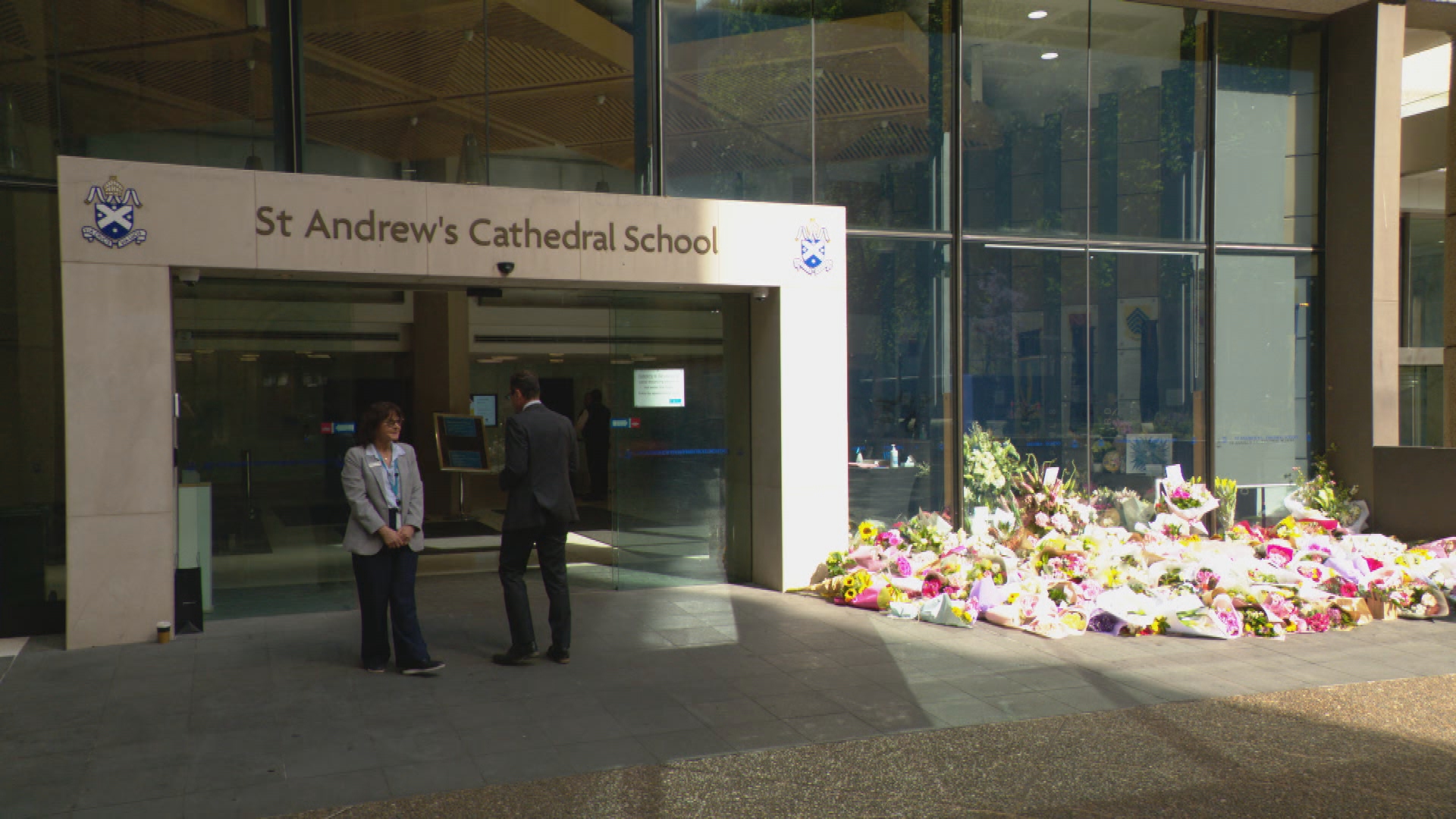
EXCLUSIVE: One year ago, Sydney schoolgirl Tran Kha Han lost her mother in unthinkable circumstances.

Now, the 10-year-old's family is fighting for her not to lose her home as well, after being told by the Department of Home Affairs her application for permanent residency can no longer proceed because of her mother's death.

Tragedy struck the family on October 23 last year, when Han's mother, Pham Huyen Trang, was on an outing with friends to regional NSW.

The car she was travelling in was swept off the road in floodwaters north of Mudgee.

READ MORE: Bushfires threaten homes in two Queensland towns

Pham Huyen Trang died last October when a car she was travelling in was swept off a flooded causeway.

Trang's husband and Han's stepfather, Linh Hoang, was at the family's home in Sydney's Bonnyrigg when he got the call from police late at night.

"They just said there has been an accident and she is missing," Hoang said.

While the three other passengers in the car managed to escape and survive, Trang did not.

The 36-year-old's body was found by emergency services on the banks of the flooded Cooyal Creek the next morning.

The fatal accident came less than two years after Trang and Han moved to Sydney from their native Vietnam to start a new life as a family with Hoang, who is Australian.

Hoang, 41, told 9news.com.au he met and fell in love with his "beautiful wife" in 2016 when he went on a holiday to Vietnam with friends.

"We just connected and then I flew back a few more times to see her," he said.

Han's family are pleading with Australian authorities to allow her to stay in Australia.

The couple got married in 2018 and then applied for an offshore partner visa so that Trang and her daughter could move to Australia.

A provisional partner visa was granted, allowing Trang and Han to come to Australia in 2020.

Trang was just a few months away from being eligible to apply for a permanent partner visa, which would have also granted permanent residency to her daughter, when she died.

Hoang said the family was still struggling to make sense of their loss 12 months on, which came just as Trang and Han had settled into their new lives.

"(Trang) was always happy and cheerful. She was hard working and just really loved her daughter," he said.

"She came here for a better life and this is what happened."

READ MORE: Names written on children's bodies speak to the fears of Gazan parents

Trang was just a few months away from being eligible to apply for a permanent partner visa when she died.

Han, who had an extremely close relationship with her mother, was suffering greatly, Hoang added.

"Han cries a lot and misses her mum so much," he said.

"She was a lively, outgoing girl but now she avoids social situations."

Adding to the family's distress is the uncertainty about whether Han will be able to stay in Australia.

As Han was named as a dependent on her mother's visa application, her application had been "suspended" by the Department of Home Affairs, Hoang said.

"They haven't given any more details about what is going to happen. She could be told tomorrow that she has to go back to Vietnam, or in six months time, no-one knows."

Hoang said Han had no-one to care for her properly if she was sent back to Vietnam.

"Han's biological father was not involved in raising Han at all and her grandparents are old and not able to look after her," he said.

"I've spoken to her grandparents and they want her to stay here. They think Australia will offer a better education for her and a better life." 

"Han also wants to stay here. She has all her school friends here, she has her life here."

Hoang said his late wife's sister, Han's aunt, was also living in Sydney, and had been able to provide much-needed emotional support for Han. 

Trang and her daughter moved to Australia in 2020 after she married her Australian husband, Linh Hoang.

Migration Agent Nguyen Minh Thanh, who is handling the family's visa matters, said he had lodged an application for ministerial intervention into Han's case in June, but was yet to receive a response, leaving the family to live in a painful limbo.

"I have spoken to the girl a few times and she was crying every time," Thanh said.

"She's always afraid that people will ask her to leave the country because her mum is not here to protect her. 

"Her mental health is getting worse. She wants to stay here with her stepfather and continue her mum's dream – be a good citizen of this beautiful Australia."

A government spokesperson said: "The minister's office is aware of the case, however is unable to comment further due to privacy."

9news.com.au understands the outcome of the application for Immigration Minister Andrew Giles to intervene in Han's case could hinge on the family being able to formalise custody arrangements for Han.

Thanh said custody was not in dispute in Han's case.

Han's biological father did not have the means to support his daughter and had not expressed any interest in applying for custody, he said.

Her biological father was also aware of the family's efforts for her to stay permanently in Australia and was not opposed to them, Minh said.

The family has started an online petition calling on Australian authorities to let Han stay in Australia, which has so far attracted more than 10,000 signatures.

Contact reporter Emily McPherson at em********@******om.au

'Firenado' rips through six kilometres of bush in 15 minutes

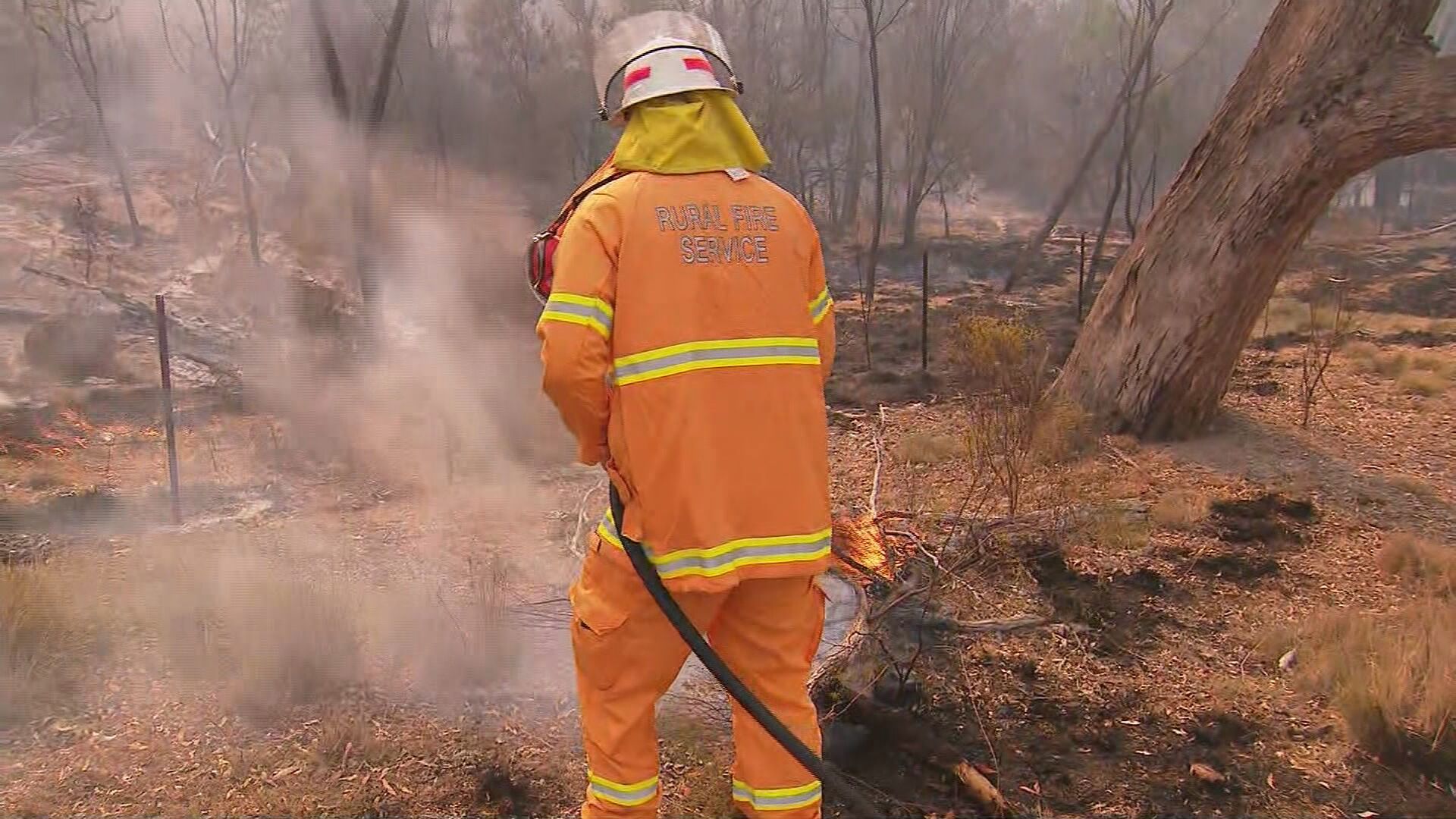
Terrifying footage has captured a fire tornado leaving a trail of destruction across the St Georges Ranges in Western Australia.

The video was captured last week by firefighters with the Western Australian Department of Fire and Emergency services in the remote region.

The "firenado" tore across 6.2 kilometres of scrubland in just 15 minutes.

READ MORE: Police investigate massive suspicious bushfire

"Firenado" filmed tearing through the Western Australian bush.

The phenomenon was said to be a "willy willy", a tornado-like formation also commonly known as a dust devil.

They predominantly occur inland, and like tornados, they have a twisting movement of air which commonly carries dust and other particles in its wake.

In this case, the twister was engulfed in flames as it rapidly burned through the scrubland in the state's north.

The WA DFES said the fire was being treated as suspicious.

READ MORE: Accused smuggler 'thought he was picking up a UN award'

"Firenado" filmed tearing through the Western Australian bush.

There are multiple fires burning across the top of the state.

A bushfire advice warning is in place for people travelling along Great Northern Highway from Anna Plains Road, extending 40 kilometres south to Eighty Mile Beach.

The warning is in place in parts of Eighty Mile Beach in the vicinity of Broome.

Rapid melting in West Antarctica is 'unavoidable,' study finds

Rapid melting of West Antarctica's ice shelves may now be unavoidable as human-caused global warming accelerates, with potentially devastating implications for sea level rise around the world, new research has found.

Even if the world meets ambitious targets to limit global heating, West Antarctica will experience substantial ocean warming and ice shelf melting, according to the new study published on Monday in the journal Nature Climate Change.

Ice shelves are tongues of ice that jut out into the ocean at the end of glaciers. They act as buttresses, helping hold ice back on the land, slowing its flow into the sea and providing an important defence against sea level rise. As ice shelves melt, they thin and lose their buttressing ability.

READ MORE: 'Sea level change is going be a big awakening for Australia': Antarctic scientist

Antarctica

Although there has been growing evidence that ice loss in West Antarctica may be irreversible, there has been uncertainty about how much can be prevented through climate policies.

The researchers looked at "basal melting", when warm ocean currents melt the ice from beneath. They analysed the rate of ocean warming and ice shelf melting under different climate change scenarios. These ranged from the ambitious, where the world manages to limit global warming to 1.5 degrees Celsius above pre-industrial levels, to the worst-case, where humans burn large amounts of planet-heating fossil fuels.

They found if the world limits its temperature rise to 1.5 degrees, which it is not on track to do, climate change could still cause the ocean to warm at three times the historical rate.

Even significantly cutting planet-heating pollution now will have "limited power" to prevent warmer oceans from triggering the collapse of the West Antarctic ice sheet, the report found.

"It appears that we may have lost control of the West Antarctic ice melting over the 21st century," said Kaitlin Naughten, an ocean modeller with the British Antarctic Survey and lead author of the study.

West Antarctica is already the continent's largest contributor to global sea level rise and has enough ice to raise sea levels by an average of 5.3 metres.

It is home to the Thwaites Glacier, also known as the "Doomsday glacier", because its collapse could raise sea levels by several metres, forcing coastal communities and low-lying island nations to either build around sea level rise or abandon these places, Naughten said.

READ MORE: Off-duty pilot faces 83 counts of attempted murder

Antarctic sunset

Although the study focused on ice shelf melting and did not directly quantify the impacts on sea level rise, "we have every reason to expect that sea level rise would increase as a result, as West Antarctica speeds up this loss of ice into the ocean," Naughten said.

Ted Scambos, a glaciologist at the University of Colorado Boulder who was not involved with the study, said the findings were "sobering". They build on existing research that painted an alarming picture of what was happening to the planet's southernmost continent, he told CNN.

"The thing that's depressing is the committed nature of sea level rise, particularly for the next century," Scambos told CNN. "People who are alive today are going to see a significant increase in the rate of sea level rise in all the coastal cities around the world."

The only way to really stop the rapid ice melting, Scambos said, would be not just to cut levels of planet-heating pollution but also to "remove some that has already built up". This would be "a real challenge," he said.

READ MORE: Satellite vision shows huge iceberg crashing into small island

Antarctic Iceberg

Some scientists sounded a note of caution about the study. Tiago Segabinazzi Dotto, senior research scientist at the National Oceanography Centre in the UK, said it should be "treated carefully" as it was based on a single model.

However, its conclusions do agree with previous research in the region, he told the Science Media Centre, giving "confidence that this study needs to be taken in consideration for policymakers".

Naughten and her colleagues acknowledged their study had limits; predicting future rates of melting in West Antarctica was very complex and it was impossible to account for every possible future outcome. But, looking at the range of scenarios, the report authors said they were confident the melting of ice shelves was now unavoidable.

"The question of doom and gloom is something I've spent a lot of time thinking about with this study, because how do you tell such a bad news story?" Naughten said.

"Conventional wisdom is supposed to give people hope, and I don't see a lot of hope in this story," she added, "but it's what the science tells me and it's what I have to communicate to the world."

West Antarctic ice shelf melting is one impact of climate change "we are probably just going to have to adapt to and that very likely means some amount of sea level rise we cannot avoid," Naughten said.

But although the outlook was dire, humanity could not give up on slashing fossil fuel emissions, Naughten said. Devastating impacts could still be avoided in other parts of Antarctica and the rest of the world, she noted.

Faster than a speeding bullet: What it was like to fly Concorde

When Concorde moved, people watched.

Casual onlooker, avid plane spotter or experienced 747 pilot? It didn't matter. Concorde's long, slender body coupled with its fabled supersonic speed thrust it into the imagination of anyone watching.

An everyday moment on the tarmac at London Heathrow in the late 90s has long stuck with now-retired Concorde pilot John Tye, and perfectly encapsulated, he said, the magnetic appeal of Concorde, the wondrous aircraft that was decommissioned 20 years ago today.

READ MORE: The $50 billion airline set to shake up global travel

A Concorde aircraft takes off.Concorde pilot John Tye waves out the window.

With close to 100 passengers onboard, Tye was sat inside in the cockpit of BA001, the scheduled British Airways Concorde service to New York, leaving each morning at 10:30.

"Taxiing out was always an incredible experience," Tye said.

"You knew the eyes of the world were on you."

Tye's Concorde joined an orderly queue of planes ambling down runway 28, and pulled in behind an American Airlines 747 jet.

"They were clear to run up and take off, and then this American voice (comes on the radio, speaking to the control tower) and says something like, 'Gee, do you mind if we hold for a bit. Can we wait and watch the Concorde go first?'"

At that time, British Airways and Air France had been flying Concorde for almost 20 years. Concorde wasn't new. Its magic never got old.

"It really brought it home to me how special Concorde was," Tye said.

Special was right.

Concorde's four Rolls Royce Olympus turbojet engines powered it to speeds of Mach 2 – twice the speed of sound – or a thundering 2450 kilometres an hour. It had a signature supersonic boom.

That kind of propulsion - flying faster than a bullet – saw Concorde set a record for the fastest flight by a commercial airline between the two great cities; taking off from New York and landing in London in just two hours, 52 minutes and 59 seconds.

Flying Concorde was an all-round sensory experience.

From a rarefied cruising altitude of 18,300 metres, almost in space, passengers could see the curvature of Earth while sipping French champagne and dining on fine foods.

It was no wonder a line of stars flocked to ride Concorde, along with the high-flying business executives the plane was built to cater for.

Dame Joan Collins loved Concorde, and was a frequent flyer.

The "Dynasty" star always sat near the front. She made sure she was onboard Concorde's final flight, on October 24, 2003.

READ MORE: The Aussie aerospace exec carrying Jeff Bezos's Amazon drone dream

Concorde nose (Getty)The Concorde cabinConcorde pilot John Tye

Collins called Concorde's decommissioning a "travesty of civilisation".

Also a regular, Beatle Paul McCartney was "everybody's favourite passenger", Tye said.

Queen Elizabeth II had a soft spot for the iconic jet, and sometimes used it to make official trips.

Aussie pop star Kylie Minogue was no stranger to Concorde, Tye said, and Mick Jagger "used to come on, sit down the back quietly and read his book".

Travelling pre-9/11 meant passengers were allowed inside the tight confines of the Concorde cockpit for a look, and Tye would often walk the aisle and chat with celebrities and other travellers as the plane soared over the Atlantic.

"It was the best job in the world," Tye said. He has written a book, Life of a Concorde Pilot, which documents his life journey from an orphanage to flying the most prestigious plane on the planet.

A typical day at work for Tye meant leaving his house around 7.30 in the morning.

His young daughters would be rushing around getting ready for school. He'd get in the car and head for Heathrow, "driving past people walking down the street with their briefcases, rushing to the station to catch the 7.40 train into London".

"And I'd drive to Heathrow knowing that I was going to be flying Concorde across the Atlantic Ocean. It was such a different feeling."

At Heathrow, Tye would meet another pilot, a flight engineer and the six cabin crew. By 10.30am they'd all be pushing off the gate at Terminal 4, to "launch down the runway and fly across the Atlantic in not much more than three hours".

Having left Heathrow at 10.30 in the morning, the Concorde would whistle westward and touch down in New York at 9.30am local time.

So Tye and the crew had "all day in New York for lunch or a bit of shopping … it was absolutely marvellous."

They would stay overnight in New York and fly back in the morning.

"Literally I'd be home by 5.30 in the evening, the following day."

READ MORE: Virgin Australia workers could walk off job over pay dispute

John Tye in a Concorde cockpitConcorde (Getty)The Concorde cockpit.

Concorde was all about speed.

Tye said his first takeoff in a Concorde "was like nothing on earth".

"We practiced it over and over again in the simulator, but the simulator can't prepare you for the real noise, the vibration and the bouncing of the flight deck because you're actually sitting 37 feet (11 metres) in front of the nose wheel.

"Every slight bump in the runway is amplified. You get the smell of the kerosene coming through the air conditioning every now and again. It can't prepare you being thrust back into your seat. The acceleration is absolutely phenomenal.

"It went like a rocket."

Because of its shape, Concorde was small.

There was only room for 90-100 passengers, so ticket prices were steep.

British journalist Richard Quest flew Concorde five times.

"It had more like office chairs, bucket seats, and very small windows," he told CNN.

"It was noisy, extremely noisy, but I challenge anybody not to have a smile from ear to ear when they got on it."

Concorde's only accident came in July 2000 when an Air France plane crashed just after takeoff from Paris.

All 109 people onboard and four on the ground were killed.

Concorde returned to service in 2001, but the clock was ticking.

READ MORE: Off-duty pilot faces 83 counts of attempted murder

Concorde Britain's Supersonic Liner Of The "Seventies" -- Concorde, often described as the aircraft of tomorrow, is scheduled to make its maiden flight late in 1968. The first prototypes will fly from airports in Britain and France. This graceful and distinctive jetliner, the first supersonic aeroplane to be ordered by the world's airliners, is the joint achievement of British and French aircraft engineers. The four Bristol/Snecma 593 engines of the British Concorde when it was first roleld-out The Concorde was designed and built jointly by France and the United Kingdom, starting in 1965A Concorde comes in to land.

After almost 30 years in the air, in 2003 BA and Air France decided to decommission Concorde.

The supersonic jet had long been known to divide airline executives.

Both airlines blamed falling passenger numbers in the aftermath of the Paris crash and rising operating costs.

There was no doubt Concorde was an engineering triumph, but commercial success had proved more elusive.

Pink reveals she almost died of drug overdose as a teenager

Pink is opening up about her past in a new interview with US television program 60 Minutes, revealing she nearly died of a drug overdose in the '90s.

"I grew up in a house where every day my parents were screaming at each other, throwing things. They hated each other," Pink told Cecilia Vega.

Describing herself as "a punk" at the time, Pink said she eventually started using and selling drugs, got kicked out of her house and dropped out of high school.

LIVE UPDATES: Hamas calls on Muslim leaders to 'take a stand' in Gaza

Pink

"I was off the rails," she said.

On Thanksgiving day in 1995, "I was at a rave and I overdosed," she said, adding that she had taken "ecstasy, angel dust, crystal – all kinds of things" that night.

She told Vega the combination almost killed her.

That was the last time she used "hard drugs," according to the report.

Weeks later, Pink (whose name is Alecia Moore) scored her first record deal with an all-girls R&B group.

She eventually launched a solo career using the "teenage nickname" she's now known for.

"I keep demanding more and more and more from myself physically, emotionally, spiritually, vocally. I want to raise the bar all the time," Pink said.

"When they say a woman has to slow down, become smaller, take up less space, calm down – no. Absolutely not. Why can't we ride it till the wheels fall off?"

"That's what I plan on doing," she said.

Category five tropical cyclone sets southern hemisphere record

Tropical Cyclone Lola, which is carrying fierce wind gusts of up to 260km/h, has become the earliest Category 5 tropical cyclone on record in the southern hemisphere.

Cyclone Lola was upgraded to Category 5 this morning, as it moves ominously towards Vanuatu and other islands in the Pacific.

The tropical cyclone season officially starts next week, on November 1, and a Category 5 storm has never materialised this early.

READ MORE: Virgin Australia workers could walk off job over pay

Tropical Cyclone Lola is upgraded to Category 5

Vanuatu and its 320,000 residents are staring down the barrel of severe winds and heavy rain from Lola.

Lola is expected to hit about 10pm (local time) tonight.

At the moment, Lola's sustained wind speed is being measured at about 210km/h, with incredible gusts recorded up to 260km/h.

Lola is moving slowly, increasing the likelihood of intense damage as the cyclone lingers longer over Vanuatu.

READ MORE: The bloke from Melbourne carrying Jeff Bezos's big Amazon dream

Although there is some uncertainty about Lola's future track, models suggest it will hit Vanuatu late Tuesday into Wednesday.

As it tracks south, Lola could just miss Port Vila, the capital of Vanuatu, and it is expected to weaken by the time it heads towards New Caledonia.

Cyclone Lola will most likely remain at least 1200 km away from the Australian mainland, far enough to have no impact.