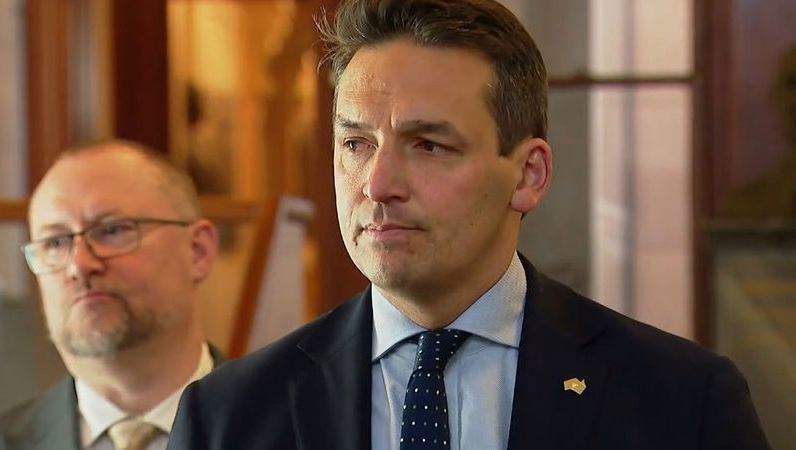
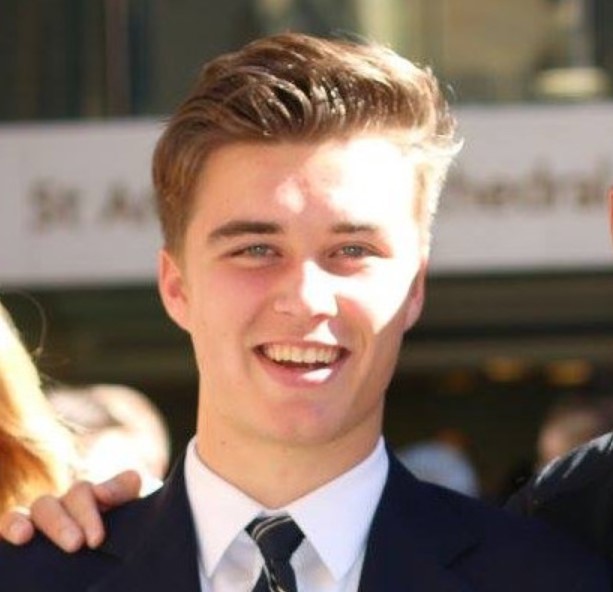
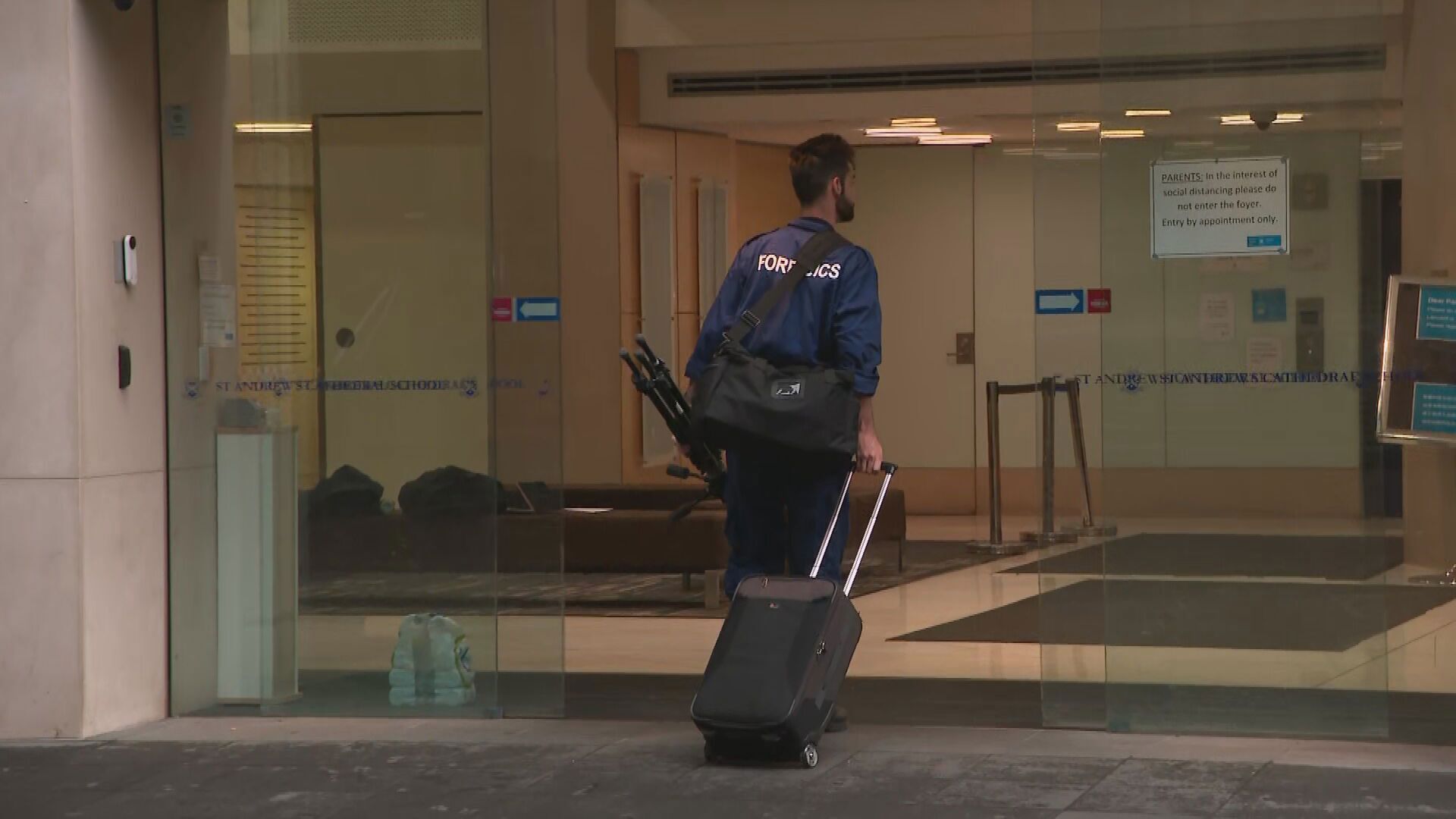
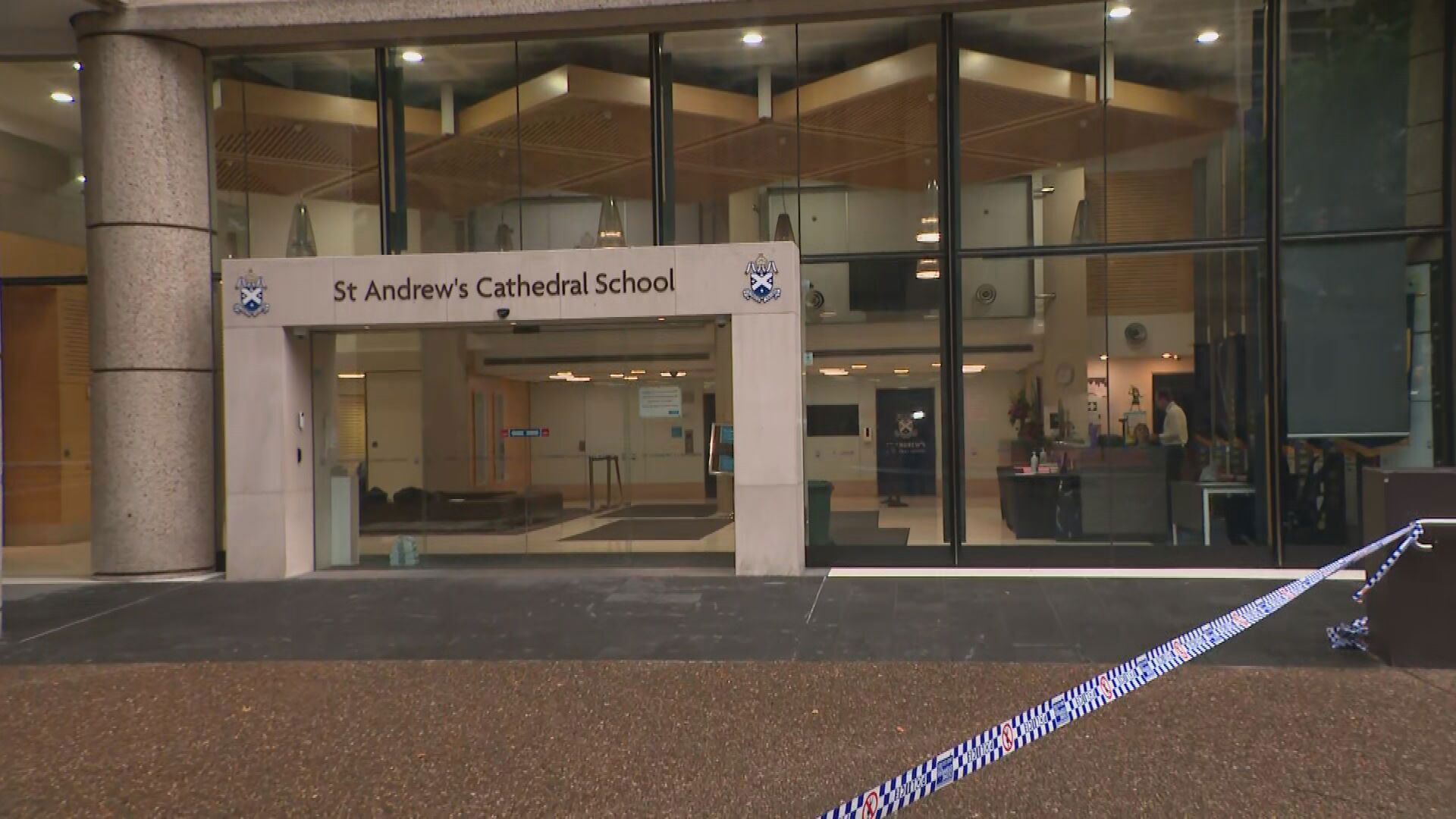
The woman lunged for the gun that was pointed at her head.
Tag Archives: oceania
'Three's Company' actress Suzanne Somers dies aged 76
Suzanne Somers, the actress who lit up the small screen on "Three's Company" and one of TV's most iconic fitness pitchwomen, has died, according to a statement provided to CNN from her longtime publicist R. Couri Hay. She was 76.
"Suzanne Somers passed away peacefully at home in the early morning hours of October 15th. She survived an aggressive form of breast cancer for over 23 years," Hay wrote in a statement shared on behalf of the actress' family.
The statement said Somers "was surrounded by her loving husband Alan, her son Bruce, and her immediate family."
READ MORE: Australian passengers relieved as repatriation flights leave Israel
"Her family was gathered to celebrate her 77th birthday on October 16th. Instead, they will celebrate her extraordinary life, and want to thank her millions of fans and followers who loved her dearly," the statement added.
In July, Somers revealed a recurrence of breast cancer.
"Since I have been taking time off from work, many of you have asked for more details about my health. As you know, I had breast cancer two decades ago, and every now and then it pops up again, and I continue to bat it down," she wrote on Instagram.
"This is not new territory for me. I know how to put on my battle gear and I'm a fighter."
'Ring of fire' eclipse brings cheers and shouts of joy
First came the darkening skies, then the crescent-shaped shadows on the ground, and finally an eruption of cheers by crowds that gathered along the narrow path of a rare "ring of fire" eclipse of the sun.
It was a spectacular show for millions of people across the Americas as the moon moved into place and blocked out all but a brilliant circle of the sun's outer edge.
Hundreds of people filed into the planetarium in the Caribbean resort city of Cancún to watch the eclipse. Some peered through box projectors, while others looked through telescopes and special glasses.
READ MORE: Water runs out at UN shelters in Gaza, death toll exceeds previous war
Excited children whistled, as some adults raised their arms toward the sky as if to welcome the eclipse.
Vendors selling plants outside observed the dance between the moon and the sun in a more natural way — with the help of trees as the shifting sunlight filtered through the leaves, casting unique shadows on the sidewalk.
"There was silence and like a mist, as if it was dusk, but only a few minutes later the birds were singing again," said Carmen Jardines, 56, one of the vendors.
READ MORE: 'He was warned': Dutton claims Voice vote could have succeeded
Artemia Carreto, was telling passersby about her experience as a child in southern Mexico, when they were told to look instead at the river where it reflected beautifully on the sand beneath the water.
While she wasn't near a river this time, Carreto said she was carried away by the sensations induced by changing temperatures and a feeling of heaviness that she pegged to the rotation of the Earth.
For Pilar Cáceres, there was a sense of energy.
"It is something that nature brings us and that we must watch," said the 77-year-old retired elementary school teacher who watched the eclipse by following its shadow through a piece of cardboard.
Ancient Maya astronomers who tracked the movements of the sun and moon with precision referred to eclipses as "broken sun." They may have used dark volcanic glass to protect their eyes, said archeologist Arturo Montero of Tepeyac University in Mexico City.
Unlike a total solar eclipse, the moon doesn't completely cover the sun during a ring of fire eclipse. When the moon lines up between Earth and the sun, it leaves a bright, blazing border.
The entire eclipse — from the moment the moon starts to obscure the sun until it's back to normal — lasted 2 1/2 to three hours at any given spot. The ring of fire portion was from three to five minutes, depending on the location.
Saturday's US path: Oregon, Nevada, Utah, New Mexico and Texas in the US, with a sliver of California, Arizona and Colorado. Then: Mexico's Yucatan Peninsula, Belize, Honduras, Nicaragua, Costa Rica, Panama, Colombia and Brazil. Much of the rest of the Western Hemisphere got a partial eclipse.
NASA and other groups livestreamed the event.
In the US, some eclipse watchers traveled to remote corners of the country to try to get the best view possible while those in Albuquerque got a double treat as the eclipse coincided with an international balloon fiesta that typically draws tens of thousands of spectators and hundreds of hot air balloon pilots from around the world.
There were hoots, hollers and yelps from the balloon launch field as the moon began to cover the sun. Some pilots used their propane burners to shoot flames upward in unison as the spectacle unfolded.
"It's very exciting to be here and have the convergence of our love of flying with something very natural like an eclipse," said Allan Hahn, a balloon pilot from Aurora, Colorado.
At Bryce Canyon National Park in Utah, enthusiasts hit the trails before sunrise to stake out their preferred spots among the red rock hoodoos.
With the ring of fire in full form, cheers echoed through the canyons of the park.
"I just think it's one of those things that unites us all," said John Edwards, a cancer drug developer who traveled alone across the country to watch the eclipse from Bryce Canyon.
Kirby James and Caroline McGuire from Toronto didn't realise they would be in a prime spot when they planned their trip to southern Utah.
"Nothing that you can read could prepare you for how it feels," said Kirby James, 63, a co-founder of a software company. "It's the moment, especially when the ring of fire came on, you realised you were having a lifetime experience."
For the small towns and cities along the path, there was a mix of excitement, worries about the weather and concerns they'd be overwhelmed by visitors flocking to see the annular solar eclipse.
In Eugene, Oregon, oohs and ahs combined with groans of disappointment as the eclipse was intermittently visible, the sun's light poking through the cloud cover only at times.
In southern Colombia, the Tatacoa desert played host to astronomers helping a group of visually impaired people experience the perfect golden ring created by the moon and sun through raised maps and temperature changes.
Colombia Science Minister Yesenia Olaya said moments like this should inspire people to promote science among children, so they see it as "a life project".
Juan Pablo Esguerra, 13, waited months to make the trip to the desert with his father to witness the eclipse.
"I like the astronomy because it's a spectacular experience," he said. "This is the best that I've seen in my life."
In Mexico City, some children came dressed as astronauts as thousands of people gathered at the main esplanade of the National Autonomous University of Mexico, the country's main public college. People shared special glasses, and the university set up telescopes.
Saturday's eclipse marked the first for Brazil since 1994. The country's national observatory broadcast the event online while thousands flocked to parks and beaches in the north and northeastern regions to soak in the phenomenon.
Next April, a total solar eclipse will crisscross the US in the opposite direction. That one will begin in Mexico and go from Texas to New England before ending in Canada.
The next ring of fire eclipse is in October next year at the southernmost tip of South America. Antarctica gets one in 2026. It will be 2039 before another ring of fire is visible in the US, and Alaska will be the only state in its direct path.
'Not a drill': Shoppers flee Woolworths supermarket fire
A massive fire has all but gutted a busy supermarket in South Australia.
Shoppers and staff were forced to flee when a ball of flames erupted in the aisles of Woolworths in the Adelaide Hills town of Stirling.
Almost 100 firefighters tackled the blaze, which broke out at 2pm in Stirling Village Shopping Centre.
READ MORE: Thousands attend 'largely peaceful' pro-Palestinian rallies across Australia
The smoke could be seen by motorists on the South Eastern Freeway.
Investigators are now working to determine if children playing with fire lighters inside the shop were to blame.
David Alerdice said he was told that was what had happened.
READ MORE: More Australian repatriation flights scheduled to leave Israel
"One of the staff members said it looks like there were kids playing with fire lighters in one the aisle which has started the fire," he told 9News.
"All of a sudden a PA assistant comes with 'evacuate, evacuate, this is not a drill' and everyone starts pouring out of the building."
The roof later collapsed and shoppers ran for their cars, he said.
Multiple firefighters attacked the fierce blaze from the ground, from the roof and from above.
No one was hurt.
Some roads in the area are closed and some power has been cut off.
Pro-Palestinian supporters ‘black out’ Auckland Museum after it lights up in support of Israel
The lights have now been turned off at the museum
'A thumping': Only one state or territory where Aussies voted Yes
Indigenous flag flews at half mast after the Voice to parliament referendum was defeated in a "thumping" result, with official numbers expected to widen even further as postal votes are counted.
Nine's Chief Political Editor Charles Croucher said the result was largely consistent with polling, but said the Yes campaign would be disappointed with the magnitude of the votes that flowed against the referendum.
READ MORE: Voice to parliament referendum fails to pass
Of all the state and territories, the ACT was the only region to count a majority Yes vote.
Last night, Prime Minister Anthony Albanese said he respected the result.
"While tonight's result is not one that I had hoped for, I absolutely respect the decision of the Australian people," he said.
The Electoral Commission has the National result at 60.41 per cent voting No.
Only 39.59 per cent voted Yes, leaving a margin of more than 2.7 million votes.
With the postal vote count still to come in, that will likely increase too.
The referendum was defeated in every state.
Almost 7 in 10 Queenslanders voted No.
More than 64 per cent voted No in South Australia.
In WA the figure was 63 per cent No, with the Northern Territory voted No at 60 per cent.
NSW and Tasmania voted No with a 59 per cent majority, while 54.84 per cent of Victorians also voted No.
Only the ACT returned a Yes majority.
Nine's Chief Political Editor Charles Croucher said: "This was a comprehensive result across the board. NSW and Victoria were both in the 50-odds.
"That is a thumping in any measure."
Croucher said the "bigger picture" of the referendum wasn't drawn on state or political lines, but of generational.
"Those on the polling booths would say younger people were more inclined to vote Yes. The polling says that," he said.
"Then there's the thing – the defining battle is this idea of the 'streets verse the elites' – that's those that have verse those that haven't.
"Those wealthier educated suburbs vote yes, the Teal seats voted yes, and those outer Metropolitan regional seats in particular voted No."
READ MORE: Brooke Boney issues emotional plea after referendum defeated
Croucher said the issue for Prime Minister Anthony Albanese was addressing the issues which Australia has vocalised should take more prominence than the referendum.
"The one thing the Prime Minister has in his favour, which wasn't in his favour during the campaign, is that this is for many Australians a lower order issue," he said.
"Cost of living is the main thing at the moment.
"David Littleproud said on the show 10 minutes ago this won't be a factor in two weeks, three weeks at Christmas time when you are worried about what to buy for Christmas rather than how you voted in October."
READ MORE: How the Voice referendum unfolded
Croucher said all the commentary in the lead up to election about the legitimacy of votes made with "ticks" or "crosses" turned out to be a non-issue.
"One final point. For all the pearl-clutching and hyperventilating about ticks and and crosses, remember that from people who should know better," he said.
"The informal vote is a hair over 1 per cent. We are the envy of the world when it comes to elections. That's something we should be proud of."
Thousands attend 'largely peaceful' pro-Palestinian rallies across Australia
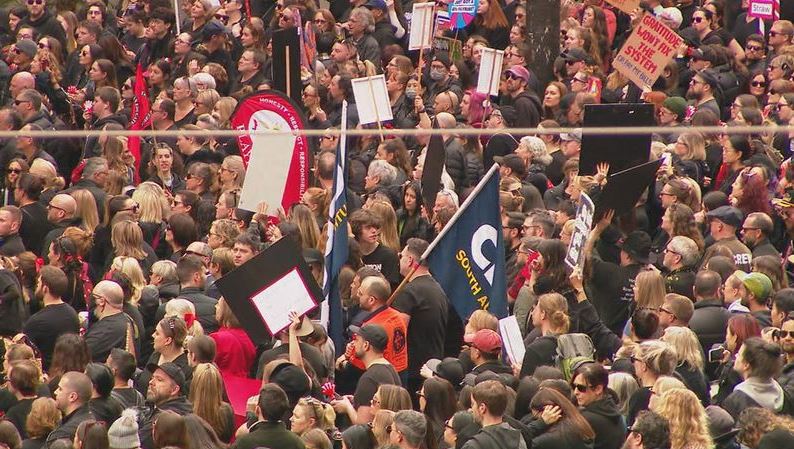
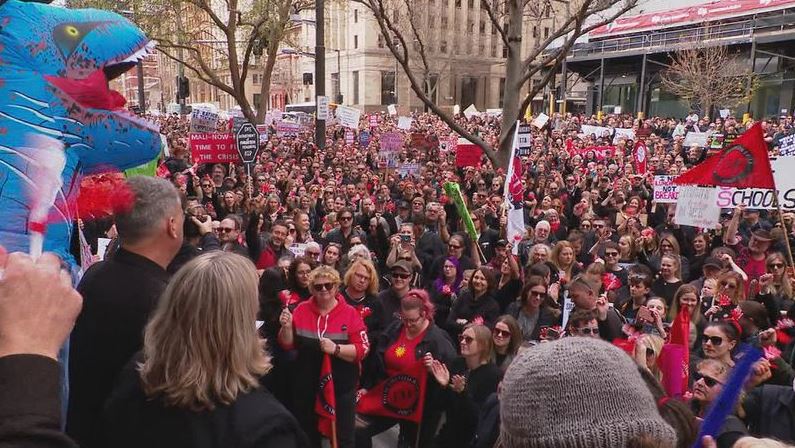
Thousands of pro-Palestinian demonstrators gathered for rallies in Australian cities, with the events ending peacefully according to police.
Large crowds took over the streets of Sydney, Melbourne, Brisbane and Adelaide with a heavy police presence.
However, no arrests were made.
READ MORE: Five pedestrians rushed to hospital after car mounts footpath in Sydney
NSW Police assistant Commissioner Tony Cooke said over 6000 people gathered at the Sydney event.
Police had the option of seeking "extraordinary powers", after a rally outside the Opera House on Monday night.
"I am pleased to say that in the circumstances today people listened to ensure the behaviors that was seen last Monday, were not repeated," Cooke said,
"People listened to their own community."
Victoria Police said 10,000 people marched in Melbourne, with no arrests.
In Adelaide, a pro-Palestinian rally gathered in front of the State Parliament building.
Police escorted the crowd from North Terrace to Victoria square in Adelaide's CBD.
South Australia Police said the crowd behaved in a "safe, orderly and lawful manner."
Another event was held in Brisbane.
Earlier, NSW Premier Chris Minns pleaded for calm at the Sydney rally, warning any kind of vilification or violence would not be tolerated.
NSW Police Acting Commissioner David Hudson had backed police using the powers, which were first used during the 2005 Cronulla riots.
"I can indicate that the powers we are considering authorising will include any person who attends Hyde Park with the intention to assemble, and perhaps protest, will be subject to searching powers where we don't need reasonable cause to search," he said.
"We will also be demanding that they provide us with their identity and if they fail to do so it is an offence.
"These are extraordinary powers."
Originally planned as a march from Town Hall in Sydney, that event was changed to a "static rally" after organisers failed to submit a form for the protest, which needed to be lodged seven days in advance.
The organisers had condemned the anti semitic demonstrations seen earlier this week, saying they were carried out by a tiny minority of marchers.
Palestine Action Group Sydney said anyone planning a similar display would not be welcome at its rally.
READ MORE: Louvre Museum and Versailles Palace evacuated after bomb threats with France on high alert
Former NSW police officer Peter Moroney told Weekend Today that it would be a "big logistical effort" for police.
"One of the main concerns is public safety. As we know and as we saw this week, these things can go from reasonably peaceful (but) can explode quickly and rapidly," he said.
"The main concern for police today is ensure that whoever attends, attends for the right reasons and sticks within the parameters of what we would expect decent behaviour."
Officers were able to stop and search attendees and take down their names and address under the powers.
READ MORE: Further Australian repatriation flights scheduled to leave Israel today
In Melbourne's CBD, supporters gathered for a rally outside the Victorian State Library.
Thousands of people were among the crowd waving Palestinian flags and chanting.
The rally then moved towards the Victorian State Parliament.
READ MORE: Alleged bank robber arrested after 20 years
Dog falls into grave at Auckland funeral moments before coffin is lowered
The incident was captured on video and quickly went viral on social media.
Arrests made during Ruakākā homicide investigation
Two men have been charged with firearm-related offences.
Gaza's desperate civilians search for food, water and safety
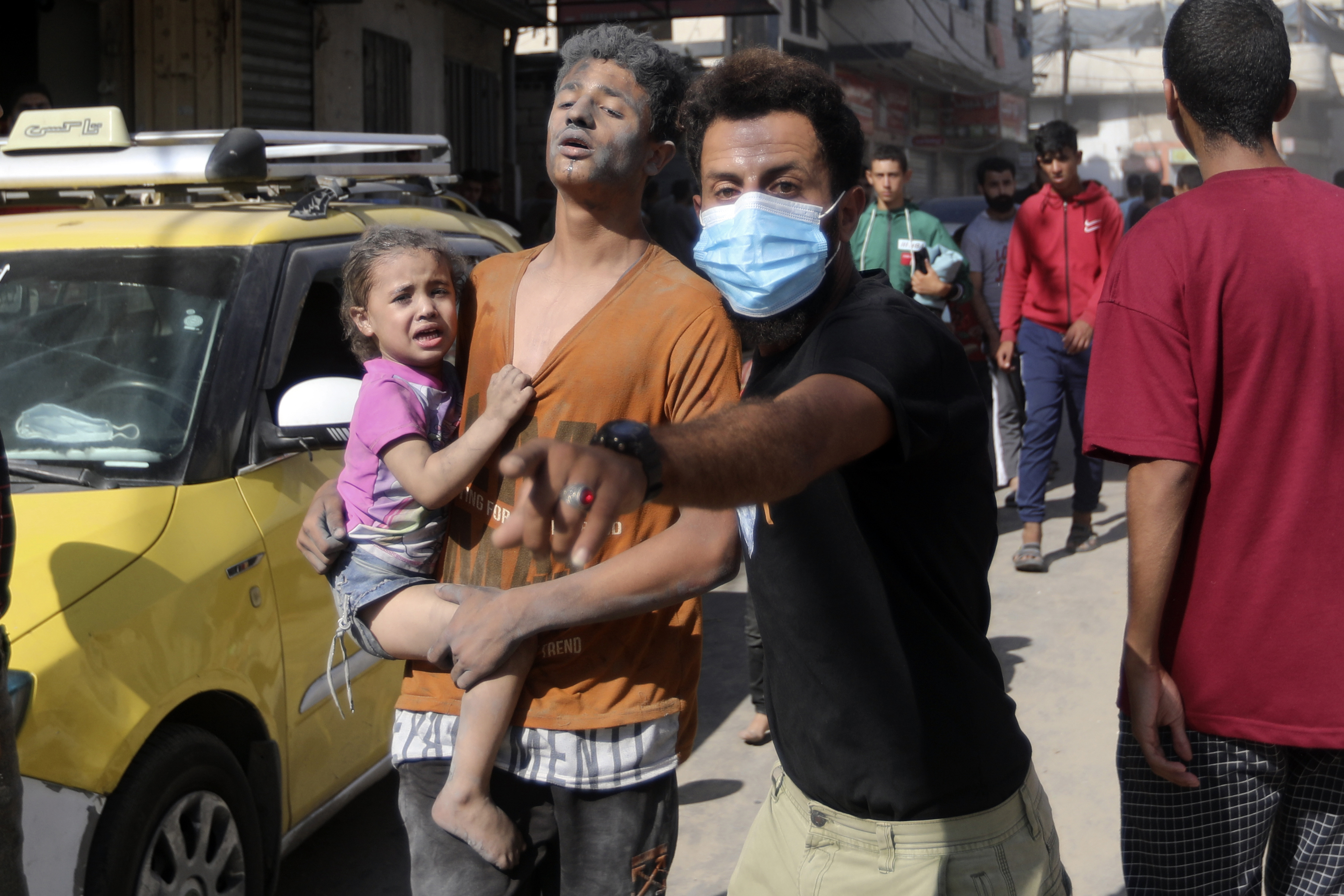
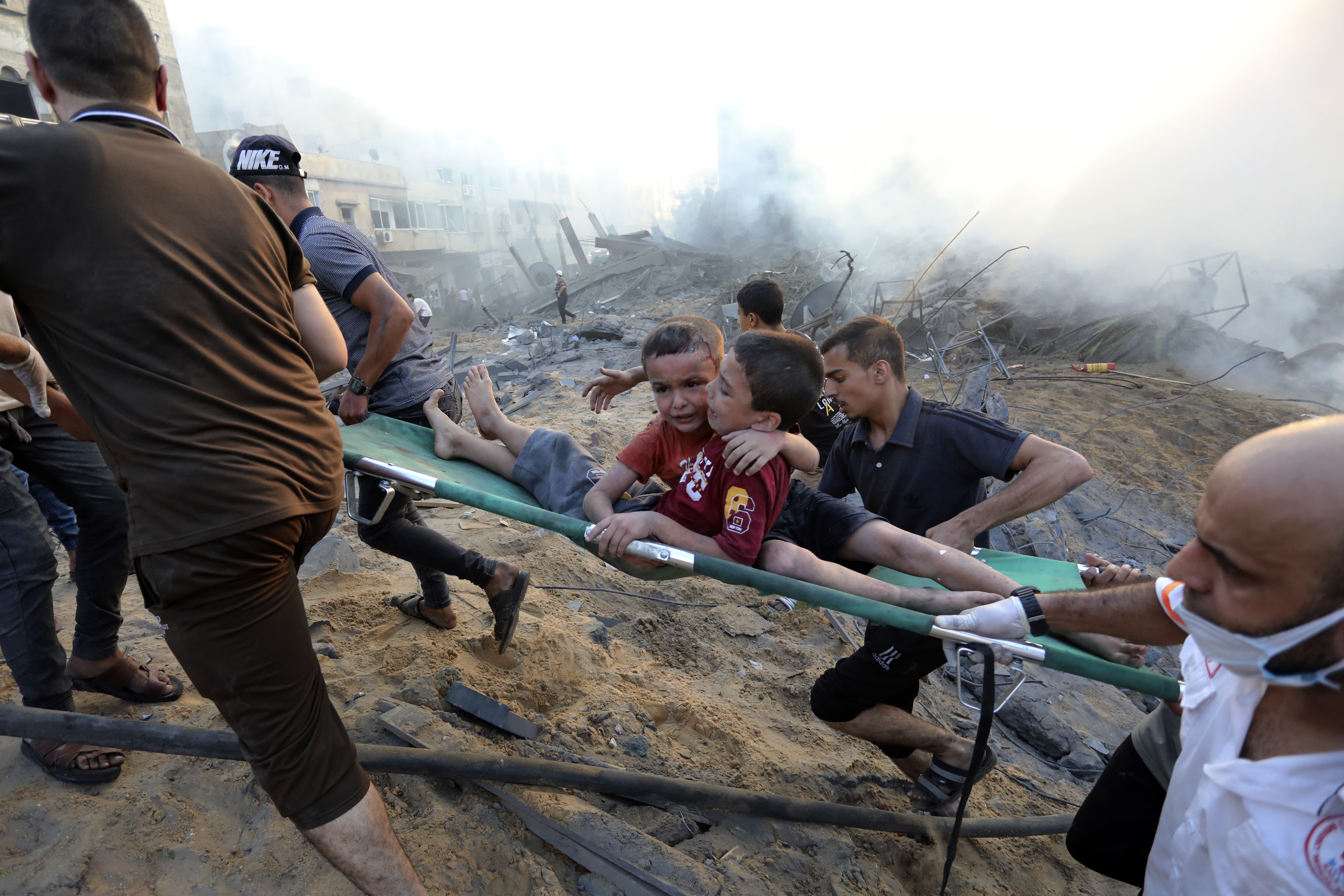
Gaza’s 2.3 million civilians faced a deepening struggle for food, water and safety on Sunday and braced for a looming invasion a week after Hamas militants launched a deadly assault on Israel.
While hundreds of thousands sought to heed Israel’s order to evacuate the north, others huddled at hospitals there.
Israeli forces, supported by a growing deployment of US warships in the region, positioned themselves along Gaza’s border and drilled for what Israel said would be a broad campaign to dismantle the militant group.
READ MORE: Pro-Palestine rallies end peacefully
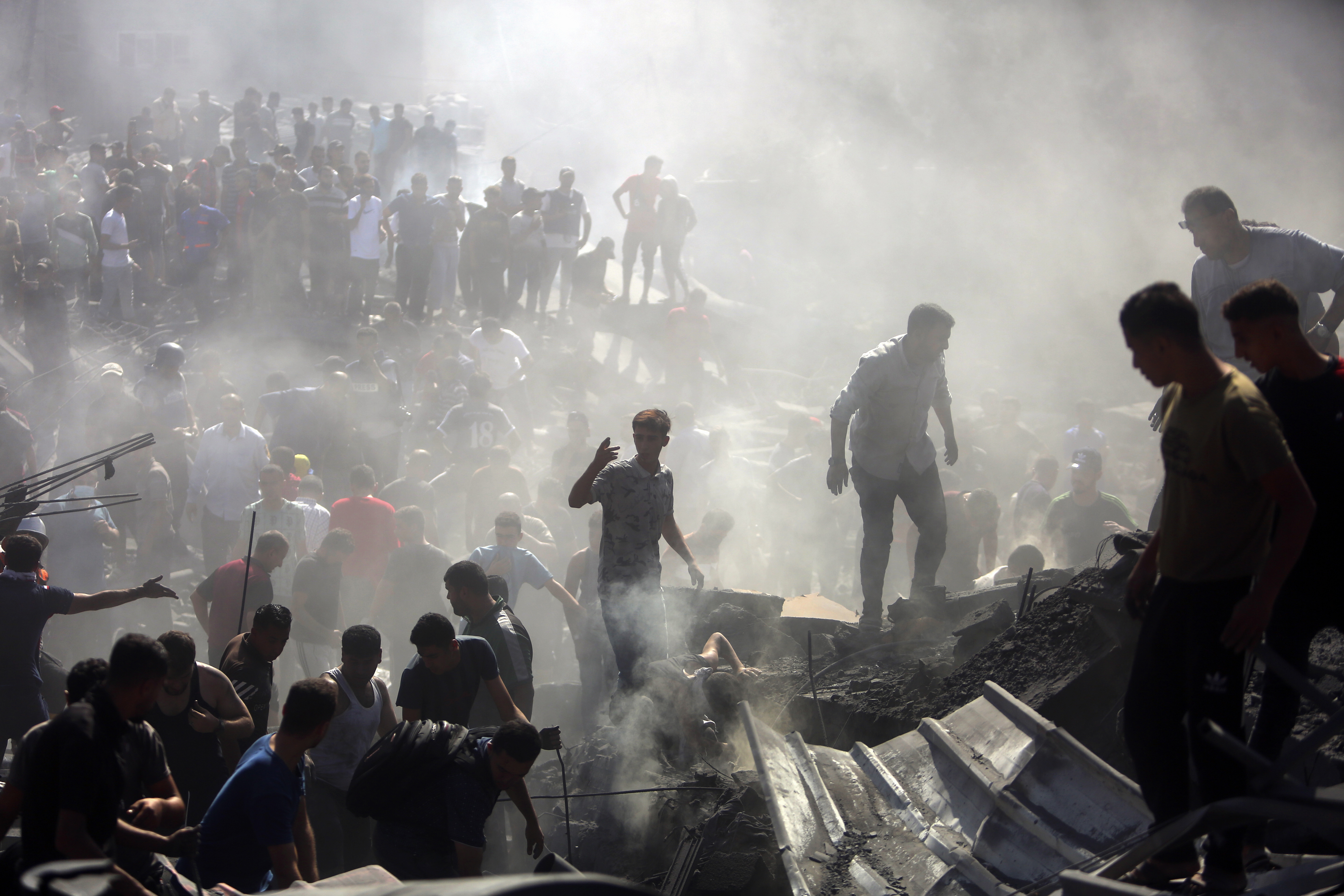
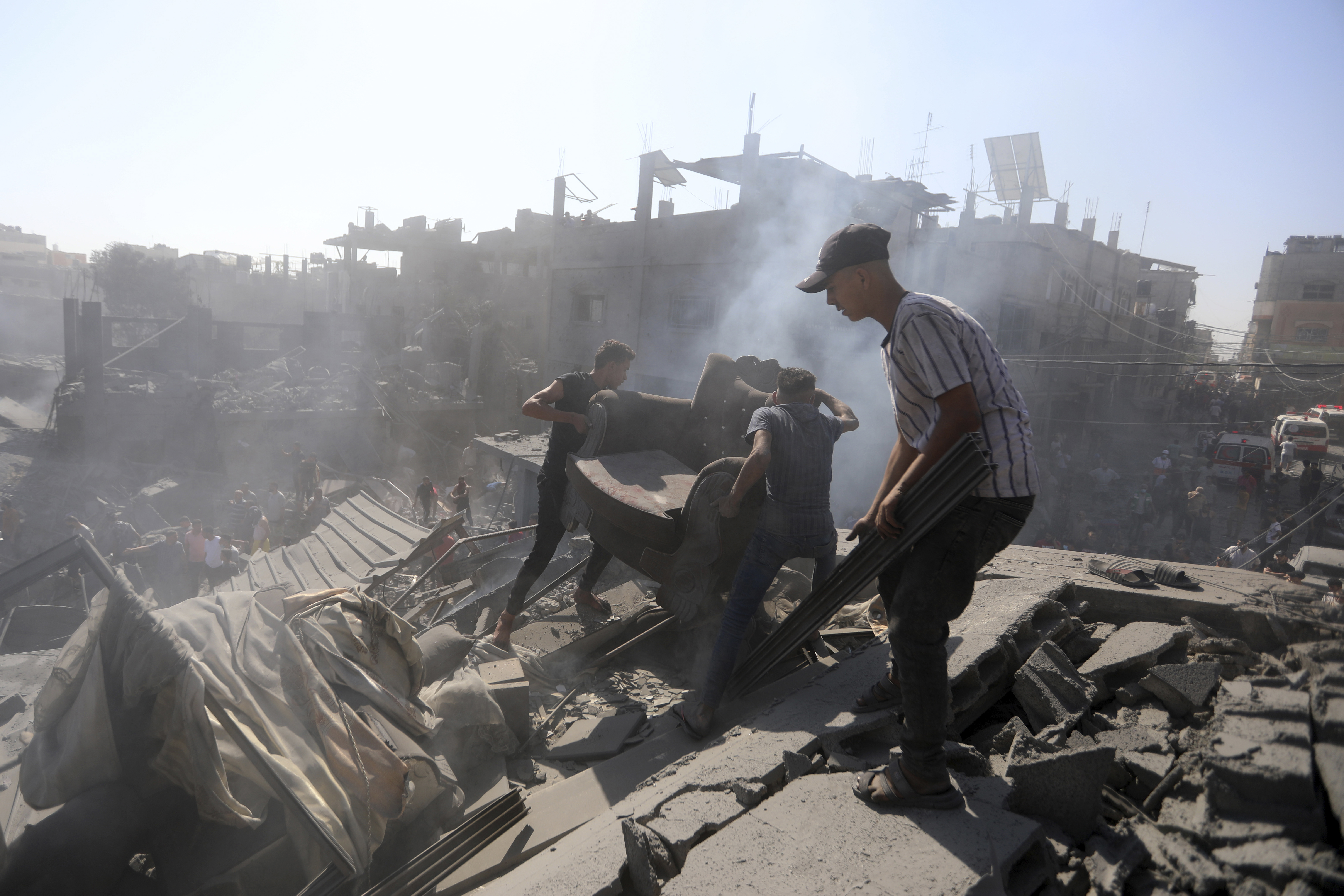
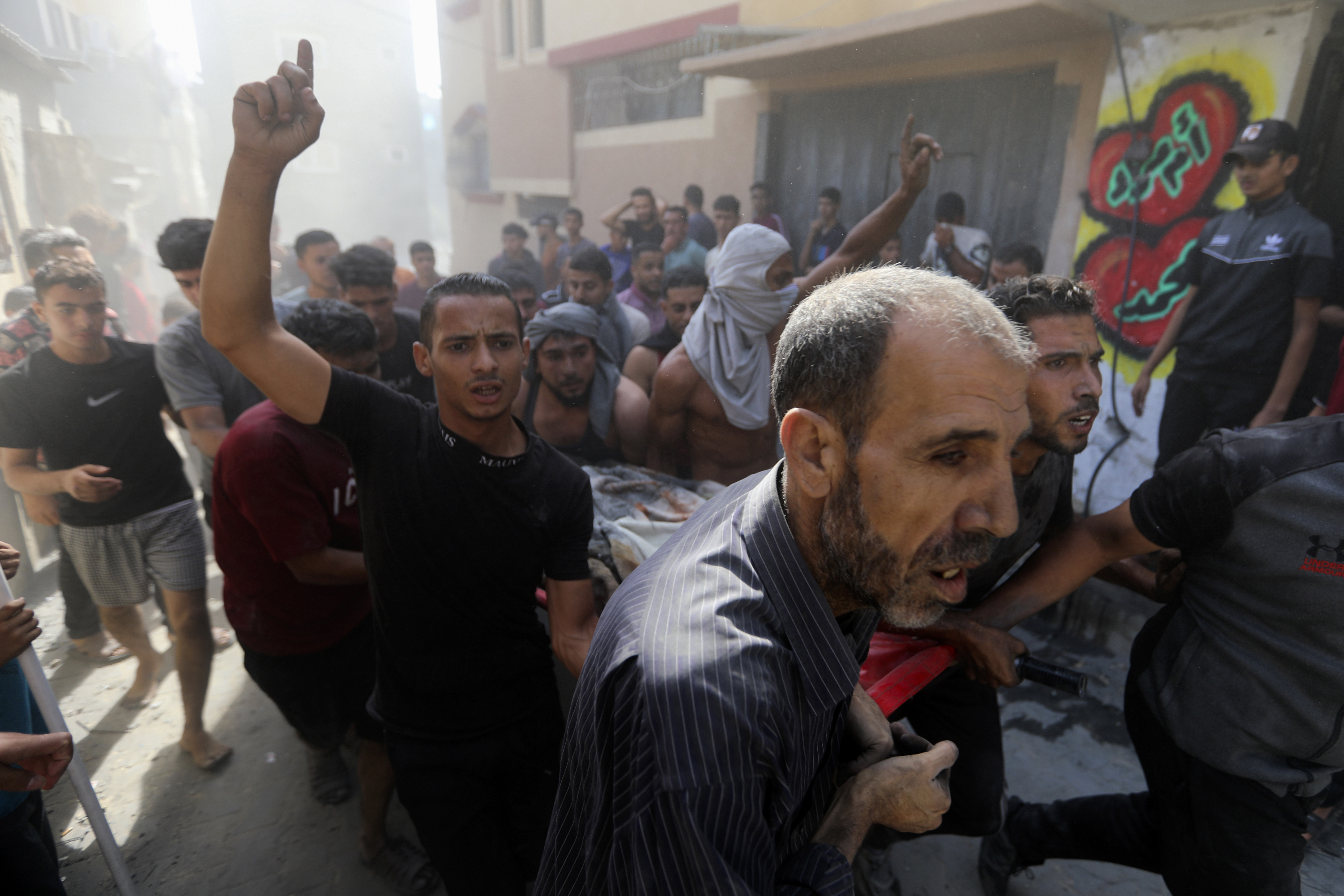
A week of blistering airstrikes have demolished entire neighborhoods but failed to stem militant rocket fire into Israel.
The Gaza Health Ministry said 2,329 Palestinians have been killed since the fighting erupted, making this the deadliest of the five Gaza wars for Palestinians.
The death toll on Sunday surpassed that of the third war between Israel and Hamas, in the summer of 2014, when 2,251 Palestinians, including 1,462 civilians, were killed, according to UN figures.
READ MORE: More Australian repatriation flights scheduled to leave Israel
That war lasted six weeks, and 74 people were killed on the Israeli side, including six civilians.
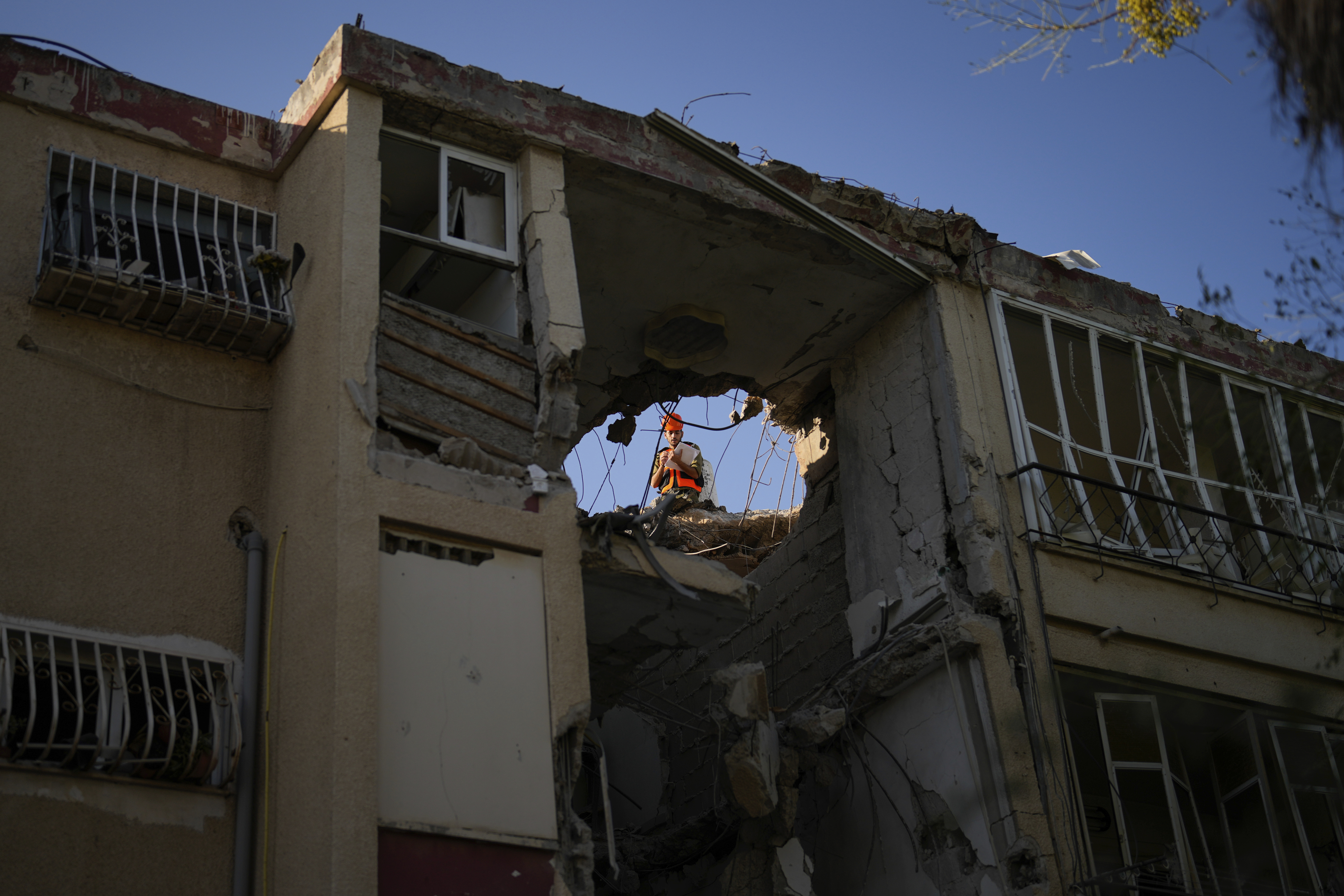
In Israel, pathologists and others at a military base worked through the Jewish Sabbath to identify the more than 1,300 Israelis and others killed in Hamas's October 7 assault.
This is the deadliest war for Israel since the 1973 conflict with Egypt and Syria.
Israel dropped leaflets over Gaza City in the north and renewed warnings on social media, ordering more than 1 million Palestinians — almost half the territory's population — to move south.
The military says it is trying to clear away civilians ahead of a major campaign against Hamas militants in the north, including in what it said were underground hideouts in Gaza City.
Hamas urged people to stay in their homes.
The UN and aid groups say such a rapid exodus, along with Israel’s complete siege of the 40-kilometre-long coastal territory would cause untold human suffering.
The World Health Organization said the evacuation “could be tantamount to a death sentence” for the more than 2,000 patients in northern hospitals, including newborns in incubators and people in intensive care.
READ MORE: A mum and daughter are missing in Israel. Their family believes they are hostages
Gaza's hospitals are expected to run out of fuel for emergency generators within two days, according to the UN, which said that that would endanger the lives of thousands of patients.
Gaza was already in a humanitarian crisis due to a growing shortage of water and medical supplies caused by the Israeli siege, which has also forced electrical plants to shut down without fuel.
With some bakeries closing, residents complained of being unable to buy bread for their children.
In Gaza City, Haifa Khamis al-Shurafa crowded into a car with six family members, fleeing to the south in the darkness.
“We don’t deserve this,” Shurafa said, before leaving her home city. “We didn’t kill anyone.”
READ MORE: Gazans run out of time after Israel's evacuation deadline
The Israeli military said “hundreds of thousands” of Palestinians had heeded the warning and headed south.
It gave Palestinians a six-hour window that ended on Saturday afternoon to travel safely within Gaza along two main routes, but has not set a firm deadline for the evacuation.
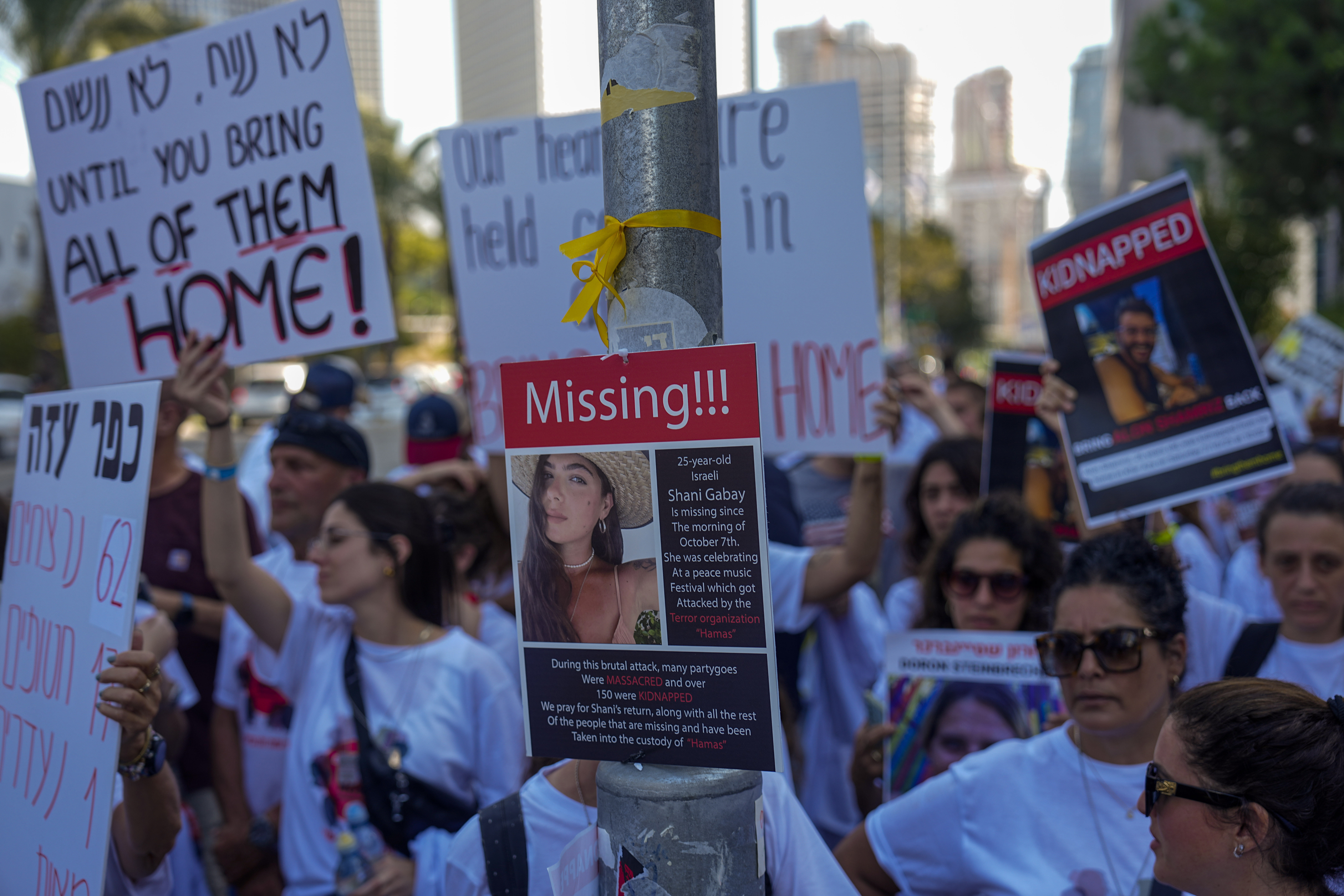
Hundreds of relatives of the estimated 150 people captured by Hamas in Israel and taken to Gaza meanwhile gathered outside the Israeli Defense Ministry in Tel Aviv, demanding their release.
“This is my cry out to the world: Please help bring my family, my wife and three kids,” said Avihai Brodtz of Kfar Azza.
Many expressed anger toward the government, saying they still have no information about their loved ones.
In a televised address Saturday night, Israel’s chief military spokesman, Rear Adm. Daniel Hagari, accused Hamas of trying to use civilians as human shields.
“We are going to attack Gaza City very broadly soon,” he said, without giving a timetable for the attack.
The military said on Sunday an airstrike in southern Gaza had killed a Hamas commander blamed for the killings at Nirim, one of several communities Hamas had attacked in southern Israel.
Israel said it struck over 100 military targets overnight, including command centers and rocket launchers.
Israel has called up some 360,000 military reserves and massed troops and tanks along the border with Gaza. Israelis living near the Gaza border, including residents of the town of Sderot, continued to be evacuated.
Militants in Gaza have fired over 5,500 rockets since the hostilities erupted, many reaching reaching deep into Israel, as Israeli warplanes pound Gaza.
US Defense Secretary Lloyd Austin said late on Saturday (local time) that the US was moving a second carrier strike group, the USS Dwight D. Eisenhower, to the eastern Mediterranean, in a show of force meant to deter any allies of Hamas, such as Iran or Lebanon's Hezbollah militant group, from seeking to widen the war.
Hamas remained defiant.
READ MORE: Australia provides $10m humanitarian assistance to civilians affected by conflict in Gaza
In a televised speech on Saturday, Ismail Haniyeh, a top official, said that “all the massacres” will not break the Palestinian people.
An Israeli airstrike near the Jabaliya refugee camp in northern Gaza killed at least 27 people and wounded another 80, Gaza health authorities said.
Most of the victims were women and children, the authorities said.
Doctors from Kamal Edwan Hospital shared footage of charred and disfigured bodies.
It was not clear how many Palestinians remained in northern Gaza by Saturday afternoon, said Juliette Touma, a spokesperson for the UN agency for Palestinian refugees.
An estimated 1 million people have been displaced in Gaza in one week, she said.
At Gaza City’s main hospital, al-Shifa, a crowd of men, women and children that medical officials estimated at 35,000 crammed into the hospital's lobby and bloodied hallways and under the trees on the hospital grounds, hoping the facility would be spared in the coming attack.
“People think this is the only safe space after their homes were destroyed and they were forced to flee,” said Dr. Medhat Abbas, a Health Ministry official.
Basic necessities were running out because of the siege, which Israel has said will only be lifted when the captives are returned.
Water has stopped coming out of taps across the territory.
Amal Abu Yahia, a 25-year-old pregnant mother in the Jabaliya refugee camp, said she waited anxiously for the few minutes when contaminated water trickles from the pipes in her basement.
She rations it, prioritising her five-year-old son and three-year-old daughter.
She said she is drinking so little herself, she only urinates every other day.
Near the coast, the only tap water is contaminated with Mediterranean Sea water because of the lack of sanitation facilities.
Mohammed Ibrahim, 28, said his neighbors in Gaza City have taken to drinking the salt water.
The Israeli military’s evacuation order demands the territory’s entire population cram into the southern half of Gaza as Israel continues strikes, including in the south.
The Hamas communications office said Israel has destroyed over 7,000 housing units so far.
Rami Swailem said he and at least five families in his building decided to stay put in his apartment near Gaza City.
“We are rooted in our lands,” he said. “We prefer to die in dignity and face our destiny.”
Others were looking desperately for ways to evacuate.
“We need a number for drivers from Gaza to the south, it is necessary #help,” read a post on social media.
The UN refugee agency for Palestinians expressed concern for those who could not leave, “particularly pregnant women, children, older persons and persons with disabilities.”
The agency also called for Israel to not target civilians, hospitals, schools, clinics and UN locations.
Al-Shifa hospital was receiving hundreds of wounded every hour and had used up 95 per cent of its medical supplies, hospital director Mohammad Abu Selim said.
Water is scarce and the fuel powering its generators is dwindling.
“The situation inside the hospital is miserable in every sense of the word,” he said.
“The operating rooms don’t stop.”