Tag Archives: oceania

Winter crop production down after consecutive strong harvests

Grain and oilseed production is down in Australia due to drier growing conditions on the back of three consecutive strong harvests.

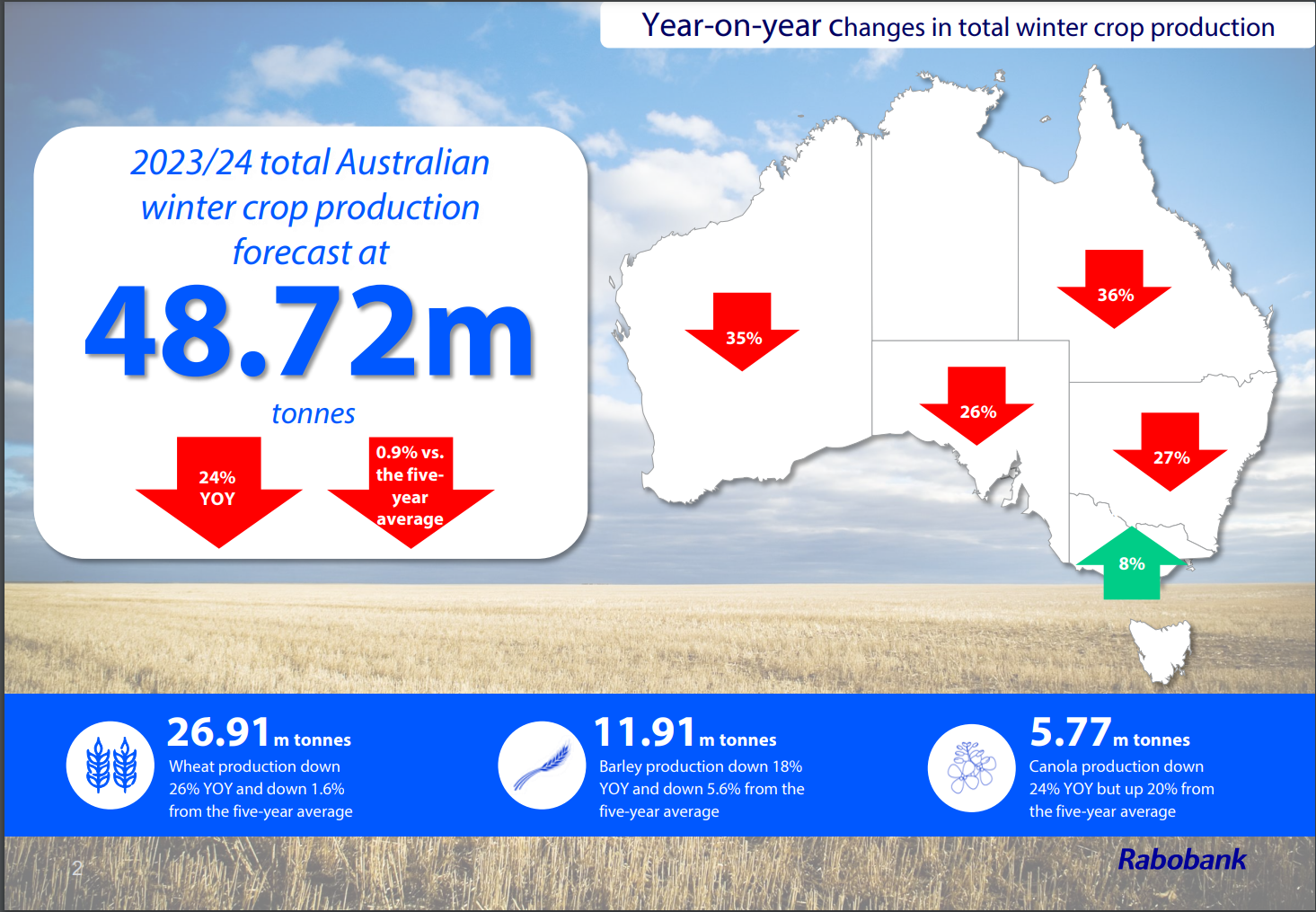
Australia is due to deliver a winter crop of 48.72 million tonnes, which is 24 per cent down on last year's record-breaking 63.85 million tonnes, according to rural and agriculture financer Rabobank's 2023 to 2024 forecast.

The bank is predicting all cereal and coarse grain production, including wheat, barley and oats, will decrease this season.

LIVE UPDATES: Three times more Aussies in Gaza than thought

Australian grain and oilseed production is down due to drier conditions.

RaboResearch associate analyst Edward McGeoch said there was a silver lining for farmers as prices had risen above those globally, which created a "positive basis" for wheat and barley.

"Global export demand should also be supportive of canola prices," McGeoch said.

He said a "tighter supply outlook" was ahead for grain and oilseed due to the drier El Nino climate outlook.

READ MORE: Clive Palmer's $40m superyacht runs aground

"Production expectations are varied across regions with some farmers expecting to see elevated production due to positive growing conditions they have experienced while others will be facing tough decisions as to whether it will be worth harvesting their crop," McGeoch said.

Victoria is the only place where production is expected to rise due to last year's floods in the northern parts of the state.

For more information see the Rabobank here.

What is a war crime and how do perpetrators face justice?

Accusations of war crimes have rung loud in recent months, even reaching among the most powerful people in the world.

The International Criminal Court has issued a warrant for the arrest of Russian President Vladimir Putin over the invasion of Ukraine, obliging him to miss a summit in South Africa.

And more recently, a United Nations Commission of Inquiry said it has been "collecting and preserving evidence of war crimes committed by all sides" since the latest round of violence between Israel and Hamas started last week.

LIVE UPDATES: Three times more Aussies in Gaza than thought

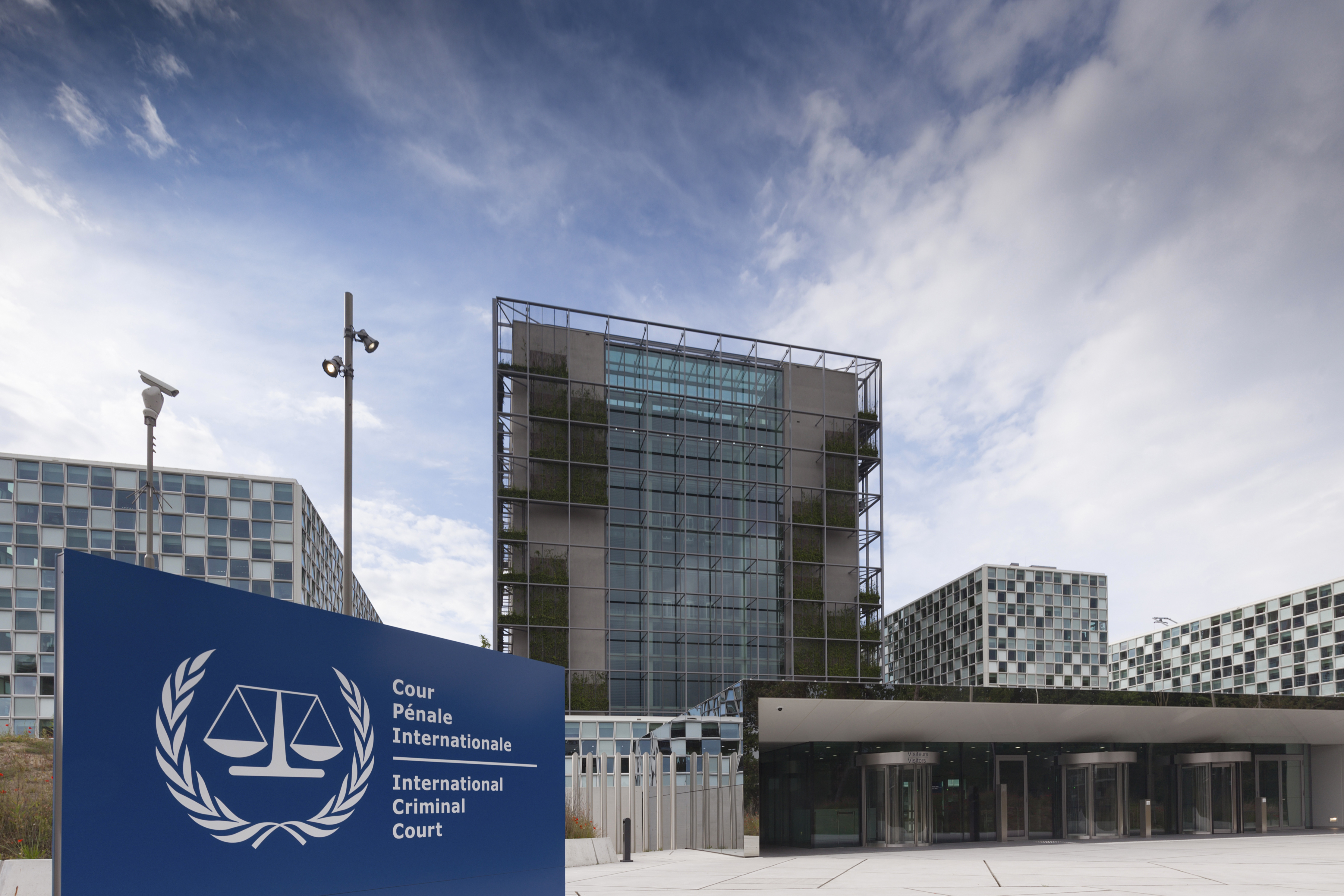
The Hague

But in the context of a war, defined by mass death and violence, what can be considered a crime?

What is a war crime?

The concept of improper military conduct in times of war dates back centuries – the medieval European code of chivalry being one such example.

But international "laws of war" were only developed and adopted – at least in theory – in the 19th and 20th centuries.

According to the United Nations a war crime, first and foremost, can only be committed in the context of armed conflict, whether international or domestic.

There is no single document that codifies what the UN considers to be war crimes, but they can be found throughout the Hague and Geneva conventions and related add-ons.

READ MORE: Terror alert after two killed before major football game

What kinds of war crimes are there?

A war crime most typically involves the intentional targeting of civilians or the murder of prisoners of war.

Torture (including biological experiments), sexual assault, wilful killing, hostage-taking, unlawful deportation, and targeted destruction of non-military targets are all considered breaches of international law.

Other war crimes include depriving prisoners of war of their rights and fair trial, or even making use of another country's military insignia or UN emblems – for example, to carry out an ambush.

Declaring "no quarter" – ie, that no prisoners will be taken – is also a war crime.

READ MORE: Clive Palmer's $40m superyacht runs aground

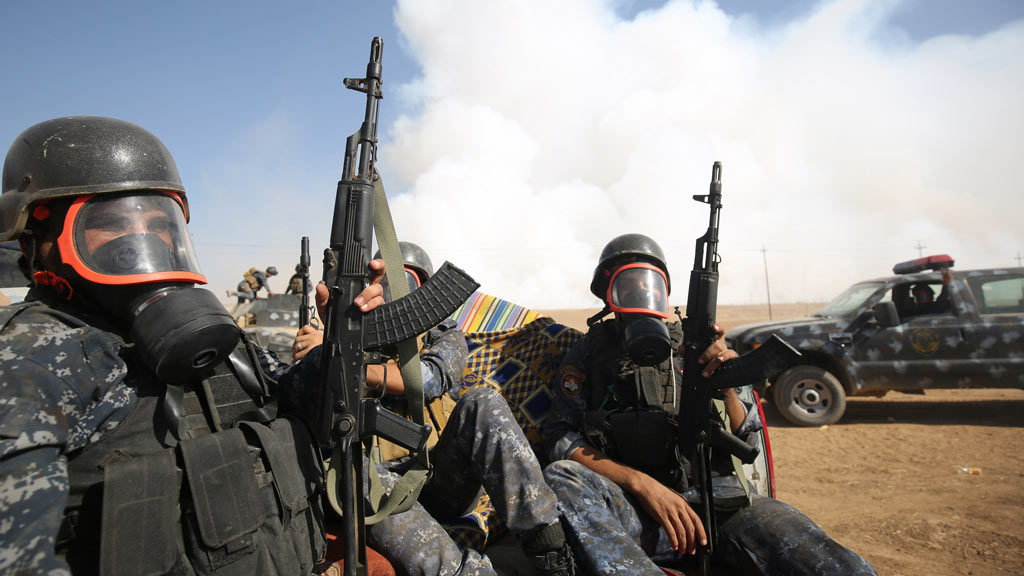
Iraqi forces wear gas masks after ISIS jihadists torched Mishraq sulphur factory, during an operation to retake the main hub city on October 22, 2016. (AFP)

Certain weapons are also outlawed, from white phosphorous gas to anti-personnel mines.

Depriving civilian populations of essentials such as aid and medical supplies are also included.

Many of these also count as crimes against humanity – but that term applies to such breaches of international law outside the context of a military conflict.

Likewise, genocide, another crime the ICC had broad jurisdiction over, can take place both within and without a wartime context. 

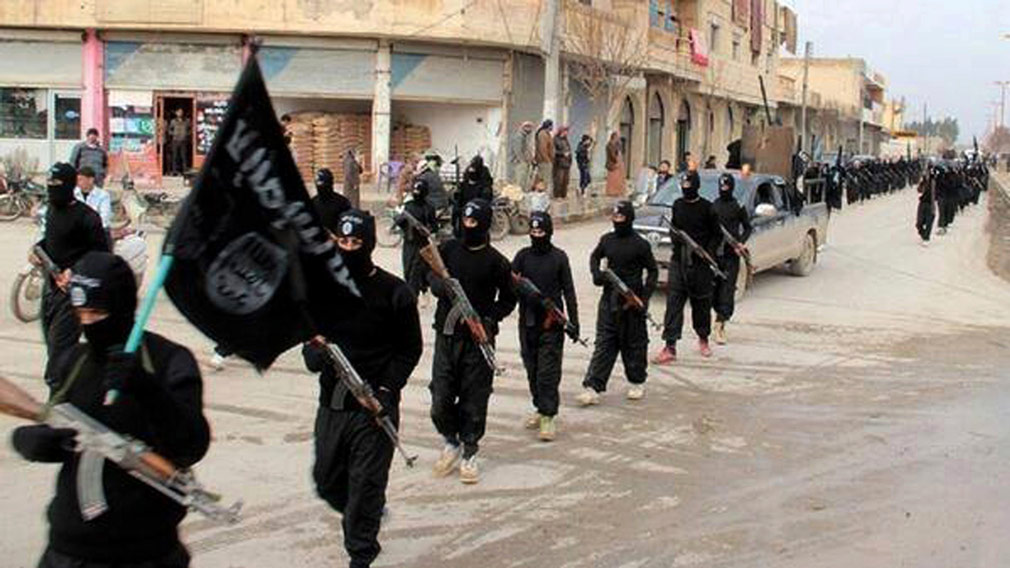
ISIL fighters march in Raqqa, Syria in 2014. (AAP)

How are war crimes prosecuted?

The ICC, as noted above, can issue arrest warrants for people accused of war crimes.

However, it can only prosecute those who are brought before it by member states, as it lacks a police force.

This is why its warrant for Putin has little effect inside Russia, which in any case is not a member state.

However, if he had travelled to South Africa – which is a member state – authorities there would have been obliged to arrest him.

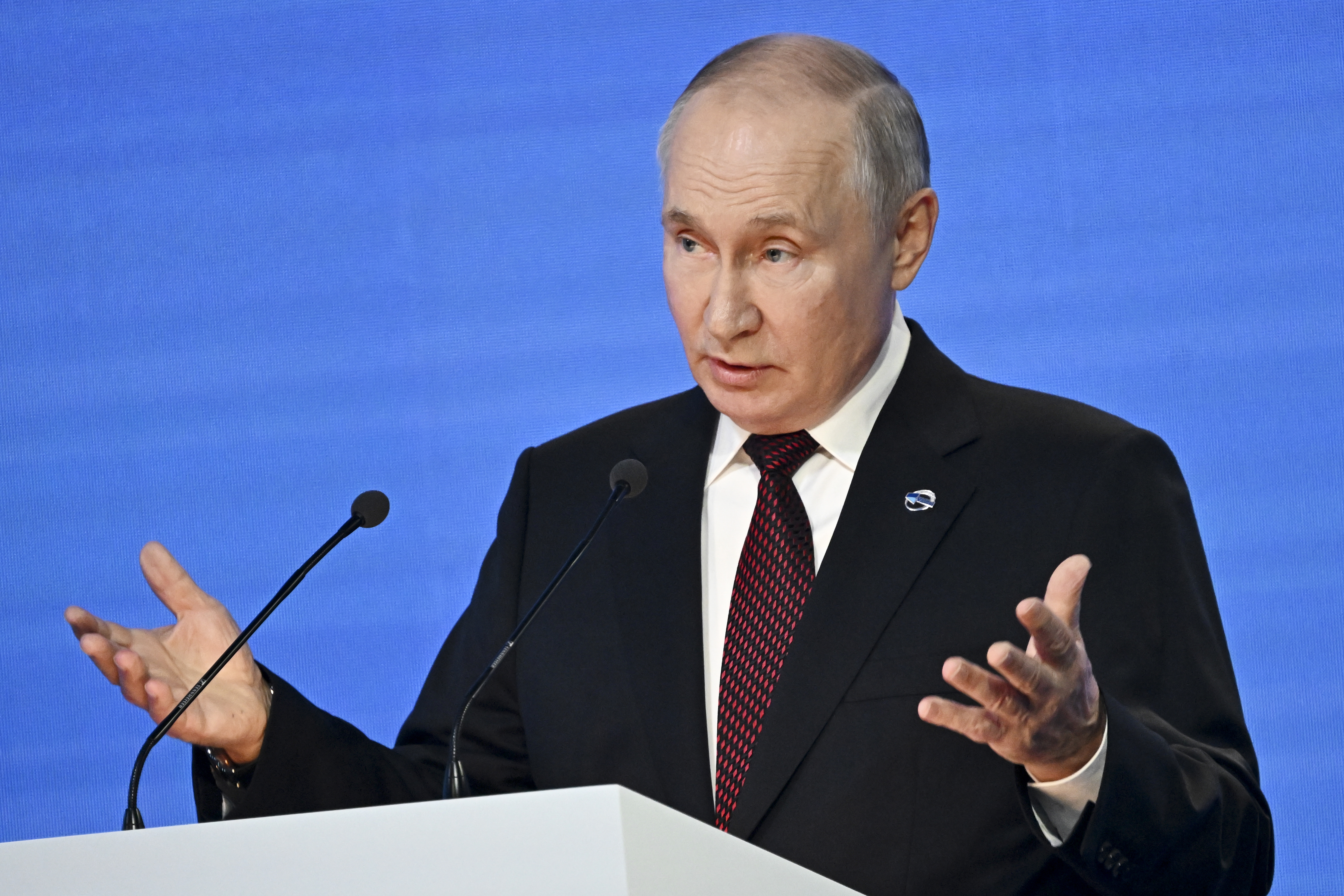
Putin

In short, in most cases, for war criminals to be punished they first have to lose a war.

Additionally, the court does not investigate or prosecute every allegation of war crimes around the globe. Most states have military courts or their own statutes for prosecuting war crimes.

Former Iraqi dictator Saddam Hussein, for example, was sentenced to death in 2006 by an Iraqi court for the murder of 148 Shiite Muslims in Dujail.

Prior to the establishment of the ICC, the United Nations could convene ad-hoc tribunals to investigate particular subjects, such as the 1994 Rwandan genocide.

Nazi war criminals were convicted by the International Military Tribunal, formed by the Allies after WWII.

The ICC does not hold global jurisdiction, with non-member states including the US, Russia, and China. Australia, however, is a signatory.

How are war criminals punished?

If somebody is brought before the ICC and convicted of war crimes, they have the right to appeal.

But if that is lost, the court will impose a jail sentence that can extend to 30 years in prison – though it also has the option to declare a life sentence.

The person sentenced will then be imprisoned in a country that has agreed to enforce the sentence.

The ICC, established in 2002, has only handed down a 30-year sentence once, to Congolese warlord Bosco Ntaganda in 2019, for crimes against humanity that included the recruitment of child soldiers.

Man charged over 'offensive comments' made at pro-Palestine rally

A man has been charged over offensive comments he allegedly made during a pro-Palestine rally in Sydney's CBD on Sunday.

Police allege the 63-year-old man was one of thousands of people who attended a pro-Palestinian gathering in the wake of Hamas attacks earlier this month.

He was arrested at a home in Mt Druitt in Sydney's west about 8pm yesterday.

READ MORE: Jetstar flight evacuated after argument onboard in Sydney

The man has been charged with the use offensive language in/near public place/school.

He was granted strict conditional bail and is due to appear at Downing Centre Local Court on November 15.

Police are continuing to investigate.

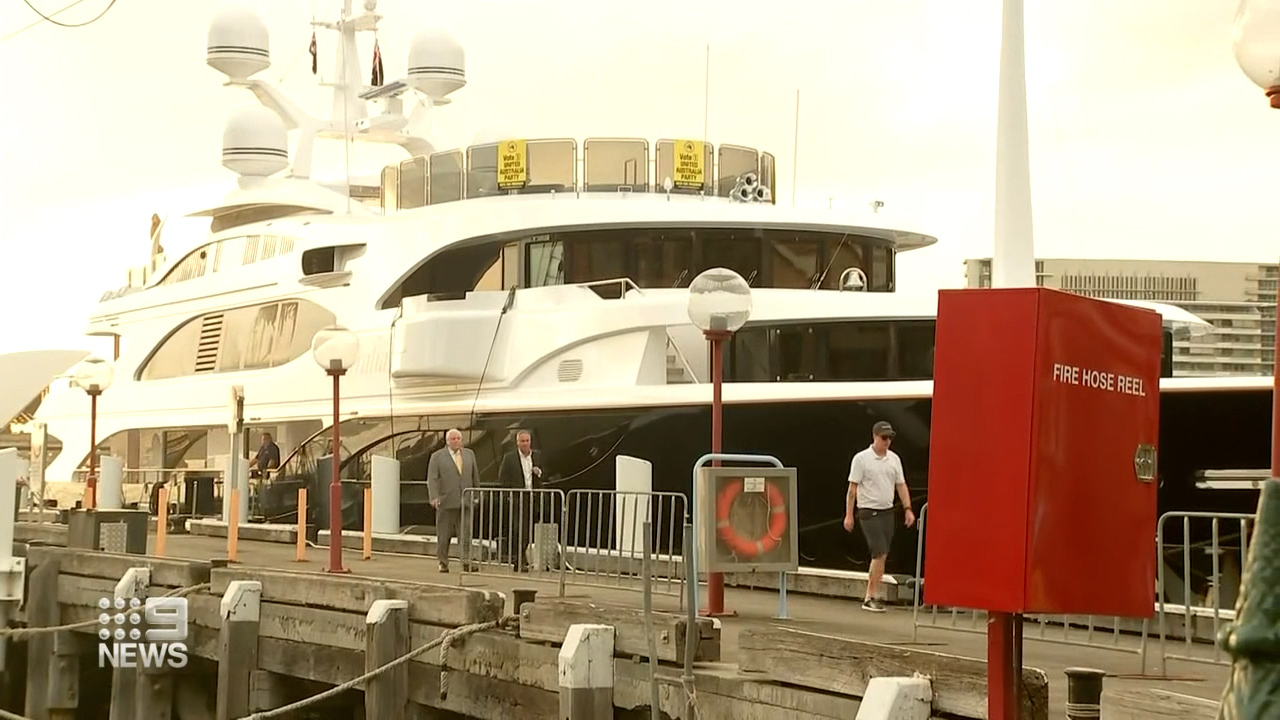
Clive Palmer's $40 million superyacht runs aground in Singapore

A $40 million super yacht owned by mining magnate Clive Palmer has run aground off the coast of Singapore.

The luxury vessel, named Australia, got stuck late yesterday afternoon near Sentosa Island after appearing to have collided with a reef during low tide.

Palmer bought the vessel in 2021, which features multiple bars, a VIP suite, jacuzzi and two sundecks.

LIVE UPDATES: US troops told 'prepare to deploy'

Clive Palmer boat Australia Sydney Harbour

Palmer is one of Australia's most high-profile billionaires.

It's unclear if the mining magnate is onboard.

More to come …

US mounting a frantic effort to head off a wider Middle East war

US leaders are mounting an urgent effort to prevent Israel's war against Hamas and a resulting civilian catastrophe in Gaza from escalating into a widening regional conflict that could snowball into an even greater geopolitical crisis after this month's horrific attacks.

As a second US aircraft carrier strike group steams to the region, President Joe Biden told 60 Minutes America that he has Israel's back as it avenges its darkest day in 50 years – and as he focuses on the plight of Americans among the more than 150 people taken hostage during the Hamas incursion.

But he also said, again, that it would be "a big mistake" for Israel to occupy Gaza and called for a return to a negotiation toward a Palestinian state.

READ MORE: Gaza's crowded hospitals near breaking point as Israeli ground invasion looms
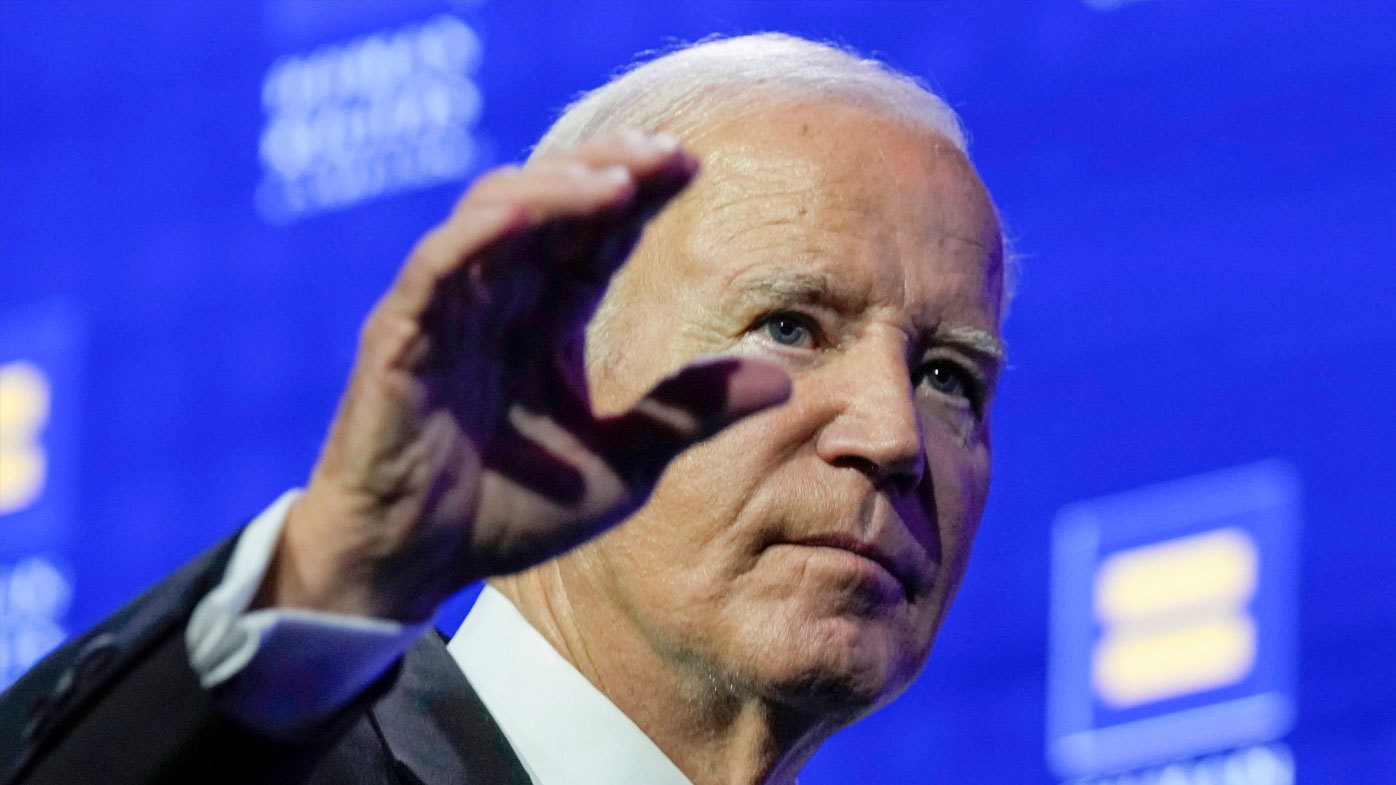
US President Joe Biden after speaking at the 2023 Human Rights Campaign National Dinner at the weekend.

His comments came after a weekend of frustration for American citizens stuck at the exit between Gaza and Egypt, as the Biden administration also sought to ease the already dire humanitarian conditions for Palestinian civilians without foreign passports who are trapped with no clear relief from relentless Israeli airstrikes.

Secretary of State Antony Blinken's Middle East shuttle mission shows that the United States, despite its efforts to extricate itself from the region, is still uniquely positioned to influence Israel as well as key Arab power brokers at a moment of deep peril – and still willing to take on the task of projecting leadership in the Middle East, in spite of the domestic turmoil in Washington.

Administration officials speaking Sunday made clear they are also looking ahead, desperately trying to preserve the hope of a reshaped Middle East that would draw Israel and Saudi Arabia toward a diplomatic normalisation that the Hamas attacks may now threaten.

The US task in balancing a quickly widening crisis is hugely complex and some of its aims could be irreconcilable with others: For example, Israel's desire to stamp out Hamas once and for all could result in such enormous destruction and loss of life that it will alienate America's Arab allies.

"We are talking to the Israelis about the full set of questions, looking out into the future to ensure that Israel is safe and secure and also that innocent Palestinians living in Gaza can have a life of dignity, security and peace in the future as well," Biden's national security adviser, Jake Sullivan, said on CNN's "State of the Union."

READ MORE: Golf clubhouse destroyed in ferocious blaze
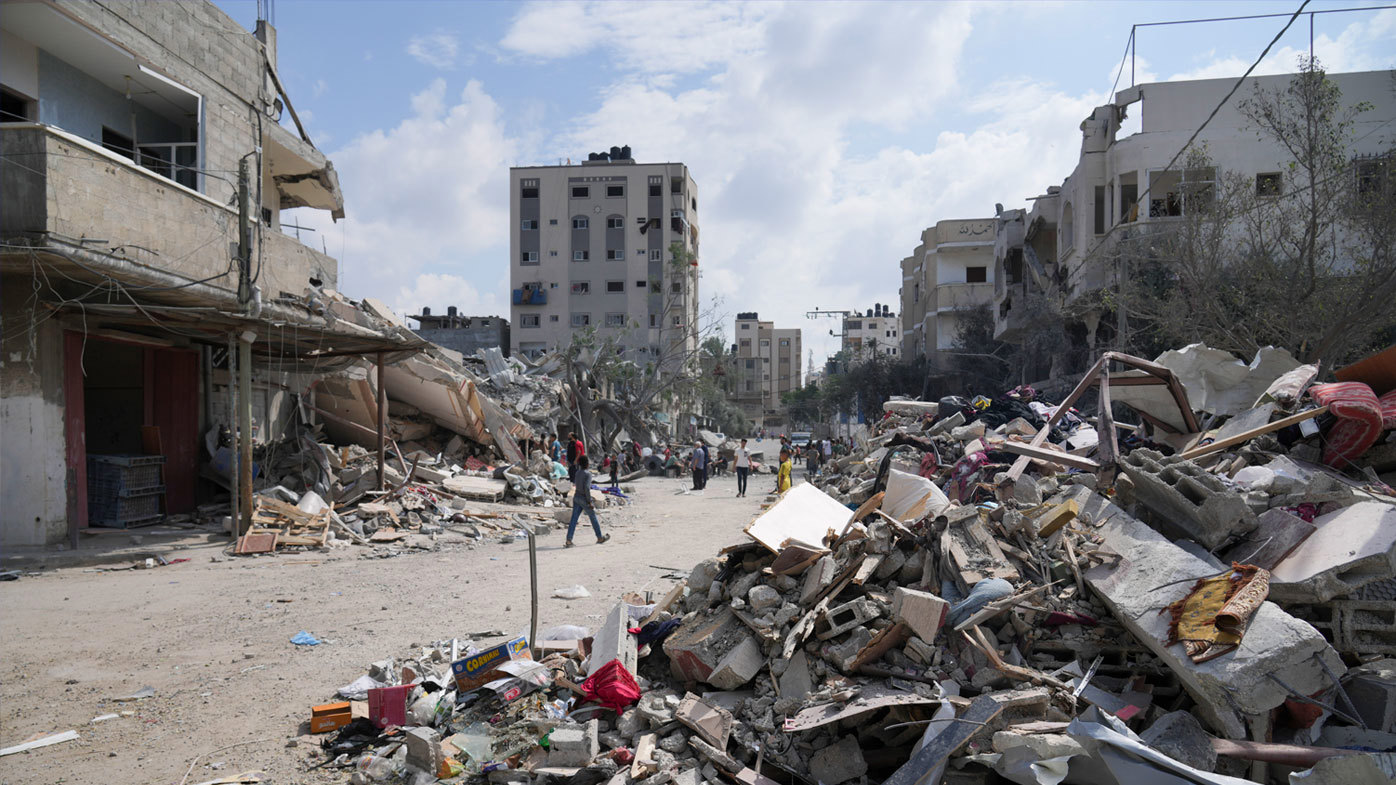
Palestinians walk by buildings destroyed in Israeli airstrikes in Nuseirat camp in the central Gaza Strip.

Sullivan also warned that the war between Israel and Hamas could be just the start. "There is a risk of an escalation of this conflict, the opening of a second front in the north and, of course, Iran's involvement," he told CBS.

The comments came as the full scale of an unfolding human tragedy in impoverished, densely populated Gaza is beginning to emerge, as UN officials warn of hellish conditions after over eight days of Israeli bombardments that have killed more than 2600 Palestinians in response to Hamas' brutal hostage-taking and killing of 1400 in Israel.

Philippe Lazzarini, commissioner general of the United Nations Relief and Works Agency, warned of severe shortages of water, electricity, food and medicine as thousands of Gazans flee from northern districts after an Israeli statement to evacuate but as the territory's southern border with Egypt remains closed.

"Gaza is being strangled and it seems that the world right now has lost its humanity. If we look at the issue of water – we all know water is life – Gaza is running out of water, and Gaza is running out of life," Lazzarini said.

Israel has said it tries to mitigate civilian suffering, and blames Hamas, an Iran-backed militant group that has embedded its rocket launchers in packed urban areas and refugee camps, for hiding behind civilians. Hamas has urged civilians to ignore Israeli warnings to evacuate the northern part of Gaza.

LIVE UPDATES: US troops told 'prepare to deploy'

Blinken makes US strategy clear

Blinken is on a frantic swing that has included stops in Israel, Saudi Arabia, the United Arab Emirates, Jordan, Egypt and Bahrain. He said in Cairo on Sunday that there was a determination throughout the region to prevent the Hamas attacks from spiralling into a larger regional war. The State Department said he'd return to Israel for further consultations on Monday.

Israel has also invited Biden to the country for talks with Prime Minister Benjamin Netanyahu, and both sides were considering the visit, a source familiar with the matter told CNN. But the possibility of the president visiting a war zone and putting his personal prestige on the line at this stage would be fraught with complications.

Washington is walking a knife-edge as it stresses its unshakable support for Israel's right to try to eradicate Hamas but also attempts to mitigate the worst civilian blowback of the coming offensive while pursuing its own interests in heading off a situation that could force it to plunge back into the Middle East.

Blinken spelled out the multipronged US strategy.

"I don't think we could be more clear than we've been, that when it comes to Israel's security, we have Israel's back," he said in Cairo.
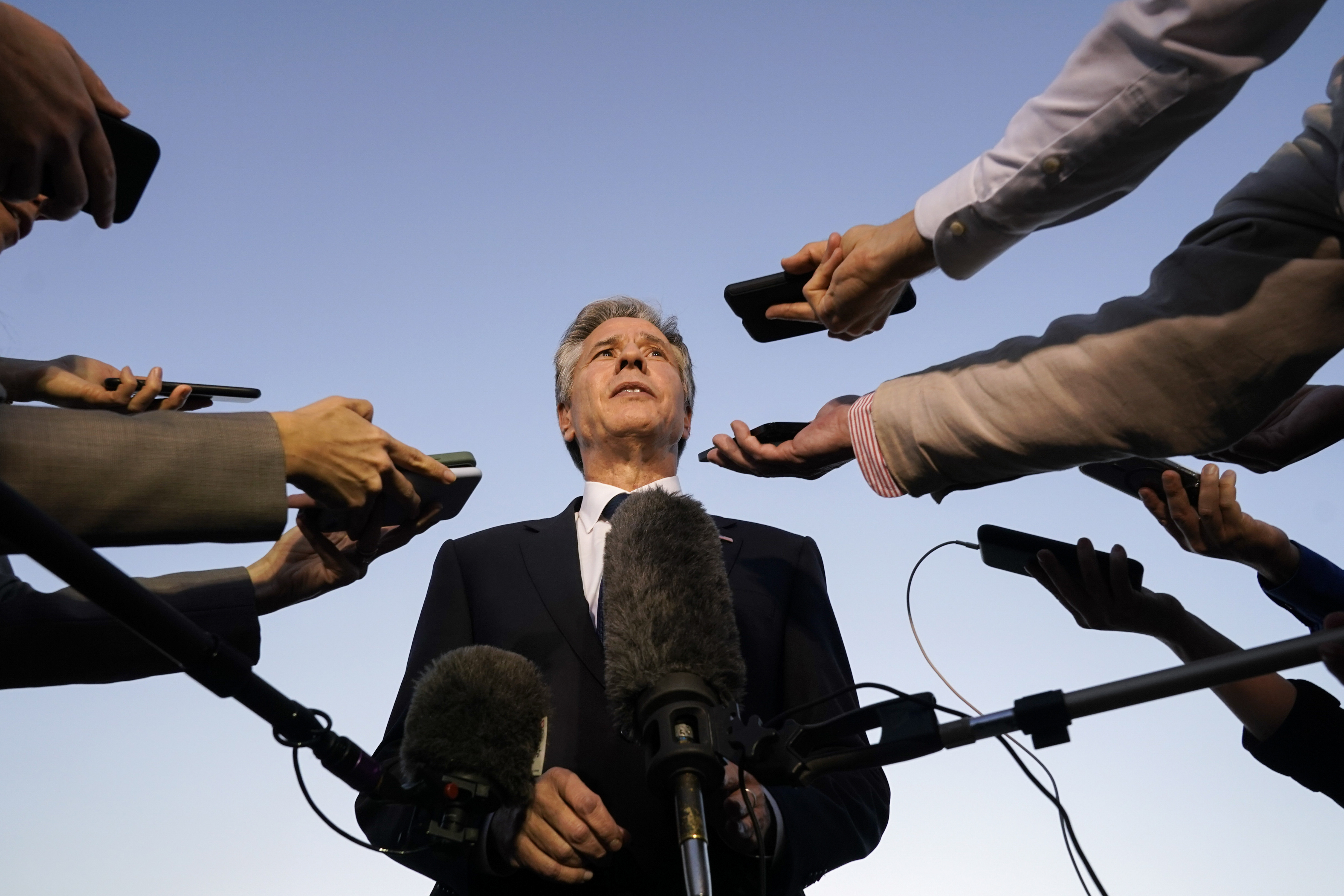
US Secretary of State Antony Blinken speaks to members of the media before leaving Cairo, en route to Jordan. (AP Photo/Jacquelyn Martin, Pool)

But he also warned: "The way that Israel does this matters. It needs to do it in a way that affirms the shared values that we have for human life and human dignity, taking every possible precaution to avoid harming civilians."

The top US diplomat also delivered a wider message of deterrence, adding: "No one should do anything that could add fuel to the fire in any other place. I think that's very clear."

There were signs of modest success for US entreaties on Israel on behalf of Palestinian civilians on Sunday when Blinken promised that the Rafah border crossing between Gaza and Egypt would open. The frontier has been closed, with Cairo citing a lack of immigration controls on the Gaza side and fear for the safety of aid convoys entering the bombarded territory.

Humanitarian supplies have been piling up at checkpoints on the wrong side of the border from where they're urgently needed. And Sullivan told CNN's Jake Tapper that while Israeli and Egyptian officials were willing to allow the evacuation of US citizens in Gaza through the Rafah crossing, Hamas was preventing it.

Sullivan also told CNN that Israel had agreed to turn water supplies back on for Gaza, a concession confirmed by Israeli officials, but one that Gazan officials said could not be verified because electricity necessary to pump water for use had not been restored.

Blinken also announced the appointment of David Satterfield, former US ambassador to Turkey, to help coordinate aid efforts. The new US envoy will be in Israel on Monday.

READ MORE: The 'Gaza metro': The mysterious subterranean tunnel network used by Hamas
How the Israel war could blow up into a new Middle East disaster

The fear of escalation is linked to an expected Israeli ground offensive inside Gaza, which could result in heavy fighting with Hamas and appalling civilian casualties. Experts worry that scenes of civilians caught in the crossfire could spark violence among Palestinians on the West Bank.

They could also prompt Hezbollah, a Lebanese-based Islamist party and militant group that – like Hamas – is designated as a terrorist organisation by the US, to send thousands of missiles into Israeli cities, opening a second front in the war.

Hezbollah is far more powerful than Hamas, and Israel has warned it would launch a destructive counterattack into Lebanon if the group steps up border skirmishes that have already broken out between the two sides. A double assault on Israel by Iranian proxies Hezbollah and Hamas could also lead to Israeli retaliation against the Islamic Republic, raising the risks of US involvement to protect its ally Israel.

Iran's mission to the United Nations warned on social media Saturday that if Israel's strikes on Gaza don't stop, "the situation could spiral out of control & ricochet far-reaching consequences."
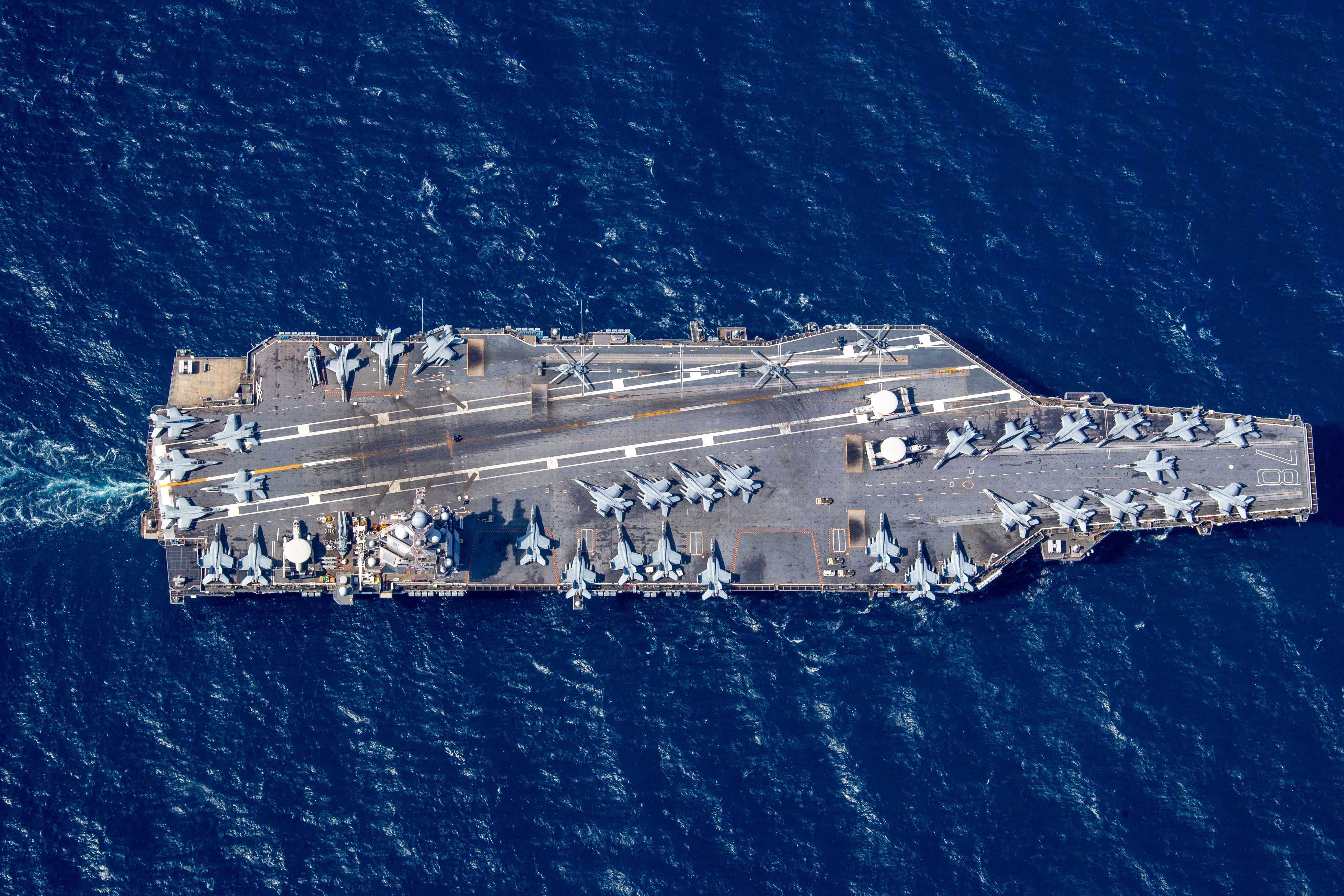
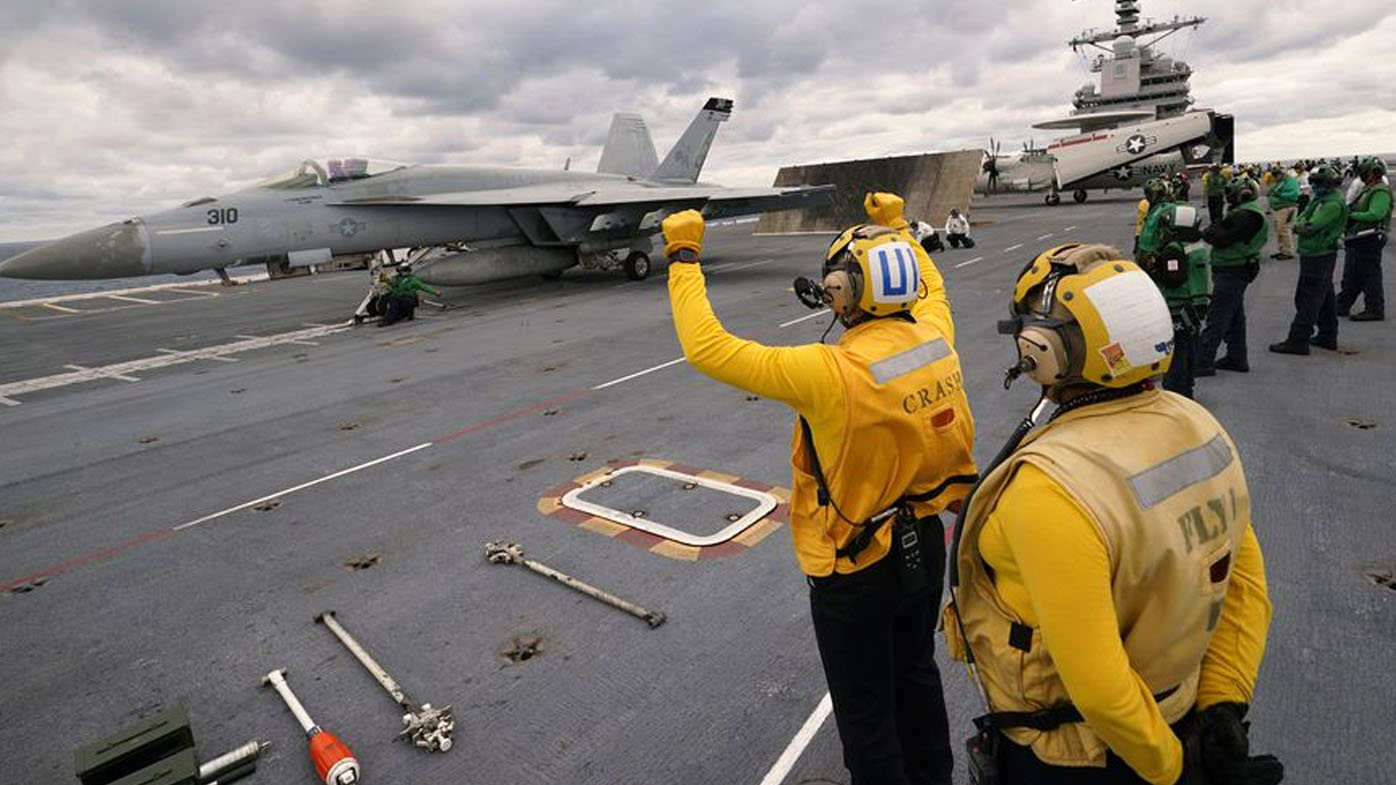
The USS Gerald R. Ford aircraft carrier

For the United States, there is the risk that a wider conflict could lead to reprisals by terror groups of Iran-backed militias against its remaining troops in Iraq and Syria, where they are engaged in missions to counter ISIS.

A fearsome Israeli ground offensive in Gaza would also narrow the diplomatic room that key Arab states such as Saudi Arabia and Egypt have to de-escalate the situation. Saudi Crown Prince Mohammed bin Salman for instance called for the "immediate lifting of the siege on Gaza" when he met Blinken on Sunday and rejected the "targeting of civilians, the destruction of critical infrastructure, and the disruption of essential services."

With his vehement support for Israel and repeated personal contacts with Netanyahu after the Hamas attacks, Biden laid the ground for Israel to defend itself. But he also created political room for the US to seek to constrain the worst impacts of what is expected to be a ruthless Israeli operation in Gaza and to try to keep longer-term regional peace efforts alive.

Given the complexity of the situation and the trauma the Hamas assault created in Israel, it's not certain that the president's balancing act is sustainable. But he has to try, since a major war in the Middle East would stretch US resources even further as Washington maintains a multibillion-dollar lifeline for Ukraine, and could foster an impression of global chaos that could harm Biden's reelection bid next year.

The president said in his interview with CBS' 60 Minutes on Sunday that the US could support both Israel and Ukraine and that it had no choice but to intervene because "we are the essential nation."
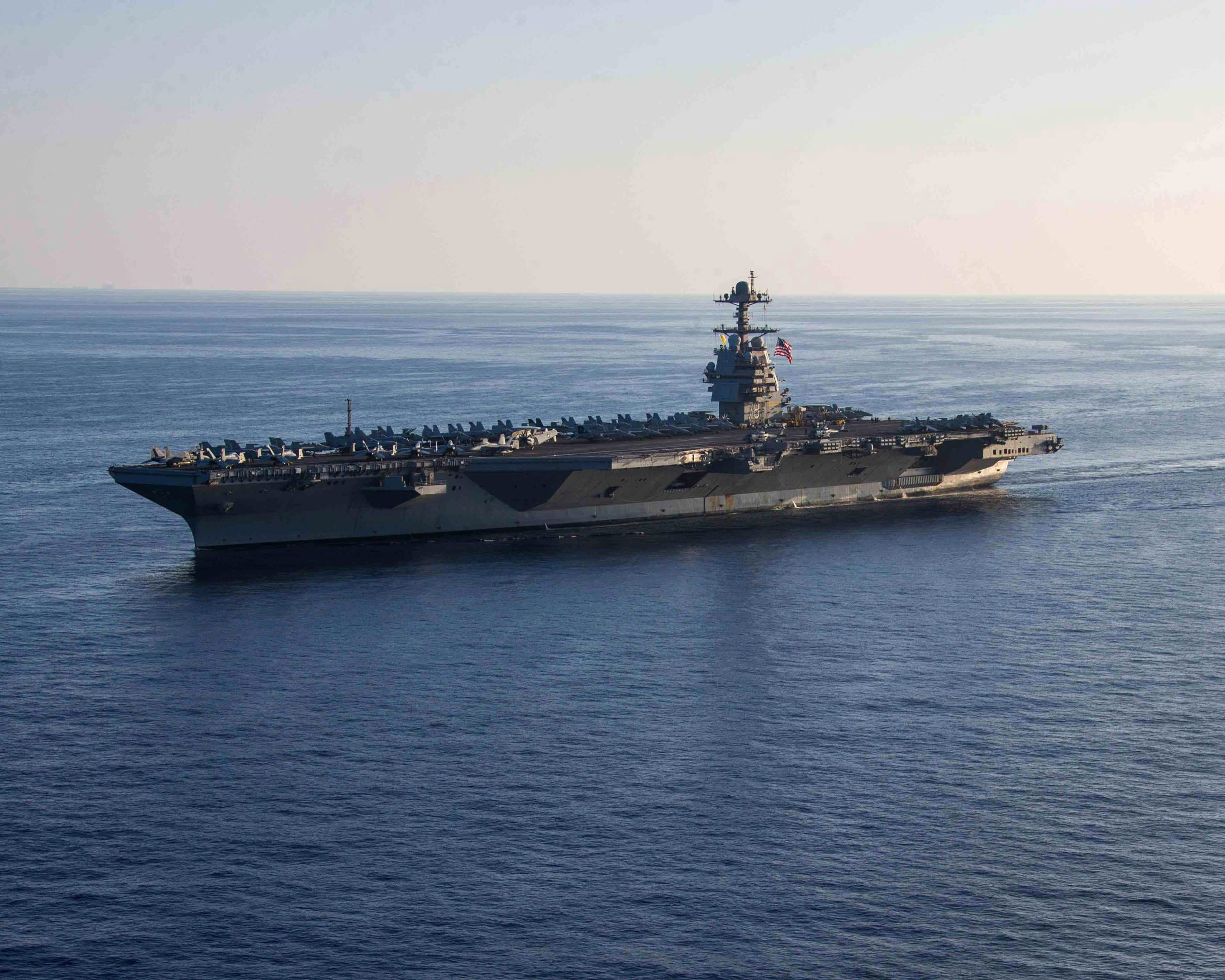
The USS Gerald R. Ford has steamed into position in the eastern Mediterranean

"We're the United States of America for God's sake, the most powerful nation in the history – not in the world, in the history of the world," Biden said. "We can take care of both of these and still maintain our overall international defence." He added: "And if we don't, who does?"

Biden's effort to rush more aid to both nations is being complicated by chaos in the House of Representatives, which is paralysed by the divided Republican Party's failure to elect a new speaker. Senate Majority Leader Chuck Schumer tweeted Sunday that the US had to send Israel the support it needed to defend itself. The New York Democrat said a delegation he was leading to Tel Aviv – which also includes Republican Senator Mitt Romney of Utah – was rushed to a shelter after an air-raid alert.

His post underscored the feeling of foreboding in Israel that is unfolding as Palestinians across the border in Gaza brace for even more relentless attacks, with hundreds of thousands of Israeli reservists poised for an order to move into the territory. Back in Washington, the administration is expected to offer a full classified briefing on the situation to senators Wednesday.

As the week begins, there is a daunting sense that as bad as the situation is, it's about to get much worse. Veteran US Middle East peace negotiator Aaron David Miller said that the Israeli offensive was coming within days and would be agonising, but he expressed the hope that diplomatic progress could eventually emerge.

"Whether it is 24 hours, 48 hours, whether it is by next week, the fact is, it's coming," he said.

He added he hoped "like many crises in this region involving an extraordinary amount of pain, in large measure to civilians … there will be some prospect for turning that extra amount of pain into gain."

Analysis by Stephen Collinson, CNN
'Not for faint-hearted': Warning as WA gas workers vote for strike

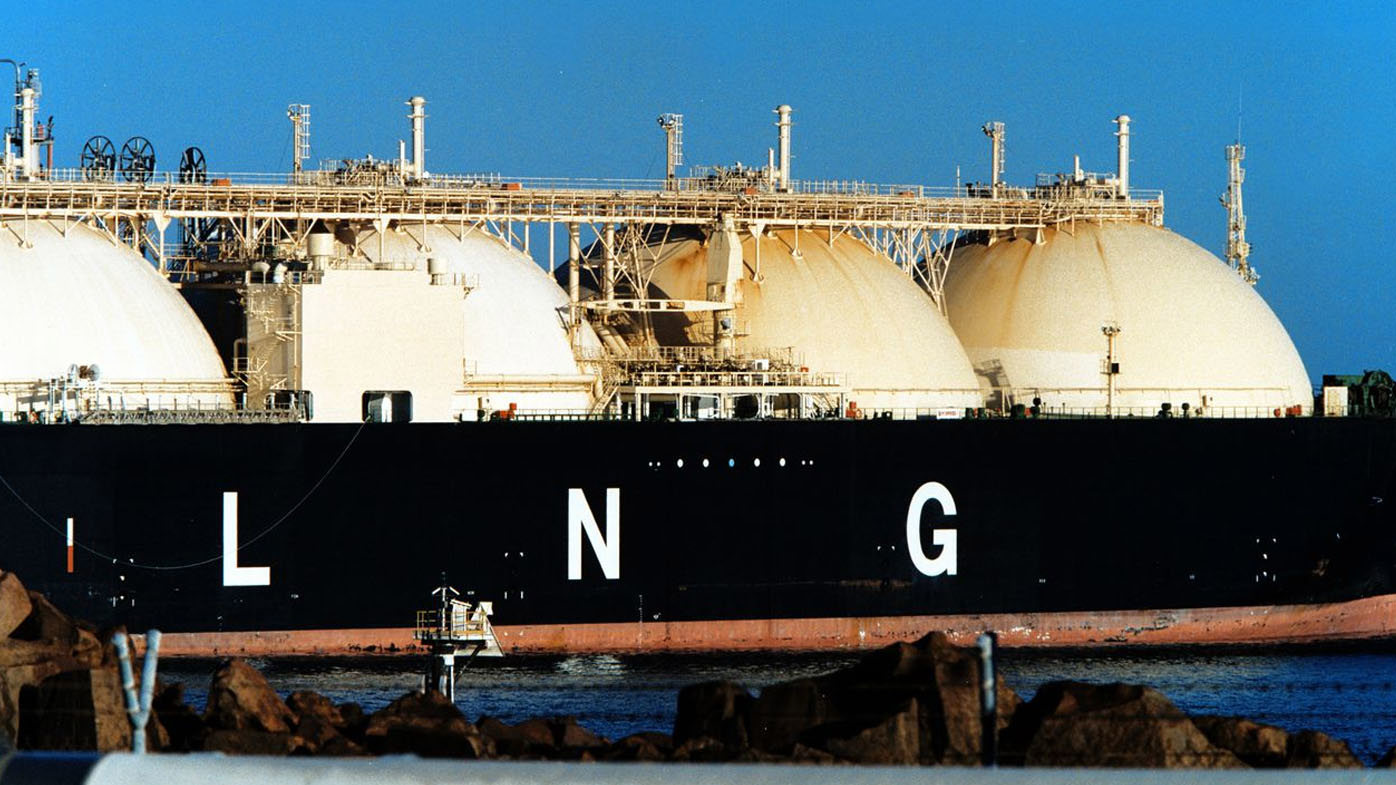
There are warnings strikes at two liquified natural gas (LNG) plants in Western Australia this week could impact the state's energy supply.

The workers at Chevron's Wheatstone and Gorgon gas facilities voted to continue the industrial action starting on Thursday.

The move came after the giant energy company and trade unions appeared at the Fair Work Commission last week.

READ MORE: Gaza conditions a 'complete catastrophe' as Israel gets set for offensive

The Offshore Alliance, which represents the workers, said on social media that it held a secret ballot of members over the past weekend and 91 per cent from the 410 members who participated backed strike action.

Last month, an in-principle agreement between Chevron and the workers at the two plants was reached following strikes.

But the Offshore Alliance claimed Chevron was backpedalling on some parts of the deal.

9news.com.au has contacted Chevron for comment. 

The two Chevron plants in the Pilbara supply about 44 per cent of WA's domestic gas supply and 6.6 per cent of the world's LNG stocks.

Energy market analyst EnergyQuest said the Wheatstone and Gorgon facilities produce an estimated $76 million in daily revenue.

READ MORE: PM 'warned': Dutton says Voice could've succeeded

"The Chevron industrial negotiations are not for the faint-hearted. They put at risk a third of Australia's LNG exports and almost half of Western Australia's domestic gas supply," EnergyQuest CEO Rick WIlliamson said.

The two WA projects also export LNG to Japan and China.

"Japan, as Australia's largest buyer of LNG, now has 16 per cent of its national LNG supply caught up in one industrial dispute in Western Australia," Williamson said.

Police searching for man who threw flare at Opera House protest

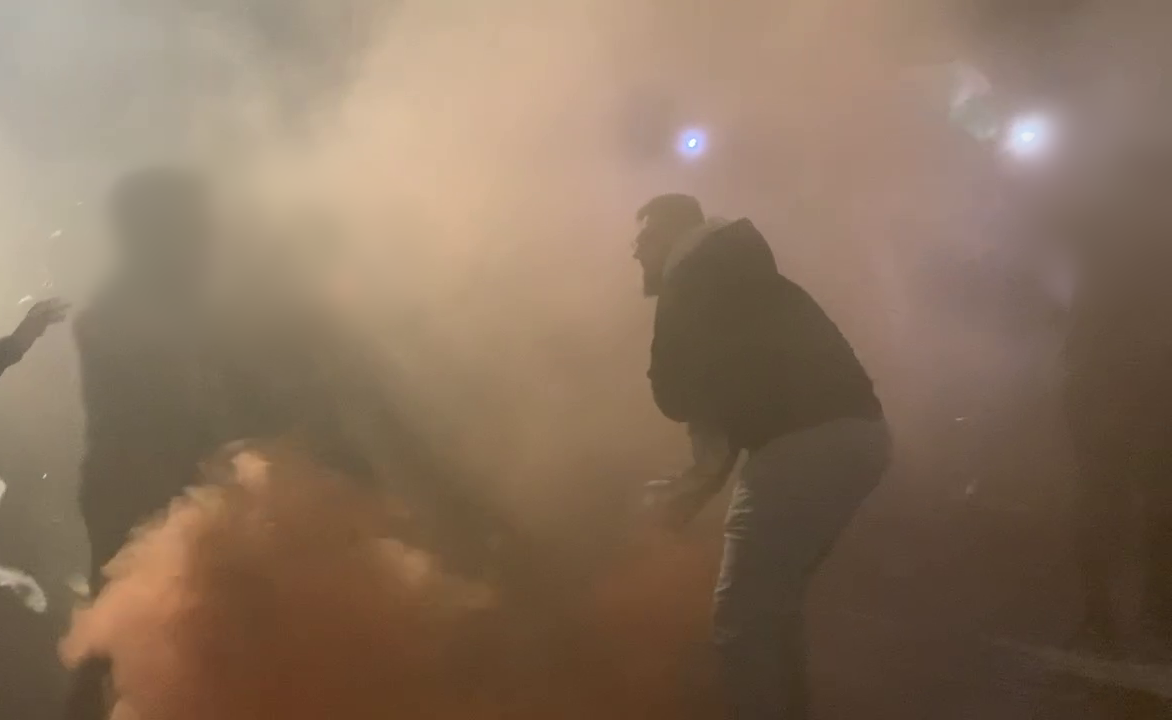
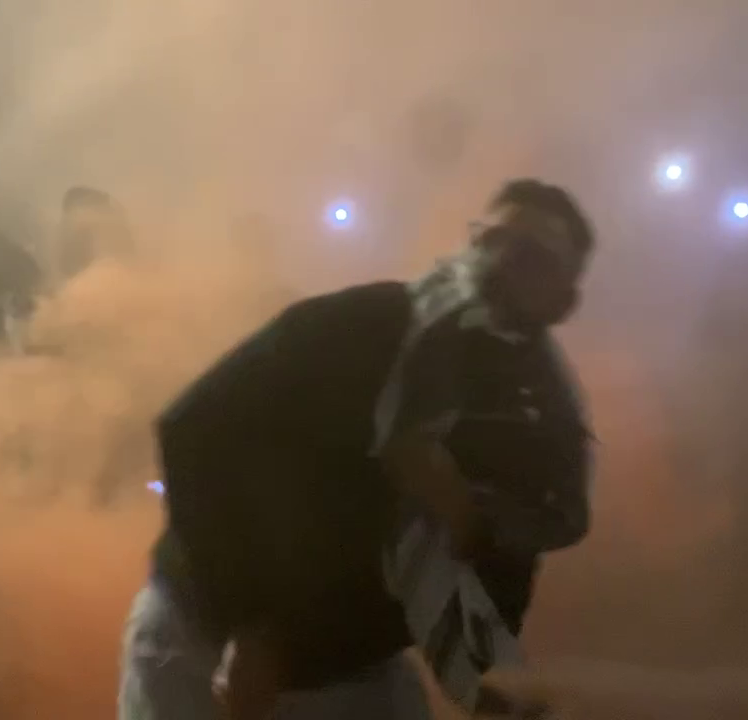
NSW Police have released footage of a man appearing to throw a flare during last week's pro-Palestinian protest at the Sydney Opera House.

Police say they want to speak to the man after they established a strike force to investigate unlawful protest behaviour at the rally in Sydney last Monday.

"The man is described as being of medium to heavy build, with short dark hair and beard, and, at the time, he was wearing spectacles," police said in a statement.

READ MORE: Map shows where 1.1 million Palestinians have been urged to flee

A man appears to throw a flare during a protestA man appears to throw a flare during a protest

"The man is depicted in the vision wearing a black hooded jacket, grey pants, black shoes, and a black and white scarf."

The pro-Palestine rally was marred by abhorrent antisemitic chants and the burning of an Israeli flag by a small group near the Opera House.

The rally's organisers roundly condemned that behaviour, which they said was carried out by a tiny minority of attendees.

A rally organised by the same group at Hyde Park yesterday went ahead peacefully, with no arrests made after more than 6000 people attended.

Similar peaceful demonstrations were held elsewhere around the country in support of the Palestinian people as humanitarian conditions worsen in the Gaza Strip.

Victoria Police said about 10,000 people attended a rally in Melbourne, while Brisbane and Adelaide also hosted similarly peaceful events.