Tag Archives: oceania

Man charged after 45-hour stand-off in NSW

A man has been charged following a 45-hour stand-off with police in NSW's Central Coast.

The incident began about 3pm on Wednesday when officers attempted to speak with a 33-year-old man at a home on Lake Road in Swansea.

Police allege the man entered the house and then refused to leave.

LIVE UPDATES: Voice to parliament referendum rolling coverage and results

Man arrested after 45-hour stand-off with police on Lake Road in Swansea.

"A perimeter was established and specialist police, including negotiators, were called to the scene," NSW Police said in a statement.

Officers attempted to negotiate with the man until midday Friday, when the man was taken into custody.

"Police seized eight firearms from the home including a sawn-off rifle, a shotgun, a lever action rifle and five pistols."

He was charged with 35 offences including use offensive weapon to prevent lawful detention, possess unauthorised firearm, possess prohibited drug and goods suspected stolen in or on premises.

Majority of polls closed after PM makes last-minute plea

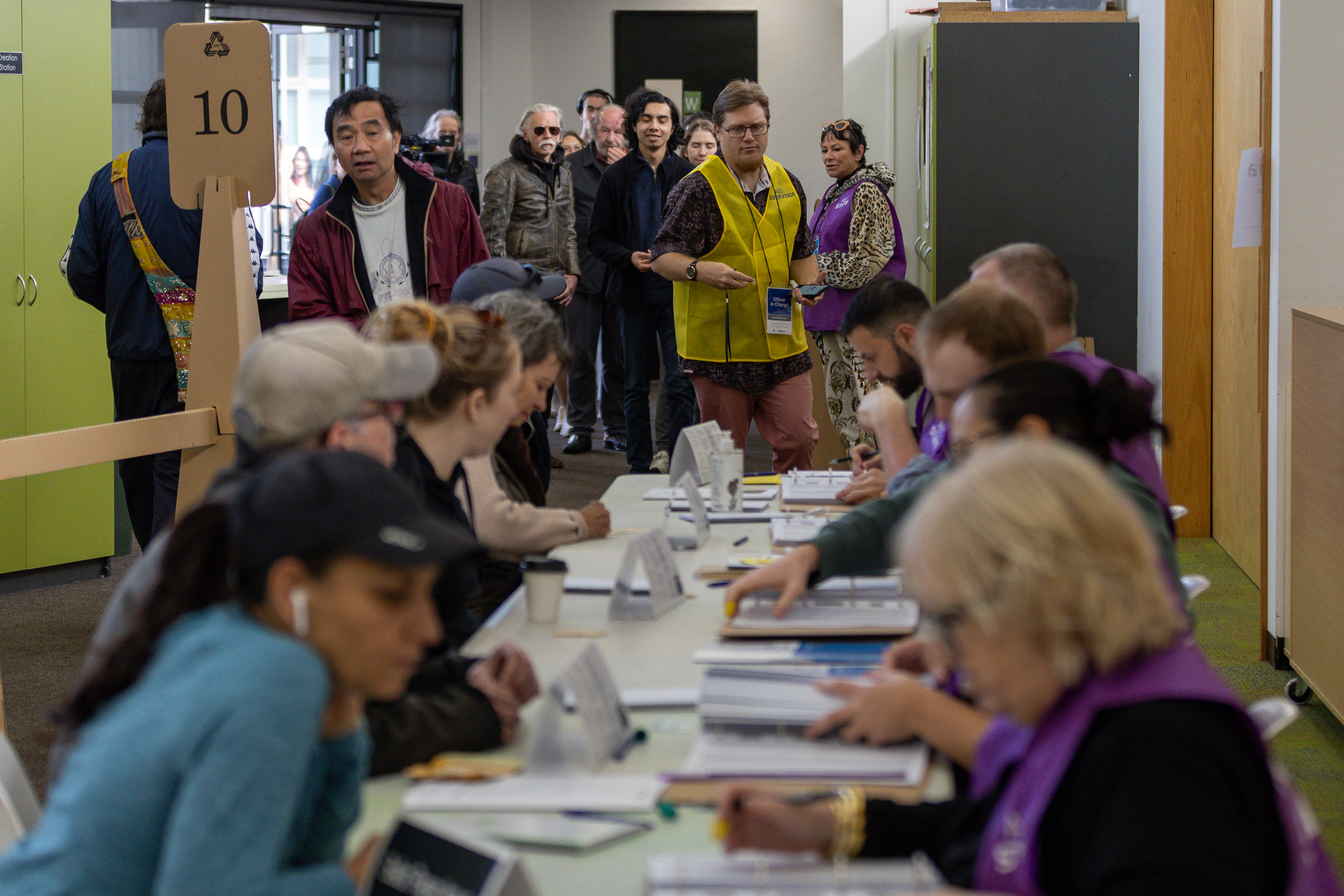
The majority of polls across the country have closed as Australia votes on whether to establish an Indigenous Voice to parliament and recognise First Nations people in the Constitution.

With polling booths shutting at 6pm local time across the country, voting centres in New South Wales, Victoria, Queensland, Tasmania, South Australia and the ACT have all closed and counting has begun.

Voters in the Northern Territory and Western Australia are the only ones left with any time left to cast their ballots before the booths are shut.

REFERENDUM: Follow our live results tracker here

More than five million people – including Prime Minister Anthony Albanese and leading No campaigner Jacinta Nampijinpa Price – had already cast their ballots prior to today.

With the proportion of undecided voters, believed to be around the 10 to 15 per cent range but as high as a quarter in some surveys, the PM took to social media on Saturday to try and capture the last-minute vote of still-undecided Australians.

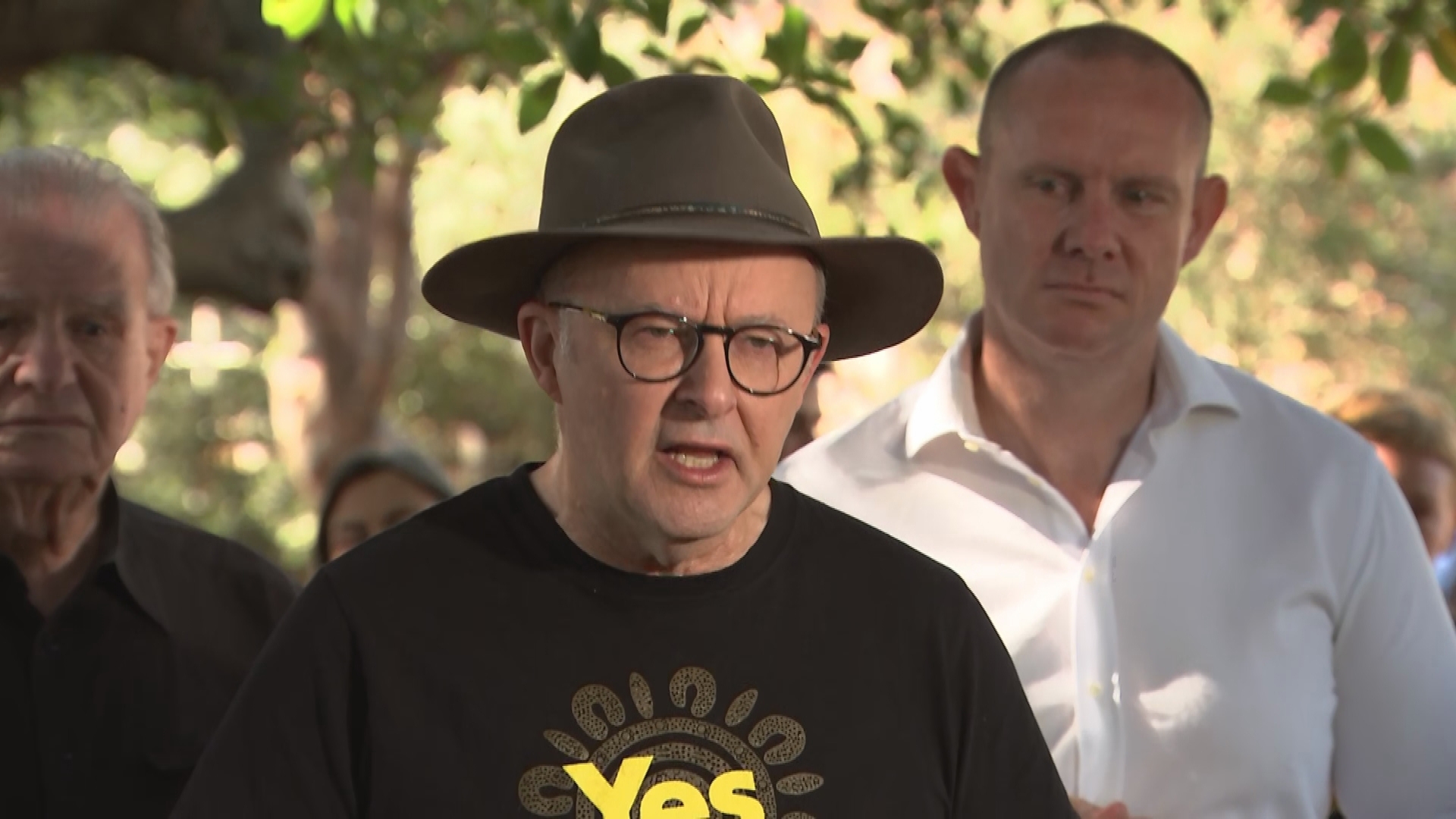
"The Voice will recognise Indigenous Australians in our Constitution and set up a committee to give advice," Albanese said.

"It's a straightforward idea to make a practical difference."

LIVE UPDATES: Voice to parliament referendum rolling coverage and results

If opinion polls are to be believed, the referendum appears unlikely to pass, with more than 50 per cent of Australians planning to vote No while support for the Yes campaign sits in the low-to-mid 40s.

READ MORE: Everything you need to know about voting in the referendum

On Friday, Albanese urged Australians to embrace what he described as a once-in-a-generation opportunity to improve the lives of Indigenous Australians.

"This is not my campaign. This is a request from the First Australians made in 2017 at Uluru, after years of consultation with thousands of Indigenous Australians across hundreds of meetings, across many years," he said.

READ MORE: Where you can vote on the Voice and snag a democracy sausage

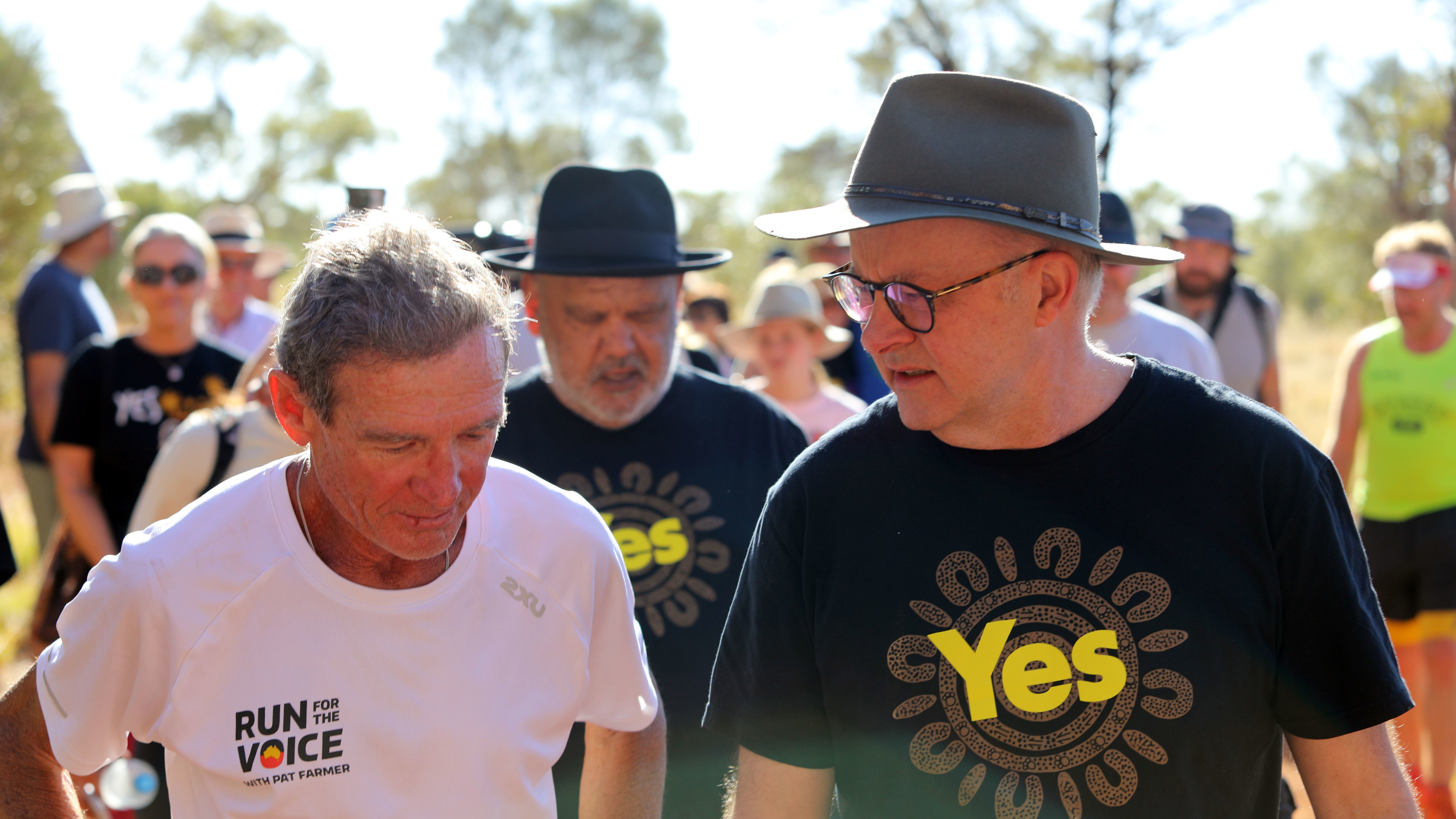
Prime Minister Anthony Albanese and Noel Pearson meet with Pat Farmer at Uluru

"And it's a gracious request, just asking fellow Australians to walk with them on the journey towards reconciliation… we can't continue to have a situation with an eight-year life expectancy gap, where an Indigenous young male is more likely to go to jail than to university.

"This is a once-in-a-generation opportunity for recognition."

Opposition Leader Peter Dutton, though, repeated his calls for Australians to vote No.

"I hope it's a No vote on the weekend because it hasn't been properly explained," he said.

"It's divisive. It's permanent once it goes into the Constitution and I just don't think, in their millions, Australians will support it."

Dutton has stayed out of the spotlight throughout Saturday.

For the referendum to succeed, more than 50 per cent of voters across Australia must vote Yes, and there must also be a majority of Yes voters in at least four of the six states.

READ MORE: Give us a seat at the table, not the crumbs: Dodson makes first appearance on Voice campaign

Opposition Leader Peter Dutton at a press conference where he announced the Liberal Party will oppose the Indigenous Voice to parliament.

All votes cast today will be counted by the Australian Electoral Commission (AEC) tonight, along with the majority of pre-poll ballots, meaning there should be a clear indication of whether the motion has succeeded tonight.

But due to counting processes and postal votes taking far longer to be tallied, the AEC won't make an official declaration on the result for up to 14 days.

"The AEC never officially declares results of a federal election or referendum on the night," it says.

READ MORE: Yes and No campaigns make final pitches to voters

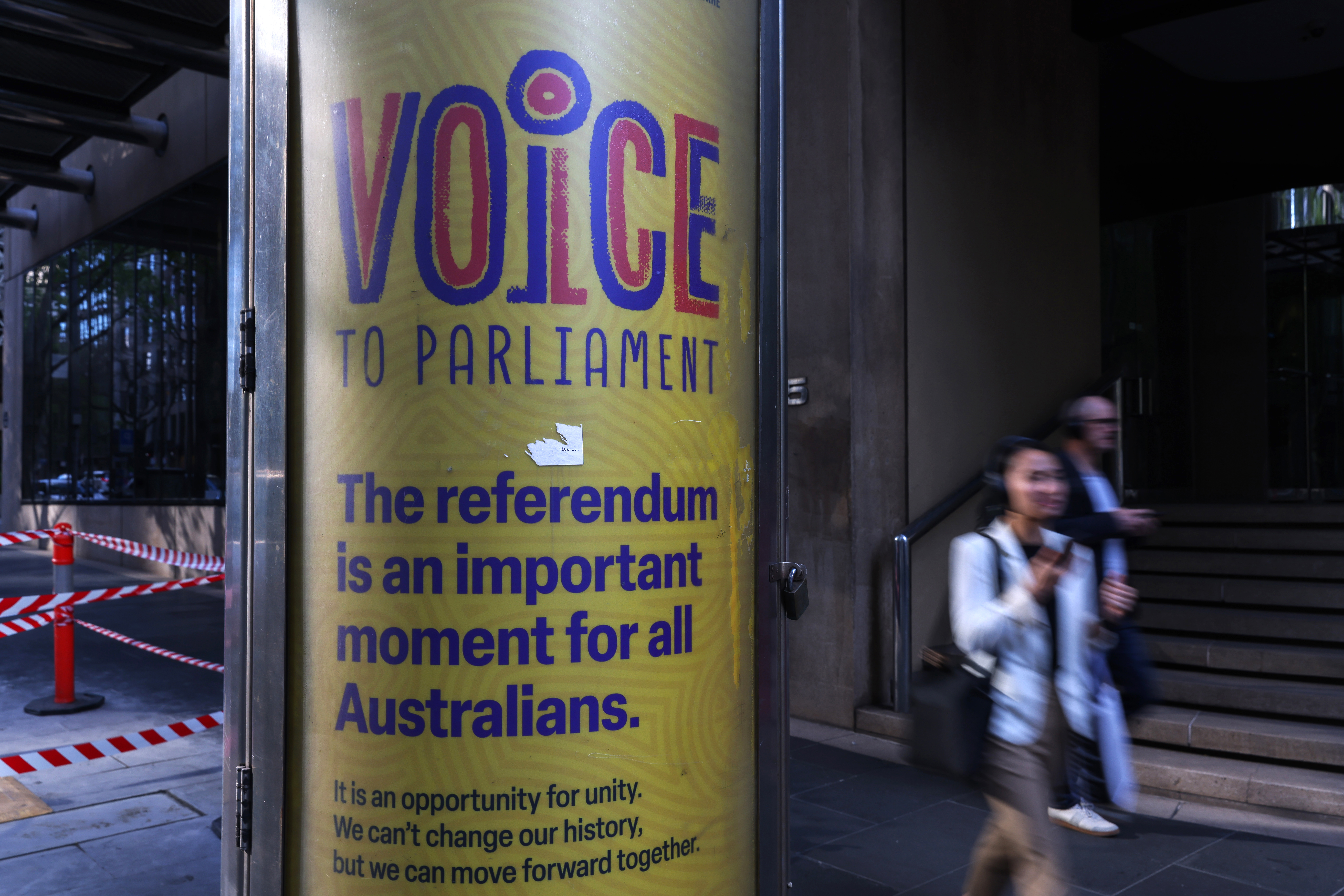
A Voice to Parliament referendum information board

"The AEC has to count each ballot paper more than once via a process called 'fresh scrutiny' – this occurs in the days after referendum night.

"Each aspect of the double majority for the referendum has to be mathematically certain before an official AEC declaration or the return of the writ."

Of the 44 referendums in Australian history, only eight have succeeded.

'My daughter didn't go to war. She just went to dance'

Because of the fracture in her right leg, Karin Journo had talked herself out of going to the Tribe of Nova music festival and sold her ticket.

But a week before Hamas militants turned the party into a killing ground, she bought another.

The 24-year-old French-Israeli airport worker who loved to travel had learned that a bunch of her friends were going to celebrate the departure of one of them to the United States. She didn't want to miss out.

READ MORE: Who is El Deif, alleged mastermind of the Hamas' attack?

Karin Journo takes a selfie before she went to the Tribe of Nova music festival.

Before heading out to dance the night away, she snapped a photo of herself in her party gear — black shorts and black halter top for a joyous night of electronic music in a dusty field. She'd left her long dark hair untied and painted her nails bright red. She was clearly excited, giving a V-sign in her selfie.

And dance she did: Video shot that night showed her waving her arms to the thumping beats, though she was rooted to the spot by the gray protective boot that encased her right foot and calf all the way up to her knee.

READ MORE: Palestinians attempt to flee northern Gaza after Israel order

It made her easy to recognise in subsequent video footage filmed as Hamas started to launch its deadly attack.

Sheltering behind a car with a friend, her face was marked with worry. With explosions echoing in the background, she looked around anxiously in another. In a final video, she is seen sitting just outside the open door of an ambulance, wearing a brown hoodie borrowed from a friend. Two people were laid out inside the vehicle, not moving.

At 8:43 that Saturday morning she sent a final text to her loved ones, according to her father, Doron Journo: "To the whole family, I want to say that I love you a lot, because I am not coming home."

"Since that message, we have heard nothing. We don't know if she is dead, if she is in Gaza. We know nothing," the father says.

"My daughter didn't go to war," he says. "She just went to dance."

Who is El Deif, alleged mastermind of the Hamas attack?

One influential military figure in Hamas was always resolutely opposed to any kind of peace with what Hamas insists on calling the "Zionist Entity."

Mohammed Diab Ibrahim al-Masri, is known as El Deif (the Guest), because, for decades, he has stayed in different houses every night to avoid being tracked, and killed, by Israel. He's now in charge of Hamas' military wing, the Al Qassem Brigades.

Thought to have been born in the 1960s, El Deif is little known to ordinary Palestinians, according to Mkhaimar Abusada, professor of political science at Al Azah University in Gaza.

READ MORE: Trump says he stands with Netanyahu after a barrage of criticism
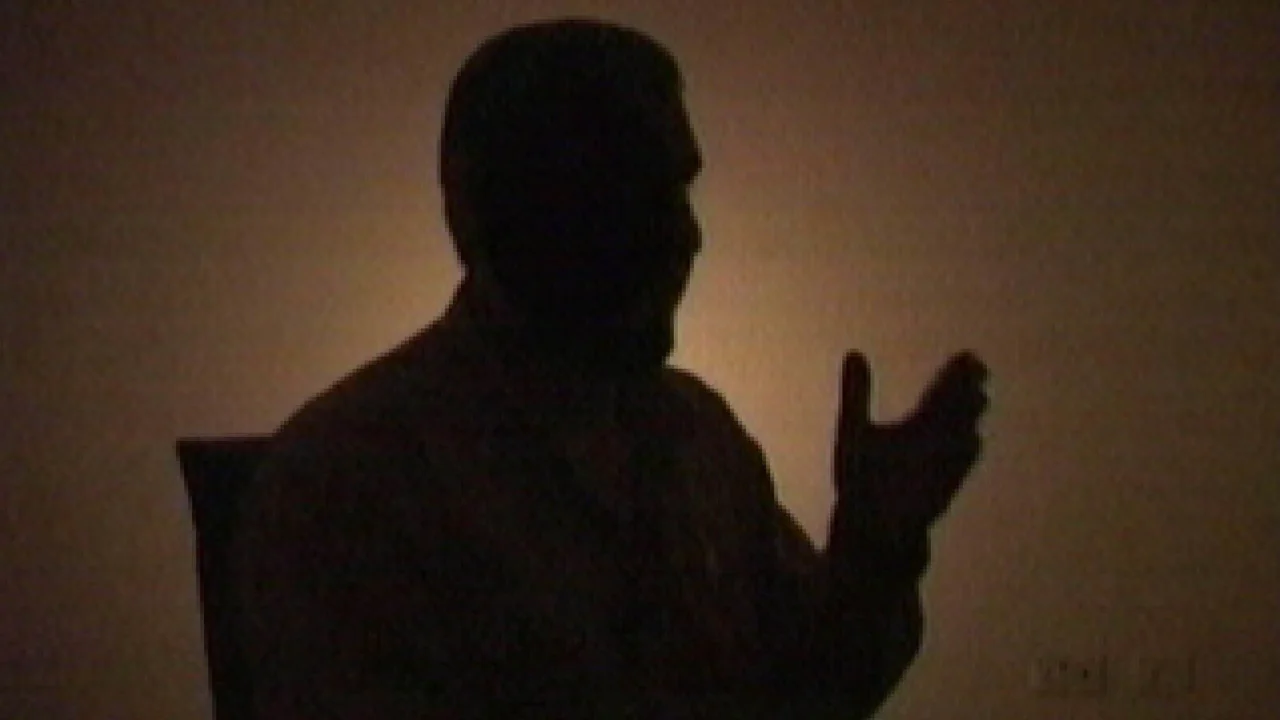
"He's very much like a ghost to the majority of the Palestinians," he said.

The Al Qassem Brigades were opposed to the peace process embraced by Yassir Arafat, then-leader of the Palestine Liberation Organization, and the 1993 Oslo Accords that were supposed to pave the way to a two-state solution of a new Palestine living in peace alongside Israel.

In 1996 El Deif, an accomplished bomb maker, was behind a wave of four suicide attacks that killed 65 people in Jerusalem and Tel Aviv and other outrages intended to derail the peace process.

As Hamas captured Gaza from rivals Fatah in 2007 (after winning the Palestinian elections the year before) Israel and Egypt tightened a noose around the enclave, which houses around two million people.

Hamas is seen by many Palestinians as the best alternative to rule by the Palestinian Authority (PA), which is dominated by Fatah and the larger Palestine Liberation Organization.

The PA pays the wages for the public sector in Gaza, and this summer polls showed that support for the PA, which only rules on the West Bank, was nonetheless around 70 per cent in Gaza.

READ MORE: French school terror suspect held for questioning before attack
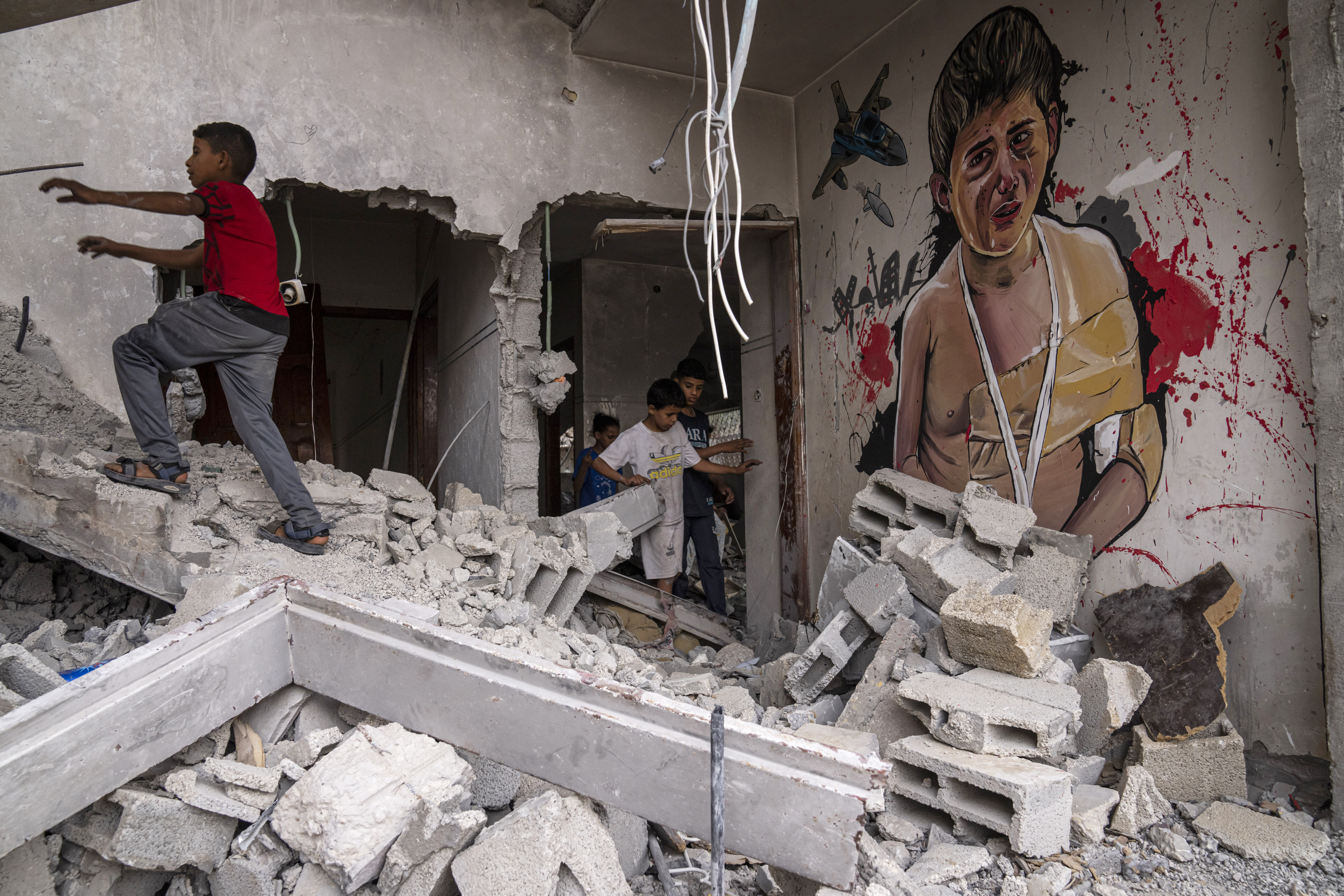
Support for Hamas in Gaza has rarely tipped much past 50 per cent. And on the ground, in private conversations, it's been difficult to find people who are genuinely behind Hamas military campaigning.

But few people are prepared to be openly critical and risk arrest.

Israel's policies over the West Bank, where Jewish settlements, which are illegal under international law, spread steadily across the occupied territories, over access to the al Aqsa Mosque complex in Jerusalem, and the moribund efforts to achieve a viable two-state solution, meant Hamas was able to weaponise grievance.

The movement has no shortage of volunteers in the crowded enclave everyone there calls the "biggest prison in the world."

The tighter the Israeli and Egyptian control over Gaza's borders – the more Hamas (and other groups) developed military means to fight back.

Chief among them is rockets. Primitive at first, the missiles have been improved and refined over years of help from Iran.

The Tehran theocracy, also dedicated to the eradication of the Jewish state, trained engineers, organized technology transfers and guided developments to create rockets capable of hitting Jerusalem and Tel Aviv.

READ MORE: 'Viral capability': TikTok becomes valuable scam awareness tool
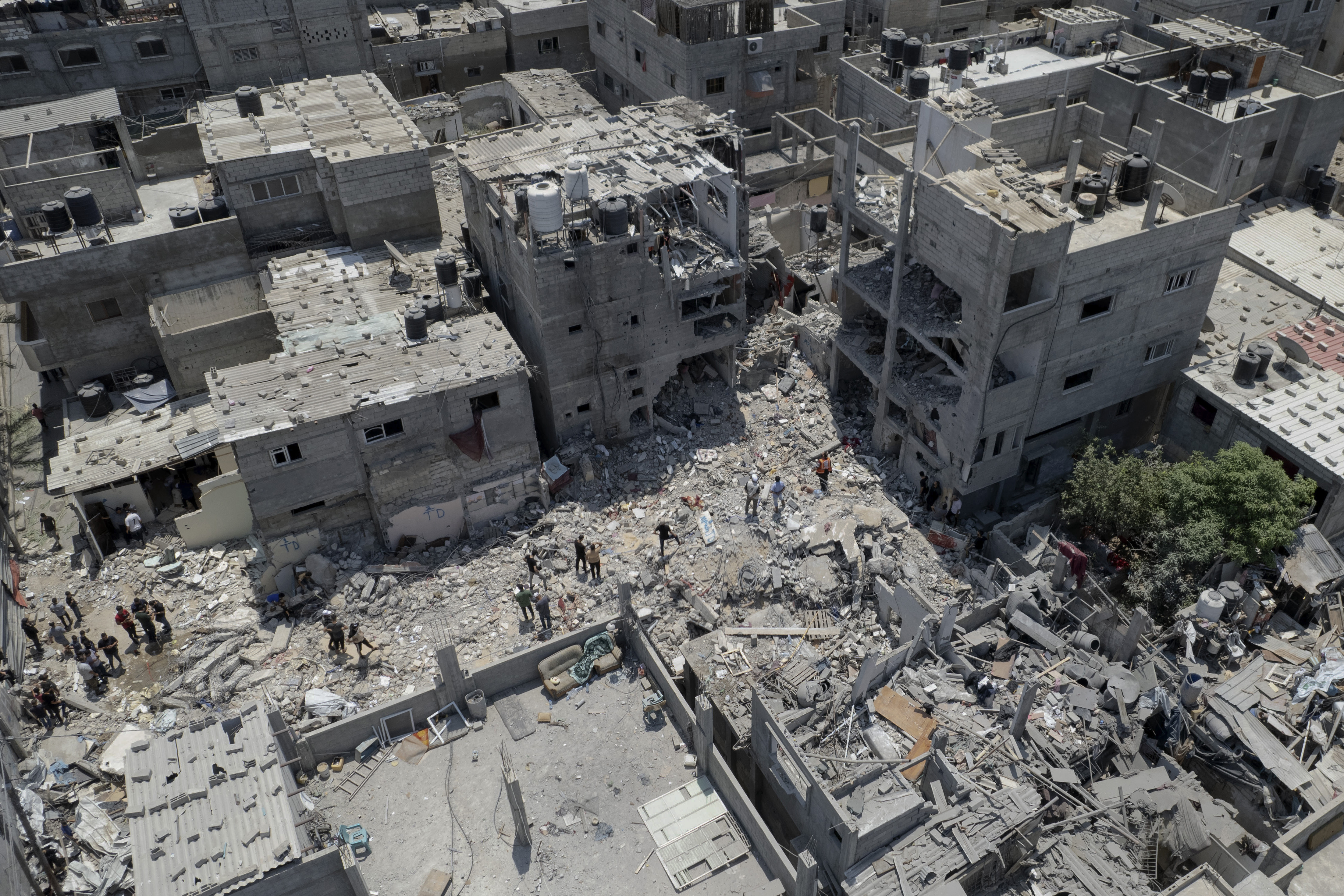
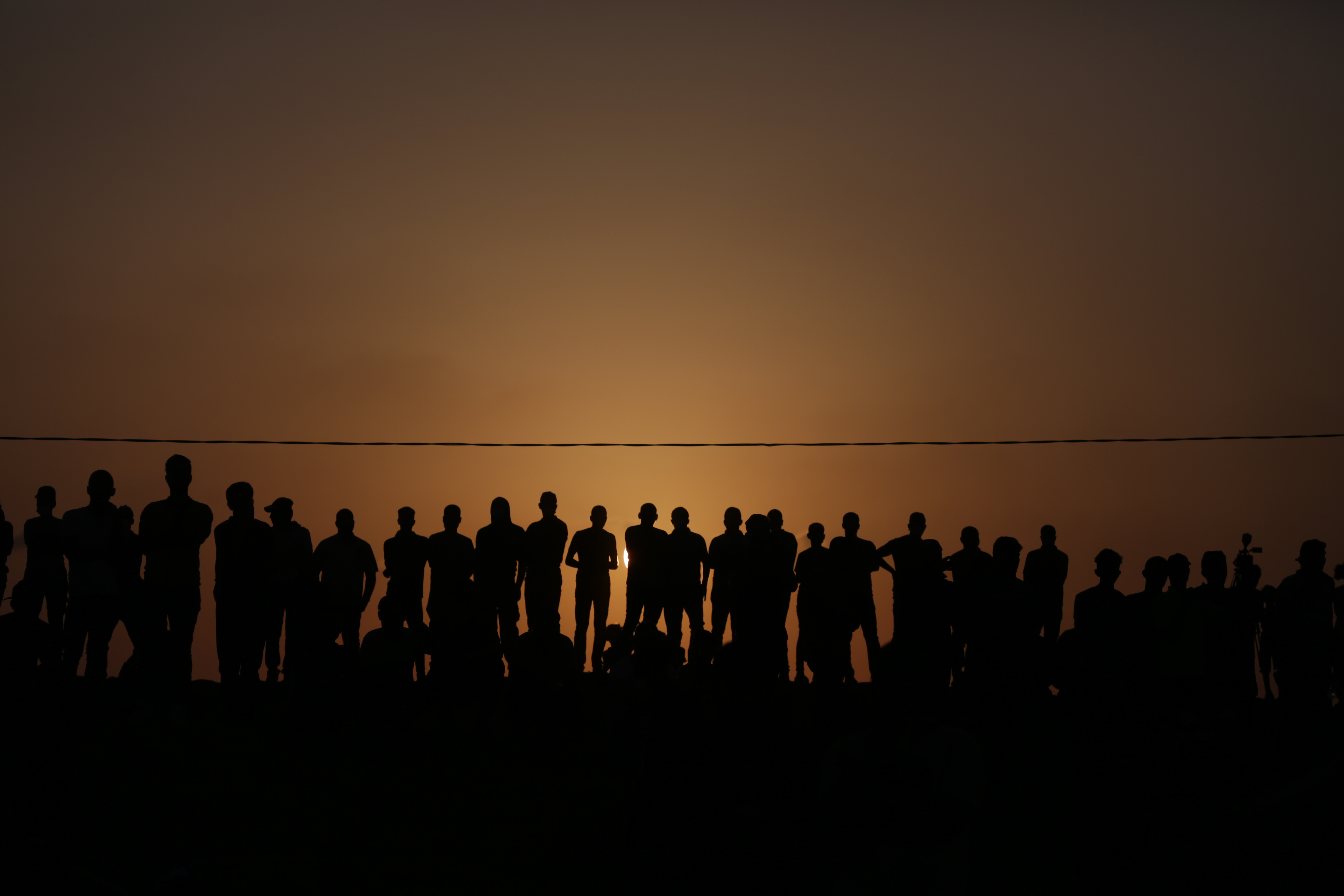
Men like El Deif, the bomb makers and decision takers, were hunted by Israel.

In 2014, an air strike killed his wife and daughter. He lost part of an arm, a leg and his hearing. No doubt his hatred for Israel intensified then.

But his emotions were leavened with zealous cunning. And the first, and most important deception, was to transform the Israeli perception of Hamas.

In the last two years, Hamas, under El Deif's guidance, worked to convince Israel that its focus was on domestic issues, on rebuilding Gaza, on securing work permits for people to seek employment in Israel, on building up its infrastructure.

"The Israelis have felt that, in the long run, that Hamas is known for these policies more than that there's going to be a call for a military confrontation with Israel," says Abusada, the Gazan professor.

All the while, though, Hamas was plotting a massive assault that would end any perception in Israel, and beyond, that the Islamic Resistance had lost its strategic mojo.

Key to this change, too, was another major figure in Hamas' military wing, Yahya Sinwar. A former head of the Al Qassem brigades, he's now the head of Hamas in Gaza.

He focused efforts on building relationships with foreign powers — notably Egypt and Iran.

READ MORE: Australian on Tel Aviv flight forced to leave Israeli partner
Hamas' attack on Israel last weekend represents the worst Israeli military setback since 1973. Back then Syria and Egypt launched a surprise assault on Israel over the Yom Kippur holiday. Initially successful, the Arabs were soon pushed back as Israel rallied.

Now Israel is massing troops on the borders with Gaza and in the north where it faces Iran-backed Hezbollah across the fence with Lebanon.

What will Hamas ultimately gain from its bloody gamble? Karim von Hippel, director of the London-based Royal United Services Institute, says "they may have been planning this for years and thinking through what they can do, because everything else they have tried, hasn't worked."

"But certainly this is not going to work either. I think this will spell the end of Hamas."

That may be a zero-sum option that not even the shadowy El Deif had guessed at.

'Viral capability': TikTok becomes valuable scam awareness tool

Two-thirds of Australians aged over 15 were exposed to a scam last financial year.

Of those people, 552,000 fell victim, according to the Australian Bureau of Statistics (ABS).

It's led experts to search for ways to reduce the $3.1 billion residents lost in 2022 to scams but TikTok has emerged as a valuable source in the scam prevention fight.

READ MORE: AI voice cloning scams 'will come to Australia' – so how do you guard against it?

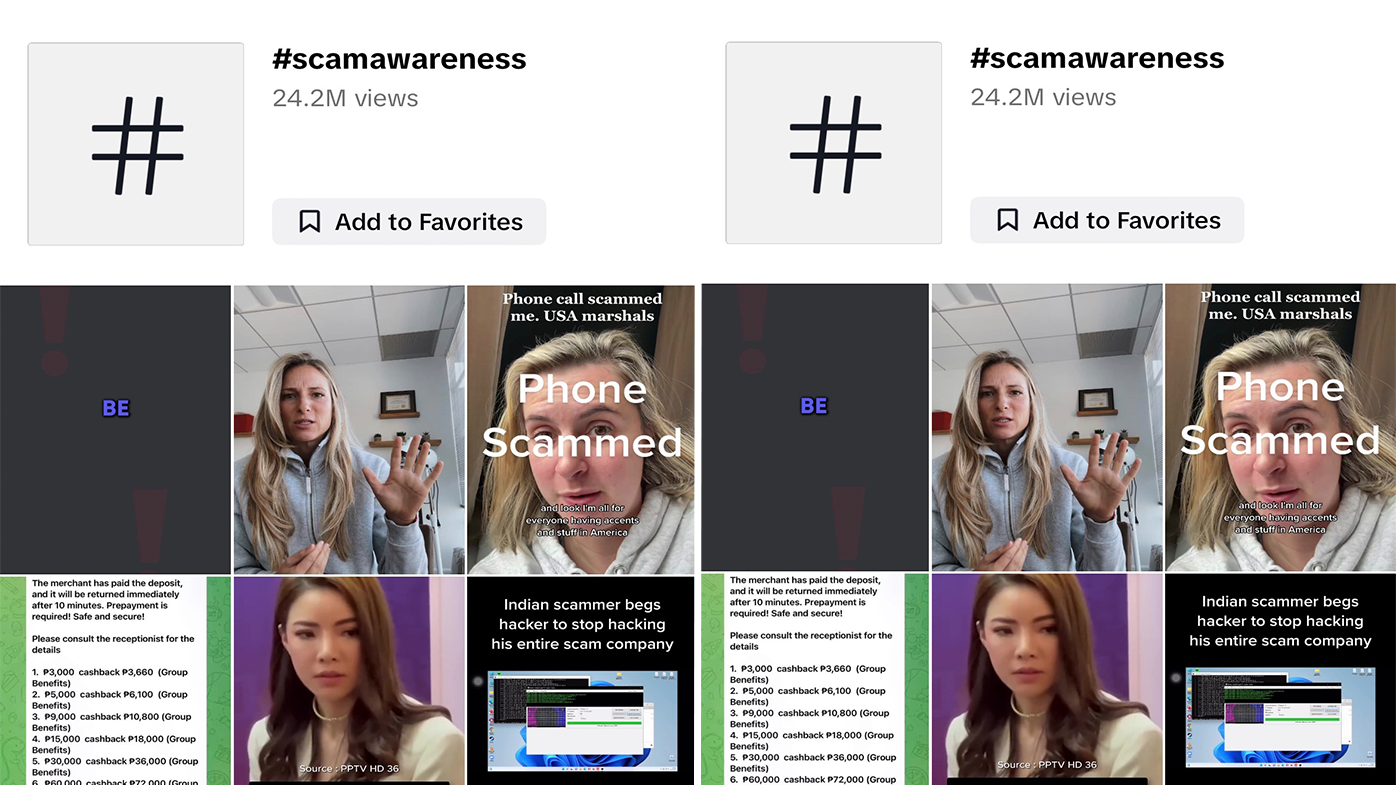
TikTok has 840.4 million views under its scam video hashtag and another 24.2 million under #scamawareness.

The Chinese-owned social media platform, built primarily to entertain, has 840.4 million views under its scam video hashtag and another 24.2 million under #scamawareness.

Sophos scam researcher Aaron Bugal said TikTok was becoming key to driving safety in Australia.

Bugal said the information on TikTok was a combination of different user experiences.

"You've got a lot of the users that would suggest to be on the lookout for certain types of scams and ways in which scammers obtain the ability to deceive people," he said.

LIVE UPDATES: Voice to parliament referendum rolling coverage and results

Bugal said the types of videos on TikTok were varied but often had similar themes like romance, cryptocurrency and impersonation scams.

He said it was beginning to "eclipse traditional awareness methods".

"Scamwatch here in Australia is a great resource and I strongly suggest that anybody who is unfortunately a victim of a scanner… to report it to Scamwatch.

"But that viral capability of these social media platforms like TikTok, it's a really good and quick way to get that scam quickly out to others."

There are also scams on TikTok itself, prompting a warning from Bugal to be mindful of what they are being asked to do as viewers.

"Take stock of what is being told to you and just take a moment to digest it," he said.

"If it's trying to be coercive, or if there's some sort of request for money or information, be super hesitant just to divulge that information."

Intelligence and security concerns surrounding the app also prompted some countries, including Australia, to ban TikTok from government devices six months ago.

There are concerns the app could be used by the Chinese government for surveillance.

TikTok has consistently denied these claims.

READ MORE: Do you feel like your phone is listening to you? You're not wrong

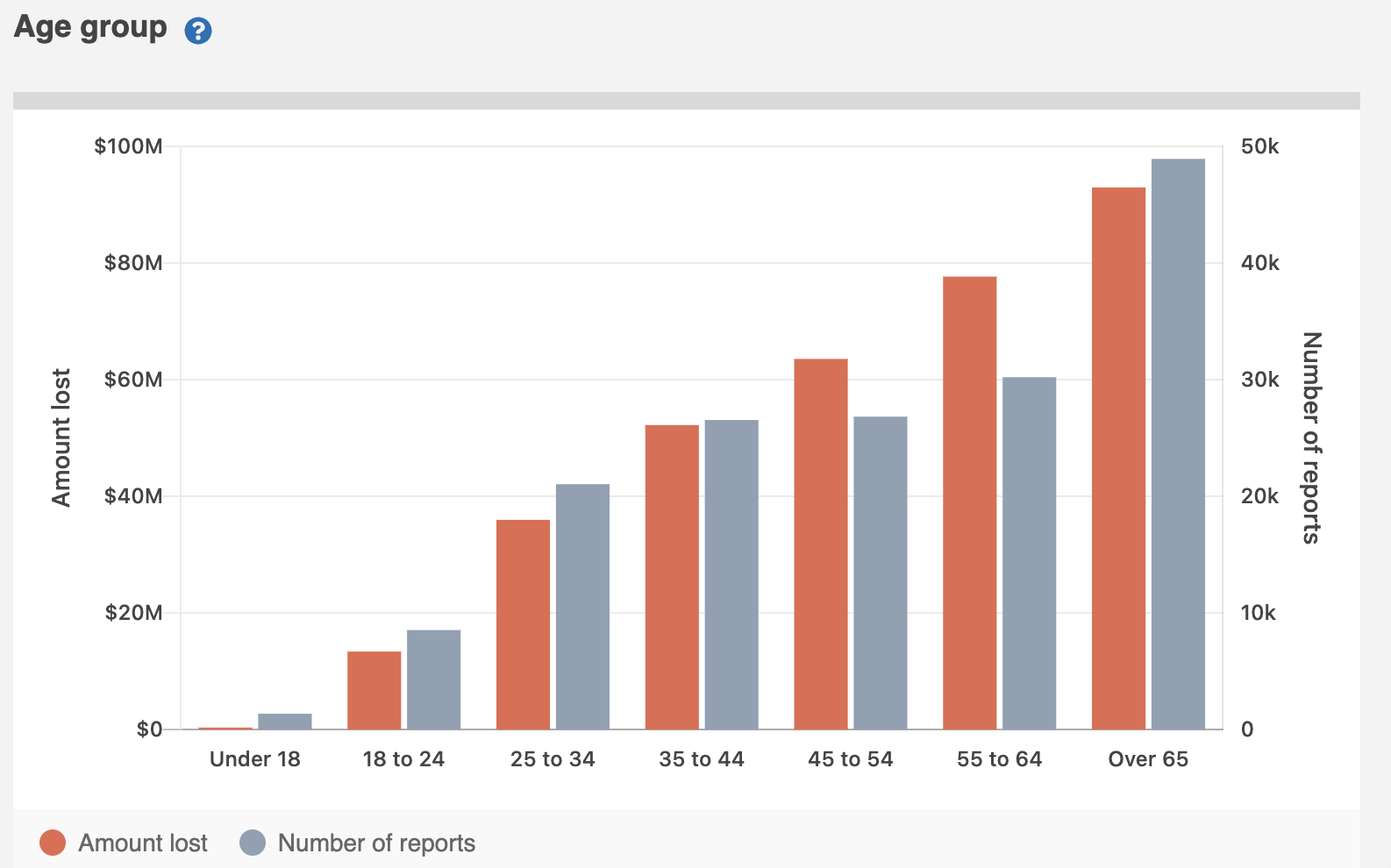
The age groups of Australians who have fallen victim to or reported a scam from January to August 2023.

But, nevertheless, the videos on TikTok likely contribute to Generation Z being more scam-aware than older generations.

Eighteen to 24-year-olds have lost about $15 million to scams compared to those over 65 who have lost nearly $100 million from January to August this year, according to Scamwatch.

Bugal said having conversations with friends and family as well as educating yourself about scams was the most effective way to prevent falling victim.

"Especially for scams and scammers that originate from outside this country, there's very little to no recourse so we can take against them," he said.

"So until that change, like laws change and regulations change or even governance around using telecommunication systems for fraud in this sort of way (changes)… it's down to the individuals to be a little bit more aware about what's happening."