Myjanne Jensen reflects on creating her introspective podcast series.
Tag Archives: oceania
A Moment In Crime – The Patron: Victim of ‘super predator’ James Wallace speaks out in final part of Herald true crime series
Herald podcast A Moment In Crime – The Patron looks at life and crimes of James Wallace.
Understand Obsessive Compulsive Disorder: No Such Thing as Normal by Sonia Gray, episode 10
Research indicates the number of Kiwis with OCD could be as high as 80,000.
Radio host attempted murder trial verdict: Duo guilty of knife attack ambush on Harnek Singh
Radio host Harnek Singh nearly died after a group of strangers ambushed and stabbed him.
Three-peat of national country music awards for Whanganui singer Sophie Toyne
Sophie previously won the award in 2019 and 2020.
Jay Rerekura: Could a connection with taiao counter the cost of living?
OPINION: Raukotahi is a concept that acknowledges all those who have gone before us.
'It's too late for sorry, bud': Family's anguish after killing
Connor Godfrey broke down in tears as the family of a man he accidentally choked to death told a court of their pain.
The 22-year-old pleaded guilty to manslaughter over the death of 43-year-old Giuseppe Pagano following an altercation at a Sydney apartment block in the early hours of Easter Sunday, 2021.
The court accepted Godfrey acted in self-defence after Pagano attacked and punched him but found he should have discontinued a chokehold before it turned fatal.
READ MORE: Where you can vote on the Voice and snag a democracy sausage
At the time of the incident, Godfrey had drunk a large amount of alcohol and Pagano had consumed methamphetamines, the court was told.
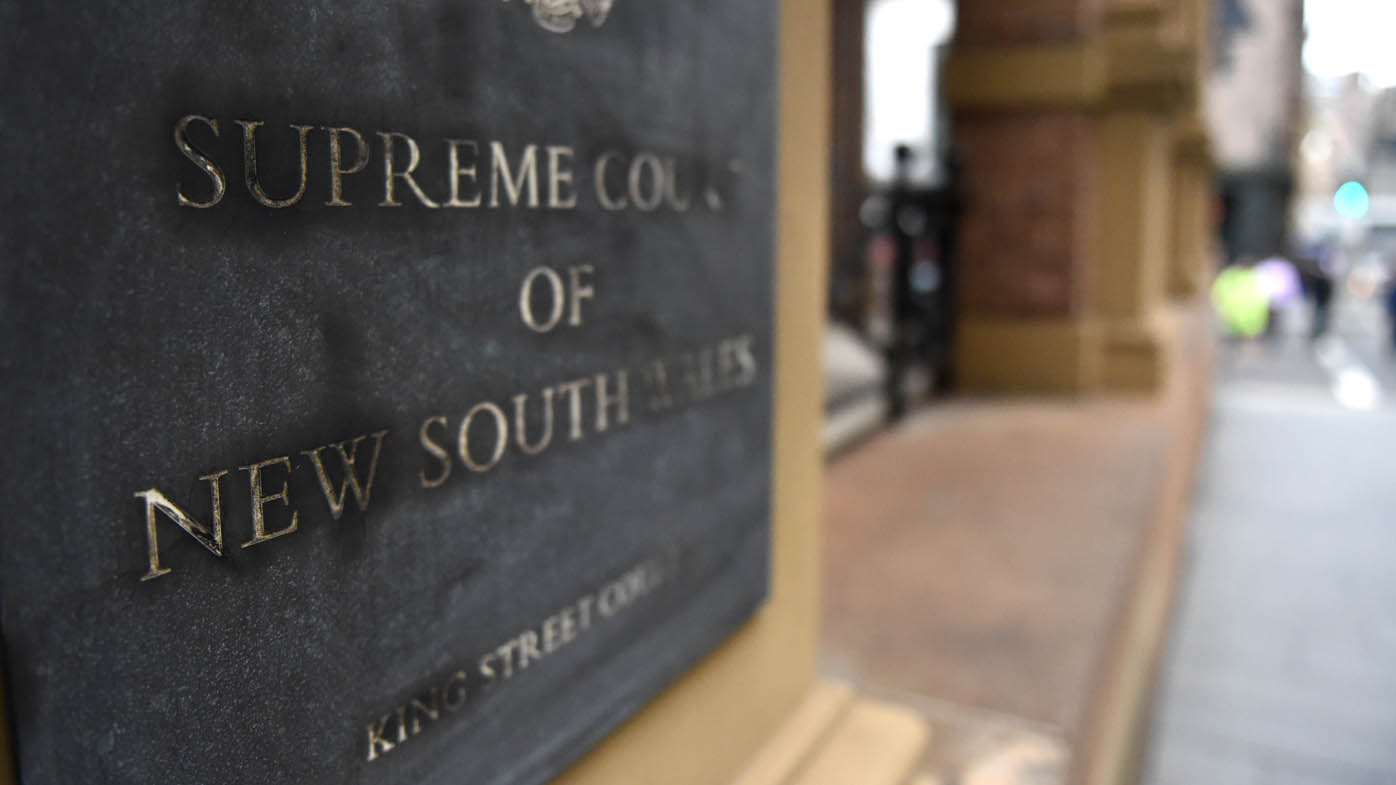
Victim impact statements from Pagano's 18-year-old daughter Anastasia and older brother Darren Clifton were read out to the court during a sentence hearing in the NSW Supreme Court on Friday.
As Clifton left the stand, Godfrey called to him, "I'm so sorry for each of you".
Mr Clifton replied, "It's too late for sorry bud".
Godfrey was initially accused of murdering Pagano, but a trial over that charge was abandoned earlier this year and the jury dismissed.
READ MORE: Last-minute bid to stop Voice to parliament referendum fails
At the start of that trial, prosecutor Mark Hay told the jury Godfrey had met Pagano while walking down George St from Circular Quay and was trying to source drugs.
Anastasia Pagano, whose statement was read in her absence, said despite her father's drug addiction he always tried his best for her.
"What most people don't usually understand is when you're an addict it consumes your whole life and the lives of those around you," she said.
"He was a kind soul, fighting a rough battle.
"No matter what happened in the past, my love for him never went away."
Clifton said in his emotional statement to the court he doubted Godfrey was telling the truth about the events that led to his brother's death.
READ MORE: Police flag 'special powers' for pro-Palestine rally in Sydney
"There are only two people that have the truth of what happened in that apartment," he said.
"One of those is dead and the other sits before us today.
"Godfrey knows exactly what occurred and I doubt he's giving the truth."
Justice Richard Cavanagh said Godfrey had good prospects of rehabilitation as he was a young man who had remained drug and violence-free while in custody.
But he said the 22-year-old should expect a sentence on the basis that he took another man's life.
"He must have known at the very least that by continuing to place a chokehold on Mr Pagano, there was a real risk of killing him," Cavanagh said.
"At some point in time, he continued to apply that hold and that's the excessive nature of the offending."
The matter has been listed for sentence on November 3.
Australian votes likely to help decide winner of New Zealand election
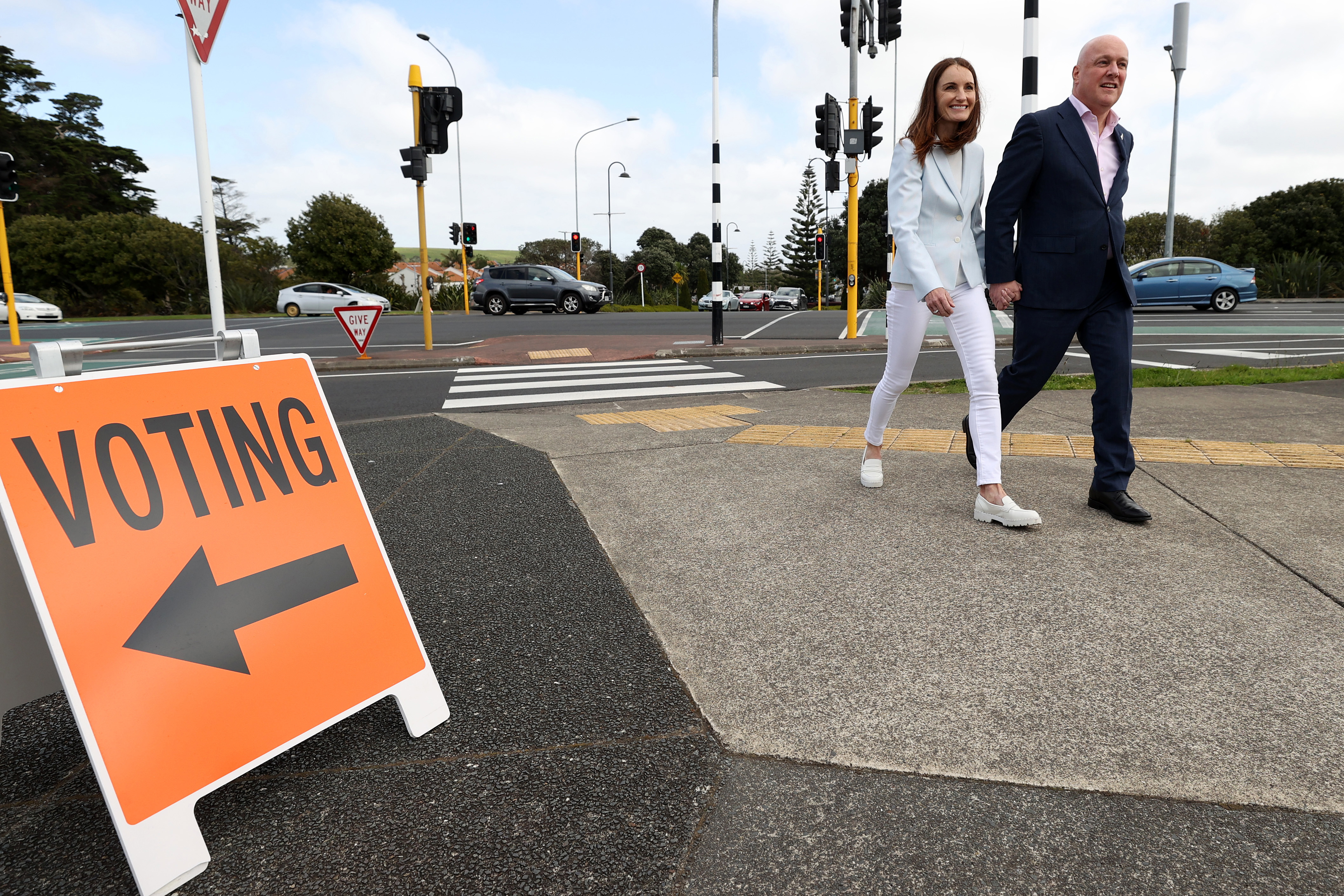
The result of tomorrow's New Zealand election could be determined by Kiwis living in Australia.
Prime Minister Chris Hipkins and Opposition Leader Christopher Luxon are vying for the top job after weeks of campaigning..
Even as Australians vote on the Indigenous Voice to parliament tomorrow, hundreds of thousands of people have been urged over past weeks to take advantage of New Zealand's newly changed voting laws to have their say on who runs things across the Tasman.
LIVE UPDATES: Israel posts graphic images of infants

New Zealand citizen expats can now cast a vote for their mother country if they haven't been home in less than six years – double the three-year limit in place previously.
Permanent residents have also received an expanded eligibility, from 12 months overseas to four years.
Non-partisan group Every Kiwi Vote Counts is calling on the hefty contingent of New Zealanders in Australia to have their say.
Of the estimated one million New Zealanders living overseas, the group said almost 70 per cent of them were in Australia.
"In the past, elections have seen only one in 10 overseas New Zealanders vote, which represents a mere two per cent of our votes," group director Tracey Lee said.
READ MORE: Australia-bound plane forced back to Singapore after bomb threat
"With roughly one million New Zealanders living overseas, we could have an additional 750,000 New Zealanders who aren't exercising their democratic right to vote."
She said the combined votes of the Australian-New Zealand bloc would outweigh eight electorates.
READ MORE: Voice to parliament referendum: When, how and where do I vote?
Earlier this month, the group has also launched a tongue-in-cheek campaign led by mascot Darryl Brown, who boasted that Australia had always "guided" New Zealand.
"We showed them how to make pavlova, gave them their best music in Crowded House, their best athletes in Phar Lap, and their best actors – like that gladiator bloke," he said.
"If you're an Aussie-Kiwi and have been back to visit in the last six years, then you're more than qualified to tell them how to run it."
Overseas voting for the 2023 New Zealand General Election can be done online until tomorrow.
Find more information and links, visit the Every Kiwi Vote Counts website.
There is essential information and direct links to enrol and vote to be found at everykiwivotecounts.nz.
Study reveals hidden secret about iconic Parthenon sculptures
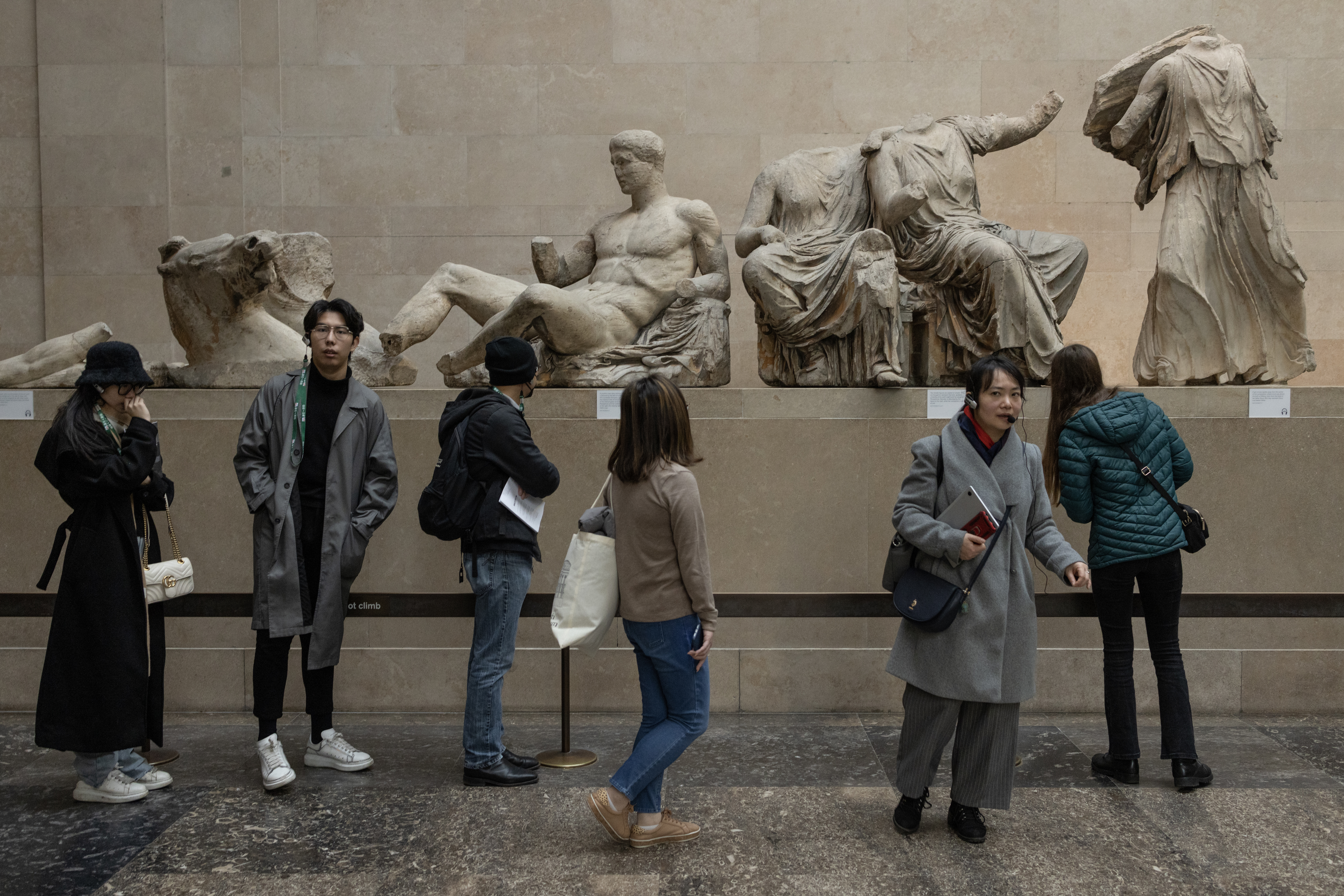
Classical Greek marble sculptures today appear crisp and white. But they weren't always that way, according to a new study, which found the famous 2500-year-old Parthenon sculptures were colourful, painted with floral patterns and other elaborate designs.
By using a noninvasive imaging technique, researchers at the British Museum — where nearly half of the sculptures reside — and King's College London found traces of paint on 11 out of 17 figures and from a section of frieze on show in the museum, according to a study published this week in the journal Antiquity.
Paint often does not survive on archaeological finds, particularly in cases such as the Parthenon sculptures that date back to between 447 and 438 BCE and were continuously exposed to the environment, said lead study author Dr Giovanni Verri, a conservation scientist at the Art Institute of Chicago who previously was a fellow at the British Museum.
LIVE UPDATES: Israel posts graphic images of infants

"These are just thin paint layers at the very, very top of the surface of these objects, and so they are at the interface between everything that happens. … (The paint) is the first to get the impact of the environment," Verri said. "It's also possible that during conservation treatments — restoration treatments — these small traces that looked like dirt effectively, were inadvertently removed."
Greece has repeatedly called for the return of the sculptures that British diplomat Lord Elgin removed from the imposing Parthenon temple in Athens in the early 19th century when he was ambassador to the Ottoman Empire, which then ruled Greece.
Infrared light detects traces of long-lost paint
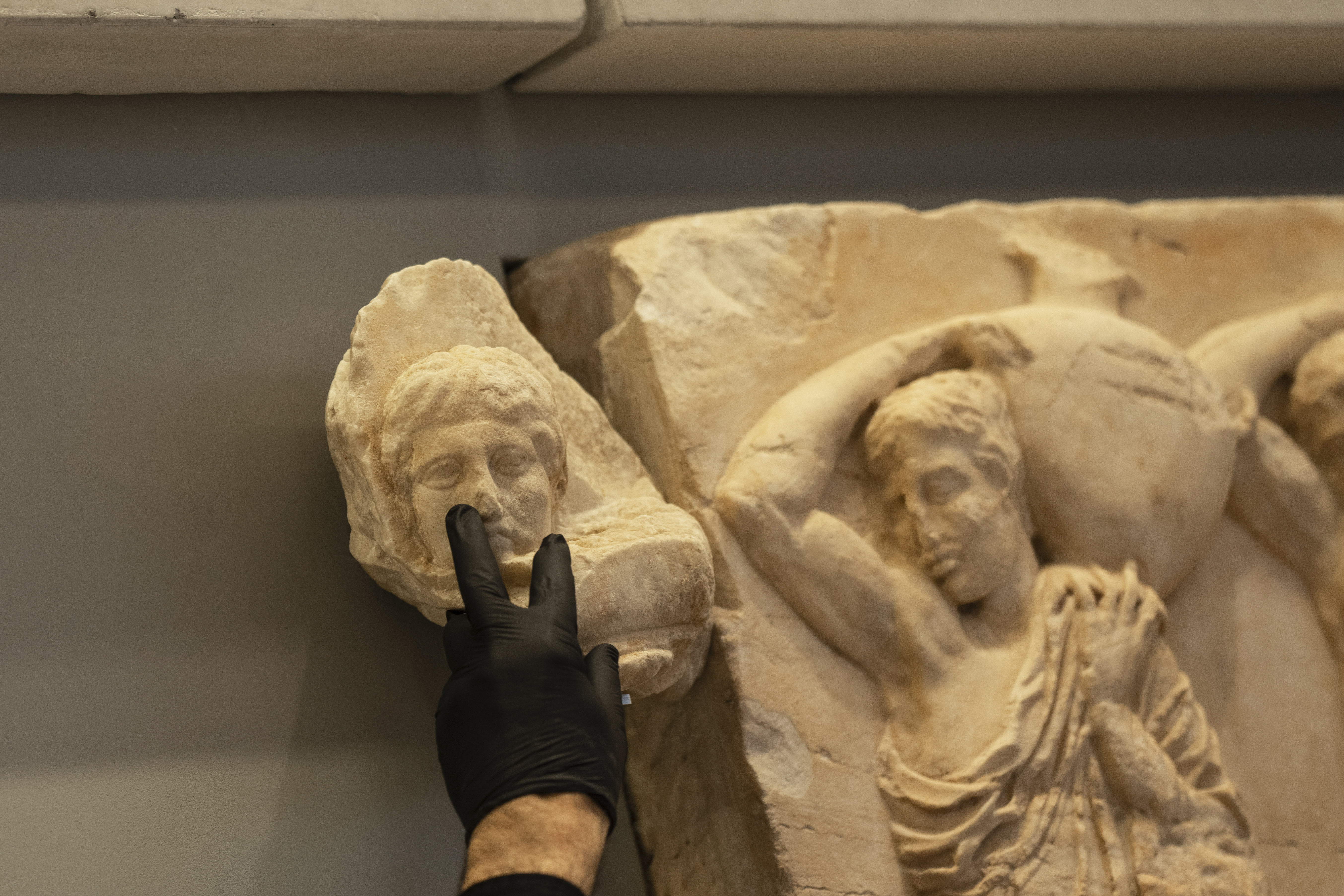
The technique used to find the paint was created in 2007 by Verri and is known as visible-induced luminescence imaging. The process uses infrared light that finds microscopic traces of paint that the eye cannot see, Verri said. By illuminating the sculptures with the red light, a pigment known as "Egyptian blue" absorbs the light and appears on camera as a glowing white.
"Egyptian blue" was a popular pigment of its time that was made using calcium, copper and silicon, according to the Royal Society of Chemistry. The bright blue was highly valued for its rarity and was commonly saved for royalty or depictions of gods and goddesses.
The distinctive blue was found in several places in the marbles, including the serpent tail on the sculpture of mythical king Kekrops, within the background space of statues Demeter and Persephone and on the garment worn by Dione, mother of Aphrodite, where the forming of two flower petals was found near the bottom of the cloth, according to the study.
READ MORE: Underbelly actor's sister-in-law taken hostage
"The interpretation of these very small traces is always complicated," Verri said. "So, we make suggestions (of these patterns) through comparisons with other works of art."
The researchers also detected a purple colour that was not found through the imaging process but by the human eye, Verri said. The hue, which they named "Parthenon purple," is particularly unique, the study said, because researchers found that it was not made using shellfish — the common ancient Mediterranean recipe.
Shellfish-based purple can be detected using a technique called X-ray fluorescence, Verri said, but that colour was not present in this case.
Classical texts refer to an elusive purple colour, the study added, but the ingredients weren't disclosed because the colour was deemed so valuable.
"This recent study gives more proof that colourful decoration was common in ancient Greek art," said Michael Cosmopoulos, a professor of archaeology and Greek studies at the University of Missouri–St Louis, via email. He was not involved in the study.
READ MORE: Australia-bound plane forced back to Singapore after bomb threat
"This is a big deal because it challenges the traditional Western idea that classical art was just plain white marble and shows how important colour was to ancient Greek artists. … These findings help us understand the creative process behind, as well as the meaning of the Parthenon and its sculptures."
At this stage, a reconstruction of the sculptures' original appearance "is not really possible," Verri said, since the imaging technique only detected blue paint, and "because reproducing in modern terms one of the greatest masterpieces of mankind is not something that can be addressed lightly," Verri added.
The study also found that there were no signs of keying or abrasion to the sculptures that are typically seen to help paint adhere.
"What we were able to really demonstrate is not specific surfaces for the application of paints, but rather that both carving and colour were conceived as part of the same objective," said William Wootton, an author of the study from King's College London. "Extreme care and attention in the production of sculpture — both its carving and its colour — actually was visible across the ancient world to a level which we are still only beginning to understand."
The study points to earlier instances when Greek sculptures were found to be coloured, such as in 2008 when conservators at the Acropolis Museum in Athens found a greenish pigment on the West Frieze featuring a horseman.
Verri said he hopes that further imaging will soon be developed to find other colours present on the sculptures.
Last-minute bid to stop Voice referendum fails
An Indigenous activist's High Court bid to stop the Voice to parliament referendum from going ahead has failed.
Robbie Thorpe, the uncle of independent senator Lidia Thorpe, sought to argue Saturday's vote was "an attack on Aboriginal sovereignty".
Thorpe said in a statement on Friday the denial of sovereignty was causing serious mental harm.
READ MORE: Yes and No campaigns make final pitches to voters
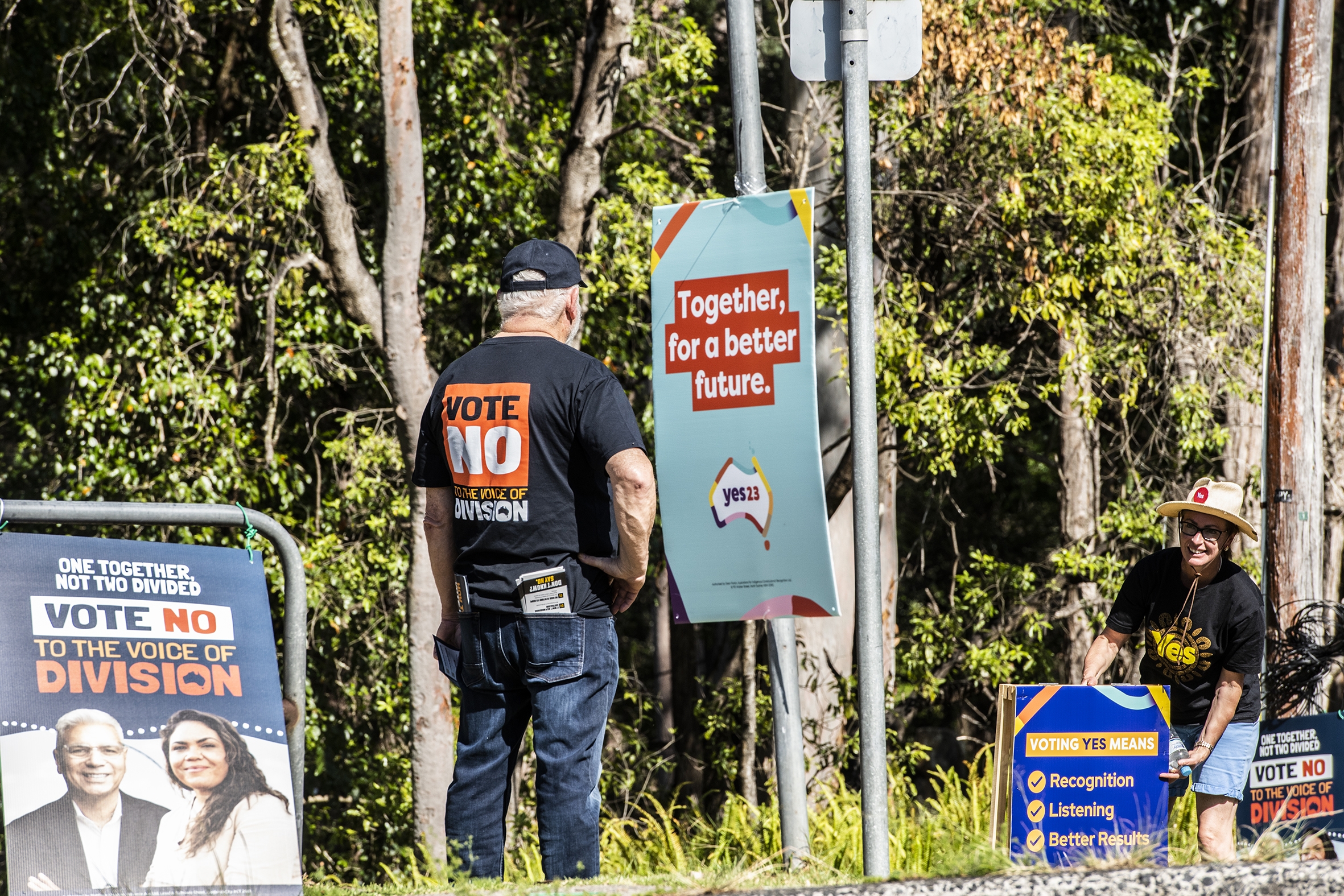
However, Chief Justice Susan Kiefel made a direction under High Court rules which meant Thorpe's writ was not accepted for filing.
READ MORE: The referendum conspiracy theories to watch out for
The rule states "if a writ, application, summons, affidavit or other document appears to a registrar on its face to be an abuse of the process of the court, to be frivolous or vexatious or to fall outside the jurisdiction of the court, the registrar may seek the direction of a justice".

The justice may then direct the registrar to issue or file the document, or to refuse to issue or file the document.
Thorpe has previously sought to charge the Commonwealth with genocide.
For 24/7 crisis support run by Aboriginal and Torres Strait Islander people, contact 13YARN (13 92 76).