Tag Archives: oceania

'Firenado' rips through six kilometres of bush in 15 minutes

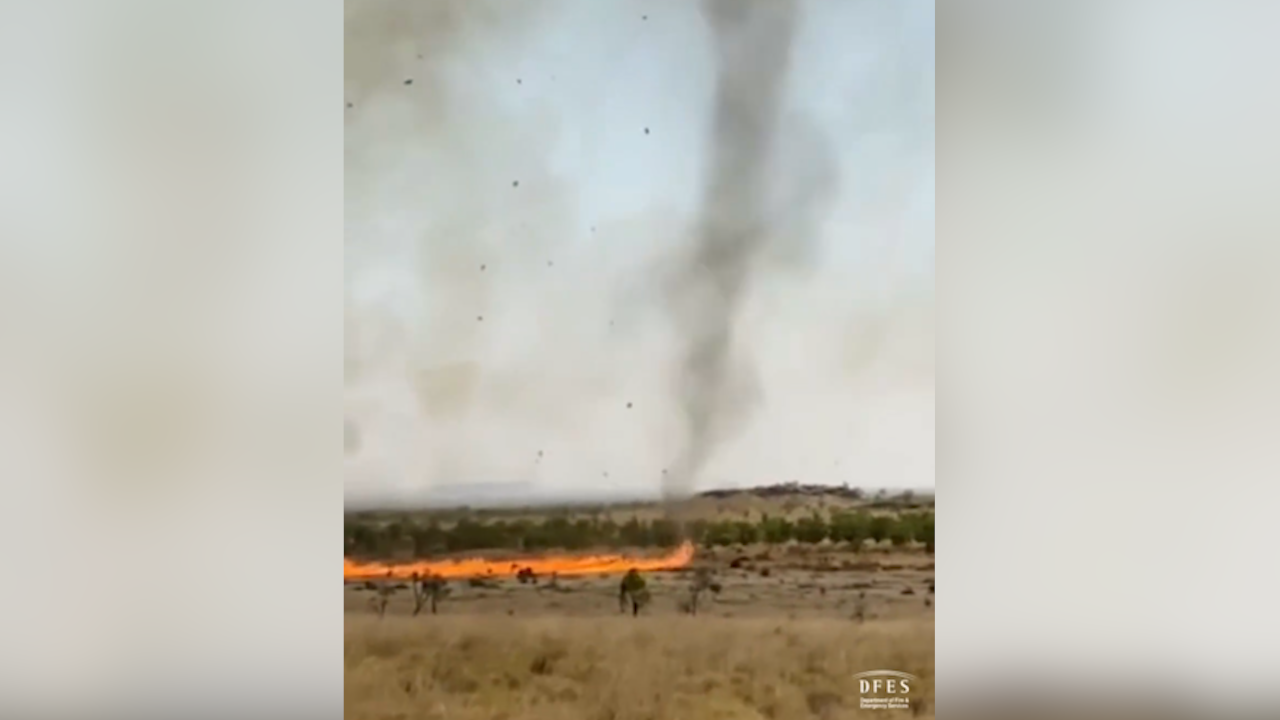
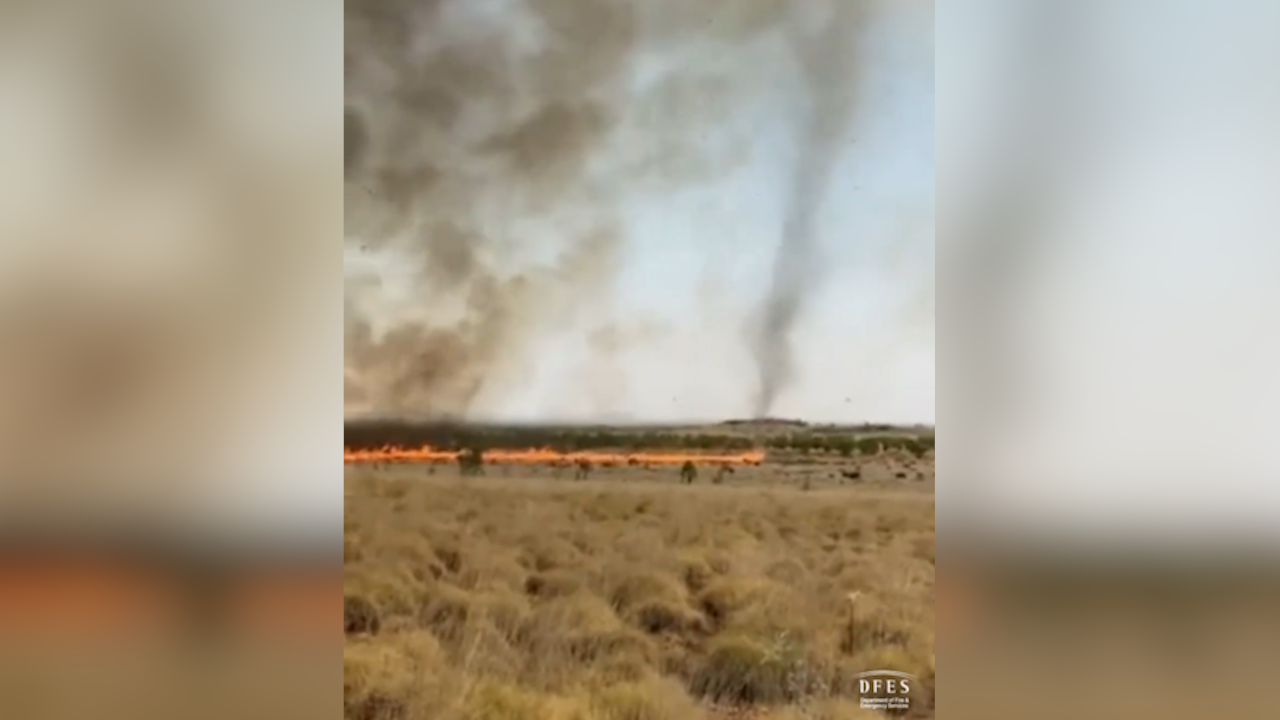
Terrifying footage has captured a fire tornado leaving a trail of destruction across the St Georges Ranges in Western Australia.

The video was captured last week by firefighters with the Western Australian Department of Fire and Emergency services in the remote region.

The "firenado" tore across 6.2 kilometres of scrubland in just 15 minutes.

READ MORE: Police investigate massive suspicious bushfire

"Firenado" filmed tearing through the Western Australian bush.

The phenomenon was said to be a "willy willy", a tornado-like formation also commonly known as a dust devil.

They predominantly occur inland, and like tornados, they have a twisting movement of air which commonly carries dust and other particles in its wake.

In this case, the twister was engulfed in flames as it rapidly burned through the scrubland in the state's north.

The WA DFES said the fire was being treated as suspicious.

READ MORE: Accused smuggler 'thought he was picking up a UN award'

"Firenado" filmed tearing through the Western Australian bush.

There are multiple fires burning across the top of the state.

A bushfire advice warning is in place for people travelling along Great Northern Highway from Anna Plains Road, extending 40 kilometres south to Eighty Mile Beach.

The warning is in place in parts of Eighty Mile Beach in the vicinity of Broome.

Rapid melting in West Antarctica is 'unavoidable,' study finds

Rapid melting of West Antarctica's ice shelves may now be unavoidable as human-caused global warming accelerates, with potentially devastating implications for sea level rise around the world, new research has found.

Even if the world meets ambitious targets to limit global heating, West Antarctica will experience substantial ocean warming and ice shelf melting, according to the new study published on Monday in the journal Nature Climate Change.

Ice shelves are tongues of ice that jut out into the ocean at the end of glaciers. They act as buttresses, helping hold ice back on the land, slowing its flow into the sea and providing an important defence against sea level rise. As ice shelves melt, they thin and lose their buttressing ability.

READ MORE: 'Sea level change is going be a big awakening for Australia': Antarctic scientist

Antarctica

Although there has been growing evidence that ice loss in West Antarctica may be irreversible, there has been uncertainty about how much can be prevented through climate policies.

The researchers looked at "basal melting", when warm ocean currents melt the ice from beneath. They analysed the rate of ocean warming and ice shelf melting under different climate change scenarios. These ranged from the ambitious, where the world manages to limit global warming to 1.5 degrees Celsius above pre-industrial levels, to the worst-case, where humans burn large amounts of planet-heating fossil fuels.

They found if the world limits its temperature rise to 1.5 degrees, which it is not on track to do, climate change could still cause the ocean to warm at three times the historical rate.

Even significantly cutting planet-heating pollution now will have "limited power" to prevent warmer oceans from triggering the collapse of the West Antarctic ice sheet, the report found.

"It appears that we may have lost control of the West Antarctic ice melting over the 21st century," said Kaitlin Naughten, an ocean modeller with the British Antarctic Survey and lead author of the study.

West Antarctica is already the continent's largest contributor to global sea level rise and has enough ice to raise sea levels by an average of 5.3 metres.

It is home to the Thwaites Glacier, also known as the "Doomsday glacier", because its collapse could raise sea levels by several metres, forcing coastal communities and low-lying island nations to either build around sea level rise or abandon these places, Naughten said.

READ MORE: Off-duty pilot faces 83 counts of attempted murder

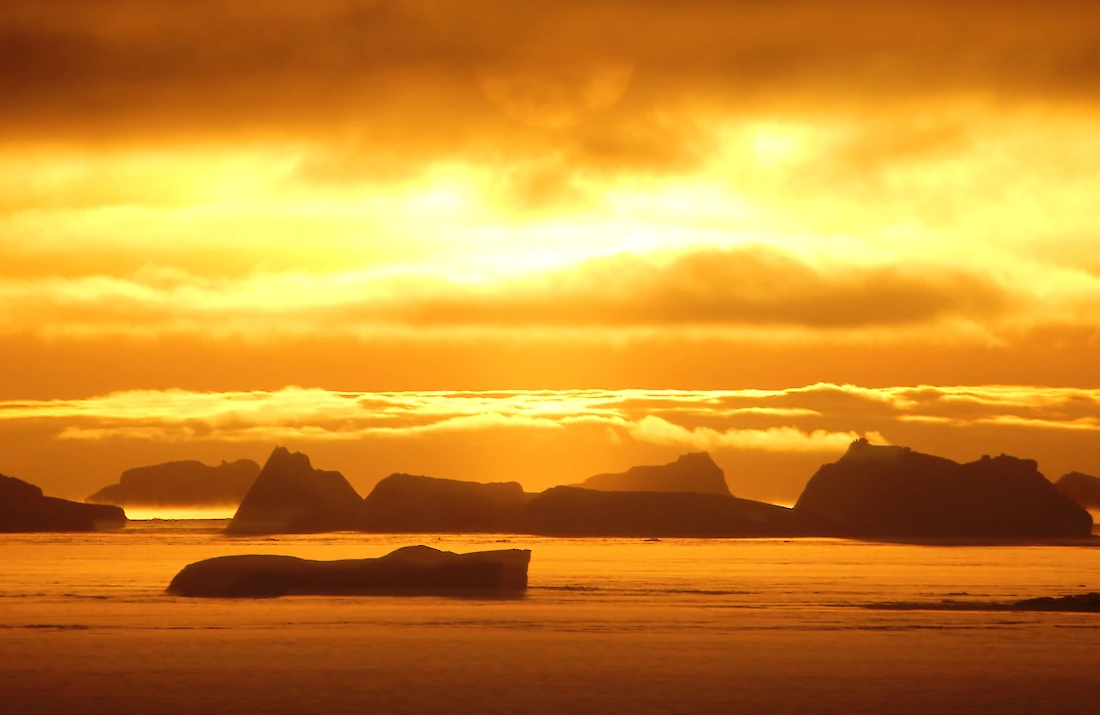
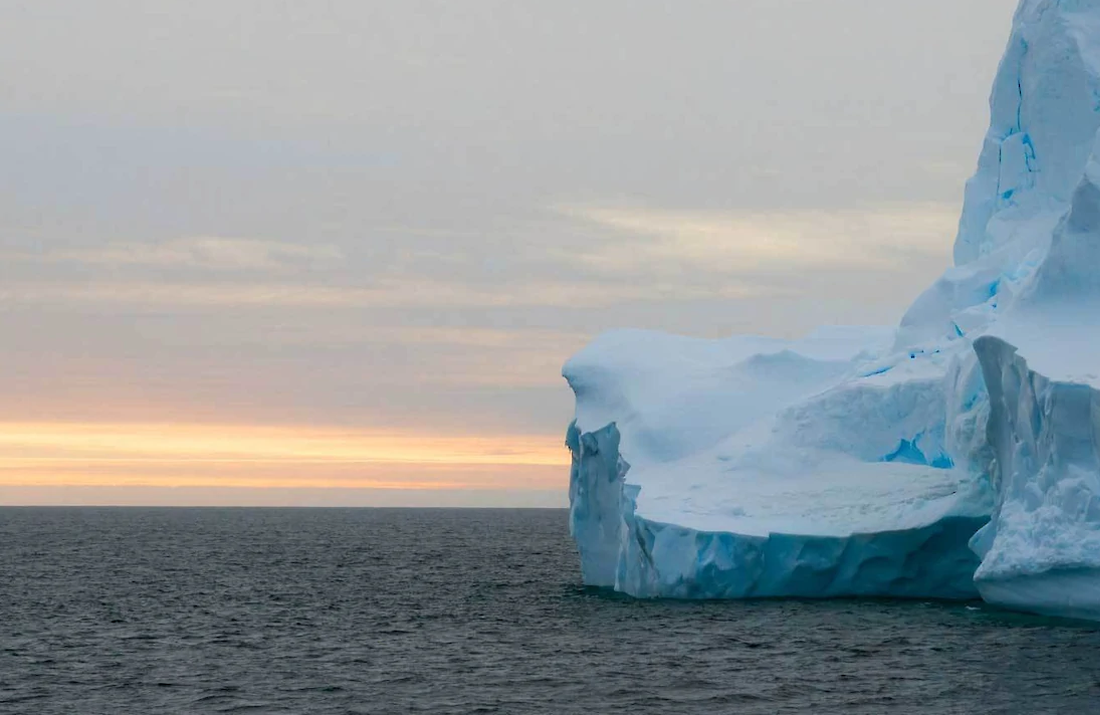
Antarctic sunset

Although the study focused on ice shelf melting and did not directly quantify the impacts on sea level rise, "we have every reason to expect that sea level rise would increase as a result, as West Antarctica speeds up this loss of ice into the ocean," Naughten said.

Ted Scambos, a glaciologist at the University of Colorado Boulder who was not involved with the study, said the findings were "sobering". They build on existing research that painted an alarming picture of what was happening to the planet's southernmost continent, he told CNN.

"The thing that's depressing is the committed nature of sea level rise, particularly for the next century," Scambos told CNN. "People who are alive today are going to see a significant increase in the rate of sea level rise in all the coastal cities around the world."

The only way to really stop the rapid ice melting, Scambos said, would be not just to cut levels of planet-heating pollution but also to "remove some that has already built up". This would be "a real challenge," he said.

READ MORE: Satellite vision shows huge iceberg crashing into small island

Antarctic Iceberg

Some scientists sounded a note of caution about the study. Tiago Segabinazzi Dotto, senior research scientist at the National Oceanography Centre in the UK, said it should be "treated carefully" as it was based on a single model.

However, its conclusions do agree with previous research in the region, he told the Science Media Centre, giving "confidence that this study needs to be taken in consideration for policymakers".

Naughten and her colleagues acknowledged their study had limits; predicting future rates of melting in West Antarctica was very complex and it was impossible to account for every possible future outcome. But, looking at the range of scenarios, the report authors said they were confident the melting of ice shelves was now unavoidable.

"The question of doom and gloom is something I've spent a lot of time thinking about with this study, because how do you tell such a bad news story?" Naughten said.

"Conventional wisdom is supposed to give people hope, and I don't see a lot of hope in this story," she added, "but it's what the science tells me and it's what I have to communicate to the world."

West Antarctic ice shelf melting is one impact of climate change "we are probably just going to have to adapt to and that very likely means some amount of sea level rise we cannot avoid," Naughten said.

But although the outlook was dire, humanity could not give up on slashing fossil fuel emissions, Naughten said. Devastating impacts could still be avoided in other parts of Antarctica and the rest of the world, she noted.

Faster than a speeding bullet: What it was like to fly Concorde

When Concorde moved, people watched.

Casual onlooker, avid plane spotter or experienced 747 pilot? It didn't matter. Concorde's long, slender body coupled with its fabled supersonic speed thrust it into the imagination of anyone watching.

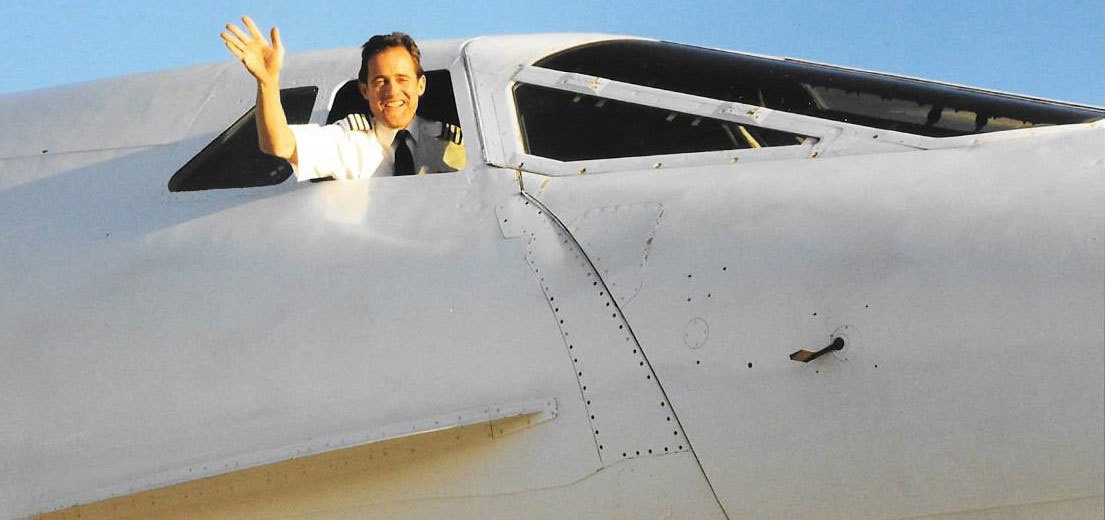
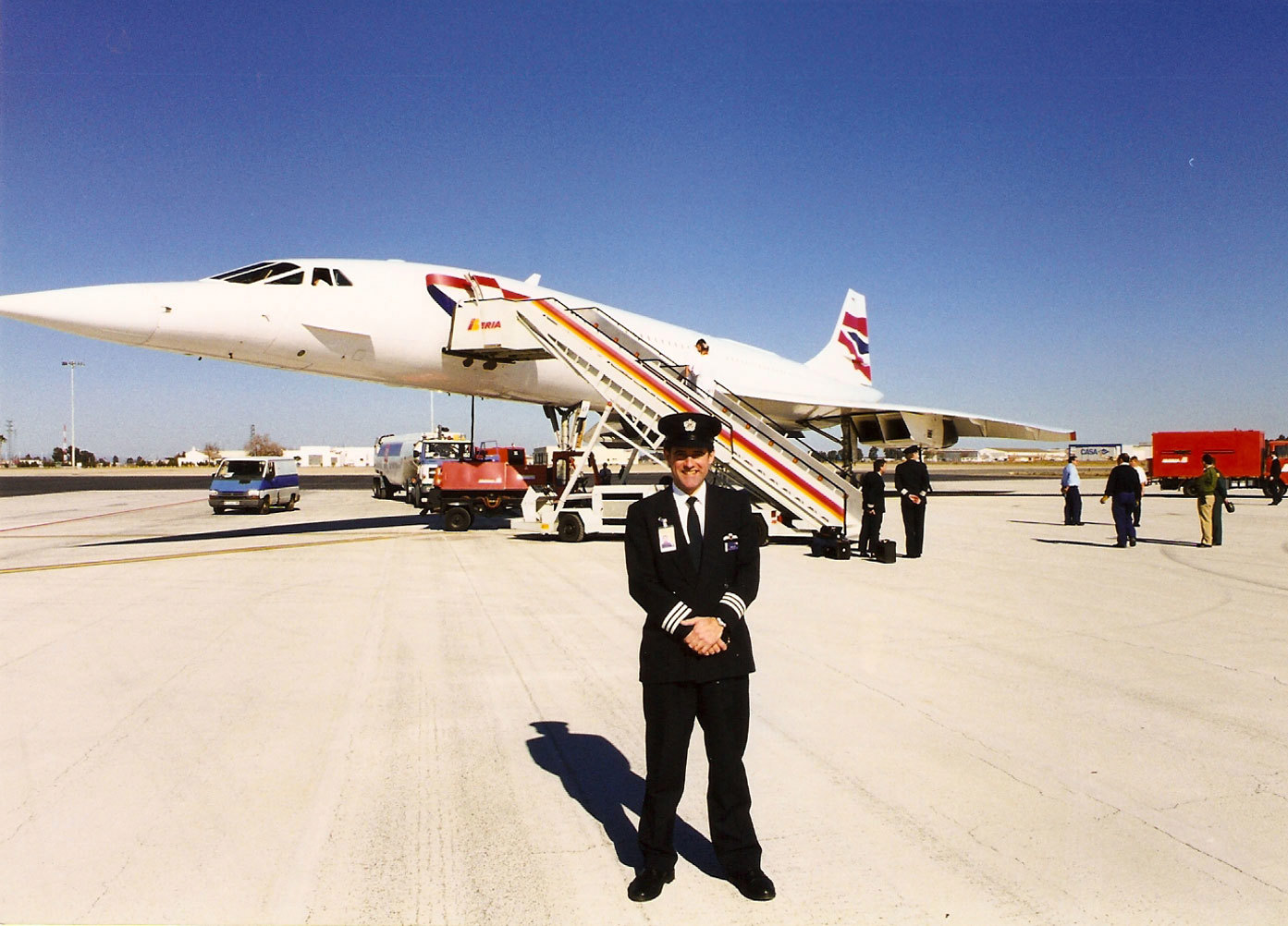
An everyday moment on the tarmac at London Heathrow in the late 90s has long stuck with now-retired Concorde pilot John Tye, and perfectly encapsulated, he said, the magnetic appeal of Concorde, the wondrous aircraft that was decommissioned 20 years ago today.

READ MORE: The $50 billion airline set to shake up global travel
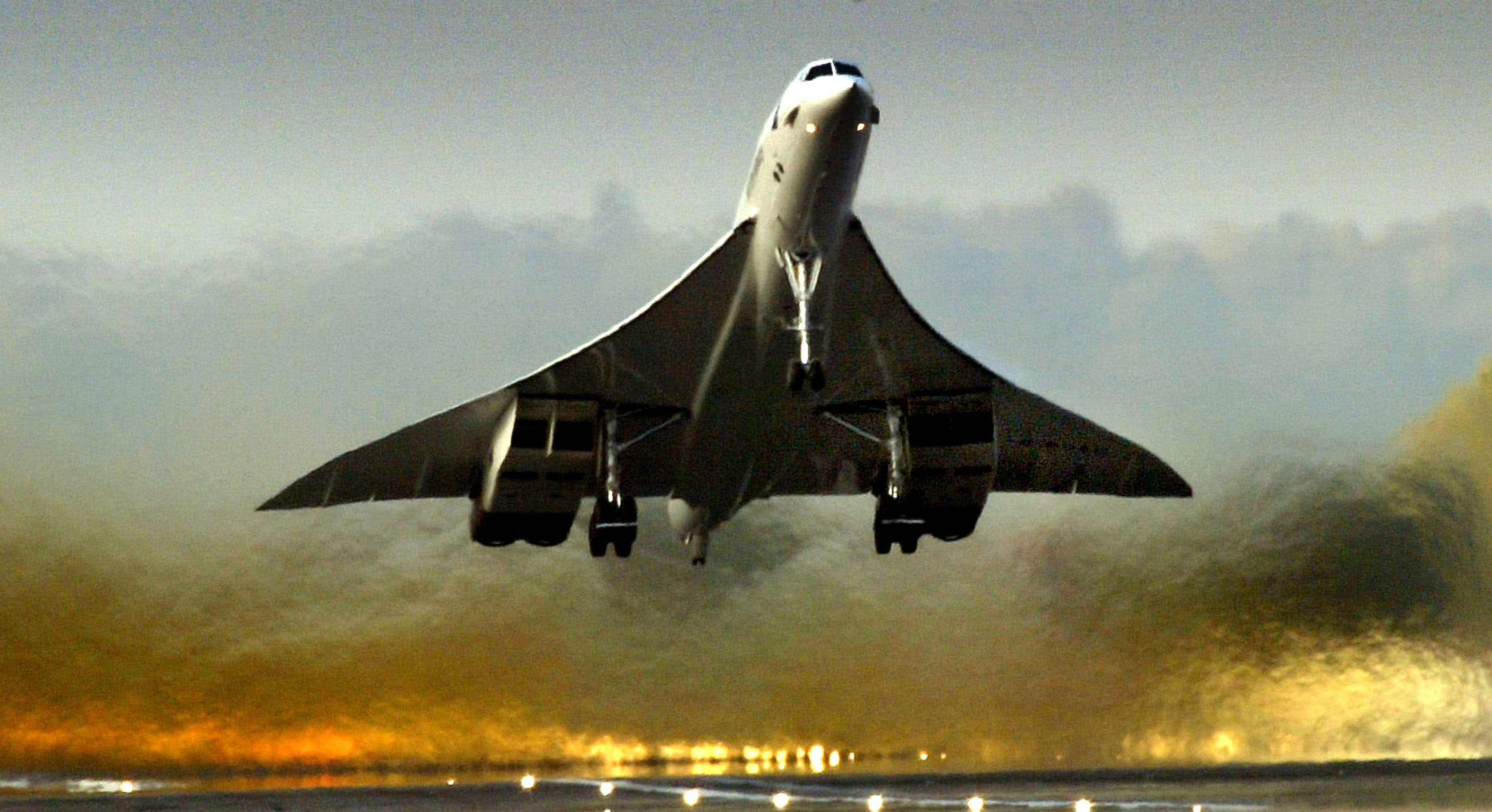
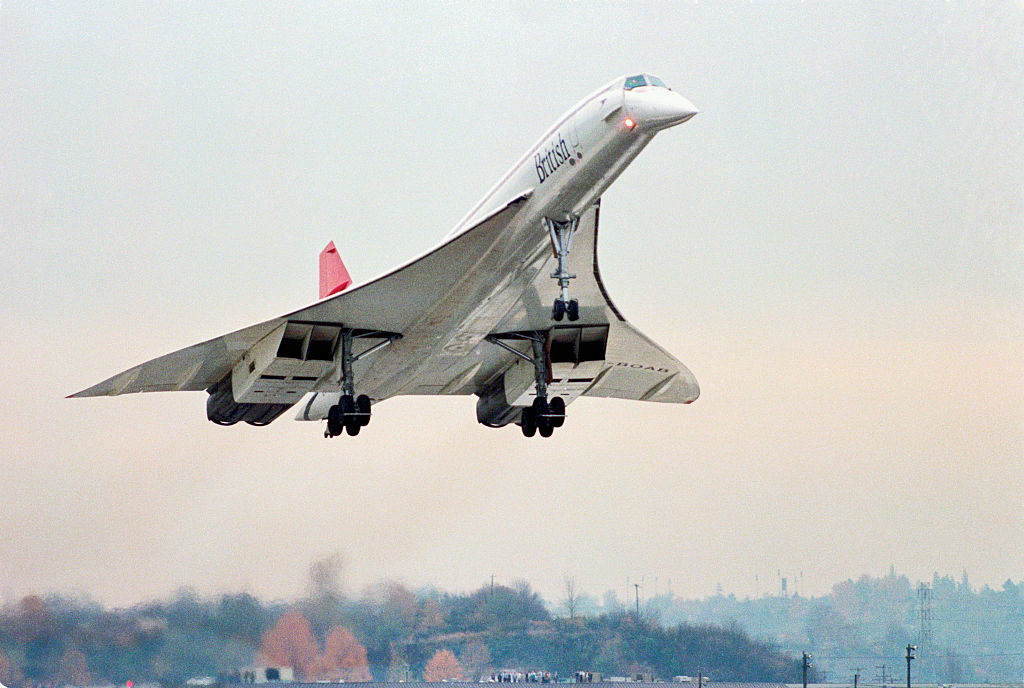
A Concorde aircraft takes off.Concorde pilot John Tye waves out the window.

With close to 100 passengers onboard, Tye was sat inside in the cockpit of BA001, the scheduled British Airways Concorde service to New York, leaving each morning at 10:30.

"Taxiing out was always an incredible experience," Tye said.

"You knew the eyes of the world were on you."

Tye's Concorde joined an orderly queue of planes ambling down runway 28, and pulled in behind an American Airlines 747 jet.

"They were clear to run up and take off, and then this American voice (comes on the radio, speaking to the control tower) and says something like, 'Gee, do you mind if we hold for a bit. Can we wait and watch the Concorde go first?'"

At that time, British Airways and Air France had been flying Concorde for almost 20 years. Concorde wasn't new. Its magic never got old.

"It really brought it home to me how special Concorde was," Tye said.

Special was right.

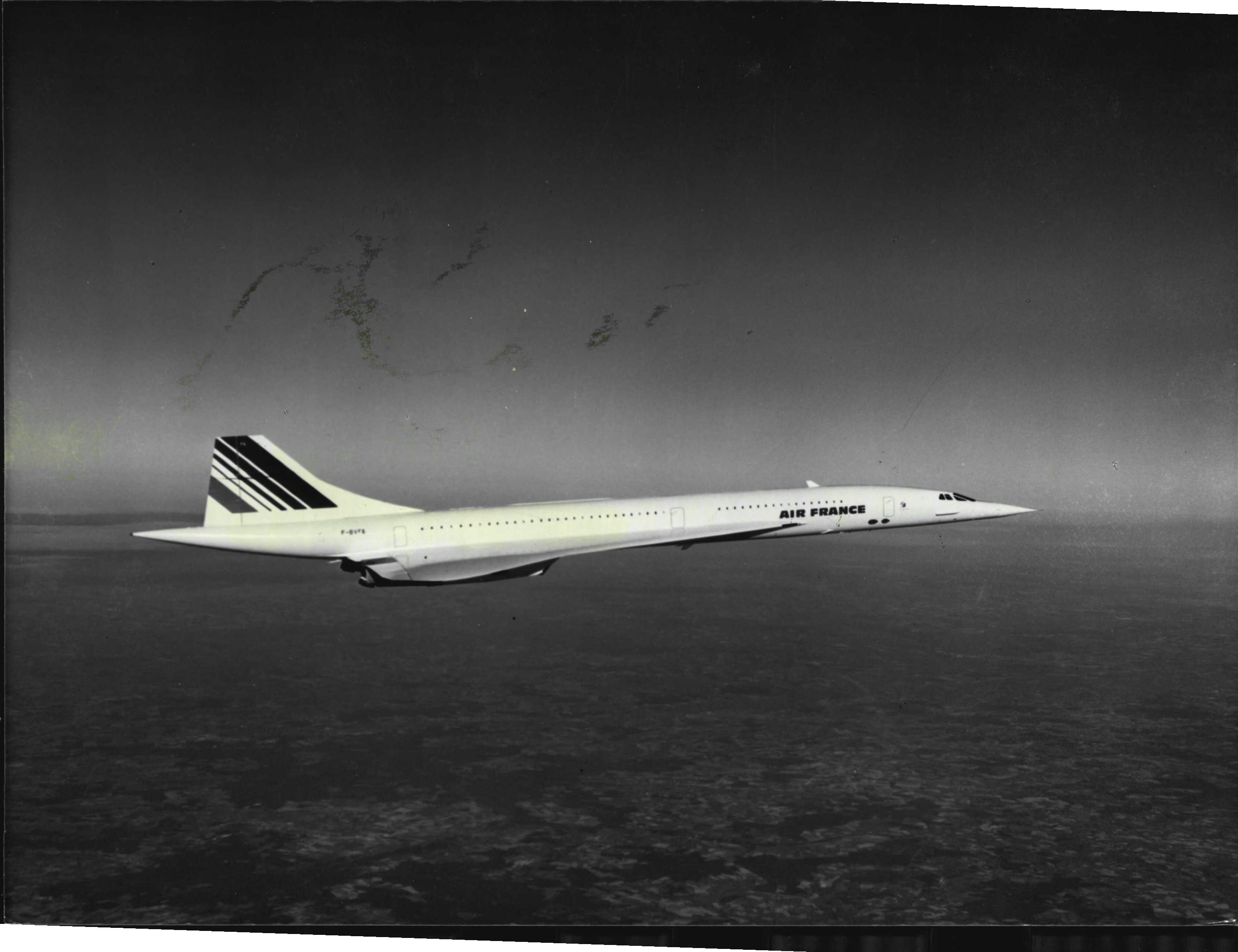
Concorde's four Rolls Royce Olympus turbojet engines powered it to speeds of Mach 2 – twice the speed of sound – or a thundering 2450 kilometres an hour. It had a signature supersonic boom.

That kind of propulsion - flying faster than a bullet – saw Concorde set a record for the fastest flight by a commercial airline between the two great cities; taking off from New York and landing in London in just two hours, 52 minutes and 59 seconds.

Flying Concorde was an all-round sensory experience.

From a rarefied cruising altitude of 18,300 metres, almost in space, passengers could see the curvature of Earth while sipping French champagne and dining on fine foods.

It was no wonder a line of stars flocked to ride Concorde, along with the high-flying business executives the plane was built to cater for.

Dame Joan Collins loved Concorde, and was a frequent flyer.

The "Dynasty" star always sat near the front. She made sure she was onboard Concorde's final flight, on October 24, 2003.

READ MORE: The Aussie aerospace exec carrying Jeff Bezos's Amazon drone dream
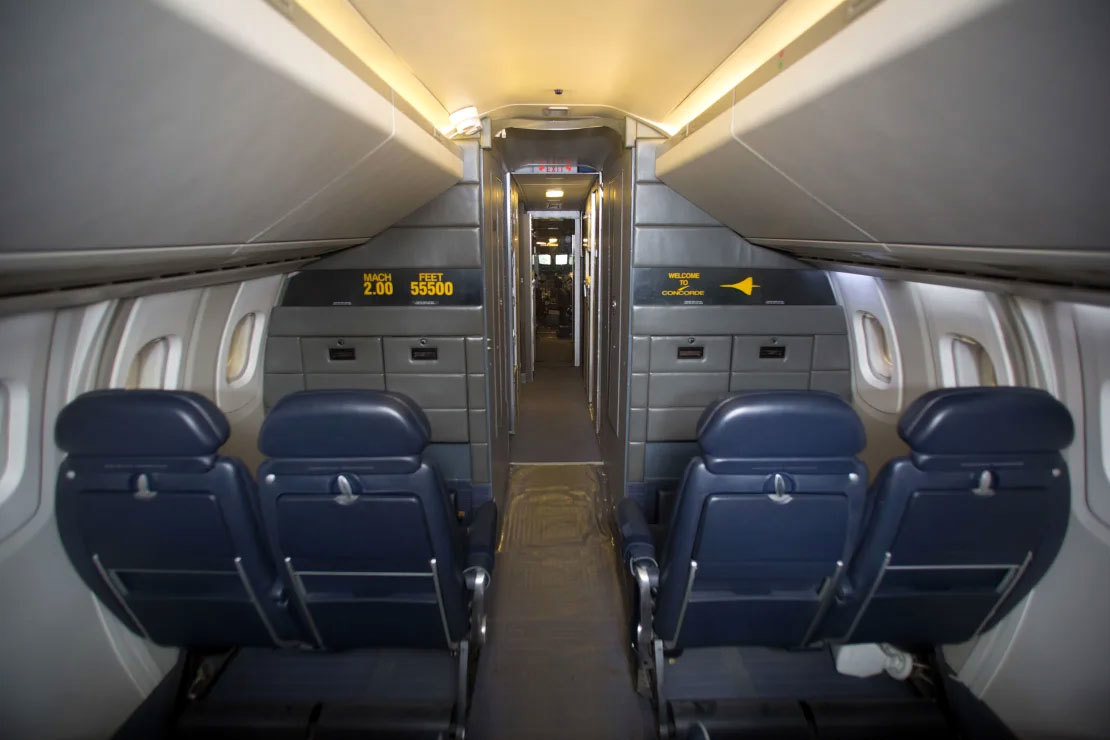
Concorde nose (Getty)The Concorde cabinConcorde pilot John Tye

Collins called Concorde's decommissioning a "travesty of civilisation".

Also a regular, Beatle Paul McCartney was "everybody's favourite passenger", Tye said.

Queen Elizabeth II had a soft spot for the iconic jet, and sometimes used it to make official trips.

Aussie pop star Kylie Minogue was no stranger to Concorde, Tye said, and Mick Jagger "used to come on, sit down the back quietly and read his book".

Travelling pre-9/11 meant passengers were allowed inside the tight confines of the Concorde cockpit for a look, and Tye would often walk the aisle and chat with celebrities and other travellers as the plane soared over the Atlantic.

"It was the best job in the world," Tye said. He has written a book, Life of a Concorde Pilot, which documents his life journey from an orphanage to flying the most prestigious plane on the planet.

A typical day at work for Tye meant leaving his house around 7.30 in the morning.

His young daughters would be rushing around getting ready for school. He'd get in the car and head for Heathrow, "driving past people walking down the street with their briefcases, rushing to the station to catch the 7.40 train into London".

"And I'd drive to Heathrow knowing that I was going to be flying Concorde across the Atlantic Ocean. It was such a different feeling."

At Heathrow, Tye would meet another pilot, a flight engineer and the six cabin crew. By 10.30am they'd all be pushing off the gate at Terminal 4, to "launch down the runway and fly across the Atlantic in not much more than three hours".

Having left Heathrow at 10.30 in the morning, the Concorde would whistle westward and touch down in New York at 9.30am local time.

So Tye and the crew had "all day in New York for lunch or a bit of shopping … it was absolutely marvellous."

They would stay overnight in New York and fly back in the morning.

"Literally I'd be home by 5.30 in the evening, the following day."

READ MORE: Virgin Australia workers could walk off job over pay dispute
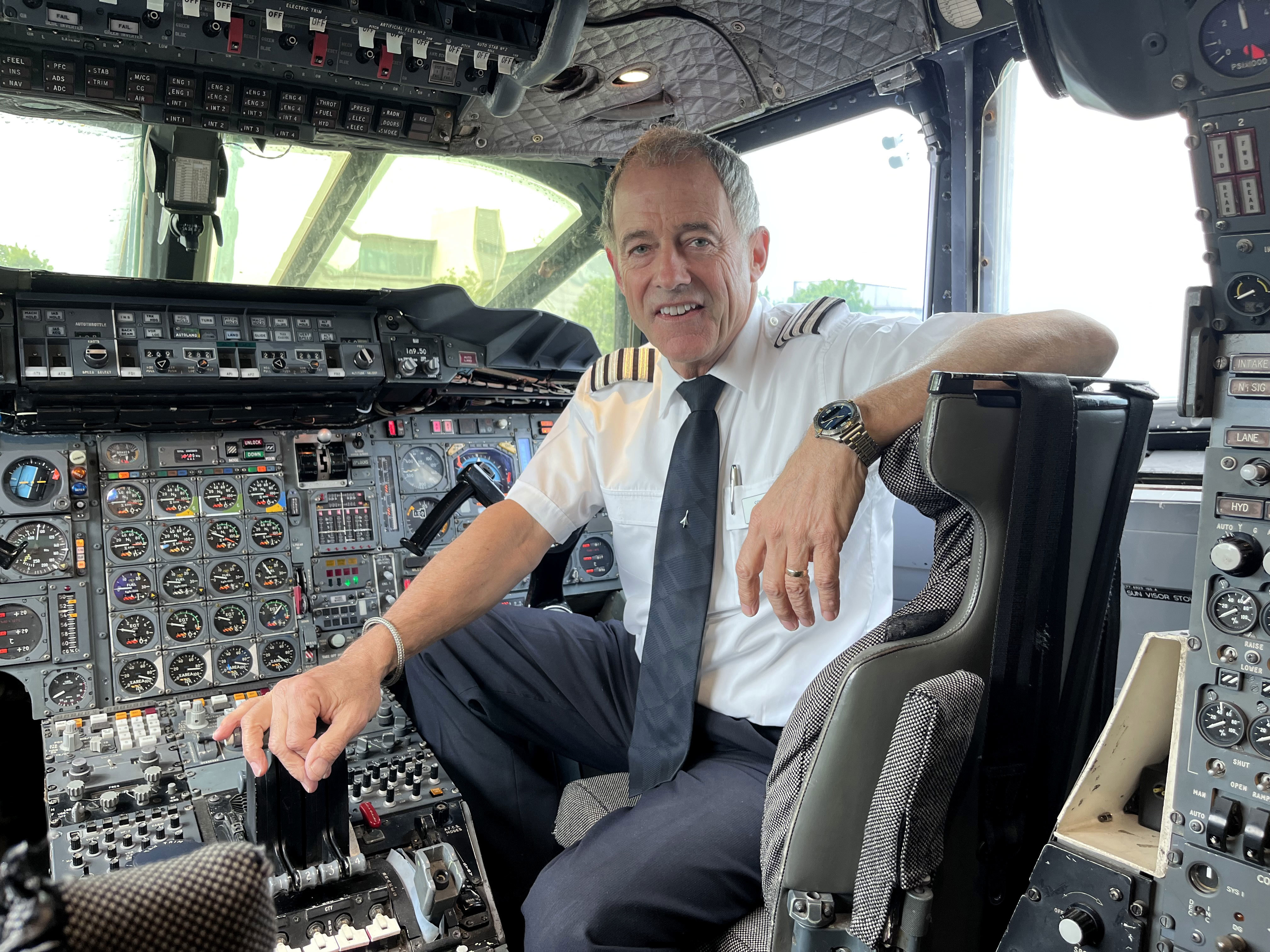
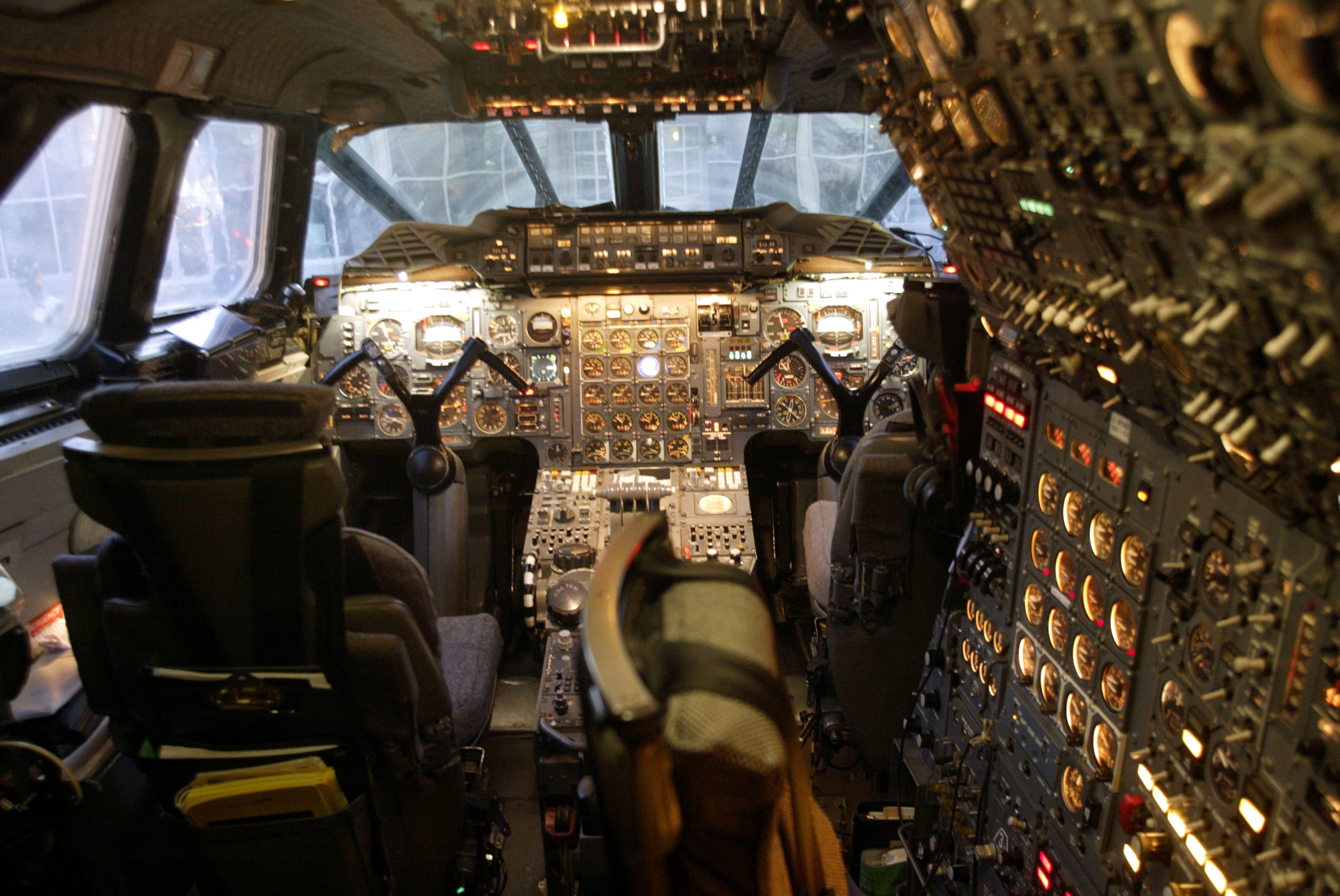
John Tye in a Concorde cockpitConcorde (Getty)The Concorde cockpit.

Concorde was all about speed.

Tye said his first takeoff in a Concorde "was like nothing on earth".

"We practiced it over and over again in the simulator, but the simulator can't prepare you for the real noise, the vibration and the bouncing of the flight deck because you're actually sitting 37 feet (11 metres) in front of the nose wheel.

"Every slight bump in the runway is amplified. You get the smell of the kerosene coming through the air conditioning every now and again. It can't prepare you being thrust back into your seat. The acceleration is absolutely phenomenal.

"It went like a rocket."

Because of its shape, Concorde was small.

There was only room for 90-100 passengers, so ticket prices were steep.

British journalist Richard Quest flew Concorde five times.

"It had more like office chairs, bucket seats, and very small windows," he told CNN.

"It was noisy, extremely noisy, but I challenge anybody not to have a smile from ear to ear when they got on it."

Concorde's only accident came in July 2000 when an Air France plane crashed just after takeoff from Paris.

All 109 people onboard and four on the ground were killed.

Concorde returned to service in 2001, but the clock was ticking.

READ MORE: Off-duty pilot faces 83 counts of attempted murder
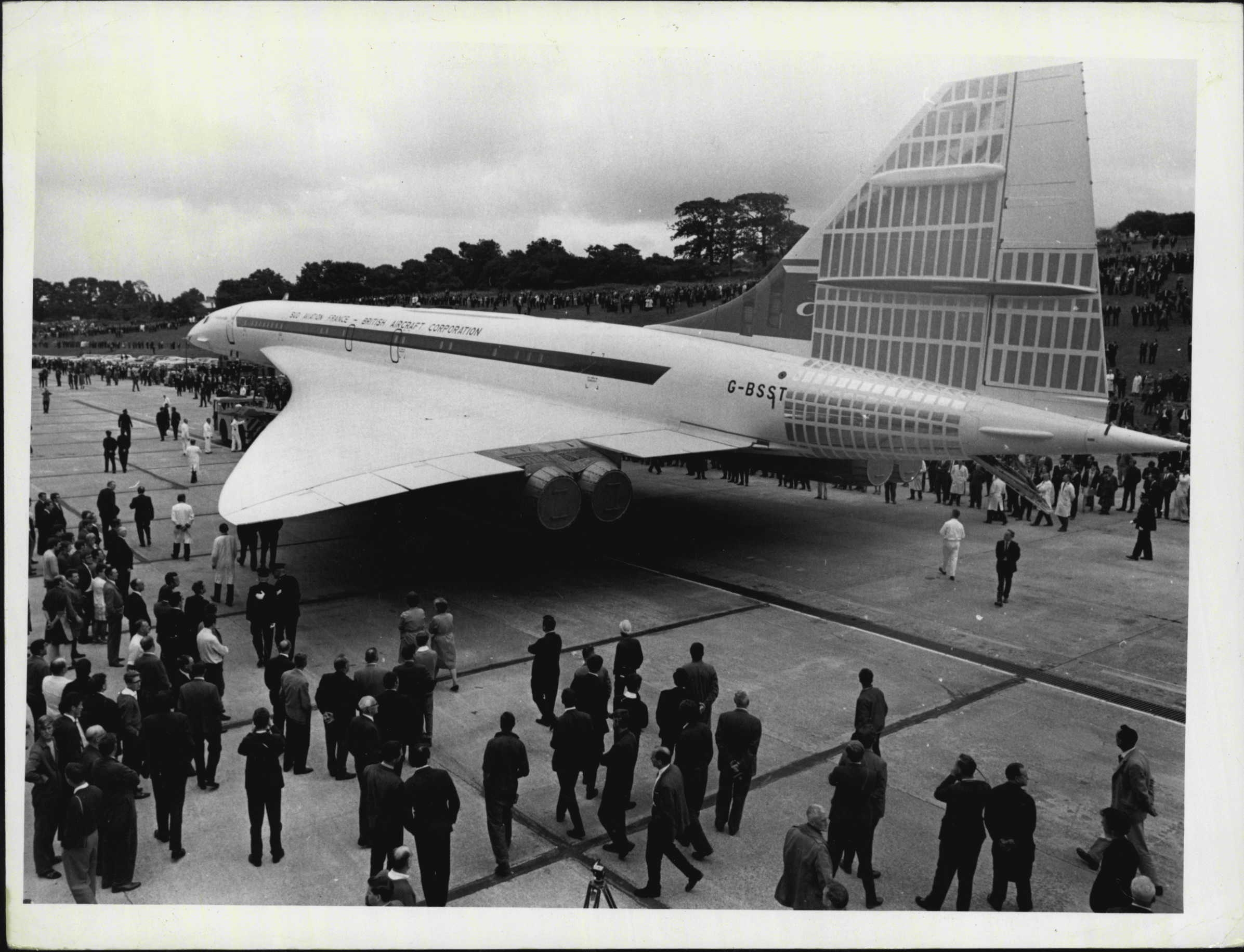
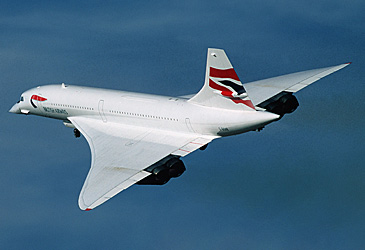
Concorde Britain's Supersonic Liner Of The "Seventies" -- Concorde, often described as the aircraft of tomorrow, is scheduled to make its maiden flight late in 1968. The first prototypes will fly from airports in Britain and France. This graceful and distinctive jetliner, the first supersonic aeroplane to be ordered by the world's airliners, is the joint achievement of British and French aircraft engineers. The four Bristol/Snecma 593 engines of the British Concorde when it was first roleld-out The Concorde was designed and built jointly by France and the United Kingdom, starting in 1965A Concorde comes in to land.

After almost 30 years in the air, in 2003 BA and Air France decided to decommission Concorde.

The supersonic jet had long been known to divide airline executives.

Both airlines blamed falling passenger numbers in the aftermath of the Paris crash and rising operating costs.

There was no doubt Concorde was an engineering triumph, but commercial success had proved more elusive.
Pink reveals she almost died of drug overdose as a teenager

Pink is opening up about her past in a new interview with US television program 60 Minutes, revealing she nearly died of a drug overdose in the '90s.

"I grew up in a house where every day my parents were screaming at each other, throwing things. They hated each other," Pink told Cecilia Vega.

Describing herself as "a punk" at the time, Pink said she eventually started using and selling drugs, got kicked out of her house and dropped out of high school.

LIVE UPDATES: Hamas calls on Muslim leaders to 'take a stand' in Gaza

Pink

"I was off the rails," she said.

On Thanksgiving day in 1995, "I was at a rave and I overdosed," she said, adding that she had taken "ecstasy, angel dust, crystal – all kinds of things" that night.

She told Vega the combination almost killed her.

That was the last time she used "hard drugs," according to the report.

Weeks later, Pink (whose name is Alecia Moore) scored her first record deal with an all-girls R&B group.

She eventually launched a solo career using the "teenage nickname" she's now known for.

"I keep demanding more and more and more from myself physically, emotionally, spiritually, vocally. I want to raise the bar all the time," Pink said.

"When they say a woman has to slow down, become smaller, take up less space, calm down – no. Absolutely not. Why can't we ride it till the wheels fall off?"

"That's what I plan on doing," she said.

Category five tropical cyclone sets southern hemisphere record

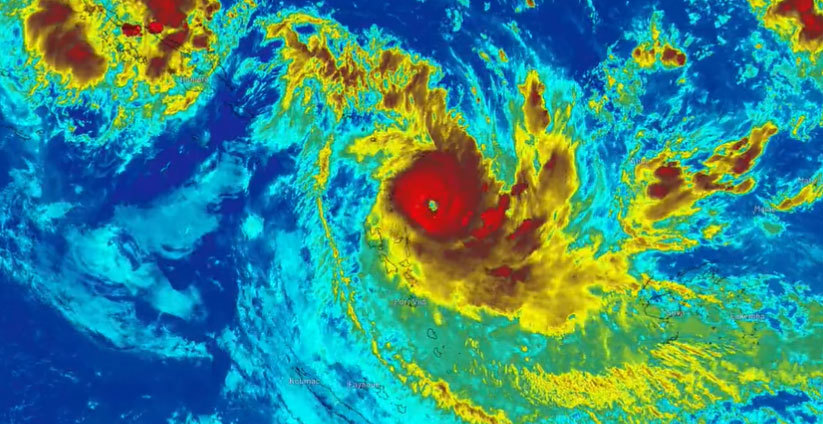
Tropical Cyclone Lola, which is carrying fierce wind gusts of up to 260km/h, has become the earliest Category 5 tropical cyclone on record in the southern hemisphere.

Cyclone Lola was upgraded to Category 5 this morning, as it moves ominously towards Vanuatu and other islands in the Pacific.

The tropical cyclone season officially starts next week, on November 1, and a Category 5 storm has never materialised this early.

READ MORE: Virgin Australia workers could walk off job over pay

Tropical Cyclone Lola is upgraded to Category 5

Vanuatu and its 320,000 residents are staring down the barrel of severe winds and heavy rain from Lola.

Lola is expected to hit about 10pm (local time) tonight.

At the moment, Lola's sustained wind speed is being measured at about 210km/h, with incredible gusts recorded up to 260km/h.

Lola is moving slowly, increasing the likelihood of intense damage as the cyclone lingers longer over Vanuatu.

READ MORE: The bloke from Melbourne carrying Jeff Bezos's big Amazon dream

Although there is some uncertainty about Lola's future track, models suggest it will hit Vanuatu late Tuesday into Wednesday.

As it tracks south, Lola could just miss Port Vila, the capital of Vanuatu, and it is expected to weaken by the time it heads towards New Caledonia.

Cyclone Lola will most likely remain at least 1200 km away from the Australian mainland, far enough to have no impact.

Woman escapes amid tense stand-off between 'armed' man and police

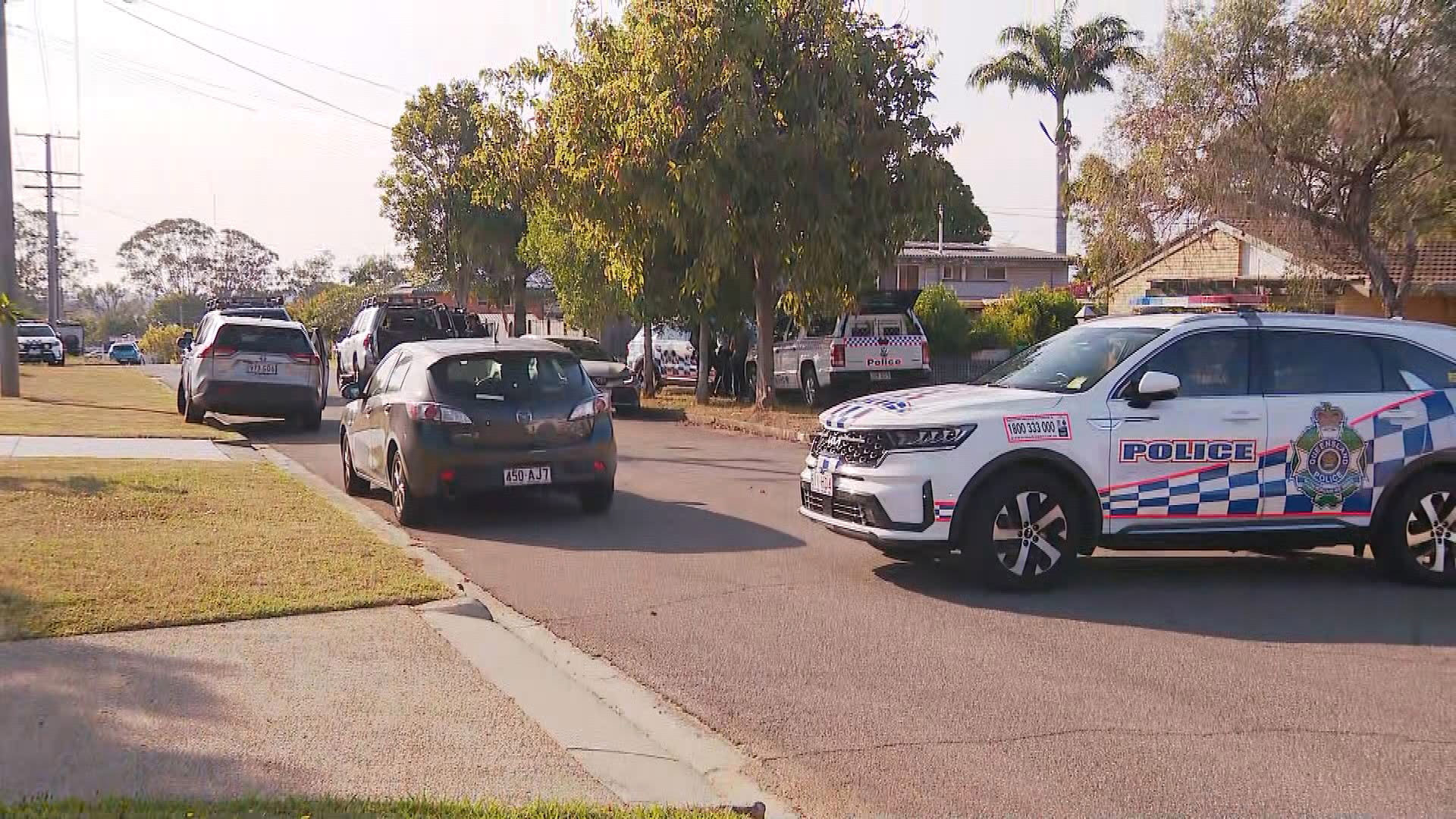
Several blocks in a north Brisbane suburb are in lockdown because of a tense alleged domestic violence incident between a man who may be armed and a woman who has now escaped the house.

The man is still holed up inside the Strathpine home, 17km north of Brisbane CBD, and negotiations are ongoing.

Police told 9News the woman managed to escape from the house but they fear he could be armed.

READ MORE: Residents in southern Queensland told to evacuate as bushfires threaten homes

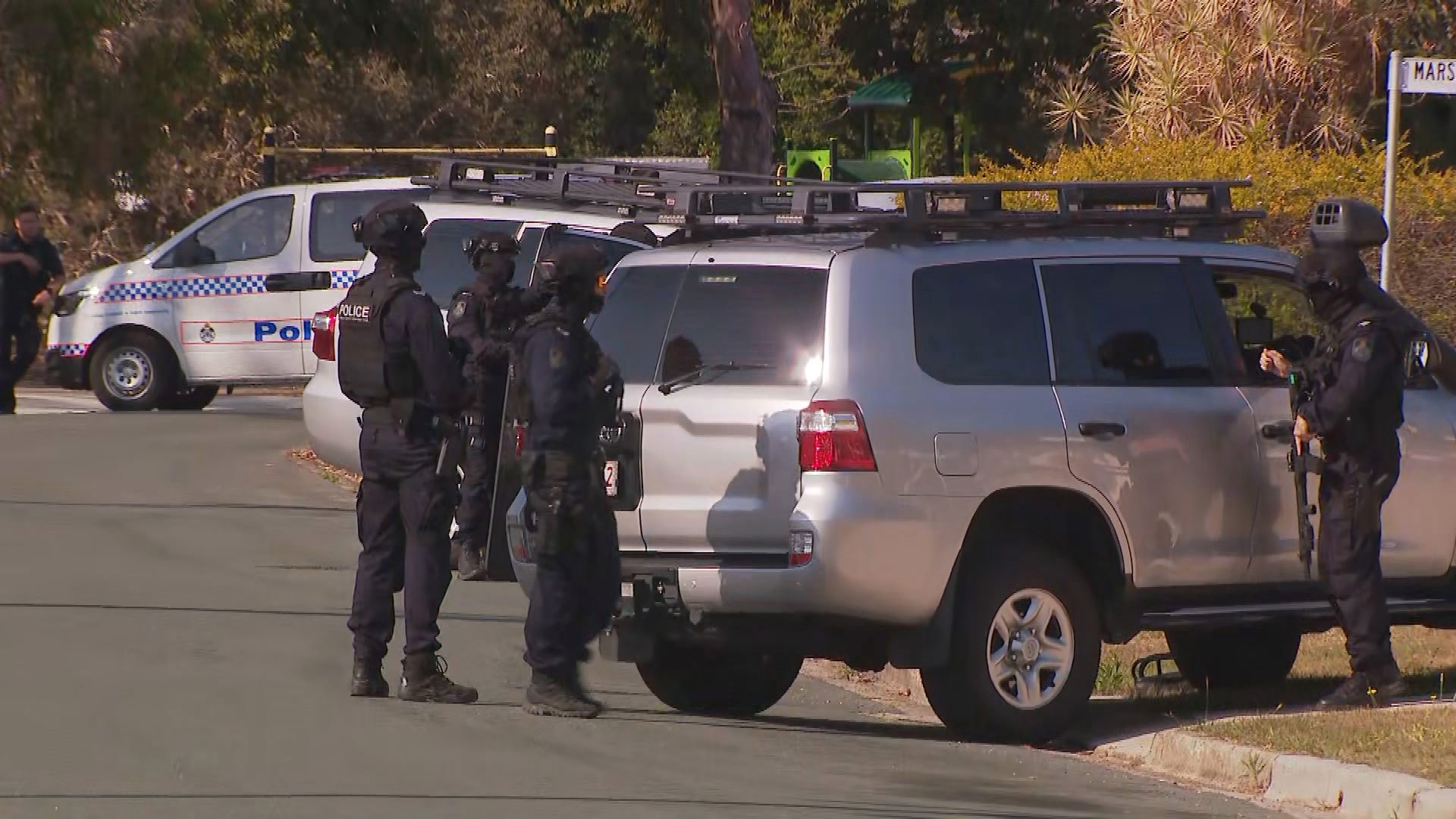
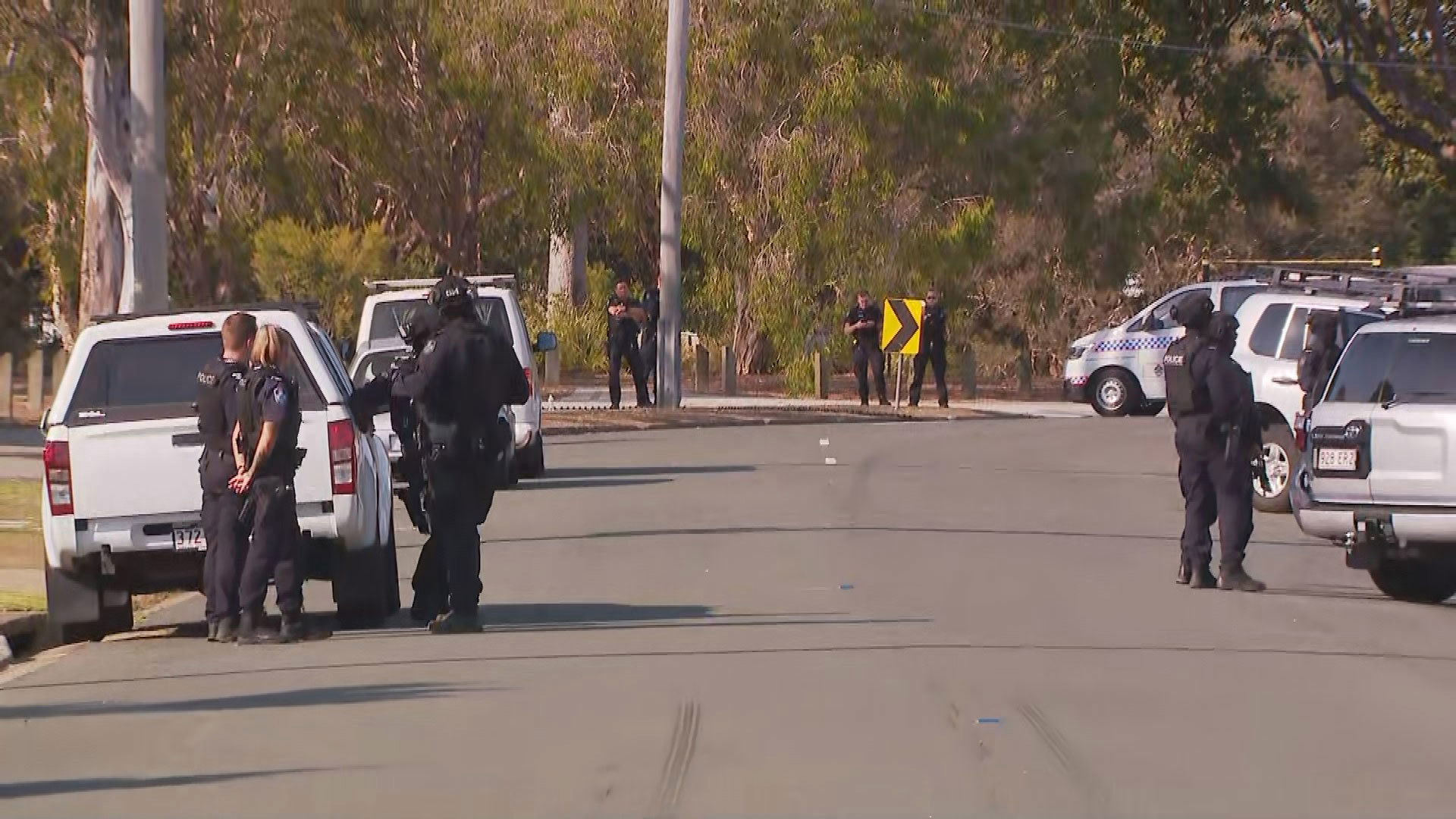
Police have locked down streets as officers negotiate with a man

Specialist police teams and negotiators are on site.

Police rushed to the property in Peter Street around 1.30am, because of a disturbance.

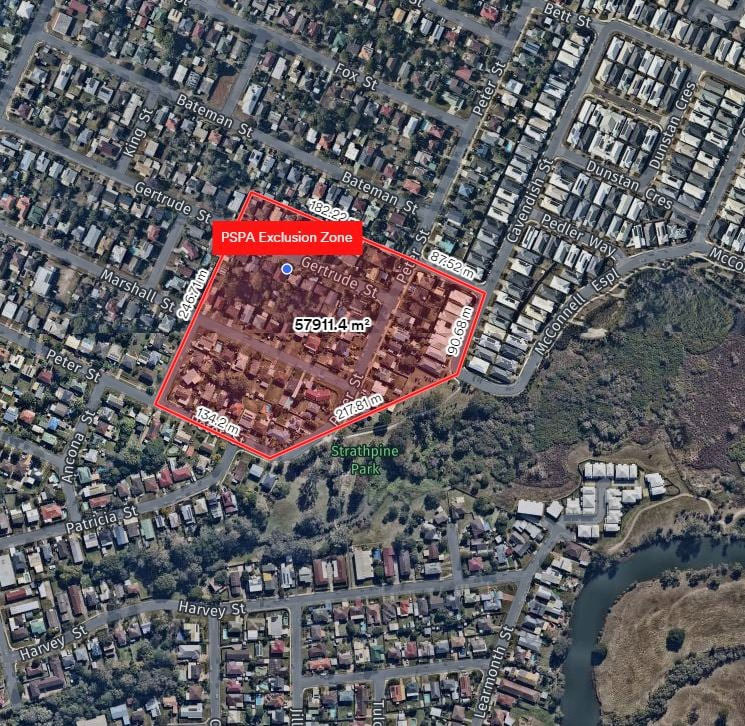
A few hours later, just after 4am, police declared an emergency situation and put an area the size of 13 football fields into lockdown.

Police have been trying to negotiate with the man, who they say is inside the home alone.Police attend a callout in Strathpine.Some Strathpine streets are in lockdown

The police boundaries encompassed Gertrude Street, Peter Street, Rowland Street and Cavendish Street.

Police have urged people to avoid the area and residents inside the exclusion zone have been told to remain indoors until further notice.

Traffic diversions are in place.

More to come …

Aussie billionaire a 'red haired weirdo', Donald Trump says

Donald Trump has described one of Australia's richest men as a "red haired weirdo" after reports were published of the complicated relationship between the two.

On Sunday 60 Minutes and Nine Newspapers broadcast audio recordings of billionaire Anthony Pratt discussing his conversations with the former president.

The New York Times then published its own story on the two, leading to Trump issuing a denial on his social media website.

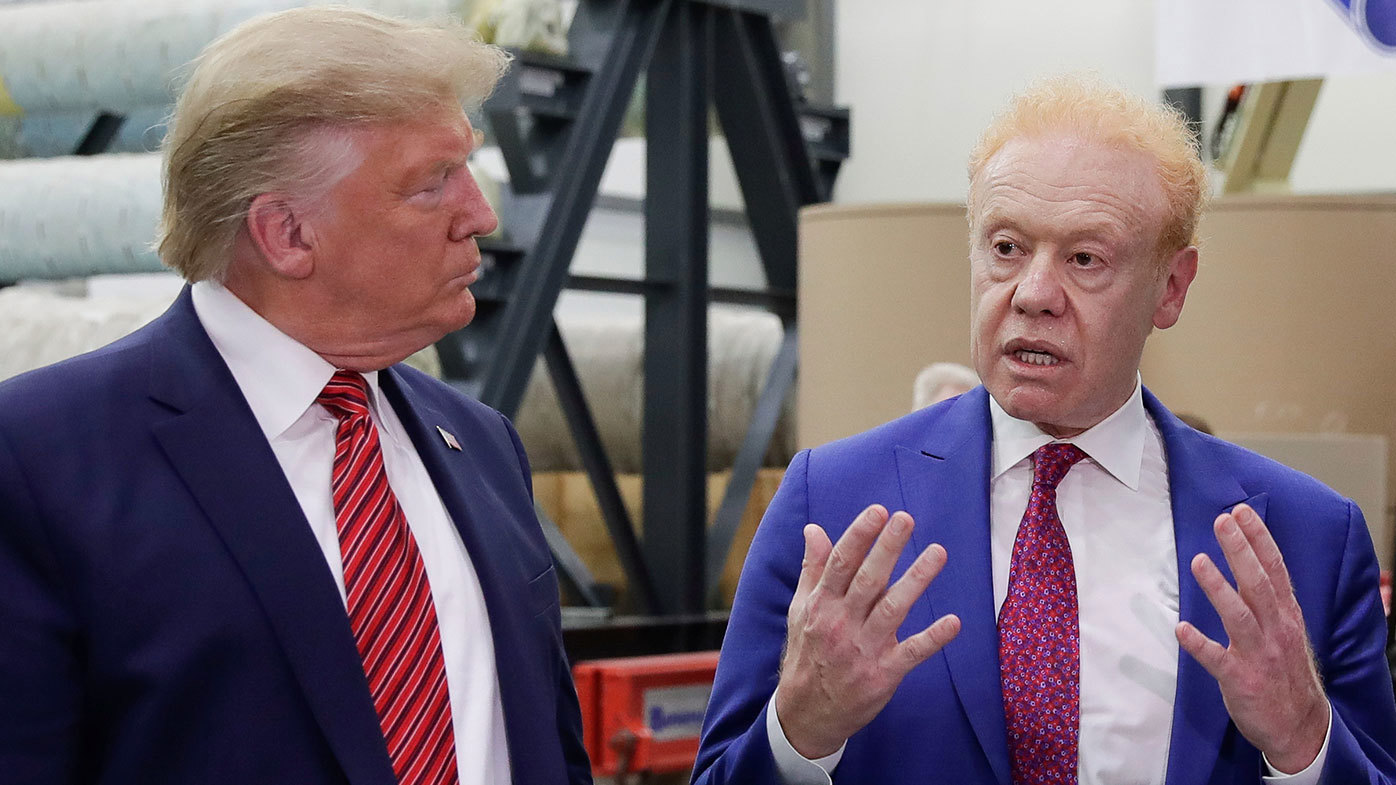
Donald Trump has called Anthony Pratt a "weirdo".

READ MORE: Judge fines Donald Trump $7900 over post maligning court staffer

"The Failing New York Times story, leaked by Deranged Jack Smith and the Biden 'Political Opponent Abuser' DOJ, about a red haired weirdo from Australia, named Anthony Pratt, is Fake News," Trump wrote.

"I never spoke to him about Submarines, but I did speak to him about creating jobs in Ohio and Pennsylvania, because that's what I'm all about – JOBS, A GREAT ECONOMY, LOW TAXES, NO INFLATION, ENERGY DOMINANCE, STRONG BORDERS, NO ENDLESS WARS, LOW INTEREST RATES, and much more!"

Trump is accused of revealing highly sensitive information about American submarines to Pratt.

Pratt is then reported to have passed on that information to dozens of other people.

In conversations with others, Pratt described a discussion he reportedly had with Trump, in which the former president dismissed the phone call with Ukraine President Volodymyr Zelenskyy that led to his first impeachment.

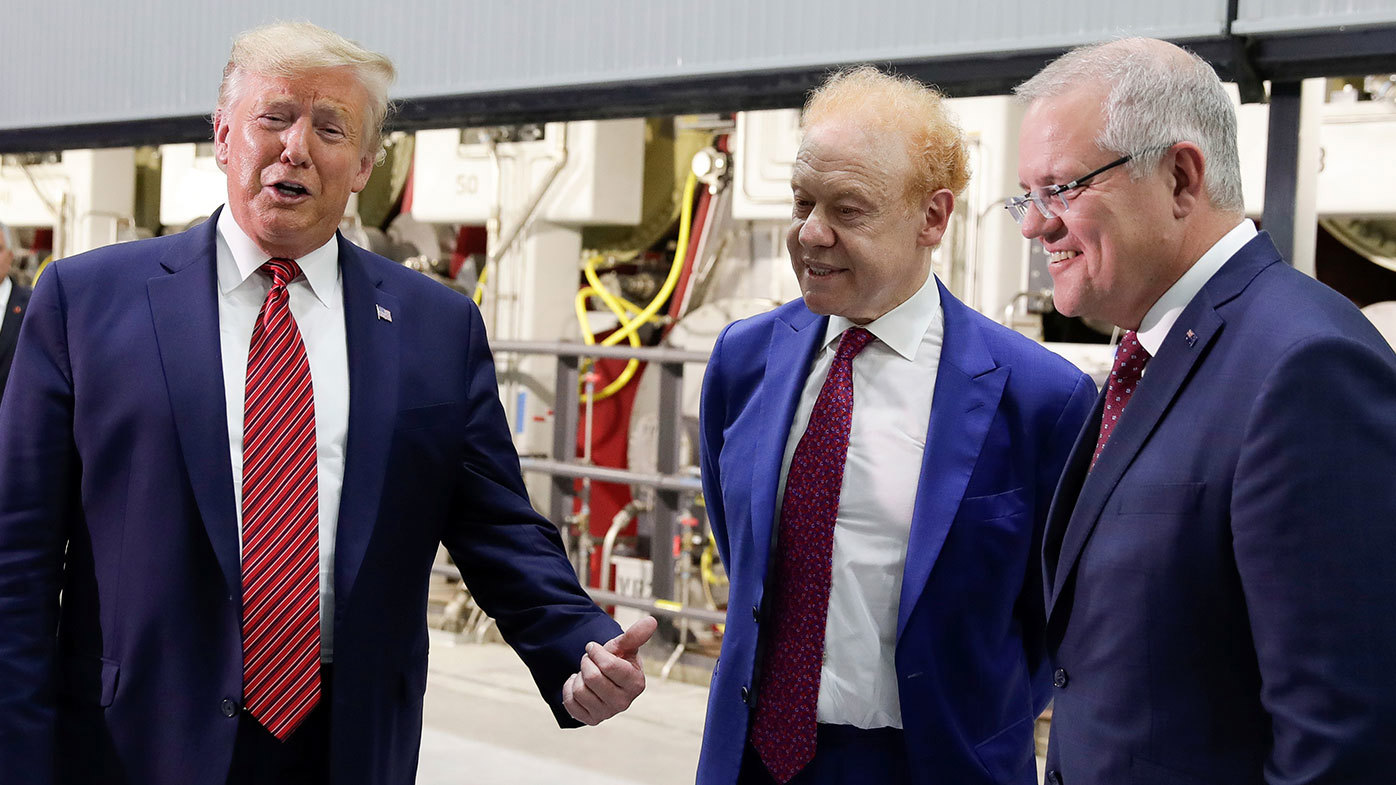
Donald Trump with Anthony Pratt and then-Prime Minister Scott Morrison at a factory in the US.

 READ MORE: Animated Trump told to keep volume down in trial

"Yeah and Trump said, 'You know that Ukraine phone call? That was nothing compared to what I usually do'," Pratt was recorded saying.

"He said, 'that Ukraine phone call, that's nothing compared to what we usually talk about'."

In the audio, Pratt both praised and criticised Trump.

"He knows exactly what to say and what not to say so that he avoids jail, but gets so close to it that it looks to everyone like he's breaking the law," Pratt said.

"Like he won't go up to someone and say, 'I want you to kill someone'. What he'll say, he'll send someone to tell someone to kill someone."

Pratt is the third-richest person in Australia, according to The Australian Financial Review Rich List.

His family runs Visy, which manufactures paper and cardboard products around the world, including in the US.

Nine has approached both Pratt and Trump for comment.

Accused drug smuggler, 77, 'thought he was picking up a COVID-19 award'

A Kiwi pensioner says he thought he'd flown to Thailand to pick up a Covid-19 award from the United Nations. Instead, it turned out to be two kilograms of heroin.

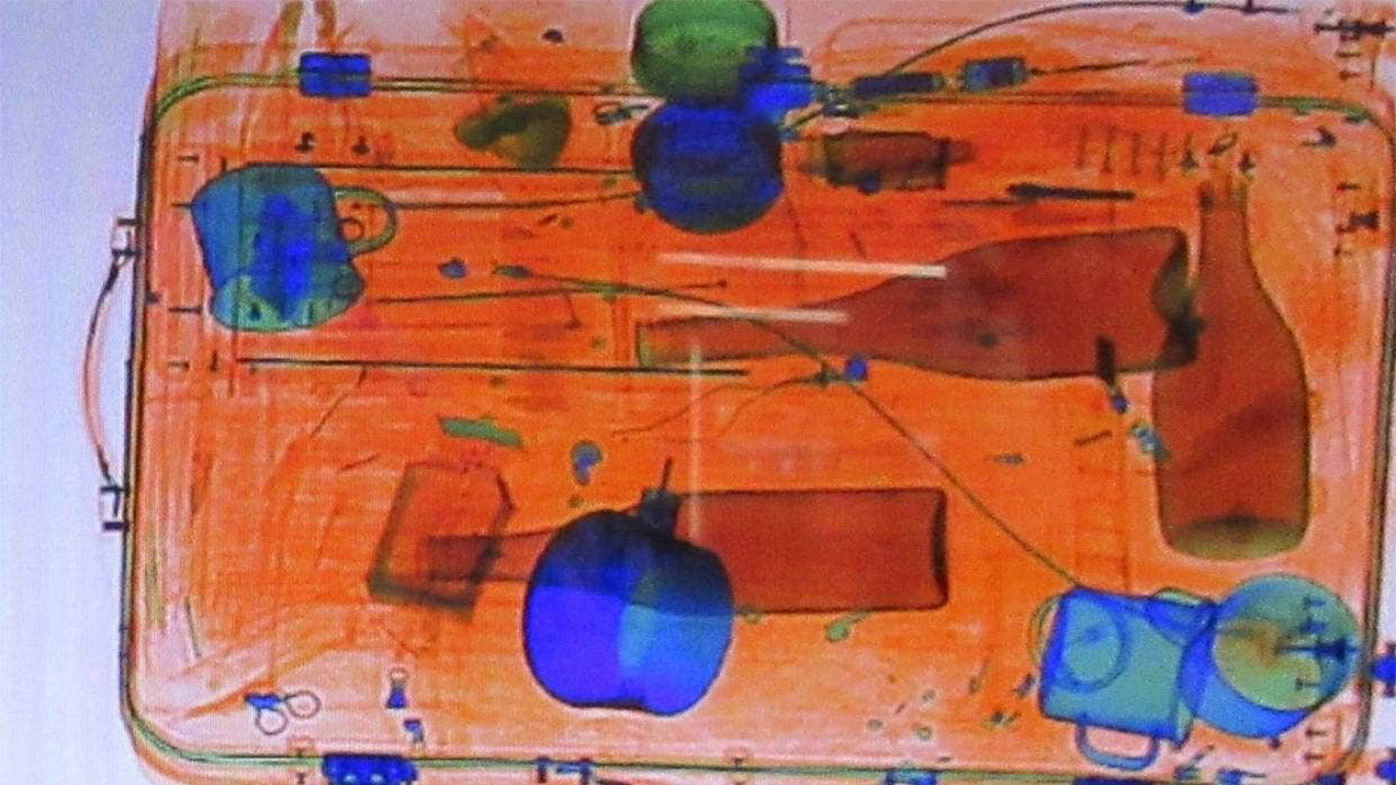
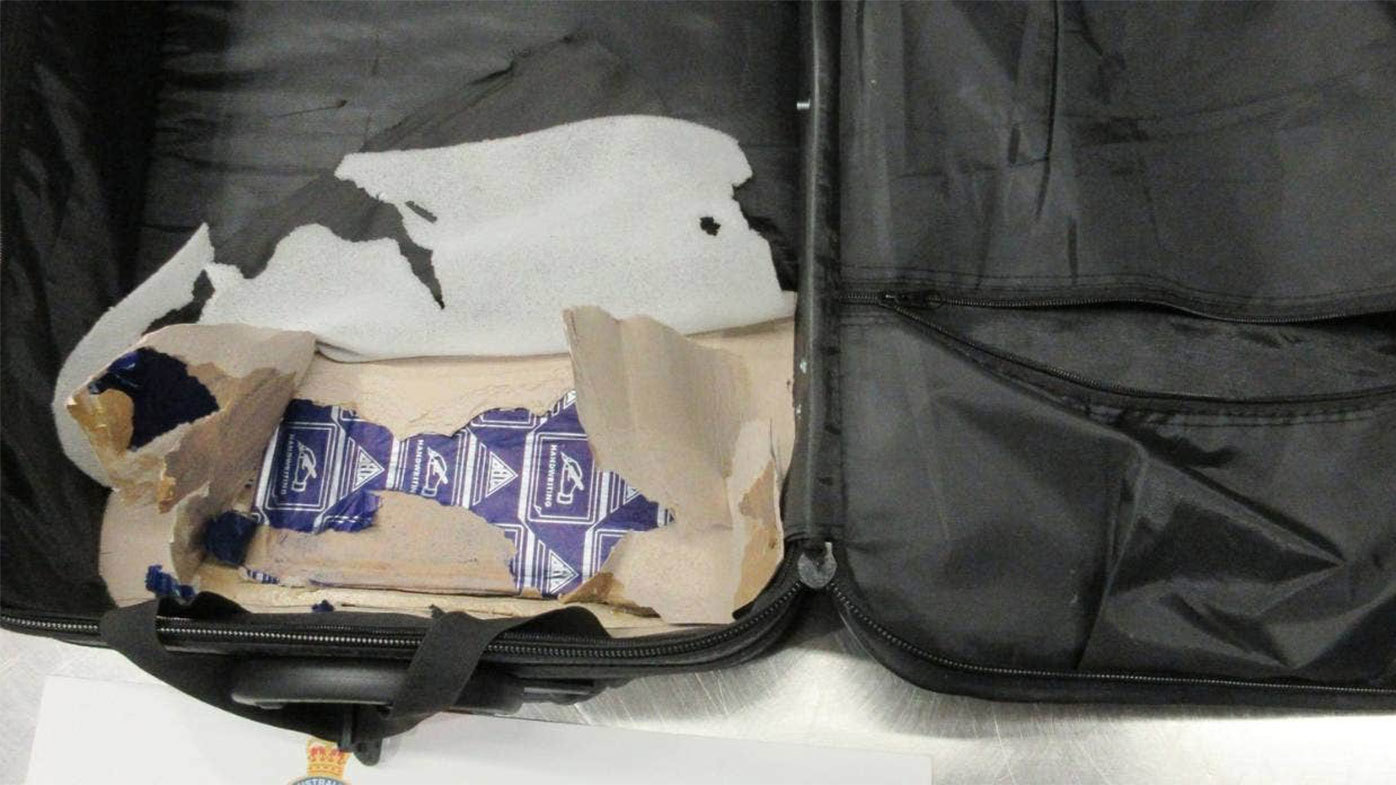
The 77-year-old was arrested in July by the Australian Federal Police when they found the drugs in his luggage as he transited to Auckland through Melbourne on his way home from Thailand.

He faces a charge of importing a marketable quantity of a border-controlled substance, which could see him serve up to 25 years behind bars.

A 77-year-old New Zealander was arrested after two kilograms of heroin was found in his luggage.

READ MORE: Violent NZ pub announces it will stop selling alcohol

Australian Border Force officers (ABF) allegedly found "white powder", which later tested positive for heroin, hidden inside the lining of his suitcase.

He claims he is the victim of a scam.

According to court documents obtained by Stuff, the Aucklander said he believed he was flying to Thailand to pick up an honour from the United Nations for the country's response to the Covid-19 pandemic.

About 18 months before his arrest, he was contacted through WhatsApp by a man who called himself George, the prosecution's statement of facts said.

"He was told he needed to go to Bangkok to sign the certificate and pick up prizes for other people back home," his lawyer told Stuff.

Instead, he was duped into taking drugs in his luggage.

While he was in Bangkok, a woman met the man at his hotel and gave him a black carry-on bag with "carry gifts for officials he would be meeting in Australia", the court documents said.

The drugs were found during a stopover in Melbourne.

READ MORE: Off-duty pilot faces 83 attempted murder counts

He told police that inside the bag he had only seen soap and clothing wrapped in plastic.

After taking the gifts to the "officials" in Melbourne, he would then receive US$23 million (A$36 million) and the certificate.

His lawyer said his family claimed he had previously fallen for online scams, but this one had far more severe consequences.

Since his arrest, he has been held at a medium-security remand centre in Melbourne's west, where alleged offenders wait until they face court.

Unless the charges are either thrown out or he is bailed, he is likely to remain behind bars through his 78th birthday next month.

While at the facility, a kidney condition he had prior to incarceration has worsened, and he faces the possibility of going on dialysis, his lawyer said.

"He's terrified of the environment he's in," his lawyer said.

"Who would think an elderly man would end up in a place like this."

Israel bombards Gaza after allowing another small aid convoy

Israeli warplanes have struck targets across Gaza, including in areas where Palestinian civilians have been told to seek refuge, after another small aid shipment was allowed into the besieged Hamas-ruled territory.

Israel is widely expected to launch a ground offensive in Gaza following Hamas’ brutal October 7 rampage into southern Israeli communities.

Tanks and troops have been massed at the Gaza border, and Israel says it has stepped up airstrikes in order to reduce the risk to troops in the next stages.

READ MORE: Victorian grandparents tell of moment war erupted around them

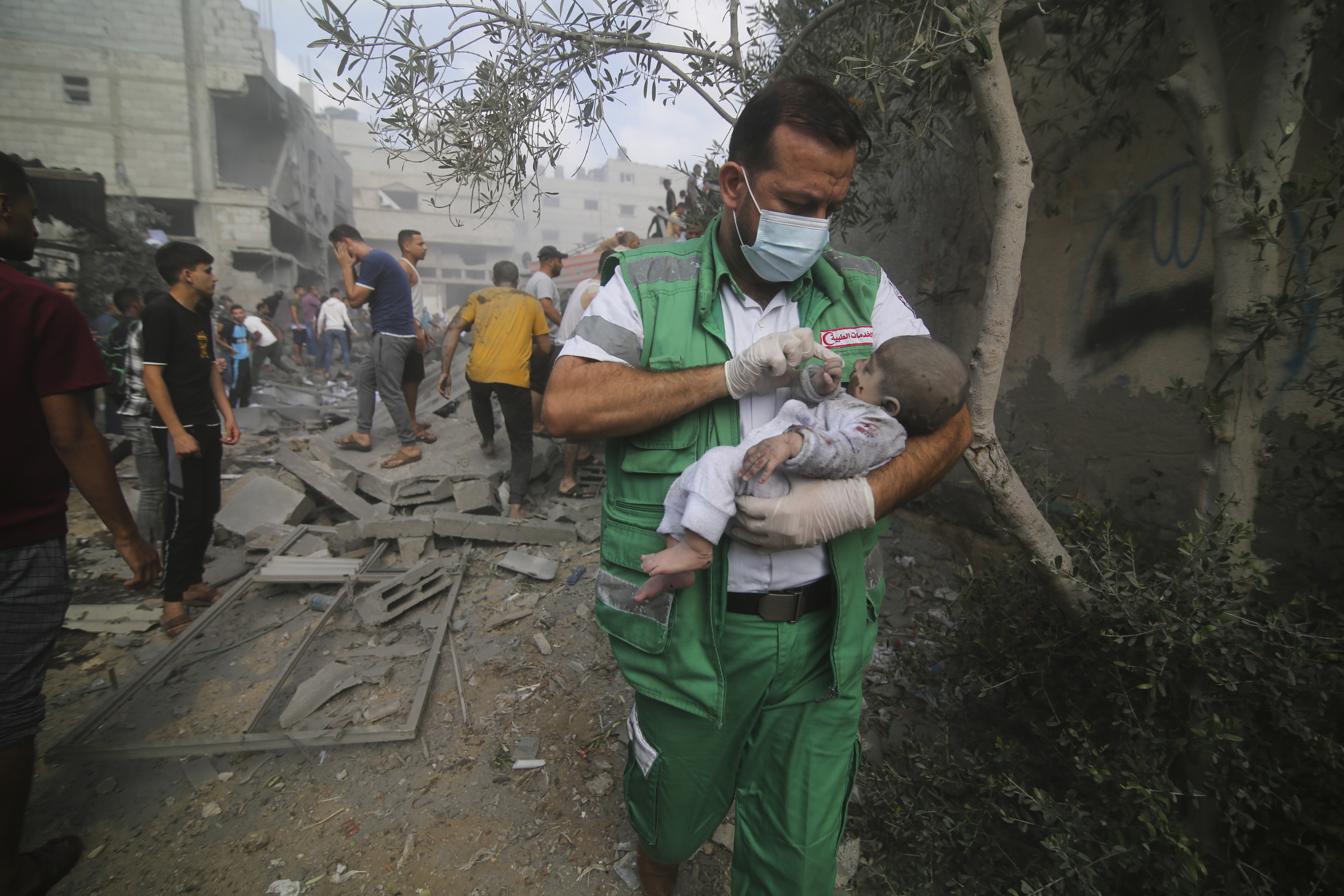
A Palestinian medic takes a baby pulled out of buildings destroyed in the Israeli bombardment

Fears of a widening war have grown as Israeli warplanes have struck targets in the occupied West Bank, Syria and Lebanon in recent days. It has frequently traded fire with Lebanon's Hezbollah militant group, which is armed with tens of thousands of rockets.

Prime Minister Benjamin Netanyahu told troops in northern Israel on Sunday that if Hezbollah launches a war, "it will make the mistake of its life. We will cripple it with a force it cannot even imagine, and the consequences for it and the Lebanese state will be devastating".

More than 1400 people in Israel have been killed – mostly civilians slain during the initial Hamas attack. At least 212 people were captured and dragged back to Gaza. Two Americans were released on Saturday, hours before the first shipment of humanitarian aid.

More than 4600 people have been killed in Gaza, according to the Hamas-run Health Ministry. That includes the disputed toll from a hospital explosion.

Israel has carried out limited ground forays into Gaza, and on Sunday, Hamas said it had destroyed an Israeli tank and two armoured bulldozers inside the territory it has ruled since 2007.

The Israeli military said a soldier was killed and three others were wounded by an anti-tank missile during a raid inside Gaza.

READ MORE: French intelligence points to Palestinian rocket, not Israeli airstrike, for Gaza hospital blast

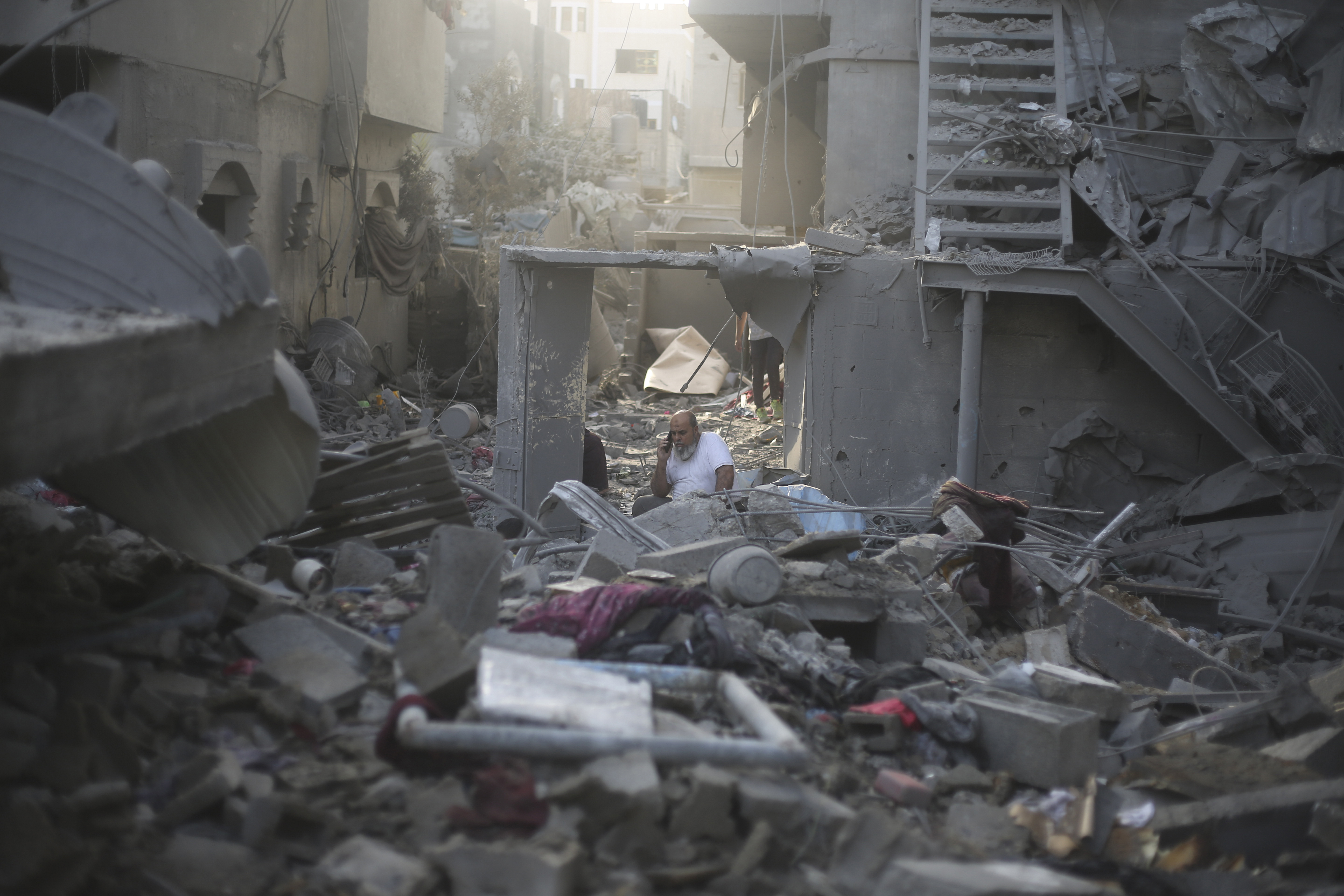
A Palestinian talks on the phone in the buildings destroyed in the Israeli bombardment

The military said the raid was part of efforts to rescue hostages abducted in the October 7 attack. Hamas hopes to trade the captives for Palestinian prisoners held by Israel.

On Sunday, 20 trucks entered Gaza in the first aid shipment into the territory since Israel imposed a complete siege at the start of the war. Israel allowed a second convoy of 15 trucks into Gaza today. Both entered from Egypt through the Rafah crossing, the only way into Gaza not controlled by Israel.

COGAT, the Israeli defence body responsible for Palestinian civilian affairs, said the aid was allowed in at the request of the United States, and included water, food and medical supplies. It said everything was inspected by Israel before it was brought into Gaza.

In a Sunday phone call, Netanyahu and US President Joe Biden “affirmed that there will now be continued flow of this critical assistance into Gaza", the White House said in a statement.

READ MORE: Israel says it doesn't plan to control life in Gaza after destroying Hamas

Israeli soldiers

Relief workers said far more aid was needed to address the spiralling humanitarian crisis in Gaza, where half the territory’s 2.3 million people have fled their homes.

The UN humanitarian agency said the 20 trucks that entered Saturday amounted to 4 per cent of an average day’s imports before the war and “a fraction of what is needed after 13 days of complete siege".

The Israeli military said the humanitarian situation was “under control", even as the UN called for 100 trucks a day to enter.

Israel has not allowed any fuel to enter Gaza, where there has been a full power blackout for more than a week and where hospitals say they are scrounging for generator fuel in order to keep operating life-saving medical equipment and incubators for premature babies.

The World Health Organisation said seven hospitals in northern Gaza have been forced to shut down due to damage from strikes, lack of power and supplies, or Israeli evacuation orders.

The lack of fuel has also crippled water and sanitation systems. Hundreds of thousands of Palestinians sheltering in UN-run schools and tent camps are running low on food and are drinking dirty water.

READ MORE: Father of American teenage hostage freed by Hamas says she is 'doing very good'

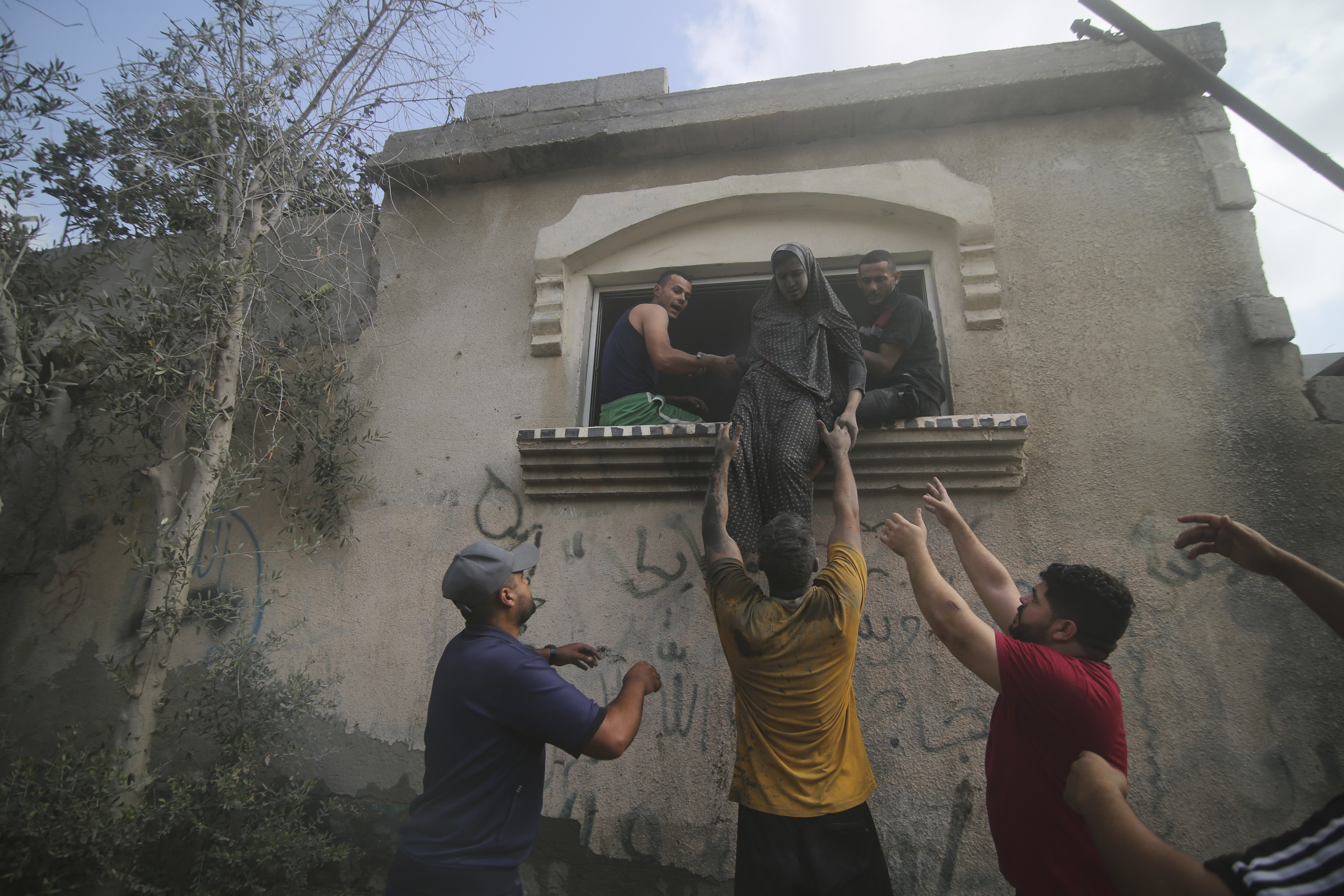
Palestinians evacuate survivors

Israel repeated its calls for people to leave northern Gaza, including by dropping leaflets from the air. It estimated 700,000 have already fled. But hundreds of thousands remain. That would raise the risk of mass civilian casualties in any ground offensive.

Secretary of State Antony Blinken said Israel “can't go back to the status quo” in which Hamas controls Gaza and is able to threaten it, but that Israel has “absolutely no intent” to govern Gaza itself.

“Something needs to be found that ensures that Hamas can’t do this again, but that also doesn’t revert to Israeli governance of Gaza,” he told NBC's Meet the Press.

“It’s something that needs to be worked even as Israel is dealing with the current threat.”

Israel captured Gaza, along with the West Bank and east Jerusalem, in the 1967 Mideast war. The Palestinians want all three territories for a future state.

Israel withdrew troops and settlers from Gaza in 2005, but Israel and Egypt have imposed a blockade of varying degrees since Hamas seized power from rival Palestinian forces in 2007.

READ MORE: Bar fined for offering patrons free drinks based on their bra size

Palestinians evacuate a building

Heavy Israeli airstrikes and shelling continued overnight across Gaza, the Hamas-run Interior Ministry said. It said airstrikes hit residential apartments in the town of Khan Younis and the Nuseirat refugee camp, both of which are south of the evacuation line.

The Palestinian Red Crescent medical service reported heavy overnight airstrikes near al-Quds hospital in Gaza City. Aside from patients, the hospital houses more than 12,000 displaced people, it said.

The Israeli military says it does not target civilians. It says Palestinian militants have fired over 7,000 rockets at Israel since the start of the war.

The military said Monday that it had struck 320 militant targets throughout Gaza over the last 24 hours.

It said it had destroyed anti-tank positions and other targets that could endanger forces preparing for “a manoeuvre in the Gaza Strip", an apparent reference to a ground operation.