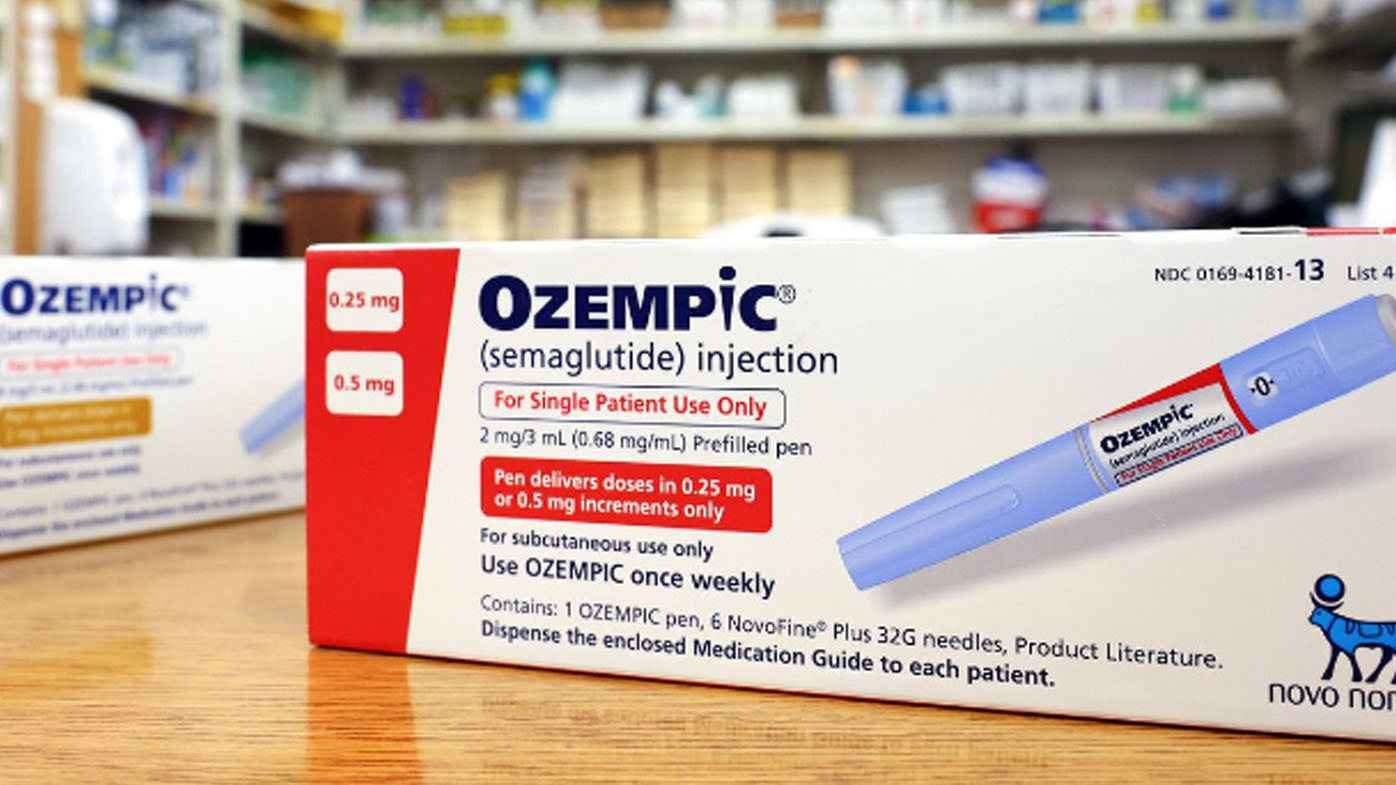
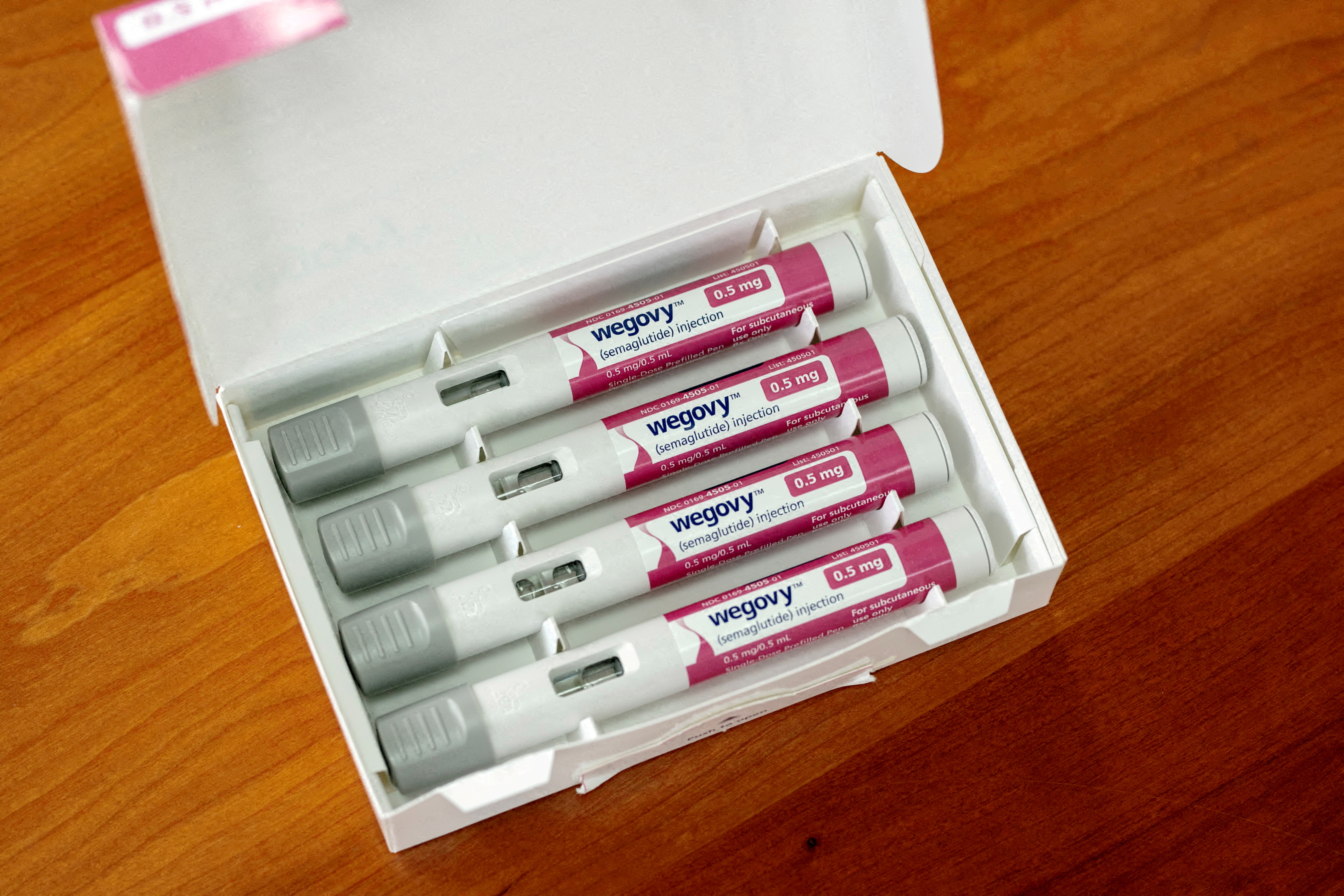
A new study suggests people taking popular injected medications for weight loss, including Wegovy, Ozempic, Saxenda and Victoza, may be at higher risk for serious digestive problems such as stomach paralysis, pancreatitis, and bowel obstructions, compared with those taking other types of weight loss medications.
The study found risks of these events happening to individual patients appears to be rare – about 1 per cent of people taking Ozempic were diagnosed with stomach paralysis, for example.
But demand for the drugs has exploded, with tens of millions now taking them worldwide.
READ MORE: $60m lotto winner's incredible plan for fortune
Researchers say even rare risks like these may amount to hundreds of thousands of new cases.
"When you have millions of people using these drugs, you know, a 1 per cent risk still translates to many people who may experience these events," lead study author Dr Mahyar Etminan, an epidemiologist at the University of British Columbia, said.
The study authors also note that these problems are not mild.
Bowel obstructions, for example, can be medical emergencies.
Previous CNN reporting highlighted cases of stomach paralysis in people who had taken these drugs and the lack of warning about that specific side effect to patients.
The prescribing information for Wegovy and Saxenda does caution about a host of serious side effects including inflammation of the pancreas, gallbladder problems, blocked intestines, kidney problems, serious allergic reactions, increased heart rate, suicidal thoughts, and changes in vision or people who also have diabetes.
A warning about ileus, or blocked intestines, was also just added to Ozempic's warning label.
The labels also note the most common side effects are nausea, vomiting and constipation.
They also strongly warn people with a history of certain types of hereditary thyroid cancers against taking the medications.
For the study, which was published as a research letter in JAMA, researchers at the University of British Columbia sifted through a random sample of more than 16 million insurance claims from a prescription drug database that covers about 93 per cent of all outpatient prescriptions in the US.
The claims were filed between 2006 and 2020.
They looked for patients who were prescribed two injected drugs — semaglutide and liraglutide.
Both drugs belong to a class called GLP-1 agonists and slow the passage of food through the stomach.
They can help people with diabetes control their blood sugar and lead to substantial weight loss for people with or without diabetes.
In 2021, the US Food and Drug Administration approved semaglutide for people who are obese without diabetes who only need to lose weight.
It's sold under the brand name Ozempic when prescribed for diabetes and Wegovy when prescribed for weight loss.
Liraglutide was FDA approved as a weight loss medicine since 2014.
When it's prescribed for diabetes, it's called Victoza; when prescribed for weight management, it's called Saxenda.
But even before the drugs officially hit the market for weight loss, doctors had noticed the benefits and began prescribing off-label for patients who needed to shed pounds.
READ MORE: Trump allegedly gave classified info to Aussie billionaire

To ferret out who those patients might have been, researchers looked for people who were diagnosed with obesity at least 90 days before they started the medication and excluded any who were also diagnosed with diabetes or who were taking any other drug to control their blood sugar.
Then they compared the frequency of serious digestive problems in those patients to the same set of problems in people taking a different type of medication for weight loss, bupropion-naltrexone, which is sold as a pill called Contrave.
Over the years reviewed, the researchers found that people taking Ozempic and Saxenda were much more likely to develop serious stomach and intestinal problems compared with those who were taking Contrave.
In absolute terms, there was a roughly 1 per cent rate of new cases of stomach paralysis in the group taking Ozempic, about 0.7 per cent incidence of stomach paralysis in the group taking Saxenda, and a roughly 0.3 per cent incidence of stomach paralysis in the group taking Contrave.
In relative terms, that means people taking the injected drugs were more than three times more likely to develop stomach paralysis compared with those taking Contrave.
There were no bowel obstructions noted in the group taking Ozempic, but the study found a 0.8 per cent incidence in people who were taking Saxenda, and a 0.17 per cent incidence in people taking Contrave.
That means bowel obstructions were more than four times more likely in people taking the injected medications compared with those on Contrave.
For pancreatitis, there was a 0.5 per cent incidence of pancreatitis in people taking Ozempic, a 0.8 per cent risk in people taking Saxenda, and a 0.01 per cent incidence in people taking Contrave, representing a more than ninefold increase.
Researchers also looked at the risk that patients might be diagnosed with biliary disease, which is a cluster of problems affecting the gallbladder and bile ducts, but there were no significant differences between the groups.
In the group of roughly 600 patients who were taking Ozempic, there were four cases of gastroparesis or stomach paralysis, two cases of pancreatitis, no bowel obstructions, and five who developed biliary disease.
In the group of about 4400 people taking Saxenda, there were 66 cases of stomach paralysis, 73 bowel obstructions, 71 cases of pancreatitis, and 162 cases of biliary disease.
In the group of about 650 people taking Contrave, by contrast, there were three cases of stomach paralysis, two bowel obstructions, one case of pancreatitis, and 16 cases of biliary disease.
The study has limits. It is observational, so it can only show associations. It can't prove the drugs caused the conditions people were diagnosed with.
But researchers say they tried to control for some of the things that may have biased their results.
"People with diabetes, for example, they already have an increased risk of gastroparesis, they have an increased risk of pancreatitis and biliary disease," study author Mohit Sodhi, a medical student who is studying the adverse events of commonly prescribed medications, said.
By excluding them from the study, Sodhi said, they were able to tease out more carefully what might be linked to the drug versus the disease.
And though researchers took steps to try to find people who might have been using the drugs for weight loss, because it's not noted in their medical records, there's no way to know for sure that's why they were taking it.
READ MORE: Aviation expert warns of mid-air lithium battery fire dangers
Still, this is the first time researchers have been able to put numbers to these risks, which have previously only been described by doctors and patients who have noticed them.
Experts who were not involved in the study said it was well conducted, but has some limits and won't be the final word.
"While GLP-1 agonists are generally well tolerated, there is a low incidence of serious side effects," Dr Ian Musgrave, a molecular pharmacologist at the University of Adelaide, said in a statement on the study given to the non-profit Science Media Centre in the UK.
For example, Musgrave said, inflammation of the pancreas, or pancreatitis, is a known side effect of these agents in patients with type-2 diabetes.
What's been less clear is whether patients taking these drugs for weight loss may have the same serious side effects.
One thing that may affect the study findings, Musgrave said, is that there were many more patients taking the injected drugs than were taking Contrave.
Another may be that while the study authors controlled their data for things like age, sex, alcohol use, smoking and high cholesterol, they didn't compare the effect of body mass index, or BMI.
Still, he said, the study findings are a valuable contribution to doctors who are prescribing the drugs and patients who are considering taking them.
Novo Nordisk, the manufacturer of both Ozempic and Saxenda, said it stands behind the safety and efficacy of all its GLP-1 medications when used consistent with the product labelling and approved indications.
"With respect to the study, as the authors acknowledge, the study has limitations, including potential confounding by indication and by other factors," the company said in a statement to CNN.
"We recommend patients take these medications for their approved indications and under the supervision of a healthcare professional.
Treatment decisions should be made together with a healthcare provider who can evaluate the appropriateness of using a GLP-1 based on assessment of a patient's individual medical profile," the statement said.
The researchers note that these problems probably didn't show up in the clinical trials that led to the drug's approval because those studies weren't large enough to capture some of these rarer adverse events, or the studies recorded these events as symptoms, rather than delving their underlying causes.
"The main symptoms of gastroparesis are nausea and vomiting, so they may report nausea and vomiting but, you know, looking at the true etiology of what's happening is something to consider," Sodhi said.
Sodhi said he was motivated to do the study after treating a man in the emergency department who was vomiting 15 to 20 times a day.
Doctors couldn't figure out what was causing it until they noticed he was taking Ozempic.
Sodhi said they started the man on a medication that treats stomach paralysis, "and he got a lot better," Sodhi said.
"It's entirely possible that he had this type of adverse event," he said.
READ MORE: Father-of-five denies attack on Danny Lim

In the meantime, the researchers hope that regulatory agencies and drug makers will consider updating the warning labels for their products, which currently don't include the risk of gastroparesis.
"This is critical information for patients to know so they can seek timely medical attention and avoid serious consequences," said Sodhi.
And they hope their study will give people make more informed decisions about the drugs.
"Someone who has diabetes and is taking this medication for that might be more willing to accept the risk of these adverse events, which are rare, to help get their diabetes under control," Sodhi said.
"But people who are otherwise healthy but may want to lose a bit of weight, you know, if they had a better idea essentially of what they might be getting into … that could potentially change whether or not they take these medications."
On the other side of the coin, obesity comes with its own substantial risks that also have to be considered said Dr Simon Cork, a senior lecturer in physiology at Anglia Ruskin University in the UK.
Cork was not involved in the study and reported no conflicts of interest related to the drugs.
"Obesity significantly increases the risk of developing cardiovascular disease, type 2 diabetes, cancer, gallbladder disease and stroke. These risks fall dramatically with clinically meaningful and sustained weight loss," Cork said in a statement given to the nonprofit Science Media Centre.
"For the overwhelming majority of patients for whom these drugs are targeted (those with the most severe forms of obesity), the benefits of weight loss far outweigh the risks."