Two accidents only a couple of hours apart leave roads closed.
Tag Archives: oceania
Jacinta Allan sworn in as Victoria's 49th premier
Jacinta Allan has been sworn in as Victoria's 49th premier after being elected unopposed by the Labor caucus.
Allan, the previous deputy premier, was chosen by a vote of her colleagues following yesterday's sudden resignation of Daniel Andrews.
Public Transport Minister Ben Carroll was elected as the deputy premier after a late push from the Labor right faction.
READ MORE: Daniel Andrews' journey from anonymity to premier
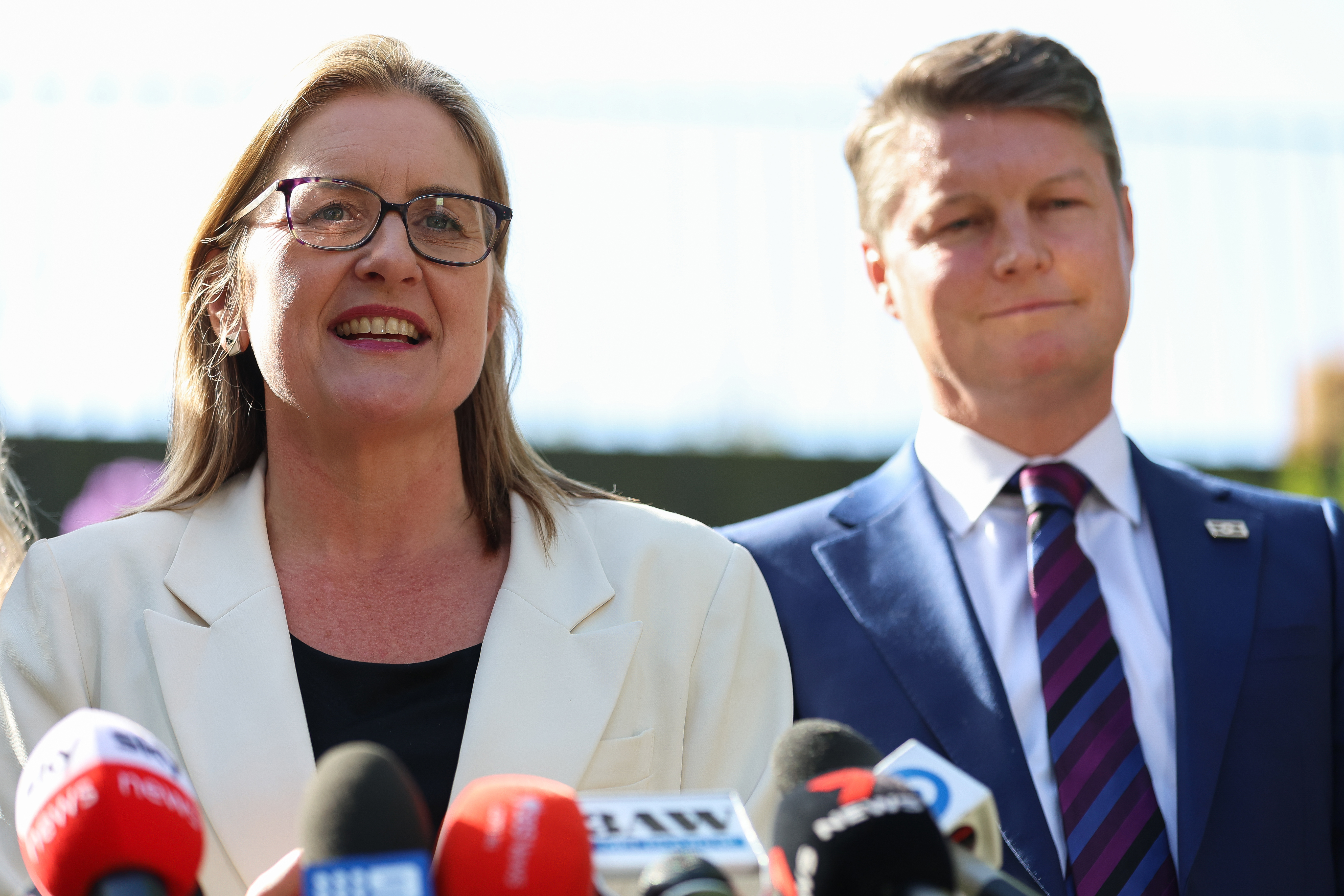
Allan addressed media outside parliament shortly after the caucus meeting ended.
"I have been endorsed unanimously by my caucus colleagues to replace the fabulous Daniel Andrews as leader of the Victorian parliamentary Labor Party, and in turn follow in his footsteps as premier of Victoria," she said.
"It is such a deep honour and privilege to be in the position to be heading to Government House and to be sworn in as premier of Victoria.
"And can I say, 24 years ago, almost to the day, when I walked into this place as a much younger woman from regional Victoria, I never expected to have this length of service or indeed to be able to have had the honour and privilege of serving the Victorian community in various ministerial roles."
Allan took the opportunity to praise Andrews.
"There's been lots written in just the last 24 hours about Daniel and Daniel Andrews's leadership, his strength, his courage, his determination," she said.
"He's been driven by his values every single day he has served the Victorian community."
READ MORE: 'Nothing stuck to Teflon Dan during his reign of spin and sniping … Now Victoria needs a new start'
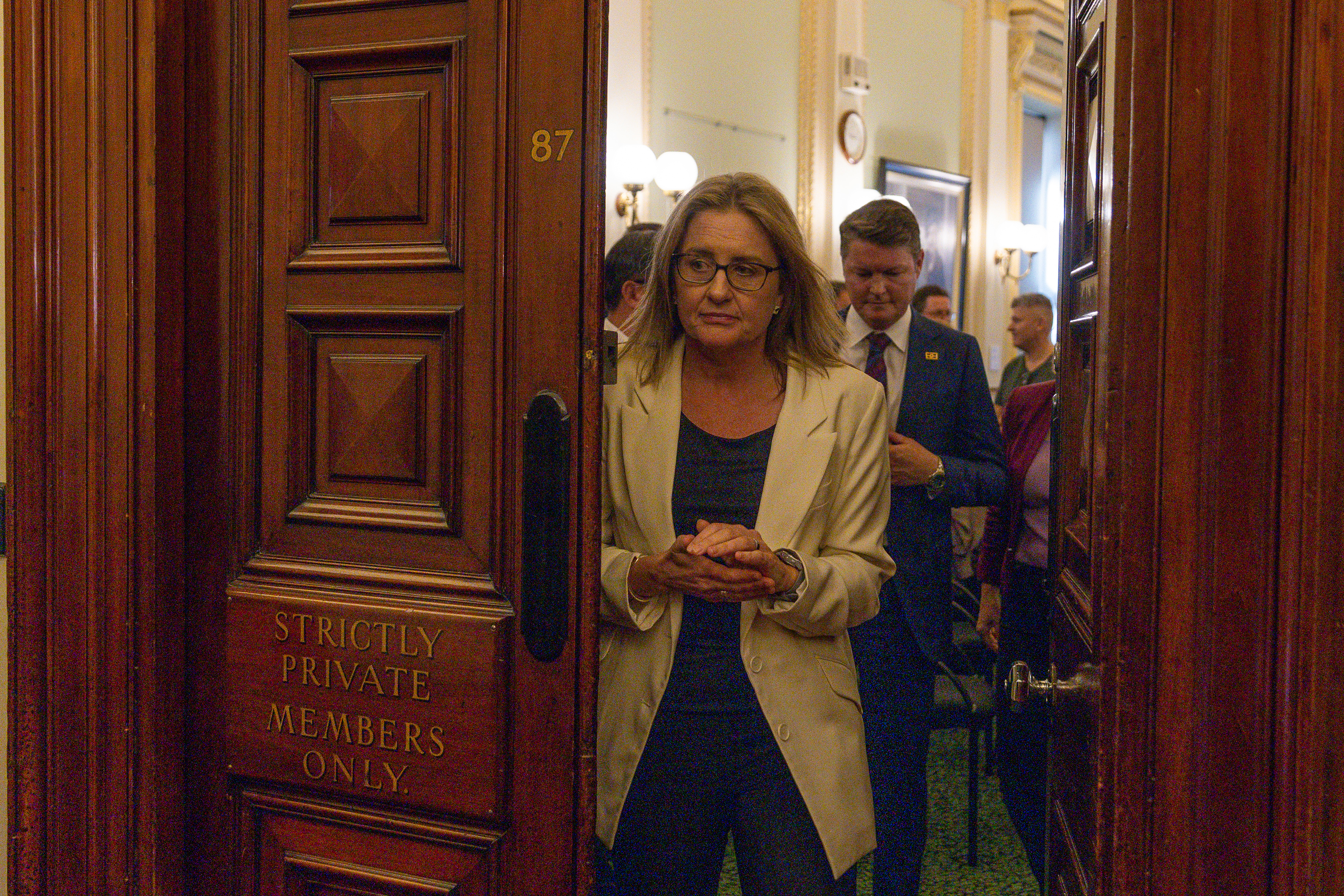
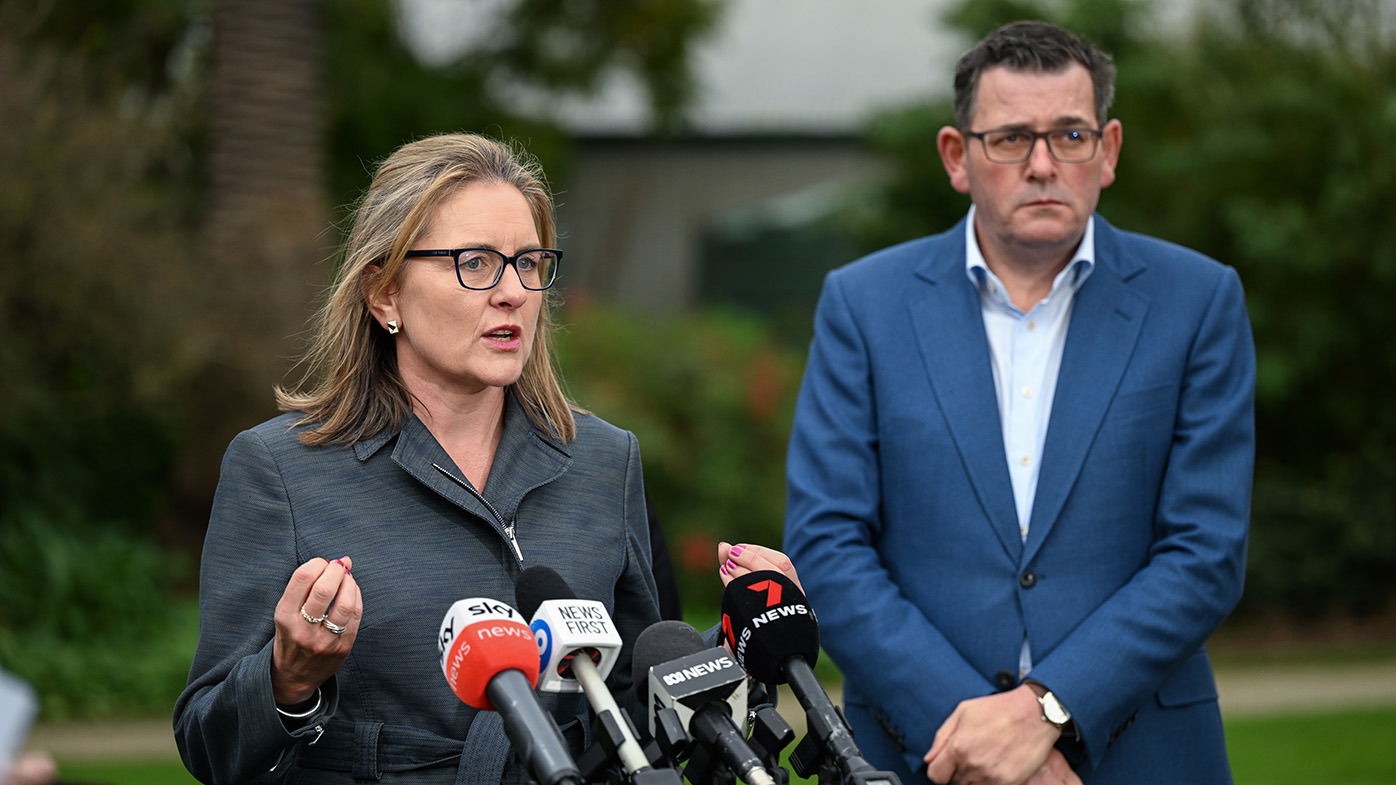
Allan said both she and Carroll had been raised by "working people" and vowed to continue to work hard for Victorians.
"I pledge to the Victorian community that I will continue to work hard as I've done every single day as a Member of Parliament," she said.
"But I also come to this role with the opportunity to continue the strong reform agenda and also chart a future course for the state and in coming days and weeks I will have more to say about policy priorities that I will be bringing."
She will be only the second female premier in Victoria's history, after the late Joan Kirner.
Allan, 50, was elected to parliament in 1999 as Member for Bendigo East in regional Victoria.
She was appointed deputy premier in June last year and is currently Minister for Transport Infrastructure and Minister for the Suburban Rail Loop.
Allan is married with two primary school-aged children.
READ MORE: How Australians reacted to the resignation of Victorian Premier Daniel Andrews
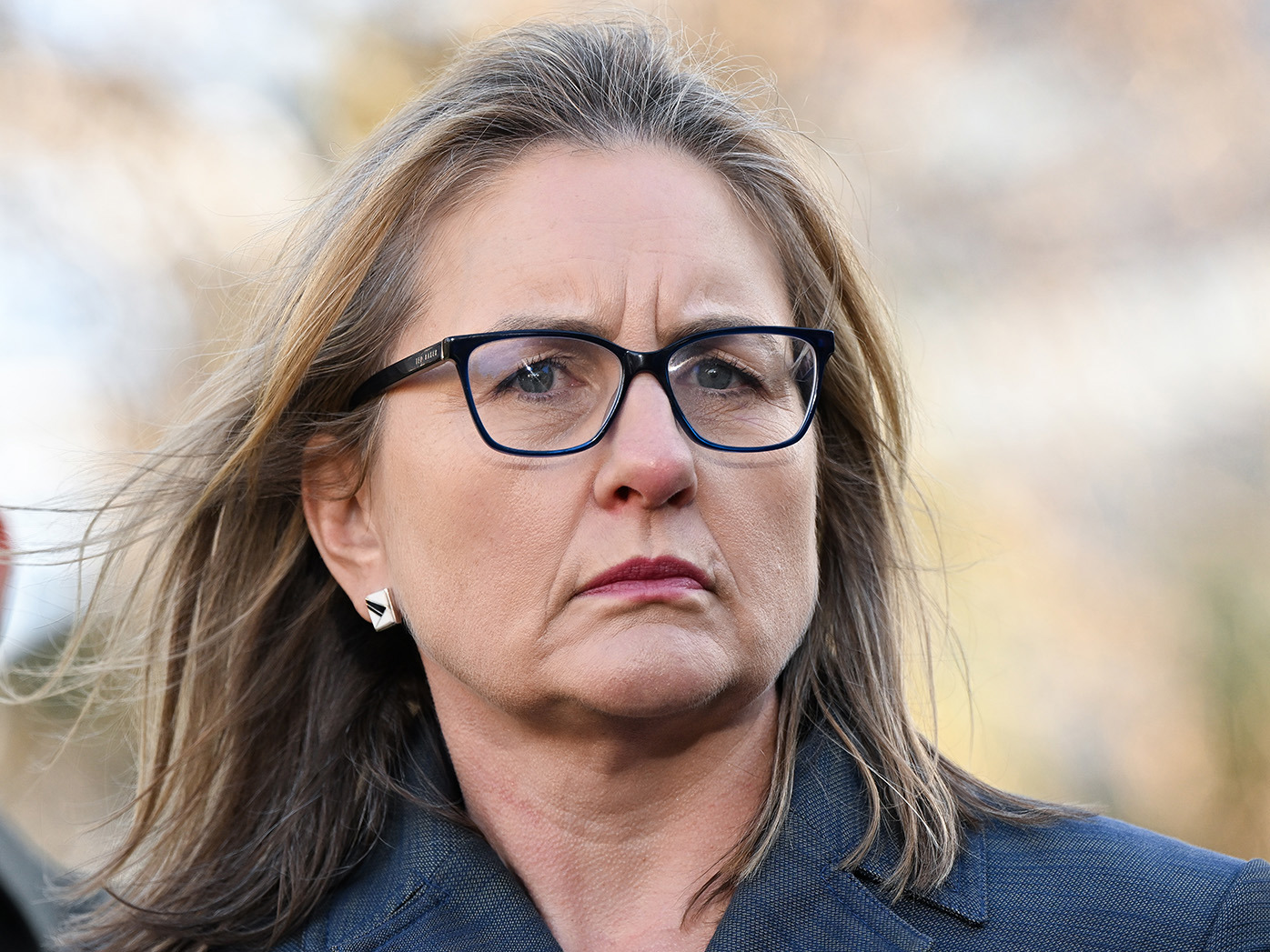
After Andrews announced his resignation yesterday, Allan took to X, formerly Twitter, congratulating him and saying she wanted to continue his work.
"Congratulations Premier. An unparalleled legacy that has changed our state forever & for the better," she wrote.
"Thank you for your leadership & your friendship. I will be putting myself forward to lead our party & continue the extraordinary work of our Labor government."
Election 2023: Chris Hipkins vs Christopher Luxon in second leaders’ debate; new poll shows Nats need Winston Peters
Cost of living, law and order, health and education, what does and doesn’t add up.
Glen Eden gang stoush: Alleged Comancheros associates sentenced for machete attack on man they’d just hit with car
The victim was hit with a car before he was slashed with a machete and hunting knife.
As Google turns 25, here are its best Doodles
Google has turned 25, and we're celebrating by showcasing the best Doodles – where the company logo gets a brief makeover – over the last 25 years.
Tauranga Art Gallery: Charging tourists discussed at Tauranga City Council meeting
Gallery admission is free with a donation encouraged, but that could change.
Fake nurse jailed for jabbing without qualifications
A serial liar is behind bars after she repeatedly pretended to be a nurse and injected patients with vaccines despite having no qualifications.
Alison Jane Mibus was sentenced in Adelaide Magistrates Court to four months and 28 days in prison after pleading guilty to falsely claiming to be a registered practitioner for a second time.
Magistrate Brett Dixon said any punishment short of jail time would be insufficient as the offending was "too serious and it would send the wrong message to the community".
READ MORE: Inflation in Australia lifts 5.2 per cent as fuel, housing costs bite

In January 2019, Mibus falsely claimed to be a registered nurse with years of experience in an application for a job at an Adelaide medical clinic, despite the role not requiring her to be one.
She was fined $10,500 in February 2020 for pretending to be a nurse and administering vaccines at a different medical centre, where she had worked previously.
But the sentence did not bring Mibus' ruse to an end.
She continued to be employed at her new workplace, where she posed as a nurse in emails and administered vaccinations to a colleague and his parents.
In sentencing her on Tuesday, Dixon said her repeat offending elevated the seriousness of her crime.
Her deception was only uncovered after she resigned from her position and her employer reported concerns to health regulator AHPRA.
"The nurse-patient relationship requires the utmost trust and anyone who abuses that faith should face the full consequences of their actions," AHPRA chief executive Martin Fletcher said.
"While this is a strong outcome, it is disappointing this individual didn't learn her lesson last time.
"Hopefully this outcome is the final deterrent."
READ MORE: Biden's dog bites yet another Secret Service agent
The case is the first time a person has been sentenced to prison in Australia for falsely claiming to be a qualified nurse.
Nursing and Midwifery Board of Australia chair Veronica Casey hopes the outcome serves as a warning to anyone considering lying about their qualifications.
"Being able to call yourself a nurse in Australia means something, and for someone to knowingly represent themselves as one to secure a job not only discredits the hard work and commitment of the profession, but is a criminal offence," she said.
"Employers are also reminded to ensure their employees are registered when they say they are and are not misleading patients, colleagues or authorities.
"It is putting the public at risk of harm."
Mibus was ordered to pay AHPRA $1628 in legal costs and will be eligible for release from prison after one month.
Ross Shield: Second-day action at the tournament in Napier
Unbeaten sides Napier and Hastings East meet on Thursday afternoon.
Man arrested after car crash ends in physical altercation in Melbourne
A man has been arrested after a car crash ended in a physical altercation in Melbourne.
Police said it is alleged two cars collided on Sydney Road in Fawkner before one of the cars attempted to flee the scene and crashed into another vehicle at 1.40pm today.
It is understood the drivers of the first two cars were involved in a physical altercation before one man allegedly damaged a car.
READ MORE: Jacinta Allan to be next Victorian premier

He is assisting police with their enquiries.
Melbourne resident Sarah told radio station 3AW her partner was in traffic when the incident unfolded.
"He was driving along Sydney Road and he was driving next to a work van," she said.
"He noticed a car coming across the median strip between the two dividing lanes and basically it was heading straight for the van next to him.
"He managed to speed up a little bit to get out of the way and veered off to the left.
"The car that crossed the median strip smashed into the van, which was right next to him.
"He slowed down and he was going to stop but then another car also came following the first car across the median strip.
"It basically bashed into the car that had already hit the work van and then two men hopped out.
"He's a little rattled, I'm a little rattled for him."
Woman accused of murder in Tauranga keeps name suppression while fitness to stand trial explored
Her fitness to stand trial is being explored.