Tag Archives: oceania

Western Sydney reservoir could open for residents this summer

Australia is preparing for a long and hot summer ahead, which is prompting the state government to consider opening a Western Sydney reservoir to the public.

Those living out west have limited options to swim and have facilities at capacity, like in Penrith where its pools service 108,000 residents.

This is compared to the Northern Beaches, which has a council-run swim spot for every 14,915 locals.

READ MORE: Australian government declares 'war' on feral cats

Prospect Reservoir and Nature Reserve could be opened up for recreational use to help locals cool off.

The state is considering opening up Prospect Reservoir and Nature Reserve for recreational use to help locals cool off.

Blacktown City Mayor Tony Bleasdale said keeping the reservoir closed to recreation was a "terrible waste".

"We need to be able to cool down our communities."

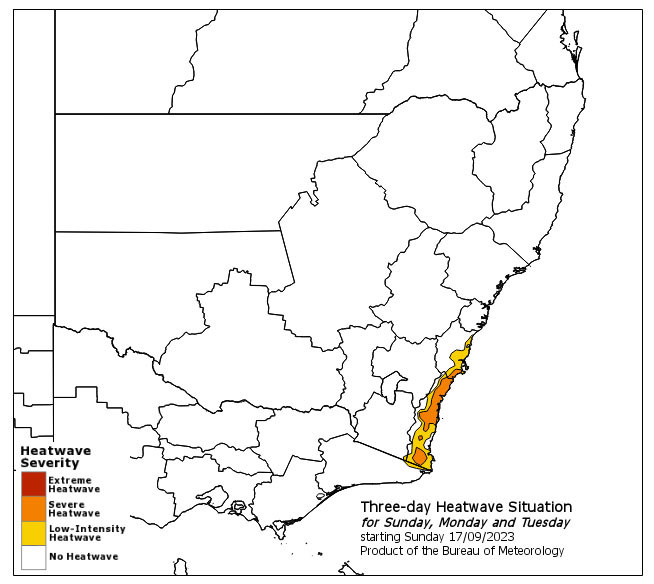
Experts are predicting Western Sydney could see temperatures up to or above 50 degrees.

READ MORE: What the coming El Niño could mean for the cost of your grocery shop

Prospect Reservoir and Nature Reserve could be opened up for recreational use to help locals cool off.

"Heatwaves kill more Australians than any other natural disaster so we are concerned about it," Cumberland City Council Mayor Lisa Lake said.

The reservoir has been supplying drinking water to greater Sydney since 1888.

It is one of the main three suppliers for the Prospect Water Filtration Plant, which supplies 80 per cent of greater Sydney's drinking water to four million people.

READ MORE: US student dies after doing social media 'One Chip Challenge'

The nature reserve also has rare and endangered aspects.

The reservoir would be opened in a limited capacity.

The government has opened up the decision for community consultation.

Residents can submit feedback until September 30 here.

Japan launches 'Moon Sniper' X-ray satellite

A revolutionary satellite that will reveal celestial objects in a new light and the "Moon Sniper" lunar lander lifted off Wednesday night.

The Japanese Space Agency launch, which was rescheduled several times due to bad weather, occurred aboard an H-IIA rocket from Tanegashima Space Center at 8.42am Japan Standard Time on Thursday.

The event streamed live on JAXA's YouTube channel, offering a broadcast in both English and Japanese.

READ MORE: National Australia Bank to slash 222 jobs in back-office overhaul

An artist's depiction shows what the "Moon Sniper" mission will look like after landing on the lunar surface.

The XRISM satellite (pronounced "crism"), also called the X-Ray Imaging and Spectroscopy Mission, is a joint mission between JAXA and NASA, along with participation from the European Space Agency and Canadian Space Agency.

Along for the ride is JAXA's SLIM, or Smart Lander for Investigating Moon.

This small-scale exploration lander is designed to demonstrate a "pinpoint" landing at a specific location within 100 meters, rather than the typical kilometer range, by relying on high-precision landing technology.

The precision led to the mission's nickname, Moon Sniper.

READ MORE: Bill Gates' foundation makes $150 million bet on beer brand

The Smart Lander for Investigating Moon flight model can be seen at Tanegashima Space Center.

The satellite and its two instruments will observe the universe's hottest regions, largest structures and objects with the strongest gravity, according to NASA.

XRISM will detect X-ray light, a wavelength invisible to humans.

Studying stellar explosions and black holes

X-rays are released by some of the most energetic objects and events in the universe, which is why astronomers want to study them.

"Some of the things we hope to study with XRISM include the aftermath of stellar explosions and near-light-speed particle jets launched by supermassive black holes in the centers of galaxies," said Richard Kelley, XRISM principal investigator at NASA's Goddard Space Flight Center in Greenbelt, Maryland, in a statement.

"But of course, we're most excited about all the unexpected phenomena XRISM will discover as it observes our cosmos."

Compared with other wavelengths of light, X-rays are so short that they pass through the dish-shaped mirrors that observe and collect visible, infrared and ultraviolet light such as the James Webb and Hubble space telescopes.

With that in mind, XRISM has thousands of curved individual nested mirrors better designed to detect X-rays.

The satellite will need to calibrate for a few months once it reaches orbit.

The mission is designed to operate for three years.

The satellite can detect X-rays that have energies ranging from 400 to 12,000 electron volts, which is far beyond the energy of visible light at 2 to 3 electron volts, according to NASA.

This range of detection will allow for studying cosmic extremes across the universe.

The satellite carries two instruments called Resolve and Xtend.

Resolve tracks tiny temperature shifts that help it determine the source, composition, motion and physical state of X-rays.

Resolve operates at minus 273.10 degrees Celsius, a temperature about 50 times colder than that of deep space, thanks to a refrigerator-size container of liquid helium.

This instrument will help astronomers unlock cosmic mysteries such as the chemical details of glowing hot gas inside galactic clusters.

READ MORE: Australian government declares 'war' on feral cats

"XRISM's Resolve instrument will let us peer into the make-up of cosmic X-ray sources to a degree that hasn't been possible before," Kelley said.

"We anticipate many new insights about the hottest objects in the universe, which include exploding stars, black holes and galaxies powered by them, and clusters of galaxies."

Meanwhile, Xtend will provide XRISM with one of the largest fields of view on an X-ray satellite.

"The spectra XRISM collects will be the most detailed we've ever seen for some of the phenomena we'll observe," said Brian Williams, NASA's XRISM project scientist at Goddard, in a statement.

An artist's rendering shows how XRISM will look once it's in orbit.

"The mission will provide us with insights into some of the most difficult places to study, like the internal structures of neutron stars and near-light-speed particle jets powered by black holes in active galaxies."

Moon Sniper sets its sights on a crater.

Meanwhile, SLIM will use its own propulsion system to head toward the moon.

The spacecraft will arrive in lunar orbit about three to four months after launch, orbit the moon for one month, and begin its descent and attempt a soft landing between four to six months after launch.

If the lander is successful, the technology demonstration will also briefly study the lunar surface.

READ MORE: What the coming El Niño could mean for the cost of your grocery shop

Unlike other recent lander missions aiming for the lunar south pole, SLIM is targeting a site near a small lunar impact crater called Shioli, in the vicinity of the Sea of Nectar, where it will investigate the composition of rocks that may help scientists uncover the origins of the moon.

The landing site is just south of the Sea of Tranquility, where Apollo 11 landed near the moon's equator in 1969.

Following the United States, the former Soviet Union and China, India became the fourth country to execute a controlled landing on the moon when its Chandrayaan-3 mission arrived August 23 near the lunar south pole.

Previously, Japanese company Ispace's Hakuto-R lunar lander fell 4.8 kilometers before crashing into the moon during a landing attempt in April.

XRISM contains two special mirror arrays to detect X-rays.

The SLIM probe has vision-based navigation technology.

Achieving precise landings on the moon is a key target for JAXA and other space agencies.

Resource-rich areas, such as the lunar south pole and its permanently shadowed regions filled with water ice, also present a number of hazards with craters and rocks.

Future missions will need to be able to land within a narrow area to avoid these features.

SLIM also has a lightweight design that could be favorable as agencies plan more frequent missions and explore moons around other planets such as Mars.

If SLIM is successful, JAXA contends, it will transform missions from "landing where we can to landing where we want."

'A true star who shone bright': Rising Aussie rules star dies at 16

The Tasmanian Aussie rules community is in mourning after the sudden death of a rising teenage star.

Samara Whitney, 16, who played for the Wynyard Football Club and was part of the Tasmania Devils program, died on Tuesday.

In a statement, Wynyard Football Club said she was "a true star who shone bright both inside and out".

"Our young gun, our pocket rocket, our #2 … such a positive influence for all," the club wrote on Facebook.

"We extend our deepest condolences to the family, friends and to all who were blessed and touched by Mara's beautiful soul."

AFL Tasmania also expressed its sympathies in a statement online.

Samara Whitney

"Samara was a beloved member of the Wynyard Cats and the Tasmania Devils program, having also represented the NWFL in this year's Women's All Stars Series," the sporting body wrote.

An online fundraiser, set up by Samara's friends, has raised over $25,000 to help her family farewell the teenager.

"Time has since stood still for her family, friends, school community and sporting clubs as we all begin to grieve and navigate life without our special girl," organiser Sasha Burr wrote.

Readers seeking support can contact Lifeline on 13 11 14 or beyond blue on 1300 22 4636.

Accused driver's dad, girlfriend charged over crash that killed siblings

The father of a man charged over a car crash in Sydney's south-west that killed a brother and sister has been accused of hindering the investigation.

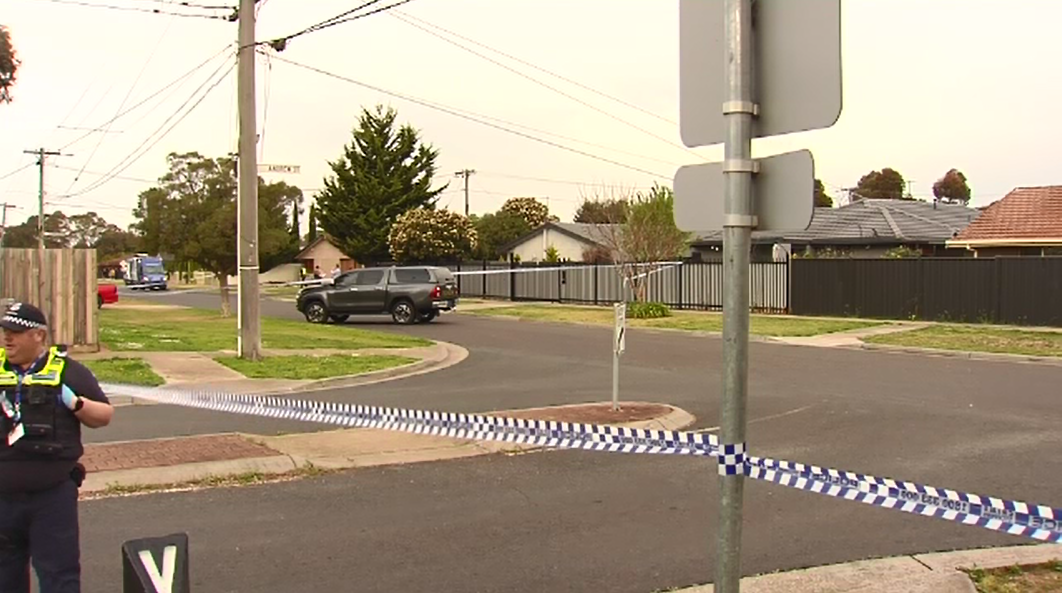
Police said a black Mercedes and a Toyota Echo collided head-on at about 9.20pm on September 1 on Sadleir Avenue, Heckenberg, before the Mercedes hit a Toyota Rav4 and flipped on its side.

The driver of the Echo, 24-year-old Alina Kauffman, and its passenger, her 15-year-old brother Ernesto Salazar, died at the scene.

READ MORE: Warning for shoppers as El Niño looms

Paramedics treated 24-year-old Alina Kauffman and her 15-year-old brother Ernesto Salazar but they both died at the scene of a crash in Heckenberg in Sydney's south-west on September 1.

Johnson Kokozian, 20, was charged with two aggravated dangerous driving occasioning death over the crash.

He was also charged with driving in a dangerous manner, negligent driving occasioning death, two counts of failing to stop and assist after vehicle impact causing death, as well as driving while disqualified.

The matter came before court yesterday, though Kokozian himself did not appear after he was denied bail on the weekend.

READ MORE: US student dies after 'One Chip Challenge'

Two people have died in a head-on crash in Heckenberg.

Police arrested a 22-year-old woman, Kokozian's girlfriend, outside court yesterday and charged her with concealing a serious indictable offence and hindering an investigation.

A 21-year-old man, arrested at his Liverpool home earlier yesterday, has been charged with the same offences.

Kokozian's father, 61, has also been charged with concealing a serious indictable offence and hindering the investigation after he was arrested yesterday.

He was granted conditional bail and will appear before court on October 19.

The investigation continues.

'Climate breakdown has begun': Earth's latest dark record

Earth has sweltered through its hottest Northern Hemisphere summer ever measured, with a record warm August capping a season of brutal and deadly temperatures, according to the World Meteorological Organisation.

Last month was not only the hottest August scientists ever recorded by far with modern equipment, it was also the second hottest month measured, behind only July 2023, WMO and the European climate service Copernicus announced Wednesday.

August was about 1.5 degrees warmer than pre-industrial averages. That is the threshold that the world is trying not to pass, though scientists are more concerned about rises in temperatures over decades, not merely a blip over a month's time.

The world's oceans — more than 70 per cent of the Earth's surface — were the hottest ever recorded, nearly 21 degrees, and have set high temperature marks for three consecutive months, the WMO and Copernicus said.

"The dog days of summer are not just barking, they are biting," United Nations Secretary-General Antonio Guterres said in a statement.

"Climate breakdown has begun."

So far, 2023 is the second hottest year on record, behind 2016, according to Copernicus.

Scientists blame human-caused climate change from the burning of coal, oil and natural gas with an extra push from a natural El Nino, which is a temporary warming of parts of the Pacific Ocean that changes weather worldwide. Usually an El Nino, which started earlier this year, adds extra heat to global temperatures but more so in its second year.

Climatologist Andrew Weaver said the numbers announced by WMO and Copernicus come as no surprise, bemoaning how governments have not appeared to take the issue of global warming seriously enough. He expressed concern that the public will just forget the issue when temperatures fall again.

"It's time for global leaders to start telling the truth," said Weaver, a professor at the School of Earth and Ocean Sciences at the University of Victoria in Canada.

"We will not limit warming to 1.5C; we will not limit warming to 2.0C. It's all hands on deck now to prevent 3.0C global warming — a level of warming that will wreak havoc worldwide."

Copernicus, a division of the European Union's space program, has records going back to 1940, but in the United Kingdom and the United States, global records go back to the mid 1800s and those weather and science agencies are expected to soon report that the summer was a record-breaker.

"What we are observing, not only new extremes but the persistence of these record-breaking conditions, and the impacts these have on both people and planet, are a clear consequence of the warming of the climate system," Copernicus Climate Change Service director Carlo Buontempo said.

Scientists have used tree rings, ice cores and other proxies to estimate that temperatures are now warmer than they have been in about 120,000 years. The world has been warmer before, but that was prior to human civilisation, seas were much higher and the poles were not icy.

So far, daily September temperatures are higher than what has been recorded before for this time of year, according to the University of Maine's Climate Reanalyser.

While the world's air and oceans were setting records for heat, Antarctica continued to set records for low amounts of sea ice, the WMO said.

"Antarctic sea ice extent was literally off the charts, and the global sea surface temperature was once again at a new record," WMO's secretary-general, Petteri Taalas, said in a statement released to the media.

"It is worth noting that this is happening BEFORE we see the full warming impact of the El Nino event, which typically plays out in the second year after it develops."

A strong El Nino coincided with the all-time high temperatures in 2016. The UN weather agency earlier this year rolled out predictions that suggest Earth would within the next five years have a year that averages 1.5 degrees warmer than in the mid 19th century. Each year at or near 1.5 matters.

It also predicted 98 per cent chance of breaking the 2016 record between now and 2027.

The new readings on high global temperatures came as WMO released Wednesday its latest bulletin on air quality and climate, noting that extreme heat, compounded by wildfires and desert dust, has had a measurable impact on air quality, human health and the environment.

WMO scientific adviser Lorenzo Labrador lamented the deteriorating air quality around the globe and cited "record-breaking wildfire season" in many parts of the world, including western Canada and Europe.

"If heat waves increase as a result of El Nino, we may probably expect a further degradation in air quality as a whole," he said.

'I went nose in:' GPS leads Queensland driver into sand bog

A Queensland driver ended up in a sticky situation when his GPS led him onto a beach, where his car became bogged in the sand.

Chris Sharpe, 30, was on his way home from storm-chasing about 2am when he ended up stuck on the shoreline of Gold Coast's Miami Beach.

It was a grueling six-hour wait before he finally got help to pull his car free.

READ MORE: Three rescued from shark-bitten catamaran in Coral Sea

A Queensland driver ended up in a sticky situation when his GPS led him onto a beach, where his car became bogged in the sand.

On top of the inconvenience, Gold Coast Council handed the Mermaid Beach man a $770 parking fine over the incident.

"I was following a GPS and I was just trying to go back home," Sharpe told 9News.

"I just didn't realise, it was too soft and too late.

"I went nose in and couldn't get back out."

Thunderstorms can interrupt cell and satellite reception, meaning map applications and GPS navigators may not load properly, or give incorrect directions.

Sharpe chose to stay with his car – his "pride and joy" – throughout the ordeal.

"I worked pretty hard for it, saved up for it," he said. 

EPA takes power company to court over mass fish kill

The NSW Environment Protection Authority (EPA) has brought a case against an electricity company over a mass fish kill in Lake Macquarie.

The deaths of thousands of fish on the shores of Lake Macquarie in August 2022 was initially found by the EPA to have been a "natural event".

Now, a filing by the EPA in the NSW Land and Environment Court alleges Delta Electricity, the company operating a power station at nearby Vales Point, was to blame for the environmental damage.

READ MORE: Qantas' reputation is mud. How do you fix it?

Hundreds of dead fish found washed up at Lake Macquarie.

The September 5 court filing alleges chemical leaks originated from Vales Point Power Station, a coal-fired power station at the southern end of Lake Macquarie.

The EPA accuses Delta of failing to properly maintain a chlorine dosing plant at the power station, which resulted in the discharge of "concentrated sodium hypochlorite" – a compound used in chlorine – in waterways connected to Wyee Bay.

The EPA believes this leak was the cause of the wildlife deaths, including thousands of fish and stingrays.

"Our investigation found that Delta could have prevented the fish kill if they had adequate equipment and processes in place," NSW EPA chief executive Tony Chappel said.

Lake Macquarie fish kill

The EPA alleges the incident was a breach of Delta's environmental protection licence and if the court rules in its favour, Delta Electricity could be hit with fines of up to $1 million.

Delta Electricity said it was aware of the case against it.

"Delta takes these allegations seriously and is currently reviewing the details of prosecution which have now been provided by the EPA," it said in a statement.

"As the matter is now before the courts, it is inappropriate for Delta to comment further at this time."

Chlorine dosing plants are seen as a standard system across coal-fired power plants.

Chlorine is used to treat the water intake into the coal station's boilers and remove impurities from the lake water.

Vales Point has been in operation since 1998 and provides 1320 megawatts of capacity to Australia's national power grid. 

READ MORE: Five killed in lift accident at Bali resort

A white spotted eagle ray at Lake Macquarie.

Got a story? Email jo********@******om.au

The EPA said water quality in Lake Macquarie had since returned to normal levels after Delta Electricity upgraded its systems.

The EPA chief executive thanked the community for its patience throughout the investigation, in what he described as a "distressing event for the community".

The case will now proceed through the NSW Land and Environment Court.

Suspicious fire near tobacconist 'likely linked' to arson attacks

Police believe a suspicious fire next door to a tobacconist in Oakleigh is likely connected to a series of ongoing arson attacks across Melbourne.

Fire crews were called to extinguish a blaze at a vacant business on Station Street about 3.25am.

The fire caused significant damage to a number of surrounding businesses, including a tobacco store located next door.

READ MORE: More victims come forward after alleged 'life-altering' attack on Melbourne school boy

No one was inside the businesses at the time of the fire.

The tobacconist had only been open for three months.

Alex, a friend of the owner, said he believed the incident wasn't connected to the recent spate of attacks.

"We have got no trouble with anyone, no threats – no nothing," he said.

"It's just a normal business open to make an income."

But police today told 9News they suspected it was related to other similar fires, with a range of state and federal agencies working on the investigation.

Over the past few weeks, police have visited over 75 tobacco stores across the state to speak to store owners and staff.

More than a dozen tobacconists have been targeted since March, including two separate incidents in Hadfield last week.

Detectives are appealing for anyone in the area who may have CCTV or dash cam footage of the incident.

Man who killed six members of US family decades ago dies in psychiatric hospital

A US man who killed six members of a Nebraska family nearly 50 years ago has died after complaining about chest pain.

Erwin Charles Simants, who was 77, died Thursday at a Lincoln hospital, his attorney, Robert Lindemeier, told the Lincoln Journal Star.

Simants initially was sentenced to die in the electric chair for shooting Henry and Audrey Kellie, along with their son, David, and three of their grandchildren in 1975.

Erwin Charles Simants killed six people.

READ MORE: More victims come forward after alleged 'life-altering' attack on Melbourne school boy

He had been hired to do odd jobs for the family at their home in Sutherland, about 32 kilometres from North Platte.

Two of the victims also were sexually assaulted.

But that sentence was overturned in 1979, when the Nebraska Supreme Court ordered a new trial because the sheriff, a trial witness, played cards with some of the jurors while they were sequestered.

At retrial he was found not responsible by reason of insanity.

He was diagnosed as schizophrenic and spent the rest of his life at a state psychiatric hospital.

The second insanity verdict prompted changes to Nebraska’s insanity law.

The changes were part of a national movement in the legal world that gained prominence when John Hinkley was acquitted by reason of insanity for shooting President Ronald Reagan.

Those changes shifted the burden of proof from the prosecution to the defence and gave judges — not mental health boards — authority to decide when to release patients found not responsible by reason of insanity.

In Simants' last competency evaluation in December, a judge ruled that he was still considered mentally ill and dangerous.

READ MORE: Iconic seaside suburb of Melbourne to feature on version of Monopoly

Audrey Brown, the only surviving Kellie sibling who had moved to Colorado just weeks before Simants’ 1975 attack, died in 2018.

She had driven to Lincoln for Simants’ annual review hearings each year for more than three decades.

“I think the courts need to recognise, and the public needs to recognise, there was a real family involved in this, and somebody still loves them and cares about them,” she said in 2013.

A grand jury will convene to investigate Simants' death.

Lancaster County’s Chief Deputy Sheriff Ben Houchin said Simants had complained of chest pains, although his exact cause of death wasn’t immediately known.