Tag Archives: oceania

Screaming heard before man stabbed in Manly by unknown person

Police are hunting for the offender who allegedly stabbed a man twice in Manly in Sydney's north overnight.

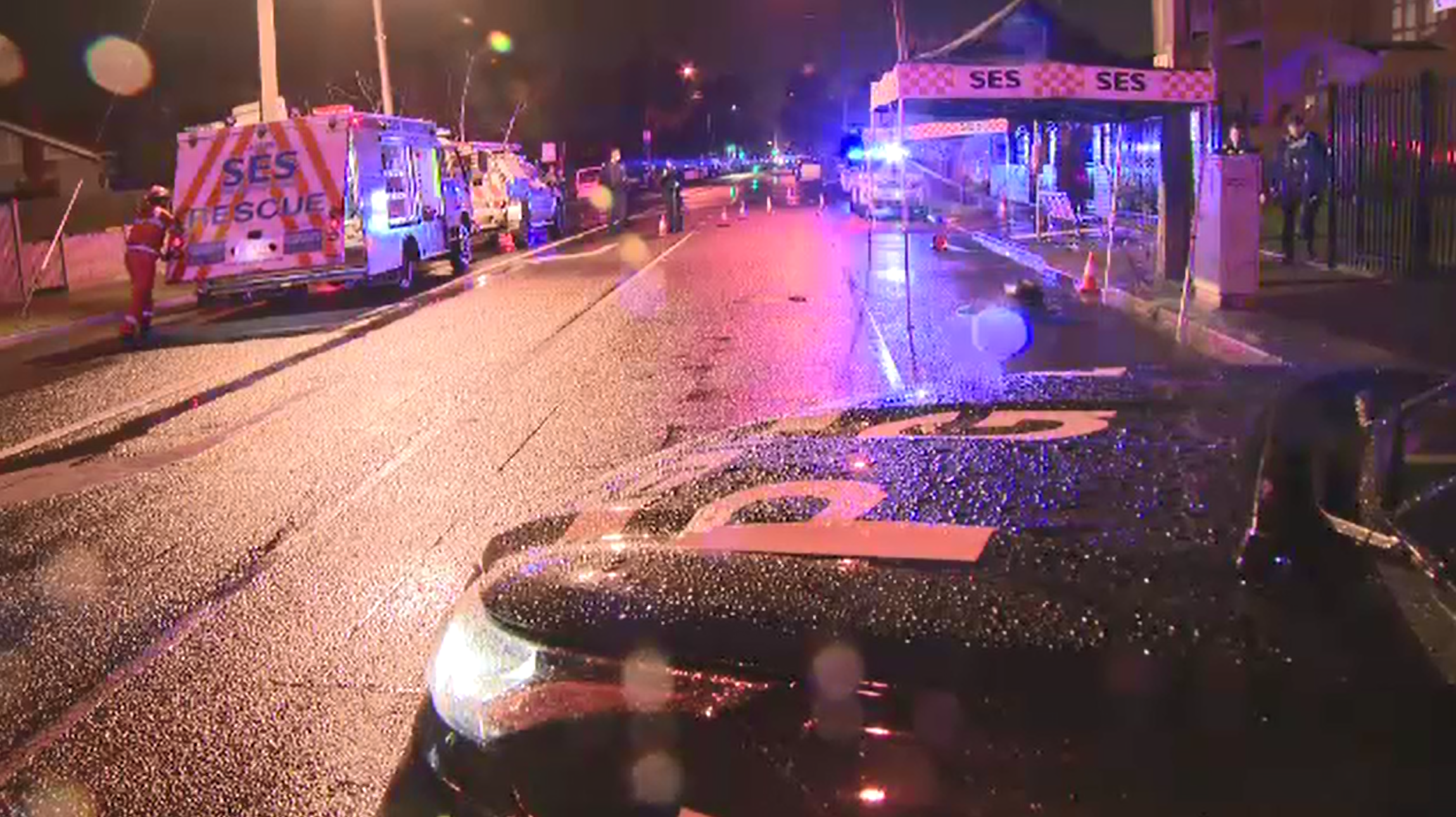
Officers were called to Malvern Avenue in Manly outside an accommodation venue at about 2.45am, where they found a man in his 20s who had been repeatedly stabbed.

The man suffered injuries to his chest and left arm.

READ MORE: Man hurt in one-punch attack after country music concert

Manly stabbing

He was taken to Royal North Shore Hospital in a serious but stable condition.

Officers are now working to hunt down the person responsible.

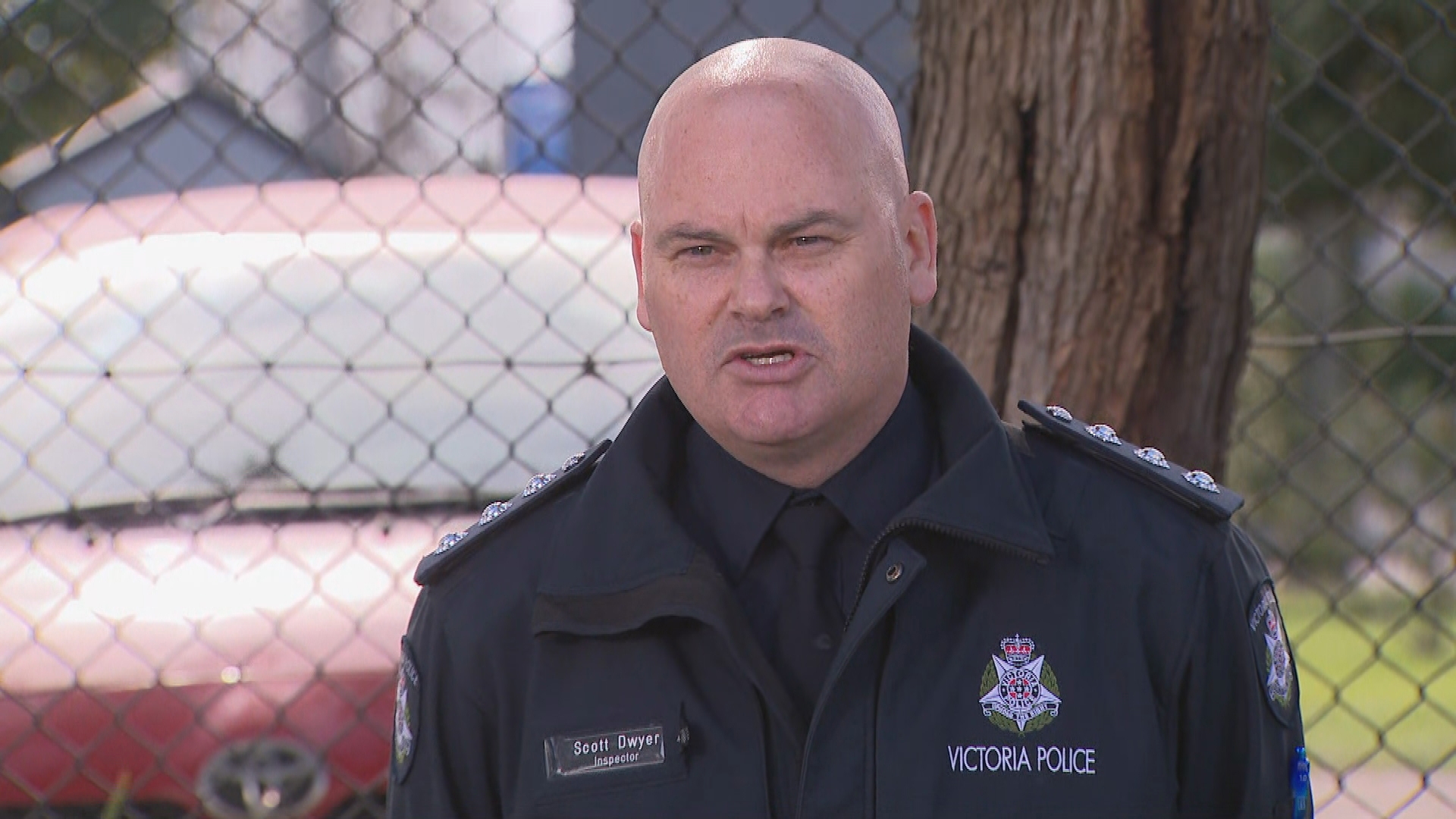
"Until we get a formal statement from the person obviously we've been door-knocking and canvassing, we have some information in regards to yelling that was heard around that time," Detective Superintendent Pat Sharkey said.

"But in terms of firm identification of a person of interest, no we don't."

One line of inquiry is whether a fight broke out before the man was injured.

READ MORE: Staggering worth of Trump mugshot revealed

Stabbing in Manly, Sydney.

Police have been speaking to witnesses overnight.

Residents who live close by say they had heard screaming coming from the scene.

"Lots of screaming and carry on all the time. Not a very pleasant place," a resident said.

"Heaps of screaming. Very scary, swearing and sort of like aggression towards each other.

"Very loud."

Anybody with information is urged to contact police.

Why aircraft behind fatal US marines crash is a 'challenge' for pilots

The fatal crash of a US Marines Corp Bell Boeing V-22 Osprey aircraft near Darwin has put the tilt-rotor plane's safety record under renewed scrutiny.

Three US marines were killed and 20 are injured, five seriously, after the military aircraft crashed yesterday on the Tiwi Islands near Darwin during a multinational military exercise.

It was the latest fatal crash involving the Osprey, part helicopter and part aircraft, nicknamed the "Widowmaker" by some pilots.

READ MORE: Staggering worth of Trump mugshot revealed

Australian aviation expert Richard de Crespigny told Today this morning that while the Osprey was fundamentally safe, its revolutionary design tested flying skills to the limit.

"It's challenging all the modes of flight. It's like a helicopter at low speed and turbo prepped aircraft at high speed. It can go 600km/h," he said.

"It's an advanced helicopter. It's a challenge to fly – it's unforgiving."

Development of the aircraft, built by US manufacturers Bell Helicopter and Boeing, began in 1982, as a replacement for military heavy-lift helicopters such as the Chinook.

The aircraft, with a crew of two, can carry 24 troops more than 400km.

De Crespigny said the Osprey had performed well on frontline military operations in Afghanistan and Iraq for US forces.

READ MORE: Man arrested over Tatiana Dokhotaru's death in Sydney

"They built 400. They have crashed about 14 … compared to the Chinook that lost about 25 per cent of its hulls, the Osprey is doing pretty well."

The Osprey that crashed yesterday was taking part in exercise Predators Run, which involves the militaries of the US, Australia, Indonesia, the Philippines and East Timor.

Defence Minister Richard Marles told Today there were a number of investigations underway involving the US and Australian militaries.

The incident comes just a month after four Australian army aircrew members died after an MRH-90 Taipan helicopter crashed into the sea near Hamilton Island off the Queensland coast during an exercise that was part of joint drills with the US.

A history of crashes

Previous crashes of Osprey aircraft, according to CNN reporting and US Defence Department.

July 20, 1992: Seven people are killed during testing when an Osprey crashes in Virginia.

April 8, 2000: A crash during training in Arizona kills 19 Marines. The crash is blamed on pilot error, with investigators concluding the pilot tried to land too fast and at too steep an angle, causing a loss of lift.

December 11, 2000: Four Marines are killed when an Osprey crashes in North Carolina. The accident is later blamed on problems with a hydraulic part and a software anomaly in the aircraft's computer system.

April 8, 2010: US Air Force Osprey crashes in southern Afghanistan, killing three US service members and one civilian employee.

April 11, 2012: Two US personnel are killed in an Osprey crash in Morocco.

June 13, 2012: An Air Force CV-22 Osprey crashes during a routine training mission north of Navarre, Florida, injuring five.

May 17, 2015: A Marine Corps MV-22 Osprey crashes at Bellows training ground on Oahu, Hawaii, leaving two Marines dead.

December 13, 2016: An MV-22B Osprey lands in shallow waters off Okinawa, Japan, injuring two.

August 5, 2017: An MV-22B Osprey crashes off the coast of Australia, leaving three Marines dead.

September 28, 2017: A Marine Corps MV-22 Osprey crashes in Syria, injuring two service members.

March 18, 2022: Four US service members are killed when the MV-22 Osprey they are travelling in crashes during NATO training exercises in Norway.

June 8, 2022: Five US Marines die after an MV-22 Osprey crashes during a training mission Wednesday near Glamis, California.

– Reported with CNN

'Monster' venomous snake found in shed

A "monster" eastern brown snake has been found in a shed in rural New South Wales.

The snake was found in a shed in Rocky River, near Armidale.

Former Nationals leader Barnaby Joyce spoke to 2GB radio host Ben Fordham about the discovery, sending him the image.

https://omny.fm/shows/ben-fordham-full-show/im-not-going-near-it-barnaby-joyce-shares-picture/embed

"It is a monster, I wouldn't go anywhere near that mate," he said.

"It was found in a shed so (I'd say) it's been clearing up some mice and rats.

"By the looks of it, it could clear up a pig." 

The eastern brown snake is considered the second deadliest snake in the world, according to the Billabong Sanctuary in Townsville.

Monster eastern brown snake found in New South Wales

Snake season starting earlier than usual

Just weeks ago, experts warned venomous snakes had been spotted in NSW earlier than in previous years.

Snakes don't usually come out of hibernation until September but snake catchers are already experiencing a "rare" rise in callouts for this time of year, the Australian Reptile Park said.

"Due to the unseasonably warm weather, experts warn that snakes could be active much earlier this year," a spokesperson said.

The park urged the public to exercise caution and suggests carrying a first aid kit when walking through parks or bushlands. 

How to keep snakes away from homes

Households should keep grass areas mowed and well-maintained to deter snakes.

Piling up firewood and sticks should also be avoided.

"Tin sheets or any household items like these that are piled up, can draw in heat providing a perfect man-made habitat for snakes," the Australian Reptile Park said.

"These areas provide a safe house for snakes as they sit in stealth mode awaiting prey to feed, and if startled they will defend through biting."

Women in Antarctica 'left to fend for themselves' against sexual harassers

The howling winds and perpetual darkness of the Antarctic winter were easing to a frozen spring when mechanic Liz Monahon at McMurdo Station grabbed a hammer.

If those in charge weren’t going to protect her from the man she feared would kill her, she figured, she needed to protect herself. It wasn’t like she could escape. They were all stuck there together on the ice.

So she kept the hammer with her at all times, either looped into her Carhartt overalls or tucked into her sports bra.

READ MORE: Trump campaign raises over $11 million since mugshot

Liz Monahon takes a selfie on McMurdo ice shelf in Nov. 2021.

“If he came anywhere near me, I was going to start swinging at him,” Monahon says. “I decided that I was going to survive.”

Monahon, 35, is one of many women who say the isolated environment and macho culture at the United States research centre in Antarctica have allowed sexual harassment and assault to flourish.

The National Science Foundation, the federal agency that oversees the US Antarctic Program, published a report in 2022 in which 59 percent of women said they’d experienced harassment or assault while on the ice, and 72 percent of women said such behaviour was a problem in Antarctica.

But the problem goes beyond the harassment, The Associated Press found. In reviewing court records and internal communications, and in interviews with more than a dozen current and former employees, the AP uncovered a pattern of women who said their claims of harassment or assault were minimised by their employers, often leading to them or others being put in further danger.

In one case, a woman who reported a colleague had groped her was made to work alongside him again. In another, a woman who told her employer she was sexually assaulted was later fired. Another woman said that bosses at the base downgraded her allegations from rape to harassment. The AP generally does not identify those who say they have been sexually assaulted unless they publicly identify themselves.

The complaints of violence did not stop with the NSF report. Five months after its release, a woman at McMurdo told a deputy US marshal that colleague Stephen Bieneman pinned her down and put his shin over her throat for about a minute while she desperately tried to communicate she couldn’t breathe.

Bieneman pleaded not guilty to misdemeanor assault. He was fired and sent back to the US, court documents show, and his trial is scheduled for November. His lawyer, Birney Bervar, said in an email to the AP that it was “horseplay” initiated by the woman and the evidence didn’t support “an assault of the nature and degree she described.”

The NSF report triggered a Congressional investigation. In a written response to Congress that is contradicted by its own emails, Leidos, the prime contractor, said it received “zero allegations” of sexual assault in Antarctica during the five years ending April 2022.

READ MORE: Airline loses passenger's dog at world's busiest airport

Liz Monahon poses for a photograph in Christchurch, New Zealand. The Associated Press found a pattern of women working in Antarctica who said their claims of sexual harassment or assault had been minimised by their employers.

Kathleen Naeher, the chief operating officer of the civil group at Leidos, told a congressional committee in December that they would install peepholes on dorm room doors, limit access to master keys that could open multiple bedrooms, and give teams in the field an extra satellite phone.

Mike Garcia said the proposed fixes left him flabbergasted.

“This should have been done before we sent anyone down to Antarctica,” he said at the hearing.

Monahon and all but one of the workers quoted in this story are speaking publicly for the first time. Trapped in one of the most remote spots on Earth, the women say they were largely forced to fend for themselves.

“No one was there to save me but me,” Monahon says. “And that was the thing that was so terrifying.”

Monahon believes she only escaped physical harm in Antarctica because of her colleagues, not management.

She met Zak Buckingham in 2021 at a hotel in Christchurch, New Zealand, where McMurdo workers were quarantining against COVID-19 before going to Antarctica. It would be Monahon’s second stint in Antarctica, a place that had fascinated her since her childhood half a world away in upstate New York.

At the hotel, Monahon says, male colleagues bothering her and a friend backed off when Buckingham — a plumber and amateur boxer from Auckland, New Zealand — sat with them.

Buckingham, now 36, was intimidating and a bit wild, but funny and charming. One night, Monahon says, she and Buckingham hooked up.

What Monahon didn’t know was that Buckingham had a history of what a judge described as alcohol-related criminal offending in New Zealand.

Three months before deploying, Buckingham breached a protection order taken out by his former partner and the mother of his three children, according to court records the AP obtained after petitioning a New Zealand judge. He’d texted his ex-partner demanding oral sex. She told him to stop being inappropriate.

“No, I will not stop being inappropriate,” he’d replied, and demanded oral sex again, according to the judge's findings. She again told him to stop. He responded, according to the records: “You need to be f—– like a slut.”

A week later, he sent her 18 texts, court records show. She warned him she’d call the police.

“Continue to threaten me and you’ll need to,” he’d replied.

Antarctica’s ancient ice sheet and remoteness make it ideal for scientists studying everything from the earliest moments of the universe to changes in the planet’s climate.

The population at McMurdo, the hub of US operations, usually swells from 200-300 in the southern winter to over 1,000 in the summer. Typically, around 70 percent are men.

Funded and overseen by the NSF, the U.S. Antarctic Program is run by a tangle of contractors and subcontractors, with billions of dollars at stake. Since 2017, Leidos has held the main contract, now worth over A$310 million per year. Subcontractor PAE, which employs many of the base’s workers, was bought last year by the government services giant Amentum.

There is no police presence or jail at McMurdo, and law enforcement falls to a sworn on-site deputy US marshal.

Buckingham was hired by PAE. Amentum didn’t respond to questions from the AP. Leidos Senior Vice President Melissa Lee Dueñas said it conducts background checks on all its employees.

“Our stance on sexual harassment or assault couldn’t be more clear: we have zero tolerance for such behaviour,” Dueñas said in an email. “Each case is thoroughly investigated.”

The NSF and Leidos declined to answer questions about Buckingham or other cases. Leidos said sharing specific details wasn’t always appropriate or helpful.

The NSF told the AP it improved safety in Antarctica last year. The agency now requires Leidos to immediately report any significant health and safety incidents, including sexual assault and harassment, it said in a statement. The NSF said it also created an office to deal with such complaints, provided a confidential victim’s advocate, and established a 24-hour helpline.

On the ice, with limited options for socialising, many head to one of McMurdo’s two main bars: Southern Exposure or Gallagher’s.

Neither has windows, workers say, and they smell of body odour and decades of stale beer that has seeped into the floor. In the summer, when the sun shines all night, people walk out of the bars and are dazzled by the light.

One night at Southern Exposure, Monahon told the AP, Buckingham began laughing with buddies about who was going to sleep with her and her friend. Next thing, he was forehead to forehead with another man, she says. Buckingham, reached by phone in New Zealand, declined to comment and hung up.

Monahon says she repeatedly told Buckingham she didn’t want to speak with him. Soon after, she heard Buckingham was angry at her.

Worried, she says, she told PAE's human resources she feared for her safety. They took no action. A week later, Buckingham rushed up to her in Gallagher’s, shaking with anger, shouting and threatening her, she says.

“You’ve been talking s— about my mother,” he yelled at her, she says, leaving her baffled. “People who talk s— about my mother deserve to die.”

Monahon says she was shocked to the core. “Snitches will get stitches,” she says Buckingham snarled as others intervened.

READ MORE: Russia says Wagner boss confirmed dead in plane crash

Liz Monahon takes a selfie on the polar plateau, Antarctica, Feb. 15, 2022.

Cameron Dailey-Ruddy, who bartended at Gallagher’s, witnessed the commotion. He ordered everyone but Monahon to leave and called 911, which connects to the station firehouse. From the dispatcher, Dailey-Ruddy got the numbers for the Leidos station manager and PAE’s HR representative and asked them to come to the bar.

“It was kind of an open secret at that point that that guy had been harassing her,” said Dailey-Ruddy. He added that Buckingham was at the bars most nights, sometimes drank in public areas and harassed women.

Monahon says the managers brought her to a secret room and told her she could skip work the next day.

It was the last time she would feel supported by management.

After a night in her new room, Monahon met with PAE’s HR representative, Michelle Izzi.

Monahon claims Izzi discouraged her from reporting what happened to the deputy US marshal, in part because it would create jurisdictional headaches and even an international problem, as Buckingham was a New Zealand citizen. Monahon also says Izzi told her she needed to carefully consider how filing charges might affect her personally and impact the entire US Antarctic Program.

In a later recorded meeting, Izzi denied that she discouraged Monahon and said she had in fact instructed her to call the marshal. Izzi did not respond to the AP's requests for comment.

The next night, Dailey-Ruddy says, Buckingham was back at the bar. The night after, according to another person familiar with the situation, Buckingham got into a physical altercation with another man.

Dailey-Ruddy wasn’t surprised by the lack of action against Buckingham.

“It seemed like par for the course in terms of the culture, and sexual harassment, and how women’s safety was addressed on the station,” he says.

Meanwhile, Monahon had taken the machinist’s hammer to defend herself. In a statement to PAE’s HR department, she wrote: “Zak Buckingham is a danger to me. He has threatened my life. He is capable of hurting me and he wants to hurt me. … I have been living in fear for the last two days.”

With her employers doing nothing to address her concerns, Monahon's immediate boss and co-workers came up with their own plan, according to two employees familiar with the situation.

Monahon was told to pack her bags, and the next morning joined a group trying to navigate a safe route across the sea ice over eight days to resupply a tiny US outpost. The crossing is risky because the ice can crumble in the spring.

“To protect her, they put her in a dangerous situation,” said Wes Thurmann, a fire department supervisor who had worked in Antarctica every year since 2012.

But they all felt it was safer than her remaining at McMurdo.

Thurmann, who was also notified when Dailey-Ruddy called 911, says he was introduced to McMurdo’s misogynistic culture when a group of men recited a list of women they considered targets for sex. Often, Thurmann says, the NSF and Antarctic contractors blamed such behaviour on alcohol.

But the bosses wouldn’t ban booze, he says, because it would make deployments less attractive.

Monahon’s crisis on the ice wasn’t an anomaly. In November 2019, another incident involving a food worker pushed the NSF to launch its investigation. The food worker didn’t respond to a request for comment, but her case is outlined in internal emails obtained by the AP.

The woman told her bosses she’d been sexually assaulted by a coworker. Her performance was subsequently criticised by a supervisor, who was also the girlfriend of the accused man. Two months later, she was fired.

Many of the woman’s colleagues were outraged. Julie Grundberg, then the McMurdo area manager for Leidos, repeatedly emailed her concerns to her superiors in Denver.

“The fact that we haven’t come out with some sort of public statement is making the community trust our organisation even less,” Grundberg wrote.

Supervisor Ethan Norris replied: “We need your help to keep this calm and be a neutral party as you have only one side of the story at this point.”

Norris did not respond to a request for comment from the AP.

The case prompted some of the women to form their own support group, Ice Allies. More than 300 people signed a petition calling for better systems for handling sexual assaults.

The food steward settled a wrongful termination claim for an undisclosed amount, people familiar with the situation told the AP. Leidos later fired Grundberg, in a move many workers believe was retaliatory.

Another food steward, Jennifer Sorensen, told the AP she was raped at McMurdo in 2015. Initially, she didn’t tell anyone.

“On station, I had no advocate to speak on behalf of my needs and protection, no jail to protect me from my rapist, and no knowledge of any present law enforcement personnel,” Sorensen said in a written account to the AP.

Still haunted 21 months later, Sorensen wrote to the man’s employer, GHG Corp., about what had happened. GHG later wrote back that it had investigated her claims with Leidos and wouldn’t hire the man again.

“We have concluded that you were a victim of sexual harassment,” wrote GHG President Joseph Willhelm.

Sorensen says it was shameful that GHG and Leidos downgraded what she says was rape to harassment. GHG did not respond to a request for comment. Sorensen also contacted the FBI, which did not file criminal charges and refused to release details of its investigation to the AP.

Britt Barquist, who worked as foreperson of the fuel department, told the AP she was attending a safety briefing with co-workers in 2017 when a man in a senior role reached under the table and squeezed her upper leg.

“It was a lingering hand on the inside of my thigh, like as close as you can get to just grabbing my actual crotch,” Barquist says.

Her boss at the time, Chad Goodale, told the AP he saw what happened and called his supervisor. He said the outcome was the man was taken off a joint project and told to avoid contact with Barquist. Yet upon returning to Antarctica in 2021, Barquist says, she was forced to work with the man again.

“It was humiliating. And awful,” she says. “I would try to not make eye contact with him, or acknowledge him at all. … Towards the end, he would talk to me about things, and I would just be wanting to throw up.”

When Barquist returned to Antarctica last year, she took a job as a cook, working alongside her husband at a tiny satellite camp rather than at McMurdo.

“I just wish I had been more protected,” she says.

Shortly before Monahon returned from her expedition, Buckingham was taken to a plane to go home early. The woman who normally drives people to the airfield refused to transport him.

“With my supervisor, we just decided it’s not safe, and station management can drive him out themselves,” says Rebecca Henderson.

Izzi, PAE’s HR representative, called Monahon into a meeting. Izzi’s superior, Holly Newman, was on the phone in Denver. Monahon recorded the conversation.

“The investigation was completed. We took appropriate action,” Newman says in the recording. She doesn't specify what action was taken other than to say the person was no longer on the ice. She adds that sometimes they get reports that aren't true.

Newman couldn’t be reached for comment.

In the recording, Newman then says problems with alcohol and people “hurting other people” have been occurring in Antarctica since “way before” she first visited in 2015.

“Why does it happen? Why doesn’t it stop?” Newman asks. “Those are big questions and there are not really any answers that I sit on that are satisfactory yet.”

In March 2022, Buckingham was sentenced to 100 hours of community service and 10 months of supervision after pleading guilty to two charges of breaching a protection order for his ex-partner.

“This is … the first time you have been before the court on any offending of this nature,” Judge Kevin Glubb concluded. “It has to be the last, Mr. Buckingham, you understand that? You come back again, all bets are off.”

Buckingham never faced any legal action or consequences for what Monahon said happened in Antarctica. He is now living back in New Zealand.

Monahon hopes her story prompts the contractors in Antarctica to face more accountability. And she wants the NSF to do more than potentially replace Leidos as the lead contractor when its contract expires in 2025.

“What are they going to do to make sure that this next contractor doesn’t do the same thing?” she asks.

Monahon was determined to keep working at Antarctica and returned in 2022, but has decided to skip this season.

“It’s that mentality of don’t let them win,” she says. “But I do think they are winning right now.”

Airline loses passenger's dog at world's busiest airport

It's a nightmare scenario for anyone with a pet: taking them on a trip with you, and losing them.

Paula Rodriguez is currently living that nightmare, after her dog, Maia, was lost by airport staff who were bringing her to her Delta flight at Atlanta airport – the busiest in the world.

Rodriguez was flying from her home in the Dominican Republic for a two-week vacation in California with her six-year-old dog, Maia, on August 18.

READ MORE: Three US marines killed and 20 hurt in military aircraft crash on Tiwi Islands 

Flying Delta Air Lines with Maia in the cabin with her, Rodriguez's journey included a layover at Hartsfield-Jackson Atlanta International Airport, before continuing to San Francisco.

But on arrival at Atlanta at 6.55pm that Friday (9.55am Saturday AEST), Rodriguez says that border force staff informed her that she "didn't meet the requirements" of her tourist visa – so they canceled it, telling her that she'd have to return to home on the next flight.

When they realised that wasn't until the next day, they said she'd have to spend the night in a detention center – but that her dog couldn't come with her.

"They called a Delta agent, who took Maia from me," Rodriguez told CNN.

"I started asking questions about where she'd be spending the night, and told him she'd been in a lot of distress on the flight. When we'd got there [to Atlanta] she'd puked with distress and had diarrhoea.

"He told me not to worry, that she'd be taken to a facility with staff trained for that. That they'd give her food and water and take care of her. It wasn't my wish, but I understood. There was nothing I could do, and I trusted him."

READ MORE: Russia says Wagner chief Yevgeny Prigozhin confirmed dead in plane crash 

A reunion that never happened

Rodriguez's flight back to the Dominican Republic was scheduled for 10.20am the following day (1.20am on Sunday, August 20 AEST), and border staff told her that they'd pick her up from the detention centre one hour and 45 minutes before her departure, to take her to the gate, where her dog would be waiting.

"I asked everyone – I told them I needed time to locate her, that she was sick and I wanted to clean her kennel, and they said, 'Let's go to the gate, she should be there,'" said Rodriguez.

Passengers were already boarding as they arrived. But Maia wasn't there.

"The gate staff started making calls. A manager came and said they were looking for her, that she should be in the facility but they didn't have time to look and I should get on a plane," said Rodriguez.

"I started panicking and said, 'I'm sorry, I can't get on when you're telling me you don't know where my dog is.'"

They shifted her to a flight an hour later, leaving for Punta Cana, a two-and-a-half-hour drive away from Santo Domingo. Rodriguez was happy to switch destinations, and assumed that it was a simple mixup and Maia would make the next flight.

But Maia didn't show, and border agents told Rodriguez that she couldn't be in the US for more than 24 hours without a visa. She had to leave on that flight to Punta Cana – without the dog.

READ MORE: Twins give birth on the same day, in the same hospital 

Desperately seeking Maia

Rodriguez says she had a panic attack on the three-hour flight to Punta Cana. She and Maia have barely spent minutes apart from each other since Rodriguez, who used to rescue street dogs and rehome them, found her as a month-old puppy and couldn't bear to part with her.

"Everyone who knows me knows what she means to me. I don't go anywhere without her. She's so well behaved that I take her to restaurants, literally everywhere. She's my partner in everything," she told CNN.

Upon landing at Punta Cana, she filed a report. Meanwhile, her mother went to Santo Domingo in case the dog had ended up there without anyone realising.

"I called Delta, Atlanta airport, even San Francisco. I filed every claim possible. I called all the shelters and veterinary surgeries I could in Atlanta. I was in agony for two days with no answer," said Rodriguez.

On the Monday, two days after the dog went missing, she says she was called by a Delta representative in Santo Domingo.

"He said that she was being transported [to the plane] on the runway, and staff had opened her kennel, and she had got out of the car and escaped into the middle of the runway," she told CNN.

READ MORE: Driver faces court from hospital bed after brothers killed in crash 

Hartsfield-Jackson Atlanta Airport aerial view

"Planes were taking off and coming in. He said they chased her but she ran faster and faster and she escaped. That's all I know."

The following day, she was called by another Delta representative, informing her that he'd be handling her case.

"I've called him several times a day but he has no updates," she said.

With her US visa cancelled, Rodriguez isn't allowed to fly back into the United States to search for her dog. Instead, on August 24, six days after she last saw Maia, Rodriguez's mother was flown out to Atlanta to represent her.

"They're giving her a tour, and showing her the tapes, but she says there's nothing – no leads," said Rodriguez.

"The thing is, that airport has more than 4000 acres (1600 hectares). My mum told me it's scary dimensions – it's definitely a possibility that she's hiding in the airport, but she could be in a lot of places."

Hartsfield-Jackson was ranked the world's busiest airport earlier in August by aviation analytics firm OAG.

A Delta Airlines pilot wears a face mask to help prevent the spread of the new coronavirus as he walks through a terminal at Hartsfield-Jackson International Airport in Atlanta, Thursday, Feb. 18, 2021. (AP Photo/Charlie Riedel)

'Living a nightmare'

Maia is microchipped, and Rodriguez says that she and Delta have notified every animal shelter and veterinary surgeon in the county, and sent them photos of her – which is why she thinks Maia might still be in the airport.

"If anyone had found her, they'd have taken her to a shelter and she'd have been scanned. My information is right there. The highest possibility is that she's still there, hiding," she said.

A Delta spokesperson told CNN in a statement: "Delta teams have been working to locate and reunite this pet with the customer and we remain in touch with the customer to provide updates."

"Delta people feel deeply concerned for the customer and the dog and we're committed to ongoing search efforts, working closely with the City of Atlanta Department of Aviation and other stakeholders," they said.

Meanwhile a spokesperson for the airport told CNN: "ATL's operations teams conduct runway and airfield inspections throughout the day."

"At this time they have not encountered the dog, but will continue to remain vigilant should she appear," they said.

"If she is seen, ATL's staff will attempt to capture her and return her to the airline and her owner."

They did not respond when asked how the dog was allowed to escape in the first place.

In 2019, a dog escaped its cage while being transferred at Atlanta. Gale, an American Staffordshire Terrier, was found after a four day search. Pilots noticed her on the runway, and a trap was laid with food to lure her in.

For Rodriguez, the wait for news is painful.

"I'm in agony," she said.

"I've been living a nightmare since Friday, knowing my baby is out there somewhere scared, or might be injured. All kinds of thoughts come into my head and I can't do anything. Every minute feels like a day."

Volunteer hunters join new search for mythical Loch Ness Monster

Mystery hunters have converged on a Scottish lake to look for signs of the mythical Loch Ness Monster.

The Loch Ness Centre said researchers would try to seek evidence of Nessie using thermal-imaging drones, infrared cameras and a hydrophone to detect underwater sounds in the lake's murky waters.

The two-day event, which started on Saturday, is being billed as the biggest survey of the lake in 50 years, and includes volunteers scanning the water from boats and the lakeshore, with others around the world joining in with webcams.

READ MORE: Three US marines killed and 20 hurt in military aircraft crash on Tiwi Islands 

Loch Ness Monster

Alan McKenna of the Loch Ness Centre said the aim was "to inspire a new generation of Loch Ness enthusiasts".

McKenna told BBC radio the searchers were "looking for breaks in the surface and asking volunteers to record all manner of natural behaviour on the loch."

"Not every ripple or wave is a beastie. Some of those can be explained, but there are a handful that cannot," he said.

The Loch Ness Centre is located at the former Drumnadrochit Hotel, where the modern-day Nessie legend began.

In 1933, manager Aldie Mackay reported spotting a "water beast" in the mountain-fringed loch, the largest body of freshwater by volume in the United Kingdom and, at up to 230 metres, one of the deepest.

The story kicked off an enduring worldwide fascination with finding the elusive monster, spawning hoaxes and hundreds of eyewitness accounts.

READ MORE: Russia says Wagner chief Yevgeny Prigozhin confirmed dead in plane crash 

Numerous theories have been put forward over the years, including that the creature may have been a prehistoric marine reptile, giant eels, a sturgeon or even an escaped circus elephant.

Many believe the sightings are pranks or can be explained by floating logs or strong winds, but the legend is a boon for tourism in the picturesque Scottish Highlands region.

Such scepticism did not deter volunteers like Craig Gallifrey.

"I believe there is something in the loch," he said, though he is open-minded about what it is.

"I do think that there's got to be something that's fuelling the speculation."

He said that whatever the outcome of the weekend search, "the legend will continue."

READ MORE: Twins give birth on the same day, in the same hospital 

"I think it's just the imagination of something being in the largest body of water in the U.K. … There's a lot more stories," he said.

"There's still other things, although they've not been proven. There's still something quite special about the loch."

Twins give birth on the same day, in the same hospital

Identical twins Gillianne Gogas and Nicole Patrikakos were born together — and now the sisters have given birth together in mind-boggling synchronicity.

The 36-year-old-sisters both gave birth on the same day in the same hospital, the Epworth Freemasons in east Melbourne.

Gillianne said they both felt a mix of emotions over their matching maternity experience.

READ MORE: Three US marines killed and 20 hurt in military aircraft crash on Tiwi Islands

Medical Reporter Emily Rice with Nicole and William (L) and Gillianne and Alexander (R)

"The timing, you just can't plan something like that. So yeah, disbelief, shock, excitement, all of those emotions," Gillianne told 9News.

Gillianne's son, Alexander, arrived on August 22 at 1.20pm, followed by sister Nicole's baby boy, William, a mere five hours later.

Nicole said the sisters had the same due date, so the duplicate deliveries were seemingly meant to be.

"(We were) very close growing up. We have always done everything together so this is just another example of that," she said.

Gillianne said they had nine months of pregnancy to process their "tandem" due date.

"And yet it is still quite unbelievable," she said.

But the duplicity didn't end there.

"We have always sort of done things in sync," Nicole said.

Identical twins Gillianne Gogas and Nicole Patrikakos were born together - and now the sisters have given birth together in mind-bogging synchronicity.

The identical twins were delivered by the same obstetrician, Dr Joseph Sgroi.

The top doctor said the twin births were a first for him and the Epworth Freemasons medical team.

"It is not something that is common. It is not commonplace for even sisters to give birth on the same time or on the same day," he said.

The newborns even had the same birth weight, a healthy 3.5 kilograms

"Oh yes that came as another surprise," Gillianne said.

"Exactly the same," Nicole said.

Sgroi said the baby cousins were actually biologically more like brothers.

"You have got two identical twin girls having their babies at the same time," he said.

"We know that they share 100 per cent of their DNA so these two boys, whilst they may be cousins they are actually more akin to brothers in terms of their gene pool."

There is a slight difference between the sister's parenting journeys; this is Nicole's first child and Gillianne's third.

For their husbands and wider families it makes remembering the boys' birthday in future years pretty easy too.

The pair agreed it would be "an extra big celebration" every year.

Identical twins Gillianne Gogas and Nicole Patrikakos were born together - and now the sisters have given birth together in mind-bogging synchronicity.

Both Nicole and Gillianne live just streets away from one another in Melbourne's inner north.

Throughout their lives the identical twins have shared so much together but having babies on the same day takes it to a new level of "twinning".

"Hopefully they will be as close as we are because it really is a special bond that we have," Nicole said.

Three US marines killed, 20 hurt in aircraft crash near Darwin

Three US marines are dead and 20 are injured, five seriously, after a US aircraft crashed on the Tiwi Islands near Darwin during a multinational military exercise, authorities have confirmed.

Marine Rotational Force Darwin, a United States Marine Corps Marine Air-Ground Task Force based in the NT said the incident happened at 9.30am on Sunday.

"There were a total of 23 personnel on board," it said, in a statement.

READ MORE: Australian couple seriously hurt after Croatia fall

Northern Territory Police confirmed it was responding to reports of an aircraft crash on Melville Island.Three US marines are dead and 23 injured, five seriously, after a US aircraft crashed on the Tiwi Islands near Darwin during a multinational military exercise, authorities have confirmed.Marine Rotational Force Darwin, a United States Marine Corps Marine Air-Ground Task Force based in the NT said the incident happened at 9.30am on Sunday.

"Three have been confirmed deceased while five others were transported to Royal Darwin Hospital in serious condition."

NT Chief Minister Natasha Fyles held an emergency cabinet meeting after the crash, which she described as a "terrible incident".

"Australia and the US are working together to respond to this incident," Fyles said.

NT Police Commissioner Michael Murphy said two Bell Boeing V-22 Osprey tiltrotor aircraft took off from Darwin heading to the Tiwi Islands on Sunday morning.

They were part of exercise Predators Run, which involves the militaries of the United States, Australia, Indonesia, the Philippines and East Timor, the Australian Defence Department said.

The scene at the rescue operation.

The islands are 80 kilometres from Darwin.

Reports came in that one of the aircraft had crashed two kilometres inland on Melville island, Murphy said.

An emergency operation centre monitoring bushfires was redirected to launch a rescue mission, with the ADF and CareFlight also involved.

"Those injured are 23 US marine corp soldiers and we are doing everything we can to return them safely back to Darwin for treatment," Murphy said.

"Five marines have been returned to Darwin for treatment with the remaining being triaged at the scene."

A code brown was declared at Darwin hospital to indicate the incident could impact the facility, Fyles said.

Australian Prime Minister Anthony Albanese described the crash as a "difficult inciden".

"Obviously this is a regrettable incident. I am unable to give further information at this time," Albanese said.

Since The Osprey started flying 33 years ago, 51 service members have been killed.

However it has a lower mishap rate compared to many other aircraft flown by the US military.

The Osprey is a tiltrotor aircraft. It takes off like a helicopter, then the engines tilt forward enabling it fly at much faster speeds than a helicopter.