Tag Archives: oceania

Drones combat summer of shark attacks at New York beaches

Warmer and cleaner waters off the coast of New York have brought growing numbers of bait fish to the area — and with them, the bigger fish that eat them, including sharks.

In some ways, it's a good sign for the environment.

But it's a different story for swimmers, surfers and beachgoers.

READ MORE: Subject of 'The Blind Side' movie claims family made millions off lie

A drone captures a shark swimming off the coast of Long Island, New York.

Safety officials at one New York beach are ramping up the use of drones to try to prevent potentially dangerous interactions between humans and sharks.

Lifeguards and New York State Park Police officers at Jones Beach — a state park that stretches 10km along the southern coast of Long Island and sees six million visitors a year — are using the technology to monitor the waters off the shore.

When they spot sharks or unusual sea life activity, they can warn swimmers to stay on the beach.

The tracking program began in 2017 but has taken on new urgency following a rash of shark attacks at New York beaches this summer.

While the risk of being attacked by a shark remains low, just this week, a 65-year-old woman was hospitalised after being bitten by a shark at Rockaway Beach in Queens.

The next day, lifeguards at Jones Beach closed the water three times after possible shark sightings, two of which were made with drones.

The New York State Park Police operates a fleet of 19 drones along Jones Beach, used by lifeguards with backup from officers who can do more enhanced monitoring via a mobile command centre that travels up and down the beach if something unusual has been spotted in the water.

Inside the command centre van, officers can watch a livestream of the drone footage on a TV screen to determine if swimmers should be removed from the water.

"You're getting with the drone a real supreme aerial view of what's going on in real time on the waterway," Basdeo said, adding that if a shark is within 120 metres of the shore, officials consider closing the water.

"If a shark is in close proximity to the bathing area — or even before we get schools [of fish] there — we are already making that decision … and the lifeguards will stop people from swimming and just safely guide people out of the water."

READ MORE: Search continues for four Aussies missing on Indo surf trip

Artificial intelligence to be used to prevent shark attacks

On the day last month that Park Police officers gave a demonstration of the drone tracking program, the cameras picked up only a few skate fish just off the shore.

But the drones — which have cameras powerful enough to see beneath the surface of the water even from about seven metres in the air — have previously caught footage of sharks swimming solo and feeding on large schools of fish.

Operating the program is not cheap — even the more low-tech drone kits used by lifeguards to do regular monitoring cost around $9200 each and require operators trained in Federal Aviation Administration rules.

READ MORE: 'Very hurtful': The one Matildas jersey you can't buy

But he says it's worth it to avoid safety risks to people enjoying the beach.

And, he added, "It's actually cheaper than calling in a police helicopter."

The technology has uses beyond searching for sharks, too.

The drones can be augmented with an infrared camera, spotlights and speakers to help in search and rescue capacities, and could even carry a life preserver out to a distressed swimmer before a lifeguard could get to them.

Rachel earns six figures in a job she loves – and didn't need uni to get there

Earning a six-figure salary in a job you love sounds like career success.

But Rachel Dudok grew up in Hong Kong with parents who were determined to see her go to university and become a doctor or lawyer.

Becoming an aircraft maintenance engineer with Qantas was not the path they had in mind for her.

She didn't even need a university degree to do it.

READ MORE: Four Australians missing on boat trip in Indonesia

"They are proud that I've made something of myself and that I am successful in my own right," Dudok said.

"I've got a rewarding career, I'm making good money, and I'm happy in my job. I'm contributing, I'm making a difference.

"That's what they wanted for me, it's just not the pathway that they would have wanted me to take."

Dudok said people were often surprised she achieved her trade through vocational education.

"They just can't comprehend the fact that it's a four-year apprenticeship and it's not actually a university degree in order to do a very technical, highly skilled job like aircraft maintenance," Dudok told 9news.com.au.

"They don't necessarily associate those highly skilled roles with a trade background."

Dudok later did diplomas in international business and leadership and management and is now the national technical training manager at mining and construction manufacturer Komatsu, where she says her trade background allows her to easily relate to both the technicians and corporate managers.

But despite her career success, she says she's never been invited back to her former private girls' school to speak to students or parents.

"Anyone who did go on to tertiary studies and even had a minor award or achievement, they do like to push that in their newsletters and get them back to speak to kids at career days."

This lingering perception that TAFE or vocational education is a second option to the first choice of university is holding kids back, according to an expert on the sector.

National Skills Week chair and SkillsOne CEO Brian Wexham said parents have been led to believe a university education will automatically mean a better outcome for their child but that "nothing could be further from the truth".

He said schools often held up their percentage of graduates that had qualified for university in an appeal to parents that theirs was a quality school.

"It's not actually very meaningful, but it reinforces that perception," he said.

"It's an issue we've been dealing with for 10 years.

"It never ceases to amaze me that when you are actually able to talk to parents one-on-one and you explain to them the options and then you produce someone who, say, started his own business after doing VET education and he's happy and he's doing really well, and they look almost amazed."

Do you have a story? Contact reporter Rebecca Masters at Sign up here to receive our daily newsletters and breaking news alerts, sent straight to your inbox.

Boy, 13, survives falling nearly 30 metres into Grand Canyon

A 13-year-old North Dakota boy has survived a fall of nearly 30 metres at the North Rim of the Grand Canyon during a family trip.

US authorities said it took emergency crews two hours to rescue Wyatt Kauffman after he slipped on a cliff on Tuesday and plunged the nearly 30 metres at the Bright Angel Point trail.

The teenager was airlifted to a Las Vegas hospital for treatment of nine broken vertebrae plus a ruptured spleen, a collapsed lung, a concussion and a broken hand and dislocated finger.

READ MORE: Four Australians missing on boat trip in Indonesia

"I was up on the ledge and was moving out of the way so other people could take a picture," Kauffman told Phoenix TV station KPNX.

"I squatted down and was holding on to a rock. I only had one hand on it.

"It wasn't that good of a grip. It was kind of pushing me back. I lost my grip and started to fall back."

Rescue crews had to rappel down the cliff and get the injured boy out of the canyon in a basket.

"I just remember somewhat waking up and being in the back of an ambulance and a helicopter and getting on a plane and getting (to the hospital)," Kauffman, who lives in Casselton, North Dakota, said.

His father Brian Kauffman was in North Dakota when he heard about his son's fall and rescue.

A National Park Service search and rescue team set up a rope rescue down to the steep and narrow trail and raised the teen safely to the rim.

"We're extremely grateful for the work of everyone. Two hours is an eternity in a situation like that," Brian Kauffman said.

READ MORE: How $325k was sent to wrong bank account after single digit mistake

He said Wyatt and his mother were on a trip to visit national parks when the Grand Canyon fall occurred.

Brian Kauffman said his son was discharged from the hospital Saturday and was being driven home.

Wyatt and his mom were expected to reach Casselton on Tuesday.

"We're just lucky we're bringing our kid home in a car in the front seat instead of in a box," Brian Kauffman told KPNX.

Sign up here to receive our daily newsletters and breaking news alerts, sent straight to your inbox.

Bushfire leaps highway north of Alice Springs

A swathe of dry fuel is feeding a bushfire north of Alice Springs, with flames jumping the NT-spanning Stuart Highway.

Northern Territory emergency services wrote that the fire was active near the roadside, and warned drivers crews would also be working in the area.

"Crews are still employing defensive tactics in order to control the fire," the NT's Fire Incident Map reported.

READ MORE: Queensland man's shock as $325,000 sent to wrong bank account

A fire burning across the Stuart Highway, north of Alice Springs.

"Heavy smoke is affecting the Alice Springs Township and surrounding areas and those suffering from asthma or breathing ailments are advised to take precautions.

"For the safety of firefighting crews and other vehicles, drivers in the area are urged to slow down, turn on headlights and drive safely for the conditions."

Another bushfire, west of Alice Springs near Larapinta, posed a "decreasing threat".

The fires are feeding off a bank of vegetation that built up in recent years and dried out in the past few months, Weatherzone reported.

READ MORE: Questions raised after hours-long plane stand-off

Successive La Nina years promoted significant plant growth in the area.

But with the ongoing swing towards an anticipated El Nino, hotter and drier conditions in recent months left the region vulnerable.

Weatherzone warned that with no rain anticipated in the Red Centre in the near future, the fires were likely to continue to burn all week and perhaps longer.

Sign up here to receive our daily newsletters and breaking news alerts, sent straight to your inbox.

How $325,000 was sent to wrong bank account after single digit mistake

EXCLUSIVE: Philip Larson had just a few days to celebrate the sale of his house before he was left with the sinking realisation that the proceeds had vanished into a banking black hole.

The nightmare began for the Queensland tradie and his wife Jennifer last month, when the couple sold their Bundaberg investment property to help fund the building of their "forever home" in a nearby suburb.

Mr Larson said it was his wife who realised the $325,000 their solicitor was supposed to have transferred into their Suncorp Bank account hadn't appeared.

READ MORE: 'Snow shower' warning for states after record temperatures

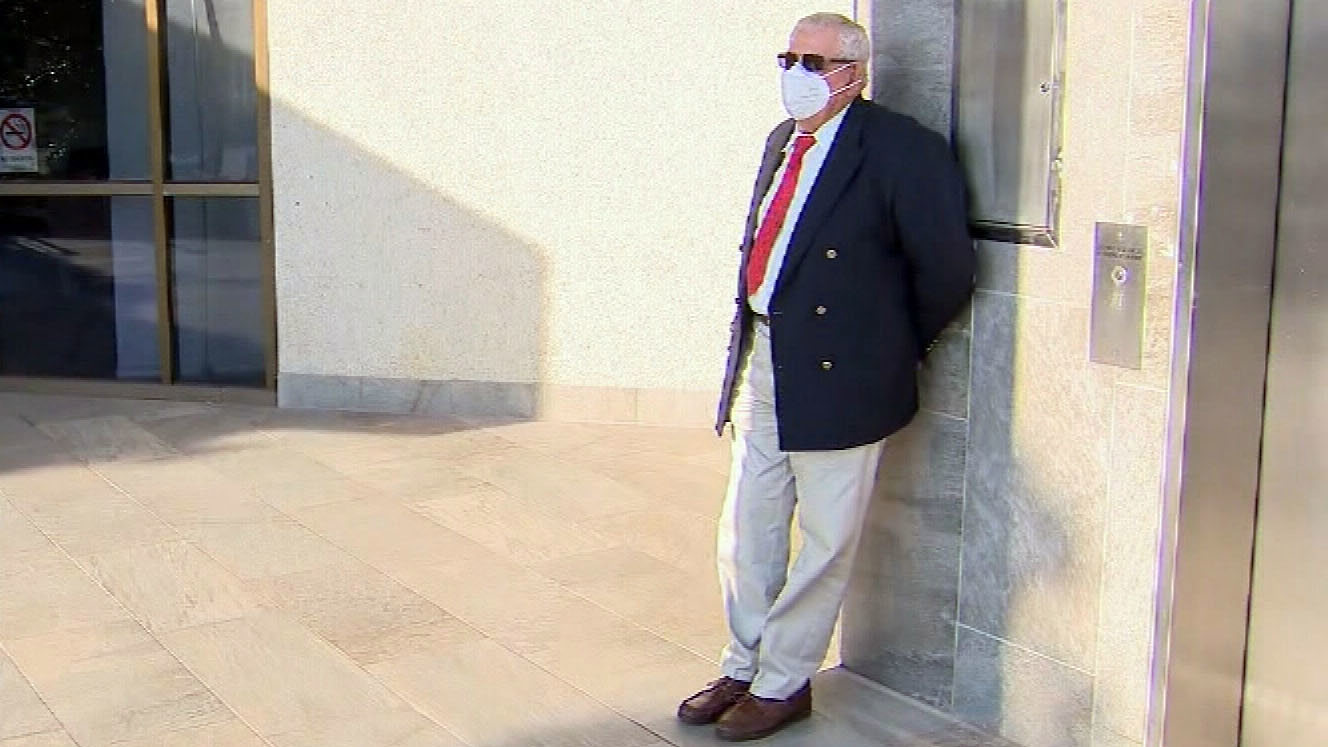
Philip Larson outside the Bundaberg investment property he and his wife sold last month.

"We waited a few days thinking, 'Oh, well, maybe it needs to clear or something like that'," Mr Larson said.  

When the money still hadn't come through on the third day, the couple contacted their solicitor, who told them the money had been transferred via a real estate conveyancing payment platform called Property Exchange Australia (PEXA)

"She showed us the bank account number that she transferred the funds to and we saw it was wrong," Mr Larson said.

"It was one digit too short. 

"At first we weren't too worried, as we thought the money would just bounce back. 

"But when the solicitor said the transfer of the settlement had gone through, that's when we started to panic a little bit because it meant it had definitely gone somewhere."

Do you have a story? Contact reporter Emily McPherson at a similar case reported by 9news.com.au in June, Queensland man Michael Reynolds was transferring $5900 to a Suncorp bank account when he accidentally left off a digit. 

However, the money reached a mistaken recipient instead of bouncing back because a zero was added to the front of the number.

Larson said he was unable to get a reassurance from Suncorp that the $325,000 sent to the wrong account would be frozen while the bank investigated the mix-up.

"The bank would not tell me anything and when I spoke to PEXA they said it would be 6-8 weeks before they would get a report, and that does not necessarily mean my money back," he said.

"This has just been so stressful. I haven't been able to work or function properly at the moment because of what's going on. It's just beyond a joke."

Larson said while he understood this was a mistake made by his solicitor, banks should also do more to make sure internet payments were going to the right recipient, including cross-checking the names of account holders.

Suncorp executive general manager of everyday banking, Nick Fernando, said the bank worked with other financial institutions to resolve transfers made in error.

"It's important that a customer contacts their financial institution as soon as they are aware of a possible error to initiate this process as quickly as possible," he said in a statement.

"We make every effort to move quickly to minimise impacts on the customer, however at times these processes involve multiple parties and can be complex. 

"We encourage customers to contact their financial institution directly if they would like to know more about the outcome of a dispute."

What happens if money is paid into a wrong account?

According to the ePayments Code, which is administered by the Australia Securities and Investment Commission (ASIC), banks are required to help customers recover their money if it's sent to a wrong account.

The code states if the customer who transferred the money to the wrong account notifies their bank within 10 business days, they should have their funds returned – as long they are still in the recipient's bank account.

If the recipient has already spent the money, then the receiving bank must attempt to get the money back, usually by negotiating with the unintended recipient to repay the funds.

If it's between 10 business days and seven months after the wrong payment was made, the recipient's bank will freeze the funds. If the recipient can't prove they're entitled to the funds, they should be returned to the person who made the payment.

After seven months, the person who received the funds can refuse to give the money back.

Complaints about bank transfer errors rise

Despite these regulations being in place, several customers have told 9news.com.au they have struggled to get banks to return their money.

Data from the Australian Financial Complaints Authority shows the financial ombudsman received more than 1100 complaints about mistaken internet payments in the first six months of this year – an average of 188 per month.

This is an increase of 47 percent on the same time last year, when an average of 128 complaints per month was received about mistaken internet payments.

A spokesperson for AFCA said while the increase in complaints was disappointing, it was in line with a rise in overall complaints to the ombudsman about banking products and issues involving transactions.

Volcanic cloud closes airport after Mount Etna erupts

A cloud of volcanic ash spewing from Europe's most active volcano has prompted the closure of one of Sicily's largest airports, leading to flights being delayed, cancelled and diverted.

The island's Catania international airport, known as Catania–Fontanarossa Airport, was to be closed until at least 8pm (4am AEST) on Monday following the eruption of nearby Mount Etna, the airport press office said in a statement.

"All arrivals and departures are therefore prohibited," the statement said, adding that "passengers are kindly requested to present themselves at the airport only after consulting their airline".

READ MORE: Four Australians missing on Indonesian boat trip

The volcanic activity, which began late on Sunday (early Monday AEST), evolved into a "lava fountain", producing a volcanic cloud dispersed in a southerly direction, according to the Italian National Institute of Geophysics and Volcanology's Etna observatory.

This is "producing a fallout of ash in the southern sector of the volcano and beyond", it said.

Several flights scheduled to arrive in Catania, including those from destinations such as Malta, France, Austria, and other Italian regions, have been cancelled, delayed, or diverted, according to flight-tracking service Flightradar24.

The closure comes just days after the airport resumed operations, having been disrupted by a major fire in its terminal building in mid-July.

As well as being the most active, Mount Etna is Europe's highest volcano, at about 3350 metres tall.

READ MORE: Airline passenger, 45, arrested after flight turned back to Sydney 

Sign up here to receive our daily newsletters and breaking news alerts, sent straight to your inbox.

This simple spray saved 20 lives in WA last year

A nasal spray used to treat drug overdoses will soon be carried by all police officers in Western Australia.

The rollout follows a successful Australian-first trial which saved 20 lives across the state.

Naloxone is a medication to reverse the symptoms of opioid drugs and is used widely in the United States.

READ MORE: 'Very hurtful': The one Matildas jersey you can't buy

A nasal spray used to treat drug overdoses will soon be carried by all police officers in Western Australia.

Now WA Police will be armed with the spray following the success of the year-long trial.

WA Police minister Paul Papalia said the spray had been used another 24 times since the test period ended.

Assistant Commissioner Brad Royce said it helps in a variety of overdose situations.

"It's not always those subject to drug addiction, it can be overuse of prescribed drugs," Royce said.

Naloxone also acts as a safeguard for those on the front line should they be exposed to opioids on the job.

READ MORE: Police crack down on contentious road rule on Victorian highway

"We do go in and search premises, cars and people regularly and the opportunity to come across things such as fentanyl leaves our officers exposed," Royce said.

A nasal spray used to treat drug overdoses will soon be carried by all police officers in Western Australia.

READ MORE: Mark Latham axed as One Nation leader in NSW

According to the most recent statistics, opioids are the leading cause of drug-related deaths in WA.

With more than five hundred officers now trained to use the fast-acting medication, there's hope that will change and other states are now looking to the state as they consider similar programs.

Sign up here to receive our daily newsletters and breaking news alerts, sent straight to your inbox.

Woman at centre of mushroom incident gives account to police

The woman who cooked the mushroom lunch that resulted in the death of three people was also hospitalised after eating the meal.

The revelation was made in Erin Patterson's sworn written statement to police, seen and reported by The Age, that also says she bought dried mushrooms from an Asian grocer in Melbourne months before the meal that were used in addition to locally bought fresh mushrooms.

Patterson, 48, hosted a family lunch for her former in-laws Don and Gail Patterson, as well as Gail's sister Heather Wilkinson and her husband Ian Wilkinson, on July 29 in her home in Leongatha.

READ MORE: Broadway musical Beetlejuice to bring 'gothic charm' to Melbourne

Don, Gail and Heather all died a week later, while Ian, a pastor at Korumburra Baptist Church, is fighting for life in hospital in a critical but stable condition.

In a statement to Victoria Police, seen by The Age, Patterson said she too had been hospitalised after the lunch with bad stomach pains and diarrhoea.

Gippsland Southern Health confirmed to 9News it briefly treated and transferred four people – the four guests who died or became seriously ill – who presented with suspected food poisoning on July 30.

Chief executive Lou Sparkes said a fifth person presented at Leongatha Hospital on July 30 with suspected food poisoning later returned to the health service and was discharged via transfer to Monash Hospital.

Patterson told police she was taken from the Leongatha Hospital to the Monash Medical Centre in Melbourne on July 31.

READ MORE: Elon Musk 'isn't serious' about cage fight, Mark Zuckerberg says

In the statement to police, Patterson denied any wrongdoing over the deadly meal.

"I am now wanting to clear up the record because I have become extremely stressed and overwhelmed by the deaths of my loved ones," Patterson said.

"I am hoping this statement might help in some way. I believe if people understood the background more, they would not be so quick to rush to judgement.

"I am now devastated to think that these mushrooms may have contributed to the illness suffered by my loved ones.

"I really want to repeat that I had absolutely no reason to hurt these people whom I loved."

Police last week seized a food dehydrator from the Koonwarra rubbish transfer station, now confirmed to belong to Patterson.

In the statement, Patterson confirmed the appliance was hers and claimed she panicked and dumped it at the tip.

The dish at the centre of the suspected poisoning has also been revealed to be a beef Wellington.

Patterson told police she had purchased dried mushrooms from an Asian grocery store in Mount Waverley, in Melbourne's south-east, at least three months before the lunch and mixed the rehydrated product with fresh mushrooms purchased locally.

She also revealed her children were not at the lunch and instead went to the movies.

READ MORE: Burger battle heats up as Wendy's prepares to enter market

Patterson said the children did eat the beef Wellington the following night as leftovers but she scraped the mushrooms off the dish before it was served as they don't like them.

No charges have been laid.

Delays at Sydney Airport after due to 'disruptive passenger'

Sydney Airport is experiencing delays after a flight from Sydney to Malaysia was turned around over NSW due to a "disruptive passenger onboard".

Malaysia Airlines flight MH122 left Sydney Airport at 1.40pm and landed safely back on the runway at 3.47pm this afternoon, where it was left sitting for nearly three hours with emergency vehicles nearby.

Video from on board the plane appears to show a man, who was wearing a backpack, threatening passengers and staff.

READ MORE: 'Very hurtful': The one Matildas jersey you can't buy

A flight departing from Sydney on route to Malaysia has been turned around over NSW after a mid air incident.

Malaysia Airlines said the flight was turned around due to a "disruptive passenger onboard".

"In the interest of safety, the commander of the flight made a decision to return to Sydney," a Malaysia Airlines spokesperson said.

"The flight carrying 194 passengers and five crew onboard landed safely at 3.47pm hours local time.

"The safety and comfort of our crew and passengers are of utmost importance to Malaysia Airlines."

On Monday evening, a flight tracking website showed about 60 per cent of departures were being delayed by an average of 22 minutes, and the time was increasing.

The plane is sitting on a runway surrounded by fire trucks.

A Sydney Airport spokesperson said it was supporting emergency agencies in the management of an incident at the airport.

"The airport is operational with flights arriving and departing," the spokesperson said.

"Passengers are encouraged to check directly with their airline regarding the status of their flight."

READ MORE: Mark Latham axed as One Nation leader in NSW

The Australian Federal Police (AFP) was called to meet the plane on arrival.

"The AFP is responding to an emergency incident at Sydney International Airport," an AFP spokesperson told 9News.

"An update will be provided at an appropriate time."