Tag Archives: oceania

Man shot dead by police at Queensland home

A 29-year-old man has been killed after he was shot by police in Queensland.

Officers were executing a search warrant at a home on Margaret Street in Burpengary East, Moreton Bay, just before 5.30pm when the incident occurred.

Detective Superintendent Ben Fadian said the man was shot after allegedly threatening officers.

READ MORE: Third person dies after suspected poisoning in Victoria

"Upon attending this address, police have encountered a 29-year-old man," Fadian said.

"This man has confronted police, as a result police discharged their firearms."

Immediate first aid and CPR were provided but the man was declared deceased at the scene.

READ MORE: Man associated with organised crime shot dead on Melbourne street in targeted attack

A crime scene has been declared at the address and police investigations are continuing.

This matter is under investigation by Ethical Standards Command on behalf of the State Coroner.

The investigation will be subject to oversight by the Crime and Corruption Commission.

Sign up here to receive our daily newsletters and breaking news alerts, sent straight to your inbox.

'Might happen soon': Top physicist issues stark AI warning

If humans don't manage to find a solution to four key questions involving artificial intelligencenow "deeper challenges" could be faced down the road, British physicist Professor Brian Cox believes.

The warning echoes that of dozens of AI industry leaders, academics and celebrities who recently called for mitigation measures to be enacted to reduce the risk of global annihilation due to AI systems.

Cox told 9news.com.au there are both immediate and long-term questions about AI that humanity needs to start answering as soon as possible – but conceded an extinction-level event is not likely.

READ MORE: AI voice cloning scams 'will come to Australia' – so how do you guard against it?

British physicist Brian Cox

"I think there are big questions, really practical questions, now about AI systems in use," he said.

"The immediate problem is when you give control to an AI system, as we do now, then who decides how those decisions are made?

"Is it just left to this AI thing, or does society have some kind of democratic control?"

READ MORE: AI industry and researchers sign statement warning of 'extinction' risk

artificial intelligence and gender biases

Cox went on to cite a fictitious example of what would happen should an automated driving system be put in a situation where the driver and another person, are about to be injured

"This is an unlikely scenario," he admitted, before continuing.

"But is it going to injure a pedestrian, injure the driver, injure a child, does it say I don't want to injure a child, rather than an adult.

"Those questions need addressing."

READ MORE: AI may soon be able to predict who will and wont stick to their diets, study claims

Woman types on a laptop

The trickier questions, Cox said, arise over longer-term fears the systems could become as intelligent as humans one day.

"We don't have those at the moment," he said, adding those systems are called Artificial General Intelligence (AGI).

"I'm not an expert, but there are varying estimates about time scales, I mean it's not actually completely accepted we will ever be able to build something of that intelligence; it's in the unknown box, but it might happen quite soon".

Cox said a raft of questions would be raised should AGI systems ever "out-evolve" humans and claim the same rights.

"Ultimately, this all comes down to thinking carefully now about how we regulate these systems; who controls them, who programs them, how much autonomy do they have, how do we deal with them legally…

"Those are real questions and if we answer them now we will be better prepared if we run into deeper challenges in the future."

READ MORE: What are phone porting scams, and is there anything you can do about them?

The universal question Cox would have answered tomorrow

The comment comes as the renowned professor of particle physics prepares to make his return to Australia for the world premiere of his live stage show Symphonic Horizons.

Cox and the Sydney Symphony Orchestra will join forces at the Sydney Opera House for four shows to answer fundamental questions about human existence and space.

He said if he could have one question answered about the universe tomorrow it would be "are we alone".

READ MORE: NASA picks up 'heartbeat' signal from lost space probe

Cox and the Sydney Symphony Orchestra will join forces at the Sydney Opera House for four shows.

"There's a lot of them (questions), but one of the ones I think we have a chance in answering is 'are we alone', or let's put it another way, how far we have to go to discover life beyond Earth?".

Cox explained the mystery of consciousness, questions of where we sit in the universe, is one of the aspects that fascinates him most about the unexplored frontier.

This will form a core aspect of Symphonic Horizons.

"I really think that one of the fundamental questions about the universe is, why is it able to support structures, living things – things like you and me – that can understand the universe," he said.

"And why can the universe understand itself, and how does that happen?

"That for me is as fundamental as asking questions about the nature of space and time, and the origins of the universe itself.

"We will all come out (of the shows) with a different view of our place in the universe, but I don't know what that view will be until we have done it."

Sign up here to receive our daily newsletters and breaking news alerts, sent straight to your inbox.

Brain scan reveals Tassie tiger's 140-year secret

Researchers often think how and when their results will be published.

However, many research projects don't see the light until decades (or even centuries) later, if at all.

This is the case of a high-resolution atlas of the Tasmanian tiger or thylacine brain. Carefully processed over 140 years ago, it is finally published today in the journal PNAS.

Similar, but not wolves

Thylacines were dingo-sized carnivorous marsupials that roamed through Australia and New Guinea prior to human occupation. They became confined to Tasmania around 3,000 years ago.

READ MORE: Remains found in back of museum cupboard solve 'bittersweet' mystery

Thylacine in zoo (Getty)

The arrival of European colonists and the introduction of farming, diseases and hunting bounties quickly led to their extinction.

The last known individual died on September 7 1936 at Hobart's Beaumaris Zoo.

As a commemoration, September 7 became the National Threatened Species Day to raise conservation awareness in Australia.

Thylacines looked remarkably similar to wolves and dogs (that is, canids).

This is a textbook example of a process known as evolutionary convergence: when the body shapes of animals are really similar, despite them coming from different lineages.

However, whether thylacine brains are also similar to wolves has been very hard to find out, due to a lack of material available for microscopic studies.

In the newly published study, my colleagues and I uploaded high-resolution images to a public repository, and studied brain sections prepared for microscopy from a thylacine that died in the Berlin Zoo in 1880.

Thylacine

READ MORE: New egg scam targeting local Aussie Facebook groups

Kept safe by researchers

Unfortunately, very little information about this specimen was available (for example, its sex and body weight was missing). Details were likely lost during both world wars. But the samples were kept safe by researchers who understood their biological relevance.

Initial custodians likely included German scientists Oskar and Cecile Vogt, whose large privately owned brain sample collection was incorporated into the Kaiser Wilhelm Institute for Brain Research in 1914. Vogt – who also studied Lenin's brain – was the founding director of the institute, prior to the couple escaping the Nazis in 1937.

The institute later became the Max Planck Institute for Brain Research and moved to Frankfurt in 1962. There, late neurobiologist Heinz Stephan handed the thylacine material to John Nelson from Monash University (co-author of this study) in 1973, to be returned to Australia.

The original samples are currently held by CSIRO's Australian National Wildlife Collection in Canberra.

Thylacine

Brain features reveal a family

So, what did we discover after analysing the samples? Overall, the thylacine brain resembles that of its carnivorous marsupial relatives (dasyurids, like dunnarts, quolls and Tasmanian devils) more than that of wolves or other canids.

The brain region known as the cerebral cortex, which is responsible for planning actions and sensing the environment, is larger than in other dasyurids. Brain regions involved in processing smells also suggest that scavenging and hunting behaviours were important in this species.

These findings show that despite body resemblance, brain features better show the evolutionary relatedness between species.

Making this material openly available allows for anyone to study the thylacine brain and gain a clearer picture of this long-gone species. Our ongoing research using dunnarts is also providing new insights about the development and evolution of the mammalian brain.

Sign up here to receive our daily newsletters and breaking news alerts, sent straight to your inbox.

Two women die after suspected poisoning in Victoria

Police are investigating after two people were killed and another two left hospitalised by a suspected poisoning in Victoria.

It is understood two men and two women became ill after eating a meal at a home in Leongatha, in the state's Gippsland region, on July 29.

Police were told a 66-year-old woman and a 70-year-old woman, both from Korumburra, died in hospital on Friday.

READ MORE: Man associated with organised crime shot dead on Melbourne street in targeted attack

The two other people, a 70-year-old man and 68-year-old man, remain in hospital.

"At this time the exact circumstances are still being established and it is not known if the matter is suspicious," Victoria Police said in a statement.

"The investigation into the incident remains ongoing and police will liaise with the Department of Health in relation to the matter."

The health department said it is investigating the incident.

"The Department is aware of the situation and our investigations are ongoing," a spokesperson told 9news.com.au.

"We extend our deepest condolences to the patients' family for their loss."

Sign up here to receive our daily newsletters and breaking news alerts, sent straight to your inbox.

Man charged after fatal crash in Sydney's south-west

A man has been charged after a woman died in a crash in Sydney's south-west on Friday night.

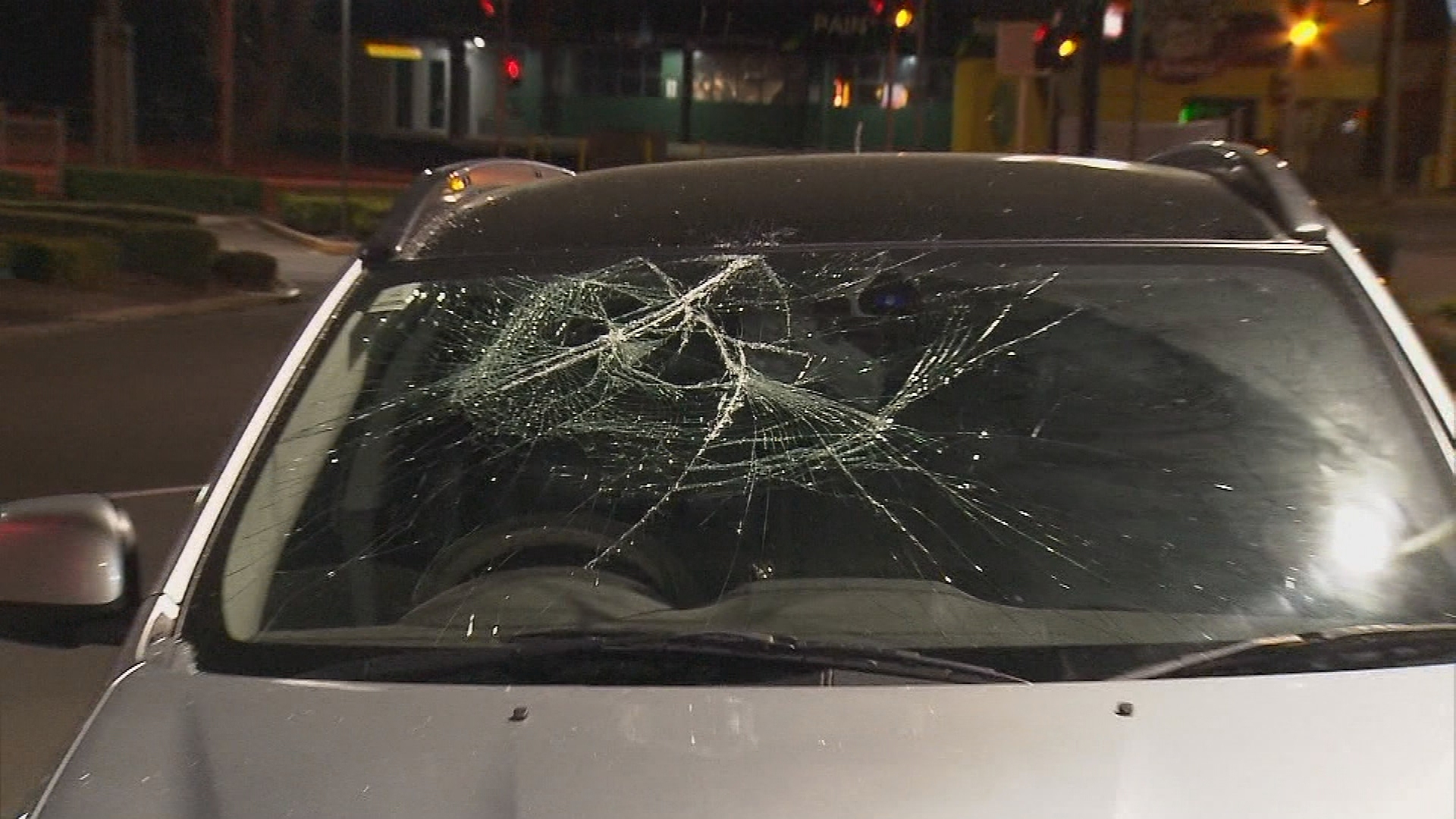
Emergency services were called to Broadhurst Road in Ingleburn after reports a Nissan Skyline sedan crashed into a truck parked near the intersection of Shaw Road.

A 25-year-old woman, who was sitting in the front passenger seat, died at the scene.

READ MORE: Crowd in the thousands overwhelms New York City's Union Square

A man has been charged after a woman died in a crash in Sydney's south-west on Friday night. Emergency services were called to Broadhurst Road in Ingleburn after reports a sedan crashed into a truck parked near the intersection of Shaw Road.

The driver, who is a 24-year-old man, had minor injuries.

He was taken to Liverpool Hospital for treatment and mandatory tests.

The man was taken to Campbelltown Police Station this afternoon where he was charged with three offences: dangerous driving occasioning death (drive manner dangerous), negligent driving (occasioning death), and drive while licence application refused.

The man from Yennora has been refused bail to appear in Parramatta Bail Court on Sunday.

Police also attended a separate fatal crash between a Hondo motorcycle and a Nissan Navara in the city's north-west at about 11pm.

The motorbike rider, believed to be a man in his 20s, died at the scene in Cherrybrook.

He is yet to be identified.

READ MORE: Man associated with organised crime shot dead on Melbourne street in targeted attack

The 20-year-old male driver of the car was uninjured and taken to Hornsby Hospital for mandatory testing.

"He was arrested and taken to Castle Hill Police Station before being released pending further investigation," police said.

An investigation into the crash is underway.

Sign up here to receive our daily newsletters and breaking news alerts, sent straight to your inbox.