Tangaroa Demant went from exporting crayfish to importing cocaine.
Tag Archives: oceania
Election 2023: Audrey Young – the best- and worst-behaved MPs in the House this year
OPINION: Audrey Young picks Parliament’s best speech, worst answer and closest contest.
One dead in Waikato crash at Netherton, Hauraki
Police said one other person was taken to hospital in a moderate condition.
Man's body found after central Sydney fire
A man has been found dead in an apartment complex that caught fire this morning in Sydney.
The man, aged in his 60s, is believed to be one of the residents of the third-floor apartment but he has not been formally identified.
An autopsy will confirm his identity later this week.
READ MORE: Nine of 10 shoppers have had to cut back on spending, survey from Coles finds

A crime scene has been established as investigators look into the cause of the blaze.
Fifteen residents were evacuated from the building and will be displaced for some time until the building is safe to enter.
The Red Cross Foundation are working to locate alternative accommodation.
The fire broke out on the third floor of the apartment complex, causing part of the building and roof to collapse, according to Fire and Rescue New South Wales.
"We don't know [if everyone got out], we just hope no one is in there [because] they are all our neighbours we know them," one local said.
As many as 30 firefighters attended the scene of the blaze on Abercrombie Street in Darlington.
Fire crews were unable to get inside the building to fight the blaze, as fire had damage and blocked off entry to the apartment.
The blaze has since been contained.


"We haven't been able to conduct a complete search so we can't say we've got an all-clear at the moment," Fire and Rescue NSW told 9News.
Roads near Redfern station remain closed including Abercrombie Street, Ivy Street, Lawson Street and Gibbons Street.
The fire did not impact any train lines or rail operations at nearby Redfern Station.
Telstra receives odd texts of cows, diggers on scam reporting line
A scam text reporting line set up by Telstra has received thousands of incorrect reports of scams, prompting the telco to explain to users what to send through.
A matching pair of yellow tractors, surveillance photos of cows in a paddock and countless food deliveries on doorsteps were among the incorrect reports to the national "Snitch on Scammers" cyber security line.
Telstra has received around 50,000 texts since the line was set up in May but many of them weren't genuine scams.
READ MORE: Adelaide records its warmest winter day since 2009


Telstra's cyber security expert Darren Pauli said most scams only last a few minutes or hours.
"So don't delay in reporting them," Pauli said.
SMS remains the most common way a scam will reach Aussies and the text line does help experts identify and block scams from reaching people when used effectively.
Telstra is asking people to forward messages and not to send screenshots, otherwise it's not traceable and to only report messages that are suspected scams.
Inflation at lowest level since early 2022, easing fears of rates rise
Inflation in Australia has slowed to its lowest level in a year and a half, easing concerns of another interest rate rise next week.
The Australian Bureau of Statistics (ABS) on Wednesday revealed the consumer price index (CPI) rose by 4.9 per cent over the last year – the lowest the measure has been at since the same figure was recorded in February 2022.
"This month's annual increase of 4.9 per cent is down from 5.4 per cent in June," ABS head of prices statistics Michelle Marquardt said.
READ MORE: 'Don't close the door': PM's plea as Voice vote date revealed

"Annual price rises continue to ease from the peak of 8.4 per cent in December 2022."
Even when price movements in volatile categories were discounted, the CPI still fell, although the decrease was less pronounced.
"CPI inflation is often impacted by items with volatile price changes like automotive fuel, fruit and vegetables, and holiday travel," Marquardt said.
"It can be helpful to exclude these items from the headline CPI indicator to provide a view of underlying inflation.
"When excluding these volatile items, the decline in annual inflation is more modest at 5.8 per cent in July, compared to 6.1 per cent in June."
READ MORE: Incoming RBA governor warns of fresh threat in interest rates battle

The ease in inflation was driven primarily by price drops for petrol and fuel (-7.6 per cent) and fruit and vegetables (-5.4 per cent).
However, costs are still surging in some areas. Electricity prices soared 15.7 per cent over the past 12 months and 6 per cent in July alone – a figure that would have been even higher had it not been for government relief.
"The Energy Bill Relief Fund provides eligible households with rebates ranging from $43.75 to $250 in July," Marquardt said.
"If we exclude the impact of rebates from the July 2023 figures, electricity prices would have recorded a monthly increase of 19.2 per cent."
Tenants across the country would also be unsurprised to see rents continuing to rise. They increased by 7.6 per cent in the past 12 months, up from 7.3 per cent in June.
Further exacerbating issues in the housing market, the ABS also revealed housing construction approvals fell 8.1 per cent in July, on the back of a 7.9 decrease in June.
What is the Voice to parliament and what will the referendum entail?
Australia will head to the polls on October 14 to vote on the referendum on whether to enshrine an Indigenous Voice to parliament in the Constitution.
Details of the Voice and the wording of the referendum question have also been confirmed by the Australian government.
Any change to Australia's Constitution is a historic moment, as there have only been eight changes to it since 1901.
Let's unpack what the Indigenous Voice to parliament would look like, and what it means for Australia.
READ MORE: Albanese tears up unveiling Voice to Parliament

What is the Indigenous Voice to parliament?
The Indigenous Voice to parliament was a key part of 2017's Uluru Statement from the Heart (which you can read in full further down this page).
The Voice would be a national group of about 20 members who are Aboriginal and Torres Strait Islander people.
This body would be a balanced mix of genders, and include a Youth and Disability Advisory Group.
READ MORE: 'Act of patriotism': Minister unveils Voice details in impassioned plea for Yes vote

The Voice would give advice to parliament on matters that are important to improve the lives of Indigenous Australians.
Prime Minister Anthony Albanese has said the group would be "an unflinching source of advice and accountability, not a third chamber, not a rolling veto, not a blank cheque, but a body with the perspective and the power and the platform to tell the government and the parliament the truth about what is working and what is not".
What that means is the group would have input, but elected members of parliament would be the ones accountable to make any changes – and there's no requirement for the government to actually listen to what the Voice says.
Albanese announced his proposal at the 2022 Garma Indigenous Cultural Festival in the Northern Territory.
When will the Voice referendum be held?
Albanese has announced the date for the Voice to parliament referendum is October 14, 2023.
Just like any election, all Australians aged 18 and over are required to vote in the referendum.
What areas would the Voice be able to advise government on?
The Voice would provide advice about issues affecting Indigenous peoples and communities.
That's fairly wide-ranging, but there would not be any compulsion on the government to listen to the advice if it didn't think it was relevant.
Indigenous Australians Minister and Wiradjuri woman Linda Burney gave a few examples of issues the Voice could advise on in a speech in July, including school attendance, community jobs and birthing on country.
Burney said if the Yes vote succeeded at the referendum, she would encourage the Voice to provide advice on four areas.
"From day one, the Voice will have a full in-tray," she said.
"I will ask the Voice to consider four main priority areas: health, education, jobs and housing.
"The Voice will be tasked with taking the long view.
"Unlike government, it won't be distracted by the three-year election cycles.
"It will plan for the next generation, not the next term. It will be focused on making a better future for the next generation.
"The time to make a generational difference is now."

How would the Constitution change?
The proposal would add four sentences to the Constitution:
In recognition of Aboriginal and Torres Strait Islander peoples as the First Peoples of Australia:
- There shall be a body, to be called the Aboriginal and Torres Strait Islander Voice;
- The Aboriginal and Torres Strait Islander Voice may make representations to the Parliament and the Executive Government of the Commonwealth on matters relating to Aboriginal and Torres Strait Islander peoples;
- The Parliament shall, subject to this Constitution, have power to make laws with respect to matters relating to the Aboriginal and Torres Strait Islander Voice, including its composition, functions, powers and procedures."
What will the referendum question be?
The question for the referendum will be:
"A Proposed Law: to alter the Constitution to recognise the First Peoples of Australia by establishing an Aboriginal and Torres Strait Islander Voice.
"Do you approve this proposed alteration?"
Why does the Voice have to be enshrined in the Constitution? Can't the government just create it?
The government could legislate a body like the Voice, but believes a constitutionally enshrined version would be more appropriate.
Burney said creating the Voice via a referendum would allow the body to give honest advice without fear of retaliation.
"A Voice or advisory body cannot be truly independent or give frank advice to the government of the day if the government of the day can abolish it with a stroke of a pattern," she said in a speech to the National Press Club.
"And we have seen that."
She added that a constitutional body is what was requested in the Uluru Statement.
Creating the Voice via a referendum also allows recognition of First Nations peoples to be inserted into the Constitution.
READ MORE: Tens of thousands march for Voice to Parliament

What is the government saying about the Indigenous Voice?
Albanese urged Australians to vote yes on the referendum.
"This is an opportunity to recognise that, firstly, to recognise First Nations people in our Constitution. That this is about closing the gap and showing respect to First Nations people, making a practical difference," he said.
"I say to non-Indigenous Australians, this is also about you because it's about how our nation sees ourselves."
Burney said the process of developing the proposed Voice had been a "rigorous and comprehensive process".
"Australians can be confident that the work has been done to ensure this is a Voice that works," she said.
"A Voice that will make a practical difference. A Voice that will work for you."

What is the opposition saying about the Indigenous Voice?
The Liberal Party is opposed to the Voice, and Opposition Leader Peter Dutton has said he will actively campaign for the No vote.
Dutton announced the party's position in early April, saying he doesn't think the model proposed "is in our country's best interests".
He said the Liberals will support constitutional recognition for First Nations peoples at the same time as opposing the Voice referendum.
However, he admitted the Liberals will not ask the government to split the two proposals into separate questions in the referendum, meaning Australians will only be given the option of voting on the one question later this year.
The Liberal position, in line with party policy, is only binding on frontbenchers, meaning backbenchers are able to advocate for the Yes vote.
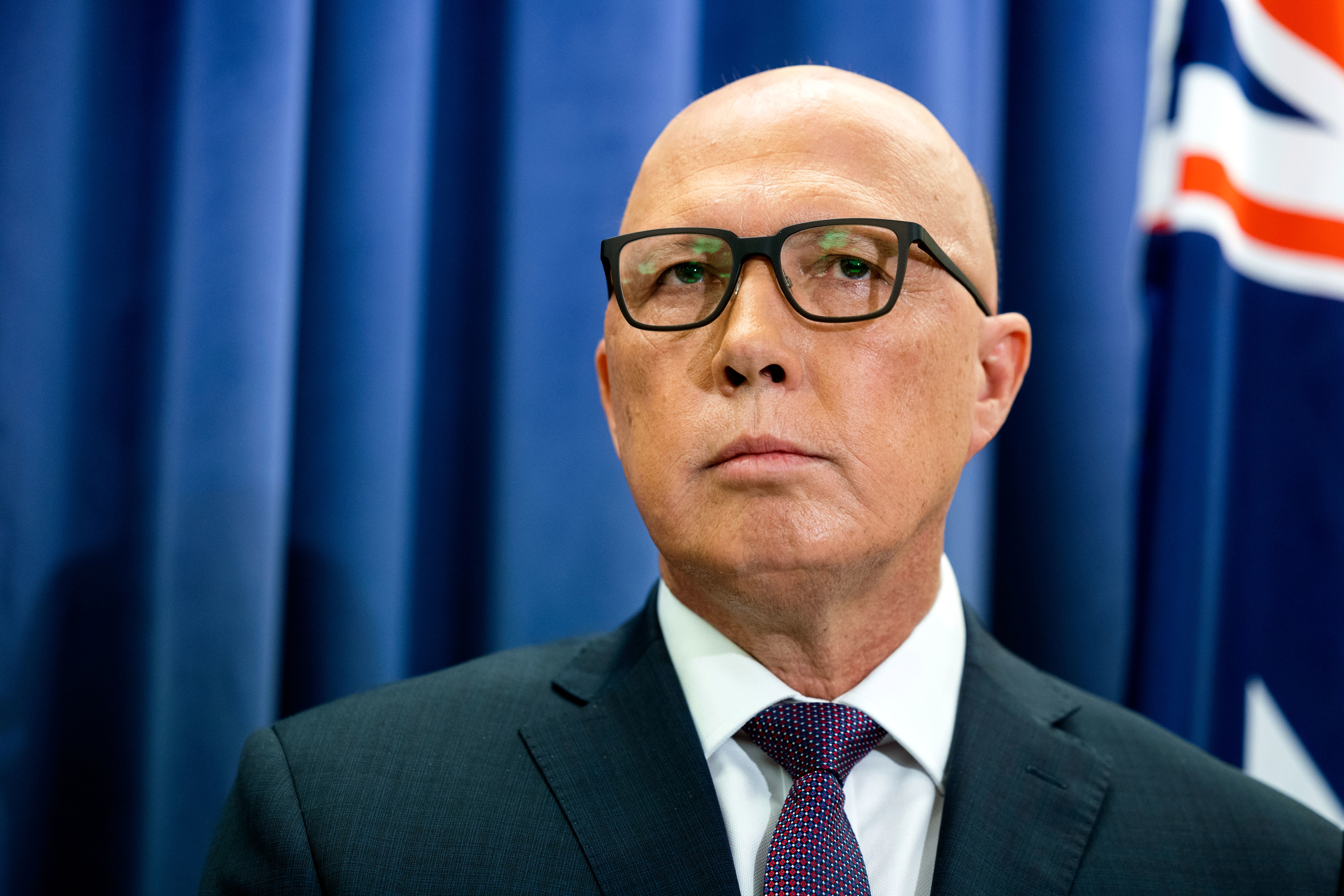
Julian Leeser, the former shadow minister for Indigenous Australians and shadow attorney-general, quit the Liberals' shadow cabinet so he could campaign in the Yes camp, while backbencher Bridget Archer also supports the Voice.
Former Liberal MP Ken Wyatt, who became the first Indigenous person to be Indigenous Australians minister when he held the portfolio during the Morrison government, quit the party over its opposition to the Voice.
The Liberals' decision came after the junior Coalition partner, the Nationals, announced it would oppose the proposition.
Indigenous parliamentarians Senators Jacinta Nampijinpa Price (a Northern Territory Senator who sits with the Nationals in federal parliament and the new shadow minister for Indigenous Australians) and Lidia Thorpe are on essentially opposite ends of the political spectrum but both oppose a Voice.
Thorpe left the Greens over their support for it, saying she wanted to pursue Black sovereignty – a position a number of other Indigenous activists also hold, as seen at the Invasion Day protests on January 26, 2023.
The full details of the Indigenous Voice Discussion Papers can be accessed here.
Are there similar bodies already established?
In South Australia, the state Labor government committed in early 2023 to establishing a state-based Voice to parliament through legislation.
Premier Peter Malinauskas said it was a "whole-heartedly good thing to do".
As with the proposed federal body, the state body would be advisory and consist of Indigenous representatives elected across South Australia.
In Victoria, the First Peoples' Assembly, elected in 2019, advocates for Indigenous issues to the government.
Its members are taken from traditional owner corporations around the state.
What happens next and what will you need to do?
Any change to the Constitution needs to be agreed on by the Australian people via a referendum.
A referendum needs the majority of people and the majority of states (what's known as a double majority) to vote in favour of a Yes-No proposal.
A referendum for the Indigenous Voice to parliament will happen on October 14.
Albanese has said that if the referendum succeeds, the government will propose legislation for the Voice this parliamentary term.
How do referendums work?
Many Australians will have never voted in a referendum.
While the postal survey plebiscite on the issue of same-sex marriage asked Australians a Yes-No question on an issue before parliament, it did not operate in the same way.
A referendum works in the same way as an election day.
All voters must go to a polling place and fill in a ballot, although the ballot is less complicated than numbering boxes on a vote for parliamentarians.
Instead, voters simply have to pick Yes or No.
The last referendum was in 1999 when Australians voted against becoming a republic.

The last time voters chose to amend the Constitution was in 1977, when three amendments were approved.
Those votes required Senate vacancies to be filled by a member of the same party, allowed residents of territories to vote in referendums and set a mandatory retirement age for federal judges.
What does the Uluru Statement from the Heart say?
This is the full statement:
We, gathered at the 2017 National Constitutional Convention, coming from all points of the southern sky, make this statement from the heart:
Our Aboriginal and Torres Strait Islander tribes were the first sovereign Nations of the Australian continent and its adjacent islands, and possessed it under our own laws and customs. This our ancestors did, according to the reckoning of our culture, from the Creation, according to the common law from 'time immemorial', and according to science more than 60,000 years ago.
This sovereignty is a spiritual notion: the ancestral tie between the land, or 'mother nature', and the Aboriginal and Torres Strait Islander peoples who were born therefrom, remain attached thereto, and must one day return thither to be united with our ancestors. This link is the basis of the ownership of the soil, or better, of sovereignty. It has never been ceded or extinguished, and co-exists with the sovereignty of the Crown.
How could it be otherwise? That peoples possessed a land for sixty millennia and this sacred link disappears from world history in merely the last two hundred years?
With substantive constitutional change and structural reform, we believe this ancient sovereignty can shine through as a fuller expression of Australia's nationhood.
Proportionally, we are the most incarcerated people on the planet. We are not an innately criminal people. Our children are alienated from their families at unprecedented rates. This cannot be because we have no love for them. And our youth languish in detention in obscene numbers. They should be our hope for the future.
These dimensions of our crisis tell plainly the structural nature of our problem. This is the torment of our powerlessness.
We seek constitutional reforms to empower our people and take a rightful place in our own country. When we have power over our destiny our children will flourish. They will walk in two worlds and their culture will be a gift to their country.
We call for the establishment of a First Nations Voice enshrined in the Constitution.
Makarrata is the culmination of our agenda: the coming together after a struggle. It captures our aspirations for a fair and truthful relationship with the people of Australia and a better future for our children based on justice and self-determination.
We seek a Makarrata Commission to supervise a process of agreement-making between governments and First Nations and truth-telling about our history.
In 1967 we were counted, in 2017 we seek to be heard. We leave base camp and start our trek across this vast country. We invite you to walk with us in a movement of the Australian people for a better future.
Crypto assets soar as US court clears a path for bitcoin ETFs
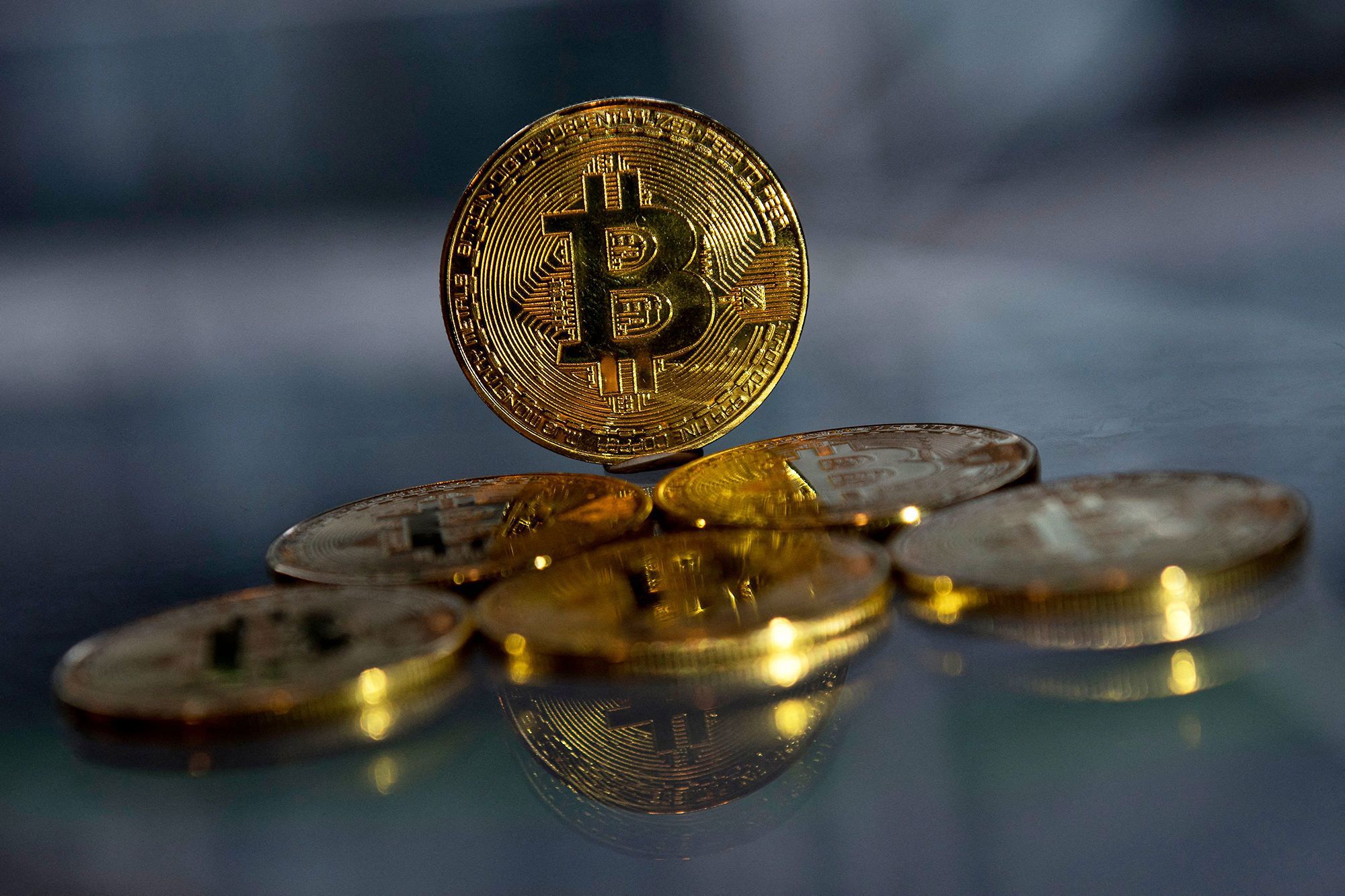
The value of crypto assets surged Tuesday after a US court cleared a path for the nation's first bitcoin exchange-traded fund.
The ruling is a breakthrough moment for crypto investors and a setback for the Securities and Exchange Commission, which has been trying to rein in the digital asset industry.
The three-judge panel for the DC Court of Appeals overruled an SEC decision denying Grayscale Invesments permission to launch a bitcoin-focused ETF. The panel said the regulator had failed to adequately explain why it rejected the firm's application.
READ MORE: We knew cost-of-living was bad, but this bad?
"The denial of Grayscale's proposal was arbitrary and capricious because the Commission failed to explain its different treatment of similar products," Judge Neomi Rao wrote.
An SEC spokesperson said Tuesday the agency was "reviewing the court's decision to determine next steps."
Major crypto tokens surged on the news. Bitcoin prices, which have been especially volatile in recent weeks, were up 7 per cent to nearly $43,000 AUD. Coinbase (COIN), the largest publicly traded US crypto exchange, jumped 15 per cent.
The bitcoin fund at the center of the case, the Grayscale Bitcoin Trust, or GBTC, was up 17 per cent.
READ MORE: Once-in-a-lifetime storm closes in on millions

Grayscale had argued that is proposal was materially similar to other bitcoin investment products that the SEC has already approved. The two other bitcoin products, from crypto firms Valkyrie and Teucrium, hold futures contracts on the Chicago Mercantile Exchange. Grayscale had presented "uncontested evidence" that the underlying assets — bitcoin and bitcoin futures — were virtually identical, the judges wrote.
The ruling opens the door to an investment product that investors have been demanding for years.
A spot bitcoin ETF would allow traditional investors to have exposure to the digital asset without actually owning it.
"This is a historic milestone for American investors, the Bitcoin ecosystem, and all those who have been advocating for Bitcoin exposure through the added protections of the ETF wrapper," Grayscale CEO Michael Sonnenshein said in a statement. "It's incredibly exciting that we are one step closer to making a US spot Bitcoin ETF a reality."
Grayscale is one of several firms that has applied for a spot bitcoin ETF. Earlier this year, BlackRock, Fidelity and Invesco, among others, sought permission to launch their own bitcoin funds.
Bitcoin is up some 65 per cent this year, though remains far off its late-2021 high above $87,000.
The information provided on this website is general in nature only and does not constitute personal financial advice. The information has been prepared without taking into account your personal objectives, financial situation or needs. Before acting on any information on this website you should consider the appropriateness of the information having regard to your objectives, financial situation and needs.
Private Aussie island on offer for the price of a Sydney home
If you fancy oysters straight off the rocks and an ocean view, this place could be just right.
Vandals chop down and kill 265 trees near affluent Sydney street
John Moratelli has never seen anything like it. And he's mortified.
Having lived on Sydney's lower North Shore for more than 25 years, Moratelli is no stranger to stories of the odd tree being illegally cut down.
But the scale of tree vandalism inflicted on bushland adjacent to an affluent street of multi-million-dollar homes in Castle Cove, where 265 trees were callously cut down or poisoned, has left him flabbergasted.
READ MORE: Once-in-a-lifetime storm closes in on millions

"I have never heard of anything approaching this level, nothing like it," Moratelli, the Willoughby Environmental Protection Association president, told 9news.com.au.
"I've heard of individual trees, maybe a handful of trees, but 265 trees?
"It's in another realm entirely."
The affected area measures 3600 square metres – the size of 14 tennis courts – and the number of trees killed is also set to rise as the poison used to wipe out a range of species spreads through the earth and contaminates other root systems.
An 80-year-old angophora costatas, which can reach heights of 30 metres when fully mature, has been poisoned. A range of Christmas bushes, old man banksias, she oaks, cheese trees and tea trees have also been destroyed or infected with toxic poison.
Pictures of the crime scene show trees felled and hacked down, and what appears to be a bottle of poison and a protective rubber glove in scrub.
Do you know more? Email ms**********@******om.au