Tag Archives: oceania

The key dates you need to know for your tax return this year

The end of financial year is almost here, which means a lot of Australians are turning attention to their tax return as a way to get a welcome boost to their hip pocket amid the cost of living crisis.

There are a few key dates to be aware of before you start preparing your return, from the end of financial year to the submission deadline – which isn't actually the same for everyone.

This is what you need to know.

EXPLAINED: Electricity prices are increasing. This is who's getting hit hardest

Generic photo of people walking out of the ATO Office.

When is the end of the financial year and when can I submit my tax return?

The financial year ends on June 30, and you can submit a tax return from the start of the next financial year, which starts on July 1.

However, while you can theoretically submit your return straight away, the Australian Tax Office (ATO) wants you to instead wait until late July.

This is because the ATO will pre-fill a range of information into your return for you – but it just takes them a few weeks to collect that data.

Trying to fill everything out yourself before the agency does that could mean your tax return actually takes longer to come back than if you wait.

"While you can lodge from July 1, there is a much higher chance that your return will be missing important information if you lodge your return before late July," ATO Assistant Commissioner Tim Loh said.

"If you forget to include everything, it will slow down the progress of your return, and you'll likely end up with more work to do down the track.

"No one likes life admin, and we want to help save you some where we can.

"If you have simple affairs, by waiting a few more weeks until all your information is pre-filled into your tax return, you'll save yourself extra work and worry by getting it right the first time."

READ MORE: Why you shouldn't lodge your tax return early

When is the tax return deadline?

If you are lodging your own tax return, you have to submit it by October 31, 2023.

This is a strict deadline, and if you don't meet it, you could be fined hundreds of dollars.

However, if you have a registered tax agent, you'll have until after the self-lodgment deadline to submit your return, but you will need to officially engage the agent by October 31.

READ MORE: Your phone in SOS mode could be a sign of something far more sinister

How long does it take to get a tax return refund back?

Again, it depends.

If you lodge a tax return online using the myTax website, the ATO says it will likely take up to two weeks to receive your refund.

However, if you instead want to file a paper tax return by posting it to the ATO, you're in for a longer wait; the tax office will process your refund within 10 weeks.

When is my tax bill due?

If, instead of being owed a refund, you owe the ATO a bill, you're going to have to send them the outstanding tax.

This has to be paid in full by November 21, 2023 – even if you miss the lodgement deadline.

Interest will apply to any outstanding amount that isn't paid by November 21. 

Sign up here to receive our daily newsletters and breaking news alerts, sent straight to your inbox.


The information provided on this website is general in nature only and does not constitute personal financial advice. The information has been prepared without taking into account your personal objectives, financial situation or needs. Before acting on any information on this website you should consider the appropriateness of the information having regard to your objectives, financial situation and needs.

The 'sticky' issue making the cost of living crisis worse

Sticky inflation: it's a term you've probably heard thrown around as Australia's interest rates rise and the consumer price index remains stubbornly high.

The cash rate currently sits at 4.10 per cent on the back of 12 hikes in 14 months, but the consumer price index (CPI) actually rose slightly in May, up to 6.8 per cent from 6.3 the month before.

That's led economists to talk about how "sticky" inflation is. This is what that actually means.

READ MORE: Australian inflation is stubbornly high. Some countries don't have that problem

People flock to Pitt Street Mall during Boxing Day sales in Sydney, Australia.

What is sticky inflation?

Put simply, sticky inflation is inflation that takes longer than expected to come down.

It happens when the CPI remains high despite macroeconomic policies to lower them – for example, interest rate rises.

What causes sticky inflation?

There are several factors that can contribute to persistently high inflation, but RMIT associate professor of economics Bilgehan Karabay says company profits are key to the equation.

"When there is a cost rise (for companies), it is relatively easy to reflect this rise on the prices, but they're not so willing to actually lower prices once these costs are lower," he told 9news.com.au.

"It takes some time… let's say you increase your prices and you see you're still selling stuff, you don't want to lower prices once your costs are lower.

EXPLAINED: Electricity prices are increasing. This is who's getting hit hardest

"It's only after you realise your sales are getting lower because of these high prices that you may want to reduce your price, but it takes time because you don't do it right away.

"That's why prices are generally sticky."

The International Monetary Fund (IMF) has this week pointed to the impact of profits on inflation, saying they are responsible for 50 per cent of the increase in European inflation over the past two years.

"If inflation is to fall quickly, firms must allow their profit margins – which have shot up during the past two years – to decline and absorb some of the expected rise in labour costs," IMF first deputy managing director Gita Gopinath said on Monday.

"But firms may resist this."

The RBA also noted the impact company profits are having on inflation in Australia last week – although had previously said they weren't a significant factor.

"Some firms were indexing their prices, either implicitly or directly, to past inflation," the bank said last Tuesday.

"These developments created an increased risk that high inflation would be persistent."

READ MORE: These are the tax return changes you need to know about

Reserve Bank of Australia building in Martin Place in Sydney

Is inflation 'stickier' in Australia than the rest of the world?

While inflation varies from country to country, sticky prices are being experienced everywhere – although Karabay says Australia could be slightly more stuck than the rest of the world.

"It is a global phenomenon, although the degree of it changes from one country to another," he said.

"In Australia, yes, if you look at the numbers, it looks stickier.

"But the same thing can be said for the Euro area or for the United States.

"What is important for the fight against inflation is core inflation, which is inflation excluding energy and food prices.

"As long as that eases, the rest of it can also ease with it without getting into recession. And this is the challenge that countries are fighting right now."

READ MORE: Aussies with a side hustle warned to report income at tax time

When will inflation come down?

It's a question everyone wants to know the answer to – after all, lower inflation means an end to increasing interest rates – but unfortunately we don't have a definitive answer.

The RBA's latest monetary policy statement, released in May, repeated that inflation has peaked, but that it won't come down to 3 per cent – the upper limit of its target – until mid-2025.

Karaby said there is ample uncertainty about the next few years.

"It takes 12 to 18 months (for interest rate rises) to take effect, because it works with a lag," Karaby said, adding that lag makes the RBA's cash rate decisions particularly tricky.

"There is this trade-off between should you wait more, but then later on, you have to increase even more, or should you risk recession by increasing too much.

"This is not an easy task to balance. It's not easy to see beforehand – you need to make a guesstimate. And data helps with your guess but it cannot tell you exactly what will happen."

Sign up here to receive our daily newsletters and breaking news alerts, sent straight to your inbox.
Rosie May was told she had a cyst. It turned out to be a rare cancer

Rosie May Fisher can't remember when she first noticed a pea-sized lump on her left palm.

The painless mass had been there for around 12 years, the 32-year-old single mother said.

When she asked her GP to check it she was sent for scans which came back clear – twice.

READ MORE: Perth Zoo in mourning over death of beloved giraffe Armani

She was told it was probably just a cyst.

But a few years later, after the birth of her son Bobby, the lump began to hurt.

Fisher, a hairdresser who lives on the Gold Coast but is from Merimbula in NSW, was worried.

"I started back at work and it started to get in the way, driving was difficult, it would hurt if I banged it," Fisher told 9news.com.au.

She returned to her local doctor and asked for it to be removed.

The doctor agreed, and without further tests she was put on a surgery waiting list for Gold Coast Hospital.

READ MORE: Tributes for 'sweet and amazing' teenager stabbed to death in Melbourne's north-west

Single mother Rosie Fisher, 32, can't remember when she first noticed a pea-sized lump on her left palm.

Long wait for surgery

After waiting for a year she finally had the operation in October of last year, leaving her with a huge cast on her arm.

But a week later when she returned to have her dressing changed she was given a sudden update.

"My surgeon came in with a really serious face and said, 'We need to have a chat, it's something quite serious, take a deep breath,'" Fisher said.

Fisher was told the lump was a rare form of cancer called epithelioid sarcoma which grows in soft tissue.

"I was in shock," Fisher said.

"I was looking at her thinking, 'Am I in the right room?'"

READ MORE: Business owner 'numb' at terminal lung cancer diagnosis at 32

Single mother Rosie Fisher, 32, can't remember when she first noticed a pea-sized lump on her left palm.

READ MORE: Woman diagnosed with breast cancer at 25 shares urgent message

Tests to see how disease had spread

Fisher had more tests to see if the cancer spread anywhere else in her body.

It hadn't, but she needed more of her hand removed by medics in Sydney to ensure they removed all of the tumour.

"The specialist said his job was to remove the cancer. He said the only reliable way to do that is to amputate your middle and ring finger, so it doesn't spread," Fisher said.

The surgery was carried out on December 1.

It has put an end to Fisher's hairdressing career, and she's having counselling to help her deal with the loss of part of her hand.

"Hairdressing is out of the picture, my beloved career that I've worked so hard for," she said.

Do you have a story? Contact journalist Sarah Swain at ss****@******om.au

READ MORE: All the key dates you need to know for your tax return this year

"Everyday tasks are just challenging, annoying, the appearance is awful to me,"

But she said losing her fingers was a "sacrifice" she needed to make so she can be around for Bobby.

READ MORE: A 'gift' in the mail after Paula's 50th birthday saved her life

"It's not ideal but it's better than the alternative," she said.

She is now having regular checks as the cancer has a high re-occurrence rate she was told.

Single mother Rosie Fisher, 32, can't remember when she first noticed a pea-sized lump on her left palm.

Push for better diagnosis of rare cancers

Fisher has been supported by charity Rare Cancers Australia.

It defines a rare cancer as a unusual type of the disease seen in few people, a cancer diagnosed in patients outside the usual age bracket, as well as a common cancer in an unexpected location.

One in three cancer diagnoses in Australia are rare or less common, and they contribute to over half of all cancer deaths, the charity says.

It is pushing for earlier diagnosis for rare cancers which affect around 52,000 Aussies a year.

READ MORE: Superfit mum-of-four Carly ran 10km a day before a strange symptom 'saw her world cave in'

Richard Vines from the charity said a late diagnosis, like the one Fisher experienced, is a huge issue for many patients.

"We talk about 90 per cent survival rate for breast cancer, melanoma, and prostate cancer, that's because we find them early," Vines told 9news.com.au.

"With the less common cancers we are not finding them until it's too late."

June is National Rare Cancers Awareness Month.

Sign up here to receive our daily newsletters and breaking news alerts, sent straight to your inbox.
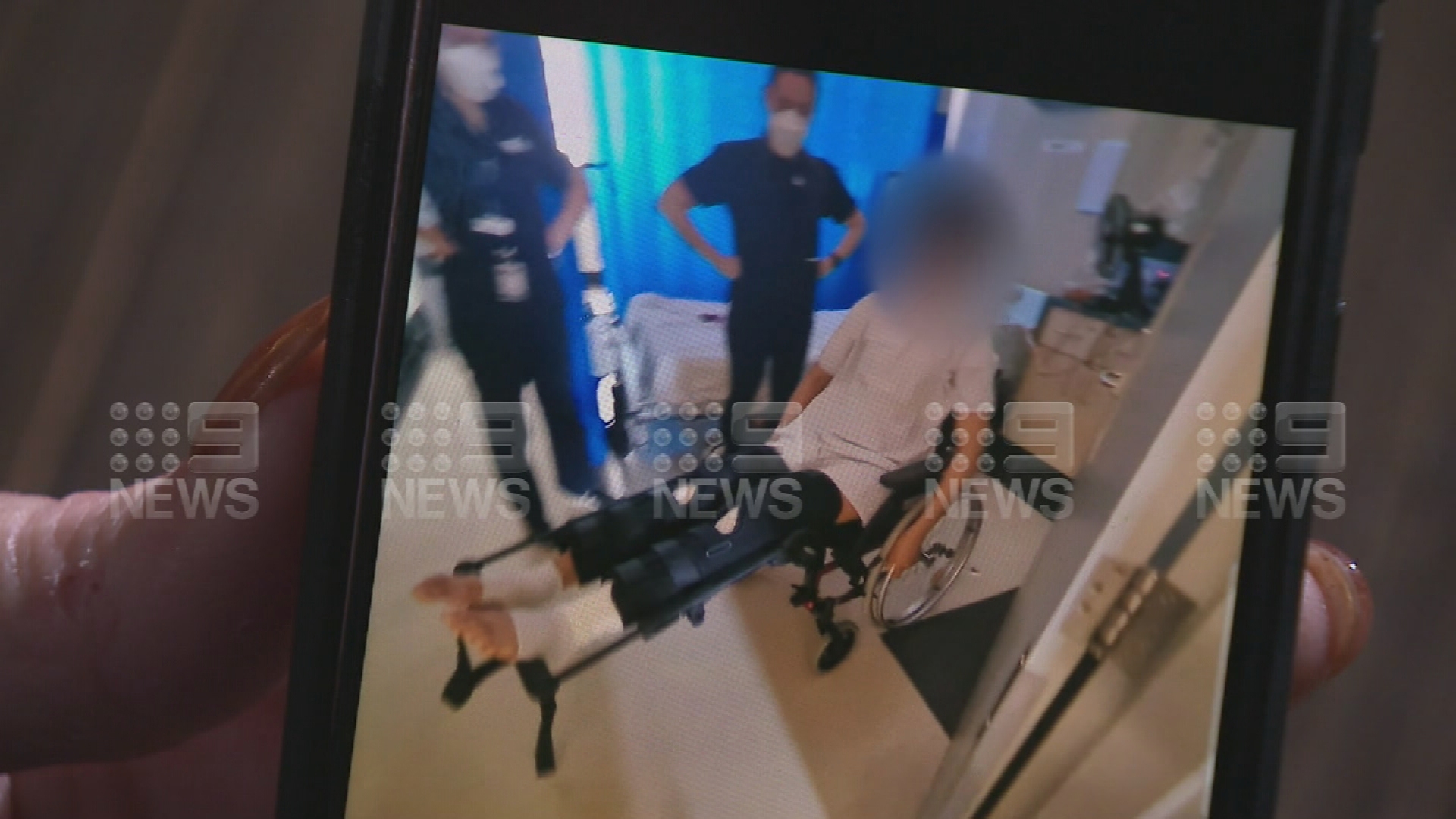
Dancer survives rare flesh-eating infection

Caitlin Cooper's dance career was soaring until early last month when she hurt her foot during a solo training session. 

Two days later, the Melbourne 17-year-old was rushed to hospital.

She was in acute pain, losing consciousness and her foot was swelling rapidly.

READ MORE: Cleaner sued for $1.5m for unplugging fridge

Seventeen-year-old Caitlin Cooper's dance career was soaring until early last month when she hurt her foot during a solo training session.

"It was the size of a balloon," she said.

"I did a backwards roll and all I did was bang the top of my foot really hard on the floor."

An astute Northern Health plastic surgeon diagnosed her with the flesh-eating infection necrotising fasciitis.

Cooper said she was at real risk of losing "my leg or my life".

Necrotising fasciitis is caused by bacteria from a cut or wound, although it can happen after blunt trauma.

It is rare but has been around for thousands of years.

"It's just shocking, I can't believe it," Caitlin said.

READ MORE: Locals fume over flight paths for massive new airport

Caitlin Cooper. The Melbourne teenager was rushed to hospital. She was in acute pain, losing consciousness and her foot swelling rapidly.

After 29 days, six aggressive surgeries and two blood transfusions, Caitlin was discharged.

She is taking slow steps to recovery and remains grateful for the support of family, the dance community and hospital. 

"The nurses and the surgeons were incredible and they saved my life and my leg," she said.

While Caitlin won't be walking properly for a while yet she is determined to become a professional performer and be among her dance friends once again.  

"I miss dancing, I miss my friends every day," she said. 

Sign up here to receive our daily newsletters and breaking news alerts, sent straight to your inbox.
Woolworths to replace confectionery aimed at kids with healthy snacks at checkouts

Woolworths will start removing confectionery marketed towards children from its checkout aisles nationally in an effort to make parents' lives easier.

The supermarket giant will still leave some chocolate and chips on display at checkouts but it will be a smaller variety, with a boost to the number of healthier snacks.

Woolworths nutritionist Stevie Wring said the products that would be removed were those specifically targeted at children.

READ MORE: Gangland execution victim 'had a big target on his back'

"So whether it might have a cartoon character on it or like a smaller size for a child, so thinking things like lollipops, chocolate with toys in it, chocolate caramels or frogs," Wring said.

She said the supermarket was aiming for 80 per cent of the range at the checkouts to have a health rating of three and a half stars or above.

"You'll see more nutbars, popcorn and healthier cereal bars on our checkouts," she said.

Woolworths said it was simply responding to customer demands for healthier options given what has been happening to our waistlines.

READ MORE: Locals fume over flight paths for massive new airport

Woolworths supermarket checkout

The latest Australian Bureau of Statistics data shows 67 per cent of Australians (12.5 million people) were overweight or obese in 2017 and 2018.

The prediction is it will hit 18 million people by 2030 if the current trend continues.

Assistant Health Minister Ged Kearney said the Woolworths initiative was "really leading the way".

"Even just the simple thing of having free fruit for the kids when you come into the store so they've got something in their hands, that's healthy for the whole shopping time is really great," Kearney said.

A spokesperson for Coles said the supermarket is always looking at ways to make healthy food more accessible for customers.

"More recently, we have made an effort across our aisles to make healthier alternatives available next to their traditional counterparts in every grocery aisle," the spokesperson said.

"We have moved many products that were previously only found in the health food aisle next to their traditional counterpart."

Aldi said it had little unhealthy food or drinks on end-of-aisle displays given limited space.

It said it has no price promotions on unhealthy foods and drinks on checkout displays.

Sign up here to receive our daily newsletters and breaking news alerts, sent straight to your inbox.
New rules for Aussie banks looking to close branches

Australia's banking authority will soon introduce a new protocol to stop banks from closing branches without providing a reason and more rules for helping customers who need face-to-face support.

The Australian Banking Association (ABA) has introduced a new protocol starting on July 1 that governs the steps banks must follow when closing branches across the country.

ABA CEO Anna Bligh told 2GB's Ben Fordham the protocol means if a bank closes a branch it is required to support its customers to transition to other methods of banking, like attending the post office.

READ MORE: Gangland execution victim 'had a big target on his back'

Generic 'Big Four Banks' - ANZ Bank, Commonwealth Bank, NAB Bank and Commonwealth Bank.

The protocol also means banks are required to give a certain period of notice to the community when closing a branch depending on where the next branch is.

"This protocol will go a long way to giving people a better understanding of when a branch will close," Bligh told the Nine radio station.

"Literally doing things like walking an older customer down the road to the post office, introducing them to the post office staff and letting them understand what they can do in the post office to continue face-to-face banking."

But Bligh admitted even with the new steps to slow the shock of bank branch closures, not all customers will be happy.

READ MORE: Locals fume over flight paths for massive new airport

https://omny.fm/shows/ben-fordham-full-show/change-is-difficult-banks-face-tough-new-rules-ove/embed?style=cover

"For many people, change is difficult and they're not going to welcome the fact their bank is no longer in town," she said.

Fordham questioned Bligh as to why there is no community consultation offered by banks when closing branches, especially in regional areas, but she argued no major commercial business would indulge this.

"I don't know of other major commercial entity that would be consulting with the community about where they locate their buildings or offices including government," she said.

"There is no community consultation when they close down a Medicare office or Department of Social Security."

READ MORE: Cleaner sued for $1.5m for unplugging fridge

Affected CBA, ANZ and Westpac customers will receive a share of the settlements, which are subject to court approval.

She said instead this protocol is about giving community members who require face-to-face banking the time and support to move to alternative services.

9news.com.au contacted the big four banks regarding the impending changes.

A Westpac spokesperson said the bank is already beginning to introduce the protocol into their branches.

"As the current chair bank for the ABA, Westpac has been closely involved in developing the updated protocol," the spokesperson said.

"Westpac has already commenced implementing the new protocol, including providing increased on-the-ground support to help customers transition their banking to other channels when branches are closed."

A Commonwealth Bank spokesperson said: "As a member bank of the ABA, we've actively worked with the ABA to further strengthen the protocol and are supportive of the enhanced measures now in place."

NAB's executive retail Krissie Jones said: "NAB has welcomed the recommendations made by the Regional Banking Taskforce and we're already fully compliant with the Australian Banking Association's Branch Closure Protocol.

"We know that a branch closure can be a difficult change for some customers, but have found some of the recommendations made by the Regional Banking Taskforce such as providing branch closure fact sheets, can help our customers and the community better understand the rationale behind a decision," she added.

Sign up here to receive our daily newsletters and breaking news alerts, sent straight to your inbox.

Several council executives across Victoria earn eye-watering salaries

Several council executives across Victoria are earning similar salaries to Premier Daniel Andrews, with one recently receiving more than half a million dollars.

It's led to calls for an overhaul of the system, with some residents in the council areas calling it "disgraceful".

A Hume City Council director, who recently left the organisation, received the highest pay of $550,000.

READ MORE: Teen struck by car before stabbing death in Melbourne's north-west

The income was boosted by unused employee benefits including accrued annual and long service leave on top of a large annual salary.

The council, in Melbourne's north-west, covers the suburb of Broadmeadows, where the average household income is less than $60,000 a year.

Resident Jason Barden, who has lived in the suburb for five years, said the hefty pay packets could be used to help the community.

"I think it's wrong," he told 9News.

"Council need to listen to the community and act from there. It's ridiculous and I don't understand it.

"Everything needs improving and the money is there, it's just not being spent wisely enough." 

READ MORE: Taylor Swift tour declared major event in Victoria in bid to crack down on ticket scalpers

According to Council Watch data, the highest paid council executives include Casey, Boroondara and Monash, ranging from $480,000-$490,000.

For comparison, Prime Minister Anthony Albanese earns $564,300, while Victorian Premier Daniel Andrews earns $481,190.

Council Watch is calling for executive salaries to be set by an external body and aligned to public performance goals.

"Councils are paid extraordinary amount of salaries and that's not tied with performance," Council Watch vice president Dean Hurlston said.

"Something has to change. [It's] completely unacceptable."

Sign up here to receive our daily newsletters and breaking news alerts, sent straight to your inbox.
Detectives recommend charges against William Tyrrell's foster mother

Exclusive: Detectives believe there is enough evidence to potentially charge William Tyrrell's foster mother over the NSW toddler's disappearance almost a decade ago.

9News can reveal detectives handed a brief to the Director of Public Prosecutions (DPP) this month with evidence against William's foster mother – who cannot be named – recommending she be charged with perverting the course of justice and interfering with a corpse.

Detectives have been investigating allegations there was a deadly accident at a home in Kendall, on the NSW Mid North Coast, in 2014 and the then-three-year-old's body was disposed of by his foster mother.

William Tyrrell – September 2014

The now-58-year-old woman has always denied any involvement in the little boy's disappearance.

It remains up to the DPP to give advice on whether the woman should go before a court.

There is no suggestion of guilt and any charge would simply be the start of the legal process.

A judge or jury would need to decide whether the evidence was sufficient to prove any charges.

William would have turned 12 yesterday but was last seen alive at a home in Kendall in September 2014.

Since his disappearance without a trace, there have been many theories over the past nine years with suspects targeted then cleared and an inquest put on hold.

A fresh team of homicide detectives reviewed the case in 2020 and a year later descended on the property where William was last seen, focusing on the area below the balcony in the backyard.

Officers searched gardens, a dam and bushland a kilometre from the house – an area ravaged by fire and flood – but there was no trace of any remains.

Almost a year on, police have quietly been building evidence in support of allegations that William's foster mother covered up his accidental death and disposed of his body.

The potential charges include perverting the course of justice and interfering with a corpse, the most serious carrying a maximum sentence of 14 years behind bars.

Sign up here to receive our daily newsletters and breaking news alerts, sent straight to your inbox.