The incident occurred near Middlemore Hospital.
Tag Archives: oceania
Reptile believed extinct rediscovered in Aussie state
A population of a critically-endangered reptile has been rediscovered in Victoria, more than 50 years after it was believed to have gone extinct in the wild.
The small grassland earless dragon was last sighted in 1969, but Environment Minister Ingrid Stitt announced today a surviving population of the species has been found in a location that will be kept under wraps.
The species was once commonly found in native grasslands west of Melbourne, but their numbers declined due to habitat loss along with predators.
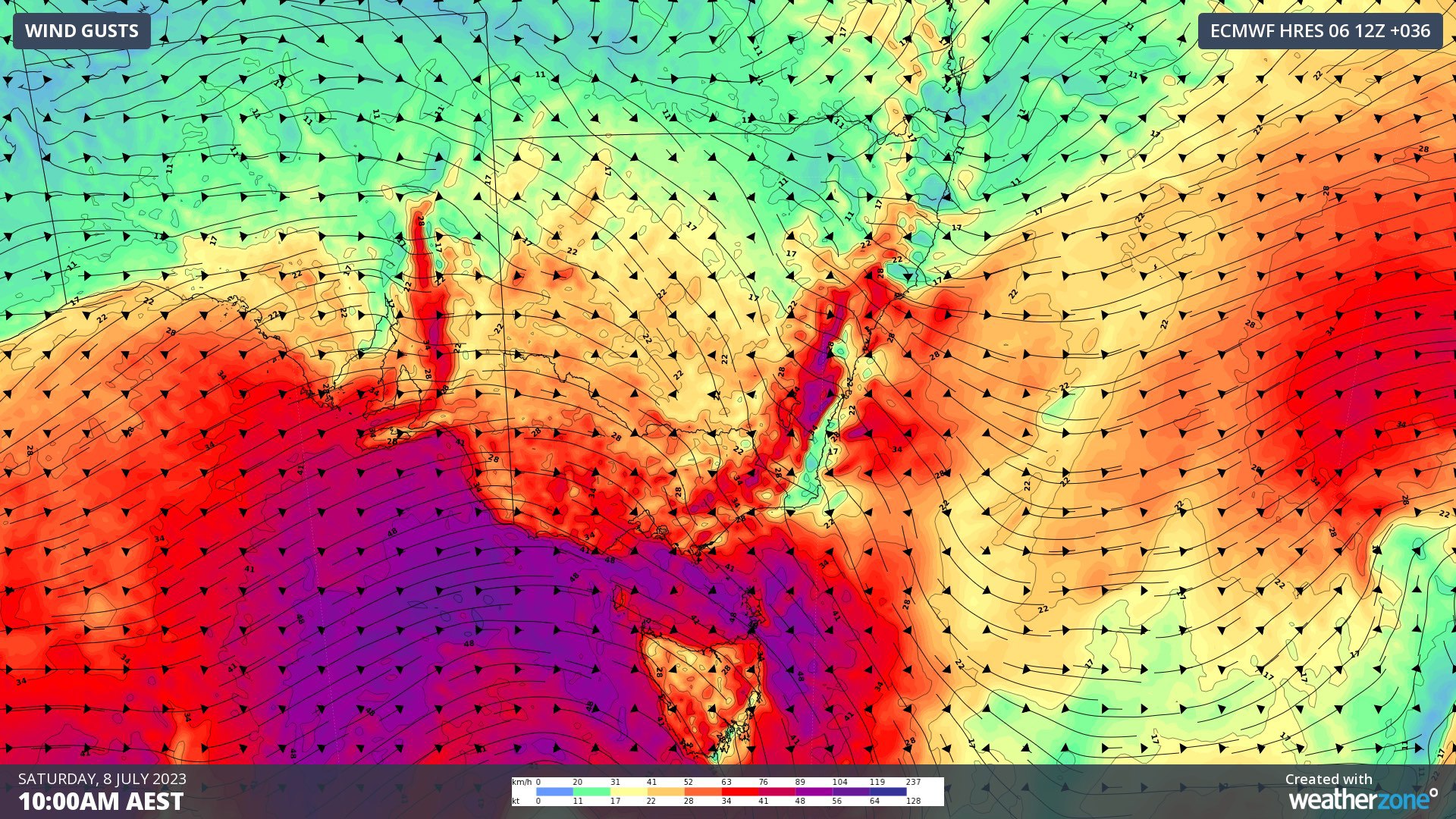
READ MORE: 'Gusty blustery times' ahead for Australia's south-east
"This is an amazing discovery and offers an opportunity for us to recover a species once thought lost to our state and the world," Stitt said.
"With the help of our partners we will continue to fight the extinction of this critically endangered species – ensuring future generations can see and learn about this incredibly unique lizard.
"We will continue to work hard at protecting Victoria's most vulnerable creatures and secure their future for generations to come."
Predators such as foxes and feral cats are one of the factors that drove the small lizard to the brink of extinction.
READ MORE: 'Bloodshed could've happened': Elite fighters mobilised over Wagner march
A joint investment between the federal and state government will see $188,000 go towards a new conservation project to help protect the species.
The project will trial the use of trained detection dogs to sniff out more populations of the dragon to help inform the level of conservation required.
A breeding program will also be established by Zoos Victoria.
Sign up here to receive our daily newsletters and breaking news alerts, sent straight to your inbox.
Social media giants could be fined billions in fake news crackdown
The media regulator may soon be able to hit companies like Facebook, Google and Twitter with massive fines if they are caught disseminating fake news and misinformation.
Communications Minister Michelle Rowland laid out the new plan today as the Albanese government rolls up its sleeves in preparation for a showdown with Silicon Valley's most powerful tech giants.
The online and social media behemoths have for years struggled to combat misinformation across their platforms, leading to all kinds of societal and political flash points and problems.
READ MORE: Wagner chief flees to Belarus after incredible U-turn
Under proposed draft laws, the Australian Communications and Media Authority will have the power to impose potentially multi-billion-dollar fines on tech companies who repeatedly fail to stop and take down undesirable content.
"Mis- and disinformation sows division within the community, undermines trust and can threaten public health and safety," Rowland said.
"The Albanese government is committed to keeping Australians safe online, and that includes ensuring the ACMA has the powers it needs to hold digital platforms to account for mis- and disinformation on their services."
Maximum penalties for systemic breaches could amount to 2 per cent of global turnover, or 5 per cent of a company's global turnover, depending on the type of infringement.
For a company like Meta, that kind of penalty could result in an eye-watering fine of more than $8 billion.
READ MORE: What's next in the search for the imploded submersible?
New codes or standards drawn up and imposed by the media regulator could result in companies being forced to develop and use better tools to identify and report misinformation.
The draft legislation went out for public consultation today.
Rowland said any new law must find a balance between protection from fake news and freedom of speech.
"I encourage all stakeholders to make a submission," she said.
Rowland said she is looking forward to introducing the bill into parliament later this year, following the consultation process.
READ MORE: Joyce plays down leadership challenge rumours
Sign up here to receive our daily newsletters and breaking news alerts, sent straight to your inbox.

Homicide investigation launched after man’s death near Carterton
Police said they expect to remain at the property for a number of days.
The 'serious challenges' now facing Putin's regime
Russian President Vladimir Putin is facing "serious challenges" after one of his closest confidants turned on him and marched towards Moscow, experts say.
The comments come after Yevgeny Prigozhin, the owner of the Wagner Group military company, called for an armed rebellion after accusing Russian forces of striking a military camp and killing thousands of his troops.
Those forces have since turned around and Prigozhin will now leave Russia for Belarus after a deal was struck. But the fact remains the short-lived insurrection is the most serious threat to Putin's power in all the 23 years he has run the state.
READ MORE: 'Bloodshed could've happened': Elite fighters mobilised over Wagner march
Dr Jessica Genauer, Senior Lecturer in International Relations at Flinders University, said Putin is now facing "serious challenges".
"A mercenary group taking over a Russian city and threatening an advance on Moscow, sets a dangerous precedent for the stability of Russia's ruling regime, and for Putin himself," she said.
"This episode demonstrates that fractures in the Russian political and military landscape are becoming increasingly volatile.
"Whilst tensions seem to have been diffused at present, the underlying pressures mounting on Russian society as the war grinds on and Russia takes on-going losses in Ukraine, have not disappeared."
She said dissatisfaction amongst both mercenary and regular Russian forces "is unlikely to dissipate".
READ MORE: What's next in the search for the imploded submersible?
Genauer added the uprising could "provide an indication of what might be to come for Russia".
"Prigozhin's threats against Moscow did enjoy support amongst some Russian constituencies who largely support the war but are unhappy with the way in which it is being fought and think that Prigozhin was wrong to back down," she said.
"Whilst this incident does not suggest any overthrow of Putin's regime at present, it does provide an indication of what might be to come for Russia – over future months or even years.
"Putin has himself encouraged political and military in-fighting in the past as a strategy of divide and rule, however, as pressures mounts, this in-fighting may spiral out of control and threaten the regime itself."
Her comments echo that of John Blaxland, Professor of International Security & Intelligence Studies, Strategic and Defence Studies Centre at Australian National University, who told Weekend Today Putin would be "very nervous" about what was to come.
"He's got to look over his shoulder," he told Weekend Today.
"This group has upturned politics in Russia."
US intelligence officials believed Prigozhin had been planning a major challenge to Russia's military leadership for quite some time, but it was unclear what the ultimate aim would be.
READ MORE: US 'surprised' by rapid escalation of military challenge
As Wagner forces marched towards Moscow they managed to take control of a key military facility in the southern Russian city of Rostov-on-Don.
But within hours, after previously refusing to surrender, the Wagner chief announced his forces were turning around from their march toward the Russian capital.
Despite Putin branding the move "a stab in the back" on Saturday, Prigozhin will not face criminal charges.
READ MORE: Wagner chief to leave Russia for Belarus in deal that ends armed insurrection
Instead he will leave the nuclear superpower after striking a deal brokered by Belarusian President Alexander Lukashenko.
Prigozhin has been publicly critical of Russia's military leadership and their handling of the war in Ukraine – with few consequences.
READ MORE: Ukrainian President's message about Putin as Russia plunged into crisis
Blaxland said the deal could have repercussions for Putin.
"It's severely damaged Putin's brand. There's all sorts of questions about what kind of deal has been struck," he said.
"This is not a special military operation. This is a catastrophe for Russia.
"It is unwarranted."
– WITH CNN
Sign up here to receive our daily newsletters and breaking news alerts, sent straight to your inbox.
What's next in the search for the imploded submersible?
The search for the Titan submersible that captivated the world came to an abrupt and grim end this week after fragments of the vessel were detected on the ocean floor near the Titanic.
The discovery led the US Coast Guard to announce the ship likely imploded, killing all five passengers aboard.
But questions remain about what exactly happened to the ill-fated vessel, whether recovery of the bodies or the submersible is possible, and what consequences the disaster may have for Oceangate, the company running the excursion to see the Titanic off the coast of Canada.
READ MORE: Joyce plays down leadership challenge rumours
Here's what you need to know about next steps for the Titan and the investigation into what happened.
What comes next in the search?
The multinational rescue effort has now turned into a recovery mission, with a remotely-operated vehicle scouring the ocean floor for debris from the deadly implosion.
Only one remotely-operated vehicle has made it to the immense depths where the Titanic wreck and the debris field from the sub lie: the Odysseus 6, operated by Pelagic Research Services.
The Odysseus 6 discovered debris from the Titan submersible about 480 metres from the wreckage of the Titanic on Thursday.
The debris was consistent with the disastrous loss of the six-metre-long vessel's pressure chamber.
The loss would have resulted in an almost instantaneous inward collapse of the vessel, which was under immense pressure in the ocean depths.
READ MORE: Wagner chief to leave Russia for Belarus
The remotely operated vehicle found a total of "five different major pieces of debris" from the Titan, according to Paul Hankins, the US Navy's director of salvage operations and ocean engineering.
Officials located the submersible's nose cone and one end of its pressure hulls in a large debris field.
The other end of the pressure hull was found in a second, smaller debris field.
Officials are working to map out the debris field.
"What they would do now is go back to that site and, like cookie crumbs, try to find a trail as to where that would lead," said Tom Maddox, chief executive of Underwater Forensic Investigators, who took part in a Titanic expedition in 2005.
He added the debris pieces could still be "slightly buoyant" and might be carried further away by ocean currents.
"So the big project right now is going to be trying to collect those parts," he said.
"They'll mark them, they'll indicate where they were, and they'll lay out a map of where those parts were found."
READ MORE: How the wreck of the Titanic was first rediscovered
The Odysseus 6 began a second mission to the site on Friday, according to Pelagic Research Services.
A spokesperson for the company told CNN the vehicle will continue to search for debris and map out the debris sites.
The debris from the sub is likely too heavy for Pelagic's ROV to lift by itself, so any recovery mission will be made alongside Deep Energy, another company assisting with the mission, which will use rigged cabling to pull up any pieces of the destroyed vessel.
The crew of search and rescue vessels that gathered in the Atlantic are beginning to dissipate.
The Navy is removing a deep ocean salvage system that arrived in St. John's on Wednesday.
And the Polar Prince, the Titan's support ship, departed the area of the Titanic wreckage on Friday.
Can the bodies of the passengers be recovered?
Five passengers were aboard the Titan when it imploded: Pakastani businessman and his son, Shahzada and Suleman Dawood; British businessman Hamish Harding; French diver Paul-Henri Nargeolet; and Stockton Rush, the pilot of the vessel and CEO of the vessel's operator, OceanGate Expeditions.
All five are presumed dead. But it's unclear whether any remains will be able to be recovered.
READ MORE: Years before sub went missing, letter warned of 'catastrophic' design
On Friday, Coast Guard Rear Adm. John Mauger said, "I don't have an answer for prospects at this time" when asked about recovering remains.
He noted the "incredibly unforgiving environment" in the depths of the ocean near the Titanic wreck and the intense pressure that far down.
A medical expert said that the implosion would likely leave no recoverable remains.
"There would be virtually nothing," Aileen Marty, a disaster medicine expert at Florida International University, said.
"They're very unlikely to find anything there of human tissue."
When did the Titan implode?
It's unclear when or where exactly the submersible imploded.
Mauger said that it will take time to establish a specific timeline of events in the "incredibly complex" disaster.
They began the dive around 9am and were expected to resurface at 6:10pm. But the group last communicated with the surface at 11:47am.
Authorities were notified at 6:35pm and rescue operations began.
READ MORE: Director says 'surreal' similarities between Titanic and destroyed sub
The Navy detected a sound that was "consistent" with an implosion on Sunday, but it was determined to be "not definitive."
Authorities searched for the submersible in the hope that the vessel might still be intact and its occupants alive.
On Tuesday, authorities detected "banging noises" underwater, sparking hope that the submersible, which was equipped with 96 hours of oxygen, might still be intact and its passengers alive.
But by Thursday afternoon, authorities determined the sub had imploded and said there did not seem to be a connection between the noises and the debris.
Who will investigate the incident?
Authorities in both the US and Canada announced probes of the incident.
The US Coast Guard and the Transportation Safety Board of Canada announced the launch of investigations on Friday (local time), though it's unclear whether the agencies are conducting separate examinations or working together for one.
On Saturday, the Royal Canadian Mounted Police (RCMP) also announced it would conduct its own investigation separately from the Transportation Safety Board.
The US Coast Guard will also investigate the incident.
A Coast Guard official said authorities are discussing how an investigation would unfold since the implosion took place in international waters.
Experts have suggested that that any probe would consider the submersible's design, the materials used to build it, and Rush and OceanGate's role in the deathly disaster.
What's next for OceanGate?
The disaster has cast scrutiny on OceanGate, the Titan's operator.
The company, which sold its trips to the Titanic for US $250,000 per passenger, is no stranger to criticism.
In the past years, at least two OceanGate employees voiced concerns about the submersible's carbon fiber hull.
One employee, OceanGate's former director of marine operations David Lochridge, claimed in a court filing that he was wrongfully terminated in 2018 for raising concerns about the Titan's safety and testing.
The case was settled out of court.
It is unclear whether OceanGate will continue its operations after the catastrophe.
OceanGate faced a series of mechanical problems and inclement weather conditions that forced the cancellation or delays of trips in recent years, according to court records.
In a 2019 blog post, the company defended its choice not to have its vessel "classed" or certified by any safety organisations.
Sign up here to receive our daily newsletters and breaking news alerts, sent straight to your inbox.
When do Taylor Swift tickets go on sale?
This is not a drill. Taylor Swift is bringing her blockbuster Eras tour to Australia next year, announcing five concerts and dates overnight.
Australian fans of the pop superstar will have their chance to take in the full spectacle of Swift's blockbuster tour, when she brings it Down Under in 2024.
Eager fans eager will be able to get their hands on tickets from tomorrow for pre-sale, but they limited.
Here's everything you need to know to secure your tickets.
READ MORE: Why iconic Australian chocolate is being discontinued
When do Taylor Swift tickets go on sale?
An American Express Card presale starts tomorrow and will last for 48 hours, or until sold out.
The sale will give members access to two Australian VIP packages.
The packages range from $899-$1249.90.
Fans who are members of Frontier Touring can register for a presale on Wednesday, June 28.
The presale is a 24-hour opportunity to get their tickets in advance from 2pm.
Both presales will end earlier if their allocate
Tickets go on sale on Friday, June 30.
The Sydney show will go on sale at 10am local time, and the Melbourne show will go on sale at 2pm local time.
How much will Taylor Swift tickets be?
Some may say they're pricey, but well worth the cost.
Tickets will range from $79-$379, depending on the seating location.
- A Reserve – $379.90
- B Reserve – $309.90
- C Reserve – $239.90
- D Reserve – $199.90
- E Reserve – $159.90
- F Reserve – $119.90
- G Reserve – $79.90
VIP packages combine tickets with exclusive merchandise and range from $349-$1249.90
The "It's Been A Long Time Coming Package" runs for $1249.90 and includes an A – Reserve floor seat, and "VIP Tour Laminate & Matching Lanyard".
When is Taylor Swift coming to Australia?
Taylor Swift will be making her long-awaited return to Australia in February 2024 across two epic weekends.
She will be playing February 16-17 and February 23-25, 2024.
Swift's last stadium tour in Australia was in 2018, for her Reputation album tour.
Where is Taylor Swift playing?
The Eras tour is going worldwide, and making a stop in Australia.
Taylor will be performing in Melbourne and Sydney across two weekends.
Fans in Brisbane, Perth, Adelaide and the rest of Australia may feel snubbed not to have a concert date, and many will likely book trips interstate.
Is Taylor Swift coming to Perth?
No. Taylor Swift will not be performing in Perth as part of the Eras tour in February 2024.
Is Taylor Swift coming to Brisbane?
No. Taylor Swift will not be performing in Brisbane as part of the Eras tour in February 2024.
Is Taylor Swift coming to New Zealand?
Taylor Swift is not performing in New Zealand as part of the Eras tour in February 2024.
The only other Pacific stops on the Eras tour are Tokyo in February with four shows, and Singapore, with three shows in early March.
Taylor Swift Eras tour setlist
Taylor Swift has been playing a marathon three-hour show at every single stop on the eras tour.
It kicks off with Miss Americana and The Heartbreak Prince, and plays right through the night touching on every "era" of Swift's career.
In order, she plays songs from each album starting with Lover, Fearless, Evermore, and Reputation.
She then plays songs from Speak Now, Red, Folklore, 1989, and finally Midnights.
All ten minutes of All Too Well will make an appearance too.
Taylor Swift support act
Taylor Swift will be supported by 24-year-old Sabrina Carpenter on her Australian tour.
Carpenter is an American singer.
She will also be joining Taylor on the Latin American leg of the tour.
https://twitter.com/taylorswift13/status/1671186653195403268?ref_src=twsrc%5Etfw
Sign up here to receive our daily newsletters and breaking news alerts, sent straight to your inbox.
What venom of 'most dangerous spider' does to body
Australia is home to a manner of unique creatures and creepy crawlies, including the Sydney funnel-web spider, an arachnid widely regarded to be the most dangerous spider to humans.
However, Volker Herzig, Associate Professor from the University of the Sunshine Coast's Centre for BioInnovation, said it's really just a "coincidence" the funnel-web poses such a danger to people.
Herzig explained just what the crystal-clear venom does to the body – and why any bite should be taken seriously.
READ MORE: Why Australia's deadliest snake is so lethal
"One of their insecticidal toxins, which is designed for immobilising insects, targets a specific protein called the sodium channel," Herzig told 9news.com.au.
But unfortunately, the binding sites, where the toxin binds to the protein, seem to be similar in insects and humans.
"It's just an unfortunate evolutionary coincidence that funnel-web toxin can also bind to the human protein," he said.
READ MORE: 'Toxic stuff': Challenges milking most venomous snakes and spiders
So what actually happens when the toxin does bind to a protein?
"What the toxin does is keep the channel in the open state, it's permanently firing," Herzig explained, adding the channels transmit electrical signals and are designed to switch off quickly to be ready for the next response.
"Initially after the bite, a lot of these systems are in a hyperactive state, the nerves keep firing.
"So, the initial phase you'd see more saliva produced, increased muscle tension, more sweating.
"Then after a while your neurotransmitter reserves are exhausted, and it's the opposite.
"Everything shuts down, which can lead to systemic effects on the heart, cardiovascular system, and cause pulmonary edema.
"All of these can have lethal consequences."
Herzig said the rate at which symptoms progress depends on a number of factors including who is bitten, whether the spider is male or female, and how much toxin is actually delivered.
READ MORE: Aussie city plays host to one of nature's greatest mysteries
"It can be a few minutes or not at all because you don't know how much the spider injected," he said.
"Male Sydney funnel-webs have six times more of that lethal toxin than the females, the females might inject more venom as they are bigger, but it doesn't have as much toxin.
"If you look at deaths, the vast majority were actually children, because it depends on body weight, the less body weight the more toxin you have in relation per kilogram."
While there have only been 13 Sydney funnel-web spider deaths recorded, seven of these were children – and a large toxin dose is believed to be capable of killing in as little as 15 minutes.
Matthew Mitchell, a 10-year-old New South Wales Central Coast boy bitten by a funnel-web spider in 2017, received the largest antivenom dose in Australian history.
In total, 12 vials needed to be administered to help his body fight the dangerous toxins within the venom.
Herzig was quick to point out there hasn't been a fatal bite since 1981, which is when the funnel-web spider antivenom program was introduced at the Australian Reptile Park.
READ MORE: Twist for teen bitten by Sydney funnel-web while sleeping
Another reason why fatalities are low is pain is a noticeable characteristic of most spider bites, including funnel webs.
For this reason, it's unlikely a bite would go unnoticed and gives a patient plenty of time to seek medical aid.
Herzig said eliciting pain is actually one of the "main functions" of the venom, as it's an effective defence mechanism.
"If you had experienced a painful bee sting, you realise, pain can be quite an effective weapon to get rid of predators," he said.
"Because you let go of that animal and they can escape."
Should a person suspect they've been bitten by a funnel-web, the advice is simple.
"Apply a pressure immobilisation bandage if the bite is on a limb, like you do for a snake, and call an ambulance," Herzig said.
"And after that, don't move anymore.
"The more you move the more the toxin can spread.
"That's the safest thing to do."
Sign up here to receive our daily newsletters and breaking news alerts, sent straight to your inbox.
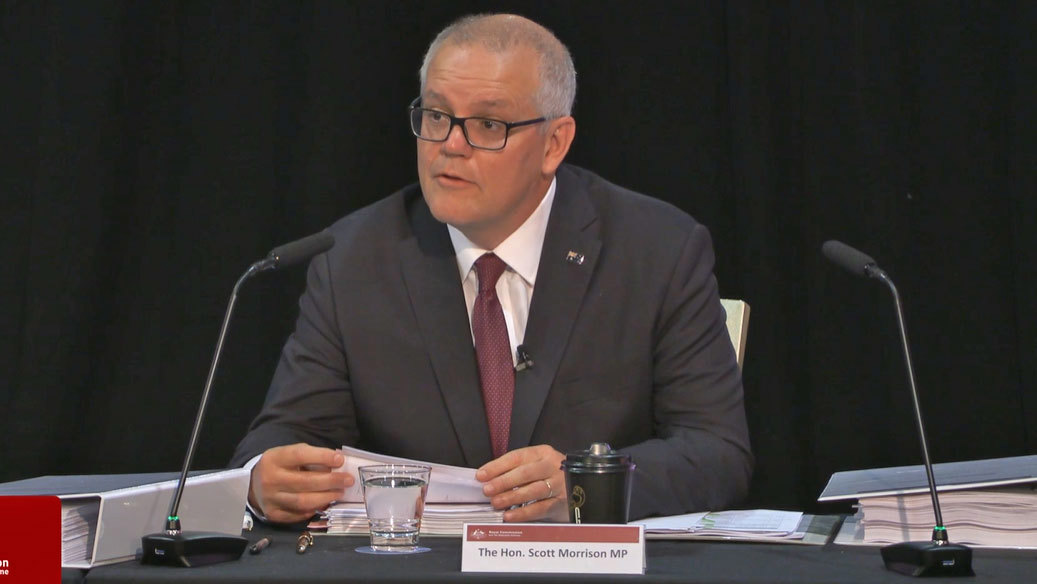
Joyce plays down leadership challenge rumour
Barnaby Joyce has deflected rumours he is looking to challenge David Littleproud for leadership of the Nationals.
A News Corp report today suggested Littleproud has lost his party's support because of his relationship with Peter Dutton.
Speaking with 9News this morning, Joyce insisted he was not the source for the story, which pitched he and former resources minister Keith Pitt as the most likely candidates to run for the top party job.
READ MORE: Wagner chief to leave Russia for Belarus
Joyce, who was deputy prime minister under the Turnbull and Morrison governments, indicated he wanted to spend more time with his family.
Littleproud replaced Joyce as leader of the National Party last May, after Labor's victory in the federal election.
"We're all on borrowed time in politics, don't worry about that," Littleproud said.
"It's up to the party room.
"I have never taken anything for granted being the leader.
"Whatever the party room decides, I accept."
Some inside the Nationals feel Littleproud has been overwhelmed and dominated by Dutton to the detriment of the party and its policies.
The Nationals are are no strangers to leadership challenges, with numerous changes at the top over the past five years.
Sign up here to receive our daily newsletters and breaking news alerts, sent straight to your inbox.
How to avoid the dangers of 'sharenting'
A first day of school, the cutting of a birthday cake or a simple happy snap when the lighting is just right.
Parents the world over share these everyday moments on social media, but experts are warning about the hidden dangers of "sharenting".
Parents can be leaving themselves vulnerable to blackmail or scammers using the images to fabricate or impersonate accounts.
READ MORE: A tech expert played along with a 'wrong number' scam. Here's what he found
"Would you be okay to print that picture and stick it on a telegraph pole?" Telstra cybersecurity expert Darren Pauli said.
"And if not, then maybe that's a good indication that you either need to do something about your friends list or maybe don't post a picture."
Research from Telstra found 63 per cent of parents admit to having posted photos of their children on a social media account that is not private or on which they have followers they don't know.
Pauli said many parents were struggling to navigate how to share things online while maintaining their child's privacy.
READ MORE: What to do if your data is compromised in a company hack?
"I think ultimately, the number one concern is knowing who has visibility over the stuff that you're sharing," Pauli said.
"If there is an image that could be used in some way for extortion or blackmail, these are typically the stuff that people will share."
He said criminals often picked up photos posted on social media and set up scam accounts to impersonate people.
Pauli said he regards his Facebook as public even though it is set to private because he has people he doesn't know connected on the platform.
EXPLAINED: What should you do if you drop your phone in water?
Sharenting is also creating increasing questions and concerns surrounding the issue of consent.
"Maybe they (the children) grow up and they become someone who would prefer not to have a public profile, maybe then they lose that ability to make that decision," Pauli said.
Members of parliament in France are debating an anti-sharenting bill, which seeks to make parents responsible for the privacy rights of their children who cannot consent to their images being uploaded online.
On average a child has their picture shared on online 1300 times before they are able to create their own social media profile at 13 years old, according to an English study.
Online safety sharing tips
Sharenting may seem hard to avoid but there are some easy ways to still share photos of your children with family and friends, with a lower risk of impersonation scams and consent issues.
Digital photo albums
Pauli recommends using digital photo albums to share pictures among family and friends, which can ensure images are kept private.
"I use Google Photos and have an album there and I invite all my family," he said.
Unique passwords
If you want to use Facebook or Instagram, Pauli recommends having unique passwords for everything to lessen the risk of accounts being hacked and photos of children being shared.
"If say your LinkedIn, not picking on LinkedIn particularly, but if LinkedIn gets hacked and you have the same password on your Facebook, I'll bet my last dollar that that's going to get hacked too."
READ MORE: How to create a strong, safe and secure digital password
Review content
Pauli recommends double-checking content with children before posting.
This could include making sure they are not in a school uniform with an easy to identify logo, checking whether a location is tagged or if you are at you local cafe.
"These are all identifiable details and it's best to keep these private," Pauli said.
"Look to post photos that don't highlight personal details."
Be aware of scams
"It's important to be aware of popular scam tactics targeted at children or that children are more susceptible to, some of these include offering a fake Australia Post delivery, transport card and toll scams, and fraudulent 'important' or 'urgent' messages from an Australian bank," Pauli said.
For more information on how to be scam aware you can read Telstra's advice here.
Sign up here to receive our daily newsletters and breaking news alerts, sent straight to your inbox.