Tag Archives: oceania

Sydney Airport running on single runway due to strong winds

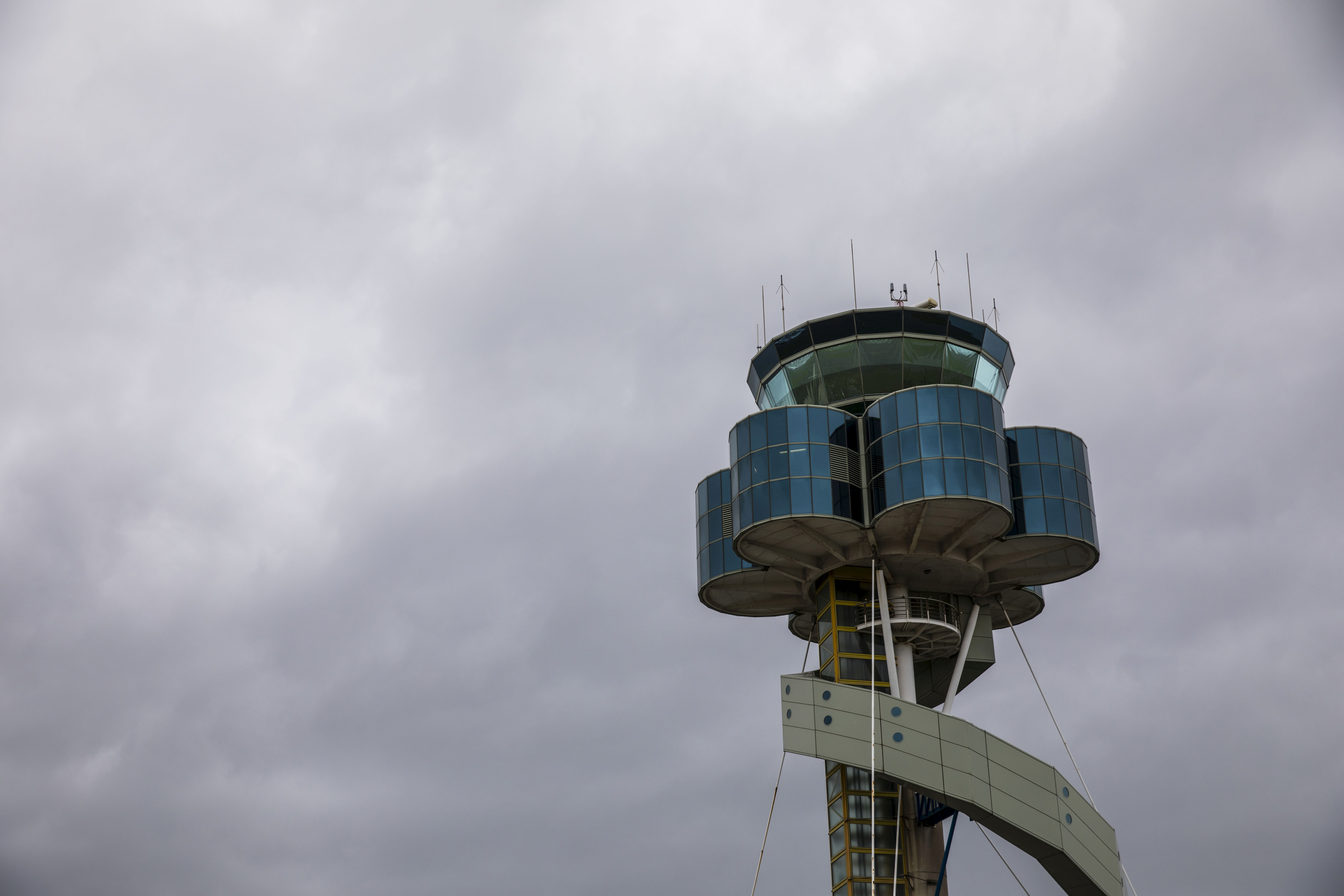
Sydney Airport is currently operating on a single runway due to strong wind gusts in the area.

Airservices Australia confirmed the airport is only operating one runway because of "gusty, westerly crosswinds".

"This decision is purely weather and safety-related to safeguard the travelling public," an Airservices Australian spokesperson confirmed.

READ MORE: 'Truly extraordinary young man' vanishes on hike with mates

The Bureau of Meteorology's weather observations for Sydney Airport show wind gusts of 30km/h and wind speeds of 26km/h as of 12.30pm today.

It is unclear how many flights either arriving or departing are impacted by the single runway operations.

More to come …

Sign up here to receive our daily newsletters and breaking news alerts, sent straight to your inbox.

Fears as shortage of 'critical' drug flagged

Doctors fear dying patients could face more pain and suffering due to an expected shortage of a type of morphine.

A drug called Ordine, a liquid form of the opioid used to treat severe pain, is due to be discontinued in Australia.

It's given to people dying of cancer and suffering from other life-limiting conditions, including children, to ease pain and breathing problems.

READ MORE: How Australian psychiatrists can prescribe psychedelics

Jodi Adams said her daughter Cosette was able to die without pain after being given the drug.

The Therapeutic Goods Administration (TGA) has flagged a shortage after company Mundipharma announced the plan to stop supplying the medicine in the country.

Different strengths will be discontinued between the end of this year and early 2024.

Palliative care advocates are calling on the government to find another supplier, plus remove red tape so patients can afford access to it as soon as possible.

Jodi Adams' little girl Cosette was given the drug just before she died aged just five last year.

She had very early onset inflammatory bowel disease with combined immune dysfunction and spent over half her life in the Royal Children's Hospital in Melbourne.

Her mother, 48, from Croydon, said administering the drug, which had been discussed in advance with doctors, allowed her daughter pass away without suffering.

"Cosette having the oral dose of Ordine, it allowed her to be comfortable and fall asleep in her final hours before she sadly passed away peacefully in her sleep," Adams 9news.com.au.

"If she didn't have this medication, it may have been distressing for both of us.

"I would urge the government to ensure this medication is made available as it is an essential and critical pain relief for patients undergoing cancer treatment and end-of-life care."

READ MORE: 'Life-changing': Kidney disease drug added to PBS

Jodi Adams' little girl Cosette was given the drug just before she died aged just five.She had very early onset inflammatory bowel disease with Combined Immune Dysfunction and spent over half her life in the Royal Children's Hospital, Melbourne

READ MORE: 'I don't even have words': Business owner 'numb' at terminal lung cancer diagnosis at 32

Paediatric palliative care specialist Dr Anthony Herbert, who is also chairman of Palliative Care Queensland, said the shortage could affect "thousands" of Australians.

He said while morphine can be given in tablet form, it's not always suitable.

"One of the challenges is not all patients can swallow tablets," Dr Herbert told 9news.com.au.

"Also many of them have feeding tubes.

"We can crush the tablets but it adds an extra layer of complexity and potential for error.

"The other key thing is this formulation can really assist with home care.

"Patients might prefer to be at home rather than in the hospital, as they approach end of life.

"This is probably the opioid we have most experience with for both palliative care, also managing pain related to cancer and other life-limiting conditions, and including children as well.

"The worry is that patients may experience more pain or distress or suffering."

READ MORE: Ozempic to remain in shortage until 2024

Experts say there have been various supply issues with similar drugs.

"Australia is the second-largest producer of the raw materials for morphine, yet we are still regularly experiencing supply problems," Palliative Care Australia's national policy director Josh Fear said.

"There is an opportunity here to develop our sovereign capability and manufacture essential medicines here in Australia.

"In the meantime, we look forward to working with the TGA as it works to find a replacement for this essential medicine as quickly as possible."

The TGA said it is treating the discontinuation with "high priority."

READ MORE: 'On a knife edge': Grim warning about medicine shortage

"We are working with the sponsor of these products, Mundipharma, to monitor remaining supplies of these medicines, as well as a range of other stakeholders, including relevant medical and pharmacy groups, to support treatment continuity for patients," it said in a statement.

"We are also investigating the potential for future approvals for importation and supply of overseas-registered morphine oral liquids under section 19A of the Therapeutic Goods Act 1989."

Do you have a story? Contact journalist Sarah Swain at ss****@******om.au

A spokeswoman for Mundipharma said Ordine was made by a third party in Australia with Mundipharma holding the market authorisation.

It said that organisation has decided to stop making the drug and "sourcing another manufacturer would not be commercially viable."

It said stock of the 1mg solution is expected to run out in April 2024.

"We spent considerable time exploring options with other parties to continue the supply of Ordine but despite our extensive efforts, we have not been successful in coming to a mutual agreement," the spokeswoman said.

"We know this treatment plays an important role in some patients' treatment pathway and we regret any concerns that may have been caused by this third-party decision."

Anybody affected should talk to their doctor.

READ MORE: Parents diagnosed with cancer within hours of each other

Sign up here to receive our daily newsletters and breaking news alerts, sent straight to your inbox.
Earth has hit an unofficial temperature record — and stayed there

Earth's average temperature on Wednesday remained at an unofficial record high set the day before, the latest grim milestone in a week that has seen a series of climate-change-driven extremes.

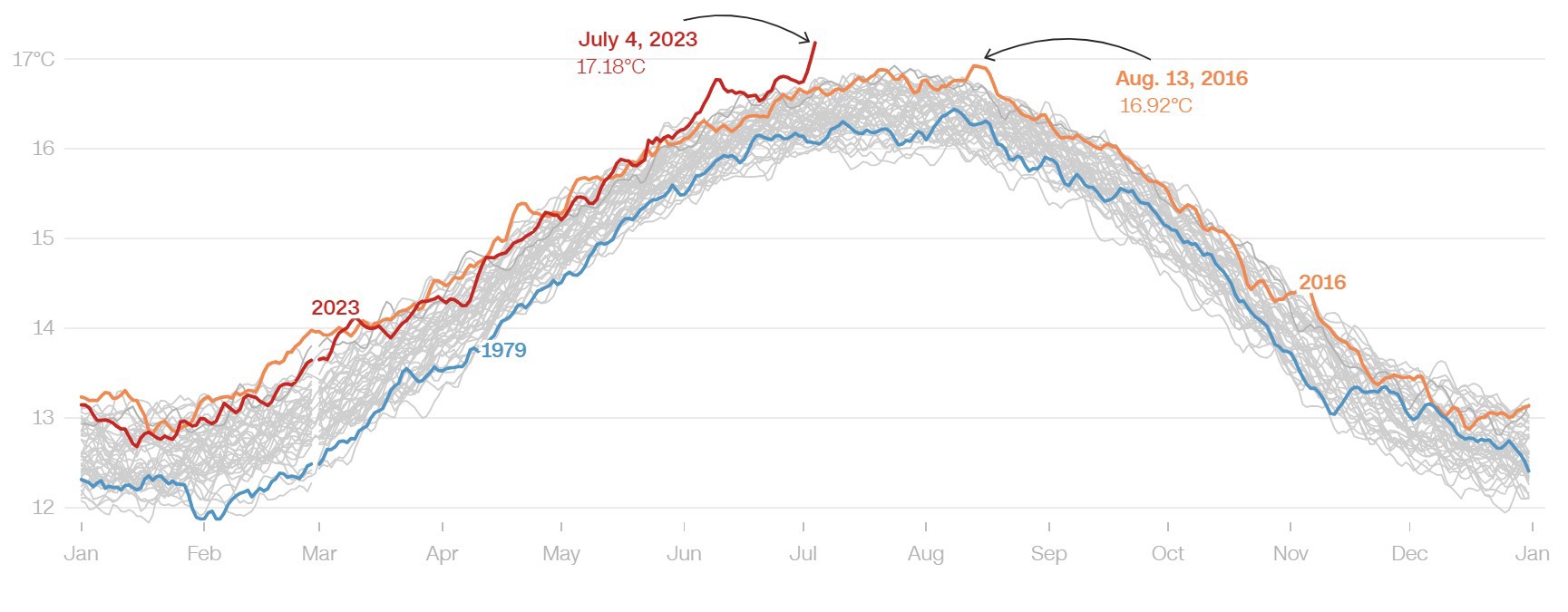
The average global temperature was 17.18 degrees, according to the University of Maine's Climate Reanalyser, a tool that uses satellite data and computer simulations to measure the world's condition.

That matched a record set Tuesday, and came after a previous record of 17.01 degrees was set on Monday.

While the figures were not an official government record, "this is showing us an indication of where we are right now", National Oceanic and Atmospheric Administration chief scientist Sarah Kapnick said. NOAA indicated it would take the figures into consideration for its official record calculations.

Scientists generally use much longer measurements — months, years, decades — to track the Earth's warming, but the daily highs are an indication that climate change is reaching uncharted territory.

While some countries had colder weather than usual, high-temperature records were surpassed this week in Quebec and Peru.

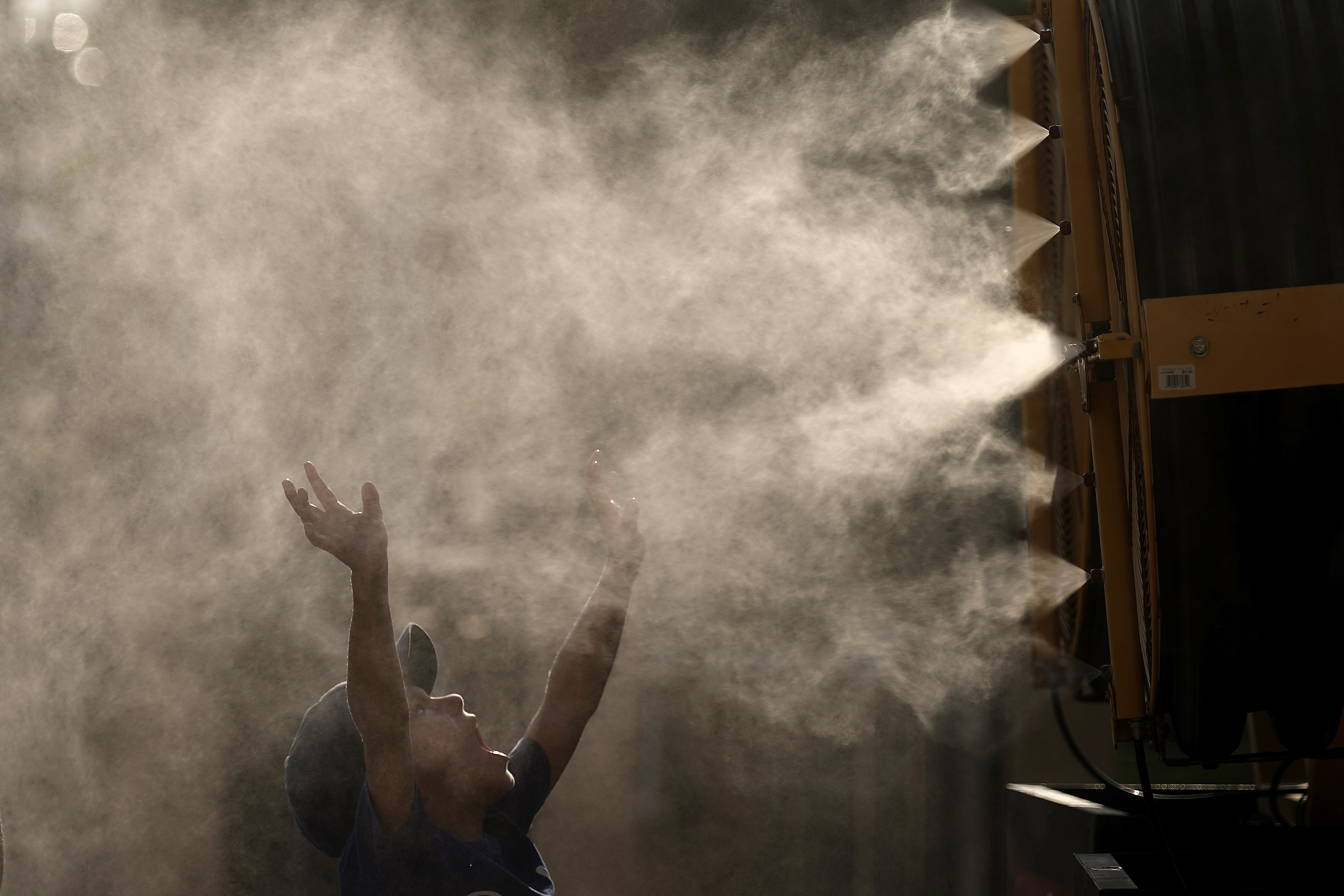
In North Grenville, Ontario, the city turned ice hockey rinks into cooling centres as temperatures hit 32 degrees, with humidity making it making it feel like 38 degrees.

"I feel like we live in a tropical country right now," city spokeswoman Jill Sturdy said.

"It just kind of hits you. The air is so thick."

Hottest Day ever

Beijing reported nine straight days last week when the temperature exceeded 35 degrees and ordered a stop to all outdoor work on Wednesday, as the temperature reached 41 degrees.

On Wednesday, 38 million Americans were under some kind of heat alert, Kapnick said.

Scientists have warned for months that 2023 could see record heat as human-caused climate change, driven largely by the burning of fossil fuels like coal, natural gas and oil, warmed the atmosphere.

They also noted that La Nina, the natural cooling of the ocean that had acted as a counter, was giving way to El Nino, the reverse phenomenon marked by warming oceans.

"A record like this is another piece of evidence for the now massively supported proposition that global warming is pushing us into a hotter future," said Stanford University climate scientist Chris Field, who was not part of the calculations.

One of the largest contributors to this week's records is an exceptionally mild winter in the Antarctic, according to data from the Climate Reanalyser.

Parts of the continent and nearby ocean were 10-20 degrees warmer than averages from 1979-2000.

"Temperatures have been unusual over the ocean and especially around the Antarctic this week, because wind fronts over the Southern Ocean are strong pushing warm air deeper south," said Raghu Murtugudde, professor of atmospheric, oceanic and earth system science at the University of Maryland and visiting faculty at the Indian Institute of Technology, Bombay.

Chari Vijayaraghavan, a polar explorer and educator who has visited the Arctic and Antarctic regularly for the past ten years says global warming is obvious at both poles, and threatens the region's wildlife as well as driving ice melt that raises sea levels.

"Warming climates might lead to increasing risks of diseases such as the avian flu spreading in the Antarctic that will have devastating consequences for penguins and other fauna in the region," Vijayaraghavan said.

University of Maine climate scientist Sean Birkel, creator of the Climate Reanalyser, said the daily figures were unofficial but a useful snapshot of what's happening in a warming world.

Even though the dataset used for the unofficial record goes back only to 1979, Kapnick said that given other data, the world is likely seeing the hottest days in "several hundred years that we've experienced".

More frequent, and more intense heat waves disrupted life around the world and caused life-threatening temperatures.

Dr Hans Henri P Kluge, regional director for Europe at the World Health Organisation, said climate change was attacking the continent "in a big way", which had the potential to wind back 50 years of progress in public health.

Large parts of India and Pakistan faced a days-long heat wave in June that killed more than 100 people across the two countries. Temperatures subsided in the last week as the monsoon rains began.

Sign up here to receive our daily newsletters and breaking news alerts, sent straight to your inbox.

Detainees jump from two-storey building after fire breaks out at detention centre

Detainees have jumped from a two-storey building by kicking open glass windows and landing on a mattress after a fire broke out at an immigration detention centre in Sydney's west.

Staff placed the mattress underneath the windows as the detainees filmed themselves jumping to safety after the blaze broke out at the Villawood Immigration Detention Centre just before 11.30am.

Two detainees jumped from the second level after the fire started.

READ MORE: States braced for brutal cold fronts

Detainees have jumped from a two-storey building by kicking open glass windows and landing on a mattress after a fire broke out at an immigration detention centre in Sydney's west.

Survivor Habibur Rahman told 9News he tried to get out but the smoke hit him in the face and caused him to have trouble breathing.

"The jump wasn't that scary for me, because it's life and death, if I stayed there I wouldn't be able to breathe," Rahman said.

Hundreds were evacuated as emergency services arrived.

Survivor Habibur Rahman told 9News he tried to get out but the smoke hit him in the face.Detainees have jumped from a two-storey building by kicking open glass windows and landing on a mattress after a fire broke out at an immigration detention centre in Sydney's west.

About 12 people were treated for smoke inhalation, including detainees, staff and first responders.

It's believed the fire was deliberately lit.

The Australian Border Force is aware of the incident.

An investigation is ongoing.

Sign up here to receive our daily newsletters and breaking news alerts, sent straight to your inbox.
Wagner chief Prigozhin is in Russia, president of Belarus says

Russian mercenary chief Yevgeny Prigozhin is in St Petersburg and his Wagner troops have remained at the camps they stayed in before an attempted mutiny against Moscow, the president of Belarus says.

President Alexander Lukashenko helped broker a deal under which Prigozhin ended his abortive mutiny on June 24 in exchange for security guarantees for himself and his soldiers.

The deal allowed Prigozhin and his troops to move to Belarus.

READ MORE: Ukraine accuses Russia of planning attack on huge nuclear plant

Lukashenko said last week that Prigozhin was in Belarus.

He told international reporters on Thursday that the mercenary chief is in St Petersburg and Wagner troops still were at their camps.

He did not specify the location of the camps, but Prigozhin's mercenaries fought alongside Russian forces in Ukraine before their revolt.

The rebellion saw them quickly sweep over the southern Russian city of Rostov-on-Don and capture military headquarters there before marching on the Russian capital in what Prigozhin described as a "march of justice" to oust the Russian defence minister and the General Staff chief.

Prigozhin claimed his troops had come within 200 kilometres of Moscow when he ordered them to stop the advance under the deal brokered by Lukashenko.

The abortive rebellion represented the biggest threat to Russian President Vladimir Putin in his more than two decades in power and exposed the Kremlin's weakness.

Lukashenko's statement followed Russian media reports that claimed that Prigozhin was spotted in St Petersburg, Russia's second-largest city. His presence was seen as part of agreements that allowed him to finalise his affairs there.

More to come

Ceiling collapses at Melbourne hospital after crane drops load onto roof

Surgeries have been cancelled and patients evacuated onto the street after a crane dropped a load onto the roof of a Melbourne hospital, causing a ceiling to collapse.

No one was injured when the pallet of plasterboard, which weighed about 1.5 tonnes, smashed through Warringal Private Hospital at Heidelberg just after noon.

The impact hit the ceiling of a lounge area, which burst water pipes and flooded several parts of the hospital, including a ward.

READ MORE: Australian airports plunged into chaos after 'nationwide systems outage'

Staff evacuated patients onto Burgundy Street until the hospital was deemed safe.

Surgeries and new admissions at the hospital were cancelled.

The company behind the construction site, Kane Constructions, has told 9News it is not in a position to comment on the incident, which is being investigated by WorkSafe.

CFMEU national secretary Zach Smith said the union was "seriously concerned about the safety incident".

Sign up here to receive our daily newsletters and breaking news alerts, sent straight to your inbox.