Tag Archives: oceania

Villagers risk their lives in danger zone as Philippines' most active volcano erupts

Delfina Guiwan's heart was pounding as she snuck back to her village, now abandoned and eerily quiet, in the fertile foothills of gently erupting Mayon volcano in the northeastern Philippines.

When patrolling police spotted her, they warned that the village is off-limits because of the danger of a violent eruption at any time. Guiwan, 47, said she knew the risks but begged to stay a few minutes more to get her daughter's school uniform from their shack and feed her pigs.

"I'm scared. We saw lava flowing down one night and a boulder rolled down, sounding like thunder," Guiwan told The Associated Press. "I'm praying this eruption won't get worse because our livelihood is here and it's difficult to stay in the evacuation camp with few toilets for so many, and the heat. Children are getting sick there."

READ MORE: Air search for missing sub halted as night falls

(AP Photo/Aaron Favila)

Her village, Calbayog, lies in Mayon's northeastern foothills and is well within the 6-kilometer radius from the volcano's crater that officials have long designated a permanent danger zone, demarcated by concrete warning signs. Entry is prohibited, but thousands of poor villagers have flouted the restrictions and made it their home for generations. Lucrative businesses such as sand and gravel quarrying and sightseeing tours have also thrived openly despite the ban and the mountain's frequent eruptions — now 53 times on record since 1616.

The 2462-metre volcano is one of the Philippines' top tourism draws because of its near-perfect cone shape. But it's also the most active of the country's 24 volcanoes and could erupt violently at any time.

That includes pyroclastic flows, which are superheated gas and volcanic debris that suddenly race down slopes at great speed and incinerate everything in their path. Another threat is lahar, a muddy stream of water, volcanic ash and rocks that can move as fast as cars and engulf areas up to several kilometres (miles) away.

A terrifying symbol of Mayon's deadly fury is the belfry of a 16th-century Franciscan stone church which protrudes from the ground. It's all that's left of a baroque church that was buried by lahar along with the town of Cagsawa in an 1814 eruption which killed about 1,200 people, including many who sought refuge in the church, about 13 kilometres from the volcano.

READ MORE: Aussies' power price shock as bills surge up to 83 per cent

(AP Photo/Aaron Favila, File)

The thousands of villagers who live within Mayon's danger zone reflect the plight of many impoverished Filipinos who are forced to live in dangerous places across the archipelago — near active volcanoes like Mayon, on landslide-prone mountainsides, along vulnerable coastlines, atop earthquake fault lines, and in low-lying villages often engulfed by flash floods, said Richard Gordon, the longtime chairman of the Philippine Red Cross and a former senator.

Each year, about 20 typhoons and storms lash the Philippines, which also lies along the Pacific "Ring of Fire," an arc of fault lines along the Pacific Ocean basin often hit by volcanic eruptions and earthquakes.

"It's really a problem of poverty," Gordon said, adding that the government should prepare a comprehensive plan to provide poor villagers with safe housing and sustainable livelihoods that would finally allow them to abandon high-risk settlements.

"They go there because they have no choice," Gordon said in a telephone interview.

READ MORE: Jemma's horror news after beating cancer as teen

(AP Photo/Aaron Favila)

Most residents were evacuated from Guiwan's village, Calbayog, last week when Mayon started to gently expel lava after days of unrest. Only the chirps of birds and crickets, the crowing of roosters and rustling of coconut trees in the cool breeze could be heard in the village, about 4 to 5 kilometres from the volcano.

AP journalists were allowed by police to briefly join a house-to-house patrol of a Calbayog neighbourhood and saw a few defiant residents still in their houses. One villager insisted to police that he had to remain because the 40 roosters he had bred for cockfights might be stolen if he left. Dance music or radio news broadcasts could be heard at two houses, and at least three others had laundry hanging on clotheslines in the sun.

At Mi-isi, another village well inside the permanent danger zone in Mayon's southeastern foothills, longtime resident Miniong Asilo laughed off warnings from authorities and volcano scientists.

"I'm not scared, but outsiders will probably have a heart attack if they live here," the 54-year-old father of nine said, adding that he has lost count of the times he has witnessed Mayon's fury.

Asilo and his family have survived for decades off the proceeds from his vegetable farm, piggery, coconut grove and on-and-off work as caretaker of a nearby gravel and sand quarry.

"I was born here. I have not seen the fire and lava reach this village," Asilo said.

As he spoke, Mayon rumbled faintly and lava flowed from its swollen crater a kilometre (more than half a mile) down a gulley near the village, in what scientists have described as a "very gentle" eruption so far.

But the government isn't taking any chances.

(AP Photo/Aaron Favila)

Since the volcano began expelling lava a week ago, soldiers, police and local officials have moved more than 20,000 villagers from the danger zone in forced evacuations to 28 temporary shelters, mostly schools, according to the government's disaster-response agency.

With most classrooms now crammed with impoverished evacuees and their belongings, teachers have been forced to hold classes in school corridors, in chapels and under trees, Albay provincial education official Alvin Cruz said.

The crisis is an additional challenge for President Ferdinand Marcos Jr., who took office in June last year and inherited an economy battered by the coronavirus pandemic, which deepened poverty, unemployment, hunger and the country's debt. He flew to Albay on Wednesday to hand out food packs and reassure the evacuees of government help, but warned that Mayon's gentle eruption may drag on for months, keeping them away from their homes.

The number of displaced villagers could more than double if Mayon's eruption turns violent and life-threatening, which government volcanologists say is still possible within days or weeks. That could prompt an expansion of the danger zone and the forced evacuation of many more residents.

Thousands of villagers have been given homes away from Mayon in the past, but many returned to its fertile slopes because of inadequate livelihood options in government-established relocation sites, said Eddie Nunez, a resident of Bonga village, about 8 kilometres from Mayon's crater.

Nunez, 59, lost an uncle and cousin when they were hit by volcanic ash, steam and boulders in a sudden 1993 explosion while farming on Mayon's lower slopes. Dozens of other farmers were also killed, he said.

The lack of jobs and opportunities elsewhere forces people to continue risking their lives farming vegetables and scrounging for other sources of income at the foot of the volcano, Nunez said, comparing the choice to Russian roulette.

"You either get lucky or you get hit," he said.

Sign up here to receive our daily newsletters and breaking news alerts, sent straight to your inbox.
McDonald's investigating food fight between workers and customer in Sydney

McDonald's is looking into the behaviour of its employees after they were allegedly assaulted by a customer, which resulted in a food fight at a Sydney CBD store.

Video of the incident, which has circulated widely on social media, shows a worker throwing a drink at an agitated customer who retaliates by throwing food back at the workers in Wynyard at 1am on Thursday.

NSW Police said they were called to the McDonald's after reports of a "malicious damage incident".

READ MORE: NSW would double some knife crime penalties under proposed new laws

McDonald's Wynyard station

"Officers attached to Sydney City Police Area Command were told an employee of the restaurant, a 23-year-old man, had been assaulted," NSW Police said in a statement.

Police arrested a 17-year-old and 15-year-old on George Street a short time later.

"Both teenagers were taken to Day Street Police Station where they were dealt with (under) the Young Offenders Act," police said.

McDonald's Australia said the health and safety of its people and customers was its top priority.

"What is not shown in the video is the customer earlier entering the restaurant and going behind the counter to disrupt the kitchen and threaten crew," McDonald's Australia said in a statement.

"The behaviour of our employees in this video is not in accordance with our policies and we are looking into this with the restaurant.

"Anti-social behaviour is not tolerated in our restaurants and we expect our people to be treated with respect at all times.

"We will always do our best for our customers, but we won't accept abuse, intimidation, threats or violence towards our employees."

Sign up here to receive our daily newsletters and breaking news alerts, sent straight to your inbox.
Church head felt guilt after teen massage he was convicted over

A Pentecostal church founder felt guilty about massaging a teenager at his home, which he later realised was inappropriate, but denies the indecent assault a court has found him guilty of.

Inspire Church founder John McMartin, 68, was convicted of indecent assault in March over an incident at his southwestern Sydney home involving a then-19-year-old woman in January 2013.

He was sentenced to community service on an intensive corrections order.

READ MORE: 'Insane': Aussies' power price shock as bills surge up to 83 per cent

John McMartin at Downing Centre Local Court

Inspire was a "tactile" church, McMartin's barrister Philip Strickland SC told the NSW District Court on Tuesday, appealing the conviction.

"Hugs and kisses were common and people didn't feel uncomfortable," he said.

Too much emphasis was placed on McMartin's demeanour when he appeared in court and the magistrate made findings based on it that were irrational or denied him procedural fairness, Strickland said.

The magistrate also overlooked McMartin's consistent denial of having squeezed the woman's breast or rubbed his hand on her genitals while massaging her.

He was unsurprised she later made a complaint, acknowledging the massage was inappropriate and had made him feel guilty, Strickland said.

However, the magistrate rejected his evidence, finding McMartin sought to minimise his conduct while giving evidence, which Strickland said was an "entirely inappropriate" finding.

"He doesn't minimise his conduct, he admits it," Strickland said.

READ MORE: Air search for missing sub halted as night falls

It was inappropriate for McMartin to massage a teenage woman alone at his home, and he later acknowledged that, while continuing to deny the offending conduct.

"The denial by (McMartin) is not implausible and no objective factors contradict it.

"Of course the complainant contradicts it, but no objective features do," Strickland said.

Prosecution lawyer Louise Thompson said McMartin's evidence was at odds with itself.

He gave evidence he wanted to be physically close to the complainant and took advantage of the opportunity for the massage, which he would not have given in the workplace or in front of his wife, in the context of the young woman being alone in his house while he was intoxicated.

"And he's saying there's nothing sexual about it," Thompson said.

McMartin was also not an impressive witness, "simply guessing" some of his answers and arguing with prosecutors, supporting the magistrate's finding his evidence was "underwhelming," she said.

"They're factors that, to me, jumped off the page," Thompson said.

READ MORE: 'I don't even have words': Business owner 'numb' at terminal diagnosis

It was only a peripheral issue that McMartin had been argumentative at times with prosecution lawyers and talked over his own counsel, Strickland said.

"Does that justify a finding that he's not to be believed on the central issue?" Strickland said.

He also questioned the veracity of multiple statements the woman had made describing the assault.

Contemporaneous handwritten notes contained more detail than later sworn statements to police, and Strickland suggested family members "played a material role" in preparing some statements.

Thompson said the woman had accepted the inconsistencies in her past statements, given over several years, and explained she had tried to repress details on the indecent assault during that time.

Judge Andrew Scotting is expected to deliver a judgment on McMartin's appeal on Friday.

Support is available from the National Sexual Assault, Domestic Family Violence Counselling Service at 1800RESPECT (1800 737 732).

Ex-CEO cleared of stalking model, immediately arrested

A former chief executive of a peak industry body is back in court for allegedly breaching a restraining order against a reality TV star, just days after being cleared of stalking her.

Benjamin Reeves has pleaded not guilty to knowingly breaching an apprehended violence order taken out against him by Simone Holtznagel, 29, at Sydney's Circular Quay on Wednesday evening.

His lawyer Osman Samin told AAP the 59-year-old had been among tens of thousands of visitors taking in Vivid festivities when the alleged interaction with Holtznagel occurred.

READ MORE: Billionaire among five missing on vessel headed to Titanic wreck

Reeves was on his way to catch a ferry to his home at McMahons Point when he was observed by the former Playboy model, Samin said on Tuesday.

Holtznagel rose to fame on season seven of Australia's Next Top Model.

She has also modelled for Bras N Things and Guess, and has appeared on a number of reality TV programs including SAS Australia and I'm a Celebrity…Get Me Out Of Here!

Her credibility was called into question by a NSW Local Court judge on Thursday as he threw out the AVO and stalking charges she brought against Reeves.

The judge noting that CCTV footage played in court contradicted the claims the former chief executive of the Australian Association of Graduate Employers chief executive had stalked Holtznagel in a Bondi pub, holding eye contact with her for 40 seconds and popping up behind her within centimetres of her face.

READ MORE: Millions warned of record-breaking weather

"What one sees is totally different to what was asserted," Magistrate Glenn Bartley said.

"The complainant as a source is demonstrably unreliable."

The judge found the prosecution had no real prospects of success and should not have gone ahead.

He ordered the prosecutor to pay Reeves $36,000 in legal costs.

In a stunning turn of events, Reeves was arrested shortly after court, even though the AVO was no longer in place.

No new orders have been taken out against him.

"The chronology in this matter is incredible," Samin told AAP.

"Last Thursday, Reeves walked out of the Downing Centre Local Court a vindicated man.

READ MORE: CCTV released in bid to find Sydney student's shooter

Sign up here to receive our daily newsletters and breaking news alerts, sent straight to your inbox.

"With respect, it is astonishing that he is being prosecuted again."

Reeves is suing the Daily Mail for defamation over an article he claims falsely reported he was guilty of stalking Holtznagel and a separate, unnamed woman, leading to him losing his job as CEO of the AAGE.

The article was shared around the 375 members of the AAGE, which included large corporations and state and federal governments, preventing him from finding a job at these entities, he said in a statement of claim filed with the Federal Court.

He is seeking aggravated damages from Daily Mail Australia, any financial losses caused by his termination as chief executive, and his legal costs.

Reeves failed in suing NSW Police for malicious prosecution and unlawful arrest over a separate stalking charge, which was also thrown out, but successfully argued he was falsely imprisoned as his detention was unreasonably protracted.

He remains on bail until his next court appearance on August 8.

If you or someone you know is impacted by sexual assault, domestic or family violence, call 1800RESPECT on 1800 737 732 or visit 1800RESPECT.org.au. In an emergency, call 000.

RBA was in two minds over 'finely balanced' interest rate rise

The Reserve Bank of Australia (RBA) was in two minds over whether to raise interest rates this month, with minutes from the board's June meeting revealing the bank considered the arguments for and against a hike were "finely balanced".

The board weighed up two options in the meeting: leaving rates on hold or pushing them up by 25 basis points to 4.1 per cent.

They ended up opting for the latter, concluding there was a higher risk of inflation rising than was the case in May.

READ MORE: Millions warned of record-breaking weather

The RBA is likely to lift the cash rate multiple times over the next six to 12 months as it works to bring inflation back under control.

"Members recognised the strength of both sets of arguments, concluding that the arguments were finely balanced," the RBA minutes read.

"They judged, though, that the case to raise the cash rate at this meeting was the stronger one.

"The board affirmed that its priority is to return inflation to target within a reasonable timeframe.

"The recent data suggested that inflation risks had shifted somewhat to the upside.

"Given this shift and the already drawn-out return of inflation to target, the board judged that a further increase in interest rates was warranted.

"This increase would provide greater confidence that inflation would return to target over the period ahead."

READ MORE: Billionaire among five missing on vessel headed to Titanic wreck

The bank pointed the finger – at least in part – at large corporations which are using inflation as an excuse to further increase their prices.

"Some firms were indexing their prices, either implicitly or directly, to past inflation," the bank said.

"These developments created an increased risk that high inflation would be persistent, which would make it more difficult to keep the economy on the narrow path."

Despite settling on the rise, a case was made for pausing rates to avoid throttling the economy more than intended, acknowledging the bleak conditions many households find themselves in at the moment.

READ MORE: The changes coming to your tax return this year

RBA Governor Philip Lowe during a Senate estimates hearing at Parliament House in Canberra on Wednesday 31 May 2023.

"The case for holding the cash rate unchanged … rested on the slowing in the economy and the possibility that the significant increases in interest rates to date would lead to the economy slowing more sharply than expected," the minutes state.

"Members noted that consumption growth was already quite weak, especially in per capita terms.

"Real disposable incomes were falling, especially for home loan borrowers, and many renters were experiencing difficult financial conditions."

The reasoning for the increase suggests the bank will consider a rates pause in June, however, it is clear the board members will prioritise getting inflation to 2-3 per cent above all else.

"Members acknowledged the considerable uncertainty regarding the outlook for household spending and the financial stresses facing some households," it said.

"Given this, they agreed to continue to monitor trends in household spending closely and consider the implications for the inflation outlook, as well as developments in the global economy and the domestic labour market.

"Members reaffirmed their determination to return inflation to target and their willingness to do what is necessary to achieve that."

Sign up here to receive our daily newsletters and breaking news alerts, sent straight to your inbox.
What could possibly have gone wrong with the missing submersible?

The civilian submersible now missing while diving to the Titanic wreck may have suffered a catastrophic leak, an electrical fire, a power blackout or even been swept up in a tremendously powerful underwater current, an expert shipbuilding engineer claims.

Associate Professor Eric Fusil, the director of University of Adelaide's shipbuilding hub, laid out four frightening scenarios that could have caused a loss of communication between the sub and an expedition vessel called the Polar Prince.

The stakes are incredibly high, given the huge challenge of going so deep in the ocean. 

READ MORE: What we know about the missing OceanGate sub and its expedition

Titanic sub search

"The clock is ticking," Fusil said, as US and Canadian desperately scoured the ocean's surface about 1450km east of Cape Cod and used sonar to listen for sounds far below the water, which is almost 4km deep in the area.

Any submariner knows how unforgiving the abyssal domain is, Fusil said, referring to the depth of water known as the abyssal, or the abyss, ranging from 3000 to 6500 metres.

"Going undersea is as, if not more, challenging than going into space from an engineering perspective," Fusil said.

Though yet to be confirmed, the missing submersible is likely to be the Titan, the only one of OceanGate's three submersibles capable of reaching the Titanic wreckage.

The six-metre vessel has four days of emergency capability and is carrying five people, including British billionaire, Hamish Harding.

According to Fusil, four major risks could have caused a loss of communication on Titan.

Power blackout

The Titan runs on batteries and a loss of power would means loss of communications, Fusil said.

It is unclear if power back-ups (Uninterrupted Power Supplies) are on the Titan at this point in time.

This is why, Fusil said, some submersibles have two independent sources of energy (electrical and other such as compressed air or hydraulic) to power safety systems.

Fire

An electrical fire originating from a short circuit would cause a fire onboard.

On top of ruining the submarine systems, Fusil said the immediate danger is toxic fumes that would poison the atmosphere and intoxicate the passengers, potentially incapacitating them.

If passengers have have access to Built-In Breathing Systems, a kind of oxygen mask, that may help avert complete disaster, he said.

The Polar Prince ship, which carried the Titan on this expedition, is seen moored in Vancouver, British Columbia.A digital scan of the bow of the Titanic created using deep-sea mapping.

Flood

Submersibles face increasing pressure the deeper they dive.

At 4000 metres, the equivalent of more than 4000 tonne will be applied on an area of 1 square metre.

Titan has a composite hull with inbuilt sensors that can withstand such pressure, but it requires a very accurate round shape.

The bow of the Titanic, photographed during an early dive to the vessel in 1986.

Fusil said any out of circularity defect could result in a "near instantaneous implosion", occurring at a rate of less than 40 milliseconds, at such depths.

Should some system failure cause the Titan to start to sink, systems such as safety leads, if fitted on the submersible, can be dropped to gain instant lightening and raise to the surface, he said.

"It is a long climb though," he said.

Entangling

Strong currents can occur undersea, and submersibles stay away from anything that could entangle them and block them.

A wreck, such as the Titanic, can present tricky spots if coming too close, where the Titan could get trapped and struggle to free herself, Fusil explained.

Timeline: How the expedition unfolded

Friday, June 16

  • Polar Prince departs St John's, Newfoundland, with submersible Titan on board

Sunday, June 18

  • Polar Prince reaches the submersible launch site
  • One hour and 45 minutes later communications with Titan are lost
  • Vessel reported overdue at 9.13pm local time (12.13pm Monday AEST)
  • Rescue mission is launched involving US and Canadian coast guards

Monday, June 19

  • Rear Admiral John Mauger of the US Coast Guard says the submersible has between 70 and 96 hours of oxygen left
  • It's confirmed the submersible had the full complement of five people on board, including UK billionaire Hamish Harding

Sign up here to receive our daily newsletters and breaking news alerts, sent straight to your inbox.
Air search for missing sub halted as night falls

The air search for a submersible missing in the Atlantic Ocean as it carried people to view the wreckage of the Titanic will halt overnight, but efforts to discover the vessel's fate won't stop completely.

The Joint Rescue Coordination Centre in Halifax, Canada, said the vessel was reported overdue at 9.13pm on Sunday (12.13pm Monday AEST), about 700 kilometres south of St John's, Newfoundland.

The surface lost communication with the sub one hour and 45 minutes into its journey.

READ MORE: What we know about the missing OceanGate sub and its expedition

Lieutenant Commander Len Hickey said a Canadian Coast Guard vessel and military aircraft were assisting the search effort, which was being led by the US Coast Guard in Boston.

The Polar Prince, the ship which carried the submersible to its dive point, will continue to do surface searches throughout the evening and Canadian P8 Poseidon aircraft will resume their surface and subsurface search in the morning, the Coast Guard said on Twitter.

Alistair Greig, a professor of marine engineering at University College London, warned of the challenges rescuers would face.

He said submersibles typically have a drop weight, which is "a mass they can release in the case of an emergency to bring them up to the surface using buoyancy".

"If there was a power failure and/or communication failure, this might have happened, and the submersible would then be bobbing about on the surface waiting to be found," Greig said.

READ MORE: What could have gone wrong with missing submersible?

Titanic sub search

Another scenario is a leak in the pressure hull, in which case the prognosis is not good, he said.

"If it has gone down to the seabed and can't get back up under its own power, options are very limited," Greig said.

"While the submersible might still be intact, if it is beyond the continental shelf, there are very few vessels that can get that deep, and certainly not divers."

Even if they could go that deep, he doubts they could attach to the hatch of the submersible.

READ MORE: Man with disability dies after being detained at train station

OceanGate Expeditions confirmed the search for its five-person submersible and said its focus was on those aboard the vessel and their families.

"We are exploring and mobilising all options to bring the crew back safely," the company said in a statement to BBC News.

"Our entire focus is on the crewmembers in the submersible and their families."

David Concannon, an adviser to the company, said Oceangate lost contact with the sub on Sunday morning.

It had a 96-hour oxygen supply, he said in an email to The Associated Press on Monday afternoon (early Tuesday AEST).

"Now 32 hours since sub left surface," said Concannon, who said he was supposed to be on the dive but could not go due to another client matter. 

The Titanic is seen here in April 1912. Divers have uncovered a surprising discovery near the wreck of the Titanic.

On Monday night (just before 7am Tuesday AEST) US Coast Guard Rear Admiral John Mauger said the organisation anticipated there was "somewhere between 70 to the full 96 hours" of oxygen available on the vessel.

He said the search for the missing submersible was complex as authorities were searching both underwater and on the surface of the ocean in a very remote location.

Mauger, who confirmed there were five people on board, noting the vessel could have surfaced but might have lost communication with the tour vessel from which it launched.

OceanGate's expeditions to the Titanic wreck site include archaeologists and marine biologists.

Titanic sub search

The company also brings people who pay to come along, known as "mission specialists."

They take turns operating sonar equipment and performing other tasks in the five-person submersible.

The Coast Guard said Monday that there was one pilot and four "mission specialists" aboard.

C-130 aircraft were searching the surface and two P-8 planes that use sonar to find submarines were part of the search efforts, Mauger said.

Commercial ships are also involved and one has sonar, he added.

"Oftentimes, we rely on commercial operators to be the first vessels on scene," Mauger said.

"And so we've been in touch with additional commercial vessels that are operating in the area as well as initiating the movement of additional Canadian Coast Guard assets and US Coast Guard surface assets into the area over the course of the next couple of days."

Titanic sub search

The US Coast Guard also has been in touch with the US Navy and the Canadian military to determine what underwater rescue capability is available, if needed, Mauger said.

OceanGate is assisting in the search and said it is "exploring and mobilizing all options to bring the crew back safely.

Concannon said officials were working to get a remotely operated vehicle that could reach a depth of 6000 metres to the site as soon as possible.

Action Aviation confirmed that its company chairman, UK billionaire businessman Hamish Harding, was one of the tourists on board.

READ MORE: 'System failed Josh at every level': Man with disability dies after being detained at train station

The company's managing director, Mark Butler, told the AP that the crew set out on Friday.

"Every attempt is being made for a rescue mission. There is still plenty of time to facilitate a rescue mission, there is equipment on board for survival in this event," Butler said.

"We're all hoping and praying he comes back safe and sound."

Harding is an adventurer who holds three Guinness World Records, including longest duration at full ocean depth by a crewed vessel.

In March 2021, he and ocean explorer Victor Vescovo dived to the lowest depth of the Mariana Trench.

In June 2022, he went into space on Blue Origin's New Shepard rocket.

The initial group of tourists was funding the expedition by spending anywhere from $US100,000 to $US150,000 ($146,000 to $219,000) apiece.

The latest trip was scheduled to depart from St John's, in the Canadian province of Newfoundland, in early May and finish up at the end of June, according to court documents filed by the company in April with a US District Court in Virginia that presides over Titanic matters.

READ MORE: Wedding couple mourning deaths of 10 guests thank community for 'love and support' 

The Titanic has been at the bottom of the Atlantic since 1912.

Unlike submarines that leave and return to port under their own power, submersibles require a ship to launch and recover them.

OceanGate hired the Canadian vessel Polar Prince, a medium duty icebreaker that was formerly operated by the Canadian Coast Guard, to ferry dozens of people and the submersible craft to the North Atlantic wreck site.

The five-person submersible, named Titan, is capable of diving 4000 metres.

"With a comfortable safety margin," OceanGate said in its filing with the court.

It weighs 9072 kilograms in the air, but is ballasted to be neutrally buoyant once it reaches the seafloor, the company said.

READ MORE: Philanthropist Lady Primrose Potter rescued from Yarra after car veers off road 

The Titan is made of "titanium and filament wound carbon fibre" and has proven to "withstand the enormous pressures of the deep ocean," OceanGate stated.

OceanGate told the court that Titan's viewport is "the largest of any deep diving submersible" and that its technology provides an "unrivalled view" of the deep ocean.

Chris Parry, a retired navy rear admiral from the UK, told Sky News that the rescue taking place was "a very difficult operation".

"The actual nature of the seabed is very undulating. Titanic herself lies in a trench," he said.

"There's lots of debris around. So trying to differentiate with sonar in particular and trying to target the area you want to search in with another submersible is going to be very difficult indeed."

Timeline: How the expedition unfolded

Friday, June 16

  • The Polar Prince departs St John's, Newfoundland, with the submersible Titan on board

Sunday, June 18

  • The Polar Prince reaches the submersible launch site
  • One hour and 45 minutes later communications with Titan are lost
  • The vessel is reported overdue at 9.13pm local time (12.13pm Monday AEST)
  • A rescue mission is launched involving the US Coast Guard and Canadian Coast Guard

Monday, June 19

  • Rear Admiral John Mauger of the US Coast Guard says the submersible has between 70 and 96 hours of oxygen left
  • It's confirmed the submersible had the full complement of five people on board, including UK billionaire Hamish Harding

READ MORE: Wedding couple mourning deaths of 10 guests thank community for 'love and support' 

Sign up here to receive our daily newsletters and breaking news alerts, sent straight to your inbox.

– Reported With CNN

'Insane': Aussies' power price shock as bills surge up to 83 per cent

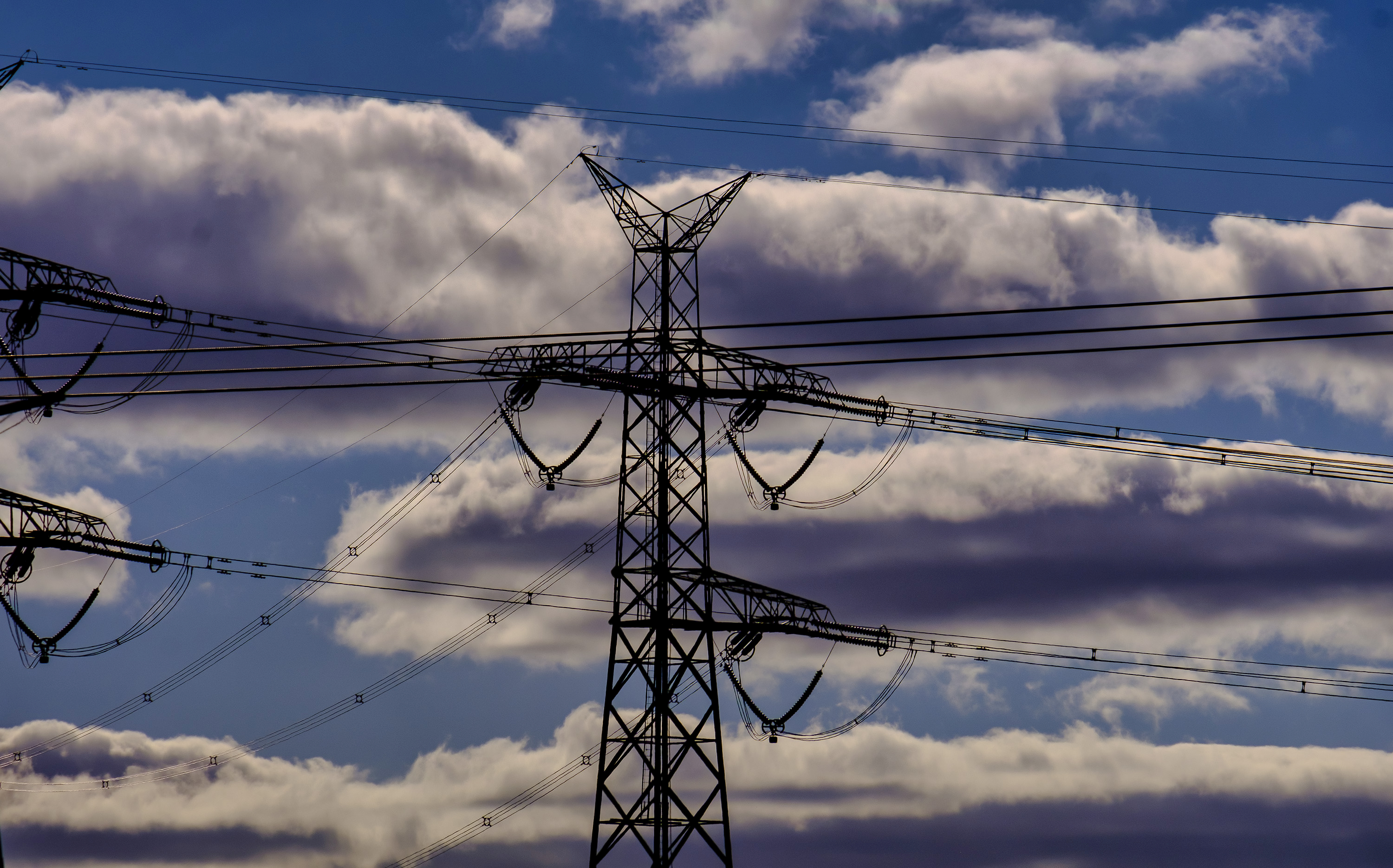
Customers say they have been left in shock after being told that they'll be hit with a massive hike to their electricity rates next month – with some facing increases of up to 83 per cent.

AGL customer Judy Saunders, from Ashfield in Sydney's Inner West, said she was stunned when she received an email from the power company last week, informing her of the new electricity rates she would be charged from July 1.

"It was 51 per cent more than what I'm paying now – I just couldn't believe it," she told 9news.com.au.

READ MORE: Billionaire among five missing on vessel headed to Titanic wreck

Power companies are now notifying customers about how much their electricity prices will increase next month.

Saunders said she had been on a single-rate plan for the past 12 months after her family had moved back into their newly renovated home.

From July, her electricity rates will surge from 16.5 cents per kilowatt hour to 24.98, with a credit of 5 cents per kilowatt hour for unused solar energy sent back to the grid.

Saunders acknowledged she had been on a seemingly cheap rate prior to the hike.  

"As the cost of living went up, I started shopping around, and every time I went to one of those comparison websites, the usual response was you are getting it better than anywhere else, stick with what you have got.

"So that's what I did, but now obviously all my good luck has run out."

Contact reporter Emily McPherson at Sign up here to receive our daily newsletters and breaking news alerts, sent straight to your inbox.
'I don't even have words': Business owner 'numb' at terminal diagnosis

When Jemma Juckes was 19, she was diagnosed with Hodgkin's lymphoma, a form of blood cancer.

After treatment, she was given the all-clear but when she started getting shooting pains down her leg this year, she was worried the disease had returned.

She was sent for tests and was given even more crushing news.

READ MORE: Billionaire among five missing on vessel headed to Titanic wreck

Jemma Juckes has been diagnosed with lung cancer.

READ MORE: A 'gift' in the mail after Paula's 50th birthday saved her life

The business owner was told she has terminal lung cancer which had spread around her body – and it's not a relapse of her earlier illness.

In fact, it could have been caused by her treatment for Hodgkin's lymphoma, doctors told her.

Juckes, now 32, said the fresh diagnosis just last month was "mind-blowing" – but she's staying positive.

"I don't even have words," she told 9news.com.au.

"I got told that it's terminal and they have given me a timeframe of 12 to 18 months, but I'm going beat this," she said.

READ MORE: Superfit mum-of-four Carly ran 10km a day before a strange symptom 'saw her world cave in'

Teen illness left her fearing the worst

Juckes, from North Kellyville, now owns a pizza shop in Glenorie, in Sydney's outer north.

She had been anxious about her health since facing Hodgkin's lymphoma at 19.

She had recovered from the highly treatable disease but was having blood tests twice a year to check it hadn't returned.

But despite that, as well as a full health check three years ago because she wanted to start trying for children with husband Lang, 36, nothing indicated any issues.

Juckes said she always thought something might be wrong with her because she often felt overly out of breath after running or took longer to get over colds.

But she always dismissed her worries.

"I didn't know if it was my anxiety playing games," she said.

However, when she woke up one morning a few months ago with shooting pains down her leg, she went to see her GP.

READ MORE: Teen smoking increasing for first time in decades

Jemma Juckes has been diagnosed with lung cancer.

She was sent for more tests and told by her GP "not to worry" as she was likely suffering from the common back condition sciatica.

But her family doctor later told her she had three tumours on her spine and that her blood cancer could have returned.

More scans at Sydney Adventist Hospital, near Hornsby, found she actually has a new form of the disease – a rare small cell lung cancer, which has spread.

That's despite having almost none of the symptoms.

Do you have a story? Contact journalist Sarah Swain at ss****@******om.au

'Numb' reaction to shock results

Juckes said the news was "devastating" to hear, especially as experts told her it could have been caused by treatment for her first illness.

"They think it started from my previous treatment – they think maybe the radiation disrupted some cells," she said.

"The CT scan showed up that I have cancer on my lung, liver, lymph nodes and my spine and hip bone.

"I can't even begin to describe … you almost go numb."

Medical oncologist Dr Steven Kao from Chris O'Brien Lifehouse said it's hard to say whether Juckes' earlier cancer treatment had caused the new disease.

"All we can say is radiation is a risk factor and I guess when somebody so young gets this disease, you do wonder about that," Kao said.

Non-smokers can get lung cancer too

Most Aussies diagnosed with lung cancer have smoked but Juckes never has.

One-in-three women and one-in-10 men diagnosed with the disease never have, Lung Foundation Australia says.

Her diagnosis is even more poignant as her mother Lynn, 64, has just beaten breast cancer for the second time.

Juckes has started months of chemotherapy and immunotherapy every three weeks.

She's also seeing doctors at Chris O'Brien Lifehouse and says she'll do whatever she can to battle the disease.

"I just think I will beat this. I will go down whatever path I get told to go down," she said.

READ MORE: Parents diagnosed with cancer within hours of each other

Family 'shattered' to see sister suffer again

Juckes' sister, digital marketer Elise Pride, 34, said to see her sibling face the diagnosis again is "shattering".

"The first time around she was so young, just out of high school, that was probably one of the first times our family had been exposed to cancer," she said.

"We didn't think we would ever have to deal with it again.

"When she got told about the terminal diagnosis, that was soul-crushing."

Pride's husband, Gus, is tackling a charity walk to raise money towards Juckes' treatment.

Jemma Juckes has been diagnosed with lung cancer.

READ MORE: Woman diagnosed with breast cancer at 25 shares urgent message

Lung cancer facts

Over the past few decades, the rates of lung cancer in women compared with men have been rising, according to studies.

That is being attributed to the fact most women took up smoking later than men when it was still a popular habit that peaked in the 1970 and '80s.

In Australia, lung cancer kills around 28,000 men and 22,000 women a year, making it the nation's biggest cancer killer.

It's the fourth most-diagnosed cancer in both men and women but remains rare in younger people.

Overall, more Aussies die of lung cancer than breast, prostate and ovarian cancers combined.

A new lung cancer screening test is in the works for those most at risk.

Early symptoms of lung cancer

  • A cough which doesn't go away
  • Shortness of breath
  • Coughing up blood or phlegm
  • Weight loss
  • Hoarseness
  • Fatigue

Sign up here to receive our daily newsletters and breaking news alerts, sent straight to your inbox.