Got business news? Email zo********@*****co.nz
Tag Archives: oceania
Car crashes into school building in Melbourne's north-east
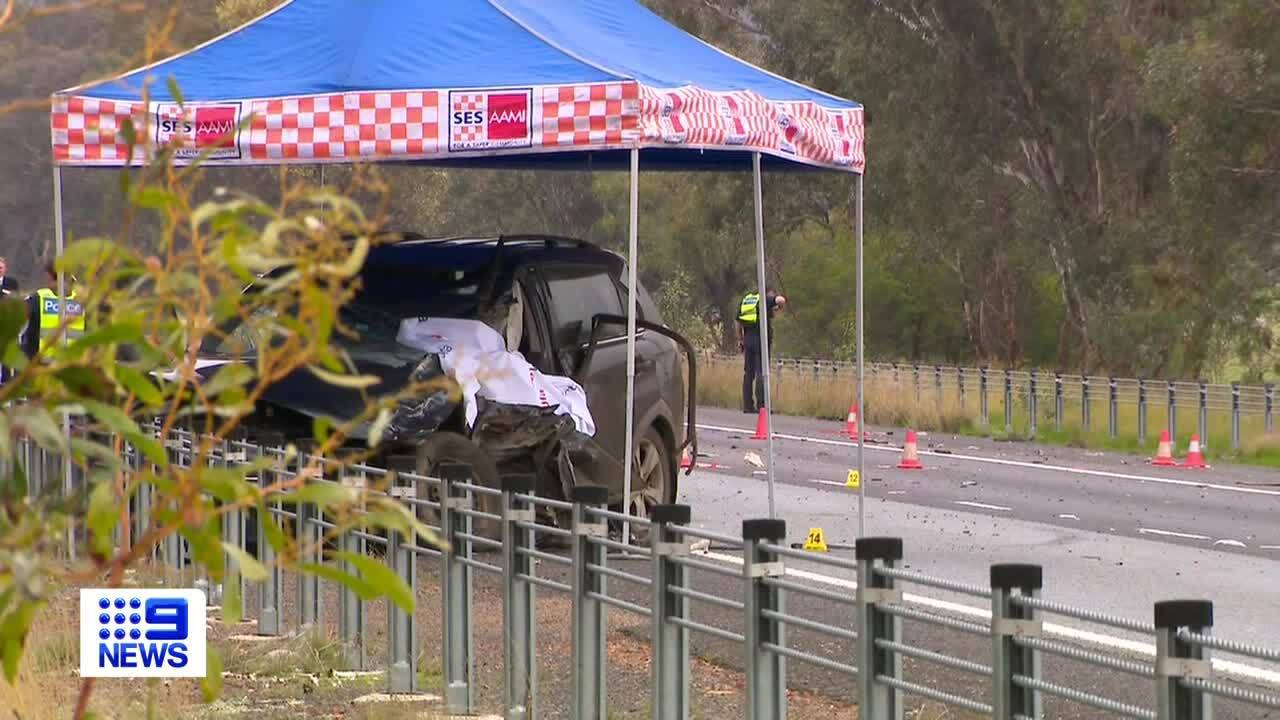
A man has been airlifted to hospital after he crashed into a building in Melbourne's north-east this morning.
Police said the driver, who was the sole occupant of the car, crashed into a school building on McGregor Avenue in Healesville about 9.45am.
READ MORE: Ski slopes welcome 'snowstorm' as cold snap hits south-east
The 37-year-old man was airlifted to hospital with life threatening injuries.
Police are investigating the circumstances surrounding the crash.
Sign up here to receive our daily newsletters and breaking news alerts, sent straight to your inbox.

Mothers accused of harming babies turn to science that freed Folbigg
Kathleen Folbigg had her first child at 21, and like most new moms kept a diary of the times her baby fed, slept, burped and bathed.
But the records stopped abruptly after 19 days when the baby died, and over the next decade until 1999, as Folbigg lost her second, third and fourth child, the guilt she felt as a "failed" mother seeped onto the page.
In 2003, Folbigg's diaries were used as evidence that she had smothered her babies, a theory embellished by claims from prosecutors that losing four children in one family was so rare that it was almost impossible without human intervention.
READ MORE: Kathleen Folbigg speaks for the first time since being pardoned
At trial, Folbigg was found guilty of three counts of murder and one of manslaughter, and spent 20 years in prison before being freed by the New South Wales attorney general earlier this month.
Folbigg's release came after scientists discovered a previously unknown mutant gene in her two daughters that could have been fatal, creating "reasonable doubt" about her convictions and grounds for a pardon.
Confirmation of a likely genetic cause for the children's deaths has implications far beyond Australia for parents who have been accused of killing or harming their babies.
At the same time, the case has supercharged calls for a better system of post-conviction review in Australia, so that others who claim to have been wrongly convicted don't languish in prison for years.
READ MORE: Kathleen Folbigg speaks following pardon after 20 years in jail
"Today is a victory for science and especially truth," Folbigg said after her release in a video filmed at a rural property in northern New South Wales, where she is recuperating before taking her case back to the Court of Criminal Appeal to have her convictions quashed.
Critics of her 2003 trial say the prosecutor twisted Folbigg's words and relied on tropes about motherhood to convince the jury that she was fundamentally unsuited for the role and had snapped under the pressure of caring for babies.
The advances in genetic testing used to free Folbigg are giving other families hope that science may explain why their children have died, but experts say sometimes even that can't exonerate parents – often mothers – accused of harming them.
READ MORE: Pizza, Kahlua and coke – Folbigg savours first night of freedom
False theory jails mothers
Folbigg's first baby Caleb died in 1989, followed by Patrick who died in 1991 at 8 months after suffering epileptic seizures that had left him blind.
Sarah died during the night in 1993 when she was 10 months old, and finally Laura slipped away in 1999 aged 18 months.
The first three deaths were initially attributed to Sudden Infant Death Syndrome (SIDS), a term used when babies under one die for no apparent reason.
Laura's death was the first to raise suspicion after a forensic pathologist marked the cause as "undetermined."
Police began investigating, and while Folbigg's then husband Craig was initially supportive, he became convinced she had killed their babies and testified against her during a seven-week trial that found her guilty.
Emma Cunliffe, a professor at the University of British Columbia's Allard School of Law, who started studying trials of mothers accused of murder for her PhD in 2004, says she noticed a key difference in Folbigg's case.
"The other mothers whose cases that I set out to study had all been exonerated. Kathleen's conviction was the only one left standing," said Cunliffe, who made a case for Folbigg's freedom in her 2011 book "Murder, Medicine and Motherhood."
In all cases, the convictions relied on a version of "Meadow's law," the false maxim pushed by discredited British pediatrician Roy Meadow that one sudden infant death in a family is a tragedy, two is suspicious and three is murder.
None of the cases had access to the genetic technology that eventually freed Folbigg, yet mothers in the United Kingdom and Canada were released after the evidence was examined by a form of post-conviction review committee that doesn't exist in Australia.
"(Australia's) legal system failed Kathleen Folbigg," Cunliffe said. "We didn't need the genetics to know that this conviction was unreliable."
As the campaign to free Folbigg gained momentum, experts began analysing her diaries and a very different image began to emerge of the woman presented in court as a baby killer.
One of the experts, Sharmila Betts, a clinical psychologist with decades of experience working with mothers and in child protection, analysed the contents of her diaries in 2014.
"In the absence of conclusive medical evidence, (the prosecutor) has presented cryptic and unfathomable diary entries, which Folbigg denied were confessions, as admissions of guilt, thereby dispensing of the need for more conclusive medical evidence of homicide," she wrote in a report submitted as evidence to a recent inquiry.
Betts told CNN a woman who had lost four children would no doubt blame herself for their loss.
"If you lose one child, grief. You lose a second, you lose a third, you lose a fourth. So, there's the accumulative grief. But there's also, 'what is wrong with me?'" she said.
"She is blaming herself. She does think that she's done something because no one's explained to her what's happened to those kids."
READ MORE: Missing diver found safe on rock ledge off New South Wales south coast
The scientific explanation
In 2019, some of the world's leading genetic experts thought they had the answer.
They had conducted whole genome sequencing on the children and their mother and found that Folbigg and her daughters, Sarah and Laura, carried a never-before-seen variant of the CALM2 gene.
CALM genes regulate the protein calmodulin, which plays an important role in regulating sodium, potassium and calcium levels for healthy heart function. Variations can cause cardiac arrhythmia, and the first sign of a problem can be sudden death.
There was no record of the variant, and the scientists rushed to present their findings to an 2019 inquiry into Folbigg's conviction that had largely been called to hear objections to the use of "Meadow's law" in her trial.
But while the genetic evidence was accepted as a late submission, the retired judge leading the inquiry, Reginald Blanch, concluded that everything that he had heard and read "reinforces Folbigg's guilt."
The following year, in November 2020, 27 scientists published their evidence in a paper that laid out the results of whole genome sequencing on Folbigg and her children.
The findings convinced more than 100 of the world's leading scientists that she'd been wrongly convicted and they signed a petition urging the NSW government to hold another inquiry.
From November 2022, the new inquiry was told that Folbigg's sons – Caleb and Patrick – carried rare variants in the BSN gene (or Bassoon), whose deficiency is known to cause lethal epilepsy in mice.
But more crucially, scientists explained that Folbigg and her daughters carried the CALM2-G114R variant, and that while it was totally new, a similar variant had been found in an American family, where a four-year-old boy died suddenly, and his five-year-old sister suffered a cardiac arrest.
This time, retired judge Tom Bathurst accepted the science and recommended Folbigg's pardon.
READ MORE: Man dies after alleged assault on busy street in Noosa Heads
How the science is helping others
One of the lead authors of the study, Professor Carola Vinuesa, says that Folbigg's case has encouraged other families and lawyers to come forward, seeking genetic evidence to clear mothers accused of harming their babies.
In those cases, not all of the children have died. Some mothers accused of injuring their children are seeking a genetic explanation for their symptoms to counter claims of child abuse, she said.
"The majority of these mothers have not harmed their children, but the children have these very rare conditions. And a few cases I've worked on already since the Folbigg inquiry, we've been able to make a genetic diagnosis. They're very rare, so they're not in the textbooks, you can't find them easily," she said.
The mothers are being accused of "medical child abuse" or "fabricated or induced illness by carers" – when carers harm otherwise healthy children or fabricate their symptoms to force hospital visits and medical tests.
In the past, such behavior was known as Munchausen by proxy, which was considered a mental illness by Meadow, the same doctor struck off the British medical register for providing wildly inaccurate statistics on SIDS at trials that saw some mothers jailed.
In a 1989 article in the "ABC of Child Abuse," he wrote "for a worried parent to seek a second or third specialist opinion is reasonable: to seek a 22nd opinion is not."
Vinuesa, with the Francis Crick Institute in London, says mothers accused of medical child abuse are reluctant to talk publicly about what's happening in case they're perceived to be seeking attention, one of the traditional markers of Munchausen by proxy.
READ MORE: Death at Adelaide prison treated as 'suspicious'
One mother in the United States, who declined to be named, told CNN that she worries that if she speaks out, it'll work against her and she could be imprisoned or lose access to her children, who have been taken from her as officials investigate the claims.
Helen Hayward-Brown, a leading expert in Munchausen by proxy, told CNN the allegation is becoming more common, and mothers are finding it more difficult to defend themselves, even when genome sequencing shows their child has a genetic illness.
"It's really, really hard for them to defend themselves because you can have a coexisting diagnosis, as well as supposedly harming your child," she said.
Seeming to know too much about their child's illness, or asking too many questions can put parents, particularly mothers, in a vulnerable position, especially if they seek out other medical opinions, she said.
"Part of the profile is the mother has too much medical knowledge. She's overly interested in the medical situation, the mother is doctor-shopping," said Hayward-Brown, pointing out the fine line some mothers need to walk.
"If you're a very good mother, and you care about your child, of course the first thing you're going to do is look up what's wrong with your child, and particularly if they've got a diagnosis and a rare diagnosis, you're going to look it up immediately," she said.
"There are a number of different support groups around now for parents of children who do have rare genetic disorders, and one of the first things they say on their websites is that a lot of these mothers are falsely accused of harming their children."
Mothers aren't being believed, she says, and Folbigg's case shows that when a child dies of a rare genetic disorder before diagnosis, the results can be catastrophic.
READ MORE: Ski slopes welcome 'snowstorm' as cold snap hits south-east
The path forward
The world has changed since Folbigg was imprisoned, well beyond advances in genetic testing.
She entered a cell the same year Concorde took its final flight, former US President George W Bush was claiming victory in Iraq, and MySpace was emerging as a new social network. The iPhone was still four years from its global launch.
On her first day of freedom, Folbigg was "bamboozled" by phones and delighted to discover video-on-demand services, her friend Tracy Chapman told reporters in a press briefing carried live on national television.
"She just wants to be able to live a life that she's missed for the last 20 years," said Chapman, who has created a sanctuary where Folbigg has the space to rebuild her trust in society.
"I've got a whole heap of rescue dogs here. We've got chickens and guinea pigs and rabbits. I'm a wildlife rescuer, so we've got a menagerie of wildlife floating around in various stages of release.
"She'll help me with all of that because she loves animals," Chapman said.
Bathurst, who heard the second inquiry, is yet to publish his full report, but questions are already being asked why Folbigg had to fight so hard for freedom, when women elsewhere were being released.
Even after the scientific evidence was published, it took more than a year for the government to call a new inquiry and another year before Folbigg's pardon.
The Australian Academy of Science acted as an independent scientific adviser during the second inquiry to make sure the world's leading scientists were heard. Now lawyers are taking up the fight to make it easier for the wrongly accused to seek justice.
Folbigg's legal team and other associations, including the Law Council, the Sydney Institute of Criminology and the Australian Lawyers Alliance, say Australia needs a post-conviction review body to examine other potential miscarriages of justice.
"There are independent bodies for identifying and reviewing miscarriages of justice in the United Kingdom, Scotland, Norway, New Zealand and Canada. We are lagging behind the rest of the common law world," said her lawyer Rhanee Rego.
Andrew Dyer, director of the Sydney Institute of Criminology, says that's due to a lack of political will in a country where society calls for harsh punishments for people found guilty of breaking the law.
"I think the general disdain in the community for convicted offenders has a lot to do with the indifference of governments to this issue," said Dyer, one of more than 30 legal experts who have signed a petition calling for a permanent review body.
The UK experience shows that miscarriages of justice are perhaps more common than people think. Since it began in 1997, the UK's review commission has overturned 540 convictions or sentences, according to its latest annual report published last October.
As he announced Folbigg's pardon, NSW Attorney General Michael Daley, told reporters that he's "open" to discussions on potential changes to the system.
"I think we have to have a look at this case and all of the material that's been put before Bathurst, all that's gone before us now to learn from it, and to amend the law, if needs be," he said.
In Australia, most criminal matters are heard by state and territory-based court systems, so any national review body would require agreement between different tiers of government.
When approached about the possibility of a national criminal cases review commission, Australian Attorney General Mark Dreyfus declined to comment.
In the video released to media on June 6, Folbigg is seen arranging flowers, including the dainty white buds of Gypsophila, known as "baby's breath."
"For the last 20 years I have been in prison, I have forever and will always think of my children, grieve for my children, and I miss them and love them terribly," she said.
If her children had survived, Caleb, her first born, would be 34, and the last born, Laura, 25.
Perhaps they might have had their own children by now, and at 56, Folbigg would have been a grandmother.
Chapman said of her friend's traumatic experience: "If it doesn't make us better human beings, or humane beings, I'll be just devastated."
"The worst thing for both of us is that this could happen to someone else."
Sign up here to receive our daily newsletters and breaking news alerts, sent straight to your inbox.
Chinese influencer dies after trying to lose 100kg at boot camp
A social media influencer who was trying to lose more than half her body weight as an inspiration to her followers has reportedly died while attending an intensive weight-loss boot camp in northwestern China, fuelling a debate over how to regulate the influencer industry.
The death of the 21-year-old influencer, who posted under the name Cuihua, has prompted state media to warn over the safety risks involved in weight-loss camps and renewed concerns over the pressures women are under to conform to mainstream beauty standards.
It has also intensified scrutiny of the influencer industry, coming just weeks after a young man in the country died after live-streaming himself drinking several bottles of strong alcohol.
READ MORE: What are phone porting scams, and what can you do about them?
Cuihua had been documenting her weight-loss journey to her tens of thousands of followers on Douyin, China's version of TikTok, in a bid to encourage them in their own fights against obesity, state media outlets in the country reported.
She had recently posted several videos of herself undergoing intensive training exercises and shared that she weighed 156 kilograms and was trying to lose 100 kilograms.
Videos posted on the young influencer's account showing her running and weight-lifting were shared heavily on Chinese social media and also appeared in various state media outlets following her death late last month.
China National Radio reported that Cuihua – identified by her family name of Zhou – had joined several weight-loss camps in various cities in a bid to reach her goal and had lost more than 27 kilograms in the two months leading up to her death.
CNR said Cuihua had attended her final camp in Shaanxi province just two days before her death.
While that camp promoted "nutritious meals, rest and healthy exercise," they said she had chosen to limit her diet while also undergoing intense exercise.
Videos of Cuihua training have since been removed from the account and pictures deleted.
State media outlets said that the influencer's family had received "compensation" from the weight loss camp in Shaanxi, but did not say how much.
Local authorities have said they are investigating the death and whether the weight loss camp was conducting excessive or improper training. CNN has reached out to the Huayin government in Shaanxi province for a comment.
Rising concerns
Zhou's death has brought renewed scrutiny on both the weight-loss and influencer industries.
In China, as in much of Asia and the rest of the world, social media is awash with unhealthy and unrealistic trends promoting extreme weight loss.
READ MORE: Man dies while out for morning walk in Noosa
Experts in eating disorders and sports nutrition warn that even seemingly healthy behaviours such as increasing levels of exercise and dieting can be harmful when motivated by a negative body image and taken to extremes.
In extreme cases, the resulting problems can go beyond mental health and lead to severe medical complications affecting the heart, brain, liver, kidneys and other organs.
One notorious recent social media trend in China involved women posing behind vertical sheets of printer paper to prove their waists were so thin they could not be seen either side.
Other fads have seen influencers uploading selfies to show how many coins they can hold in their collarbones to show how thin they are, or trying on children's clothes to highlight their petite physiques.
At the same time, rising levels of obesity in the country have put further pressure on many women.
Recent national survey data suggests more than half of Chinese adults are now either overweight or obese, according to the Lancet, and obesity rates are expected to increase.
Meanwhile, there are also concerns that some weight-loss camps are marketing increasingly extreme regimens as unrealistic quick fixes.
"Weight loss boot camps are growing savagely, with a lot of false health and advertising complaints. It is common for trainees to get injured during the unregulated training process," the state-owned news agency China News Service cautioned.
Zhou's death has also increased scrutiny of the social media influencer industry more generally. The industry has attracted criticism from authorities in recent years due to the lavish lifestyles that some influencers showcase and the increasingly extreme challenges they take part in to appeal to their audiences.
That debate was reignited last month when an influencer known as "Brother Three Thousand" was found dead just hours after broadcasting himself drinking several bottles of Baijiu, a Chinese spirit with a typical alcohol content of between 30 percent to 60 percent, as part of an online competition.
Last year, the country's broadcasting authorities banned youngsters under the age of 16 from tipping livestreamers and restricted their access after 10pm.
China's National Video and Television Administration and the Ministry of Culture and Tourism have also moved to ban "31 misbehaviours by livestreamers."
Among those misbehaviours are "encouraging users to interact in vulgar ways," according to the state media outlet Global Times.
Commenting on the latest death, and the strain weight-loss challenges put on the body, one popular comment on the Twitter-like platform Weibo said Zhou's was "another innocent life scourged by marketing and influencer culture."
If you, or someone you know, is needing help with an eating disorder or body image issues, you can contact the Butterfly Foundation on 1800 33 4673.
Sign up here to receive our daily newsletters and breaking news alerts, sent straight to your inbox.
Sydney man punched in face by stranger in random attack, police say
A has been left with facial injuries after he was attacked by a stranger in The Rocks, Sydney, last night, police say.
Officers were told the 32-year-old was waiting with friends for a ride-share when a taxi stopped nearby.
READ MORE: What are phone porting scams, and what can you do about them?
A passenger jumped out of the taxi and allegedly punched the man in the face.
Police say the pair did not know each other.
The alleged perpetrator fled in the taxi while the man sought help at a nearby convenience store.
READ MORE: Man dies after alleged assault on busy street in Noosa
The 32-year-old was taken to St Vincent's Hospital where he was treated for facial lacerations, and shock.
Police have launched an investigation into the alleged assault and are asking witnesses or anyone with information to come forward.
Sign up here to receive our daily newsletters and breaking news alerts, sent straight to your inbox.
US Coast Guard seizes cocaine worth $270 million in middle of the ocean
The US Coast Guard has seized more than 6,420 kilograms of cocaine worth more than US$186 (A$270) million, according to a news release.
Authorities said the drugs were intercepted during nine separate cases in international waters of the Atlantic Ocean and the Caribbean Sea.
Twelve suspected smugglers were also apprehended and face prosecution, according to the release.
READ MORE: What are phone porting scams, and what can you do about them?
"The contraband offloaded today represents the professional expertise and dedication of US defence and law enforcement agencies working together to combat the flow of illicit drugs through the Caribbean Region into the United States," Lt. Peter Hutchison, duty enforcement officer at Coast Guard District Seven said in the release.
"This teamwork is imperative to the identification, interception, and seizure of vessels engaged in illicit trafficking and a testament to the hard work of these crews."
READ MORE: Man dies after alleged assault on busy street in Noosa
Globally, both cocaine production and demand have jumped dramatically over the past two years, according to a United Nations report released in March. Interceptions by law enforcement agencies around the world have also risen, with a record of almost 2,000 tons of cocaine seized in 2021, according to the report.
Sign up here to receive our daily newsletters and breaking news alerts, sent straight to your inbox.

Missing diver found safe on rock ledge off New South Wales south coast
A diver missing in waters off the New South Wales south coast has been found safe after spending the night seeking refuge on rocks.
Volunteers on board Marine Rescue NSW found the 64-year-old spear fisherman about 9am this morning off Lennards Island near Eden.
The man was first reported missing about 3.15pm yesterday when he failed to return to shore after entering the water.
READ MORE: 'Bone-chilling' morning as cold snap hits Australia's south-east
Marine Rescue NSW crew resumed the search about 8am this morning after it was called off 5.40pm last night due to poor light.
NSW Water Police, rescue helicopters and the Marine Rescue NSW vessel XRAY 30 and Merimbula 31 were all used during the multi-agency search.
Marine Rescue NSW Inspector Glenn Sullivan said it was a wonderful outcome.
"It was an amazing effort from all rescuers involved in this search which began yesterday afternoon," he said.
Eden is a town in the the South Coast region of New South Wales, about 478 kilometres south of Sydney.
Sign up here to receive our daily newsletters and breaking news alerts, sent straight to your inbox.
Dozens of students killed in rebel attack on school
Suspected rebels attacked a school in a remote area of Uganda near the Congo border, killing at least 41 people in a nighttime raid before fleeing across the porous frontier, authorities said.
Thirty-eight students in their dormitories were among the victims.
Some students were burned beyond recognition, and others were shot or hacked to death after militants armed with guns and machetes attacked the school in the frontier district of Kasese, a local mayor told The Associated Press.
READ MORE: 'Bone-chilling' morning as cold snap hits Australia
In addition to the 38 students, one guard and two residents of the local community in Mpondwe-Lhubiriha town were killed in the attack, said Mayor Selevest Mapoze.
A Ugandan military statement said the rebels abducted six students, taken as porters of food looted from the school's store.
The school, co-ed and privately owned, is located about two kilometres from the Congo border.
Authorities are blaming the massacre at Lhubiriha Secondary School on the Allied Democratic Forces, or ADF, a shadowy extremist group which has been launching attacks for years from bases in volatile eastern Congo.
READ MORE: Phone in SOS mode could be something far more sinister
Villagers in the Congolese provinces of Ituri and North Kivu have been the victims of the group's alleged attacks in recent years.
But attacks on the Ugandan side of the border are rare, thanks in part to the presence of an alpine brigade of Ugandan troops in the region.
The attack has sent shockwaves in this normally peaceful East African country whose long-time leader cites security as a strength of his government.
It is also a blow to the country's armed forces, who since 2021 have deployed in parts of eastern Congo under a mission specifically to hunt down the militants accused of attacking a school.
Speaking to reporters near the scene of the attack, the commander of Ugandan troops in Congo told reporters that the rebels spent two nights in Kasese before carrying out their attack.
He gave no further details.
READ MORE: Death at Adelaide prison treated as 'suspicious'
ADF rebels, when under pressure, “divert” their pursuers' attention by splitting into small groups that then launch violent attacks in other places, said Maj.
General Dick Olum, suggesting that the latest attack was an attempt by the rebels to ease battlefront pressure.
“A typical ADF signature,” he said, “because this is pressure. They are under huge pressure, and that's what they have to do to show the world that they are still there, and to show the world that they can still do havoc.”
The school raid, which happened around 11.30pm, involved about five attackers, according to the Ugandan military.
Soldiers from a nearby brigade who responded to the attack found the school on fire, “with dead bodies of students lying in the compound," military spokesman Brig. Felix Kulayigye said in a statement.
Winnie Kiiza, an influential political leader and a former lawmaker from the region, condemned the “cowardly attack” on Twitter.
She said “attacks on schools are unacceptable and are a grave violation of children’s rights," adding that schools should always be "a safe place for every student.”
The ADF has been accused of launching many attacks in recent years targeting civilians in remote parts of eastern Congo.
It rarely claims responsibility for attacks.
The ADF has long opposed the rule of Ugandan President Yoweri Museveni, a US security ally who has held power in this East African country since 1986.
The group was established in the early 1990s by some Ugandan Muslims, who said they had been sidelined by Museveni’s policies.
At the time, the rebels staged deadly attacks in Ugandan villages as well as in the capital, including a 1998 attack in which 80 students were massacred in a town not far from the scene of the latest attack.
A Ugandan military assault later forced the ADF into eastern Congo, where many rebel groups are able to operate because the central government has limited control there.
The group has since established ties with the Islamic State group.
In March, at least 19 people were killed in Congo by suspected ADF extremists.
Ugandan authorities for years have vowed to track down ADF militants even outside Ugandan territory.
In 2021, Uganda launched joint air and artillery strikes in Congo against the group.
Sign up here to receive our daily newsletters and breaking news alerts, sent straight to your inbox.
Ski slopes welcome 'snowstorm' as cold snap hits south-east
Snowflakes have begun to fall over Australia's ski slopes, the first dusting after two "big bouts" of snow was forecast to move across the country's south east.
It comes as Australians woke to another "bone-chilling" morning with widespread frost reported in parts of New South Wales, Queensland Western Australia.
The chill comes off the back of relatively light winds and clear skies.
READ MORE: David Van resigns from Liberal Party, remains in Senate
Perisher Ski Resort Marketing Manager Maddi Ventura welcomed the cold front.
"This is a great start to the snowstorm we are expecting to receive, with 25cm on the way over the next week."
Canberra woke to a chilly minimum of 1 degree, while Perth and Hobart both recorded 6 degrees.
The mercury plummeted to 8 degrees in both Sydney and Melbourne, while Brisbane and Adelaide hit 9.
Temperatures were balmy in Darwin by comparison, which saw a low of 17C.
READ MORE: Man dies after alleged assault on busy street in Noosa Heads
Records were broken in Pingelly and Munglinup in Western Australia, where residents woke up to 0.2 degrees, while Cessnock Airport in New South South Wales had their coldest June temperature since 2006 recording -1.2 degrees.
"Winter is going all-in this year, leaving no stone unturned," Weatherzone said.
Two "big bouts" of snow is expected to fall in the next 10 days, as a series of cold fronts deliver multiple rounds of cold air and snow to Australia's alpine region.
The first upcoming cold front will dump snow across the Alps today before another trailing front delivers some follow-up snow tomorrow.
The two systems combined should bring around 20 to 40cm of snow by Tuesday.
READ MORE: Dad recalls moment he realised son had been killed in Hunter Valley crash
It comes as the Bureau of Meteorology (BoM) all but confirmed El Niño would develop this year.
The warning was officially upgraded earlier this month from "watch" to "alert".
Weatherzone warned the chilling mornings could become consistent if El Niño develops.
"Winter is settling in, and with the persistent influence of El Nino, our weather patterns are taking a particular twist, Weatherzone said.
"Under El Nino's influence, we can expect drier and clearer skies, the ideal conditions for nighttime cooling. So, brace yourself for a parade of cold, foggy and frosty mornings in the months ahead."
Sydney is expected to reach 19 degrees, Melbourne 15, Brisbane 24, Perth 17, Adelaide 16, Hobart 14, Canberra 10, and Darwin 32.
Sign up here to receive our daily newsletters and breaking news alerts, sent straight to your inbox.
Your phone in SOS mode could be a sign of something far more sinister
A phone going into SOS mode is generally a sign of dodgy reception or a telco outage.
But in some cases, it can be something far more sinister.
Phone porting is one of the ways in which scammers and cybercriminals can steal someone's identity, break into their bank accounts and other online profiles – and in some cases make off with thousands of dollars.
READ MORE: How to report scams in Australia and what you can do to stay safe
The scary part is, there's not that much you can do to stop it from happening in the first place.
This is what you need to know about phone porting, and what you can do to protect yourself from it.
What is mobile phone porting fraud?
A phone porting hack is when a fraudster is able to have your mobile number transferred from your device to one they control.
According to IDCare, an Australian and New Zealand cybersecurity charity, this generally happens in one of two ways: unauthorised porting and an unauthorised SIM card swap.
Mobile number porting is a completely legitimate service that many of us have used – it allows someone to change telco providers while retaining the same phone number.
However, unauthorised mobile porting takes place "when a criminal contacts a different telephone provider, sets up an account with them and requests to have your number brought over from your current provider," IDCare says.
READ MORE: La Niña and El Niño: Will we switch from one to the other in 2023?
A SIM swap is similar, but instead involves the fraudster requesting the activation of a new SIM card using your number.
Many of us use mobile numbers as a form of added security (or two- or multi-factor authentication) for accounts like online banking, emails and social media accounts – for example, entering a code that was texted to you to log in somewhere, or using a text prompt to help with a password reset.
However, when scammers get control of your number and start receiving all calls and texts sent to it, it means they can access those accounts that use the number for two-factor authentication.
This can lead to them gaining control of bank accounts and being able to transfer all the funds into an account of their own.
READ MORE: Have a robot vacuum? Here's how to keep your data secure
What are the warning signs of a porting hack?
The main warning sign actually happens after the port has happened: your phone will lose service, and go into "SOS mode", telling you only emergency calls are available.
In some cases, you might get a text from your telco saying you've requested for your number to be ported to a different network.
If you ever get one of those texts unexpectedly, it's crucial that you contact your provider immediately.
Unexpected emails welcoming you to a new telco, notifications of account logins on new devices, and getting locked out of some of your profiles are other red flags indicating you may have been targetted.
If you get any of those warning signs, or otherwise suspect you've fallen victim to unauthorised porting, get in touch with your telco and bank as soon as you possibly can.
READ MORE: How to create a strong, safe and secure digital password
What can I do to stop unauthorised mobile phone porting?
One of the problems with this kind of fraud is that, because porting is a legitimate service that lots of people use, telcos have had to make it fairly easy to do, and so not that much information is required to port a number – often it's just your name, number and date of birth.
This information can be stolen through phishing scams, so it's important to avoid clicking on any suspicious links and entering personal information into sites you don't recognise.
However, because that information can be relatively easy for criminals to find – sometimes on social media, or in discarded mail – there are some other steps worth taking to mitigate the impacts of having your number ported.
These include using something other than your mobile number as a two-factor authentication method – such as an authenticator app – so that someone won't be able to access your account even if they receive your text messages.
Requesting your telco to put a PIN on your account can help prevent unauthorised porting and using a variety of strong passwords on different accounts can make it more difficult for scammers to get in.
IDCare says using a banking app – with the appropriate multi-factor authentication set up – can also save you some trouble.
"Consider downloading your banking app onto your mobile device," it says.
"Most banking apps provide the ability to temporarily freeze your accounts and cards."
Sign up here to receive our daily newsletters and breaking news alerts, sent straight to your inbox.