Tag Archives: oceania

US President Joe Biden mistakenly says Putin losing 'war in Iraq'

US President Joe Biden has been caught on camera in another awkward communication blunder, mistakenly referring to the "war in Iraq" instead of Ukraine.

Biden told CNN on Wednesday his Russian counterpart Vladimir Putin has "absolutely" been weakened by the short-lived mutiny over the weekend.

Asked whether the Russian president had been weakened, Biden said: "Absolutely."

"It's hard to tell but he's clearly losing the war in Iraq" Biden told reporters on the White House South Lawn, mistakenly referring to the war in Iraq instead of Ukraine.

READ MORE: White House says Biden is fine after tripping on stage at ceremony

Joe Biden has celebrated the passage of a deal that would avert a global financial crisis.

It was his most definitive comment to date on how the rebellion by Wagner Group boss Yevgeny Prigozhin affected the Russian leader's stature.

"He's losing the war at home. He's become a bit of a pariah around the world. And it's not just NATO, it's not just the European Union, it's Japan," he added.

Biden and his team have been cautious in commenting on the events, wary of providing Putin pretext for claiming a western plot to oust him. But on Wednesday, Biden expanded on his views of Putin's diminished stature.

Asked again if Putin is weaker today than he was last week, Biden said: "I know he is."

Earlier this week, Biden sought to distance the United States from the weekend rebellion in Russia, insisting in his first public remarks since the episode that the West had nothing to do with the mutiny.

Still, American intelligence agencies were able to determine ahead of time that Prigozhin was preparing to challenge the Russian military, a sign of how closely the US had been monitoring tensions between Moscow and the Wagner boss.

Sign up here to receive our daily newsletters and breaking news alerts, sent straight to your inbox.

'Presumed human remains' found near Titan debris

The US Coast Guard has recovered "presumed human remains" from the seafloor in the area of the Titan submersible's debris field.

The remains were recovered "within the wreckage" of the submersible, the Coast Guard said in a news release – an announcement coming nearly a week after authorities determined the Titanic-bound vessel had imploded in the North Atlantic, killing all five men aboard.

US medical professionals will analyse the presumed remains, the Coast Guard said.

READ MORE: Debris from implosion of Titanic-bound submersible returned to land

OceanGate Titan (AP)

Huge pieces of the doomed submersible Titan were hoisted onto a Canadian pier on Wednesday nearly a week after authorities announced a "catastrophic implosion" had killed all five men onboard the minivan-sized vessel.

A white panel-like piece – taller than the two men guiding it onto land – and another similarly sized part with cords and wires draped with white tarp were taken off the anchor handling vessel Horizon Arctic at the Canadian Coast Guard pier in St John's, Newfoundland and Labrador, photos by The Canadian Press' Paul Daly show.

It was not immediately clear what the pieces are.

READ MORE: YouTube star says he declined sub ride to see Titanic

Horizon Arctic, a Canadian ship, carried a remotely operated vehicle, or ROV, to search the ocean floor near the Titanic wreck for pieces of the submersible.

Pelagic Research Services, a company with offices in Massachusetts and New York that owns the ROV, said in a statement on Wednesday that it had completed offshore operations.

Pelagic Research Services said its team is "still on mission" and cannot comment on the ongoing Titan investigation, which involves several government agencies in the US and Canada.

"They have been working around the clock now for 10 days, through the physical and mental challenges of this operation, and are anxious to finish the mission and return to their loved ones," the company's statement said.

Debris from the Titan was located about 3,810 metres underwater and roughly 488 metres from the Titanic on the ocean floor, the Coast Guard said last week.

Sign up here to receive our daily newsletters and breaking news alerts, sent straight to your inbox.

Ultra-Orthodox sex abuser 'broken' by prison life

After five years in custody, former ultra-Orthodox Jewish principal and convicted sexual abuser Malka Leifer is a broken woman.

Isolated and lonely, she chooses to remain in a cell, locked from the inside, in protective custody at Melbourne's high profile women's prison, the Dame Phyllis Frost Centre.

Her victims, sisters Elly Sapper and Dassi Erlich, have battled darkness as a result of the insidious trauma inflicted upon them by Leifer.

READ MORE: Changes in line for millions of Australians on July 1

They refuse to be broken.

Together with their older sister, Nicole Meyer, the sisters spoke on Wednesday about overcoming the multitude of ways in which their lives have been impacted by the woman they believed they could trust.

Leifer, a 56-year-old mother of eight, was convicted in April of 18 charges including rape, indecent assault and sexual penetration of a child aged 16 or 17 over the abuse of Sapper and Erlich when they were students at the Adass Israel School between 2003 and 2007.

Leifer was acquitted of nine charges, including five against Meyer.

The sisters sat in court as Leifer's barrister Ian Hill KC detailed the impact of prison on Leifer.

A former colleague at the Adass Israel School, Malky Fixler, provided a reference in support of Leifer.

"She observed Mrs Leifer to now be angry and agitated – that she had gone from being an upbeat and inspiring educator to an isolated, depressed shadow of her former self," Hill said during a pre-sentence hearing.

Malka Leifer plea and victims impact statements. L-R Sisters, Elly Sapper, Nicole Myer and Dassi Elrich speaking to the press after the hearing.

She is medicated for anxiety and depression, Hill said.

"She's lonely and without family and support and it is clear that it's having an effect on her mental health," he said.

Leifer's husband, eight children and 17 grandchildren all live overseas.

Earlier, Judge Mark Gamble was told Leifer was the first person who told Sapper that she was loved – something she yearned for.

"Faced with the painful truth that her love wasn't real was a betrayal of such magnitude it left me broken," Sapper said.

Erlich told Leifer her darkness would not define her.

"Instead I choose to focus on the light," she said.

"I am resilient, I am powerful and I am so much more than the limitations you chose to impose on me."

The County Court hearing is set to continue on Thursday.

1800 RESPECT (1800 737 732)

National Sexual Abuse and Redress Support Service 1800 211 028

beyondblue 1300 22 4636

Second chance for Swifties after Taylor's tour bombshell

Ticket-less Swifties take heart — global megastar Taylor Swift is adding extra shows to her Aussie tour next year amid a storm of demand.

The Eras tour will now include an additional performance in both Sydney and Melbourne, making seven in total.

The extra dates are February 18 at the MCG for Melbourne, and February 26 at Accor Stadium in Sydney.

READ MORE: Illegal vapes worth $1 million seized on way into state

Taylor Swift in Shanghai on 1989 World Tour, 2015 (Getty)

Tickets will go on sale on Ticketek at 10am AEST on Friday, June 30, for all of Swift's Sydney shows, and at 2pm AEST on Friday, June 30, for all of her Melbourne shows.

The new dates were added after what publicists Frontier Touring described as "historically unprecedented demand".

Millions of fans battled to score one of 450,000 pre-sale tickets yesterday, setting a new national record for online demand.

It's unknown how many tickets remain available for Swift's shows, but with a capacity of 83,500 at Accor stadium, and just over 100,000 at the MCG, the two new performances add plenty more chances for eager fans.

READ MORE: Taylor Swift tour declared major event in Victoria in bid to crack down on ticket scalpers

Taylor Swift's 2024 Australian Dates

DATE

CITY

VENUE

ON-SALE DATE & TIME

February 16

Melbourne, Australia

Melbourne Cricket Ground (MCG)

Fri 30 June, 2pm (local)

February 17

Melbourne, Australia

Melbourne Cricket Ground (MCG)

Fri 30 June, 2pm (local)

February 18

Melbourne, Australia

Melbourne Cricket Ground (MCG)

Fri 30 June, 2pm (local)

February 23

Sydney, Australia

Accor Stadium

Fri 30 June, 10am (local)

February 24

Sydney, Australia

Accor Stadium

Fri 30 June, 10am (local)

February 25

Sydney, Australia

Accor Stadium

Fri 30 June, 10am (local)

February 26

Sydney, Australia

Accor Stadium

Fri 30 June, 10am (local)

Sign up here to receive our daily newsletters and breaking news alerts, sent straight to your inbox.

Your hip pocket is about to be hit by a raft of changes

The new financial year doesn't just mean you can start working on your tax return – there's a range of other changes coming to Australia on July 1.

From superannuation changes to electricity price hikes, the changes coming are wide-ranging, and plenty of them will affect your hip pocket.

Here's what you need to know.

READ MORE: The key dates you need to know for your tax return this year
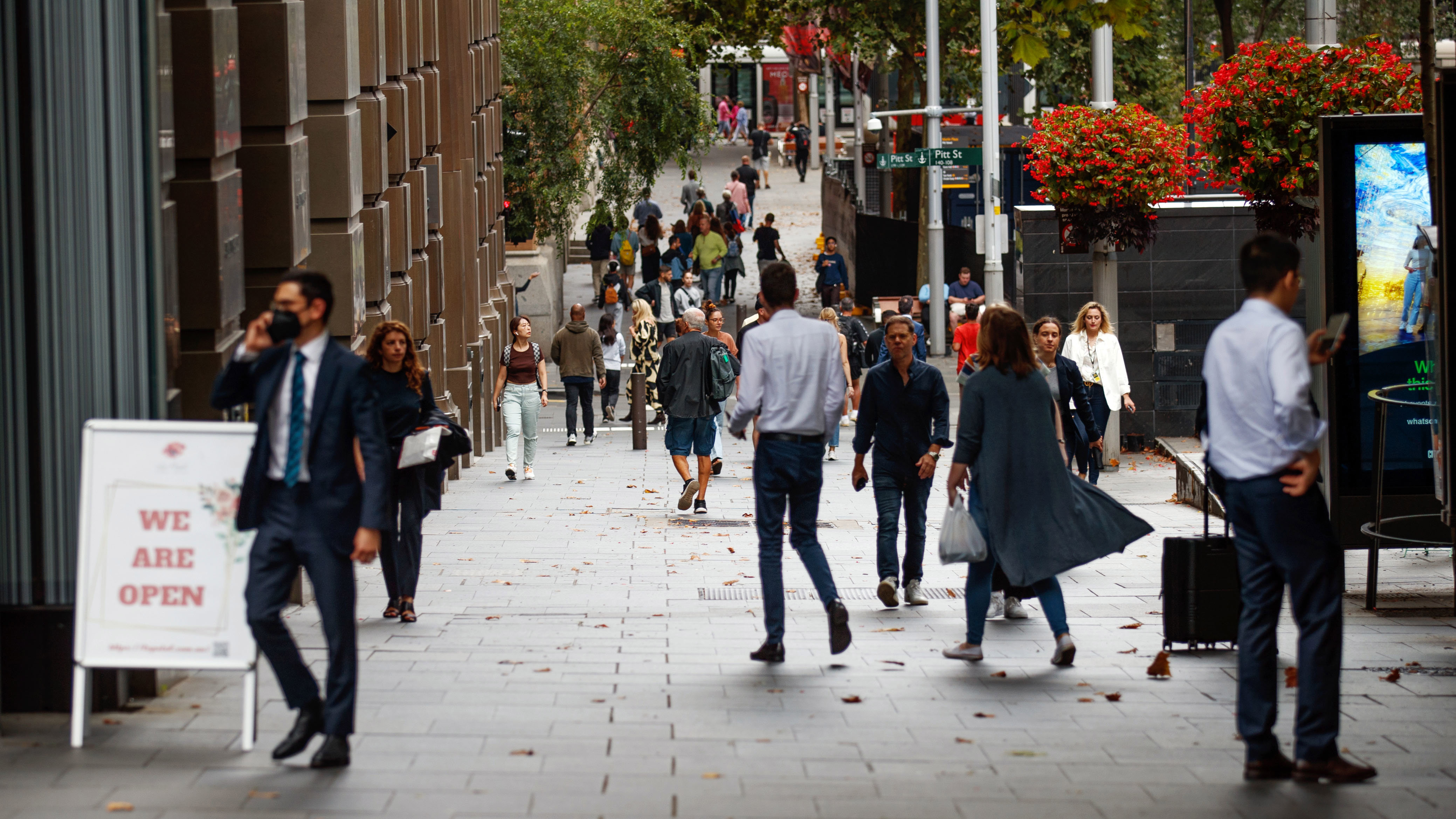
General vision of workers in Martin Place, Sydney

Electricity prices

All across the country, electricity prices will be increasing from July 1.

The amount varies from state to state, from 2.5 per cent in Western Australia all the way up to almost 29 per cent in parts of Queensland – although the actual amount you'll pay will depend on your provider and plan.

However, there are also a range of energy rebates coming into effect, including the federal government's Energy Price Relief Plan, which provides rebates of up to $500 to eligible housholds and $650 for businesses.

EXPLAINED: Electricity prices are increasing. This is who's getting hit hardest

AEMO halts energy trading after days of power supply chaos

Superannuation

There are a range of changes coming to super, but the main one is an increase to the superannuation guarantee.

Instead of contributing 10.5 per cent of your salary into your super account, your employer will now have to increase that to 11 per cent.

Other changes include rising income thresholds for government co-contributions, the total super balance cap increasing from $1.7 million to $1.9 million, and removing the COVID-era temporary minimum drawdown requirements reduction.

READ MORE: The 'sticky' issue making the cost of living crisis worse

Tax returns

The major overhaul of Australia's tax system won't come into effect until 2024-25, when the stage three tax cuts come into effect, but there are still a few changes this year.

The end of the low and middle income tax offset – a tax cut of up to $1500 for people earning under $126,000 – will make for a smaller tax return for millions of Australians.

The "shortcut method" for claiming work-from-home deductions has also ended.

You can read about the full 2023 tax return changes here.

READ MORE: These are the tax return changes you need to know about
Generic photo of people walking out of the ATO Office.

Minimum wage

The minimum wage is increasing thanks to a decision by the Fair Work Commission.

It will rise from $21.38 per hour to $23.23, or from $812.60 to $882.80 a week (pre-tax).

Award workers will get a raise of 5.75 per cent.

Childcare

This one doesn't kick in until July 10, but the federal Child Care Subsidy (CCS) is increasing.

Families earning less than $530,000 will get an increased subsidy, the maximum CSS amount is rising from 85 per cent to 90 per cent, and the income limit to get the maximum subsidy is increasing.

The Child Care Subsidy for Aboriginal and Torres Strait Islander children is also changing, meaning eligible families can get at least 36 hours of subsidy per fortnight, regardless of the amount of recognised activity.

READ MORE: What the different colours of mould in your house mean

parents going back to work not worth it due to childcare costs

Paid parental leave

Similarly, paid parental leave is undergoing a small overhaul, although this comes into effect for children born on or after July 1.

The federal Parental Leave Pay and Dad and Partner Pay schemes are being combined into one payment, and will increase from 18 weeks to 20 weeks.

First home-buyers

Eligibility for the federal government's Home Guarantee Scheme is expanding to include friends, siblings, and other family members who make joint applications under the First Home Guarantee and the Regional First Home Buyer Guarantee.

Previously, people had to be either married or in a de facto relationship to make a joint application.

READ MORE: Key end of financial year money-saving deadlines you need to know

Aged care

As part of the federal government's reforms to the aged care sector, at least one nurse will be required to be on-site at homes around the country 24/7 – although there are some exemptions permitted.

A 15 per cent pay rise for aged care workers will also start to kick in on July 1.

Cosmetic surgery

A huge overhaul of cosmetic surgery is coming into effect, focusing on two main areas: how the surgeries and procedures can be practised, and how they can be advertised.

The new guidelines include a requirement for psychological screening of all cosmetic surgery patients, as well as mandatory cooling off periods between consenting to surgery and booking it in or paying a deposit.

There are also significant changes to the way the procedures can be advertised. You can read about the new cosmetic surgery regulations in full here.

READ MORE: Cosmetic surgery and procedures will undergo a massive overhaul. This is what you need to know

cosmetic surgery scalpel surgeon operating theatre surgical

Migration

The Temporary Skilled Migration Income Threshold is increasing to $70,000 on July 1, and Kiwis who have been living in Australia for four years or more will be able to apply for Australian.

There are also some changes coming to both temporary skill shortage and temporary graduate visas, providing the former with an avenue to permanent residency and allowing the latter to stay in the country for longer.

Sign up here to receive our daily newsletters and breaking news alerts, sent straight to your inbox.

New law makes 51 million people younger overnight

More than 51 million people in South Korea have woken to find themselves a year or two younger — at least, according to the law.

Under legislation that came into effect on Wednesday, "all judicial and administrative areas" across the East Asian country will adopt the "international age" system used by most of the world, ending years of debate about the problems caused by the formerly common use of "Korean age" and "calendar age".

Standardising ages will "reduce various social confusions and disputes", said Lee Wan-kyu, the Minister of Government Legislation, at a news briefing on Monday.

READ MORE: Donald Trump sues E Jean Carroll for defamation 

The law, passed by South Korea's Parliament last December, is also expected to "greatly reduce social costs that have been unnecessary due to the mixed use of age standards," Lee said.

He said this had been a major pledge by President Yoon Suk-yeol, who took office last May.

Three systems

In South Korea, "international age" refers to the number of years since a person was born, and starts at zero — the same system used in most other countries.

But when asked their age in informal settings, most South Koreans will answer with their "Korean age", which could be one or even two years older than their international age.

Under this system, which has its roots in China, babies are considered a year old on the day they're born, with a year added every January 1.

READ MORE: London jury seated in Kevin Spacey sexual assault trial on allegations more than a decade old 

In some circumstances, South Koreans also use their "calendar age" — a mash-up of international age and Korean age — which consider babies as zero years old on the day they're born and adds a year to their age every January 1.

Take Gangnam Style singer Psy, for example. Born on December 31, 1977, he is considered 45 by international age; 46 by calendar year age; and 47 by Korean age.

If this sounds confusing, it is, with daily life in the country often switching between the hodgepodge of different systems.

READ MORE: Melbourne dancer survives rare flesh-eating infection

New standard

Even with the new standardisation, the old systems will still be used in some circumstances, the government said on Wednesday.

For instance, children typically enter elementary school in March of the year after they turn six years old (in international age), regardless of which month their birthday falls — which will continue.

Laws on age-restricted products like alcohol or tobacco will also be based on the year someone is born, regardless of month. This means two people born in January and December 1990 are judged to be the same age.

Under this law, people are allowed to buy alcohol starting in the year they turn 19 (in international age).

READ MORE: Detectives recommend charges against William Tyrrell's foster mother over 2014 disappearance

The same method will continue to be used for South Korea's mandatory military service — meaning people are eligible based on the year they were born, rather than their specific age or birth date.

"The government decided to contain such exceptions even after the revisions go into effect, as it is easier to manage such issues on a yearly basis," Lee said on Wednesday.

Many residents are likely to continue using the traditional Korean age system in day-to-day life and social scenarios, as is common.

But others may welcome the change; in a poll by the Ministry of Government Legislation, 86.2 per cent of respondents had said that they would use the international age system.

And it marks a victory for lawmakers who have spent years campaigning to standardise international age, fed up with the multiple systems.

Sign up here to receive our daily newsletters and breaking news alerts, sent straight to your inbox.

Inquiry to investigate 'vile and evil' historic child abuse at Victorian school

Allegations of historic child abuse at a Victorian school will be investigated by a special board of inquiry.

The inquiry led by Kathleen Foley will hear the testimonies of victim-survivors who attended Beaumaris Primary School in the 1960s and 1970s.

Premier Daniel Andrews, who will formally apologise to the victims, hoped the inquiry would give victim-survivors the recognition and support they deserved.

READ MORE: Girl, 14, under police guard after fatal crash in Victoria's north

Glen Fearnett, who was abused by a teacher at the primary school, has fought for years demanding action.

He said the "the truth needed to be told".

"This is important for not just us as individuals but also for those who lost their voice," Fearnett said.

"There were people in authority, people who knew what was going on and did nothing to protect us.

"That is just horrendous."

The inquiry will listen to victims and investigate the government's response to the abuse at the time, along with whether support services for victim-survivors were effective.

It will not be investigating the current Beaumaris Primary School or any other current school staff members.

"We know of numerous cases of vile, evil, incredibly damaging abuse, sexual abuse [at the school]," Andrews said.

"School should be a safe place, it should be a community of love and care.

"It's never too late to do the right thing and we are getting on and doing that."

READ MORE: Tyrrell's foster mother urges swift decision on charges

Fearnett said it had been an ongoing battle to get the voices of the victim-survivors heard.

"I sat this morning on my way in going through names and I got to 50 today that I understand were assaulted," he said.

"The sheer number of children abused at Beaumaris Primary is nothing short of shocking."

Shine Laywers abuse law expert Alyssa Lewis welcomed the inquiry.

Lewis said the firm was speaking with a victim-survivor about abuse.

"I recently spoke to a man who instructs he was abused as a primary school student by a teacher who was then moved to Beaumaris, where they allegedly continued to harm children," she said.

Sign up here to receive our daily newsletters and breaking news alerts, sent straight to your inbox.

Lewis hoped the inquiry would examine the "unforgivable practice" of moving known predators from school to school.

"Far from solving the problem, Victoria's education department simply exposed more vulnerable children to abuse," she said.

"In our experience litigating compensation claims on behalf of students who were abused at school, the department can hardly be said to have acted as a model litigant."

The premier will formally apologise to all victim-survivors and those from Beaumaris Primary school with a report from the inquiry due next year.

Readers seeking support and information about suicide prevention can contact Lifeline on 13 11 14.

Support is also available from the National Sexual Assault, Domestic Family Violence Counselling Service at 1800RESPECT (1800 737 732).