Tag Archives: oceania

Prince Harry's battle with British tabloids heads for court showdown

Prince Harry's battle with the British press is headed for a showdown in a London courtroom this week with the publisher of the Daily Mirror.

The Duke of Sussex is scheduled to testify in the High Court after his lawyer presents opening statements on Monday in the first of his legal cases to go to trial and one of three alleging tabloids unlawfully snooped on him in their cutthroat competition for scoops on the royal family.

Harry will be the first member of the British royal family in more than a century to testify in court and is expected to describe his anguish and anger over being hounded by the media throughout his life, and its impact on those around him.

EXPLAINED: What to know as Prince Harry prepares for court fight with British tabloid publisher
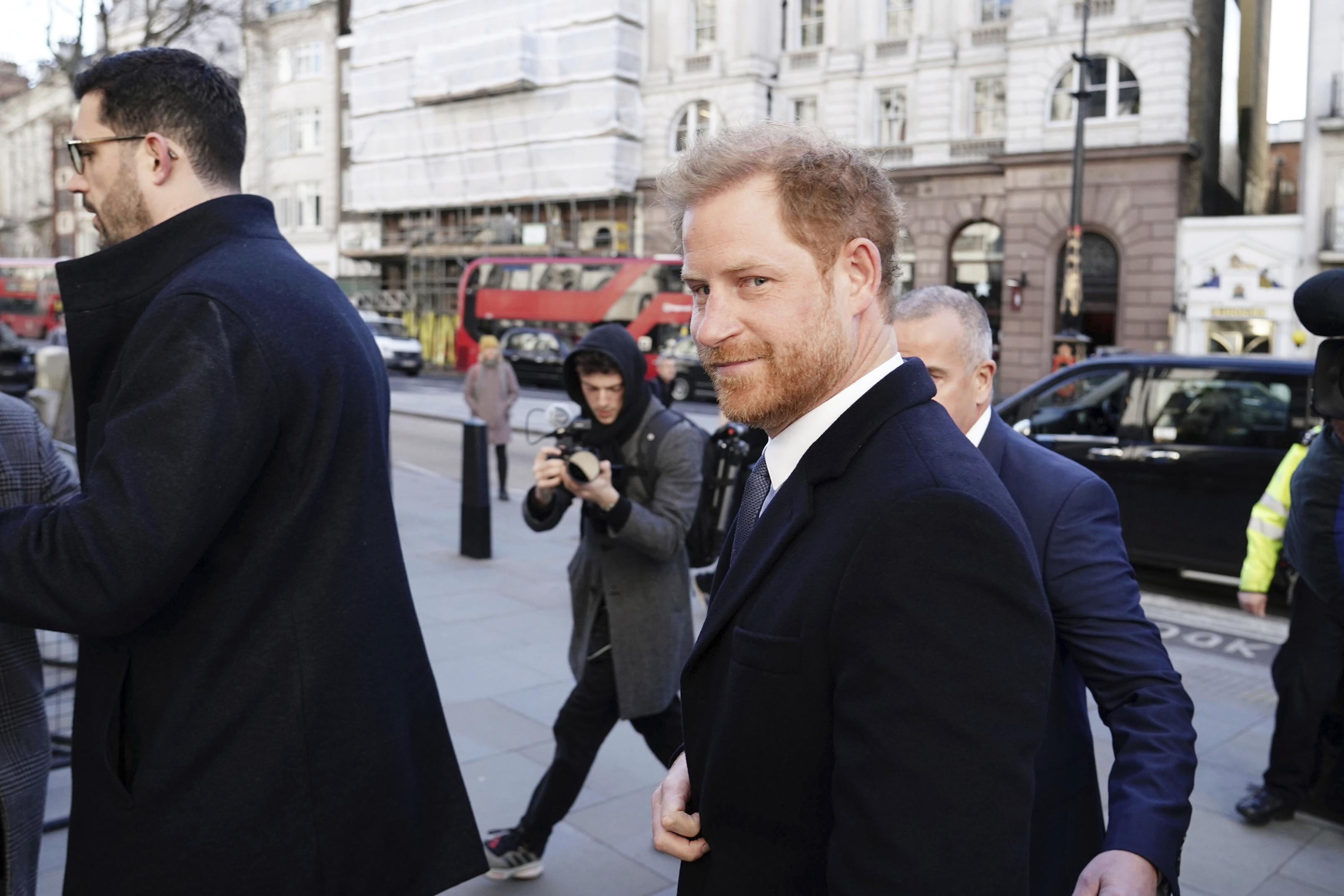
Harry, 38, has blamed paparazzi for causing the car crash that killed his mother, the late Princess Diana, and said harassment and intrusion by the UK press, including allegedly racist articles, ultimately led him and his wife, Meghan, to flee to the US in 2020 and leave royal life behind.

Articles he has cited date back to this 12th birthday when the Mirror reported he was feeling "badly" about the divorce of his mother and father, now King Charles III.

The reports made Harry wonder who he could trust as he feared friends and associates were betraying him by leaking information to the newspapers, he said in court documents.

His circle of friends grew smaller and he suffered "huge bouts of depression and paranoia". Relationships fell apart as the women in his life – and even their family members – were "dragged into the chaos".

He says he later discovered that the source wasn't disloyal friends but aggressive journalists and the private investigators they hired to eavesdrop on voicemails and track him to locations as remote as Argentina and an island off Mozambique.

READ MORE: Queensland man's banking nightmare after money 'vanishes' with simple mistake 

William, Diana, Harry

Mirror Group Newspapers said it didn't hack Harry's phone and its articles were based on legitimate reporting techniques.

The publisher admitted and apologised for hiring a private eye to dig up dirt on one of Harry's nights out at bar, but the resulting 2004 article headlined "Sex on the beach with Harry" was not among the 33 in question at trial.

Mirror Group said it has settled more than 600 of some 830 unlawful information-gathering claims and paid out more than £100 million pounds ($188 million).

The opening statements being presented on Monday mark the second phase of the trial in which Harry and three others have accused the Mirror of phone hacking and unlawful information gathering.

READ MORE: Kathleen Folbigg pardoned after 20 years in jail 
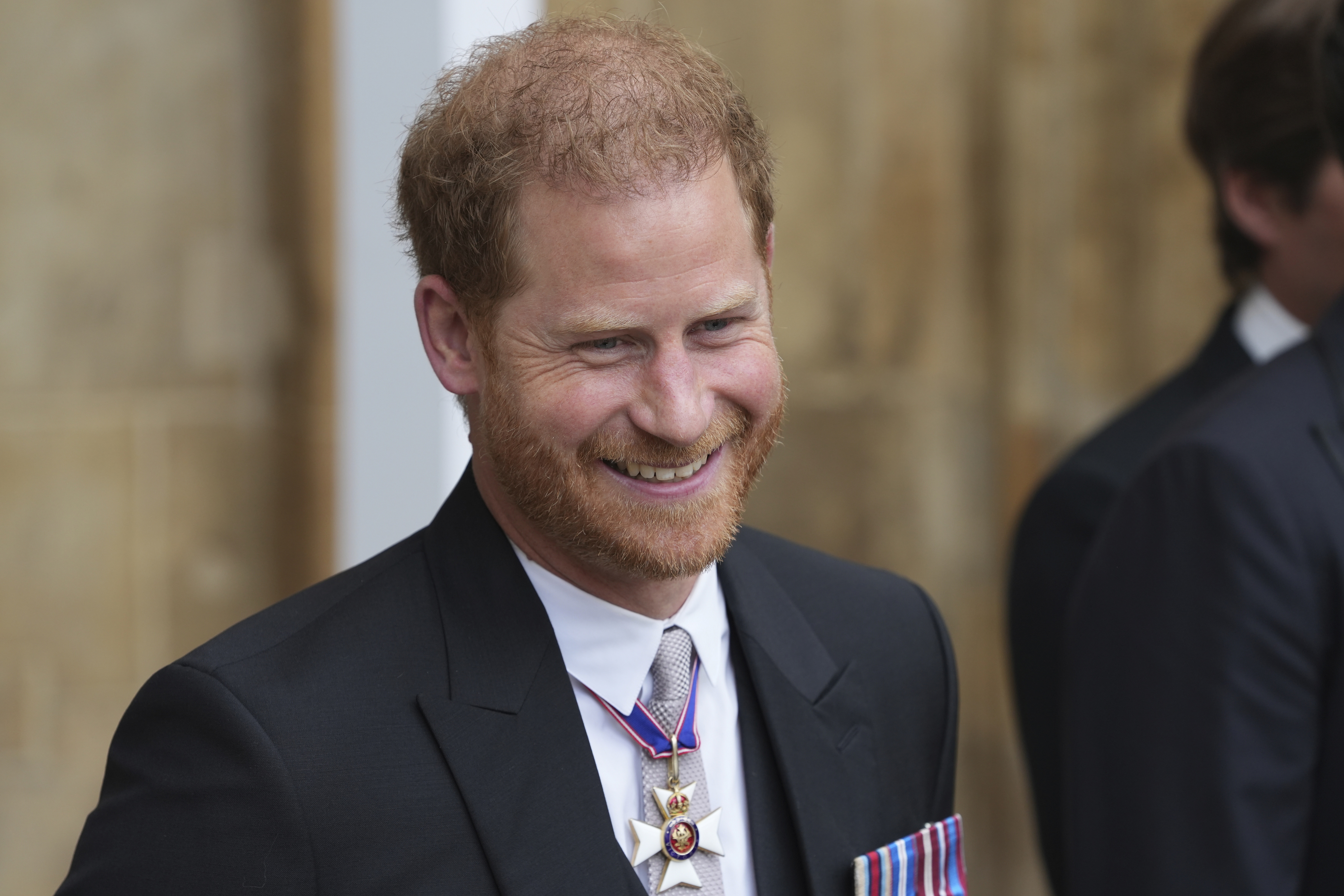
Prince Harry leaves Westminster Abbey after the Coronation of King Charles III in London, Saturday, May 6 2023.

In the first part, attorney David Sherborne, who represents Harry and the others, including two actors from the Coronation Street soap opera, said the unlawful acts were "widespread and habitual" at the Daily Mirror, Sunday Mirror and Sunday People, and carried out on "an industrial scale".

The publisher has presented former executives and lawyers who denied knowing about wrongdoing when it was happening or engaging in a cover-up. The first lawsuits against Mirror Group were filed in 2012 and the newspapers printed an apology in 2015 to hacking victims.

Two judges — including Justice Timothy Fancourt, who is overseeing the trial — are in the process of deciding whether Harry's two other phone hacking cases will proceed to trial.

Rupert Murdoch's News Group Newspapers, publisher of The Sun, and Associated Newspapers Ltd, which owns the Daily Mail and Mail on Sunday, have argued the cases should be thrown out because Harry failed to file the lawsuits within a six-year deadline of discovering the alleged wrongdoing.

Harry's lawyer has argued that he and other claimants should be granted an exception to the time limit, because the publishers lied and deceived to hide the illegal actions.

Sign up here to receive our daily newsletters and breaking news alerts, sent straight to your inbox.

Airport testing clinic to shut after hitting COVID-19 milestone

Sydney Airport's COVID-19 testing clinic will close tomorrow after swabbing 500,000 travellers over nearly three years.

An on-the-spot clinic first opened in December 2020 at the request of local health authorities before a dedicated testing facility built across from the T1 international terminal opened in November 2021.

But as most airlines phased out mandatory testing over the past year year, the demand for on-site swabbing dwindled.

READ MORE: Aussie actress in terrifying bus crash

The Histopath Diagnostic Services clinic will swab its last passengers tomorrow, marking a new era of post-COVID recovery for the aviation and travel industry.

At the clinic's peak over the 2022 April school holidays, it tested 2500 passengers in one day, with a team of 40 nurses.

"The testing clinic played a vital role in bringing air travel back and we are grateful to Histopath for providing this essential service for last two and a half years," Sydney Airport chief operations officer Sidone Thomas said.

"With restrictions and testing requirements now all but gone, confidence in travel is strong again.

"Our T1 international terminal is humming with passenger numbers now edging closer to pre-pandemic levels."

READ MORE: Kathleen Folbigg walks free after 20 years in jail

Sign up here to receive our daily newsletters and breaking news alerts, sent straight to your inbox.
Ben Roberts-Smith had 'motives to lie' about war crime murders

Victoria Cross recipient Ben Roberts-Smith was "not an honest and reliable witness" who lied about his involvement in war crimes to gain financially from his now failed defamation cases against the media.

In a Federal Court judgment published today, Justice Anthony Besanko made damning findings against the former SAS corporal who had "motives to lie" about the events in Afghanistan.

"I find that (Roberts-Smith) was not an honest and reliable witness," the judge wrote.

READ MORE: Former SAS soldier Ben Roberts-Smith's defamation claims thrown out

During a 2009 raid on Easter Sunday on a compound codenamed Whiskey 108 in Uruzgan Province, Roberts-Smith machine-gunned an unarmed prisoner in the back, taking the man's prosthetic leg back to Australia to use as a beer drinking vessel.

Roberts-Smith also stood silent while a rookie soldier was ordered to execute an elderly Afghan prisoner so he could be "blooded".

Besanko called the former SAS corporal's denials of these incidents "highly improbable" after hearing from independent witnesses with no reason to be dishonest.

The same could not be said about Roberts-Smith, the judge said.

"The applicant has motives to lie, being a financial motive to support his claim for damages in these proceedings, a motive to restore his reputation which he contends has been destroyed by the publication of the articles and significantly, a motive to resist findings against him which may affect whether further action is taken against him."

READ MORE: Ben Roberts-Smith resigns from Seven after landmark defamation ruling

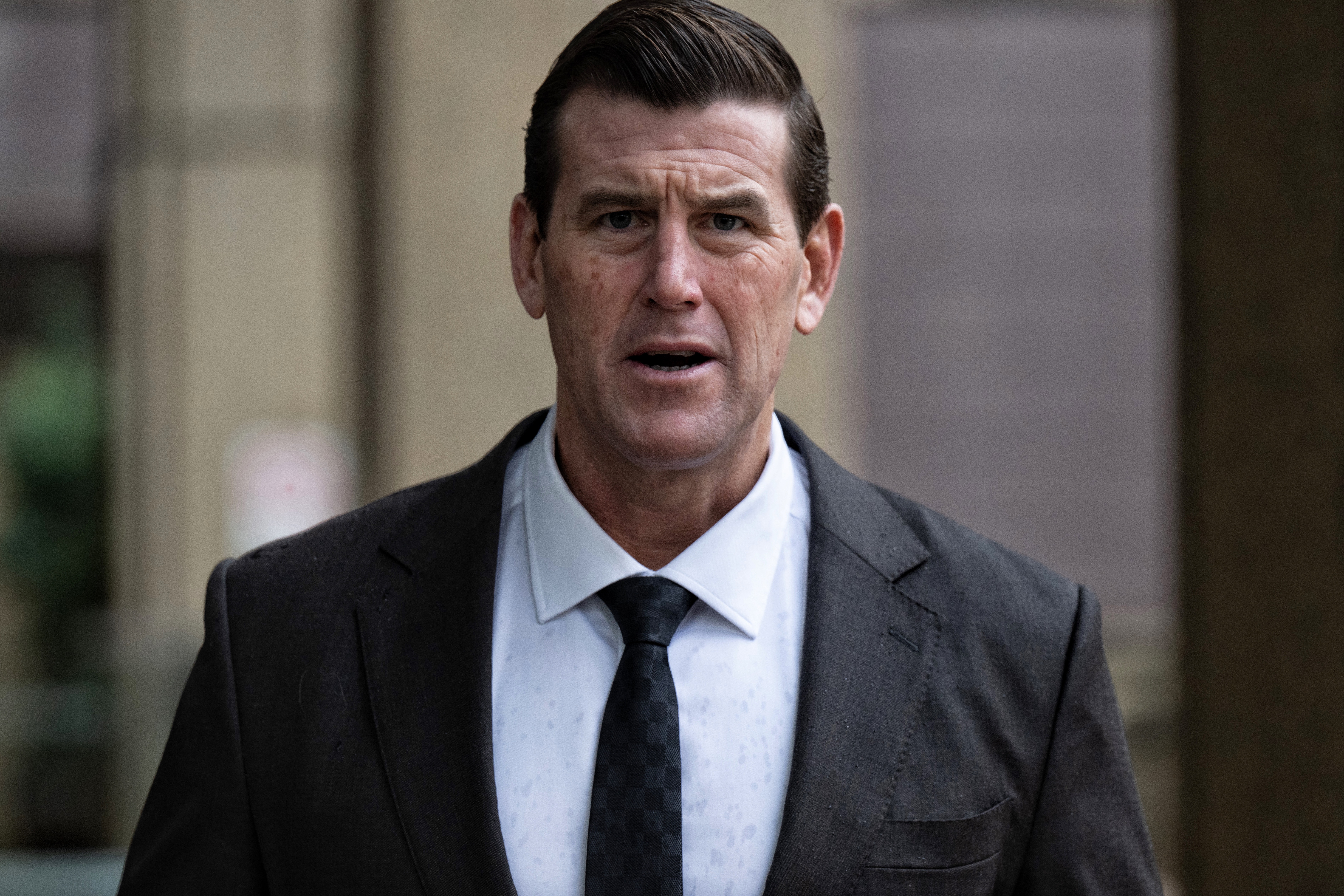
Ben Roberts-Smith (Getty)

Besanko found one of the newspapers' central claims – that Roberts-Smith had kicked an unarmed and handcuffed man, Ali Jan, off a 10-metre cliff and then ensured he was shot – was true.

As evidence of his guilt, Roberts-Smith attempted to cover up the unlawful killing at Darwan in September, 2012 by removing Jan's handcuffs and planting a radio alongside his lifeless body before he was photographed.

Roberts-Smith then told fellow SAS soldiers who witnessed the incident to stick to an approved story that Jan was a spotter who they killed legitimately.

In accepting the newspapers' claims, Besanko also rejected Roberts-Smith's account of the incident, which was riddled with a "number of improbabilities".

In October, 2012 in the Chinartu district, Roberts-Smith also ordered another soldier to execute an unarmed Afghan prisoner being interrogated after his troop discovered a fake wall cavity filled with weapons, including rocket propelled grenades and warheads.

"Person 12 then gave instructions to an NDS-Wakunish soldier who then shot the Afghan male in circumstances amounting to murder. The applicant was complicit in and responsible for murder," Besanko said.

In his summary judgment delivered on Thursday, Justice Besanko dismissed the cases against The Age, The Sydney Morning Herald, The Canberra Times and three journalists over their reports published in 2018.

If you are a current or former ADF member, or a relative, and need counselling or support, you can contact the Defence All-Hours Support Line on 1800 628 036 or Open Arms on 1800 011 046.

Nine, the publisher of this website, is also the publisher of The Sydney Morning Herald and The Age.

Chris Dawson and teen student would sneak off to beach, judge told

Chris Dawson would sneak out to the beach with one of his teenage high school students and the pair were seen kissing and cuddling in a swimming pool, a judge has been told.

Dawson, 74, has pleaded not guilty to engaging in sexual activity with the then 16-year-old student, known in court as AB, between July and December 1980.

On Monday, AB's friend gave evidence in court recounting times when the teacher and his twin brother Paul Dawson would spend time with the two girls.

READ MORE: Three-day weather warning for millions of Aussies

Dawson, 74, has pleaded not guilty to engaging in sexual activity with the then 16-year-old student, known in court as AB, between July and December 1980.

The friend, known for legal reasons as CD, said that in years 9 and 10, she went to fitness classes in the Sydney suburb of Lindfield with AB, Chris and Paul.

The four of them would be in the swimming pool "kissing and cuddling" after the classes, CD said.

"What were you able to observe of Christopher Dawson and (AB) in the pool? What do you recall?"

"They were together, bodies together," CD said.

CD babysat for Paul Dawson and his family while she was in year 8 and 9 and coached his daughter in netball, the court heard.

She denied claims by public defender Claire Wasley that there were other people in the pool at the time.

"I can guarantee you that there was zero people in the pool at the time that we were kissing and cuddling."

The NSW District Court heard the four would sneak out to the beach when they were meant to be playing sport and had a plan to come out of school at separate times so they would not be seen together.

She admitted that she was unsure of the exact times that this "socialising" occurred.

READ MORE: Chris Dawson accuser slams 'garbage' claim over new evidence

The historical carnal knowledge charge, which Dawson denies, was replaced in 1986.

"I know it happened. I know we were being groomed. I don't know the exact dates," she told Judge Sarah Huggett.

On Monday, Wasley suggested CD's recollection of the events alleged was not only hazy but had been contaminated through conversations with a friend who linked her with news articles referring to an investigation into the disappearance of Chris Dawson's wife Lynette in 1982.

Dawson was also allegedly seen in the sports office of his Northern Beaches school standing close to AB who was sitting on his desk.

"She was sitting there with her legs apart and Mr Dawson was standing in between (them)," one former student told the court.

Another student said AB was "effectively a celebrity on the playground".

The man said he saw the pair on an almost daily basis, exhibiting "constant physical closeness" while Dawson did playground duty.

"She was like his sidekick. It was like she was doing playground duty with him," he told the court.

Wasley has previously argued the alleged sexual activity began in 1981, after AB had turned 17 and was no longer Dawson's student.

The historical carnal knowledge charge, which Dawson denies, was replaced in 1986.

The trial continues.

Readers seeking support can contact Lifeline on 13 11 14 or beyond blue on 1300 22 4636.

If you or someone you know is impacted by sexual assault, domestic or family violence, call 1800RESPECT on 1800 737 732 or visit 1800RESPECT.org.au. In an emergency, call 000.

Sign up here to receive our daily newsletters and breaking news alerts, sent straight to your inbox.

Queensland man's nightmare after money 'vanishes' with easy mistake

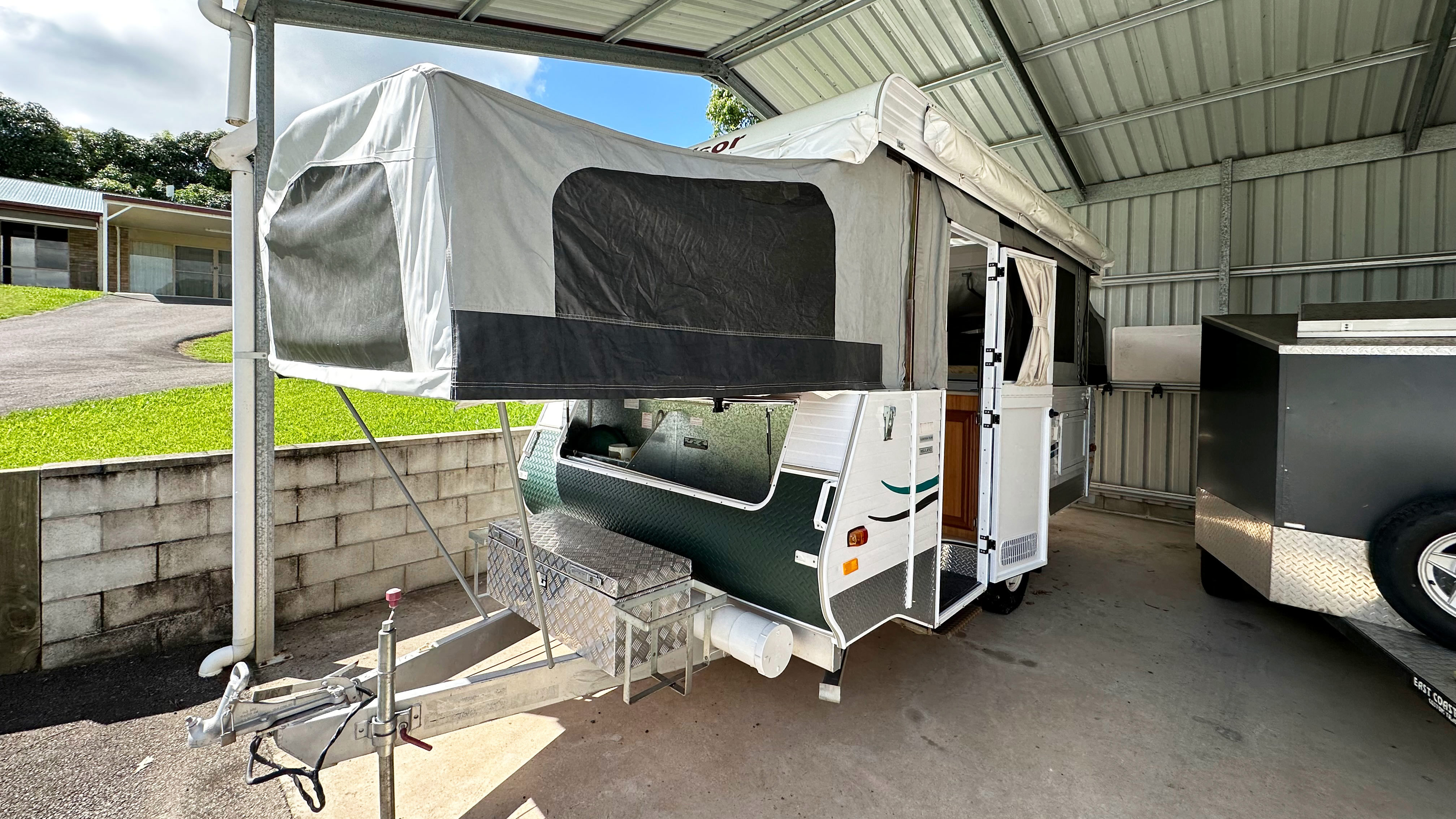
Brisbane mechanic Michael Reynolds was due for a hard-earned holiday, so when he saw a second-hand caravan selling for just $5900 he jumped at the chance to buy it.

The neat little camper trailer was all he needed for an end-of-summer break in Cairns.

But that holiday never happened. 

READ MORE: Kathleen Folbigg walks free after 20 years in jail

The second-hand caravan Michael Reynolds purchased $5900, twice.

Instead, for the last two months, Reynolds has found himself stuck in a banking nightmare after making one tiny mistake which saw his $5900 seemingly vanish without a trace.

The mistake happened when Reynolds was transferring his money online to the seller of the caravan.

"The seller had written his bank details down on a bit of paper," Reynolds said.

Eager to get the deal done, Reynolds opened up his ANZ online banking app and typed in the seller's BSB, account number and account name, before hitting transfer on the funds.

Reynolds then sent a screenshot of the payment to the seller, who immediately saw a problem – the account number was missing a digit.

However, the payment appeared to have been processed.

READ MORE: National 'misery index' up 220 per cent as Aussies struggle

Although online banking transactions require the recipient's name, BSB and account number, most banks only check the BSB and account number.

Within five minutes of the transaction, Reynolds said he was on the phone with his ANZ bank manager to alert him to the error.

"I called him immediately and he told me that, because the account number was a digit too short, the transaction wouldn't go through and the money would bounce back," Reynolds said.

Relieved, Reynolds made another transfer of $5900, this time to the correct account number, and waited for the money from the first transaction to reappear.

However, weeks later, the money from the March 14 transaction, sent to a Suncorp Bank account, still hadn't bounced back.

"All ANZ would tell me was that a trace had been done and the funds couldn't be recovered," Reynolds said.

Do you have a story? Contact reporter Emily McPherson at

"It's hard to convey the massive runaround I've had," Reynolds said, adding he had cancelled his holiday because of the financial stress and resold the caravan. 

"The average person would probably have said, screw it, it's not worth my time.

"I've taken days off work to get my head around what's gone wrong."

In a letter written to Reynolds by ANZ after he lodged a complaint, the bank said: "We tried to recover the money in accordance with the ePayments code.

"Unfortunately, the other bank has not been able to retrieve the funds from the recipient."

The letter told Reynolds to lodge a dispute with the Australian Financial Complaints Authority should he wish to take the matter further.

A spokesperson for ANZ declined to make a comment on the case when contacted by 9news.com.au.

However, when 9news.com.au contacted Suncorp Bank, the matter was resolved within 24 hours, and the money swiftly returned to Reynolds' bank account.

In a statement, Suncorp executive general manager Nick Fernando said: "If a customer makes a transfer in error, Suncorp Bank works with other financial institutions to resolve this through a dispute resolution process. 

"We make every effort to move quickly to minimise impacts on the customer, however at times these processes involve multiple parties and can be complex."

Calls for banks to cross-check names

Reynolds' case comes amid continued calls from the Australian Competition and Consumer Commission (ACCC) for Australian banks to implement technology – already in place in overseas countries such as England and the Netherlands – which matches online bank transfers with account names.

As well as helping eliminate mistaken online payments, it's believed such a move would go a long way in reducing internet scams, which are now costing Australian victims billions of dollars. 

Earlier this year, the Commonwealth Bank was the first to make a move in this direction, launching NameCheck, its own verification technology which indicates whether account details entered by customers to make a first-time payment match those in the bank's database.

Speaking in April after the release of the ACCC's Targeting Scams Report, the commission's deputy chair Catriona Lowe said more change was needed across Australia's banking industry.

"Traditional bank transfers remain one of the most commonly reported payment methods to scammers. While some banks have made recent positive steps to protect their customers, we would welcome uniform measures across the sector, similar to the UK's Confirmation of Payee, which matches an account number to the intended recipient across all banks," Lowe said.

A spokesperson for the Australian Banking Association said the introduction of PayID five years ago was already going some way towards addressing the issue.  

"(PayID) allows the person paying money to know who they are paying, before they pay. There were 15 million PayID registrations as of 1 May 2023," the spokesperson said.

"We also need to recognise that payee confirmation does not help to prevent many common types of scams, and consumer vigilance is still required."