Both islands are in for a mixed bag of weather conditions this week.
Tag Archives: oceania
US boy uses a slingshot to save his sister from being abducted from backyard, police say
A US girl was able to escape an attempted kidnapping when her brother used a slingshot to strike the would-be attacker, authorities said this week.
Mlive.com reports that the Michigan State Police arrested the accused assailant in the city of Alpena on Wednesday (local time).
The 17-year-old's name has not been released though he has been charged as an adult with one count of attempted kidnapping/child enticement, one count of attempted assault to do great bodily harm less than murder, and one count of assault and battery.
READ MORE: Sweden wins Eurovision after emotional show in Britain that celebrated Ukraine

Michigan State Police said in a news release that the eight-year-old girl was in her backyard when the alleged assailant came out of the woods, grabbed her and covered her mouth.
Authorities said the girl's brother, 13, hit the alleged attacker in the head and chest using a slingshot.
Police later arrested the 17-year-old based on another family member's description of the suspect.
Authorities also said the teenager had visible wounds from the slingshot.
Sign up here to receive our daily newsletters and breaking news alerts, sent straight to your inbox.
Newshub Reid Research poll: Labour ahead of National, Chris Hipkins gains ground as preferred PM
The new poll follows Minister Meka Whaitiri’s defection from Labour to Te Pāti Māori.
Stopbanks, roads and local response key factors in $941 million pre-Budget cyclone relief
Government earmarks nearly $1 billion for cyclone recovery, announced in Hawke’s Bay.
Election 2023: Mr Whippy co-owner George Hampton Labour’s candidate for North Shore electorate
The new Labour candidate has revealed what he has planned for the Mr Whippy franchise.
One person dead following Hamilton crash
Police were called to the crash in Temple View about 3.10pm.
Shane Te Pou: Meka Whaitiri left Labour for Te Pati Māori for wrong reasons
The strangest thing about Whaitiri’s sudden decision to jump from Labour to Te Pāti Māori.
Canterbury jet boat ‘incident’: Three people injured after crash in remote Canterbury spot, rescue choppers responding
Four helicopters are already on the scene, with more on the way.
Giant 'drop bears' with opposable thumbs once scaled our trees
Although long dead, fossil skeletons provide an incredible window into the lifestyle and environment of an extinct animal.
By analysing the various features of fossil bones we can reveal not only the overall size and shape of the animal, but also what kind of movement the animal was capable of, its lifestyle, and the environment in which it lived.
But what if we looked inside fossil bones? What secrets would it reveal about the growth and development of an extinct animal?
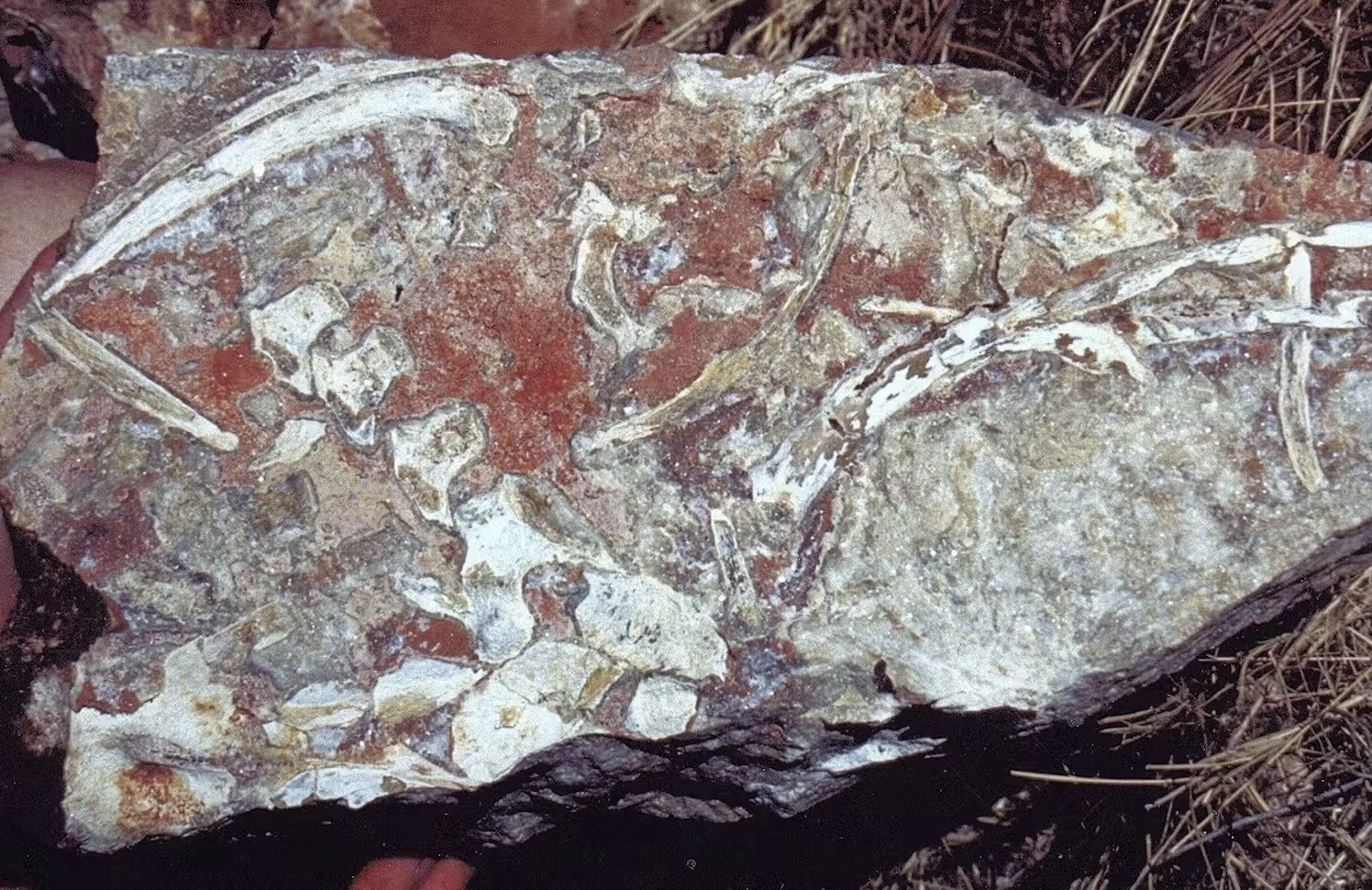
In a newly published paper in the Journal of Paleontology, scientists have done just that, using 15 million-year-old skeletons of a giant bear-like marsupial from the world-famous Riversleigh World Heritage Area (Boodjamulla) in Waanyi country of northwest Queensland.
READ MORE: Winning Eurovision country announced as Australia places in top 10
Tree-dwelling wombat relatives
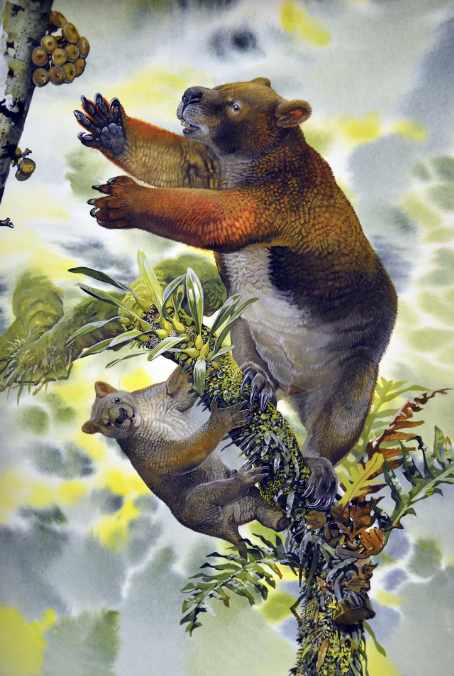
The huge tree-dwelling herbivorous marsupials, known as Nimbadon, weighed about 70kg, making them the largest arboreal (tree dwelling) mammals known from Australia.
Nimbadon belongs to a diverse group of long extinct, large-bodied marsupials known as diprotodontoids, the likes of which include the largest marsupial to have ever lived, the 2.5 tonne megafaunal Diprotodon, and bizarre trunked marsupials reminiscent of modern-day tapirs.
Among living animals, Nimbadon is most closely related to wombats.
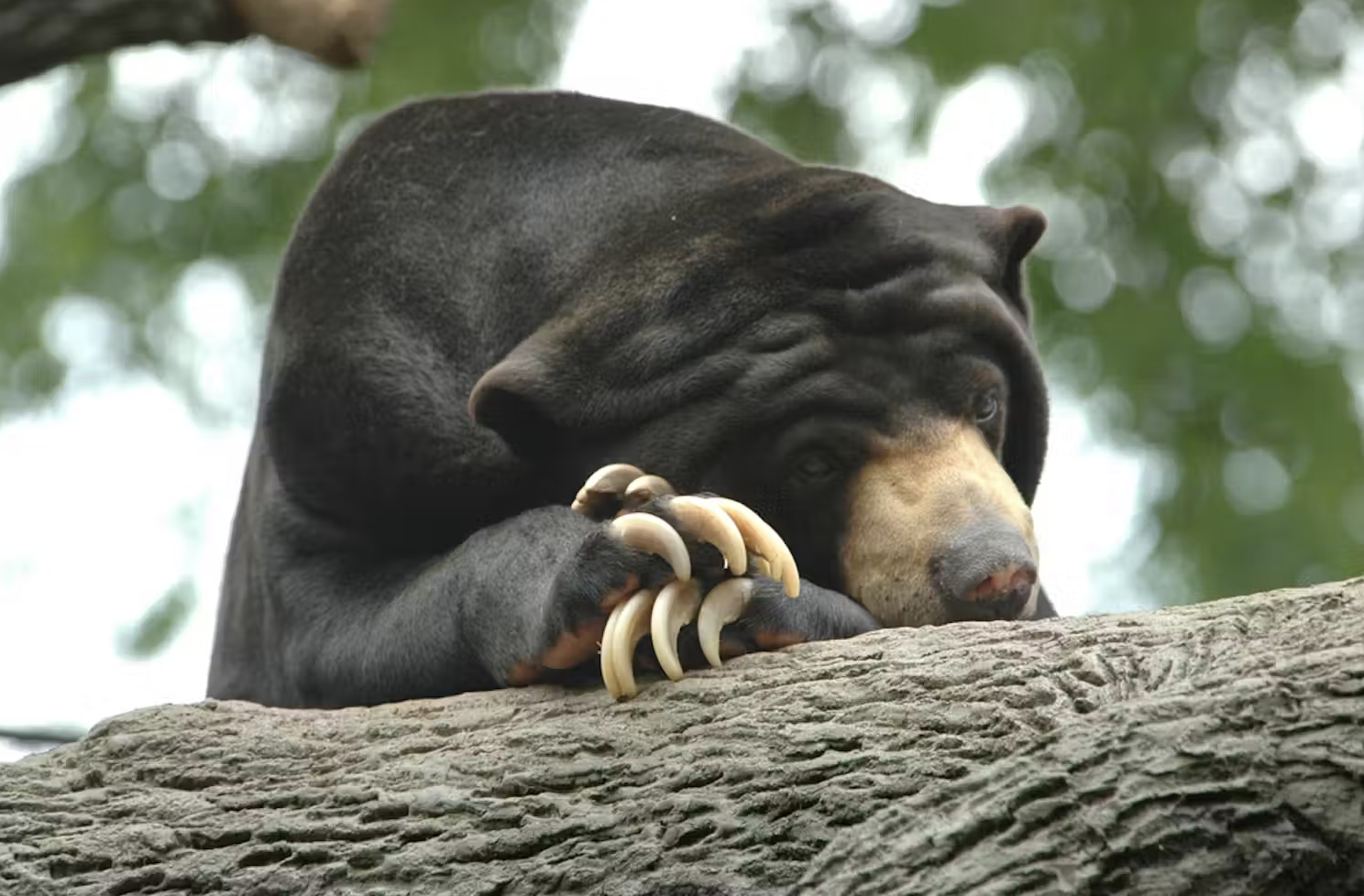
Yet surprisingly, in terms of body size and lifestyle, they are more comparable to sun bears, which today can be found scaling the rainforest canopies of Southeast Asia.
When scientists first uncovered jawbones of Nimbadon at Riversleigh in 1993, they thought we were looking at very large leaf-eating marsupials who foraged for food on the forest floor.
But like many of the species unearthed from Riversleigh, the closer they looked at these animals, the more bizarre and fascinating they become.
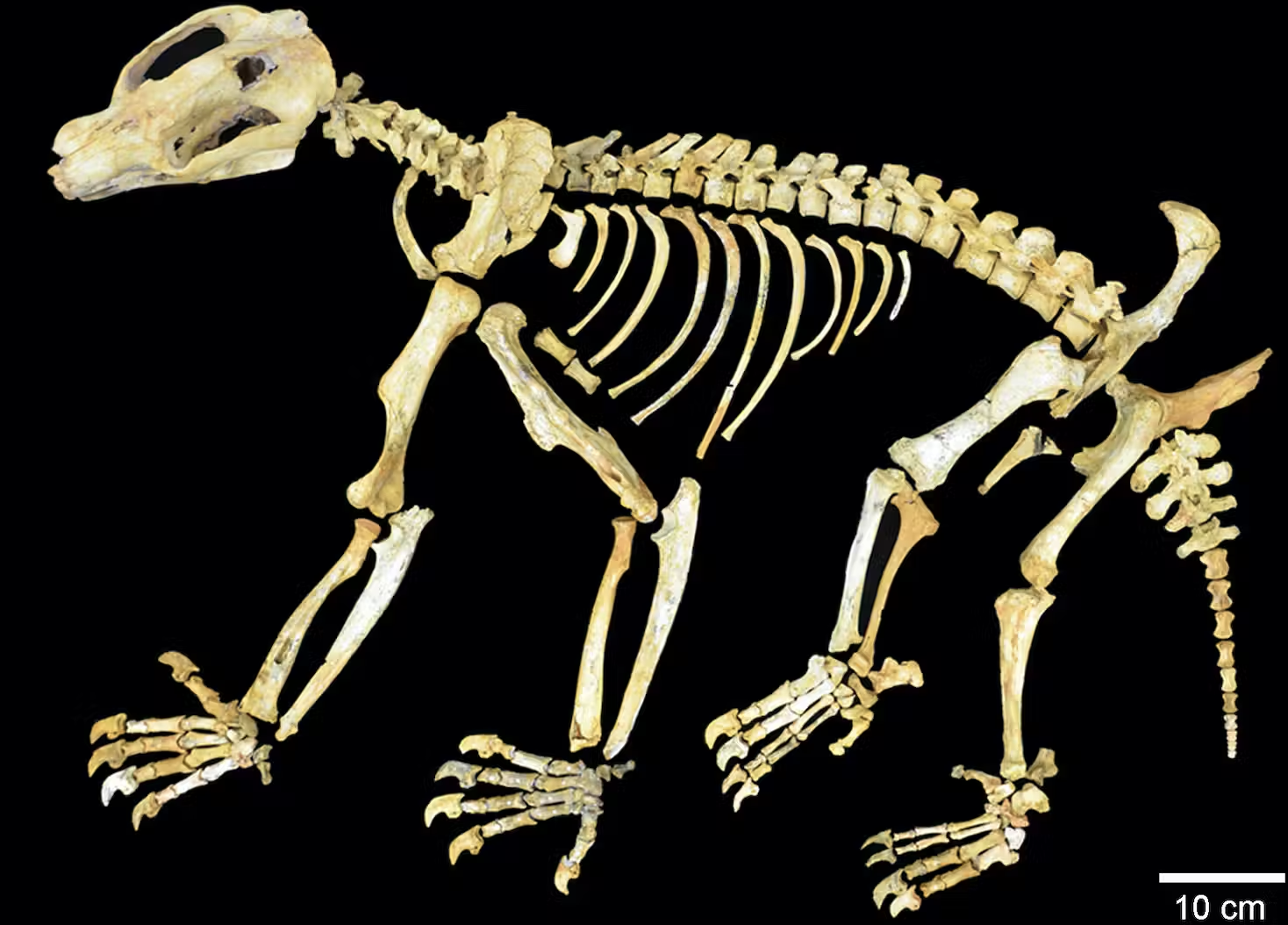
Nimbadon is now known from its complete skeleton, including material representing developmental ages ranging from tiny pouch-young to mature adults.
It had strong arms with very mobile shoulder and elbow joints. Its hands and feet had specially adapted opposable thumbs with huge curved claws for climbing, penetrating bark and grasping branches.
These animals were highly specialised climbers and lived vastly different lifestyles compared to their closest living relatives – the land-dwelling, burrowing wombats.
Initial research showed that Nimbadon was not only a "tree-hugger", but also a "tree-hanger", spending some of its time suspended from tree branches like a sloth.
Nimbadon lived 15 million years ago in the canopy of lowland Australian rainforests.
These biodiverse, lush forests were home to some equally strange animals: flesh-eating kangaroos, tree-climbing crocodiles, ancestral thylacines, cat- to leopard-sized marsupial lions, huge anaconda-like snakes, giant toothed platypuses and mysterious marsupials so strange they have been called "Thingodonta".
It was a very different Australia than the one we see today.
Sectioning the bones
Despite the wealth of information gleaned from Nimbadon skeletons, until now we hadn't fully understood the growth patterns of these ancient marsupials.
Were they affected by seasonality? How long did they take to grow to adult body size in the canopies of the ancient forest?
Clues to these questions lay in the bones' microscopic structure.
READ MORE: Four West Australians wake up millionaires after $20m lotto draw
To look inside the fossil bones, scientists needed to select the right material.
Long bones, such as the bones of the leg, are known to preserve a good record of growth, so researchers analysed ten long bones of several different-sized individuals.
They began by removing a section from the shaft of the bone, and embedded it in resin. Using a diamond-edged blade, we cut our samples into thin sections and polished them further until light could pass through them. These thinned sections were mounted on glass microscope slides to be studied.
Remarkably, even after millions of years of fossilisation, the microscopic structure of the fossil bones had remained intact.
Scientists were amazed to discover that Nimbadon grew in periodic spurts. Individuals had fast growth periods, each followed by a slow growth period, often associated with a band of arrested growth.
Seasonal growers
Cyclical growth patterns have previously been documented for marsupials such as in the living western grey kangaroo. However, results indicate that, overall, the limbs of Nimbadon had a much slower, more extenuated growth than kangaroo limbs.
One individual recorded at least seven to eight growth cycles, which suggests this arboreal giant needed at least this amount of time – and probably more – to become a fully-grown, sexually mature adult.
READ MORE: A law that cancels cancel culture? This country is considering it
Based on these alternating cycles of fast and slow growth, Nimbadon may have been affected by seasonal conditions such as food availability.
However, exactly how long it took for eight growth cycles to develop remains a mystery. If indeed they represent annual cycles, it would be at least eight years until sexual maturity, which is unusual in the modern marsupial world.
For example, kangaroos are sexually mature at one to two years. That being said, Nimbadon is an unusual beast and a very large one at that, so an extended developmental period (and lifespan) is not unlikely.
Real-life drop bears
Researchers have come to think about these strange arboreal marsupials as real versions of the legendary "drop bears" of Australian folklore – mysterious tree-dwelling creatures that would drop down on unsuspecting animals below.
While moving in herds through the rainforest canopy, both young and adult Nimbadon would have occasionally lost their grip before dropping down from the treetops. Sometimes they would end up in forest floor caves, which is where we have been finding their still-articulated skeletons.
Given the constant surprises that research into this extraordinary, extinct Riversleigh mammal has already produced, we are eager and prepared for still more.
Currently researchers are looking into wear in the enamel microstructure of Nimbadon's teeth to determine this legendary drop bear's diet.
They expect that what we find down the track will continue to upend our naïve first presumptions about the lifestyles of this and many of the other strange inhabitants of the ancient inland rainforests of Riversleigh.
This article is republished from The Conversation under a Creative Commons license. Read the original article.
Sign up here to receive our daily newsletters and breaking news alerts, sent straight to your inbox.
Parcel theft is on the rise again. Here's what to do to keep your mail safe
Experts are pleading with people to remain vigilant while waiting for their mail, as new data reveals one in five Aussies have had their parcels lost or stolen in the last year.
Of the one in five, around half those missing parcels were reported lost in transit, while the remainder were reported stolen.
Tim Bennett, insurance expert at Finder, said the occurrence is "incredibly obnoxious", but there are some ways we can protect ourselves.
"It's super frustrating when this happens," he said on Weekend Today.
READ MORE: Text over dinner helps hacker infiltrate business owner's account
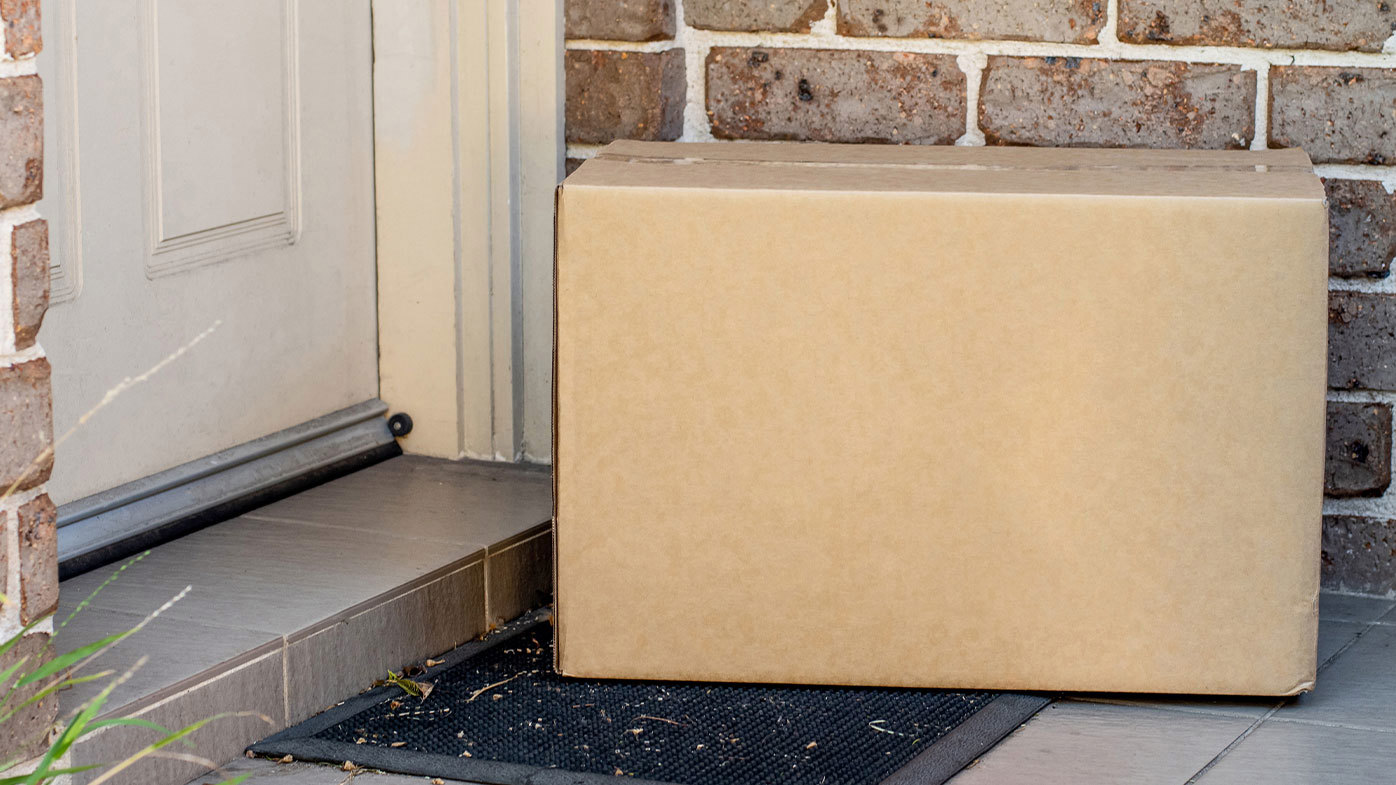
"You pay a bunch of money for the delivery and for the purchase and then for it to not rock up…the average cost of what's been stolen is about $130 per package.
"You times that by the number of people who have had it stolen, it's almost half a billion dollars…slightly more than half a billion, so it's not a small amount of money."
Bennett said one way to ensure your parcels are delivered safely is to send them to a workplace, preferably an office, which have full-time mail rooms in operation.
"If you're lucky and I'm one of these people – I get everything delivered to my workplace," he said.
"That way it's waiting there on my desk.
READ MORE: Four Aussies wake up millionaires

"Use tracking, make sure you request sign-on delivery if you're going to be home.
"If you're not home, you can call the delivery organisation – try to figure out something."
Bennett added he "really recommend installing door cameras" that not only capture "great little bits of video that you can share online if anything goes bad", but they're good for your home insurance.
"They will reduce the likelihood of a theft, depending on the house you have," he said.
"But they are a turnoff. If someone is a porch pirate and they see a camera looking at their face, they are less likely to steal."
Sign up here to receive our daily newsletters and breaking news alerts, sent straight to your inbox.